Tag: Air Force

  • VA uses hundreds of AI systems. Veterans may not know when they’re involved.

    VA uses hundreds of AI systems. Veterans may not know when they’re involved.

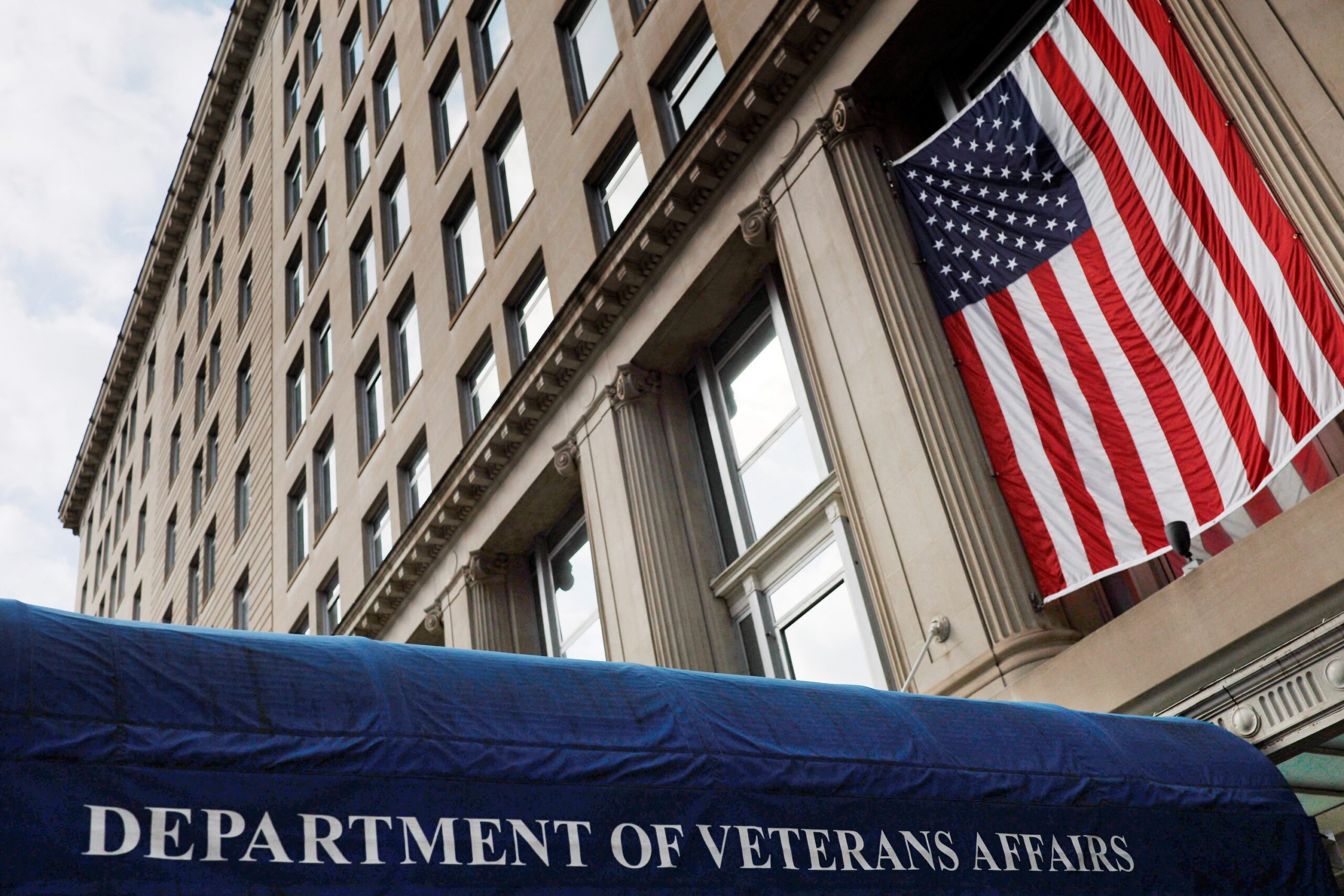
    The Department of Veterans Affairs currently has 367 documented artificial intelligence use cases supporting everything from medical appointments and disability claims to customer service and records management. However, veterans seeking medical care or VA benefits may encounter artificial intelligence without realizing it.

    The VA’s recently released 2025 AI Inventory identifies 215 of those use cases as high-impact systems. Although VA officials say safeguards and human oversight remain in place, veteran advocates say veterans are more likely to trust AI systems if they understand when they are being used and what role they play.

    For Navy veteran Markus Williams, the issue surfaced during a recent VA medical appointment. “Yesterday the nurse asked if I was cool with them using AI during my visit with my doc to help them with notes,” Williams said. “When I told her no I wasn’t comfortable with that she didn’t seem too happy.”

    Williams said he declined because he was not comfortable with AI being used during his visit and that he didn’t really know how it was actually being utilized. Veterans, advocates and former VA clinicians interviewed by Military Times described varying levels of veteran awareness about when AI is used and what role it plays in veterans’ interactions with the department.

    Veterans may not know when AI is involved

    VA officials say many veterans may not be interacting with artificial intelligence in the ways they assume they are. “The term ‘AI’ cannot be used interchangeably with VA’s Automated Decision Support system,” VA Press Secretary Quinn Slaven told Military Times. “Automation is constrained to perform exactly what it’s programmed to do, while AI can assess patterns from data.”

    Slaven said, “At the beginning of a visit, the provider will ask if the veteran wants to use Ambient AI Scribe and explain how it works. The veteran can agree, opt out or ask the provider to turn off Ambient AI Scribe at any time. If the veteran chooses not to opt out, the provider will document the visit with Ambient AI Scribe.”

    Veterans interviewed by Military Times described widely different experiences with AI use and notification. Williams said he was asked whether he consented to AI-assisted note taking during a recent appointment. Army veteran Tim King said he has never been asked. “There was a big email sent out recently about it,” King said. “I have yet to be asked if I am ok with it during appointments and I do not intend to okay them using it.”

    Some veterans said they did not distinguish a difference between automation and AI, while others said they viewed the technologies differently.

    Advocates say transparency must extend beyond an inventory

    Jon Retzer, national legislative director for the Disabled American Veterans, called VA’s public inventory an important step toward transparency because it provides a centralized accounting of how AI is being explored and deployed across benefits, health care and operations.

    However, Retzer said the inventory largely operates at a high level and provides limited insight into how systems are monitored after deployment, how performance is evaluated over time and what accountability mechanisms are triggered when problems arise.

    “Veterans would benefit from more detailed, consistent, and publicly accessible information about how these systems function in practice, not just their intended use,” he said.

    Retzer explained veterans should expect clear notification when artificial intelligence is used in decision-making affecting their care or benefits, along with ongoing monitoring, strong privacy protections and meaningful human oversight. But Retzer warns that human oversight alone does not answer broader concerns about whether veterans are informed when AI contributes to their medical appointments, records or benefits experience.

    Even when a clinician or claims processor makes the final decision, he said, veterans may receive little information about how AI influenced the documentation or workflows supporting that decision.

    Clinical use raises new questions

    Notification may be particularly important in health care settings. In January, the VA Office of Inspector General issued a preliminary advisory identifying a potential patient safety risk related to the Veterans Health Administration’s use of generative AI chat tools for clinical care and documentation.

    The watchdog found that VHA lacked a formal mechanism to identify, track or resolve risks associated with generative AI and expressed concern that the absence of a standardized process could limit the department’s ability to safeguard patient safety.

    The advisory states that outputs generated by approved AI chat tools can be used to support medical decision-making and copied into veterans’ electronic health records. The OIG also noted that generative AI systems can produce inaccurate outputs, including omissions, that could affect diagnosis and treatment decisions.

    The OIG review remains ongoing, and the advisory did not identify specific instances of patient harm. However, investigators said the absence of a standardized process for managing AI-related risks could limit VHA’s ability to identify patterns, improve safety and address problems associated with generative AI tools used in clinical settings.

    Clinical documentation can affect future treatment, disability claims and continuity of care for years. A missing detail or inaccurate entry may require repeated appointments, additional paperwork or lengthy efforts to correct the record.

    Veterans and clinicians see both risks and benefits

    Not every veteran views artificial intelligence with skepticism. Helen Cooper, Marine Corps veteran and retired registered nurse from a Tennessee VA medical center, said she would welcome AI-assisted documentation if it results in more accurate records.

    “If I were to choose between AI assisting in thorough documentation of our visits or the status quo of overworked nurses and doctors blatantly ignoring things we tell them or filling our charts with absolute nonsense, I’ll choose AI,” Cooper said.

    “Time and time again VA doctors completely neglect to document veterans’ concerns,” she added. “I’m happy to allow a robot to do their job if they can’t.”

    Air Force veteran and former VA physician Dr. Charles Faulk said documentation requirements have expanded dramatically during his career, often forcing clinicians to spend hours completing records after clinic hours. “The notes burden in the VA has probably tripled in the past quarter century,” Faulk said. “Maybe the AI will make life more livable for the clinician.”

    But even veterans who support the use of artificial intelligence said they want to understand when it is involved in their care. “I need to know what it really does before I can be okay with them using it,” explained Tim King.

    DAV’s Retzer said veterans should expect clear notification when AI is used in decisions affecting their care or benefits and should be able to understand how those systems affect their interactions with VA.

    “AI must never diminish due process, reduce access to earned benefits, or replace necessary human judgment in decisions that affect veterans’ lives,” Retzer said.

    This post was originally published on this site.

  • DoD, movers try to ease the heavy lift for troops moving this summer

    DoD, movers try to ease the heavy lift for troops moving this summer

    As military moving season shifts into high gear, service members and their families should be seeing the results of changes aimed at improving their household goods moves.

    And for those experiencing issues, there’s a direct line to DoD’s new Personal Property Activity, where service members can ask for assistance. Since that call center was set up in August of last year, the volume has reached 20,121 calls and emails, said Army Maj. Matthew Visser, spokesman for the Personal Property Activity.

    That includes calls received into the center, as well as calls made from the center.

    “We often see issues arising, and we can be proactive at reaching out to folks who we know may be impacted,” Visser said.

    That number has increased by about 4,000 since March.

    “The feedback we get from the families and the people we talk to, is that they like the fact they’re talking to another service member who understands what they’re going through, and they call them back if they can’t immediately answer the question,” said Army Col. Mike Ashton, director of operations for DoD’s new Personal Property Activity.

    As of June 30, there had been 138,570 pickups of household goods in 2026, compared to 134,282 at this time in 2025, Visser said. This year, because of PPA changes, service members could start booking their summer moves as early as March, if they had PCS orders in hand.

    The change was designed to help service members in their planning and preparation — and to help spread the load for moving companies during the peak season, which generally runs from mid-May through August.

    Defense Secretary Pete Hegseth designated the PPA as a special activity in January, giving it the authority to take action to improve the household goods process for service members.

    For decades, military families have complained about broken, damaged and lost belongings, delayed pickups and deliveries and onerous claims processes. Families have complained there’s nowhere to turn for help with these problems.

    Mold, broken furniture — just a start to this family’s PCS nightmare

    This moving season marks a stark departure from last year, when a number of moving companies were considering getting out of the business of making military moves because of the U.S. Transportation Command’s effort to privatize the management of military moves.

    Movers complained about the amount of compensation for moves, among other things, and were turning down shipments, leaving military families to scramble at the last minute. DoD terminated the Global Household Goods Contract in May 2025.

    “This peak season, movers have done a really good job of saying, ‘All right, we’re going to step up to the plate. … We are bringing our best drivers, our best crews.’ They’re working really hard to make this summer successful for service members,” said Katie McMichael, executive director of Movers for America, a coalition of over 1,000 moving professionals and independent owner-operators who haul household shipments for military families.

    PPA has improved DoD’s relationship with moving companies to the benefit of all, especially service members, according to those in the industry.

    The PPA and the actions of its commander, Army Maj. Gen. Lance Curtis, have been “a breath of fresh air,” said Ryan McConnell, president and chief operating officer of Atlas Van Lines. PPA has worked to better understand the military moving industry and to build better communications, he said.

    “In the end, this is all of us getting the business component lined up with PPA so that we can provide that service to families,” McConnell said. “Ultimately, that’s what this is all about.”

    ‘Purge parties’ and more tips from the real PCS pros

    This season, movers have seen an earlier start to the peak season, beginning in early May, said Steve Weitekamp, president of the California Moving and Storage Association.

    “We’ve been talking since the beginning of time almost, to try to spread out the peak season from such a short period of time to a longer period, which we’ve kind of seen this season,” he said. “I think it’s been to the benefit of both military members and moving companies.”

    A few tips

    Weitekamp’s advice to service members: “When you get your orders, you should book your move early to ensure the best possible service. … The sooner the military member gets in the queue, the more apt they are to get the top quality service.”

    Because installation security has been tightened because of what’s happening in the Middle East, movers urge families who live on installations to be aware of some of the consequences, said McMichael. Movers are trying to prepare families for the reality that getting on base is going to be difficult this year.

    “We’re not the only tractor trailer truck coming through the gate. There are lots of deliveries. … In a lot of cases it’s not necessarily because our trucks can’t get on base,” she said.

    If they’re behind other trucks that are having issues, she added, “the only thing we can do is sit there. This is for everyone’s safety. But please be mindful that for pickups and drop-offs, there are going to be some circumstances where there will be delays.”

    More suggested tips for easing military moves include:

    • Checking out PPA’s new website, www.ppa.mil, where they’ve consolidated a patchwork of different websites to support service members and families, DoD civilians and industry. It offers a link to start setting up the move, step-by-step guidance through the move process with checklists for every stage, as well as tips for overseas shipments, filing claims, shipping personally owned vehicles and other topics.
    • Doing what you can to prepare early. For example, start clearing out items you don’t want to go to your new location.
    • Organizing your items and make sure you separate important documents, medicines, uniforms and other items that you want to carry with you.
    • Asking questions of the movers. If you don’t get an answer, take it to someone else, including your local transportation office on base. You can contact the PCS call center at any time with questions or problems at 1-833-MIL-MOVE, operated 24/7 during peak season. Or email pcscallcenter@mail.mil.
    • Fill out the customer-service surveys to provide feedback to help DoD decide whether a company gets more business in the future.

    Have you made a military move this year and want to talk about your experience with Military Times? Email staff reporter kjowers@militarytimes.com.

    This post was originally published on this site.
  • Staff sergeant becomes only airman in his class to complete Army Air Assault School

    Staff sergeant becomes only airman in his class to complete Army Air Assault School

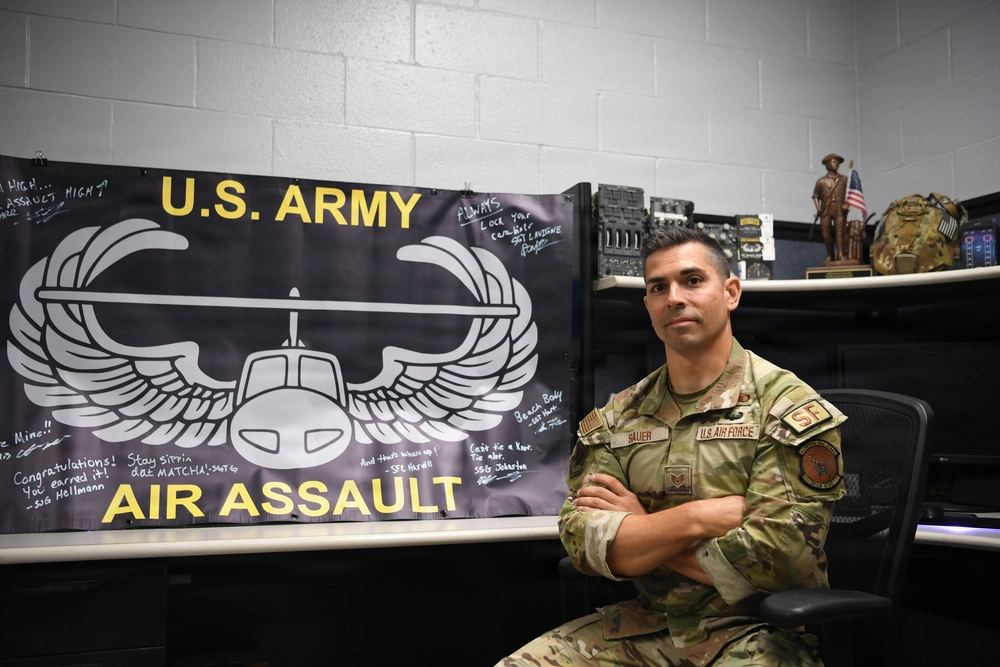
    An Air Force staff sergeant enjoyed a rare distinction recently as the only airmen in his class to complete the 10-day U.S. Army Air Assault School.

    Staff Sgt. Ivan Sauer, assigned to the 195th Wing Security Forces, was the only airman to graduate from the course in late May and receive an Air Assault Badge, according to a Wednesday release.

    “After seeing I was the only Airman, I felt I was shouldering the weight of the whole Air Force and the pressure was intense,” Sauer said in the statement. “I had to finish.”

    The course completed by Sauer, located at Camp San Luis Obispo, California, is designed to train service members in air assault missions, sling-load procedures and rappelling techniques that include helicopter operations. The school is taught by specialized air assault sergeants from the Warrior Training Center Brigade at Fort Benning, Georgia.

    Sauer, who only became aware of the opportunity to attend the course just two weeks before it commenced, said he was ready for a “top-tier challenge,” per the release.

    The airman said his previous experience at the U.S. Army’s Ranger School prepared him for military training opportunities like this one. Sauer also placed third earlier this year in the 18-mile Norwegian Foot March located at Mather Air Force Base, California, and completed the Army Best Warrior Competition, according to the announcement.

    The 195th Wing Senior Enlisted Leader Senior Master Sgt. William Wade assisted in identifying Sauer as a candidate for the air assault course, while stressing to him that there were only five airmen at the beginning of the course.

    “I am so incredibly proud of Staff Sergeant Sauer! He demonstrated the elite standard of our 195th Wing defenders,” Lt. Col. Sahira DeMarco, deputy group commander for 195th Operations Group, said in the release.

    This post was originally published on this site.
  • Following an outbreak, lawmakers push to require flu vaccine for all service members in budget bill provision

    Following an outbreak, lawmakers push to require flu vaccine for all service members in budget bill provision

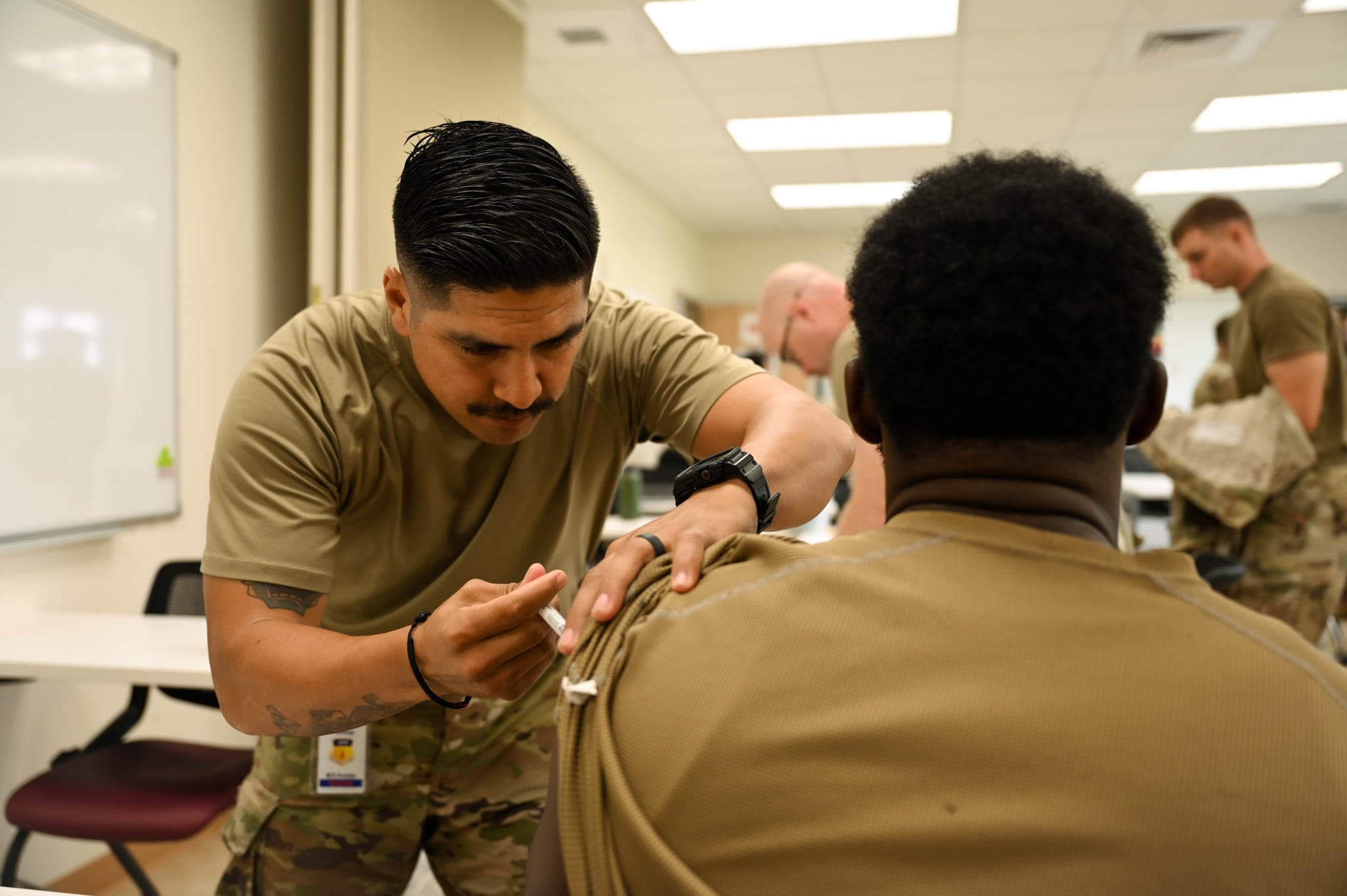
    U.S. representatives announced an amendment to fiscal year 2027’s National Defense Authorization Act that would require all military service members to have an influenza vaccine, following a training base outbreak that sickened nearly 300 trainees and killed one.

    In a Tuesday press conference, Reps. Joaquin Castro, D-Texas, Chrissy Houlahan, D-Pa., and Gil Cisneros, D-Calif., announced their joint amendment’s introduction, calling it pertinent to military readiness and the well-being of American troops.

    “That is almost 300 future airmen and women who would not be finishing their training at their expected date,” Cisneros, a former under secretary of defense for personnel readiness, said in the briefing. “This has completely set back the Air Force’s expected recruitment class from entering the future squadrons on time.”

    This move comes after a flu outbreak sickened hundreds of trainees at Lackland Air Force Base, Texas, and killed one. Castro, whose district houses Lackland, confirmed that 284 trainees contracted the flu, four have been hospitalized and one has died.

    Over a week ago, the Air Force announced that the training wing at Lackland suffered a localized outbreak over the three weeks prior but did not mention how many trainees contracted the flu.

    Keon McDaniel, a basic military trainee from the 737th Training Support Squadron at Lackland, died on June 16 at Brooke Army Medical Center due to a medical emergency. Lackland officials said an investigation into the cause of his death is currently underway. Air Force officials declined at the time to comment on if his passing was related to the flu outbreak.

    But Castro, who requested an investigation into McDaniel’s death in relation to the flu, revealed Tuesday that the Air Force confirmed that the trainee did die from the outbreak on base, according to a release.

    “This is a tragedy that could have been prevented were it not for the reckless actions of Secretary [of Defense Pete] Hegseth,” Castro said in the statement.

    The outbreak caused lawmakers to express concern over the current optional flu vaccine policy for service members and Pentagon civilian personnel that went into effect in April, two months before the outbreak.

    Hegseth announced that service members would no longer be required to get the annual flu vaccine, citing the prior policy as “overly broad and not rational.”

    Last week, the Pentagon granted exceptions to policy requests, or ETPs, to military services and some federal agencies, allowing for the slight reversal to be included into Hegseth’s guidance.

    The services with ETPs granted by Under Secretary of Personnel and Readiness Anthony Tata include the Department of the Army, Department of the Navy and Department of the Air Force.

    Given that the Marine Corps and Space Force are under the Department of the Navy and Department of the Air Force, respectively, the services are also included in the exceptions.

    The Pentagon declined to comment on if all trainees would be required to get the flu vaccine or when the exceptions were requested and granted. The Associated Press reported that all trainees for basic military training would now be required to receive the vaccine, citing a Pentagon official.

    Castro confirmed in the Tuesday briefing that the Air Force’s exception to vaccinate all trainees was not approved until after the outbreak occurred even though it was requested about a month prior.

    Houlahan said that there has been no indication of flu outbreaks at bases other than Lackland, but it is considered an “ongoing concern.”

    “Now, nothing’s ever perfect. You could get the vaccine, and you still may get the flu or any other disease that may come forth, but it does make a difference,” Cisneros, a member of the House Armed Services Committee, said in the press conference.

    The representatives that brought forth the amendment last week criticized their Republican counterparts for previously rejecting the measure’s inclusion in the final NDAA rules package, prompting another push to revert the policy to again require all service members to receive a flu vaccine.

    The NDAA is currently moving through both chambers of Congress, with the House and Senate versions awaiting full consideration on their respective floors.

    This post was originally published on this site.
  • In a first, Trump will travel aboard Qatari-donated Air Force One

    In a first, Trump will travel aboard Qatari-donated Air Force One

    President Donald Trump will travel for the first time on the new Air Force One aircraft Wednesday, according to the White House.

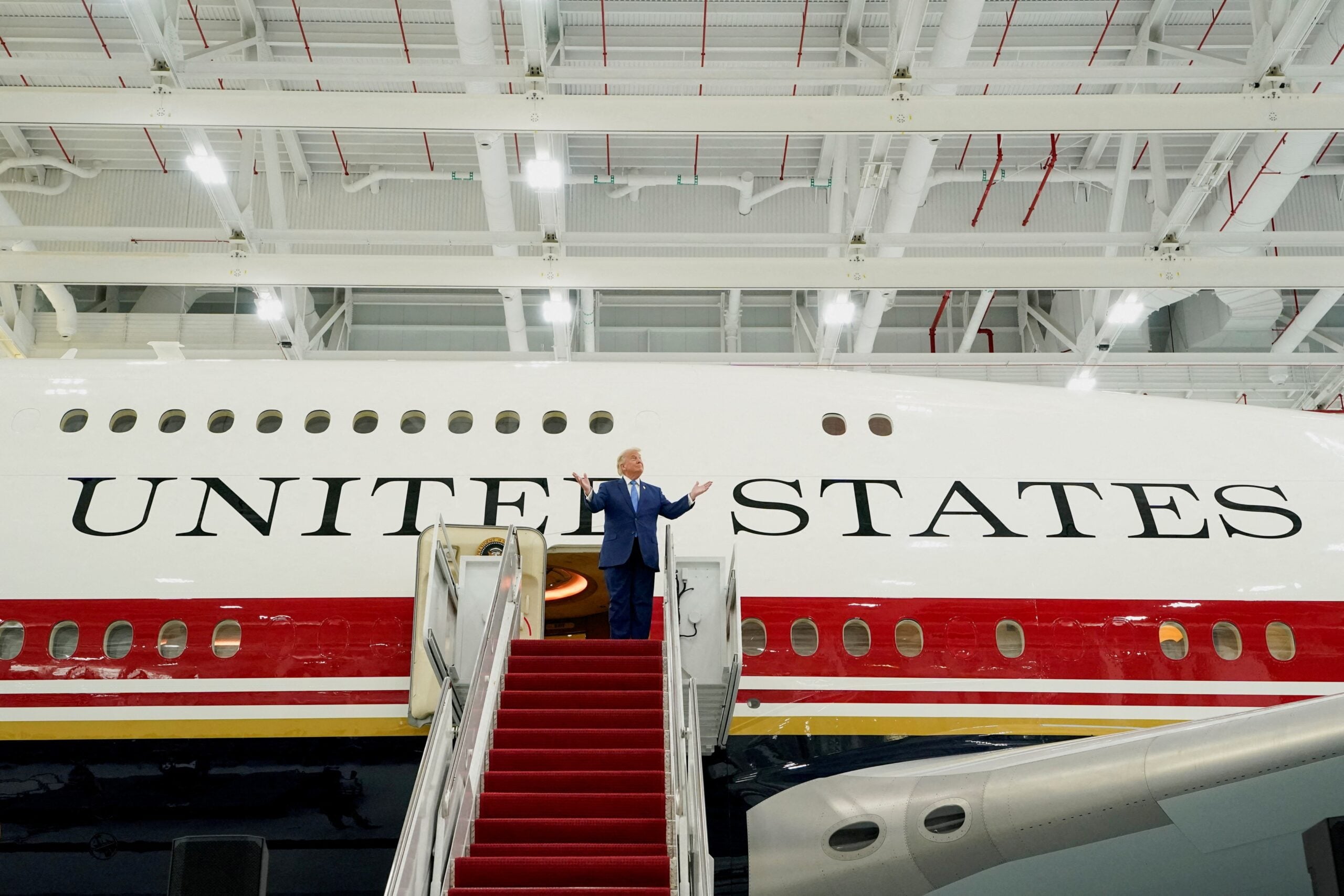
    Trump will be traveling to North Dakota to visit the Theodore Roosevelt Presidential Library as part of the country’s 250th anniversary celebrations, marking it the inaugural use of the Qatari-donated aircraft over a week after the U.S. Air Force began its commissioning flights.

    The aircraft had to undergo significant renovations to deem it suitable for presidential use, and after the modifications “final exam,” it must complete an unknown amount of commissioning flights that allow the White House to confirm mission-capability and finalize protocols for the president’s safety.

    After the flights are completed, the aircraft will be officially “commissioned” into the active executive airlift fleet and available for presidential use alongside the VC-25A and C-32 fleets.

    The commissioning flights have yet to be completed, and a timeline has not been made clear.

    One of the original VC-35As previously used by Trump took its last flight a day prior to the aircraft’s commissioning flights commencing.

    Initially, plans to replace the aging VC-35A with two new VC-25B were slated for 2024, but supply chain issues and a lack of properly cleared workers delayed Boeing’s plans until 2028, causing the president to use the luxury jet Qatar donated to the U.S. in 2025.

    The new Air Force One Boeing 747-8i sports the red, white and blue livery that Trump initially sought during his first presidential term in 2018.

    In addition to taking the new Air Force One to North Dakota, the president also confirmed during the aircraft’s unveiling at Joint Base Andrews its use for the early July NATO leaders’ summit in Ankara, Turkey.

    He also hinted that “at some point” this year, the administration will be traveling to China using the plane.

    Trump is scheduled to appear in South Dakota on Friday for a fireworks show, but it is not clear which aircraft Trump will use to attend the demonstration.

    This post was originally published on this site.