Tag: SNN Travel

  • Visiting Ouidah: Voodoo Traditions, History, and a Very Unexpected Python Moment

    Visiting Ouidah: Voodoo Traditions, History, and a Very Unexpected Python Moment

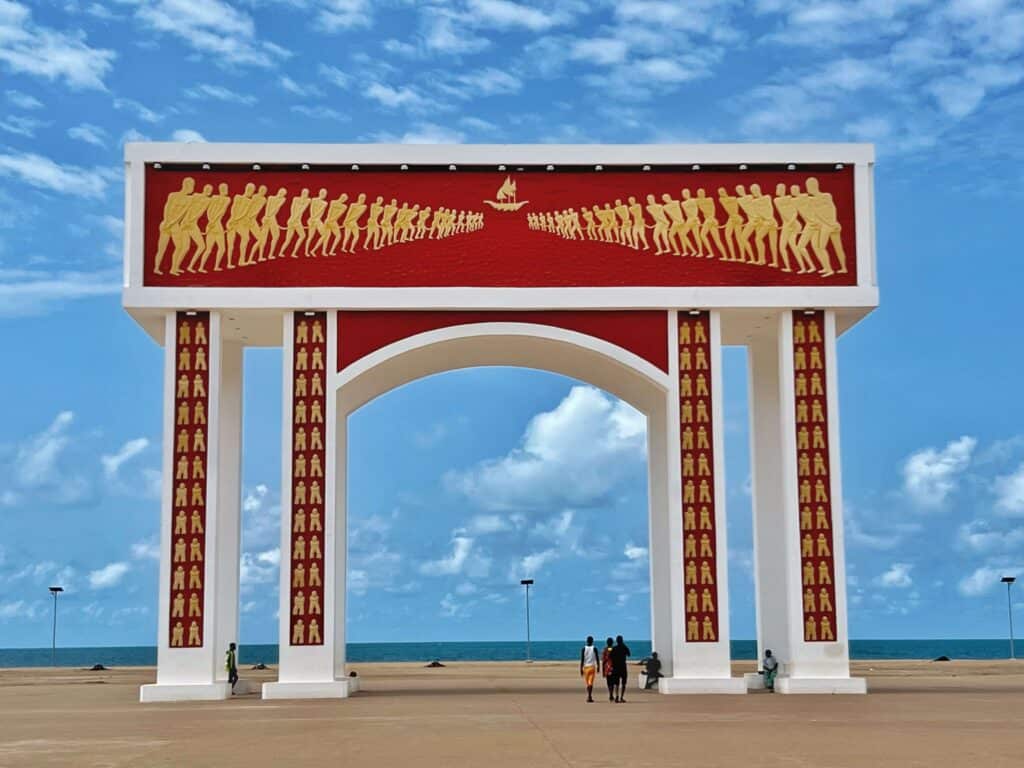
    Last Updated on June 25, 2026 by Sarah Wilson After Togoville, I travelled on to Ouidah — a place known both for its deep spiritual traditions and its painful history. It turned out to be one of the most fascinating days of my trip, with moments I absolutely did not expect, such as a python around my neck, which […]

    The post Visiting Ouidah: Voodoo Traditions, History, and a Very Unexpected Python Moment appeared first on LifePart2andBeyond.com.

    This post was originally published on this site.

  • Why Cappadocia is the Perfect Place to Conquer a Fear of Hot Air Ballooning: The Ultimate 59th Birthday Gift to Myself

    Why Cappadocia is the Perfect Place to Conquer a Fear of Hot Air Ballooning: The Ultimate 59th Birthday Gift to Myself

    Last updated on July 4th, 2026

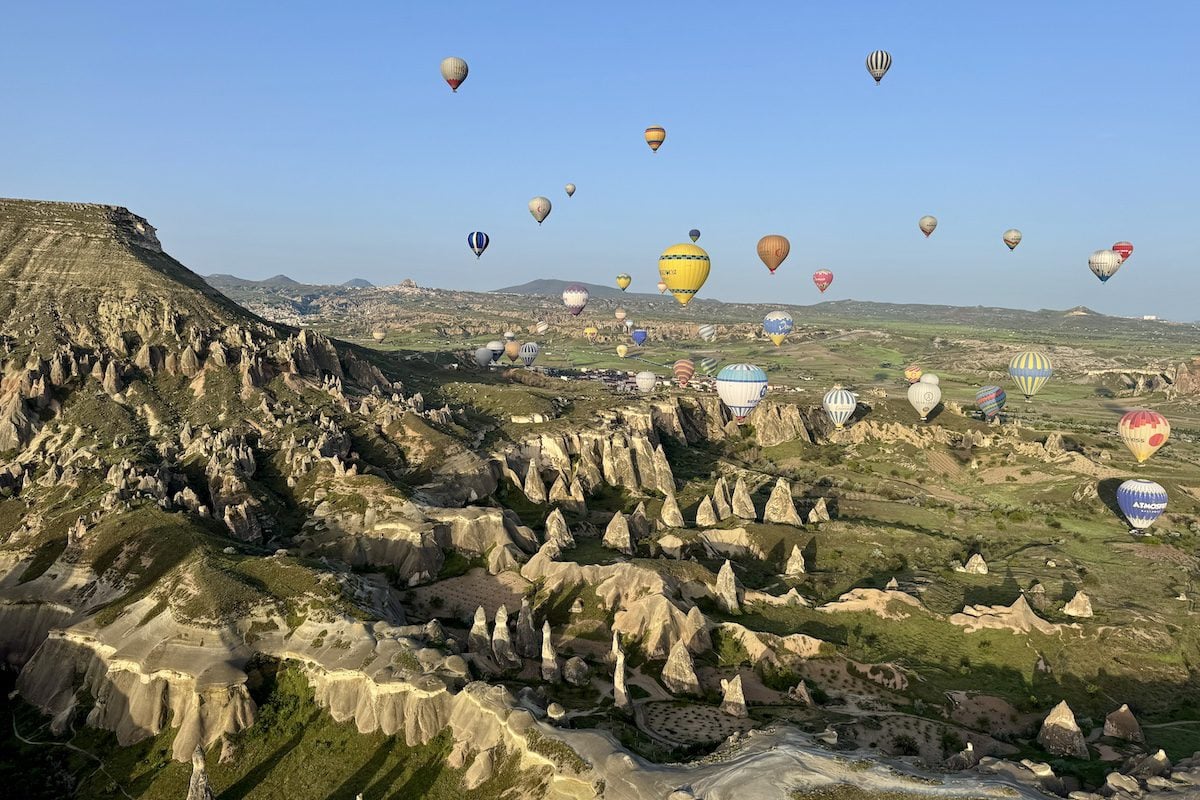
    Featured image: Hot air balloons in Cappadocia, over Göreme | Photo by Jennifer Bain

    Overcoming my imagination to float above fairy chimneys in Türkiye

    by Jennifer Bain

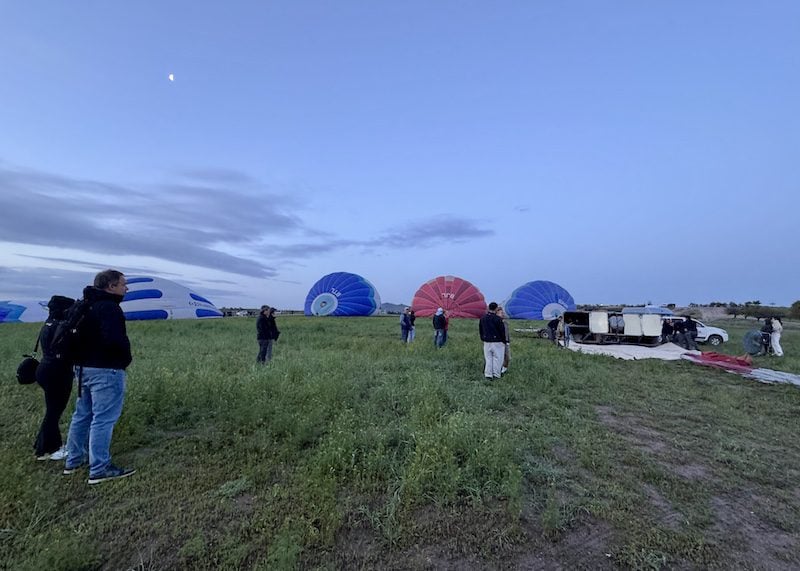
    Sunrise is looming as we fret about whether it is too cloudy for the Turkish government to grant permission for hot air balloons to soar above Cappadocia’s fabled fairy chimney rock formations. When the skies clear and approval finally comes around 5:20 a.m., there is sweet relief and then a flurry of action at the staging area.

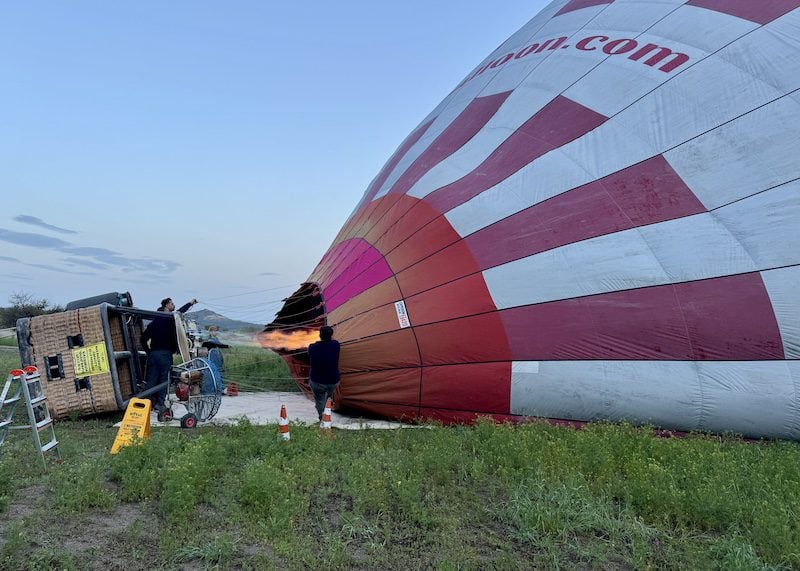
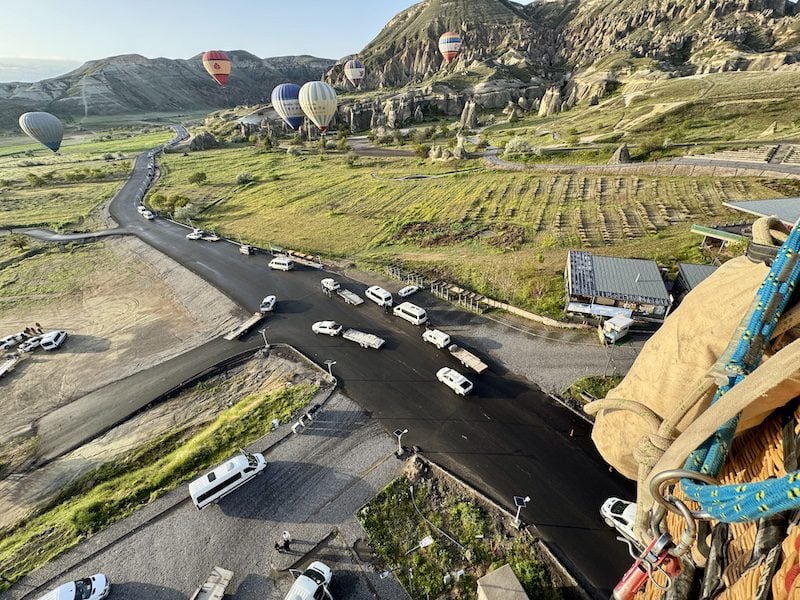
    Pilots and ground crew dash over to multi-coloured balloons attached to wicker baskets lying on their sides. They use engine-driven fans to pump cold air into the deflated “envelopes” and then propane burners to blast in hot air.

    Before you go…

    Get stories just like this one delivered straight to your inbox. Join the newsletter here.

    As our red and grey beauty takes shape and rights itself, we are invited to climb into the wicker baskets. Sixteen of us are divided among four compartments and get briefed on how to land in high winds by crouching, clutching rope handles and leaning against the back of the basket to absorb the impact.

    “Everything is okay?” asks Pilot Ümit Ertosun. “All ready. Let’s go. Enjoy your flight, everybody.” Minutes later, he announces we are already at 900 metres and I exhale.

    The desire to fly is supposedly universal, but while I’m a travel writer who happily took 81 commercial flights (plus one helicopter ride) last year, I have a healthy fear of airborne adventures like skydiving, ziplining and hot air ballooning.

    Heights don’t frighten me. Human error does, and a vivid imagination doesn’t help.

    For my long-awaited first trip to Türkiye, I divide my time between the under-the-radar, mountainous, tea-growing Eastern Black Sea region near the Turkish-Georgian border and the world-famous, semi-arid Cappadocia region.

    Waiting for the hot air balloons to inflate

    Waiting for the hot air balloons to inflate / Photo by Jennifer Bain

    Inflating a hot air balloon

    Inflating a hot air balloon / Photo by Jennifer Bain

    An early birthday gift

    Not ballooning in the place that has become synonymous with hot air ballooning appealed to this contrarian. Perhaps I’d climb to the “Sunset and Sunrise/Balloon Viewpoint” at dawn to enjoy the hoopla. Or I’d watch in my PJs from the comfort of my cave hotel roof in the laidback tourist town of Göreme.

    But then an inexplicable urge to do things that scare me takes hold, so I book a balloon ride as an early 59th birthday gift to myself.

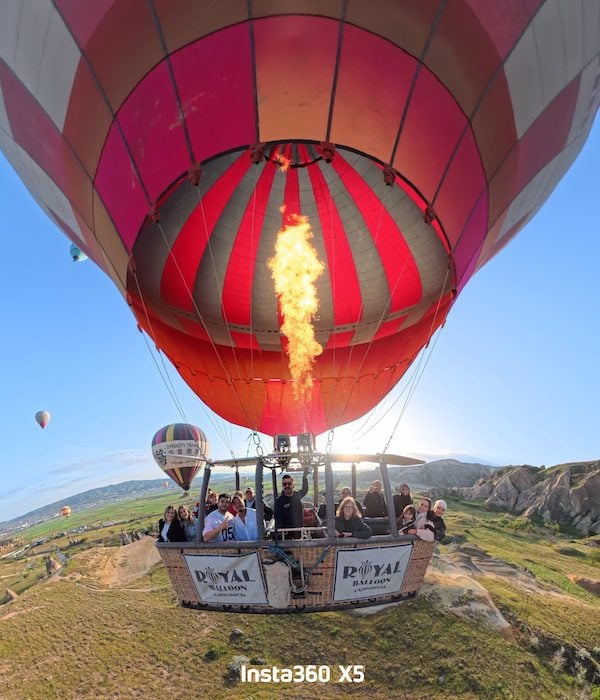
    “One, two, three — smile,” says Ertosun halfway through our hour-long flight as he pulls out an Insta360 X5 and shot panoramic photos and videos.

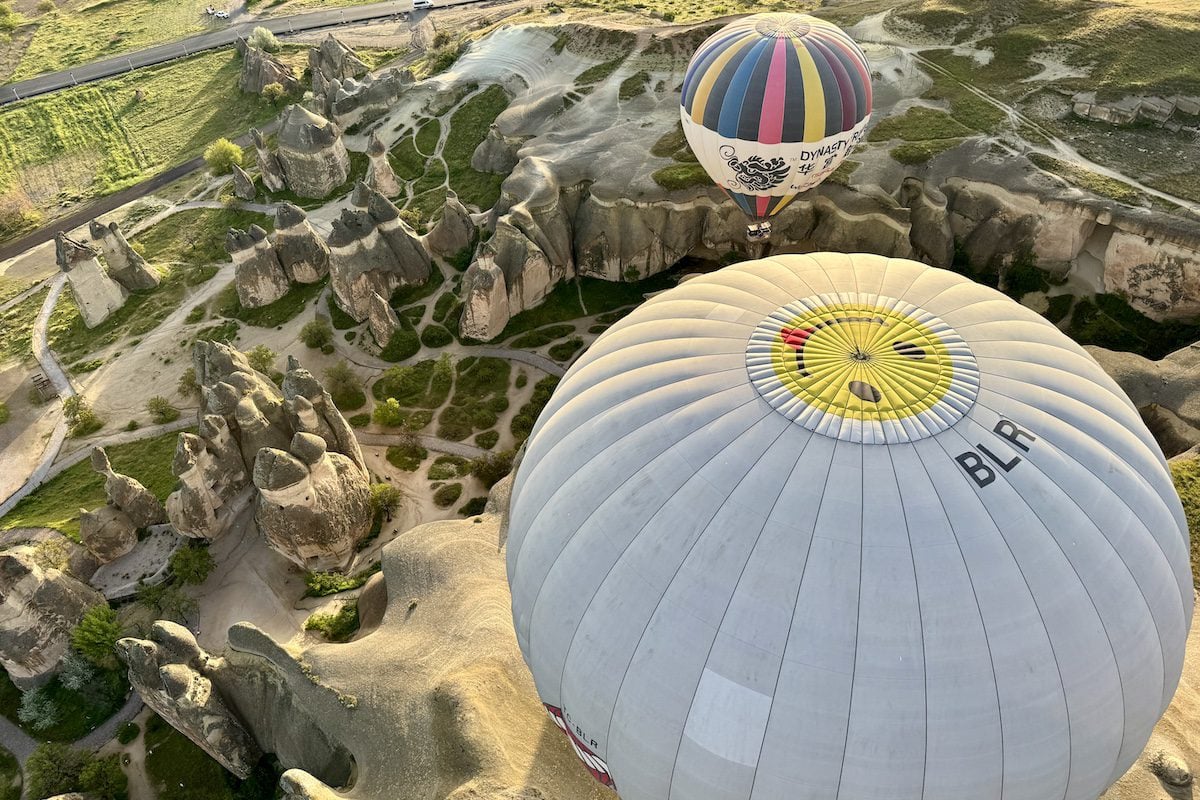
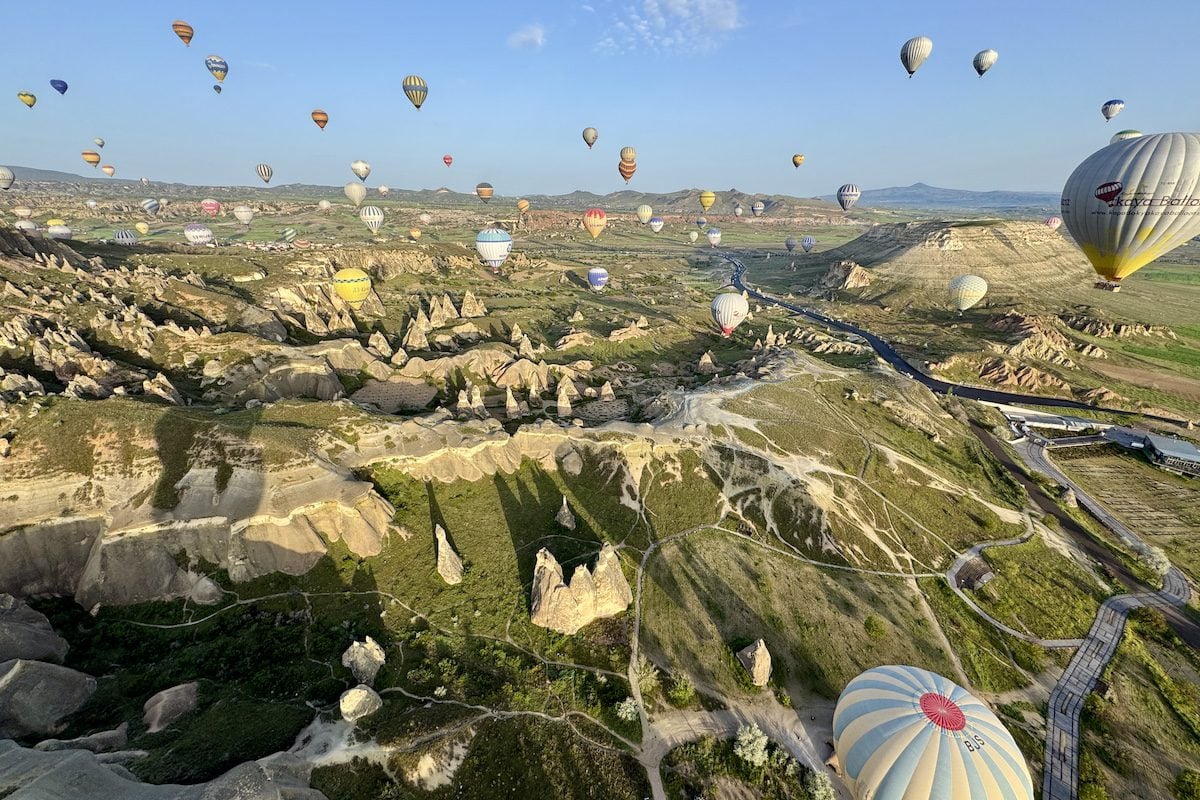
    It’s impossible to describe the cacophonous whooshing sounds that balloons make as burner blasts heat the air that keeps them afloat. It’s far easier to wax poetic about floating over fairy chimneys — the otherworldly, eroded rock spires that we Canadians call hoodoos.

    Watching 90-odd balloons jockey for space in the sky was unnerving, so I was grateful that Ertosun kept us away from the madding crowd, navigating to a hill and then flying low enough over the astounding landscape to scrape the brittle tops of bushes.

    The hour went by in a glorious flash without even a split second of fear.

    Looking down on fairy chimneys and hot air balloons

    Looking down on fairy chimneys and hot air balloons / Photo by Jennifer Bain

    Writer Jennifer Bain and her fellow hot air ballooners in Göreme

    Writer Jennifer Bain and her fellow hot air ballooners in Göreme / Photo by Royal Balloon

    Hot air balloon pilot Ümit Ertosun at work

    Royal Balloon pilot Ümit Ertosun at work / Photo by Jennifer Bain

    How to pick a reputable hot air balloon company

    Plenty has been written about what you’ll see while ballooning, but it’s harder to get intel on how to pick a reputable company.

    First, I cross-referenced Lonely Planet Tükiye’s recommendations with the two companies that tourism officials use for media guests. Then I analyzed websites from this shortlist and picked Royal Balloon because it had pilot bios, detailed its 18-balloon fleet, touted safety and luxury, had a great FAQ section and provided quick and clear responses to information requests.

    This wasn’t the time to cheap out. As a fellow ballooner put it: “You can’t take it with you.”

    I dropped 280 Euros for a Royal Queen Plus Flight with 16 passengers — cheaper than the Royal King option for 12 and pricier than the Royal Queen one for 24. Knowing these bucket list rides only happen at sunrise and are frequently scuttled by weather, I paid an extra 50 Euros for the “Gold add-on” to automatically be scheduled for the next morning’s flight if my first attempt was cancelled.

    My inner control freak admires how tightly Türkiye’s hot air balloon industry is controlled. Unlike countries that let pilots call the shots, the Turkish Civil Aviation Authority assesses daily wind speeds, visibility and pressure systems and decides whether it’s safe enough to launch in each region.

    “Meteorological conditions have been considered unsuitable for flight for the set margin of time,” they report online with red flag icons on “unflightable” days.

    “Meteorological conditions have been considered suitable for flight for the set margin of time,” they report with green flags when the stars align.

    Find activities, things to do and day tours here on GetYourGuide.

    The experience starts before sunrise

    My balloon experience starts at the rather ungodly hour of 4:05 a.m. That’s when I am whisked from my hotel to Royal Balloon headquarters, which holds the quirky distinction of being the Honorary Consulate of Romania, apparently because of the Turkish founder’s ties with this important trade partner.

    Skipping Turkish tea and a continental breakfast so my weak bladder won’t ruin the flight, I take my place at table two with the other 15 people bound for balloon TC-BRZ. Around 5 a.m., we take minibus two to the staging area to await word on whether it is a flightable or unflightable day.

    Roughly 90 balloons get to fill the spring sky that chilly May morning, slightly below the daily limit of 104 on the “first flight” that usually begins before sunrise, and the 52 that can start soon after for a total of 156.

    Hot air balloons fly over Göreme

    Hot air balloons fly over Göreme / Photo by Jennifer Bain

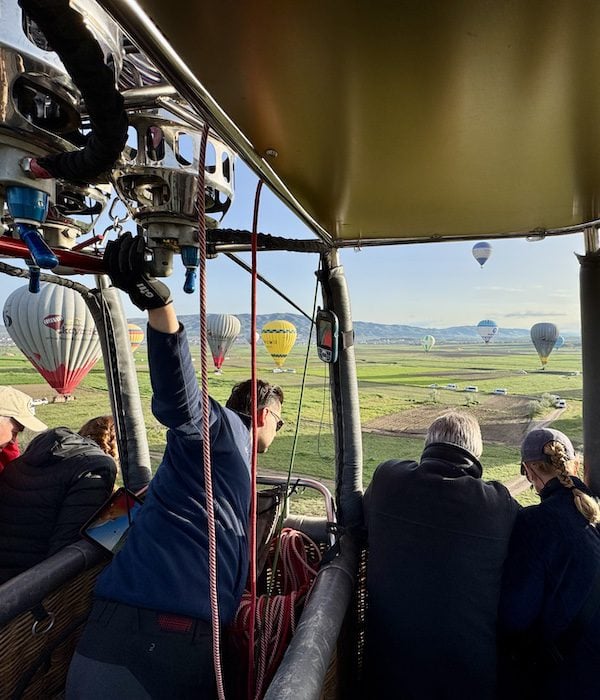
    My assigned spot is in the coveted corner of the outer edge of a basket compartment. But when three friends ask me to move so they can get better selfies, I wind up happily positioned under the burner where I can stay warm and watch the pilot fiddle with his altimeter, variometer, compass and temperature gauge.

    Humming the 1983 hit “99 Luftballons” (an anti-war anthem about 99 red balloons) by German pop singer Nena, I try to stay in the moment instead of fantasizing about splurging on a second ride. It is quiet in Göreme that week — apparently due to airspace closures keeping Asian and Arab tourists away — and balloon rides are going for as low as 115 Euros.

    I learn that balloons fly better in cooler weather and just after dawn when there is less wind. They rise thanks to heated air, and go down when the air cools or is let out. They go where the wind takes them, but pilots can seek higher or lower altitudes to “sail” on wind currents.

    Floating back to earth on a feather

    My trusty pilot deftly manoeuvres us towards a field where chase crews wait to help with the landing. The wind is so low — barely four knots or seven kilometres/hour — that we get to stay standing instead of crouching to brace for impact.

    It sounds corny, but I imagined we were floating back to Earth on a feather.

    “Ready?” our pilot asks once we climb out of the basket and are handed Champagne glasses. “One, two, three. Cheers everybody.”

    “Cheers — thank you,” we shout back, sipping Turkish sparkling wine.

    By 7:30 a.m., I am crawling back into bed, sporting a commemorative gold medallion. Six days later, in another part of Türkiye, I soar across a lush valley in a homemade cable car that feels like a giant bird cage. There’s a natural high that comes with stepping outside of your comfort zone, and I just might start chasing it.

    Approaching the landing area

    Approaching the landing area / Photo by Jennifer Bain

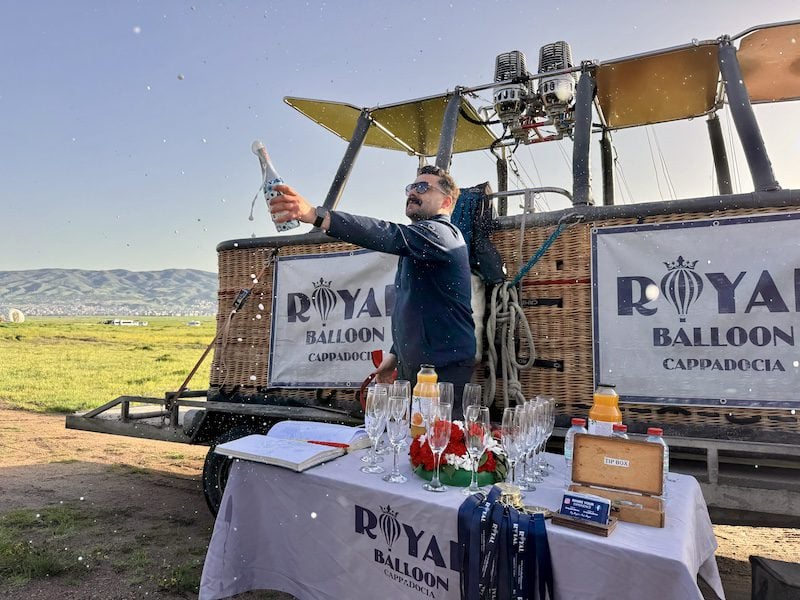
    Royal Balloon Pilot Ümit Ertosun celebrates after the flight

    Pilot Ümit Ertosun celebrates after the flight / Photo by Jennifer Bain

    Make a trip to Cappadocia happen

    How to get there: Turkish Airlines flies from Istanbul to two airports in the Cappadocia region. Using Göreme as my base, I flew into tiny Nevşehir Kapadokya Airport (NAV), which is 45 minutes away. I flew out of the larger and busier Kayseri Erkilet Airport (ASR), which is 90 minutes away. I also flew Turkish Airlines from Istanbul to Toronto, and my business class upgrade got me a lie-flat seat but also entry into Istanbul’s astounding international Business Lounge to feast at hot food stations where chefs prepared dishes like manti (tiny Turkish meat dumplings smothered in yogurt sauce and spiced butter) and even handed out recipes. The airline is a Star Alliance partner, but be sure to enroll in its Miles&Smiles loyalty program. Check for flights here!

    How to get around: Your hotel can arrange airport transfers, which currently cost 10 to 15 Euros per seat in a minibus. It’s easy to walk or take taxis around Göreme, and join excursions with hotel pickups, so car rentals aren’t necessary.

    Money: Türkiye uses the Turkish Lira (TRY), but people in Cappadocia embrace the Euro and often list prices in both currencies. Credit cards are widely accepted and ATMs are plentiful, but always carry cash for gratuities, small items and emergencies.

    Best time to visit: Spring and autumn are touted as the best times for hot air balloons, with steady weather and comfortable daytime temperatures that hover below 22C. In summer, temperatures soar over 30C and accommodations fill up. Winter brings lower prices, a dusting of snow and a higher chance of balloon cancellations.

    Where to stay: I adored the family-owned Aydinli Cave Hotel (read my full hotel review here), but you can browse accommodations in Göreme and the Cappadocia region here on Booking.com.

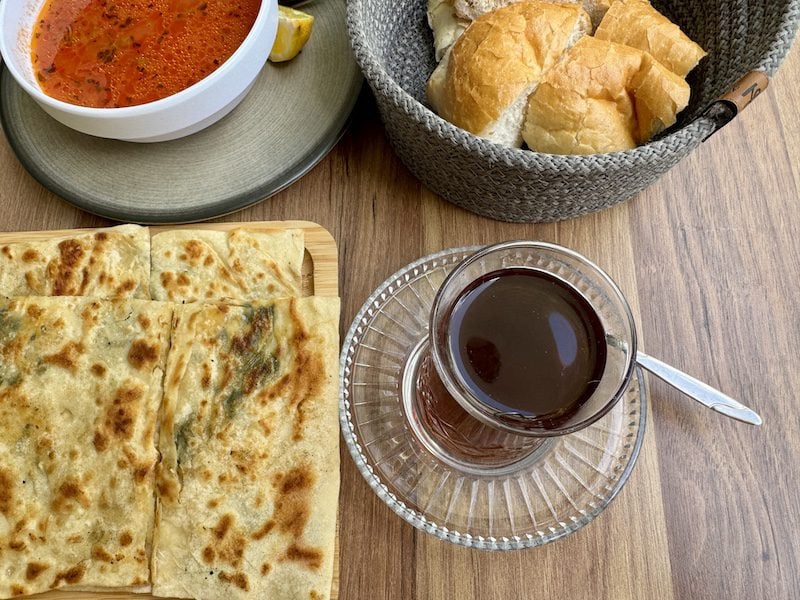
    Where to eat/drink: I loved Cafe Safak and Omurca Art Cafe for meals like manti (Turkish dumplings smothered in yogurt and spices), Taste of Mom’s for gözleme (stuffed flatbreads) and King’s Coffee for dessert and drinks (they have decaf coffee and plant-based milk options).

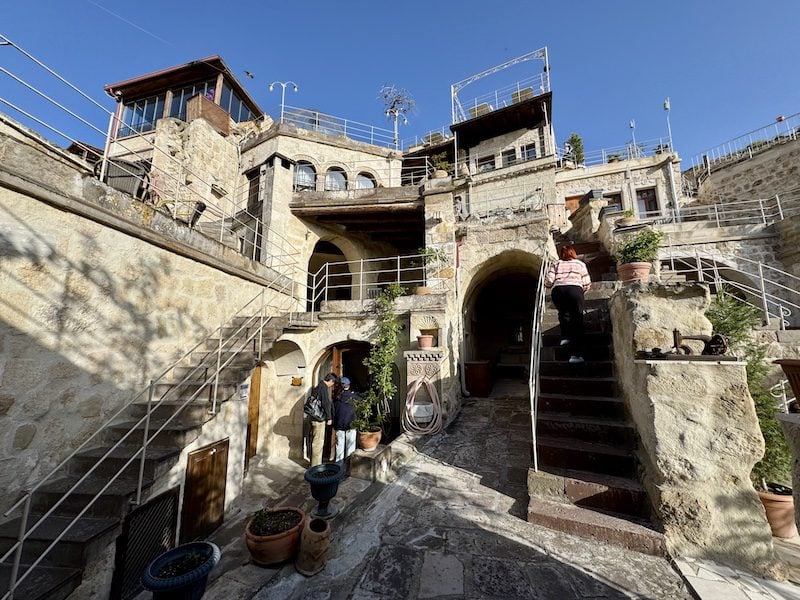
    Guests find their rooms at Aydinli Cave Hotel in Göreme

    Aydinli Cave Hotel in Göreme / Photo by Jennifer Bain

    Gözleme at Taste of Moms

    Gözleme at Taste of Mom’s / Photo by Jennifer Bain

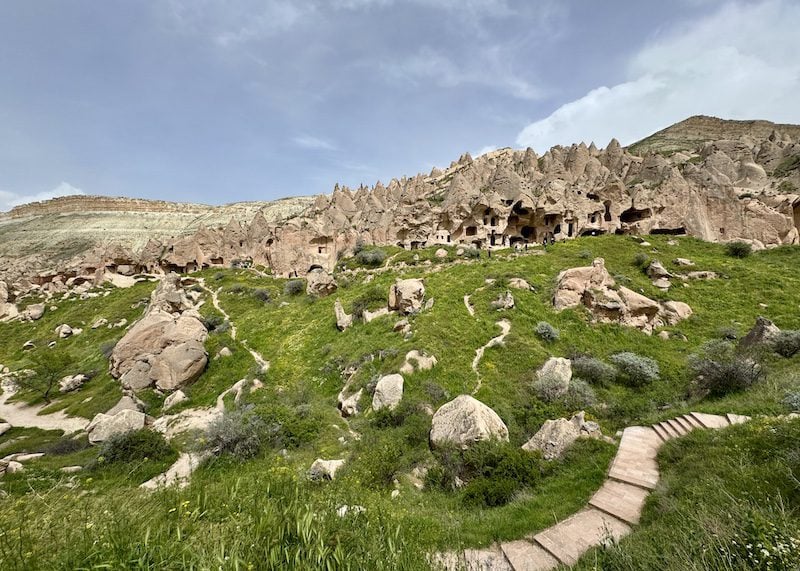
    Exploring the area: Everybody sells full-day guided excursions known as “green” and “red” tours, but pay attention to the itinerary. I paid more for my green tour that heads south of Göreme for an underground city and time in nature, and was glad it turned out to be a “green plus” tour that included a hike and monastery visit. A friend on a discount tour wasn’t so lucky. My red tour stuck closer to town and visited fairy chimneys and the UNESCO-listed, rock-carved Zelve Open Air Museum. Both tours included lunch and time getting the hard sell in jewelry, pottery/ceramics and leather shops. You can walk to the Göreme Open Air Museum on your own. Other popular options (that I didn’t have time for) included cooking classes, horseback riding, mountain biking and ATV/Jeep safaris. Find day trips and activities on GetYourGuide here!

    When to book tours: Depending on the season, you’ll have to decide whether to book hot air balloon rides and tours in advance or when you arrive. I booked my balloon ride in advance for my shoulder season trip, but relied on tour recommendations from my hotel once I arrived.

    Maps: Your hotel should provide maps of Göreme and the Cappadocia region that outline the popular tour routes. I found a rudimentary Cappadocia Walking Map at one of Göreme’s many travel agencies, but I didn’t hike since trails aren’t well marked.

    Fun fact: Turkey officially became the Republic of Türkiye at the UN in 2022. This was to use the Turkish spelling and avoid being associated with an anglicized word linked to foolish people and Thanksgiving poultry.

    Travel Advisories: Before leaving home, you should always peruse government travel advisories, like the Government of Canada’s Türkiye Travel Advice, and the U.S. Department of State’s Turkey Travel Advisory.

    Zelve Open Air Museum

    Zelve Open Air Museum / Photo by Jennifer Bain

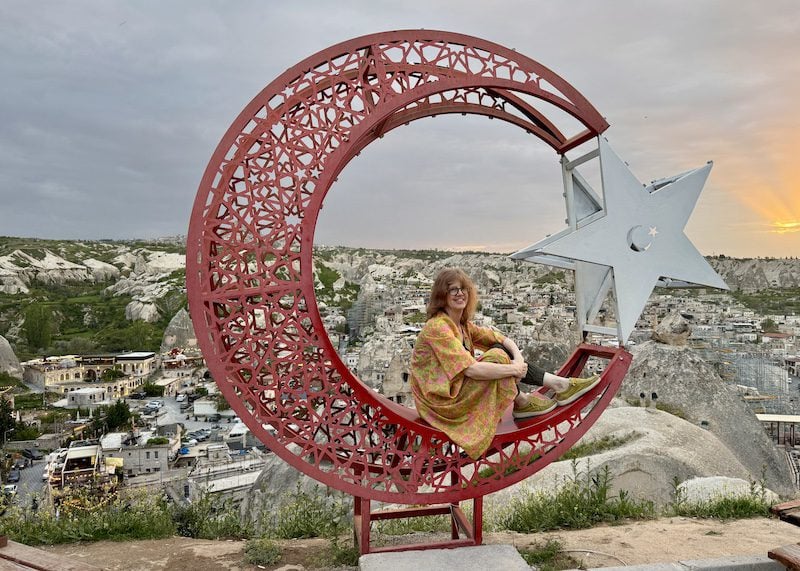
    Writer Jennifer Bain at the sunset viewpoint in Göreme

    Writer Jennifer Bain at the sunset viewpoint in Göreme / Photo by Nadine Robinson

    Disclaimer: Jennifer Bain’s flight to Cappadocia was provided by GoTürkiye and Turkish Airlines. She was not compensated for her time spent researching, travelling and writing this feature, nor was JourneyWoman for publishing it. In addition, the host organizations did not review this article before it was published, a practice that allows the writer to express her perspective with integrity and candour.

    The post Why Cappadocia is the Perfect Place to Conquer a Fear of Hot Air Ballooning: The Ultimate 59th Birthday Gift to Myself appeared first on JourneyWoman.

    This post was originally published on this site.

  • Taking the Savage Way: How Women of Any Age Can Hike Peru’s Epic Salkantay Trek to Machu Picchu

    Taking the Savage Way: How Women of Any Age Can Hike Peru’s Epic Salkantay Trek to Machu Picchu

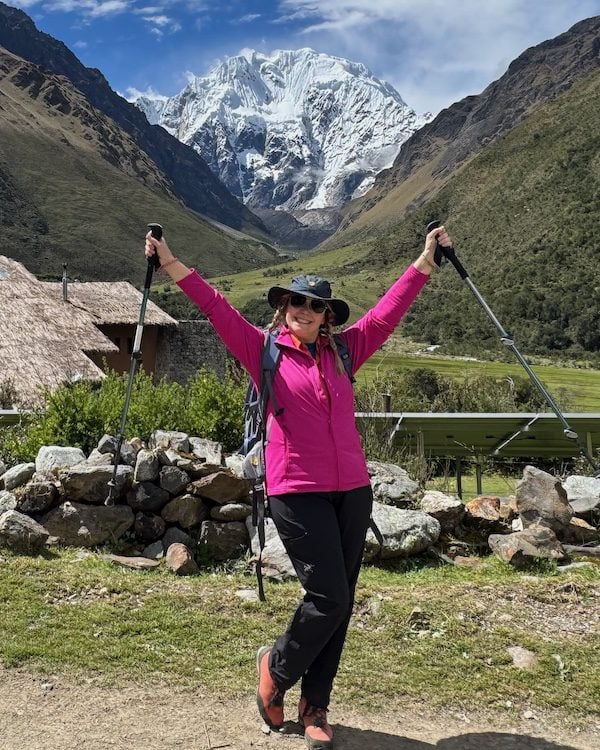
    Featured image: Writer Claudia Laroye shares her experience on the Salkantay Trek for women, a 4-day route to Machu Picchu with Alpaca Expeditions | Photo by Claudia Laroye

    A women-only expedition in Peru’s Sacred Valley 

    by Claudia Laroye

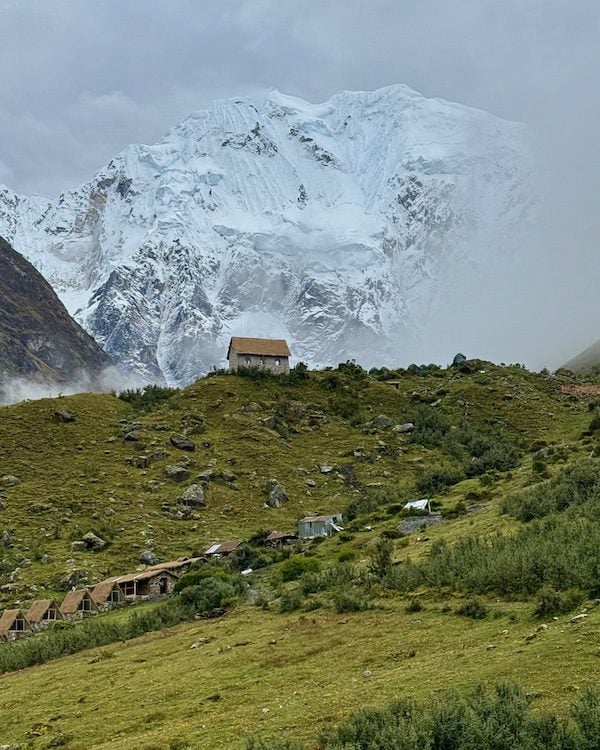
    Carefully placing one muddy booted foot in front of the other on the earthen trail, my mind drifts from admiring the puffy clouds shrouding the snow-capped peak of Salkantay Mountain in Peru’s Sacred Valley, to focus on today’s singular objective – getting to the pass.

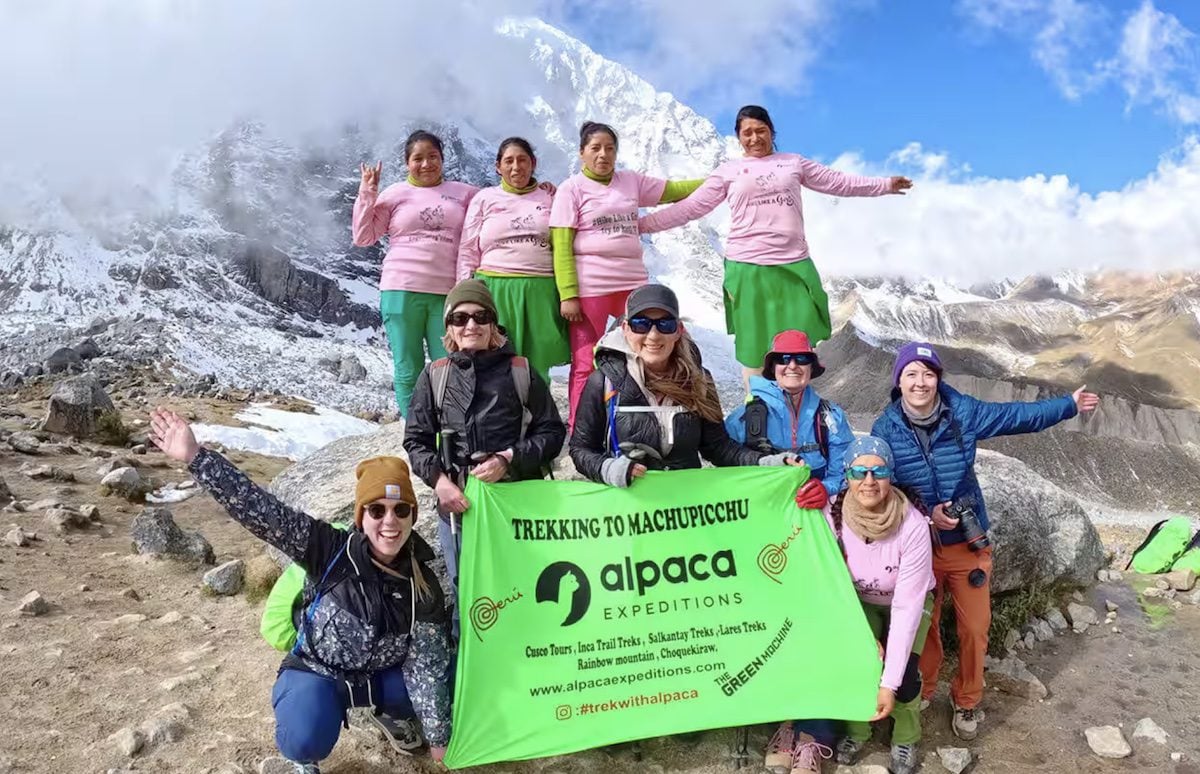
    The air is thin at this altitude, around 4,500 metres or 15,000 feet, as my Alpaca Expeditions hiking group approaches the apex of our trek – Salkantay Pass. My lungs are working overtime on the final approach, and then it’s whoops and high fives all around as our group, who arrived as 13 strangers but are now buddies bonded by 4 am wake-up calls, sweat and endurance, grin and hug each other in congratulations at our accomplishment.

    We pause to reflect and take well-earned photos before forming a circle to give thanks to Pacha Mama for our safe arrival. I offer silent gratitude for getting this far on one of the most epic trekking journeys in South America. Here’s how you can plan to do the same.

    Before you go…

    Get stories just like this one delivered straight to your inbox. Join the newsletter here.

    How to prepare for the Salkantay Trek

    In Quechua, the native language of the Incas and Peruvians who live in the Sacred Valley, Salkantay derives from “sallqa” meaning “savage” or “wild.” The peak is the highest in the Vilcabamba mountain range in the Peruvian Andes.

    Getting to the high-altitude Salkantay Pass starts well before locking the front door and catching flights to Lima and then Cusco for a couple of days of acclimation. Doing strength and cardiovascular training in the months before departure will help you prepare for the hike’s physical demands and the large elevation gains and dips.

    Cusco is the historic capital of the Incan Empire, and a delightful, compact colonial city from which to explore the Sacred Valley and important archaeological sites like Qoricancha, Saqsaywaman, Chinchero, Ollantaytambo, Pisac and of course, Machu Picchu.

    The Salkantay Trek is considered a strenuous hike of around 78 km/48 miles and on this tour, took place over five days and four nights. The final day is spent discovering the wonders of Machu Picchu, so really, you’re hiking for four full days with this itinerary.

    As altitude sickness can impact anyone, it’s a good idea to speak to your health care practitioner about taking medication (usually Acetazolamide, marketed as Diamox) to combat symptoms like headaches, fatigue and nausea that can put a cramp on your hiking style. In-country, chewing coca leaves and drinking coca tea will also help alleviate symptoms.

    The writer enjoying a moment of flat trail, with an eye to the pass in the background

    The writer enjoying a moment of flat trail, with an eye to the pass in the background / Photo by Claudia Laroye

    Salkantay Mountain looks high above the foothills in the Peruvian Andes

    Salkantay Mountain looks high above the foothills in the Peruvian Andes / Photo by Claudia Laroye

    peru hiking banner

    Female guides on the Salkantay Trek for women

    Alpaca Expeditions is a 100% Peruvian, Indigenous-owned expedition company that runs a wide variety of hikes and treks in the Peruvian Andes, including short and classic Inca Trail hikes, Rainbow Mountain tours, and various lengths of the Salkantay Trek.

    In 2024, Alpaca Expeditions was the first Peruvian-based tour company to launch an all-female guided and supported Salkantay Trek. This year, Alpaca introduced a new 7 day/6 night Women’s Only Trek to Machu Picchu led by its knowledgeable and experienced female guides.

    These tours offer the potential for a transformative experience filled with enriching encounters with local communities, insights into Machu Picchu’s fascinating history and moments of camaraderie, empowerment and personal growth.

    Women's Only SalkantayTrek at the Pass with Alpaca Expeditions

    Women’s Only Salkantay Trek at the Pass with Alpaca Expeditions / Photo Credit

    The Trek

    The Trek begins the evening before departure, with a group meeting at the headquarters of Alpaca Expeditions. Over tea, our guides go over the packing lists, daily itineraries and hiking expectations for our five days together.

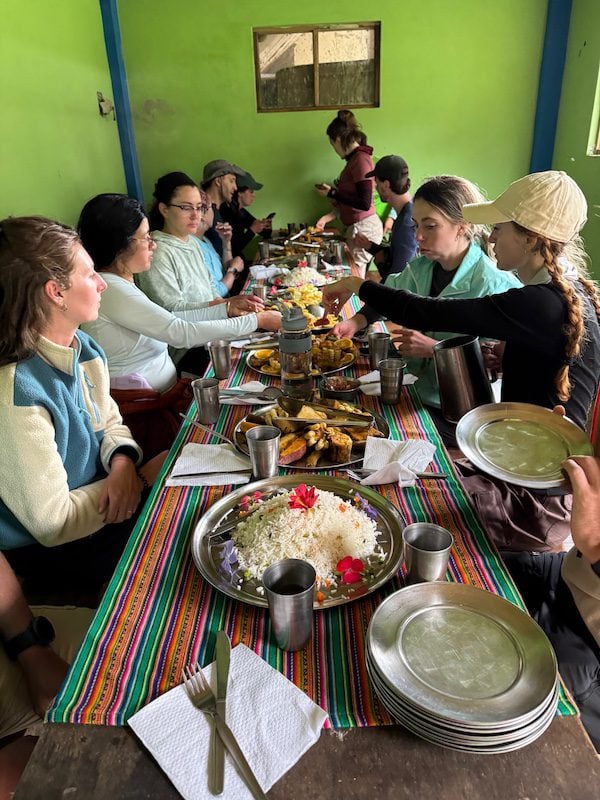
    One learns quickly that most Sacred Valley expeditions begin before sunrise. Wake-up calls arrive around 4 AM with the delivery of a steaming cup of coca tea before sitting down to a massive breakfast of pancakes, eggs, fruit and oatmeal. Sitting down to large, communal meals is a trek thing. The food is plentiful, nutritious and very, very good.

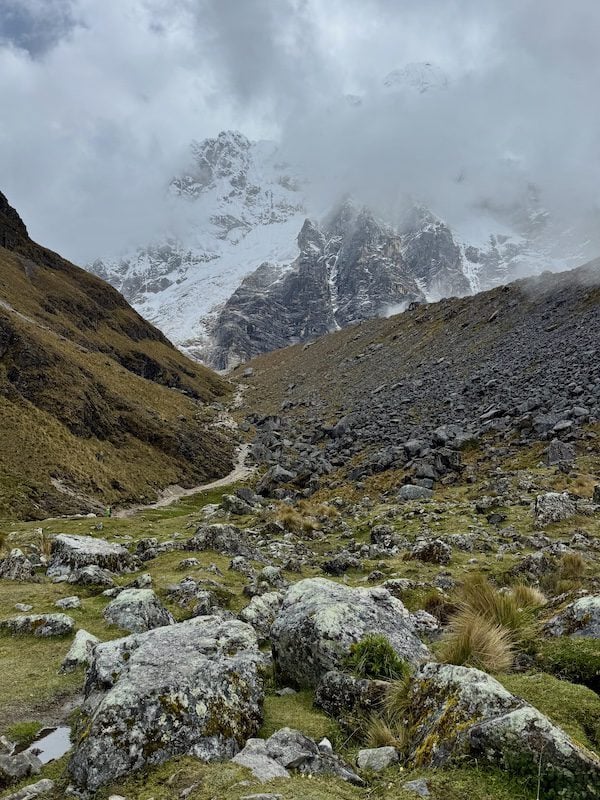
    Post-breakfast, it’s time to adjust backpacks and headlamps, hand duffel bags of extra gear over to porters and start hiking “Inca flat” (elevated) trails to turquoise lakes, past glaciers and pack horses, over the high point of the Salkantay Pass and through the thickening jungle canopy of the Peruvian Amazon before finally reaching the riverside town of Aguas Calientes.

    Stay connected here with a Saily eSIM. Use code JOURNEYWOMAN for 5% off.

    Lunch is served and the portions are as large as the hike is challenging

    Communal meals where portions are as large as the hike is challenging / Photo by Claudia Laroye

    Upward to the Salkantay Pass

    Looking upward to the Salkantay Pass / Photo by Claudia Laroye

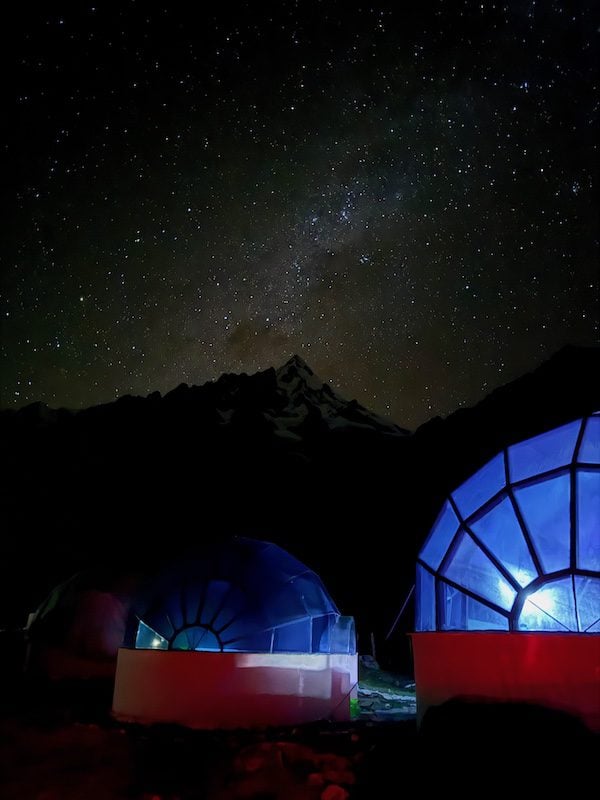
    Trek nights are spent bedded down in sleeping bags spread out on comfortable beds in glass cabins, hobbit houses and glass domes under a magnificent and magical southern sky full of stars, including the mystical Milky Way and constellations like the Southern Cross.

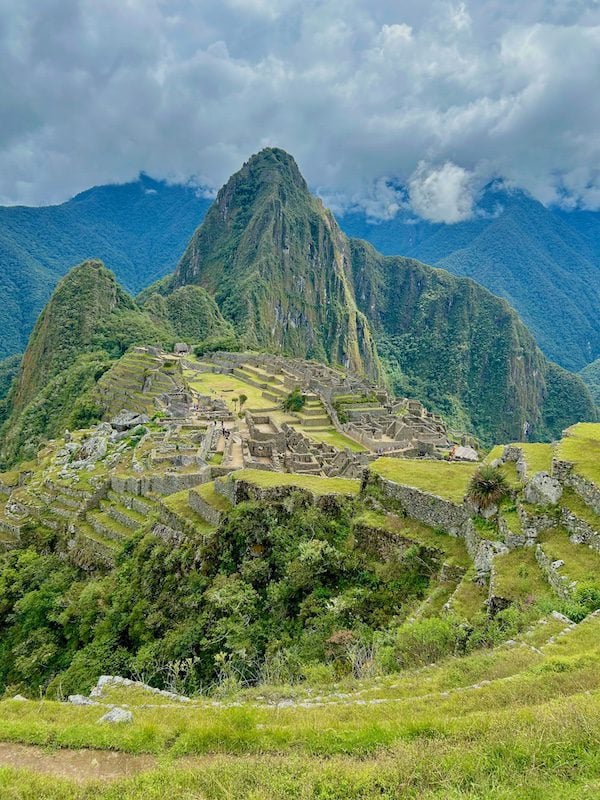
    The last day of the trek culminates in a slightly nerve-wracking 20-minute bus ride up the winding, narrow road to the entrance of Machu Picchu. For many travellers, seeing the mysterious lost city of the Incas, reclaimed from the jungle only one hundred years ago, is a lifetime goal. It is truly a world wonder; the beauty of its terraced hills, temple sites and well-built granite foundations is magnified by the misty clouds that roll in and out with the wind.

    The trip back to Cusco is faster than the one to Machu Picchu, thanks to a scenic two-hour Vistadome train trip on Peru Rail that stops in the historic town of Ollantaytambo, followed by a two-hour drive back to Cusco, where it all began.

    Both for me and the Incas.

    Glass domes and a beautiful night sky along the trail

    Glass domes and a beautiful night sky along the trail / Photo by Claudia Laroye

    Machu Picchu on a clear fall day

    Machu Picchu on a clear fall day / Photo by Claudia Laroye

    Disclaimer: Our talented writers are often invited by tourism boards and travel companies to experience places like this firsthand so that they can share them with you. As a guest of Alpaca Expeditions, Claudia Laroye was not compensated for her time spent researching, planning and writing this feature, nor was JourneyWoman for publishing it. In addition, the host organization did not review this article before it was published, a practice that allows the writer to express her perspective with integrity and candor.

    Make a trip to Cusco, Peru happen

    How to get to Cusco: Cusco is in Peru, in South America. In Canada, fly direct to Lima, Peru, via Air Transat from Montreal or Toronto. American Airlines, Delta Air Lines, and United Airlines all fly from the United States to Jorge Chávez International Airport (LIM) in Lima. Connecting flights to Cusco are every hour via LATAM or JetSmart and take about 1.5 hours. Most hotels are in the historical center of the city, near the Plaza Mayor, about 20 minutes taxi ride from the airport. Check flights here.

    Altitude Sickness: Cusco is located at 3,399 metres/11,152 feet, and people often report getting headaches on arrival. Be sure to hydrate and take medication if prescribed. Sipping natural coca tea works very well on both fronts.

    Where to stay: On the Salkantay Trek, hikers stay in comfortable accommodations provided by Alpaca Expeditions. These include glass cabins, glass domes and hobbit houses. The company has just purchased a new hotel in Aguas Calientes to accommodate clients before visiting Machu Picchu.

    In Cusco, Hotel San Augustin Internacional is a comfortable three-star hotel just 10 minutes from the main square and close to shops, restaurants, laundry facilities and the happening San Blas neighbourhood. Note: Cusco is famous for its stairs and cobblestone streets. Watch where you walk as you get your steps in!

    To look for hotels recommended by women, click here or check Booking.com for other options!.

    The post Taking the Savage Way: How Women of Any Age Can Hike Peru’s Epic Salkantay Trek to Machu Picchu appeared first on JourneyWoman.

    This post was originally published on this site.

  • Shaped by Hand: Four Artisan Places Women Should Visit, Where Clay Defines the Culture

    Shaped by Hand: Four Artisan Places Women Should Visit, Where Clay Defines the Culture

    Last updated on June 30th, 2026

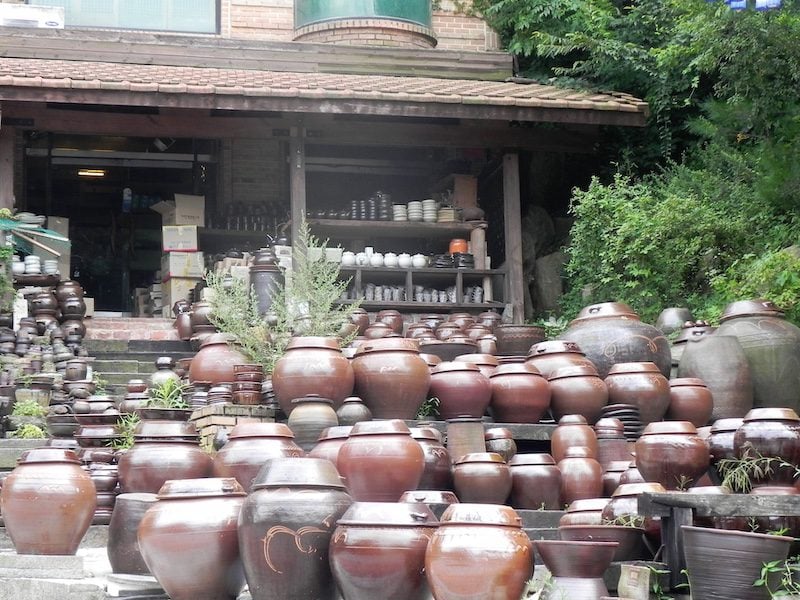
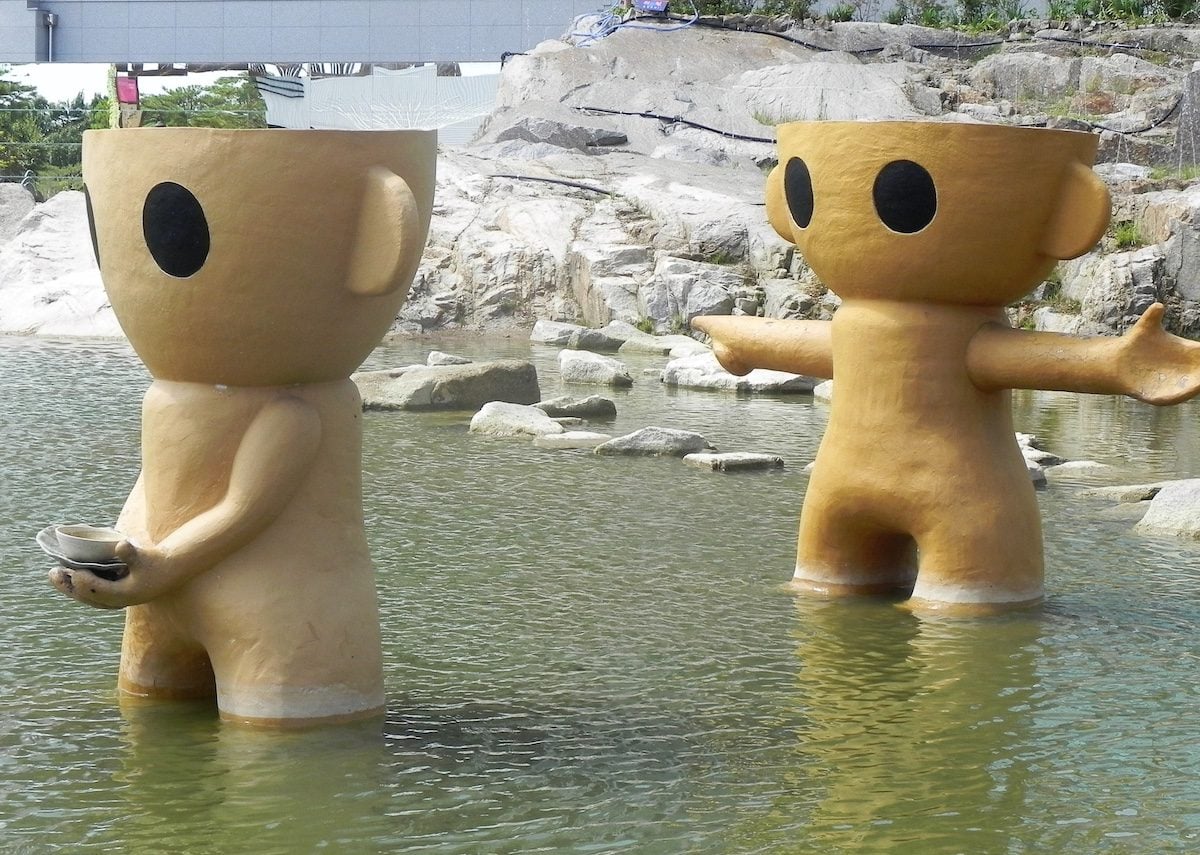
    Featured image: Large ceramic sculptures in Icheon, one of the many ceramic towns around the world | Photo by Karen Gershowitz

    From South Korea to Sicily, ceramics teach us about history and traditions

    by Karen Gershowitz

    My hands are steady as the lump of clay spins beneath my fingers. The shape is already in my mind, and my hands transform that image into form. I studied ceramics, earning both a BFA and MFA in the discipline. I have shaped teapots, bowls, and mugs on a potter’s wheel, mixed glazes, and opened kilns with equal parts anticipation and dread. Would the firing have created beauty or had something blown up?

    Since my college days, I have visited towns where ceramics are not just objects for sale, but expressions of identity, history, and daily life. In four very different places, I watched as earth, water, and fire were transformed into something far beyond household objects.

    Before you go…
    Get stories just like this one delivered straight to your inbox. Join the newsletter here.

    Four ceramic towns where pottery steps into the spotlight

    1. Icheon, South Korea

    I start my journey at the Icheon World Ceramics Center. Set on a hillside, the museum holds one of the finest and largest ceramic collections in the world. On display are pieces from every continent, both historic and contemporary.

    There’s a reason the museum is situated here. Icheon’s ceramics tradition dates back to the fourteenth century. The region’s high-quality clay and abundant firewood made it an ideal center for producing royal porcelain. Over time, it evolved into one of Korea’s most important ceramics hubs. Korean ceramic expertise was so highly prized that during the Japanese invasions of Korea in the 1590s, many potters were forcibly taken to Japan, where they helped establish some of that country’s most celebrated ceramic traditions. Today, master potters continue to refine centuries-old techniques.

    I move slowly through the galleries, past celadon vessels with their soft, almost luminous green glaze, and porcelain forms so refined that light passes through them. Classic shapes are displayed alongside modern riffs on their designs. Life-size sculptures appear to be walking through the museum’s grounds.

    While I could spend my entire day in the museum, I want to see what is being produced right now. A short drive away, I arrive in the commercial ceramics district. There are over 300 active studios where ceramicists work, teach, and sell their pieces. Workshops sit side by side, some traditional, some more contemporary, all producing high-quality work.

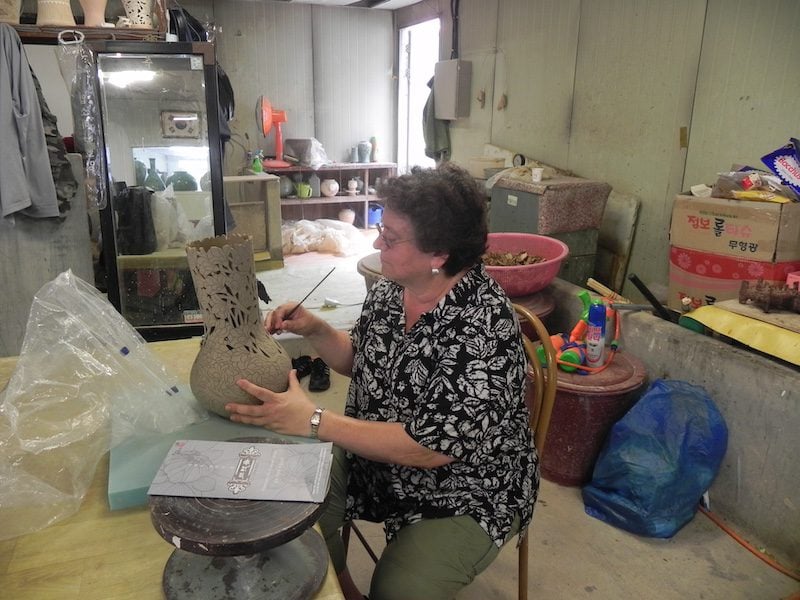
    In one studio, the artist demonstrates how to cut into a partially dried vase to create a lacework pattern. She allows me to try my hand at it. In another studio, a delicately hand-painted bowl in intense reds catches my attention. The proprietor sees my interest and pulls out dozens of other examples, each one slightly different and all of them beautiful. With so many choices, I have a difficult time deciding. I buy two.

    In Icheon, clay has been part of the town’s identity for hundreds of years. It remains so today, a place that should be on every art lover’s wish list.

    Icheon ceramics and pottery Village

    Icheon Village / Photo by Karen Gershowitz

    Icheon trying my hand at carving

    Karen trying her hand at carving in Icheon / Photo by Karen Gershowitz

    2. Metepec, México

    Icheon is known for exceptionally fine craftsmanship. In Metepec, ceramicists do not aspire to perfection. Instead, clay is a medium for storytelling. Around the town, there are thousands of variations on Mexican Trees of Life.

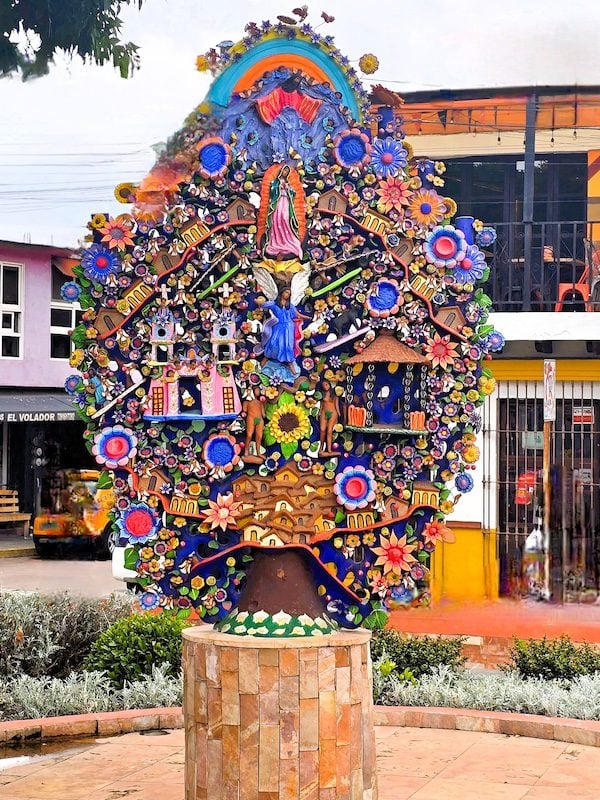
    Crafted during the Spanish colonial era, Metepec’s Trees of Life visually told Bible stories to those unable to read. Over time, they have grown more elaborate and personal, evolving into intricate sculptures that weave together religion, folklore, and personal stories. Many pieces are tied to the Day of the Dead, to remembrance and continuity.

    You’ll spot Trees of Life all over Metepec, even if you aren’t actively searching for them. In the downtown area, there are several large, strategically placed examples. The largest, over thirty feet tall, holds a Guinness World Record. This monumental clay artwork weighs twelve tons and is a prime example of the town’s traditional, detailed ceramic craftsmanship.

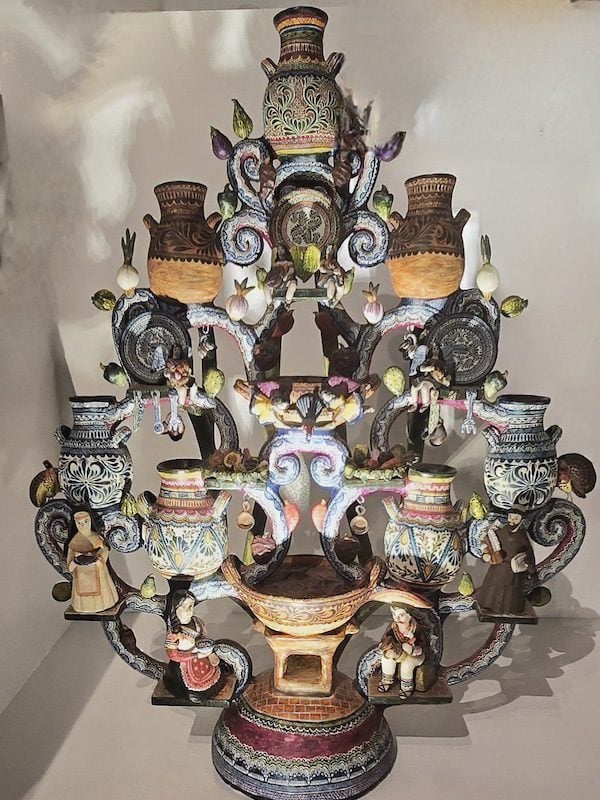
    The main retail street is lined with shops, each presenting a unique version of the tradition. These “Trees of Life” are alive with figures, flowers, animals, and symbols. The more I look, the more details I see. I find myself creating stories for some unusual examples. And asking myself why a tree features African animals, pinwheels, or equally unlikely subjects.

    At a nearby studio, an artist sits painting fine details. I see how much skill and patience are needed to carefully cover every surface with intricate designs. Her hand moves steadily, adding a line, a dot, a flourish. The technical skill is undeniable, but in the final product, what matters more is the storytelling.
    Metepec tree of life

    A colourful Tree of Life in Metepec / Photo by Karen Gershowitz

    Tree of Life

    A different Tree of Life style / Photo by Karen Gershowitz

    3. Caltagirone, Sicily

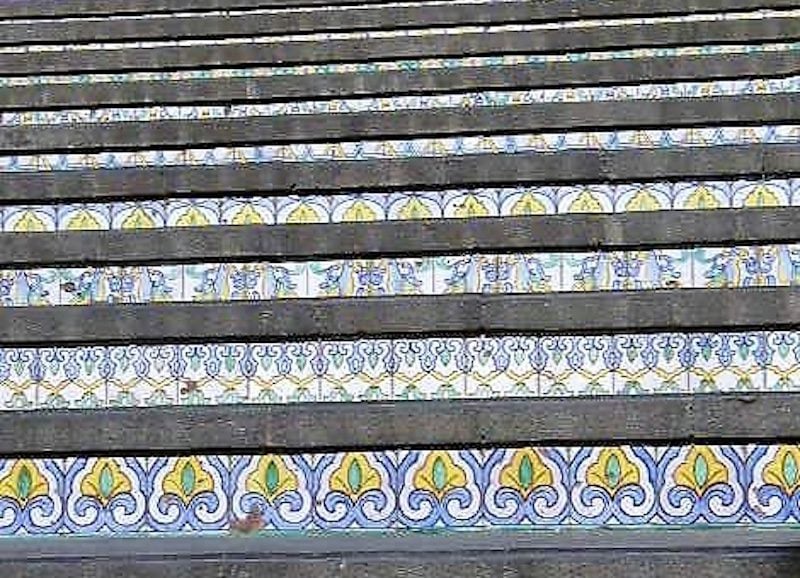
    In Sicily, ceramics are everywhere. In Caltagirone, they climb the walls, line the streets, and transform the architecture itself. Before I even enter a workshop, I am immersed in clay. Tiles in vivid blues and yellows cover staircases, balconies, and facades, turning the town into a living canvas.

    I walk up the famous staircase, each riser decorated with hand-painted tiles. As I climb, the patterns shift, geometric designs giving way to florals, then to more elaborate scenes. It feels less like decoration and more like a narrative embedded in the landscape.

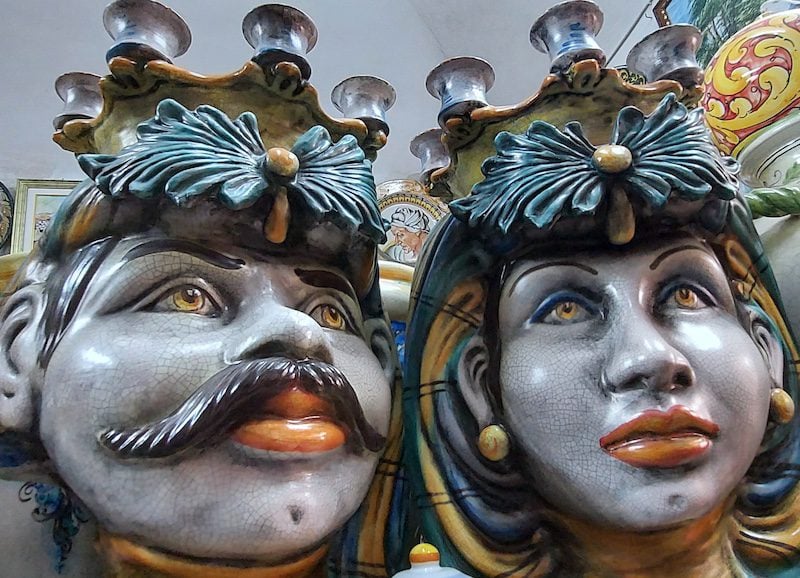
    In the studios, artisans paint and glaze with practiced ease. Iconic ceramic heads, rooted in legend, stare out from shelves. They are expressive and theatrical.

    What fascinates me is how seamlessly ceramics are integrated into daily life. This is not work that sits behind glass. It is walked on, lived with, and encountered at every turn. In Caltagirone, clay does not just reflect the culture. It defines how the culture looks and feels.

    Find tours and museum tickets in ceramic towns here on GetYourGuide.

    Caltagirone famous ceramic staircase

    Caltagirone’s famous ceramic staircase / Photo by Karen Gershowitz

    Caltagirone ceramic faces in Sicily

    Ceramic heads in Caltagirone / Photo by Karen Gershowitz

    4. Yingge, Taiwan

    Often referred to as Taiwan’s ceramics capital, Yingge is a place where traditional techniques coexist with contemporary experimentation. Walking through the town, I move from small family-run workshops to modern studios and galleries. Each offers a different interpretation of what clay can be. However, much of what is for sale is poor quality, clearly intended for tourists looking for an inexpensive souvenir.

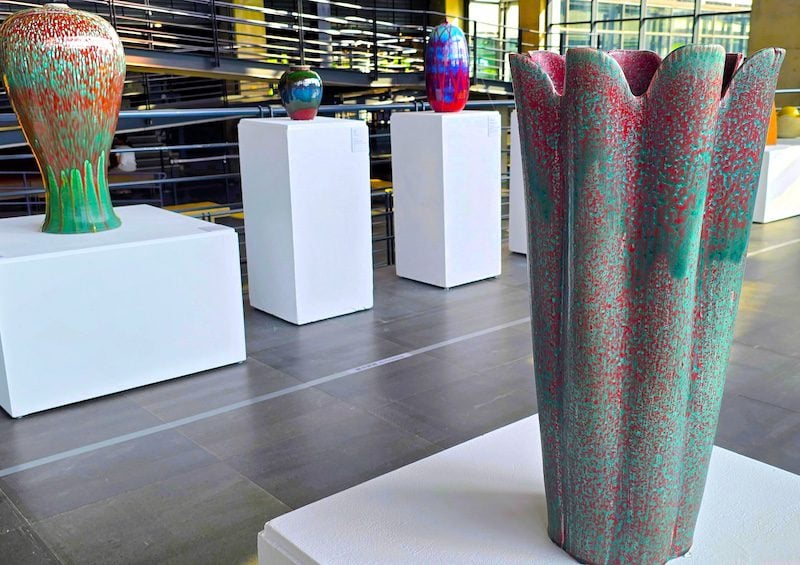
    I first visit the New Taipei City Yingge Ceramics Museum. It’s a spacious, light-filled complex that exhibits both historical forms and contemporary work. It introduces me to contemporary ceramic artists doing work that is innovative and beautiful.

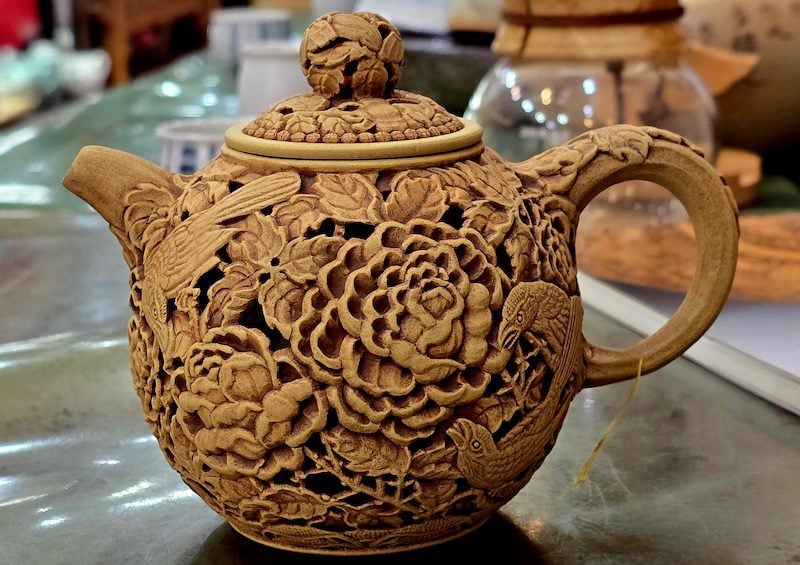
    Then, on the main shopping street, I find a shop devoted entirely to teapots. Inside, shelves are lined with pieces created by master ceramicists, each one distinct in proportion, balance, and surface decoration. At first, I simply look. Then, as I begin to ask questions, to comment on the clay, the weight, the way a handle meets the body, the proprietor studies me more closely.

    Something shifts.

    Without a word, he moves behind the counter and unlocks a glass case. One by one, he brings out teapots that had been hidden from view, pieces of extraordinary refinement. The lids fit so precisely that when closed, they don’t appear to have a seam. The surfaces are subtle and complex. I hold them carefully, fully aware that I am handling objects far beyond my price range.

    The proprietor invites me to sit as he prepares tea. The ceremony is quiet and deliberate; each movement practiced and unhurried.

    Before I leave the shop, I choose a small teapot. I spend more than I should, and far less than most of what surrounds me. It is exquisite, perfectly balanced, and an object that every time I use it will remind me of my time in Yingge.

    Yingge museum modern pieces

    Modern pieces in Yingge’s Ceramics Museum / Photo by Karen Gershowitz

    Yingge carved teapot

    An intricately designed teapot / Photo by Karen Gershowitz

    What the clay reveals

    What I have come to understand, both as a ceramicist and as a traveller, is that the finished object is only part of the story. In each of these places, the materials are the same. Earth, water, hands, fire. And yet what emerges is shaped by culture, history, and intention.

    In Icheon, clay reflects discipline and refinement.

    In Metepec, it carries story and memory.

    In Caltagirone, it shapes the landscape itself.

    In Yingge, it bridges tradition and innovation.

    This is not unique to these four towns.

    Other ceramic towns with strong traditions

    Once I began seeking out ceramics towns, I discovered how many there are; places where clay is not just a material, but a defining part of daily life. Across continents, each reflects its own history, resources, and traditions.

    Ceramic Towns in Europe

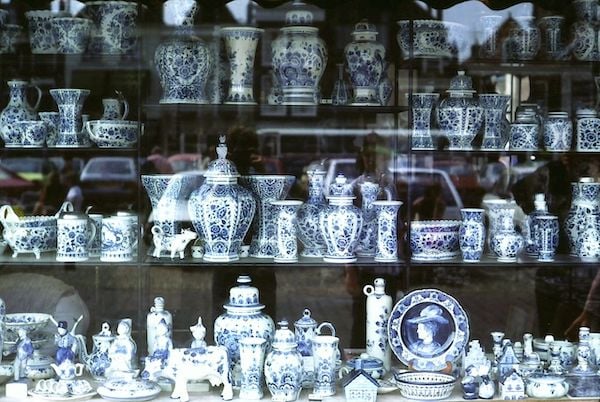
    Delft, Netherlands: Known for its iconic blue-and-white pottery, Delft transformed Chinese porcelain influences into a distinctly Dutch tradition that still defines the city’s visual identity.

    Limoges, France: Synonymous with fine porcelain, Limoges became a global standard for elegance and refinement, prized for its luminous white clay and delicate craftsmanship.

    Meissen, Germany: The secret of making porcelain was first unlocked in Europe here. Closely guarded formulas and royal patronage transformed Meissen’s creations into some of the continent’s most prized luxury goods.

    São Pedro do Corval, Portugal: One of Portugal’s largest pottery centers, this Alentejo village produces rustic, earth-toned wares that remain deeply tied to regional life and tradition.

    Shop window display of Delftware in the market place Delft

    Shop window display of Delftware in the market place Delft / Photo by Kim Traynor via WikiCommons

    Asia

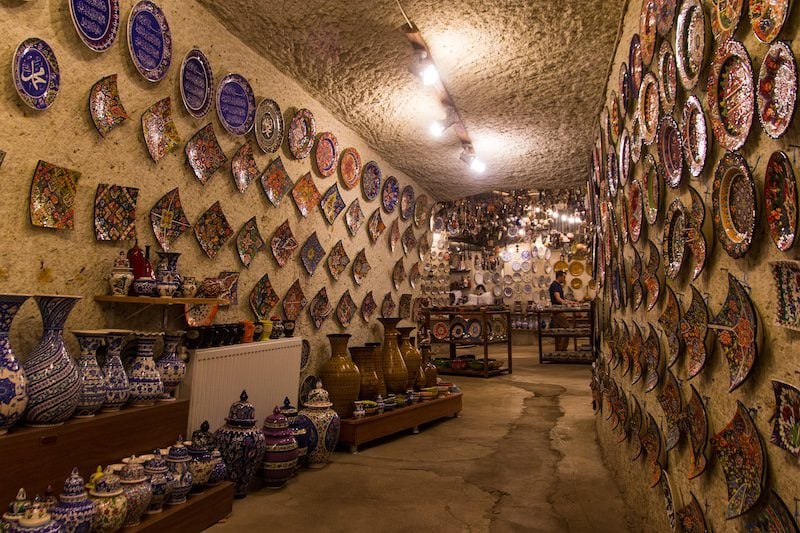
    Avanos, Turkey: Along the banks of the Red River, potters have worked the region’s iron-rich clay since Hittite times (beginning during the 16th century BC), producing both utilitarian wares and finely decorated pieces.

    Jingdezhen, China: Often called the porcelain capital of the world, Jingdezhen has produced imperial-quality ceramics for over a thousand years, its kilns shaping both domestic tradition and global trade.

    Bizen, Japan: One of Japan’s oldest ceramic traditions, Bizen ware is unglazed and wood-fired, its beauty emerging from the unpredictable effects of ash and flame.

    The Americas

    San Juan de Oriente, Nicaragua: Here, pre-Columbian pottery techniques live on in hand-burnished vessels etched with intricate geometric patterns passed down through generations.

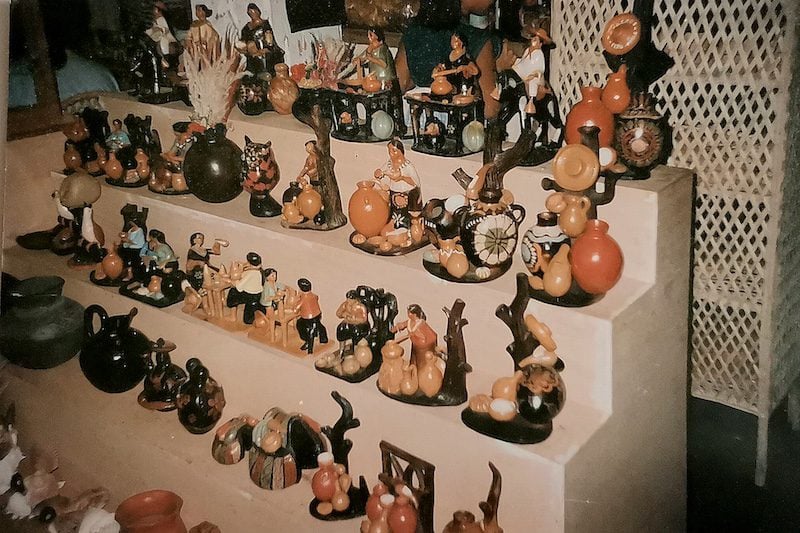
    Chulucanas, Peru: Known for its burnished black-and-white ceramics, Chulucanas blends ancient techniques with modern design, producing pieces that feel both timeless and contemporary.

    Guaitil, Costa Rica: In this small village, Chorotega artisans preserve indigenous pottery traditions, hand-building and firing vessels using methods that predate Spanish arrival.

    Ráquira, Colombia: A vibrant village where clay is shaped into everyday objects and whimsical forms alike, reflecting both practical needs and a strong sense of local identity.

    Pottery workshop in Avanos, one of Turkey's ceramic towns

    Pottery workshop in Avanos, Turkey / Photo by Alexey Komarov, CC BY-SA 4.0, via Wikimedia Commons

    Display of traditional ceramics in Chulucanas, Peru

    Traditional ceramics of Chulucanas, Peru / Photo by Dmnltics Isabel Requena, CC BY-SA 4.0, via Wikimedia Commons

    Before you go

    Demonstrations and workshops: If you hope to watch artists at work or try your hand at pottery, check schedules in advance. Demonstrations, kiln openings, and hands-on classes are often offered only on specific days or by reservation.  Find tours to workshops here.

    Shipping and purchases: Ceramics can be heavy, fragile, and difficult to transport. Ask whether shops pack pieces for international travel or offer shipping services, especially if you are tempted by larger works.

    What’s authentic: In many ceramics towns, inexpensive imported souvenirs are sold alongside locally made work. If craftsmanship matters to you, ask where a piece was made, who made it, and whether it is handmade or factory-produced. The answers can tell you a great deal about what you’re buying.
    Museums: Some towns have outstanding museums but limited working studios, while others are best experienced by wandering shop-lined streets and visiting artisans directly. Ideally, allow time for both.

    Accessibility and mobility: Older ceramic districts may include uneven stone streets, staircases, or large market areas that require significant walking. Museums are usually more accessible than historic artisan quarters.
    Time and pacing: Ceramic towns are best explored slowly. Leave room for serendipity, stepping into an unmarked workshop, talking with an artist, or discovering a piece so beautiful you cannot stop thinking about it.

    The post Shaped by Hand: Four Artisan Places Women Should Visit, Where Clay Defines the Culture appeared first on JourneyWoman.

    This post was originally published on this site.

  • Prime Day 2026: The 7 Photography Deals Actually Worth Buying

    Prime Day 2026: The 7 Photography Deals Actually Worth Buying

    I have been a professional travel photographer since 2010, and I buy a lot of my gear, and a frankly silly number of memory cards, in the Amazon sales. Outside of sale season, my budget-by-budget photographer gift guide has the same kind of picks organised by price instead. So every Prime Day I go through…

    This post was originally published on this site.

  • One Day in Padua: How to Plan the Perfect Day

    One Day in Padua: How to Plan the Perfect Day

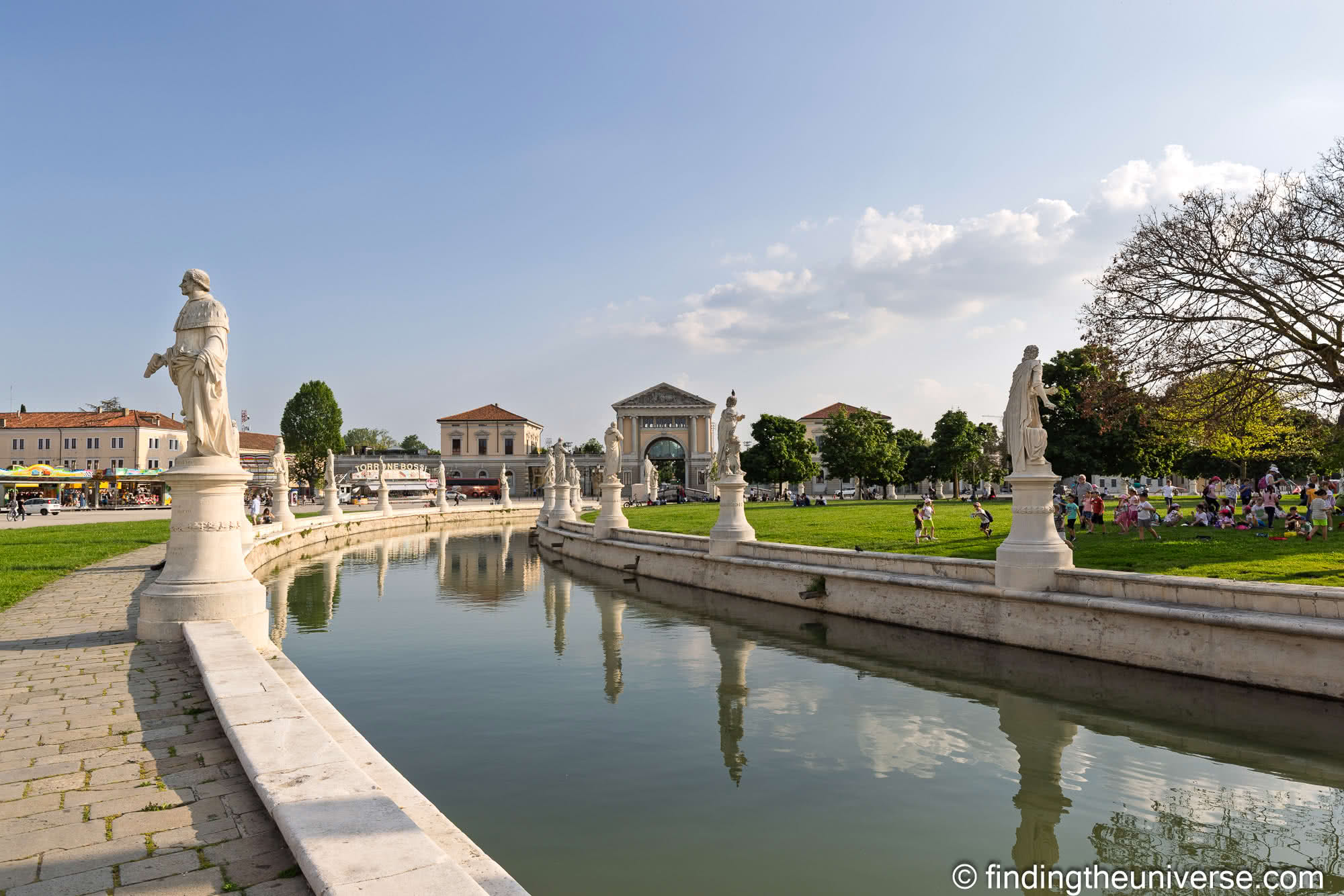
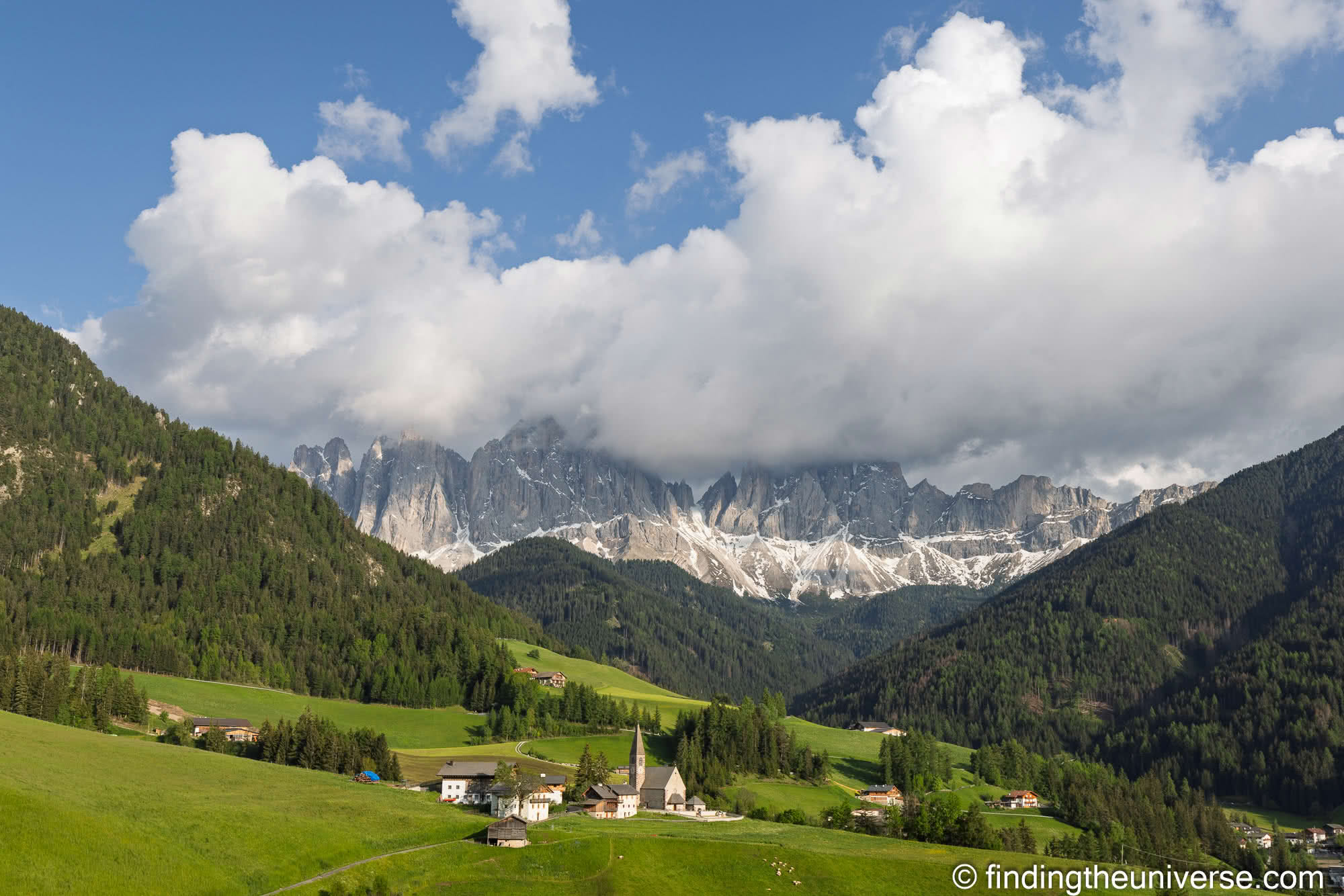
    I’ve been coming back to the Veneto since I was fifteen, when my parents first brought me and a thunderstorm chased us across St Mark’s Square. Over the years Jess and I have worked our way out from the lagoon into the mainland cities most visitors skip, and Padua is the one we keep pressing…

    This post was originally published on this site.

  • 9 Best Day Trips From Venice, By Someone Who Got Married There

    9 Best Day Trips From Venice, By Someone Who Got Married There

    I got married in Venice, in St. Mark’s Square, and I’ve been coming back to the city since I was fifteen, when my parents first brought me here and a thunderstorm chased us across that same piazza. I’m also a professional travel photographer, and I’ve spent a good chunk of those return trips shooting the…

    This post was originally published on this site.

  • 2 Days in Oxford: A Weekend Itinerary and Where to Stay

    2 Days in Oxford: A Weekend Itinerary and Where to Stay

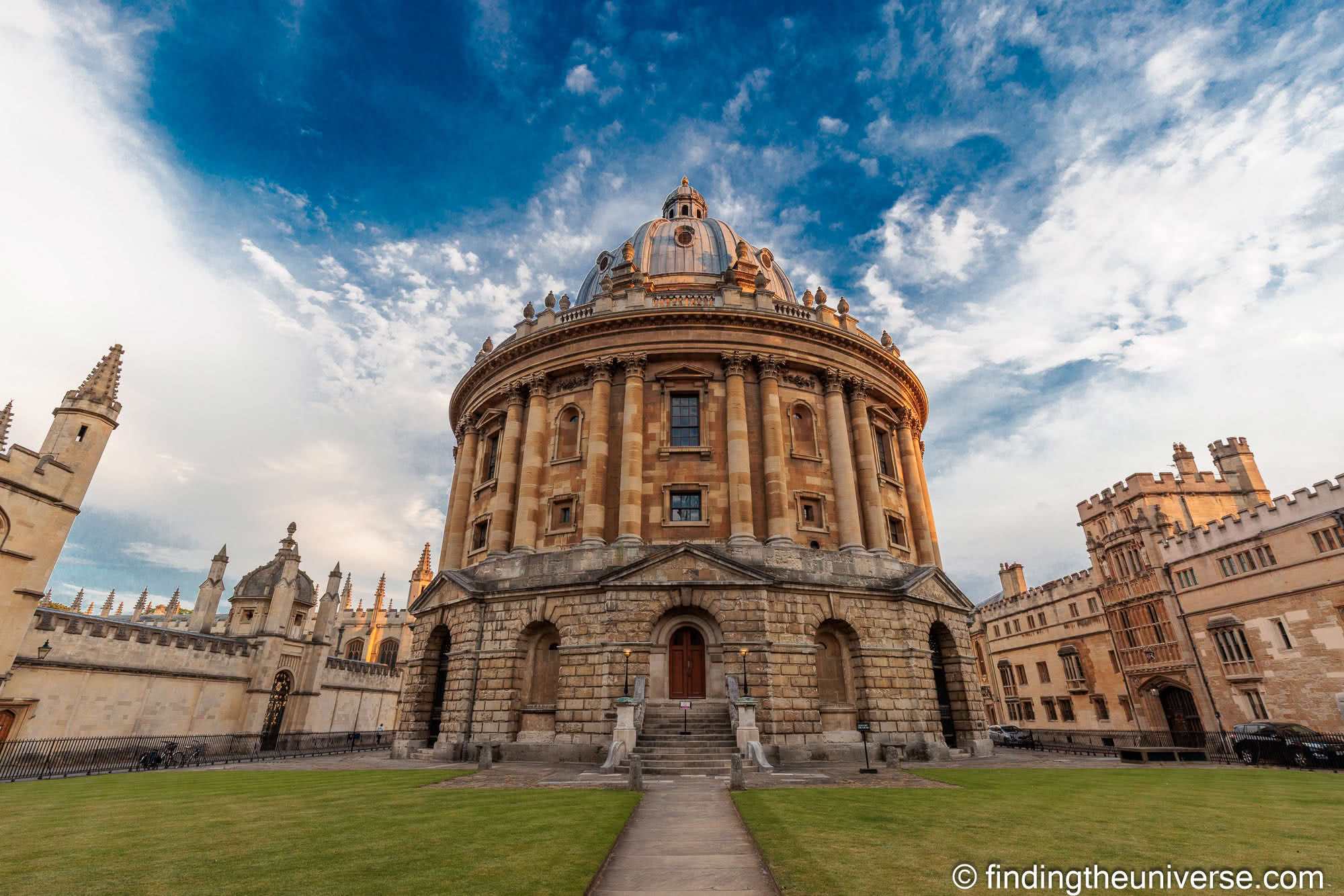
    I grew up just outside Oxford, and I spent most of my school-age weekends in the city, visiting friends, wandering the stores, and working out which colleges would actually let you in and which ones quietly turned you away at the lodge. I’ve been back many times since, and I still have friends who live…

    This post was originally published on this site.

  • Romania vs Hungary: Which Country Treats Tourists Better?

    Romania vs Hungary: Which Country Treats Tourists Better?

    One of the first things you’ll wonder when planning a trip to Central Europe is whether you’ll be welcome in the countries you plan to visit. And if your eye is on Romania and Hungary, you have probably heard conflicting stories about the two countries; that one culture is warmer while the other is more …

    The post Romania vs Hungary: Which Country Treats Tourists Better? appeared first on Travel Notes & Beyond.

    This post was originally published on this site.

  • Where To Stay In Mykonos: Best Areas For Beaches, Nightlife & First-Time Visitors

    Where To Stay In Mykonos: Best Areas For Beaches, Nightlife & First-Time Visitors

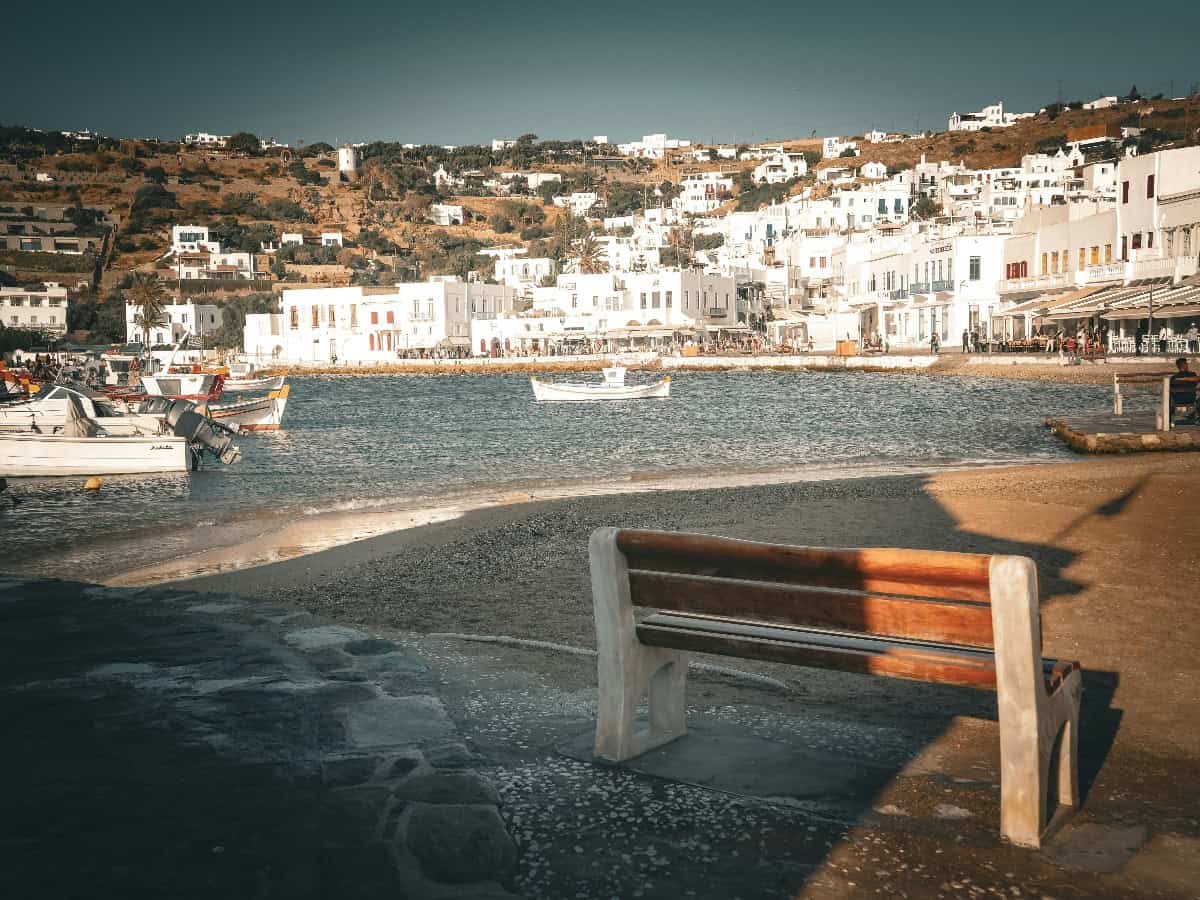
    Choosing where to stay in Mykonos can completely shape your experience, whether you’re looking for lively nightlife, luxury beach clubs, family-friendly beaches, or a quiet seaside escape. This guide breaks down the island’s best neighborhoods and hotel recommendations so you can find the perfect base for your trip.

    The post Where To Stay In Mykonos: Best Areas For Beaches, Nightlife & First-Time Visitors appeared first on Going Awesome Places by William Tang.
    This post was originally published on this site.