Tag: Veteran News

  • Washington’s orders to troops after July 4: You’re fighting for a new nation

    Washington’s orders to troops after July 4: You’re fighting for a new nation

    This post was originally published on this site.

    The Fourth of July and the signing of the Declaration of Independence severed ties with Great Britain and thus receives its due attention.

    But it was on July 5, 1776, that the former colonials got down to the nuts-and-bolts of governing and winning a war.

    One of the first orders of business that day for members of the Second Continental Congress meeting in Philadelphia was getting cooking kettles to the militia. The Committees of Inspection and Observation were told to “furnish a good kettle to every six men, and give all the assistance in their power, that the said militia be well armed and equipped, and march with the greatest expedition,” according to the Journals of the Continental Congress at the Library of Congress.

    It was also resolved “That a chaplain be appointed to each regiment in the Continental Army, and their allowance be increased to thirty three dollars and one third of a dollar a month.”

    Members then had to deal with the always grumpy John Adams, who got approval to send a copy of the Declaration to Mary Palmer, the daughter of family friends of the Adamses in Braintree, Massachusetts, along with a somewhat-snotty note now preserved by the Massachusetts Historical Society.

    “I will enclose to you a Declaration, in which all America is remarkably united,” Adams’ letter read. “It completes a Revolution, which will make as good a Figure in the History of Mankind, as any that has preceded it — provided always, that the Ladies take Care to record the Circumstances of it, for by the Experience I have had of the other Sex, they are either too lazy, or too active, to commemorate them.”

    On the morning of July 5, the members of the Congress also ordered copies of the Declaration printed by John Dunlap to be distributed throughout the former colonies.

    The thought also occurred to them that somebody ought to tell the troops what they were fighting for now that independence had been declared.

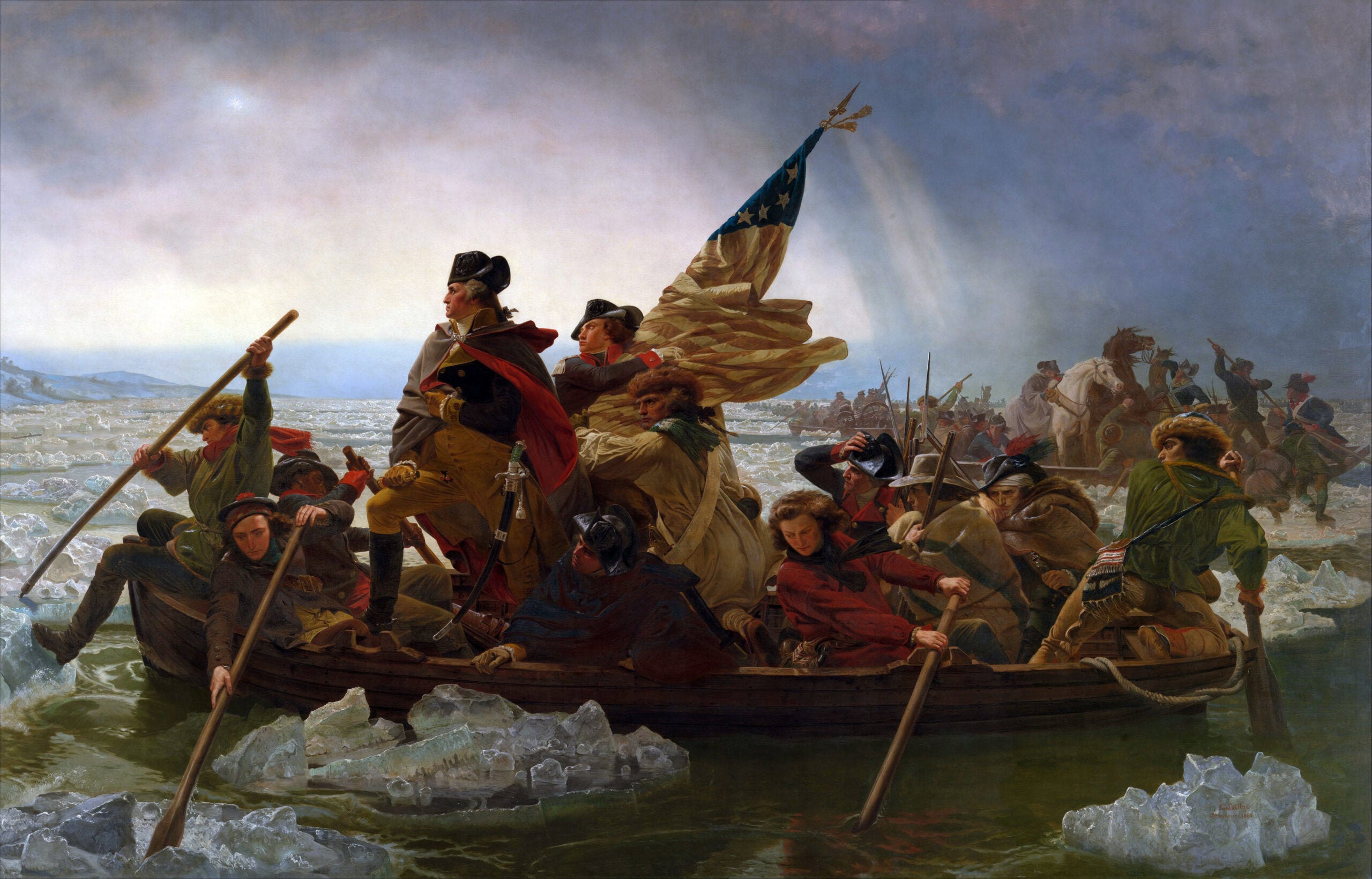
    And so John Hancock, the Boston merchant-smuggler and president of the Second Continental Congress, was authorized to tell Gen. George Washington to have the Declaration read to his fledgling army at formations.

    In his letter to Washington, Hancock wrote that “the Congress have judged it necessary to dissolve the Connection between Great Britain and the American Colonies, and to declare them free and independent States; as you will perceive by the enclosed Declaration, which I am directed to transmit to you, and to request you will have it proclaimed at the Head of the Army in the Way, you shall think most proper.”

    Washington was in New York at the time, warily watching the buildup near the harbor of a British armada that would grow to 400 ships and 32,000 British regulars and Hessians. He scheduled the reading of the Declaration for July 9.

    “The Honorable the Continental Congress, impelled by the dictates of duty, policy and necessity, having been pleased to dissolve the Connection which subsisted between this Country, and Great Britain, and to declare the United Colonies of North America, free and independent STATES,” Washington’s General Orders for July 9 read.

    “The several brigades are to be drawn up this evening on their respective Parades, at six [o’clock], when the declaration of Congress, shewing the grounds and reasons of this measure, is to be read with an audible voice.”

    Washington hoped that movement would “serve as a fresh incentive to every officer, and soldier, to act with Fidelity and Courage, as knowing that now the peace and safety of his Country depends (under God) solely on the success of our arms.

    “And that he is now in the service of a State, possessed of sufficient power to reward his merit, and advance him to the highest Honors of a free Country.”

    Things did not immediately go according to plan, however.

    Washington was livid when a mob of troops and locals rioted, storming down Broadway to Bowling Green where they toppled a statue of King George III and lopped off its head.
  • Medal of Honor recipient Bruce Crandall, whose heroism was chronicled in ‘We Were Soldiers Once,’ dies at 93

    Medal of Honor recipient Bruce Crandall, whose heroism was chronicled in ‘We Were Soldiers Once,’ dies at 93

    This post was originally published on this site.

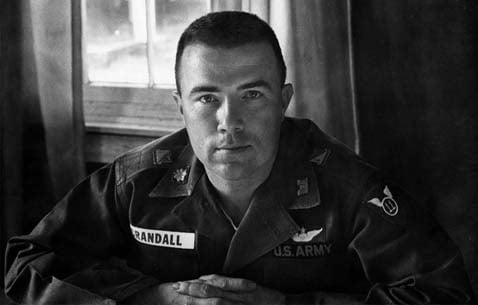
    Ret. Col. Bruce Crandall, who led more than 900 combat missions during two tours in Vietnam and received the Medal of Honor for repeatedly flying his helicopter into intense enemy fire to evacuate dozens of wounded troops, died on May 31. He was 93.

    Crandall, while recognized for his heroism, will be best remembered for the “warmth of his wit, the depth of his humility and the fierce loyalty he gave to the people and communities he loved,” according to a Congressional Medal of Honor Society release.

    Born in February 1933, Olympia, Washington, the All-American athlete had dreams of being drafted by the New York Yankees and earned a scholarship to the University of Washington. That dream was deferred, however, when Crandall was drafted by the U.S. Army in 1953.

    Crandall would subsequently receive the nation’s highest honor for valor during the Nov. 14, 1965, Battle of Ia Drang — the first major clash of the Vietnam War, made famous by the book We Were Soldiers Once … and Young: Ia Drang–The Battle That Changed the War in Vietnam and the subsequent movie of the same name.

    Crandall's UH-1D Iroquois helicopter climbs skyward after discharging a load of infantrymen on a search-and-destroy mission in Vietnam. (U.S. Army)

    On that day, Crandall led 16 helicopters carrying soldiers into Landing Zone X-Ray in the Ia Drang Valley, but as the fighting intensified, orders came down for follow-on aircraft to abort their mission, meaning all medevac assistance had been cut off to the men of the 1/7 Cav.

    “The medevac pilots were all great pilots, but they weren’t allowed to land on a landing zone until it was ‘green’ for a period of five minutes,” meaning it wasn’t being relentlessly attacked, Crandall later recalled.

    Crandall recognized that the men he had shuttled into Ia Drang were trapped, in desperate need of ammunition and, for some, medical evacuation.

    Contacted on the radio by Col. Ramon Antonio “Tony” Nadal, Crandall recalled that Nadal was yelling, “I got to have — get my wounded out of here. I’ve got 12 guys that are — and they’re collected, and I have a hole where a helicopter can get in, but they won’t come.”

    In response, Crandall refueled, kicked off his door gunner and weaponry to lighten his load.

    “If you have infantry on the ground, you can’t shoot up their backside,” Crandall said, calling the M60 guns “worthless.”

    Ignoring the heavy enemy fire, Crandall, alongside his friend Maj. Ed Freeman, voluntarily flew 22 missions into the valley to deliver ammunition and evacuate some 70 wounded soldiers.

    “While medical evacuation was not his mission,” reads his Medal of Honor citation, “he immediately sought volunteers and with complete disregard for his own personal safety, led the two aircraft to Landing Zone X-Ray. Despite the fact that the landing zone was still under relentless enemy fire, Major Crandall landed and proceeded to supervise the loading of seriously wounded soldiers aboard the aircraft.

    “Major Crandall’s voluntary decision to land under the most extreme fire instilled in the other pilots the will and spirit to continue to land their own aircraft, and in the ground forces the realization that they would be resupplied and that friendly wounded would be promptly evacuated,” the citation continues. “This greatly enhanced morale and the will to fight at a critical time.”

    Crandall would ultimately fly nearly 1,000 combat missions and was further commended for rescuing 12 wounded soldiers during a dense jungle operation in January 1966, according to the Department of Defense.

    Ret. Col. Bruce Crandall poses with a UH-60 Black Hawk helicopter from Task Force Lobos, 1st Air Cavalry Brigade, in Afghanistan on March 28, 2012. (U.S. Army)

    In 1968, four months into his second tour in Vietnam flying Huey gunships in support of the 1st Cavalry Division, Crandall’s helicopter crashed, breaking the pilot’s back among other severe injuries that left him hospitalized for five months.

    The broken back didn’t deter Crandall from flying, but a subsequent stroke in the early 1970s ended his flying career. He retired from the Army in 1977.

    Crandall, who initially received the Distinguished Service Cross for his actions at Ia Drang, was awarded the Medal of Honor on Feb. 26, 2007, by President George W. Bush.

    With Crandall’s passing there are now only 63 living Medal of Honor recipients.

  • Army veteran becomes the face of Call of Duty’s new bionic hero

    Army veteran becomes the face of Call of Duty’s new bionic hero

    This post was originally published on this site.

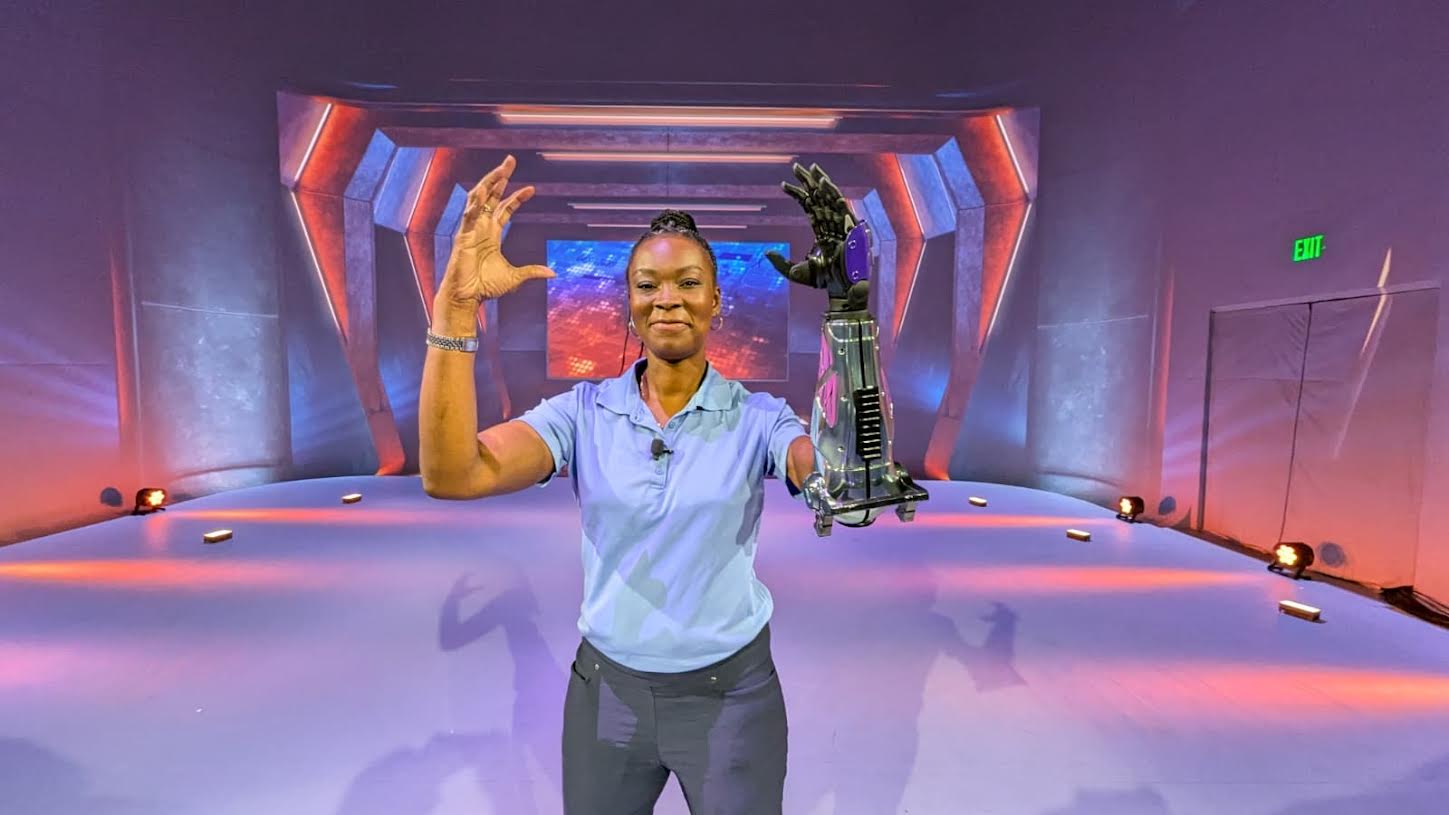
    Twenty years after losing her arm in Baghdad, Army veteran Danielle Green is once again showing what resilience looks like.

    Green’s likeness and story are the inspiration behind a new Call of Duty operator bundle launching Friday, making her the first female combat veteran to be featured as a playable Call of Duty character. The bundle launches alongside the new game Call of Duty: Black Ops 7.

    The character, called 50/50, is outfitted with a bionic arm based on Green’s real-life prosthetic, the Hero RGD, developed by the prosthetics company Open Bionics and supported by the Call of Duty Endowment.

    The Hero RGD, short for “rugged,” debuted publicly at the Call of Duty Endowment Bowl in Las Vegas in September. It’s the world’s most advanced bionic arm built for strength and durability, but for Green, it represents much more than technology.

    “I love my bionic arm. It gives me balance, it makes me feel whole,” Green said in an interview with Military Times. “As a combat veteran wearing this arm in public, I know it’s about more than just me. Little girls who have lost a limb see someone like them moving forward with confidence.”

    Green lost her left arm in a rocket-propelled grenade attack on May 25, 2004. Being left-handed, she had to relearn everything, from writing to daily tasks.

    Her prosthetic is the first of its kind, combining titanium joints and high-strength nylon with a fully wireless muscle-sensor system that allows her to move the hand with speed and precision, according to Open Bionics. The Hero RGD can lift up to 77 pounds and is twice as fast as any other bionic limb available.

    The custom version she wears features personalized details, including the date of her injury engraved on the arm, the coordinates of Mount Kilimanjaro, which she recently climbed, and a purple wedding band on the in-game operator, inspired by the one her team recovered from the battlefield after her injury.

    Army veteran Danielle Green uses her prosthetic hand to hold a photo of herself from her 2004 deployment to Baghdad, before the rocket-propelled grenade attack that claimed her left arm. (Courtesy of Call of Duty Endowment)

    Samantha Payne, Open Bionics co-founder and CEO, said she had followed Green’s story for years through her work with the Wounded Warrior Project and immediately knew she was the right person to represent the company’s latest design.

    “She exudes strength and a vibrant, live-your-best-life energy,” Payne said. “She is all about living with confidence and helping others overcome. What a wonderful person to align with.”

    Payne explained that the Hero RGD was developed over four years at a cost of approximately $2 million. Engineers aimed to make it the strongest, fastest and most reliable prosthetic ever produced.

    “Our users are makers, parents, veterans, and builders. They are busy and active. We wanted to build something that could keep up with them,” Payne said. “The RGD is built like a Toyota Camry and runs like a Ferrari. You can’t destroy it.”

    Open Bionics continues to expand access to its devices through partnerships with the Department of Veterans Affairs. The company confirmed that the VA funds the Hero RGD for eligible veterans and encourages those interested to reach out directly to begin the process.

    “We are actively fitting veterans right now,” Payne said. “If you need a prosthetic, contact us. We can help you get one of these through the VA.”

    Green’s collaboration with Call of Duty began when the Endowment and Open Bionics partnered to showcase a real veteran’s story through gaming.

    “When the Endowment reached out, we saw an opportunity to celebrate a true hero,” Payne said. “This technology was designed to keep up with how veterans live and work, and Danielle embodies that perfectly.”

    A new Call of Duty operator bundle, based on Army veteran Danielle Green and her prosthetic arm, is set to release Friday. (Courtesy of Call of Duty)

    For Green, the project is also a way to connect with other veterans who are navigating life after service.

    “In the military, we never leave anyone behind, and that’s how I see this project,” she said. “This is my way of helping hundreds of thousands of veterans who are looking for a new purpose in life.”

    Dan Goldenberg, executive director of the Call of Duty Endowment, said the partnership with Open Bionics and Green represents exactly what the nonprofit strives to highlight.

    “It is easy to tell stories of beaten-down veterans or incredible heroics,” Goldenberg said. “But the quiet heroics of pushing through difficulty and going on to do great things are just as important. Veterans are an asset to their communities, and Danielle’s story helps us show that.”

    Since 2009, the Call of Duty Endowment has placed over 150,000 veterans in high-quality civilian jobs through its network of top-performing nonprofits. Veterans seeking employment can visit the Endowment’s website for free career support, including résumé help and interview coaching through vetted partner organizations.

    Green’s story and her in-game representation now connect two worlds that rarely intersect: veterans’ recovery and mainstream entertainment.

    Proceeds from her new operator bundle will support the endowment’s mission to help veterans find meaningful work.

    “This isn’t the end of my story,” Green said. “It’s just a new chapter. We are not talking about surviving anymore. We are talking about thriving.”