
Featured image: Jerez is considered the birthplace of flamenco, as seen as Tabanco el Pasaje| Photo by Carolyn Ray
From Malaga, it’s easy to explore Spain’s prettiest white villages in Andalucia
by Carolyn Ray
Wandering through the narrow, winding streets in Frigliana, near Malaga, I feel as if I’m stepping into the past. Not only because of the 12 murals showing the Moorish history of this ancient hillside village, but because preparations are underway for the Festival de las Tres Culturas (Three Cultures Festival) in August, which celebrates the historical coexistence of Christian, Sephardic Jewish, and Arab-Islamic cultures. It’s one of those picture-perfect days when puffy white clouds float above this village of 2900 residents, almost like a painting. The streets are full are tourists enjoying the cafes, shops and restaurants, but soon, I know the afternoon siesta will start, it will be quiet until the evening, when the stores open again.
Frigliana is just one of Spain’s white villages — the pueblos blancos of Andalusia — that conjur images of whitewashed houses perched on a mountain edge, walls dazzling in the Andalusian sun against a backdrop of olive groves, blue flowerpots and red-tiled roofs. There’s a certain romanticism about villages like Ronda, Frigliana and Arcos de la Frontera — they’re small enough to explore on foot, and there’s a slower, more human pace to daily life — a bakery, a plaza, an old church, a viewpoint — that rewards curiosity and wandering.
Since I first stayed in Malaga over the holiday season in 2022, Málaga province and the Costa del Sol region have become better known, attracting about 15 million tourists a year. During the high season in July and August when so many Spaniards take holidays here, it can be busy; but in the low season, things quiet down, making it the best time to visit Malaga and its nearby white villages. Spain’s excellent public transportation makes it easy and affordable for women to visit small towns and white villages near Malaga, including Ronda, Jerez de la Frontera, and Frigliana, my personal favourite.
Get stories just like this one delivered straight to your inbox. Join our mailing list here.
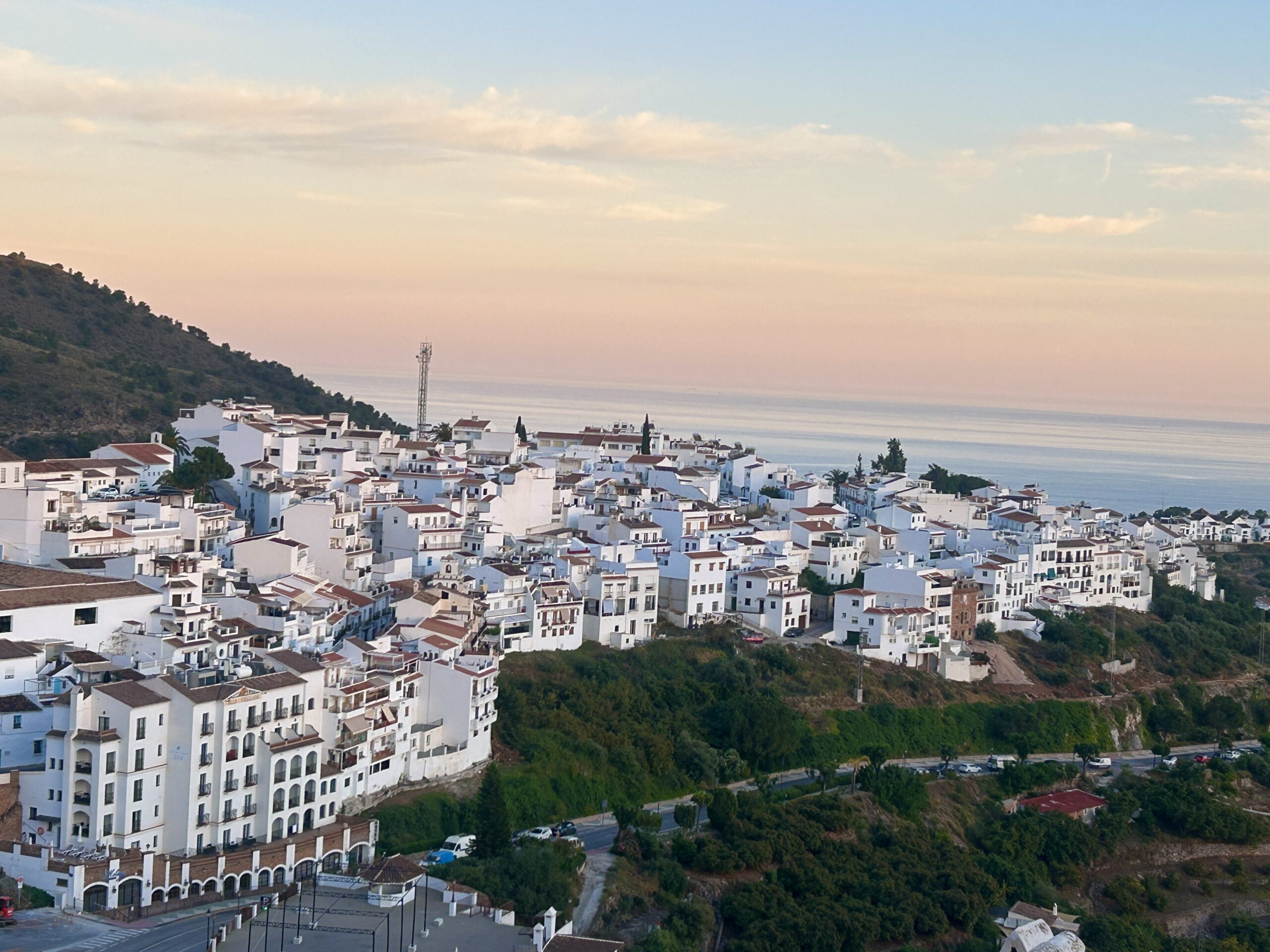
Frigliana has breathtaking views of the Mediterranean Sea / Photo by Carolyn Ray
Malaga, your starting point
There’s plenty to see in Malaga beyond spottings of its most famous resident, Antonio Banderas. A climb up to the Alcazaba Fortress and Gibralfaro Castle reminds you that this is an ancient city, but one that has only recently been rediscovered. The Alcazaba, for example, was abandoned for centuries and became a slum. The 1st century AD Roman Amphitheatre was just discovered in 1951. Just down the road in Maro are the prehistoric Nerja Caves, with some of the oldest cave paintings in the world. Picasso was born in Malaga and there’s always a lineup for his childhood home, Casa Natal Picasso, on the charming Plaza de La Merced. Nearby, there’s the Picasso Museum, and the Iglesia de Santiago church where Picasso’s parents were married and he was christened. Find even more things to see and do in Malaga here!
1. Sentinel de las Bodegas
Near Malaga is the small white village of Sentinel de las Bodegas, where homes and restaurants sit under a massive limestone rock formation along a canyon. In the morning, it’s already crowded on the village’s most popular street, Calle Herrería, and the tables are full at cafes along Calle Cueva del Sol (Caves of the Sun) and Calle Cuevas de la Sombra (Caves of the Shade). Sentinel de las Bodegas is a place for photography and geology buffs, with scenic photos of winding streets, cafes and boutiques. Sentinel is known for its leather and you’ll see lots of shops.
My advice: arrive early for a cortado and photographs and leave before the buses arrive.
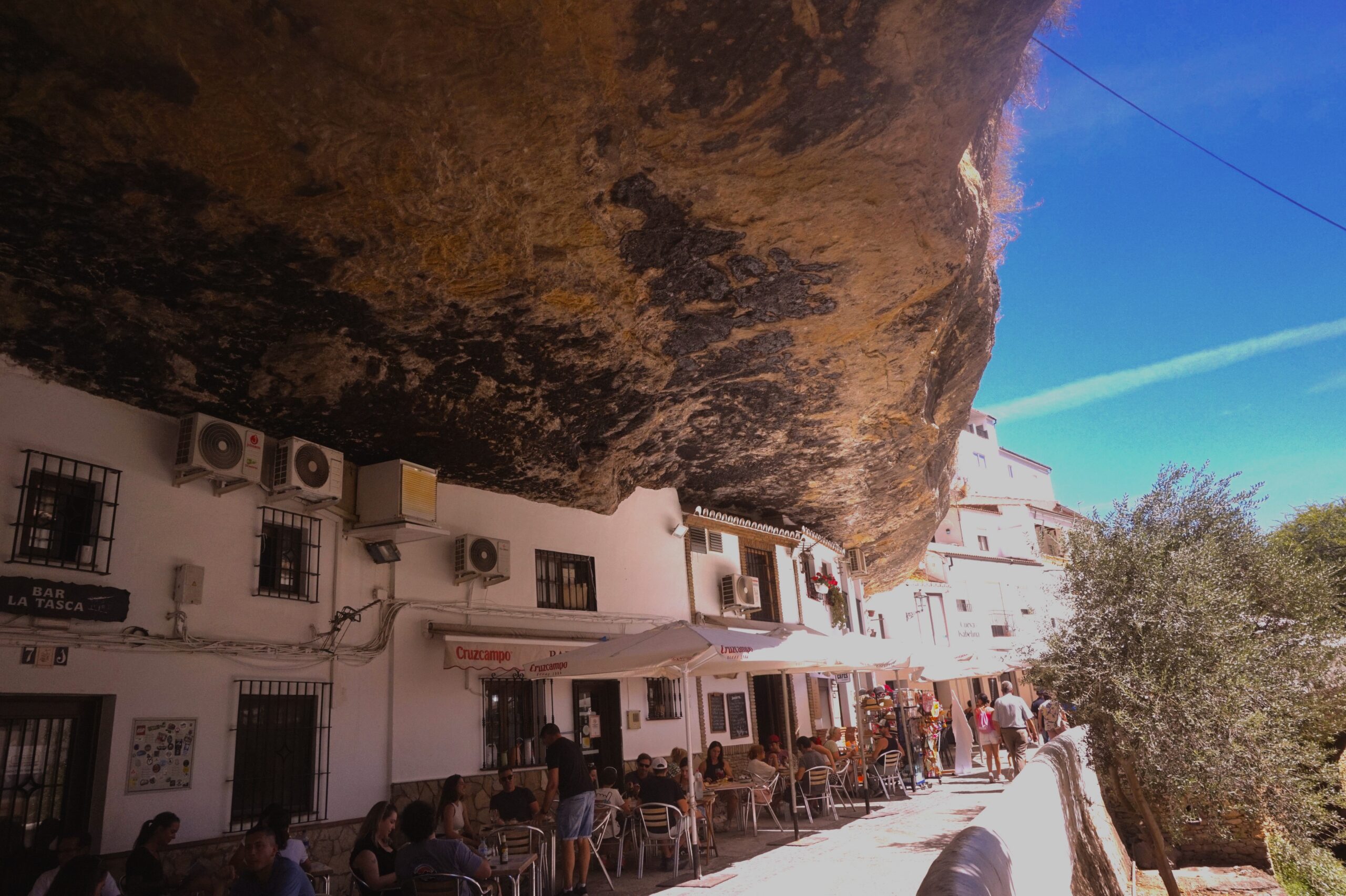
Enjoy a coffee under a massive limestone rock in Sentinel/ Photo by Carolyn Ray
2. Ronda: City of bridges
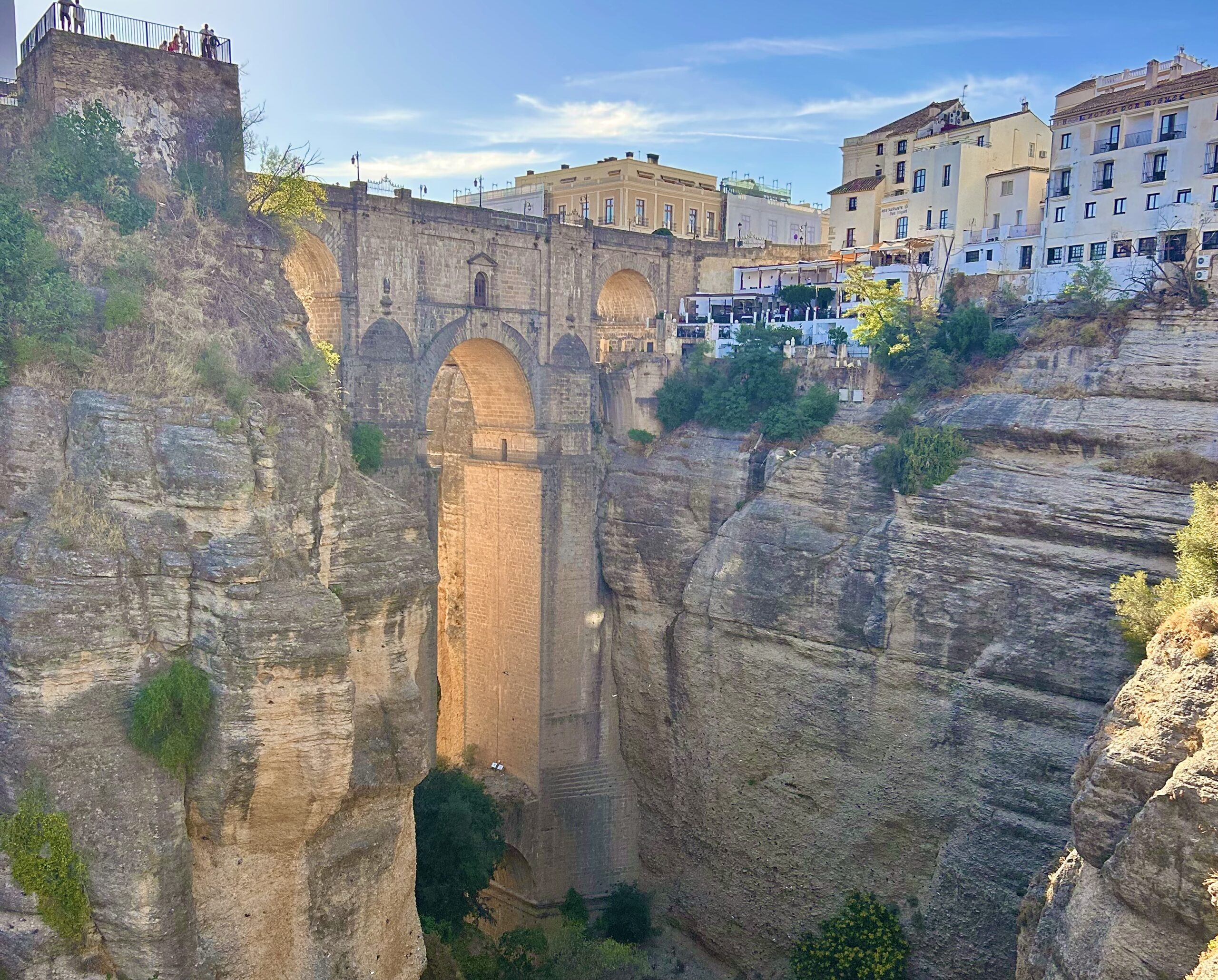
From Malaga, the best way to get to Ronda is by car. I highly recommend renting a zippy Fiat 500 at the train station (find a rental car here), turning up the music and letting your hair fly in the wind. The main sight in Ronda is the Puento Nuevo (new bridge), which connects two plateaus separated by the Tajo de Ronda gorge. This is actually the second bridge; the first one collapsed in 1735. For the best view of the ‘new’ bridge, walk down to Arco de Crista or near the Parador Hotel in the early morning, when the sun is shining on the gorge. In the early afternoon, there are shadows. Don’t miss a visit to the Arab Baths, which are located near the Roman Bridge (the original entrance to the city). It’s very steep so make sure to wear comfortable shoes.
Near the bullring, visit the tourism office and pick up a municipal ticket for €9 (retired rate), which gives you access to all of the tourist places. There’s also a street named after Hemingway, who spent a considerable amount of time in Ronda. Modern bullfighting was practically invented here when local bullfighter Pedro Romero decided to confront the bull on foot instead of on a horse. In addition to naming a character Pedro Romero in his 1926 novel The Sun Also Rises, Hemingway also wrote two non-fiction books about Ronda: Death in the Afternoon (1932) and The Dangerous Summer (1985). More information here.
Where to stay: Parador de Ronda, with incredible views of the gorge and valley.
Ronda’s astonishng Puento Nuevo bridge at sunset / By Carolyn Ray


3. Arcos de la Frontera
About an hour from Ronda and 35 km from Jerez, Arcos de la Frontera is perched on top of 330-foot cliff, with a view best seen from a leisurely lunch on the patio at the Parador de Arcos. Driving is not advised, as the streets can be very narrow, and most cars park below. I was enthralled watching a delivery van slowly squeeze between two stone walls, and even clapped when it emerged.
Arcos is known for its unique architectural heritage, which is a blend of Gothic, Mudejar, Renaissance, Plateresque and Baroque styles. In the centre of town, the Church of San Pedro is a 15th–17th century church built on the site of a 14th-century Al-Andalusian fortress or watchtower, and there’s even a writer’s street. A nod back to its origins as a trading centre, there are Roman pillars throughout the old town. It was after the reconquest that Arcos received its name, meaning “of the Frontier,” as it became part of a strategic chain of towns adjacent to the last Muslim stronghold, the Nasrid Kingdom, for two centuries.
Oddly, the Castle of Arcos la Frontera is privately owned, and if you’re in the market for 12 bedrooms and 10 bathrooms, it could be yours for €7.8 million euros. According to the listing, “a terrace of more than 50 meters runs along the base of the wall, at the edge of the rock, offering a privileged spot to view the meanders of the Guadalete River and the flight of falcons.” Is the panoramic view worth it? You can be the judge, watch the Sotheby’s video here.
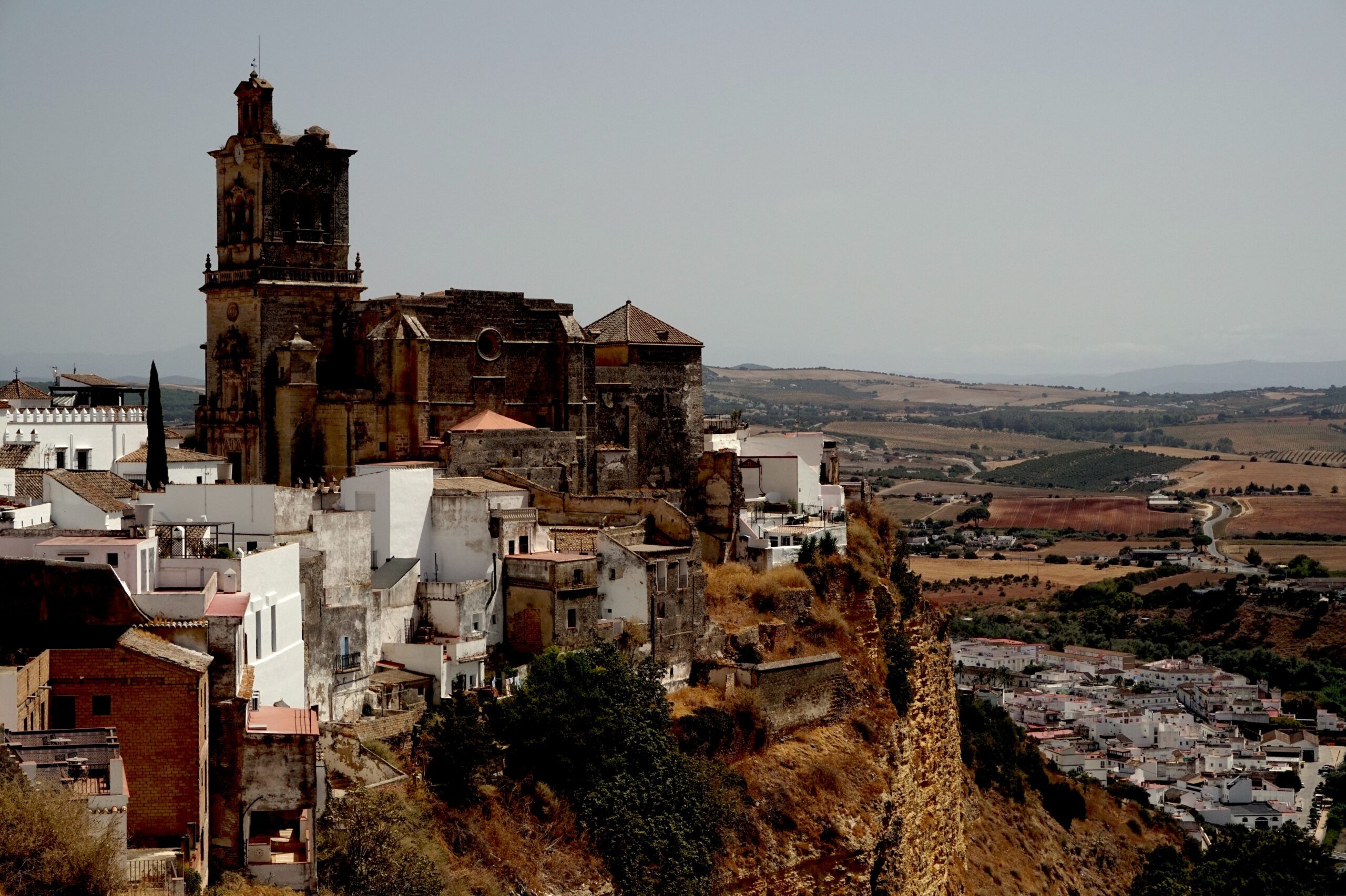
The view from the parador: Arcos de la Frontera is known as the gateway to the Pueblos Blancos (White Villages) route / Credit Carolyn Ray
4. Jerez, Spain’s most underrated city?
Jerez de la Frontera is about a three-hour train ride from Malaga, and it’s worth staying more than one day. Not only is it very walkable, with broad avenues and lush greenery, it just doesn’t feel touristy. After spending the day with my guide, we stopped at a cafe and no less than five people stopped to say hello, showing me how friendly everyone is.
Jerez is the home of Sherry (Jerez means sherry in Arabic), with world-famous sherry tastings at Bodegas Gonzales Byass. Inside their Bodega Los Reyes, there are also casks signed by famous celebrities and politicians, including Caroline Kennedy in July 1972, Deborah Kerr in 1974, Charlton Heston in 1975, and generations of the Royal Family. There’s also a special plaque where King Alfonso XIII signed the first historic cask of Bodegas Fundador brandy in 1874. The biggest surprise of all? This is where Harvey’s Bristol Cream is made, in Jerez.
Jerez is also known as the birthplace of flamenco, which is listed by UNESCO as as Immaterial Cultural Heritage of Humanity. At Tabanco El Pasaje, the city’s oldest wine bar, we sat clustered together at small tables just a few feet from the dancers, sharing iberico ham and small glasses of wine, making this a more authentic flamenco experience.
And if that’s not enough, Jerez boasts one of the world’s most famous equestrian schools, the Royal Andalusian School of Equestrian Art, featuring the prestigious Carthusian horse breed, a link that dates back to the 15th century. The Carriage Museum has an extensive collection of carriages and harnesses dating back to the 1800s, and is well worth a visit. Book well in advance – get tickets here.
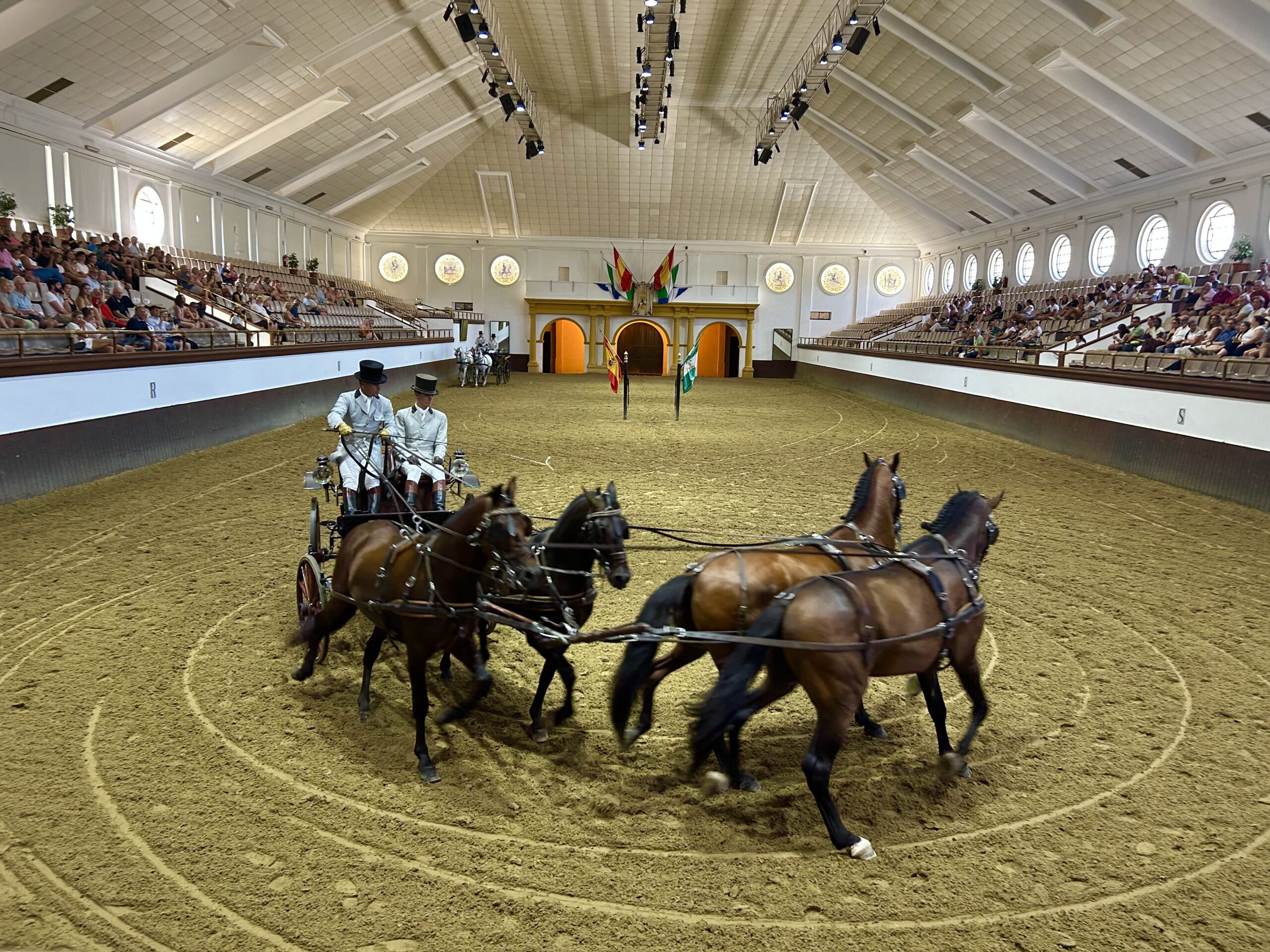
The dancing horses at the world-famous Royal Andalusian School of Equestrian Art in Jerez de la Frontera/ Credit Carolyn Ray
5. Córdoba: An Awe-Inspiring UNESCO World Heritage site
From Malaga, take the train and the #3 bus from the train station to get to the old down (check train schedules here).
Be the first in the door to visit the awe-inspiring Mezquita-Catedral, one of the most famous monuments of Western Islamic (Moorish) architecture in Spain. Built from 784-786 AD by Abd al-Rahman, its 800 granite and marble striped arches in the main Muslim prayer space are a place of wonder. The mihrab has been painstakingly restored to its original splendour, framed by an exquisitely decorated arch of gold glass with shimmering hues of blue, brown, and yellow.
Córdoba has miraculously survived for thousands of years, through dynasties, wars, and earthquakes. In the eighth century, it was taken over by Muslim conquests and became the capital of the Umayyad Caliphate of Córdoba. It has more UNESCO World Heritage Sites than anywhere in the world, including the Alcázar, the Roman bridge and the Mezquita-Catedral (Great Mosque of Córdoba), which is now a cathedral. The UNESCO status has since been expanded to encompass the whole historic centre of Córdoba, Medina-Azahara and Festival de los Patios, a 12-day festival that happens in May.
In the old city, stay at the Balcon de Cordoba, which includes breakfast. I also stopped in at La Ermita Hotel, which has only 17 rooms and is designed for accessible travel, with Braille on the hand rails and an elevator.

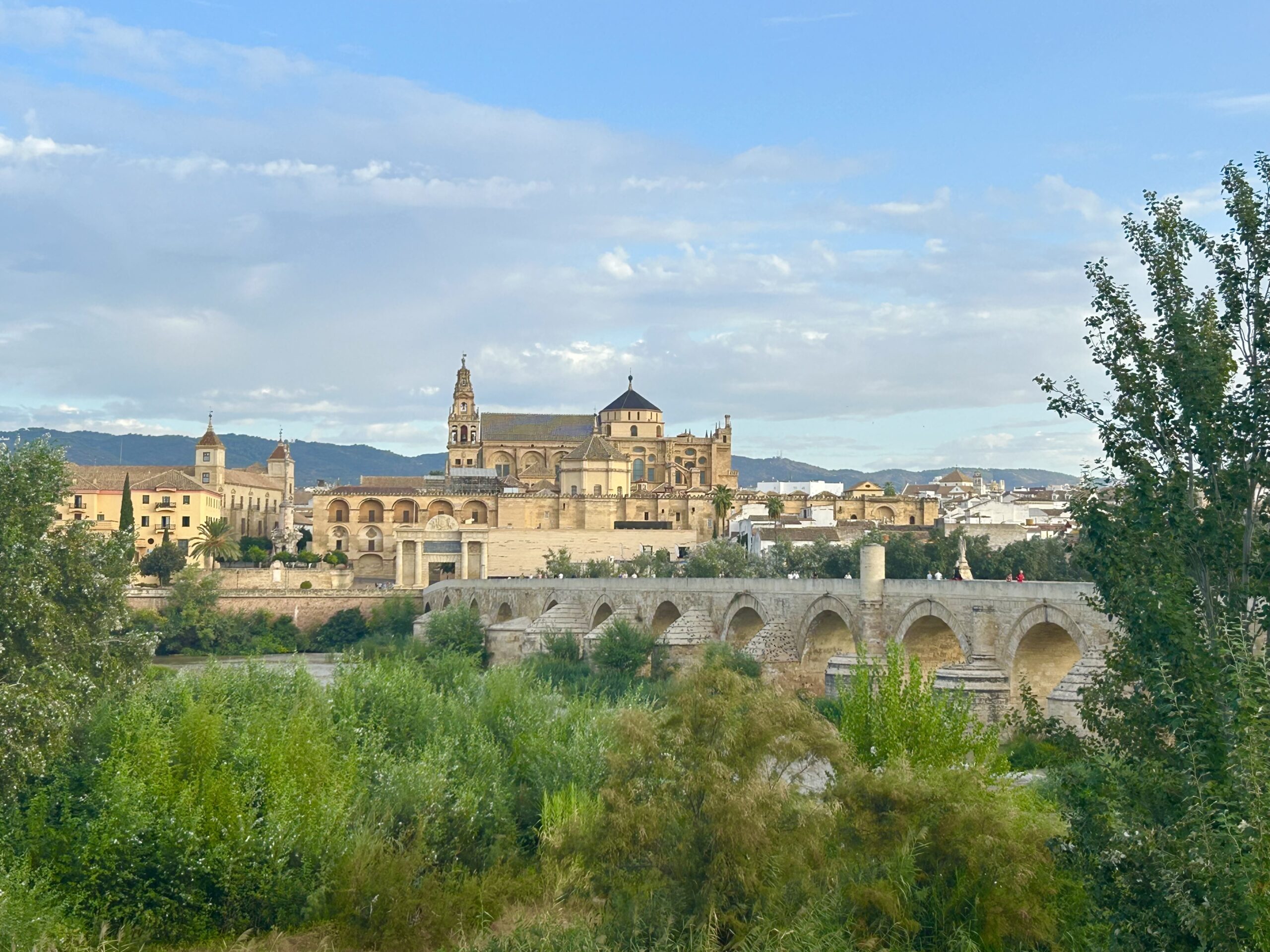
Córdoba’s beautiful Old Roman Bridge and Mezquita Catedral from across the river/ Photo by Carolyn Ray
6. Frigliana and Nerja
From Malaga, take an Alsa bus to Nerja (they leave from the Estación De Autobuses De Málaga (located next to the María Zambrano train station) or the Malaga port. Buses arrive at the Nerja bus stop/station located on Avenida de Pescia, and it’s an easy walk to the centre of town is the Balcón de Europa, a large rock that extends out into the ocean. From here, you can see up and down the rocky coast. Nerja is best seen by foot, as parking can be very difficult to find especially in July and August during the high season. My favourite time to visit Nerja is in the winter, during the Three Kings Festival in January.
From Nerja, take a short 10-minute bus up to Frigliana, which is known as one of the Pueblos Mas Bonitos de España (most beautiful villages in Spain). Here, there are small shops with locally made handicrafts lining the streets that make it feel like an artist’s colony. The colourful blue doors and whitewashed buildings make this town so picturesque. Every street is cared for, with terracotta flower pots and beautifully designed pebbled walkways. One of the most popular is Calle Zacatin, which leads to the top of the hill, where there are spectacular views of the ocean and surrounding mountains.
Cafes and restaurants line the streets, making it the perfect place for a long, leisurely lunch. Keep in mind most shops open around 10 am and close in the afternoon, then open again around 5 pm. As a result, Frigliana tends to be very crowded in the mornings, with buses from cruise ships. My favourite places include Vinos Ed Lagar for an afternoon beverage, and El Burro for coffee. There’s a lovely interior design store called Encarna and lots of handicrafts local available. For more information, click here.
The Parador de Nerja is under renovation until late 2027 or 2028 but there are plenty of small hotels in Nerja or Frigliana. Find the perfect place to stay in Nerja right here!
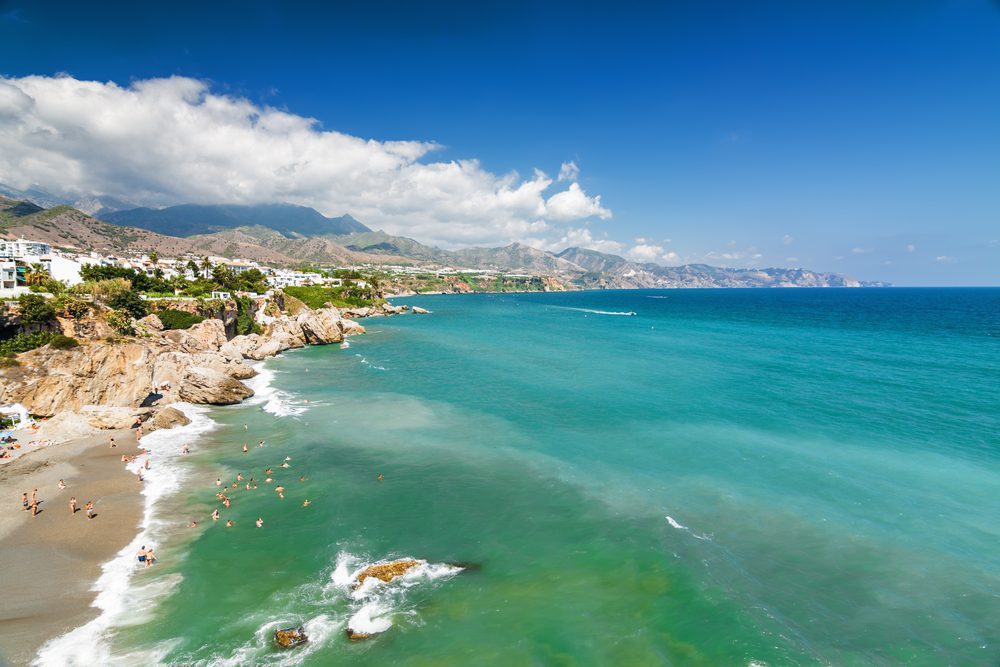
Nerja’s stunning coastline and the Balcon de Europa/ Photo by Envato
Make it happen
When to go: The busiest time in Spain is during Holy Week in April; why not try the time between September and February? Avoid the summer, especially August, as this is when most Spaniards take a month off.
How to get to Andalucia: From Canada, you can fly into Malaga or Madrid on Air Canada, Air Transat and Air France. There is a new direct flight on Air Transaat from Montreal to Malaga. Check flights here.
Travel by train: Spain has a very good bus and train network. There is a high-speed train from Malaga to just about anywhere. Book your train trip here on Trainline.
Day trips: Use Get Your Guide or Viator to find a day trip, including transportation, from Malaga.
Rent a car: Most of the major brands, such as Avis, Budget, Europcar operate in Spain, with car rentals available at the train stations. Find a rental car here.
Where to stay in Spain: There are so many beautiful hotels in Spain and its historical paradors are unique. To look for hotels recommended by women in Spain, click here or check Booking.com.
Disclaimer: Our talented writers are often invited by tourism boards and travel companies to experience places like this firsthand so that they can share them with you. As a guest of the Tourist Office of Spain, Carolyn Ray was hosted on a trip to white villages in Andalucia but was not compensated for her time spent researching, planning and writing this feature, nor was JourneyWoman for publishing it. In addition, the host organizations did not review this article before it was published, a practice that allows the writer to express her perspective with integrity and candor.
More from Spain to Discover
Why Solo Women Love Mallorca: Culture, Art and Sun on This Spanish Island
The island of Mallorca, Spain offers solo women a welcoming experience with affordable places to stay, sunny weather and new flight routes.
From Spain to Sweden: Is Europe’s Train System Really Accessible?
While train travel is possible for wheelchair users, it is still far from seamless, as Tanzila Khan discovers on a trip across Europe.
Where to Stay on the Camino de Santiago: From Family-Run Albergues to Historic Paradors
With smaller villages and less beds, Spain’s less-travelled Camino del Norte route requires a little more planning to find a place to stay.
The post The Best Day Trips from Malaga: White Villages, Natural Wonders and UNESCO World Heritage Sites appeared first on JourneyWoman.