A White House-appointed commission of military spouses floated the idea of cutting or eliminating the tolls that some service members pay when commuting to work.
The policy was recommended at a live meeting this week with members of the White House’s Military Spouse Commission, which was established in August to explore policies that impact military families. Commission officials announced that troops at MacDill Air Force Base in Tampa, Florida, received a 50% reduction in toll fees, equating to $1,500 in savings each year for service members who take that route onto base.
Chairwoman of the council, Jennifer Hegseth, who is married to Secretary of Defense Pete Hegseth, said they’re looking to use it as a “template” and expand toll reduction efforts to other military bases across the U.S.
“There are some different challenges with that because toll roads are operated differently in each state, or even within a state, by some private, some public, and of course we need the governor’s assistance too,” Jennifer Hegseth said. “But we are going to work diligently through both of those to try to get these done.”
The Pentagon declined to comment on Task & Purpose’s questions about the MacDill policy and its potential expansion.
“We have nothing to announce regarding the initiatives highlighted by the White House Military Spouse Commission,” a Defense Department official said in a statement.
MacDill toll changes impact troops in nearby suburbs
At MacDill, active duty and active Reserve troops are eligible for toll relief, according to Terry Montrose, a spokesperson for the base. Montrose said the toll cuts have been an issue that the base has talked about for years, but that it came to fruition this past year.
The policy mostly impacts service members who live in Brandon or Riverview, two suburbs outside of Tampa that lead to a specific interstate on the way to MacDill, Montrose said, estimating that more than half of troops assigned to the base live in those areas.
Montrose said MacDill’s housing is limited on the base with an ongoing waiting list. The base, which sits on a peninsula south of downtown Tampa, has roughly 500 military family homes and 500 dorms for single airmen on base. The base has a military population of more than 7,600, according to the base website.
Jennifer Hegseth said they’ve reduced the MacDill commuter tolls by 50%, but are working with the local toll company to “try to get that to zero.”
“It’s a program we put a lot of work into to ensure the service members benefited with as little work on their end as possible,” Greg Slater, CEO of the Tampa Hillsborough Expressway Authority, said. “MacDill is such a part of our ecosystem here in Tampa Bay, we do everything in our power to support them and the families.”
Troops can sign up for the benefit when THEA officials come to base.
“They bring two employees out here, and they set up in the [base exchange] food court. We send out a base-wide public service announcement saying, ‘Hey, THEA’s here to register you for toll relief,’” Montrose said. “The line forms over the food court, and then they work through whatever process they have over there, and people sign up.”
Military-related toll reduction policies are not completely new. A number of states have laws that cut tolls for veterans and recipients of certain military awards. In California, veterans can get up to 100% off on highway, bridge and fast-lane tolls if they were awarded a Purple Heart, Medal of Honor, or are designated as a Pearl Harbor survivor or disabled veteran by the Department of Veterans Affairs.
A group of nonprofits alleges the federal government illegally transformed more than 100,000 acres of public land along the New Mexico-Mexico border into a military installation so U.S. troops could assist in immigration enforcement.
In a federal lawsuit, the New Mexico Wildlife Federation, Battalion Search and Rescue and Southern Border Communities Coalition argue the Trump administration is misusing so-called “national defense areas” to circumvent longstanding restrictions on military participation in civilian law enforcement.
In a statement, Brian Netter, legal director at Democracy Forward, one of the teams representing the plaintiffs, called the “national defense area” designation “an extraordinary abuse of power with devastating consequences for the people who live, work, worship, recreate, and carry out lifesaving humanitarian work along the border.”
“Public lands do not become military installations simply because the president says so, and the military cannot be handed sweeping new authority to police civilians by drawing a line around land that belonged to the public,” he said, adding, “Our Constitution and laws impose clear limits on the use of the military for civilian law enforcement for a reason.”
The designation made the land, officially named the New Mexico National Defense Area, an expansion of Fort Huachuca for three years. The Defense Department said the designation allowed troops to detain people accused of trespassing in the military area after crossing the border illegally.
However, the lawsuit argues that the federal agencies exceeded their authority to transfer public land through emergency powers. “No statute authorizes the creation of ‘national defense areas,’ let alone permits carving one out of formerly public land,” the lawsuit says.
The lawsuit adds that the Defense Department has historically used such land restrictions only temporarily to protect people or property during accidents or emergencies.
“Creating a semi-permanent military zone along the southern border for purposes of immigration enforcement is directly contrary to the agency’s longstanding practice,” the lawsuit says.
Beyond alleging violations of federal law, the plaintiffs say the military zones are disrupting their work by limiting access to public lands used for recreation and conservation; supporting border communities; and providing humanitarian aid.
James R. Holeman, founder of Battalion Search and Rescue, said his organization leads volunteers who search for people in distress in remote areas and recover the remains of migrants who died crossing the border. Over the past three years, he said, the group’s monthly searches along the Arizona and New Mexico border have uncovered more than 100 death sites.
“Imagine how many more people could be found if we had the access, resources, and support to search systematically. Instead, we’re being locked out,” he said, adding that vast stretches of borderlands are “virtually inaccessible to humanitarian searchers” because of federal designations.
“Now the government is closing off even more territory. We don’t find weapons or drugs. We find Bibles, prayer cards, love notes, and the belongings of people simply trying to survive,” Holeman said. “There is no meaningful, systematic government effort to search for the missing and the dead. They don’t search, and now they’re preventing us from searching.”
This Stuffed Pepper Soup has all the cozy flavors of classic stuffed peppers, with browned, savory ground beef, tender bell peppers, onions, and garlic simmered in a rich, generously seasoned tomato broth. I honestly could not stop eating it! It’s easy, hearty, satisfying, and you get all that familiar flavor without the extra steps of stuffing peppers. I serve it over fluffy rice and, don’t worry, I didn’t forget the cheese! A sprinkle of mozzarella gives you that irresistible cheese pull. Better yet, it’s ready in just 45 minutes and costs only $1.97 per serving. Perfect for soup season, or any season!
Big Flavor from a Simple Shopping List
I already love classic stuffed bell peppers, but this soup makes enjoying those same flavors so much easier on a weeknight. In most stuffed pepper recipes, the rice goes straight into the filling. For this soup, though, I prefer to keep it separate until serving. Rice soaks up liquid like a sponge, and I found that stirring it straight into the pot made the rice mushy. And by the next day, there was barely any broth left! Instead, I like to spoon the rice into individual bowls and ladle the soup over the top. It’s such a simple step, but it makes a big difference…especially when I’m saving leftovers.
I also make the most of my cooking time by getting the rice going while I prepare the soup. Once the ground beef and veggies (bell peppers, onion, and garlic) are cooked, I simmer everything for 15 minutes in a rich tomato broth packed with herbs. And, of course, I wanted to keep this soup easy on the grocery budget, too. I use green bell peppers (which are usually cheaper than red, yellow, or orange), canned tomatoes, dried herbs, and Better Than Bouillon for the broth. Nothing fancy or expensive, but plenty of flavor! These simple ingredients help me stretch just one pound of ground beef into six hearty servings. 😋
Recipe Success Tips
Let those peppers stand out! I cut my bell peppers and onion into a medium dice because I like them to have some texture and really stand out in the finished soup. Keep the pieces roughly the same size so they cook evenly. After the sauté and 15-minute simmer, the peppers should be tender enough to pierce with a fork but still hold their shape. If they’re a little firm, give the soup a few more minutes.
Remove the excess grease. Depending on the type of ground beef you use (I use 27% fat), quite a bit of grease can collect in the pot as it cooks. Make sure to carefully blot up the excess with a paper towel so your soup doesn’t end up oily. You can also spoon the grease into a heatproof container, let it cool, and discard it in the trash. Just don’t pour it down the sink!
Make it as brothy as you like. Prefer a slightly thinner soup? Stir in a splash of extra beef broth or water until you’re happy with the consistency. If there’s more liquid than you’d like, let it simmer uncovered for a few extra minutes, stirring occasionally. I recommend tasting and adjusting the seasoning before serving.
Got extra veggies? Throw them in! This soup is a great way to use up whatever you’ve got. Diced carrots or celery can go in with the peppers and onion, although carrots may need a little longer to soften. Corn can be added with the tomatoes and broth, and fresh spinach only needs a minute or two at the end. You can even add diced potatoes (I’d dice them small, like in our vegetable beef soup), but they’ll need a longer simmer and possibly some extra broth!
Budget-Saving Tip
When I make stuffed peppers at home, I typically use ground beef. However, the ground beef makes up about half the cost of this entire pot of soup, so it’s also a great place to save some money. Feel free to use ground chicken, turkey, pork, or sausage instead. (You can even try lentils!)
Higher-fat ground beef is often cheaper than lean, and it’s totally fine to use here. Just drain off the excess fat after browning so your soup doesn’t end up oily. If you still want some beef in your soup but need to stretch your budget further, try ½ lb. ground beef with 1 cup cooked brown or green lentils. Brown the beef as directed, then stir in the cooked lentils with the tomatoes and broth to heat through during the final simmer. We use a similar meat-stretching trick in our lentil and sausage stew, and it’s a great way to make a little meat go further.
This easy Stuffed Pepper Soup is loaded with savory ground beef and tender bell peppers in a rich tomato broth. Served over fluffy rice and ready in 45 minutes!
Course Soup
Cuisine American
Total Cost $11.84 recipe / $1.97 serving
Prep Time 15 minutesminutes
Cook Time 30 minutesminutes
Total Time 45 minutesminutes
Servings 6servings (1 heaping cup of soup & ½ cup rice)
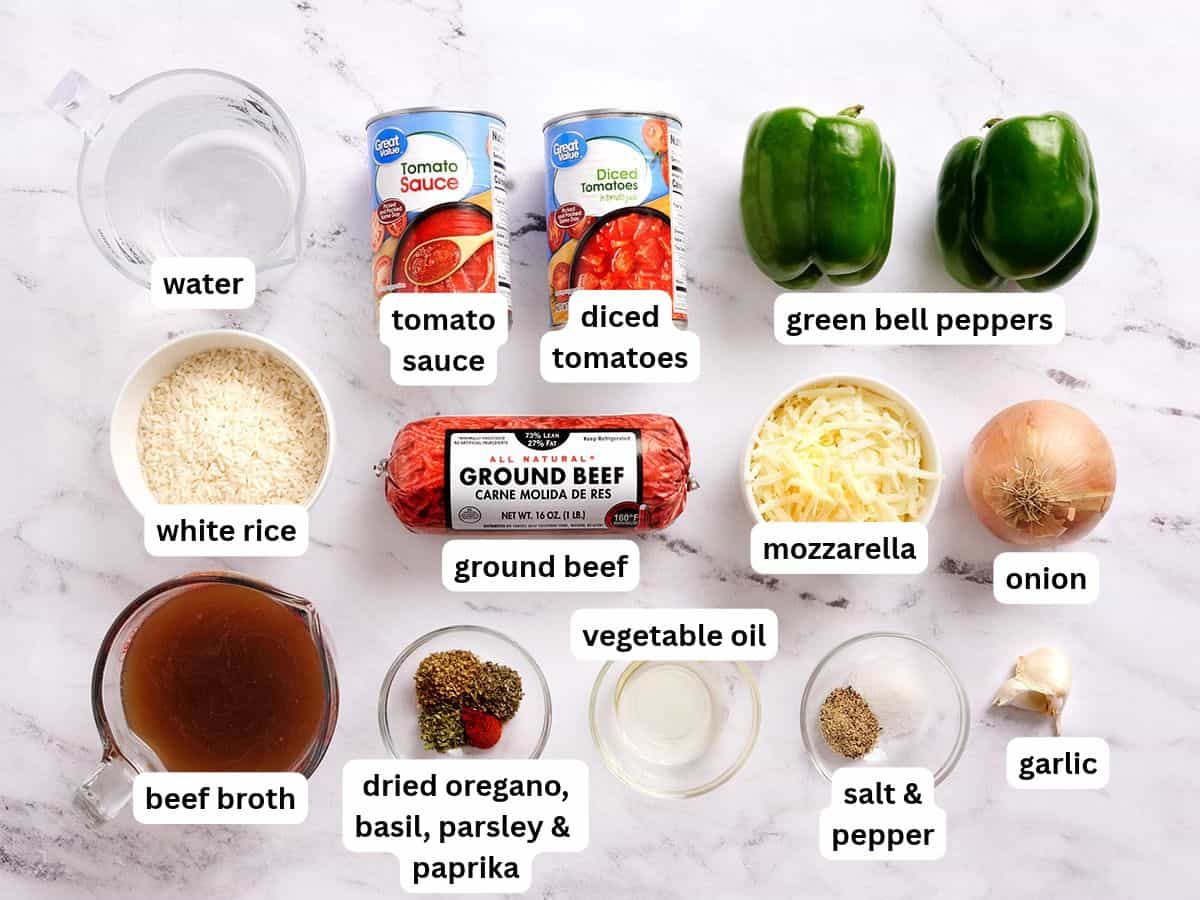
Add the rice and water to a medium pot with a lid. Bring to a boil, then turn the heat to a simmer. Cover with a lid and cook for 20 minutes. Turn off the heat and set aside.
While the rice is simmering, in a large pot over medium heat, add the vegetable oil. Once hot, add the ground beef and cook for 5 minutes, breaking it up as it cooks.
Using paper towels, blot up excess grease.
Next, add the bell peppers, onions, garlic, salt, and pepper. Cook for 5 minutes, stirring occasionally, until the vegetables have softened slightly.
Add the canned diced tomatoes with their juices, tomato sauce, beef broth, dried oregano, dried basil, dried parsley, and paprika, stir to combine.
Bring the soup to a simmer. Cook for 15 minutes to thicken and develop flavors.
Fluff the cooked rice with a fork and divide into bowls. Ladle one heaping cup of the stuffed pepper soup on the rice and sprinkle with mozzarella cheese.
*I always have long-grain white rice on hand. Feel free to use whatever you have, but make sure to follow the instructions on the packaging, as they may need different cooking times. You can even try cauliflower rice!
**Any ground beef fat % works (I use 73/27 in the photos here), or you can swap in ground pork, chicken, turkey, sausage, or cooked lentils.
***I use green bell peppers when making this soup because I love the flavor, pop of color in the soup, and the price! You can use any color you desire (red, orange, yellow), or even try poblanos in honor of our stuffed poblano peppers.
*****I like to use Better Than Bouillon to make broths to keep costs low.
*****Every time my mom made stuffed peppers, she would sprinkle the tops generously with cheese. I made sure to do the same with this soup! I use mozzarella cheese, but feel free to use your favorite, like cheddar, provolone, or Swiss.
Make the seasonings your own! I use dried oregano, basil, parsley, and paprika for a savory, herby tomato broth. But you can also try a pinch of dried thyme, garlic powder, onion powder, or a bay leaf (just remove it before serving). For a little kick, add hot sauce or some Cajun seasoning. Go easy with the Cajun seasoning at first, since some blends already contain plenty of salt.
I also tested the recipe as a one-pot dish. I added the rice and two additional cups of beef broth to the pot. The soup is still delicious BUT(!) the longer the rice sits, the mushier it gets, and it also absorbs much of the liquid, so it becomes less of a soup and more of a thick stew. So, I decided to cook the rice separately, as shown here, and much prefer the results.
Nutrition
Serving: 1serving (1 heaping cup of soup & ½ cup rice) | Calories: 434kcal | Carbohydrates: 36g | Protein: 22g | Fat: 22g | Sodium: 1488mg | Fiber: 3g
how to make Stuffed Pepper Soup step-by-step photos
Gather all of your ingredients: Cut 2 green bell peppers into a medium dice, finely dice 1 onion, and mince 2 garlic cloves. I like to get the chopping done first since the rice and soup cook at the same time.
Cook the rice: Add 1 cup uncooked long-grain white rice and 2 cups water to a medium saucepan with a lid. Bring to a boil, then reduce the heat to a gentle simmer. Cover and cook for 20 minutes, or until the rice is tender and the water has been absorbed. Turn off the heat and set aside. (This is the same technique we use in our ‘how to cook rice’ guide).
Brown the ground beef: While the rice simmers, heat 1 Tbsp vegetable oil in a large pot over medium heat. Once the oil is hot, add 1 lb. ground beef and cook for about 5 minutes, breaking it into small crumbles as it cooks. The beef should be cooked through, with no pink remaining.
Remove the excess grease: Carefully blot up any excess grease from the beef using paper towels. This helps prevent an oily layer from forming on top of the finished soup.
Soften the vegetables: Add the 2 diced green bell peppers, 1 diced onion, 2 minced garlic cloves, 1½ tsp salt, and 1 tsp black pepper to the pot with the beef. Cook for 5 minutes, stirring occasionally. The onions and peppers should start to soften but still have some texture.
Add the tomatoes and seasonings: Pour in one 14.5 oz. can of diced tomatoes (including the juices), one 15 oz. can of tomato sauce, and 2 cups beef broth. Add 1 tsp dried oregano, ½ tsp dried basil, ¼ tsp dried parsley, and ¼ tsp paprika. Stir everything together until the seasonings are evenly distributed throughout the tomato broth.
Simmer the soup: Bring the mixture to a gentle simmer and cook for 15 minutes to allow the flavors to develop and the broth to thicken slightly. The bell peppers should be tender enough to pierce easily with a fork while still holding their shape. If they’re still too firm, let the soup simmer a little longer.
Serve with rice and cheese: Fluff the cooked rice with a fork and divide it evenly among six serving bowls (about ½ cup per bowl).
Ladle a heaping cup of stuffed pepper soup over each portion of rice, then sprinkle with the shredded mozzarella (1 cup total). Serve warm and enjoy! (For a bonus, I sprinkled fresh parsley on top. Most fresh herbs would be a great garnish, like basil, thyme, or chives, or you can enjoy the recipe as is!)
What to Serve with Stuffed Pepper Soup
I love this recipe because it can be a complete meal all on its own. With ground beef, rice, and plenty of veggies, it’s hearty, satisfying, and makes 6 complete servings. But if you want to add a side, I recommend a Caesar salad for some fresh crunch or homemade garlic bread to soak up that delicious tomato broth. Our air fryer asparagus is another great option if you want some extra greens on the table. It takes less than 10 minutes to make, so I’d just pop it in the air fryer during the final simmer! Or, sprinkle some homemade croutons right over the soup for a little crunch. They’re also a great way to use up leftover bread.
I recommend storing any leftover rice and soup separately because the rice will continue absorbing the broth as it sits. Let everything cool promptly, then transfer to separate airtight containers and refrigerate for up to 3-4 days.
Reheating
Reheat the soup in a saucepan over medium heat, stirring occasionally, or in the microwave until heated through. Warm the rice separately in the microwave (with a splash of water, stirring every 15-30 seconds until hot), then spoon the soup over the top. If you’ve already mixed the rice into the soup and it’s become too thick, add a splash of beef broth or water to thin it out as it reheats.
Freezing
You can freeze leftover stuffed pepper soup for up to 3 months in freezer-safe containers. I recommend freezing the rice separately to keep it from getting mushy. Thaw overnight in the refrigerator, or use the thaw setting on your microwave, then reheat thoroughly before serving.
Try these Cozy Soups with Ground Beef Next
If you love the savory ground beef and tomato broth in this recipe, try our Beef and Cabbage Soup. It’s made with tender cabbage, ground beef, and simple herbs for another hearty, budget-friendly meal!
OurLasagna Soup is perfect when I’m craving those same savory tomato and herb flavors, but with tender pasta and a deliciously cheesy topping.
For a different spin on ground beef soup, I recommend our Easy Taco Soup, which is packed with beans, corn, and bold taco seasonings, plus plenty of room for your favorite toppings.
A Virginia man was arrested on Wednesday after allegedly using a sledgehammer to decapitate the statue depicting Marine Corps Cpl. Harlon Block from Quantico’s Iwo Jima sculpture.
At roughly 10:13 p.m., officers with the Prince William County Police Department responded to calls about property destruction near Marine Corps Base Quantico in Virginia.
Miguel Alonso Maldonado Soriano, 27, was arrested at the scene and has been charged with felony destruction of property, trespass with intent to damage property, and felony injury to a monument, per the police department.
Miguel Alonso Maldonado Soriano. (Prince William County Police Department)
The alleged destruction via a sledgehammer has caused hundreds of thousands of dollars in damage to the historic military monument, police said.
Per the Washington Post, a second Marine from the statue is missing the bayonet from therifle slung over his back, while a third figure’s helmet and face had been “chipped and gouged.”
The memorial was created in honor of Associated Press photographer Joe Rosenthal’s iconic photograph of U.S. Marines raising the flag over Mount Suribachi, Iwo Jima, on Feb. 23, 1945.
Austrian-born American sculptor Felix de Weldon, serving with the U.S. Navy at the time, was so moved by the image that he immediately constructed a scale model of the flag raising.
It would take him another nine and a half years to complete the full-sized model now standing in Arlington, Virginia. The smaller monument, allegedly defaced by Maldonado Soriano, stands near the National Museum of the Marine Corps.
Maldonado Soriano is being held without bond pending a court appearance.
Who says weeknight dinners have to be boring? This weekly meal plan has everything from creamy White Bolognese and cozy Crockpot Salisbury Steak to a Taco Casserole! Five delicious dinners, one easy shopping list, and no stressing over what’s for dinner!
What’s on the Menu?
I’ve got you covered with five delicious dinners this week! Whether you’re craving cozy pasta, slow cooker comfort food, or takeout-inspired favorites, there’s something for everyone. With this weekly meal plan, you won’t have to wonder what’s for dinner!
Make dinnertime easy with this Crockpot Salisbury Steak recipe! Juicy beef patties slow cooked to tender perfection in an onion and mushroom gravy. This is a no-fuss dinner that is so hearty and delicious!
This includes five easy dinners that serve 4–6 people, depending on whether you’re feeding adults or kids. Plus, you’ll get a shopping list to make planning and grocery shopping even easier.
Why Meal Planning Works for Me
Meal planning makes my week so much easier. I don’t have to figure out dinner at 5 p.m. I’m way less likely to grab takeout because I already have a plan.
Less Dinner Stress: I already know what I’m making, so there’s no last-minute scramble.
More Variety: A plan helps me mix things up instead of making the same few dinners every week.
More Time Together: When dinner is handled, we can actually sit down, eat, and enjoy being together.
Even planning just a few meals ahead can make a big difference!
My weekly meal plans run Monday through Friday because we often have weekend plans. If you have leftovers, store them in an airtight container in the fridge to keep them fresh until you’re ready to eat them again!
The error of Veterans Benefits Administration staff has resulted in approximately $5.6 million in overpayments to veterans, a VA watchdog found.
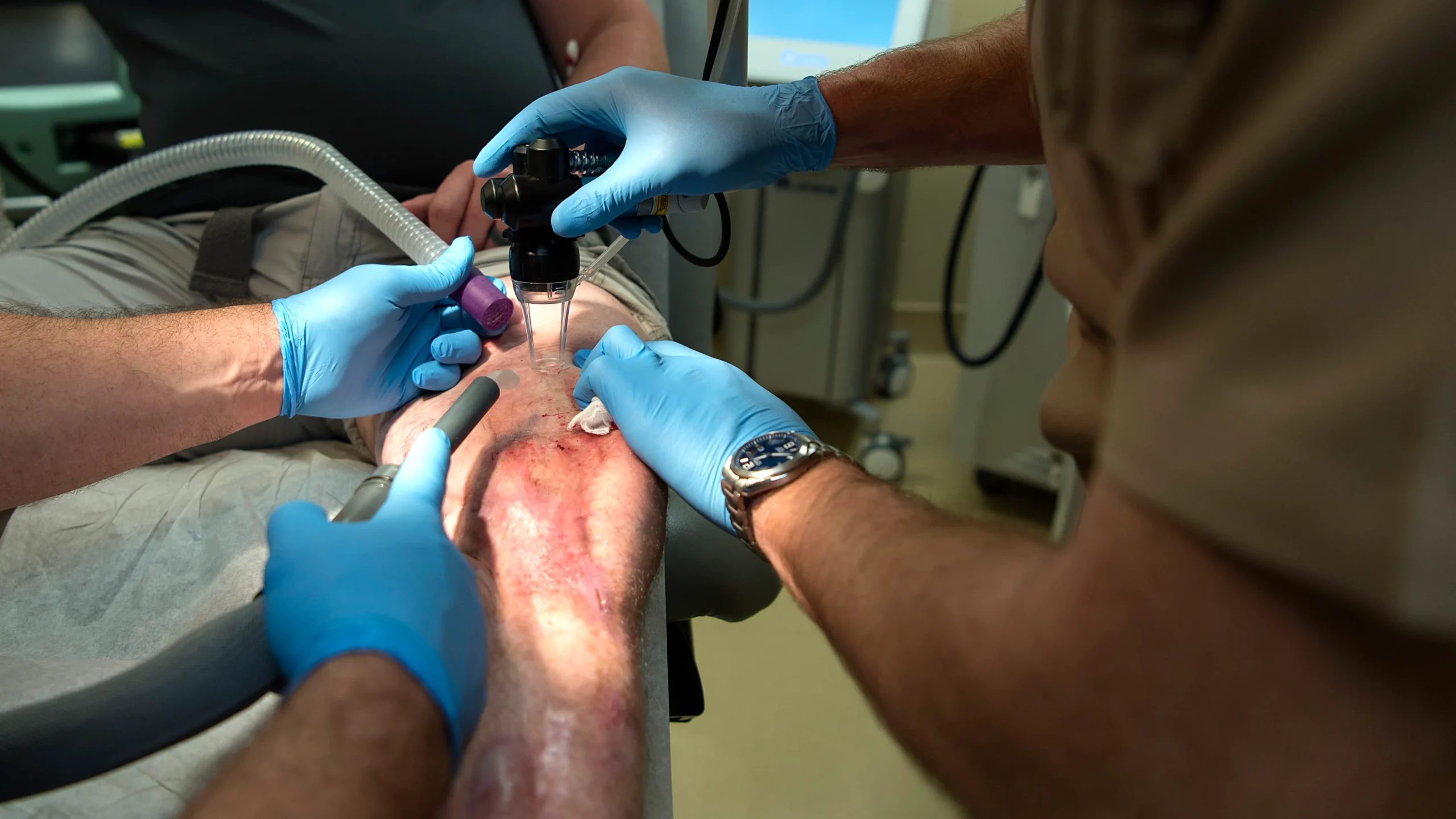
During a review period from June 1, 2024, through May 31, 2025, the VA made at least one error in 17,900 cases, roughly 38%, regarding disability decisions for painful scars, according to a recent VA Office of Inspector General report.
920 of those decisions, per the report, led to millions in overpayment and will continue to accrue without “corrective action.”
For service-connected painful scars, as a result of burns, surgeries, shrapnel and gunshot wounds, among other sources, the VA requires a physical examination to support a veteran’s claim.
However, the OIG found that the Disability Benefits Questionnaire “does not clearly define objective versus subjective evidence.
Therefore, claims processors sometimes provided evaluations for painful scars without objective evidence to support the evaluations, which led to overpayments in disability compensation.”
In addition, the report found that physical manifestations of the disability were often evaluated under two separate diagnostic codes, often resulting in “pyramiding” and overpayment.
The report notes that more than a half-million veterans currently receive VA disability benefits for painful scarring caused or worsened by military service, but it took a random sample of 70 decisions from a review population of 47,300.
It further notes that the OIG took the findings to the VBA in February 2026 and following the briefing, “30 additional decisions completed from January 1 through January 31, 2026… identified a 43 percent error rate.”
The VBA, while agreeing with many of the OIG’s recommendations, including revising the “Scars/Disfigurement” section of the DBQ; ensuring employees understand how to accurately evaluate painful scars; and reviewing and correcting the processing errors on decisions the Office of Inspector General team identified, took issue with the statistical sample and the contextualization of those estimates.
“The OIG examined 130 decisions, representing approximately 0.27 percent of the total review population of about 47,300 decisions, and identified 60 errors, which form the basis for the projected 17,900 errors referenced throughout the report,” per VA comments in the report.
“Importantly, only seven of the 60 errors OIG found resulted in improper payments, which represents about 5.4 percent of the sample, and when viewed across the full review population, only about 0.015 percent of all decisions reviewed. The remaining 53 errors, more than 88 percent of the sample, were technical or procedural issues that did not result in improper payments.”
The VA is working to complete the OIG’s suggestions by February 2027 at the latest.
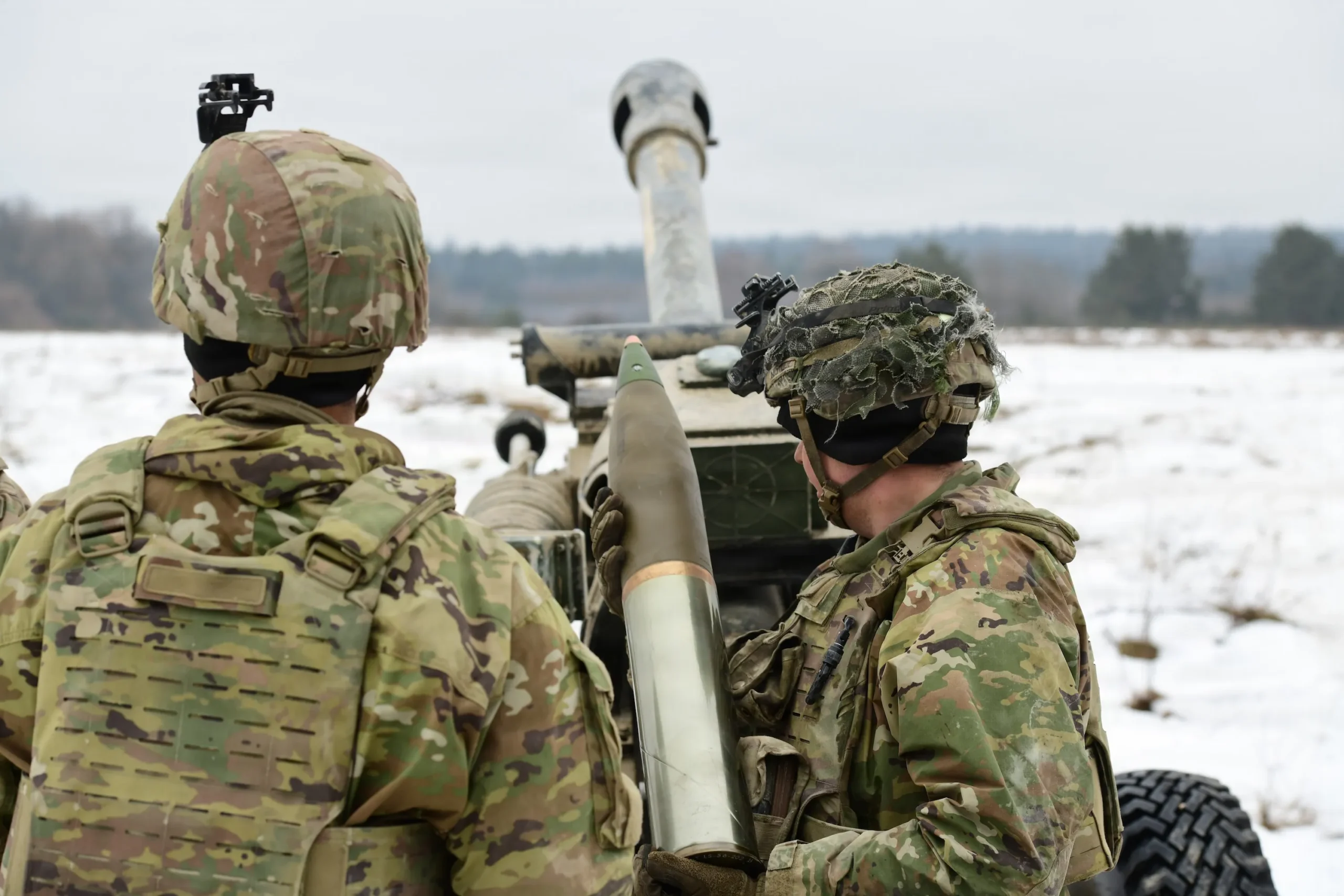
The U.S. Army is looking for new manufacturers to build barrels for 155mm howitzers amid concerns at the Pentagon that the government’s only plant for manufacturing them can’t keep up with the increased demand for artillery.
The Army wants contractors that can manufacture up to 10 barrels per month within three years, according to the Sources Sought notice. The deadline is Nov. 23.
Companies were asked to provide details of their ability — or their subcontractor’s capacity — to make barrels, including whether they could add “chrome bore coatings on a steel tube up to 30 [feet] long and up to 7,500 pounds in weight,” the notice said. They should also provide the maximum length and weight of tube that they could coat.
Also desired are details on a company’s boring, milling and rifling capabilities, as well as details on raw materials, such as “steel preform production, forging, guide bore, and heat treatment.”
The notice asks contractors to estimate their capacity to manufacture 155mm barrels within 18 months, and up to 10 barrels per month within 36 months. Companies should also offer a cost estimate for an “initial production quantity of 40 cannon tubes (broken down by caliber or indicating pricing for a combined/flexible mix),” the Army said.
Currently, the Army makes large-caliber barrels for howitzers and tanks only at the aging Watervliet Arsenal in New York.
While America and Europe have been focused on expanding production of howitzer ammunition to meet demand in the Ukraine war and replenish domestic stockpiles, another problem is a lack of manufacturing capacity to replace worn-out cannon barrels.
A 2024 Pentagon budget document stated that Ukraine’s heavy use of M777 howitzers created a demand for more than 30 M776 tubes per month, according to The War Zone. The document admitted that Watervliet could not keep up with demand, and asked for emergency funding to be transferred to enable a second manufacturer of barrels.
The new notice doesn’t mention how many additional barrel manufacturers are needed. However, the Army is exploring whether to replace the M777 with a weapon based on Korea’s popular K9 howitzer.
After a 10-month deployment that was extended twice, including 40 days of combat operations against Iran that kept sailors at sea for 265 days without a port call, the crew of the USS Abraham Lincoln and their families are preparing to move to a new base just weeks after arriving home.
By the end of this year, the aircraft carrier will shift its home port from San Diego, California, to Bremerton, Washington, for long-planned maintenance, a Navy spokesperson told Task & Purpose. The Navy has set Dec. 31, 2026, as the administrative date for the change.
As of Oct. 22, the Navy’s Dec. 31 administrative benchmark is just 10 weeks away, as sailors and their families navigate post-deployment leave and preparations for relocation.
The 5,000 sailors aboard the Lincoln spent 321 days away from home, including 40 days in combat, and were awarded a Presidential Unit Citation for valor upon their return to San Diego.
“This will be a deliberate pause from high-tempo operational tasking to focus on restoring material readiness, upgrading warfighting capabilities, and preparing the carrier and its crew for future tasks,” a Navy spokesperson told Task & Purpose.
The long-planned home port change from San Diego to Naval Base Kitsap in Washington now presents another challenge for sailors and their families. At an August town hall in San Diego, family members expressed frustration to acting Navy Secretary Hung Cao and other senior officials about uncertainty surrounding the carrier’s impending move to Washington, according to Military Times.
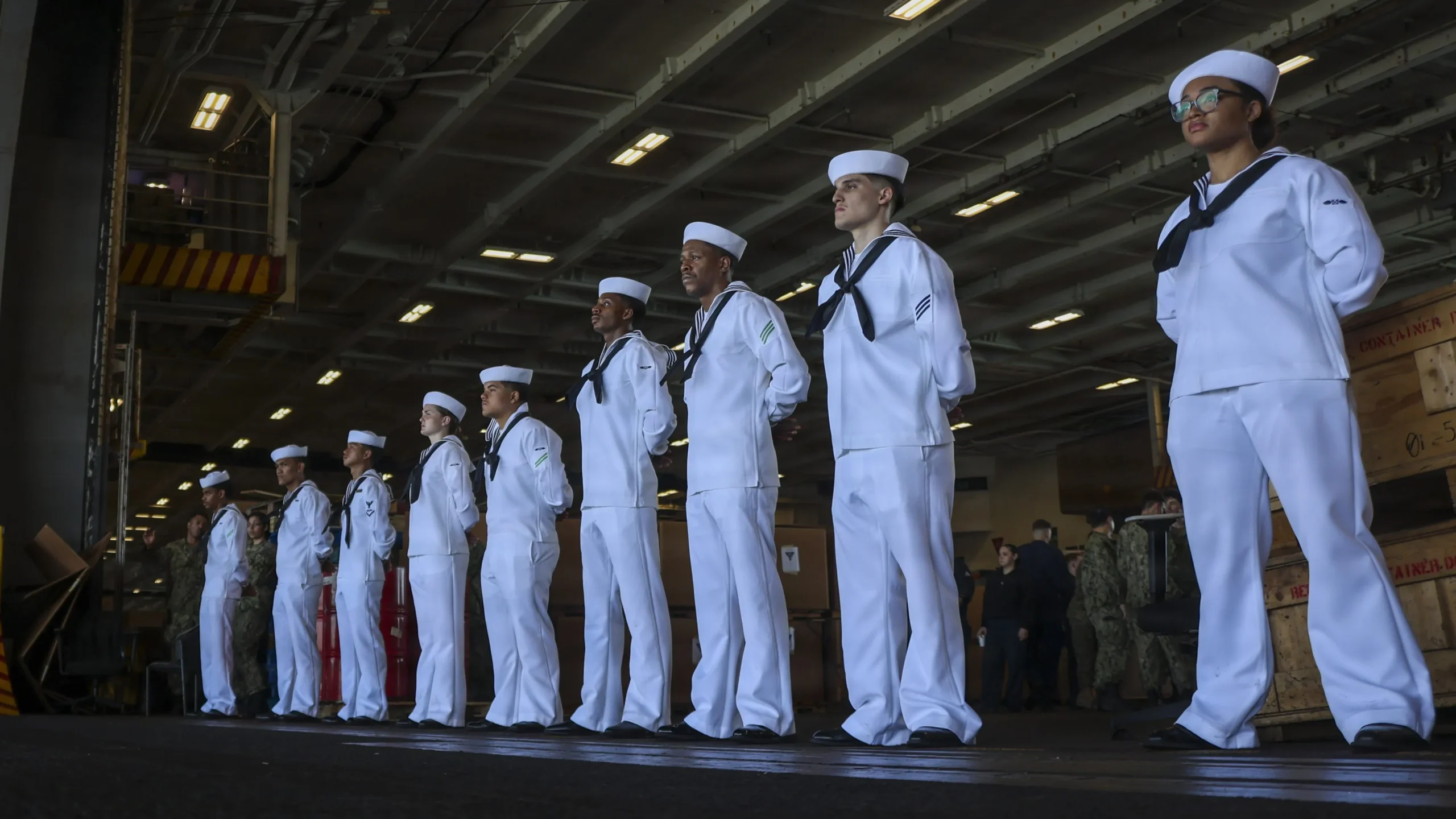
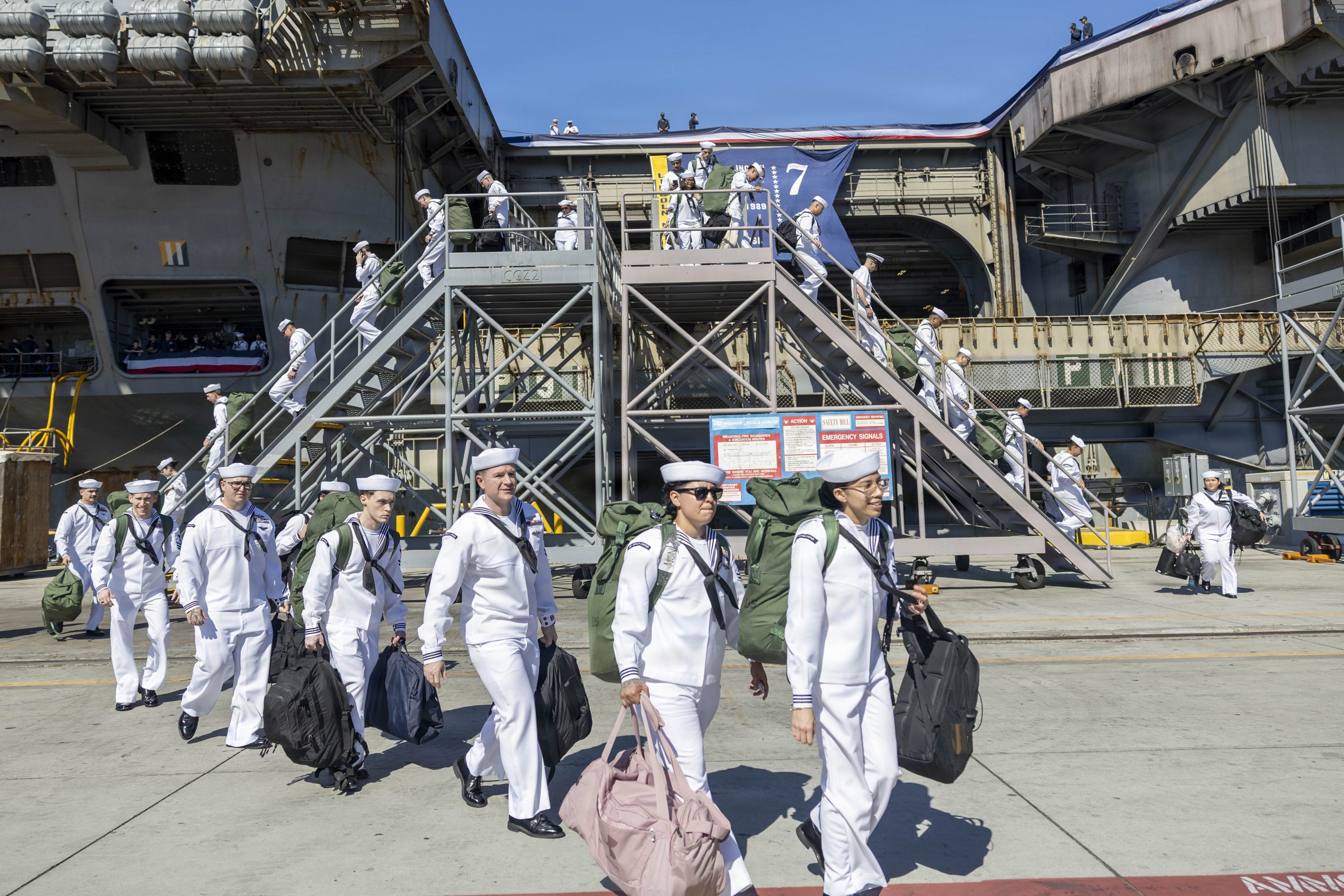
Sailors with the USS Abraham Lincoln return to home port in San Diego, California, on Oct. 8, 2026. Navy photo by Mass Communication Specialist Seaman Maliq J. Martin.
Permanent change of station moves have long presented challenges for military families, who must navigate housing, employment, school enrollment and the logistics of transporting their belongings between duty stations. In 2017, Task & Purpose reported that Navy families were receiving less than eight weeks’ notice to relocate, leaving some scrambling to arrange moves and manage the financial burdens of uprooting their households.
More recently, the war with Iran has complicated military relocations. In March, Task & Purpose reported that disruptions to international shipping, heightened security at military installations and rising transportation costs were creating additional challenges for families moving between duty stations, including within the United States.
It remains unclear how many of those families will relocate to Washington with infants less than a year old.
“Abraham Lincoln sailors and their families are moving to Bremerton individually, with full support from the chain of command and permanent change of station resources,” a Navy spokesperson told Task & Purpose.
That support, according to the Navy, includes standard PCS benefits such as the shipment and storage of household goods and travel allowances. Eligible sailors relocating dependents may receive up to four proceed days, while commanders may authorize up to 10 days of house-hunting time, subject to operational requirements.
The Navy also said Naval Base Kitsap and regional partners have established transition programs for incoming families, including childcare support, housing assistance and a “Welcome to Kitsap” resource fair.
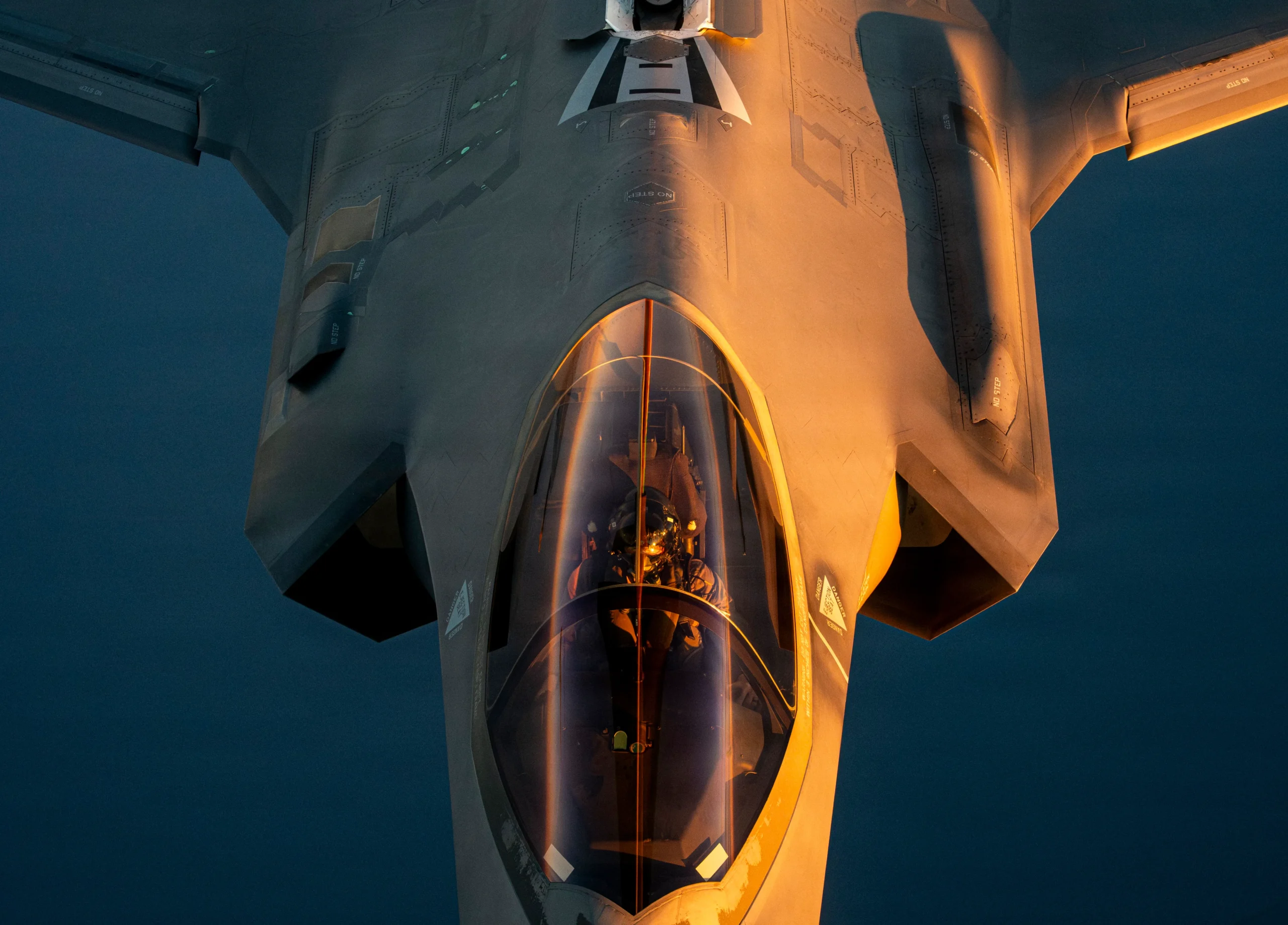
The Defense Department and Lockheed Martin agreed to a 10-year framework that the Pentagon says guarantees at least 850 F-35 Lightning II fighters for the U.S. military, pending congressional approval and funding.
The framework, announced Thursday, includes initial spare parts plus 10 years of modification kits and sustainment. It also covers orders from foreign customers, with production continuing at 156 aircraft per year, according to Lockheed.
In exchange for the decade-long commitment, Lockheed will self-fund at least $7 billion in initiatives supporting the F-35 program, the Pentagon said.
“With the greater certainty that comes from the U.S. government’s transformative approach to F-35 production and sustainment, we can make the upfront investments needed to expand capacity, improve efficiency, and build a more resilient supply chain,” Lockheed CEO Jim Taiclet said in a statement. “That’s good for the taxpayer, good for our suppliers and, most importantly, good for the United States and its allies.”
Neither announcement gave a total value or per-jet price. Lockheed said the F-35 Joint Program Office and the company will work out terms, pricing and schedules in a formal contract if Congress approves a multiyear buy and provides the money in the coming months.
A multiyear buy lets the Pentagon purchase a weapon across several years under one contract instead of negotiating annually, which generally lowers unit cost. Lockheed said the framework is expected to save taxpayers billions of dollars through “long-term pricing and industry volume discounts.”
“We have fundamentally changed how we stabilize the American defense industrial base to produce at speed and scale,” said Michael Duffey, the Pentagon’s undersecretary for acquisition and sustainment. “This agreement with Lockheed Martin proves it. By aligning financial incentives with actual performance, we are ensuring our warfighters are equipped with the lethal capabilities they need to fight and win.”
Neither the Pentagon nor Lockheed described those performance-based incentives.
At 850 jets over 10 years, the framework averages 85 U.S. aircraft per year. That matches the Pentagon’s fiscal 2027 request for 85 F-35s across the services. In fiscal 2026, Congress funded just 47 F-35s.
The framework comes days after the Air Force told Congress it needs 1,509 combat-coded fighters, or jets assigned to combat units, by 2035. The request came in a force structure report sent Oct. 16. F-35As would make up about 40% of that fleet.
The House and Senate versions of the annual defense policy bill would both let the Pentagon sign multiyear F-35 contracts. The House passed its bill in July. Senate Democrats blocked theirs from reaching the floor that month, and leaders have put it off until after the November midterm elections. The framework can’t become a contract until both bills pass and are merged into a single law.
The framework also faces a funding hurdle. Congress has not yet approved a full-year defense budget. A stopgap funding law keeping the government open through Dec. 11 holds spending at last year’s levels and generally bars the Pentagon from starting new programs or multiyear buys.
Lockheed pitched the framework as a readiness fix, saying steady orders will improve the F-35’s mission-capable rate, the percentage of time jets can fly at least one assigned mission.
“Predictable demand from long-term contracts with suppliers will enable bulk procurement of raw materials and critical parts, slashing turnaround times and reducing logistics bottlenecks,” Lockheed said. “This will result in better mission-capable rates by eliminating the annual contracting cycle that has historically strained the industrial base.”
A Government Accountability Office report in June found that the rate fell from 67% in fiscal 2021 to 44% in fiscal 2025, while the share of time jets could fly all assigned missions dropped from 38% to 25%. Later that month, F-35 program chief Lt. Gen. Gregory Masiello told senators the fleet had outgrown its support system.
The F-35 deal follows a string of Pentagon framework agreements aimed at speeding up weapons production.
In January, Lockheed reached an agreement to speed PAC-3 MSE output, then signed another weeks later to quadruple THAAD interceptor production. The THAAD deal led to a contract worth more than $35 billion in June. Last year’s defense bills had already approved multiyear buys for both interceptors.
On Oct. 19, the Pentagon announced a framework with BAE Systems covering up to seven years of buys of Advanced Precision Kill Weapon System laser-guidance kits.
Lockheed said the program will support 317,000 U.S. jobs and roughly $79 billion in yearly economic activity over the decade.
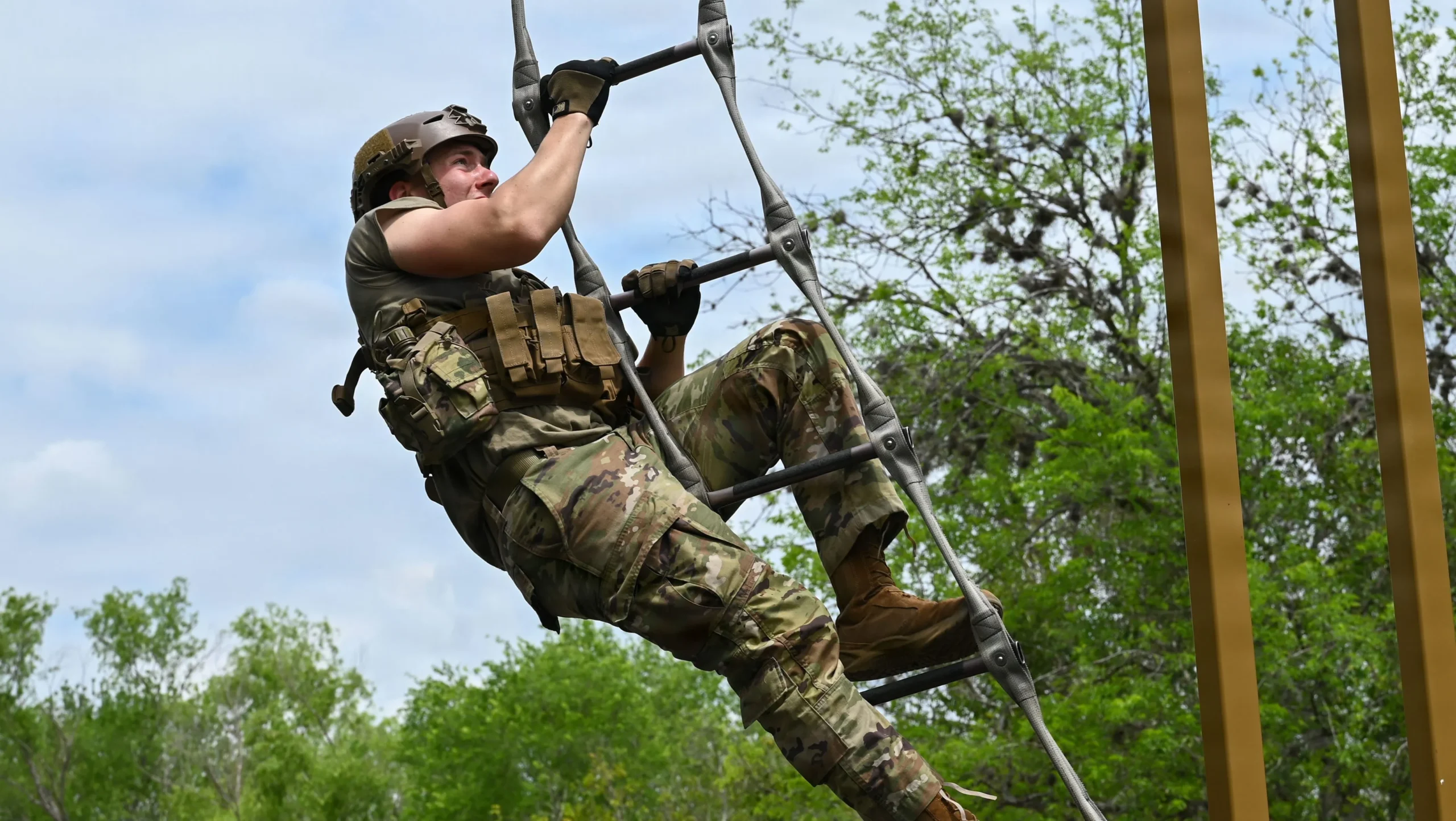
Airmen training to join the Air Force’s special operations roles are moving through the service’s training courses months faster and with less downtime, officials said.
Over the last year, the Air Force has changed its training pipeline for airmen who want to join pararescue, combat control, Tactical Air Control Party (TACP), or special reconnaissance fields, which the Air Force refers to as its special warfare roles.
Jennifer Gangemi, a spokesperson for the Air Force Special Warfare Training Wing, said that a revamped Special Warfare Assessment and Selection program, a new intro course, and new start dates for existing training have reduced the time that airmen spend in training for those jobs. The skills and standards required of the training, she said, have not changed.
“This reduced the average time to beret by nearly 70 days,” Gangemi told Task & Purpose, referencing the distinctively colored headgear airmen earn when they graduate the training pipeline for each job.
The changes to Air Force special operations training are part of the service’s Pipeline Optimization effort, which aims to eliminate bottlenecks and match the number of students to an available number of slots at each schoolhouse.
“The wing spent the past year optimizing its pipeline to reduce delays and maximize throughput within current constraints,” Gangemi said. “Optimization reduced unnecessary training pauses, Students Not in Training (SNIT), and multiple training redundancies. This cut man-years of time-out-of-training, [and] reduced SNIT by over 50%.”
To join one of the four Air Force special operations career fields, students first attend the challenging four-week assessment & selection Course. Then they move on to the Air Force’s new 16-week “Zulu” course at Lackland Air Force Base, Texas.
The Zulu course teaches airmen headed to any of the four special warfare jobs the basic skills of how to shoot, move, and communicate as a team, surface warfare skills, infiltration/exfiltration techniques, and the seven Air Force special warfare missions. In all, the course covers 100 training tasks that students previously had to be taught later in their training pipeline.
“This meant apprentice courses would reinforce the common skills learned in Zulu, rather than having to teach those initial skill sets late in their training, reducing apprentice course days,” Gangemi said.
About 1,200 airmen on average will go through the new course each year, according to the Air Force.
Once an airman headed into any of the Air Force’s four special operations specialties graduates from the selection and Zulu course, they enter a pipeline of as many as five training schools at bases around the country.
The pipelines vary for each job. Airmen training in pararescue, for instance, attend pre-dive, combat dive, and military free fall schools, while airmen headed to TACP do not. The final step in the training pipeline for all four special warfare jobs is a final apprentice school for each role.
Officials told Task & Purpose last year that the training pipelines for each of the distinct career fields will not change.
Gangemi said the new pipeline has “drastically” decreased the amount of time that airmen wait around between courses, or continuing on in their training journey after rehabbing from an injury.
Previously, students had more downtime between courses because they were treated as a “first-come, first-served process,” but now trainees have set start dates for each course. Under the old way of doing things, students could have gaps between courses that could add up to two months or more of downtime during a training pipeline. With the new structure, Gangemi said, the course dates are scheduled to keep that downtime closer to two weeks.
Gangemi said airmen can finish their special operator training between six and 18 months “faster” with the same necessary requirements that they need to graduate. The six- to 18-month range, she said, depends on the career field because each has different graduation requirements.