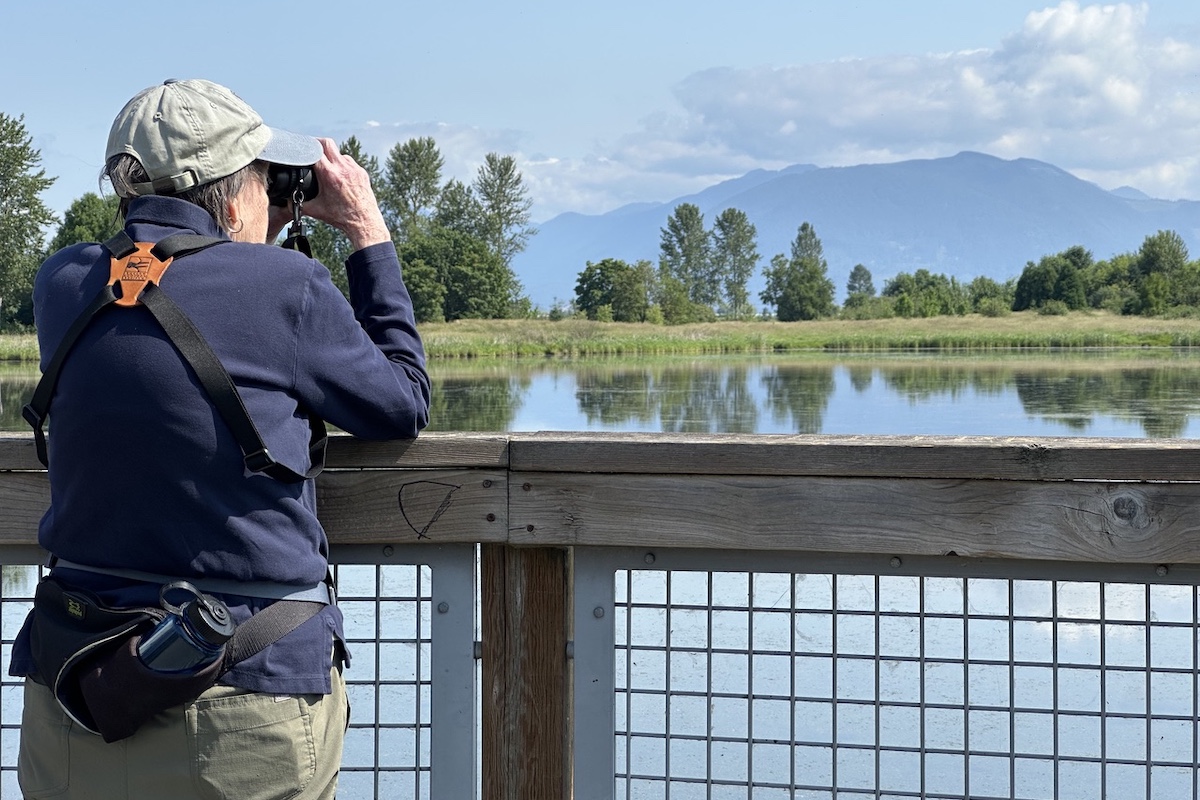

Where to see bird migrations across Canada
by Carol Patterson
Canada may not have as many bird species as other countries – 450 regularly occurring species as compared to Mexico’s 1,100 species, but it is the land where birds come to nest and raise their young. That translates into the passage of thousands and thousands of birds on four major migratory flyways, in bright and beautiful plumage in spring and with their young in large numbers each fall.
A trip to some of Canada’s best-known birdwatching destinations in Ontario, New Brunswick, Saskachewan and British Columbia can be a great addition to a holiday or the main reason for your visit. World Migratory Bird Day in May and October is also a time for bird enthusiasts to share their observations and contribute to citizen science. Here are some of my suggestions on where you might watch bird migrations in Canada.
Before you go…
- Confirm flight routes on Skyscanner
- Find a place to stay on Booking.com
- Find a vetted travel company in our Women’s Travel Directory
- Buy insurance or check your coverage (Try Insureyourtrip or Wanderwell, a B Corp)
- Check official government travel advisories
Get stories just like this one delivered straight to your inbox. Join our mailing list here.
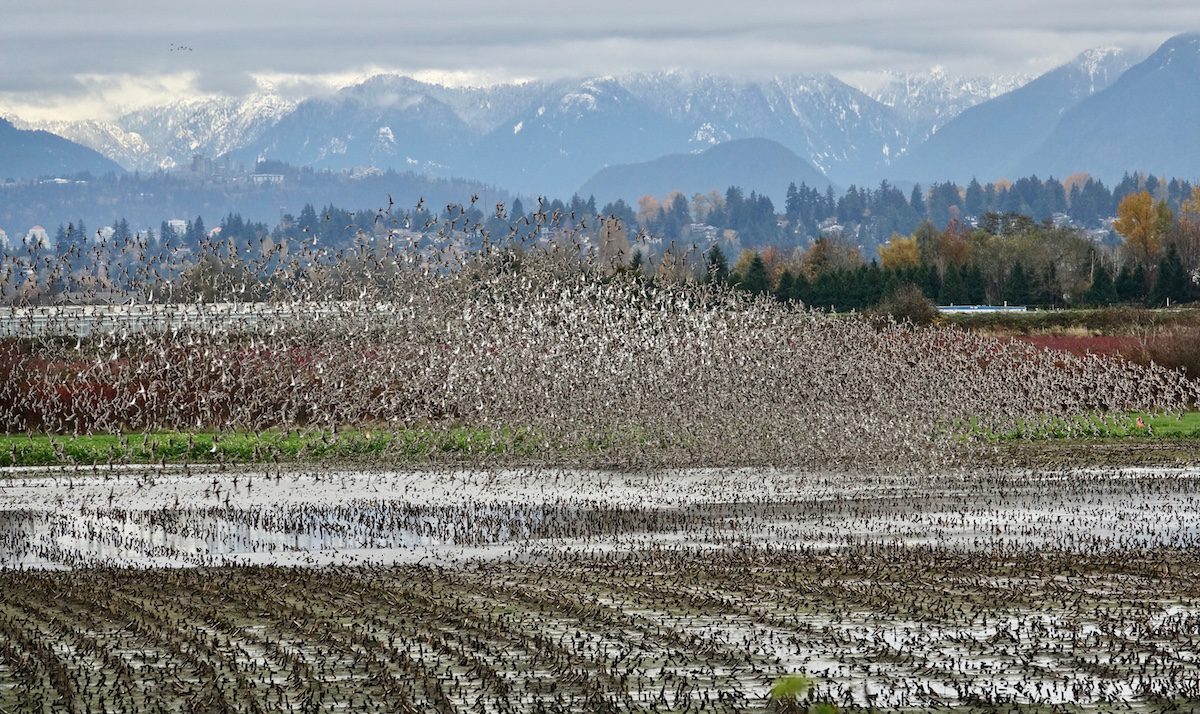
Boundary Bay at dawn / Photo by Carol Patterson
Best places to watch bird migrations in Canada
Ontario’s Point Pelee Spring Migration
Why Visit Point Pelee: Many bird lovers make a spring pilgrimage to Point Pelee National Park at some time in their lives. It’s the most southerly point of land in Canada, the tiny peninsula poking into Lake Erie. Each spring, thousands of birds fly north, many of them at night and arrive exhausted at the tip of Point Pelee. Birdwatchers greet them with binoculars and cameras, chattering excitedly at the surprises each sunrise brings. Warblers are perhaps the most eagerly sought species but there are raptors and many other birds to watch.
Getting to Point Pelee Provincial Park: Fly to Toronto (YYZ) or Windsor (YQG) and rent a car. Drive south along Highway 401 until you reach Leamington and follow the signs for the park. Leamington has a good selection of hotels and bed and breakfasts.
Best Time to Visit: May. If you’d like to participate in the celebratory atmosphere or guided experiences, time your visit to the Festival of Birds held for several weeks each May.
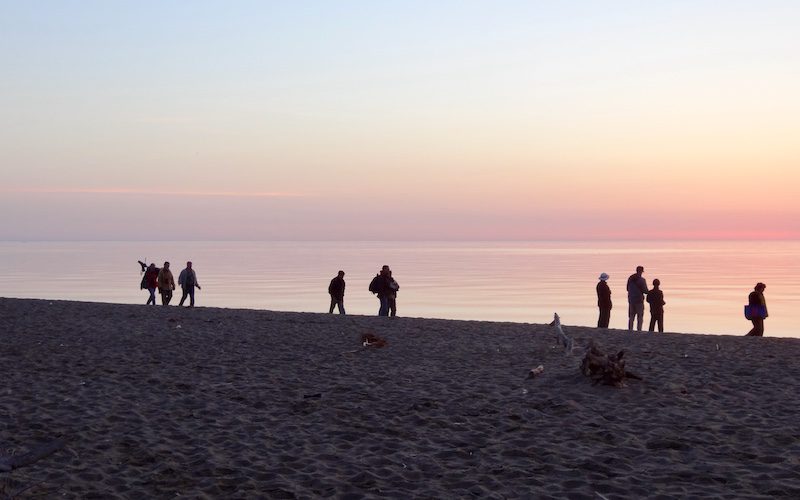
Point Pelee at dawn / Photo by Carol Patterson
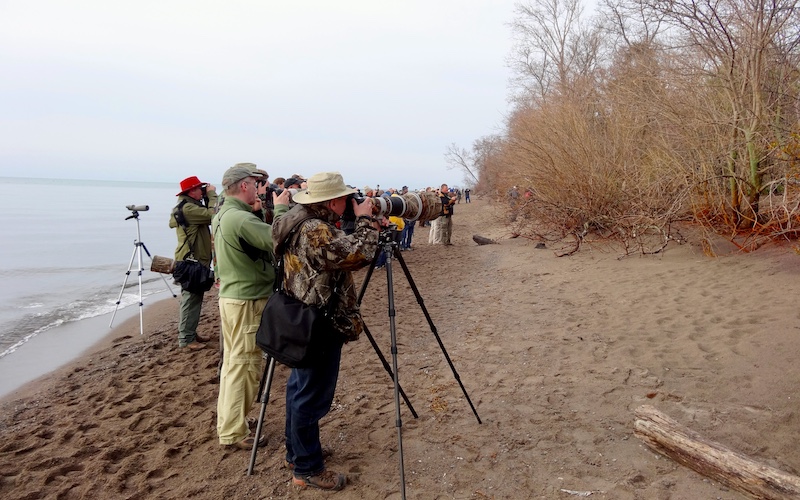
Point Pelee birdwatchers / Photo Credit

New Brunswick’s Whitehead Island in Spring
Why Visit Whitehead Island: Grand Manan’s little neighbour isn’t as well-known to birdwatchers, but it’s the first island the birds see when flying north over the vast waters of the Bay of Fundy. As a result, many species stop to rest and feed before continuing north.
How to Get to Whitehead Island: Fly to Saint John (YSJ), New Brunswick and rent a car, then head south to the ferry to Grand Manan. Accommodation on Grand Manan is limited, so book ahead. Then take one of the ferries that run several times a day to Whitehead Island. Be respectful of locals when looking for birds – Long Point Road is a good place to explore, but although the roads look deserted, pull to the side so you don’t block other drivers.
Best Times to Visit: May for spring migrants.
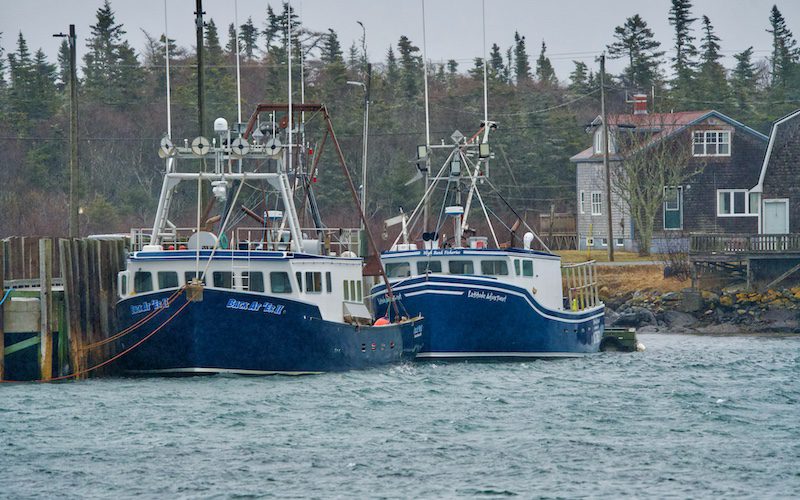
Whitehead Island / Photo by Carol Patterson
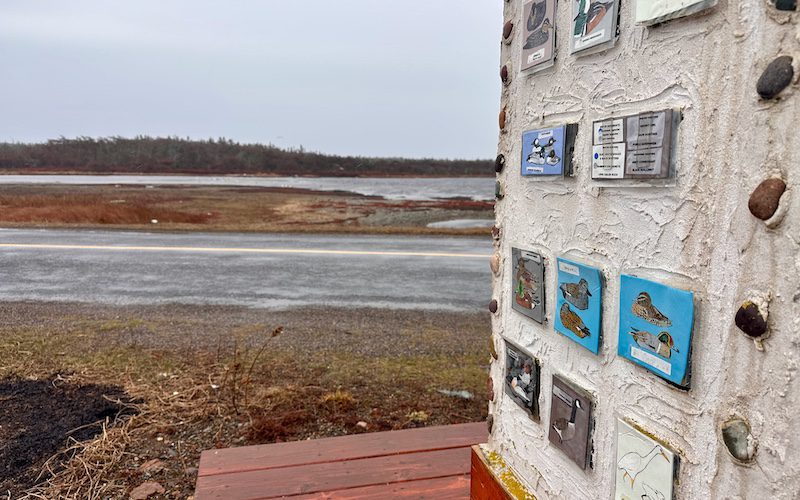
Whitehead monument / Photo Credit
Alberta’s Spring Warbler Migration in Cold Lake
Why Visit Cold Lake: Despite its name, Cold Lake is a popular destination for neotropical songbirds each spring, making it a great alternative to Point Pelee for western Canadian nature lovers. Birdwatchers search for 23 warbler species along with flycatchers, waterfowl and shorebirds.
How to Get to Cold Lake: Fly to Edmonton (YEG) and rent a car for the 4-hour drive to Cold Lake Provincial Park. Plan to camp in the park or stay in one of the hotels in nearby Cold Lake.
Best Times to Visit: Mid-May to Early June. Try to time your visit before the weather warms up and the bugs get thick. Set your alarm to get up in time to hear the dawn chorus at least once on your visit.
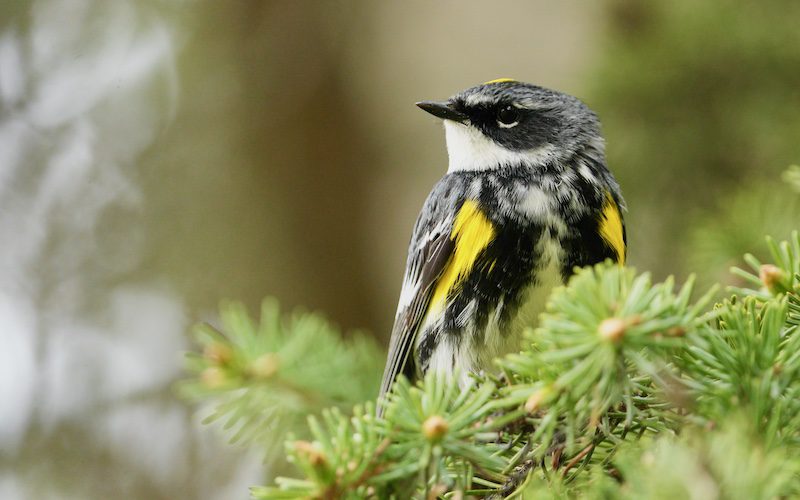
Yellow-rumped Warbler / Photo by Carol Patterson
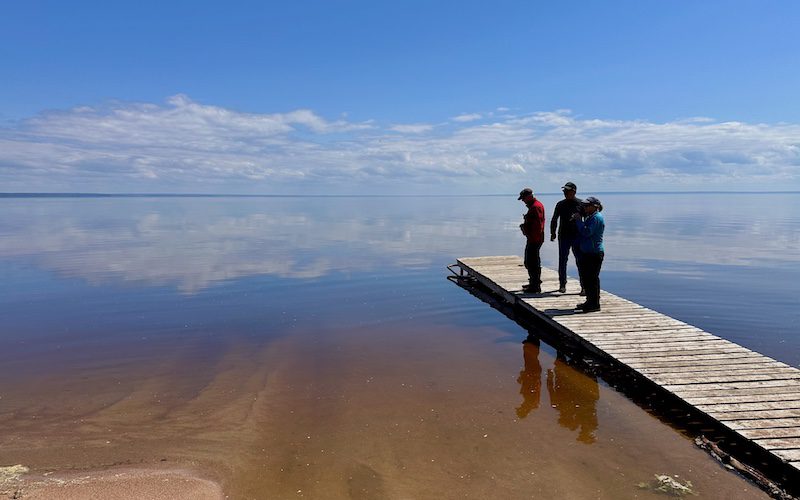
Cold Lake / Photo by Carol Patterson
Whooping Cranes Fall Stopover in Northern Saskatchewan
Where to Find Whooping Cranes: Whooping Cranes are one of Canada’s greatest conservation success stories. Almost extinct in the 1940s, the population of whoopers has grown from 21 birds to over 800 with efforts by scientists and conservationists. Now, people have an excellent chance of seeing a wild flock of whooping cranes in northern Saskatchewan as they feed and nurture their young for several weeks before flying south to Texas. Joining them are large numbers of sandhill cranes and flocks of snow geese so large their wings block out the sky when they lift off.
How to Get There: Fly to Saskatoon (YXE) and hire a birdwatching guide or join a birdwatching tour for the best chance of finding the birds. Some options are Eagle-Eye Tours, Saskatoon Custom Bird Tours and The Wild View.
Best Times to Visit: Late September to mid-October
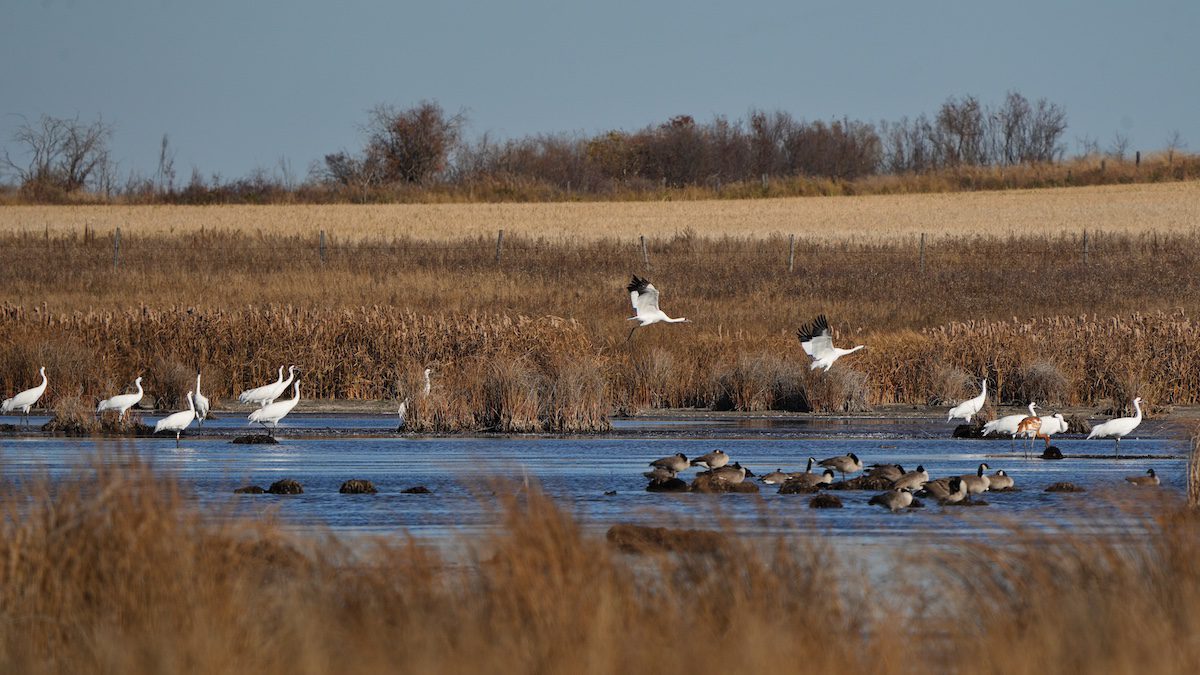
Whooping Cranes in Saskatchewan / Photo by Carol Patterson
British Columbia’s Shorebird Migration at Boundary Bay
Why Visit Boundary Bay: The Fraser River Estuary and Boundary Bay are critical stopping points for migrating sandpipers and support Canada’s largest wintering shorebird and waterfowl populations. The western sandpiper is a delicate bird, only 14-17 cm (5.5-6.7 in) long, that gathers in large numbers each fall. They often fly in a murmuration, the perfectly coordinated turns and swoops dazzling onlookers and thwarting predators.
How to Get to Boundary Bay: Fly to Vancouver (YVR) or Abbotsford (YXX). Rent a car from the airport and drive to Delta or Surrey. Some of the best places to see shorebirds are the Boundary Bay Dyke Trail in Delta (try the 72 Street or 104 Street access points) or Blackie Spit in Surrey.
Best Times to Visit: August to October. Plan your outing for a rising tide so the sandpipers are closer to you and easier to see.
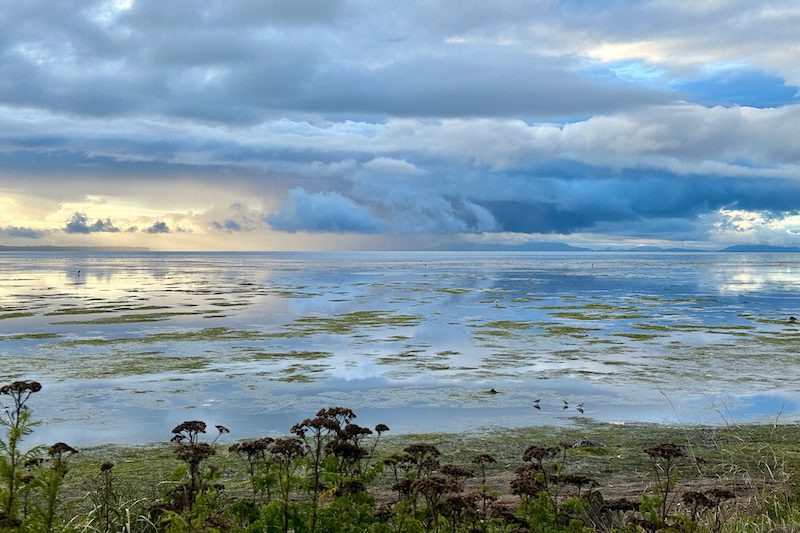
Boundary Bay / Photo by Carol Patterson
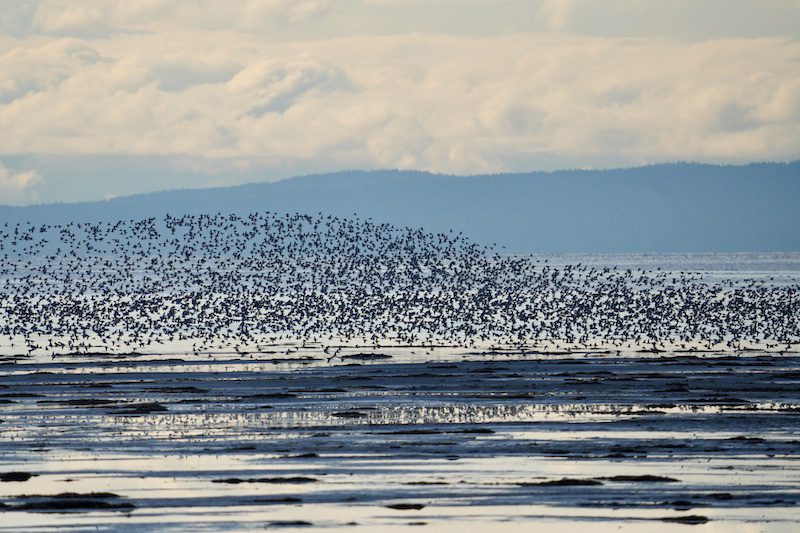
A large flock of sandpipers / Photo by Carol Patterson
Wintering Bald Eagles in Squamish River Valley, British Columbia
Why Visit Squamish and Area: Each year, hundreds of bald eagles make their way to the Squamish River Valley to wait out winter. You can head to Brackendale, a community north of Squamish, and watch from the Eagle Run Dyke. The area is one of North America’s most significant winter gatherings of bald eagles. Each year on the first Sunday after New Year’s Day, Nature Squamish volunteers undertake the Brackendale Winter Eagle Count. In 2026, the tally showed 1,397 eagles so even if you aren’t an experienced birdwatcher, you’ll have no trouble spotting the large birds.
How to Get to Squamish: Fly to Vancouver (YVR) and rent a car or take a shuttle bus (the Squamish Connector offers daily service from downtown Vancouver) for the 80-kilometre drive to Squamish. You can also take an Uber or Poparide to reach Squamish. Once in Squamish, you can hail a taxi or hop a bus from Squamish to cover the seven kilometres to the Eagle Run Dyke in Brackendale.
Best Times to Visit: October until early January. Try to get outside in the early mornings to increase your chances of seeing the raptors.
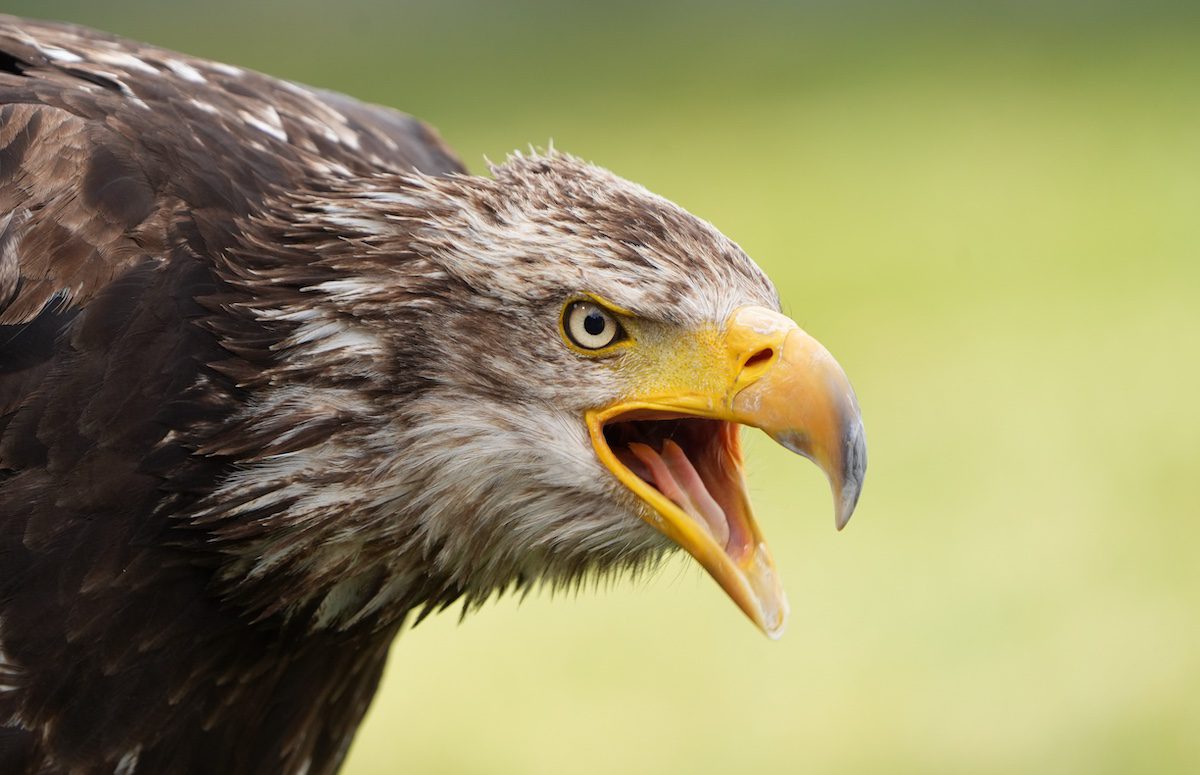
A bald eagle / Photo by Carol Patterson

The post Wings Over Canada: Where to See Fall and Spring Bird Migrations in Canada appeared first on JourneyWoman.