
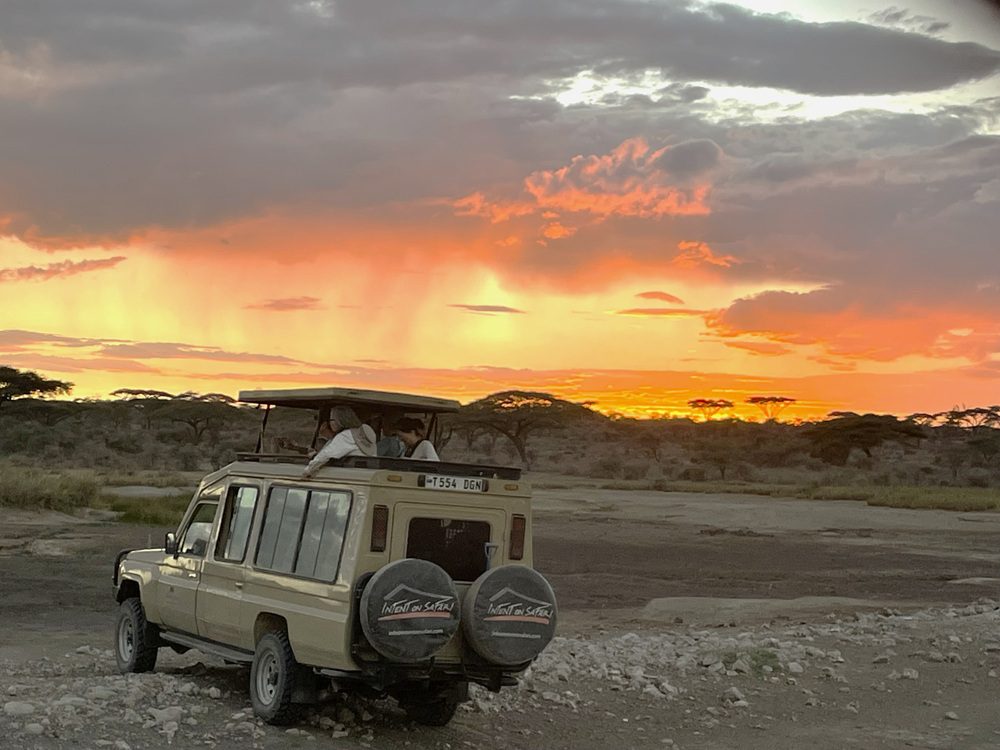
Featured image: There are two Tanzania safaris scheduled for 2026 | Photo by Intent on Safari
Trip details for Tanzania in November and December 2026
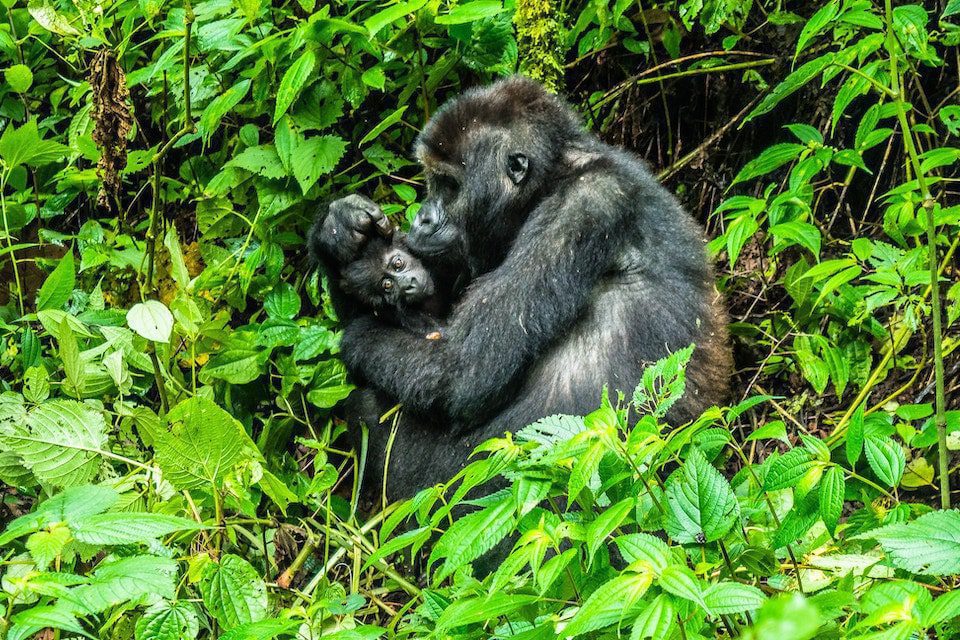
JourneyWoman is partnering with our trusted Women’s Travel Directory partner Intent on Safari to offer two women-only safaris in Tanzania in November and December 2026. On this trip, women will experience Tanzania’s wildebeest migration, which is timed for low season before the holiday rush and the start of the rains—when over a million wildebeest begin their trek to the Ndutu/Serengeti plains. We’ll spend two nights in Tarangire National Park, explore the Ngorongoro Crater (a natural wonder), two nights in the Ndutu area tracking the herds, and two nights in the Serengeti including a hot air balloon flight over the plains. This also includes a talk from KopeLion conservation group. There are optional extensions available: Gorilla trekking in Rwanda or beach relaxation in Zanzibar. Find full trip details here.
This year’s host is for the December trip is JourneyWoman CEO Carolyn Ray, who will be joining our safari hosts Laura and Colin Simpson, Owners of Intent on Safari. Watch the March 2026 introductory call about this trip here, and join us on October 15 for our pre-trip call for both groups. Calls are recorded for later viewing.
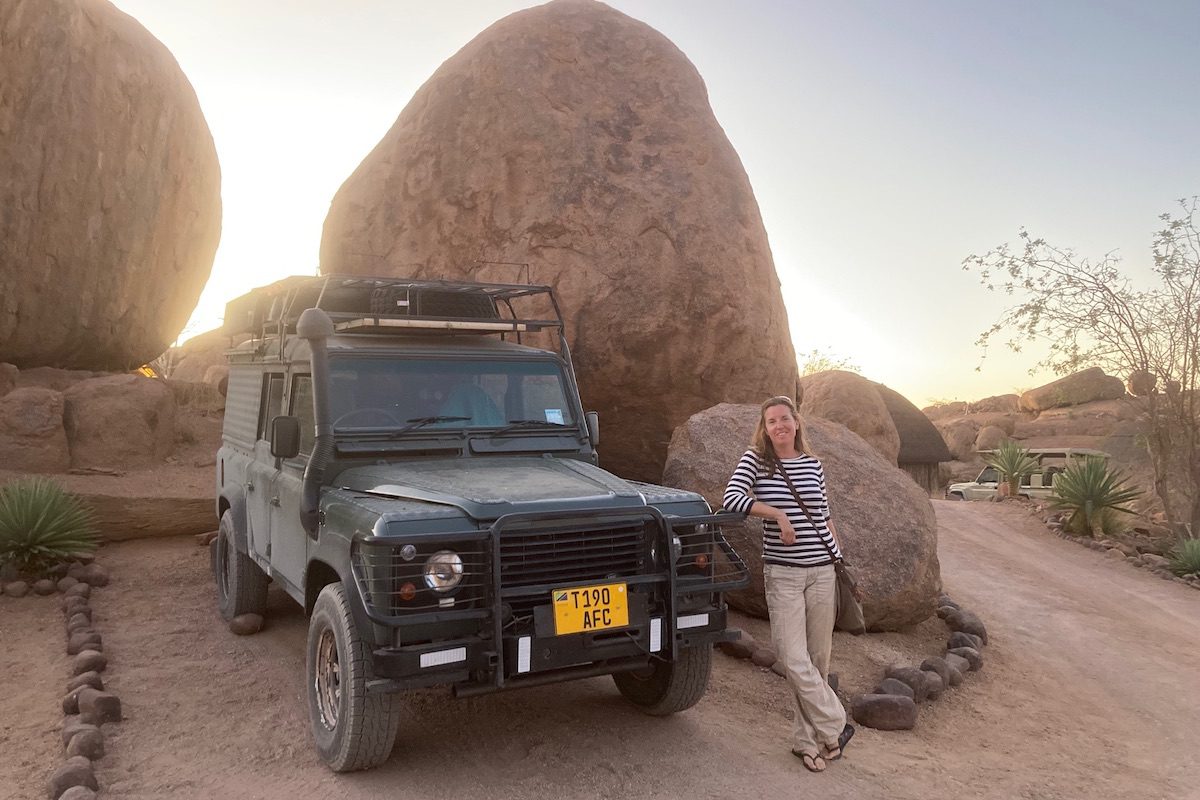
Read about Laura’s epic road trip across Africa here / Credit Laura Simpson
Getting to Tanzania
Both safaris start and end in: Kilimanjaro Airport, Tanzania
Arrival/ Departure: Fly into Arusha Airport. We recommend KLM or Qatar Airlines. Check Skyscanner for rates and options.
From North America: There are direct flights from New York and Toronto on Air Canada, American Airlines, and KLM. Check for flights here!
From Europe and Africa: We recommend KLM or Quantas. Check for flights here!
Note: Most light scheduled and private charter flights have a strict luggage allowance of 15-20 kilograms per person for your safety. This includes carry-on and camera gear. It is essential to pack light and in soft-sided bags. Laundry service is available in lodges and while camping, so there is no need to bring more than a few days’ worth of clothing.

The Basics
Valid passport: A valid passport is required to enter Tanzania/Kenya. It should be valid for at least six months from your expected entry date. If this is not the case, you must have another passport issued. If you hold any passport other than UK/USA/CANADA check with us and we will confirm if you require a visa. Please apply for your visa before you travel to Tanzania/Kenya. You should allow plenty of time for processing before your departure. (Approval can take anything from 24 hours or 24 days).
Visa: The visa application can be done online, please ONLY use the following websites– there are scammers out there!
Tanzania: www.eservices.immigration.go.tz/visa/
Kenya: Your visit to Kenya begins here · Kenya Electronic Travel Authorization (eTA) https://etakenya.go.ke/
An ordinary Tanzanian tourist visa costs $US 50 for Canadian/British/European citizens.
US citizens must obtain a multiple entry visa US$100
A Kenyan electronic travel authorization costs $30 +handling fees for all nationalities.
Travel Insurance: It is a condition of Intent on Safari Ltd. that all participants be fully insured with trip cancellation, medical and evacuation insurance as a condition of travel. Trip cancellation insurance is essential in the event you are unable to travel due to illness. Most policies also provide for cancellation in the event of illness of a family member. Check prices on insuremytrip.com. Do not assume insurance is covered on your credit card.
Tanzania Inbound Travel Insurance: Please purchase your Mandatory Inbound Travel Insurance for Tanzania before departure. There is a chance that at check-in you will ask to show a copy of this at the airport along with your visa, before they let you on the plane. To start the process please use the following website: https://inbound.nicinsurance.co.tz/, click on the green button ‘Apply for Insurance, Click on the Individual Package, and fill in your details.
Before you leave: Make sure you’re signed up for the STEP program (US), Canadians Abroad program or the program specific to your country.
Vaccines: Please consult your doctor or Health Travel Advisory Service to get up to date advice on vaccinations and malaria prophylaxis. Please allow plenty of time to obtain the necessary immunizations. Current recommended vaccinations for travel to East Africa:
- Hepatitis A
- Typhoid
- Yellow Fever. Only if you are travelling from a country that has yellow fever.
- Rabies
- Routine Vaccines (are you up-to-date?) (measles, mumps, rubella, diphtheria, tetanus, pertussis, polio & chicken pox)
Malaria: Malaria is a serious tropical disease that affects millions of people each year, mostly locals. Most areas in East Africa are within a malarial zone, notably the coastal areas and lower elevations; and there are strains of malaria present that can be resistant to certain anti-malaria drugs. It is recom-mended that you take anti-malarial tablets before, during and after your stay in East Africa. Please contact your doctor or international health clinic to get the best advice on which anti-malarial to take. Malaria is spread by one species of mosquito (Anopheles gambiae) that feeds from dusk to dawn.
The best way to prevent contracting malaria is to avoid being bitten by mosquitoes. Follow these suggestions:
- Use insect repellent especially in the evenings
- Cover exposed skin after dark ( long sleeves & long trousers)
- Use a mosquito net when provided (at the coast and low elevations)
Time zone: Tanzania and Kenya are + 3 GMT. This means the local time is three hours ahead of London, eight hours ahead of New York and elev-en hours ahead of Los Angeles. East Africa does not observe daylight saving time so the difference changes by +2 in the European and North American summer. (End of March -End of October).
Money: The currency across East Africa is the National shilling. However, almost anything can be purchased with US currency and most places will accept US Dollars (Not Euros & Pounds) so you do not really need local currency. Some of the things that you may need money for include: drinks while staying in lodges, Spa Treatments, Laundry, Souvenirs and curios, Books and postcards, Gratuities (Tips). See tipping guidelines below.
We suggest travelling with the following: A Credit card as an emergency back-up. A pre-paid bank Debit card with a sensible balance for shopping and other incidentals/extras. (Wise is a good alternative, get an account here).
Warning: There are often network outages and the lodge card machines fail. If this happens you will need to pay by cash. Please make sure all notes are more recent than 2009, as most establishments and banks do not accept notes older than 2009. Bring some smaller notes for small bill payments. Otherwise, you will get a handful of local cash as change!
eSIM: Use an, an eSIM can also save money. You will have every opportunity to connect with nature! Get an eSIM for Tanzania or a regional one for Africa here. Use code JOURNEY15 for 15% off.

Safety in East Africa
Water and Food: While in East Africa you should not drink tap water. Only drink commercially bottled water, unless the source of water is confirmed as safe to drink.
In a bid to reduce plastic waste, most lodges and camps now have drinking water treatment plants and water coolers where you can fill your travel bottles for free. Do not drink from any taps, and always brush your teeth with water provided for that purpose or from your travel bottle.
Food in lodges is to a very high standard of hygiene. Salads and fruits are disinfected however that still does not guarantee you won’t get an upset stomach. If you have a sensitive stomach stay away from too much fruit, raw vegetables and salads. (It is a good idea to pack some Imodium –Loperamide anyway). Most dietary requests can be catered for if given ample notification. If you require very specific types of food/drink within your diet then we advise bringing them with you. (Just enough to survive!) Bars of your favourite chocolate!!
Personal safety: As with travelling to any part of the world use common sense with your money and belongings. Please leave all valuable jewellery/wrist watches at home. Hotel rooms have small safes for travel valuables. If a safe is not available often the reception will keep travel valuables (passports/tickets) for safe keeping – just don’t forget to pick them up before you depart! Take expensive camera equipment to the dining room with you, or lock it in a large suitcase. Whilst camps/lodges have a very good track record for security it is best not leave your valuables lying around to avoid temptation. Read more about how to dress to stay safe while travelling here.
Tipping: Although tipping is optional and totally up to your personal discretion, it is a safari tradition. Staff are paid fairly, but they do appreciate reward for excellent service.
Typically, we recommend US$10 per client per night at smaller luxury camps, and US$5 per client per night at bigger lodges. If there is a lodge/hotel stay included in your safari you may want to consult the reception for the whereabouts of the tip box. Most lodges and camps divide the tip box by all the staff so it is not necessary to tip bag carriers, waiters, barmen, room stewards etc individually.
Safari guides typically receive around US$ 20-$30 per person per game driving day or $100 a day from the group/family, whichever is the lesser amount, depending on the level of satisfaction.
Airport Taxi Transfers $5 per trip
What to pack
First aid, prescription glasses & sun protection: You should travel with your own personal first aid kit including any over-the-counter or prescription medications that you regularly use or may need. Eyeglass wearers should bring an extra pair and contact lens wearers should bring glasses as well. There is a lot of dust and glare on safari that can affect sensitive eyes. A good pair of sunglasses and plenty of sunscreen (including lip balm with UV protection) are also essential, as is a broad-brimmed hat.
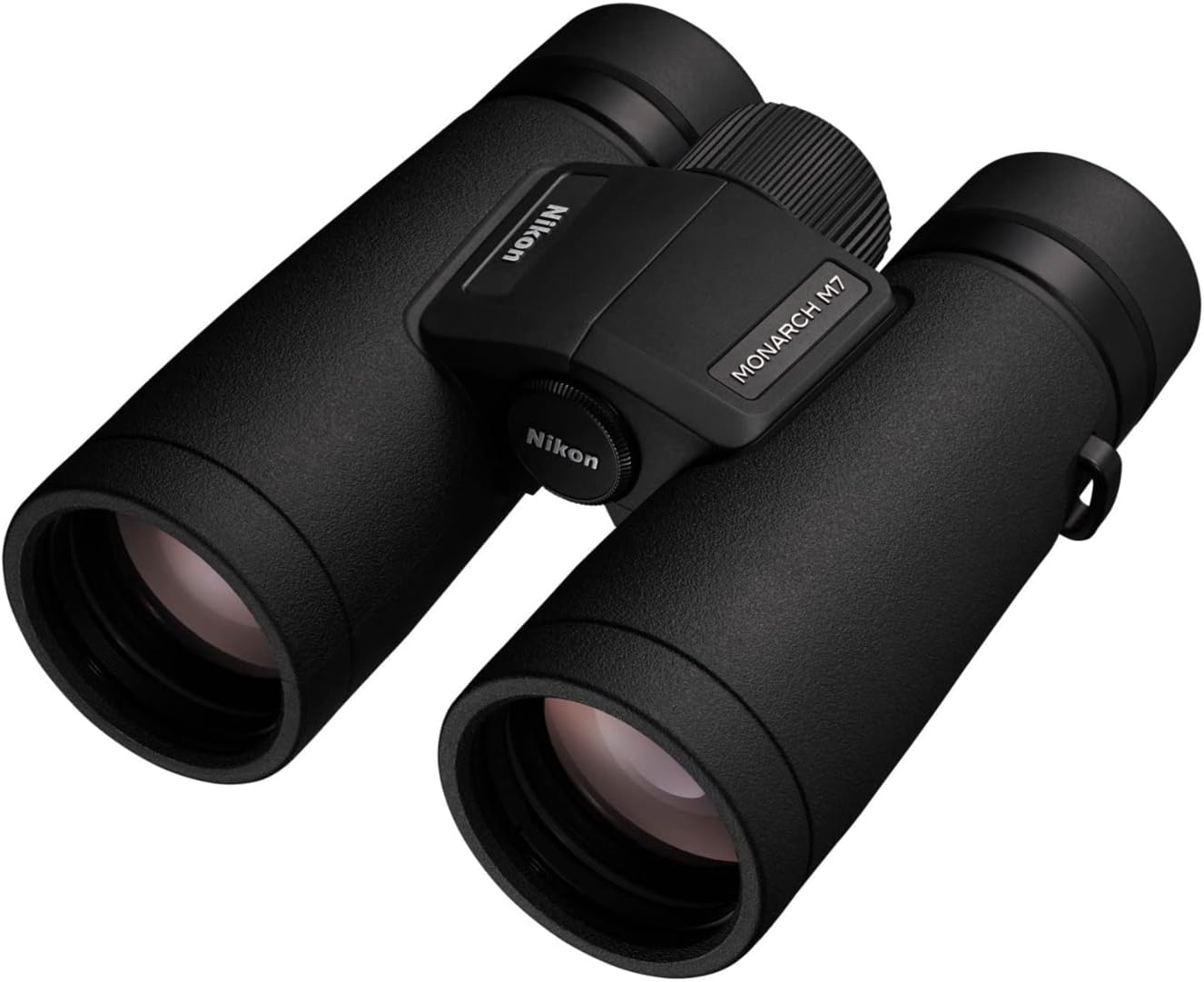
Binoculars and Camera: Having a good camera and binoculars on a safari is absolutely essential and worth the investment. Unless your phone has a telephoto lens, you will miss out!
Bring a good pair of quality mini-binoculars. We recommend Nikon Monarch 10 x 42 as a high-end purchase, or Bushnell 10 x 42 for a good quality budget purchase.
Good equipment is essential for those who want good photography. Don’t rely on a “point and shoot” to give professional results, although they can provide fun snap-shots of people, places etc.
Cameras & Lenses: For good wildlife shots a 35mm SLR with two zoom lenses (28-80mm & 75-300mm or Larger). If you are passionate about photography, consider the following: Two camera bodies (Africa is hard on equipment). Wide angle lens – 20, 24, or 28mm or zoom lens to cover 24-80mm. Telephoto lens 300mm or above or zoom lens to cover 75-300mm. Read our article on photography equipment here.
Battery pack, phone, adapter, charger and eSim: Whether it’s staying connected on a mobile phone, using online maps or apps or taking photographs, stay connected with an eSIM (electronic SIM card) like one from Airalo (Use code JOURNEYWOMAN for 15% off). Make sure you have a battery pack. Anker battery packs are recommended by many women. In Africa, you can use a European travel adapter. Put everything in a plastic bag just in case to protect it from the rain.
Softsided luggage: On most safaris, the luggage allowance is minimal. Use a soft duffle bag that will fit in the various small bush planes that will take us from place to place. The duffle bag and carry-on must weigh no more than 44lbs. combined. If you are taking a domestic light aircraft max bag dimensions should be: L+H+W = 51 inch-es/129.5 cm including wheels, to fit in the pod of the plane.
A daypack for daily outings and game drives like this one from Osprey.
Lightweight, waterproof hiking boots or sneakers: Consider Merrell Siren Edge 3 hiking boots, which weight in around 1 lb for the pair, or Merrell Moab 3 hiking boots, which are slightly larger but still weight in under 2 lbs.
Read More: Get more Safari Packing tips here!
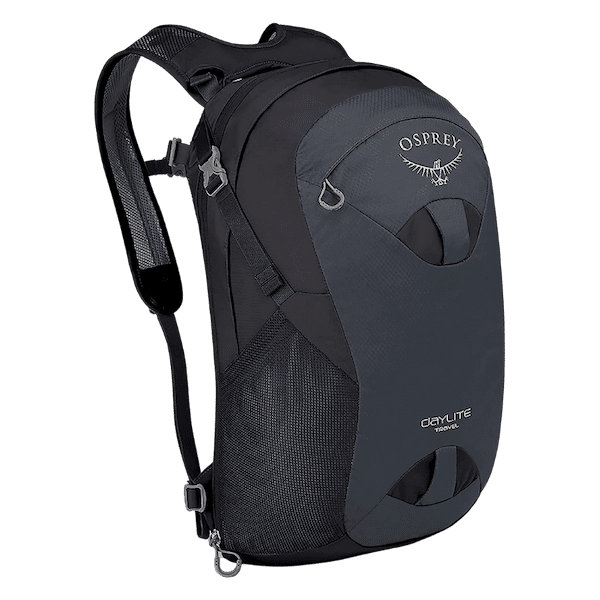
Osprey daypack / Find it on Amazon.
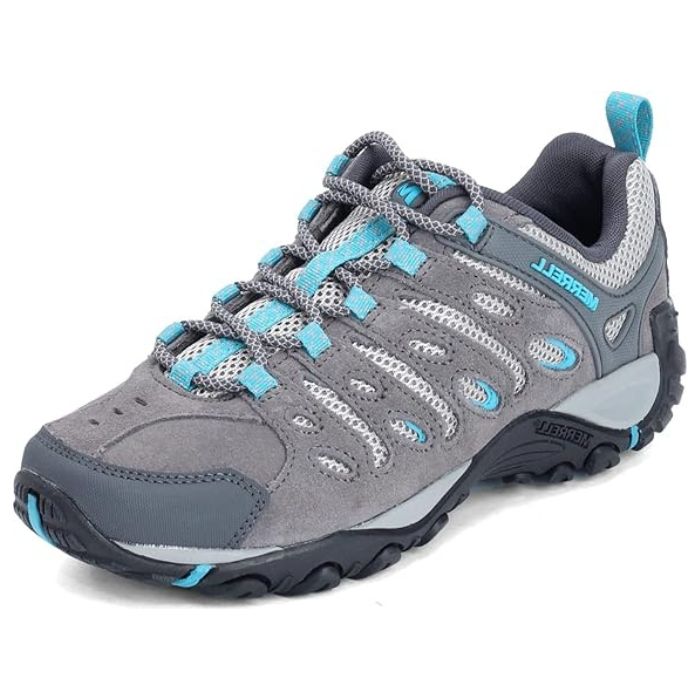
Merrell Siren Edge3 for women / Find them on Amazon.
Nikon binoculars/ Find it on Amazon.
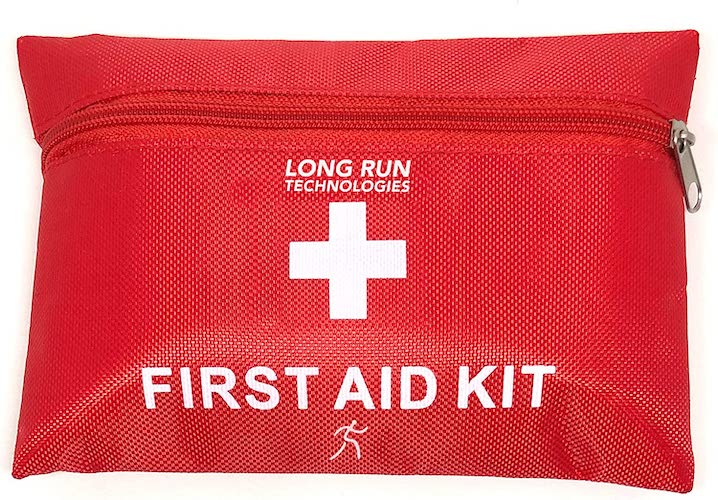
First aid kit/ Find it on Amazon.
Clothing: no bright colours please!
Neutral earth tones (browns, tans, greys, or greens) are best to help us blend into the background.
- 2 pairs trousers
- 1 sweat shirt/jumper
- 1 fleece or warm jacket (Mornings and evenings at altitude are colder than you think! 10°C)
- 4 shirts – preferably long sleeve for sun protection
- 2 pairs shorts (preferably long shorts for women especially if visiting Zanzibar)
- Sun hat/ cap that covers your ears.
- Socks and under clothing (Take a pair or two in your carry-on in case your luggage is delayed)
- Light weight rain jacket or wind breaker
- 1 pair flip flops or ‘Teva’ style sandals for around camp
- 1 pair of comfortable lightweight trainers
- 1 good torch/flashlight with extra batteries
- Personal toiletries
- Sunscreen and lip salve
- Personal first aid kit and all medications including malaria tablets
- Insect repellent
-
Zip lock bags (also good to keep the dust off your camera)
-
Note book and pe
-
Guide books (guide books are available in most lodges/camps/game drive vehicles
-
Beach attire if heading to the coast (Swimmers, sarongs, six packs)

The post JourneyWoman 2026 Tanzania Trip Page: What to Pack, Visas and More appeared first on JourneyWoman.