

Featured image: Solo travel in Costa is even better with advice from women who have been there | Image by by 9_fingers_via Envato
How to get to Costa Rica, plus some safety and packing advice
by JourneyWoman
Costa Rica has a way of rewarding travellers who show up prepared — its lush rainforests, wildlife-packed coastlines and famously friendly “pura vida” culture are best enjoyed when you’re not caught off guard by a surprise thunderstorm, a humidity spike, or driving on its rugged two-lane highways.
Whether you’re flying into San José or the beaches of Guanacaste, a little planning goes a long way in this beautifully unpredictable country. From getting there and getting around, to what to pack and what to eat, here’s everything a solo woman traveller needs to know before heading to Costa Rica, including travel tips from our community of experienced solo travellers.
Travel advice from women for Costa Rica
1. Flights from Canada
Costa Rica has two main international airports: Juan Santamaría International Airport (SJO) near San José and Guanacaste Airport (LIR) in Liberia.
There are direct flights to Costa Rica (about 5.5 hours) from major Canadian cities to San Jose and Liberia all year long on Air Canada, Westjet and Air Transat. For those flying to Guanacaste (Liberia Airport), Air Canada’s new service between Vancouver International Airport and Liberia International Airport begins in December 2026 and runs run through April 12, 2027. WestJet also offers connections to Liberia every day. Best of all, there’s no visa needed for Canadian or US travellers. Check flight routes on Skyscanner here.
2. San José Airport
Most flights arrive in the afternoon, so you may want to plan for a night near the airport when you arrive and depart. The airport is actually not in San Jose, but about an hour outside, in Alajueta. If you arrive late at night or have an early flight, stay at a nearby hotel (we recommend a brand name hotel, like the Fairfield by Marriott San Jose Airport Alajueta, which also offers a complimentary shuttle service.
Maureen R. recommends that women avoid Navidad (Christmas) and Semana Santa (Holy Week / Easter) unless that’s the reason for travel – it’s also popular nationally and resources and capacity are at a premium.
Get stories just like this one delivered straight to your inbox. Join our mailing list here.
“In Costa Rica, common sense safety rules just as you would do in Canada or Ireland. Don’t flash your cash or jewelry. Don’t wander around in an unfamiliar area at night. Don’t go out and get inebriated. Keep your cell phone on a leash and attached to you or your bag. Use a small cross body bag. Like any travel in countries where people have less money, don’t bring anything with you that you are not willing to lose.” — Dawn H.
3. Safety in Costa Rica
Costa Rica is generally safe, but petty theft (bags, phones, passports) is widespread, especially in tourist areas, on public transit, and in accommodations — thieves often work in pairs, with one distracting you while the other grabs your things.
One of the most frequent pieces of safety advice for solo women is not to leave valuable items on the beach (not to mention the monkeys will like them too). Another safety tip is not driving at night (which can be true almost anywhere). Avoid accepting food or drinks from strangers, and use ATMs inside banks or hotels rather than street-side machines, to reduce card-skimming risk. Most beaches are closed at night, but avoid isolated areas and walking alone after dark, in cities and at beach towns alike.
Most women recommend staying at hotels or villas, not Airbnbs, although this may depend on your comfort level in the area. Find a woman-recommended hotel in our Women’s Travel Directory, like Cabanas Koi in Guanacaste.
4. Driving in Costa Rica
In Costa Rica, there’s no such thing as a straight road. There are, however, many ups and downs, narrow bridges, mountain passes and two-lane highways that test your mettle should you decide to drive, which is somewhat essential here. Costa Rica may have ‘highways’ but they are not what we would consider a highway; rather they are two-lane roads (or routas) used by transport trucks, motorcycles, buses, cars and people. A 4×4 is essential, and can be rented at the San Jose airport. Find a car rental here.
If you’re renting a car in Costa Rica, the law requires that you provide printed proof of your Collision Waiver Coverage from your credit card, so bring it with you. Check your insurance policy before you leave as it can be expensive to purchase car insurance — but you definitely need it. Whatever you do, don’t drive at night – period. If you prefer to take the bus, women recommend Interbus Costa Rica, Charlie Shuttle Costa Rica or Caribe Shuttle.
Chantal R. says: “for transportation, I recommend Interbus Costa Rica. They offer share or private shuttle service from the airports to a hotel or from hotel to hotel. I found them reliable. Most hotels could also organize transportation for you.”
4. Food: What to eat in Costa Rica
JourneyWoman reader Maureen R. says women “must drink one cup of genuine Costa Rican coffee – even if you don’t think you’re a coffee drinker.”
She also recommends the pineapple, saying it’s the best on the planet.
For eating out, Christine recommends for local places called Sodas, which feature amazing local food for very reasonable prices. JourneyWoman reader Penny says: “The best soda on the planet, in my opinion, is SODA Y MIRADOR in Cinchona.” (near Alajuela province).
Lois says: “If you’re a chocolate aficionado like me, visit the plantation & various chocolate shops, the chocolate is made from local beans & there are really delicious chocolate goodies.”

Mamón chino is a delicious fruit similar to lychee, native to Costa Rica – just break it open and enjoy! / Credit Carolyn Ray
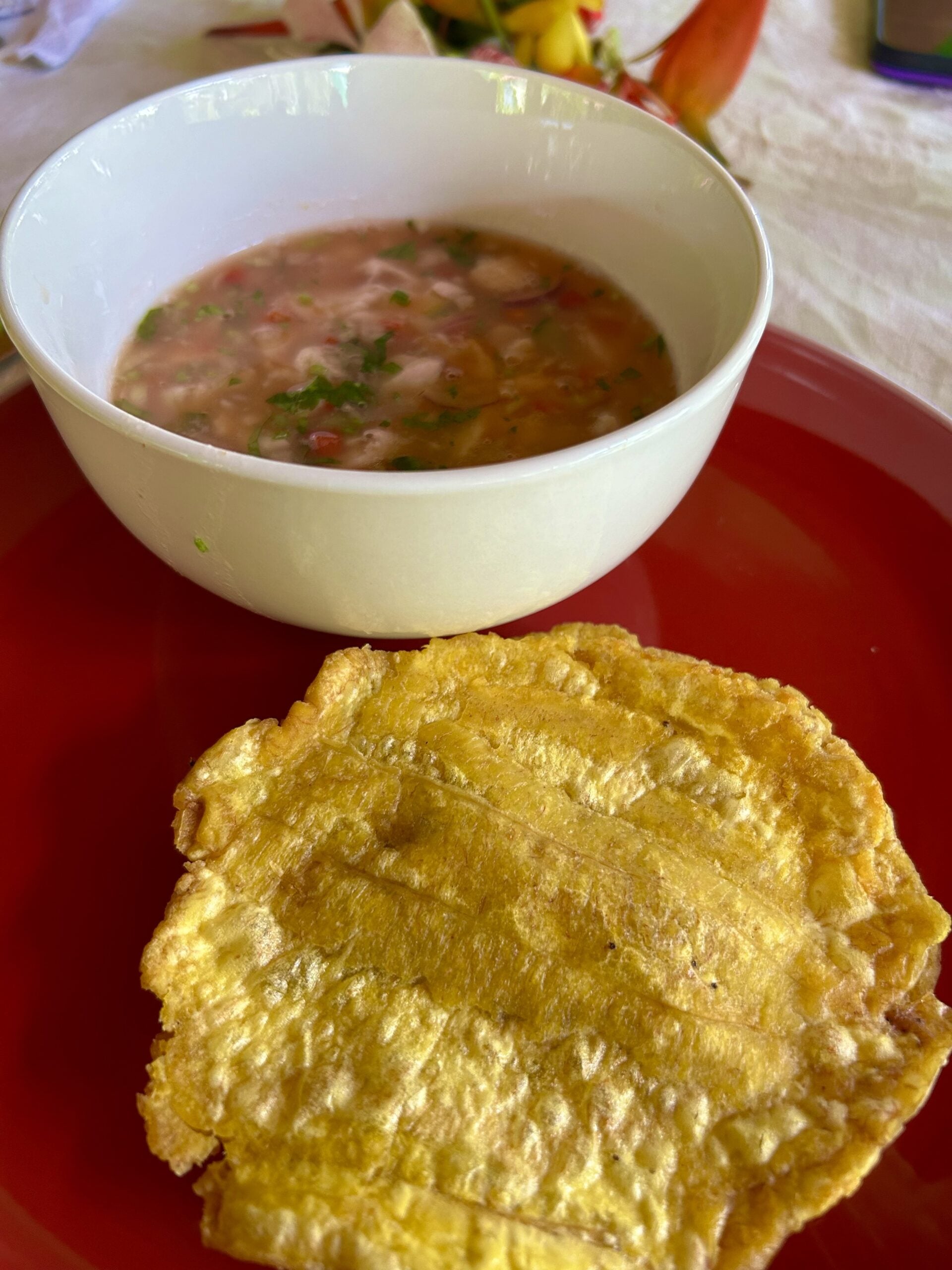
A typical Costa Rican meal of fried green plantain (patacón) and ceviche / Credit Carolyn Ray
6. Learn some Spanish words
A little Spanish goes a long way, even though English is quite proficient. Start practicing now with Babbel.
7. Weather in Costa Rica
Costa Rica is a tropical rainforest, so it’s always humid and can be wet. Bring plenty of insect repellent and sunscreen (both are very expensive and not always available) — dengue, malaria and zika are very real.
8. Etiquette (it must be said)
Remember to put toilet paper in the garbage can, not the toilet.

9. Ethical photography in Costa Rica
Be a responsible tourist in Costa Rica by adhering to published guidelines on ethical animal photography. These includee no selfies, no touching and a focus on observation.
For example, Rule #5 states: “If for any reason wild animals are in captivity, do not enter their enclosures, do not touch, hug, feed or manipulate them, this protects you from diseases or accidents such as attacks, bites or scratches.”
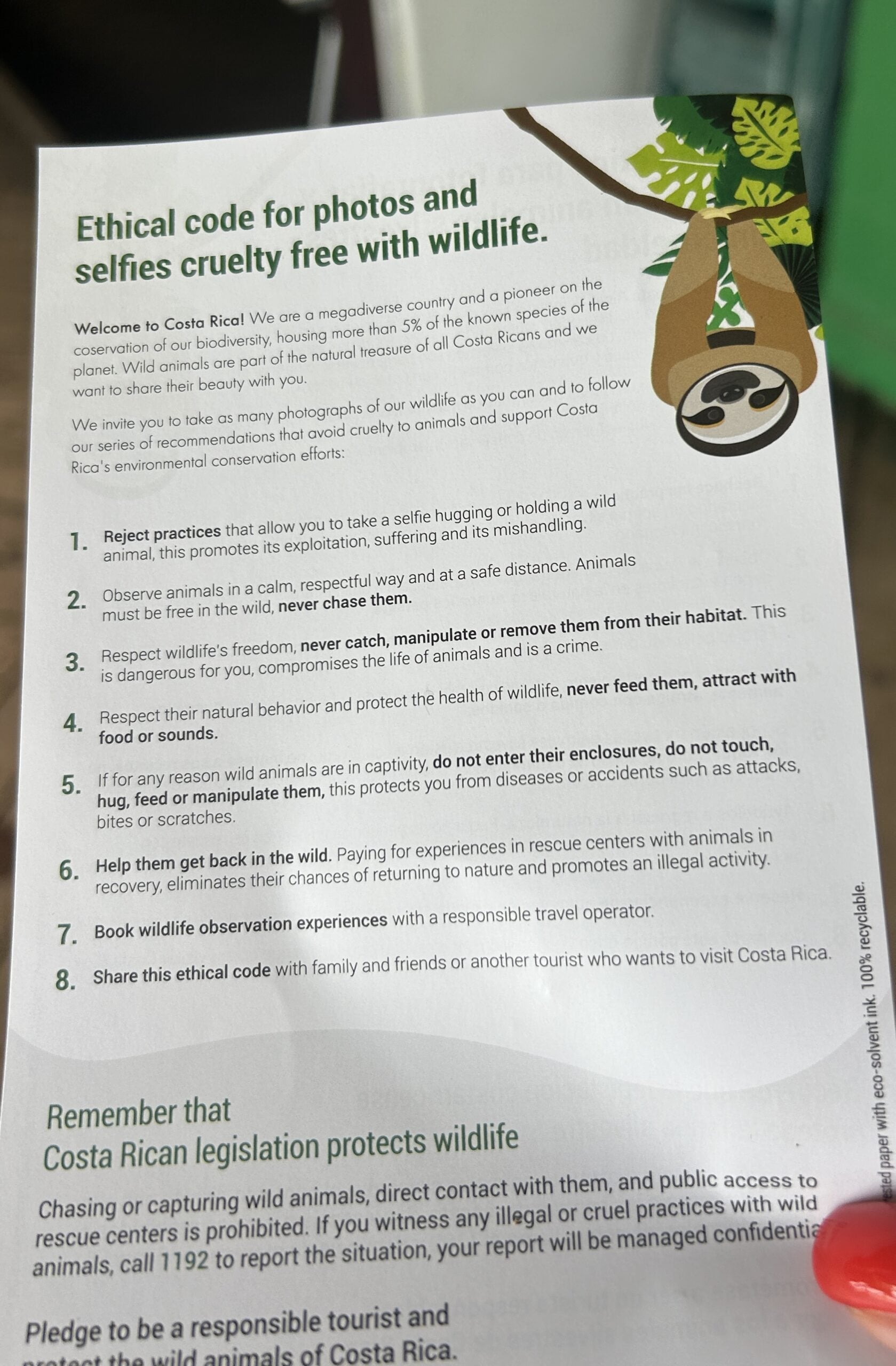
Costa Rica’s ethical photography guidelines / Credit Carolyn Ray
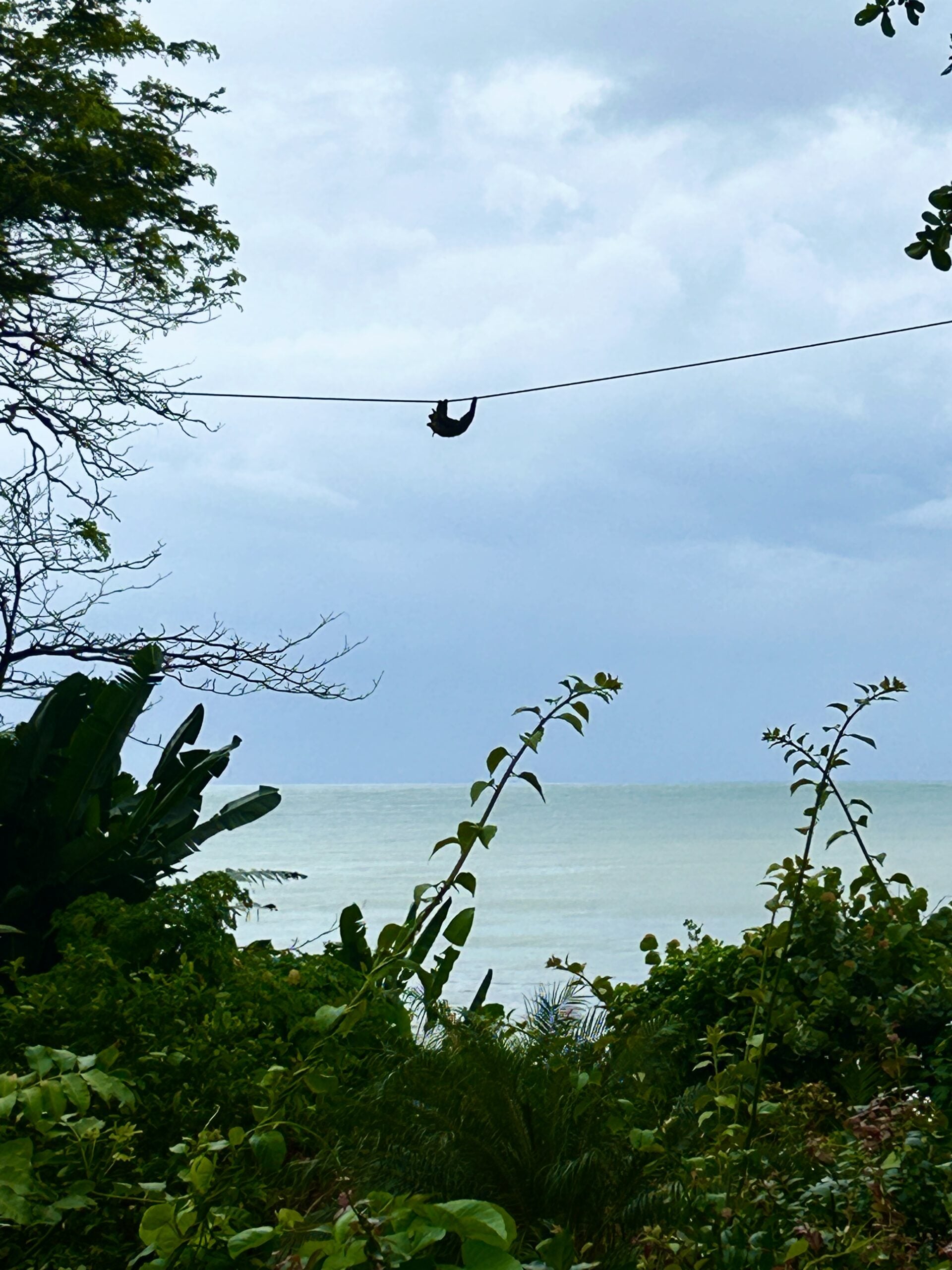
Watching a sloth at dusk / Credit Carolyn Ray
Read More: How to Get Started in Birdwatching
10. Pack light – it’s just easier
Depending where you visit and what you do, you’ll want to pack some special things.
For turtle watching, get a good quality headlamp with a red light and water shoes.
For birdwatching, bring good quality compact binoculars, and a good camera.
For waterfalls, bring water shoes like these.
With the humidity, bring electrolytes and DEET-free insect repellent or purchase it when you arrive.
Protect your skin and the ocean with reef safe sunscreen, and bring biodegradeable soap, shampoo and conditioner, as well as natural laundry detergent.
Rain gear is essential; try a brightly coloured poncho like this one (so cute!) instead of an umbrella.
Bring a first aid kit that includes Immodium, your own medication and any supplies you might need, such as menstrual supplies.
For technology, use an Airalo eSIM card (and get 15% off here), download WhatsApp, Merlin ID (for birdwatching) and an Earthquake app.
For all trips
1. Check government safety advisories and register with your government for travel before you leave
Check government safety advice before you plan travel and look at a map to understand borders and conflicts. Government agencies have subscription services that provide travellers with information during times of unrest. Check your government site before you leave to understand or subscribe to email or SMS alerts. Consider using an eSIM (an electronic SIM) on your phone to stay connected where there is cellular service.
For Canadians, Canadians Abroad is a free service that allows the Government of Canada to notify you in case of an emergency abroad or a personal emergency at home. The service also enables you to receive important information before or during a natural disaster or civil unrest.
2. Buy comprehensive travel insurance
Make sure you have comprehensive travel insurance and that it covers trip and cancellation changes. However, most do not definitively cover war. Decisions are made on a case-by-case basis.
We recommend travel insurance, particularly for complex, out-of-country trips. There are many options available in the US and Canada. To compare prices, check insuremytrip.com. Other options include Wanderwell, a B Corp that donates 1% of its profits to environmental causes and TuGo. Read the policies and call and ask questions.
“I always encourage travellers to purchase Medical Insurance and Trip Cancellation/Interruption Insurance as there is so much that is covered,” says Calgary, Alberta-based Cathy Gotfried, CEO, Erawan Travel/ Babes in Bali. “However, it’s really important to read the fine print on each policy. Over the years there have definitely been more added to ‘what’s not covered’ over what is covered.”

Recommended Travel Insurance
InsureMyTrip: InsureMyTrip helps travelers like you easily compare top plans and providers to find the right travel insurance for your unique trip. Learn more here.
TuGo: TuGo is a Canadian-owned and operated travel insurance provider with a focus on the health, safety and well-being of its travellers in Canada and around the world. Learn more here.
World Nomads: Designed by travelers for travelers, to cover trip essentials. Even if you run out of travel insurance or leave without it, World Nomads can cover you. Learn more here.
SafetyWing: Insurance for nomads. Travel medical insurance. World Nomads covers people from all over the world, while outside their home country. Learn more here.

3. Check your passport expiry date, and keep your passport with you
Most countries require at least six months validity on a passport. Before you travel, make sure you are aware whether you need certain vaccines or a visa to enter countries, as regulations are constantly changing. If you do need a visa, use the official government sites as there are many scammy sites. Should the unexpected happen, keep your passport with you so that you can move easily should an emergency arise. Use a cross-body bag or a money belt. Never put your passport in your checked luggage.
4. Pack lightly
Not only is it more affordable to not check a bag (especially on budget airlines), packing lightly allows you to adapt to faster, without worrying about where your luggage is. Even though budget airlines offer affordable fares at the outset, the cost of checking a bag can be more than the ticket. Don’t bring valuables with you, particularly flashy jewelry.

More on Costa Rica

Solo Travel in Costa Rica: Travel Tips and Advice From Women Who Have Been There
Costa Rica rewards solo women travellers who show up prepared — it’s even better when you have first-hand advice from other women travellers.

Five Countries That Welcome Solo Women Travellers and Why You Should Visit
Women continue to drive tourism decisions globally, and are choosing destinations that offer safety, authenticity, cultural depth and purpose

Lessons from the Blue Zones: Why Blue Zones Matter to Women in a World Obsessed with Living Longer
While we may not be able to travel to all the world’s Blue Zones, they remind us to move, eat well, connect socially and live with purpose.
The post Solo Travel in Costa Rica: Travel Tips and Advice From Women Who Have Been There appeared first on JourneyWoman.