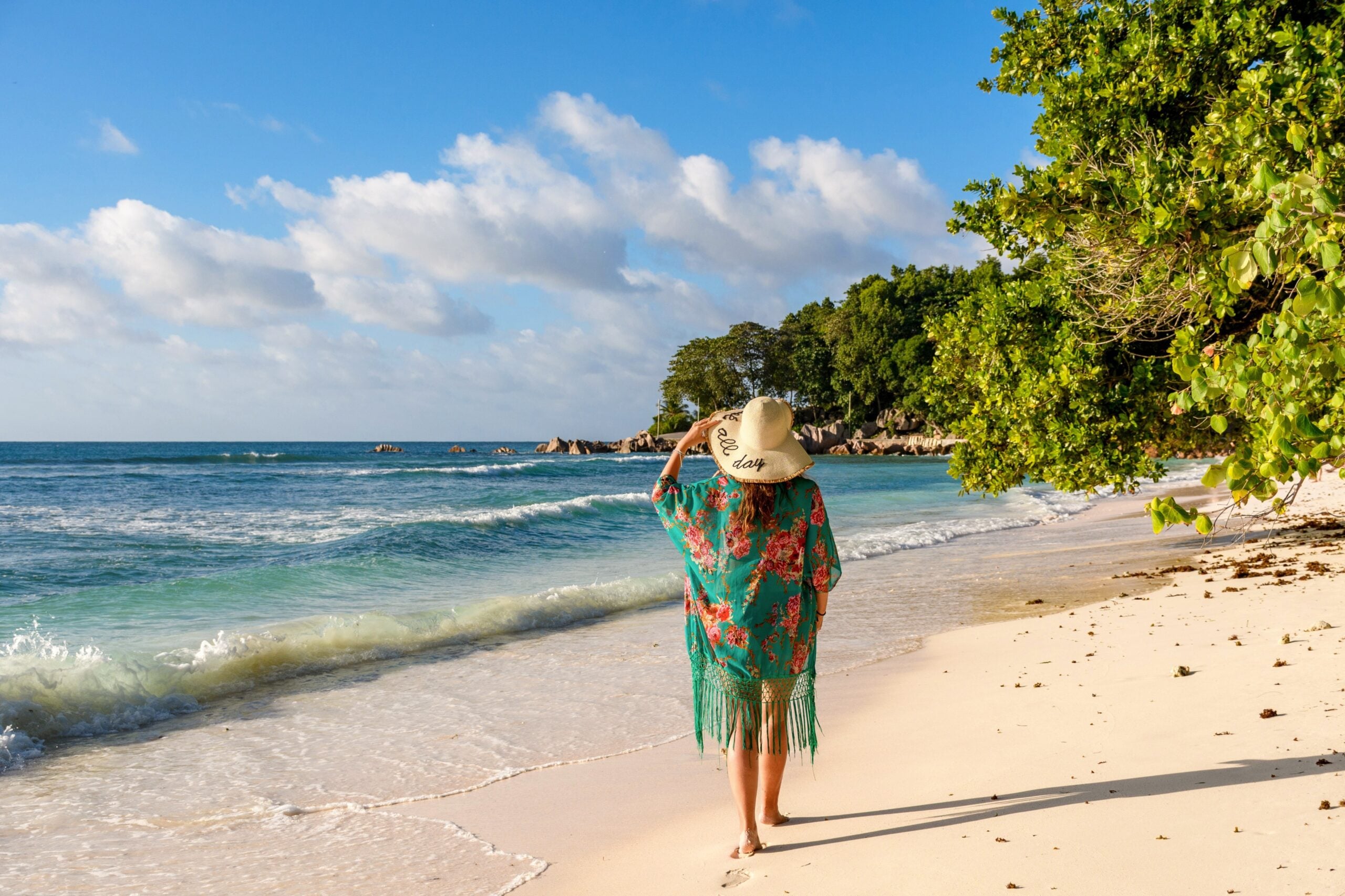

Featured image: Woman can dress for safer travel while still maintaining their personal style | Photo by KostiantynVoitenko on Envato
What you wear sends a message
by Karen Gershowitz
I’m never going to be mistaken for a local wandering through Istanbul’s Grand Bazaar or photographing the Sheikh Zayed Grand Mosque in Abu Dhabi. Nor do I try to be. I’m a traveller, and there’s nothing wrong with looking like one. But when it comes to women’s safety, there’s a difference between looking like a traveller and looking like a target.
Whether we realize it or not, every time we venture out to a new destination, we’re advertising something about ourselves. Our clothes, jewelry, handbag or backpack, camera, and phone all send signals. We may be communicating, “I have money,” or “I don’t understand or respect the customs here.” Most of the time, this isn’t a problem. But sometimes your choices make you a mark for thieves or create a cultural barrier.
That doesn’t mean we should travel fearfully. I certainly don’t. But especially as a solo woman traveller, I want to be aware of what I’m telling the world without saying a word.
Get stories just like this one delivered straight to your inbox. Join our mailing list here.

Are you advertising wealth?
1. Jewelry
Let’s start with the obvious: jewelry.
I love jewelry. But the earrings, watch, and rings I wear when I travel are all inexpensive. If I lose them, it doesn’t really matter. More importantly, they don’t signal “I have money.” I leave valuable jewelry at home.
The same goes for anything that looks expensive enough to attract attention, whether or not it actually is. Watches, recognizable designer handbags, and prominent luxury logos can all say, “I’m wealthy.”
2. Your phone
Jewelry often isn’t the most valuable thing we display. Consider the phone we all carry: it is our camera, map, guidebook, translator, boarding pass, restaurant finder, and connection to everyone at home. That means we take it out constantly. In some destinations, displaying the latest phone can be the equivalent of wearing an expensive diamond ring or Rolex watch. I’m not suggesting leaving the phone behind; I don’t know how I’d function without one when I travel. But there’s a difference between using it when I need to and walking around for hours casually holding it.
When I was visiting a friend in Medellín, Colombia, he warned me constantly to keep a tight grip on my phone. From the way he described it, phone snatching is almost a competitive sport there.
The point isn’t to leave everything valuable at home. Instead, ask two simple questions. First, before you leave home, decide if you really need that expensive item. And then, when you are travelling, ask: Do I need to display it now?
3. Clothes and accessories
This one is trickier. Of course, I’m a tourist. No one in Tokyo or Cairo is going to mistake me for someone who lives down the block. What matters more is whether I look like a confident or confused tourist.
Certain clothes and accessories can make our visitor status particularly obvious: hometown sports-team shirts, conspicuous travel gear, and anything emblazoned with where we come from. I’ve seen tourists with ID tags attached to their backpacks that have their contact info easily readable. That’s a terrible idea. Put that information where it’s findable, but not obvious.
On the other hand, overdressing because you’ve heard that everyone in Paris or Milan is super chic can make you stand out just as much.
How to dress for safer travel
You don’t have to look like a local. You just want to look as though you know what you’re doing. So, what should you wear to be safe and appear confident?
Start with simple, understated clothes that are appropriate for where you are. Neutral colours and basic tops and pants attract less attention than logos or flashy graphics. I’m not suggesting you abandon your personal style or dress entirely in beige. Just don’t overdo it.
Lightweight layers help you adapt to the weather and cultural norms. A scarf, shawl, or lightweight cardigan can make an outfit appropriate for a mosque, cathedral, or conservative neighbourhood.
Dress for the conditions you encounter, not the weather you expected when you packed. Wearing inappropriate clothes for heat or cold is more than uncomfortable; it can contribute to dehydration, heatstroke, or hypothermia.
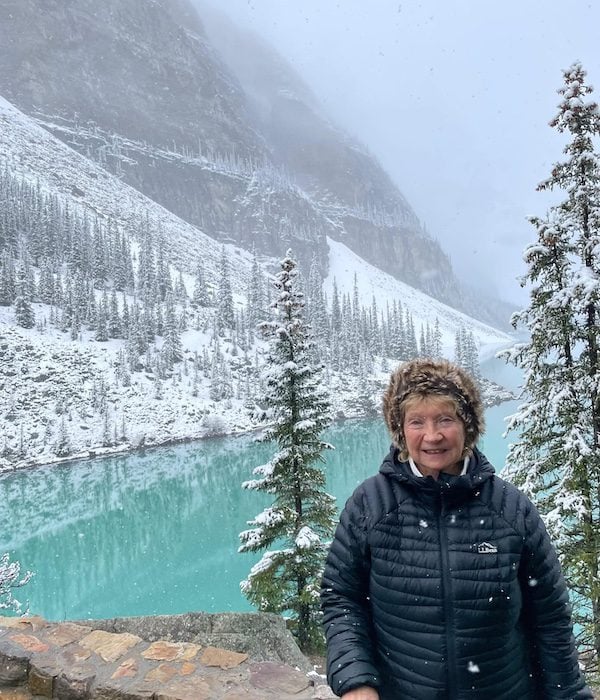
JourneyWoman Gail M dresses in layers, like in here Banff. She wears a shirt, fleece, and puffer jacket, with a hat and gloves in her pocket / Photo by Gail M via our private Facebook group
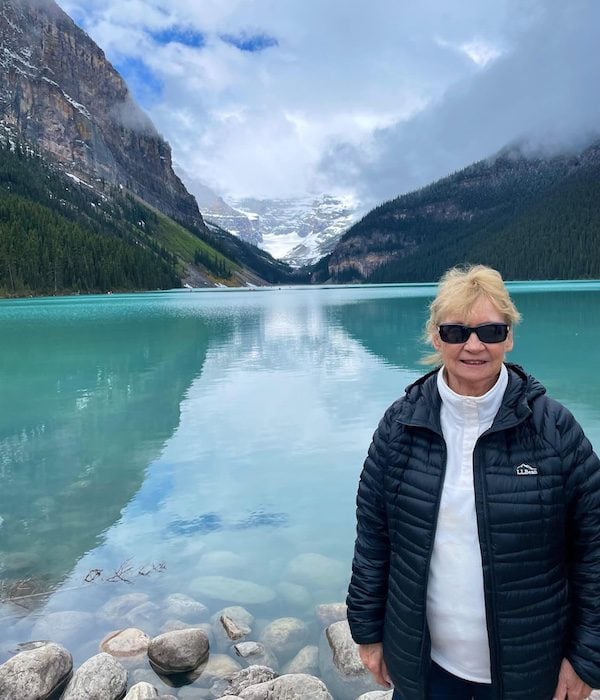
On the same day but at a lower elevation, Gail removed her hat and opened her coat, using a cloth bag in her pocket to carry the jacket needed / Photo by Gail M via our private Facebook group
Comfort matters, especially shoes. Wear shoes you can walk comfortably in and clothes that let you move easily. It’s not just about comfort, either. Sandals or heels can be tripping hazards if you ever need to move quickly or cross uneven ground in a hurry.
The goal isn’t camouflage; it’s to look comfortable, appropriate, and purposeful, as though being there is the most natural thing in the world
It’s not just what you carry. It’s how you carry it
Since age 17, I’ve been travelling frequently. I’ve been robbed only once; I was 22, visiting the Golden Temple in Kyoto, Japan. I thought I had New York City street smarts and was certain my belongings were secure, especially in a country known for its safety. I was wrong. To this day, I have no idea how a pickpocket managed to snatch my wallet. That early lesson taught me that no system is foolproof.
These days, I use a crossbody bag with locking compartments and keep it in front of me in crowded places. That makes it harder to grab and much easier to keep an eye on than a purse dangling from my shoulder.
The goal isn’t to make my belongings impossible to steal. It’s to make them harder to steal than someone else’s.
Backpacks may be comfortable and convenient, but in a crowded subway or market, the person behind you may have better access to your belongings than you do.
Fanny packs can announce “tourist” almost as effectively as a guidebook. If you use one, wear it toward the front and choose one with secure closures.
Here are a few more ways to reduce the opportunity for theft.
Zippers matter. So do pockets. A phone sticking out of a pocket is practically an invitation. An open tote may be convenient for you, but it’s also convenient for someone standing behind you.
Don’t put everything important in one place. If your phone, credit cards, cash, and identification are all together and that bag disappears, you’ll have a much bigger problem.
Money belts, worn under your clothing, aren’t glamorous, but they remain useful for things you can’t afford to lose, such as extra cash, credit cards, or a passport. I think of them as a portable safe.
That said, the best bag is the one you can wear comfortably for hours and close securely. A crossbody works well for many travellers. But physical comfort, mobility needs, and destination conditions matter more than any single style.
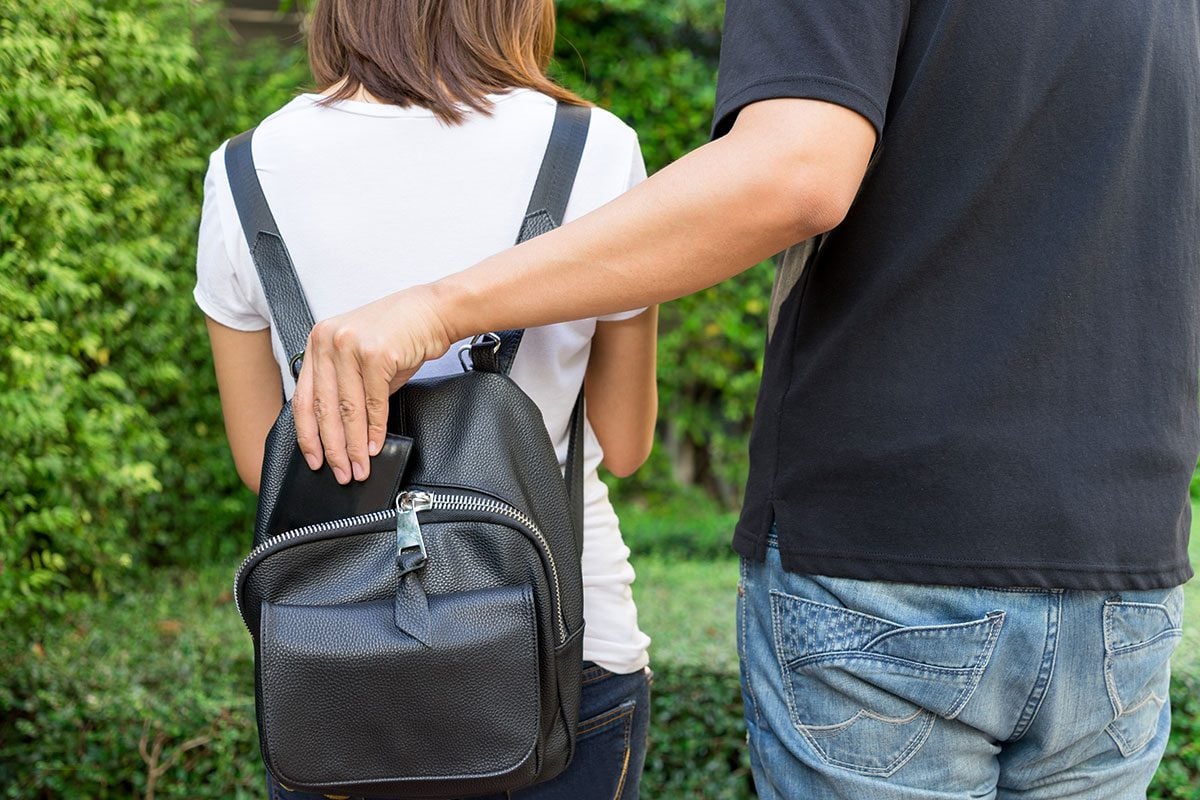
Backpacks can be easier to pickpocket. Look for theft-proof crossbody bags / Photo via Envato
What else do your clothes say?
There’s another reason to think about what we wear, and it has nothing to do with pickpockets. Clothing that is appropriate at home may be culturally inappropriate in other parts of the world.
Before I travel somewhere new, I read about the culture, including what is considered appropriate dress. This is particularly important in conservative countries and at religious sites. Bare shoulders, cleavage, shorts, or skirts above the knee may attract unwanted attention. Exposed areas can also prevent you from entering a mosque, temple, church, or other site. They can also single you out as culturally insensitive.
Apart from reading about a culture before I leave home, I pay attention once I arrive. How are women my age dressed? What are people wearing in the market, on public transportation, or in restaurants?
In some places, dressing more conservatively reduces unwanted attention or harassment. It is a safety consideration in its own right, apart from cultural etiquette.
I was travelling in Morocco with a small group. The group leader advised us to wear clothing that covered us as completely as possible. Everyone adhered to that advice. But one woman wore beautiful clothing in the sheerest fabric possible. In the bright sun, everything was exposed. She had followed the letter of the dress code while completely missing its spirit, and the attention she attracted embarrassed the rest of us.
I don’t see dressing appropriately as giving up my freedom or personal style. I’m a guest in someone else’s country. Making a modest adjustment to what I wear seems like a small price to pay for showing respect. I’ve found that making an effort to understand and respect local customs makes travel more rewarding.
Beachwear is another example of why context matters. A swimsuit or skimpy cover-up may be appropriate on a beach or around a resort pool, but not when you wander into town for lunch. In many destinations, beachwear belongs on the beach. Putting on a substantial cover-up or streetwear is an easy way to avoid attracting the wrong kind of attention.
There can also be regulations about attire. A number of Caribbean nations prohibit camouflage clothing for civilians because it is reserved for the military. A political slogan, flag, religious symbol, or even a sports-team shirt may have implications you know nothing about. Some countries also enforce dress codes in government buildings and other public facilities, where inappropriate clothing can get you turned away or fined, not just stared at.
The question I ask myself is, “What does wearing this say about me here?”
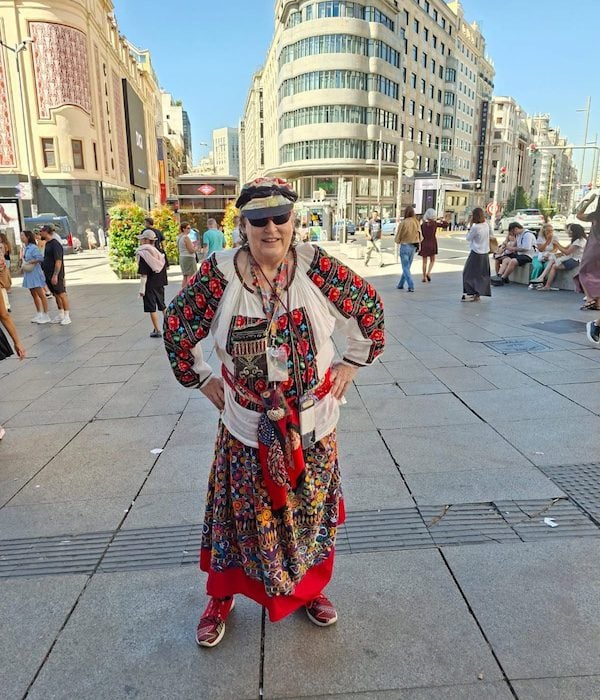
JourneyWoman Gretchen likes to buy wearable souvenirs on her travels to show off her personal style, like these Romanian clothes and a cap from Venice. / Photo by Fetchin Gretchen via our private Facebook group
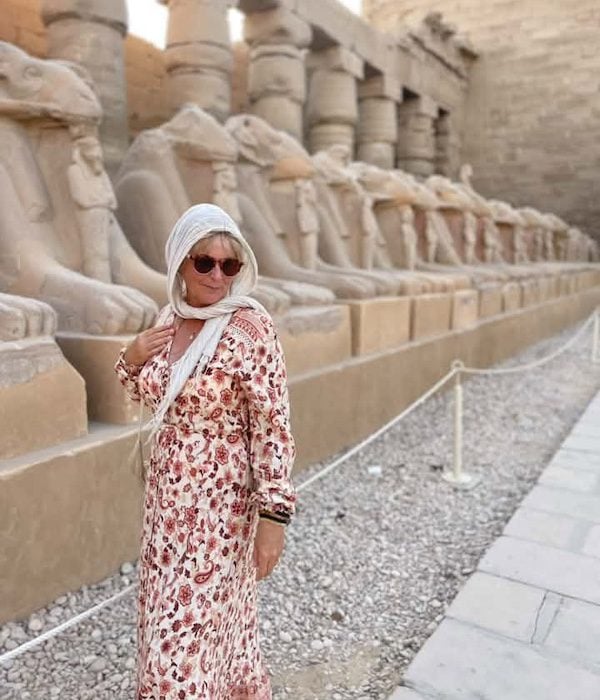
JourneyWoman Gina C showcases how she dresses to respect sacred sites, like wearing a long dress and a head covering at a temple in Egypt. The headscarf also helps to protect from the desert heat / Photo by Gina C via our private Facebook group
Awareness, not fear
I’ve travelled to over 100 countries, often on my own, and I refuse to spend my time worrying about everything that might go wrong. That drains the joy out of the trip. But there’s no reason to invite trouble. I don’t expect to blend in everywhere I go, nor do I want to. But paying attention to my surroundings and to the people who live there is important.
Awareness is not fear. Leaving valuable jewelry at home, putting my phone away when I’m not using it, carrying my bag securely, and dressing with local customs in mind do not diminish my independence or my personal style. They help me travel with more ease, show respect for the places I visit, and keep the focus where it belongs: on the experience itself.
When we travel, we are always sending signals. It is worth taking a moment to ask: What am I advertising?

More on Women’s Safety

The post Dress the Part: What Women Wear For Safer Solo Travel appeared first on JourneyWoman.