Travel ranks among the top priorities Boldin users plan for in retirement. AARP research finds 85% of travelers who are 50-plus rank travel among their top three priorities for discretionary spending.
Schedule freedom lets retirees travel for less. Longer trips, shoulder-season timing, and senior discount programs all get cheaper when you’re not locked into school calendars and two-week vacation slots.
The 20 ideas below cover the full range: planning frameworks, discount programs, lodging alternatives, and tools for building travel into your financial picture before it gets crowded out by other costs.
Travel Is the Most Popular Retirement Goal — and the Most Underfunded
Travel tops nearly every list of what people want to do in retirement. The trouble is follow-through. Most retirees don’t build travel into their financial model as a specific line item until it’s competing with healthcare costs and home maintenance.
How Much Does Retirement Travel Cost?
The Bureau of Labor Statistics Consumer Expenditure Survey puts average annual travel spending for U.S. households headed by someone 65 to 74 at roughly $4,000 to $7,000. AARP research produces similar figures. The range is wide because health, proximity to family, and early-versus-late retirement all shift the number.
Retirement Travel Has Six Distinct Forms With Different Costs
Retirement travel isn’t a single thing. It runs from a weekend road trip to a month in Portugal to a volunteer expedition in Costa Rica. Understanding the main formats helps you decide which ones match what you want from this phase of life, and which ones to budget for.
The travel industry has built a category for solo retirees
About 28% of Americans 65 and older (roughly 16 million people) live alone, according to Pew Research Center analysis of 2023 Census data. Solo travel has grown with that demographic. Tour operators now design programs for unaccompanied travelers who want structured itineraries without the logistics of going alone. See the cruise and group tour section below for solo-friendly operators.
Multigenerational travel runs higher than most retirees budget for
Grandparents spent an average of $5,205 on multigenerational family travel in 2024, according to the U.S. Family Travel Survey 2025. It ranks among the higher-spend travel categories in retirement, and one of the more memorable ones. The format works because it produces real time with grandchildren, not just scheduled visits. It works best when kids are in the planning conversation from the start.
Educational travel has grown into a full retirement category
Learning-focused travel has grown with the retirement demographic that built it. Road Scholar alone runs more than 5,500 programs worldwide, pairing destination experiences with expert-led content. National Geographic Expeditions and Smithsonian Journeys operate in the same category. The common thread: you’re meant to understand where you are, not just see it.
Voluntourism scales well with the schedule flexibility of retirement
Pairing travel with service work is a format that scales well for retirees with schedule flexibility. Programs range from week-long Habitat builds to multi-month Peace Corps Response placements, open to applicants 50 and older. See the voluntourism section below for the full list of programs and what each involves.
Slow travel means long stays that get cheaper with each day
Slow travel (staying in one place for weeks or months instead of moving fast through multiple destinations) costs less per day and tends to produce a more genuine experience of a place. A month in an apartment in Lisbon, cooking half your meals and using the metro, runs cheaper per day than a week in a hotel doing the same city. The per-day cost drops. The experience deepens.
The per-night cost of a cruise often beats a hotel in the same port city
Cruises bundle transportation, lodging, and meals into a per-night cost that often beats hotel-plus-meals in a port city. AAA projects that 65% of adult U.S. ocean cruise passengers in 2026 will be 55 or older, with the global industry on track for a record 37-plus million passengers. The value case is strongest for solo travelers and those managing health considerations: logistics are handled, medical staff are onboard, and the social environment is built in.
Start With a Specific Travel Plan, Not a Bucket List
A bucket list is a wish. A travel plan has destinations, dates, and a budget. Couples discover they have different expectations about retirement travel more often than they’d expect. The discovery is less useful after retirement starts.
1. Write down specific travel goals
Concrete beats vague. Where do you want to go, and by when? How often? Who’s coming?
Goal-setting research is consistent: writing down what you want produces better follow-through than keeping it in your head. There’s a useful test for whether you have a plan or just a wish. A plan has a number attached. “We want to travel more” is a wish. “One international trip per year and two domestic road trips, starting at $8,000 annually” is a plan.
2. Have the travel conversation with your spouse before retirement starts
A 2024 Fidelity Investments Couples & Money Study found that 45% of partners admit they argue about money at least occasionally. Travel is one of the most common pressure points: how often, how far, how much. Working through it before retirement beats discovering the distance after the fact. Exploring ideas for what to do in retirement together is a useful starting point for that conversation.
Senior Discounts Can Cut Travel Costs Significantly
Most hotel chains offer seniors 10 to 20% off, and the discounts are findable on their websites. Airline senior programs have narrowed over the years, but AARP membership opens negotiated rates with dozens of travel partners. Always compare the senior rate to current sale prices before booking.
3. Check hotel chains for senior rates
Marriott, Hilton, IHG, and Best Western all have senior programs at 10 to 20% off standard rates. The discount is on the booking page. No phone call required.
4. Use AARP for broader travel discounts
An AARP membership costs $20 per year, or $15 for the first year if you sign up with automatic renewal. It unlocks negotiated rates with airlines, hotels, car rental companies, and tour operators.
British Airways offers AARP member discounts of $65 off economy and premium economy roundtrip transatlantic flights and $200 off business class. For other carriers, check AARP’s travel benefits page before booking separately. The negotiated rates often beat individual loyalty program pricing.
Skip the Hotel: Lodging Alternatives That Cost Less and Give You More
Airbnb and VRBO rentals run 30 to 50% below hotel rates for stays longer than three nights, and they include kitchens. Home exchanges remove lodging costs. Private-room hostels now offer solid amenities at rates well below hotels.
5. Rent through Airbnb or VRBO
Apartments, condos, and homes are available worldwide at rates that undercut hotels for multi-night stays. The kitchen is the real advantage: cooking a few meals a week cuts daily spend by a third or more.
You can also list your own home on Airbnb or VRBO while you travel. Depending on your location, the rental income can offset a portion of trip costs.
6. Try a home exchange
HomeExchange.com matches homeowners for swaps. You stay in someone’s home; they stay in yours. Lodging costs go to zero. The platform now has more than 200,000 members across 155 countries.
7. Look at private-room hostels
The hostel experience has changed. Many properties now offer private rooms with good amenities at rates that undercut hotels. Hostelworld.com lets you filter by room type and read verified reviews before booking.
Last-Minute Travel Pays Off When You Have Time Flexibility
Schedule flexibility is retirement’s biggest travel advantage. Hotels release unsold inventory through apps like Hotel Tonight at sharp discounts.
Google Flights Explore mode shows the cheapest fares from your city when you leave the destination blank. This kind of opportunistic travel works best after you’ve handled the planning basics.
8. Use last-minute tools to find deals
Hotel Tonight: Unsold hotel rooms, discounted for same-night or next-night booking.
Google Flights Explore: Enter your departure city and leave the destination blank. Google returns the cheapest available fares from your airport.
Kayak Explore: Map-based version of the same concept.
Travelzoo: Curated deals with a broader range of lead times.
Airfare is a fixed cost. Every additional week in a destination reduces the per-day cost of getting there. A two-month trip to Europe runs far cheaper per day than two separate two-week trips. Long trips also open up apartment rentals, grocery shopping, and slow train travel. All three cost less than the hotel-based, itinerary-packed short trip version of the same journey.
9. Plan multi-destination long trips
To see Spain and Italy, one long trip beats two short ones on cost. You pay for the flight once. With time, you rent apartments at weekly rates, cook some meals, walk instead of cabbing, and move between cities by train. The daily spend drops.
Retirement makes this possible for the first time. There’s no clock to punch at the end of week two.
Road Trips and RV Travel Suit the Retirement Schedule
RV ownership now skews toward the 50-to-69 demographic. Road trips work well in retirement because you’re not tied to Friday departures and Sunday returns, which is when prices peak. The vehicle is the hotel. The pace is yours.
10. Hit the road
RVs combine transportation and lodging in one. For shorter trips, rentals through Outdoorsy or RVshare let you try the format before committing to ownership.
RoadTrippers: Maps attractions along your planned route.
The $80 National Park Pass Is One of Retirement’s Best Deals
Seniors 62 and older can buy a lifetime America the Beautiful pass for $80 (plus fees). It covers entry to more than 2,000 national parks and federal recreation sites managed by the NPS, U.S. Fish & Wildlife Service, U.S. Forest Service, Bureau of Land Management, Bureau of Reclamation, and Army Corps of Engineers.
11. Get the America the Beautiful Senior Pass
The Senior Pass costs $80 as a lifetime purchase. You can also buy an annual pass for $20 per year. Digital passes are now available through Recreation.gov, or you can order a physical pass from store.usgs.gov (allow up to three weeks for delivery). To qualify, you need to be 62 or older and a U.S. citizen or permanent resident.
At sites that charge per vehicle, the pass covers all passengers in the car plus up to three additional adults at per-person fee areas. One week at a popular park system area often returns the purchase price.
Cruises and Group Tours Reduce Solo Travel Friction
The all-in nightly rate on a cruise covers transportation, lodging, and meals. For many itineraries, that combined figure runs below what you’d pay for a hotel room and meals at the same port on your own. Group tour operators handle logistics that independent travel leaves to you. For solo travelers and those managing health considerations, that trade has real value.
12. Find the right cruise
Resources for cruise research and deals:
Cruise Critic: Reviews, comparisons, and reader discussion.
Vacations to Go: Discounted bookings, including last-minute availability.
Cruise Sheet: Price tracking and fare comparison across cruise lines.
13. Join a group tour
Road Scholar runs learning-focused programs at destinations worldwide, with expert-led content built into the itinerary. It’s structured travel for people who want to understand what they’re seeing, not just move through it.
Many cities have private senior travel clubs that organize group trips at group rates. A web search for “senior travel club” plus your city will surface local options. Confirm any club has a verifiable history before paying a deposit.
Solos Holidays: Solo travel groups with international programs.
Odyssey Traveler: Small-group tours for independent senior travelers.
Voluntourism and Multigenerational Travel Add Meaning to the Miles
Voluntourism pairs travel with organized service work. Multigenerational travel pairs it with family. Both formats produce the kind of experience that stays with you longer than a standard trip.
14. Try voluntourism
Earthwatch Institute: Scientific field research expeditions. Participants contribute to ongoing studies.
Volunteer World: A directory of vetted voluntourism programs.
Peace Corps Response: Short-term placements for experienced volunteers, open to applicants 50 and older.
15. Travel with grandchildren
Travel is one of the most productive ways to spend real time with grandchildren. Keep them in the planning conversation from the start. Ask where they want to go. That one step separates a genuine shared trip from a grandparent-led tour they’re passengers on.
Budget for Travel Inside Your Retirement Plan, Before It Gets Crowded Out
Travel is the retirement spending category most often left out of financial models. Most retirees treat it as discretionary spending from what’s left. That puts it in competition with every other cost for priority. Building it in as a specific line item before retirement starts gives it a fighting chance.
16. Budget for travel by phase
Travel spending runs higher in early retirement and tapers later. Model it that way. Set one figure for the first decade, a different figure for the years after. Two numbers beat a flat assumption.
The Boldin Planner supports both recurring travel budgets and one-time trip expenditures. You can model a big international trip in year two as a separate expenditure and see how it affects your full income picture alongside the annual travel line.
17. Don’t skip travel insurance
Medicare doesn’t cover medical expenses outside the United States. Standard Parts A and B have almost no international application, with narrow exceptions. Medigap plans C, D, F, G, M, and N cover foreign emergency care up to plan limits. Travel medical insurance picks up whatever Medigap leaves uncovered.
Check your specific Medigap plan before assuming you’re covered abroad.
18. Book some trips further out
A 2010 study in Applied Research in Quality of Life found that anticipating a trip produces measurable happiness gains separate from the trip itself. Vacationers planning a trip were measurably happier than non-vacationers even before they departed. The planning period has real value. That’s a case for booking some trips well in advance, even when last-minute deals are available.
19. Consider retiring abroad
For some retirees, travel becomes the destination itself. See 12 tips for retiring overseas for what to consider before making the move.
20. Use schedule freedom as a cost lever
The biggest thing retirement changes about travel is your calendar. You’re not tied to peak pricing windows anymore. Mid-week departures, shoulder-season dates, and extended stays all get cheaper when you can leave any day and stay as long as you want. Book the same route on a Tuesday in October instead of a Friday in August. The fare often drops by half.
If travel is on your list, build it in now, before retirement starts. The Boldin Planner lets you model what your travel plans actually cost against your full retirement picture: by phase, by trip, and alongside everything else competing for the same dollars.
Common Questions About Retirement Travel
How much do retirees typically spend on travel each year?
The Bureau of Labor Statistics Consumer Expenditure Survey puts average annual travel spending for U.S. households headed by someone 65 to 74 at roughly $4,000 to $7,000. AARP research produces similar figures. The range reflects real variation: health, proximity to family, and early-versus-late retirement all move the number. One useful planning pattern: spending tends to peak in the first decade of retirement and decline after that. Budgeting by phase, with higher travel costs in early retirement and lower costs later, is more accurate than a flat annual estimate.
Does Medicare cover medical expenses during international travel?
Standard Medicare (Parts A and B) covers little to nothing outside the United States, with narrow exceptions. Medigap plans C, D, F, G, M, and N cover foreign emergency care up to plan limits. Travel medical insurance picks up whatever Medigap leaves uncovered. Confirm your specific coverage before any international trip. The Medicare international coverage gap is the single most consequential planning detail for older travelers going abroad, and it catches people off guard often.
What’s the best travel discount available to retirees?
For U.S. residents 62 and older, the America the Beautiful lifetime Senior Pass costs $80 (plus fees) and covers entry to more than 2,000 federal recreation sites. At per-vehicle sites, it covers all passengers in the car. One week at a busy national park area often returns the purchase price. For broader travel, AARP membership at $15 per year unlocks negotiated discounts on hotels, car rentals, airline partners, and tour operators.
When is the cheapest time to travel in retirement?
April through May and September through October deliver the biggest price drops for European travel, with similar windows elsewhere. Mid-week departures run cheaper than weekend flights and hotel rates. Retirees hold a structural advantage here because their schedules aren’t constrained by school calendars or business travel patterns.
How should travel fit into a retirement financial plan?
Retirement travel works best as a specific line item in a spending model, not a residual from what’s left over. Setting a realistic annual travel budget by phase, higher in the first decade and lower after that, and modeling it against income sources produces a useful projection. For large specific trips, budget them as one-time expenditures separate from the annual figure. The Boldin Planner supports both recurring travel budgets and one-time trip costs, so you can see what a planned trip costs against your full income picture, not just against this year’s cash flow.
Is international travel safe for older travelers?
International travel introduces planning considerations that domestic travel doesn’t require, and addressing them before departure is what makes the trip workable. The most important: Medicare doesn’t cover care outside the United States, so arrange travel medical insurance before you go. Check State Department travel advisories for your destination. Solo travelers should register with the Smart Traveler Enrollment Program (STEP) through the U.S. State Department; it’s free and takes about 10 to 20 minutes. Healthcare infrastructure varies by country, so factor access to medical care into any destination where managing a health issue far from home would be a real concern.
I’ve been over to Brighton many times, often as a day out from London, and a few of those trips were to see friends who live there. It’s one of the easiest seaside days out you can have from the capital. A direct train takes about an hour, and it drops you a ten-minute walk…
London is one of the best bases in the world for days out, and I say that as someone who spent years using it as exactly that. I lived in London for a few years, spent five years down in Bath, and another long stretch in and around Oxford, so a lot of the trips…
With more than 100 cruises under our belts, we’ve sailed on every major cruise line so you don’t have to — from the mega-ships of Royal Caribbean to the destination-focused voyages of Viking. We know where each line shines, where it falls short, and more importantly, which type of traveler it’s best suited for.
The truth is, there’s no single “best” cruise line. The right one depends entirely on what you’re looking for — whether that’s the most thrilling onboard experience, the best value for your family, a sophisticated adults-only escape, or a destination-immersive journey. Choosing the wrong line for your travel style can make or break your vacation, even on a beautiful ship.
That’s where we come in. In this complete cruise line comparison guide, we break down the 10 major cruise lines, covering the pros and cons of each and who each one is best for. We’ve also included quick-reference guides to help you dig deeper into each line, and head-to-head comparisons to help you narrow down your choices.
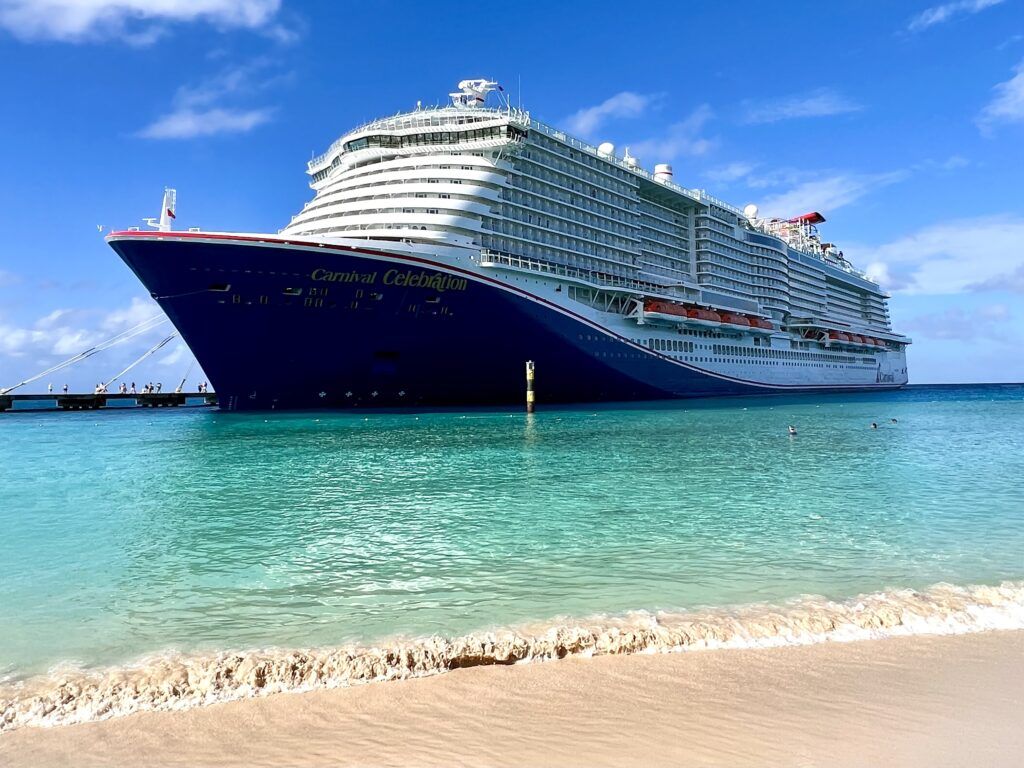
Known for: Fun Ships, budget-friendly pricing, great casual dining
Carnival Cruise Line has built its reputation as the “Fun Ships,” offering affordable cruises with a lively atmosphere. Operating one of the largest fleets in the industry, Carnival provides accessible cruise vacations for families and groups.
✓ Pros
Lots of itinerary options from U.S. homeports with 75% of U.S. population within driving distance including Miami, Galveston, Long Beach, Seattle, and 15+ other ports
Lots of family-friendly activities including waterslides, ropes courses, suspended cycling SkyRide, BOLT roller coaster, mini-golf, arcade, and basketball courts
Visits Half Moon Cay private island and new Celebration Key on Grand Bahama with lagoon pools, waterslides, and adults-only beach club
Plenty of included dining options like Shaq’s Big Chicken, Guy’s Burger Joint, Guy’s Pig & Anchor Bar-B-Que, BlueIguana Cantina, pizza, & more
Lots of programming for kids through Camp Ocean (ages 2-11), Circle “C” (tweens), Club O2 (teens), and Dr. Seuss partnership
Affordable cruise pricing as one of the cheapest cruise lines, making cruising accessible with competitive fares vs Royal Caribbean and Norwegian
A wide range of cabin categories including Cloud 9 Spa staterooms, Family Harbor with dedicated lounge, and fun Havana staterooms with pool deck access
A large adults-only sundeck called Serenity Retreat with plush loungers, daybeds, clamshells, hammocks, hot tubs, and wading pools (all free)
Very present and engaging cruise directors and entertainment staff creating high-energy atmosphere with activities and deck parties
✗ Cons
Can be more of a rowdy or party atmosphere especially on shorter cruises, spring break, and peak summer season
Lots of kids onboard with discounted fares for 3rd and 4th guests making it budget-friendly for families
No adults-only dining options with all specialty restaurants welcoming kids
There aren’t many exotic itineraries (mostly Caribbean, Bahamas, Mexico, Europe)
No solo/studio cabins unlike Norwegian which offers dedicated solo accommodations eliminating single supplements
No “ship-within-a-ship” complex like Norwegian’s Haven or MSC’s Yacht Club (Loft 19 on newest ships is just a private sundeck)
Stateroom is only made up once per day vs twice daily on some cruise lines
Some ships feel dated especially Conquest and Spirit-class with bright colors, orangey wood, and dated pool deck designs compared to newer Vista and Excel classes
Drink package limits of 15 alcoholic beverages per 24-hour period
Bottom Line: Choose Carnival if budget is your primary concern and you want a fun, casual atmosphere with lots of complimentary dining.
Known for: Modern luxury, sophisticated elegance, elevated dining
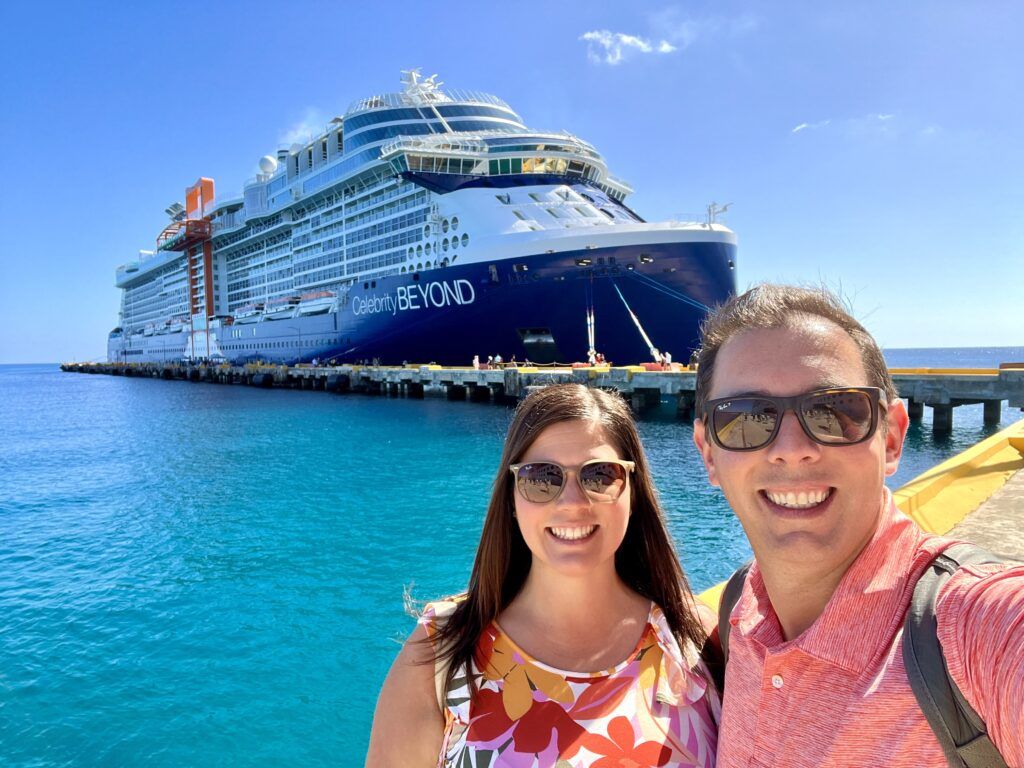
Celebrity Cruises has carved out a distinctive position as a premium brand with a reputation for its refined atmosphere, innovative ship design, and elevated dining experiences. With a fleet of 15 ships sailing to destinations across the globe, Celebrity appeals to travelers, particularly couples, seeking elegance without the premium price tag of luxury lines.
✓ Pros
Only mainstream line in Galapagos with Celebrity Flora expedition ship
Modern luxury at accessible pricing, bridging mainstream and luxury experiences
Known for: Family excellence, character experiences, rotational dining
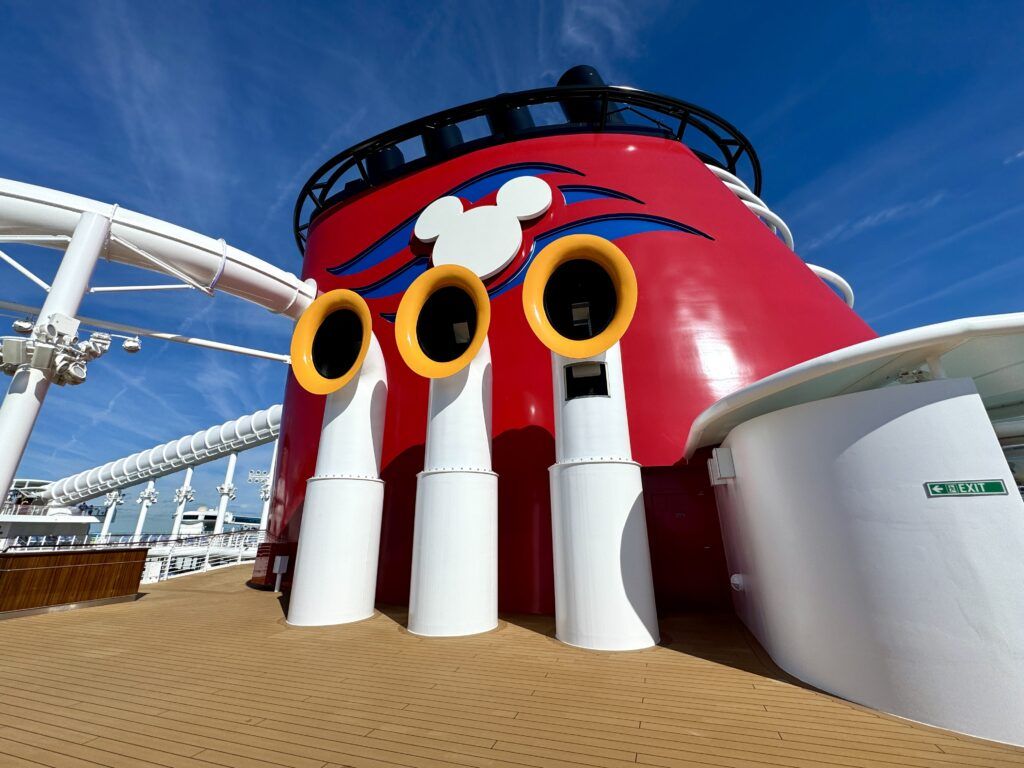
Disney Cruise Line provides magical cruise vacations with the same attention to detail found in Disney Parks. Known for providing some of the best family vacation experiences in the world, Disney Cruise Line caters to kids and kids at heart.
✓ Pros
Only fireworks at sea during the themed Pirate Night festivities
Included soda and room service with no delivery fees
Known for: Mid-sized ships, culinary excellence, Alaska and Europe expertise
Holland America Line has over 150 years of history, offering refined experiences on perfectly mid-sized ships. With Dutch heritage influences, HAL has built a reputation for destination-focused cruising across the globe.
✓ Pros
Focus on culinary excellence with “port to plate” program and partnerships with renowned chefs
Enriching onboard activities including cooking demos, wine tastings, and expert lectures
More diverse itineraries with longer stays and overnight ports
A leader in Alaska cruises with 75+ years expertise and exclusive Glacier Bay access
Known for: European elegance, affordable pricing, MSC Yacht Club
MSC Cruises has been steadily growing its presence in North America. With European roots and family-friendly offerings, MSC offers a unique and affordable experience compared to other contemporary cruise lines.
Known for: Freestyle Cruising, The Haven, solo traveler options
Norwegian Cruise Line revolutionized cruising in the early 2000s with its innovative “Freestyle Cruising” concept, eliminating fixed dining times, formal dress codes, and rigid schedules. With 20 ships sailing globally, Norwegian appeals to travelers seeking flexibility and variety.
✓ Pros
Free at Sea package includes unlimited drinks, specialty dining credits, WiFi minutes, and shore excursion credits providing excellent value
Diversity of dining options with 20+ venues including complimentary choices like The Local and several specialty restaurants
Great Stirrup Cay enhancements including new pier (no more tendering), 28,000 sq ft heated lagoon pool, and Great Tides Waterpark with 19 waterslides opening summer 2026
The Haven ship-within-a-ship with private sundeck, pool, hot tubs, exclusive restaurant, and lounge
Perfect for solo travelers with purpose-built studio staterooms eliminating single supplements and Studio Lounge for socializing
Innovative ship attractions including go-kart race tracks, Aqua Slidecoaster (first hybrid water slide/roller coaster), and elaborate rope courses
Only line sailing Hawaii year-round with Pride of America offering 7-day inter-island itineraries
Great thermal suites in Mandara Spa with heated tile loungers, saunas, steam rooms, cold rooms, and hydrotherapy pools
Loyalty status carryover on sister brands Oceania and Regent Seven Seas
Freestyle approach with no assigned dining times, no formal nights, and relaxed casual atmosphere
✗ Cons
Lots of upcharges and nickel-and-diming including charges for second entrees in main dining, mini-golf, and expensive gratuities
Constant sales pushes and upselling from personal cruise consultants calling frequently and onboard promotions for art, jewelry, spa
Recent decline in entertainment quality with elimination of licensed shows (Kinky Boots, Six, Footloose) replaced by Norwegian-produced revues
Limited grab-and-go dining options with most “casual” venues requiring table service and crowded buffet during peak times
Bottled water & Starbucks specialty drinks not in Free at Sea drink package (only alcoholic beverages and soda included)
Crowded pool decks with insufficient lounge chairs and small pools for passenger capacity, especially on sea days
Less programming for kids compared to Royal Caribbean, Carnival, or Disney with smaller kids’ clubs and limited teen facilities
Non-preferred docking locations like Ward Cove in Ketchikan requiring 20-30 minute bus rides to downtown attractions
Limited complimentary adult-only spaces (Vibe Beach Club requires payment)
Bottom Line: Choose Norwegian if you value flexibility, want a ship-within-a-ship option (The Haven), or you’re a solo traveler.
Known for: Love Boat, Alaska expertise, MedallionClass technology
Princess Cruises has been synonymous with elegant cruising for over 50 years, earning its reputation as “The Love Boat.” With 17 ships sailing to destinations worldwide, Princess is known for its traditional approach and destination-focused experiences.
✓ Pros
MedallionClass technology with OceanMedallion wearable enabling contactless cabin entry, food/drink ordering from anywhere via app, and personalized service
Princess Plus and Princess Premier all-inclusive packages bundling WiFi, specialty dining, drinks, gratuities, and shore excursion credit
Good value compared to other premium lines offering refined experience at mainstream pricing
Wide variety of global itineraries to 300+ destinations in 100 countries with longer port stays
More traditional cruise experience with grand atriums, formal nights, afternoon tea service, and enrichment lectures maintaining classic elegance
Some of the best pizza at sea at Alfredo’s/Gigi’s Pizzeria with made-to-order selections and Tony Gemingnani’s specialty pizzas
Ultimate Balcony Dining experience with multi-course breakfast or dinner served privately on stateroom balcony (additional fee)
Top-notch specialty dining including Crown Grill steakhouse, The Catch by Rudi seafood, and Sabatini’s Italian (included in Premier package)
Movies Under the Stars with large LED screens poolside showing films with complimentary popcorn
✗ Cons
Fewer bells and whistles lacking surf simulators, go-kart tracks, and water parks found on Royal Caribbean and Norwegian ships
Ships can feel dated with half the fleet approaching 20 years old featuring smaller cabins, narrower corridors, and dated décor
No ship-within-a-ship luxury concept with only new Sphere class offering Sanctuary Collection
Limited activities for kids and teens with smaller youth programs and facilities vs family-focused lines
Underwhelming accommodations with standard balconies lacking sofa seating areas and shower curtains instead of glass doors (improved on new Sphere class)
Fewer dining options with typically main dining room, buffet, poolside pizzeria/burger joint, and International Café vs 20+ venues on competitors
More subdued entertainment and nightlife with no late-night parties or club scene
Fewer short getaway options focusing primarily on 7+ day itineraries
Ships can be difficult to navigate with confusing layouts, disconnected sections, and dining venues not accessible from all staircases/elevators
Bottom Line: Choose Princess if you want Alaska expertise, appreciate traditional cruising, or seek a refined experience at mainstream prices.
Known for: World’s largest ships, innovative attractions, Broadway entertainment
Royal Caribbean International operates nearly 30 ships across multiple classes. Known for pushing the boundaries of cruise ship innovation with groundbreaking amenities and record-breaking vessels, Royal Caribbean has redefined what’s possible at sea.
✓ Pros
Best entertainment at sea including Broadway productions, ice skating spectaculars, high-diving shows, and more
World’s largest cruise ships including Icon and Star of the Seas with their own neighborhoods like Central Park with real trees
Innovative onboard attractions like FlowRider surf simulators, rock climbing walls, North Star observation pod 300 feet above sea level, and sky diving simulators
Wide range of cabin categories including Central Park/Boardwalk views, infinite balconies, studio cabins, and multi-bedroom suites
Drink packages still unlimited including cocktails, beer, wine, specialty coffees, soda, bottled water, and smoothies
✗ Cons
Large ship sizes can be overwhelming for first-timers who may spend days just learning ship layout
Inconsistent food quality with main dining room varying significantly between ships and night to night
Higher price point typically 20-50% more than Carnival, Norwegian, or MSC for comparable itineraries
Lots of families and kids onboard especially during school holidays, spring break, and summer months
No ship-within-a-ship complex like Norwegian’s Haven or MSC’s Yacht Club
Varied quality across ship classes with older Vision and Radiance class feeling dated compared to Icon and Oasis class vessels
No option for all-inclusive packages bundling specialty dining, drinks, WiFi, and gratuities like Princess or HAL offer
Alaska cruises don’t visit Glacier Bay National Park
Increased focus on private destinations reducing authentic cultural experiences in port
Bottom Line: Choose Royal Caribbean if you want the biggest ships, best entertainment, and don’t mind paying premium prices for cutting-edge amenities.
Known for: Destination focus, Scandinavian design, enrichment programs
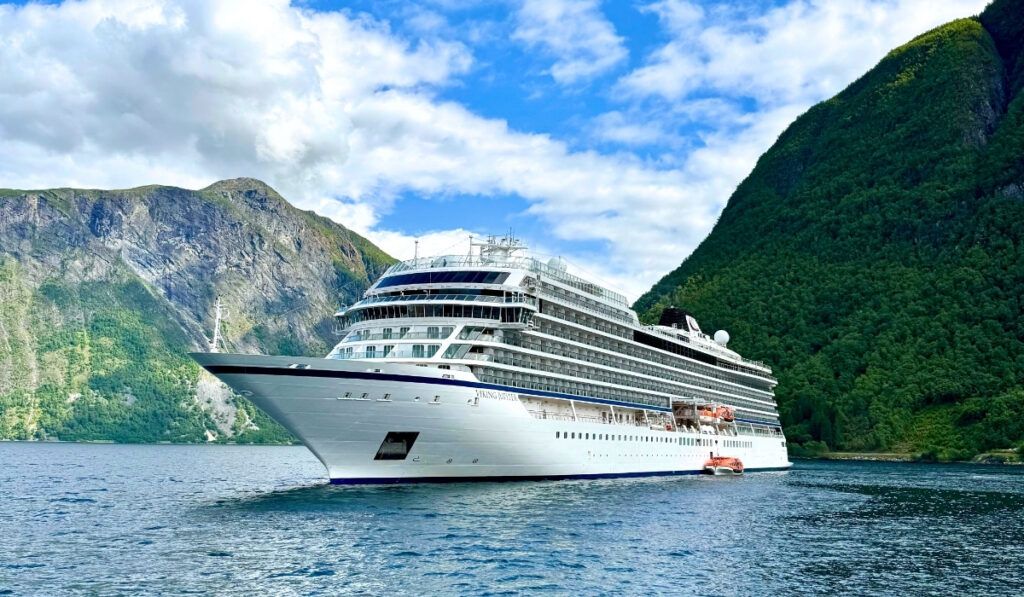
Viking offers ocean, river, and expedition cruises with a focus on destination immersion rather than onboard entertainment. Known for sophisticated Scandinavian design and cultural enrichment, Viking caters to adults seeking learning-focused travel.
✓ Pros
No nickel-and-diming with included specialty dining, beer/wine with meals, and WiFi
Known for: Adults-only, all specialty dining included, edgy entertainment
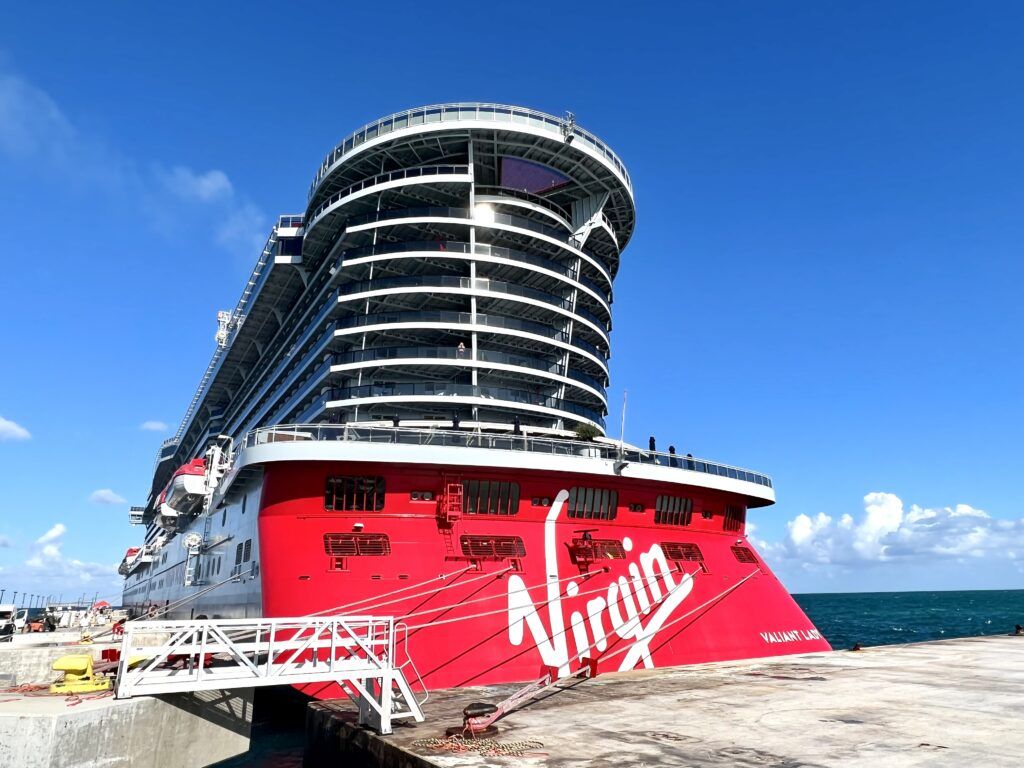
Virgin Voyages is one of the newest cruise lines, debuting in 2021 with a mission to revolutionize cruising. Bucking traditional cruise conventions, Virgin offers an adults-only experience (18+) with included dining at 20+ restaurants.
✓ Pros
Adults-only (18+) creating a sophisticated atmosphere without kids
All dining is included with no main dining room or upcharges
Scarlet Night, an entire evening of festivities culminating in massive deck party
The Beach Club at Bimini, free beach destination for Virgin passengers when docked
Included fitness classes like HIIT, bungee, spinning, and sunrise yoga
Balcony hammock in most Sea Terrace cabins, perfect for relaxing with ocean views
The Manor nightclub, designed like a land-based club with stage, dance floor, and three bars
Included basic WiFi and basic beverages like soda (no gratuities on drinks or spa either)
Creative entertainment including Duel Reality, Ships in the Night, and pajama party
Onboard tattoo shop (Squid Ink) honoring maritime tradition with professional artists
✗ Cons
No drink package, Bar Tab credit system requires pre-purchase and supplementing
Daily gratuities no longer included in the Virgin Voyages cruise fare (as of October 2025)
Cabin bathrooms are tiny, barely room to get ready
Little diversity between ships, nearly identical design across all four vessels
Can be pricey despite inclusions
Lack of thrills and top deck attractions like waterslides
Limited itinerary options with small 4-ship fleet focused mainly on Caribbean/Mediterranean
Party atmosphere may not appeal to traditional cruisers seeking calm, relaxing vacations
Limited poolside space with pools too small for passenger capacity, crowded on sea days
Bottom Line: Choose Virgin if you’re an adult looking for trendy dining, nightlife, and a non-traditional cruise experience.
Narrowed it down to two lines? Our in-depth comparison guides go category by category to help you make the final call. We cover everything from dining and entertainment to cabins, pricing, private destinations, and more.
Royal Caribbean vs. Carnival
The two biggest names in mainstream cruising go head to head. Which fleet wins for families, value, and onboard experience?
Every cruise line offers a unique experience. Here’s the quick-reference version to help you decide at a glance:
Choose Carnival if budget is your primary concern and you want a fun, casual atmosphere with lots of complimentary dining.
Choose Celebrity if you want modern luxury and sophisticated dining at prices well below luxury lines.
Choose Disney if you’re traveling with kids and want the absolute best family experience, or you’re a huge Disney fan.
Choose Holland America if you prefer mid-sized ships, culinary excellence, and enrichment programs in a sophisticated atmosphere.
Choose MSC if you want the most affordable option and enjoy European elegance with an international atmosphere.
Choose Norwegian if you value flexibility, want a ship-within-a-ship option (The Haven), or you’re a solo traveler.
Choose Princess if you want Alaska expertise, appreciate traditional cruising, or seek a refined experience at mainstream prices.
Choose Royal Caribbean if you want the biggest ships, best entertainment, and don’t mind paying premium prices for cutting-edge amenities.
Choose Viking if you’re an adult prioritizing destinations and cultural enrichment over onboard entertainment (and your budget allows).
Choose Virgin if you’re an adult looking for trendy dining, nightlife, and a non-traditional cruise experience.
Ready to Book Your Next Cruise?
With so many cruise lines to choose from, working with an experienced travel advisor can make all the difference. Our partners at MEI-Travel specialize in cruise vacations and can help you find the right ship, itinerary, and cabin category for your travel style and budget — at no extra cost to you.
Do you agree with our cruise line comparison? What’s your favorite cruise line? Drop us an anchor below to share which cruise lines you sail with the most often.
How might we help a sick older person have a better end-of-life experience? Planning for future health crises and end-of-life situations — a process known as advance care planning — is certainly important.
But, not every health crisis can be completely planned for. And it’s often hard, in the moment, for family members and doctors to figure out how to honor a person’s wishes. Below, I’d like to share a true story about a dangerously ill older woman, who wasn’t on hospice but said she didn’t want to go to the hospital.
The case: To ER or not to ER?
As I puttered around my house one Saturday morning, my pager went off. “Dr. Kernisan? This is Tina from the nursing home. We’re calling you about Mrs. F. She’s 78 and has a diagnosis of advanced lymphoma. She’s been anemic and just got a blood transfusion again a few days ago. She’s now very weak, pale, and her blood pressure is low. Her poop looks red.”
Although by then I had fired up my computer and was remotely logging in to Mrs. F’s chart, this sounded like a no-brainer. I didn’t know Mrs. F personally, but that weekend I was on call by phone for our medical group’s nursing home. From the brief description, Mrs. F sounded critically ill, and was probably bleeding internally. She needed hospitalization ASAP.
“But she says she doesn’t want to go to the ER,” the nurse continued. “She says she hates the hospital and wants to stay in the nursing home.”
This stopped me short. “Is there an advance directive in her chart? Is she usually able to make medical decisions?” I asked.
“It says she is DNR, but it looks like that was just decided a few weeks ago. It says transfer to the hospital is ok. It looks like she’s been offered hospice, but she hasn’t signed up for it. She does usually make medical decisions.”
I frowned at my computer screen, scrolling through Mrs. F’s chart. She definitely sounded dangerously ill. She had to be hospitalized, probably in the Intensive Care Unit.
Or did she?
The challenge: Difficult choices at the (possible) end of life
The modern hospital is a miraculous place. Today, doctors routinely save people from medical disasters that were unstoppable just 25 years ago. But this magic often comes at a cost. Most people find the hospital to be, at best, uncomfortable and stressful. And being in the hospital always comes with a small risk of complications, such as falls, extra infections, or medication mishaps.
Still, most of the time, the benefits outweigh the burdens and risks. But this balancing of pros and cons gets trickier when a person is terminally ill, like Mrs. F. Even though her cancer was advanced, and she had decided she didn’t want CPR if her heart suddenly stopped, her chart showed that she’d been accepting fairly intensive medical treatments. This was surely helping to keep her alive.
Yet it also sounded like she was starting to get tired of the medical merry-go-round, and was perhaps considering a transition to hospice. I decided to suggest that she go to the ER for more evaluation. Perhaps she could get a blood transfusion, and then we’d see if she could return to the nursing home at the end of the day.
She agreed. An hour later, the ER doctor called me with an update: “She’s definitely having some bleeding from her bowels or stomach. Her family is here. I’ve told them she has to go to the Intensive Care Unit, and she’s agreed to go.”
I felt troubled. I had full confidence in the ER’s medical assessment. If the hospital team stabilized her and found the cause of her bleeding, she’d probably live longer. Yet she’d said earlier that she didn’t want to be in the hospital. No matter what we did, Mrs. F. probably didn’t have much time left. Yet now she was off to intensive care. Was that the only option we could offer?
The solution: The power of offering alternatives
I took a deep breath. “Well, if she wants to go to the ICU, she should. But I noticed in the chart that she’s considered hospice. We should be sure that she and her family know that there’s an alternative to the ICU. If you tranfuse her in the ER now, she’ll probably feel better than she does now. Then we can take her back to the nursing home tonight, where she can be more comfortable.”
“But what if she keeps bleeding? What if she gets worse? She could die,” protested the ER doctor.
“That’s true,” I agreed. “If what’s most important to her is not dying, she should go to the ICU. But if what’s most important to her is to not be in the hospital, we can probably keep her comfortable and peaceful in the nursing home, even if she’s bleeding.”
There was a pause on the other end. “You’d better explain this option to her family,” said the ER doctor. A moment later, Mrs. F’s daughter was on the line. “This decision isn’t mine to make,” she said after listening to me. She sounded scared. “Let me put my mother on the phone.”
A few moments later, it was the daughter, not Mrs. F, on the line with me again. Now she sounded tearful. “She said she wants to go back to the nursing home.” I tried to confirm that Mrs. F. had understood what that might mean, but the daughter cut me off. “I don’t think she wants to have a long discussion about this. She says she wants to go back.”
Mrs. F. was tranfused two units of red blood cells in the ER for her comfort and stability, and went back to the nursing home later that evening.
The nurses didn’t call me about her that night, nor the following day, which was Sunday.
Mrs. F. died on Monday, in the nursing home. By then her usual primary care doctor was back covering her care. He told me that Mrs. F. had been weak and tired but otherwise comfortable. “I’m glad you recommended hospice-style care in the nursing home to her,” he said.
“I didn’t recommend anything,” I said. “All I did was let her know of an alternative.”
My take-home points for family caregivers
Doctors are trained to save lives, and for most people, this is a wonderful thing. But for some people, staying alive as long as possible is no longer the highest priority. If this is the case for your loved one, consider asking doctors to discuss alternatives. Often it’s possible to come up with another plan of care that may be a better fit for a sick person’s needs.
Even those people who have not signed up for hospice will sometimes prefer less medically-intensive care. If available, a consultation with a geriatrician or palliative care team can help identify alternative options.
In fact, counseling families to help them understand all their options is something I regularly do as part of the Helping Older Parents Membership, so if you’re interested in accessing that type of guidance from me, learn more here: About Dr. Kernisan’s Helping Older Parents Membership Program.
Have you had difficulty figuring out how to honor an older person’s healthcare wishes? Have you struggled with planning for end-of-life situations? I’d love to hear from you in the comments section!