Tag: Marines News

  • Following an outbreak, lawmakers push to require flu vaccine for all service members in budget bill provision

    Following an outbreak, lawmakers push to require flu vaccine for all service members in budget bill provision

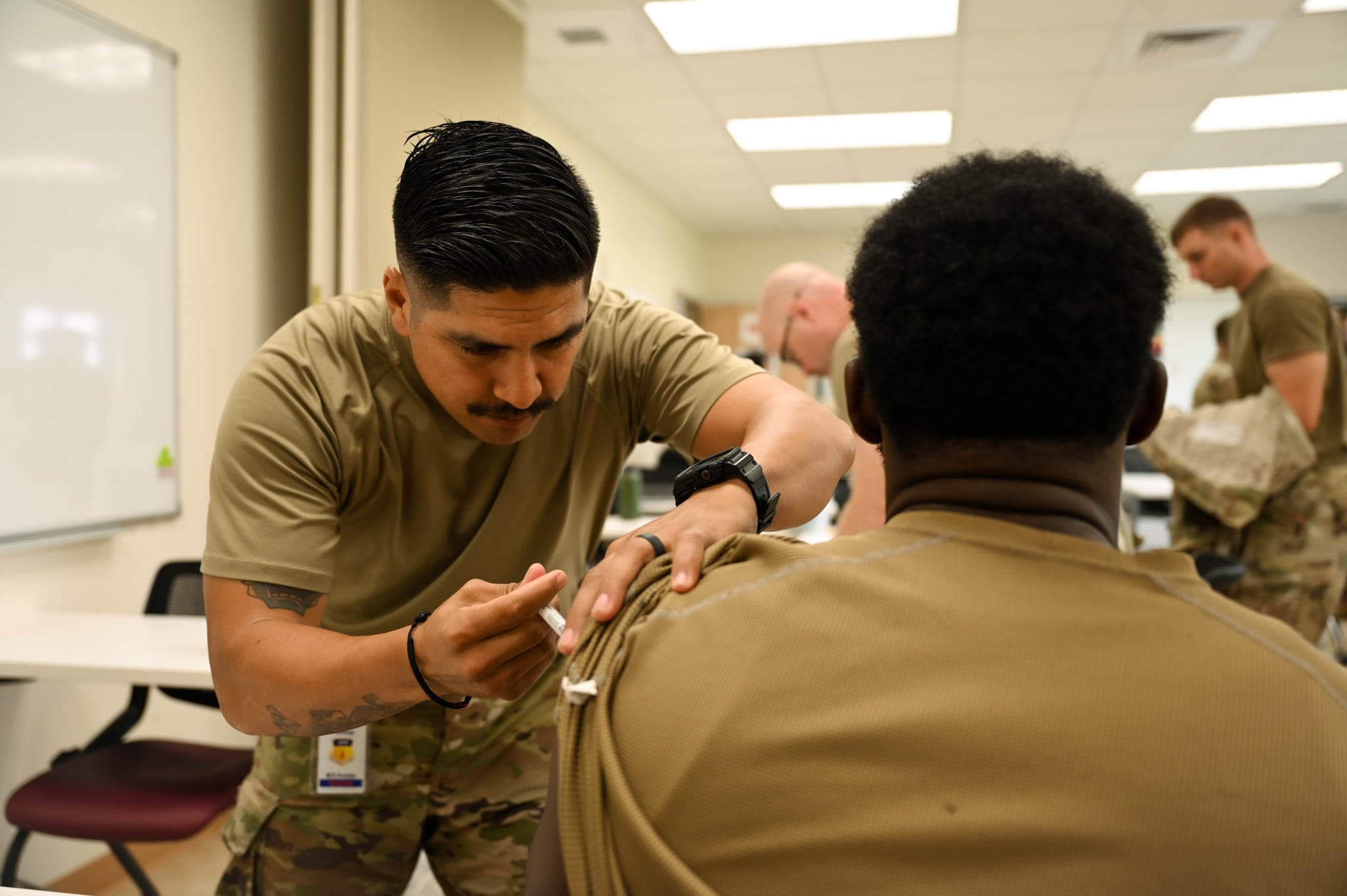
    U.S. representatives announced an amendment to fiscal year 2027’s National Defense Authorization Act that would require all military service members to have an influenza vaccine, following a training base outbreak that sickened nearly 300 trainees and killed one.

    In a Tuesday press conference, Reps. Joaquin Castro, D-Texas, Chrissy Houlahan, D-Pa., and Gil Cisneros, D-Calif., announced their joint amendment’s introduction, calling it pertinent to military readiness and the well-being of American troops.

    “That is almost 300 future airmen and women who would not be finishing their training at their expected date,” Cisneros, a former under secretary of defense for personnel readiness, said in the briefing. “This has completely set back the Air Force’s expected recruitment class from entering the future squadrons on time.”

    This move comes after a flu outbreak sickened hundreds of trainees at Lackland Air Force Base, Texas, and killed one. Castro, whose district houses Lackland, confirmed that 284 trainees contracted the flu, four have been hospitalized and one has died.

    Over a week ago, the Air Force announced that the training wing at Lackland suffered a localized outbreak over the three weeks prior but did not mention how many trainees contracted the flu.

    Keon McDaniel, a basic military trainee from the 737th Training Support Squadron at Lackland, died on June 16 at Brooke Army Medical Center due to a medical emergency. Lackland officials said an investigation into the cause of his death is currently underway. Air Force officials declined at the time to comment on if his passing was related to the flu outbreak.

    But Castro, who requested an investigation into McDaniel’s death in relation to the flu, revealed Tuesday that the Air Force confirmed that the trainee did die from the outbreak on base, according to a release.

    “This is a tragedy that could have been prevented were it not for the reckless actions of Secretary [of Defense Pete] Hegseth,” Castro said in the statement.

    The outbreak caused lawmakers to express concern over the current optional flu vaccine policy for service members and Pentagon civilian personnel that went into effect in April, two months before the outbreak.

    Hegseth announced that service members would no longer be required to get the annual flu vaccine, citing the prior policy as “overly broad and not rational.”

    Last week, the Pentagon granted exceptions to policy requests, or ETPs, to military services and some federal agencies, allowing for the slight reversal to be included into Hegseth’s guidance.

    The services with ETPs granted by Under Secretary of Personnel and Readiness Anthony Tata include the Department of the Army, Department of the Navy and Department of the Air Force.

    Given that the Marine Corps and Space Force are under the Department of the Navy and Department of the Air Force, respectively, the services are also included in the exceptions.

    The Pentagon declined to comment on if all trainees would be required to get the flu vaccine or when the exceptions were requested and granted. The Associated Press reported that all trainees for basic military training would now be required to receive the vaccine, citing a Pentagon official.

    Castro confirmed in the Tuesday briefing that the Air Force’s exception to vaccinate all trainees was not approved until after the outbreak occurred even though it was requested about a month prior.

    Houlahan said that there has been no indication of flu outbreaks at bases other than Lackland, but it is considered an “ongoing concern.”

    “Now, nothing’s ever perfect. You could get the vaccine, and you still may get the flu or any other disease that may come forth, but it does make a difference,” Cisneros, a member of the House Armed Services Committee, said in the press conference.

    The representatives that brought forth the amendment last week criticized their Republican counterparts for previously rejecting the measure’s inclusion in the final NDAA rules package, prompting another push to revert the policy to again require all service members to receive a flu vaccine.

    The NDAA is currently moving through both chambers of Congress, with the House and Senate versions awaiting full consideration on their respective floors.
    This post was originally published on this site.

  • Marines convert uniform manual into simple phone app

    Marines convert uniform manual into simple phone app

    The Marine Corps launched a new mobile app that gives Marines a simplified guide for uniform and grooming standards, according to Tuesday’s administrative message.

    Brig. Gen. Matthew Tracy, commanding general of the service’s education command, described the Marine Corps Uniform App as giving “immediate access to the guidance they use most often.”

    “It is designed to make existing standards more accessible while reinforcing the professionalism and attention to detail that define our Corps,” he said.

    Grooming standards, there's an app for that. (Marine Corps Uniform App)

    Although the service’s uniform regulations are available online, the 263-page document written in Courier typeface isn’t exactly easy to navigate. The new app simplifies that guidance into a much more accessible format.

    In a press release, the service said the application is intended to supplement, not replace, MCO 1020.34.

    “While it answers many of the most common questions regarding uniforms and grooming, Marines should continue to consult the order for comprehensive policy and detailed guidance,” the service said.

    The app’s home screen features six categories: male officer, female officer, male enlisted, female enlisted, male grooming and female grooming.

    Selecting a category opens a list of approved and required uniforms for physical training, utilities, service and dress. Each entry includes a description explaining when the uniform is worn.

    For example, the app describes the Male Officer Evening Dress uniform as intended for “Field Grade and General Officer white/black tie events and social functions.” It also notes that “It is not a leave and liberty uniform.”

    (Marine Corps Uniform App)

    Each uniform page includes a full image of the uniform with every component highlighted. Users can tap individual items or accessories to view additional details. And each component page includes reference images, wear instructions and the applicable regulation.

    The grooming guides are more concise. They use dropdown menus to display only the standards relevant to each grooming category.

    The service said the uniform app is currently available through the Apple App Store, while an Android version is expected sometime in fiscal year 2027.

    This post was originally published on this site.

  • Marine Corps adds new scout MOS to infantry units

    Marine Corps adds new scout MOS to infantry units

    The Marine Corps will roll out a new infantry specialty later this year to provide infantry and light armored reconnaissance battalions with dedicated reconnaissance and surveillance support.

    On Tuesday, the service announced in an administrative message the creation of the new primary military occupational specialty 0315 Scout.

    Lt. Gen. Jay Bargeron, deputy commandant for Plans, Policies, and Operations, called the new MOS “a critical step in the modernization of our infantry battalions.”

    “These Scouts will be our eyes and ears, extending our sensing capabilities and enabling commanders to make faster, more effective decisions to win our nation’s battles,” he said in a press release.

    The service said the specialized MOS was born out of “extensive live-force experimentation” — or combat simulations — that highlighted the need for a dedicated battalion-level formation to collect timely and accurate information on the enemy and operating environment.

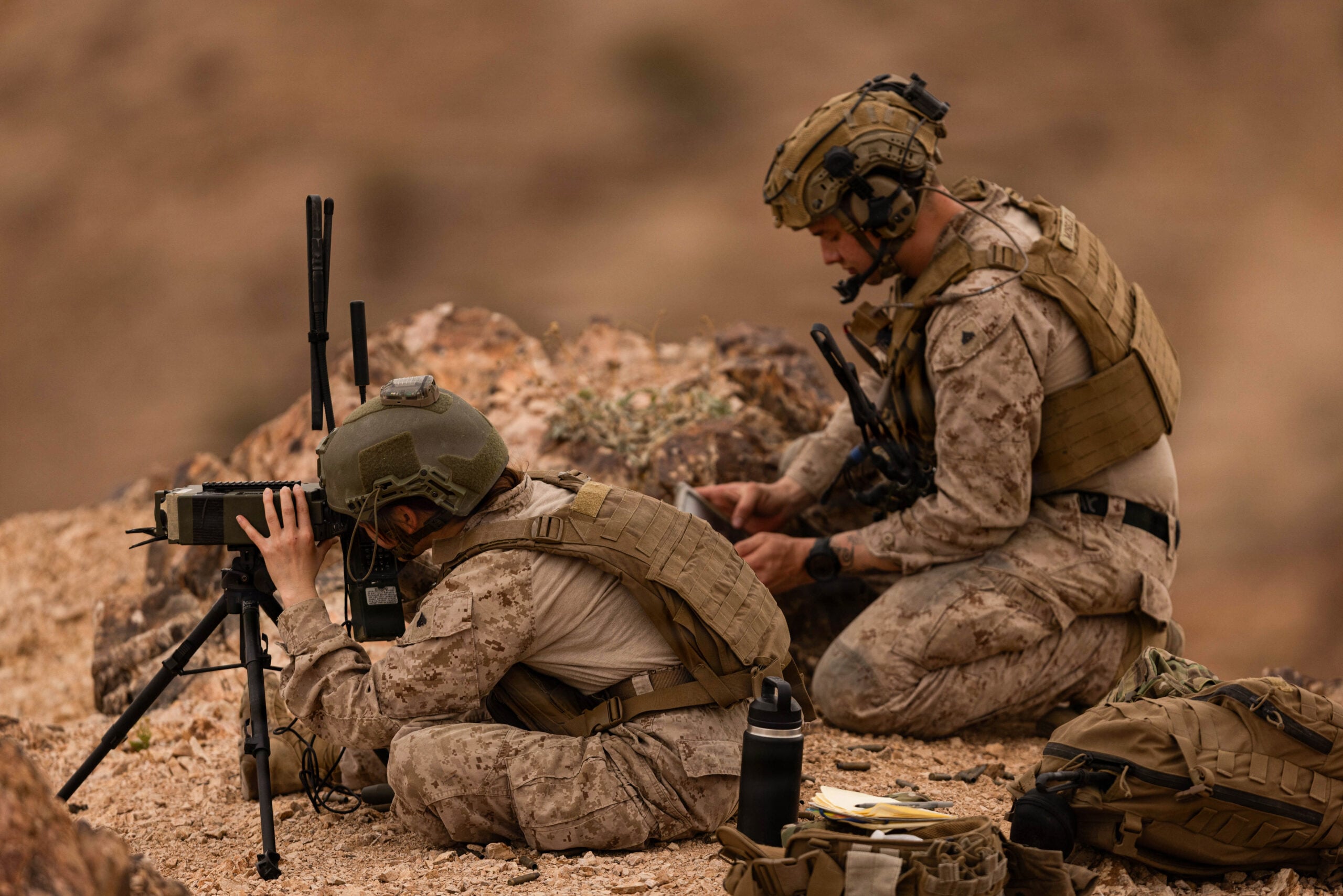
    According to the announcement, scouts will operate as a 26-Marine platoon within a battalion. They will be trained in field craft and advanced communications to conduct ground reconnaissance, surveillance and battlespace shaping through assured long-range communications.

    Scouts will carry advanced optics, communications suites, sensors and unmanned systems for reconnaissance missions. They will also be armed with the M4 Service Rifle, M320 Grenade Launcher and M27 Infantry Automatic Rifle, or IAR.

    Each scout team will also include a Joint Fires Observer, or JFO, to coordinate and control surface-to-surface and air-delivered fires.

    To become a 0315 Scout, Marines must complete either the Infantry Common Core Course or the Infantry Rifleman Course, followed by the Ground Reconnaissance Course.

    Marines seeking to convert to the new MOS must complete the required training. However, 0317 Scout Snipers will be immediately eligible for a lateral transfer without additional training.

    The new MOS takes effect Oct. 1, 2026.

    This post was originally published on this site.

  • SOCOM is seeking a long-range kamikaze drone

    SOCOM is seeking a long-range kamikaze drone

    U.S. Special Operations Command is looking for a small but long-range kamikaze drone.

    The goal is to develop an air-launched loitering munition “with an extended range and capabilities beyond the current SOPGM [Stand-Off Precision Guided Munition portfolio],” according to a June 26 SOCOM Request For Information. The response deadline is July 27.

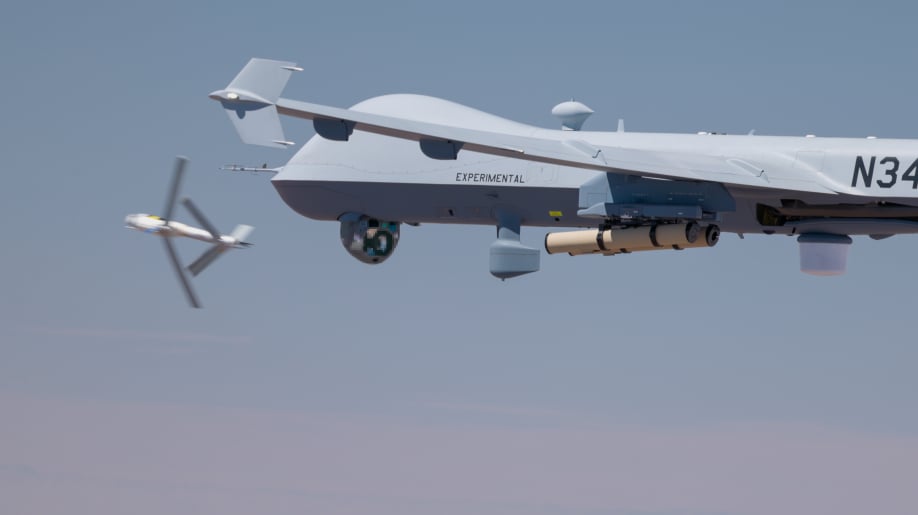
    Launched at an altitude of 5,000 to 30,000 feet, the desired Air Loitering Munition must have a range of at least 75 nautical miles. Once over the target zone, it must have a loiter time of at least 40 minutes while orbiting at an altitude of 500 to 3,000 feet, according to the RFI. The munition should also be able to maintain a speed of 50 to 100 knots, with a weight that does not exceed 95 pounds.

    By comparison, AeroVironment’s Switchblade 600 — which SOCOM ordered in 2021 to test as a boat-launched weapon — has a range of more than 55 miles and weighs 33 pounds. The ALM’s guidance would be passive, homing in on radio emissions or using automatic target recognition.

    The ALM will be able to be launched by SOCOM fixed-wing aircraft, according to the request. Ideally, the weapon should be capable of being fired from a Common Launch Tube, a launcher that enables most military or civilian aircraft to become missile platforms.

    For the Common Launch Tube, the ALM would be no longer than 42 inches, with a 5.9-inch diameter. Fitted to a BRU-71 or BRU-78 weapons rack, the ALM could be up to 90 inches long and 9 inches wide.

    The project will involve “a single demonstration for evaluation on the AC-130J Ghostrider or another SOF platform,” according to the RFI.

    The RFI also calls for rough cost estimates for orders of 500, 1000 and 3000 munitions. SOCOM is “looking for true innovative, out-of-the-box thinking, conceptual approaches and ideas on how industry can expediently design, manufacture and deliver stated capabilities.”

    While short-range backpack kamikaze drones have become a fixture on the battlefield, long-range loitering munitions have become increasingly prominent.

    In the 2020 Nagorno-Karabakh War, Azerbaijan used the Israeli-made Harpy to devastate Armenian forces. Ukraine and Russia have also made extensive use of long-range loitering drones. Earlier this month, Russia bombarded Kyiv with the Banderol, which reportedly has a range of 500 miles and packs a 150-pound warhead.

    Armed with loitering munitions with a range of around 100 miles, SOCOM MC-130J gunships and other aircraft would be able to hunt targets deep inside enemy lines — and do so while remaining out of range of enemy air defenses.

    This post was originally published on this site.

  • Inside the Marine Corps’ Call of Duty training experiment

    Inside the Marine Corps’ Call of Duty training experiment

    For more than 15 years, the Office of Naval Research has explored how video games can affect human cognition. While researchers often found evidence that they can improve cognitive performance, the concept has had limited application into real-world programs.

    That may be changing.

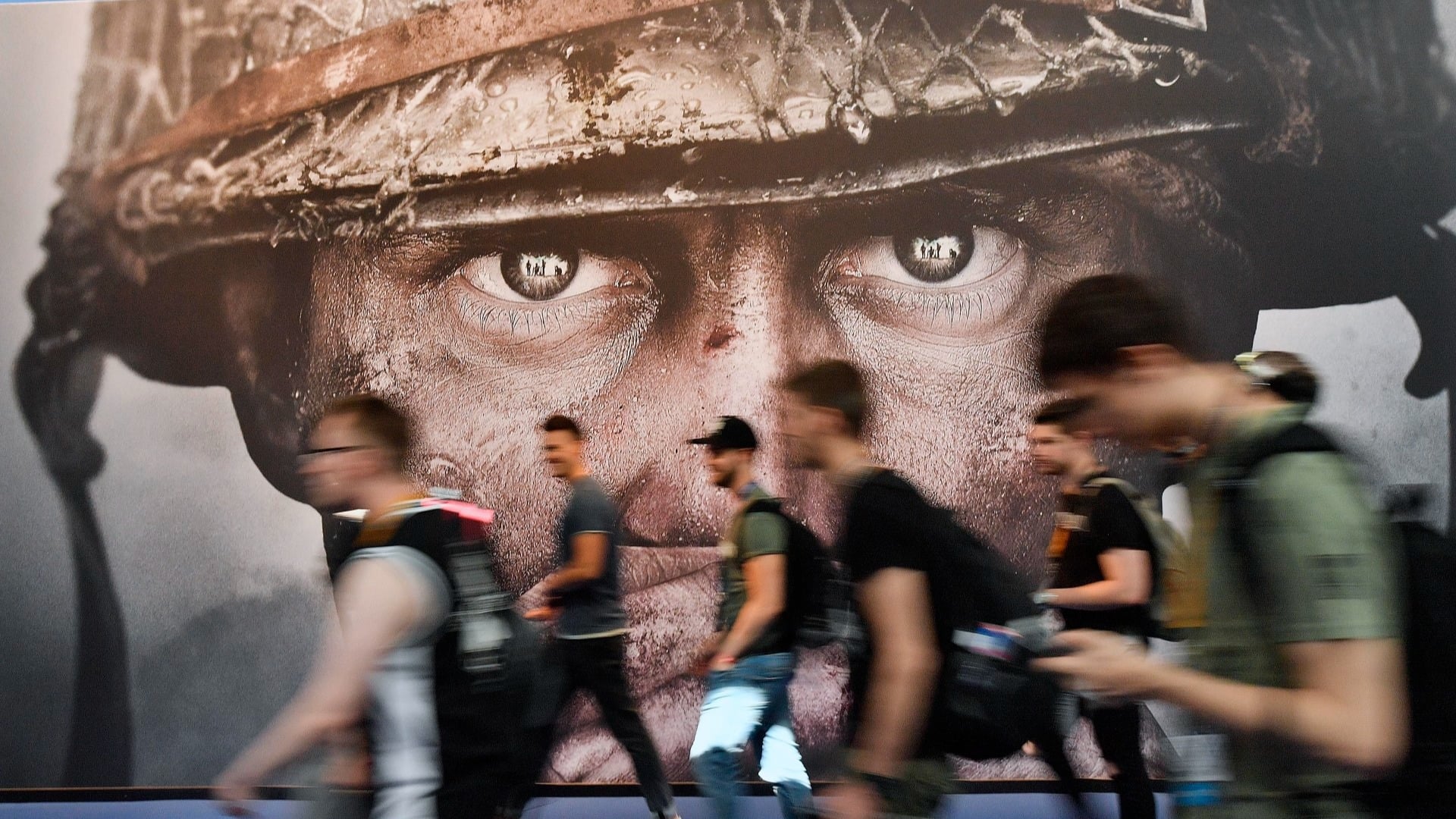
    In January, Marine Corps University began using a modified version of Call of Duty 4: Modern Warfare at its sergeant’s course in Quantico, Virginia, to help strengthen leadership, communication, critical thinking and decision making under pressure.

    The program, called Research into Competency Acquisition with Novel E-gaming, or R-CANE, was developed through a partnership with Virginia Tech and the University of Memphis with funding from the Office of Naval Research.

    Brig. Gen. Matthew Tracy, commanding general of Marine Corps Education Command and president of Marine Corps University, described R-CANE as enhancing “natural intelligence” rather than traditional training. Although the game has Marines playing avatars that use weapons and fight enemy combatants, he said the purpose is improving cognitive performance.

    “What the game allows us to do is manipulate that cognitive load on the Marines’ actual brain and their ability to take in information, process that information, observe, create a plan on the fly, articulate that plan amongst their team, reassess that plan, create another one, rearticulate that, all as they’re being loaded with information coming in,” he told Military Times.

    Tracy said that he will “pounce” on the word “training” when it comes to describing the program because he thinks it would benefit anyone in any profession or job set, ranging from a sniper to NFL player to cocktail party host and even to a writer.

    “Who would not benefit from enhanced brain performance?” he inquired.

    Inside the program

    Louis Hickman, an assistant professor of industrial-organizational psychology at Virginia Tech and principal investigator of the project, said Marines are grouped into teams of six, with one Marine assigned to lead the other five. Wearing gaming headsets and sitting behind monitors, they work together as a fireteam to complete missions.

    Hickman said the 14 custom-designed levels vary in difficulty and mission. Easier scenarios help Marines familiarize themselves with the game, while more difficult levels challenge them to collaborate and adapt under pressure.

    “The goal is not to train the Marines on military protocol,” Hickman said. “It’s to help concretize some of the lessons that are already taught in the sergeant school around leadership, communication and collaboration.”

    Gameplay footage shared with Military Times shows Marines clearing an office building before facing a sudden shift in mission: enemy combatants surround the building, forcing the team to move to an extraction point.

    The increased pressure quickly creates chaos. Players are killed and respawned to continue the mission, forcing rapid communication and adaptation under stress.

    Throughout the exercise, observers monitor player reactions, positioning and communication. Once the level is complete, a large language model, or LLM, trained with military policy, generates prompts for an after-action review.

    “The goal is to get the Marines to engage in reflection and metacognition to help concretize potential learnings from the gameplay scenario,” Hickman said.

    He added that players may not fully benefit from the experience unless they take time to reflect on what happened and consider how it would translate to a real-world engagement.

    A review from the classroom

    Master Sgt. Christine Monroig, the staff noncommissioned officer in charge at the sergeant school, said in an email to Military Times that she was initially skeptical of the program but came to see how it could benefit participants after experiencing it firsthand.

    “I quickly recognized its value as an innovative training tool that complements traditional instruction by enhancing communication, decision-making, adaptability, and cognitive performance in a dynamic and engaging environment,” she wrote. “Rather than replacing existing methods, it serves as an additional capability that can further prepare Marines for the demands of future conflict.”

    Monroig said she had very little experience with video games — mostly classic titles like Super Mario Bros and Sonic the Hedgehog — and limited familiarity with the concept of neuroplasticity, or the nervous system’s ability to adapt, but found that the scenarios closely aligned with warfighting principles taught at the school.

    “While I cannot compare it directly to the commercial game, I can attest that the mission-focused design of the training supports the development of skills that are relevant to warfighting and small-unit leadership,” she said.

    She added that the program cannot fully replicate the physical demands of live exercises, but it does create cognitive stressors that force Marines to work together and think quickly.

    “One of the most valuable lessons I gained was a greater appreciation for the cognitive aspects of learning and performance,” she said. “As Marines, we are often focused on mission accomplishment and operational effectiveness, but this experience encouraged me to think more deeply about how Marines learn, adapt, and develop decision-making skills.”

    Up next for the program

    Currently, R-CANE is only available at the sergeant school in Quantico, where the school is equipped with 75 systems but has a capacity for 25 students.

    Tracy said the deliberate rollout is tied to the program’s research goals. Each student undergoes cognitive testing before attending the course to establish a baseline and measure changes over time.

    While the Marine Corps plans to expand the program to sergeant courses at other bases, such as Twentynine Palms and Camp Lejeune, Tracy said expansion will remain limited for now.

    “We want to get more data before we start thinking big and asking for resources,” he said. “We have to ensure that we have a body of evidence that is rich enough and convincing enough before we make larger investments into other facets.”

    Hickman said he believes video game-based learning could eventually evolve into direct military training applications, particularly for drone operations.

    Rather than training on actual equipment, operators could use game-based systems that mirror real-world interfaces and physics without risking damage to costly hardware, he said.

    Hickman also said expanding the program’s LLM capabilities could have applications beyond classroom gaming, particularly in after-action reviews.

    He said traditional after-action reviews require a human facilitator and are usually conducted in group settings, making them difficult to scale. An LLM could provide a more flexible alternative when facilitators are unavailable.

    “They have these large-language-model girlfriends. They have large-language-model tutors. They have large-language-model coaches,” Hickman said. “Here, we made a large language model after-action review facilitator.”

    The long-term goal, he said, is to build an LLM capable of monitoring exercises and conducting after-action reviews not only for teams but for individual Marines as well.

    “The long-term goal is to take those automated assessments from the scenario and use those as inputs in that large language model after-action review,” he said. “That way it has information about what went on so it can help guide that conversation in a more meaningful way.”

    Correction: This story has been updated to include the correct modified Call of Duty video game used by Marine Corps University.

    This post was originally published on this site.