Tag: Navy

  • Anthony Tata assumes oversight of Defense POW/MIA Accounting Agency

    Anthony Tata assumes oversight of Defense POW/MIA Accounting Agency

    Families of missing-in-action service members from the Vietnam war were issued a promise on June 25 from the new overseer of the Defense POW/MIA Accounting Agency to look into budget cuts that have canceled MIA searches in Vietnam and Laos.

    Former Army Brig. Gen. Anthony Tata, now undersecretary of defense for Personnel and Readiness, was initially met with skepticism on the budget cuts at the annual DPAA briefings for the families of those lost during the Vietnam era. Tata sought to mend fences, however, by pledging to work for restoration of about $40 million in DPAA cuts as proposed in a bill currently before Congress.

    Tata first had to convince a skeptical audience member who questioned whether he would follow through on his promises.

    “I’m up here telling you — please let me go look at the legislation. That’s my commitment,” he said. “I absolutely support increasing the budget for DPAA. The more money, the more questions we can answer for you.”

    Tata, who previously commanded the 82nd and 101st Airborne Divisions, and was deputy commanding general of the 10th Mountain Division in Afghanistan, was referring to a bill introduced by Sen. Deb Fisher (R-Neb.) to restore $40 million in funding to the DPAA. The bill was attached to the must-pass National Defense Authorization Act.

    Budget cuts and fuel shortages caused by the war in Iran already resulted in the cancellation in April of searches for the missing in Laos.

    “Due to significant impacts resulting from fuel shortages in Laos, DPAA was forced to cancel four recovery teams that were planned for April 27 through June 10,” a DPAA release at the time stated.

    Tata sought to assure the audience of family members that he had the “full unmitigated support” of President Donald Trump and Defense Secretary Pete Hegseth in his new mission, one in which former Army Maj. Gen. Kelly McKeague, director of the DPAA, will report directly to him.

    “I will do anything possible to help Kelly and his team,” said Tata, whose past inflammatory remarks, including calling former President Barack Obama a “terrorist leader,” led to the withdrawal of his nomination to the post of under secretary of Defense for Policy during the first Trump administration.

    McKeague said the main thing Tata could do would be to lobby for increased funding for the DPAA budget, which has gone from $185 million in Fiscal Year 2025 to $167 million in FY2026, and is projected to be capped at $160 million in FY2027, according too DPAA.

    The lack of funding has forced DPAA to cut the number of recovery and investigative teams operating in Vietnam from 27 to seven; from 13 to five in Laos; and from three to one in Cambodia, a DPAA release said.

    The $40 million DPAA was seeking from the Fisher bill was a pittance compared to the size of the overall defense budget, which was expected to come in at upwards of $1 trillion, McKeague said.

    “It’s chump change, it’s peanuts,” McKeague said. The added funding, meanwhile, would allow him to boost the number of recovery teams.

    Tata also touched on another issue that has stymied and infuriated families of the missing for decades — the red tape blocking the declassification of records that could hold information on their loved ones.

    Tata said there was “very little reason” why the military “should be withholding any records. I’m super committed” to getting answers, he told the audience.

    Bipartisan legislation has been introduced in the House and Senate — the “Bring Home Our Heroes Act” — to overcome the bureaucratic hurdles that often make access to information difficult for families.

    According to language in the bill, the legislation would “establish an independent Missing Armed Forces and Civilian Personnel Records Review Board to identify missing personnel records, facilitate the transmission and disclosure of these records, and review any decisions by federal agencies to postpone declassification for purposes of protecting sensitive classified material.”

    Sen. Jeanne Shaheen (D-N.H.) in a statement noted that the “bipartisan Bring Our Heroes Home Act takes meaningful steps to ensure that vital records are preserved, responsibly declassified and made accessible so that families can finally gain the clarity they deserve.”

    This post was originally published on this site.

  • Military Sealift Command ships makes history with rare combat award

    Military Sealift Command ships makes history with rare combat award

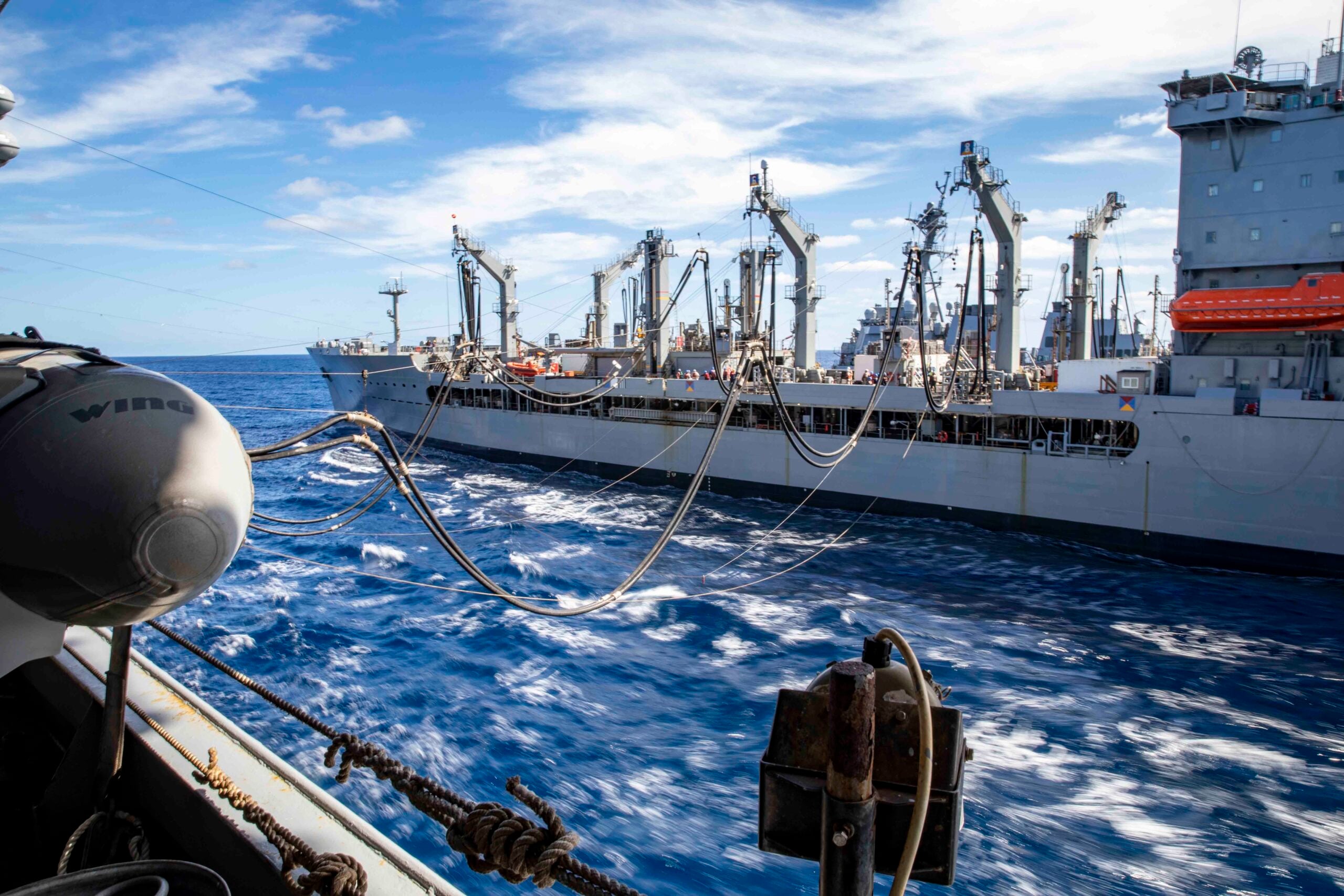
    Since its creation during the World War II, the Presidential Unit Citation has only been bestowed roughly 100 times — the through line being some of the most elite units and daring operations in U.S. military history. Now, an oil replenishment ship will join the ranks alongside storied units such as the Blackhorse Regiment and receive the nation’s highest military honor for unit-level combat valor.

    Next month the USNS Kanawha, a Henry J. Kaiser-class fleet replenishment oiler, and the USNS William McLean, a dry cargo and ammunition ship, under Military Sealift Command, will receive the PUC for their support of the Ford Carrier Strike Group during Operation Epic Fury.

    During its 204-day deployment, the ship, named after the Kanawha River in West Virginia, operated in the U.S. 4th, 5th and 6th Fleets, delivering more than 17 million gallons of fuel, 3,000 pallets of supplies and performing 113 replenishments to 29 U.S. and coalition vessels, according to the Defense Department.

    Described by the department as a “strategic enabler,” the floating warehouse sustained Operations Southern Spear and Epic Fury before returning to Naval Station Norfolk, Virginia, on May 16.

    The ceremony, set for mid-July, will make Kanawha and the William McClean the first auxiliary ships to receive the award, and the first in Military Sealift Command’s 77-year history.

    The MSC operates approximately 125 civilian-crewed vessels that help sustain the U.S. Navy and DoD. While owned by the Navy, according to the MSC, its vessels are non-commissioned auxiliary ships crewed primarily by Civil Service Mariners or commercial contractors rather than active-duty sailors.

    Kanawha and William McLean’s sailors stand alongside the Ford Carrier Strike Group, which collectively received the PUC last month for its actions during Operation Epic Fury.

    “The Kanawha was underway for seven long months supporting [the USS] Iwo Jima Amphibious Ready Group and the USS Gerald R. Ford Carrier Strike Group,” said Navy Capt. Elizabeth A. Nelson, Military Sealift Command Atlantic commodore, upon the vessel’s return to port. “Kanawha’s performance exemplifies how MSC’s combat logistics force powers modern naval operations, directly fueling U.S. Navy readiness at sea.”

    Oilers like Kanawha are part of the MSC’s combat logistics force and are the “backbone of sustained operations at sea,” according to the Defense Department.

    With this award, the two auxiliary ships will join the ranks of elite Army Rangers on D-Day; multiple Army units during the Battle of the Bulge; the 1st Cavalry Division for its performance in Pleiku Province/Ia Drang Valley campaigns; and the Navy SEALs who killed Osama Bin Laden during Operation Neptune Spear in 2011.

    This post was originally published on this site.

  • 20-year trove of shipboard assault cases now public after data request

    20-year trove of shipboard assault cases now public after data request

    Of 116 Naval Criminal Investigative Service case files opened into allegations of sexual assault and misconduct onboard Military Sealift Command ships over a 20-year period, just five show that the case concluded at court-martial or in civilian court.

    That information is now public and searchable as a database due to a records request from the Maritime Legal Aid Foundation, which represents those who report being victims of shipboard harassment and abuse. Launched earlier this month, the archive, which covers all relevant cases between 2000 and 2022, shows a broad range of alleged misconduct — most of which has never before been made public. Most of the cases, as far as records show, ended with administrative discipline, or none at all.

    Among the cases unearthed in the records trove are a 2018 incident in which a government-contractor engineer onboard the hospital ship USNS Mercy exposed his genitals to the crew of a passing Navy helicopter, later acknowledging to investigators he had “just whipped it out.” Documents show that NCIS found no criminal statute applied and the engineer received a 30-day suspension.

    Another case, from 2019, involved a Merchant Marine midshipman — a college student — onboard the dry cargo ship USNS Richard E. Byrd. The midshipman alleged that a navigator repeatedly subjected him to unwanted touching, including around the buttocks and groin. Though the midshipman reported the incidents, the alleged offender denied any wrongdoing, and prosecutors declined to pursue the case, prompting NCIS to close it. It’s not clear from the file if Military Sealift Command ever took administrative action to address the navigator’s behavior.

    Some cases in the archive appear borderline, such as the crew member who claimed another crew member’s help with pull-ups led to grazing contact that made her uncomfortable. The command declined to prosecute in that case.

    Many clearly emphasize the limited power and recourse accusers have in a domain — Military Sealift Command — that tends to occupy a gap between military and civilian legal authority.

    In one 2016 file, a civilian mariner assigned to the amphibious command ship USS Mt. Whitney reported that another civilian had grabbed her, groped her breast and bitten her ear in an attack from behind. The U.S. Department of Justice declined to prosecute, and while the file said ship command was considering taking action, it’s not clear that any was ever taken.

    Ryan Melogy, the founder of Maritime Legal Aid Foundation and creator of the database, said in an interview that the archive confirmed what individual cases he’d worked on had shown: that the path to justice for victims isn’t clear, and they’re often on their own, without a victims’ advocate or counsel to guide them and champion them.

    Even NCIS, he said, maintains an adversarial relationship with the alleged victim, investigating the accuser’s story as aggressively as the accused.

    “You’re trapped. You get assaulted in not only where you live, but where you’re working, not only where you’re working, but where your whole career is,” Melogy said. “You don’t read it in any of these files, ‘we talked to the victim’s lawyer, or we talked to the victim’s advocate.’ It’s just none of that. It’s like there’s nobody.”

    Melogy is one of the attorneys representing Elsie Dominguez, an engineer who alleges she was violently raped in 2021 by the civilian captain of the expeditionary fast transport USNS Carson City while the ship was in port. The civilian captain surrendered his license last year, but does not face active criminal charges. In seeking justice in the assault, Dominguez was told her only recourse was to file a worker’s compensation claim with the U.S. Department of Labor as the harm she had suffered was in the performance of her duties onboard the ship.

    While Melogy acknowledges sexual assault and misconduct cases are inherently difficult to prosecute, he hopes additional public attention will drive accountability and make it harder for cases to disappear without appropriate action. He also notes that a number of cases involve cadets — students who are on ships as part of their education and are particularly vulnerable.

    One 2013 case that did enter the public eye via a short local newspaper story involved a Navy reservist charged with filming female cadets through vent openings in their cabin doors. The offender was finally sentenced to probation in 2016.

    “Who knows who’s going to see it,” Melogy said of the new casefile database. “People who are involved in these cases might see it and they might have some insight … or have some additional information. You never know what could happen when you take these kinds of files and bring them out, and let people look at them.”

    This post was originally published on this site.

  • Bipartisan bill would let service members sue US military for sexual assault

    Bipartisan bill would let service members sue US military for sexual assault

    A bill introduced last week in the Senate would allow U.S. troops to file claims against the Defense Department for incidents of sexual assault or harassment that happen while serving on active duty.

    Modeled after similar legislation the permits service members to sue DoD for damages caused by military medical malpractice, the proposed Military Sexual Trauma Accountability Act would let service members and veterans file civil claims for negligence over service-related sexual trauma.

    Service members are barred from suing the federal government for injury or harm that occurs as a result of military duties under the Feres doctrine, a legal precedent based on a 1950 Supreme Court ruling on several service-related cases of injury.

    But in late 2019, Congress passed a law that gave service members and surviving families the right to file medical malpractice claims against the Defense Department for harm or negligence caused by a military physician or civilian contractor in a military health facility.

    Bill sponsors Sens. Jeanne Shaheen, D-N.H., and John Kennedy, R-La., would carve out another exception to Feres and allow service members to hold the DoD accountable when it fails to prevent, investigate or was otherwise negligent in sexual misconduct cases.

    “It makes no sense that civilians can seek justice from the government when the warriors who have sacrificed everything to protect our nation cannot. Our landmark legislation would right this wrong by tearing down the barriers that prevent members of the military and veterans from engaging the justice system to demand accountability and finally begin to heal,” Shaheen said in a statement.

    “Service members give up a lot to defend this country, but they should not have to give up their right to hold the government accountable when its negligence contributes to sexual assault or harassment,” Kennedy said.

    The legislation is supported by several veterans advocacy groups, including the Veterans of Foreign Wars, the American Legion, the Service Women’s Action Network and Protect Our Defenders.

    Service members filed 6,973 reports of sexual assault that occurred during military service in fiscal 2024.

    Protect Our Defenders, which is representing at least 82 plaintiffs in a case that involves Army gynecologist Maj. Blaine McGraw, who faces 273 charges, including secretly photographing and taping his patients, noted in a media release that the Ninth Circuit Court of Appeals ruled that sexual assault cannot be treated as “incidental” to military service, but that decision only applies to the Ninth Circuit.

    “The Military Sexual Trauma Accountability Act would extend that principle to every service member in every court in the country,” Protect Our Defenders advocates said.

    According to the group, the Congressional Budget Office estimates 120,000 service members would file successful claims under the proposed bill in its first decade.

    Under the provision of the 2020 National Defense Authorization Act that allowed service members to file medical malpractice claims against military health facilities, some patients have prevailed, although not the legislation’s namesake, Master Sgt. Richard Stayskal, whose claim was denied by the U.S. Army.

    According to the Army, since 2020, 351 claims have been filed, with 45 settled or pending settlement and 160 denied. Roughly 146 claims remain open or pending determination.

    The service did not provide an amount for the total payout of the 45 claims.

    “We recognize that behind every medical claim is a soldier or family member deserving our utmost respect. Consequently, the Army treats the medical claims process not merely as a legal mechanism for addressing grievances, but as a vital catalyst for systemic improvement, utilizing thorough reviews to enforce rigorous safety protocols and uphold our duty to our personnel with the highest level of integrity,” spokeswoman Heather Hagan wrote in an email Monday to Military Times.

    Between January 2020 to February 2026, 184 medical malpractice claims were filed against the Air Force, and of those, 25 were approved, including 11 that were related to another claim, for a total reward amount of $2,159,895.93.

    The Navy has received 250 medical malpractice claims since 2021 and approved 14, with a total payout of $5,364,882.86.

    A Navy spokesman added that the service rejected 138 claims for reasons that included failing to provide required information or filing a claim outside the statue of limitations.

    The time frame for filing is two years.

    From Jan. 1, 2020, to October 2022, the Navy had received 146 claims from sailors, Marines or their families who sought more than $1.1 billion in compensation. The service denied 58 claims and settled one for $250,000.

    Under Feres, service members may not file a claim under the Federal Tort Claims Act for injuries or mishaps that are incidental to service including, training accidents and other on-duty harms.

    This immunity has previously been extended to military contractors providing services in combat zones as well, but in April, the U.S. Supreme Court upended earlier rulings by affirming an Army soldier’s right to sue a military contractor whose employee detonated a suicide bomb on Bagram Air Base in Afghanistan in 2016.

    In the decision, Justice Clarence Thomas said that the contractor’s argument — that it had immunity in wartime under federal law that shields the military from being sued for combat-related decisions — swept “too broadly.”

    Thomas has argued for years that the Feres decision should be reconsidered. In 2025, he penned a strongly-worded 14-page dissent after the court rejected a case that would challenge the doctrine, calling the law “indefensible” and “senseless as matter of policy.”

    Editor’s Note: This story was updated June 30 to include information on malpractice claims filed to the U.S. Navy.

    This post was originally published on this site.