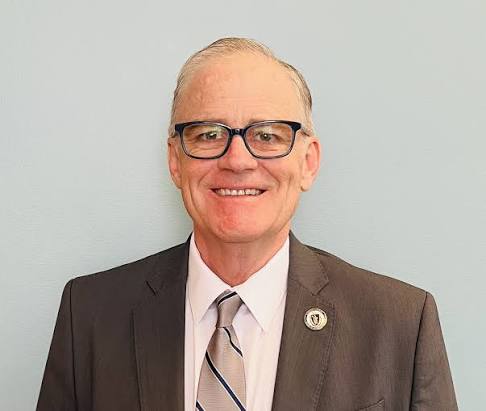
In recent years, Massachusetts has taken significant steps to improve care for seniors, most notably the Act to Improve Quality and Oversight of Long-Term Care. In a recent Risking Old Age in America podcast, Rep. Thomas M. Stanley, Co-chair of the Elder Affairs Committee, describes this initiative as well as further steps in the works. These include creating a family caregiver commission, licensing home health agencies, and working towards universal long-term care insurance.
Here are some excerpts from our conversation:
Senior Living Facilities
Risking Old Age in America (ROA): You have been working [to make improvements] across the whole continuum of care from nursing homes [to] assisted living facilities to home healthcare. Please talk about the legislature’s initiatives in these areas.
Rep. Thomas M. Stanley: In 2024, the governor signed the long-term care reform bill into law. This was the first major legislative update of nursing homes and assisted living residences in over 25 years.
It increases transparency and oversight of nursing homes through new suitability standards for owners and operators. It requires a review of the civil and criminal litigation history of owners and operators; and we put in place tools for the Department of Public Health to monitor and take punitive action against facilities, including increased fines and creating the ability to appoint a temporary manager to oversee a struggling facility.
It expands the suitability reviews of management companies including any [firm] with at least a 5-percent stake in a nursing facility. The law also establishes the long-term care workforce and capital fund to help address the workforce crisis in nursing homes. Money from the fund can be used for Certified Nursing Assistant training grants, career ladder grants for Licensed Practical Nurses, and also leadership training.
The law gives assisted living facilities the ability to offer basic health services, like wound care, eye drops, and medication distribution to their residents.
ROA: The Dignity Alliance [a senior advocacy group]…[has said] state supervision and enforcement of nursing facilities is…not tough enough, that there might be fines and other penalties on the books, but nobody’s applying them to nursing homes that don’t meet their obligations. It sounds like the ability to put them into receivership under the new legislation may be the remedy that’s needed.
Stanley: That’s correct. Under the old rules you would end up in the situation of really punishing or fining a nursing home and end up having it going to foreclosure. In that case, where are the residents going to go? The new law allows the Department of Public Health (DPH) to get in earlier and work with them so that they understand what the DPH is looking for in terms of quality of care and so forth. They can take care of the facility and all the residents so they don’t go astray.
ROA: So the DPH might have felt that it was between a rock and a hard place because if they enforced the regulations, they might lose the nursing home.
Stanley: [Yes]…and the nursing homes, by and large, were not letting them know that they were having certain problems. So this allows the DPH to get in earlier, understand what’s going on and help them make adjustments so that they can right the ship.
Long-Term Care Insurance
Stanley: The state of Washington is really in the forefront of looking down the road to provide for some type of revenue stream…for folks to be able to afford their home care or [other] long-term care needs. So we’re modeling our program after theirs and we’re learning from their mistakes and successes.
Stanley: Yes, exactly. Last session Senator Jehlen and I worked together to get $500,000 in the state budget for the Executive Office of Health and Human Services to hire an independent firm to conduct the actuary study of various public, private and public-private long-term support service financing options. They hired Milliman to conduct the study. [The full study is available here.]
How it would work in a nutshell is that a public…insurance program would be funded via a payroll tax. After individuals pay into the program for a certain number of years, a vesting period, they would become eligible. And as they age and require long-term support services, they can apply for benefits under the program. There are countless ways to design the program, increasing or decreasing the benefit amount or…the vesting period, determining what the benefit can be used for – home care, assisted living or even paying family caregivers. We have filed legislation to establish a commission to discuss the results of the actuary study and the feasibility of a public long-term care financing program in Massachusetts and potentially recommending a model that works.
ROA: It sounds like this would help a lot, but one question I have about it is that if there’s a vesting period where you have to pay in for a number of years before you can become eligible for the benefit, would it only be available for people who are continuing to work during that time?
Stanley: That’s definitely something that has to be discussed by the commission, but everyone has to contribute and the 10-year vesting period is necessary to get enough money into the program to make it sustainable.
For more from Harry Margolis, check out his Risking Old Age in America blog and podcast. He also answers consumer estate planning questions at AskHarry.info. To stay current on the Squared Away blog, join our free email list.
Baby boomers make up only about 20% of the adult U.S. population, but hold roughly half of all household wealth. That’s more than Gen X, millennials, and Gen Z combined. The median boomer net worth comes in at around $432,200 in inflation-adjusted 2024 dollars, the highest of any generation measured at comparable ages.
That number puts boomers at the top of generational wealth comparisons. It’s also the midpoint of a very wide spread. It doesn’t capture Social Security income or pension value, two assets that shape retirement security more than portfolio balance alone.
Where you land in that distribution, and how your assets convert to monthly income, matters more for your plan than the headline number. Here’s where boomer wealth came from, who it bypassed, and what the numbers look like when applied to your own situation.
Baby Boomers Entered Old Age Wealthier Than Any Generation Before Them
By the time baby boomers reached retirement age, they had accumulated more wealth than any previous generation, even after accounting for inflation. That’s according to a 2026 Pew Research Center analysis using the latest Federal Reserve Survey of Consumer Finances (SCF), the gold standard for measuring household wealth in the U.S.
Pew held age constant, measuring each generation at the same life stage (ages 58 to 76) and comparing median net worth in 2024 dollars. The comparison isn’t skewed by how much time each generation had.
Generation
Ages at Measurement
Year Measured
Median Net Worth
Greatest Generation
58–76
1983
$185,300
Silent Generation
58–76
2001
$335,900
Baby Boomers
58–76
2022
$432,200
Source: Pew Research Center analysis of Survey of Consumer Finances, February 2026. All figures in 2024 dollars.
Boomers arrived 29% ahead of the Silent Generation at the same life stage, and 133% ahead of the Greatest Generation. If you built wealth through your working years, the data describes the conditions you moved through as much as the choices you made.
The SCF doesn’t capture the present value of defined benefit pensions or projected Social Security income. For many boomers, those are two of the most important financial assets they have. Neither shows up in the $432,200.
Baby Boomers Hold More Than Half of All U.S. Household Wealth
Baby boomers hold approximately $85–88 trillion in household wealth, according to the Federal Reserve’s Distributional Financial Accounts (DFA). That’s about half of the total U.S. wealth stock, despite the generation making up roughly 20% of the adult population.
Generation
Share of U.S. Household Wealth
Approximate Total
Baby Boomers
~50–51%
$85–88 trillion
Gen X
~26%
~$46 trillion
Millennials + Gen Z
~11%
~$19 trillion
Source: Federal Reserve Distributional Financial Accounts. Figures as of 2024.
The per-household average across all boomers is around $1.6 million. The median is $432,200.
That spread is telling: a small number of very high-net-worth households pull the mean far above where most boomers land. The median reflects the middle of the distribution, which makes it the more useful benchmark for most households. Among boomers, the top 10% hold 71% of the generation’s total wealth.
That concentration tracks closely with education. At every education level below a bachelor’s degree, boomers ended up with less wealth than their Silent Generation counterparts at the same ages. Only college-educated boomers outpaced prior generations.
Education Level
Greatest Generation (1983)
Silent Generation (2001)
Baby Boomers (2022)
Less than HS diploma
$100,300
$125,100
$77,200
HS diploma
$207,200
$280,500
$239,800
Some college, no degree
$363,600
$527,700
$330,500
Bachelor’s or higher
$605,200
$989,000
$1,077,200
Source: Pew Research Center analysis of Survey of Consumer Finances, February 2026. Median net worth of households headed by 58- to 76-year-olds, in 2024 dollars.
The median is where the typical boomer sits. But even $432,200 can fund a solid retirement or fall short, depending on how it’s structured and what the rest of the picture looks like.
How Did Baby Boomers Accumulate So Much Wealth?
Boomers grew their wealth through a combination of real estate timing, decades of equity market exposure, and labor market conditions that are unlikely to repeat. Discipline and thrift alone don’t explain it.
Start with real estate. Boomers bought homes when prices were lower and held them through decades of sustained appreciation. Home equity represents about 22.7% of baby boomer assets. Geography and timing drove that run-up more than financial planning. If you bought in the 1970s or 1980s and held, that appreciation came to you by default.
Equity market exposure runs a close second. Boomers entered the workforce as 401(k) plans were expanding. Those who invested through their peak earning years benefited from one of the longest bull markets in modern history. Compounding over 30 to 40 years is a structural advantage that shorter time horizons can’t replicate.
Many boomers also have access to defined benefit pension plans that are now rare. Pension income doesn’t register in SCF net worth figures, but it supports retirement stability in a way that a portfolio alone has to work harder to replicate.
Then there’s the early-career drag that boomers avoided. Student debt burdens were smaller, and long-term employment was more stable. Both allowed wealth to compound sooner. Those starting conditions look quite different for the generations that followed.
Millennials Are Richer at Their Age Than Boomers Were. The Pie Just Grew Faster.
Adjusted for inflation, millennials and Gen Z are building more wealth per person than boomers did at the same life stage. That tends to get buried in the headlines.
St. Louis Fed analysis of U.S. household wealth finds that controlling for inflation, younger generations hold approximately $1.35 for every $1 boomers held at an equivalent age. The dollar figures at the same life stage make that clearer than any ratio.
Generation
Average Wealth at Age 34 (2024 dollars)
Baby Boomers (measured 1989)
$257,000
Gen X (measured 2007)
$283,000
Millennials + Gen Z (measured 2024)
$347,000
Source: St. Louis Fed, The State of U.S. Household Wealth, June 2025. All figures inflation-adjusted to 2024 dollars, compared at equivalent life stage (average age 34).
Boomer homes and equity positions have appreciated for decades. The base grew faster than any generation can add to through income and savings. In other words, the floor went up faster than the ladder.
Researchers estimate around $124 trillion will transfer from older Americans to younger generations through 2048, with boomers and older generations supplying nearly $100 trillion of that total.
The Median Boomer Net Worth Looks Solid Until You Run the Retirement Math
A median net worth of $432,200 sounds like a reasonable foundation. At a 4% withdrawal rate, it generates approximately $17,300 per year. For most households, that’s a supplement. Social Security covers the rest for most boomers, and for many, it’s the primary income source in retirement. It’s also not in the net worth figure, which makes the dollar figure look more self-sufficient than it is.
Home equity creates the same problem. A significant portion of boomer net worth lives there. Home equity doesn’t convert to monthly income without selling, downsizing, or tapping a reverse mortgage. Net worth and liquid retirement assets are different numbers.
Start with the separation: calculate your net worth and break out liquid assets from home equity.
Model your Social Security timing before you claim. Claiming at 62 versus 70 can represent tens of thousands of dollars over a 20-year retirement. The right answer depends on your health, your other income sources, and your projected benefit.
If you’re within 10 years of retirement, stress-test your withdrawal rate against a bad first decade. A plan that holds up under average conditions may have difficulty weathering sequence-of-returns risk. Knowing how your plan holds under pressure, before you’re living it, is a different kind of confidence than hoping conditions stay average.
The Boldin Planner lets you run those stress scenarios against your specific numbers, including Social Security timing, withdrawal sequencing, and what a down decade early in retirement would cost you. That’s how you know your plan is ready for anything.
Frequently Asked Questions About Baby Boomer Net Worth
What is the average baby boomer net worth?
The mean baby boomer net worth is approximately $1.6 million, but the median is $432,200 in 2024 dollars, according to Pew Research Center analysis of Federal Reserve Survey of Consumer Finances data. The difference is significant: the top 10% of boomer households hold roughly 71% of all boomer wealth, pulling the mean well above where most boomers land. The median is the more accurate benchmark for a typical household.
How did baby boomers accumulate so much wealth?
Boomer wealth accumulated through real estate appreciation, long-term equity market exposure, and access to defined benefit pension plans that are now rare. Boomers bought homes when prices were lower and held them through decades of appreciation, and their working years overlapped with a multi-decade equity bull market. Carrying less student debt than later generations also allowed wealth to compound and grow earlier.
Do baby boomers have more wealth than millennials?
As a generation, boomers hold roughly $85–88 trillion compared to millennials and Gen Z’s combined $19 trillion, according to Federal Reserve Distributional Financial Accounts data. Adjusted for inflation, though, millennials and Gen Z are building more wealth per person at the same life stage than boomers did. Boomers hold more in total because their assets, accumulated over decades, have appreciated faster than any generation can add to through savings alone.
What percentage of U.S. wealth do baby boomers control?
Baby boomers control approximately 50–51% of total U.S. household wealth, according to Federal Reserve Distributional Financial Accounts data. They represent roughly 20% of the adult population, so their share runs at more than double their population weight. That dominance comes from home equity and equity holdings accumulated over several decades of sustained appreciation.
Is $432,000 enough to retire on?
At a 4% withdrawal rate, $432,000 produces about $17,300 per year in portfolio income. For most people, that’s a supplement rather than a full retirement income. Most boomers depend on Social Security to cover a significant share of their expenses, which is why Social Security timing, spending rate, and housing decisions matter as much as net worth when evaluating whether a retirement plan is funded.
Erin Moriarity bought her first stock at 8 years old: Campbell Soup, because she liked the kids on the label. Disney came second. By the time she passed her CFP exam in 2016, she’d studied personal finance for decades.
Her YouTube channel, Erin Talks Money, has grown to more than 390,000 subscribers. The audience skews 55 and older: experienced DIY investors working through Social Security timing, withdrawal strategies, and the harder question of how to spend what they’ve built.
Erin joined Boldin CEO Steve Chen on the Boldin Your Money podcast to talk about what she’s learned, what she keeps returning to, and why financial independence has always felt personal to her.
What Is Erin Talks Money?
Erin Talks Money is a YouTube channel where Erin Moriarity covers Social Security strategies, retirement income planning, and the psychology of spending down savings, for an audience that’s mostly 55 and older.
She launched the channel six years ago, and it took more than a year and a half for her to monetize it. Erin quit twice, and her brother and husband talked her back both times. Her earliest videos barely got any views. Her brother, a physician, would walk hospital halls opening her videos on every computer he passed just to give her a view.
Erin has since built a thriving community. “My community is incredible,” she said. “DIYers. They’re very well researched themselves, they’re very informed. They impress me every single day.”
The questions in her comments run to Roth conversion timing, Social Security delay strategies, and how much to leave the kids. “My community is very financially literate,” she said. “This is not the people who are paycheck to paycheck.”
Erin has no Instagram page, no TikTok account, and no Telegram group. “I want to go live my life,” she said. YouTube is where she works, and comments and email are how she connects.
What Made Financial Independence Personal for Erin Talks Money?
Erin Moriarity’s drive for financial independence came from watching her mother pick the last savings bond out of the savings box when she was 7 years old. “I looked at her, I’m like, what do we do now? Like, how do we get groceries?” she recalled.
Her grandmother inspired her to invest. Born in 1927, raised during the Depression, married to a miner, she worked as a seamstress and built real wealth over a lifetime.
“The dining room was just always full of grandma’s papers,” Erin recalled. “Grandma’s papers were from the brokerage houses and like her stock certificates… we would just leaf through these and whenever it was time for the grandkids to eat we had to like shift off all of her papers and put them on the floor.”
Her grandmother had been investing since the 1950s. She taught Erin’s mother to save and handed Erin something sharper: the conviction that money is something you pay attention to.
Her father taught a different lesson. A dentist who held tight control over the family’s finances, he fired Erin’s mother after the divorce and stopped paying child support. Erin would go with her mother to collect workers’ compensation in person. She watched the savings bonds run out.
That period gave Erin a specific kind of clarity. “I saw my dad be very, very, very controlling over my mom, over myself, over my brother,” she said. “And it very much left this impression that I don’t want someone else to control my financial life.”
Why Erin Talks Money Keeps Coming Back to Social Security
Social Security timing is the most consequential financial decision most retirees make. Erin Moriarity believes most people approach it with far less strategy than it deserves.
She found her way to it through a book her father brought home, Get What’s Yours by Lawrence Kotlikoff. It was originally meant to help Erin’s mother maximize her benefits, but Erin read it herself.
What she found surprised her: a system far more complex than the SSA’s own materials suggest, full of claiming strategies, timing tradeoffs, and spousal decisions that most people never learn about.
“This system is fascinating,” she said, “and also a lot of people don’t seem to know a lot about it.” She saw the space between how much Social Security rewards preparation, and how little most people prepare.
Years later, it became her first YouTube video, and it’s still a topic she’s passionate about. Her 55-plus audience is making claiming decisions now, and the income floor Social Security builds shapes everything else in a retirement plan.
What does Erin Talks Money recommend for Social Security timing?
Delaying Social Security as long as you can cover the shortfall tends to produce the highest lifetime income for most retirees. Erin makes this case above all for married couples, where the surviving spouse keeps whichever benefit is larger.
Her core argument: delay builds the income floor. Claiming early shrinks it for life. She has little patience for the claim-early-and-invest argument. “Show me your 8% risk-free,” she tells people who make it. “Because the 8% is guaranteed.”
The delayed retirement credit also comes with inflation adjustment.
Should you worry about the Social Security trust fund running out?
The 2032 trust fund depletion date means a potential benefit reduction, not a program shutdown. Erin Moriarity thinks Congress will act before it gets there, just as it did in 1983.
She’s watched fear push people to claim at 62, locking in a reduced base before anything has changed.
“I think they’ll wait till the last minute,” she said, “but they’ll do something. It’s not going to run dry.” In 1983, lawmakers struck a deal just weeks before the deadline. She thinks the political cost of letting benefits fall for tens of millions of voters will force action again.
Erin Talks Money Makes the Case for an Income Floor First, Portfolio Second
Erin Moriarity’s retirement income strategy starts from one principle: cover your essential expenses with guaranteed income before you draw from your portfolio.
“There’s really only a handful of ways to fund a retirement,” she said. A pension if you have one. Social Security, timed to maximize the monthly benefit. An annuity if you want to build a pension-like income without one. Part-time work to make up the difference. A portfolio withdrawal strategy once the floor is set.
The order matters. Getting the guaranteed income sources right gives the portfolio a different job to do. Building the floor means:
Entering retirement with as little debt as possible, so essential expenses stay low
Using pension income or an annuity to cover what Social Security doesn’t
Making sure guaranteed income covers the basics before the portfolio gets touched
“I like the idea of having as many of your essential expenses covered by guaranteed income streams,” she said.
The distinction matters in concrete terms.
“If the market does well and you look at it and you say, ’Hey, we can take three vacations this year,’ as opposed to no vacations, that’s a much easier position to be in,” she said.
The other scenario is the one she wants her audience to avoid. “If the market performance is deciding whether or not I can pay my property tax,” she said, “that’s a very vulnerable position for me.”
Her personal preference is, “Home paid off, car paid off, no credit card debt, no outstanding debt. So my expenses are as low as essential.” After that, the portfolio becomes a source of choice.
Does Erin Talks Money recommend annuities in retirement?
Erin sees annuities as one way to build a guaranteed income floor. “If you want to make your own pension with an annuity because that brings you a sense of security, great,” she said.
It’s not a blanket recommendation. At 38, she holds the view loosely and expects it to change. “Ask me when I’m 65,” she added.
For retirees without pension income who want their essential expenses covered by something that doesn’t depend on markets, an annuity can fill that role.
What’s the difference between a bucketing strategy and a balanced portfolio withdrawal approach?
A bucketing strategy holds a cash or short-term reserve, insulating it from market swings. A balanced portfolio approach accepts more volatility in exchange for a potentially higher long-term withdrawal rate. Erin doesn’t favor one over the other.
“Do you want more of a bucketing approach so you have this cash buffer set aside that’s really insulated from market volatility,” she asks, “or are you okay with having a more balanced portfolio that is more exposed to volatility and having a lesser withdrawal rate on the total portfolio?”
Her answer: either can work. “I don’t really think there’s a wrong way to approach retirement,” she remarked. “I think it’s about aligning it with your risk tolerance, with your perspective.” Self-knowledge about how you respond to drawdowns matters more than the choice of strategy.
Most people don’t find out which approach fits their risk tolerance until a bad year tests it. The Boldin Planner lets you model your income floor, compare Social Security claiming ages, and stress-test your plan against a decade of poor returns, so you can see what holds before you’re depending on it.
What Erin Talks Money Says About Going DIY vs. Hiring a CFP
Erin Moriarity thinks most people don’t need a financial advisor while they’re building wealth. Her baseline is simple. “You don’t need a financial advisor,” she notes. “You don’t need someone telling you how to create the optimal portfolio. What you need is to just put money away.” She also has a caveat most people miss. “You don’t want to just hand everything over to a CFP,” she said. “You want to be actively involved in that.” Whoever you work with, the goal is to understand the plan well enough to own it.
You own a business or carry estate complexity that intersects with your retirement
You’re in your 70s and want a professional in your corner before cognitive decline can become a financial risk
That last point moved her the most. Her father developed vascular dementia. His second marriage ended partly because his wife didn’t want to take on his care. By the time Erin saw what was happening, she had no standing to step in. He fell into a Ponzi scheme, and moved a substantial portion of his assets into gold. He also bought an annuity without grasping the terms.
“Money is kind of the first place it shows up,” she said of cognitive decline. “If he had been working with a CFP,” she said of her father, “there would have been a lot less blowback.”
Why Erin Talks Money Keeps Coming Back to the Hardest Part of Retirement
The hardest part of retirement, for Erin Moriarity, isn’t building the money. It’s spending it.
“We spend 30, 40 years accumulating wealth,” she said, “and then people enter into retirement and they’re so afraid to spend it.”
The fear isn’t abstract. “They’re so afraid that what they’ve worked these three or four decades for is ultimately going to run out and it would run out at the worst possible time, right?” she said. “When you’re 80 or 90 and you can’t go back to work at that point.”
That fear persists even when the numbers look solid. It doesn’t dissolve when the income floor is in place, or go away when the balance crosses a threshold.
Part of what she’s trying to do is close that distance. “What’s most interesting for my audience and for me,” she said, “is to maybe nudge people to spend what they’ve worked so hard for safely.”
She read Die with Zero by Bill Perkins, and has mixed feelings. “I love it on the one hand,” she said. “This idea that you should spend everything you’ve worked so hard for. I’m fully on board with that message.” The literal advice to take on debt in your 20s to fund your lifestyle is where she parts ways. “I don’t want debt. I don’t want to owe anybody anything.”
What she wants for her audience is to reach retirement with obligations cleared, essential expenses covered by guaranteed income, and a plan they’ve stress-tested. The goal is to reach a point where spending is a decision you can make rather than a risk you’re afraid to take. After that, the portfolio is yours to spend.
Frequently Asked Questions About Erin Talks Money
Who is Erin Moriarity of Erin Talks Money?
Erin Moriarity is the creator of the Erin Talks Money YouTube channel, where she covers Social Security strategies, retirement income planning, and the psychology of spending down savings for investors who are mostly 55 and older. She holds a master’s in personal finance and passed the CFP exam in 2016. Her channel has more than 340,000 subscribers.
What topics does the Erin Talks Money YouTube channel cover?
The Erin Talks Money channel covers Social Security timing, retirement income floor construction, withdrawal strategies including bucketing and balanced portfolio approaches, and the emotional challenge of spending what you’ve saved. Erin Moriarity also addresses when to hire a CFP, how to think about annuities in retirement, and what the Social Security trust fund situation actually means for people planning retirement now.
What does Erin Talks Money say about Social Security timing?
Delaying Social Security for as long as you can fund the gap tends to produce the highest lifetime income for most retirees. The delayed retirement credit is guaranteed and adjusts for inflation. That makes the claim-early-and-invest argument hard to sustain in most cases. For married couples, the case for delay is stronger still: the surviving spouse collects whichever benefit is larger, so delay on the higher earner’s benefit protects against a long widowhood.
When does Erin Talks Money say you need a financial advisor?
A financial advisor adds limited value when a financial life is straightforward: consistent savings, a simple account structure, no major estate or tax complexity. The case for a CFP grows when life gets complicated. Erin Moriarity also makes the case for having a professional in your corner by your 70s, when cognitive decline can become a financial risk before anyone realizes it’s happening.
What does Erin Talks Money recommend for retirement spending?
The foundation of retirement spending is a high income floor. This means Social Security delayed as long as feasible, minimal debt entering retirement, and essential expenses covered by guaranteed income streams. With those covered, the portfolio becomes a source of choice rather than a lifeline. That shift is what makes spending feel safe rather than reckless, and it’s the piece most retirees find hardest to build without seeing their full plan laid out in front of them.
In this episode of Boldin Your Money, host Steve Chen sits down with bestselling author, behavioral expert, and former Stanford lecturer Nir Eyal to explore the psychology behind human behavior, decision-making, and the beliefs that shape our lives.
Nir shares insights from his bestselling books Hooked, Indistractable, and his latest book, Beyond Belief, explaining why people often fail to follow through on the things they know they should do. From financial habits and productivity to technology, AI, and entrepreneurship, this conversation dives into the hidden beliefs that influence how we think, act, and ultimately build better lives.
Steve and Nir also discuss the future of artificial intelligence, entrepreneurial thinking, why society fears new technologies, the importance of challenging limiting beliefs, and how changing the stories we tell ourselves can unlock lasting personal growth.
Steve Chen (00:00) Hi folks. Steve Chen, founder of Boldin. I’m here with Nir Eyal, and we’re going to chat a little bit about his books, behavior, and the psychology of money. Nir is a bestselling author, former Stanford lecturer, and one of the leading thinkers on psychology, technology, and behavior. His first book, Hooked, was a playbook on how products capture our attention. We’re going to chat about the pros and cons of that, and how it’s sometimes used against people as well. His follow-up, Indistractable, teaches people how to take their attention back, and how very often people are trying to escape bad feelings. So it’s not necessarily technology that’s the core issue here, but our own emotions. And then we’re going to get into his new book, Beyond Belief. So with that, Nir, welcome to our show. Appreciate you making the time to join us.
Nir Eyal (00:55) Thanks, Steve. Great to be with you.
Steve Chen (00:57) Yeah, so you were just saying in the preamble that you’re joining us from London right now. That’s awesome. How’s the book tour going?
Nir Eyal (01:02) That’s right. I’m on book tour for Beyond Belief. Great. It’s done really well. We hit the New York Times, and the reviews have been fantastic. I wrote the book for me to solve my problems, but it’s really great to see that it’s helping other people as well.
Steve Chen (01:17) Yeah, well, I think that’s how great stuff is created. Many entrepreneurs and creators are solving problems they experience firsthand.
Nir Eyal (01:26) Yeah. Was this your experience as well? Was that why you created your product?
Steve Chen (01:31) Yeah, really. The story is, my brother and I saw this in our own lives. My mom had some money challenges and came to us to ask for help. We tried to find a really good financial advisor or a way to help her solve her problems, and the reality was she just wasn’t rich enough. So we ended up doing it on spreadsheets, and then we were like, “God, why does everybody worry about money, and how come this isn’t easy to solve when everyone’s worried about it?” It’s kind of been a long-running problem. That became the product, the platform, the community, and everything else.
Nir Eyal (02:07) Very cool. Excellent. Tell me about the name, by the way. I was wondering about the name. How’d you come up with that?
Steve Chen (02:14) Boldin? Or NewRetirement? Yeah, we were originally called NewRetirement. The reason for NewRetirement was that my mom was in advertising, and I remember her telling me as I grew up that the one word that sells more than anything else is the word “new.” So I was like, we’re solving your retirement problem. And this is the most common question we get, by the way. A lot of people are thrown off by our name. The whole idea was that we wanted to expand the market to think more comprehensively about life and money.
Nir Eyal (02:28) Yeah. No, that product makes sense. I understand that name. What’s Boldin?
Steve Chen (02:43) The idea is to help people build financial confidence so they can be bold in life. It’s about helping people have more agency and feel more confidence in their lives. That was the idea, to evoke something. And it’s also shorter. Not necessarily easier to spell, though. We get people spelling it wrong, but we got the URL as well.
Nir Eyal (02:58) Yeah. And you got the URL, so that’s helpful. Makes sense.
Steve Chen (03:08) But yeah, in the age of AI, everything’s changing. Will people even be going to these websites, or are they going to just chat with their agents and everything gets solved for them? We’ll see. But I wanted to get from you, on your side, your books have been informed, it sounds like, by your life experience. How did you become interested in these topics of psychology and behavior, and how they affect how we use our resources, especially time?
Nir Eyal (03:16) Yeah, I think if you understand human psychology, then you can predict other people’s behavior and your behavior better. That’s really why I was always fascinated by it. I used to be clinically obese, and I remember at one point feeling like food controlled me. I used to love to blame the food companies, McDonald’s, the food industrial complex, and blah, blah, blah. It wasn’t until I really sat with why I was overeating. If you talk to people who are obese and struggling with their weight, what they’ll tell you is that we eat our feelings. I think all of us do. You don’t have to be obese to feel that. We eat when we’re bored, when we’re lonely, when we’re ashamed about how much we had just eaten. At least that’s the cycle I was on. It wasn’t until I understood a few things. One, your behavior is at least partially manipulated by outside factors, because that’s what products are supposed to do. We say manipulation is a bad thing, but I kind of want to eat a Krispy Kreme donut, and I want it to be delicious because that’s what I paid for. That’s why I bought the Krispy Kreme donut. I’m not going to complain to Krispy Kreme for making donuts too delicious. That’s stupid. So what I wanted to understand was that yes, those things can influence us, and in fact do influence us, but it’s not something that’s necessarily outside of our control. It’s only outside our control when we believe we don’t have control. I kind of worked through this conclusion backwards because my latest book is all about beliefs. We only give up control when we believe we don’t have control. When we believe there’s nothing we can do, what do we do? Nothing.
Steve Chen (05:04) Yep. Right.
Nir Eyal (05:05) And we see that in every domain. We see that with the food we eat. We see that with how much we scroll online. We see that with all kinds of things where people say, “There’s nothing I can do. I’m addicted.” Some people are addicted. Very, very few. But not every product that’s addictive addicts everyone. Lots of people have a glass of wine with dinner. We’re not all alcoholics. We have sex. We’re not all sex addicts, are we? Not everything that’s potentially addictive addicts everyone. So when we talk about bad tech habits, bad money habits, all these things that are difficult, they’re not necessarily a walk in the park, or else everyone would master them, but they are definitely under our control. I think my life experience informed this pendulum swinging back and forth in my life between, “It’s all corporations’ fault. They’re doing it to me,” to, “No, it’s all my fault. I’m doing it to me,” back to, “No, now there’s this new thing that’s doing it to me.” But eventually, “No, I think I can do something about this.” The truth is that there are two parties here. There’s nuance. It’s not that simple. When you better understand the psychological mechanisms that influence your behavior, you can also mount a defense to make sure that you live without regret.
Steve Chen (06:09) That’s really interesting, and it’s interesting to hear your own personal story. I’m curious, in your own life, at what period of time were you clinically obese, and how did you come to these conclusions? Were you studying this stuff already, or what drove all of this?
Nir Eyal (06:27) Yeah, I didn’t really get into the psychology side of it until my second company. At my first company, I started a solar energy business, and that kind of got us on our feet financially. We sold that successfully. Then I went to business school. My last company was at the intersection of gaming and advertising, and I had this front-row seat. This was back in 2007, so the iPhone App Store wasn’t even available yet. This was the year the iPhone came out. At that last company, I saw so many businesses, clients, colleagues, and people in Silicon Valley come and go. I went to Stanford, so I was in the middle of Silicon Valley. The defining trait of who succeeded in this age of the smartphone and this small screen we were now adopting was habits. If you could get people to come back, there was always a chance to monetize. Whereas if you couldn’t get people to change their behavior and keep coming back, then you were sunk. They would forget you. So I wanted to figure out how you do that. How do you keep people coming back so we can help them change their lives? I didn’t want to join a social media company. I didn’t want to work for a video game company. I wanted to figure out how we get people as hooked to saving money, like you do, or to exercising, or to learning a new language. Why is it only the gambling companies, social media companies, and video game companies that get to have all these secrets? So what did I do? I studied the psychology behind what makes those kinds of products so sticky. I stole their secrets and put them in a book that I sold to consumers. That’s what Hooked is all about. That also turned into a class that I ended up teaching for quite a while at the Stanford Graduate School of Business and later at the Hasso Plattner Institute of Design. The whole idea was to democratize those techniques. It’s not just the social media companies and gaming companies. Companies like you can get people hooked to saving money. Fitbod gets people hooked to exercise. Duolingo gets people hooked to learning a new language. That was really the motivation behind writing Hooked. Then Indistractable was the other side. If Hooked is about how you build good habits with technology, Indistractable is about how you break bad habits. Not to the same products. It’s not Hooked and Unhooked. It’s Hooked and Indistractable because we want to get hooked to Boldin, right? We want to get hooked to new money habits. And we also want to stop the bad habits that lead us to regret in our lives. Different products. Exactly.
Steve Chen (08:40) Yeah. Different orientation. I remember reading Hooked, and it was awesome. Do you feel like it’s been net positive? I hear what you’re doing, which is, I agree with you, gambling, prediction markets, all these things have these random, unpredictable rewards, and you kind of codified that. Do you think more good companies and individuals are using this? Or do you think it made it possible for companies like Robinhood and social media companies to take these lessons and really productize this like crazy?
Nir Eyal (09:32) Yeah. Is it net positive? Yeah, I think it’s net positive because if you look at what you can do with your technologies these days, I would much rather live in the world we live in today, where we have information at our fingertips and endless entertainment. These are all good things. What I’m still struggling with is how much personal freedom we should allow people. With social media, there are all kinds of things we can improve. I’m not an apologist for the tech industry. Regulation around how kids use it, echo chambers, if that even exists, there are all these things. It’s debatable, because echo bubbles or echo chambers existed long before. If you look at the stats, Fox News, CNN, and Al Jazeera have a much higher impact on political polarization than Instagram and Facebook do. But nobody talks about that because that’s old technology. So I’m not as concerned with social media because, look, what would people do if social media suddenly didn’t exist? They would go back to watching soap operas, sports, and all kinds of other mumbo jumbo that we use to spend our time. So who am I to say that social media and video games are bad, but watching golf on TV and cable news is good? Why? What’s the difference? Now, what I am concerned about, and this is an industry that I think doesn’t get anywhere near enough scrutiny and that I refuse to work for, is gambling. I don’t work with gambling. I don’t work with pornography. I don’t work with alcohol. I don’t work with tobacco. I think gambling has gone off the cliff. I think we have made a major mistake with gambling and cannabis. I used to be for legalization of both of those things, and I think it has been a tragic mistake. I think legalized gambling is decaying our country. Remember, when you use these tactics to get people hooked to how they spend their time, people spend their time on all kinds of frivolity. But when it comes to money, you can’t get that back. You are destroying people’s livelihoods. I think we’ve destroyed sports because of all this sports betting. It is rotting us to the core, from young men starting in high school who are getting on these sites, and it is bleeding them dry. And you know what? We don’t talk about it. We talk about social media and video games being bad for you and AI being bad for you. Right under our nose, the government has become addicted to legalized gambling. The governments don’t talk about it. The politicians don’t talk about it because they know it bankrolls their state budgets. I think that is a much, much more dangerous problem that nobody is talking about.
Steve Chen (12:14) Yeah, it feels like we’re always behind. If you ask the average American, “What’s Polymarket? What’s Kalshi?” they’re probably like, “I don’t know.” But if you ask a 20-year-old male, they’re probably going to know what’s going on. A lot of people don’t know how much time is being spent. I think now we’re realizing and taking action with social media. Let’s not give kids smartphones. Let’s keep them off social media until they’re 16 or whatever, which I think is generally a good idea. But they’re onto other things. Gaming is a big thing, and around that, these prediction markets and stuff like that. I will say prediction markets are interesting as a source of information because they do predict things. People have insights, and they share them because they’re incentivized to make money.
Nir Eyal (12:44) Yeah. But the pure gambling stuff, like the coin toss on an athletic event, I think that stuff is not games of skill. A lot of this is total chance, and it’s nothing more than straight-up gambling.
Steve Chen (13:16) One thing I’ve observed over the course of my career is that, in general, we have more free time. We’re becoming a more productive society, and it creates space. Why do we spend all this time on social media and these games? How can people afford to do it? Clearly, they’re surviving somehow. In the age of AI, you start feeling like, is more work going to be highly automated, and what does that mean for society in the future? Actually, before we go there, I would love your take on this: do you see a world where agents know us and can watch what we’re doing? An analogy I use is getting fit. I’m going to do way more push-ups if I’m sitting there with a trainer or in a class than if I’m watching a show at night trying to knock out push-ups. Is there a world where AI is watching our behavior and saying, “Hey, Nir, you’ve been scrolling Instagram for an hour. Maybe that’s not what you want to do”?
Nir Eyal (14:15) Yeah, I spoke about this years and years ago. I called this a Jiminy Cricket. Did you ever see the movie Pinocchio when you were a kid? Jiminy Cricket was Pinocchio’s conscience, and he would tell him, “Is this what you want to do? Are you sure that’s the way you want to do things?” I can’t wait. I want a Jiminy Cricket AI with me at all times that says, “Hey, before you eat those fries, just so you know, if you’re trying to be in a caloric deficit, those fries are going to push you over. Or if you eat half the fries, you’ll still be within range.” Or even better, your Jiminy Cricket AI hears what you just said to your wife and says, “You may want to take a minute and reconsider how you said that.” I would love that personal coach on my shoulder. As long as privacy is kept and we don’t have data breaches, I think it’s possible, and I can’t wait. I think it’s going to be great. Of course, that gives the providers of those tools immense powers, but this is nothing new. As Sophocles said, nothing vast enters the life of mortals without a curse. Is the internet good? Yeah. Is the internet bad? Hell yeah. Is social media good? Yeah. Is AI good? Yeah. Is AI bad? Yeah. It’s both, so it’s going to be about how we use it. I think what we always do with this kind of stuff is we stumble through. We figure out the bads as we go along. What doesn’t work is this preemptive principle of, “It’s really scary, and we don’t know what’s going to happen, so let’s shut it down.” That tends not to work well. One of the psychological quirks we have is that we think about sins of commission versus omission. We think about the things that you do. If a technology kills somebody, that’s terrible. But if the technology was never invented to save someone’s life, nobody notices. Same life, same life, but we can’t quantify the lives that were never saved.
Steve Chen (16:13) Yep. Right. It does feel a little inevitable right now. I don’t know if you’ve read the AI 2027 stuff, but we’re getting into this race condition where we’ve got the frontier models. We’ve seen these technological waves, and this one feels different and faster. It definitely feels like stuff is faster, and in some ways inevitable. We are building things much more quickly, and the future you just described, I could totally see it. You’ve got an Oura Ring on. You’ve got your phone or whatever glasses. It’s seeing, hearing, and sensing your body. “Steve, you’re getting elevated. Maybe you should pause and take a deep breath before whatever you’re going to say next comes out of your mouth.” All the behavioral coaching stuff that we describe now feels like science fiction, but it’s happening.
Nir Eyal (17:09) Yeah, it’s happening. Look at us right now. If you would have told me as a kid, I don’t know, how old are you, Steve?
Steve Chen (17:18) I’m older than you are. I’m in my mid-50s.
Nir Eyal (17:28) Mid-50s. Not that much older. I’m 48. I remember going to Epcot Center and seeing, “This is what the future is going to look like. You’re going to have video phones.” And look, we’re doing it right now. We’re literally living in the future. What is that saying? Pessimists sound smart, and optimists get rich. Pessimists always sound smart: “But it could do this, and it could do this, and look at the children, think about the women.” Literally every technology. It’s always “save the women and children.” Sometimes it’s justified. I’m not saying it’s not justified. Sometimes we do need to look at the consequences. But it’s never about the stuff we think about. The stuff that’s terrifying is the fact that millions of people still die in car accidents because of human error. That’s what we should be worrying about. Super boring. How about the fact that people in the year of our Lord 2026 still smoke? Steve, what the actual hell? We’re worrying about AI when millions of people every year die of preventable smoking-related deaths. Are you kidding me? What’s wrong with us? That’s what we should be putting our eye on. But of course it’s boring. It’s much sexier to think about an AI apocalypse than it is about the actual apocalypse happening right now to people who are smoking when they don’t have to.
Steve Chen (18:38) Right. This goes to your work. It’s like data versus beliefs. There’s data that a Waymo is ten times safer than a human-driven car, but still we’re like, “Wow, these robot cars seem super dangerous to me, and maybe we shouldn’t have that.” The same thing with data centers. Data centers do have a cost, and it looks like AI could be solving huge problems, finding medical advances, and discovering all kinds of stuff that would take us forever. The net positive benefit to society could be massive, but we’re like, “We’ve got to slow-roll this.”
Nir Eyal (19:28) Yeah. The water. Think about the water, Steve. What about the water? I think the problem is that people are really bad at understanding what the job of technology is. People think technology is about solving problems, and if it creates problems, that’s bad. Shut it all down. But technology doesn’t solve problems. As Thomas Sowell says, it gives us better problems. That’s what technology does. Of course we’re going to have new problems. Every technology creates problems. And what do we do? We create even better solutions to fix the last generation of problems, and it goes on and on. What we need to do is encourage more people to enter technology, not be afraid of it. This is why beliefs are so powerful. Beliefs literally help a society flourish or destroy itself. If you believe in a positive future, we see this all the time now, where some people say, “How could you bring a kid into the world?” because they’re so concerned about the future. They think the future is so dangerous that they choose not to have children because of how terrible the world is going to become. And yet they’re living in that very world right now and having a modestly good time of it. Our beliefs are super impactful in terms of what we’re able to do with our lives. We need to be very careful about assessing those beliefs because they have an amazing power to feel like facts. But beliefs are not facts.
Steve Chen (20:43) Yeah. Right.
Nir Eyal (20:46) A fact is an objective truth. It is something that is true whether or not you believe it. A belief is a conviction that is open to revision based on evidence. That’s a big, big difference there.
Steve Chen (20:59) I was going to make a comment on this, which is related. I interviewed Annie Duke, one of the top female poker players, and one of my favorite quotes from her is “strong beliefs, loosely held,” which I think is great. Just like you were saying, “I thought legalizing cannabis was good, I thought gambling was good, and now maybe that’s less good,” and your beliefs have changed.
Nir Eyal (21:10) Held loosely. Yeah, that’s right. I categorize it as the difference between faith, fact, and belief. Faith is a conviction that is not open to revision based on evidence, so it does not require evidence. “God rewards the righteous.” What evidence could I possibly present to somebody who believes God rewards the righteous if that’s something they believe? That is a matter of faith. You’re not looking for evidence, and that’s fine. Nor should you. It’s a matter of faith. A fact is something that is true whether or not you believe in it. It’s objectively true. But beliefs are something that we can and should change. Unfortunately, in our culture, when someone disagrees with you, even think of that statement right there. We don’t say, “Someone disagrees with my idea.” We say someone disagrees with me. It’s personal. We can’t help it. If I disagree with you, it feels like a personal attack. That’s the big problem. Changing my beliefs is my love language. I love it. There’s nothing better than when someone helps me see reality more clearly.
Steve Chen (22:23) Feels like you’re in the one percent of that. Most people are probably like…
Nir Eyal (22:25) Well, it’s changed. I’ll tell you what, it’s changed since writing this book because I didn’t realize how bad we all are at seeing reality. Your brain currently is absorbing 11 million bits of information per second. That is the equivalent of reading War and Peace every second, twice. Imagine 2,000 pages of text every single second. It’s a tremendous amount of information. The light entering your eyes, the sound of my voice in your ears, the ambient temperature of the room, your brain is absorbing all that information. But your conscious awareness can only process 50 bits. Fifty bits is one sentence per second. So 2,000 pages of text versus just one sentence. What your brain is absorbing, what you call the real world, is not the real world. It’s a simulation projected through your beliefs. You don’t see things as they are. You see them as you believe them to be. We’ve all heard seeing is believing. Actually, believing is seeing. What you believe is literally what you are able to see. This isn’t a metaphor. For example, people who are on a diet see food as larger. People who are afraid of heights see distances as farther away. Entrepreneurial people literally see things the rest of us can’t see. It’s called entrepreneurial alertness. Knowing that your beliefs dictate what you are able to see should give us all pause. We don’t see reality clearly, so we should put a lot less weight in what we think is a fact.
Steve Chen (24:04) Yeah, so much of this is so interesting in this conversation. I feel like society is learning some of these higher-EQ ideas and understanding more about how we think, but it’s not evenly distributed at all. Some people have high self-awareness and much more open minds, and they’re willing to have their beliefs changed. And then I think you’re also seeing a whole bunch of people where there’s a lot of faith in how things are. There’s not a lot of willingness to rethink. It’s interesting. In some ways, I think a lot of people feel safer that way. It’s like, “This is true, so I can believe in this,” especially in a world where a lot of things are changing.
Nir Eyal (24:34) Yeah, that’s right. We hear it all the time. Oftentimes, it’s the people who consider themselves the most tolerant and open-minded who think other people are very closed-minded: “They won’t change their minds, but me? No, no, no. I see reality.” The way we need to think about limiting beliefs is that they’re like our face. We all have a face, but if I asked you, “Steve, look at your face,” you can’t look at your face the way you can look at your hands or your feet. You can’t see your own face, just like you can’t see your own limiting beliefs. Interestingly, we can see everyone else’s limiting beliefs. You can see your kids’, your colleagues’, your boss’s, your neighbors’. You can see all their limiting beliefs. But you can’t see your own, just like you can’t see your own face. In order to see our limiting beliefs, in order to see our face, we have to reflect. We need a mirror. We need something outside of us to systematically show us our own limiting beliefs.
Steve Chen (25:47) Given your perspective on this, do you see the world changing for the better in these areas? Do you think self-awareness, and the understanding of faith versus beliefs versus facts, is getting better in the world? Are we as a society making better choices? I’m sure this varies wildly by country and other factors, but are we generally doing better? Are we on a good path? Or do you feel like we’re going to see a K-shaped world, where some people are killing it and some people are not doing that great?
Nir Eyal (26:25) Yes. It’s complicated. There’s always nuance. At a societal level, I think long term we will do what we always have. Past returns are no predictor of future returns, but if you look at the long arc of history, as Obama told us, it bends toward justice. We seem to see that through all the bumps, tribulations, and trials of humanity, we tend to come out pretty well. There are some big problems we haven’t figured out. I’m not worried about the problems we know how to fix. For example, believe it or not, we actually know how to fix climate change. There are lots of ways to fix climate change, so that’s not as existential as I think people believe. Nobody has any idea how to fix population collapse. We can have a pristine environment, and we will have a pristine environment, with almost nobody to enjoy it. If I told you that by the end of this century, the nation of Japan will have 40 million fewer people, you would ask, “What happened? Was there a thermonuclear war?” There must have been some terrible disaster. No. It’s just math. Those people won’t exist because they won’t be born. They’re not replacing themselves. They’re not having enough babies, and nobody has any clue what to do. Those are the kinds of problems that actually keep me up at night.
Nir Eyal (27:37) You would say, “What happened? Was there a thermonuclear war? What happened?” There must have been some terrible disaster. No. It’s just math. Those people won’t exist because they won’t be born. They’re not replacing themselves. They’re not having enough babies, and nobody has any clue what to do. Those are the kinds of problems that actually keep me up at night. Most other problems, it turns out, the world is becoming more educated, more tolerant, more democratic. There are greater rights for women, better education, and better healthcare.
Nir Eyal (28:06) There’s a wonderful book everyone should read called Factfulness by Hans Rosling. It’s one of my favorite books. Why are you laughing?
Steve Chen (28:14) Because I tell people about this book all the time. I love this book. Things are getting better, and people are always like, “No, they’re not getting better.” I’m like, “They’re getting better. Poverty’s tanking.”
Nir Eyal (28:16) You do? Okay, awesome. I knew I liked you. Nobody believes you. Again, this is one of those matters of faith. “No, you don’t understand. There’s a guy on my corner who is homeless, and therefore the world is getting worse. There’s crime, and I knew somebody who took drugs.” It’s all anecdote. But when you actually look at the statistics, and this is exactly what Hans Rosling did, he gave an exam to the most educated people on earth: college professors. He asked them this standard exam about the state of the world: healthcare, education, female empowerment, democracy, all these things people care about. It turns out the professors scored worse than monkeys. Literally worse than monkeys. Worse than chance. That’s what blows people’s minds: the world is actually getting better, but slowly and bumpily.
Steve Chen (29:00) Right. Our own bias.
Nir Eyal (29:11) Over the long term, most of these things get better. Those kinds of problems I know we can fix. We will fix. We are fixing them. But I don’t know how we replace ourselves. That’s a much bigger challenge.
Steve Chen (29:18) Right. It’s super interesting listening to you, because literally I knew you were going to say Factfulness right before you said it. We think about a lot of the same things. I talk about Japan all the time. I think Japan has roughly 130 million people, and it’s on its way to something like 80 million people. When you think about the reality of that, I tell my kids or other people, “Imagine you’re in Northern California, where I live, and a third of the people are gone. What happens to housing? What happens to businesses? What does traffic look like?”
Nir Eyal (29:54) What happens to Social Security? Everything. We’ve never recovered from that type of loss. There’s no model for that.
Steve Chen (30:01) Yeah. If you look at the really long-term trends of population, it went like this. We’re all familiar, at least in Silicon Valley land, with exponential growth. Exponential is great, but it goes the other way. If you stop replacing people, and then there are two fewer people to have more people, it can come down very fast.
Nir Eyal (30:07) It crashes fast. Do you have any ideas, by the way? You seem to have read a lot about this. Any ideas that seem plausible? One is the Japan model. You go to Japan, and even though their population continues to decline, millions fewer babies are born, and yet they have this kind of managed-decline system. They have a ton of debt, of course, but I don’t know. Do you have any ideas how we get through it?
Steve Chen (30:42) I do not, but I’m well aware of the birth rate problems. I’m curious what you think about why this is. I’m with you. I’m in the abundant future camp. Solar or renewable energy, endless energy. If we get boundless energy, guess what? We can solve water because we can desalinate the ocean and things like that. We’re on this path of getting rid of fossil fuels because of the economics. The world will get better, but why are people having fewer children? Why are we on the decline, potentially as a species? That’s what I’m curious about.
Nir Eyal (31:11) Why? I think it’s a collapse of beliefs. There used to be, I think, a faith, and I think there still is. Look at what countries and civilizations today have birth rates above replacement. It turns out where it’s highest is in countries where your children are your Social Security system.
Steve Chen (31:47) Yeah, their replacement rate or whatever it is.
Nir Eyal (31:57) Right. They are your safety net. The more kids you have, the more each one of them will send you a few bucks every month, and that’s going to sustain you in your old age. That becomes your retirement account. When the government guaranteed us Social Security, we didn’t need to have a bunch of kids in order to survive old age. As Peter Zeihan says, kids became economically useless and emotionally priceless. That’s what happened. I’ve seen estimates that it costs over a million dollars to raise a child from zero to 18 to college, and then you’ve got to pay for college. It became very expensive because they’re emotionally priceless and yet economically worthless. That didn’t used to be the case. It used to be that you had a bunch of kids because they were economically useful to you. “Be fruitful and multiply.” The fruitful part gets forgotten. That’s how you assured your retirement. The more kids you had, the more boys could protect your village and the more women would produce your heirs. That was how society sustained itself. That’s just not the case anymore. Children aren’t necessary. They’re a lot of work, so what do people do? They get dogs instead of having kids.
Steve Chen (33:02) Do you think younger people feel this? I definitely see this. There are a lot of young men, I forget what Scott Galloway calls them, but they’re not employed, educated, or being trained. They’re basically playing video games, they’re on Polymarket, and they’re not fully engaged in society. I wonder if it’s because they’re not necessary. It’s kind of daunting. It is getting harder for younger people to find work right now, that’s for sure. Or at least that’s a belief that’s true.
Nir Eyal (33:38) That’s a belief. Yeah. I think this is what we need to replace. The closest I’ve ever come to some kind of solution is this, and I’ll back up. Part of the problem is that it sounds cold, because we think children are emotionally priceless and economically useless. So we don’t value having children enough. We think just having kids is its own reward. I don’t think that’s true. I think it’s a lot of work, and it’s not recognized work. I think there should be something like a baby bond or something. I’m just tossing this out here. What do I know? I’m not a political scientist. I’m certainly not someone who writes legislation. But we should bring back what works. The only system that gets people to have more kids is when you think your kids are for your future retirement. What if we had some kind of scheme, like let’s call it a baby IRA? In a baby IRA, for every child you have, you get a portion of their future income, which should be a taxable projection. We should say every additional worker is going to give the government X number of dollars, and without that person being born, that money is not being generated. We generate income tax based on income, based on work. We should have, instead of, or in addition to, the traditional Social Security system, something that says the more people you bring into the world who pay taxes, you should make part of that money. Now, caveats, caveats, asterisks everywhere. I know it’s not a perfect system, but it’s a lot better than inevitable decline.
Steve Chen (35:10) Yeah. Well, we kind of have that in Social Security for what it’s worth. People are paying into it, and then we take it out as we get older.
Nir Eyal (35:18) But on a macro level. It’s not one for one. Frankly, women bear the brunt of this. They’re the ones who make less money over their lifetimes because they exit the workforce to have babies. Biologically, I wish I could, but I can’t. A woman has to exit the workforce, and she’s not properly compensated, I think, for the value she’s created for society.
Steve Chen (35:29) One hundred percent. And women live longer. The other challenging thing that’s happening here is if AI starts to replace human labor, which there’s a hypothesis is starting to happen, our tax code creates an interesting thought experiment. Our GDP is driven mostly by people. More people means they do more work and produce goods. In a world where that’s done by AI and not people, you’re going to have to start taxing the labor of AI to capture that value. Otherwise, you could get into this downward spiral, the doomerism thing, where AI is producing stuff and we’re getting more stuff, but people have fewer jobs, so they have less income and can’t afford to buy it.
Nir Eyal (36:40) Yeah, I get it. I don’t understand practically how that’s done because it’s software. I can understand how you could tax the value generated by that software, but AI is just software. We have a bunch of robots, but a robot doesn’t have a Social Security number that we can send a tax return to. I don’t exactly understand how you would do that. What I do understand is that you need a lot of people to want to buy stuff from the companies producing the software, and then that creates net income, which can be taxed. That I understand. I want to live in a world with lots of AI and lots of people to enjoy it.
Steve Chen (37:13) A hundred percent. One of my suggestions for the future is that we need to get really good at creating new things. We need to get everyone thinking like an entrepreneur. As a father of kids who are entering the workforce, and seeing their friends have difficulty, they’re all going to good schools, NYU, USC, and they come out saying, “Man, it is not simple to get a job out here.” You need to get good at thinking, “I might need to start a company. What does that look like?” and thinking pretty expansively. That will be good for society because it will hopefully lead to a Cambrian explosion of new businesses. But it’s going to be incentive-driven.
Nir Eyal (37:55) Totally. I think that’s very much belief-driven. We know there’s this trait called entrepreneurial alertness, where people who have this trait see hundred-dollar bills all over the place that the rest of us can’t see. I think that’s a big part of it. The more entrepreneurs you have, that’s what makes Silicon Valley such a special place. You see everybody working on stuff, and that helps change your belief set of what you think is possible. I’ve been in a lot of other countries where there’s much more of a tall poppy syndrome. “Who the heck do you think you are? You think you’re just going to start a business and make money? What are the rest of us, idiots? We don’t see your business idea and do it already? Who do you think you are?” Those beliefs, those cultural beliefs, and what is culture but codified beliefs, can be very, very impactful. I think that’s part of what makes America so exceptional. It’s why I’m a very proud American who is an American by choice. I naturalized. It is the one place, I think more than any other, where the real entrepreneurial spirit lives. If you want to come make it for yourself, America still, for all its faults and all its warts, is the place you’ve got to come.
Steve Chen (38:50) It’s interesting. I came to Silicon Valley, and I didn’t know anything about it. But when I got here, I was like, “This is where I belong.” I continue to see this. It is hard. I see all these places around America and even Japan, like we were talking about. I’m going to Tokyo on Thursday, and we actually have Japanese investors. Nippon Global invested in the fund that invested in us, and part of it is that they set up an outpost in Silicon Valley to study what the heck is happening here. All these places want to recreate this for their own economies, and it is hard to recreate because there’s a critical mass. It’s a whole ecosystem. It’s a whole culture. People here know and persist. You come here, you start a company, and you think, “Okay, there’s something here.” Everyone tries. Most people fail, but that’s part of the culture. The ones that succeed reinvest in it. Then you’ve got these founders who have money and have done it, and they’re like, “Okay, I just made $100 million. I’m putting $10 million in venture capital.” Bang, it starts all over again.
Nir Eyal (40:13) That’s so unique to Silicon Valley. It’s kind of crazy when you think about it. You could be fresh out of college, 22 years old, and people will give you millions of dollars. You could run off to the Bahamas, and they never see you again, but that almost never happens. People take those millions of dollars and think they can turn them into billions of dollars. It happens, and it keeps happening. There’s nowhere else in the world that you could do that.
Steve Chen (40:39) I also think, back to your tall poppy comment, it’s very merit-driven. I’ll be at meetups and meet someone who’s 20 years old who just came from Norway, and they’re like, “Yeah, I left it all. I’m here. I’ve got this idea, and I’m going for it.” I take these people dead seriously because that’s who wins. In other places, they’re not as welcome. Here, it’s like, “Hey, great.” By the way, that’s where I started. I came here in my early 20s. I knew nothing, but people were nice and supportive, and I remember those conversations. This has been an awesome conversation. We’re talking about everything. For our audience, the problem we’re trying to solve is that people worry about these problems, especially retirement and the future. They’re like, “I know I should be doing more. I could live a long time, and there’s all this uncertainty with the markets, inflation, health, and everything else.” And yet most people don’t do anything. I would love your take on helping people understand why they don’t do these things. We’ve talked about beliefs and all that. What can they do to get started? Outcomes are like your story. “I’m clinically obese.” But you don’t get fit just by understanding it. You had to make these changes. You had to realize it, get educated, and take action. What are some practices people can put into place to make positive change in their lives?
Nir Eyal (42:24) I think it starts from understanding these scripts we have picked up in our lives that we didn’t choose: our family, upbringing, culture, past experience, or something someone said to us. These limiting beliefs are not your fault, but they are your responsibility. We keep carrying around these limiting beliefs that are not making our life better. “Money is hard to make.” “People like me don’t get rich.” “Wanting money makes me greedy.” “I’m bad with money.” We carry these limiting beliefs forward with us. What do they do? What’s the definition of a limiting belief? A limiting belief is a belief that decreases your motivation and increases your suffering. What does a person do when they believe, “I’m bad with money,” or “Getting rich means you’re greedy”? What does your motivation look like to save, to invest, to learn, to balance your checkbook? You’re literally self-sabotaging. When you believe those things, your motivation decreases and your suffering increases. I think that’s such a fundamental place to look. My frustration, having researched and written three books over 16 or 17 years, is that even when I tell people exactly what to do, like with Indistractable, here’s a 250-page book. It tells you exactly what to do. You could read the entire book in maybe three or four hours, and I’m telling you, you would become indistractable. Not everybody, and I mean, the books have done great, so no complaints. They’ve sold over half a million copies. But some people, even though the solution is right there, would prefer to complain and wait for the government to fix the problem. “Please, Facebook, stop making the product so good.” “Netflix, stop making your movies so interesting.” They’d rather complain and think they’re powerless when they’re not, because it’s so much easier. The biggest thing to realize is that you have far more control than you know. The only time you don’t have power is when you believe you don’t. Understanding those limiting beliefs, putting them out there, figuring out what it is that you believe, will empower you to actually put the information to use. Frankly, Steve, I find the problem is not that people don’t know. If you want to be rich, you save money for a very long time. That’s it. We can talk about investing and how you invest, but that’s detail. Big picture, the big problem is not that people don’t know what to do. It’s that people don’t follow through on the things they know they should do. That’s the problem. It’s not information. It’s beliefs.
Steve Chen (45:12) It’s so interesting. Back to culture, where you live, and how you came up. One of my son’s friends was visiting, and he’s going to school in Kentucky. He grew up in Northern California, and he was saying, “My friends are getting married and having kids at 21.” It’s a totally different world. We grow up in families, and those families teach us beliefs we have about ourselves. If you grow up less wealthy, one of the really huge reasons I’m so into this work is that I know us getting more financially secure and being entrepreneurs affected our family. My oldest son is an entrepreneur probably because he watched his parents do this stuff and thought, “This is possible. I shouldn’t be afraid to try this.” Conversely, if you grow up thinking, “We’re poor, and we’ve been poor for generations, so I’m probably going to be poor,” right?
Nir Eyal (46:11) Yeah. “Money doesn’t grow on trees.” These are limiting beliefs we tell ourselves all the time, and we think we’re doing ourselves a favor. A belief like “money doesn’t grow on trees,” what are you saying? You’re saying, “Don’t take risks. Don’t try.” There are all these reinforcing beliefs that we tell ourselves, and we don’t even realize whether they’re serving us or hurting us.
Steve Chen (46:32) I’m a big believer in community and groups as a way of changing behavior. But if you’re living somewhere and you have these beliefs, I guess you have to realize you have limiting beliefs. That’s job number one, which is not necessarily simple. Then you have to have a mechanism for changing those limiting beliefs. How do you see that come to life in people who make it work?
Nir Eyal (46:47) That’s what Beyond Belief is about. I love how, with five minutes left to go, we finally get here. This is awesome. It’s actually the sign of a great conversation. Typically, people say, “Okay, what’s your book about?” and I talk about my book for an hour. But this is great. I love that we’ve had such a great conversation. This is exactly what the book is about. It’s how you look at yourself in that proverbial mirror to find your limiting beliefs when you think they are facts, and when you think those beliefs have served you, because they have. Why do we have limiting beliefs? Why would we have software in our brains that limits us, decreases motivation, and increases suffering? It’s because your brain is just doing its primary job. Your brain’s primary job is not for you to get rich. It’s not for you to meet your potential. It’s not for you to be happy. Your brain’s primary job is to keep you safe. It’s to keep you alive. That’s it. That’s all the brain really cares about. Whatever you’ve been doing, whatever you’ve been thinking, whatever you’ve been believing got you here, didn’t it? So the best bet your brain can make is to keep you doing whatever you have done and whatever you’ve believed before. Your brain is doing its job. Step number one is realizing that your brain is constantly pulling you toward passivity. Your brain is going to give you every excuse, tooth and nail, to say, “No, no, no. You don’t need to change. Just keep doing what you’re doing. That’s safe. People like you can’t get rich. Wanting money totally makes you greedy. Money is hard to make.” Your brain is going to keep telling you these lies because that’s what got you this far. Step one is knowing your brain doesn’t see reality clearly and that your brain is pulling you toward passivity. Then we have a process to follow to take out these limiting beliefs, where we say to ourselves, “Where is this suffering in my life? What is an area of my life where I’m struggling?” Maybe it’s my personal finances. Maybe it’s a relationship. Maybe it’s my career. Whatever it might be. Then we walk through a process called inquiry-based stress reduction. I didn’t make it up. It’s been scientifically validated in several studies. I walk people through exactly how to make that very easy to follow. At the end of that process, what you walk out with are new liberating beliefs. Liberating beliefs are the opposite of limiting beliefs. A liberating belief is a belief that increases your motivation and decreases your suffering. The idea is that once you recognize those limiting beliefs and discover those liberating beliefs, you reinforce them again and again until they crowd out the limiting beliefs. That’s how we process long-term behavior and belief change.
Steve Chen (49:32) That’s awesome. Do you use Strava? Do you know Strava?
Nir Eyal (49:36) I know Strava, yeah.
Steve Chen (49:32) I use Strava. It’s activity tracking and things like that. You build a community, and you do these good things, like, “Okay, I went for a hike. I went for a bike ride.” I’ve always wondered if there could be a Strava for doing good in the world, or maybe for something like this: “How do I change my beliefs? How do I reorient myself and share that with other people, see other people doing that, and be inspired by it?” I feel like a lot of this work is so important, and for many people it’s done either by themselves or maybe with small groups.
Nir Eyal (50:12) Book clubs I highly encourage. If you can get a few people together, maybe a couple of family members, three or four people, to read a book like this together, it can make a world of difference.
Steve Chen (50:23) Yeah, it’s awesome. All right. Well, Nir, this has been awesome. It’s great to get your perspective, and I have so many additional questions, but maybe we’ll have to have a second follow-up one. For folks listening, definitely check out Nir’s new book, Beyond Belief. You can find it online at geni.us/beyondbelief. Also go to NirAndFar.com. I saw you’re on YouTube, so that’s pretty cool. Hopefully that’s going well. All reviews are welcome. All feedback is welcome, as both Nir and I are working on building our respective platforms. So with that, thank you very much. Nir, thanks again for joining us.
Nir Eyal (50:59) My pleasure, Steve. Thanks for having me.
If you’ve checked your 401(k) recently and wondered how it compares nationally, Vanguard’s How America Saves 2026 report offers a concrete starting point. Based on 4.6 million participant accounts, the average 401(k) balance at year-end 2025 was $167,970. The median was $44,115.
Both of those figures are new records. But the average has a way of making most readers feel further behind than they really are. The age-by-age benchmarks shift the picture.
Now in its 25th edition, the report covers data through December 31, 2025 and is the most thorough annual benchmark of 401(k) savings available to the public. What follows is built from it.
What Is the Average 401(k) Balance by Age in 2026?
The overall figures matter less than the breakdown by age. That’s where you can find a meaningful comparison. Here’s the full data:
Note that these numbers reflect only what’s held inside a 401(k) plan. IRAs, pensions, home equity, and Social Security aren’t included.
Vanguard’s scope also skews toward larger employers, so the data doesn’t capture every American 401(k) holder. But it provides a singularly consistent, large-scale snapshot of account balances across employer-sponsored plans. No other source publishes this kind of benchmark annually at this scale.
Why the Average Balance Doesn’t Represent Most Savers
The $167,970 average 401(k) balance reflects roughly the 75th percentile, meaning about three-quarters of participants held less than that amount.
That’s how averages behave when a distribution is skewed. A small number of very large accounts pull the mean well above what a typical account holder carries. Vanguard’s own analysis makes this point: average balances are more representative of participants who are older, longer-tenured, or more affluent.
The median lands at $44,115.
Here’s how the full distribution breaks down:
1 in 4 participants had less than $10,000
35% had more than $100,000
18% had $250,000 or more
For additional context, Fidelity’s Q4 2025 retirement analysis reports an average 401(k) balance of $146,400 and a median of $34,400. Both are well below Vanguard’s figures, but the gap reflects plan composition. Vanguard administers a higher concentration of large-employer plans skewed toward higher-income participants. Fidelity’s broader mix of plan sizes pulls both numbers down. Neither figure is more accurate. They’re snapshots of different cross-sections of the same workforce.
When you compare your balance to the $167,970 figure, you’re measuring yourself against someone in the top quarter of all savers. The median for your age group is the more useful comparison.
If your balance falls below the average but above the median for your age, you’re ahead of more than half your peers. Keep that in mind before you conclude you’re behind.
How Does Income Affect Your 401(k) Balance?
Income is the single strongest predictor of 401(k) account balance, and the range across earning levels is wide.
Annual Income
Average Balance
Median Balance
Under $15,000
$19,601
$3,489
$15,000–$29,999
$20,146
$6,896
$30,000–$49,999
$29,172
$11,659
$50,000–$74,999
$65,239
$29,033
$75,000–$99,999
$114,670
$56,115
$100,000–$149,999
$198,912
$103,396
$150,000 and above
$401,412
$230,536
Source: Vanguard, How America Saves 2026.
Higher earners simply have more income to save. They’re more likely to work at larger companies with more generous employer match programs. They also tend to stay in those jobs longer, which compounds the effect on their balance.
There’s also a structural layer at the contribution limit level. Workers earning under $100,000 who are 50 or older would need to defer more than 20% of their income just to reach the catch-up contribution threshold. The rules exist for everyone on paper. In practice, they’re out of reach for a lot of people in that income range.
The numbers bear this out. Fewer than 1% of participants earning under $30,000 used catch-up contributions in 2025. Among participants earning $150,000 or more, 52% did.
What Drove 401(k) Balances Higher in 2025?
The record-high 401(k) balances in 2025 were a market story. Savings behavior held steady.
The S&P 500 gained 16% on a price basis over the year. International equities returned roughly 32%. The U.S. bond market returned about 7%. The average one-year participant total return across Vanguard plans was 19.3%.
Among participants who held accounts throughout the full year, the median balance rose 27%. Ninety-four percent saw their balance increase.
One thing to keep in mind: a strong market year lifts balances across the board. The balance on any given date reflects where the market happened to be that day. It says nothing about what the account will be worth in 10 or 20 years.
Contributing consistently and leaving the money invested is what deserves your attention. Those habits are the part you control.
Are You Saving Enough? What the Data Says About Contribution Rates
Vanguard recommends a total contribution rate of 12% to 15% of income, combining what you put in and what your employer adds, as the target for staying on track toward retirement.
In 2025, 51% of Vanguard participants met that target or hit the statutory maximum, up from 47% in 2021. Roughly half are still below it. Contribution rates stayed flat.
Here’s how contributions broke down in 2025:
The average employee deferral rate was 7.6%; the median was 6.6%
Only 14% of participants maxed out: $23,500 for most workers; $31,000 for those 50 and older, and up to $34,750 for workers ages 60 to 63
Among workers earning $150,000 or more, 51% maxed out; among those earning under $50,000, fewer than 1% did
Catch-up contributions, available to workers 50 and older, were used by 17% of eligible participants. Among eligible participants ages 60 to 63, 19% made any catch-up contributions, but only 9% hit the full $11,250 “super catch-up” limit. For most people in that age range, the structural barriers above apply.
“Clients may ask, ‘What’s my magic number?’ They first need to answer, ‘What am I planning to spend?’ No one knows how long they’re going to live. And then the other complications come in such as inflation and unexpected events during retirement,” notes Bruce Lorenz, CFP® professional and Boldin Advisor. “Balancing all of this with what guaranteed income they will have and where they stand is a worthwhile exercise. Getting a handle on expected spending can go a long way toward answering the question of when you can retire.”
Not sure whether your savings rate hits your retirement income target? That calculation needs to account for Social Security, expected spending, inflation, and taxes. The Boldin Planner lets you model it with your actual numbers.
Record Balances, Record Hardship Withdrawals: The Other Side of the Data
In the same year 401(k) balances hit a record high, the share of Americans tapping their accounts for financial emergencies also reached an all-time high.
Some 6% of Vanguard participants made a hardship withdrawal in 2025. It was the latest jump, from 5% in 2024, 4% in 2023, 3% in 2022, and 2% in 2021. That’s four straight years of increases.
Of those who withdrew, 46% took more than one distribution over the year, with 21% taking three or more.
The median withdrawal amount was $1,900. At that size, a hardship distribution often signals an emergency savings shortfall more than a retirement plan problem. People are using their 401(k) the way a savings account is meant to work.
Workers cited reasons that tell that story:
36% used hardship funds to avoid home foreclosure or eviction.
31% covered medical expenses.
13% paid for tuition.
11% used the money for home repairs.
Workers earning under $100,000 were 3.5 times more likely to initiate a hardship withdrawal than those above that threshold. Part of what’s driving the trend is administrative. Only 10% of plans now require documentation before approving a hardship withdrawal, down from near-universal requirements in earlier years. Easier access does lead to higher use.
If your 401(k) is serving double duty as your emergency fund, that’s a planning priority to address. Building even a few months of expenses in a separate account changes how you respond to a financial shock. It keeps your 401(k) compounding toward the purpose it was built for.
What Your 401(k) Balance Tells You About Retirement Readiness
A 401(k) balance is a starting point. It becomes useful only when you model it against what you’ll spend.
The median balance for workers ages 55 to 64 is $107,269. Using a 4% annual withdrawal rate as a rough frame, that balance generates about $4,300 per year in portfolio income. Whether that’s enough depends on when you stop working, when you claim Social Security, and what you plan to spend each year. Healthcare costs over time are part of that picture too.
Social Security timing, other savings, your tax situation, and sequence-of-returns risk all shape what you can spend each year. No single number captures all of that.
One finding from Vanguard’s data stands out: 97% of all plan assets available for distribution in 2025 were preserved. Most people who leave a job keep their retirement money invested. That habit, sustained over years, does more for long-term outcomes than any single year’s balance number.
Running your own numbers, with your actual income, savings, spending estimate, and Social Security projection, is what turns a benchmark into a plan. The Boldin Planner is built for that translation: from “here’s what I’ve saved” to “here’s what my retirement looks like.”
Frequently Asked Questions
What is the average 401(k) balance by age?
According to Vanguard’s 2026 data, average 401(k) balances range from $7,259 for workers under 25 to $330,186 for those 65 and older. Median balances are lower at every age: $2,234 for workers under 25 and $103,202 for those 65 and older. The median reflects the exact midpoint of all account balances and is a more representative figure for most savers than the average.
What is a good 401(k) balance at 60?
Vanguard’s 2026 data shows the median 401(k) balance for workers ages 55 to 64 is $107,269, with an average of $305,006. Whether those figures are adequate at 60 depends on planned retirement age, expected annual spending, Social Security income, and other assets. Vanguard’s general target is a combined employee and employer contribution rate of 12% to 15% as a guide for staying on track.
How much should I have in my 401(k) at 55?
The median 401(k) balance for workers ages 45 to 54 is $78,730, according to Vanguard’s 2026 data. For workers in the 55 to 64 age range, the median rises to $107,269. These figures are reference points, not requirements. The more meaningful question is whether projected savings, combined with Social Security and any other income sources, covers planned annual spending in retirement.
Why is the average 401(k) balance so much higher than the median?
The average 401(k) balance sits well above the median because a small number of very large accounts skew the mean upward. Vanguard’s analysis puts the $167,970 average at around the 75th percentile: roughly three out of four participants held less. The median of $44,115 sits at the exact midpoint of all balances and is a more representative comparison for most workers.
How did 401(k) balances change in 2025?
The average 401(k) balance across Vanguard accounts rose 13% in 2025 to $167,970, and the median rose 16% to $44,115. Both gains were driven in large part by strong market performance: the S&P 500 returned 16% on the year based on pricing, and the average one-year participant return was 19.3%. For participants with accounts throughout the year, the median balance climbed 27%.
Nearly everyone identifies as middle class. Households earning $40,000 say it. Households earning $250,000 say it. The label has become something people reach for regardless of where the income data actually puts them.
Pew Research Center defines the middle class as households earning between two-thirds and double the local median income. With the U.S. median at $83,730 in 2024, that puts the national range at roughly $55,000 to $167,000. But the thresholds shift by city and state, and even for households squarely within the range, income alone says little about how secure they are. Debt, savings, and financial habits do most of that work.
The Middle Class Is Defined by Income, and the Range Might Surprise You
The $55,000-to-$167,000 spread is wider than the label makes it sound. A household earning $67,000 and one earning $160,000 are both middle class under Pew’s definition, even though their day-to-day finances look nothing alike.
In 2022, the typical middle-class family earned about $106,000, compared to roughly $257,000 for upper-income households and $35,000 for lower-income households, according to Pew. Those benchmarks will update once Pew applies the 2024 Census data to its formula.
Middle-Class Income Looks Very Different Depending on Where You Live
Middle-class income thresholds are local, not national. Because living costs and local economies vary wildly, a single national average doesn’t show the full picture. The lower bound in San Jose, California runs nearly $100,000. In Cleveland, Ohio, it’s under $29,000.
To see how much geography skews the numbers, an analysis of U.S. Census Bureau American Community Survey (ACS) data highlights the absolute floors and ceilings across the country. By applying Pew’s two-thirds to double methodology to local median incomes, we can map the widest gaps at both the state and major city levels:
Location
Lower Bound
Upper Bound
Mississippi
$39,418
$118,254
Massachusetts
$69,885
$209,656
San Jose, CA
$98,817
$296,452
Cleveland, OH
$28,922
$86,766
Source: U.S. Census Bureau American Community Survey (ACS) data, calculated using Pew Research Center middle-class thresholds.
These extremes reveal the limitations of using a blanket national label. Consider a household earning $90,000 a year:
In San Jose, they fall into the lower-income tier, short of the middle-class entry point.
In Massachusetts and Mississippi, they are squarely middle class.
In Cleveland, they clear the exit point and cross into the upper-income tier.
Location shapes your financial reality far more than national data suggests, redefining what a dollar is worth from one county to the next.
The American Middle Class Has Been Shrinking for 50 Years
In 2023, 51% of Americans lived in middle-class households, down from 61% in 1971. The lower-income tier now makes up 30% of the population. The upper-income tier accounts for 19%, according to the Pew Charitable Trusts.
The middle class hasn’t collapsed. It’s carrying fewer people than it once did. Some of that movement has gone upward, toward the upper-income tier, while some has gone in the other direction. The net result is a middle class that’s thinner than at any point in the last five decades.
That upward movement matters too: the share of Americans in upper-income households has grown from 14% in 1971 to 19% today. Class isn’t fixed.
Your Income Bracket Doesn’t Tell the Whole Story
A household earning $100,000 a year with significant debt and no savings buffer can be less financially secure than one earning $70,000 with a funded emergency account and a plan in place. Where you fall in the income range is a starting point. The debt you carry, the savings you’ve built, and the buffer you maintain when something breaks are what determine how secure your position actually is.
From a financial health standpoint, middle-class status tends to involve balancing a monthly budget, carrying manageable debt, and saving for the future. Income doesn’t generate those habits on its own. Plenty of households in the middle income range live paycheck to paycheck. Others well below the median have built real financial resilience.
Knowing where you stand requires looking at the full picture. The Boldin Planner’s Financial Wellness Assessment looks beyond income to your debt, savings, and spending habits. Those are the factors that determine financial security.
Middle-Class Financial Stability Is More Fragile Than the Income Range Suggests
Middle-class stability means a steady paycheck, employer-sponsored health insurance, and a financial cushion large enough that a car repair or medical bill doesn’t spiral into debt. Those elements are what most households in this income range work to protect, and what economic pressure has put most at risk.
Building that cushion creates room to save, invest, and plan for the long term. Losing it is what makes financial recovery so difficult.
The distinction between middle-class and working-class financial life often comes down to those buffers, not the income number itself.
Education Shapes Class Position in Ways Income Alone Doesn’t Show
Among Americans 25 and older with a bachelor’s degree, 52% lived in middle-class households in 2022. Another 35% lived in upper-income households, according to Pew Research. Education correlates with class. It doesn’t determine it.
Student loan debt has pulled some college-educated households toward lower-income territory. A degree raises earning potential and also front-loads a financial burden that can take a decade or more to clear.
The industries with the largest share of middle-income workers, per Pew:
Military: 65%
Public administration: 61%
Education: 61%
Manufacturing: 59%
Transportation, warehousing, and utilities: 59%
Construction: 59%
Race and ethnicity also shape where people land. The share of Americans in the middle class ranges from 46% to 55% across racial groups, according to Pew Research. Black, Hispanic, and Indigenous households are concentrated in the lower-income tier at higher rates. Asian American households track toward the upper end of the distribution. The gaps reflect decades of unequal access to credit, housing, and higher-paying fields.
Class identity can also diverge from income. I grew up in a household that, by income, would have qualified as working poor. I thought of us as middle class. Among peers who had more, I felt a sense of belonging. Now I live in a community of upper-income households where nearly everyone identifies as middle class. The benchmarks tell one story. Identity tells another.
Where you fall on the income scale and where you feel you belong are often two different places. Both shape how you approach money and planning.
Homeownership Is Still Central to Middle-Class Life, and Harder to Reach
The U.S. Census Bureau’s Housing Vacancy Survey puts the national homeownership rate at between 65.3% and 65.7%. Owning a home remains a core feature of middle-class life. The path to it has gotten much harder.
A 2024 Bipartisan Policy Center analysis found that home prices have surged roughly 50% since 2020. The annual salary required to purchase a median-priced home has risen 78% over the same period. That assumes a traditional 20% down payment. For many middle-class households, getting to a first home now takes longer and costs more than it did for their parents.
The racial breakdown tells its own story:
White households: 75.1%
Asian, Native Hawaiian, and Pacific Islander households: 63.1%
Hispanic households: 48.7%
Black households: 44.2%
Source: U.S. Census Bureau Housing Vacancy Survey
Those differences reflect decades of embedded barriers in housing access and financing. For households that got in before prices surged, equity has become a significant asset. Average mortgaged homeowners held $295,000 in equity as of Q4 2025, according to Cotality (formerly CoreLogic).
For households still working toward a first home, having a plan that accounts for the timeline and the down payment makes the path more tangible.
Middle-Class Savings Are Smaller Than Most People Think
The median U.S. transaction account balance, covering checking, savings, and money market accounts, is $8,000, according to the Federal Reserve’s Survey of Consumer Finances. The average is $62,410. The distance between those two numbers reflects how a small number of very high-balance households pulls the mean up. For most American families, $8,000 is closer to reality.
Among middle-class households, the median emergency savings balance is $10,000, according to Transamerica’s 2025 research. That figure grows with age, from $2,000 for people in their 20s to $20,000 for those in their 60s. More than one in 10 middle-class households has no emergency savings at all.
Those figures describe the current reality for millions of middle-class households. A plan changes what comes next.
Financial Planning Is the Lever Anyone Can Pull
Whatever your income, a structured financial plan is the most reliable way to improve your position. Start by tracking every asset and liability. From there, build a savings buffer and run scenarios that show how today’s decisions compound over time.
The Boldin Planner connects all of those threads: cash accounts, savings, home equity, and spending projections. Set goals and stress-test your assumptions. See what adjustments change your long-term financial outlook.
Class is a function of income and what you do with it.
Frequently Asked Questions About the Middle Class
What is the income range for the middle class in the United States?
The middle class spans roughly $55,000 to $167,000 in annual household income at the national level, based on Pew Research Center’s formula of two-thirds to double the median. The U.S. Census Bureau’s 2024 national median household income is $83,730, which generates that range through the Pew method. The thresholds vary by location rather than following a single national standard, so the middle-class range in Mississippi sits much lower than the range in Massachusetts or California.
How does middle-class income change depending on where you live?
Middle-class income boundaries are local because Pew’s formula works from each area’s own median rather than a single national figure. In Cleveland, Ohio, the lower bound for middle-class status sits at about $28,922. In San Jose, California, it’s $98,817. A household earning $60,000 can be solidly middle class in one state and fall below the entry threshold in another. These baseline boundaries are tracked by applying Pew’s thresholds directly to U.S. Census Bureau local median income data.
What percentage of Americans are middle class?
About 51% of Americans lived in middle-class households in 2023, according to the Pew Charitable Trusts. That figure was 61% in 1971. The lower-income tier now accounts for 30% of the population; the upper-income tier accounts for 19%. The middle class has contracted over five decades as income growth has concentrated toward the upper end of the distribution.
How much savings does a middle-class household typically have?
Among middle-class households, the median emergency savings balance is $10,000, according to Transamerica’s 2025 research. That figure ranges from $2,000 for households in their 20s to $20,000 for those in their 60s. The Federal Reserve’s Survey of Consumer Finances puts the median transaction account balance, covering checking and savings accounts, at $8,000 for all U.S. households. The average is $62,410, but a small number of very high-balance households skew that figure upward. More than one in ten middle-class households has no emergency savings at all.
What jobs are considered middle class?
The industries with the largest share of middle-income workers include the military (65%), public administration (61%), and education (61%), according to Pew Research. Manufacturing, transportation, and construction each come in at 59%. Middle-class jobs tend to offer stable income, employer benefits, and reasonable job security, though those features appear across many fields and income levels, not just the industries Pew tracks.
What’s the difference between middle class and working class?
Working-class households generally fall in the lower third of the Pew income range, below two-thirds of the median household income for their area. The distinction is also occupational. Working-class jobs tend to involve manual or service labor and often carry less job security and fewer employer benefits than middle-class positions. Income and identity don’t always align. Many people who earn middle-class wages identify as working class, and the reverse is common too.
Most people think about inheritance in terms of money.
A house. Investment accounts. Jewelry. A business. Maybe a carefully written will.
But your family typically inherits something far more powerful before inheriting wealth: behaviors.
The way you talk about money. The way you respond to uncertainty. Whether you plan ahead or avoid hard conversations. Whether you spend impulsively or intentionally. Whether you believe the future is something you can shape, or just something that happens to you.
Long before your kids inherit assets, they inherit patterns.
And over time, those patterns compound.
Your Family Is Already Inheriting Your Financial Habits
Think about the financial behaviors you grew up watching. Did money discussions create tension? Did the adults around you plan ahead, or avoid hard conversations until they couldn’t?
Whatever you absorbed, you’re probably passing a version of it forward — even when you don’t realize it.
Some families pass down anxiety around money for generations. Others pass down calm.
Some normalize avoidance: “We’ll figure it out later.” Others normalize planning: “Let’s sit down and think this through.”
Some teach scarcity even in abundance. Others teach confidence without recklessness.
These habits are often invisible because they become part of a family’s emotional operating system. They shape everyday decisions:
How you save
How you spend
How you invest
Whether you ask questions
Whether you believe you can learn
Whether you think long term
Whether you feel in control of your future
Your greatest financial inheritance isn’t necessarily wealth itself. It’s the ability to navigate life with clarity, adaptability, and confidence — and that usually comes from what you watched and practiced growing up.
Why Small Financial Habits Matter More Than Big Wins
A person who invests modestly but consistently often builds more long-term wealth than someone who occasionally makes brilliant financial moves.
But kids usually learn something deeper first: emotional behavior around money.
They notice:
Whether money discussions create tension
Whether planning feels empowering or stressful
Whether financial setbacks create panic
Whether you communicate openly about tradeoffs
Whether people in your home compare themselves constantly to others
Whether spending is used to manage emotions
Whether long-term thinking exists at all
A child raised around thoughtful planning may grow up believing: “I can figure things out.”
A child raised around chaos may internalize: “The future is unpredictable, so why plan?”
These beliefs can shape entire financial lives without anyone ever saying them out loud.
The Habits That Build Long-Term Wealth Aren’t Always About Money
Many of the habits that create long-term financial strength aren’t directly about money. They’re life habits.
Curiosity
People who keep learning tend to adapt better when their financial situation shifts. Whether it’s a new tax law, a market downturn, or an unexpected expense, curiosity is what keeps a plan from going stale.
Patience
Long-term investing, healthy relationships, and meaningful careers all require delayed gratification. It’s also what keeps you from making reactive decisions during a rough market stretch.
Resilience
Every financial life includes setbacks. The ability to recover and adjust your plan rather than abandon it makes an outsized difference over time.
Communication
Open conversations about goals, tradeoffs, caregiving, and retirement priorities reduce costly misunderstandings. They also make planning a shared activity rather than one person’s burden.
Health
Physical and emotional health shape earning ability, spending patterns, retirement timing, and quality of life. Taking care of yourself is part of your financial plan.
Intentionality
People who make deliberate choices about how they want to live often spend and save differently than those reacting to external pressure. The future feels less like something that’s happening to you, and more like something you’re actively shaping.
Financial planning and life planning aren’t separate. They’re deeply connected.
What Planning Teaches Your Kids (Beyond the Numbers)
One of the most powerful things you can model for your kids isn’t financial perfection. It’s engagement.
Simply showing that planning matters changes how the next generation thinks.
When your kids grow up watching you revisit goals, adjust when life changes, discuss tradeoffs openly, prepare for uncertainty, and make thoughtful decisions, they learn that the future isn’t something to fear. It’s something to participate in.
That mindset can become a durable form of wealth.
Financial confidence doesn’t come from controlling everything. Nobody can do that. It comes from the habit of engaging proactively with your future, so that when uncertainty arrives, you have a framework for it — not just a reaction.
What Habits Are You Actually Passing Down?
It’s an uncomfortable question.
If your family inherited only your habits — not your savings or possessions — what would happen over the next generation?
Would they inherit:
calm or stress?
intentionality or avoidance?
optimism or fear?
patience or impulsiveness?
curiosity or rigidity?
openness or silence?
Would those habits help them build a meaningful life?
Or make it harder?
Financial Security and Financial Wisdom Aren’t the Same Thing
Money matters. Deeply.
Financial security creates options, reduces stress, and opens possibilities. Building wealth is worthwhile.
But wealth alone doesn’t automatically create wisdom, resilience, or confidence.
Many families inherit money without the behaviors needed to sustain it. Others inherit strong habits long before significant financial success arrives.
The families that tend to thrive across generations aren’t necessarily the ones with the largest fortunes. They’re the ones that pass down healthy ways of thinking, planning, communicating, and adapting.
Your richest inheritance may not be what you leave behind. It may be the behaviors that keep compounding long after you’re gone.
Frequently Asked Questions
Do kids really pick up financial habits from their parents?
Children absorb financial behaviors from their parents long before any formal money lessons begin. They notice whether money discussions create tension or calm, whether planning feels empowering or stressful, and whether the adults around them think ahead or avoid hard decisions. Those emotional patterns tend to become a child’s default relationship with money — often without anyone in the family realizing the transfer is happening.
What’s the difference between teaching kids about money and modeling financial behavior?
Teaching kids about money means explicit instruction: allowances, budgeting exercises, conversations about credit and debt. Modeling financial behavior is what happens when kids watch you make decisions, handle setbacks, and engage with your own financial future over time. Both matter, but modeling tends to shape kids’ financial psychology more durably — because what they observe becomes their emotional baseline, not just their technical knowledge.
What financial habits are most important to model for your kids?
The habits with the most long-term impact aren’t necessarily the most technical. Planning proactively rather than reactively, talking openly about financial tradeoffs, recovering from setbacks without panic, and making deliberate choices about spending and saving — these behaviors, demonstrated consistently over years, tend to shape how your kids relate to money as adults more than any single lesson you teach them directly.
Travel ranks among the top priorities Boldin users plan for in retirement. AARP research finds 85% of travelers who are 50-plus rank travel among their top three priorities for discretionary spending.
Schedule freedom lets retirees travel for less. Longer trips, shoulder-season timing, and senior discount programs all get cheaper when you’re not locked into school calendars and two-week vacation slots.
The 20 ideas below cover the full range: planning frameworks, discount programs, lodging alternatives, and tools for building travel into your financial picture before it gets crowded out by other costs.
Travel Is the Most Popular Retirement Goal — and the Most Underfunded
Travel tops nearly every list of what people want to do in retirement. The trouble is follow-through. Most retirees don’t build travel into their financial model as a specific line item until it’s competing with healthcare costs and home maintenance.
How Much Does Retirement Travel Cost?
The Bureau of Labor Statistics Consumer Expenditure Survey puts average annual travel spending for U.S. households headed by someone 65 to 74 at roughly $4,000 to $7,000. AARP research produces similar figures. The range is wide because health, proximity to family, and early-versus-late retirement all shift the number.
Retirement Travel Has Six Distinct Forms With Different Costs
Retirement travel isn’t a single thing. It runs from a weekend road trip to a month in Portugal to a volunteer expedition in Costa Rica. Understanding the main formats helps you decide which ones match what you want from this phase of life, and which ones to budget for.
The travel industry has built a category for solo retirees
About 28% of Americans 65 and older (roughly 16 million people) live alone, according to Pew Research Center analysis of 2023 Census data. Solo travel has grown with that demographic. Tour operators now design programs for unaccompanied travelers who want structured itineraries without the logistics of going alone. See the cruise and group tour section below for solo-friendly operators.
Multigenerational travel runs higher than most retirees budget for
Grandparents spent an average of $5,205 on multigenerational family travel in 2024, according to the U.S. Family Travel Survey 2025. It ranks among the higher-spend travel categories in retirement, and one of the more memorable ones. The format works because it produces real time with grandchildren, not just scheduled visits. It works best when kids are in the planning conversation from the start.
Educational travel has grown into a full retirement category
Learning-focused travel has grown with the retirement demographic that built it. Road Scholar alone runs more than 5,500 programs worldwide, pairing destination experiences with expert-led content. National Geographic Expeditions and Smithsonian Journeys operate in the same category. The common thread: you’re meant to understand where you are, not just see it.
Voluntourism scales well with the schedule flexibility of retirement
Pairing travel with service work is a format that scales well for retirees with schedule flexibility. Programs range from week-long Habitat builds to multi-month Peace Corps Response placements, open to applicants 50 and older. See the voluntourism section below for the full list of programs and what each involves.
Slow travel means long stays that get cheaper with each day
Slow travel (staying in one place for weeks or months instead of moving fast through multiple destinations) costs less per day and tends to produce a more genuine experience of a place. A month in an apartment in Lisbon, cooking half your meals and using the metro, runs cheaper per day than a week in a hotel doing the same city. The per-day cost drops. The experience deepens.
The per-night cost of a cruise often beats a hotel in the same port city
Cruises bundle transportation, lodging, and meals into a per-night cost that often beats hotel-plus-meals in a port city. AAA projects that 65% of adult U.S. ocean cruise passengers in 2026 will be 55 or older, with the global industry on track for a record 37-plus million passengers. The value case is strongest for solo travelers and those managing health considerations: logistics are handled, medical staff are onboard, and the social environment is built in.
Start With a Specific Travel Plan, Not a Bucket List
A bucket list is a wish. A travel plan has destinations, dates, and a budget. Couples discover they have different expectations about retirement travel more often than they’d expect. The discovery is less useful after retirement starts.
1. Write down specific travel goals
Concrete beats vague. Where do you want to go, and by when? How often? Who’s coming?
Goal-setting research is consistent: writing down what you want produces better follow-through than keeping it in your head. There’s a useful test for whether you have a plan or just a wish. A plan has a number attached. “We want to travel more” is a wish. “One international trip per year and two domestic road trips, starting at $8,000 annually” is a plan.
2. Have the travel conversation with your spouse before retirement starts
A 2024 Fidelity Investments Couples & Money Study found that 45% of partners admit they argue about money at least occasionally. Travel is one of the most common pressure points: how often, how far, how much. Working through it before retirement beats discovering the distance after the fact. Exploring ideas for what to do in retirement together is a useful starting point for that conversation.
Senior Discounts Can Cut Travel Costs Significantly
Most hotel chains offer seniors 10 to 20% off, and the discounts are findable on their websites. Airline senior programs have narrowed over the years, but AARP membership opens negotiated rates with dozens of travel partners. Always compare the senior rate to current sale prices before booking.
3. Check hotel chains for senior rates
Marriott, Hilton, IHG, and Best Western all have senior programs at 10 to 20% off standard rates. The discount is on the booking page. No phone call required.
4. Use AARP for broader travel discounts
An AARP membership costs $20 per year, or $15 for the first year if you sign up with automatic renewal. It unlocks negotiated rates with airlines, hotels, car rental companies, and tour operators.
British Airways offers AARP member discounts of $65 off economy and premium economy roundtrip transatlantic flights and $200 off business class. For other carriers, check AARP’s travel benefits page before booking separately. The negotiated rates often beat individual loyalty program pricing.
Skip the Hotel: Lodging Alternatives That Cost Less and Give You More
Airbnb and VRBO rentals run 30 to 50% below hotel rates for stays longer than three nights, and they include kitchens. Home exchanges remove lodging costs. Private-room hostels now offer solid amenities at rates well below hotels.
5. Rent through Airbnb or VRBO
Apartments, condos, and homes are available worldwide at rates that undercut hotels for multi-night stays. The kitchen is the real advantage: cooking a few meals a week cuts daily spend by a third or more.
You can also list your own home on Airbnb or VRBO while you travel. Depending on your location, the rental income can offset a portion of trip costs.
6. Try a home exchange
HomeExchange.com matches homeowners for swaps. You stay in someone’s home; they stay in yours. Lodging costs go to zero. The platform now has more than 200,000 members across 155 countries.
7. Look at private-room hostels
The hostel experience has changed. Many properties now offer private rooms with good amenities at rates that undercut hotels. Hostelworld.com lets you filter by room type and read verified reviews before booking.
Last-Minute Travel Pays Off When You Have Time Flexibility
Schedule flexibility is retirement’s biggest travel advantage. Hotels release unsold inventory through apps like Hotel Tonight at sharp discounts.
Google Flights Explore mode shows the cheapest fares from your city when you leave the destination blank. This kind of opportunistic travel works best after you’ve handled the planning basics.
8. Use last-minute tools to find deals
Hotel Tonight: Unsold hotel rooms, discounted for same-night or next-night booking.
Google Flights Explore: Enter your departure city and leave the destination blank. Google returns the cheapest available fares from your airport.
Kayak Explore: Map-based version of the same concept.
Travelzoo: Curated deals with a broader range of lead times.
Airfare is a fixed cost. Every additional week in a destination reduces the per-day cost of getting there. A two-month trip to Europe runs far cheaper per day than two separate two-week trips. Long trips also open up apartment rentals, grocery shopping, and slow train travel. All three cost less than the hotel-based, itinerary-packed short trip version of the same journey.
9. Plan multi-destination long trips
To see Spain and Italy, one long trip beats two short ones on cost. You pay for the flight once. With time, you rent apartments at weekly rates, cook some meals, walk instead of cabbing, and move between cities by train. The daily spend drops.
Retirement makes this possible for the first time. There’s no clock to punch at the end of week two.
Road Trips and RV Travel Suit the Retirement Schedule
RV ownership now skews toward the 50-to-69 demographic. Road trips work well in retirement because you’re not tied to Friday departures and Sunday returns, which is when prices peak. The vehicle is the hotel. The pace is yours.
10. Hit the road
RVs combine transportation and lodging in one. For shorter trips, rentals through Outdoorsy or RVshare let you try the format before committing to ownership.
RoadTrippers: Maps attractions along your planned route.
The $80 National Park Pass Is One of Retirement’s Best Deals
Seniors 62 and older can buy a lifetime America the Beautiful pass for $80 (plus fees). It covers entry to more than 2,000 national parks and federal recreation sites managed by the NPS, U.S. Fish & Wildlife Service, U.S. Forest Service, Bureau of Land Management, Bureau of Reclamation, and Army Corps of Engineers.
11. Get the America the Beautiful Senior Pass
The Senior Pass costs $80 as a lifetime purchase. You can also buy an annual pass for $20 per year. Digital passes are now available through Recreation.gov, or you can order a physical pass from store.usgs.gov (allow up to three weeks for delivery). To qualify, you need to be 62 or older and a U.S. citizen or permanent resident.
At sites that charge per vehicle, the pass covers all passengers in the car plus up to three additional adults at per-person fee areas. One week at a popular park system area often returns the purchase price.
Cruises and Group Tours Reduce Solo Travel Friction
The all-in nightly rate on a cruise covers transportation, lodging, and meals. For many itineraries, that combined figure runs below what you’d pay for a hotel room and meals at the same port on your own. Group tour operators handle logistics that independent travel leaves to you. For solo travelers and those managing health considerations, that trade has real value.
12. Find the right cruise
Resources for cruise research and deals:
Cruise Critic: Reviews, comparisons, and reader discussion.
Vacations to Go: Discounted bookings, including last-minute availability.
Cruise Sheet: Price tracking and fare comparison across cruise lines.
13. Join a group tour
Road Scholar runs learning-focused programs at destinations worldwide, with expert-led content built into the itinerary. It’s structured travel for people who want to understand what they’re seeing, not just move through it.
Many cities have private senior travel clubs that organize group trips at group rates. A web search for “senior travel club” plus your city will surface local options. Confirm any club has a verifiable history before paying a deposit.
Solos Holidays: Solo travel groups with international programs.
Odyssey Traveler: Small-group tours for independent senior travelers.
Voluntourism and Multigenerational Travel Add Meaning to the Miles
Voluntourism pairs travel with organized service work. Multigenerational travel pairs it with family. Both formats produce the kind of experience that stays with you longer than a standard trip.
14. Try voluntourism
Earthwatch Institute: Scientific field research expeditions. Participants contribute to ongoing studies.
Volunteer World: A directory of vetted voluntourism programs.
Peace Corps Response: Short-term placements for experienced volunteers, open to applicants 50 and older.
15. Travel with grandchildren
Travel is one of the most productive ways to spend real time with grandchildren. Keep them in the planning conversation from the start. Ask where they want to go. That one step separates a genuine shared trip from a grandparent-led tour they’re passengers on.
Budget for Travel Inside Your Retirement Plan, Before It Gets Crowded Out
Travel is the retirement spending category most often left out of financial models. Most retirees treat it as discretionary spending from what’s left. That puts it in competition with every other cost for priority. Building it in as a specific line item before retirement starts gives it a fighting chance.
16. Budget for travel by phase
Travel spending runs higher in early retirement and tapers later. Model it that way. Set one figure for the first decade, a different figure for the years after. Two numbers beat a flat assumption.
The Boldin Planner supports both recurring travel budgets and one-time trip expenditures. You can model a big international trip in year two as a separate expenditure and see how it affects your full income picture alongside the annual travel line.
17. Don’t skip travel insurance
Medicare doesn’t cover medical expenses outside the United States. Standard Parts A and B have almost no international application, with narrow exceptions. Medigap plans C, D, F, G, M, and N cover foreign emergency care up to plan limits. Travel medical insurance picks up whatever Medigap leaves uncovered.
Check your specific Medigap plan before assuming you’re covered abroad.
18. Book some trips further out
A 2010 study in Applied Research in Quality of Life found that anticipating a trip produces measurable happiness gains separate from the trip itself. Vacationers planning a trip were measurably happier than non-vacationers even before they departed. The planning period has real value. That’s a case for booking some trips well in advance, even when last-minute deals are available.
19. Consider retiring abroad
For some retirees, travel becomes the destination itself. See 12 tips for retiring overseas for what to consider before making the move.
20. Use schedule freedom as a cost lever
The biggest thing retirement changes about travel is your calendar. You’re not tied to peak pricing windows anymore. Mid-week departures, shoulder-season dates, and extended stays all get cheaper when you can leave any day and stay as long as you want. Book the same route on a Tuesday in October instead of a Friday in August. The fare often drops by half.
If travel is on your list, build it in now, before retirement starts. The Boldin Planner lets you model what your travel plans actually cost against your full retirement picture: by phase, by trip, and alongside everything else competing for the same dollars.
Common Questions About Retirement Travel
How much do retirees typically spend on travel each year?
The Bureau of Labor Statistics Consumer Expenditure Survey puts average annual travel spending for U.S. households headed by someone 65 to 74 at roughly $4,000 to $7,000. AARP research produces similar figures. The range reflects real variation: health, proximity to family, and early-versus-late retirement all move the number. One useful planning pattern: spending tends to peak in the first decade of retirement and decline after that. Budgeting by phase, with higher travel costs in early retirement and lower costs later, is more accurate than a flat annual estimate.
Does Medicare cover medical expenses during international travel?
Standard Medicare (Parts A and B) covers little to nothing outside the United States, with narrow exceptions. Medigap plans C, D, F, G, M, and N cover foreign emergency care up to plan limits. Travel medical insurance picks up whatever Medigap leaves uncovered. Confirm your specific coverage before any international trip. The Medicare international coverage gap is the single most consequential planning detail for older travelers going abroad, and it catches people off guard often.
What’s the best travel discount available to retirees?
For U.S. residents 62 and older, the America the Beautiful lifetime Senior Pass costs $80 (plus fees) and covers entry to more than 2,000 federal recreation sites. At per-vehicle sites, it covers all passengers in the car. One week at a busy national park area often returns the purchase price. For broader travel, AARP membership at $15 per year unlocks negotiated discounts on hotels, car rentals, airline partners, and tour operators.
When is the cheapest time to travel in retirement?
April through May and September through October deliver the biggest price drops for European travel, with similar windows elsewhere. Mid-week departures run cheaper than weekend flights and hotel rates. Retirees hold a structural advantage here because their schedules aren’t constrained by school calendars or business travel patterns.
How should travel fit into a retirement financial plan?
Retirement travel works best as a specific line item in a spending model, not a residual from what’s left over. Setting a realistic annual travel budget by phase, higher in the first decade and lower after that, and modeling it against income sources produces a useful projection. For large specific trips, budget them as one-time expenditures separate from the annual figure. The Boldin Planner supports both recurring travel budgets and one-time trip costs, so you can see what a planned trip costs against your full income picture, not just against this year’s cash flow.
Is international travel safe for older travelers?
International travel introduces planning considerations that domestic travel doesn’t require, and addressing them before departure is what makes the trip workable. The most important: Medicare doesn’t cover care outside the United States, so arrange travel medical insurance before you go. Check State Department travel advisories for your destination. Solo travelers should register with the Smart Traveler Enrollment Program (STEP) through the U.S. State Department; it’s free and takes about 10 to 20 minutes. Healthcare infrastructure varies by country, so factor access to medical care into any destination where managing a health issue far from home would be a real concern.
The median retirement savings for Americans aged 55 to 64 is $185,000, according to the most recent Federal Reserve Survey of Consumer Finances. The average is $537,560. The space between those figures shows how a small number of high-balance households pull the average far above what most people actually have saved.
The difference between $185,000 and $537,560 can make these numbers feel alienating, like you’re either far behind the average or invisible in the data. Neither reaction is the whole story.
How you fit into this picture depends on your age, income, and account type. Below you’ll find retirement savings benchmarks broken down by age group and generation, covering 401(k)s, IRAs, and total balances, drawn from Federal Reserve data, Vanguard, Fidelity, and the Transamerica Center for Retirement Studies.
A note on average vs. median: Averages are usually higher than medians because a small number of very wealthy households pull the number up. The median is simply the midpoint in a set of numbers. Example: The average of 1, 5, and 10 is 5.33. The median is 5.
Use the Boldin Planner to see your own totals and projections. Try different scenarios to see how adjustments affect your long-term picture.
Middle-Class Retirement Savings Average $67,000 Before Retirement
Retirement accounts are tax-advantaged and typically off-limits until retirement. Take money out before age 59½ and you’ll face significant tax penalties in most cases.
The Transamerica Center for Retirement Studies 2025 research, covering data through late 2024, puts the median total household retirement savings for not-yet-retired middle-class households at $67,000. That $67,000 figure sounds modest, and it is, relative to what a 26-year retirement requires. But it’s also a median, not a ceiling.
The Federal Reserve data below shows how much those numbers shift depending on where someone is in their working years. The spread between median and average above age 45 reflects how concentrated retirement wealth becomes as balances grow.
Median retirement savings by age
Age Group
Median Retirement Savings
Average Retirement Savings
Under 35
$18,880
$49,130
35–44
$45,000
$141,520
45–54
$115,000
$313,200
55–64
$185,000
$537,560
65–74
$200,000
$609,230
75+
$130,000
$462,410
Source: Federal Reserve Survey of Consumer Finances (2022)
The drop after age 74 reflects drawdowns in retirement rather than a savings shortfall. Those households are spending what they accumulated over decades. The more telling pattern is the space between median and average at every age group above 45, which reflects how much the top of the distribution pulls the average up.
Retirement accounts are only part of the picture. For a fuller view that includes home equity and other assets, see average net worth by age.
Middle-Class Retirees Report a Median of $253,000 in Total Savings
Transamerica’s 2025 research puts total household savings for middle-class retirees at $253,000 (estimated median), up from $186,000 in their prior survey. Some 17% of retirees have reportedly saved at least a million dollars, while 5% of them are estimated to lack household savings entirely.
It’s worth noting that the $253,000 figure covers total household savings excluding home equity, which is a broader measure than retirement accounts alone. The 401(k) and IRA data below shows where those balances specifically sit.
The Average 401(k) Balance Was $167,970 in Q4 2025
Some 45% of workers participate in a workplace retirement plan, according to the Pension Rights Center. Vanguard’s How America Saves 2026, covering 4.6 million 401(k) accounts through year-end 2025, puts the average 401(k) balance at $167,970 and the median at $44,115. Both are new records.
The spread between those figures follows the same pattern as the Federal Reserve data above: a small number of large accounts pull the mean well above what most holders carry. For a full breakdown by age bracket and income level, see average 401(k) balance by age.
If you’re not sure how your 401(k) fits into your broader retirement picture, the Boldin Planner lets you model your balance alongside Social Security, other income sources, and projected expenses to get a clearer read on your timeline.
The Average IRA Balance Rose to $137,095, With Long-Term Accounts Averaging $283,200
The Investment Company Institute reports that 36% of Americans have an IRA, with most in traditional accounts. Roth IRAs are gaining popularity, and in the right situation a Roth conversion can meaningfully cut your long-term tax bill.
Fidelity’s Q4 2025 retirement analysis puts the average IRA balance at $137,095, up 7% year over year. EBRI previously reported an average of $123,973, with accounts held 20 years or longer averaging $283,200. Time in the market explains most of that difference.
Fidelity’s generational breakdown from Q4 2024 shows where different age groups stand.
Most Middle-Class Households Plan to Spend 26 Years in Retirement
The savings numbers above get more useful when you think about how long they need to last. Transamerica’s 2025 research found that the middle class plans to spend 26 years in retirement (median), based on a median planned lifespan of 89. People in their 20s and 30s are planning for about three full decades of retirement.
Put that alongside the savings figures. A household retiring at 62 with the median $185,000 in retirement accounts and $1,900 a month in Social Security has a meaningful income gap to fill across 26 or more years. That gap is what retirement planning is designed to close, with drawdown strategy, account sequencing, and decisions about when to claim Social Security.
The median retirement age among middle-class retirees in their 60s is 62. That’s earlier than most people plan for. The Transamerica report found that a significant number of retirees left the workforce ahead of schedule, usually because of health or job loss rather than choice. Counting on extra working years to shore up savings is a reasonable assumption, but it isn’t guaranteed. For many households, the space between planned and actual retirement date is where savings shortfalls begin.
Social Security timing compounds this. Claiming at 62 rather than waiting until 67 or 70 means a permanently reduced monthly benefit. For the four in 10 people in their 60s who expect Social Security to be their primary income source, that decision carries real long-term weight. The average benefit at full retirement age runs about $1,900 a month. That’s enough to cover basic expenses for some households, but not a full income for most.
The Boldin Planner lets you run your specific accounts, Social Security estimate, and expected expenses together to see whether your savings are on pace for the retirement you’re actually planning.
The Averages Are a Starting Point. Your Plan Is What Matters.
The figures above tell you where most middle-class households stand. They can’t tell you whether you’re on track, because that depends on your retirement date, what you plan to spend, how your accounts are set up, and what Social Security will contribute to your income.
If your balances are behind the averages, that’s useful to know but it’s not the whole picture. Someone retiring at 67 with modest expenses and a pension needs a very different number than someone retiring at 60 with no defined benefit income. An informed plan accounts for that.
The Boldin Planner lets you build around your specific numbers so you can see what your retirement outlook looks like, not what the typical household’s looks like. That’s where the comparison starts being useful.
FAQs About Average Retirement Savings
What is the average retirement savings by age?
Median retirement savings in the U.S. range from $18,880 for households under 35 to $185,000 for those aged 55 to 64, according to the Federal Reserve’s 2022 Survey of Consumer Finances. The median drops to $130,000 for households 75 and older, which reflects spending down in retirement rather than lower lifetime savings. Averages run significantly higher at every age group because a small number of high-balance households pull the mean up.
What is the average 401(k) balance?
The average 401(k) balance was $167,970 at year-end 2025, with a median of $44,115, according to Vanguard’s How America Saves 2026 report. For a full breakdown by age bracket and income level, see average 401(k) balance by age.
What is the average IRA balance?
The average IRA balance reached $137,095 in Q4 2025, up 7% year over year, according to Fidelity. Accounts held for 20 years or longer average $283,200, according to EBRI, a figure that reflects the compounding effect of sustained long-term saving.
How much has the average middle-class household saved for retirement?
Middle-class households not yet retired have saved a median of $67,000 in total household retirement accounts, according to 2025 Transamerica Center for Retirement Studies research covering data through late 2024. Middle-class retirees report a median of $253,000 in total household savings excluding home equity, a figure that reflects a full working lifetime of accumulation.
How long does retirement typically last?
Middle-class households plan to spend 26 years in retirement (median), based on a median planned lifespan of 89, according to 2025 Transamerica Center for Retirement Studies research. The median actual retirement age among middle-class retirees in their 60s is 62. That’s earlier than most people plan for, often due to health or job loss rather than choice.
How much should I have saved for retirement?
The right retirement savings target depends on when you plan to retire, what you expect to spend, how your accounts are structured, and what role Social Security will play in your income. Modeling your own numbers against your own retirement timeline gives a far more accurate picture than any national average can.
Most people think financial success comes down to income, investments, taxes, or spending habits.
Those things matter. But beneath every financial decision is something even more powerful: your beliefs.
Beliefs shape what you notice, what you ignore, what opportunities you pursue, and what risks you’re willing to take. They influence whether you save, invest, retire, work longer, spend more, spend less, seek advice, or avoid planning altogether.
In many ways, your financial future is built not just on your money, but on the stories you tell yourself about money.
Self-Help Books Often Miss an Important Part of Success
Most self-help books focus on two things:
the benefits of a behavior (financial habits are good for you)
the actions required (budget, save consistently, maintain a long-term financial plan).
Nir Eyal, author of Beyond Belief: The Science-Backed Way to Stop Limiting Yourself and Achieve Breakthrough Results, argues that there is a third ingredient that is often missing: belief (will this work for me). Without belief, people don’t follow through, even when they know exactly what to do.
Eyal’s book is about how the beliefs we hold shape what we perceive, attempt, and ultimately achieve. And, how changing our beliefs can change our lives. The central idea is simple. Beliefs are not truths, they’re tools.
Your Beliefs Shape What You See, Feel, and Do
Throughout the book, Eyal argues that beliefs influence us in three major ways:
1. Beliefs shape what we see
Our brains don’t passively record reality. They filter it. If you believe opportunities are scarce, you’ll notice obstacles. If you believe opportunities exist, you’ll notice possibilities. The same environment can look completely different depending on your beliefs.
2. Beliefs Shape What We Experience
Expectations affect performance, health, pain, motivation, and even aging.
Eyal draws on research around placebo effects and expectancy effects to show that what we anticipate influences what we actually experience.
3. Beliefs Shape Our Sense of Agency
People who believe they can influence outcomes persist longer, recover faster from setbacks, and take more action.
People who see themselves as powerless often stop trying before they’ve truly tested their limits.
Beliefs Are a Critical Part of Financial Confidence
Every day, people make financial decisions based on beliefs they rarely stop to examine. Some common examples:
These beliefs often feel like facts. But many are assumptions, interpretations, or conclusions drawn from past experiences. And because they feel true, they influence behavior.
Someone who believes they’re bad with money may avoid looking at their finances altogether. If you think retirement is impossible, you may never build a plan. And, if you presume that investing involves too much risk, you might leave too much cash on the sidelines for decades.
Beliefs become outcomes
Beliefs often shape the future more than we realize.
Beliefs influence the decisions we make, the opportunities we pursue, and the risks we’re willing to take.
Those decisions compound into outcomes, and those outcomes can seem to validate the beliefs that started the process.
That’s why one of the most valuable things planning can do is help us test our assumptions and discover what’s actually possible.
Planning Helps Reveal Limiting Beliefs
One of the most powerful benefits of financial planning isn’t that it tells you what to do. It’s that it helps you test your beliefs.
We see thousands of people every month who come to Boldin thinking that retirement will be a challenge and years away. Most find that they are better prepared than they think and that an earlier retirement is possible.
Great discoveries are made possible because they took the time to build and test a financial plan.
Many people approach retirement carrying beliefs that have never been challenged. Some of those concerns may be valid. But many aren’t.
A financial plan turns assumptions into questions.
Many people are in far better shape than they think. Others discover opportunities to improve their outlook that they never knew existed.
Either way, the answer starts with understanding reality, not assuming the worst.
“I need certainty before I can retire.”
The truth is that certainty doesn’t exist.
Nobody knows how long they’ll live, what markets will do, or what future legislation may bring.
Successful retirement isn’t about eliminating uncertainty. It’s about building resilience. The most confident retirees aren’t those with perfect forecasts. They’re the ones with flexible plans that evolve with their life.
And the good news is that the Boldin Planner makes it easier than ever to understand the decisions that matter most. The tool enables you to model your own life with ease. And, every change you make to your plan reveals a shift to your financial future.
Better Beliefs Lead to Better Decisions
The goal isn’t blind optimism or manifestation. It’s not replacing every concern with positive thinking. The goal is to adopt beliefs that are both realistic and useful.
Instead of: “I’m bad with money.” Try: “I can improve my financial decisions one step at a time.”
Instead of: “It’s too late.” Try: “I may not be able to change the past, but I can improve the future.”
Instead of: “I’ll never retire.” Try: “I don’t know what’s possible until I model it.”
Planning Is a Way to Discover What’s Possible
One of the biggest misconceptions about financial planning is that it’s about predicting the future. It isn’t.
Planning is about exploring possibilities.
It’s a way to test assumptions, understand tradeoffs, and make decisions with greater confidence. The most valuable thing a financial plan can give you isn’t a number. It’s a new perspective.
Sometimes that perspective reveals a problem you need to address. Other times it reveals an opportunity you didn’t know existed. And, it can also challenge a belief you’ve carried for years.
Because the biggest breakthroughs in financial planning often don’t happen when your numbers change. They happen when your beliefs do.
Imagine that two people enter the planner with exactly the same finances.
Person A believes: “The future happens to me and I probably don’t have enough money.” They use the planner to validate what they already believe.
Person B believes: “The future can be influenced.” They use the plan to look for possibilities, ask questions, try “what-if” scenarios, and explore multiple options.
The second person almost always gets more value from planning because they see planning as a tool for agency rather than prediction.
That’s really the connection between Eyal’s ideas and financial planning: beliefs don’t just shape how people think about money. They shape whether people believe they can do anything about their future at all.
The Bottom Line
Money matters. But the beliefs that drive your financial decisions matter too.
The stories you tell yourself influence what actions you take, what opportunities you pursue, and how confidently you navigate uncertainty.
A good financial plan doesn’t just help you understand your money. It helps you understand what’s possible. That’s exactly what Boldin is built for. Find your possibilities today with the Boldin Planner.
Frequently Asked Questions About Money Beliefs and Financial Planning
What are common limiting beliefs about money?
Limiting beliefs about money tend to cluster around capability and timing. Common examples: “I’m not good with money,” “it’s too late to catch up,” “investing is too risky for someone like me,” or “I’ll never be able to retire.” What gives them staying power is that they go unexamined. They form from past experience, financial setbacks, or patterns absorbed from family long before anyone had reason to test them.
What’s the difference between a limiting belief and a realistic financial concern?
A realistic concern is specific: your savings rate looks low for the retirement age you have in mind, so you make a change. A limiting belief tends to be categorical, something like “I’ll never retire” rather than “retiring at 62 looks difficult at my current rate.” Specific concerns invite a response. Categorical beliefs tend to foreclose planning before any numbers get examined.
Can your beliefs about money affect your retirement outcome?
The connection between money beliefs and retirement outcomes runs through behavior. Someone who believes retirement is out of reach tends to skip the modeling and put off decisions. Someone who sees the future as influenceable tends to engage with scenarios and adjust when things look off. What the beliefs do is shape behavior. The behavior produces the outcome.
Isn’t questioning your money beliefs just positive thinking?
Positive thinking swaps a worse-feeling belief for a better one. Testing your money beliefs is different: it treats them as questions worth examining rather than fixed truths. “I probably don’t have enough to retire” becomes something to check against your numbers. The shift is from assumption toward inquiry.
How do I start testing my financial beliefs?
Running retirement scenarios is the most direct way to test the assumptions underneath a money belief. A planning tool lets you put numbers behind what you’ve been taking for granted: what does retiring at 62 look like given your savings, spending, and income sources? Most people find the distance between their assumed outcome and their modeled outcome is wider than they expected, and the modeled picture tends to be more encouraging than the assumption was.