Last updated on June 30th, 2026
From South Korea to Sicily, ceramics teach us about history and traditions
by Karen Gershowitz
Since my college days, I have visited towns where ceramics are not just objects for sale, but expressions of identity, history, and daily life. In four very different places, I watched as earth, water, and fire were transformed into something far beyond household objects.
Before you go…
- Confirm flight routes on Skyscanner
- Find a place to stay on Booking.com
- Find a vetted travel company in our Women’s Travel Directory
- Buy insurance or check your coverage (Try Insureyourtrip or Wanderwell, a B Corp)
- Check official government travel advisories
Four ceramic towns where pottery steps into the spotlight
1. Icheon, South Korea
I start my journey at the Icheon World Ceramics Center. Set on a hillside, the museum holds one of the finest and largest ceramic collections in the world. On display are pieces from every continent, both historic and contemporary.
There’s a reason the museum is situated here. Icheon’s ceramics tradition dates back to the fourteenth century. The region’s high-quality clay and abundant firewood made it an ideal center for producing royal porcelain. Over time, it evolved into one of Korea’s most important ceramics hubs. Korean ceramic expertise was so highly prized that during the Japanese invasions of Korea in the 1590s, many potters were forcibly taken to Japan, where they helped establish some of that country’s most celebrated ceramic traditions. Today, master potters continue to refine centuries-old techniques.
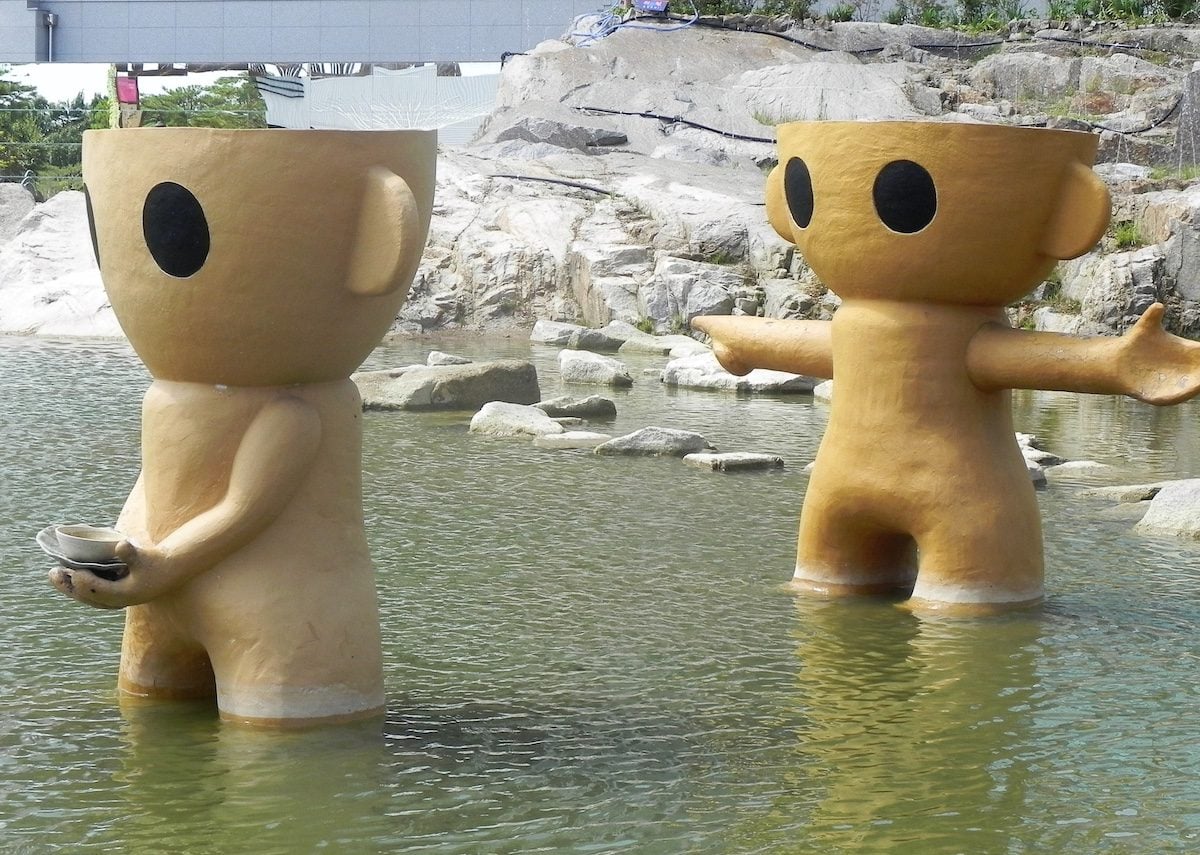
I move slowly through the galleries, past celadon vessels with their soft, almost luminous green glaze, and porcelain forms so refined that light passes through them. Classic shapes are displayed alongside modern riffs on their designs. Life-size sculptures appear to be walking through the museum’s grounds.
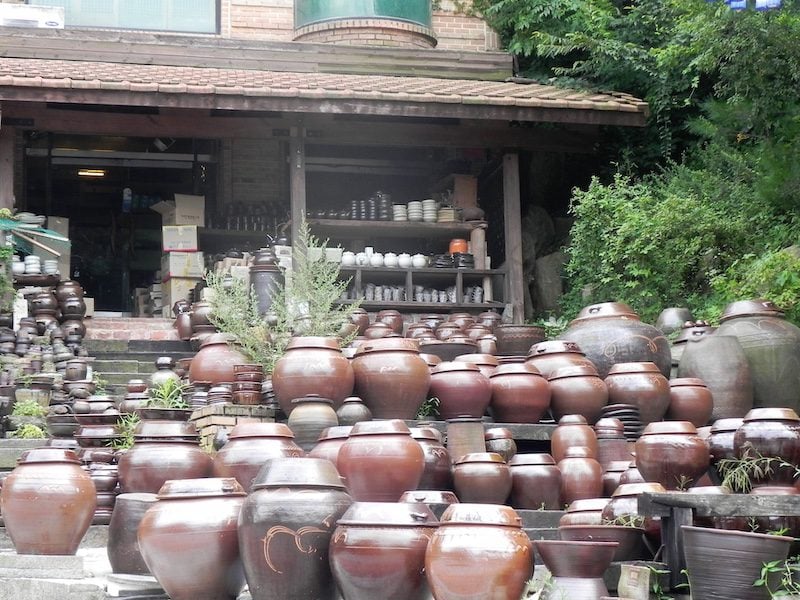
While I could spend my entire day in the museum, I want to see what is being produced right now. A short drive away, I arrive in the commercial ceramics district. There are over 300 active studios where ceramicists work, teach, and sell their pieces. Workshops sit side by side, some traditional, some more contemporary, all producing high-quality work.
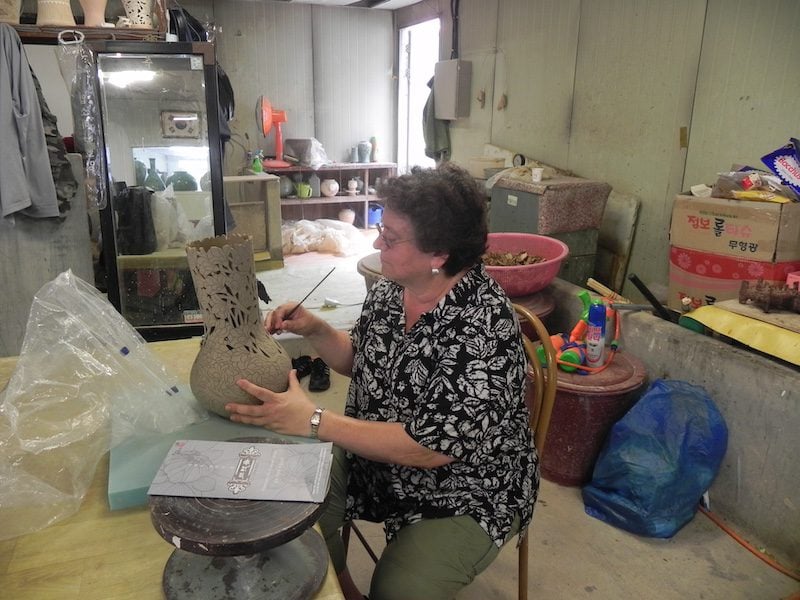
In one studio, the artist demonstrates how to cut into a partially dried vase to create a lacework pattern. She allows me to try my hand at it. In another studio, a delicately hand-painted bowl in intense reds catches my attention. The proprietor sees my interest and pulls out dozens of other examples, each one slightly different and all of them beautiful. With so many choices, I have a difficult time deciding. I buy two.
In Icheon, clay has been part of the town’s identity for hundreds of years. It remains so today, a place that should be on every art lover’s wish list.
2. Metepec, México
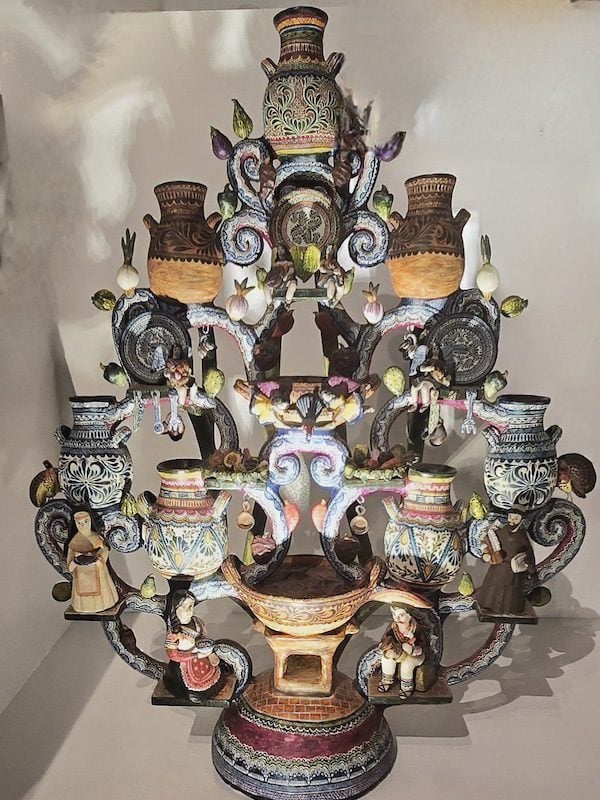
Icheon is known for exceptionally fine craftsmanship. In Metepec, ceramicists do not aspire to perfection. Instead, clay is a medium for storytelling. Around the town, there are thousands of variations on Mexican Trees of Life.
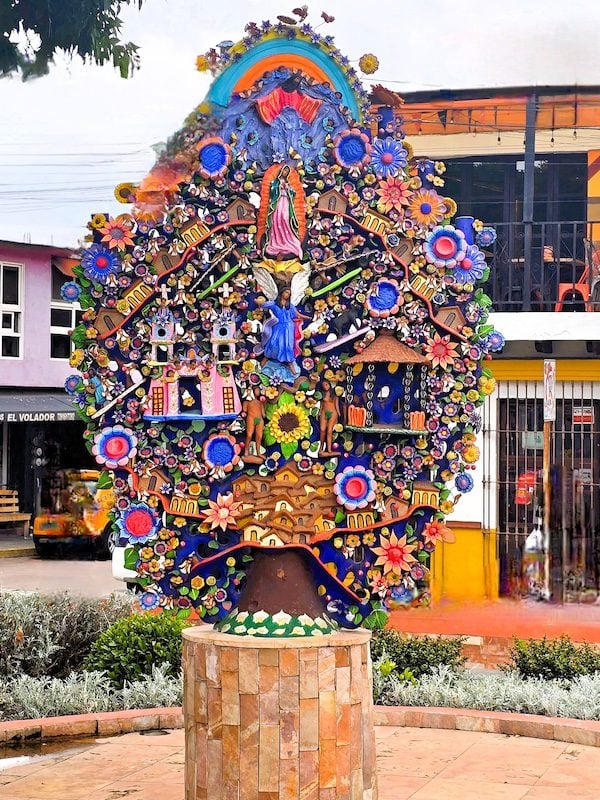
Crafted during the Spanish colonial era, Metepec’s Trees of Life visually told Bible stories to those unable to read. Over time, they have grown more elaborate and personal, evolving into intricate sculptures that weave together religion, folklore, and personal stories. Many pieces are tied to the Day of the Dead, to remembrance and continuity.
You’ll spot Trees of Life all over Metepec, even if you aren’t actively searching for them. In the downtown area, there are several large, strategically placed examples. The largest, over thirty feet tall, holds a Guinness World Record. This monumental clay artwork weighs twelve tons and is a prime example of the town’s traditional, detailed ceramic craftsmanship.
The main retail street is lined with shops, each presenting a unique version of the tradition. These “Trees of Life” are alive with figures, flowers, animals, and symbols. The more I look, the more details I see. I find myself creating stories for some unusual examples. And asking myself why a tree features African animals, pinwheels, or equally unlikely subjects.
At a nearby studio, an artist sits painting fine details. I see how much skill and patience are needed to carefully cover every surface with intricate designs. Her hand moves steadily, adding a line, a dot, a flourish. The technical skill is undeniable, but in the final product, what matters more is the storytelling.
3. Caltagirone, Sicily
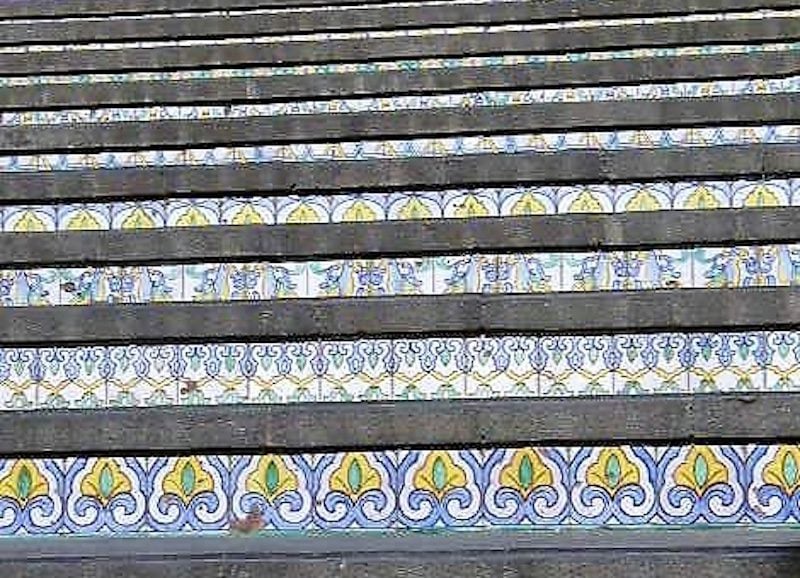
In Sicily, ceramics are everywhere. In Caltagirone, they climb the walls, line the streets, and transform the architecture itself. Before I even enter a workshop, I am immersed in clay. Tiles in vivid blues and yellows cover staircases, balconies, and facades, turning the town into a living canvas.
I walk up the famous staircase, each riser decorated with hand-painted tiles. As I climb, the patterns shift, geometric designs giving way to florals, then to more elaborate scenes. It feels less like decoration and more like a narrative embedded in the landscape.
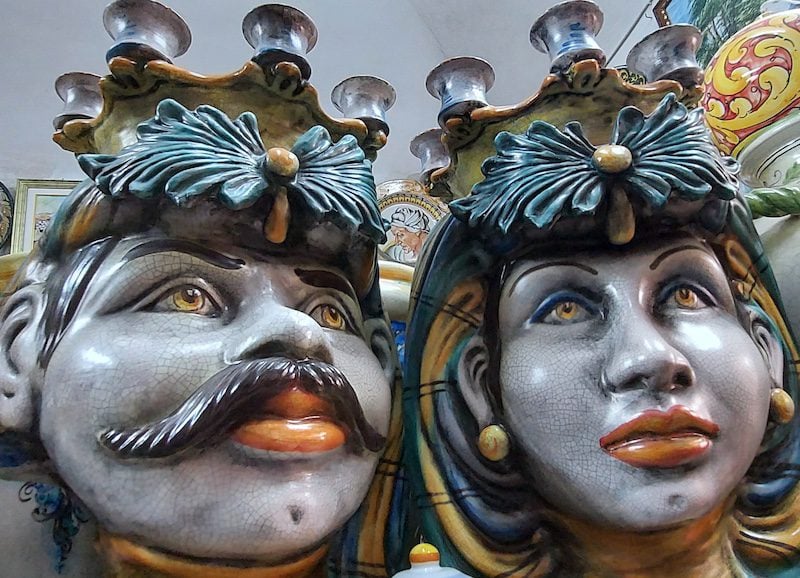
In the studios, artisans paint and glaze with practiced ease. Iconic ceramic heads, rooted in legend, stare out from shelves. They are expressive and theatrical.
What fascinates me is how seamlessly ceramics are integrated into daily life. This is not work that sits behind glass. It is walked on, lived with, and encountered at every turn. In Caltagirone, clay does not just reflect the culture. It defines how the culture looks and feels.
4. Yingge, Taiwan
Often referred to as Taiwan’s ceramics capital, Yingge is a place where traditional techniques coexist with contemporary experimentation. Walking through the town, I move from small family-run workshops to modern studios and galleries. Each offers a different interpretation of what clay can be. However, much of what is for sale is poor quality, clearly intended for tourists looking for an inexpensive souvenir.
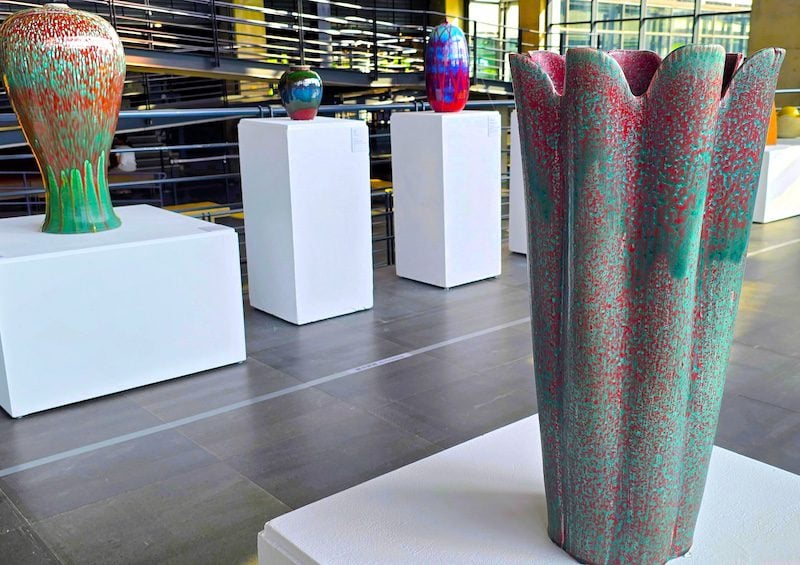
I first visit the New Taipei City Yingge Ceramics Museum. It’s a spacious, light-filled complex that exhibits both historical forms and contemporary work. It introduces me to contemporary ceramic artists doing work that is innovative and beautiful.
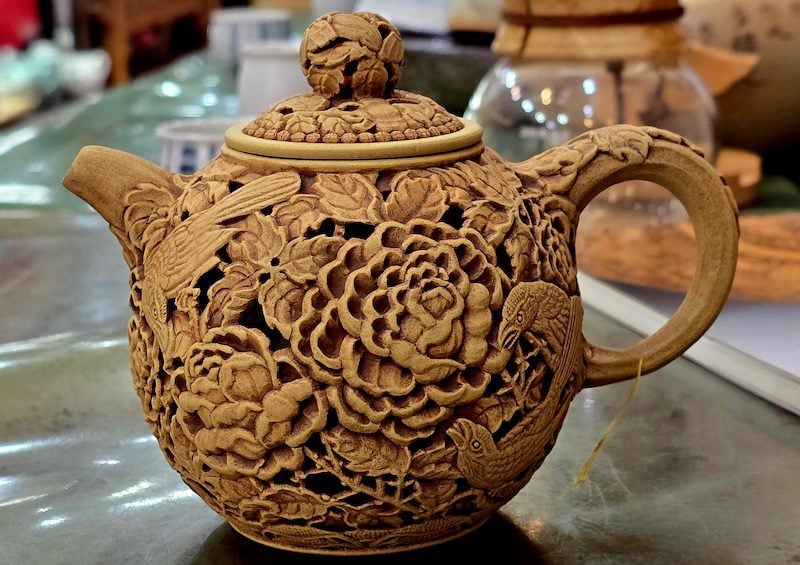
Then, on the main shopping street, I find a shop devoted entirely to teapots. Inside, shelves are lined with pieces created by master ceramicists, each one distinct in proportion, balance, and surface decoration. At first, I simply look. Then, as I begin to ask questions, to comment on the clay, the weight, the way a handle meets the body, the proprietor studies me more closely.
Something shifts.
Without a word, he moves behind the counter and unlocks a glass case. One by one, he brings out teapots that had been hidden from view, pieces of extraordinary refinement. The lids fit so precisely that when closed, they don’t appear to have a seam. The surfaces are subtle and complex. I hold them carefully, fully aware that I am handling objects far beyond my price range.
The proprietor invites me to sit as he prepares tea. The ceremony is quiet and deliberate; each movement practiced and unhurried.
Before I leave the shop, I choose a small teapot. I spend more than I should, and far less than most of what surrounds me. It is exquisite, perfectly balanced, and an object that every time I use it will remind me of my time in Yingge.
What the clay reveals
What I have come to understand, both as a ceramicist and as a traveller, is that the finished object is only part of the story. In each of these places, the materials are the same. Earth, water, hands, fire. And yet what emerges is shaped by culture, history, and intention.
In Icheon, clay reflects discipline and refinement.
In Metepec, it carries story and memory.
In Caltagirone, it shapes the landscape itself.
In Yingge, it bridges tradition and innovation.
This is not unique to these four towns.
Other ceramic towns with strong traditions
Once I began seeking out ceramics towns, I discovered how many there are; places where clay is not just a material, but a defining part of daily life. Across continents, each reflects its own history, resources, and traditions.
Ceramic Towns in Europe
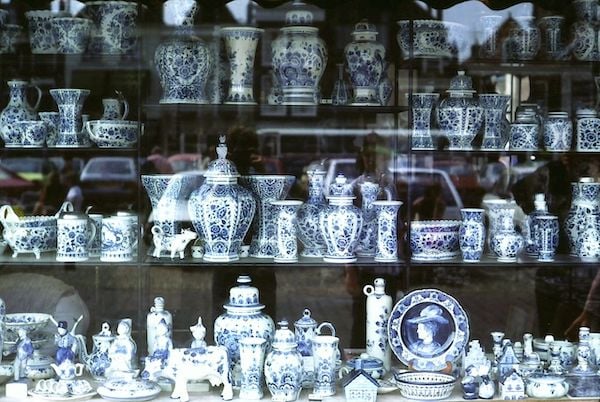
Delft, Netherlands: Known for its iconic blue-and-white pottery, Delft transformed Chinese porcelain influences into a distinctly Dutch tradition that still defines the city’s visual identity.
Limoges, France: Synonymous with fine porcelain, Limoges became a global standard for elegance and refinement, prized for its luminous white clay and delicate craftsmanship.
Meissen, Germany: The secret of making porcelain was first unlocked in Europe here. Closely guarded formulas and royal patronage transformed Meissen’s creations into some of the continent’s most prized luxury goods.
São Pedro do Corval, Portugal: One of Portugal’s largest pottery centers, this Alentejo village produces rustic, earth-toned wares that remain deeply tied to regional life and tradition.
Asia
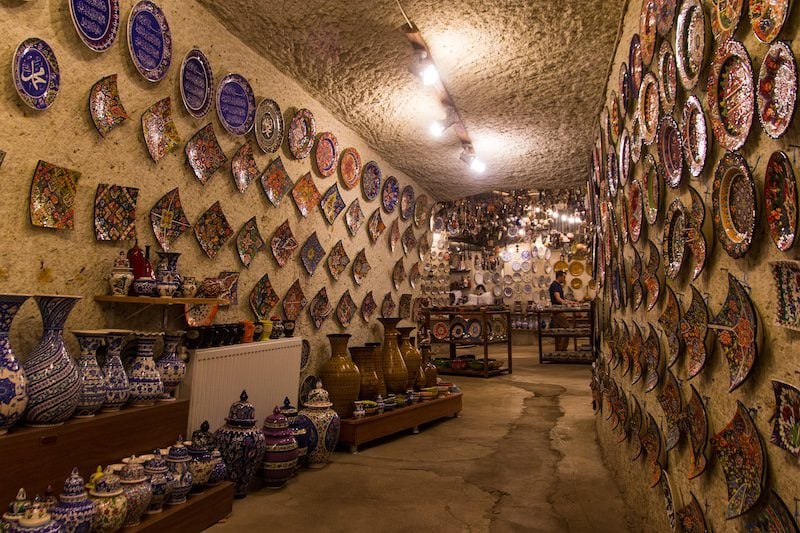
Avanos, Turkey: Along the banks of the Red River, potters have worked the region’s iron-rich clay since Hittite times (beginning during the 16th century BC), producing both utilitarian wares and finely decorated pieces.
Jingdezhen, China: Often called the porcelain capital of the world, Jingdezhen has produced imperial-quality ceramics for over a thousand years, its kilns shaping both domestic tradition and global trade.
Bizen, Japan: One of Japan’s oldest ceramic traditions, Bizen ware is unglazed and wood-fired, its beauty emerging from the unpredictable effects of ash and flame.
The Americas
San Juan de Oriente, Nicaragua: Here, pre-Columbian pottery techniques live on in hand-burnished vessels etched with intricate geometric patterns passed down through generations.
Chulucanas, Peru: Known for its burnished black-and-white ceramics, Chulucanas blends ancient techniques with modern design, producing pieces that feel both timeless and contemporary.
Guaitil, Costa Rica: In this small village, Chorotega artisans preserve indigenous pottery traditions, hand-building and firing vessels using methods that predate Spanish arrival.
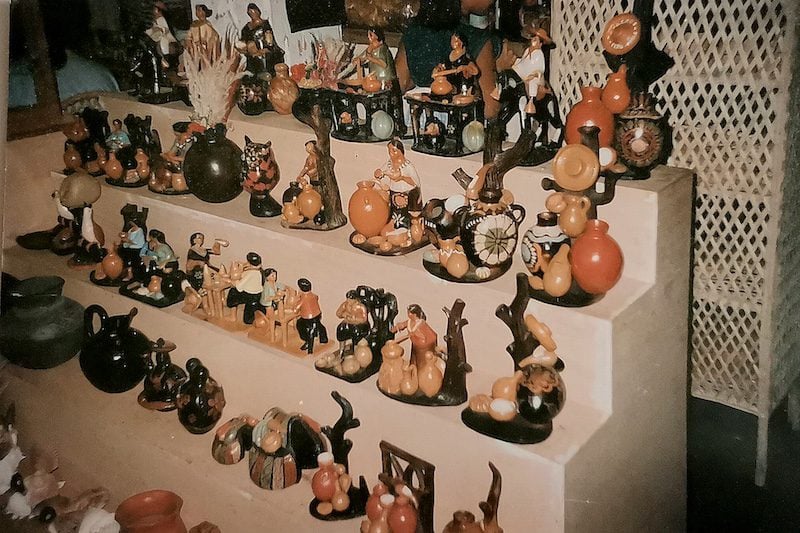
Ráquira, Colombia: A vibrant village where clay is shaped into everyday objects and whimsical forms alike, reflecting both practical needs and a strong sense of local identity.
Before you go
Demonstrations and workshops: If you hope to watch artists at work or try your hand at pottery, check schedules in advance. Demonstrations, kiln openings, and hands-on classes are often offered only on specific days or by reservation. Find tours to workshops here.
Shipping and purchases: Ceramics can be heavy, fragile, and difficult to transport. Ask whether shops pack pieces for international travel or offer shipping services, especially if you are tempted by larger works.
What’s authentic: In many ceramics towns, inexpensive imported souvenirs are sold alongside locally made work. If craftsmanship matters to you, ask where a piece was made, who made it, and whether it is handmade or factory-produced. The answers can tell you a great deal about what you’re buying.
Museums: Some towns have outstanding museums but limited working studios, while others are best experienced by wandering shop-lined streets and visiting artisans directly. Ideally, allow time for both.
Accessibility and mobility: Older ceramic districts may include uneven stone streets, staircases, or large market areas that require significant walking. Museums are usually more accessible than historic artisan quarters.
Time and pacing: Ceramic towns are best explored slowly. Leave room for serendipity, stepping into an unmarked workshop, talking with an artist, or discovering a piece so beautiful you cannot stop thinking about it.

More on Art & Culture


The post Shaped by Hand: Four Artisan Places Women Should Visit, Where Clay Defines the Culture appeared first on JourneyWoman.