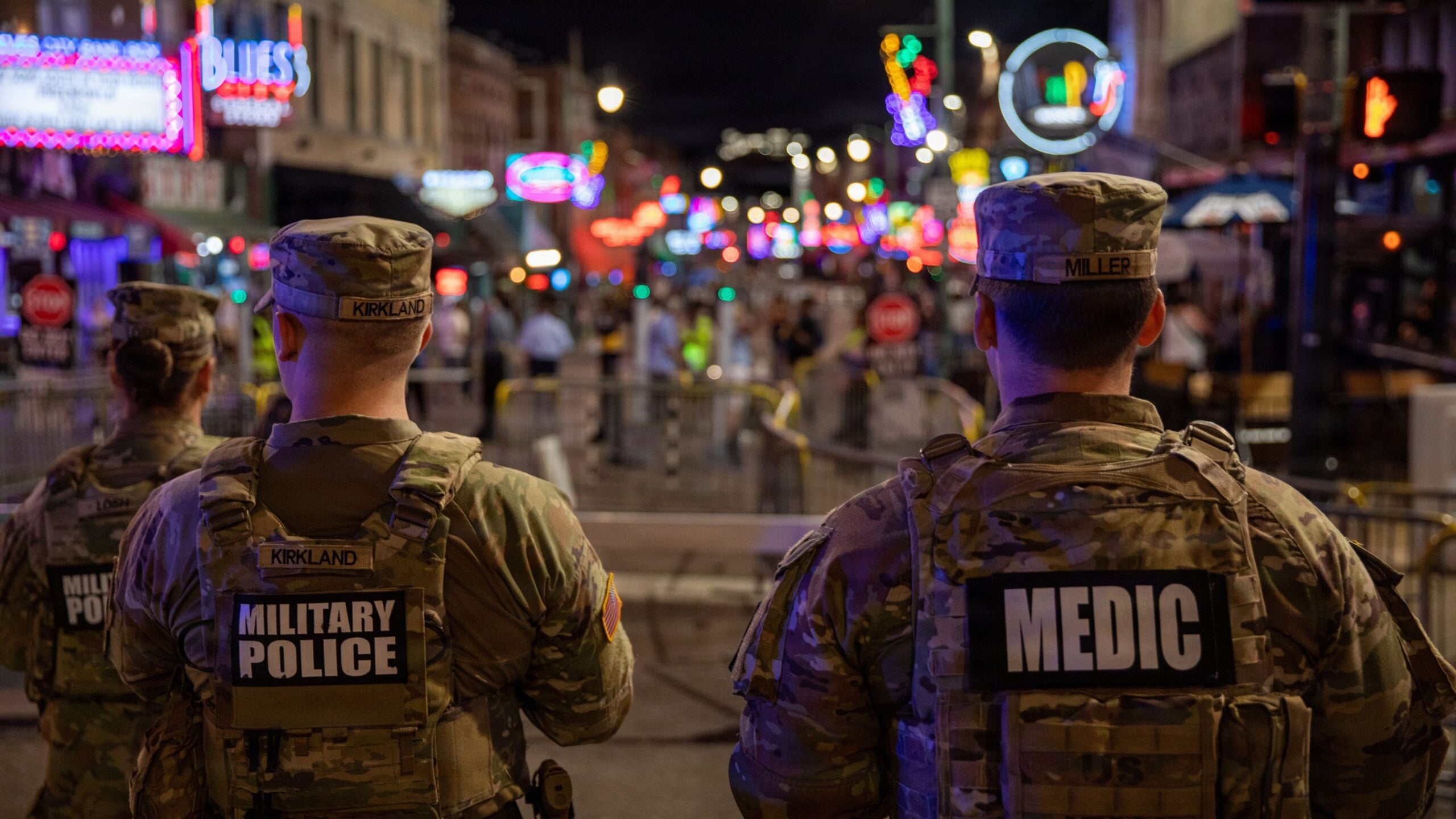
Two members of the Tennessee National Guard shot and killed an armed man early Sunday in Memphis, law enforcement said. The Tennessee Bureau of Investigation said today that Memphis police and National Guard soldiers who are in the city as part of a federal task force responded to reports of gunfire just before 4 a.m.
Memphis police officers were chasing a man armed with a hand gun. Tennessee National Guard soldiers joined the chase for the armed man, identified as 20-year-old Tyrin Johnson.
“For reasons under investigation, the situation escalated, resulting in two National Guard soldiers firing upon Johnson, striking and killing him,” the Tennessee Bureau of Investigation said in its statement.
The Memphis Police Department said that Johnson “turned toward NG members with his weapon. Tennessee National Guard soldiers discharged their weapons, striking the male. The male was pronounced deceased at the scene.” The bureau is now investigating the fatal shooting at the request of the district attorney general.
The Tennessee National Guard did not immediately respond to requests for comment from Task & Purpose, but in a statement shared with the local paper The Commercial Appeal said that two National Guard medics provided first aid but Johnson died at the scene.
Downtown Memphis had been hosting large 4th of July celebrations only a few hours earlier.
Several hundred Tennessee National Guard troops deployed to Memphis in October 2025, in support of a federal task force set up by President Donald Trump in September. That task force includes a number of federal agencies, including the U.S. Marshals Service and the Federal Bureau of Investigation. The troops are operating under Gov. Bill Lee’s authority, rather than having been federalized, as troops deployed to Los Angeles last year were. The National Guard is part of the larger Memphis Safe Task Force. The deployment of the military has sparked ongoing legal challenges, including a temporary injunction. However in April a state appeals court overturned that, letting the National Guard’s deployment continue.
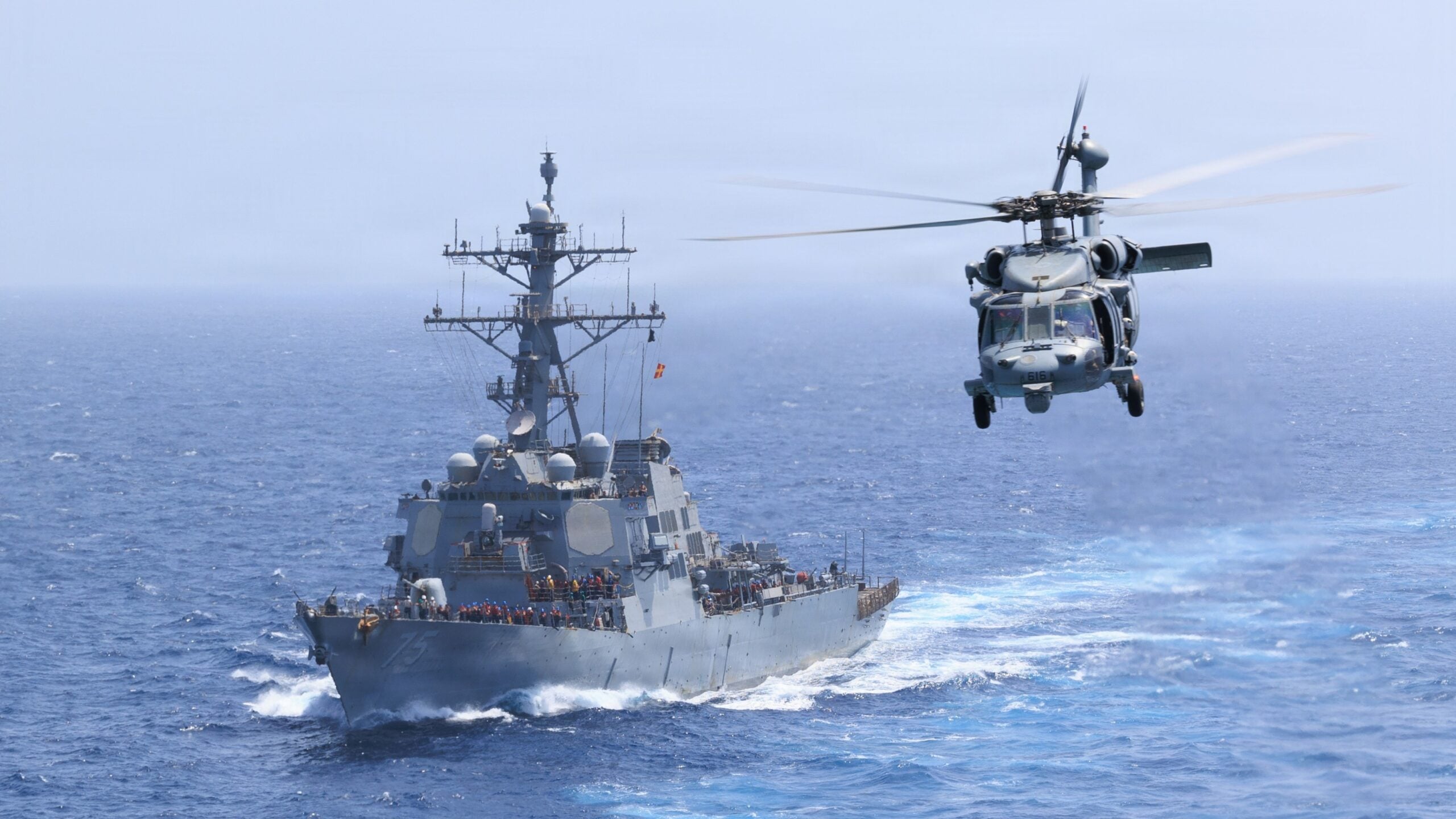
The Navy suspended its search for a sailor who went missing after their helicopter went down in the Arabian Sea at the start of the month.
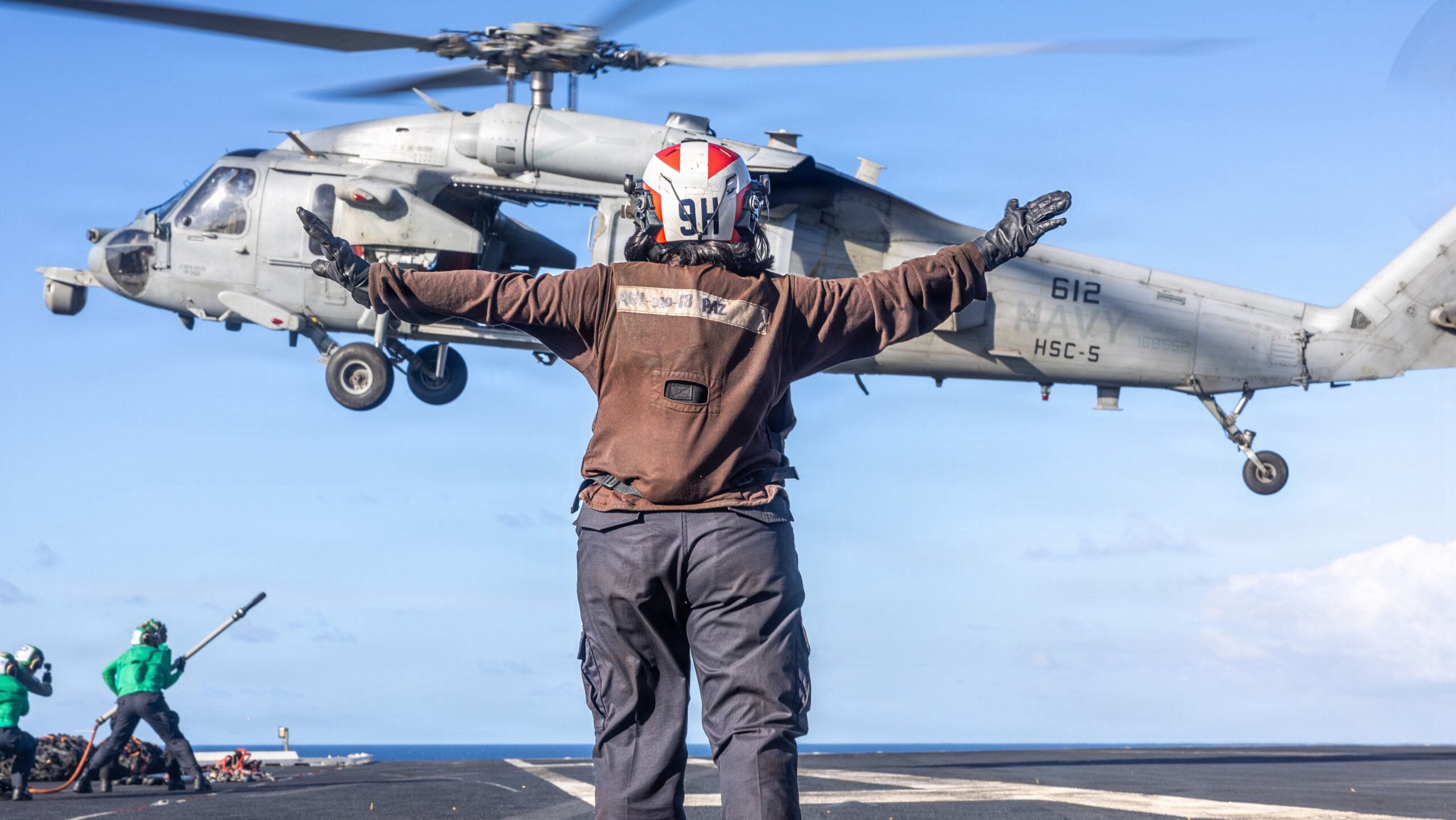
The Navy’s 5th Fleet said in a post Sunday afternoon that several ships and Air Force aircraft spent more than four days looking for the sailor, who was assigned to Helicopter Sea Combat Squadron (HSC) 5. The sailor was one of four onboard a Navy MH-60S Seahawk helicopter, which crashed into the water on July 1. Three crew members onboard the helicopter were recovered shortly after the crash and reported in stable condition on Wednesday. The helicopter is assigned to the USS George H.W. Bush aircraft carrier, which is deployed to the U.S. Central Command area of responsibility.
The missing sailor has not been identified; per Navy policy their name is being withheld until at least 24 hours after the next of kin is notified.
The MH-60S “conducted an emergency landing” around 3:30 a.m. Eastern Time on Wednesday. The Navy said at the time that there was no indication that the crash was due to “hostile action.” The cause of the mishap is under investigation.
“For more than 102 hours, an extensive and coordinated search and rescue effort spanning over 14,000 square miles was conducted,” the 5th Fleet said. Five destroyers, a pair of P-8 Poseidon squadrons and fixed-wing aircraft and helicopters from the USS George H.W. Bush and the USS Abraham Lincoln took part in the search operations.
The helicopter was the latest in several aircraft mishaps in the last two months, following three incidents inside the United States.
The MH-60S helicopters of Helicopter Sea Combat Squadron 5, part of Carrier Air Wing 7, regularly conduct a variety of mission ranging from troop transport, search and rescue and combat operations.
Today’s 4th of July celebration in Washington, D.C. will feature a nine-hour airshow involving waves of fixed and rotary-wing aircraft from across the military, including historic F-5s to modern fighter jets.
Freedom 250, the organization behind many of the events in the capital for the nation’s 250th birthday, released the schedule for the 4th of July airshow, which includes more than 30 specific waves of aircraft spanning almost every branch of the armed forces, minus Space Force. President Donald Trump said on social media last week that the show will feature “hundreds of planes” spanning different eras, although the specific number of aircraft was not specified by Freedom 250. Some demonstration teams and aircraft were identified, but it’s not clear what many of the events will include.
The program is a mix of military demonstration teams and aerial parades of the wider American fleet of planes and helicopters. Some of the aircraft are privately owned, such as four F-5s from NASA. Those four jets will kick off the celebration, starting their flyover at 1:14 p.m., followed 10 minutes later by a “NASA fleet review.” The Coast Guard is the first service branch to flyover, with two waves of search and rescue helicopters and planes.
Alongside fixed and rotary-wing aircraft, military parachute teams will make an appearance, with the Army’s Golden Knights and the Navy’s Leap Frogs scheduled next. They’re followed by an array of Army helicopters, and then the program is set to feature fleet reviews for the Air Force, Marines and Navy, broken into several waves. The Air Force component includes a section specifically for Air Force Special Operations Command, which could include gunships and special operations refueling tankers. AFSOC is the only special operations force specifically identified in the schedule.
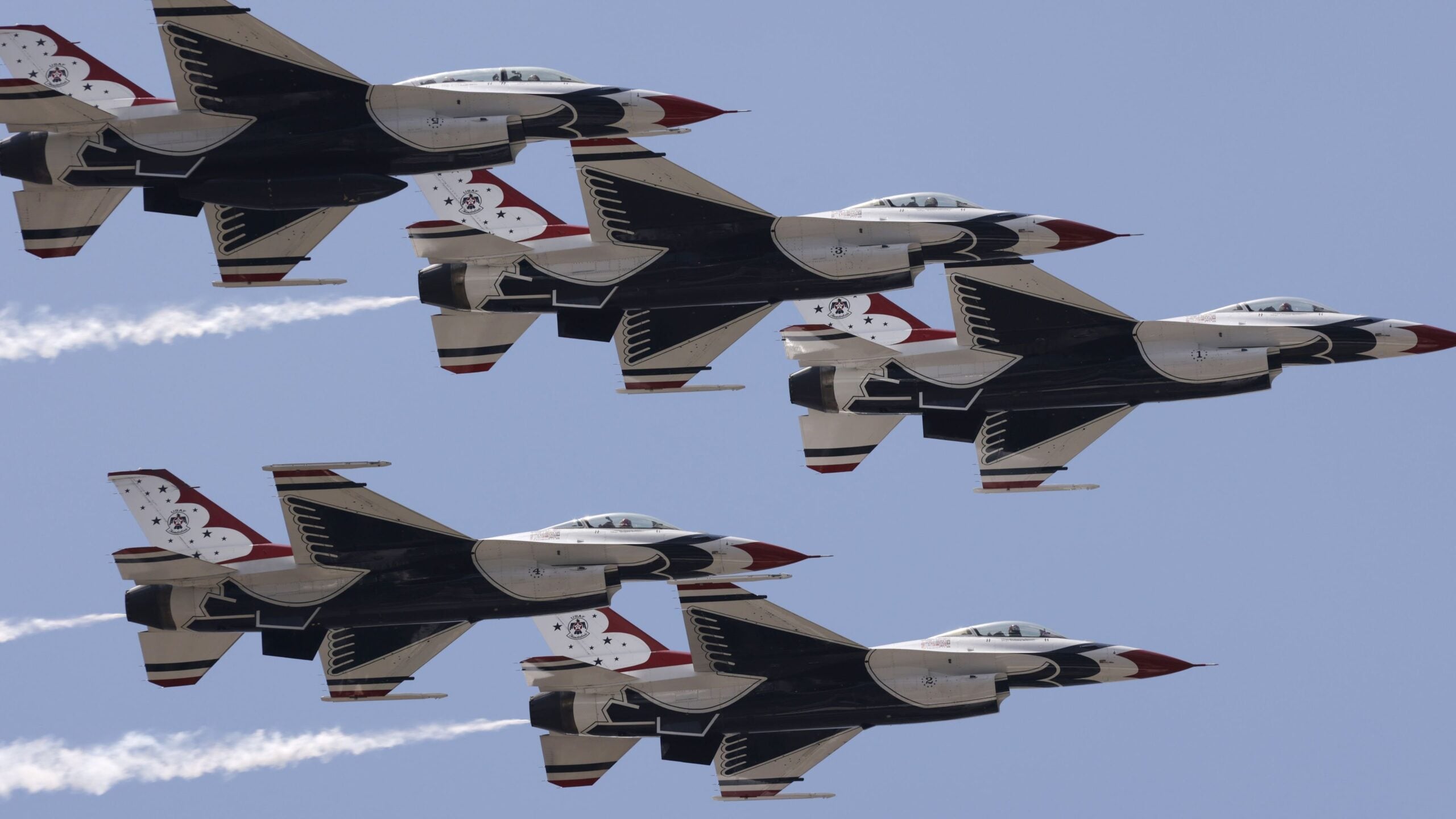
After the reviews, the services’ demonstration teams are meant to make up the bulk of the late afternoon portion of the show. Alongside the Navy’s Blue Angels and Air Force’s Thunderbirds, the Marine Corps’ MV-22 Osprey team as well as the Navy Super Hornet demonstration team will There will also be a “Tri-Bomber Formation” from the Air Force, including a B-2 Spirit bomber, a B-1 Lancer and a B-52.
For some aircraft, it’s the second airshow in less than a month. The Blue Angels and Thunderbirds conducted a flyover above D.C. during the UFC fighting event on June 14. A B-1B Lancer from Dyess Air Force Base also took part.
The airshow itself will have waves passing by in intervals ranging from three minutes apart to 40, with a second Golden Knights jump set for 8:22 p.m. A longer gap is planned, while evening events on the National Mall start. According to the schedule published, the final event is at 10:36 p.m. when a B-1 bomber is set to do a nighttime pass with its afterburner on, roughly the same time a massive fireworks show is set to start.
It’s unclear if the weather around the capital will impact the planned airshow. Storms and showers are forecast for the afternoon and early evening, while the D.C. area deals with a triple-digit heat index. Some of the ground-based events planned in Washington for the holiday have been adjusted out of concerns of high temperatures.
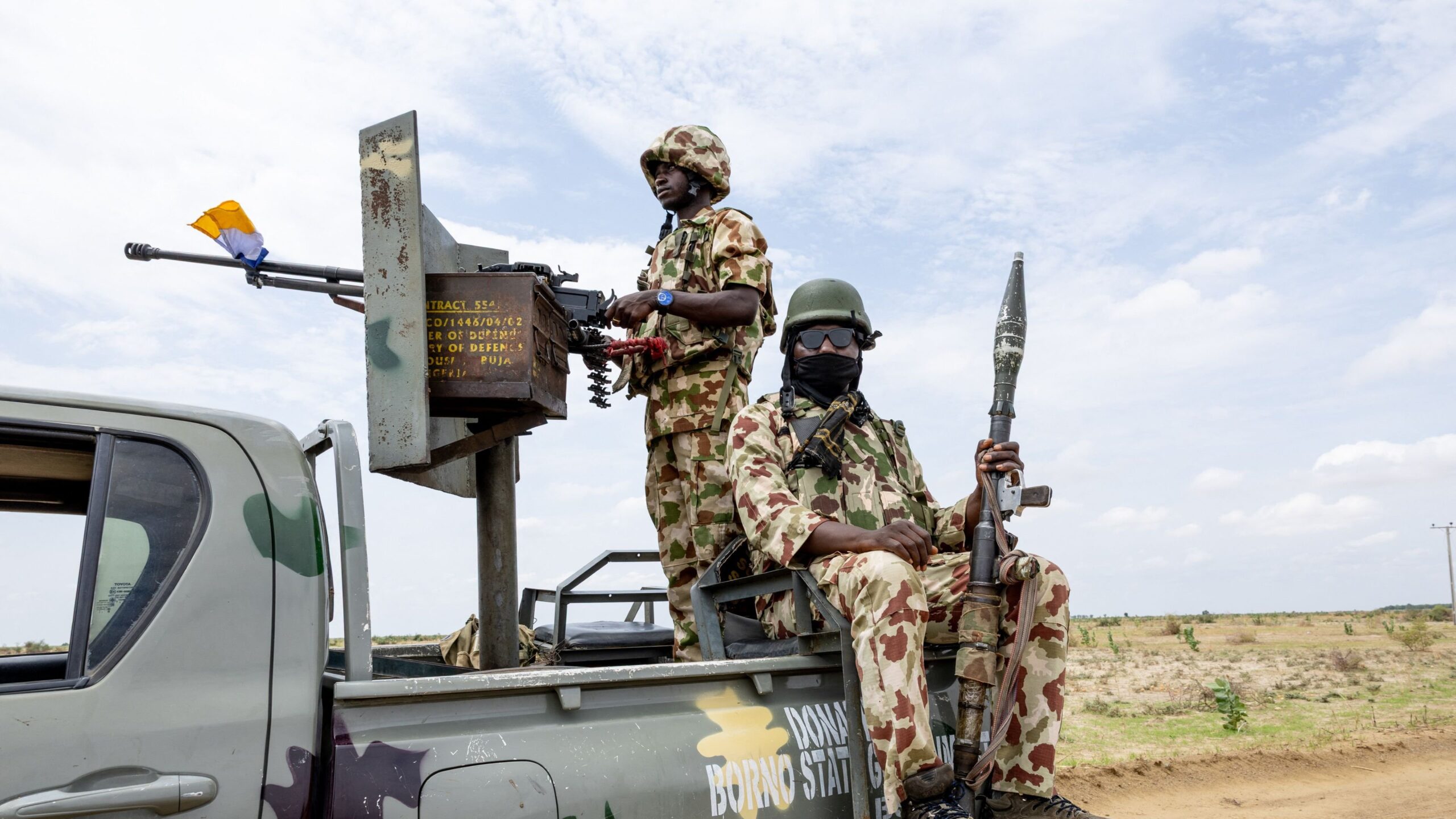
The United States has withdrawn most of the troops sent to Nigeria earlier this year, after wrapping up a combat operation against Islamic State fighters in the country.
Gen. Dagvin Anderson, head of U.S. Africa Command, confirmed the drawdown of “much of our forces that were just there for that operation.” Speaking at the 2026 African Chiefs of Defense Conference, Anderson said that the campaign around the Lake Chad Basin in the spring “not only helped the countries in that immediate region; it also helped countries globally as that disrupted the ISIS network.”
As a result, he added, “ISIS’s leadership has been significantly degraded there.”
An AFRICOM spokesperson told Task & Purpose that the U.S.-Nigeria partnership “is ongoing and remains strong, focused on disrupting and eliminating shared security threats. At the invitation of the government, we continue to have forces in Nigeria. The number of personnel will fluctuate as required to meet requirements.”
The United States has more than 100 service members in Nigeria for a training and advising mission, but deployed additional combat forces — including special operations personnel — this spring specifically for the operations in the Lake Chad region, Nigeria’s defense minister told Agence France-Presse.
That operation ramped up in May, with a series of airstrikes and raids in northeastern Nigeria between May 15-18. A joint U.S.-Nigerian raid targeted Abu-Bilal al-Minuki, the global second-in-command of the terrorist group. The New York Times, citing multiple officials, said that roughly two dozen commandos including members of SEAL Team 6 attacked al-Minuki’s position to capture him but after a nearly three-hour fight, the commandos called in an airstrike, killing him.
Additional strikes followed over the next few days. AFRICOM later said that approximately 200 ISIS fighters were killed in the mission.
“Nigeria has been very active since that operation in May,” Anderson said at the conference . “They continue to prosecute targets themselves.”
The drawdown of combat forces comes after several months of escalation. Last fall, President Donald Trump repeatedly threatened the use of military force in Nigeria, accusing the government of failing to protect Christians from violence; Nigeria’s government has disputed this. On Christmas, the U.S. fired several missiles into Nigeria, targeting militants in the northwestern state of Sokoto. In February, the United States sent roughly 200 service members to train its military on counter terrorism tactics, but are not combat forces, according to Nigeria.
Until this spring, most of the American operations against ISIS have been in Somalia, where the U.S. military is carrying out dozens of airstrikes against both ISIS’s arm in the country and the militant group al-Shabab. AFRICOM reports at least 69 airstrikes in Somalia this year.
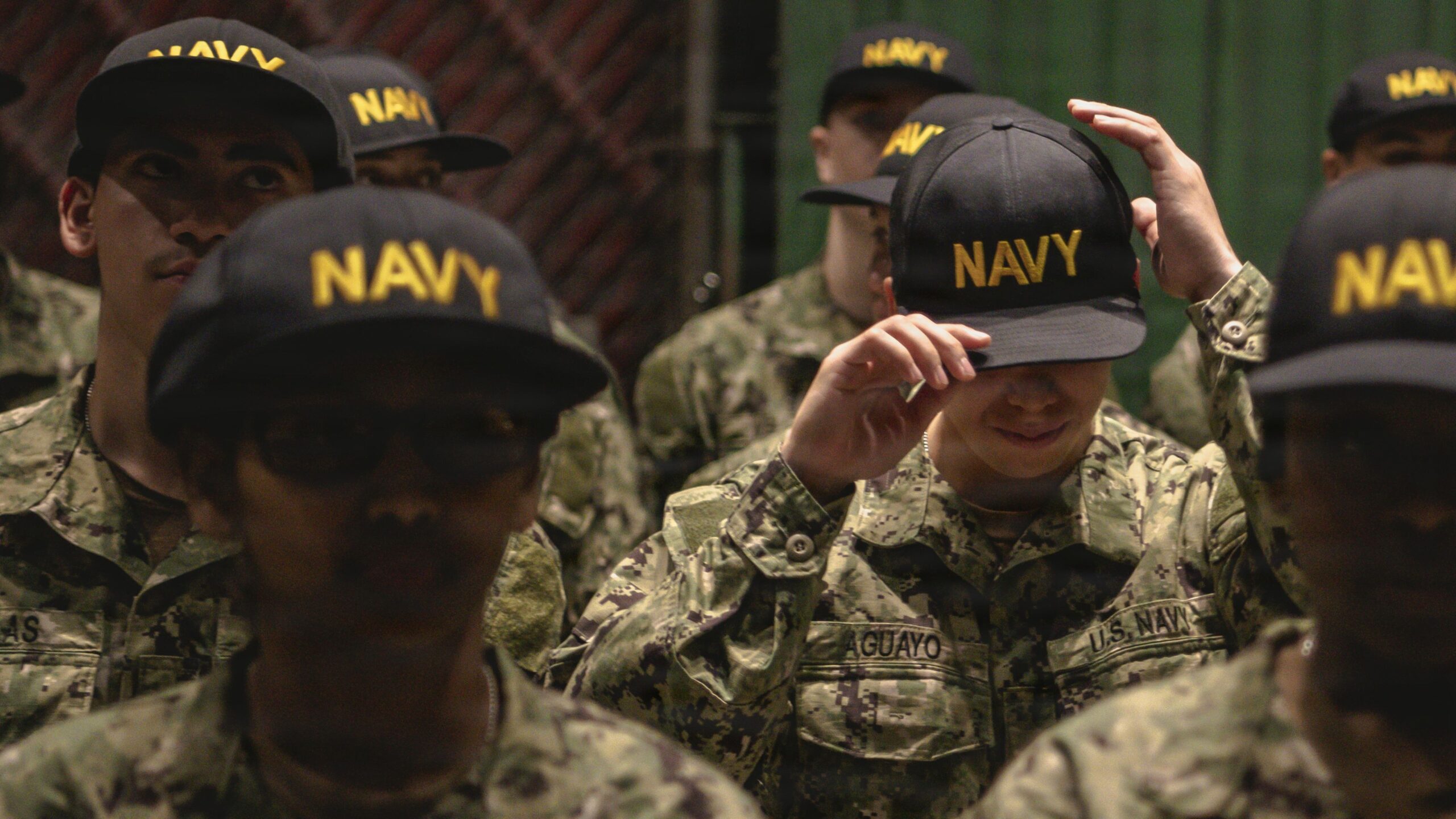
The Navy beat its recruiting goal for new sailors this year, signing up 45,000 new recruits. The service announced the milestone on Thursday. It’s the highest number of people signing up for the Navy in roughly two decades.
“Today’s Navy is stronger because tens of thousands of Americans chose to answer the call to serve,” Rear Adm. Jim Waters, the head of Navy Recruiting Command, said. “Reaching this milestone is not simply about achieving a recruiting objective – it’s about delivering the talented Sailors our Fleet needs to maintain readiness in an increasingly complex security environment.”
The early success marks the second year in a row of the service bringing in far more recruits than its goal. In 2024, the Navy only barely hit its recruiting quota, but in 2025 it brought in 44,096 new sailors, nearly 9% about that year’s aim. That was after the Navy also hit its goal early, signing up 40,600 by June.
This fiscal year the Navy set its quota higher by roughly 10% and met it early. It’s a turnaround from 2023, where the service failed to meet its goal of new officers and enlisted sailors by several hundred and several thousand, respectively. That year saw several branches of the armed forces fall short, causing them to overhaul their recruiting strategies to better reach Americans.
Last year, Waters credited the success to clearer processes for tattoos and medical waivers, as well as new marketing strategies aimed at Gen Z Americans. This year, he said the wider success over the last three years with a modernized recruiting strategy, better data and accelerating applicant timelines.
“Our recruiters never lost sight of what matters most – people,” Waters said. “Every contract represents someone who chose to serve something greater than themselves.”
The Navy also said that it is working to strengthen its Delayed Entry Program, which allows people to sign a contract but wait up to a year before shipping out to start boot camp.
The Navy joins several other branches in beating their recruiting goals early this year. In April, the Department of the Air Force said that both the Air Force and Space Force hit their target five months early. The Army meanwhile said in May that it met its quota of 61,500 recruits.
The initial reaction to Kengo Kuma’s design for the Global War on Terrorism (GWOT) Memorial has not been kind. Criticism seems to fall into three buckets: its abstract design, the absence of a clear heroic tribute, and a lack of a “roll call” or list of names of the fallen. Rep. Derrick Van Orden, a retired Navy SEAL now in Congress, called it a “jazz hands monument to our fallen brothers and sisters.” Sen. Jim Banks, another Navy veteran-turned-lawmaker who served in Afghanistan, referred to it as “disconnected abstract art.” Online, many veterans questioned why there isn’t a display of names or images of the more than 7,000 killed in these conflicts.
My deployed experience in the GWOT was with a Stryker brigade during the 2007 surge in Iraq. I’m now research and teach as a college professor on the experience of American military veterans and as they have come back to the nation they served. Each time I teach a class, and each time I meet a veteran on campus, I hear a new answer to what the GWOT “meant.” If the 20 years of GWOT, have a central story, it is still evolving.
I believe the most interesting aspect of the proposed memorial is not what it includes, but what it leaves out. Kuma’s design does not glorify a war whose mission shifted for two decades and whose outcomes remain genuinely contested. It avoids flattening twenty years of varied conflict into the heroic narratives of special operations and infantry troops that pervade current cultural storytelling. And it chooses open space over architectural closure.
That restraint matters because the alternative is well established. Many memorials resolve their subject before the visitor arrives. The Marine Corps War Memorial, with its flag raised in bronze certainty, is a beloved national emblem, but there is no mystery in its message. Similarly, the massive National World War II Memorial, with its arches and gold stars, reflects the size of the war and America’s mobilization to meet it. Memorials like these do not invite interpretation. They deliver a conclusion.
A design that refuses easy resolution is making a bet that visitors can sit with ambiguity. I think this is a smart bet because the legacy of GWOT is still being written.
One of the foundation’s renderings shows people gathered informally on a lawn, something closer to a meeting than a monument. If that becomes the memorial’s actual function, a place where people convene, talk, and exchange accounts of a war that impacted American society in countless ways, then the design has succeeded at something harder than commemoration. It has made room for conversation.
But these important choices do not excuse the design’s weaker elements. The footprint pathways, cast in varied boot, shoe, stiletto (and paw) combinations, cannot bear the weight that the memorial assigns them. The orientation of the arch toward Section 60 at Arlington is similarly strained. It gestures at meaning without earning it. The symbolism it depends on may not survive long anyway, since the planned United States Triumphal Arch (a.k.a. the Arc de Trump) may eventually interrupt the sight line the GWOT memorial intends to establish.
The long shadow of The Wall
Unfortunately, the memorial’s deepest problem is not its design, but its location. Placing the GWOT Memorial next door to the Vietnam Veterans Memorial, known universally as The Wall, was a mistake. The Wall’s granite panels transmit an enormous symbolic and emotional weight that has evolved over decades into a fixed national narrative about an unpopular war, troubled homecomings, and delayed reckoning.
Adjacency invites comparison, and comparison creates expectations. Imagine the expectations a future visitor will carry as they walk 200 yards from one memorial to the other. Proximity to The Wall will not clarify the GWOT Memorial’s message.
Those expectations were emerging last month with calls for etched names and unambiguous design elements. Already, reviewers are projecting The Wall’s emotional rhetoric onto the unbuilt GWOT Memorial.
But the location is selected, so design questions must give way to a harder one: however it looks, what happens at the site after the ribbon is cut? The daunting task of successfully memorializing the Global War on Terrorism depends almost entirely on this answer.
Stone and steel can establish a space, but they cannot by themselves generate understanding. That requires interpretation, and interpretation requires people. Trained staff, structured programming, and a willingness to host difficult conversations about costs, benefits, politics, and tactics are what can transform this memorial from a backdrop into a forum. Without interpretation, the memorial to America’s longest period of conflict risks becoming an elaborate version of “thank you for your service.”
So, it is reasonable to be skeptical of the current design. Much of that skepticism is earned. But skepticism is not the same as dismissal. The proposed design, flaws and all, is trying to do something genuinely difficult: commemorate a war before the country has agreed on what it means.
Jim Craig is a teaching professor of sociology and veterans studies at the University of Missouri-St. Louis and a veteran of the Global War on Terrorism. He is a founding member of the Veterans Studies Association.
A battle in Congress has sparked a fierce debate among veterans groups about whether legislation that would expand benefits for veterans, caregivers, and survivors is worth the price of reducing future disability ratings for sleep apnea and tinnitus.
Many of the more than 60 bills that are bundled in the Take Care of America’s Veterans Act are legislative proposals that veterans service organizations have long fought for, such as the Major Richard Star Act, which allows veterans with fewer than 20 years of service to collect both disability compensation and retirement pay at the same time.
But to pay for it all, the bill calls for implementing a previously proposed 2022 rule change for how the Department of Veterans Affairs, or VA, would assess sleep apnea and tinnitus disability ratings. The VA has estimated that the change would reduce disability compensation payments by $57 billion over 10 years.
Congress is presenting the bill to veterans groups as the only way to pass measures for which they have spent years advocating “to quash the public dissent about it,” said Ryan Gallucci of the Veterans of Foreign Wars, or VFW.
“No matter everything that’s in the bill that people support, it’s still a net loss for the veteran community, and that loss is the most substantial cut to veterans’ benefits since the Great Depression,” said Gallucci, executive director of the VFW’s office in Washington, D.C.
The legislation would replace the standalone 30% disability rating for sleep apnea with a new scale of 0 to 100% to measure “the effectiveness of medical treatment and intervention.” It would also treat Tinnitus, which currently has a 10% disability rating, as a symptom of an underlying condition like hearing loss or a traumatic brain injury.
These changes would particularly affect the Post-9/11 generation of veterans and currently serving troops, many of whom are in the process of having their disability ratings determined and could apply for compensation in the future, said Kyleanne Hunter, CEO of Iraq and Afghanistan Veterans of America. She added that conditions such as sleep apnea can worsen with age.
“Through saying that in order to get the Major Richard Star Act — for example — passed, you have to cut benefits from future veterans, that’s Congress being disingenuous,” Hunter said. “That’s Congress pitting one group against another, and that’s not how we should be making legislation.”
‘Best and only shot’
Despite their concerns about changes to disability ratings included in the bill, a group of 23 veterans service organizations, including the American Legion and the Wounded Warrior Project, recently submitted a letter to the chairmen of the House and Senate Veterans Affairs Committees in support of the Take Care of America’s Veterans Act.
“The bill represents a net expansion of benefits and support for the veteran community and contains protections intended to prevent reductions for current beneficiaries,” the groups wrote. “The goodness and positive impact of this package should not be lost in the debate over its financing.”
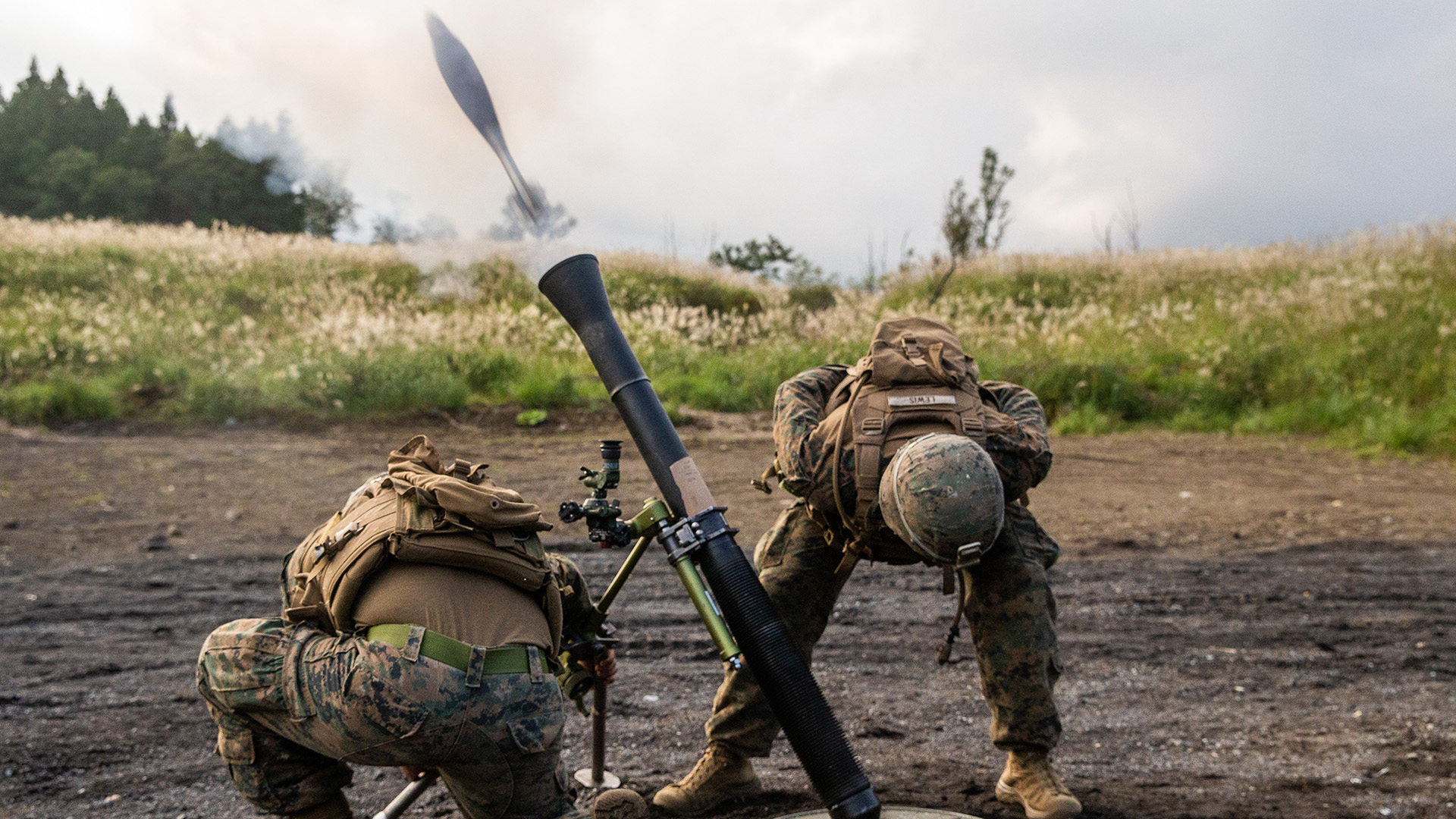
Marines fire an M252A2 81mm mortar at a live-fire mortar displacement range at Combined Arms Training Center, Camp Fuji, Japan, on Oct. 1, 2020. Marine Corps photo by Lance Cpl. Ujian Gosun.
For the American Legion, the bill represents a chance to have Congress finally vote on many of its legislative priorities, said Matthew Jabaut, chairman of the American Legion’s legislative commission.
“I think it’s the best and only shot that we have right now,” Jabaut told Task & Purpose. “While it may not be perfect, I don’t know that any deal is. It’s the best opportunity we have right now to do a lot of good for the veteran.”
The Wounded Warrior Project decided to support the bill in part because it would make important changes, including expanding mental health services, improving healthcare for spinal cord injuries, and increasing support for military families and survivors, retired Army Lt. Gen. Walter Piatt, the group’s CEO, said in a recent statement.
“Wounded Warrior Project recognizes that this legislation has generated differing views across the veterans community,” Jose Ramos, the group’s vice president of government affairs, told Task & Purpose. “Our priority remains ensuring that any policy changes ultimately strengthen support for veterans and their families.”
One question looming over the Take Care of America’s Veterans Act is whether the VA plans to implement the changes to disability ratings for sleep apnea and tinnitus regardless of whether the bill passes. The veterans groups supporting the bill have called for President Donald Trump’s administration to clarify whether the changes will go forward “independently” of the legislation.
VA officials did not respond to phone calls and emails requesting comment for this story. In June, Quinn Slaven, the department’s press secretary, told Task & Purpose that “No changes are planned or imminent,” regarding the proposed 2022 rule change, which has received extensive public comments and “would need to undergo significant changes prior to being finalized.”
Cuts or no cuts?
In a sign of how contentious the Take Care of America’s Veterans Act is, lawmakers disagree on the most basic issue of whether the bill would reduce disability compensation for veterans.
Rep. Mike Bost (R-Ill.), who introduced the bill in the House of Representatives, told Task & Purpose that the legislation would not cut disability payments for sleep apnea and tinnitus.
“The proposed change, that was suggested by VA’s own doctors under the Biden administration and now the Trump administration, would simply allow VA’s disability ratings schedule to reflect the effective medical treatment that is associated with sleep apnea and the modern medicine that shows that tinnitus is linked to another medical disorder,” said Bost, who is also chairman of the House Veterans Affairs Committee.
Rep. Mark Takano (D-Calif.) sees things much differently, telling Task & Purpose unequivocally that the bill would cut disability benefits by changing the rating schedule.
“A veteran who files tomorrow for the same tinnitus or the same sleep apnea requiring a [Continuous Positive Airway Pressure machine] as a veteran who filed today will receive less compensation, and in many cases none at all,” said Takano, the ranking member for the House Veterans Affairs Committee. “That is a cut.”
The bill, which was first introduced in June, had been expected to be voted on by the House of Representatives last week, but that was delayed. Bost is working with House leadership to bring the bill to a vote in the coming weeks, said Kathleen McCarthy, a spokesperson for the House Veterans Affairs Committee. The Senate has not yet scheduled a vote for the legislation.
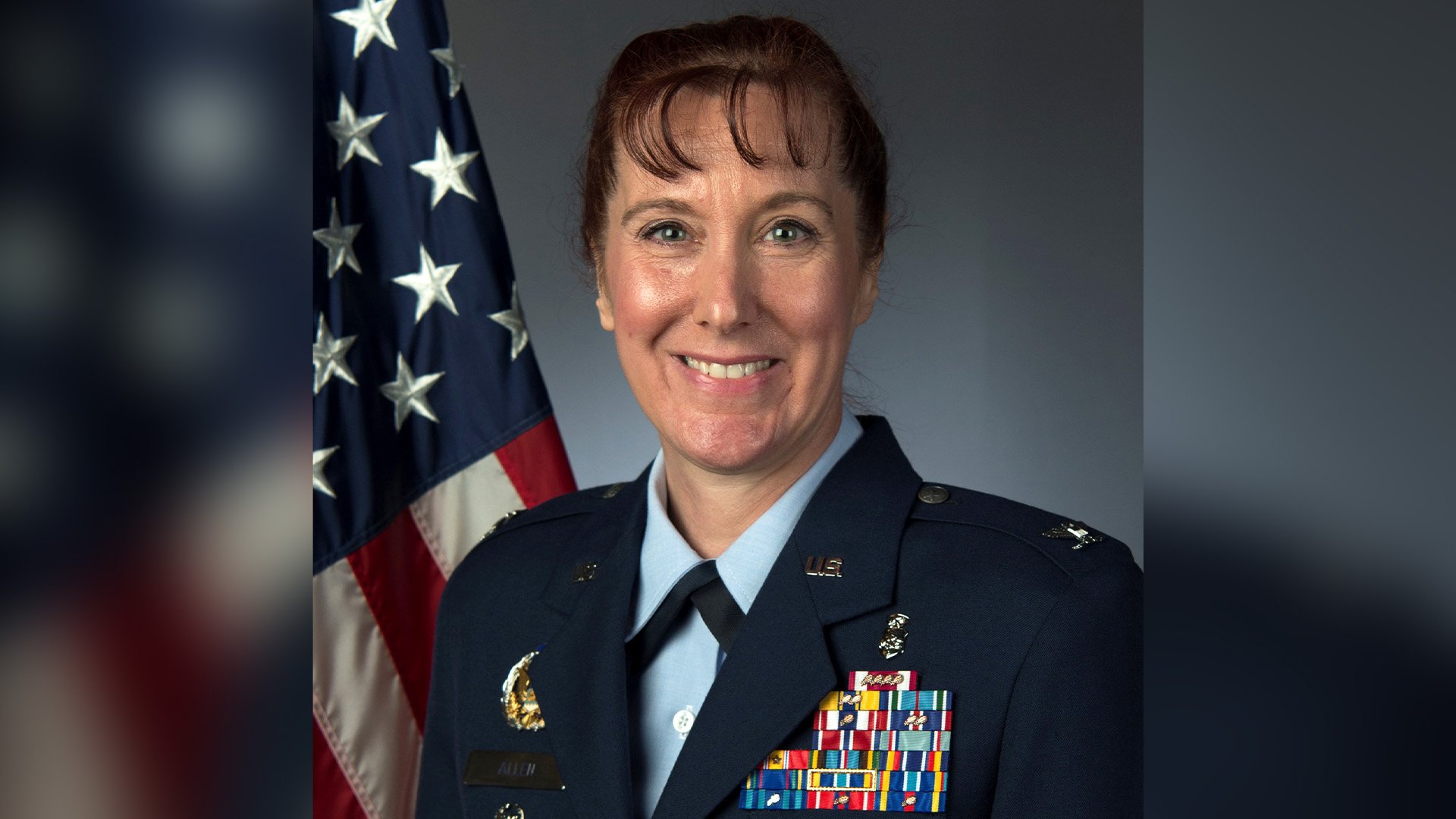
The senior commander who oversees healthcare services at one of the Air Force’s largest bases was relieved of command Tuesday, according to Air Force officials. Col. Tracy Allen was fired as the commander of the 633rd Medical Group at Joint Base Langley-Eustis, Virginia, by Col. Stephen Anderson, the 633rd Air Base Wing Commander, “due to loss of confidence in her ability to lead.”
Base officials said Col. Michael Blowers, deputy command surgeon at Air Combat Command, has assumed responsibility of the unit until a new commander is selected.
Langley officials did not provide any reason for Allen’s relief beyond the wing commander’s “loss of confidence,” a boilerplate expression cited almost universally across the military as the motive when senior officers are fired. The term by itself is not an indication of official misconduct by senior commanders, who can be and often are relieved of command in all military branches for a wide range of reasons, including poor on-duty performance or significant mistakes, events in their personal lives, or misbehavior by subordinates.
In rare cases of major misconduct by a commander, firing announcements sometimes note that a formal investigation preceded the firing. The announcement of Allen’s relief did not note any investigation.
Top medical commander at major base
Langley is one of the Air Force’s most significant bases and home to the headquarters of Air Combat Command, or ACC, the service’s largest major command. ACC oversees over 1,000 aircraft in 27 wings across more than two dozen bases. Roughly one of every four airmen in the Air Force is assigned to an ACC unit.
The 633rd Medical Group is the primary healthcare organization at Langley, according to a 2022 fact sheet, with 1,400 personnel across five squadrons. The group runs the base’s hospital, an ambulatory surgical center, and provides laboratory, radiology and pharmacy services. It also owns two 25-bed expeditionary medical support packages and operates a blood transshipment center.
The group supports 29,000 active duty members and their families associated with Langley, as well as up to 426,000 retirees and other civilians in the Hampton Roads region.
Allen previously served as the 436th Medical Group commander at Dover Air Force Base in Delaware.
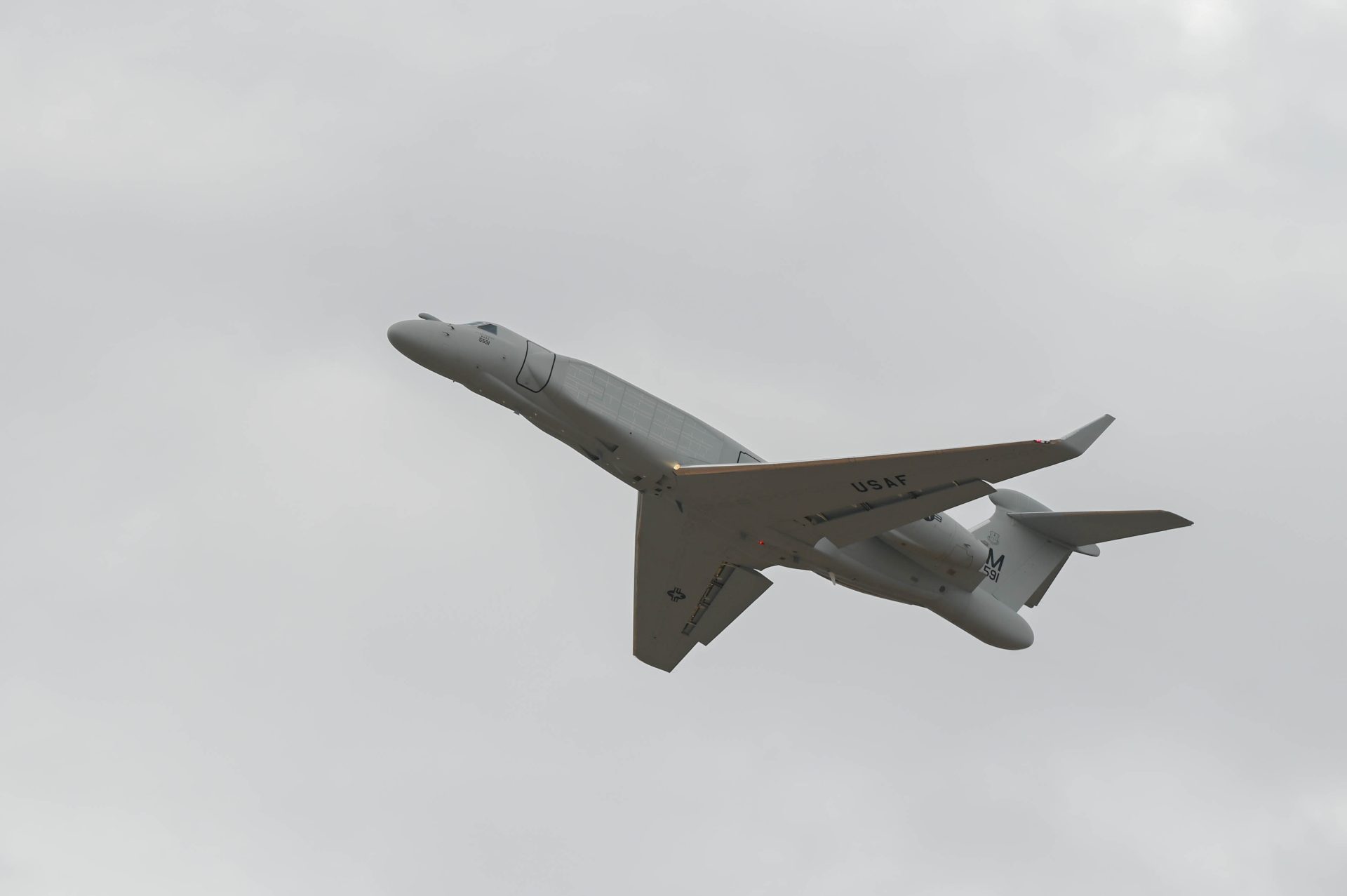
The Air Force is hitting refresh on electromagnetic warfare with its first new electronic attack aircraft in forty years. The EA-37B Compass Call is a modified business jet that some experts are already calling a “game changer” thanks to its speed, range, high service ceiling, and ability to upgrade quickly to keep pace with new technology.
But at the same time, other experts warn that the service will need more Compass Calls than the Air Force plans on buying to meet the challenges of the invisible battlefield.
An EA-37B Compass Call prepares to raise its door before flight at Davis-Monthan Air Force Base, Arizona, Aug. 28, 2024. Air Force photo by Senior Airman Andrew Garavito
Cat-and-mouse
One of the earliest examples of electromagnetic warfare emerged in 1904, when Russia jammed Japanese radio signals coordinating the shelling of Port Arthur. It’s been a cat-and-mouse game ever since: as new technologies for radar, communication and navigation crop up, so do new ways of jamming, spoofing, or otherwise messing with them.
During Desert Storm, Air Force EF-111A Ravens and Navy and Marine Corps EA-6B Prowlers jammed enemy air defenses to clear the way for strike aircraft. Though often overshadowed by fighters and bombers, the Navy wrote that electromagnetic jamming, also called defense suppression, was “critical to the success of all aviation missions” during the Gulf War, and “If Navy defense suppression wasn’t available, the missions didn’t fly.”
Today, the cat-and-mouse game is faster than ever. As described in a 2023 report by the RAND Corporation, advanced radar systems can adjust their waveforms, power, and sensitivity to become much more difficult to spot, or shift rapidly between “never-before-seen waveforms.”
This is playing out in Ukraine. Bryan Clark, an electronic warfare expert and senior fellow at the Hudson Institute, told Task & Purpose that Ukrainian troops are using software-defined radios to maneuver through the electromagnetic spectrum.
“They’re very versatile when it comes to changing the waveforms and frequencies, which allows you to be more capable of circumventing jamming,” he said. “And if you’re jamming, you can hunt for the signals you’re trying to jam more effectively.”
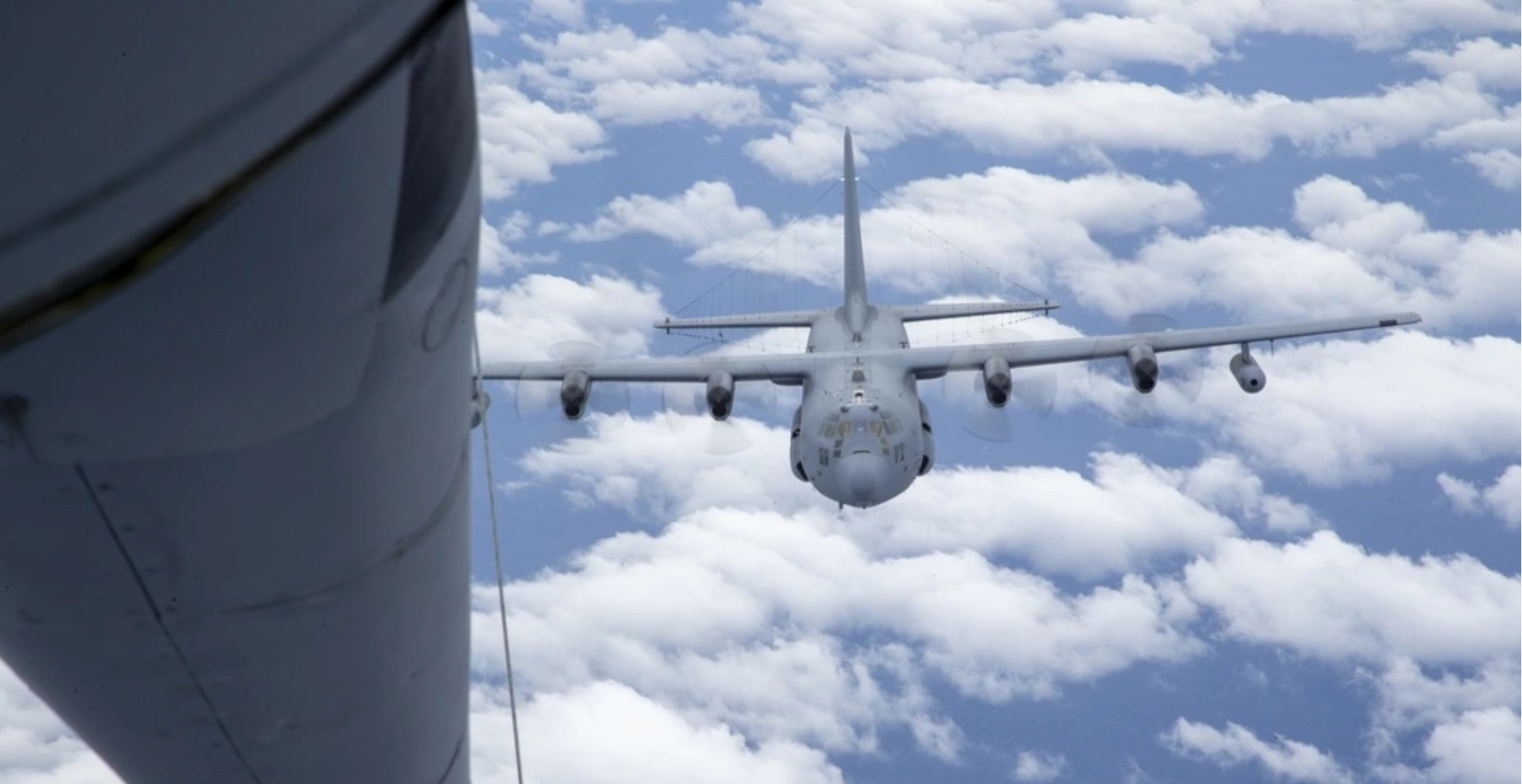
An Air Force EC-130H Compass Call prepares for in-flight refueling over the Gulf of Mexico, Dec. 3, 2020. A U.S. Air Force EC-130H Compass Call from the 55th Wing prepares for in-flight refueling from a 155th Air Refueling Wing KC-135 Stratotanker during exercise Emerald Flag over the Gulf of Mexico, Dec. 3, 2020. (Staff Sgt. Joshua Hoskins/U.S. Air Force)
Compass calling
The EA-37B is replacing the EC-130H, which flew over the Middle East practically non-stop through the Global War on Terror. EC-130H crews used radio signals to track down insurgents and disable remote-controlled improvised explosives.
But the Pentagon is preparing for a possible fight with China across the vast Pacific Ocean. The EC-130H may not have the speed or range to help, and its low ceiling of 25,000 feet means it can’t throw signals very far to touch enemy systems.
The EA-37B can fly about twice as far, fast and high as its predecessor. The bulges on the side of the fuselage house transmit antennas and amplifiers that boost its power, letting the jet hit targets farther away than smaller platforms such as the Navy’s EA-18G Growler.
The Air Force is also developing a software system that will let Compass Call crews quickly update their electronic warfare programs in response to new threats.
The first EA-37B arrived in August, 2024, and the fleet grew to five by May 2025. It’s already a combat veteran, having taken part in Operation Epic Fury earlier this year.
An EA-37B Compass Call takes its first official flight at Davis-Monthan Air Force Base, Arizona, Aug. 28, 2024. Air Force photo by Senior Airman Andrew Garavito
But is it enough?
In its 2027 budget request, the Air Force bumped its request for 12 EA-37Bs up to 22 aircraft through 2031, nearly double the original ask. But given the size of the Pacific and the worldwide demand for electronic attack, some say that may not be enough. Heather Penney, an airpower expert at the Mitchell Institute for Aerospace Studies, said on a recent podcast that the Air Force probably needs upwards of 30 aircraft to meet demand.
On the other hand, Clark warned that as air defenses become more formidable, EA-37Bs may soon become obsolete.
There is plenty of grey between peace and war, and the electromagnetic spectrum allows superpowers to poke each other without turning buildings into rubble. This was a big part of the Cold War, wherein U.S. aircrews gathered electronic intelligence on the Soviet Union for decades. The EA-37B may play a similar role.
“If anything, the electromagnetic spectrum has become more challenged over time,” Col. Scott Mills, then-commander of the 355th Wing at Davis-Monthan Air Force Base, Arizona, said when the EA-37B first arrived there in 2024. “We need an asset that can meet that challenge today. We have that with the arrival of the EA-37B.”
We have even more about the EA-37B and why it’s so important for modern warfare over on our YouTube channel, which you can check out here.
The Navy is currently searching for a missing crew member from the USS George H.W. Bush aircraft carrier after an MH-60S Seahawk helicopter from the ship crashed in the Arabian Sea, service officials have announced.
The helicopter from the aircraft carrier USS George H.W. Bush “conducted an emergency water landing” about 3:30 a.m. Eastern Time on Wednesday, according to the officials with the Navy’s 5th Fleet, which overseas the Persian Gulf, Red Sea, Arabian Sea, and parts of the Indian Ocean.
Three other crew members from the aircraft have been recovered and are currently in stable condition, 5th Fleet officials said in a Wednesday social media post.
“There is no indication the emergency was caused by hostile action,” the post said, but no additional information on the mishap was immediately available. The incident is under investigation.
The Navy did not specify what unit the MH-60S belonged to, but the George H.W. Bush sails with Carrier Air Wing 7, which includes Helicopter Sea Combat Squadron 5, and MH-60S unit known as the Night Dippers. Carrier Air Wing 7 includes two squadrons that fly variants of H-60 helicopters, the MH-60S and MH-60R, which crews universally refer to as Sierras and Romeos. MH-60Rs are primarily tasked and outfitted for anti-submarine warfare, while the MH-60S squadrons focus on traditional helicopter missions, like search and rescue, personnel and cargo transport, and amphibious missions with Marines and Naval Special Warfare units.
The mishap marks the latest in a string of recent U.S. military aircraft crashes. Eight crew members were killed in June when a B-52 Stratofortress crashed shortly after takeoff from Edwards Air Force Base, California. Earlier that month, the pilot of a Marine Corps F/A-18 Hornet safely ejected before the plane crashed near Mount Rainier, Washington. Four crew members also survived ejecting in May after two Navy E/A-18G Growlers collided over an Idaho airshow.
This is a breaking news story. It will be updated as more information becomes available.