Tag: Military

  • Former soldier convicted of stealing $1 million worth of MREs

    Former soldier convicted of stealing $1 million worth of MREs

    This post was originally published on this site.

    A former soldier was found guilty of stealing more than $1 million of Meals-Ready-to-Eat, or MREs, from Fort Bliss, Texas.

    Joseph Lavar Davis, 47, was convicted by a Texas jury for a heist that included tens of thousands of MREs worth more than $1.1 million, Department of Justice officials announced Tuesday. 

    The MRE theft took place between February and August 2020 and included 200 pallets of the field rations. Each pallet contains roughly 576 MREs, according to federal court documents. In all, this means that the grand MRE theft included about 115,200 meals — some of which are good, some of which are not.

    MREs are the military’s go-to meals for troops in the field. They are designed to last in brutal conditions and be eaten in the roughest environments, without access to a microwave or stove. They are enjoyed by some but ridiculed by most. Food options have historically included fan favorites like beef stew or maple-flavored sausage patties, but in 2025, the Pentagon announced they were testing new flavors and snacks like Thai curry chicken and chocolate peanut butter bites.

    As a soldier, Davis worked in food service supply, where he learned how the military buys and obtains MRE supplies, according to the Department of Justice. After his retirement, Davis was hired for a similar role, albeit as a civilian contractor. Officials said he used his position “to exploit the process and steal MREs,” and that as part of the grift, Davis coordinated the delivery, sales price and payments for the stolen MREs.

    Top Stories This Week

    Davis was named with three other defendants in a February 2025 federal indictment. 

    “Each of the indicted individuals played a role in the scheme, which involved a civilian contractor who knew how to request and pick up the MREs, a soldier to assist in picking up and transporting the MREs, an intermediary between the buyer of the MREs and these two individuals, and the civilian who sold the MREs online,” Justice officials said.

    Davis and two defendants created and submitted memos “as though they were legitimate military requests for MREs,” according to the indictment. 

    The second defendant was assigned to the 1st Armored Division and worked at Fort Bliss, and the third, like Davis, was former military. Justice Department officials did not give details on the other defendants in their press release, but court documents show that the other former service member pleaded guilty to conspiracy to commit government property theft and signed a plea deal in February 2026. Details of the plea deal were not available online.

    The team of conspirators rented trucks to transport the MREs to a fourth defendant, according to court documents, who operated a company that ran an El Paso, Texas, warehouse where the stolen MREs were then sold. Court records indicate that the defendant from the warehouse paid the three other defendants nearly $44,350 in separate payments in March and August 2020.

    In a statement, U.S. Attorney Justin R. Simmons wrote that “Joseph Davis betrayed the very country he once swore to protect in an effort to satisfy his own selfish ambition and a jury of his peers held him accountable for it.”

    The post Former soldier convicted of stealing $1 million worth of MREs appeared first on Task & Purpose.

  • Air Force brings World War II tail insignia out of retirement for ‘Doomsday Plane’

    Air Force brings World War II tail insignia out of retirement for ‘Doomsday Plane’

    This post was originally published on this site.

    The tail insignia for the Air Force’s E-4B Nightwatch airborne command post — unofficially nicknamed the “Doomsday Plane” — pays tribute to a legendary World War II bomber unit that was awarded three presidential citations.

    On June 26, the first E-4B featuring the Square B tail flash — a black box with a white letter “B” — was unveiled at Offutt Air Force Base, Nebraska, as part of the 95th Wing’s heritage week, according to a news release from Eighth Air Force, which oversees the wing.

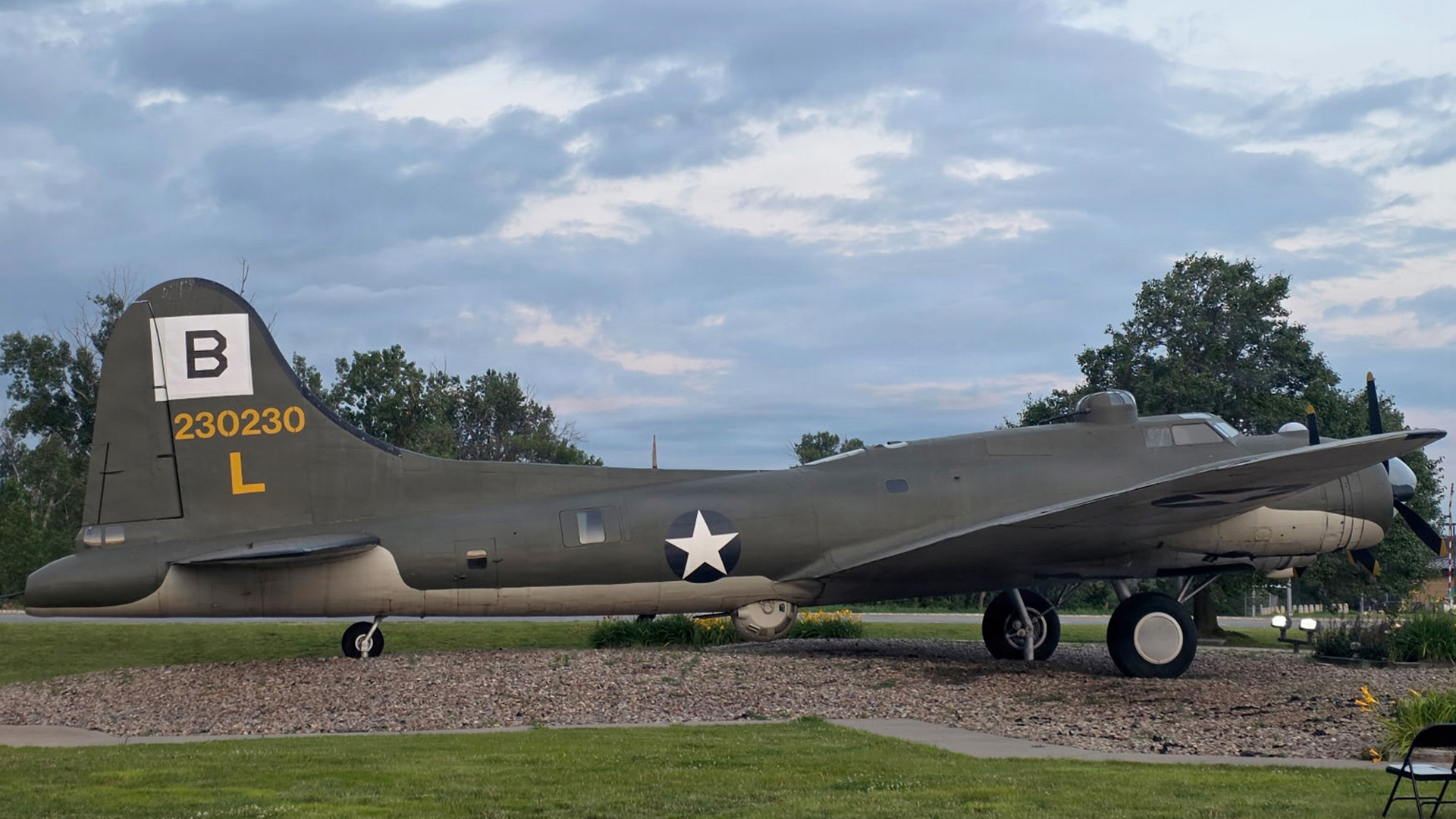
    The Square B aircraft tail insignia was first introduced during World War II to identify B-17 Flying Fortresses with the wing’s predecessor, the 95th Bombardment Group (H). At the time, Eighth Air Force used shapes and letters to distinguish aircraft from various units “due to the immense size of bomber and fighter formations during the air war in Europe,” according to the 95th Wing’s website.

    A B-17 Flying Fortress
    A B-17 Flying Fortress with the Square B insignia from World War II displayed at Offutt Air Force Base, Nebraska, onJune 26, 2026. Air Force photo by Master Sgt. Ethan Bell.

    The group was the only Eighth Air Force Unit to receive Distinguished Unit Citations for its wartime service — the award was later renamed the Presidential Unit Citation. It also took part in the first daytime bombing raid on the German capital of Berlin in March 1944.

    The 95th Bombardment Group was awarded its first Distinguished Unit Citation after 24 of its bombers flew as part of a harrowing two-pronged attack against the German cities of Regensburg and Schweinfurt.

    It was the Eighth Air Force’s deepest strike into Germany at the time, and the American bomber force suffered extremely heavy losses, with 60 out of a total of 376 B-17s shot down and more than 600 airmen killed, captured, or listed as missing. 

    At the time, Allied fighters did not have the range to escort the B-17s all the way to their targets and back, so the bombers had to try to fend off constant attacks from German aircraft by themselves for most of the mission. Weather also delayed the second wave of bombers, giving German fighters time to land, rearm, refuel, and take off again before the second prong of the attack.

    The raid marked the highest losses that Eighth Air Force had suffered up to that point in the war, said historian and author Donald Miller. 

    “It’s one of those raids where you can say that both sides lost the air battle,” Miller told Task & Purpose.

    Reichsmarschall Hermann Göring, who led the Luftwaffe, was furious at his pilots for letting the American bombers strike so far into Germany, Miller said.

    “At the same time, the Air Force just took staggering, demoralizing losses,” Miller said. “It was a prelude to even greater losses in October.”

    Top Stories This Week

    Four B-17s from the 95th Bombardment Group were shot down during the raid, and other bombers that were damaged or ran out of fuel were ditched while heading to a temporary base in North Africa after the mission, said Master Sgt. Rachel Waller, a spokesperson for the Eighth Air Force. More than a week later, only eight flyable bombers returned to the unit’s home base in England.

    The group went on to receive two more presidential citations in October 1943 and March 1944, Waller told Task & Purpose. By the war’s end, the unit had flown 8,265 sorties over 321 combat missions, dropped 19,769 tons of munitions, and delivered more than 456 tons of food to Dutch citizens.

    The Square B insignia was retired when the 95th Bombardment Group was inactivated in August 1945, the Air Force news release says.

    Now, the tail flash adorns the E-4B, which serves as the National Airborne Operations Center used by the president, the defense secretary, and the Joint Chiefs of Staff. The modified version of the Boeing 747-200 is designed to survive the effects of a nuclear war and an electromagnetic pulse.

    “The Square B is more than a symbol,” Col. Brian Hassler, commander of the 95th Maintenance Group, said in the Air Force news release. “It represents one of the most decorated Eighth Air Force bomb groups of WWII, a formation of airmen who flew into the heart of danger over Europe and helped shape the outcome of the war through courage, discipline, sacrifice and an unshakable commitment to one another.”

    The post Air Force brings World War II tail insignia out of retirement for ‘Doomsday Plane’ appeared first on Task & Purpose.

  • Annual ‘religious liberty training’ for troops could be on the way

    Annual ‘religious liberty training’ for troops could be on the way

    This post was originally published on this site.

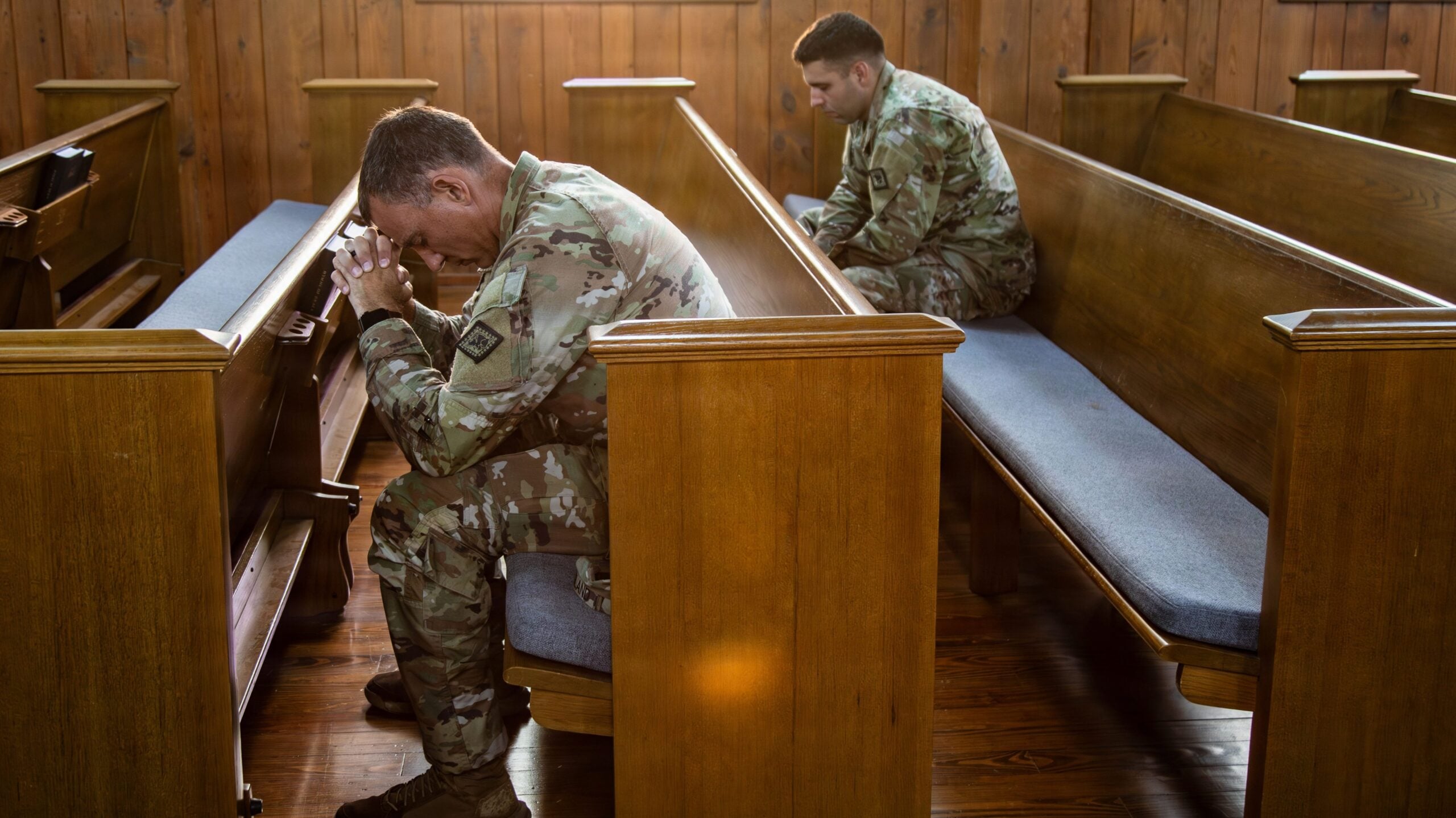
    Annual “religious liberty training” may soon be required for troops and commanders if the Pentagon adopts recommendations from a White House-directed commission of faith leaders and military advocates. 

    The recommendations, which Pentagon leaders said Tuesday they “welcome,” come from the Religious Liberty Commission, a 12-person committee established by President Donald Trump in May 2025 to develop policies across the federal government to “secure domestic religious liberty.”

    Some of the witnesses who testified at commission meetings in 2025 and 2026 included former military chaplains and veterans. The commission’s primary members include a mix of activists, faith leaders and politicians. Chaired by Texas Lt. Gov. Dan Patrick and former Trump cabinet member Ben Carson, the committee includes four Christian clergy, a Rabbi, several prominent figures in Christian activist and legal circles, and talk show host Dr. Phil McGraw.

    The commission’s review of Pentagon policies emphasized expanding the presence of religion across the Defense Department.

    “The more authority the military exercises over the lives of service members, the greater its obligation to ensure that those individuals can live in accordance with their sincerely held beliefs,” the commission wrote in its final report released last week. 

    The commission said the Pentagon should “standardize” so-called “religious liberty training” for “all levels” of the military, including commanders, judge advocate generals and recruiters.

    The commission also suggested the military increase enforcement of existing federal religious freedom laws, endorsed legislation that would allow chaplains to advise on policy and command decisions, and called for military logos and emblems to be allowed for use on religious texts like the Bible.

    The report also said the Pentagon should take another crack at producing a so-called spiritual fitness guide. A 2025 Army effort was scrapped by Defense Secretary Pete Hegseth just five months after it was launched. Hegseth noted the guide “mentions ‘God’ one time,” but “mentions ‘feelings’ 11 times.”

    Recommendations but no immediate training changes

    Left unclear was what annual religious freedom training regime would entail, but the report noted recent Supreme Court cases on religious expression and the Religious Freedom Restoration Act. Passed in 1993, that law prohibits government rules that “substantially burden” the exercise of religion. Critics of the law have argued that it has sometimes been used to “discriminate or to impose” religious beliefs onto others. 

    Mikey Weinstein, a former Air Force lawyer who heads the Military Religious Freedom Foundation, said that the commission’s recommendations violate laws separating church and state. He cited a clause in the Constitution which prohibits the enforcement of religion tests for holding public office.

    “Whenever you get into the business of trying to have a guide or a test, once again, you’re going back to clause three, article six,” Weinstein said. Military leaders, he said, have “no business in any way, shape, or form guiding anyone to figure out how they should view the metaphysical. Where do we come from? What are we doing here? Where do we go when we die? That is not anything that we should be doing.”

    Top Stories This Week

    Another commission recommendation calls for the Pentagon to “restore the use of military emblems on religious texts and materials,” like Bibles and dog tags — an issue that has long sparked debates over trademark laws and church and state separations. Pentagon policy restricts the use of trademarked logos to promote “ideological movements” or “specific interpretations of morality.”

    At one point, base exchanges sold Holman Bibles featuring logos from the services, Weinstein said. In 2012, the foundation took credit for the Pentagon pulling the Bible publishing company’s trademark authorization. Then-Defense Secretary Leon Panetta said the plan “[conveyed] a message of endorsement of religion.”

    “The whole idea is that it’s simply trying to make [religion] such a fundamental aspect, so inextricably intertwined into the mind of our military,” Weinstein said. 

    Pentagon officials did not immediately say what changes, if any, troops can expect from the report, but they signaled that Secretary of Defense Pete Hegseth supports the commission’s recommendations.

    “From day one, Secretary Hegseth has been a continuous and fervent protector of religious freedom and a vocal advocate for First Amendment rights,” Acting Pentagon Press Secretary Joel Valdez told Task & Purpose in a statement. “We welcome the recommendations and insights that the [commission] has provided to us.”

    The post Annual ‘religious liberty training’ for troops could be on the way appeared first on Task & Purpose.

  • The new Marine Scout career field is officially here

    The new Marine Scout career field is officially here

    This post was originally published on this site.

    The Marine Corps is creating a new primary military occupational specialty for scouts starting on Oct. 1, Corps officials announced on Tuesday.

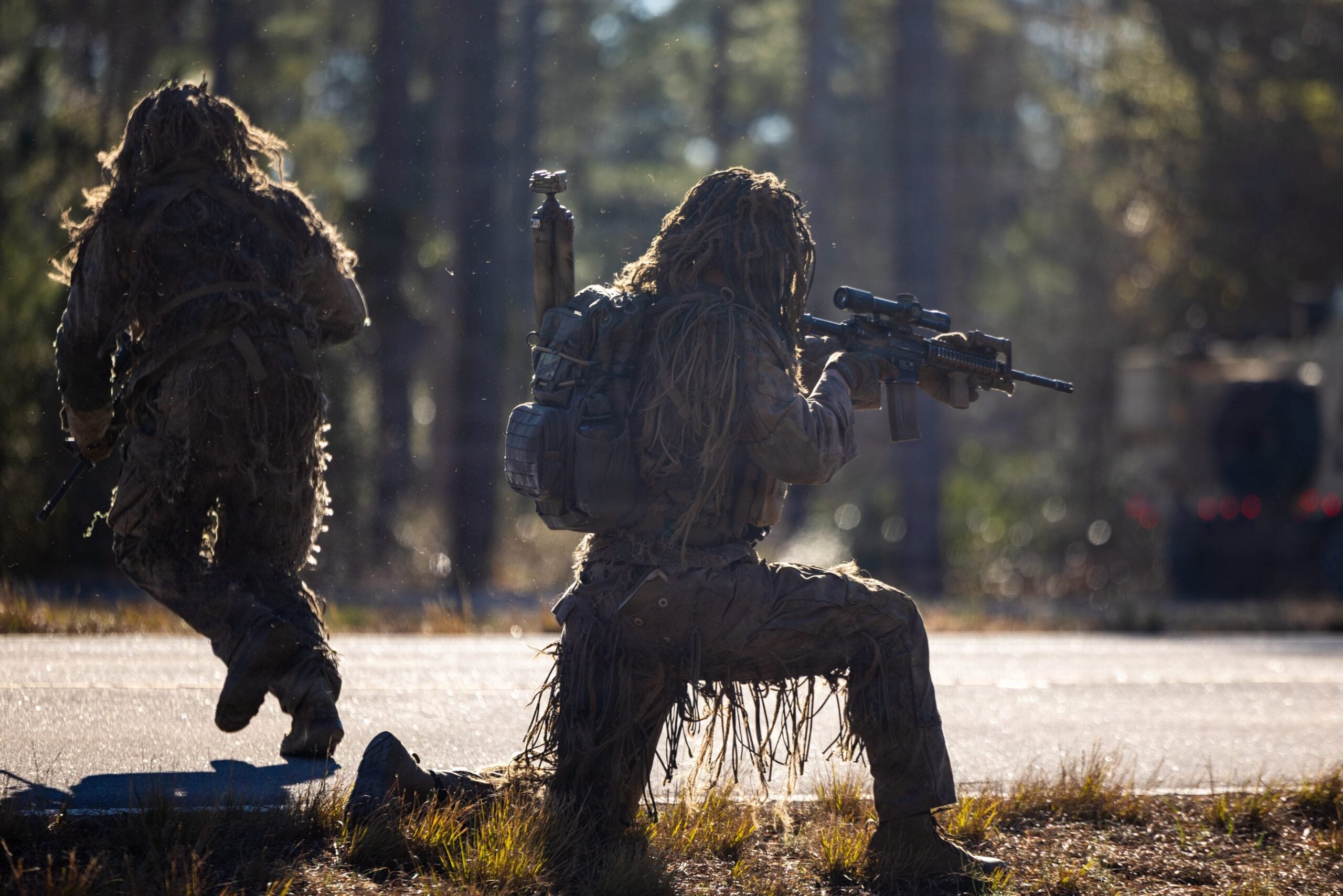
    The new Marine Scout field, which will have a military occupational speciality, or MOS, code of 0315, will make up a “26-Marine Scout Platoon” within infantry battalions, with “Scout Teams” being added to light armored reconnaissance battalions, reads a Marine Corps news release

    Scout platoons are equipped with advanced optics, communications equipment, and drones for reconnaissance and surveillance missions, the release says. Each team within the platoon includes a Joint Fires Observer to coordinate air and artillery strikes. 

    “This professional, purpose-built force will provide commanders with the organic reconnaissance and surveillance capabilities essential for success on the future battlefield,” Lt. Gen. Jay M. Bargeron, deputy commandant for plans, policies, and operations, said in the release. “These scouts will be our eyes and ears, extending our sensing capabilities and enabling commanders to make faster, more effective decisions to win our nation’s battles.”

    Marine Maj. Gen. Michael A. Brooks, who leads Training Command, told reporters in May that Corps leaders were considering making scouts a primary military occupational specialty, or PMOS, similar to machine gunners and mortarmen.

    “There is interest in turning our scout MOS, which is 0315, into a primary MOS,” Brooks said during a media roundtable.  “So, it would be like, you know, machine gunner, or 0331; or mortarman, 0341. You’d have an 0315 scout as a primary MOS. We don’t do that right now. It’s an additional MOS.”

    If the Marine Corps made such a move, scouts would likely attend a new Ground Reconnaissance Course to receive their PMOS, Brooks said at the time.

    Lt. Col. Worth Parker, a retired ground reconnaissance and special operations officer, told Task & Purpose in May that scouts and Reconnaissance Marines both provide commanders with intelligence, but Reconnaissance Marines typically operate at greater distances beyond the forward edge of the battle area than scouts.

    “Let’s say a rifle company is going to assault an objective,” Parker said at the time. “You might use the scouts to find a route to the objective and then bring them back to link up with the company commander to take that company on to where they have to go.”

    The post The new Marine Scout career field is officially here appeared first on Task & Purpose.

  • This is the moment the Navy’s USS Juneau was sunk in the name of training

    This is the moment the Navy’s USS Juneau was sunk in the name of training

    This post was originally published on this site.

    A geyser of water shot into the air when the decommissioned amphibious transport dock USS Juneau was struck by a torpedo fired by the Japanese Maritime Self-Defense Force as part of a live-fire ship sinking exercise, photos recently posted by the U.S. military show.

    The torpedo was the final salvo used to sink the Juneau earlier this month as part of Valiant Shield, a biennial exercise with U.S. and allied forces, said Lt. Cmdr. Katie Koenig, director of the Combined, Joint Information Bureau for the exercise.

    A Navy P-8A Poseidon fired an AGM-84D Harpoon missile and a B-2 Spirit bomber launched a Long Range Anti-Ship Missile, or LRASM, during the June 27 ship sinking exercise, Koenig told Task & Purpose.

    U.S. Navy, Air Force, Army, and special operations forces heavily damaged the ship before it was torpedoed, Koenig added.

    The Juneau was sunk about 200 nautical miles off the coast of Guam. The ship was commissioned in 1969 and saw service during the Vietnam War. The vessel also took part in the preparations for an underground nuclear test in 1971; it was part of the response to the Exxon Valdez oil spill in 1989; and it transported Marines during the Gulf War in 1991. After nearly 40 years of service, the Juneau was decommissioned in 2008.

    U.S. military services have long sunk decommissioned ships to test their weapons in live fire exercises. Other decommissioned vessels that have been sent to the bottom of the ocean in the name of training include the amphibious transport dock USS Cleveland, which was struck by two Precision Strike Missiles, or PrSMs, during a 2024 exercise. The sinking of the Cleveland marked the first time the land-based missile had been used against a ship. The PrSM made its combat debut this year as part of U.S. military operations against Iran, dubbed “Epic Fury.”

    Top Stories This Week

    Training how to sink warships is especially important as the U.S. prepares for a possible fight against China. A 2024 Defense Department report found that China’s navy had more than 370 vessels. The U.S. Navy currently operates 291 battle force ships, according to the service’s shipbuilding plan.

    As part of its reorganization effort focusing on China, the Marine Corps has equipped units in Okinawa with anti-ship missiles.

    The skills honed during ship-sinking exercises can also be used against other adversaries. In early March, a Navy Los Angeles-class submarine torpedoed an Iranian warship,marking the first time since 1945 that a Navy submarine had used a torpedo to sink an enemy vessel.

    The post This is the moment the Navy’s USS Juneau was sunk in the name of training appeared first on Task & Purpose.

  • Visa battle for mother of Cape Verde footballer puts spotlight on nation and its military heritage

    Visa battle for mother of Cape Verde footballer puts spotlight on nation and its military heritage

    This post was originally published on this site.

    The battle over a visa for the mother of a revered soccer goalie has put a spotlight on the archipelago of Cape Verde, whose residents have a storied legacy of service in the U.S. military, including one sailor who some researchers consider to be the first African-born recipient of the Medal of Honor.

    Forty-year-old goalie Josimar “Vozinha” Dias recently earned a certificate from the Guinness World Records book as “the oldest goalkeeper to keep a clean sheet” in a World Cup debut with his acrobatic play on June 15 for the Tubarões Azuis — Blue Sharks — of Cape Verde, turning away shot after shot to hold powerhouse Spain to 0-0 draw.

    Cape Verde again produced a stunner on Sunday, coming from behind to earn a 2-2 draw with heavily favored Uruguay, a score that featured the tiny island nation’s first-ever goal in a World Cup.

    “This means everything for our country,” Cape Verde coach Pedro Leitão Brito told the Associated Press. “We have always said that we wanted everybody to see our country, our team and we have shown organization and braveness and this is proof of what our country is about — resilience and to try to overcome hardships.”

    Vozinha, however, was in tears after the June 15 match over the money and red tape for a visa that kept his mother from attending her son’s shutout of Spain.

    “I cried after the game because I grew up with my grandparents when I was a kid, and they could not be there,” he told reporters. “They passed away a few years ago. My mum could not be here either for a visa issue, and the money we had to pay for it. We did not manage to do this in time.”

    House Minority Leader Rep. Hakeem Jeffries (D-N.Y.), the only member of Congress of Cape Verdean descent, then worked with Secretary of State Marco Rubio to clear up the $15,000 visa issue.

    “No mother should miss the chance to see her child make history,” Jeffries said in a statement. All fees were subsequently waived, Jeffries added.

    Vozinha’s mother was in attendance on Sunday to watch her son against Uruguay. Cape Verde next plays on June 26 against Saudi Arabia, with a possible chance to punch their ticket to the elimination round on the line.

    The goalie’s heroics and the flap over the visa, meanwhile, drew attention to the long history of the U.S. connection to Cape Verde, sometimes called Cabo Verde, an island chain and former Portuguese possession about 350 miles off the west coast of Africa.

    In comments for a Smithsonian Magazine article, Donald Heflin, the former U.S ambassador to Cape Verde, noted, “Cabo Verdean Americans are one of [the U.S.’s] oldest immigrant communities, going back to the colonial whaling days.”

    (U.S. Navy)

    “We have the names of five Cabo Verdeans who fought in the American Revolution,” Heflin continued. “And their proud military tradition grows from there, with the numbers of Cabo Verdean Americans in uniform getting larger with each of America’s wars.”

    One of those Cape Verdeans was Joachim Pease, who served aboard the Union sloop of war Kearsarge during the June 19, 1864, epic battle against the Confederate raider Alabama off the French port of Cherbourg.

    The Union Army was segregated at the time — the Navy was not. Aboard Kearsarge, Pease served as the loader on a 32-pounder gun that helped sink the Alabama, according to the Smithsonian article.

    His Medal of Honor citation — considered by many to be the first for an African-born service member — said that he “exhibited marked coolness and good conduct and was highly recommended by the divisional officer for gallantry under fire.”

    Pease disappeared after the Kearsarge returned to Boston. He was never located.

    The Navy was unable to present him with the medal, which is now on display at the National Museum of the United States Navy in the Washington Navy Yard in Washington.

  • Beyond the battlefield: How 3 Marine Raiders turned combat lessons into a healing mission

    Beyond the battlefield: How 3 Marine Raiders turned combat lessons into a healing mission

    This post was originally published on this site.


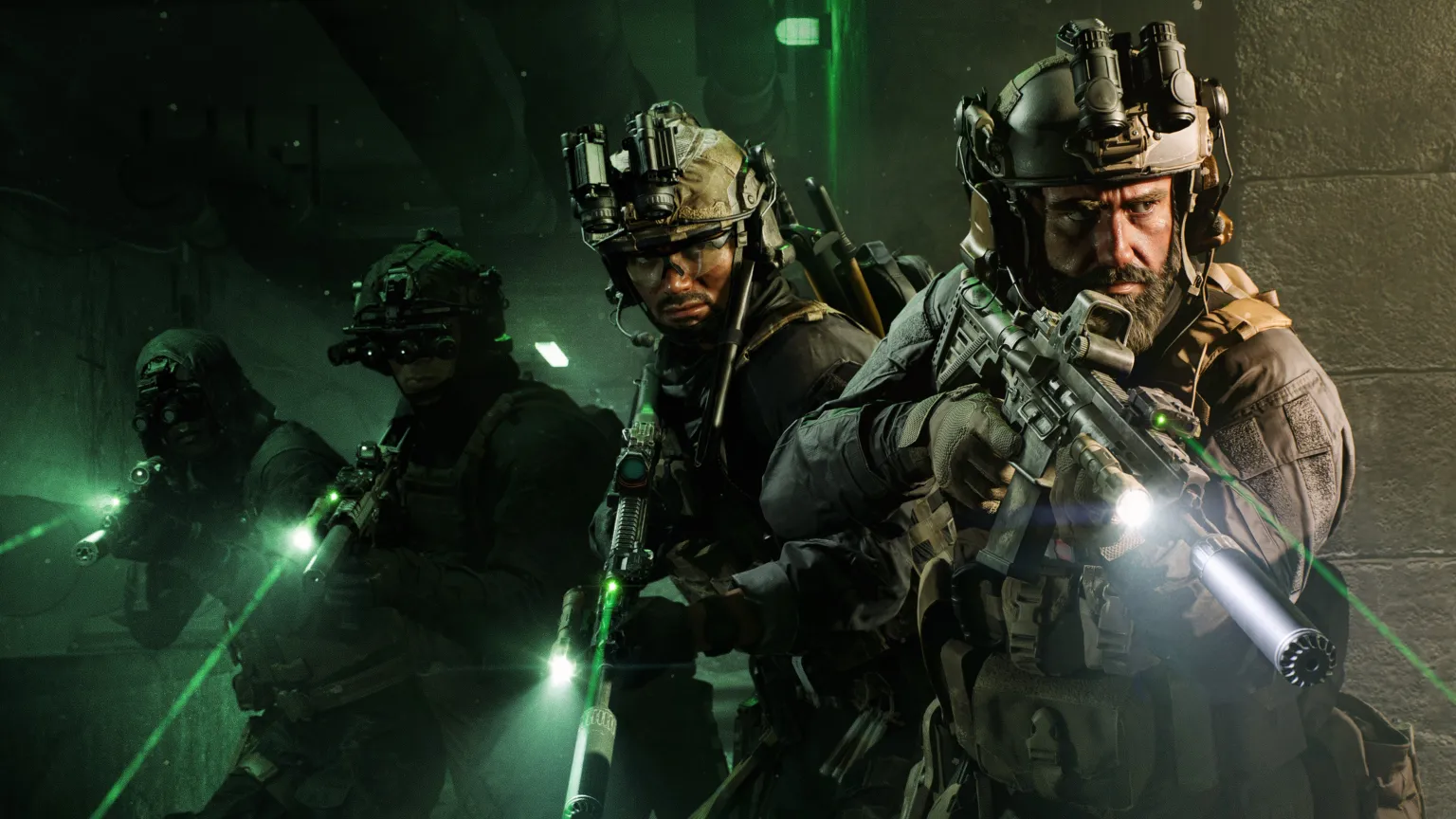
    Open this season of the video game “Battlefield 6,” and you might find yourself dropping into a firefight as one of the Strix Raiders, the special operations team at the center of the shooter’s “Nightfall” update.

    What most players sprinting across the map won’t know is that three of those characters are built from real Marines, and that the men behind the motion capture have spent the years since their service trying to keep other veterans alive.

    Prime Hall, Don Tran and Rick Briere served together in the 1st Marine Raider Battalion. In the game, they appear as Rob Brooke, Douglas Pham and Atticus Moore. Out of it, they are business partners, nonprofit founders and, by their own account, brothers who have buried too many friends.

    For Hall, the throughline from combat to civilian life is simple to name. “It takes a village,” he said. He frames it the way a Raider would. In a fight, you want 360-degree security. After service, he said, that security becomes “your perimeter of the relationships and the people that you have in your life.”

    That perimeter matters because the landing is rough.

    Hall enlisted in 2005 and was medically retired in 2017 after an insider attack years earlier left damage that finally surfaced.

    Stacked with prescriptions, he said he began to feel like he was “in the passenger seat of life.” A holistic-healing retreat in late 2019 turned things around, and the lesson stuck. “You can only do so much on your own,” he said. “At a certain point, you know, you gotta tap into something bigger than yourself.”

    The three built that something. Deep End Fitness, their underwater training program, started the year the trio got out and now coaches athletes and civilians nationwide.

    Hall ran a nonprofit, Marine Raider Challenge, until the unit relocated to North Carolina. Tran helped start another, Operation Resilience. The mission Hall keeps returning to, though, is grimmer. He has lost roughly 10 friends to suicide — part of a toll that still claims an average of about 17 veterans a day. The work, he said, is about turning each loss into a chance “to create a positive shift somehow in the community.”

    His guiding phrase: “Be what’s missing.”

    Tran describes the transition trap in operational terms. In the military, the stakes were high but the problem was simple. “Now it’s like, when you’re out [the problem] became extremely complex.”

    Money, school, family and a young business all competed at once. What got them through was dropping the act they had all learned to wear.

    “In the Raiders you’re this super tough guy,” Tran said. Out of uniform, that facade has a short shelf life. He and his teammates learned to say the thing operators rarely say: “I need some help, dude. Like, this is not working.”

    That honesty, he added, is also what reaches the veterans they mentor. “That humanizes you.”

    Briere, who admits he still questions whether he belongs in a mentor’s chair, landed on the same point. “It’s okay to drop the armor,” he said.

    He describes a bond that no longer requires performance. “There’s no animosity, there’s only transparency.” Months can pass without the three talking, he said, and they pick back up like no time has passed.

    None of them set out to be in a video game. The opportunity came through their Deep End Fitness work, and the developers’ focus on authenticity meant the men actually played the parts in motion-capture suits.

    Briere, a lifelong gamer, still can’t quite believe it. Seeing the characters come to life, he said, “it’s surreal to me.”

    Tran’s reaction was more practical. “My character doesn’t die,” he said.

    The three are clear about what they hope the game does beyond entertain. Hall sees the characters as a doorway, “an access point for people to look into what we’re up to” and the work they have done since getting out, he says. For Tran, it is also a chance to put the Raider legacy alongside the units that already have their movies and books.

    Asked what they would tell a struggling veteran, the answers came easily.

    “Find your next North Star, dude, and navigate towards that,” Tran said. “You’ve done it before, probably in a way harder world.”

    Hall offered a message of hope, the kind he says he is living proof of.

    “If I can do it, anybody can do it,” he said. “Give yourself some grace.” Even a broken clock, he likes to remind himself, is right twice a day.

    Veterans and service members in crisis can reach the Veterans Crisis Line by dialing 988 and pressing 1, or by texting 838255.

  • Has the military been miscalculating spouse unemployment?

    Has the military been miscalculating spouse unemployment?

    This post was originally published on this site.


    For decades, military spouse employment policy has revolved around a single, stubborn statistic: unemployment.

    It’s the standard that leaders cite, programs are built around and progress is measured against. But a recently published report reveals that the Department of Defense has been calculating unemployment differently from typical benchmarks, overstating unemployment rates and obscuring how many military spouses may have stopped looking for work entirely.

    A March 2026 report revealed that the DoD calculates unemployment differently than the Census Bureau and Bureau of Labor Statistics, counting some spouses as unemployed who would typically be seen as out of the workforce.

    The Pentagon attributes these differences to unique military lifestyle factors. However, according to economist and professor Amy Burnett Cross, this difference in calculation “makes these measures not comparable.”

    In fact, if the Pentagon mirrored federal standards, the military spouse unemployment rate would drop from roughly 20% to 14% — still significantly higher than the national average, but lower than the figure cited for years in congressional testimony, policy discussions and news coverage.

    Cross believes this “structurally inflates” military spouse unemployment while simultaneously reducing the number of spouses categorized as no longer participating in the workforce, a group rarely highlighted in DoD programming efforts and reports.

    “I remember penny pinching so, so much in those days,” recalled Army spouse Elizabeth Mays of her husband’s first duty station in Fort Huachuca, Arizona. “I ended up taking a job making minimum wage at Sears in the shoe department, just to help us make ends meet.”

    This was the first of many times Mays worked outside her field to remain employed. Subsequent duty stations yielded similar employment choices.

    “Between commuting and then the workday, you’re spending 13 hours a day away from your newborn baby, and your husband is deployed and not even there at all. It’s just me,” said Mays.

    She did the math and realized that after child care and transportation costs, her income wouldn’t cover her expenses. In fact, remaining in the workforce would “cost” her family $50 a week. “Those decisions did not make sense, and that was the point where I chose family.”

    A teacher leads an arts and crafts activity on Peterson Space Force Base, Colorado, 2023. (A1C Justin Todd/U.S. Space Force)

    Mays’ experience is familiar to many military spouses, but it is an experience that is not well understood. Mays is not part of the roughly 20% of military spouses who are unemployed, those who are looking for work but not finding it. She is part of the roughly 36% of spouses who are not in the workforce at all.

    “Anecdotally, I would say that we have a pretty large percentage of spouses that have removed themselves from the workforce,” said Eddy Mentzer, who oversaw child care family programs and spouse employment for the DoD. “They’re not captured in any way whatsoever.”

    The lack of information on military spouses who have stopped looking for work may undercut the programs designed to help them.

    Patricia Barron served as the deputy assistant secretary of defense for Military Community and Family Policy under President Biden from 2021 to 2025. Her office oversaw military spouse employment programming and collaborated with the Pentagon’s Office of People Analytics to survey military spouses.

    “A question that I have always had to our researchers at DoD … ‘Are we asking the right questions?’” said Barron.

    The answer she often received was that changing survey questions would hamper the department’s ability to track trends over time.

    “There’s always, I would say, good reasoning for the pushback [to update surveys], but it keeps us stuck where we are,” she said. “There’s got to be a new way to think about the [spouse survey], and maybe it’s time to blow it up.”

    For many military spouses, cycling in and out of the workforce is expected, even if it isn’t clearly documented or understood.

    Upon discovering she was pregnant with their first child, Navy spouse Melinda Estrada made a plan to navigate her budding career in tech. She would work on her graduate degree while staying home with her new baby.

    “And then once that’s done, then I’ll jump from my graduate degree, hopefully, to a full-time position,” said Estrada.

    Because her husband’s assignment to attend school in Monterey, California, was only supposed to last 18 months, she didn’t see a point in looking for a job only to have to step away without the accrued work time required to be entitled to maternity leave.

    A second child and increasing demands from her husband’s job delayed her graduate degree further, extending her time out of the workforce.

    Mays, too, struggled to reenter the workforce.

    “In Germany, I tried to go back to work,” said Mays, whose husband received overseas orders in 2014, moving her and her two children, ages two and four, far from family and friends.

    Because there were limited jobs available overseas, she applied for a job outside her field, at a bank on the installation.

    “They told me that they chose another candidate because they were going to be there longer than me,” she said.

    Undeterred, she applied to work in merchandising at the Army Exchange and was hired after having to wait 15 months for her daughter to be old enough to be eligible for a spot in daycare.

    “I came back from my first day on the job with training, and my husband said, ‘So, I have news.’ Our favorite phrase,” Mays recalled. “‘I have been selected for a job in D.C., and we have to move in 90 days.’”

    Mays wanted to work, but resigned the following day, exiting the workforce.

    Family and friends gather at the homecoming event for the USS Gerald R. Ford, May 16, 2026. (MC1 Clay M. Whaley/Navy)

    Historically, DoD surveys have asked spouses if they “wanted to work.” As of 2019, the vast majority of those spouses, 85%, responded yes, but only 43% were employed.

    This question was not included in the 2021 or 2024 surveys. However, recent DoD surveys have asked why spouses are not looking for work, allowing them to select only one answer. The Number 1 answer (30%) cited child care responsibilities.

    Child care scarcity is a reality for all Americans, and military child care is no different.

    According to a 2025 report by RAND, military child care programs are not keeping up with demand, leaving tens of thousands of military families without care.

    The availability of affordable child care has a significant impact on military spouses’ participation in the workforce. According to a 2016 Health and Human Services report, a 10% reduction in the price of child care could increase maternal employment as high as 11%.

    Despite the documented need for improved child care access, most military spouse employment solutions have focused on reducing unemployment through personal development and employment partnerships.

    “The DoD has thrown money at trying to find employers who are willing to hire military spouses because people don’t want to hire people who are moving all the time,” said Maria Donnelly, the co-founder of the Military Family Foundation, a nonprofit that has helped military spouses navigate federal employment policies.

    Donnelly was referring to one of the DoD’s employment solutions, the Military Spouse Employment Partnership, or MSEP, a membership-based program that encourages civilian employers to hire military spouses.

    Since MSEP was launched in 2011, “more than 220,000 military spouses” have been hired. While the initiative requires its partners to document those they hire and retain, this data has not yet been publicly reported.

    Both Estrada and Mays reported taking advantage of DoD-sponsored career development programs and internships. Neither walked away with jobs as a direct result of participating, but both formed networking connections that ultimately led to employment. For Estrada, another workforce departure followed.

    In January 2026, the DoD announced an effort to reduce military spouse unemployment by 5%, increase Military Spouse Employment Partnership retention to 100% and establish a new military spouse unemployment office.

    If experts are correct that the military is measuring unemployment differently than the rest of the country, it raises questions about whether current policies are targeting the right problem.

    “I try not to should myself,” said Mays, who is currently employed by a military spouse-owned business that offers flexible remote work, a job she is thankful to have. “But I have this feeling and that I could and should be like at a director level or a management level, given my level of experience.”

    Estrada is still looking for work.

  • ‘Flashpoint Campaigns: Cold War’ is the ultimate OODA Loop wargame

    ‘Flashpoint Campaigns: Cold War’ is the ultimate OODA Loop wargame

    This post was originally published on this site.

    Fifty years ago, a U.S. Air Force colonel named John Boyd offered a profound insight into why battles are won or lost.

    His famous Observe, Orient, Decide, Act — or OODA — Loop described the mental cycle by which combatants, from fighter pilots to generals, assess and react to a constantly changing situation.

    Those with a faster OODA Loop could exploit opportunities while their befuddled opponents struggled to understand what was going on.

    Germany crushed France in 1940 largely because of a sluggish French command system that was always one OODA step behind the swift panzer divisions. More recently, OODA might explain why tactically rigid Russian tank columns were decimated by outnumbered but agile Ukrainian troops in 2022.

    Had the Soviets invaded Western Europe during the Cold War, NATO would have relied on OODA — plus airpower and more advanced weapons technology — to stop the Soviet steamroller.

    To the troops watching waves of Soviet tanks roll into the Fulda Gap or the North German Plain, OODA would have been just a buzzword. But NATO needed every advantage it could get to compensate for superior Soviet numbers and firepower.

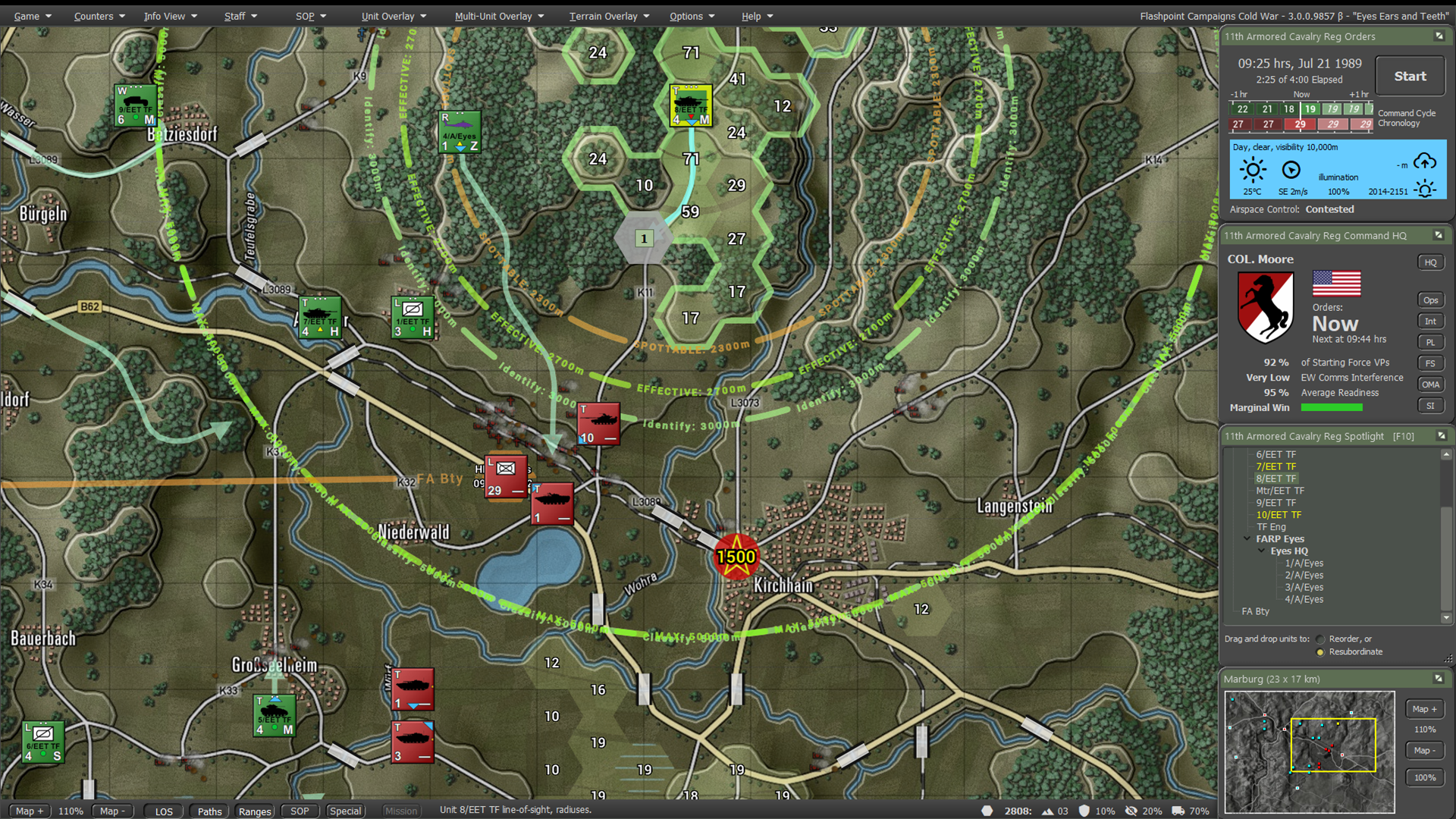
    Flashpoint Campaigns: Cold War, published by Matrix Games, is a computer wargame that depicts a hypothetical Warsaw Pact invasion of West Germany in 1989.

    But it is more than just another World War III wargame. Flashpoint Campaigns is the OODA Loop gamified. In fact, the game comes in two versions: the regular game for armchair generals, and a professional edition for real soldiers.

    Flashpoint Campaigns is a 2-D map game, with NATO platoons and Warsaw Pact companies waging battalion- to division-sized battles. Set in the twilight of the Cold War, much of the hardware — such as Abrams and T-72 tanks, and Bradley and BMP infantry fighting vehicles — are still around today.

    Players issue orders to their troops, such as movement, direct fire, calling in artillery and airstrikes, combat engineering operations and resupply. For example, a tank platoon can be ordered to head to a crossroads via a series of designated waypoints along the route.

    Units can be given standard operating procedures, or SOPs, such as determining at what range to open fire, when to change firing position and when to retreat. Enemy units are usually invisible until spotted. With Late Cold War weapons so devastating, combat is deadly and proper concealment and reconnaissance a must.

    After a player finishes issuing commands, they can hit the start button. A game clock then appears and a certain number of minutes elapse, during which units try to fulfill orders.

    It all sounds like a straightforward process — until OODA intervenes.

    Unlike many wargames, players in Flashpoint Campaigns can’t give orders to their troops at will. Instead, only at certain intervals does the game clock pause and allow commanders to issue fresh orders. This reflects the time it takes for the command system to collect information, analyze it, reach a decision and pass a new order to subordinates.

    Like an object in motion in Newtonian physics, units will try to execute their last set of orders until new instructions arrive. That tank platoon heading down the road toward a village will keep going toward that village until told otherwise, even if the tactical situation has changed.

    This is where NATO’s OODA advantage kicks in. The NATO player might have to wait, say, for 14 minutes of game time to elapse before issuing fresh orders. For the Soviets, the delay might be 23 minutes, or about 50% longer.

    This means that NATO will have more opportunities to give new orders than the Soviets do. In turn, this means NATO troops can more quickly react to new threats such as enemy forces on their flank, or exploit discovery of a gap in the enemy’s lines.

    It also means that NATO can be more flexible in its planning, rather than having to anticipate the tactical situation far in advance.

    “We all know what happens when plans make contact with the enemy,” Robert Crandall, president of On Target Simulations, which designed Flashpoint Campaigns, told Military Times. “NATO spent considerable efforts to train for what happens after that contact and to respond faster than their counterparts. This could let them operate inside the Warsaw Pact command loop and outmaneuver them.”

    But even NATO has OODA problems in the game. The presence of electronic warfare, in which the Soviets invested heavily, lengthens the interval before a player can give orders. Units engaged in combat will require 50% more time to react to new orders.

    And commanders who send too many orders to their troops will receive an unpleasant surprise: too much radio traffic reveals the location as a headquarters, marking it for an artillery or airstrike.

    Indeed, some U.S. Army experts today worry American command posts are so chatty that they will be targeted in wartime.

    As battles progress in Flashpoints Campaigns, and units takes losses and headquarters are disrupted, command delays will inevitably lengthen for both sides.

    Clausewitz’s “friction of war” will become an impediment, though a bit less so for NATO. Commanders on both sides will have to grit their teeth and accept that they can’t control their troops as they would like to.

    Would NATO’s tighter OODA Loop have been enough to defeat the Soviets?

    “One of the nicest compliments the game received came from a former Warsaw Pact officer who said he played the game using strict Warsaw Pact doctrine and won,” Crandall recalled.

    “If the Warsaw Pact player has figured things out correctly, his initial plan will not have needed much, if any, adjustment and just rolls along at maximum speed. His opponent will be wrong-footed and at the mercy of the OODA Loop to react in time. With the fast-moving, hyper-lethal forces of 1989, good luck with that.”

    In some ways, Flashpoint Campaigns is a memorial to another era.

    The year 1989 was the twilight of 20th Century mechanized warfare. With the threat of drones paralyzing battlefield maneuver in the Ukraine War, discussing OODA’s influence on tactics seem almost quaint.

    And yet, there is a reason why there is a global arms race today to develop smarter AI, quicker kill chains between sensors and weapons, and tightly networked forces that can act faster than the enemy.

    Every year, the OODA Loop seems to tighten, with less margin to fall behind. As OODA reminds us, time is too precious a commodity to squander.

  • Michael Bay slated to direct film on rescue of F-15 crew in Iran

    Michael Bay slated to direct film on rescue of F-15 crew in Iran

    This post was originally published on this site.


    Less than two months after U.S. forces rescued two crew members behind enemy lines after their aircraft was shot down over Iran, filmmaker Michael Bay has confirmed he will be helming a movie based on the mission.

    Backed by Universal Pictures, the “Transformers” director is slated to shepherd the speed-of-light-turnaround project based on the April 3 shoot down of a U.S. Air Force F-15E Strike Eagle and subsequent rescue of its crew during U.S.-led operations against the Islamic Republic, Deadline reported.

    The untitled movie is expected to be based on a book by author Mitchell Zuckoff, which will be released in 2027, according to Deadline. Bay previously worked with Zuckoff on the film adaptation of 13 Hours, which chronicled the 2012 attack on a U.S. compound in Benghazi, Libya.

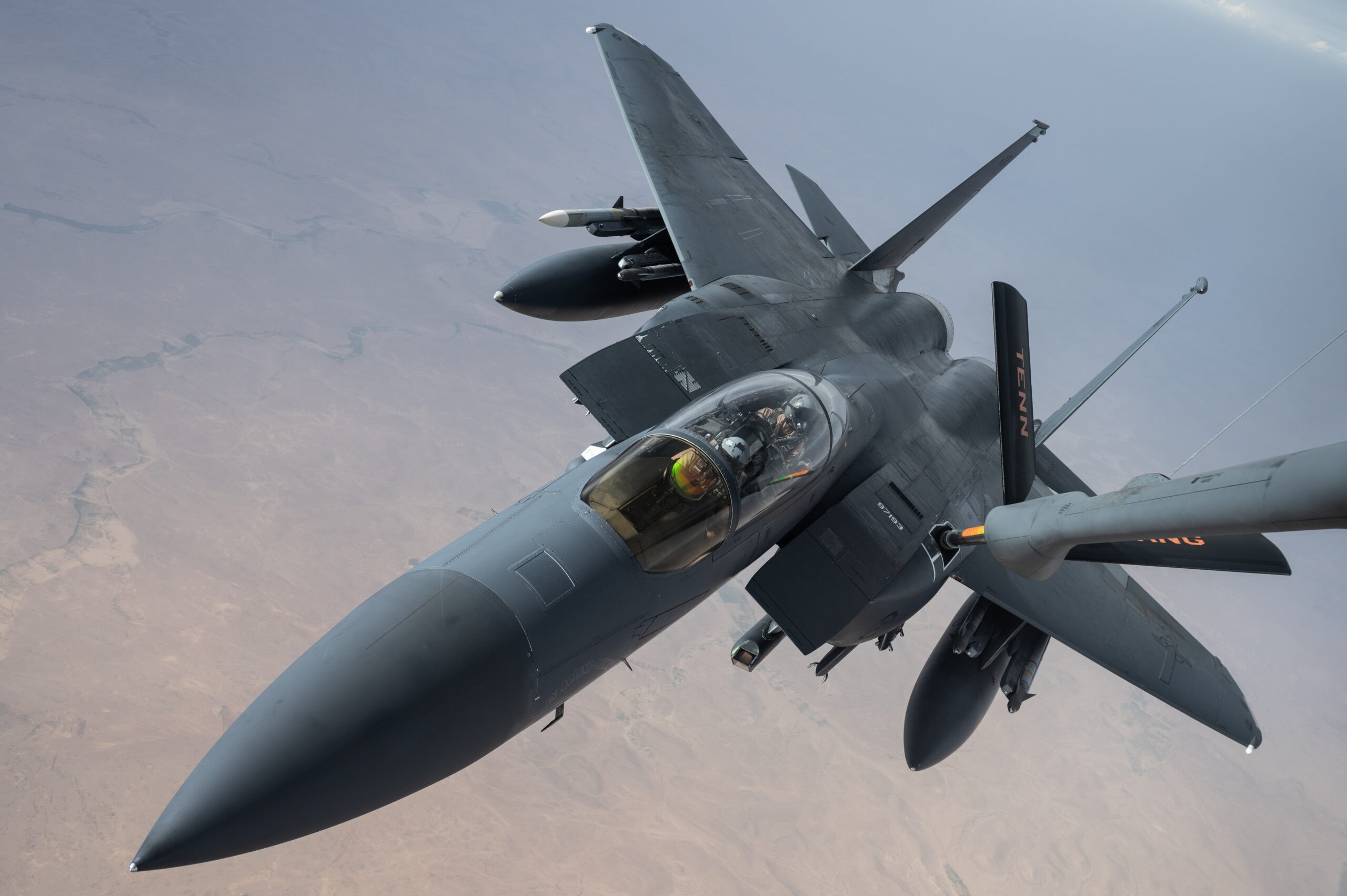
    On April 3, the F-15, call sign Dude 44, was downed by Iranian air defenses at approximately 4:40 a.m. local time, becoming the first manned aircraft to be lost to hostile anti-aircraft fire since Operation Epic Fury began on Feb. 28.

    Both crew members ejected and landed miles apart. Though the pilot was located within hours and rescued — after an intense fight — the aircraft’s weapons systems officer remained on the move, evading Iranian forces in the Zagros Mountains, treating his own wounds and taking cover in a mountain crevice, according to U.S. President Donald Trump, who called the rescue mission “one of the largest, most complex, most harrowing combat search-and-rescue missions ever attempted by the military.”

    U.S. special forces eventually rescued the second downed airman following a complex operation, Trump announced on April 5.

    The identities of the crew members have not yet been released.

    In a statement provided to Deadline, Bay praised his “amazing partnership over [a] 30-year career working with the Department of War and amazing U.S. military members.”

    Bay added that the upcoming film adaptation will celebrate “the true heroism and unwavering dedication of our service members.”