Tag: Military

  • Arcade games satirizing Iran war appear at DC War Memorial

    Arcade games satirizing Iran war appear at DC War Memorial

    This post was originally published on this site.

    A waterway sign that reads “Open. Closed. Open.” A helicopter bearing the name “Kid Rock Force One.” Oil barrels that collectively spell out “LUBE.”

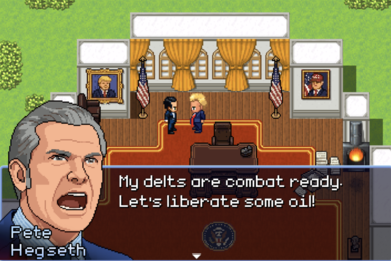
    Such are the art features wrapping three recently installed arcade games — also available to play online — at the District of Columbia War Memorial in the nation’s capital, the latest protest by the anonymous group Secret Handshake, which previously made headlines in September after installing a statue on the National Mall depicting President Donald Trump holding hands and skipping with convicted sex offender Jeffrey Epstein.

    The new installation’s game, officially called “Operation Epic Furious: Strait To Hell,” was developed as a response to the administration’s repeated use of video game footage to highlight military successes in Iran, the group told WUSA9.

    One such post featured video from strikes in Iran interspersed with game footage from Grand Theft Auto: San Andreas.

    The post, shared on March 6 by the White House’s official account, came just five days after six U.S. soldiers were killed by an Iranian drone strike at Kuwait’s Port of Shuaiba.

    Similar posts include one featuring airstrikes alongside footage from Nintendo Wii, and another depicting a bowling alley-style “STRIKE” animation alongside war footage.

    “The game features furious tweet battles against Iranian schoolgirls, low-flow shower heads, and other threats to American freedom like DEI and The Pope,” the group said in a statement to the local CBS affiliate. “And just to save you time, the only way you can lose is by trying to hold Melania’s hand. But it’s The Middle East, so you also can’t win either.”

    Photos were shared across social media Tuesday of National Guard members deployed to Washington, D.C., checking out the games at the memorial, which is adjacent to the National Mall.

    Next to the arcade-style games installed at the memorial is a plaque that states, “The Trump administration knows that the best way to sell combat is by making it a video game, that’s why they’ve been pumping out the ‘sickest’ Iran War video game hype reels,” according to WUSA9.

    “But why stop at clips when you could go full throttle Introducing Operation Epic Furious: Strait to Hell, a high-octane, flag-waving, boots-on-the-ground simulator where freedom isn’t debated, it’s deployed. No briefings, no hesitation; just pure pixelated patriotism. Strap in and play hard, because this game may never end.”

  • Air Force units earn honors for rescues during US evacuation from Afghanistan

    Air Force units earn honors for rescues during US evacuation from Afghanistan

    This post was originally published on this site.


    Three U.S. Air Force units recently received the Presidential Unit Citation for actions during a 2021 deployment, including efforts during the final withdrawal of U.S. troops from Afghanistan.

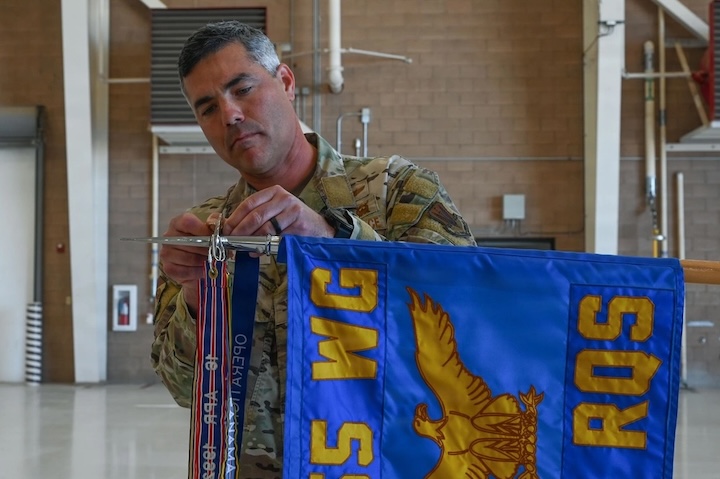
    The 55th and 48th Rescue Squadrons, as well as airmen from the 355th Aircraft Maintenance Squadron, all located at the Davis-Monthan Air Force Base, Arizona, received the awards April 17 and Jan. 17, respectively, according to a service release.

    The two rescue squadrons and airmen in the maintenance group were included in the Personnel Recovery Task Force, a 176-member joint team specifically formed to carry out the noncombatant evacuation operation in Afghanistan.

    The release stated that the team, which encompassed airmen from 20 different career fields, included pilots, maintainers, intelligence personnel and Special Warfare Airmen who created their own “unconventional recovery network” by initiating their own operations, security and communications in a “rapidly deteriorating deployed environment.”

    The team saved thousands of Americans and at-risk Afghans, according to the release, and established a safe evacuation station for over 12,000 refugees between July 16 and Aug. 31, 2021.

    Every unit in the task force prepared through exercises, such as the Red Flag-Rescue, to learn how to perform outside usual duties, per the release.

    “But during this mission in 2021, our team also led security teams to fortify aircraft and key command and control positions and manned defensive fighting positions along unsecured airfield areas, providing front-line defense that prevented the NATO compound from being overrun,” Air Force 1st Lt. Sebastian Marano, the 355th Aircraft Maintenance Squadron’s interim director of operations, said in the statement.

    In total, the task force operated through 864 hours of continuous alert over 53 days, assisting the safe evaluation of 124,000 people, according to the release. The force maintained its alert status until the last U.S. aircraft left Afghanistan.

    Another unit said to be crucial to the evacuation was the Combat Search and Rescue forces in the 66th Rescue Squadron, which executed air-to-ground operations, the release says. The 66th officially deactivated before April’s ceremony, so the 55th accepted the award on the unit’s behalf.

    The 58th Rescue Squadron was also included in the task force, but it too was deactivated before the ceremony. The 48th accepted the citation on its behalf.

    By the end of the operation, individual task force members accounted for one Bronze Star with Valor, 18 Bronze Stars and 151 Air Force Commendation Medals with Combat Devices for bravery and resolve under “extreme hazard.”

    “Every couple of years, there’s something that happens that defines the next generation of rescue Airmen,” U.S. Air Force Col. Jose Cabrera, 355th Wing commander, said in the statement.

    “Every generation has their time and I think we’re seeing that today — your defining moment,” Cabrera added. “This will go down in Air Force history as one of the greatest accomplishments of the Air Force rescue community.”

  • Could the US military handle a monster invasion? Monarch: Legacy of Monsters begs the question

    Could the US military handle a monster invasion? Monarch: Legacy of Monsters begs the question

    This post was originally published on this site.

    Season 2 of “Monarch: Legacy of Monsters” wraps on Apple TV+ on May 1, and the show will spend ten episodes doing what Pentagon strategic planners have presumably never done: war-gaming a Kaiju event.

    The series is built around a covert government agency monitoring giant monsters called Titans. It stars father and son Kurt Russell and Wyatt Russell as different-era versions of the same Army officer — a soldier’s soldier who spends decades watching the brass refuse to take a threat seriously until it’s too late.

    The story is fiction, obviously. But as anyone who’s sat through a joint readiness exercise knows, the scariest scenario is always the one nobody planned for. So, let’s run the tape.

    The first problem is command authority. Under the current National Response Framework, a catastrophic domestic incident triggers a cascade of federal coordination flowing from local authorities up through FEMA, with the Defense Department stepping in for Defense Support of Civil Authorities. It’s a system built for hurricanes, mass casualty events and CBRN -chemical, biological, radiological and nuclear- incidents.

    A 300-foot amphibious creature leveling a coastal city technically checks the “catastrophic” box. Still, the chain of command for a threat that moves under its own power, does not respond to law enforcement, and cannot be detained pending arraignment is untested at best.

    In a real monster scenario, U.S. Northern Command would likely assume the lead for any domestic Titan event. The command has been quietly expanding its homeland defense footprint, with new component activations as recently as this past January. That’s encouraging, unless the thing you’re defending against walked right out of the ocean and into downtown Los Angeles. At that point, the question of what active-duty troops are actually authorized to do on U.S. soil becomes considerably more urgent.

    The second problem is weapons. The U.S. military’s most powerful non-nuclear conventional munition is the GBU-57 Massive Ordnance Penetrator, a 30,000-pound bunker-buster delivered exclusively by B-2 Spirit bombers. It can punch through roughly 200 feet of reinforced concrete before detonating. According to Scientific American, the weapon saw its first real-world combat use last year against hardened nuclear facilities in Iran.

    The GBU-57 is, by any reasonable measure, an extraordinary piece of engineering. It is also a weapon designed to destroy static targets. A Titan-class threat that can absorb a fuel-air explosion and keep moving rewrites the targeting calculus entirely. Missiles, artillery, carrier air wings: all work against a threat that can be fixed, tracked, and killed inside a standard engagement envelope. A creature that is in the bunker presents a problem that the current inventory was not designed to solve.

    The third problem is the kill chain. Even if you could hurt the brute, authorizing the strike would be a bureaucratic event horizon.

    Nuclear release authority is well-defined. Authority to conduct a sustained kinetic campaign against a living organism the size of a skyscraper in a populated coastal city would involve rules of engagement, collateral damage estimates, environmental review, and at least one congressional staffer asking if the move requires an Authorization for Use of Military Force.

    Pick your favorite bottleneck.

    The “Monarch” universe eventually arrives at the uncomfortable conclusion that the military is not the main effort: Containment is. The joint force is extraordinary at destroying thingsbut it is considerably less adept at managing them.

    The season finale drops May 1 on Apple TV+.

    So is the U.S. military prepared to fight a Kaiju? The answer is a firm “probably not” – but they’re going to try anyway.

  • ‘American Solitaire’ puts a veteran’s invisible wounds front and center

    ‘American Solitaire’ puts a veteran’s invisible wounds front and center

    This post was originally published on this site.


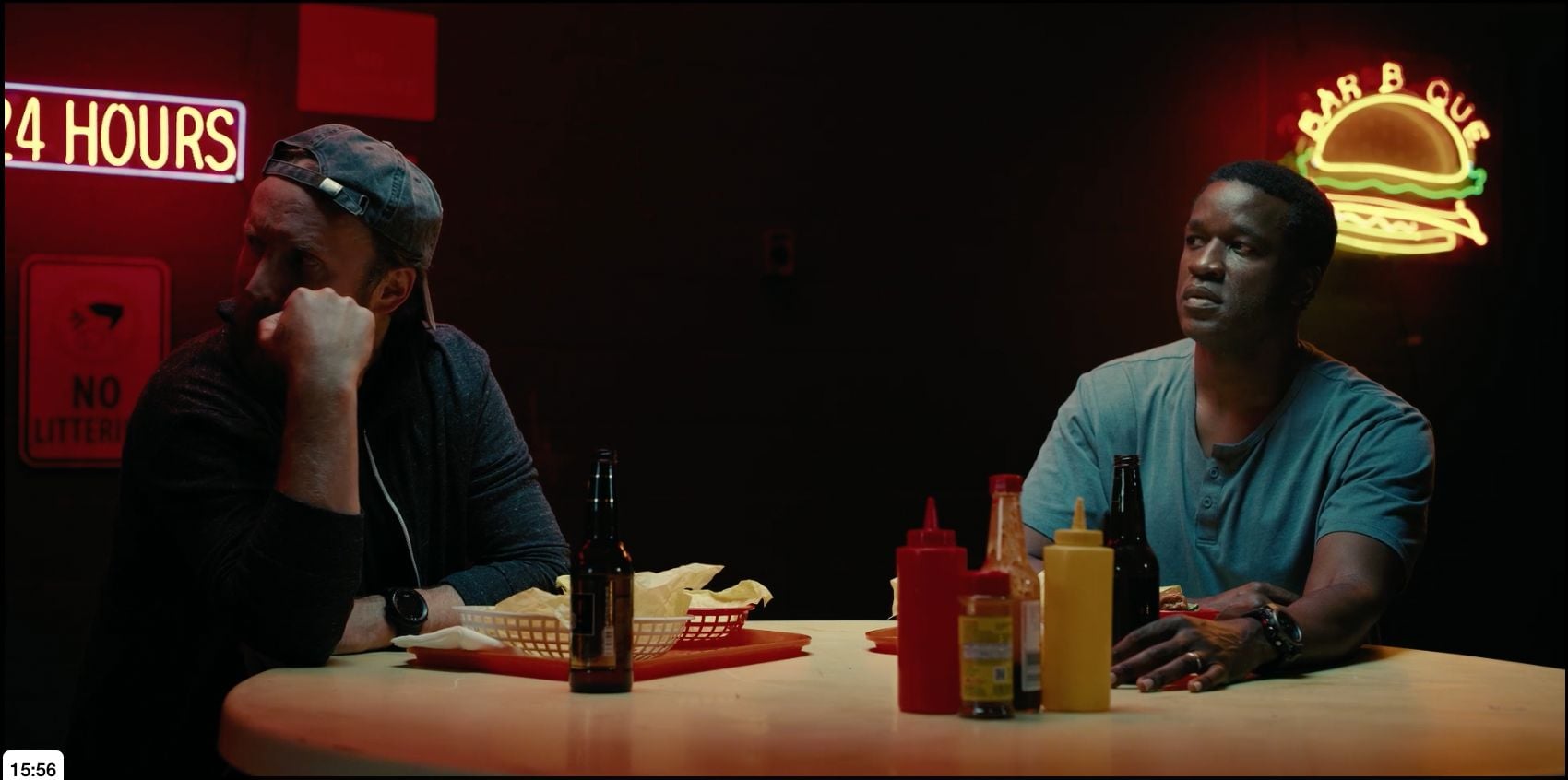
    Joshua Close has played a lot of roles. He’s been in FX’s “Fargo,” “Killers of the Flower Moon” and Netflix’s “Wayward.” But nothing quite prepared him for playing Slinger, the combat veteran at the center of the film “American Solitaire,” which hits select theaters Friday.

    Close drew on his own family to find the character. His cousin served multiple tours in Kandahar, Afghanistan, as a special forces member, and one conversation stuck with him.

    “He said he had to go back on his third tour because he didn’t feel safe at home,” Close told Military Times. “He felt more comfortable being in situations like Kandahar because he knew who the people were around him. He knew how to behave.”

    That kind of detail is exactly what writer-director Aaron Davidman was after. A first-time feature director, Davidman spent years traveling the country talking to people about guns, violence and the cost of military service before writing the script.

    A conversation with a former Army captain who served in Iraq and Afghanistan for more than a decade became the seed of the story.

    “He just impressed me with the real layered, nuanced, complex relationship to service, firearms, healing, reintegration,” Davidman said. “I decided to focus a story on a guy like that. What would it be like to follow a trained warrior and a reintegration through their eyes, through the experience of the veteran?”

    The result is a film that resists the chest-pounding war movie template.

    Slinger comes home from Afghanistan wounded and estranged from his young son, adrift in a country he trained to protect but no longer recognizes himself in. The film examines how, for some veterans, post-traumatic stress disorder and reintegration grief don’t manifest dramatically, but instead quietly erode a person from the inside.

    Co-stars Joanne Kelly and Gilbert Owuor round out the film’s central trio, each character at a different point on the road back. Owuor said the dynamic mirrored something true about group identity and the loneliness that can live inside it.

    “When you look closer and start to examine the different members in the group, you realize that even for them, that can start to break down depending on where you are in the journey,” he said. “And I think that’s a very scary place to find yourself.”

    Kelly drew on her own family, as well, including a cousin who deployed four times to Afghanistan as a nurse. The preparation opened a conversation between them that had never happened before.

    “I think it was one of the things I love about this job, the constant learning about humans, about different lives,” Kelly said.

    Davidman has partnered with impact agency Picture Motion to build post-screening discussions into the release. It’s a deliberate response to the isolation the film depicts, and to a broader cultural moment the filmmakers believe demands a quieter kind of conversation than the one usually surrounding guns and military service.

    “We’re not holding a screening, we’re convening,” he said.

    For Davidman, the most revealing research didn’t come from one-on-one interviews but from watching veterans talk to each other.

    “Watching these brothers and sisters share their stories, and they may not have even served at the same time or in the same branches, but there was a shorthand that was so informative,” he said.

    That earned specificity shows on screen. “American Solitaire” doesn’t reduce its protagonist to a symbol. Slinger is a man trying to figure out who he is once the structure that defined him is gone, a challenge researchers and clinicians have long identified as among the hardest parts of coming home.

    “I hope that people feel there is an accurate portrayal of veterans and of three-dimensional human beings going through real experiences,” Close said, “and that they can relate and feel less alone.”

    “American Solitaire” opens in select theaters Friday and is coming to VOD at a future date. More information at americansolitairefilm.com.

  • 15 Fairchild airmen awarded for refueling roles in combat operations

    15 Fairchild airmen awarded for refueling roles in combat operations

    This post was originally published on this site.


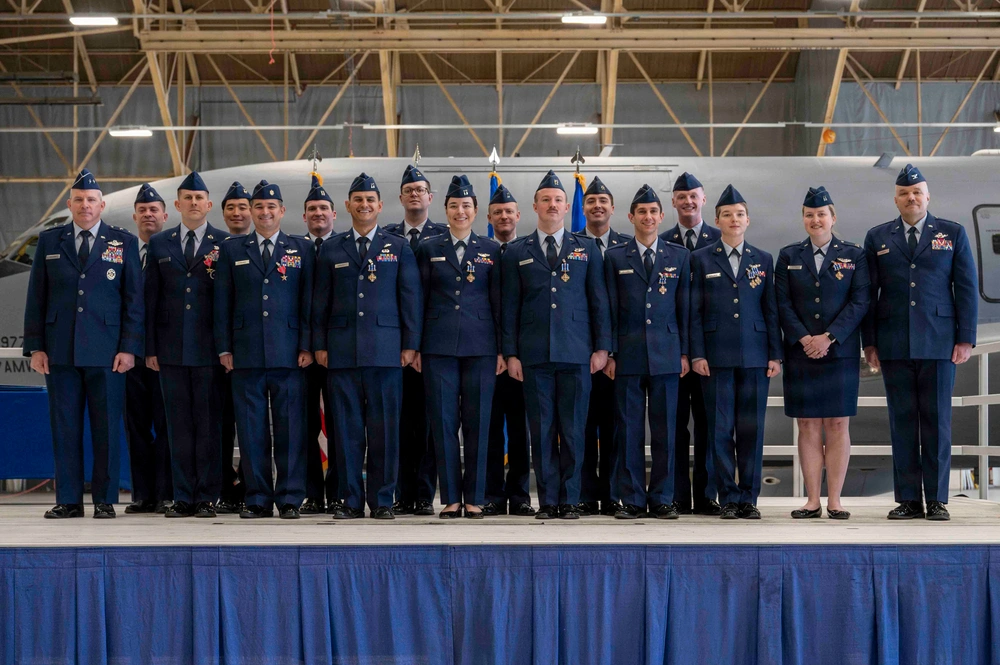
    Fifteen U.S. airmen were awarded the Distinguished Flying Cross and the Bronze Star Medal in a Tuesday ceremony for their work in flying missions in contested airspace during recent combat operations.

    Maj. Gen. Charles Bolton, the 18th Air Force Commander, presided over the ceremony and bestowed the medals upon the Fairchild Air Force Base airmen, assigned to the 92nd Air Refueling Wing, according to a Wednesday release.

    “These historic missions were fraught with peril and required decisive reactions to dynamic operational environments,” Bolton said during the ceremony. “The way they choose to respond, the way they adapt and work together – that’s what we’re highlighting today.”

    During missions in contested airspace, the airmen provided crucial refueling that allowed for other Air Force “assets to continue the fight and return home,” the release reads.

    The release says the airmen were involved in Operation Midnight Hammer — the Jan. 22, 2025 U.S. attack on three main Iranian nuclear facilities — but did not detail the extent of their involvement.

    Bolton said during the ceremony that the members’ skills and perseverance led to the success of the overall mission, and he acknowledged the efforts of all Fairchild’s personnel in the mission, as well.

    “From maintainers ensuring aircraft readiness, to mission planners and support crews, none of this could happen without the collective efforts of our Air Force family,” Bolton said.

    The ceremony drew a crowd of around 300 people, the release says, with Fairchild personnel, local community heads and family members in attendance.

    Fairchild Air Force Base, located in Spokane County, Washington, houses the force’s premier tanker base and survival training school, according to the base’s website.

    The Distinguished Flying Cross recognizes heroism or extraordinary achievement in aerial flight, and the Bronze Star Medal is awarded for heroism in combat.

  • Master Chief actor condemns use of character in White House’s Iran war hype video

    Master Chief actor condemns use of character in White House’s Iran war hype video

    This post was originally published on this site.


    “Wake up, daddy’s home,” Robert Downey Jr., playing the role of Iron Man, says at the beginning of a video posted to the White House’s X account Friday.

    In the post, the clip kicks off a high-energy mashup of scenes from popular movies and TV shows cut together with real-world footage of U.S. military strikes against Iran.

    The video was one of six posts Friday on the White House’s social media accounts that liberally pulled snippets from popular films, TV shows, sports events and music — running the gamut from AC/DC’s “Thunderstruck” to SpongeBob SquarePants — and paired the clips with footage of Operation Epic Fury.

    Among them: a scene featuring Master Chief, the iconic character from the long-running “Halo” video game series. In the short clip, Master Chief says he’s “finishing this fight.”

    But over the weekend, actors and others involved in some of the projects shown in the clips condemned the White House’s hype videos.

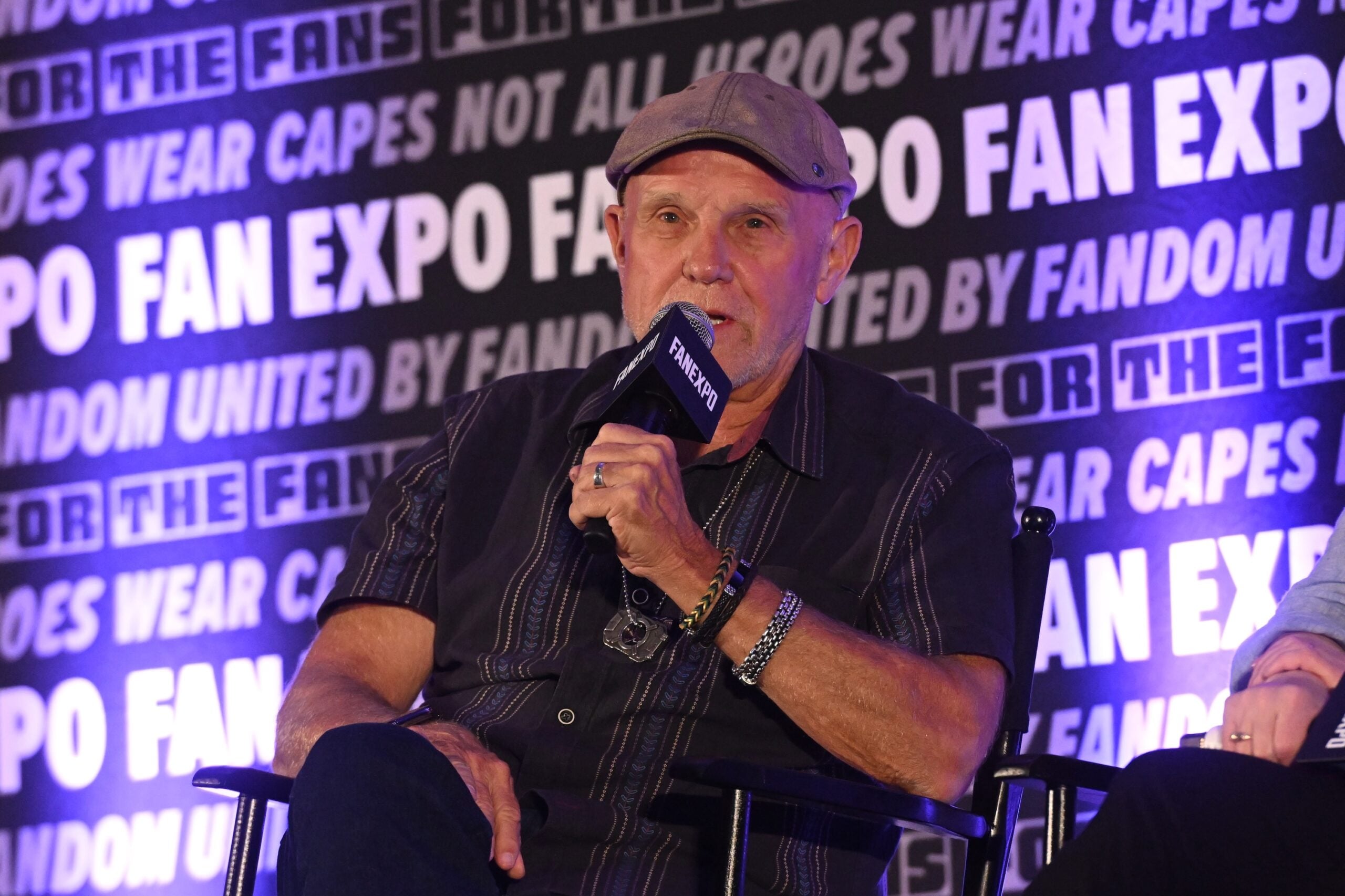
    Steve Downes, the actor who voices Master Chief, in particular, was none too happy about it, and said he did not endorse the use of his voice or agree to be involved.

    “I demand that the producers of this disgusting and juvenile war porn remove my voice immediately,” he posted on X on Sunday.

    “Tropic Thunder” actor and director Ben Stiller also called for the video to be pulled down. A clip of Tom Cruise from the 2008 film appears in the post.

    “Hey White House, please remove the Tropic Thunder clip. We never gave you permission and have no interest in being a part of your propaganda machine. War is not a movie,” Stiller wrote in a post on X on Friday.

    The Trump administration has often ignored calls from artists to remove their content from its messaging.

    After singer Kesha posted on social media last week condemning the use of her song “Blow” in a White House video, White House communications director Steven Cheung wrote in a post on X, “All these ‘singers’ keep falling for this. This just gives us more attention and more view counts to our videos because people want to see what they’re bitching about.”

  • ‘War Machine’ review: Finally, a training scenario with aliens

    ‘War Machine’ review: Finally, a training scenario with aliens

    This post was originally published on this site.


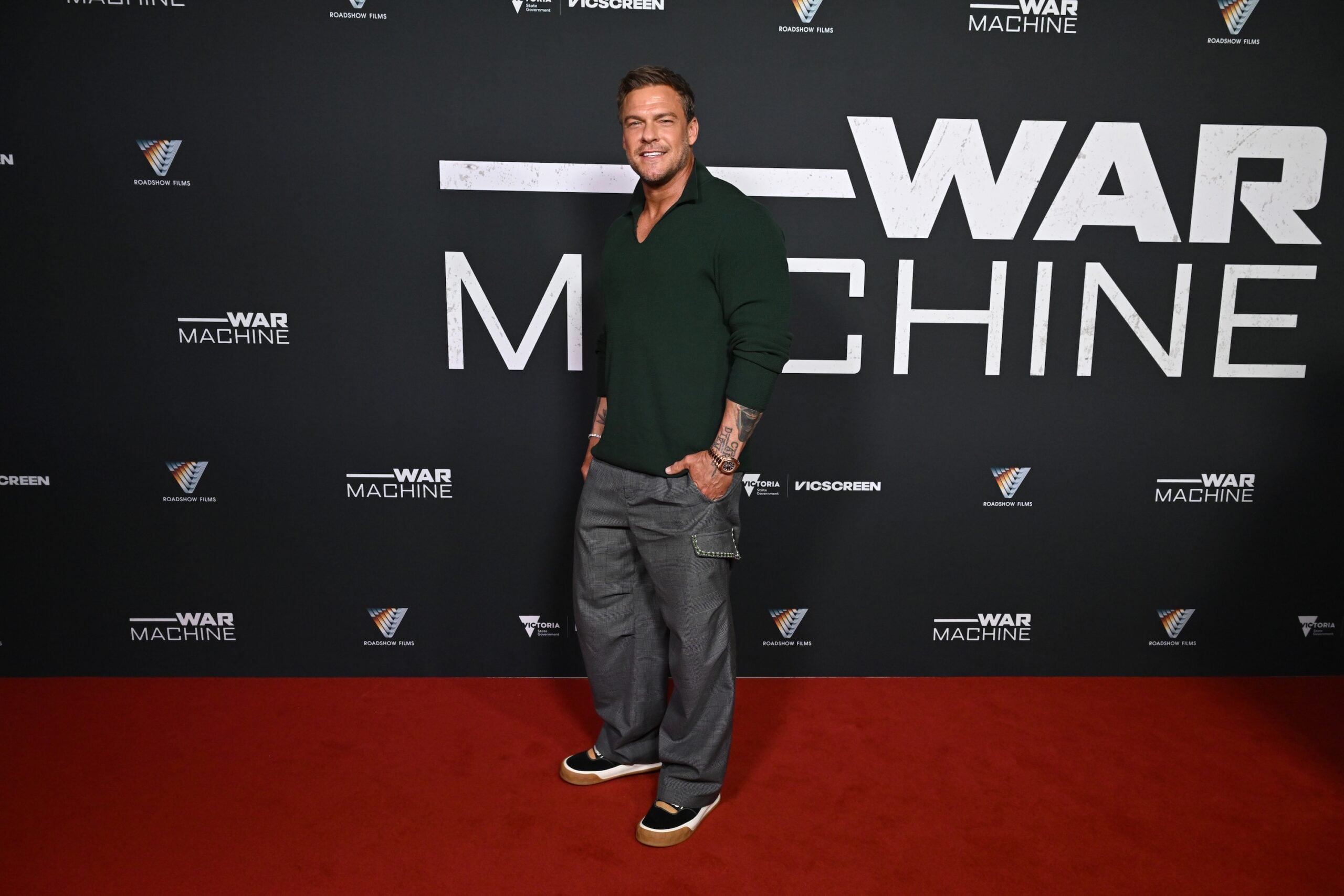
    Netflix released “War Machine” on Friday, a science fiction action film starring Alan Ritchson that raises an oddly believable military premise: What if the final phase of U.S. Army Ranger selection suddenly involved fighting a giant alien robot?

    Directed by Patrick Hughes, “War Machine” follows a group of Ranger candidates grinding through the final stretch of selection when their training scenario collides with something far stranger than sleep deprivation and land navigation. The soldiers discover what appears to be a crashed aircraft deep in the woods. It turns out to be an alien vessel that transforms into a towering mechanical hunter and begins stalking them through the forest.

    For veterans watching the film, the most unrealistic part may not be the extraterrestrial robot — it is the fact that nobody immediately assumes the alien is still part of the training scenario.

    Anyone who has spent time in the military knows that after enough time in the field, every disaster begins to feel suspiciously like a test. Lost? Training. Hungry? Training. Cold, wet, exhausted and hallucinating? Definitely training. If a giant alien machine emerged from a crash site during Ranger selection, at least one candidate would absolutely ask, “Is this graded?”

    Ritchson plays a soldier known only as “81,” which feels exactly like the kind of nickname that would replace an actual name during a miserable training cycle. The character is built like a tank and carries the quiet intensity that helped turn Ritchson into a breakout star in the series “Reacher.” Here, his opponent is not organized crime or a corrupt businessman-turned-warlord, but a massive extraterrestrial war machine with the personality of a bulldozer.

    Critics have described the film as a blend of “Predator” and “Transformers,” which is a polite way of saying nobody is going to win an Oscar for this film, but the explosions and over-the-top special effects might. The movie moves quickly through its premise and settles into a simple survival formula. A group of soldiers is trapped in unfamiliar terrain, hunted by something unseen. Their only real plan is to stay alive long enough to figure out how to destroy it.

    It is not complicated storytelling. It is also not pretending to be.

    That honesty helps the movie. Instead of delivering long speeches about military ethics or global consequences, “War Machine” focuses on the basics. The soldiers run, hide, shoot and occasionally argue about what the machine actually is while trying to reach the next ridgeline.

    In that sense, the movie occasionally feels less like a traditional war film and more like a live-action video game level. The team advances through a series of encounters while trying to discover the alien machine’s weak point. Eventually, that responsibility lands on Ritchson’s character, who begins experimenting with ways to damage the machine using whatever equipment the soldiers still have left, blank firing adapters included.

    Is the movie perfect? No. Is it so cringe at points that you find yourself wanting more? Yes.

    While “War Machine” treats the final field exercise like a chaotic survival event, real training environments are far more controlled and deliberate. Ranger selection, for example, is designed to push soldiers through exhaustion and uncertainty without actually turning the woods into a sci-fi battlefield.

    The movie does not aim for that kind of realism. Instead, it asks a simpler question: What would happen if soldiers trained to survive brutal field exercises suddenly had to apply those same skills to an alien invasion?

    The answer, according to “War Machine,” is that they would probably treat it like any other mission.

    They would form a plan.

    They would start shooting.

    And someone in the formation would still wonder if the whole thing was being graded.

  • When veterans take the pen, war stories start to change

    When veterans take the pen, war stories start to change

    This post was originally published on this site.


    Hollywood has never lacked war stories. But it has often lacked veteran storytellers telling them.

    For years, military narratives on screen have gravitated toward spectacle or trauma. Either elite raids and explosions, or the aftermath: PTSD, divorce, isolation. What gets squeezed out is the middle ground — bureaucracy, boredom and dark humor — where most service members actually live.

    Three veterans now working in television say that changes when people who have worn the uniform are inside the writers’ room, shaping the story from page one.

    Greg Cope White, a Marine veteran and longtime television writer, built a decades-long career after leaving active duty. His memoir, “The Pink Marine,” later became the basis for the Netflix coming-of-age series “Boots,” about a closeted gay teenager enlisting in the Marine Corps in the ’90s.

    Veterans are often misunderstood in writers’ rooms, White told Military Times in a recent interview.

    “One of the things veterans might fear about going into the writers’ room is that that’s all the experience people are going to want from them,” he said. “Just give me the military stuff and shut up.

    “That’s not what I have found at all.”

    For White, the value of veterans extends far beyond accuracy. “Our worldview is instantly expanded the day we enlisted,” he said. “We saw things, and we’re exposed to people and situations that a normal college-age student wouldn’t be exposed to.”

    That exposure influences tone and informs how characters handle pressure. It shapes what feels authentic when a unit fractures or rallies on screen.

    When working on “Boots,” authenticity mattered, but not as trivia. “You don’t want something like someone in their dress blues with scruff. That’s going to take a lot of people out right there,” White said.

    Marine Corps veteran Greg Cope White's memoir served as the basis for the Netflix coming-of-age series

    For “Boots” story editor Megan Ferrell Burke, a Marine veteran who served from 2007 to 2011 and deployed to Iraq and Afghanistan as a direct air support officer, authenticity debates often collide with visual storytelling.

    Hollywood is a visual medium, noted Burke, who, after leaving the Corps, worked her way through assistant roles on “Army Wives,” served as a writers’ assistant on the World War II drama “Manhattan” and was staffed on “Outlander.” Sometimes what is correct is not what reads best on camera.

    In “Boots,” for example, recruits were scripted to sit on their packs during a break, as they would in real life. On set, production placed them on logs.

    “In any sort of universe, recruits would not be sitting on logs and talking,” Burke said. “But who cares? It’s so much better visually.”

    For her, the issue is not perfection; it is intention. “I’m very okay with being inaccurate,” she said. “I just want to know when we’re being inaccurate, and I want to make that choice actively.”

    Burke said she braced for backlash from veteran viewers over creative choices in “Boots,” including decisions about timeline accuracy. Instead, she found that many viewers accepted the show’s choices once they understood they were deliberate.

    Over her 15 years in the industry, Burke said she has seen shifts in how military stories are framed. Early portrayals often defaulted to stoic archetypes. Later, she said, many projects focused almost exclusively on trauma.

    “If you look out on the landscape and look for the stories of well-adjusted veterans, they’re a little bit harder to come by,” she said.

    Burke does not dismiss PTSD narratives. “It is incredibly important to advocate for the very real experiences of service members dealing with trauma,” she said. But she believes the picture is incomplete.

    “I feel like I’m the best version of myself because of the experience that I had,” she said.

    Joshua Katz, a Navy veteran, worked as a showrunner’s assistant on the CBS sitcom “United States of Al” and later founded Katzmar Tactical Consulting with his spouse, also a Navy veteran. (Courtesy Joshua Katz)

    Joshua Katz, a Navy veteran who served from 1999 to 2003 as a gunner’s mate and missile technician, entered the industry through multiple avenues, including stunt work, tactical consulting and writers’ room support. He worked as a showrunner’s assistant on the CBS sitcom “United States of Al” and later founded Katzmar Tactical Consulting with his spouse, also a Navy veteran.

    Katz offered a more direct assessment of Hollywood’s priorities.

    “They care about one thing, and that’s making a profit,” he said.

    In his experience, veteran status may help secure a meeting, but it does not guarantee advancement. “It will never be because you’re a veteran,” he said. “It opens the door, but it doesn’t necessarily push you through it.”

    Still, Katz credited certain showrunners with fostering supportive environments and taking veteran perspectives seriously when storylines demanded it.

    He also pointed to story gaps he believes remain underexplored.

    “You don’t see below decks,” he said of Navy life. “It’s almost always from an officer’s perspective.”

    He would like to see more character-driven stories set in military environments without defaulting to combat or scandal. He also cited the VA hospital as a compelling setting where veterans from different eras intersect.

    Across all three writers, humor emerged as a defining difference. Veterans understand that laughter often exists alongside stress, not in spite of it.

    “It’s the only way I can tell my story,” White said of using comedy to frame his experience.

    Humor, he argued, allows audiences unfamiliar with military life to enter the world without being overwhelmed. “There’s nothing more hilarious than that frailty of the human condition,” he said.

    For those considering the leap from the uniform to the writers’ room, none of the three offered easy encouragement.

    “It is not a career for the faint of heart,” Burke said. “The good times are great, and the bad times are really hard.”

    White urged writers to focus on craft. “Write the story you want to tell,” he said, rather than chasing what seems marketable.

    Katz emphasized persistence and preparation. “You’ve got to have the writing sample to go with it,” he said. “It’s never going to be just because you’re a veteran.”

    When veterans become writers, war stories shift. The story moves toward lived ambiguity, and service is not reduced to a single narrative.

    The difference is not cosmetic. It is tonal. And audiences, especially those who have served, can tell.
  • How MREs inspired today’s meal-delivery industry

    How MREs inspired today’s meal-delivery industry

    This post was originally published on this site.


    Long before cardboard boxes filled with frozen gel packs and prepackaged ingredients started appearing on suburban porches, the U.S. military had already solved the problem of feeding people who could not make it home for dinner.

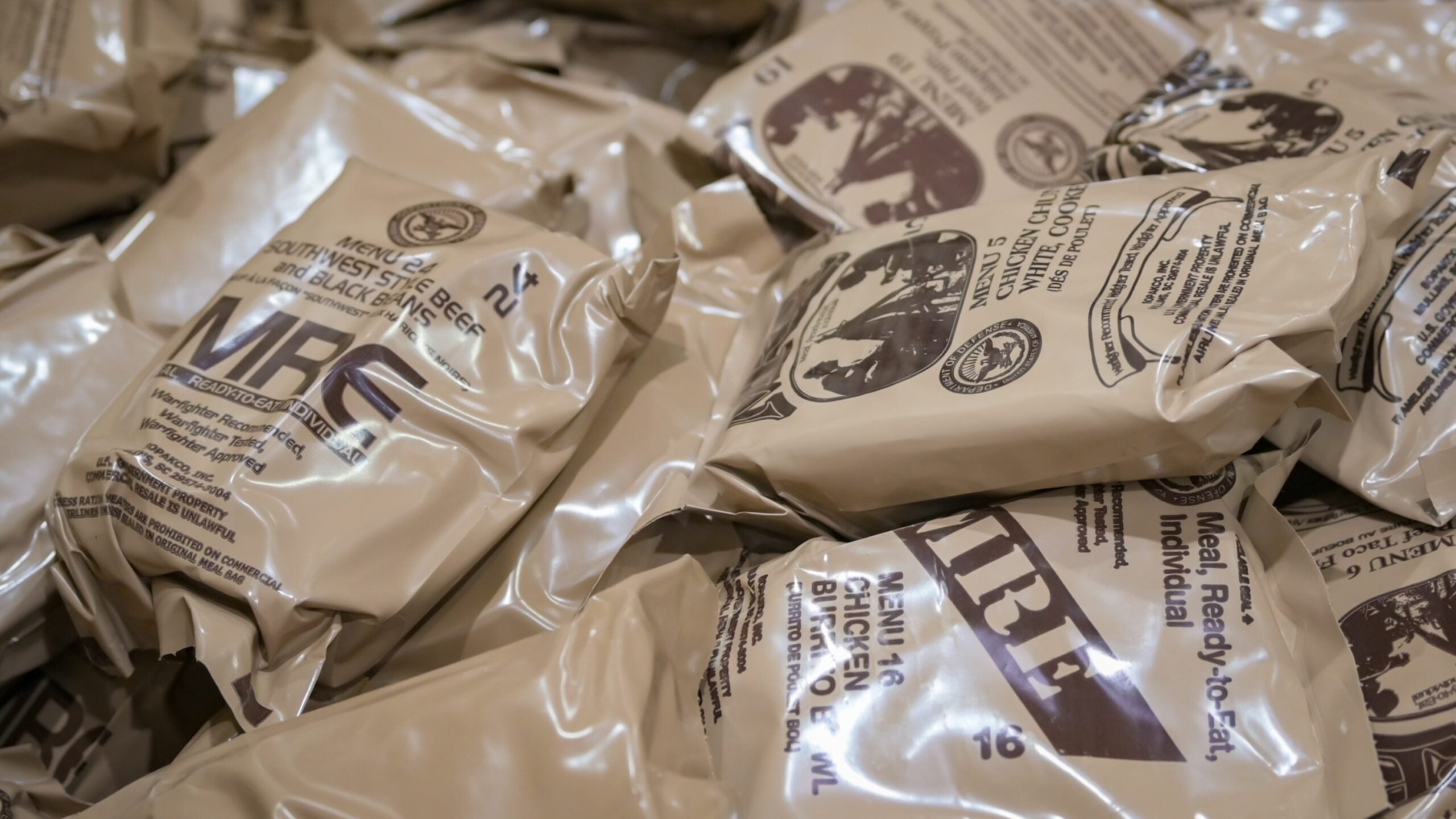
    The Meal, Ready-to-Eat, better known as the MRE, was designed for war. It had to survive heat, cold, impact and time. It had to deliver calories and consistency in places where kitchens did not exist. And it had to do all of that at scale.

    Sound familiar?

    Today’s meal-delivery industry, from subscription kits to fully prepared microwavable trays, operates on many of the same principles: Portion control, modular packaging and optimized logistics. Veterans who open a cardboard box filled with premeasured ingredients often recognize the parallels immediately.

    The evolution of military rations shows just how deliberate that system became. From older field staples to modern retort pouches, MREs were engineered to balance durability and nutrition. A look back at MREs through the years illustrates how packaging and contents changed to meet operational demands. Meals had to withstand long storage and rough transport while still delivering predictable fuel.

    That predictability is central.

    Each MRE is structured around caloric requirements and mission profiles. A standard menu includes an entree, side, snack, dessert, beverage powder and accessory packet. Nothing is random. It is a calculated intake designed to support performance.

    Modern meal-delivery companies market the same precision. Protein totals are highlighted. Calorie counts are featured prominently. Macro breakdowns are listed like briefing slides. For service members who once identified meals by menu number rather than flavor description, the emphasis on data feels familiar.

    Behind the scenes, the logistics mirror each other even more closely. Feeding deployed troops requires a supply chain that can move millions of individually packaged meals across continents. As recently as last year, the Department of Defense refined packaging dimensions, pallet configurations and distribution systems to reduce waste and maximize efficiency. Those lessons now underpin commercial food distribution networks that ship insulated boxes nationwide on strict timelines.

    Inside the development process, the parallels become even clearer. Military food scientists test taste, texture and shelf life inside controlled environments before a menu ever reaches a unit. A visit to the kitchen where MREs are created shows how rigorously meals are evaluated for stability and performance. The civilian meal kit industry uses similar controlled testing to ensure consistency across thousands of shipments.

    Convenience may be the most obvious link. MREs were built for speed. Open. Heat if you can. Eat if you cannot. No dishes, no prep, no grocery run. The civilian market reframed that efficiency as lifestyle optimization: 10-minute dinners with minimal cleanup and reduced food waste.

    There is also a psychological component. Field rations were never just about calories; they provided routine. In austere environments, opening a sealed meal at a predictable time created a small anchor in an otherwise unstable day. Modern marketing leans on the same promise: reliability, dinner handled and one less decision to make.

    Of course, today’s meal kits are designed for aesthetics and convenience, not survival in a combat zone. No one is building a subscription box around instant coffee and wheat bread snacks.

    Still, the blueprint is unmistakable. Long before venture capital discovered the efficiency of meal delivery, the military had already tested the model under far harsher conditions.

    For veterans, the comparison is less surprising than ironic. What once arrived in a case bound for a forward operating base now shows up with a friendly logo and a discount code.

  • The military’s complicated history with tobacco

    The military’s complicated history with tobacco

    This post was originally published on this site.


    For decades, cigarettes were as common in uniform as a canteen and a helmet liner.

    In World War II, tobacco was not treated as a vice; it was a comfort item. Cigarettes were packed into rations as morale boosters, something that could steady nerves between missions, the Imperial War Museums note. The image of a soldier lighting up in a muddy trench or on the deck of a ship became inseparable from the mythology of the American warfighter. The phrase “smoke ‘em if you got ‘em” became a broader cultural idiom, according to the Army Historical Foundation.

    That normalization lasted for generations. Smoking was woven into daily military life. A cigarette break punctuated patrols and long nights on guard duty. The smoke pit became a place where rank blurred slightly, and information flowed freely. For young troops far from home, nicotine offered routine in environments defined by uncertainty.

    But the same institution that once distributed cigarettes eventually had to reckon with the consequences.

    As medical research sharpened the link between tobacco use and long-term health problems, the Department of Defense shifted its posture. Smoking inside military facilities was banned in 1994, and recruits arriving at basic training found tighter restrictions around tobacco use than their predecessors.

    In 2016, the Pentagon moved to eliminate discounted tobacco sales in on-base exchanges, raising prices to match civilian markets in an effort to remove financial incentives.

    Despite that shift, nicotine use has not disappeared; it has adapted. A recent report found that soldiers are significantly more likely to use modern nicotine pouches than civilians, underscoring how quickly habits evolve inside the ranks.

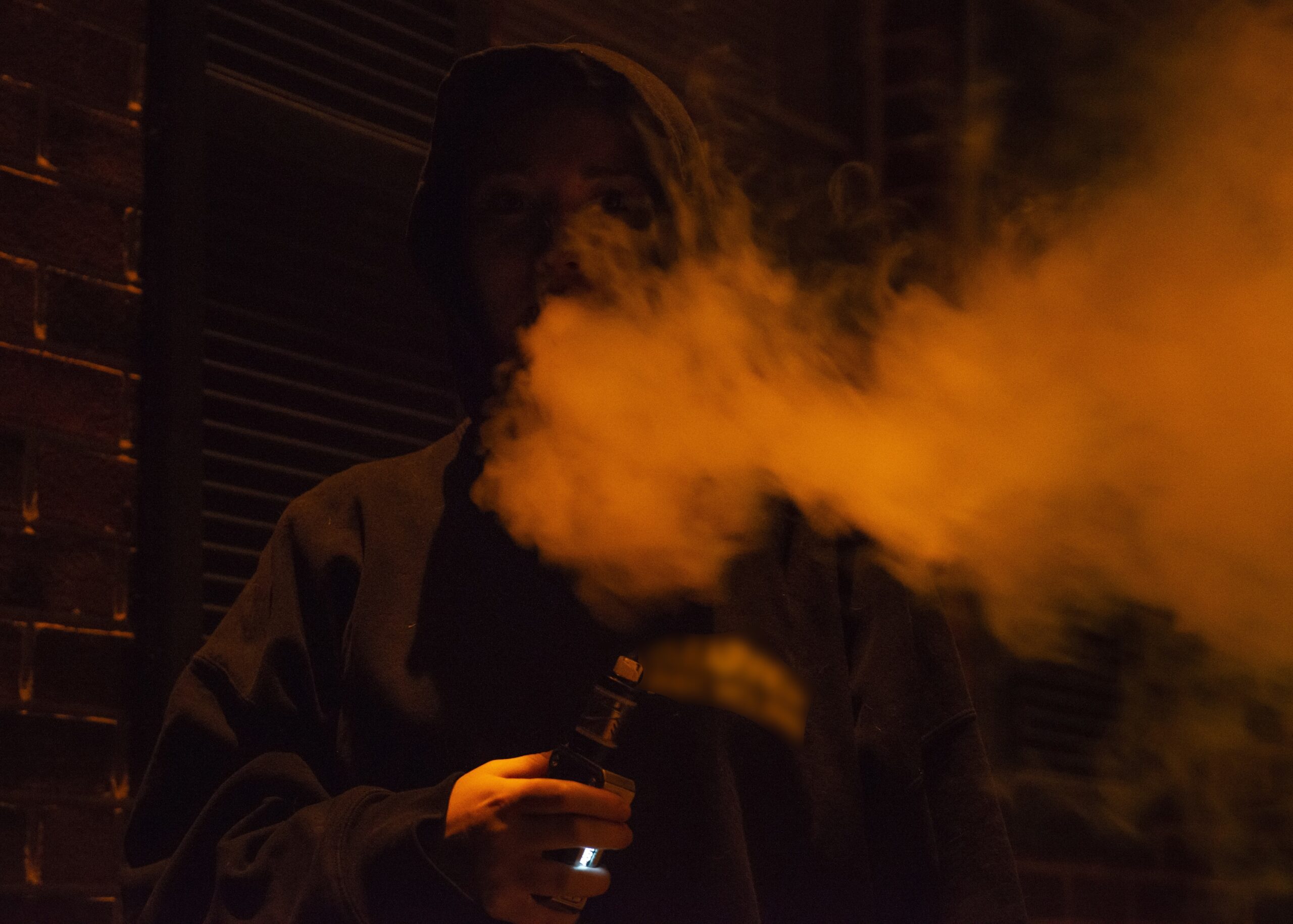
    Today’s service members are less likely to be seen with a cigarette and more likely to carry a vape or a can of tobacco-free nicotine pouches, which have been linked to oral and dental health issues and cardiovascular disease risk. Marketed as cleaner, smokeless and discreet, these products fit easily into field environments and office settings alike. They also sidestep some of the social stigma attached to traditional smoking.

    The military has responded by expanding resources for quitting tobacco. Tricare covers tobacco cessation counseling and prescription medications, while military treatment facilities offer nicotine replacement therapy such as patches and gum. The Defense Department also promotes health coaching programs as part of its broader force health protection strategy.

    Still, anyone who has served knows the smoke pit has not vanished. It remains a gathering place, a bond that only those who don the uniform can truly understand. It is where junior enlisted troops vent about leadership, where NCOs gauge morale and where small frustrations surface before they grow larger. In many units, stepping outside for a smoke remains one of the few unofficial breaks in a tightly structured day.

    That cultural role complicates enforcement. Leaders must balance individual autonomy with readiness standards. Smoking and nicotine use are tied to higher injury rates, slower recovery times and long-term healthcare costs, all of which affect deployability. At the same time, troops operate under sustained stress, long hours and frequent moves. For some, nicotine functions as a coping mechanism that is accessible and socially reinforced.

    The military’s relationship with tobacco reflects a broader evolution. What began as a morale staple, packed alongside rations, has become a regulated health concern measured against mission impact. The products may look different in 2026 than they did in 1945, but the underlying tension remains.