
Author: Lindsay

  • 35 Summer Produce Recipes For Your Farmer’s Market Haul

    35 Summer Produce Recipes For Your Farmer’s Market Haul

    There’s nothing quite like a nice little morning at the farmer’s market. Arms full of summer goodies, maybe an iced coffee in tow, sunshine at your back, and then the question of… what am I supposed to do with all this? It’s my favorite problem to have!

    These recipes are built around the best of peak summer produce – corn, cucumbers, bell peppers, tomatoes, zucchini, peaches, green beans, and strawberries – whether tossed into a salad, baked into a snack or dessert, piled onto a bowl, or turned into dinner in 30 minutes on a Tuesday. Consider this your go-to guide for using up every last bit of that sweet summer produce. 💛


    Summer Produce Recipes

    Peach cobbler in a bowl.

    The Best Peach Cobbler

    Best summer dessert ever! Made with fresh peaches, sugar, and a topping that bakes like slightly underbaked cookie dough, with crunchy sugar broiled on top.
    248 reviews / 4.7 average

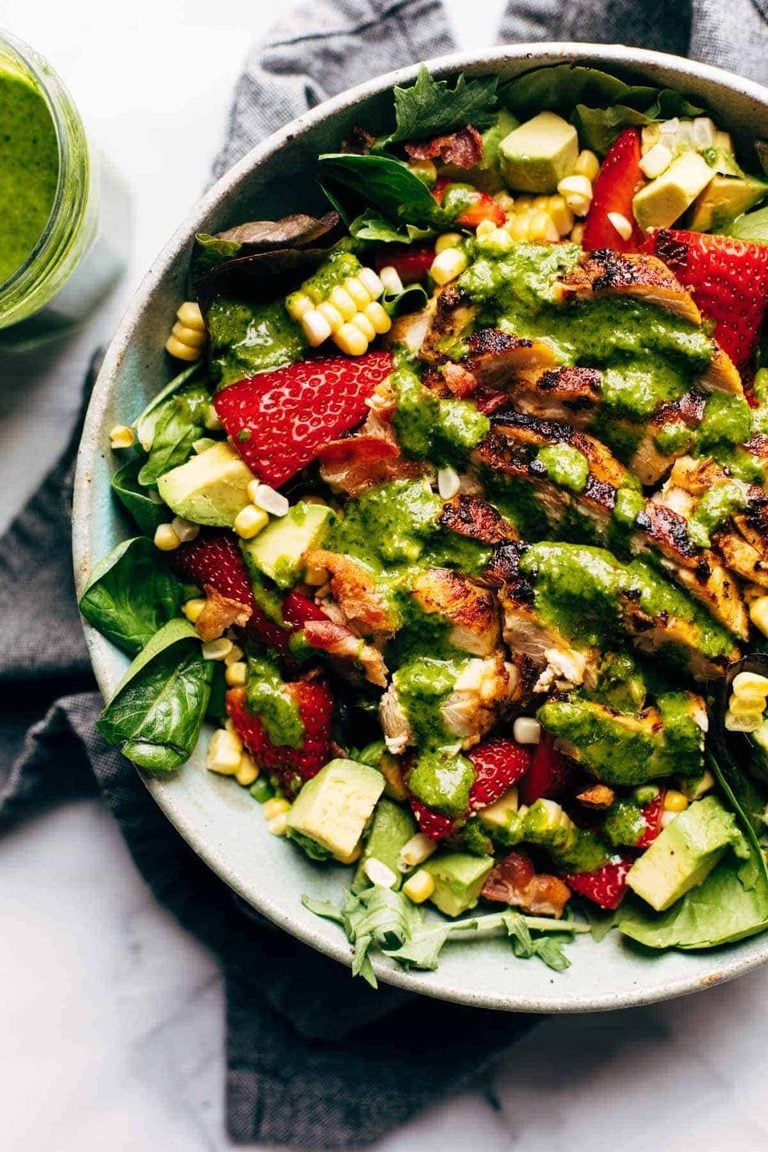
    Summer cobb salad.

    Summer Chipotle Chicken Cobb Salad with Cilantro Vinaigrette

    This juicy salad tastes like summer! With chipotle chicken, sweet corn, avocado, cilantro vinaigrette, bacon crumbles, and fresh strawberries for a pop of sweetness.

    83 reviews / 5 average

    Green beans with avocado caesar dressing.

    Avocado Caesar Green Beans

    Grab a bag of green beans, blitz up a quick avocado caesar, toast some panko, and let’s go! This is some type of magic.
    21 reviews / 4.8 average

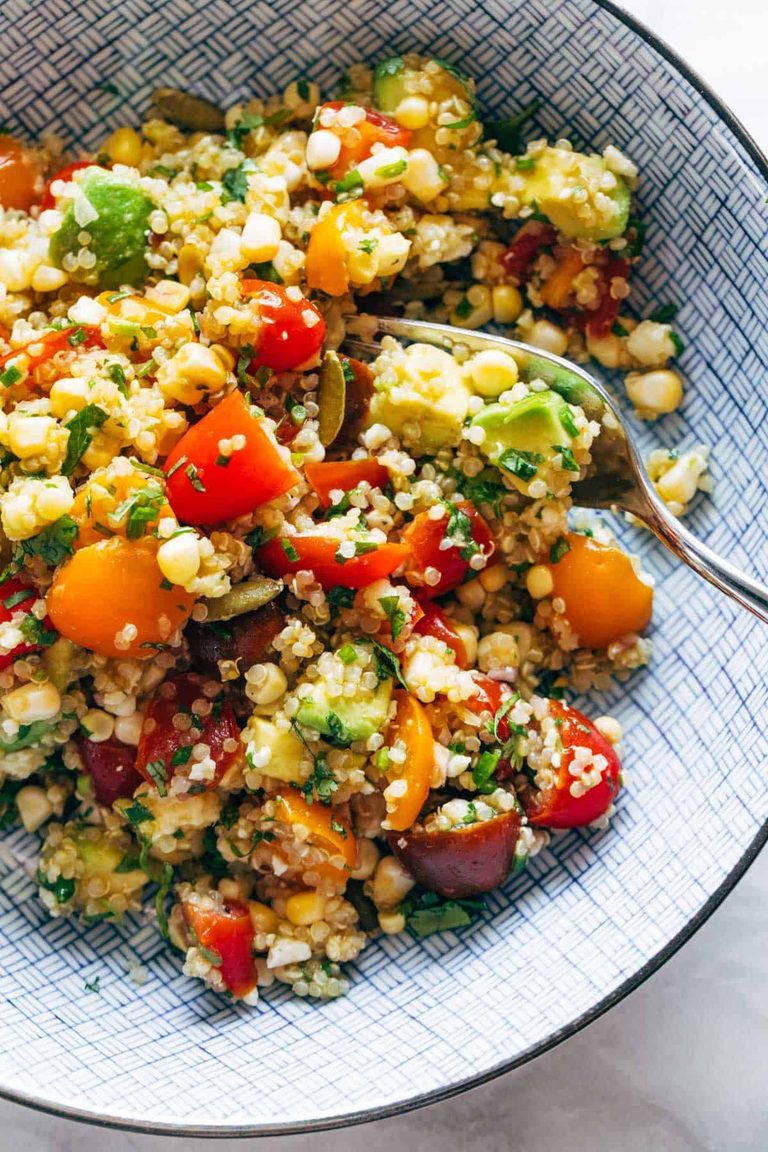
    Corn, avocado, and quinoa salad.

    Corn, Avocado, and Quinoa Salad with Marinated Tomatoes

    The perfect summery quinoa salad – fresh corn, buttery avocado, nutty quinoa, juicy marinated tomatoes, and tons of fresh herbs.

    43 reviews / 4.9 average

    Zucchini muffins.

    Feel-Good Zucchini Muffins

    The BEST healthy zucchini muffins – made with all the yummy feel-good ingredients: oats, zucchini, dates, maple syrup, and olive oil. Just blitz up in a blender and pour!

    118 reviews / 4.7 average

    Marinated tomatoes

    5-Ingredient Marinated Tomatoes

    5-Ingredient Marinated Tomatoes! The best summer staple. Fresh tomatoes, punchy lemon juice, grated garlic, a little bit of olive oil, and herbs and salt to make it sing. YES.

    13 reviews / 5 average

    Creamy shrimp pasta.

    Creamy Shrimp Pasta with Corn and Tomatoes

    Creamy Shrimp Pasta with Corn and Tomatoes! A seriously delicious fresh summer pasta. Creamy, silky noodles, garlicky shrimp, and a punch of fresh corn, cherry tomatoes, and basil.

    57 reviews / 4.9 average

    Salmon with basil sauce.

    Salmon with Basil Sauce and Tomato Salad

    We’re making a summery salmon with a beautiful, big-flavored basil sauce that is so good, you’re going to want to just drink it. Perfectly-spiced, fresh, and a dinner for everyone!

    68 reviews / 4.9 average

    Strawberry pie.

    Easy Strawberry Pie

    The easiest homemade strawberry pie with a graham cracker crust, and dolloped with cream cheese whipped cream! Perfect summer dessert!
    11 reviews / 4.8 average

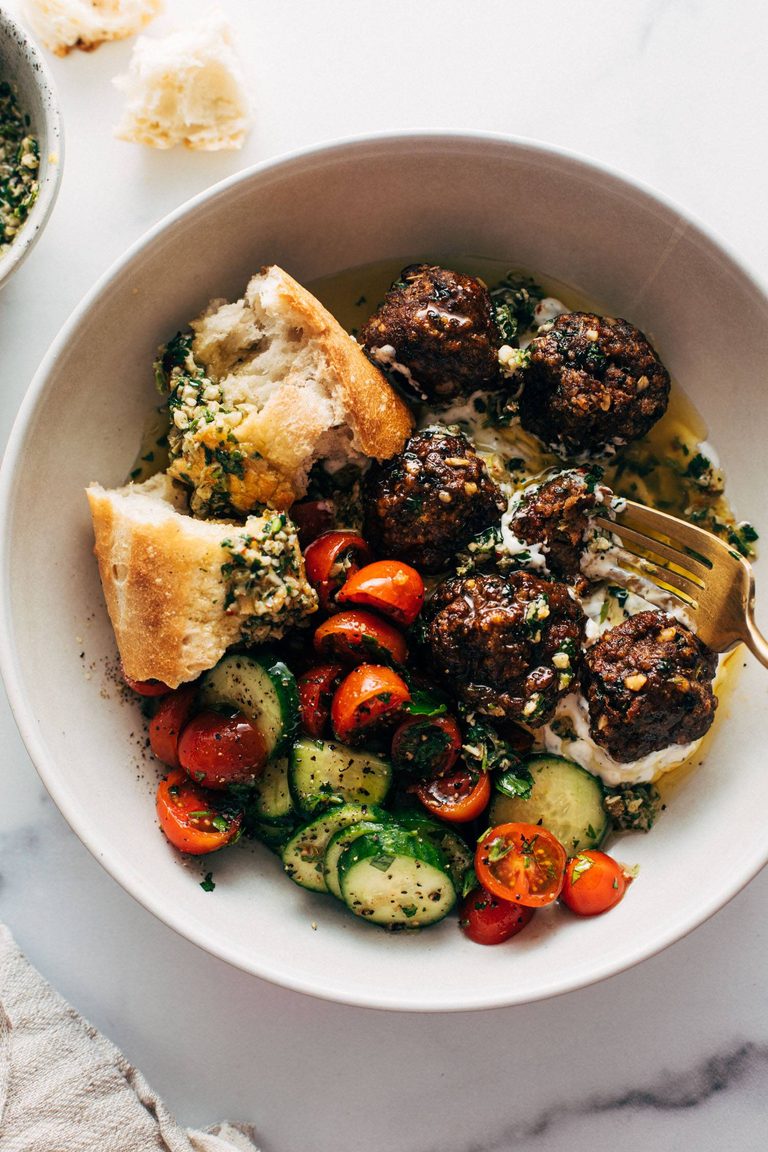
    Sheet pan meatballs.

    Sheet Pan Meatballs with Tomato Salad and Green Sauce

    Juicy little sheet pan meatballs that are salty, zesty, briney, and so so delicious. Pile them on tzatziki, spoon some punchy green sauce over top, and serve with a simple salad and crusty bread.

    50 reviews / 5 average

    Greens and beans tacos.

    Smoky Beans & Greens Tacos with Aji Verde

    Three cheers for summertime eating! Smoky black beans sautéed with kale and garlic and spices, tucked into charred corn tortillas, and topped with the best feisty, punchy green sauce – Aji Verde!
    71 reviews / 4.9 average

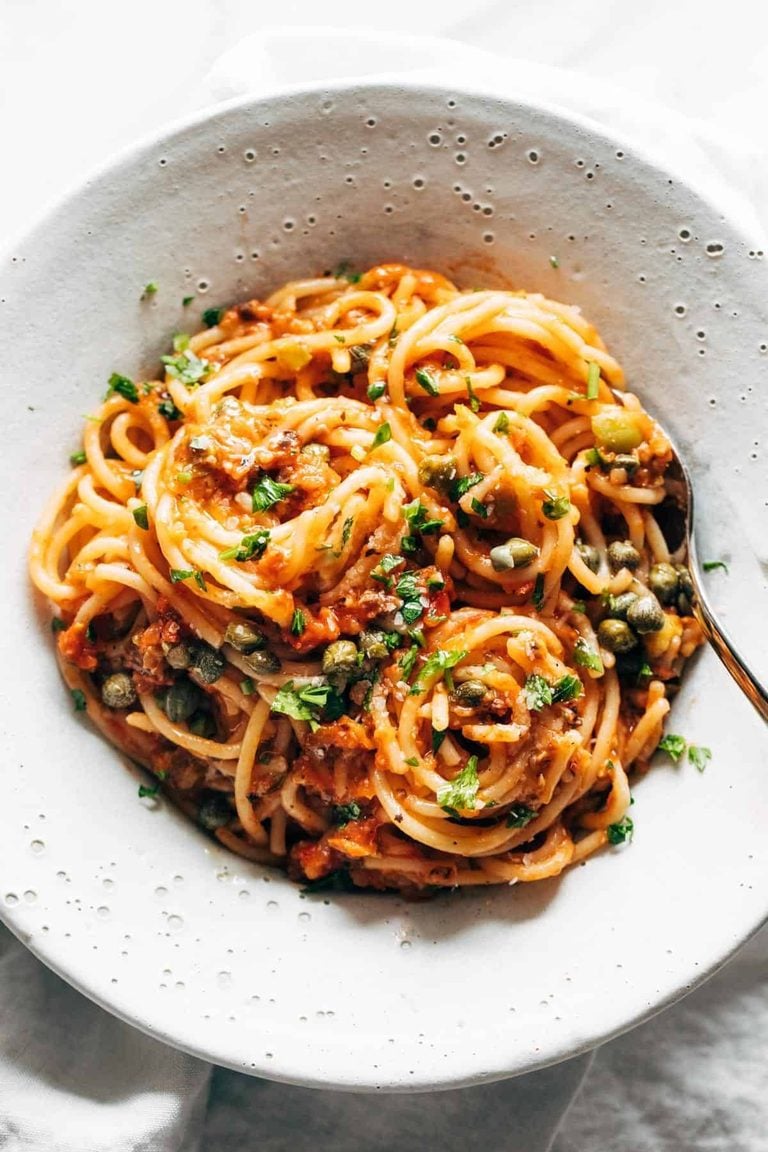
    Puttanesca pasta.

    Roasted Tomato Puttanesca

    The easiest Roasted Tomato Puttanesca with all the silky, all the briney, and all the zippy summer freshness.
    45 reviews / 4.8 average

    Red pepper pasta with tomatoes.

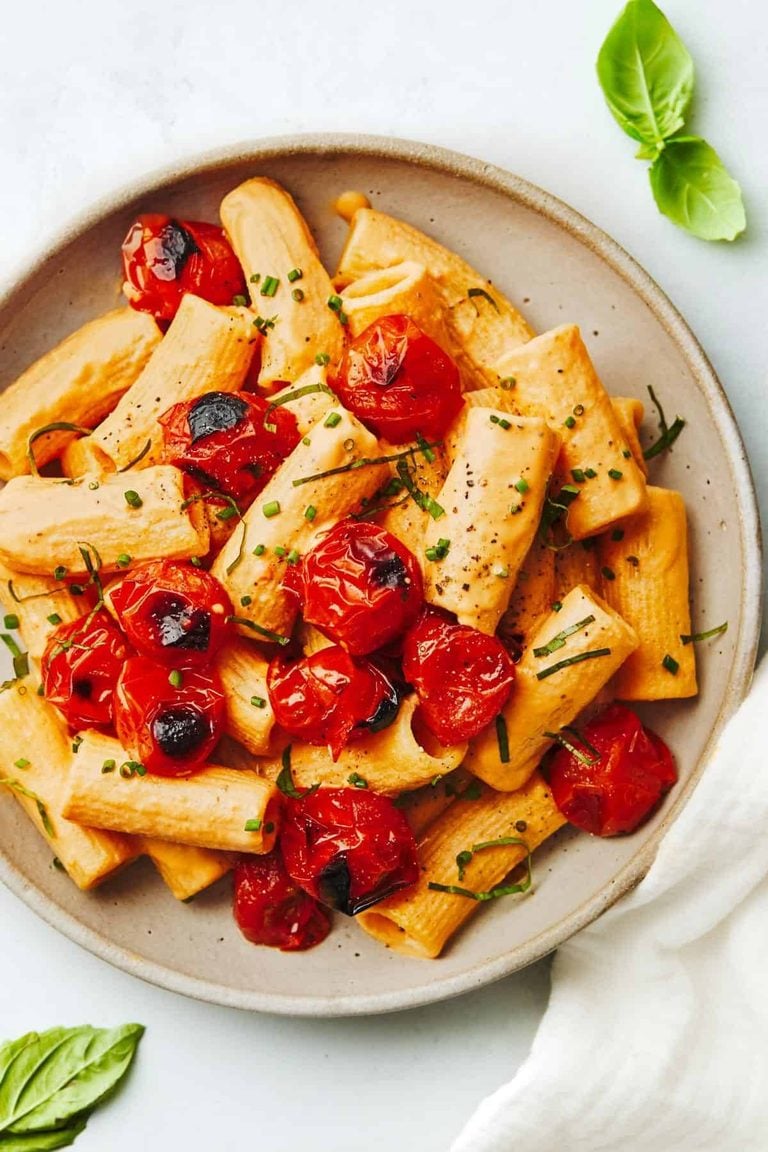
    Creamy Vegan Red Pepper Pasta with Blistered Tomatoes

    This Creamy Vegan Red Pepper Pasta is seriously delicious and seriously vegan! Perfectly chewy rigatoni, blistered juicy tomatoes, a creamy-but-cream-less roasted red pepper sauce, all sprinkled with fresh chives and basil.
    59 reviews / 4.9 average

    Couscous summer salad.

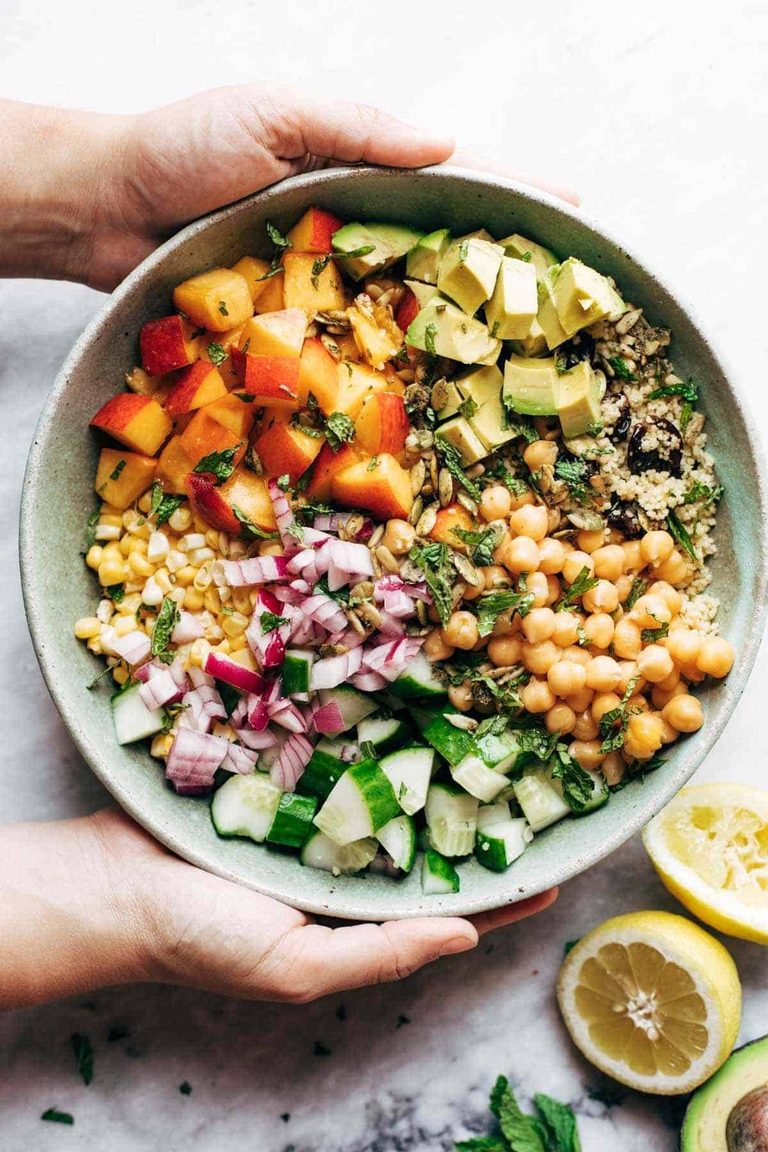
    Couscous Summer Salad

    Couscous Summer Salad! Spiced couscous, juicy nectarines, crunchy cucumber, avocado, chickpeas, cherries, sweet corn, and mint. It’s sunshine in a bowl!
    39 reviews / 4.7 average

    One pan farro.

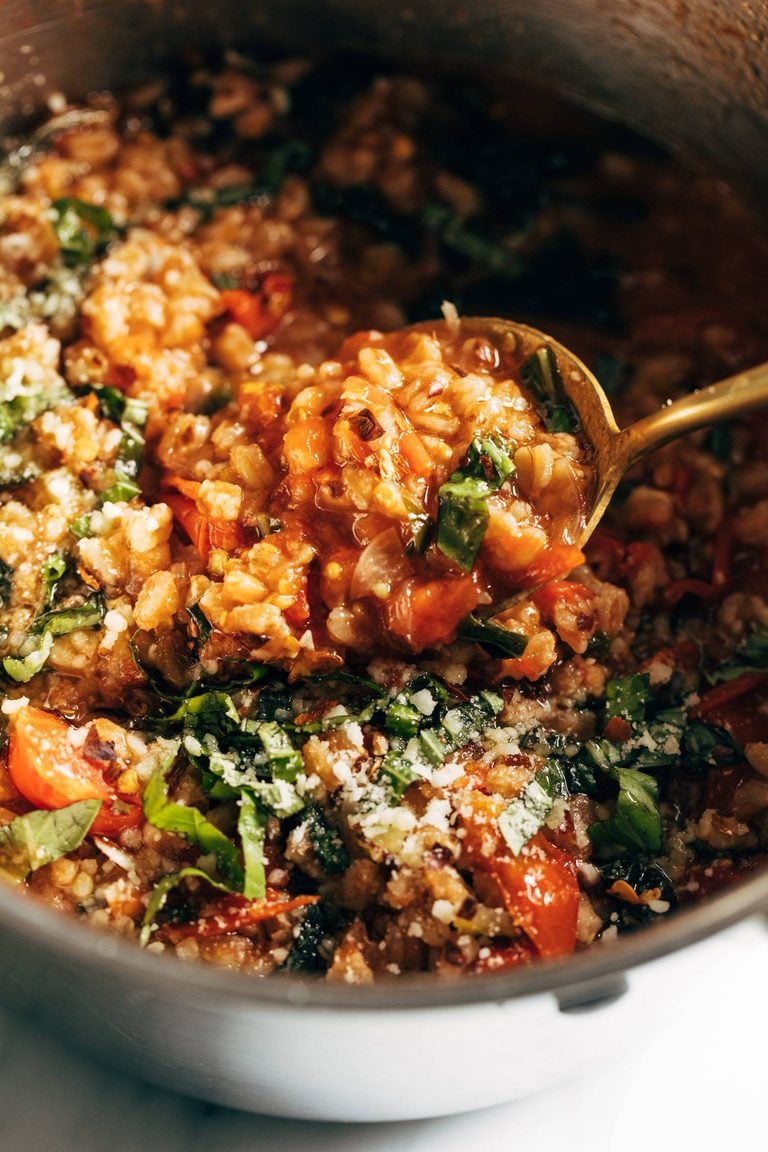
    One-Pan Farro with Tomatoes and Kale

    This One-Pan Farro with Tomatoes and Kale is a straight-up DREAM! Rustic farro cozied up to cherry tomatoes, onions, garlic, and kale. So good and so wholesome!

    40 reviews / 4.9 average

    Tomato butter sauce.

    Basic Garlic Butter Tomato Sauce

    Basic Garlic Butter Tomato sauce made with cherry tomatoes, garlic, balsamic, and butter. SO simple, good on everything.

    39 reviews / 4.8 average

    Peach salad with cucumbers.

    Gorgeous Peach Salad

    Fresh cucumber, bitey shallots, cooling mint, and sweet fleshy peaches coming together in serious flavor harmony! I love this peach salad.
    16 reviews / 4.9 average

    Soba noodle salad.

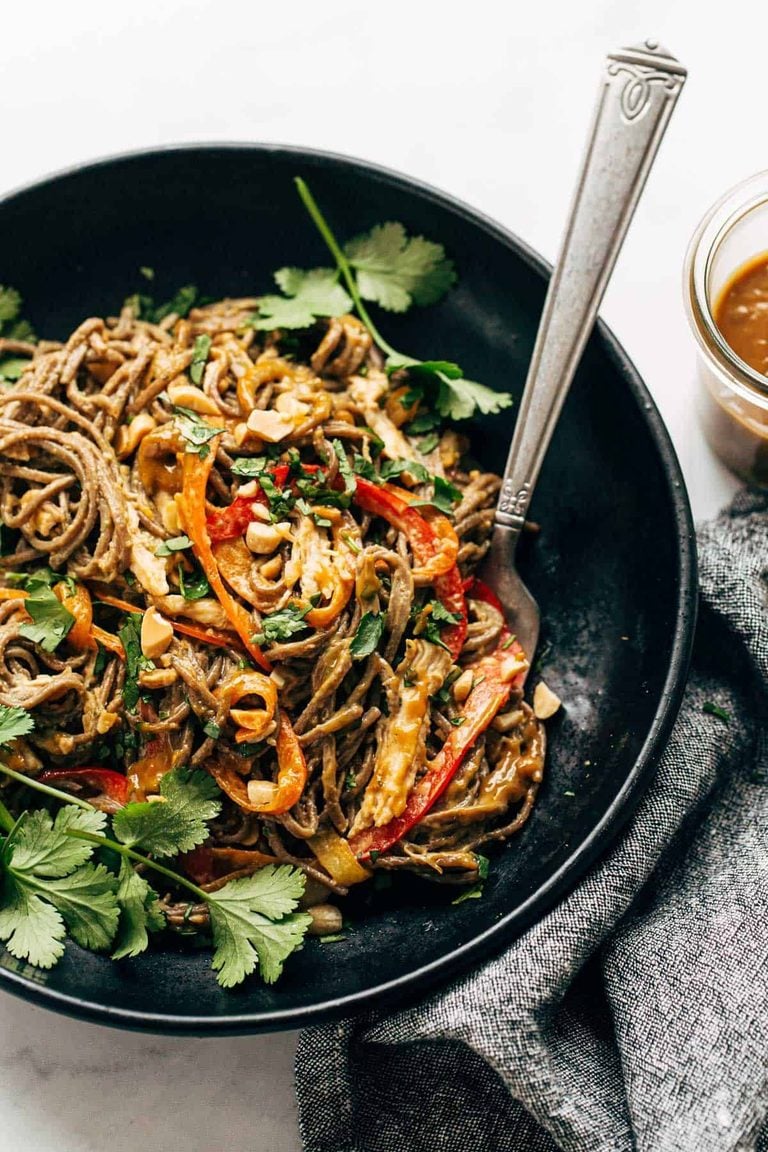
    Spicy Peanut Soba Noodle Salad

    This Spicy Peanut Soba Noodle Salad features red peppers, cabbage, chicken, soba noodles, and a quick homemade spicy peanut sauce. Salads don’t get much yummier than this.

    91 reviews / 4.8 average

    Elote quinoa salad.

    Elote Style Quinoa Salad

    Elote Quinoa Salad made with velvety peppers confit, juicy sweet corn, homemade dressing, cotija cheese, lime, and spices. Perfect for summer and so, so good!

    23 reviews / 4.9 average

    Crispy rice salad.

    Crispy Rice Salad with Cucumbers and Herbs

    Paper-thin veggies, a shower of herbs, a pile of fried crispy red curry rice, and a limey garlicky vinaigrette all over top. This crispy rice salad is all I want to eat right now!

    50 reviews / 4.8 average

    Grilled chicken with hummus.

    Grilled Chicken with Pepperoncini Garlic Butter

    This is such a fun one! Grilled marinated chicken, a quick tomato cucumber salad, tangy bits of feta, and a zippy pepperoncini garlic butter sauce poured over the whole thing.
    69 reviews / 5 average

    Magic green sauce.

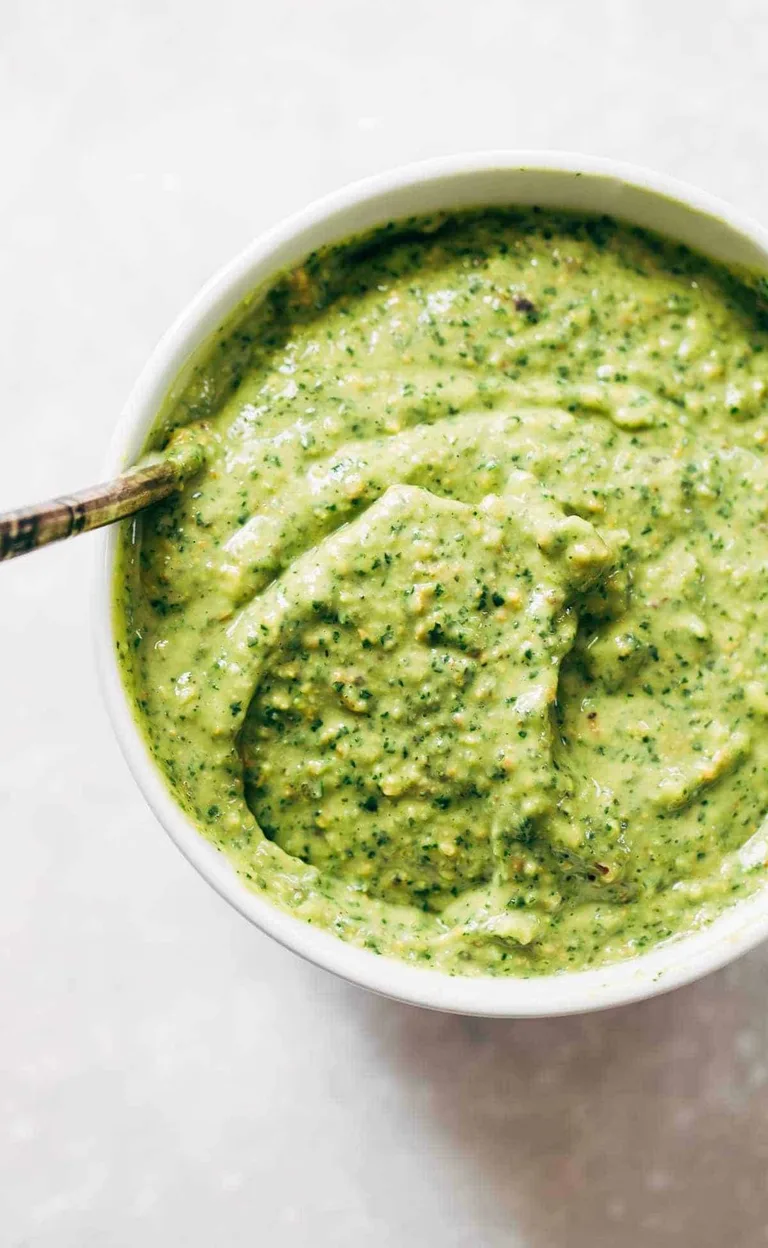
    5 Minute Magic Green Sauce

    5 Minute Magic Green Sauce – SO AWESOME. Made with easy ingredients like avocado, olive oil, cilantro, lime, garlic, and parsley! Vegan.

    217 reviews / 4.8 average

    Pickled strawberries on toast.

    Pickled Strawberries

    Unexpectedly delightful little pops of sweet vinegar-soaked strawberries on grilled sourdough with goat cheese, thyme, and honey!

    16 reviews / 4.9 average

    Banza chicken bowls.

    Banza Chicken Bowls with Calabrian Chili Sauce

    This bowl has it all! The crunch of the tomato cucumber salad, the thin slips of bitey red onion, the golden crisped air fryer chicken cut into tender little strips, a big pile of perfectly chewy Banza, and a dollop of tangy calabrian chile sauce on top.

    22 reviews / 5 average

    Salmon tacos.

    Salmon Tacos with Mango Corn Salsa

    Super easy salmon tacos loaded with a mango, sweet corn, and cucumber salsa!
    32 reviews / 5 average

    Zucchini spaghetti with burst tomato.

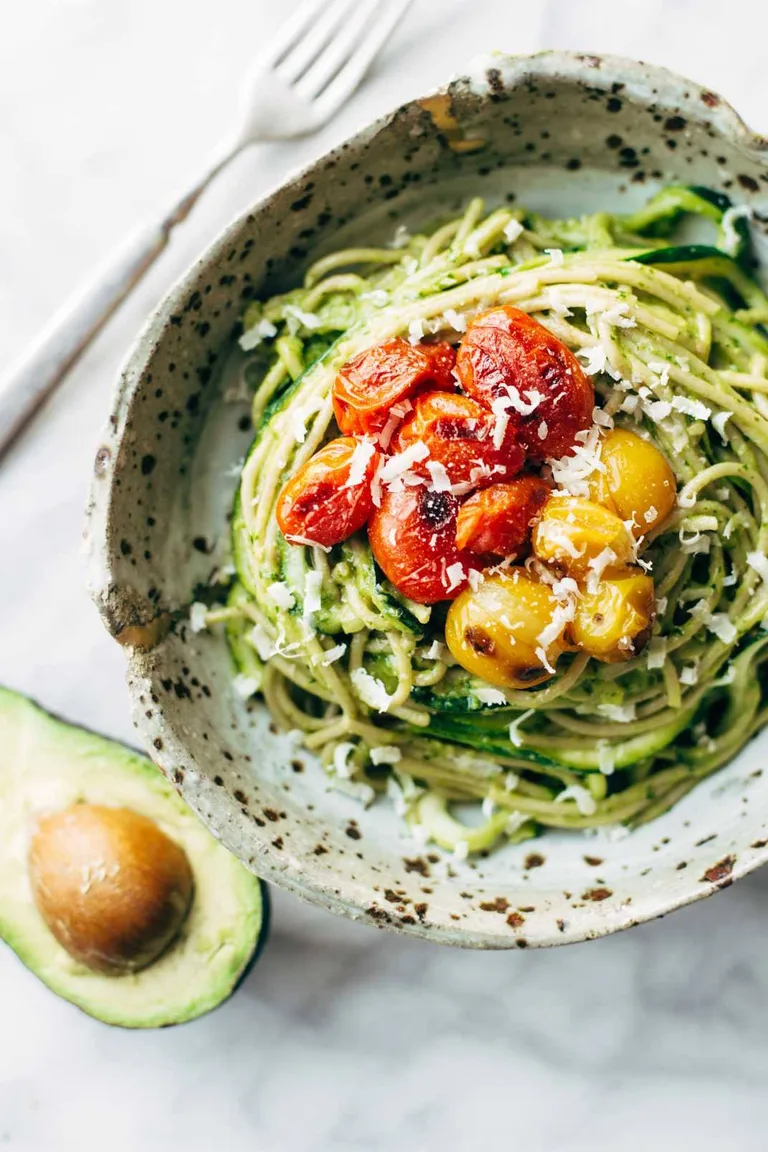
    Burst Tomato and Zucchini Spaghetti with Avocado Sauce

    Burst Tomato and Zucchini Spaghetti tossed with a simple, creamy, vegan avocado sauce. This healthy recipe is ready in 30 minutes!
    43 reviews / 4.9 average

    Almond butter chocolate chip zucchini bars.

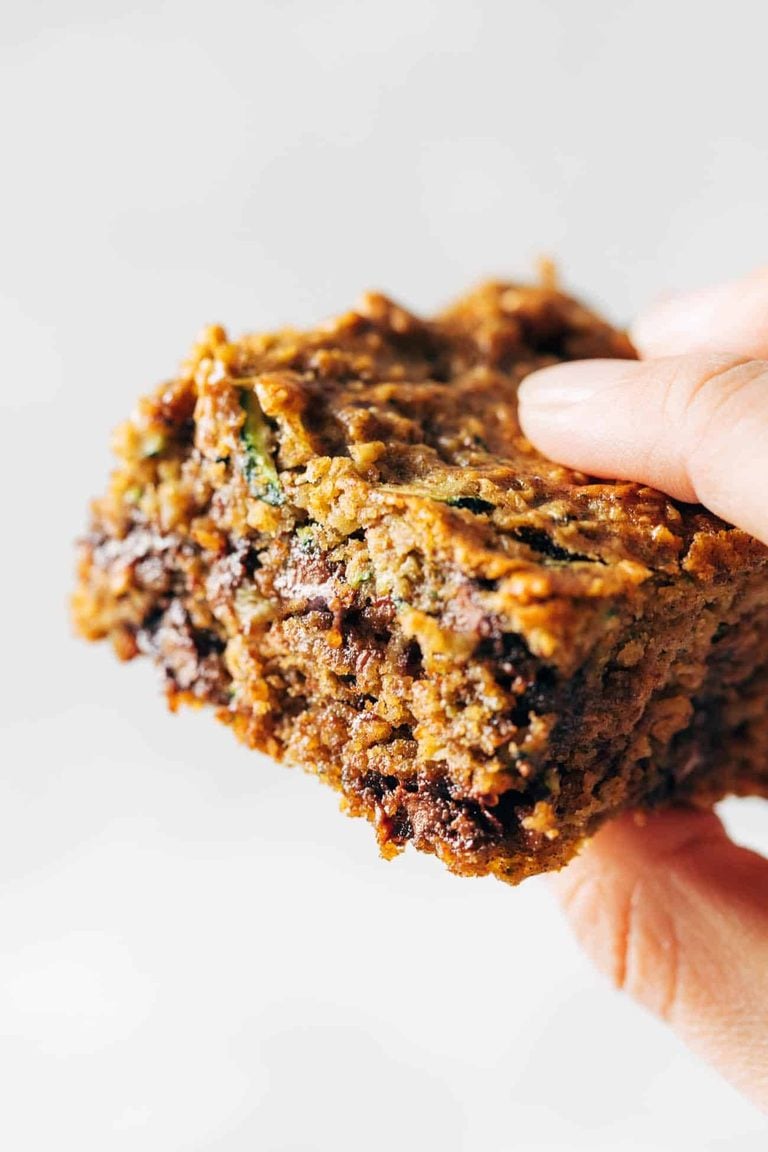
    Almond Butter Chocolate Chip Zucchini Bars

    These Almond Butter Chocolate Chip Zucchini Bars are wholesome and perfect and just everything your summer needs! Made with oats, almond butter, zucchini, dates, and maple syrup. So many feel-good ingredients packed into one bar!
    32 reviews / 4.9 average

    Salmon on greens with dressing.

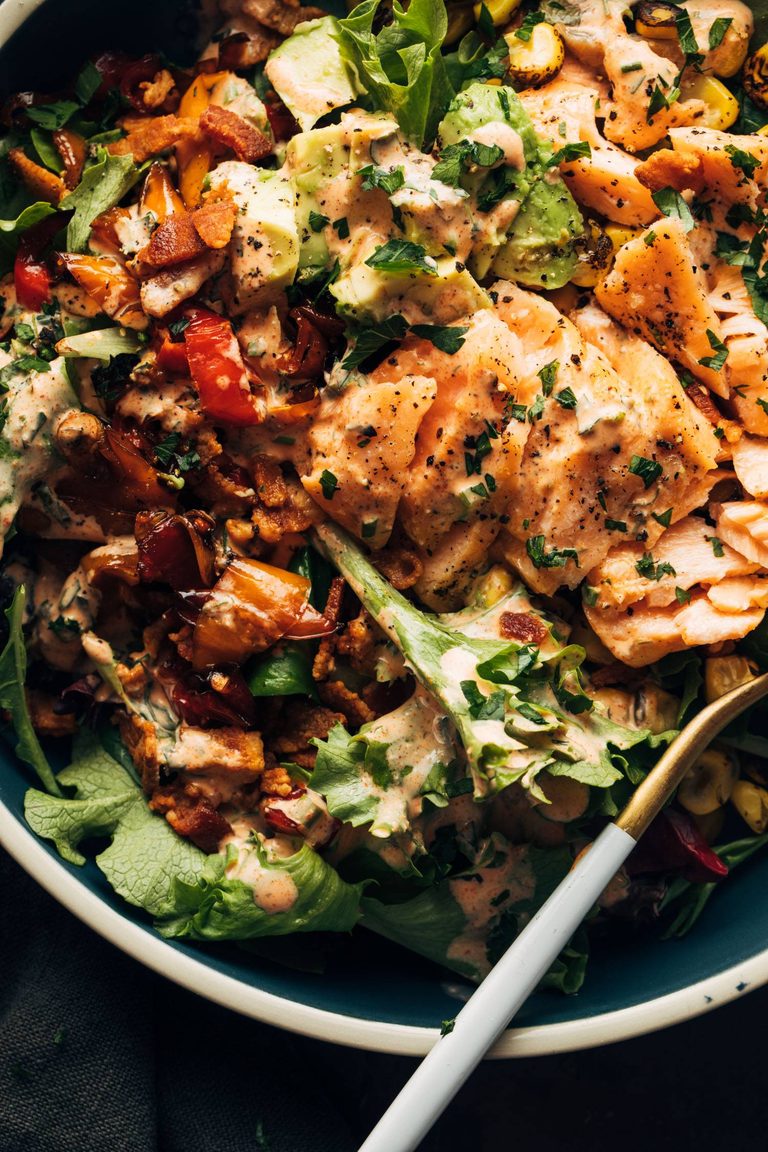
    The Oliver’s Salad

    We’re bringing you the most beautiful salad inspired by the restaurant Oliver’s in Minnesota. Tender salmon, savory peppers and garlic confit, buttery chunks of avocado, fire-roasted corn, bacon bits, and a river of homemade smoky ranch dressing.

    27 reviews / 4.9 average

    Lemongrass chicken with rice and zucchini.

    Lemongrass Chicken with Rice and Zucchini

    This Lemongrass Chicken with Rice and Zucchini is OMG-level good! Tender chicken thighs, sautéed and then simmered in a creamy coconut and lemongrass sauce, sits next to a steamy pile of jasmine rice, fresh herbs, and your choice of veg.

    73 reviews / 4.9 average

    Chicken wraps with tomatoes and kale.

    Ang’s Chicken Wraps

    Hellllooo quick summer lunch! These chicken wraps have me hooked. Shredded chicken, crispy cheddar cheese, fresh veg like tomato, corn, and lettuce, some pickled red onion, and not one, but TWO sauces.

    18 reviews / 4.9 average

    Harissa meatballs with hummus, feta, and zucchini.

    Harissa Meatballs with Whipped Feta

    These Harissa Meatballs with Whipped Feta are perfect for an easy SOS dinner! Store-bought meatballs, bell peppers, zucchini, harissa, and whipped feta all in one bowl. YUMMY!
    39 reviews / 5 average

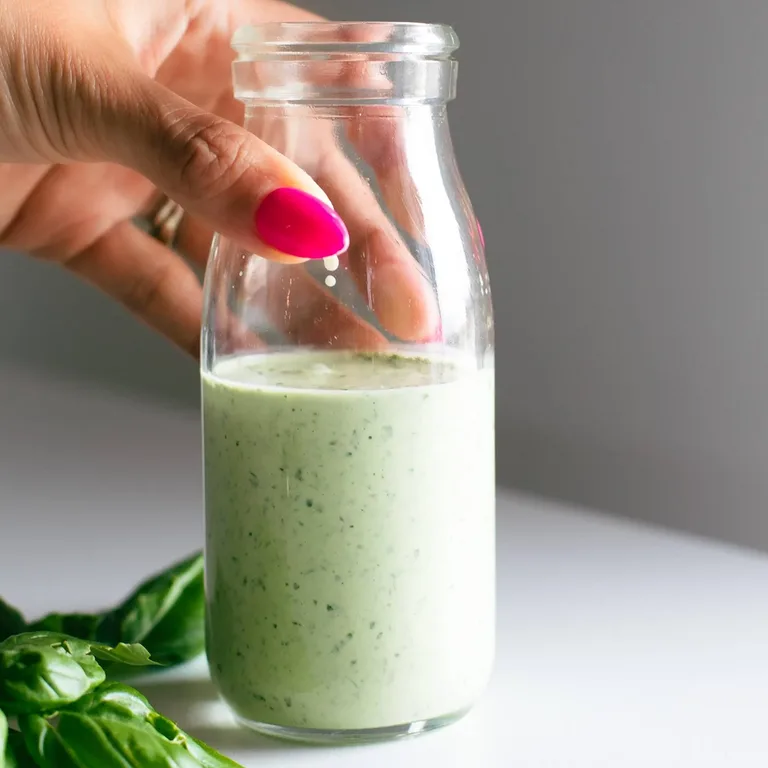
    Basil sauce in a jar.

    Very Incredible Basil Sauce

    Punchy, salty, bright green sauce packed with fresh basil, chives, garlic, and a bit of oregano. This sauce can be poured out just about anything!

    20 reviews / 5 average

    Burst tomatoes with polenta and greens.

    Roasted Tomatoes with Goat Cheese Polenta

    Roasted Tomatoes with Goat Cheese Polenta! Fresh, juicy tomatoes, vibrant green spinach, and a creamy goat cheese polenta!

    47 reviews / 4.9 average

    Tomatoes and shrimp on orzo.

    Garlic Shrimp and Tomatoes with Parmesan Orzo

    Shrimp laced with buttery garlic and thyme and a burst tomato sauce served on a creamy Parmesan orzo.

    19 reviews / 4.8 average

    The post 35 Summer Produce Recipes For Your Farmer’s Market Haul appeared first on Pinch of Yum.

    This post was originally published on this site.

  • How to Deal with Caregiver Guilt

    How to Deal with Caregiver Guilt

    How to Deal with Caregiver Guilt

    What is caregiver guilt? If you care for an elderly or disabled family member, you probably already know the anxiety of not doing enough and chronically ignoring fatigue or resentment. Many family caregivers feel it is a failure to ask for outside help from friends, family, or professionals. What will people assume? How will they judge us and our family?

    Caregivers often fear judgment not only from others, but from themselves. In truth, we want to be superhuman, with a bottomless well of patience and endless supply of energy. However, it is not realistic to turn off our own needs. Part of the long-term caregiver experience is being honest about how very hard it is to do what is essentially a part- or even full-time job—without the training.

    The Emotional Toll of Caregiving

    When considering a loved one’s care needs, we might first think about the practical: doctor’s appointments, medication routines, and ADLs (activities of daily living) like bathing and eating meals. There are financial and legal considerations and many decisions to make about changes to your loved one’s lifestyle. (Read our full list of tips for new family caregivers here, and check out our list of caregiver book and podcast recommendations.)

    What we may not consider is the emotional side of caregiving. For those caring for aging parents, the role reversal can be difficult on both sides; children grieve as they watch their parents lose independence, strength, and health, and parents struggle to allow their children to be the caregiver now. There can be a power struggle or a dip in the senior parent’s mental health as they lose autonomy and a sense of purpose.

    Adult children take on a lot as caregivers to aging parents, but many of us were raised to expect it to be a natural part of our lives. As a result, when we are overstimulated and under-rested, we ignore it. We tell ourselves we owe it to our parents, and we must take on the entire responsibility ourselves. We fear we are not doing our duty to them if we delegate certain care responsibilities or take a break.

    We also fear loss of control—what if we can’t trust someone else to do as good of a job as we would? If our parent gets worse, is it our fault?

    This over-extending quickly leads to compassion fatigue and burnout, affecting our entire lives.

    Managing Caregiver Guilt with Basic Prioritization

    While letting go of caregiver guilt is easier said than done, this is a muscle that can be trained. The first hurdle is giving yourself permission to accept the guilt and then let it go. Accept that you will experience frustration and mixed emotions as a normal part of this difficult process. You do not have to pretend those feelings are not there.

    It may help to journal or talk to your spouse or close friend—or even a therapist or support group—about these complicated feelings. Accept emotional support from those who are “in it” with you, like siblings, or from friends who have no connection to your family and will bear no emotional impact besides supporting you.

    Beyond acceptance and emotional care, you can focus on some basic priorities and decisions to reduce your caregiving guilt and better balance the different areas of your life:

    ● Stop comparing. Do not compare your situation with those of others around you. You don’t know the details of their lives, and they do not know yours. Do what is best with what you have, in the moment. That is all anyone can do.
    ● Ask for help. This is one of the most important actions you can take to be an effective caregiver for your loved one. If you burn out, you are no use to anyone—not yourself, and not them. Prevent burnout by seeking professional services like respite care or home care, or by asking trusted friends or family members for some of their time and support.
    ● Know your limits. Related to asking for help, be honest with yourself about what you can and cannot do in light of your physical capacity, your schedule, and how close or far you live from your loved one. Be realistic about what is possible in a day and what you need to stay healthy and fully functioning.
    ● Focus on the big picture. Is your loved one safe and comfortable? Were their basic needs met today? Don’t get lost in “shoulds” and details. Think good over perfect.
    ● Schedule self-care. Self-care can mean daily walks, an hour to watch your favorite show uninterrupted, or brunch with friends. At minimum, it means adequate sleep, regular meals, and staying hydrated.

    More American adults than ever before are caring for an elderly loved one an average of 14-21 hours per week. Trying to do this alone out of a sense of duty is a short road to burnout, which puts you and your loved one at risk. Don’t let feeling guilty as a caregiver keep you from drawing on outside resources for help; you and your loved one will both be better off for it.

    If your loved one needs home care, our VetAssist mission is to make home care easily and quickly accessible for those who qualify through the VA Pension with Aid and Attendance benefit. Veterans Home Care can help you determine whether you or your loved one will be eligible to receive the benefit, which can cover some or all of the cost of home care, and we make it easy to apply. Chat with us via our website, or call us at (888) 314-6075.

    The post How to Deal with Caregiver Guilt appeared first on Veterans Home Care – VA Aid and Attendance Pension Benefit.

  • Where Is The Best Area To Stay In Maui? The Ultimate Guide

    Where Is The Best Area To Stay In Maui? The Ultimate Guide

    Find the best area to stay in Maui with this guide to the island’s top regions, including Wailea, Kaanapali, Paia, and Hana. Compare neighborhoods and discover where to stay based on your travel style.

    The post Where Is The Best Area To Stay In Maui? The Ultimate Guide appeared first on Going Awesome Places by William Tang.

    This post was originally published on this site.

  • Where To Stay In Kyoto, Japan – A Guide To The Best Hotels, Ryokans, And Neighborhoods

    Where To Stay In Kyoto, Japan – A Guide To The Best Hotels, Ryokans, And Neighborhoods

    Planning a trip to Kyoto? Discover the best areas to stay in Kyoto, from the historic streets of Gion and Southern Higashiyama to lively Downtown Kyoto and scenic Arashiyama. Compare the top neighborhoods, find hotel recommendations, and choose the perfect base for your travel style.

    The post Where To Stay In Kyoto, Japan – A Guide To The Best Hotels, Ryokans, And Neighborhoods appeared first on Going Awesome Places by William Tang.

    This post was originally published on this site.

  • Washington’s orders to troops after July 4: You’re fighting for a new nation

    Washington’s orders to troops after July 4: You’re fighting for a new nation

    The Fourth of July and the signing of the Declaration of Independence severed ties with Great Britain and thus receives its due attention.

    But it was on July 5, 1776, that the former colonials got down to the nuts-and-bolts of governing and winning a war.

    One of the first orders of business that day for members of the Second Continental Congress meeting in Philadelphia was getting cooking kettles to the militia. The Committees of Inspection and Observation were told to “furnish a good kettle to every six men, and give all the assistance in their power, that the said militia be well armed and equipped, and march with the greatest expedition,” according to the Journals of the Continental Congress at the Library of Congress.

    It was also resolved “That a chaplain be appointed to each regiment in the Continental Army, and their allowance be increased to thirty three dollars and one third of a dollar a month.”

    Members then had to deal with the always grumpy John Adams, who got approval to send a copy of the Declaration to Mary Palmer, the daughter of family friends of the Adamses in Braintree, Massachusetts, along with a somewhat-snotty note now preserved by the Massachusetts Historical Society.

    “I will enclose to you a Declaration, in which all America is remarkably united,” Adams’ letter read. “It completes a Revolution, which will make as good a Figure in the History of Mankind, as any that has preceded it — provided always, that the Ladies take Care to record the Circumstances of it, for by the Experience I have had of the other Sex, they are either too lazy, or too active, to commemorate them.”

    On the morning of July 5, the members of the Congress also ordered copies of the Declaration printed by John Dunlap to be distributed throughout the former colonies.

    The thought also occurred to them that somebody ought to tell the troops what they were fighting for now that independence had been declared.

    And so John Hancock, the Boston merchant-smuggler and president of the Second Continental Congress, was authorized to tell Gen. George Washington to have the Declaration read to his fledgling army at formations.

    In his letter to Washington, Hancock wrote that “the Congress have judged it necessary to dissolve the Connection between Great Britain and the American Colonies, and to declare them free and independent States; as you will perceive by the enclosed Declaration, which I am directed to transmit to you, and to request you will have it proclaimed at the Head of the Army in the Way, you shall think most proper.”

    Washington was in New York at the time, warily watching the buildup near the harbor of a British armada that would grow to 400 ships and 32,000 British regulars and Hessians. He scheduled the reading of the Declaration for July 9.

    “The Honorable the Continental Congress, impelled by the dictates of duty, policy and necessity, having been pleased to dissolve the Connection which subsisted between this Country, and Great Britain, and to declare the United Colonies of North America, free and independent STATES,” Washington’s General Orders for July 9 read.

    “The several brigades are to be drawn up this evening on their respective Parades, at six [o’clock], when the declaration of Congress, shewing the grounds and reasons of this measure, is to be read with an audible voice.”

    Washington hoped that movement would “serve as a fresh incentive to every officer, and soldier, to act with Fidelity and Courage, as knowing that now the peace and safety of his Country depends (under God) solely on the success of our arms.

    “And that he is now in the service of a State, possessed of sufficient power to reward his merit, and advance him to the highest Honors of a free Country.”

    Things did not immediately go according to plan, however.

    Washington was livid when a mob of troops and locals rioted, storming down Broadway to Bowling Green where they toppled a statue of King George III and lopped off its head.

  • Unemployment for post-9/11 veterans climbs in June as nation’s job market slides


    The closely watched jobless rate for the post-9/11 generation of veterans bumped up from 4.1% in May to 4.8% in June as the nation’s ability to create new jobs took a nosedive, according to a monthly jobs report released Thursday by the Bureau of Labor Statistics.

    The report also showed an increase in the unemployment rate for all veterans from a remarkably low 3.2% in May to 4.1% in June, despite the continued strong showing of women veterans in the labor market.

    The BLS data showed that the jobless rate for women veterans has come down from 7.1% in March to 4.4% in April and 3.3% in May before ticking up to 3.6% in June, which was still well below the month’s unemployment rate for the general population (4.1%).

    For many analysts, the most concerning figures in the BLS report were the weak numbers on job creation. Total nonfarm payroll employment changed little in June by adding 57,000 jobs, about half of what analysts predicted.

    A main concern was the hiring slowdown in the healthcare sector, which has consistently been setting the pace for adding jobs through both the Biden and Trump administrations.

    The BLS report said that employment in healthcare added 22,000 jobs in June, “but at a slower pace than the average monthly gain over the prior 12 months of 38,000.”

    Leisure and hospitality employment, meanwhile, usually a strong performer, declined by 61,000 jobs in June, “reflecting weaker than usual seasonal hiring,” the report said. Thus far in 2026, “employment in the industry has shown little net change.”

    Overall, “it’s a pretty disappointing jobs report,” Heather Long, chief economist for the Navy Federal Credit Union, told Military Times in a phone interview.

    “Tech is still strong,” she said, “but healthcare has cooled off a little bit,” and “wages are not keeping up with inflation.”

    Long noted increases in the unemployment rates for veterans but added that the data is from a relatively small sample.

    “That’s why you see a lot of movement” in the numbers for veterans, she said, adding that the “verdict is still out” on whether artificial intelligence will be the major job killer that many expect.

    The AI impact on the jobs market is “not showing up in the data yet,” Natasha Sarin, a former assistant secretary at the Treasury Department under the Biden administration, told MS Now, which could be the result of new research showing that the expected impact of AI on white collar entry-level jobs may have been overstated.

    The Trump administration sought to put the best face on the BLS report, showing a weakening labor market. Kush Desai, a White House spokesman, posted that the report “reinforces that the American labor market remains solid thanks to President Trump’s economic agenda.”

    He called attention to the report that the nation added 3,000 manufacturing jobs in June, although that was down from 7,000 manufacturing jobs added in May.

    New acting Secretary of Labor Keith Sonderling stated that “Manufacturing employment, which was devastated under the Biden Administration, continues to grow as we secure historic investments and reshoring of critical industries,” despite the loss of 4,000 manufacturing jobs cited in the BLS report.

    “President Trump’s America first agenda continues to provide greater wages for workers and certainty to the sectors which will fuel the next 250 years of U.S. economic security,” he added.

    Despite the claims, the BLS data showed that wages were not keeping up with inflation. The report showed that wages rose 3.5% in June, while the annual inflation rate through May noted in a separate BLS report (the Consumer Price Index) rose by 4.2%.

  • Improving Long-Term Care for Seniors in Massachusetts

    Improving Long-Term Care for Seniors in Massachusetts

    In recent years, Massachusetts has taken significant steps to improve care for seniors, most notably the Act to Improve Quality and Oversight of Long-Term Care. In a recent Risking Old Age in America podcast, Rep. Thomas M. Stanley, Co-chair of the Elder Affairs Committee, describes this initiative as well as further steps in the works. These include creating a family caregiver commission, licensing home health agencies, and working towards universal long-term care insurance.

    Here are some excerpts from our conversation:

    Senior Living Facilities

    Risking Old Age in America (ROA): You have been working [to make improvements] across the whole continuum of care from nursing homes [to] assisted living facilities to home healthcare. Please talk about the legislature’s initiatives in these areas.

    Rep. Thomas M. Stanley: In 2024, the governor signed the long-term care reform bill into law. This was the first major legislative update of nursing homes and assisted living residences in over 25 years.

    It increases transparency and oversight of nursing homes through new suitability standards for owners and operators. It requires a review of the civil and criminal litigation history of owners and operators; and we put in place tools for the Department of Public Health to monitor and take punitive action against facilities, including increased fines and creating the ability to appoint a temporary manager to oversee a struggling facility.

    It expands the suitability reviews of management companies including any [firm] with at least a 5-percent stake in a nursing facility. The law also establishes the long-term care workforce and capital fund to help address the workforce crisis in nursing homes. Money from the fund can be used for Certified Nursing Assistant training grants, career ladder grants for Licensed Practical Nurses, and also leadership training.

    The law gives assisted living facilities the ability to offer basic health services, like wound care, eye drops, and medication distribution to their residents.

    ROA: The Dignity Alliance [a senior advocacy group]…[has said] state supervision and enforcement of nursing facilities is…not tough enough, that there might be fines and other penalties on the books, but nobody’s applying them to nursing homes that don’t meet their obligations. It sounds like the ability to put them into receivership under the new legislation may be the remedy that’s needed.

    Stanley: That’s correct. Under the old rules you would end up in the situation of really punishing or fining a nursing home and end up having it going to foreclosure. In that case, where are the residents going to go? The new law allows the Department of Public Health (DPH) to get in earlier and work with them so that they understand what the DPH is looking for in terms of quality of care and so forth. They can take care of the facility and all the residents so they don’t go astray.

    ROA: So the DPH might have felt that it was between a rock and a hard place because if they enforced the regulations, they might lose the nursing home.

    Stanley: [Yes]…and the nursing homes, by and large, were not letting them know that they were having certain problems. So this allows the DPH to get in earlier, understand what’s going on and help them make adjustments so that they can right the ship.

    Long-Term Care Insurance

    Stanley: The state of Washington is really in the forefront of looking down the road to provide for some type of revenue stream…for folks to be able to afford their home care or [other] long-term care needs. So we’re modeling our program after theirs and we’re learning from their mistakes and successes.

    ROA: That’s the Washington Cares Fund?

    Stanley: Yes, exactly. Last session Senator Jehlen and I worked together to get $500,000 in the state budget for the Executive Office of Health and Human Services to hire an independent firm to conduct the actuary study of various public, private and public-private long-term support service financing options. They hired Milliman to conduct the study. [The full study is available here.]

    How it would work in a nutshell is that a public…insurance program would be funded via a payroll tax. After individuals pay into the program for a certain number of years, a vesting period, they would become eligible. And as they age and require long-term support services, they can apply for benefits under the program. There are countless ways to design the program, increasing or decreasing the benefit amount or…the vesting period, determining what the benefit can be used for – home care, assisted living or even paying family caregivers. We have filed legislation to establish a commission to discuss the results of the actuary study and the feasibility of a public long-term care financing program in Massachusetts and potentially recommending a model that works.

    ROA: It sounds like this would help a lot, but one question I have about it is that if there’s a vesting period where you have to pay in for a number of years before you can become eligible for the benefit, would it only be available for people who are continuing to work during that time?

    Stanley: That’s definitely something that has to be discussed by the commission, but everyone has to contribute and the 10-year vesting period is necessary to get enough money into the program to make it sustainable.

    Listen to our entire conversation here.

    For more from Harry Margolis, check out his Risking Old Age in America blog and podcast.  He also answers consumer estate planning questions at AskHarry.info.  To stay current on the Squared Away blog, join our free email list.

    This post was originally published on this site.