Author: U.S. Coast Guard
-
Beyond the battlefield: How 3 Marine Raiders turned combat lessons into a healing mission
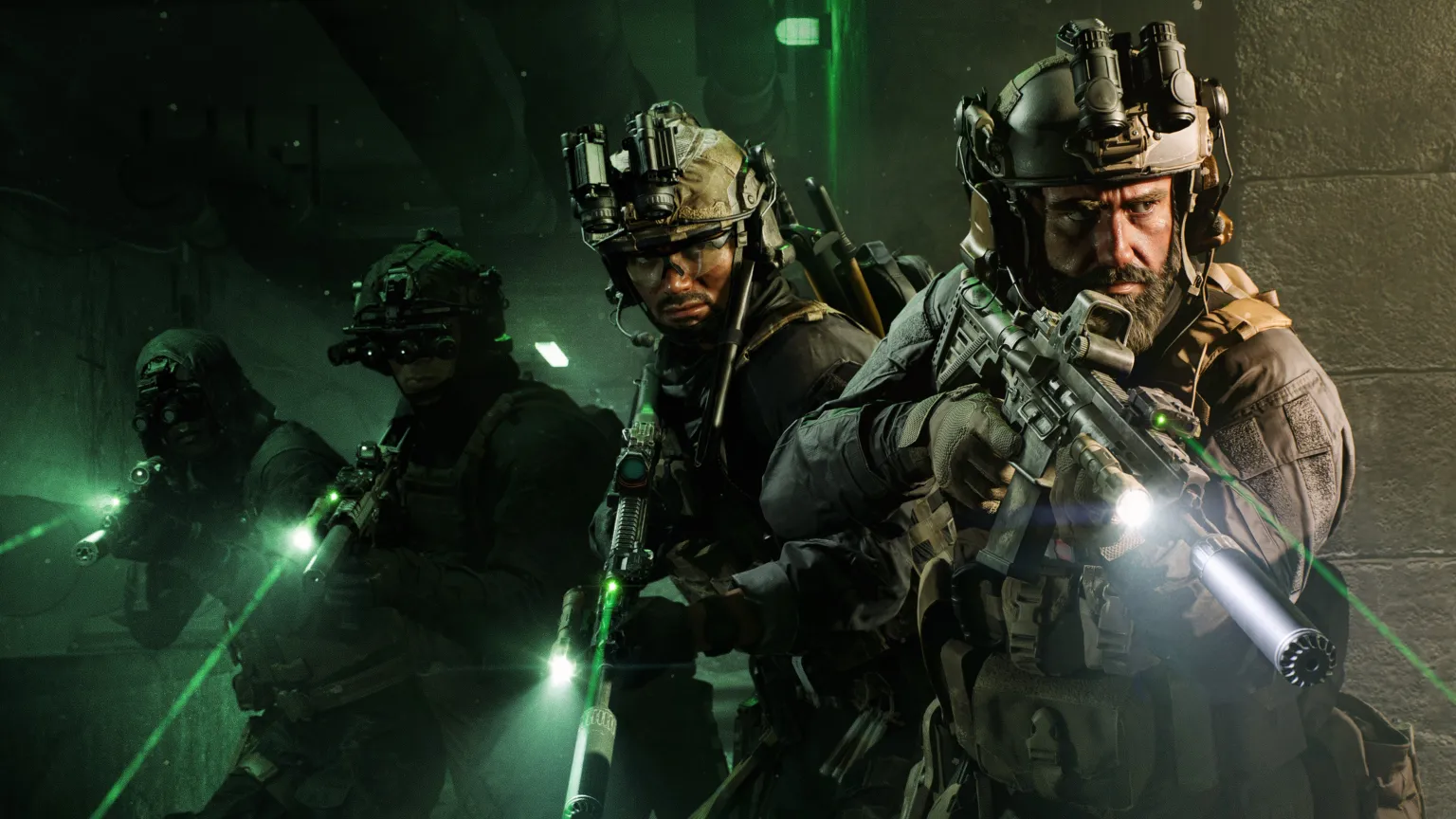
Open this season of the video game “Battlefield 6,” and you might find yourself dropping into a firefight as one of the Strix Raiders, the special operations team at the center of the shooter’s “Nightfall” update.
What most players sprinting across the map won’t know is that three of those characters are built from real Marines, and that the men behind the motion capture have spent the years since their service trying to keep other veterans alive.
Prime Hall, Don Tran and Rick Briere served together in the 1st Marine Raider Battalion. In the game, they appear as Rob Brooke, Douglas Pham and Atticus Moore. Out of it, they are business partners, nonprofit founders and, by their own account, brothers who have buried too many friends.
For Hall, the throughline from combat to civilian life is simple to name. “It takes a village,” he said. He frames it the way a Raider would. In a fight, you want 360-degree security. After service, he said, that security becomes “your perimeter of the relationships and the people that you have in your life.”
That perimeter matters because the landing is rough.
Hall enlisted in 2005 and was medically retired in 2017 after an insider attack years earlier left damage that finally surfaced.
Stacked with prescriptions, he said he began to feel like he was “in the passenger seat of life.” A holistic-healing retreat in late 2019 turned things around, and the lesson stuck. “You can only do so much on your own,” he said. “At a certain point, you know, you gotta tap into something bigger than yourself.”
The three built that something. Deep End Fitness, their underwater training program, started the year the trio got out and now coaches athletes and civilians nationwide.
Hall ran a nonprofit, Marine Raider Challenge, until the unit relocated to North Carolina. Tran helped start another, Operation Resilience. The mission Hall keeps returning to, though, is grimmer. He has lost roughly 10 friends to suicide — part of a toll that still claims an average of about 17 veterans a day. The work, he said, is about turning each loss into a chance “to create a positive shift somehow in the community.”
His guiding phrase: “Be what’s missing.”
Tran describes the transition trap in operational terms. In the military, the stakes were high but the problem was simple. “Now it’s like, when you’re out [the problem] became extremely complex.”
Money, school, family and a young business all competed at once. What got them through was dropping the act they had all learned to wear.
“In the Raiders you’re this super tough guy,” Tran said. Out of uniform, that facade has a short shelf life. He and his teammates learned to say the thing operators rarely say: “I need some help, dude. Like, this is not working.”
That honesty, he added, is also what reaches the veterans they mentor. “That humanizes you.”
Briere, who admits he still questions whether he belongs in a mentor’s chair, landed on the same point. “It’s okay to drop the armor,” he said.
He describes a bond that no longer requires performance. “There’s no animosity, there’s only transparency.” Months can pass without the three talking, he said, and they pick back up like no time has passed.
None of them set out to be in a video game. The opportunity came through their Deep End Fitness work, and the developers’ focus on authenticity meant the men actually played the parts in motion-capture suits.
Briere, a lifelong gamer, still can’t quite believe it. Seeing the characters come to life, he said, “it’s surreal to me.”
Tran’s reaction was more practical. “My character doesn’t die,” he said.
The three are clear about what they hope the game does beyond entertain. Hall sees the characters as a doorway, “an access point for people to look into what we’re up to” and the work they have done since getting out, he says. For Tran, it is also a chance to put the Raider legacy alongside the units that already have their movies and books.
Asked what they would tell a struggling veteran, the answers came easily.
“Find your next North Star, dude, and navigate towards that,” Tran said. “You’ve done it before, probably in a way harder world.”
Hall offered a message of hope, the kind he says he is living proof of.
“If I can do it, anybody can do it,” he said. “Give yourself some grace.” Even a broken clock, he likes to remind himself, is right twice a day.
Veterans and service members in crisis can reach the Veterans Crisis Line by dialing 988 and pressing 1, or by texting 838255.
-
Has the military been miscalculating spouse unemployment?
For decades, military spouse employment policy has revolved around a single, stubborn statistic: unemployment.
It’s the standard that leaders cite, programs are built around and progress is measured against. But a recently published report reveals that the Department of Defense has been calculating unemployment differently from typical benchmarks, overstating unemployment rates and obscuring how many military spouses may have stopped looking for work entirely.
A March 2026 report revealed that the DoD calculates unemployment differently than the Census Bureau and Bureau of Labor Statistics, counting some spouses as unemployed who would typically be seen as out of the workforce.
The Pentagon attributes these differences to unique military lifestyle factors. However, according to economist and professor Amy Burnett Cross, this difference in calculation “makes these measures not comparable.”
In fact, if the Pentagon mirrored federal standards, the military spouse unemployment rate would drop from roughly 20% to 14% — still significantly higher than the national average, but lower than the figure cited for years in congressional testimony, policy discussions and news coverage.
Cross believes this “structurally inflates” military spouse unemployment while simultaneously reducing the number of spouses categorized as no longer participating in the workforce, a group rarely highlighted in DoD programming efforts and reports.
“I remember penny pinching so, so much in those days,” recalled Army spouse Elizabeth Mays of her husband’s first duty station in Fort Huachuca, Arizona. “I ended up taking a job making minimum wage at Sears in the shoe department, just to help us make ends meet.”
This was the first of many times Mays worked outside her field to remain employed. Subsequent duty stations yielded similar employment choices.
“Between commuting and then the workday, you’re spending 13 hours a day away from your newborn baby, and your husband is deployed and not even there at all. It’s just me,” said Mays.
She did the math and realized that after child care and transportation costs, her income wouldn’t cover her expenses. In fact, remaining in the workforce would “cost” her family $50 a week. “Those decisions did not make sense, and that was the point where I chose family.”

Mays’ experience is familiar to many military spouses, but it is an experience that is not well understood. Mays is not part of the roughly 20% of military spouses who are unemployed, those who are looking for work but not finding it. She is part of the roughly 36% of spouses who are not in the workforce at all.
“Anecdotally, I would say that we have a pretty large percentage of spouses that have removed themselves from the workforce,” said Eddy Mentzer, who oversaw child care family programs and spouse employment for the DoD. “They’re not captured in any way whatsoever.”
The lack of information on military spouses who have stopped looking for work may undercut the programs designed to help them.
Patricia Barron served as the deputy assistant secretary of defense for Military Community and Family Policy under President Biden from 2021 to 2025. Her office oversaw military spouse employment programming and collaborated with the Pentagon’s Office of People Analytics to survey military spouses.
“A question that I have always had to our researchers at DoD … ‘Are we asking the right questions?’” said Barron.
The answer she often received was that changing survey questions would hamper the department’s ability to track trends over time.
“There’s always, I would say, good reasoning for the pushback [to update surveys], but it keeps us stuck where we are,” she said. “There’s got to be a new way to think about the [spouse survey], and maybe it’s time to blow it up.”
For many military spouses, cycling in and out of the workforce is expected, even if it isn’t clearly documented or understood.
Upon discovering she was pregnant with their first child, Navy spouse Melinda Estrada made a plan to navigate her budding career in tech. She would work on her graduate degree while staying home with her new baby.
“And then once that’s done, then I’ll jump from my graduate degree, hopefully, to a full-time position,” said Estrada.
Because her husband’s assignment to attend school in Monterey, California, was only supposed to last 18 months, she didn’t see a point in looking for a job only to have to step away without the accrued work time required to be entitled to maternity leave.
A second child and increasing demands from her husband’s job delayed her graduate degree further, extending her time out of the workforce.
Mays, too, struggled to reenter the workforce.
“In Germany, I tried to go back to work,” said Mays, whose husband received overseas orders in 2014, moving her and her two children, ages two and four, far from family and friends.
Because there were limited jobs available overseas, she applied for a job outside her field, at a bank on the installation.
“They told me that they chose another candidate because they were going to be there longer than me,” she said.
Undeterred, she applied to work in merchandising at the Army Exchange and was hired after having to wait 15 months for her daughter to be old enough to be eligible for a spot in daycare.
“I came back from my first day on the job with training, and my husband said, ‘So, I have news.’ Our favorite phrase,” Mays recalled. “‘I have been selected for a job in D.C., and we have to move in 90 days.’”
Mays wanted to work, but resigned the following day, exiting the workforce.

Historically, DoD surveys have asked spouses if they “wanted to work.” As of 2019, the vast majority of those spouses, 85%, responded yes, but only 43% were employed.
This question was not included in the 2021 or 2024 surveys. However, recent DoD surveys have asked why spouses are not looking for work, allowing them to select only one answer. The Number 1 answer (30%) cited child care responsibilities.
Child care scarcity is a reality for all Americans, and military child care is no different.
According to a 2025 report by RAND, military child care programs are not keeping up with demand, leaving tens of thousands of military families without care.
The availability of affordable child care has a significant impact on military spouses’ participation in the workforce. According to a 2016 Health and Human Services report, a 10% reduction in the price of child care could increase maternal employment as high as 11%.
Despite the documented need for improved child care access, most military spouse employment solutions have focused on reducing unemployment through personal development and employment partnerships.
“The DoD has thrown money at trying to find employers who are willing to hire military spouses because people don’t want to hire people who are moving all the time,” said Maria Donnelly, the co-founder of the Military Family Foundation, a nonprofit that has helped military spouses navigate federal employment policies.
Donnelly was referring to one of the DoD’s employment solutions, the Military Spouse Employment Partnership, or MSEP, a membership-based program that encourages civilian employers to hire military spouses.
Since MSEP was launched in 2011, “more than 220,000 military spouses” have been hired. While the initiative requires its partners to document those they hire and retain, this data has not yet been publicly reported.
Both Estrada and Mays reported taking advantage of DoD-sponsored career development programs and internships. Neither walked away with jobs as a direct result of participating, but both formed networking connections that ultimately led to employment. For Estrada, another workforce departure followed.
In January 2026, the DoD announced an effort to reduce military spouse unemployment by 5%, increase Military Spouse Employment Partnership retention to 100% and establish a new military spouse unemployment office.
If experts are correct that the military is measuring unemployment differently than the rest of the country, it raises questions about whether current policies are targeting the right problem.
“I try not to should myself,” said Mays, who is currently employed by a military spouse-owned business that offers flexible remote work, a job she is thankful to have. “But I have this feeling and that I could and should be like at a director level or a management level, given my level of experience.”
Estrada is still looking for work.
-

5 Clean Energy Brands in Australia Worth Watching
Original content owned & copyrighted by Green Global Travel.
According to Australia’s Department of Climate Change, Energy, the Environment & Water, renewable electricity generation on the continent has more than doubled over the last decade.
In the Clean Energy Council’s 2026 Clean Energy Report, they claim that over over 40% of all of Australia’s electricity now comes from renewable sources, including biomass, solar, wind, and hydro generation technologies.
One of the key factors behind the rapid growth of the clean energy industry is the fact that switching to renewable energy has gone from a feel-good idea to a practical, money-saving decision for millions of households around the world.
Whether you’re driven by core environmentally conscious values, soaring power bills, or the appeal of energy independence, choose the right providers and products can make the whole process far more straightforward.
Thankfully for Australian residents, there are an extensive array of clean energy brands making renewable power more accessible and affordable for homeowners and eco-conscious businesses alike.
Read on to discover 5 standout companies in the clean energy space that offer home energy storage and solar solutions, making it easier than ever for Australians to take control of how they power their homes.
READ MORE: How to Reduce Your Carbon Footprint with Carbon Offsets & More

1. VoltX Energy
VoltX Energy has built a strong reputation for reliable, high-performance home battery systems designed specifically for the Australian and New Zealand markets.
Their range covers everything from entry-level solar batteries to advanced home energy management systems, with a focus on making clean energy storage practical rather than complicated.
Their batteries integrate seamlessly with most solar panel setups, which means you can add storage to an existing system without a full overhaul.
For households that want locally backed support alongside a quality product, VoltX is hard to overlook.
READ MORE: 5 Eco-Friendly Initiatives That Will Change the World

2. Tesla Energy
Tesla’s Powerwall remains one of the most recognized home battery products in the world, and for good reason.
It offers a sleek design, solid energy capacity, and compatibility with Tesla’s broader ecosystem, including solar roof tiles and the Tesla app.
The Powerwall 3 combines a solar inverter and a battery in a single unit, simplifying installation and maximizing efficiency.
While it sits at a premium price point, the build quality and software integration make it a compelling long-term investment for households ready to go all in on home energy management.
READ MORE: Going Green: 60 Earth Day Tips You Can Use Every Day

3. SunPower
When it comes to solar panels, SunPower consistently ranks among the best for efficiency and durability.
Their Maxeon cell technology delivers higher energy output per square meter than most conventional solar panels, which makes them ideal for homes with limited roof space.
SunPower panels are backed by some of the longest warranties in the industry, giving homeowners confidence that their investment will hold up over decades.
While not the cheapest option on the market, the long-term performance gains often justify the upfront cost for buyers focused on maximizing returns.
READ MORE: How to Audit (& Improve) Your Green Home

4. Fronius
Austrian manufacturer Fronius is widely respected for producing some of the most reliable and technically advanced solar inverters available.
An inverter is the unsung hero of any solar setup, converting the direct current from your panels into usable alternating current for your home.
Fronius inverters are known for their efficiency, smart monitoring capabilities, and long operational life.
They’re a popular choice among installers who want to pair a quality inverter with a premium battery system, and they work well alongside most leading battery brands.
READ MORE: Interview w/Ted Turner on Saving the World with Renewable Energy
5. BYD
BYD produces a range of home battery storage solutions that have gained serious traction globally.
Their Battery Box range is modular, meaning you can start with a smaller capacity and scale up as your energy needs grow.
BYD batteries use lithium iron phosphate (LFP) chemistry, known for safety and long cycle life.
They’re often positioned as a cost-effective alternative to premium brands without sacrificing reliability, making them a solid option for budget-conscious households getting into energy storage for the first time.
READ MORE: Interview with CEO David Crane on California’s Ivanpah Solar Plant
Making the Switch: Factors to Consider
Choosing the right clean energy brand comes down to a few key factors: your current solar setup, your daily energy usage, your budget, and how much grid independence you want to achieve.
According to the International Energy Agency, the global shift to renewable energy is accelerating faster than any previous energy transition in history, meaning the technology is mature, prices are falling, and the time to act is now.
Pairing quality solar panels with a reliable battery system gives you the ability to store excess energy generated during the day and use it at night or during peak tariff periods, which is where the real financial benefit lies.
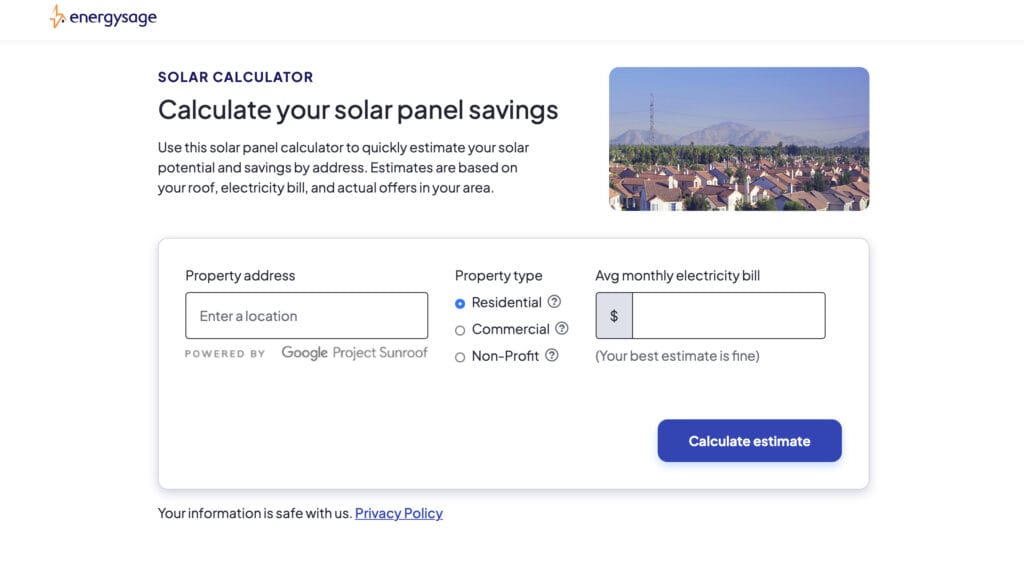
For anyone researching their options, EnergySage is a useful resource for comparing solar products and getting a clearer picture of what different systems cost in practice.
The landscape has changed significantly in recent years, and what once seemed like a luxury is now within reach for a much broader range of households.
READ MORE: What is Ecotourism? The History & Principles of Responsible Travel
Final Thoughts
The clean energy market is competitive, well supplied, and increasingly accessible.
Whether you opt for a local Australian brand like VoltX Energy or a globally recognized name like Tesla or SunPower, the most important thing is choosing a solution that matches your specific needs.
Get a few quotes, check the warranties, and don’t underestimate the value of local support.
A brand that is easy to reach when something goes wrong can be worth just as much as one with a polished product catalogue! –by Alex S. Morrison; lead image via Canva Pro
The post 5 Clean Energy Brands in Australia Worth Watching appeared first on Green Global Travel.
-

Vegan Nutella Ice Cream
Friends! The fluffiest, most satisfying, Nutella lover’s dream dessert is here: vegan ice cream made with chocolate and hazelnuts. It’s creamy, dreamy, oh-so delicious, and kind of perfect! Especially when craving a sweet treat on a warm summer day.
Just 6 ingredients required for this (dare we say) MASTERPIECE. It’s going to be on repeat in our ice cream maker all season long. Grab your cones. Let’s make Nutella ice cream!
-

Wadi Rum Guide – How to Visit Jordan’s Red Desert
There are places that look better in person than in photos, and places that look exactly as advertised. Wadi Rum somehow does both. The desert is larger and more impressive than you would imagine, changing color throughout the day as the light shifts across the landscape. Of all the places we visited in Jordan, the …
The post Wadi Rum Guide – How to Visit Jordan’s Red Desert appeared first on Travel Notes & Beyond.
-

Visiting Togoville: A Fascinating Trip Across Lake Togo
Last Updated on June 25, 2026 by Sarah Wilson I visited Togoville as part of a tour with Undiscovered Destinations, which made the trip very easy because everything from transport to the lake crossing was organised for me. You can visit independently, but you will need to put in a little more effort. Most travellers head to the waterfront […]
The post Visiting Togoville: A Fascinating Trip Across Lake Togo appeared first on LifePart2andBeyond.com.
-
Everything You Need to Know About RV Camping at KOA
Original content owned & copyrighted by Green Global Travel.
This post was brought to you in partnership with KOA (Kampgrounds of America).
Picture yourself hitting the open road in your home on wheels, or settling into your perfect vacation spot for weeks at a time.
The freedom of RV travel is a dream shared by millions, whether you’re exploring new destinations or enjoying an extended stay in one beautiful location.
With Kampgrounds of America (KOA), finding RV camping sites with full hookups is fast, affordable, easy and fun.
Here’s a look at everything you need to know about RV camping at KOA, which has more than 500 locations spread across the United States and Canada!
READ MORE: 20+ Camping Tips and Tricks For Responsible Travelers

KOA Loves RVing as Much as You Do
Whether you’re part of one of the 8.1 million households that already own an RV, or among the 16.9 million people who hope to join the growing RV community, finding quality campsites is essential.
Since 1962, KOA has helped families and adventurers create unforgettable memories in the great outdoors.
Spending time in nature offers numerous health benefits, including reduced stress and improved mood, better sleep, and an enhanced immune system.
So, when you camp at KOA, you’re investing in both adventure and well-being.
READ MORE: Camping & Hiking in Joshua Tree National Park
Find Your Perfect Getaway (From Coast to Coast)
KOA operates North America’s largest network of campgrounds, with over 500 locations spanning the United States and Canada.
You can park your rig beside a mountain lake, nestled in a coastal forest, or near major cities for easy access to urban attractions.
There are three distinct KOA campground types to match your personal travel style:
- KOA Journey: Perfect for travelers who need a convenient overnight stop — you’ll find them near major highways with easy access and after-hours check-in
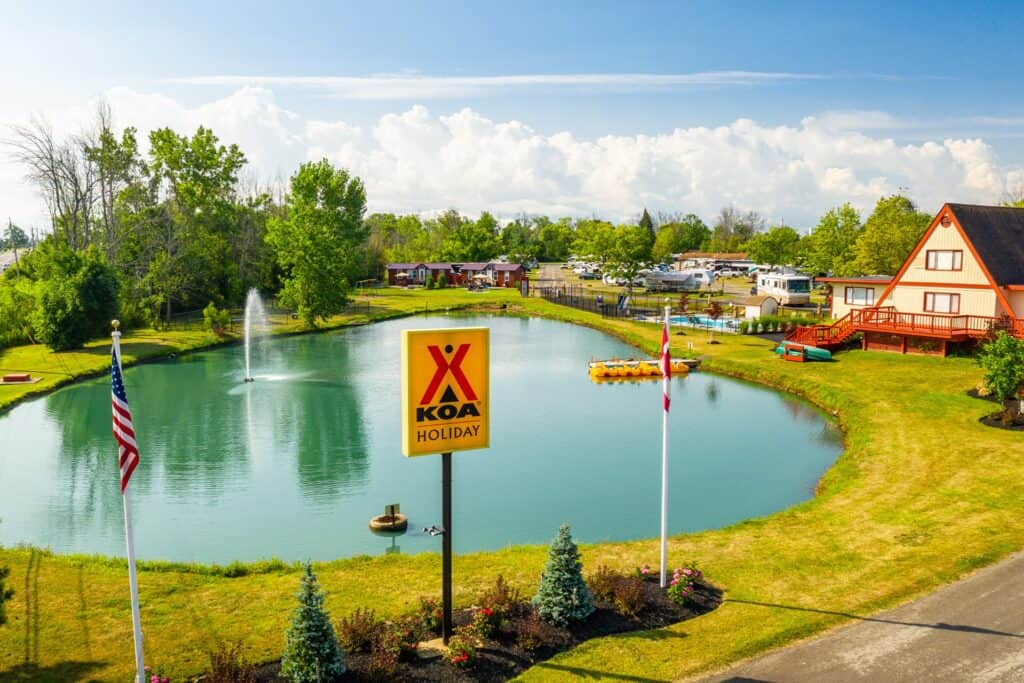
- KOA Holiday: Designed for weekend getaways or short vacations, offering more amenities and activities
- KOA Resort: Ideal for extended stays, typically featuring resort-style pools and extensive facilities
Matching the KOA brand to your preferred camping style or goals is the first step in choosing your location.
Camper Type Best KOA Choice Why It Will Suit You The Weekend Warrior KOA Holiday Close to attractions, full amenities, plenty of activities for the whole family The Cross-Country Voyager KOA Journey Highway-convenient locations, quick check-in, clean facilities for overnight stops The Snowbird KOA Resort Extended stay options, resort amenities, vibrant community atmosphere The Nature Lover KOA Holiday or Resort Proximity to trails and outdoor recreation, peaceful settings, wildlife viewing opportunities The Family Vacationer KOA Holiday Playgrounds, swimming pools, organized activities, spacious sites for multiple vehicles READ MORE: List of US National Parks By State (An Epic Guide)
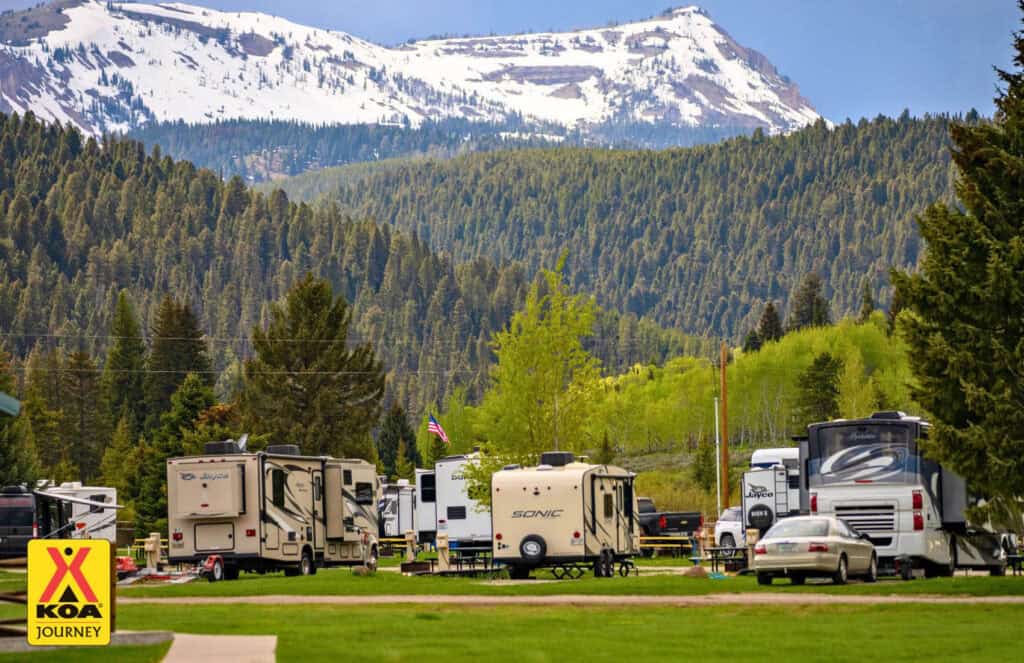
Photo courtesy KOA Choose Your Ideal RV Pitch
Having picked a campground, the next step is to narrow down to the exact type of pitch to book.
KOA welcomes RVs of every type, from compact camper vans to luxurious motorhomes.
The variety of site options across the network means you can find exactly what your rig needs.
READ MORE: What is Glamping? A Guide to Luxury Camping
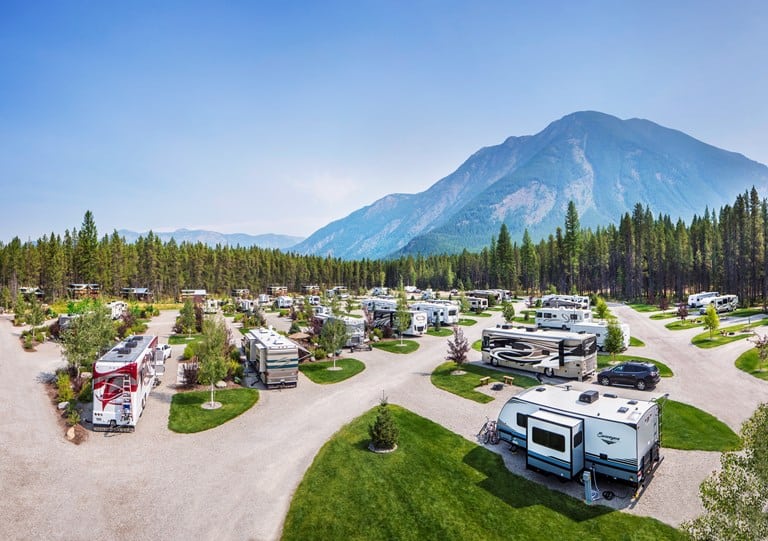
Photo courtesy KOA Power Up With Full, Partial & No-Hookup Options
Understanding hookup choices is important:
- Full hookups provide water, electric and sewer connections directly at your site.
- Partial hookups typically include water and electric service, but not sewer access.
- No-hookup sites offer a more rustic experience.
The KOA website’s easy-to-use filtering system lets you search specifically for RV camping sites with full hookups so you can book with confidence.
READ MORE: The Best Places for Family Camping in California
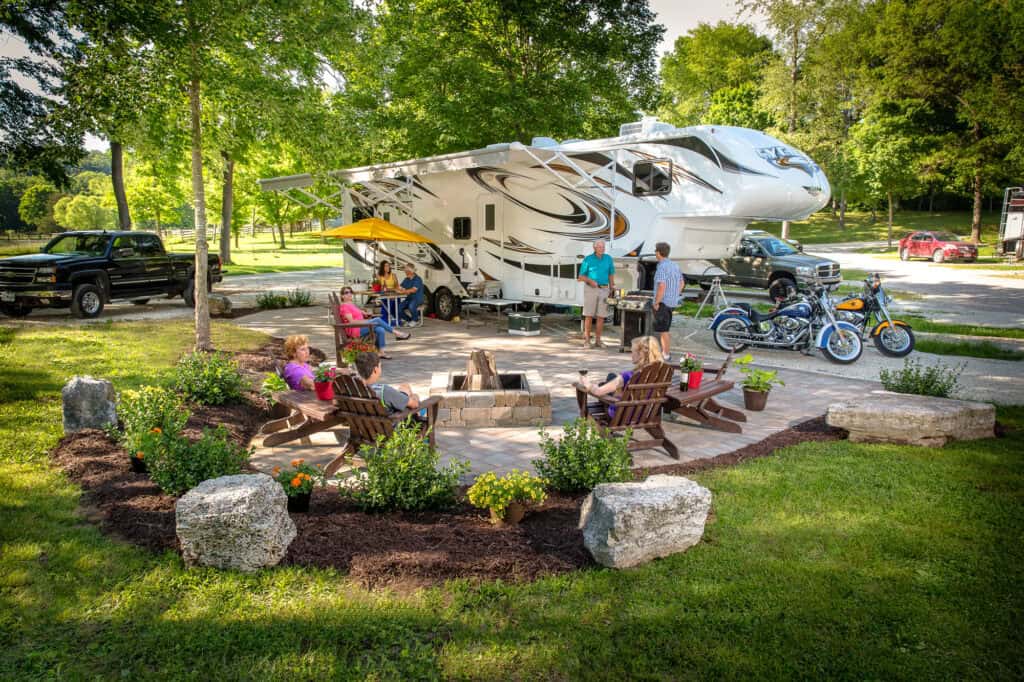
Photo courtesy KOA Find the Perfect Site for You
KOA Campgrounds accommodate RVs of all sizes, with sites designed for everything from small camper vans to massive 45-foot-long motorhomes.
Pull-through sites let you drive straight in and out without backing up, which is ideal for larger rigs. Back-in sites offer more privacy and often premium views.
Many locations also feature KOA Patio® sites, which include an extended private patio space with outdoor furniture and a fire pit or fire ring.
READ MORE: The 15 Best Camping Tents for Families

Photo courtesy KOA Explore Amenities & Attractions
Every KOA Campground includes laundry facilities, playgrounds, and convenience stores stocked with camping supplies.
Depending on which type you choose, some also have after-hours check-in, group facilities, supervised children’s activities and resort-style pools.
Most locations are near hiking trails, water recreation, wildlife-viewing opportunities, or visitor attractions.
The friendly staff (in their signature yellow shirts) are always happy to share local recommendations.
READ MORE: Wadi Rum Desert Camping & Camel Trekking in Jordan
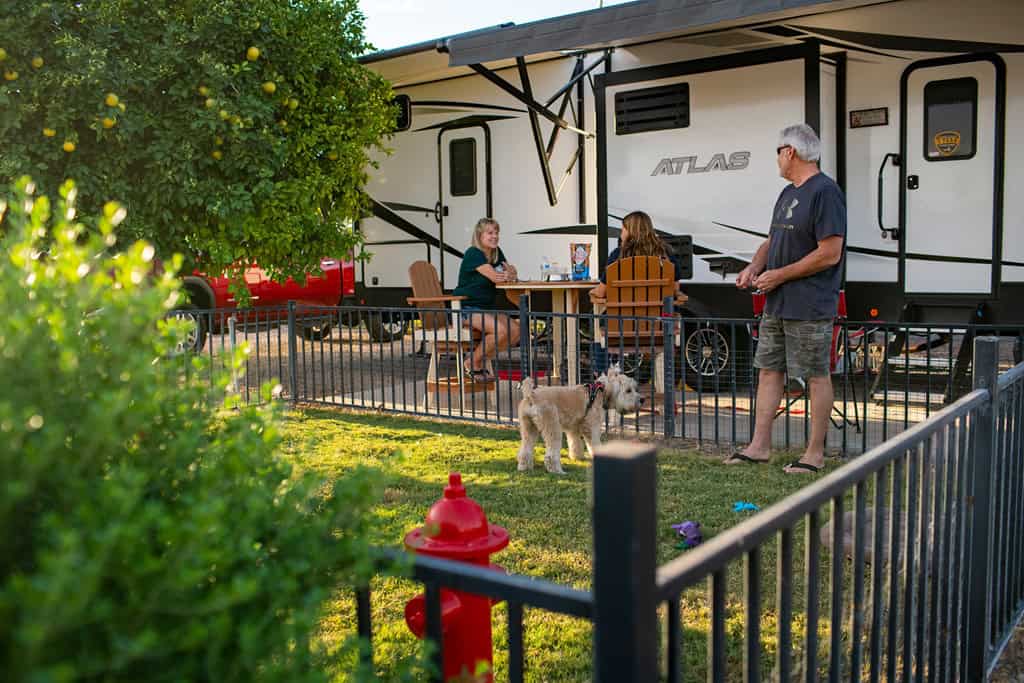
Photo courtesy KOA Bring Your Furry Co-Pilot
Your four-legged family members are always welcome at KOA.
Every location features a KampK9® area, with fenced off-leash space where dogs can play safely. Some campgrounds are rolling out new KOA Paw PenSM sites, which include a private fenced area as part of your campsite. S
Since around 43% of all RVers consider pet-friendly camping important, KOA has made it easy!
READ MORE: The Best Hiking Trails (For Your World Travel Bucket List)
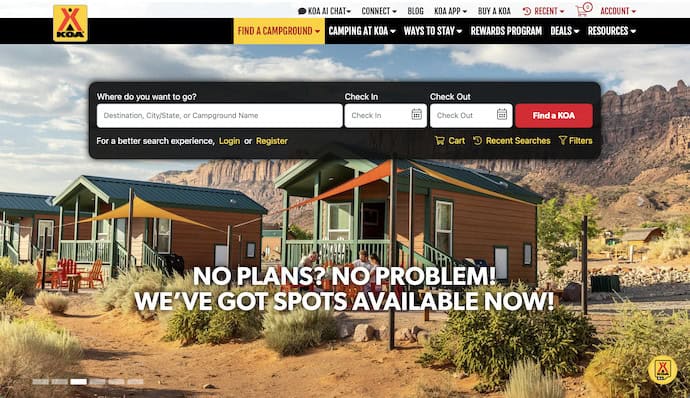
Lock In Your Adventure & Join the KOA Rewards Program
KOA’s streamlined online booking system takes the stress out of planning, letting you search by location, filter for amenities like full hookups, and view detailed site information.
You’ll also see transparent pricing, with no hidden fees. The platform shows real-time availability across hundreds of campgrounds, eliminating the need to check multiple sites.
Consider joining the KOA Rewards Program, which offers valuable perks to make camping more affordable.
Members receive a 10% discount on nightly rates at participating locations, plus exclusive promotions and the ability to earn points toward free nights.
READ MORE: What is An Eco Lodge? (Top 10 Eco Lodges in the World)

Photo by Bret Love & Allie Love Pro Tips for an Unforgettable KOA RV Trip
Make the most of your experience with these insider suggestions:
- Book early for peak seasons: Popular destinations fill up quickly. Reserve your spot several weeks in advance.
- Download the KOA app: Access reservation details, check campground maps and discover nearby attractions.
- Arrive during office hours on your first visit: Staff can give you a tour and share local tips.
- Respect wildlife from a safe distance: Many KOA locations offer incredible viewing opportunities. Always stay at least 100 yards from predators like bears and wolves.
- Take advantage of the camp store: Stock up on firewood, ice and other essentials.
READ MORE: What Is Ecotourism (History & Principles of Responsible Travel)
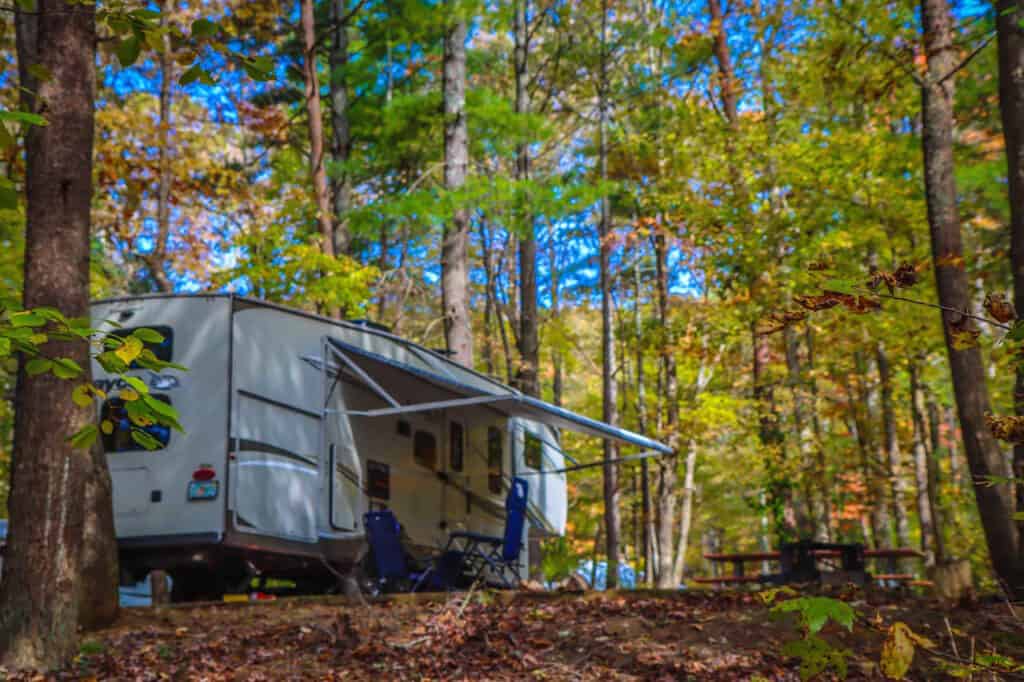
Photo by Bret Love & Mary Gabbett RV Camping FAQ
Here are answers to common questions about RVing at KOA.
Can I have a campfire at my site?
Campfire policies vary by location and season. Many sites include fire rings, and KOA sells firewood. Always check current restrictions with staff.
Is Wi-Fi available at KOA campgrounds?
Most KOA locations offer Wi-Fi access, though signal strength varies by site location.
Do I need a reservation or can I just show up?
Reservations are strongly recommended. Booking ahead guarantees you’ll have a site.
Are there size restrictions for RVs?
Each campground lists maximum RV lengths for sites. The booking system filters results based on your RV size.
The post Everything You Need to Know About RV Camping at KOA appeared first on Green Global Travel.
-
‘Flashpoint Campaigns: Cold War’ is the ultimate OODA Loop wargame
Fifty years ago, a U.S. Air Force colonel named John Boyd offered a profound insight into why battles are won or lost.
His famous Observe, Orient, Decide, Act — or OODA — Loop described the mental cycle by which combatants, from fighter pilots to generals, assess and react to a constantly changing situation.
Those with a faster OODA Loop could exploit opportunities while their befuddled opponents struggled to understand what was going on.
Germany crushed France in 1940 largely because of a sluggish French command system that was always one OODA step behind the swift panzer divisions. More recently, OODA might explain why tactically rigid Russian tank columns were decimated by outnumbered but agile Ukrainian troops in 2022.
Had the Soviets invaded Western Europe during the Cold War, NATO would have relied on OODA — plus airpower and more advanced weapons technology — to stop the Soviet steamroller.
To the troops watching waves of Soviet tanks roll into the Fulda Gap or the North German Plain, OODA would have been just a buzzword. But NATO needed every advantage it could get to compensate for superior Soviet numbers and firepower.
Flashpoint Campaigns: Cold War, published by Matrix Games, is a computer wargame that depicts a hypothetical Warsaw Pact invasion of West Germany in 1989.
But it is more than just another World War III wargame. Flashpoint Campaigns is the OODA Loop gamified. In fact, the game comes in two versions: the regular game for armchair generals, and a professional edition for real soldiers.
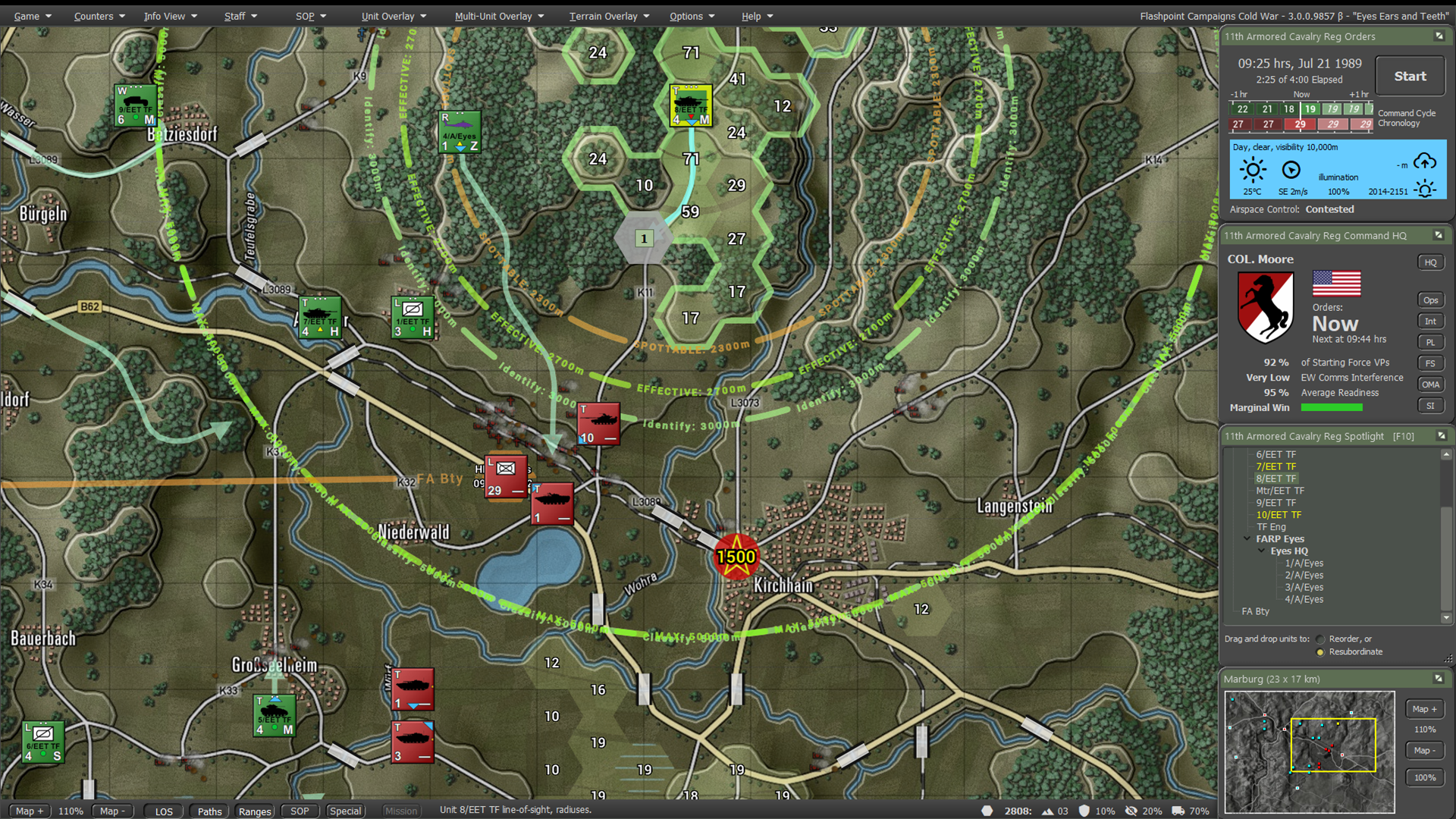
Flashpoint Campaigns is a 2-D map game, with NATO platoons and Warsaw Pact companies waging battalion- to division-sized battles. Set in the twilight of the Cold War, much of the hardware — such as Abrams and T-72 tanks, and Bradley and BMP infantry fighting vehicles — are still around today.
Players issue orders to their troops, such as movement, direct fire, calling in artillery and airstrikes, combat engineering operations and resupply. For example, a tank platoon can be ordered to head to a crossroads via a series of designated waypoints along the route.
Units can be given standard operating procedures, or SOPs, such as determining at what range to open fire, when to change firing position and when to retreat. Enemy units are usually invisible until spotted. With Late Cold War weapons so devastating, combat is deadly and proper concealment and reconnaissance a must.
After a player finishes issuing commands, they can hit the start button. A game clock then appears and a certain number of minutes elapse, during which units try to fulfill orders.
It all sounds like a straightforward process — until OODA intervenes.
Unlike many wargames, players in Flashpoint Campaigns can’t give orders to their troops at will. Instead, only at certain intervals does the game clock pause and allow commanders to issue fresh orders. This reflects the time it takes for the command system to collect information, analyze it, reach a decision and pass a new order to subordinates.
Like an object in motion in Newtonian physics, units will try to execute their last set of orders until new instructions arrive. That tank platoon heading down the road toward a village will keep going toward that village until told otherwise, even if the tactical situation has changed.
This is where NATO’s OODA advantage kicks in. The NATO player might have to wait, say, for 14 minutes of game time to elapse before issuing fresh orders. For the Soviets, the delay might be 23 minutes, or about 50% longer.
This means that NATO will have more opportunities to give new orders than the Soviets do. In turn, this means NATO troops can more quickly react to new threats such as enemy forces on their flank, or exploit discovery of a gap in the enemy’s lines.
It also means that NATO can be more flexible in its planning, rather than having to anticipate the tactical situation far in advance.
“We all know what happens when plans make contact with the enemy,” Robert Crandall, president of On Target Simulations, which designed Flashpoint Campaigns, told Military Times. “NATO spent considerable efforts to train for what happens after that contact and to respond faster than their counterparts. This could let them operate inside the Warsaw Pact command loop and outmaneuver them.”
But even NATO has OODA problems in the game. The presence of electronic warfare, in which the Soviets invested heavily, lengthens the interval before a player can give orders. Units engaged in combat will require 50% more time to react to new orders.
And commanders who send too many orders to their troops will receive an unpleasant surprise: too much radio traffic reveals the location as a headquarters, marking it for an artillery or airstrike.
Indeed, some U.S. Army experts today worry American command posts are so chatty that they will be targeted in wartime.
As battles progress in Flashpoints Campaigns, and units takes losses and headquarters are disrupted, command delays will inevitably lengthen for both sides.
Clausewitz’s “friction of war” will become an impediment, though a bit less so for NATO. Commanders on both sides will have to grit their teeth and accept that they can’t control their troops as they would like to.
Would NATO’s tighter OODA Loop have been enough to defeat the Soviets?
“One of the nicest compliments the game received came from a former Warsaw Pact officer who said he played the game using strict Warsaw Pact doctrine and won,” Crandall recalled.
“If the Warsaw Pact player has figured things out correctly, his initial plan will not have needed much, if any, adjustment and just rolls along at maximum speed. His opponent will be wrong-footed and at the mercy of the OODA Loop to react in time. With the fast-moving, hyper-lethal forces of 1989, good luck with that.”
In some ways, Flashpoint Campaigns is a memorial to another era.
The year 1989 was the twilight of 20th Century mechanized warfare. With the threat of drones paralyzing battlefield maneuver in the Ukraine War, discussing OODA’s influence on tactics seem almost quaint.
And yet, there is a reason why there is a global arms race today to develop smarter AI, quicker kill chains between sensors and weapons, and tightly networked forces that can act faster than the enemy.
Every year, the OODA Loop seems to tighten, with less margin to fall behind. As OODA reminds us, time is too precious a commodity to squander.
-
Coast Guard announces new training center in Alabama
The Coast Guard is acquiring a new training center on the campus of Birmingham-Southern College (BSC) in Birmingham, Alabama, to expand the workforce and meet critical mission needs. The first students are expected to begin training at the new site in late 2026.Read more:
https://www.mycg.uscg.mil/News/Article/4510034/coast-guard-announces-new-training-center-in-alabama/Interested in joining the U.S. Coast Guard?
Visit: http://www.gocoastguard.comConnect with the U.S. Coast Guard online:
Web: https://www.uscg.mil
MyCG: https://www.mycg.uscg.mil/
Facebook: https://www.facebook.com/UScoastguard
Twitter: https://twitter.com/uscg
Instagram: https://www.instagram.com/uscg