Today’s 4th of July celebration in Washington, D.C. will feature a nine-hour airshow involving waves of fixed and rotary-wing aircraft from across the military, including historic F-5s to modern fighter jets.
Freedom 250, the organization behind many of the events in the capital for the nation’s 250th birthday, released the schedule for the 4th of July airshow, which includes more than 30 specific waves of aircraft spanning almost every branch of the armed forces, minus Space Force. President Donald Trump said on social media last week that the show will feature “hundreds of planes” spanning different eras, although the specific number of aircraft was not specified by Freedom 250. Some demonstration teams and aircraft were identified, but it’s not clear what many of the events will include.
The program is a mix of military demonstration teams and aerial parades of the wider American fleet of planes and helicopters. Some of the aircraft are privately owned, such as four F-5s from NASA. Those four jets will kick off the celebration, starting their flyover at 1:14 p.m., followed 10 minutes later by a “NASA fleet review.” The Coast Guard is the first service branch to flyover, with two waves of search and rescue helicopters and planes.
Alongside fixed and rotary-wing aircraft, military parachute teams will make an appearance, with the Army’s Golden Knights and the Navy’s Leap Frogs scheduled next. They’re followed by an array of Army helicopters, and then the program is set to feature fleet reviews for the Air Force, Marines and Navy, broken into several waves. The Air Force component includes a section specifically for Air Force Special Operations Command, which could include gunships and special operations refueling tankers. AFSOC is the only special operations force specifically identified in the schedule.
After the reviews, the services’ demonstration teams are meant to make up the bulk of the late afternoon portion of the show. Alongside the Navy’s Blue Angels and Air Force’s Thunderbirds, the Marine Corps’ MV-22 Osprey team as well as the Navy Super Hornet demonstration team will There will also be a “Tri-Bomber Formation” from the Air Force, including a B-2 Spirit bomber, a B-1 Lancer and a B-52.
For some aircraft, it’s the second airshow in less than a month. The Blue Angels and Thunderbirds conducted a flyover above D.C. during the UFC fighting event on June 14. A B-1B Lancer from Dyess Air Force Base also took part.
The airshow itself will have waves passing by in intervals ranging from three minutes apart to 40, with a second Golden Knights jump set for 8:22 p.m. A longer gap is planned, while evening events on the National Mall start. According to the schedule published, the final event is at 10:36 p.m. when a B-1 bomber is set to do a nighttime pass with its afterburner on, roughly the same time a massive fireworks show is set to start.
It’s unclear if the weather around the capital will impact the planned airshow. Storms and showers are forecast for the afternoon and early evening, while the D.C. area deals with a triple-digit heat index. Some of the ground-based events planned in Washington for the holiday have been adjusted out of concerns of high temperatures.
A caregiving daughter once wrote in and asked me this common question:
“How can I find a gerontologist* near me to review medications, and help care for my mother with dementia?”
As you may have noticed if you’re a regular reader, I often emphasize the importance of spotting and reducing risky medications, especially those associated with falls or memory problems.
Understandably, this caregiver wants to find a geriatrician who can review her mother’s medications, and otherwise oversee her mother’s care.
(*Note: Technically, a geriatrician and a gerontologist are not the same. Gerontology is the social science discipline of all things aging, and one can get either a master’s or a doctorate in this field. Whereas geriatrics is a medical specialty, so geriatricians must first get a medical degree, then do a residency in internal medicine or family medicine, and then do specialty training. So when people say they want a gerontologist for medical care, what they really want is a geriatrician.)
Now, medication review is usually included in geriatrics primary care. Geriatric care, after all, means healthcare modified to be a better fit with what happens as people get older. And being careful with medications is pretty integral to this approach.
But, although geriatric primary care is certainly worth looking for, it can be hard to find. (Read on for suggestions below.)
So it’s good to have a plan B, which can be getting a medication review — and fall risk assessment — outside of geriatric primary care. This can also be a good option if an older person is reluctant to change primary care doctors.
In this article, I’ll describe 3 places to look for geriatric primary care, and then 3 options for medication review.
Since this caregiving daughter’s family lived in Nebraska, I tried to find some examples in that area.
Where to look for geriatric primary care
Many people start their search by looking for a geriatrician to be a primary care doctor. It certainly never hurts to try finding one. Here are a few options to search:
HealthinAging.org provides a Find A Geriatrics Health Professional referral tool. This database only includes professionals who are currently paying members of the American Geriatrics Society (AGS), so it will miss many doctors who are board-certified in geriatrics but not currently in the AGS.
Google “Geriatrician in [insert your city or location].
If you want the best information on a particular doctor’s board certifications, check the website of the related specialty board. Geriatrics is a subspecialty of internal medicine and of family medicine, so geriatricians are initially certified by either the American Board of Internal Medicine, or the American Board of Family Medicine.
You can check any doctor’s specialty certification at CertificationMatters.org, a website maintained by the American Board of Medical Specialties.
It’s great to be under the care of a geriatrician. But geriatric primary care is best practiced as a team sport.
So I always recommend people look for a clinic that’s been designed to provide good care to older adults. As a bonus, many such clinics are good at working with family caregivers.
Again, it’s better to look for clinics and doctors that practice the geriatrics approach, rather than to focus on finding “a geriatrician.”
Now, here are three places to look for geriatric primary care:
Academic medical centers: These are medical centers and clinics that are affiliated with a medical school. Most medical schools have a Division of Geriatrics that often sponsors a geriatrics primary care clinic. They may also sponsor innovative programs in eldercare, such as house calls programs.
PACE (Program of All-Inclusive Care for the Elderly) centers: PACE is a wonderful all-inclusive model of care which includes medical care, supportive services, and day center services. I recommend that all caregivers concerned about a frail older person consider PACE. The care is provided by an interdisciplinary team which includes doctors, nurses, therapists, and social workers. PACE programs currently are operating in 33 states.
To learn more about PACE, visit “Who, What, and Where is PACE?” (The state-by-state list of PACE programs indicates that there may be a PACE program in Omaha, Nebraska.)
Note that patients have to be nursing-home eligible in order to enroll in PACE. This usually means the older person needs help with Activities of Daily Living, but nursing-home eligibility varies state-by-state.
PACE is covered by Medicare, but if the older person doesn’t also qualify for Medicaid, a monthly premium is charged.
Senior Health Centers. These are non-academic primary care clinics that are designed to meet the needs of older adults. They are worth investigating, although how good the care actually is will depend on the clinic, how well it’s set up, and how good the doctors are at addressing geriatric issues. As Medicare adapts to the growing older population, I expect these types of clinics will become more common.
To look for this kind of clinic near you, try Googling for “senior health center + [name of location]”.
I was not able to find any such clinic near Lincoln, Nebraska. Some senior clinics I have come across include Oak Street Health and ChenMed.
Where to look for a medication review consultation
Finding new primary care for an older adult can be difficult, and new patient appointments are sometimes not available for months.
If this is the case for you, consider looking for help getting a medication consultation. Here are three options to consider:
Academic medical centers: Many Geriatrics Divisions offer consultation services that are meant to complement existing primary care.
Medication review is usually included in a geriatric consultation.
Some medical centers have fall prevention clinics, which sometimes include a comprehensive medication review along with an assessment of other fall risk factors. To find a fall prevention clinic near you, try Googling “fall prevention clinic geriatrics + [location].”
Pharmacy consultations: Reviewing the medication list with a pharmacist can be a good way to identify medications to ask the doctor about. Although finding someone specialized in geriatrics is ideal, pharmacists are generally very knowledgeable about medication side-effects in older adults.
If your parent lives near a medical school or university, see if there is a School of Pharmacy offering medication review. Although I didn’t find anything online at the University of Nebraska School of Pharmacy, I know that UCSF’s School of Pharmacy has been involved in such efforts.
You can also ask the pharmacist at your parents’ retail pharmacy. In truth, I have no experience with such consultations, so I’m not sure how comprehensive they are likely to be. But, it’s probably worth a try.
If your parent is in a Medicare HMO, consider asking if a medication review is available.
Consulting pharmacists: The American Society of Consultant Pharmacists can connect you to a “Senior Care Pharmacist.” This is another service that I have no personal experience with, but it may be worth trying.
This type of medication review probably is paid out-of-pocket, although it’s possible that sometimes they are able to bill insurance.
If you do get a consultation for medications and falls, be sure to ask about the plan for communicating the recommendations to your parent’s usual primary care provider. Especially if your consultation took place with a pharmacist, you’ll need the regular doctor to implement any changes to prescription medication.
If you’ve had any experiences finding geriatric primary care or consultative services: what worked for you? I’d love to hear from you in the comments below. Bonus points if you’ve tried pharmacy consultation, as I have relatively little experience with these and I’d love to know whether I should be recommending this more often to families.
Would you like to be able to ask me questions about medications or other aspects of aging health?Learn more about the Helping Older Parents Membership, where you can receive ongoing eldercare guidance from me and my team of geriatric care managers.
SANTA RITA, Guam — The U.S. Coast Guard Captain of the Port (COTP) for Guam and the Marianas set Port Heavy Weather Condition (PHWC) YANKEE for the Ports of Guam and the Commonwealth of the Northern
Learn how to pack like a pro with our ultimate carry-on packing guide. Discover smart packing techniques, lightweight travel essentials, the best carry-on bags, and space-saving tips to help you travel lighter, avoid checked baggage fees, and fit everything you need into a single carry-on.
The United States has withdrawn most of the forces it deployed for a recent operation against Islamic State militants in Nigeria and is now providing intelligence support at Abuja’s request, the head of U.S. Africa Command said.
In May, U.S. and Nigerian forces conducted military operations in northeastern Nigeria that killed Abu-Bilal al-Minuki, the second-in-command of ISIS globally.
That followed a U.S. strike on Christmas Day against the militants ordered by President Donald Trump, who said they had been targeting Christians in the African country.
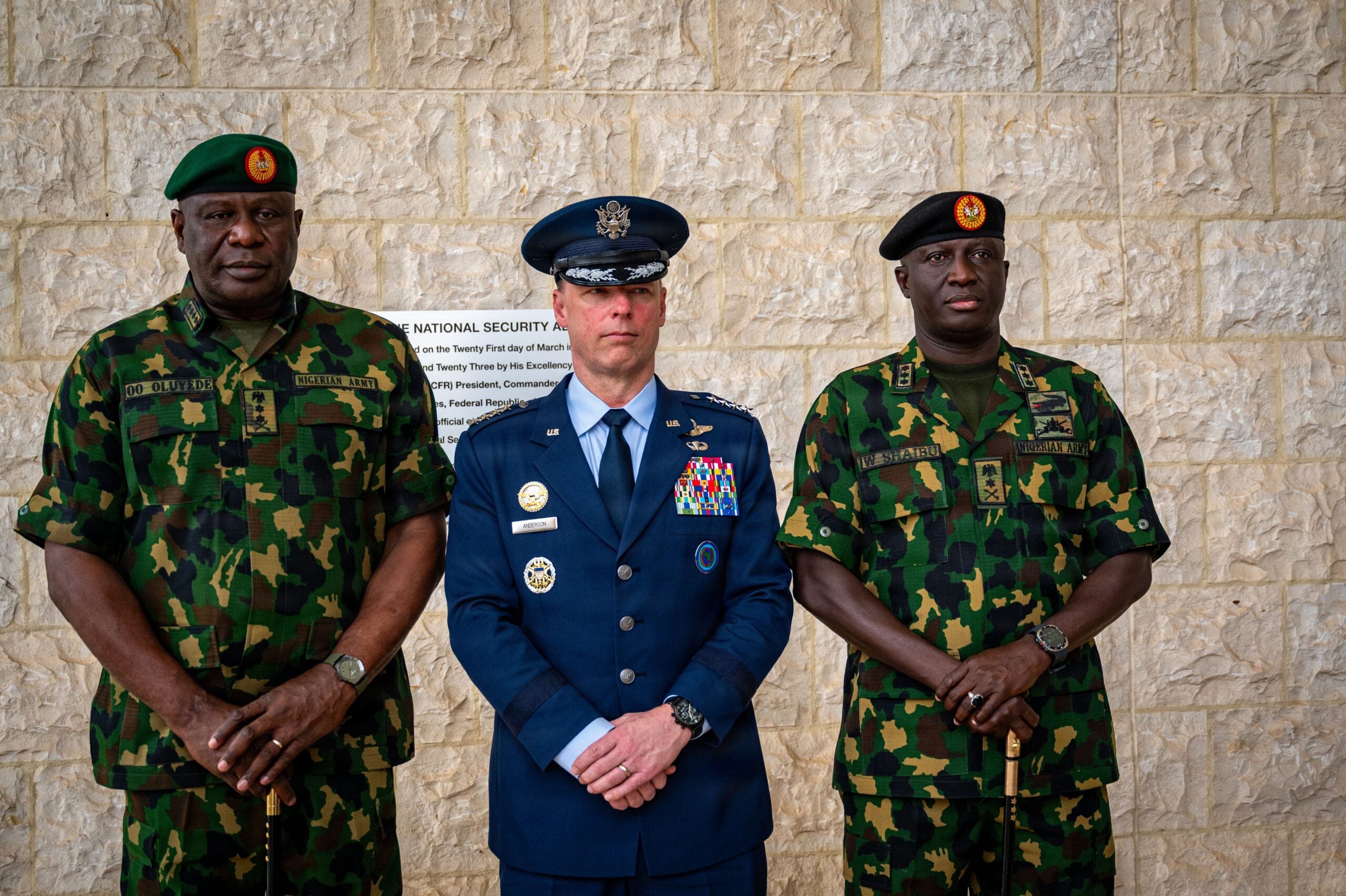
Addressing a conference of African defense chiefs in Angola on Thursday, AFRICOM Commander Gen. Dagvin Anderson described May’s joint U.S.-Nigerian as a model for future security cooperation in Africa.
“We have withdrawn much of our forces that were just there for that operation, but are continuing the partnership that Nigeria has asked for to help continue with the intelligence sharing,” Anderson told journalists during a U.S. State Department-hosted briefing after the conference.
Anderson said the operation, in Nigeria’s Lake Chad Basin region, demonstrated Washington’s approach of providing specialized capabilities while allowing African partners to lead security operations.
He said cooperation with Nigeria had helped significantly degrade Islamic State’s leadership, adding that the impact had extended beyond West Africa because of the militant group’s international network.
The operation disrupted not only local commanders but also broader Islamic State communications and operations, he added.
“Nigeria has been very active since that operation in May,” Anderson said. “They continue to prosecute targets themselves.”
He added that Nigerian military pressure, combined with efforts to publicize the operation, had encouraged additional defections and surrenders among ISIS fighters in northeastern Nigeria.
The three-day conference in Angola’s capital, Luanda, was attended by military leaders from 35 African countries, alongside representatives from the U.S. and Brazil.
The United States has withdrawn most of the forces it deployed for a recent operation against Islamic State militants in Nigeria and is now providing intelligence support at Abuja’s request, the head of U.S. Africa Command said.
In May, U.S. and Nigerian forces conducted military operations in northeastern Nigeria that killed Abu-Bilal al-Minuki, the second-in-command of ISIS globally.
That followed a U.S. strike on Christmas Day against the militants ordered by President Donald Trump, who said they had been targeting Christians in the African country.
Addressing a conference of African defense chiefs in Angola on Thursday, AFRICOM Commander Gen. Dagvin Anderson described May’s joint U.S.-Nigerian as a model for future security cooperation in Africa.
“We have withdrawn much of our forces that were just there for that operation, but are continuing the partnership that Nigeria has asked for to help continue with the intelligence sharing,” Anderson told journalists during a U.S. State Department-hosted briefing after the conference.
Anderson said the operation, in Nigeria’s Lake Chad Basin region, demonstrated Washington’s approach of providing specialized capabilities while allowing African partners to lead security operations.
He said cooperation with Nigeria had helped significantly degrade Islamic State’s leadership, adding that the impact had extended beyond West Africa because of the militant group’s international network.
The operation disrupted not only local commanders but also broader Islamic State communications and operations, he added.
“Nigeria has been very active since that operation in May,” Anderson said. “They continue to prosecute targets themselves.”
He added that Nigerian military pressure, combined with efforts to publicize the operation, had encouraged additional defections and surrenders among ISIS fighters in northeastern Nigeria.
The three-day conference in Angola’s capital, Luanda, was attended by military leaders from 35 African countries, alongside representatives from the U.S. and Brazil.
The United States has withdrawn most of the forces it deployed for a recent operation against Islamic State militants in Nigeria and is now providing intelligence support at Abuja’s request, the head of U.S. Africa Command said.
In May, U.S. and Nigerian forces conducted military operations in northeastern Nigeria that killed Abu-Bilal al-Minuki, the second-in-command of ISIS globally.
That followed a U.S. strike on Christmas Day against the militants ordered by President Donald Trump, who said they had been targeting Christians in the African country.
Addressing a conference of African defense chiefs in Angola on Thursday, AFRICOM Commander Gen. Dagvin Anderson described May’s joint U.S.-Nigerian as a model for future security cooperation in Africa.
“We have withdrawn much of our forces that were just there for that operation, but are continuing the partnership that Nigeria has asked for to help continue with the intelligence sharing,” Anderson told journalists during a U.S. State Department-hosted briefing after the conference.
Anderson said the operation, in Nigeria’s Lake Chad Basin region, demonstrated Washington’s approach of providing specialized capabilities while allowing African partners to lead security operations.
He said cooperation with Nigeria had helped significantly degrade Islamic State’s leadership, adding that the impact had extended beyond West Africa because of the militant group’s international network.
The operation disrupted not only local commanders but also broader Islamic State communications and operations, he added.
“Nigeria has been very active since that operation in May,” Anderson said. “They continue to prosecute targets themselves.”
He added that Nigerian military pressure, combined with efforts to publicize the operation, had encouraged additional defections and surrenders among ISIS fighters in northeastern Nigeria.
The three-day conference in Angola’s capital, Luanda, was attended by military leaders from 35 African countries, alongside representatives from the U.S. and Brazil.
KANSAS CITY, Mo. – This Independence Day, the Veterans of Foreign Wars (VFW) calls upon all Americans to pause and reflect on the profound origins and ongoing significance of our nation as we celebrate a historic 250 years of freedom and democracy.
Two and a half centuries ago, courageous acts of defiance and revolution birthed a nation founded on the radical ideals of liberty and freedom. This annual observance is more than just a milestone: It is a powerful reminder of the inherent rights of our citizens and the enduring principles that continue to define our American spirit and way of life.
The signing of the Declaration of Independence on July 4, 1776, was a courageous stand against oppression and tyranny, engraving the belief of our unalienable right to “Life, Liberty, and the pursuit of Happiness” into the very fabric of which our nation was built.
VFW members have personally upheld these very ideas on battlefields around the globe, and this Independence Day, the VFW urges Americans to celebrate by engaging actively in our democracy and supporting the brave men and women who continue to stand in harm’s way to protect our way of life, thus ensuring that the sacrifices of the past continue to guarantee the liberties and freedoms of the future.
Many veterans know their own monthly disability compensation amount down to the dollar. Far fewer know what that number looks like at scale — how much the VA pays out in total, where that money concentrates, and how quickly it’s growing. The FY2025 VBA Compensation Report puts real numbers behind those questions, and the picture it paints is bigger and more concentrated than most people assume.
But why does it matter?
Understanding where VA disability dollars go (which VA rating levels absorb most of the budget, which states receive the most, and how fast the system is growing) helps you calibrate your own expectations and strategy.
If most of the money is flowing to veterans with a 100% VA rating, that tells you something about where the VA’s own resources and attention are concentrated, and where the gap between a partial rating and a full one really matters financially.
This article breaks down the numbers: the national total, how VA disability compensation is distributed by rating tier, what the data shows about state-level totals, and what it means for your own claim strategy.
Table of Contents
Summary of Key Points
The VA paid $174.05 billion in disability compensation to 6,338,253 veterans in FY2025 (an average of $27,461 per veteran).
Veterans rated 100% disabled received $93.8 billion, or 53.9% of the entire compensation budget, despite being under 30% of all recipients.
Total compensation grew 5.8% year-over-year as the veteran population on the rolls grew from 5,992,967 to 6,338,253.
Florida received $13.1 billion in annual VA disability compensation in the most recent state-level data (more than any other state), with Texas, California, North Carolina, and Virginia rounding out the top five.
Dependency and Indemnity Compensation (DIC) for surviving families added another $11.51 billion on top of veteran compensation, reaching 549,324 recipients.
In FY2025, the VA paid $174.05 billion in disability compensation to 6,338,253 veterans (an average of $27,461 per veteran for the year). Veterans rated 100% disabled made up less than a third of all recipients but received $93.8 billion of that total, or 53.9% of every dollar the VA paid out. Florida alone accounted for $13.1 billion in annual compensation, more than any other state.
-VA Claims Insider
How Much the VA Actually Pays Veterans
As of September 30, 2025, the VA was paying disability compensation to 6,338,253 veterans nationwide, a total of $174.05 billion for the fiscal year. That works out to an average of $27,461 per veteran annually — roughly $2,288 a month, though individual payments vary widely based on rating percentage and number of dependents.
That total isn’t static. The compensation rolls grew by 345,286 veterans compared to FY2024 (a 5.8% increase), while 476,802 veterans filed as new recipients during the year. The dollar total is growing even faster than the recipient count, for a straightforward reason: the veterans joining the rolls, and the veterans already on them, are accumulating more service-connected disabilities and moving toward higher combined ratings over time.
Where the Money Concentrates: The Rating-Tier Breakdown
The single biggest driver of the FY2025 compensation total is the 100% disability tier. Veterans rated 100% received $93.8 billion of the $174.05 billion paid out — 53.9% of the entire budget — even though they represent well under a third of all recipients. Put another way: the remaining $80.2 billion (46.1% of the budget) is spread across every veteran rated anywhere from 10% through 90%.
That concentration is intensifying, not stable. The table below shows how the recipient count at each rating tier changed between FY2024 and FY2025. Every tier from 70% and above grew. Every tier from 30% and below shrank.
Rating
FY2024 Recipients
FY2025 Recipients
YoY Change
100%
1,547,842
1,847,449
+299,607 (+19.4%)
90%
621,930
679,688
+57,758 (+9.3%)
80%
595,721
627,300
+31,579 (+5.3%)
70%
545,452
562,930
+17,478 (+3.2%)
30%
335,731
320,674
-15,057 (-4.5%)
20%
371,767
355,239
-16,528 (-4.4%)
10%
877,391
861,702
-15,689 (-1.8%)
Source: FY2025 VBA Compensation Report, five-year rating distribution tables. The 40%–60% tiers are omitted here because the underlying report did not publish complete year-over-year recipient counts for those levels; the report does note that 40% ratings declined 2.5% year-over-year, consistent with the broader pattern above.
Which States Get the Most
The most recent data shows a clear leader in state-level veterans benefits: Florida veterans received $13.1 billion in annual disability compensation, more than any other state. Texas, California, North Carolina, and Virginia round out the top five states by total compensation volume.
That ranking tracks with veteran population size and cost of living more than with any state-specific VA policy — Florida, Texas, and California are simply home to large numbers of veterans, many of them retirees who relocated after service. If you’re comparing your own state’s veteran benefits landscape, this compensation ranking is a useful companion to our guide to the best veteran benefits by state, which covers the state-level programs — property tax exemptions, tuition waivers, and similar — that stack on top of federal compensation.
The $174.05 billion in veteran compensation doesn’t include Dependency and Indemnity Compensation (DIC) — the separate benefit paid to surviving spouses, children, and dependent parents of veterans who died from service-connected conditions. DIC added another $11.51 billion in FY2025, reaching 549,324 recipients nationwide. New DIC claims are growing faster than veteran compensation itself — a trend significant enough to warrant its own look at what’s driving it.
Two forces are pushing the total budget higher year over year: more veterans are joining the compensation rolls (up 5.8%), and the veterans already on the rolls are accumulating more service-connected disabilities and moving into higher rating tiers.
Total service-connected disabilities on file grew 11.6% in FY2025 — nearly double the rate at which the veteran population itself grew. That gap between “more veterans” and “more disabilities per veteran” is the real engine behind the rising dollar total, and it’s worth understanding on its own terms.
What This Means for Your Claim
These numbers aren’t just background context — they’re a rough map of where the VA’s compensation system rewards precision. The jump from 90% to 100% is worth more to your household budget than any other single step in the rating scale, which is exactly why that tier shows the steepest year-over-year growth.
If your combined rating has been sitting in the 70%–90% range for a while, the most direct paths forward may be the ones already available in your claim file: previously unrated secondary conditions, or a condition that has worsened enough to justify a VA rating increase.
PRO TIP: Easily see what an increase could do to your monthly compensation with our VA Disability Calculator.
Conclusion
The VA’s $174.05 billion disability compensation system is larger, faster-growing, and more concentrated at the top of the rating scale than most veterans realize. Over half of every dollar paid out goes to the roughly one-in-four veterans who have a 100% VA rating, and that concentration grew sharply in FY2025. Whether you’re evaluating your own claim strategy or just trying to understand the system you’re part of, the rating tier you’re sitting at matters more to the math than almost anything else in your file.
YOU SERVED. YOU DESERVE.
You served. You earned the right to file. You earned the right to be heard. And you earned the right to pursue every VA benefit you legally qualify for.
So here is the real question:
Do you have the VA rating you were given, or the VA rating you truly deserve?
Want Expert-Level VA Claim Help? WE GOT YOUR SIX!
VA Claims Insider helps educate and empower veterans to get the VA rating they deserve.
Work directly with a VA Claims Insider Coach who can help lead you to VA claim victory.
50,000+ disabled veterans served in our membership programs since 2016.
33% average rating increase for veterans who complete our Elite program.
How much does the VA pay veterans in disability compensation each year?
In FY2025, the VA paid $174.05 billion in disability compensation to 6,338,253 veterans nationwide, an average of $27,461 per veteran for the year.
What’s the average VA disability payment per veteran?
The FY2025 average was $27,461 per year, or roughly $2,288 per month. Individual payments vary significantly based on your combined rating percentage and the number of dependents on your award.
Which states receive the most VA disability compensation?
Florida leads with $13.1 billion in annual compensation, followed by Texas, California, North Carolina, and Virginia, according to the VA’s most recent state-level data.
Why do veterans rated 100% receive over half of all VA compensation?
Veterans at 100% receive the maximum monthly rate, and the FY2025 data shows this group grew 19.4% year-over-year — far faster than any other rating tier. That combination of the highest per-veteran payment and the fastest-growing group is why 100%-rated veterans account for 53.9% of the entire compensation budget.
Is VA disability compensation taxable?
No. VA disability compensation is not subject to federal income tax, regardless of your rating percentage. For a full explanation of how this affects other benefits and tax filings, see VACI’s guide to whether VA disability is taxable.
How is my monthly VA disability payment amount determined?
Your payment is based on your combined disability rating and the number of dependents (spouse, children, dependent parents) on your award. The VA publishes updated payment charts each year — see the 2026 VA disability pay chart for exact monthly amounts by rating and dependent status.
About the Author
Eric Webb
Eric has written and worked in the field of Veterans Disability since 2020 and enjoys writing educational content for the veteran population. His prior work has been published in the Official Journal of the American College of Sports Medicine (ACSM). He holds a Degree in Health and Exercise Science.
The United States has withdrawn most of the troops sent to Nigeria earlier this year, after wrapping up a combat operation against Islamic State fighters in the country.
Gen. Dagvin Anderson, head of U.S. Africa Command, confirmed the drawdown of “much of our forces that were just there for that operation.” Speaking at the 2026 African Chiefs of Defense Conference, Anderson said that the campaign around the Lake Chad Basin in the spring “not only helped the countries in that immediate region; it also helped countries globally as that disrupted the ISIS network.”
As a result, he added, “ISIS’s leadership has been significantly degraded there.”
An AFRICOM spokesperson told Task & Purpose that the U.S.-Nigeria partnership “is ongoing and remains strong, focused on disrupting and eliminating shared security threats. At the invitation of the government, we continue to have forces in Nigeria. The number of personnel will fluctuate as required to meet requirements.”
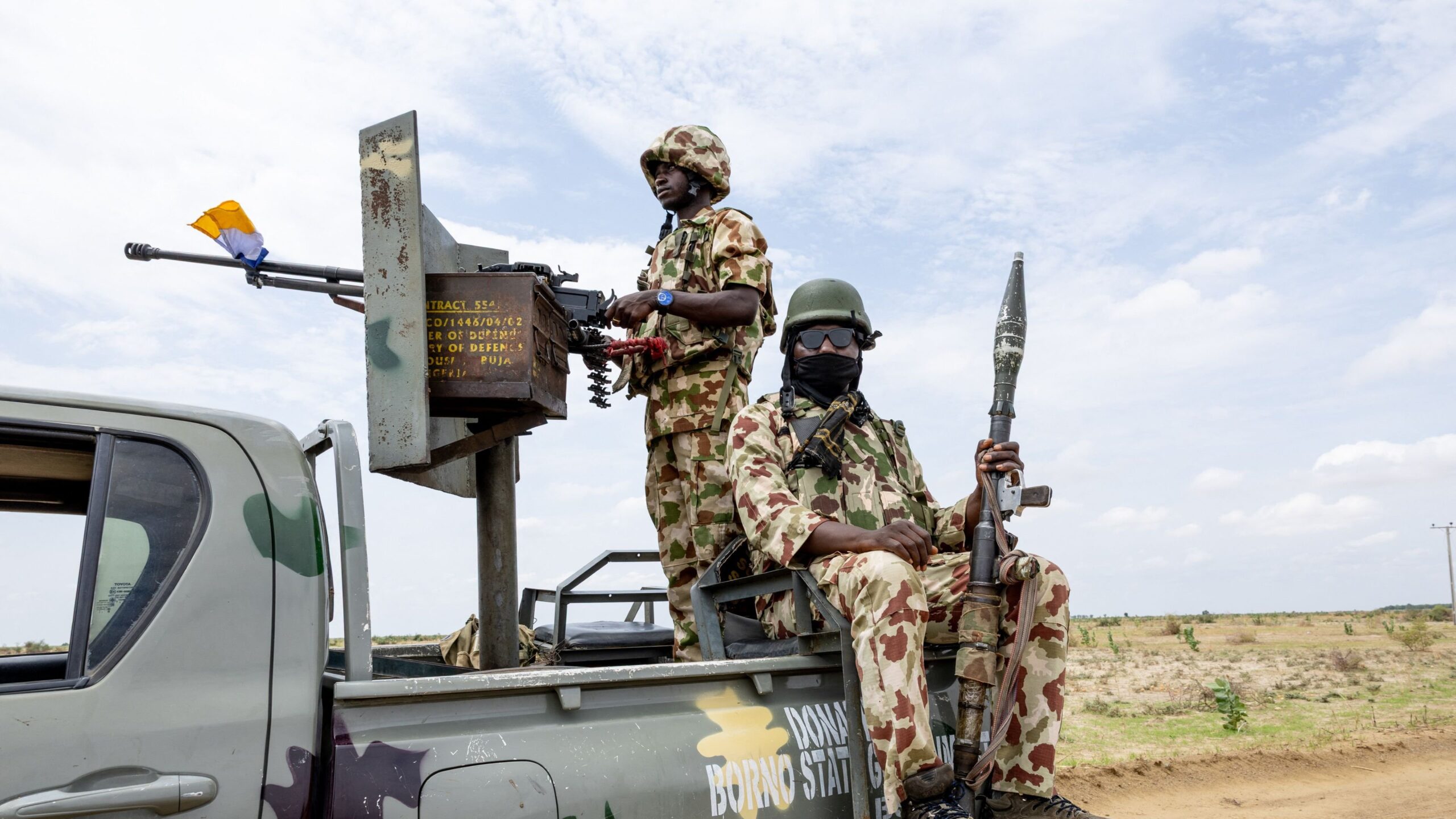
The United States has more than 100 service members in Nigeria for a training and advising mission, but deployed additional combat forces — including special operations personnel — this spring specifically for the operations in the Lake Chad region, Nigeria’s defense minister told Agence France-Presse.
That operation ramped up in May, with a series of airstrikes and raids in northeastern Nigeria between May 15-18. A joint U.S.-Nigerian raid targeted Abu-Bilal al-Minuki, the global second-in-command of the terrorist group. The New York Times, citing multiple officials, said that roughly two dozen commandos including members of SEAL Team 6 attacked al-Minuki’s position to capture him but after a nearly three-hour fight, the commandos called in an airstrike, killing him.
Additional strikes followed over the next few days. AFRICOM later said that approximately 200 ISIS fighters were killed in the mission.
“Nigeria has been very active since that operation in May,” Anderson said at the conference . “They continue to prosecute targets themselves.”
The drawdown of combat forces comes after several months of escalation. Last fall, President Donald Trump repeatedly threatened the use of military force in Nigeria, accusing the government of failing to protect Christians from violence; Nigeria’s government has disputed this. On Christmas, the U.S. fired several missiles into Nigeria, targeting militants in the northwestern state of Sokoto. In February, the United States sent roughly 200 service members to train its military on counter terrorism tactics, but are not combat forces, according to Nigeria.
Until this spring, most of the American operations against ISIS have been in Somalia, where the U.S. military is carrying out dozens of airstrikes against both ISIS’s arm in the country and the militant group al-Shabab. AFRICOM reports at least 69 airstrikes in Somalia this year.