Category: Uncategorized

  • Garlic Aioli

    Garlic Aioli

    This post was originally published on this site.

    There’s nothing like having a batch of homemade Garlic Aioli in the fridge to make fries, burgers, sammys, wraps, and roasted veggies instantly better. This budget-friendly aioli is made from scratch in a food processor (not just mayo with garlic stirred in!), and it only takes a handful of basic ingredients to pull together. It’s rich, lightly tangy, and balanced with a touch of honey for a sauce that tastes SO much better than store-bought. It only takes 5 minutes, and I love keeping it on hand for anything that needs a creamy, garlicky boost!

    A Sauce Worth Making From Scratch

    I know aioli sounds a little fancy, but this version is really just simple ingredients, a food processor, and a slow drizzle of oil doing their thing. Aioli traditionally comes from the northwestern Mediterranean and started as a simple garlic-and-oil emulsion (aioli actually means garlic and oil!). Today, a lot of garlic aioli recipes are really more like garlic mayo, and this version is built from scratch with egg and oil blended into a thick, smooth, and glossy emulsion. The fresh garlic makes it unmistakably aioli, the Dijon adds savory flavor and helps the emulsion hold together, and the lemon juice keeps it bright instead of heavy.

    I use vegetable oil here because it keeps the flavor mellow and lets the garlic shine. Extra virgin olive oil can turn bitter when blended hard in a food processor, so I don’t use it for this method. The two big things that make this sauce extra creamy are starting with a room-temperature egg and streaming the oil in slowly. Once you see it turn pale, thick, and glossy, you’ll know you nailed it!

    Recipe Success Tips

    1. Grate the garlic. I grate the garlic directly into the food processor so it blends smoothly into the sauce. This gives you big garlic flavor without crunchy pieces or sharp bits of raw garlic throughout.
    2. Chill before serving if you have time. You can use this garlic aioli right away, but 30 minutes in the fridge gives the garlic time to settle into the sauce and makes the flavor even better!
    3. Try roasted garlic for a sweeter flavor. For a softer, more mellow sauce, swap the raw garlic for roasted garlic. Roasted garlic is sweeter and less sharp, so you can use a few extra cloves if you want a deeper garlic flavor without the bite.

    Two Simple Tricks for the Creamiest Aioli

    A good aioli is less about effort and more about patience with the oil. The food processor does most of the work here, and these two simple steps help the sauce blend into the thick, glossy texture you’re looking for:

    • Start with room-temperature ingredients. A room-temperature egg blends more easily with the oil, which helps it emulsify into a smooth, creamy sauce.
    • Pour the oil in slowly. Keep the food processor running and drizzle the oil in a thin, steady stream. Go slowly and don’t rush it at the beginning. Once you see the mixture turn pale, thicker, and glossy, you can drizzle the oil a little faster.

    How to Fix a Broken Emulsion

    If the sauce looks loose, oily, or separated, don’t panic. It just means the oil joined the party a little faster than the egg could handle it. The first thing I try is adding 1 teaspoon of ice-cold water while the food processor is running. Sometimes that’s enough to bring everything back together without wasting any ingredients.

    If it still doesn’t come together, add one room-temperature egg yolk to a clean food processor bowl and blend it for a few seconds. Then, with the machine running, slowly drizzle the separated aioli back in. It should thicken back up into a smooth, creamy sauce.

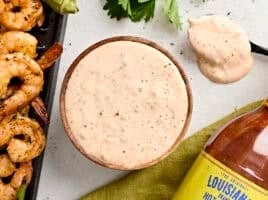
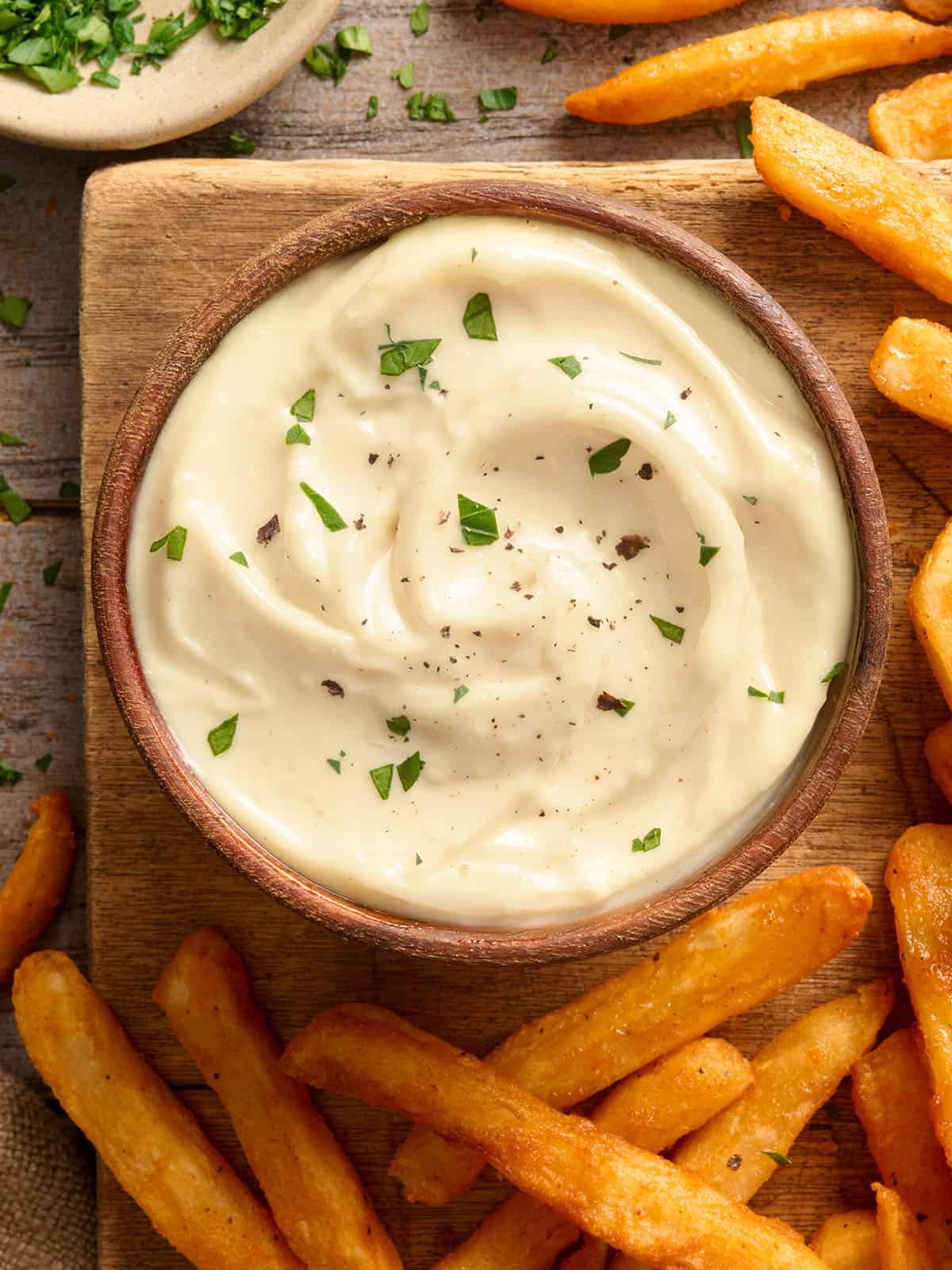
    Overhead view of a bowl of homemade garlic aioli with fries.

    Print
    Add to Collection Go to Collections

    Garlic Aioli

    This creamy Garlic Aioli recipe is made from scratch in a food processor with fresh garlic, Dijon, lemon juice, honey, egg, and oil in just 5 minutes!
    Course Sauce
    Cuisine Mediterranean
    Total Cost $1.06 recipe / $0.07 serving
    Prep Time 5 minutes
    Total Time 5 minutes
    Servings 16 servings (1 Tbsp each)
    Calories 127kcal

    Equipment

    • Food Processor

    Ingredients

    • 1 large egg room temperature, $0.12*
    • 2 garlic cloves peeled and grated, $0.18
    • 2 tsp Dijon mustard $0.05
    • ¼ tsp salt $0.02
    • 1 cup vegetable oil 8 oz., $0.60**
    • 1 tsp lemon juice $0.02
    • 1 tsp honey $0.07

    Instructions

    • Gather all of your ingredients.
    • Place the room-temperature egg in the bowl of a food processor and blend for about 20 seconds to break it down.
    • Add the dijon mustard, salt, and grate the garlic cloves directly into the food processor. Blend again for another 20-30 seconds until well combined.
    • With the processor running, very slowly drizzle in the vegetable oil in a thin stream.*** Continue blending until the mixture turns pale, thick, and creamy-about 30 seconds after the oil is fully incorporated.
    • Add the lemon juice and honey, then blend briefly to combine. Taste and adjust salt or lemon juice as needed.
    • Transfer to a clean airtight container and refrigerate.**** Use within 4 days for best quality.

    See how we calculate recipe costs here.

    Notes

    *Room-temperature ingredients are important for a smooth, stable emulsion. If needed, place the whole egg in a bowl of warm (not hot!) water for a few minutes before starting. Since this recipe uses raw egg, I highly recommend using a pasteurized egg. Pasteurized eggs are gently heat-treated to reduce the risk of harmful bacteria without cooking the egg, which makes them a better choice for uncooked sauces like this one.

    **Use a neutral oil, such as vegetable, canola, or avocado oil, for the smoothest flavor. I don’t recommend extra virgin olive oil for this food processor method because it can turn bitter when blended at high speed.

    ***Add the oil slowly while blending to prevent the aioli from breaking. Once the emulsion starts forming, you can drizzle slightly faster.

    ****For a stronger garlic flavor, refrigerate the sauce for 30 minutes before serving.

    Nutrition

    Serving: 1Tbsp | Calories: 127kcal | Carbohydrates: 1g | Protein: 0.4g | Fat: 14g | Sodium: 48mg | Fiber: 0.04g

    how to make Garlic Aioli Step-by-Step Photos

    The ingredients to make homemade garlic aioli.

    Gather all of your ingredients. Having everything ready makes the emulsifying step much easier!

    An egg in a food processor.

    Blend the egg: Add the room-temperature egg to the bowl of a food processor. Blend for about 20 seconds, or until the yolk and white are fully broken down and the mixture looks smooth and slightly foamy. A room-temperature egg blends more easily and helps the sauce emulsify.
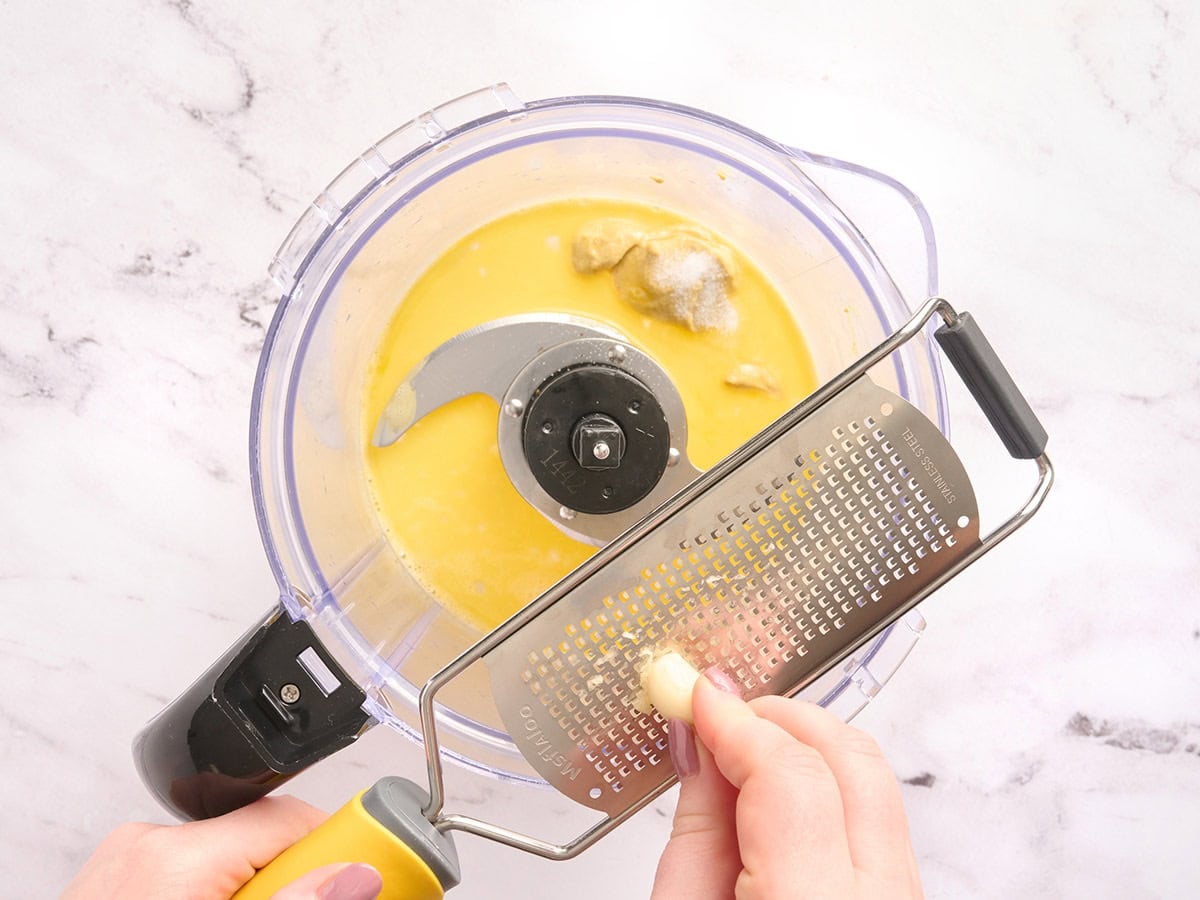
    Hands grating a garlic glove into a food processor.

    Add the mustard and garlic: Add 2 teaspoons Dijon mustard and ¼ teaspoon salt to the food processor. Grate 2 peeled garlic cloves directly into the bowl so the garlic blends in smoothly without leaving large pieces behind. Blend for another 20-30 seconds, or until everything is well combined and the garlic is evenly mixed through.
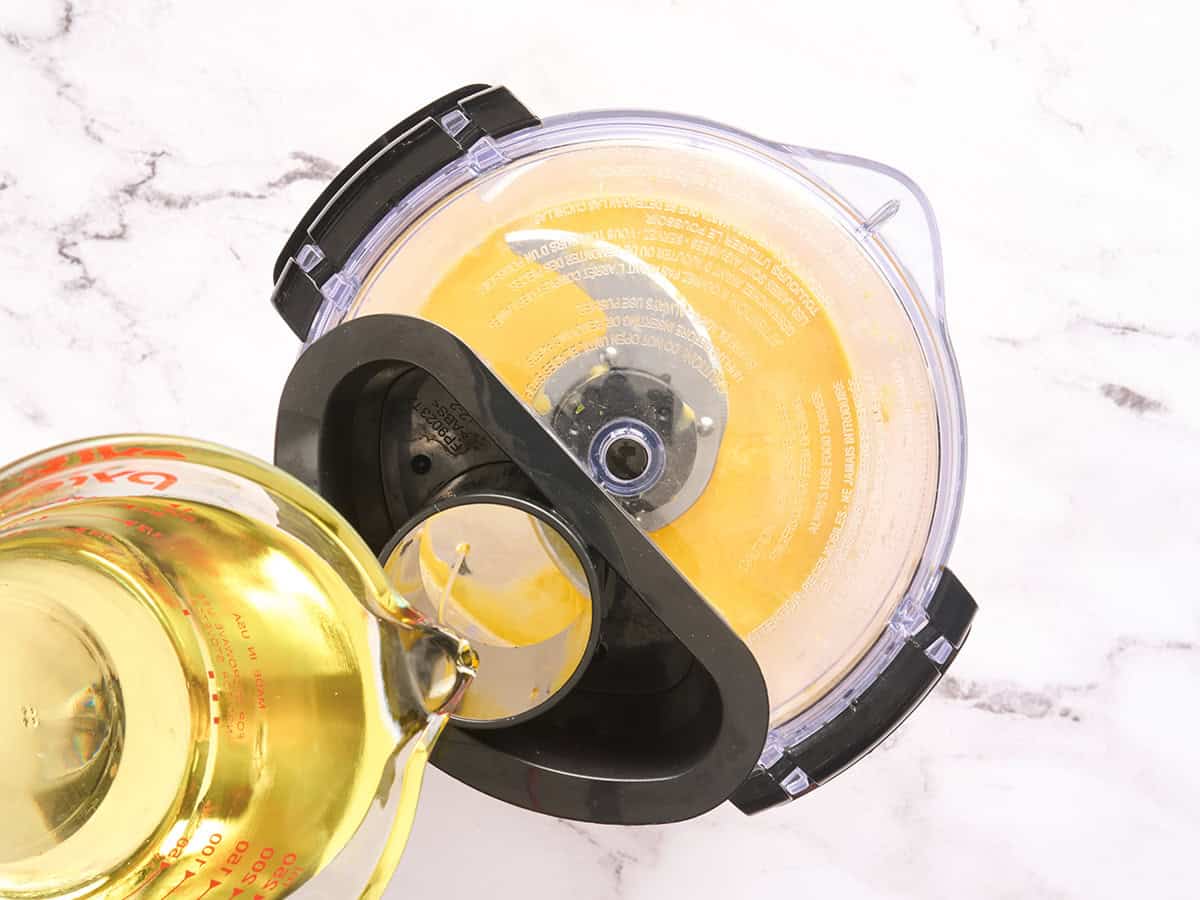
    Oil being streamed into a food processor to make an emulsion for garlic aioli.

    Make the emulsion: With the food processor running, very slowly drizzle in 1 cup vegetable oil in a thin, steady stream. Don’t rush this step. Adding the oil too quickly can cause the mixture to separate instead of turning creamy. As the oil blends in, the mixture should start to turn pale, thick, glossy, and creamy. Continue blending for about 30 seconds after all the oil has been added.
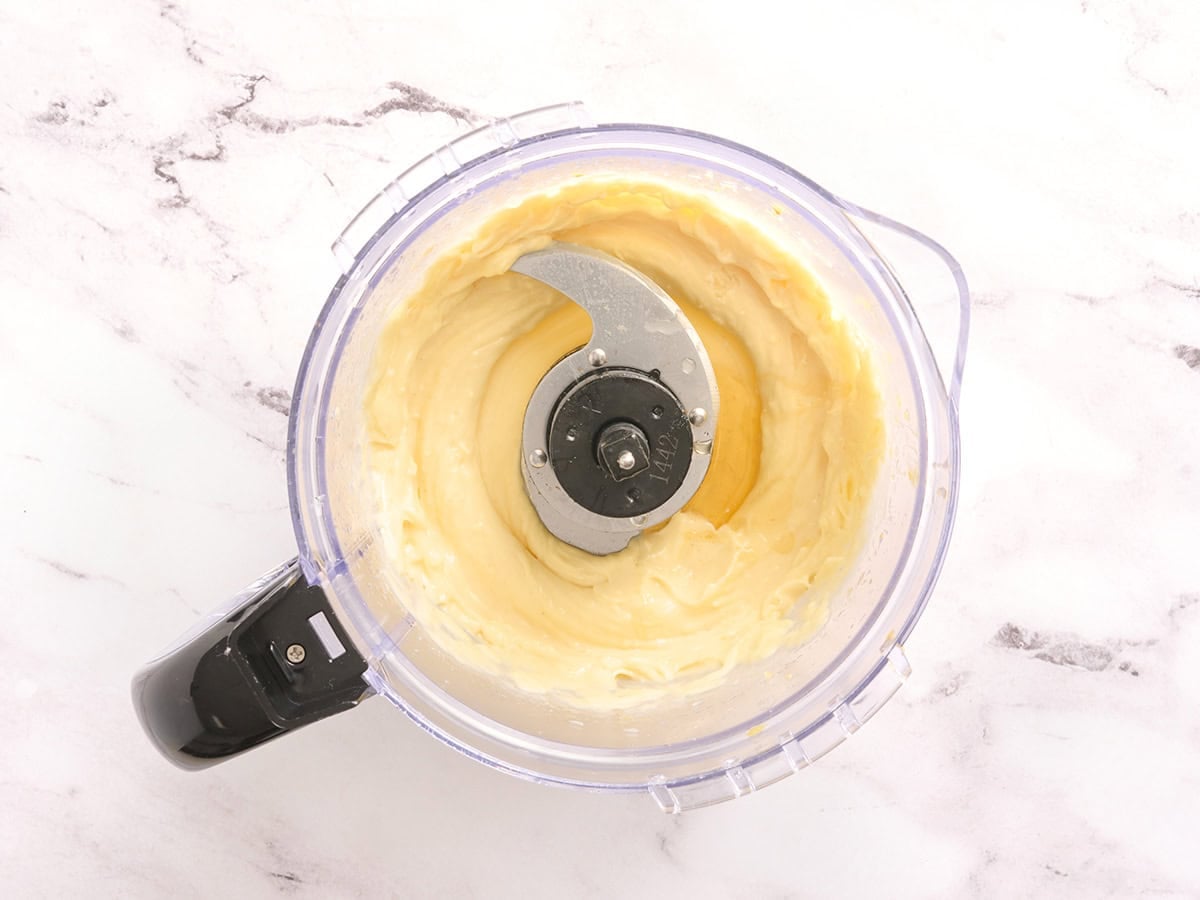
    Honey and lemon juice added to a food processor with garlic aioli.

    Add the lemon and honey: Add 1 teaspoon lemon juice and 1 teaspoon honey, then blend briefly just until combined. The lemon juice brightens the flavor, and the honey softens the sharpness from the garlic and Dijon. Taste and adjust with a little more salt or lemon juice if needed.
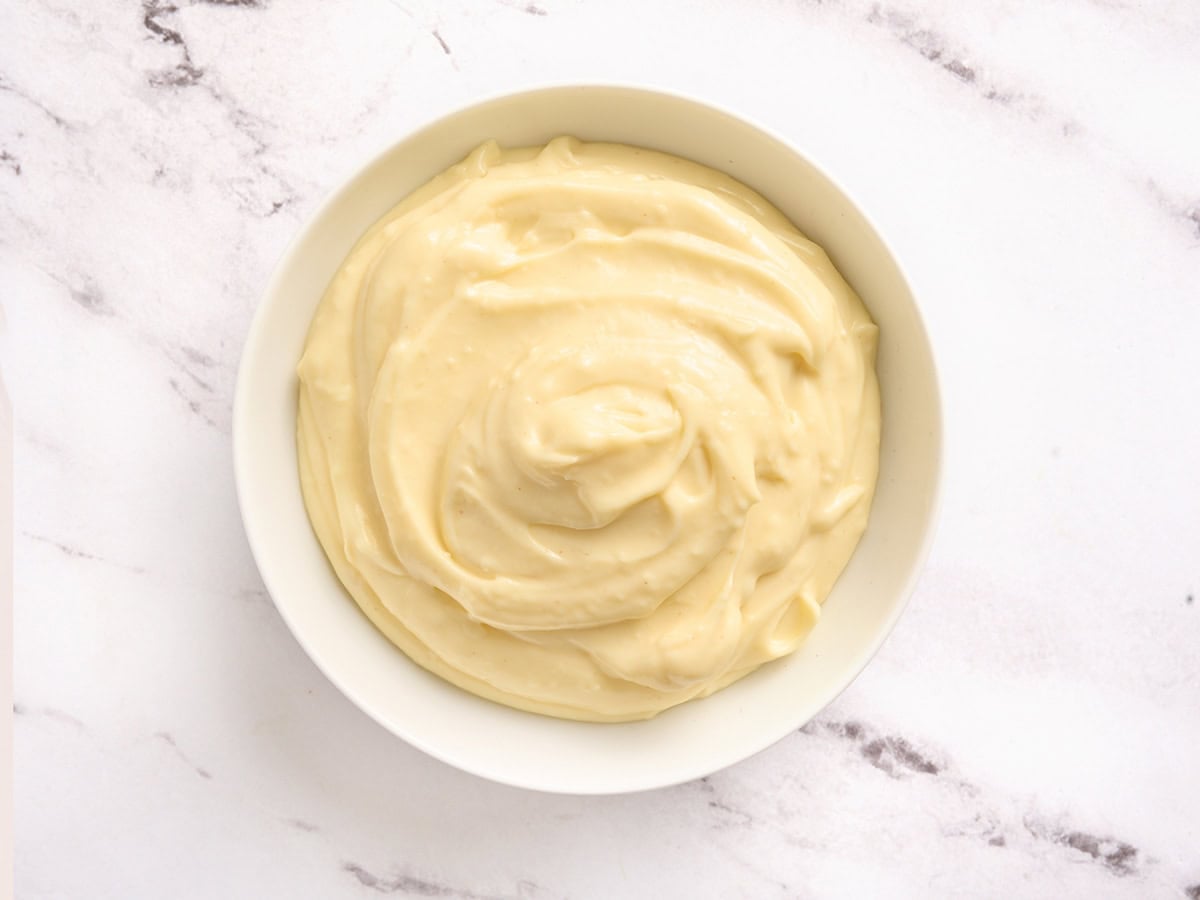
    Overhead view of a bowl of homemade garlic aioli.

    Serve or store: Transfer the sauce to a clean airtight container and refrigerate. It’ll thicken slightly as it chills. You can enjoy your homemade garlic aioli right away, but chilling it for at least 30 minutes will give you a stronger garlic flavor! Use within 4 days for the best quality.
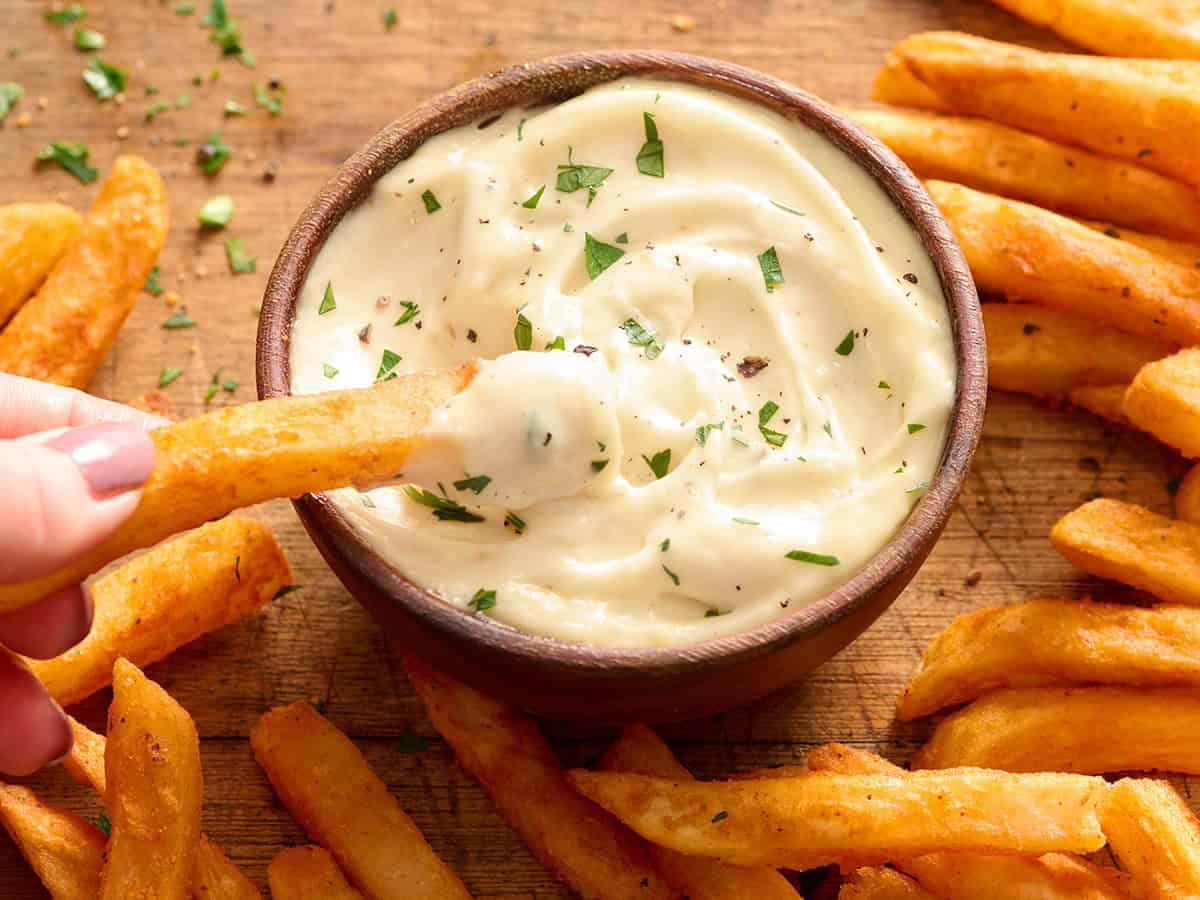
    Overhead side view of a bowl of homemade garlic aioli with a French fry being dipped into it.

    Serving Suggestions

    Garlic aioli works as a dip or spread, so it’s an easy way to make whatever you’re already serving feel a little more special. Keep it simple with fries and potatoes, or use it anywhere you’d normally reach for mayo or ranch:

    • Fries and potatoes: This is the classic pairing you’ll often see on a restaurant menu! Serve it with fries, tater tots, potato wedges, or crispy roasted potatoes.
    • Crispy appetizers: Use it as a dip for zucchini fries, onion rings, mozzarella sticks, or any snacky finger food that needs a creamy garlic sauce on the side.
    • Sandwiches, burgers, and wraps: Spread it onto hamburgers, chicken sandwiches, veggie sandwiches, or wraps instead of plain mayo.
    • Bowl meals: Add a spoonful to a simple grain bowl with rice or quinoa, roasted vegetables, greens, and chickpeas or grilled chicken. The sauce adds enough richness and flavor that you don’t need much to make a delicious meal!
    • Roasted or grilled vegetables: Drizzle it over roasted or grilled asparagus, Brussels sprouts, zucchini, roasted cauliflower, or broccoli right before serving. The warm vegetables soften the aioli slightly and make it extra delicious.
    • Fish and seafood: This sauce is a great swap for tartar sauce with salmon, cod, fish and chips, shrimp, or crab cakes.
    • Raw veggies: Serve it as a creamy dip with cucumbers, carrots, radishes, bell peppers, or any simple veggie tray.
    • Salads and pasta salads: Thin it with a little extra lemon juice or cold water to turn it into a creamy garlic dressing for leafy greens or pasta salad.

    Storage Instructions

    Store homemade garlic aioli in a clean airtight container in the refrigerator for up to 4 days, as per USDA guidance on storing emulsions made with raw pasteurized eggs. Since this recipe is made with raw egg and raw garlic, keep it chilled whenever you’re not using it. Use a clean spoon each time you scoop from the container, and give it a quick stir before serving if it separates slightly during storage.

    Room Temperature

    Don’t leave this sauce sitting out for extended periods of time. Raw garlic stored in oil at room temperature can create an environment where harmful bacteria can grow, and the raw egg also needs to stay chilled. As a general food safety rule, don’t leave it out for more than 2 hours, or more than 1 hour if the temperature is 90°F or above. I’d keep it refrigerated until you’re ready to serve, then just return it to the fridge after using.

    Freezer

    I don’t recommend freezing this from-scratch aioli. The egg-and-oil emulsion can separate after thawing, leaving the texture grainy, oily, or broken instead of smooth and creamy.

    Try These Creamy Sauces Next:

    • I’d bring Alabama White Sauce to any cookout when the table needs something different from classic BBQ sauce.
    • Tzatziki Sauce tastes even better after a short chill, once the lemon, garlic, dill, and yogurt blend together.
    • Our easy Homemade Tartar Sauce takes just 5 minutes and tastes so much fresher than the bottled kind.

    The post Garlic Aioli appeared first on Budget Bytes.
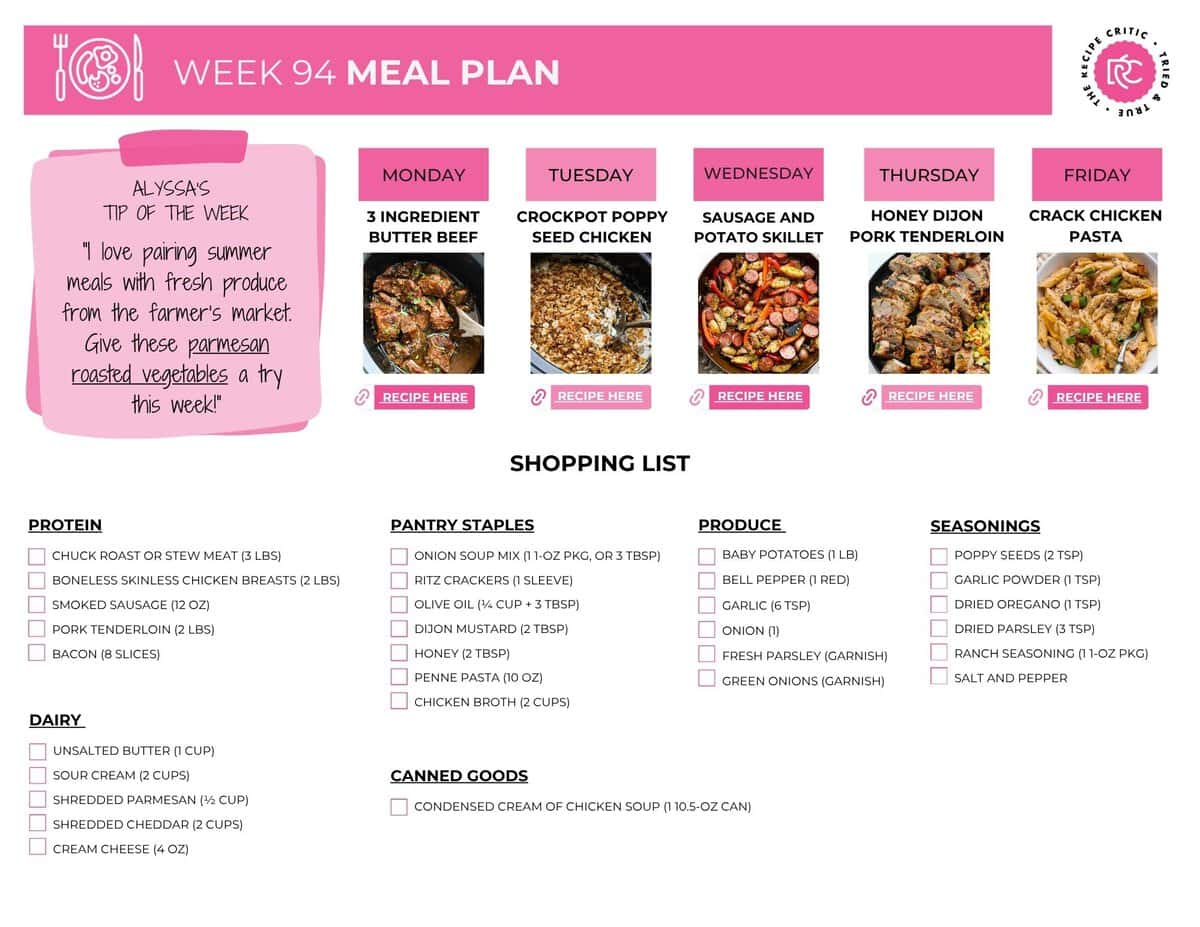
  • Weekly Meal Plan #94

    Weekly Meal Plan #94

    This week’s meal plan is full of easy, comforting dinners that keep things simple, filling, and family-friendly. A little planning now means less chaos later, fewer last-minute takeout runs, and one less thing to think about at 5 p.m.

    What’s on This Week’s Meal Plan

    This week is all about cozy, easy dinners that actually make sense for real life. We’ve got slow cooker favorites, simple skillet meals, grilled goodness, and creamy comfort food that will make the whole family happy. Pick your nights, grab your groceries, and let dinner be one less thing bossing you around this week.

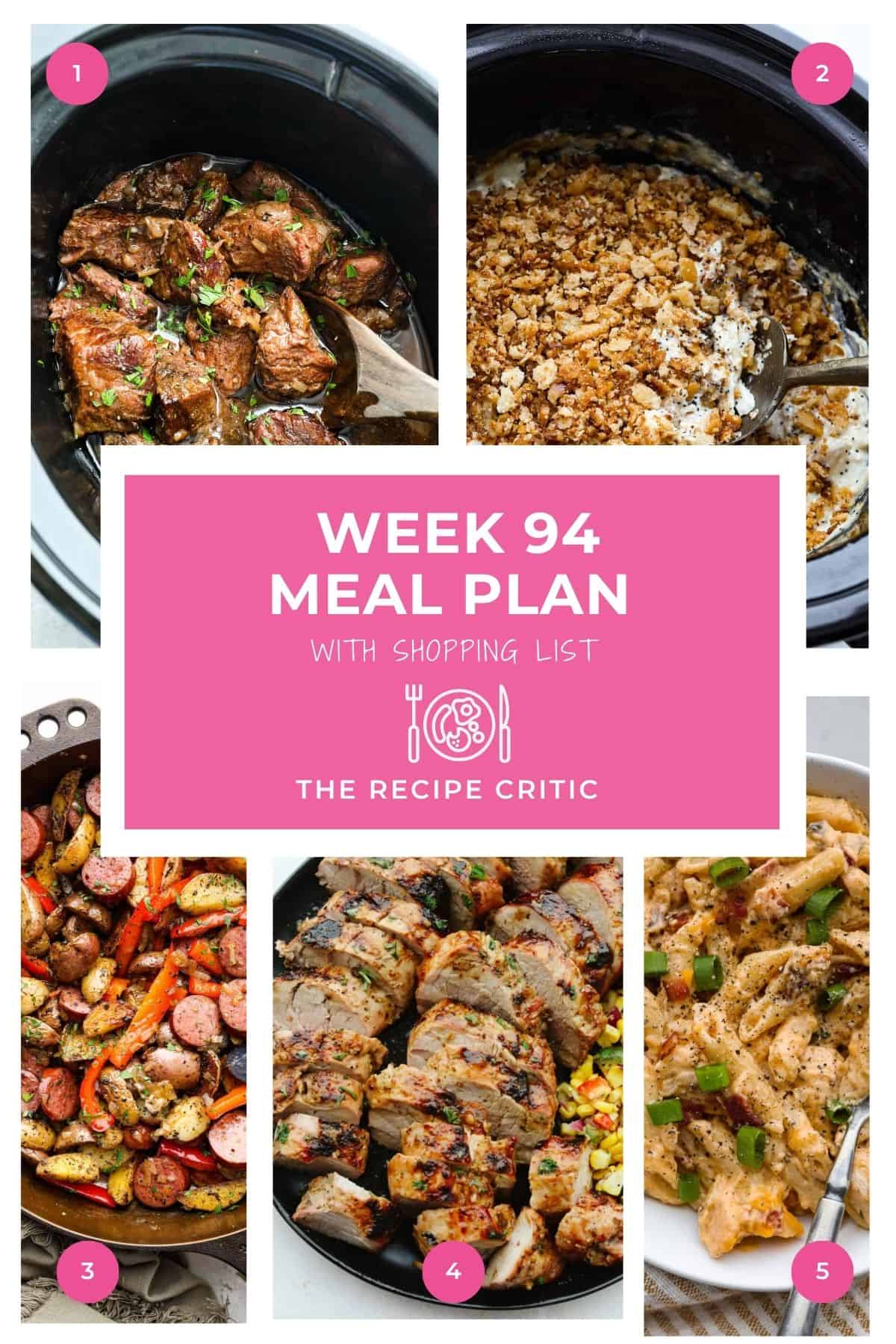
    Monday: 3 Ingredient Butter Beef
    Tuesday: Crockpot Poppy Seed Chicken
    Wednesday: Sausage and Potato Skillet
    Thursday: Grilled Honey Dijon Garlic Pork Tenderloin
    Friday: Crack Chicken Pasta

    3 Ingredient Butter Beef

    5 from 1 vote
    My 3 ingredient butter beef is slow cooked until fall apart tender with rich butter and savory onion soup mix.

    View Recipe

    Crockpot Poppy Seed Chicken Casserole

    5 from 1 vote
    Million Dollar Chicken is juicy baked chicken topped with a creamy, cheesy layer, crispy bacon, and crunchy almonds.

    View Recipe

    Sausage and Potato Skillet

    5 from 2 votes
    This sausage and potato skillet recipe is meant to be a simple one skillet meal! It has tender baby potatoes, smoked sausage, peppers, and delicious seasonings that take it over the top. It’s hearty, satisfying and loaded with flavor!

    View Recipe

    Grilled Honey Dijon Garlic Pork Tenderloin

    No ratings yet
    Grilled Honey Dijon Garlic Pork Tenderloin is juicy, tangy, flavorful, and cooks up quickly and easily. With a dish this healthy and delicious, you will love having it in your weekly dinner lineup!

    View Recipe

    Crack Chicken Pasta

    5 from 1 vote
    Cheesy, creamy, and loaded with ranch flavor and chunks of juicy chicken, ‘Crack Chicken’ pasta is a dinner that will have everyone raving! And as if you needed more reason to make it, it’s ready in 30 minutes from start to finish!

    View Recipe

    How Many Does It Feed?

    This week’s meal plan includes five easy dinners that feed 4–6 people (depending on whether you’re feeding adults or kids), plus a complete shopping list to keep things simple.

    Why Should I Meal Prep?

    If you haven’t tried planning your meals ahead of time, it really can make the whole week feel less chaotic. Here’s why I swear by it:

    • Saves Time: No more 4:00 PM dinner panic. You already know what’s on the menu, what you need, and how long it takes.
    • Saves Money: A planned grocery list helps you shop smarter, use what you already have, and make the most of leftovers.
    • Less Takeout: When dinner is planned and the groceries are ready, it’s so much easier to skip the drive-thru and cook at home.

    This week’s meal plan includes a free printable shopping list, measured out and ready to go. It makes things so easy! If you don’t see something you like, check out my other weekly meal plans here.

    Image of the free printable shopping list for this week's meal plan.

    Easy Sides for This Week’s Meal Plan

    Storing Leftovers for Meal Planning

    I only meal plan Monday-Friday because we usually have plans over the weekend! And I always have leftovers we can use to finish off the week! If you do have leftovers, make sure to store them properly in an airtight container in your fridge.

    This post was originally published on this site.

  • Navy reaches its recruiting goal 3 months early

    Navy reaches its recruiting goal 3 months early

    This post was originally published on this site.

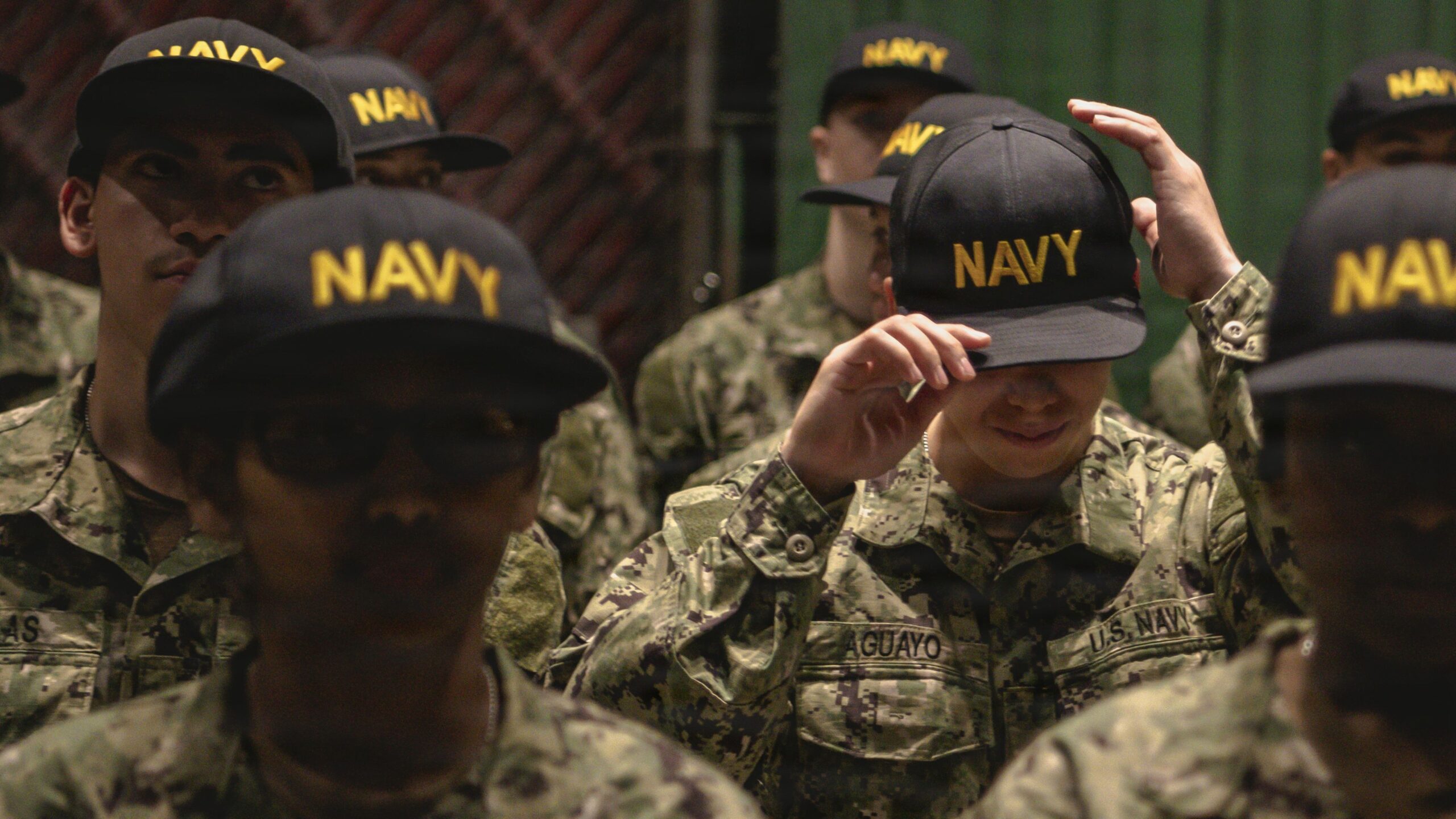
    The Navy beat its recruiting goal for new sailors this year, signing up 45,000 new recruits. The service announced the milestone on Thursday. It’s the highest number of people signing up for the Navy in roughly two decades.

    “Today’s Navy is stronger because tens of thousands of Americans chose to answer the call to serve,” Rear Adm. Jim Waters, the head of Navy Recruiting Command, said. “Reaching this milestone is not simply about achieving a recruiting objective – it’s about delivering the talented Sailors our Fleet needs to maintain readiness in an increasingly complex security environment.” 

    The early success marks the second year in a row of the service bringing in far more recruits than its goal. In 2024, the Navy only barely hit its recruiting quota, but in 2025 it brought in 44,096 new sailors, nearly 9% about that year’s aim. That was after the Navy also hit its goal early, signing up 40,600 by June. 

    Top Stories This Week

    This fiscal year the Navy set its quota higher by roughly 10% and met it early. It’s a turnaround from 2023, where the service failed to meet its goal of new officers and enlisted sailors by several hundred and several thousand, respectively. That year saw several branches of the armed forces fall short, causing them to overhaul their recruiting strategies to better reach Americans. 

    Last year, Waters credited the success to clearer processes for tattoos and medical waivers, as well as new marketing strategies aimed at Gen Z Americans. This year, he said the wider success over the last three years with a modernized recruiting strategy, better data and accelerating applicant timelines. 

    “Our recruiters never lost sight of what matters most – people,” Waters said. “Every contract represents someone who chose to serve something greater than themselves.” 

    The Navy also said that it is working to strengthen its Delayed Entry Program, which allows people to sign a contract but wait up to a year before shipping out to start boot camp. 

    The Navy joins several other branches in beating their recruiting goals early this year. In April, the Department of the Air Force said that both the Air Force and Space Force hit their target five months early. The Army meanwhile said in May that it met its quota of 61,500 recruits.

    The post Navy reaches its recruiting goal 3 months early appeared first on Task & Purpose.

  • 180 Faiths Dropped, New Rules on Facial Hair: The State of Faith in Today’s Military

    180 Faiths Dropped, New Rules on Facial Hair: The State of Faith in Today’s Military

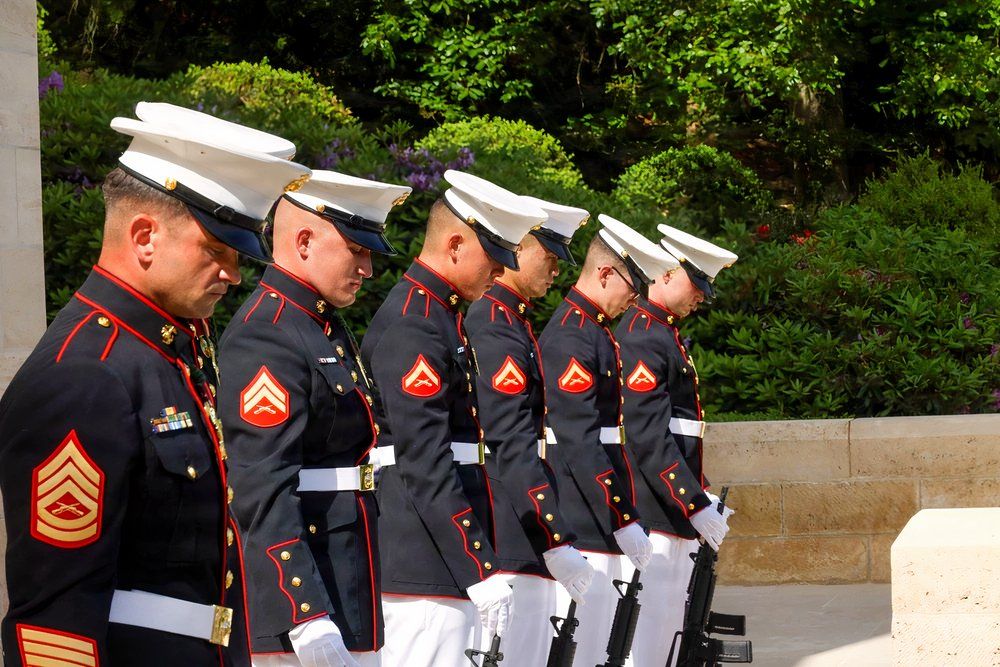
    As the United States prepares to celebrate the 250th anniversary of its founding, the military is once again confronting a question almost as old as the nation itself: What does religious freedom look like inside an institution built on discipline, uniformity and readiness?

  • Unemployment for post-9/11 veterans climbs in June as nation’s job market slides

    Unemployment for post-9/11 veterans climbs in June as nation’s job market slides

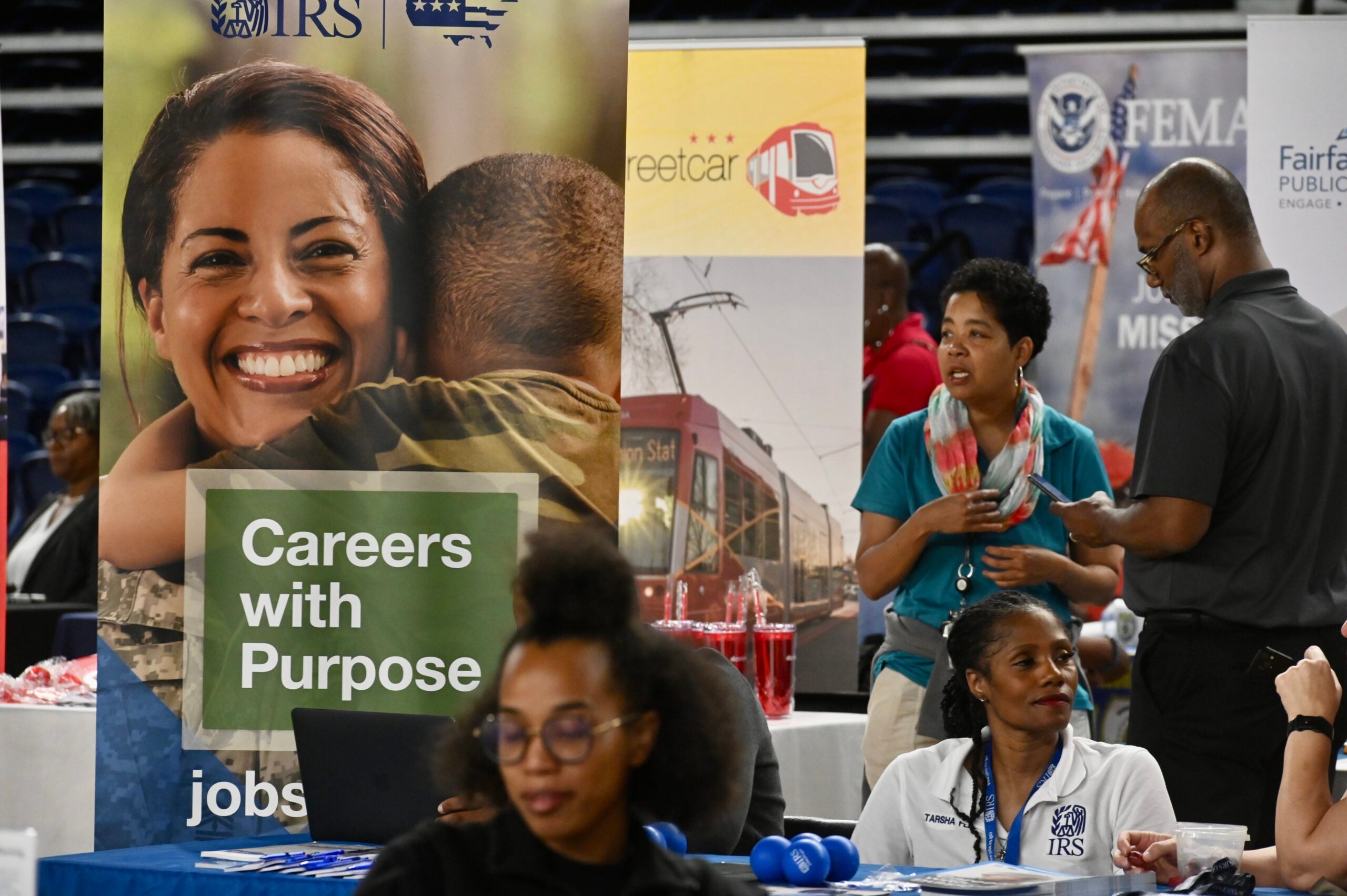
    The closely watched jobless rate for the post-9/11 generation of veterans bumped up from 4.1% in May to 4.8% in June as the nation’s ability to create new jobs took a nosedive, according to a monthly jobs report released Thursday by the Bureau of Labor Statistics.

    The report also showed an increase in the unemployment rate for all veterans from a remarkably low 3.2% in May to 4.1% in June, despite the continued strong showing of women veterans in the labor market.

    The BLS data showed that the jobless rate for women veterans has come down from 7.1% in March to 4.4% in April and 3.3% in May before ticking up to 3.6% in June, which was still well below the month’s unemployment rate for the general population (4.1%).

    For many analysts, the most concerning figures in the BLS report were the weak numbers on job creation. Total nonfarm payroll employment changed little in June by adding 57,000 jobs, about half of what analysts predicted.

    A main concern was the hiring slowdown in the healthcare sector, which has consistently been setting the pace for adding jobs through both the Biden and Trump administrations.

    The BLS report said that employment in healthcare added 22,000 jobs in June, “but at a slower pace than the average monthly gain over the prior 12 months of 38,000.”

    Leisure and hospitality employment, meanwhile, usually a strong performer, declined by 61,000 jobs in June, “reflecting weaker than usual seasonal hiring,” the report said. Thus far in 2026, “employment in the industry has shown little net change.”

    Overall, “it’s a pretty disappointing jobs report,” Heather Long, chief economist for the Navy Federal Credit Union, told Military Times in a phone interview.

    “Tech is still strong,” she said, “but healthcare has cooled off a little bit,” and “wages are not keeping up with inflation.”

    Long noted increases in the unemployment rates for veterans but added that the data is from a relatively small sample.

    “That’s why you see a lot of movement” in the numbers for veterans, she said, adding that the “verdict is still out” on whether artificial intelligence will be the major job killer that many expect.

    The AI impact on the jobs market is “not showing up in the data yet,” Natasha Sarin, a former assistant secretary at the Treasury Department under the Biden administration, told MS Now, which could be the result of new research showing that the expected impact of AI on white collar entry-level jobs may have been overstated.

    The Trump administration sought to put the best face on the BLS report, showing a weakening labor market. Kush Desai, a White House spokesman, posted that the report “reinforces that the American labor market remains solid thanks to President Trump’s economic agenda.”

    He called attention to the report that the nation added 3,000 manufacturing jobs in June, although that was down from 7,000 manufacturing jobs added in May.

    New acting Secretary of Labor Keith Sonderling stated that “Manufacturing employment, which was devastated under the Biden Administration, continues to grow as we secure historic investments and reshoring of critical industries,” despite the loss of 4,000 manufacturing jobs cited in the BLS report.

    “President Trump’s America first agenda continues to provide greater wages for workers and certainty to the sectors which will fuel the next 250 years of U.S. economic security,” he added.

    Despite the claims, the BLS data showed that wages were not keeping up with inflation. The report showed that wages rose 3.5% in June, while the annual inflation rate through May noted in a separate BLS report (the Consumer Price Index) rose by 4.2%.

    This post was originally published on this site.

  • Unemployment for post-9/11 veterans climbs in June as nation’s job market slides

    Unemployment for post-9/11 veterans climbs in June as nation’s job market slides

    The closely watched jobless rate for the post-9/11 generation of veterans bumped up from 4.1% in May to 4.8% in June as the nation’s ability to create new jobs took a nosedive, according to a monthly jobs report released Thursday by the Bureau of Labor Statistics.

    The report also showed an increase in the unemployment rate for all veterans from a remarkably low 3.2% in May to 4.1% in June, despite the continued strong showing of women veterans in the labor market.

    The BLS data showed that the jobless rate for women veterans has come down from 7.1% in March to 4.4% in April and 3.3% in May before ticking up to 3.6% in June, which was still well below the month’s unemployment rate for the general population (4.1%).

    For many analysts, the most concerning figures in the BLS report were the weak numbers on job creation. Total nonfarm payroll employment changed little in June by adding 57,000 jobs, about half of what analysts predicted.

    A main concern was the hiring slowdown in the healthcare sector, which has consistently been setting the pace for adding jobs through both the Biden and Trump administrations.

    The BLS report said that employment in healthcare added 22,000 jobs in June, “but at a slower pace than the average monthly gain over the prior 12 months of 38,000.”

    Leisure and hospitality employment, meanwhile, usually a strong performer, declined by 61,000 jobs in June, “reflecting weaker than usual seasonal hiring,” the report said. Thus far in 2026, “employment in the industry has shown little net change.”

    Overall, “it’s a pretty disappointing jobs report,” Heather Long, chief economist for the Navy Federal Credit Union, told Military Times in a phone interview.

    “Tech is still strong,” she said, “but healthcare has cooled off a little bit,” and “wages are not keeping up with inflation.”

    Long noted increases in the unemployment rates for veterans but added that the data is from a relatively small sample.

    “That’s why you see a lot of movement” in the numbers for veterans, she said, adding that the “verdict is still out” on whether artificial intelligence will be the major job killer that many expect.

    The AI impact on the jobs market is “not showing up in the data yet,” Natasha Sarin, a former assistant secretary at the Treasury Department under the Biden administration, told MS Now, which could be the result of new research showing that the expected impact of AI on white collar entry-level jobs may have been overstated.

    The Trump administration sought to put the best face on the BLS report, showing a weakening labor market. Kush Desai, a White House spokesman, posted that the report “reinforces that the American labor market remains solid thanks to President Trump’s economic agenda.”

    He called attention to the report that the nation added 3,000 manufacturing jobs in June, although that was down from 7,000 manufacturing jobs added in May.

    New acting Secretary of Labor Keith Sonderling stated that “Manufacturing employment, which was devastated under the Biden Administration, continues to grow as we secure historic investments and reshoring of critical industries,” despite the loss of 4,000 manufacturing jobs cited in the BLS report.

    “President Trump’s America first agenda continues to provide greater wages for workers and certainty to the sectors which will fuel the next 250 years of U.S. economic security,” he added.

    Despite the claims, the BLS data showed that wages were not keeping up with inflation. The report showed that wages rose 3.5% in June, while the annual inflation rate through May noted in a separate BLS report (the Consumer Price Index) rose by 4.2%.

    This post was originally published on this site

  • Unemployment for post-9/11 veterans climbs in June as nation’s job market slides

    Unemployment for post-9/11 veterans climbs in June as nation’s job market slides

    The closely watched jobless rate for the post-9/11 generation of veterans bumped up from 4.1% in May to 4.8% in June as the nation’s ability to create new jobs took a nosedive, according to a monthly jobs report released Thursday by the Bureau of Labor Statistics.

    The report also showed an increase in the unemployment rate for all veterans from a remarkably low 3.2% in May to 4.1% in June, despite the continued strong showing of women veterans in the labor market.

    The BLS data showed that the jobless rate for women veterans has come down from 7.1% in March to 4.4% in April and 3.3% in May before ticking up to 3.6% in June, which was still well below the month’s unemployment rate for the general population (4.1%).

    For many analysts, the most concerning figures in the BLS report were the weak numbers on job creation. Total nonfarm payroll employment changed little in June by adding 57,000 jobs, about half of what analysts predicted.

    A main concern was the hiring slowdown in the healthcare sector, which has consistently been setting the pace for adding jobs through both the Biden and Trump administrations.

    The BLS report said that employment in healthcare added 22,000 jobs in June, “but at a slower pace than the average monthly gain over the prior 12 months of 38,000.”

    Leisure and hospitality employment, meanwhile, usually a strong performer, declined by 61,000 jobs in June, “reflecting weaker than usual seasonal hiring,” the report said. Thus far in 2026, “employment in the industry has shown little net change.”

    Overall, “it’s a pretty disappointing jobs report,” Heather Long, chief economist for the Navy Federal Credit Union, told Military Times in a phone interview.

    “Tech is still strong,” she said, “but healthcare has cooled off a little bit,” and “wages are not keeping up with inflation.”

    Long noted increases in the unemployment rates for veterans but added that the data is from a relatively small sample.

    “That’s why you see a lot of movement” in the numbers for veterans, she said, adding that the “verdict is still out” on whether artificial intelligence will be the major job killer that many expect.

    The AI impact on the jobs market is “not showing up in the data yet,” Natasha Sarin, a former assistant secretary at the Treasury Department under the Biden administration, told MS Now, which could be the result of new research showing that the expected impact of AI on white collar entry-level jobs may have been overstated.

    The Trump administration sought to put the best face on the BLS report, showing a weakening labor market. Kush Desai, a White House spokesman, posted that the report “reinforces that the American labor market remains solid thanks to President Trump’s economic agenda.”

    He called attention to the report that the nation added 3,000 manufacturing jobs in June, although that was down from 7,000 manufacturing jobs added in May.

    New acting Secretary of Labor Keith Sonderling stated that “Manufacturing employment, which was devastated under the Biden Administration, continues to grow as we secure historic investments and reshoring of critical industries,” despite the loss of 4,000 manufacturing jobs cited in the BLS report.

    “President Trump’s America first agenda continues to provide greater wages for workers and certainty to the sectors which will fuel the next 250 years of U.S. economic security,” he added.

    Despite the claims, the BLS data showed that wages were not keeping up with inflation. The report showed that wages rose 3.5% in June, while the annual inflation rate through May noted in a separate BLS report (the Consumer Price Index) rose by 4.2%.

    This post was originally published on this site.

  • 250 Years Later, Americans Still Swear an Oath to the Constitution

    250 Years Later, Americans Still Swear an Oath to the Constitution

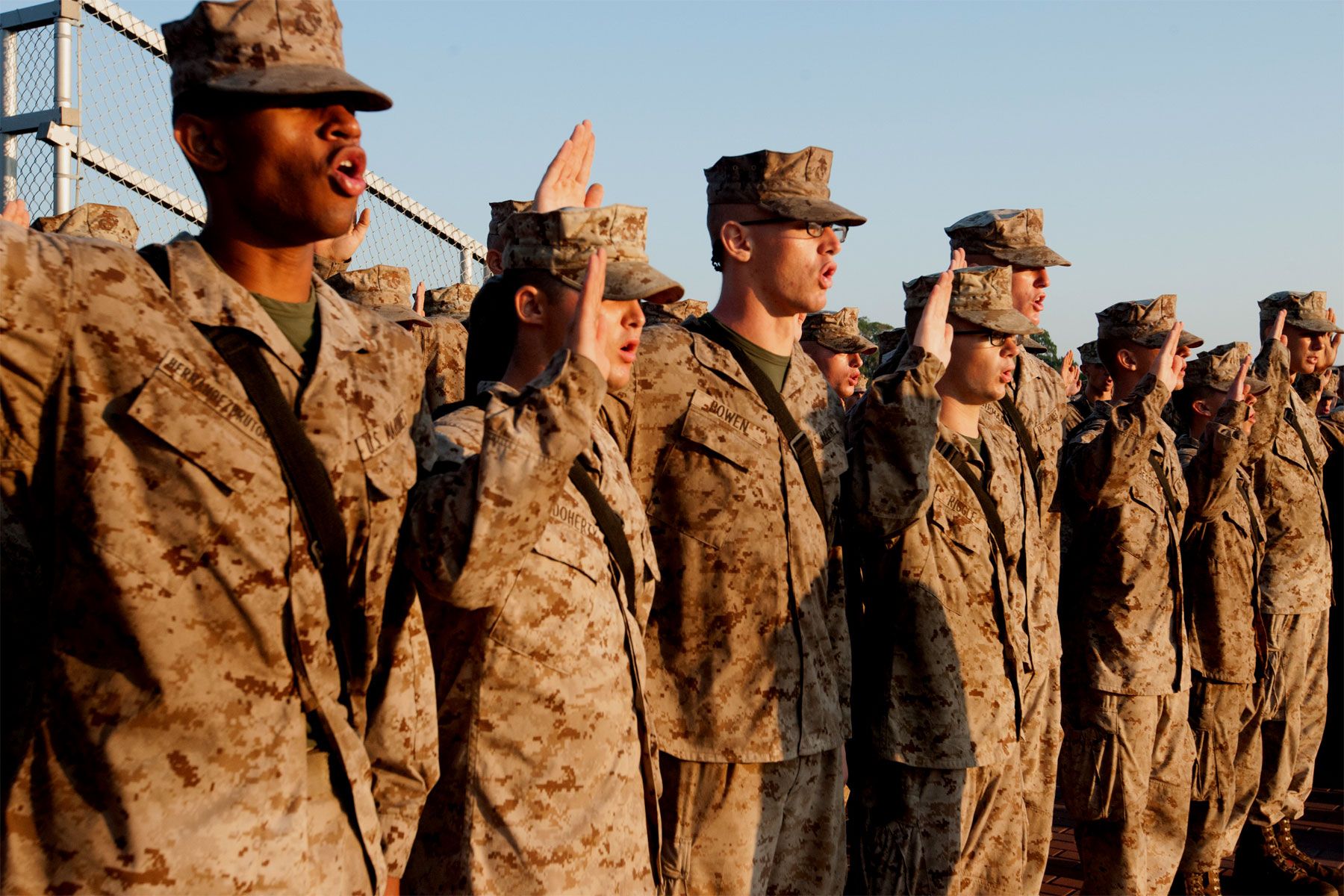
    As the United States prepares to celebrate its 250th birthday, Americans will gather for fireworks, parades and ceremonies honoring the nation’s founding. The anniversary is also an opportunity to remember one of the country’s most enduring traditions: the oath to support and defend the Constitution.

  • How do you memorialize a war whose legacy is still being written?

    How do you memorialize a war whose legacy is still being written?

    This post was originally published on this site.

    The initial reaction to Kengo Kuma’s design for the Global War on Terrorism (GWOT) Memorial has not been kind. Criticism seems to fall into three buckets: its abstract design, the absence of a clear heroic tribute, and a lack of a “roll call” or list of names of the fallen. Rep. Derrick Van Orden, a retired Navy SEAL now in Congress, called it a “jazz hands monument to our fallen brothers and sisters.” Sen. Jim Banks, another Navy veteran-turned-lawmaker who served in Afghanistan, referred to it as “disconnected abstract art.” Online, many veterans questioned why there isn’t a display of names or images of the more than 7,000 killed in these conflicts.  

    Some of the criticism aimed at Kuma and the 23-person advisory council behind the design is fair, but it should not stop us from taking a closer look at what the design actually proposes. 

    My deployed experience in the GWOT was with a Stryker brigade during the 2007 surge in Iraq. I’m now research and teach as a college professor on the experience of American military veterans and as they have come back to the nation they served. Each time I teach a class, and each time I meet a veteran on campus, I hear a new answer to what the GWOT “meant.” If the 20 years of GWOT, have a central story, it is still evolving.    

    I believe the most interesting aspect of the proposed memorial is not what it includes, but what it leaves out. Kuma’s design does not glorify a war whose mission shifted for two decades and whose outcomes remain genuinely contested. It avoids flattening twenty years of varied conflict into the heroic narratives of special operations and infantry troops that pervade current cultural storytelling. And it chooses open space over architectural closure. 

    That restraint matters because the alternative is well established. Many memorials resolve their subject before the visitor arrives. The Marine Corps War Memorial, with its flag raised in bronze certainty, is a beloved national emblem, but there is no mystery in its message. Similarly, the massive National World War II Memorial, with its arches and gold stars, reflects the size of the war and America’s mobilization to meet it. Memorials like these do not invite interpretation. They deliver a conclusion.

    A design that refuses easy resolution is making a bet that visitors can sit with ambiguity. I think this is a smart bet because the legacy of GWOT is still being written. 

    One of the foundation’s renderings shows people gathered informally on a lawn, something closer to a meeting than a monument. If that becomes the memorial’s actual function, a place where people convene, talk, and exchange accounts of a war that impacted American society in countless ways, then the design has succeeded at something harder than commemoration. It has made room for conversation.

    But these important choices do not excuse the design’s weaker elements. The footprint pathways, cast in varied boot, shoe, stiletto (and paw) combinations, cannot bear the weight that the memorial assigns them. The orientation of the arch toward Section 60 at Arlington is similarly strained. It gestures at meaning without earning it. The symbolism it depends on may not survive long anyway, since the planned United States Triumphal Arch (a.k.a. the Arc de Trump) may eventually interrupt the sight line the GWOT memorial intends to establish.

    The long shadow of The Wall

    Unfortunately, the memorial’s deepest problem is not its design, but its location. Placing the GWOT Memorial next door to the Vietnam Veterans Memorial, known universally as The Wall, was a mistake. The Wall’s granite panels transmit an enormous symbolic and emotional weight that has evolved over decades into a fixed national narrative about an unpopular war, troubled homecomings, and delayed reckoning.

    Adjacency invites comparison, and comparison creates expectations. Imagine the expectations a future visitor will carry as they walk 200 yards from one memorial to the other. Proximity to The Wall will not clarify the GWOT Memorial’s message.

    Those expectations were emerging last month with calls for etched names and unambiguous design elements. Already, reviewers are projecting The Wall’s emotional rhetoric onto the unbuilt GWOT Memorial. 

    But the location is selected, so design questions must give way to a harder one: however it looks, what happens at the site after the ribbon is cut? The daunting task of successfully memorializing the Global War on Terrorism depends almost entirely on this answer. 

    Stone and steel can establish a space, but they cannot by themselves generate understanding. That requires interpretation, and interpretation requires people. Trained staff, structured programming, and a willingness to host difficult conversations about costs, benefits, politics, and tactics are what can transform this memorial from a backdrop into a forum. Without interpretation, the memorial to America’s longest period of conflict risks becoming an elaborate version of “thank you for your service.” 

    So, it is reasonable to be skeptical of the current design. Much of that skepticism is earned. But skepticism is not the same as dismissal. The proposed design, flaws and all, is trying to do something genuinely difficult: commemorate a war before the country has agreed on what it means.

    Jim Craig is a teaching professor of sociology and veterans studies at the University of Missouri-St. Louis and a veteran of the Global War on Terrorism. He is a founding member of the Veterans Studies Association.

    The post How do you memorialize a war whose legacy is still being written? appeared first on Task & Purpose.

  • VFW Defends Longstanding Tradition of Political Satire While Opposing Cuts to Veterans’ Earned Benefits

    This post was originally published on this site.

    WASHINGTON – The Veterans of Foreign Wars (VFW) today reaffirmed its opposition to Section 108 of the proposed Take Care of America’s Veterans Act and defended its longstanding tradition of using political satire to advocate for veterans.

    “For more than 125 years, the VFW has been a fearless advocate for veterans, speaking plainly when elected officials propose policies that threaten the benefits generations of service members have earned through sacrifice,” said VFW National Commander Carol Whitmore. “Our opposition to Section 108 reflects that longstanding commitment. Veterans’ benefits are not funding sources or bargaining chips for Congress while they scrounge to score political points.”

    While the VFW supports many of the bill’s underlying goals, it strongly opposes Section 108 because it would reduce future veterans’ disability compensation to pay for other veterans’ programs. Disability compensation is not a government spending program to be trimmed when convenient. It is earned compensation for injuries and illnesses incurred through military service. Veterans should never be asked to finance new initiatives with benefits they earned through their sacrifice.

    The VFW also opposes using projected reductions in Title 38 disability compensation to finance separate Title 10 military retirement obligations. The organization continues to support passage of a clean and complete Major Richard Star Act, but believes Congress should fulfill that obligation without reducing earned disability benefits for current or future veterans.

    Since its introduction in the fall of 2025, the firing squad illustration has become a recognizable symbol of the VFW’s ongoing Honor The Contract campaign. It is political satire that depicts bureaucrats and their pundits figuratively taking aim at veterans by proposing cuts to their earned disability benefits in order to save money or fund other initiatives. Despite House Committee on Veterans’ Affairs Chairman Mike Bost’s unprecedented and unacceptable accusations in a recent statement, the image is not a depiction of violence. It is a symbolic representation of the consequences veterans face when Congress targets the benefits they earned through their service. It is also protected First Amendment speech. Political cartoons, symbolism, satire and hyperbole have been part of American public discourse since the founding of our Nation. They remain among the most recognized forms of protected political expression because they communicate ideas through symbolism rather than literal depiction. Americans are free to disagree with the VFW’s message, but disagreement with protected political expression does not transform satire into violence. Even Chairman Bost at one time agreed with this premise:

    “Free speech is foundational to democracy and the American way of life. That’s why servicemembers and veterans have fought and died for it for 245 years,” said Bost on October 13, 2021, during opening remarks of a committee hearing on violent extremism. “Free speech must be protected. I will oppose any effort to restrict it. It is every veteran’s right to have an opinion – even one I find radical.”

    The political illustration is also rooted in the VFW’s own history. The use of satirical political cartoons was commonplace in early 20th century magazines, and the VFW regularly published works of illustrators’ satire to convey the unjust ways America’s veterans were being treated by the government. The current artwork is a modern interpretation of illustrations published in the VFW’s Foreign Service magazine in 1933 and again in VFW magazine in 1956. Sadly, what veterans were experiencing decades ago is the same thing occurring today, which is why the illustration in question remains so relevant.

    The VFW has consistently used this imagery in official advocacy before Congress and in public communications. The illustration appeared prominently in the organization’s October 2025 response to a series of Washington Post articles that characterized veterans’ disability benefits as loopholes to exploit. VFW Washington Office Executive Director Ryan Gallucci presented the historic and modern illustrations during his testimony before the Senate Committee on Veterans’ Affairs last October. Whitmore, along with VFW members in attendance, wore buttons displaying the illustration during her testimony before a Joint Congressional Veterans’ Affairs committee this past March.

    “The VFW has never apologized for forcefully defending veterans and we are not about to start now,” said Whitmore. “Political cartoons have long been part of American public discourse because they communicate difficult truths in memorable ways. When bureaucrats take aim at veterans’ earned disability benefits, we will continue to use every tool available to ensure veterans’ voices are heard.”

    The VFW urges Congress to remove Section 108 from the Take Care of America’s Veterans Act, preserve the integrity of the disability rating system and pass veterans’ priorities without reducing earned disability compensation. America’s obligation to disabled veterans is not negotiable and should never be treated as a source of savings to pay for other legislation.

    The VFW remains committed to working with lawmakers who seek to improve care and benefits for veterans. However, the organization will continue to oppose any proposal that weakens the commitments America has made to those who answered the nation’s call.