
As the United States prepares to celebrate its 250th birthday, Americans will gather for fireworks, parades and ceremonies honoring the nation’s founding. The anniversary is also an opportunity to remember one of the country’s most enduring traditions: the oath to support and defend the Constitution.
Category: Uncategorized
-

How do you memorialize a war whose legacy is still being written?
This post was originally published on this site.
The initial reaction to Kengo Kuma’s design for the Global War on Terrorism (GWOT) Memorial has not been kind. Criticism seems to fall into three buckets: its abstract design, the absence of a clear heroic tribute, and a lack of a “roll call” or list of names of the fallen. Rep. Derrick Van Orden, a retired Navy SEAL now in Congress, called it a “jazz hands monument to our fallen brothers and sisters.” Sen. Jim Banks, another Navy veteran-turned-lawmaker who served in Afghanistan, referred to it as “disconnected abstract art.” Online, many veterans questioned why there isn’t a display of names or images of the more than 7,000 killed in these conflicts.
Some of the criticism aimed at Kuma and the 23-person advisory council behind the design is fair, but it should not stop us from taking a closer look at what the design actually proposes.
My deployed experience in the GWOT was with a Stryker brigade during the 2007 surge in Iraq. I’m now research and teach as a college professor on the experience of American military veterans and as they have come back to the nation they served. Each time I teach a class, and each time I meet a veteran on campus, I hear a new answer to what the GWOT “meant.” If the 20 years of GWOT, have a central story, it is still evolving.
I believe the most interesting aspect of the proposed memorial is not what it includes, but what it leaves out. Kuma’s design does not glorify a war whose mission shifted for two decades and whose outcomes remain genuinely contested. It avoids flattening twenty years of varied conflict into the heroic narratives of special operations and infantry troops that pervade current cultural storytelling. And it chooses open space over architectural closure.
That restraint matters because the alternative is well established. Many memorials resolve their subject before the visitor arrives. The Marine Corps War Memorial, with its flag raised in bronze certainty, is a beloved national emblem, but there is no mystery in its message. Similarly, the massive National World War II Memorial, with its arches and gold stars, reflects the size of the war and America’s mobilization to meet it. Memorials like these do not invite interpretation. They deliver a conclusion.
A design that refuses easy resolution is making a bet that visitors can sit with ambiguity. I think this is a smart bet because the legacy of GWOT is still being written.
One of the foundation’s renderings shows people gathered informally on a lawn, something closer to a meeting than a monument. If that becomes the memorial’s actual function, a place where people convene, talk, and exchange accounts of a war that impacted American society in countless ways, then the design has succeeded at something harder than commemoration. It has made room for conversation.
But these important choices do not excuse the design’s weaker elements. The footprint pathways, cast in varied boot, shoe, stiletto (and paw) combinations, cannot bear the weight that the memorial assigns them. The orientation of the arch toward Section 60 at Arlington is similarly strained. It gestures at meaning without earning it. The symbolism it depends on may not survive long anyway, since the planned United States Triumphal Arch (a.k.a. the Arc de Trump) may eventually interrupt the sight line the GWOT memorial intends to establish.
The long shadow of The Wall
Unfortunately, the memorial’s deepest problem is not its design, but its location. Placing the GWOT Memorial next door to the Vietnam Veterans Memorial, known universally as The Wall, was a mistake. The Wall’s granite panels transmit an enormous symbolic and emotional weight that has evolved over decades into a fixed national narrative about an unpopular war, troubled homecomings, and delayed reckoning.
Adjacency invites comparison, and comparison creates expectations. Imagine the expectations a future visitor will carry as they walk 200 yards from one memorial to the other. Proximity to The Wall will not clarify the GWOT Memorial’s message.
Those expectations were emerging last month with calls for etched names and unambiguous design elements. Already, reviewers are projecting The Wall’s emotional rhetoric onto the unbuilt GWOT Memorial.
But the location is selected, so design questions must give way to a harder one: however it looks, what happens at the site after the ribbon is cut? The daunting task of successfully memorializing the Global War on Terrorism depends almost entirely on this answer.
Stone and steel can establish a space, but they cannot by themselves generate understanding. That requires interpretation, and interpretation requires people. Trained staff, structured programming, and a willingness to host difficult conversations about costs, benefits, politics, and tactics are what can transform this memorial from a backdrop into a forum. Without interpretation, the memorial to America’s longest period of conflict risks becoming an elaborate version of “thank you for your service.”
So, it is reasonable to be skeptical of the current design. Much of that skepticism is earned. But skepticism is not the same as dismissal. The proposed design, flaws and all, is trying to do something genuinely difficult: commemorate a war before the country has agreed on what it means.
Jim Craig is a teaching professor of sociology and veterans studies at the University of Missouri-St. Louis and a veteran of the Global War on Terrorism. He is a founding member of the Veterans Studies Association.
The post How do you memorialize a war whose legacy is still being written? appeared first on Task & Purpose.
-
VFW Defends Longstanding Tradition of Political Satire While Opposing Cuts to Veterans’ Earned Benefits
This post was originally published on this site.
WASHINGTON – The Veterans of Foreign Wars (VFW) today reaffirmed its opposition to Section 108 of the proposed Take Care of America’s Veterans Act and defended its longstanding tradition of using political satire to advocate for veterans.
“For more than 125 years, the VFW has been a fearless advocate for veterans, speaking plainly when elected officials propose policies that threaten the benefits generations of service members have earned through sacrifice,” said VFW National Commander Carol Whitmore. “Our opposition to Section 108 reflects that longstanding commitment. Veterans’ benefits are not funding sources or bargaining chips for Congress while they scrounge to score political points.”
While the VFW supports many of the bill’s underlying goals, it strongly opposes Section 108 because it would reduce future veterans’ disability compensation to pay for other veterans’ programs. Disability compensation is not a government spending program to be trimmed when convenient. It is earned compensation for injuries and illnesses incurred through military service. Veterans should never be asked to finance new initiatives with benefits they earned through their sacrifice.
The VFW also opposes using projected reductions in Title 38 disability compensation to finance separate Title 10 military retirement obligations. The organization continues to support passage of a clean and complete Major Richard Star Act, but believes Congress should fulfill that obligation without reducing earned disability benefits for current or future veterans.
Since its introduction in the fall of 2025, the firing squad illustration has become a recognizable symbol of the VFW’s ongoing Honor The Contract campaign. It is political satire that depicts bureaucrats and their pundits figuratively taking aim at veterans by proposing cuts to their earned disability benefits in order to save money or fund other initiatives. Despite House Committee on Veterans’ Affairs Chairman Mike Bost’s unprecedented and unacceptable accusations in a recent statement, the image is not a depiction of violence. It is a symbolic representation of the consequences veterans face when Congress targets the benefits they earned through their service. It is also protected First Amendment speech. Political cartoons, symbolism, satire and hyperbole have been part of American public discourse since the founding of our Nation. They remain among the most recognized forms of protected political expression because they communicate ideas through symbolism rather than literal depiction. Americans are free to disagree with the VFW’s message, but disagreement with protected political expression does not transform satire into violence. Even Chairman Bost at one time agreed with this premise:
“Free speech is foundational to democracy and the American way of life. That’s why servicemembers and veterans have fought and died for it for 245 years,” said Bost on October 13, 2021, during opening remarks of a committee hearing on violent extremism. “Free speech must be protected. I will oppose any effort to restrict it. It is every veteran’s right to have an opinion – even one I find radical.”
The political illustration is also rooted in the VFW’s own history. The use of satirical political cartoons was commonplace in early 20th century magazines, and the VFW regularly published works of illustrators’ satire to convey the unjust ways America’s veterans were being treated by the government. The current artwork is a modern interpretation of illustrations published in the VFW’s Foreign Service magazine in 1933 and again in VFW magazine in 1956. Sadly, what veterans were experiencing decades ago is the same thing occurring today, which is why the illustration in question remains so relevant.
The VFW has consistently used this imagery in official advocacy before Congress and in public communications. The illustration appeared prominently in the organization’s October 2025 response to a series of Washington Post articles that characterized veterans’ disability benefits as loopholes to exploit. VFW Washington Office Executive Director Ryan Gallucci presented the historic and modern illustrations during his testimony before the Senate Committee on Veterans’ Affairs last October. Whitmore, along with VFW members in attendance, wore buttons displaying the illustration during her testimony before a Joint Congressional Veterans’ Affairs committee this past March.
“The VFW has never apologized for forcefully defending veterans and we are not about to start now,” said Whitmore. “Political cartoons have long been part of American public discourse because they communicate difficult truths in memorable ways. When bureaucrats take aim at veterans’ earned disability benefits, we will continue to use every tool available to ensure veterans’ voices are heard.”
The VFW urges Congress to remove Section 108 from the Take Care of America’s Veterans Act, preserve the integrity of the disability rating system and pass veterans’ priorities without reducing earned disability compensation. America’s obligation to disabled veterans is not negotiable and should never be treated as a source of savings to pay for other legislation.
The VFW remains committed to working with lawmakers who seek to improve care and benefits for veterans. However, the organization will continue to oppose any proposal that weakens the commitments America has made to those who answered the nation’s call.
-

Navy hits 45,000 recruits three months ahead of schedule
The U.S. Navy announced on Thursday that the service reached its fiscal 2026 goal of contracting 45,000 future sailors to man the fleet, continuing a trend over the past several years of successfully meeting its enlistment needs.
The service reached its goal three months early, according to Defense Secretary Pete Hegseth, after accomplishing the same feat in fiscal 2025.
“Today’s Navy is stronger because tens of thousands of Americans chose to answer the call to serve,” said Rear Adm. Jim Waters, commander of Navy Recruiting Command. “Reaching this milestone is not simply about achieving a recruiting objective — it’s about delivering the talented sailors our fleet needs to maintain readiness in an increasingly complex security environment.”
The service has completed a significant turnaround in recruitment over the past several years.
In fiscal 2023, the Navy whiffed on its enlistment goal of 37,700 sailors by more than 7,450 accessions.
But the service rebounded a year later in fiscal 2024 by surpassing its accession target of 40,600 recruits by 378.
And in fiscal 2025, the Navy brought in 44,096 future sailors, exceeding its target of 40,600 and marking the most recruits the Navy had seen since 2002.
Waters, speaking to reporters in October 2025, attributed the service’s success to relying on more recruiters, reducing administrative legwork and simplifying the tattoo approval process.
“Our recruiters never lost sight of what matters most — people,” Waters said in a Navy release. “Every contract represents someone who chose to serve something greater than themselves.”
-
Kyiv military chief salutes outgoing US Army commander as war rages in Ukraine
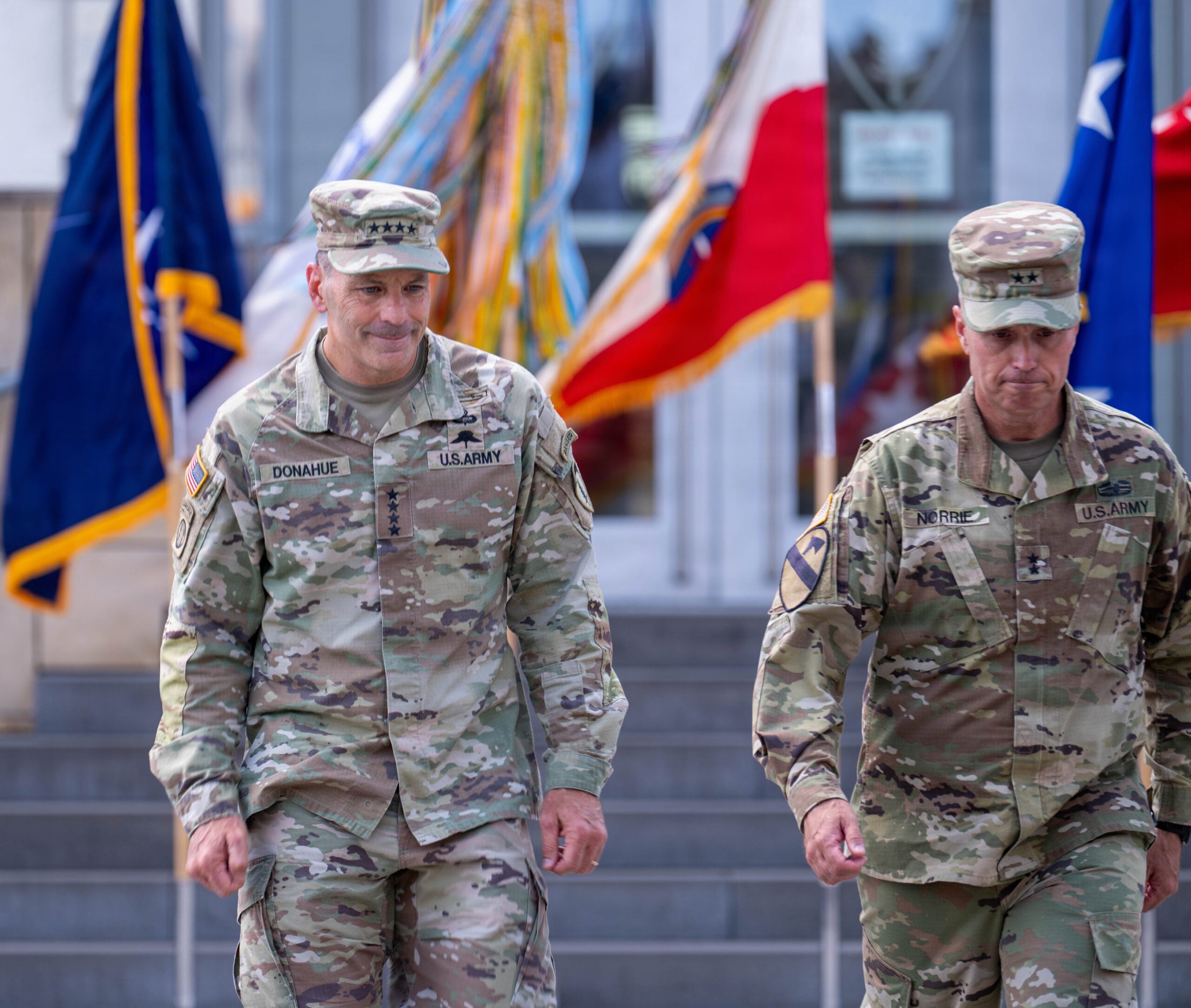
KYIV, Ukraine — Ukraine’s top general has publicly thanked the departing head of U.S. Army Europe and Africa, Gen. Christopher Donahue, for helping build and sustain Washington’s support pipeline to Kyiv as the officer relinquished his post on Thursday after an unexpectedly brief 18 months in command.
Word broke June 23 that the four-star general had submitted his retirement papers after Defense Secretary Pete Hegseth personally requested that he resign, according to multiple reports. The Army has yet to provide a definitive reason for the change.
Donahue’s predecessor, Gen. Darryl Williams, held the post for nearly two and a half years. Maj. Gen. Christopher Norrie, Donahue’s deputy, took over in an acting capacity Thursday after a farewell ceremony at the Clay Kaserne headquarters in Wiesbaden, Germany.
Within days of the news, Gen. Oleksandr Syrskyi, Ukraine’s commander-in-chief, held a phone call with Donahue and published a farewell on his personal social media accounts, thanking the outgoing official for creating a partnership that he said delivered long-range systems, strengthened Ukraine’s air defenses and saved thousands of Ukrainian lives.
The two military leaders have worked together since the first days of Russia’s full-scale invasion, when Syrskyi, then chief of Ukraine’s Ground Forces, directed the defense of Kyiv and Donahue led the 82nd Airborne Division into southeastern Poland. Their partnership has only strengthened over the years, Syrskyi said.
“In the most challenging moments of our war for freedom and independence, Chris Donahue has proven himself not only as a military leader but also as a man of his word and honor,” Syrskyi wrote on Telegram.
“Ukrainian warriors will always hold General Donahue in the highest esteem.”

The farewell, meanwhile, lands at a fraught moment in U.S.-Ukraine relations. The Trump administration has questioned the value of Kyiv’s fight in the past, even as the U.S. military incorporates more Ukrainian battlefield know-how amid its war with Iran.
Now, the American general who built the Army’s support machinery for Ukraine is out, and Syrskyi’s public tribute shows Kyiv knows what it stands to lose.
According to two U.S. officials cited by CBS News, Donahue “had earned the ire” of Hegseth, and the two men met in person only once, in February 2025.
Asked about accusations that Hegseth forced the general out over a personal grudge, chief Pentagon spokesman Sean Parnell provided no explanation.
“General officers and flag officers serve at the pleasure of the president and the secretary of war,” Parnell told the Daily Beast on Sunday. “They always have and always will.”
The departure extends a shake-up that has removed or replaced at least a dozen senior military leaders since Hegseth took office, with many of the moves made without public explanation.
U.S. President Donald Trump praised Donahue in January, when Fox News host Brian Kilmeade visited the general’s Wiesbaden headquarters and put Donahue on the phone with the president as his soldiers gathered around, according to Stars and Stripes.
“You’re doing a fantastic job,” Trump said. “Your reputation is great.”
Joint Chiefs Chairman Gen. Dan Caine is among those seeking a presidential waiver so Donahue can retire at four stars, a rank he has held for fewer than the three years federal law requires to retire at that grade, two sources told CBS News.
The Wiesbaden headquarters itself is officially being downgraded to a three-star command, part of Hegseth’s push to cut the number of four-star billets, Stars and Stripes reported. U.S. Air Forces in Europe lost its fourth star in a similar move last year.
Donahue has said nothing publicly about the circumstances of his exit, and the subject went unmentioned at Thursday’s ceremony. He thanked his troops in his farewell remarks, instead.
“I love this team — it has been the honor of a lifetime to be a part of it. I’m proud of what we built and I have absolute confidence in what you will build next,” Donahue said, according to an Army release.
Donahue was promoted to four stars in December 2024, when he took over U.S. Army Europe and Africa and, with it, command of NATO’s Allied Land Command in Izmir, Turkey. The combined headquarters developed the Eastern Flank Deterrence Initiative, a warfighting concept that integrates allied land forces, drones and data under NATO’s defense plans for its eastern flank, according to the Army.
Donahue “saw the need to change, developed a plan, inspired others and built the processes to ensure it endures well beyond his tenure — and allies have bought in,” Gen. Alexus Grynkewich, NATO’s supreme allied commander Europe, said at the ceremony, according to the Army release.
Donahue was also the last American soldier to leave Afghanistan, photographed in night vision boarding the final C-17 out of Kabul in August 2021.
Brett McGurk, who served as special presidential envoy to the coalition against the Islamic State, told CBS News that Donahue is “among the most consequential commanders of his generation,” and retired Gen. Tony Thomas, a former head of U.S. Special Operations Command, called him a “generational leader.”
The ouster has drawn criticism from retired military leaders and lawmakers across the aisle.
The “decision to force [Donahue] out says far more about Hegseth than it does about General Donahue,” Sen. Thom Tillis, R-N.C., wrote in a post on X last week, calling the move “yet another unforced error from a Secretary leading the Pentagon with bro-culture bravado rather than restraint, humility and careful stewardship of the finest fighting force in the world.”
Retired Lt. Gen. Ben Hodges, a former commander of U.S. Army Europe, called Donahue the “best soldier in the Army today” in his own post. “Kremlin and terrorist organizations will be relieved to know that he will soon be gone.”
European officials fear the exit foreshadows a U.S. drawdown from the roughly 80,000 American troops on the continent, Newsweek reported.
The news came out just days after Hegseth criticized European allies over low defense spending and announced a six-month review of U.S. forces in Europe.
Retired Adm. William McRaven, who oversaw the raid that killed Osama bin Laden, wrote in The Atlantic that the dismissals “raise a real risk that senior officers will be overly cautious about providing their best advice and, therefore, that the chance of military miscalculation will grow dramatically.”
Lt. Gen. Kevin Admiral, who leads the Army’s III Armored Corps, is the frontrunner to permanently replace Donahue in Wiesbaden, a U.S. military official told Newsweek, though no final decision has been made and the nomination would require Senate confirmation.
Donahue will formally hand the NATO post to its deputy, British Lt. Gen. Jez Bennett, at a July 9 ceremony in Izmir, Turkey. Bennett will serve as acting commander until another American officer is assigned, Supreme Headquarters Allied Powers Europe spokesman Col. Martin O’Donnell told CBS News.
Donahue closed his farewell remarks with a question.
“When people ask me, ‘Hey CD, what was it like to be a part of United States Army Europe and Africa?’ I only have to tell them how proud and unbelievably grateful I am to have been a part of the United States Army’s premier warfighting headquarters.”
This post was originally published on this site
-
Congress Can’t Do Its Own Job, Much Less Determine Veteran Disability Status
This post was originally published on this site.
For decades, disability ratings have been based on medical evidence and the real-world impact of a service-connected condition on a veteran’s life. Section 108 of the introduced Take Care of America’s Veterans Act – House Resolution 9237/Senate Bill 4744, sponsored by senior Kansas Sen. Jerry Moran – would move Congress directly into that process by changing how certain disabilities, including tinnitus and sleep apnea, are evaluated and compensated.
There are more that 200,000 veterans in the Kansas City metropolitan area, according to Veterans Affairs data, an estimated 65,000 of them disabled. That should concern every veteran and every member of Congress.
Congress can barely perform its most basic responsibilities. It routinely fails to pass budgets on time, relies on continuing resolutions to keep the government open, struggles to conduct meaningful oversight of the agencies it creates, and has spent decades trying to fix a Veterans Affairs claims system that remains frustratingly complex for many veterans. Yet now, some in Congress apparently believe they should be in the business of deciding how disabled a veteran is.
If politicians cannot reliably handle the responsibilities already assigned to them, why should veterans trust them to make individualized medical and vocational determinations that require specialized expertise?
The issue is not whether disability ratings should ever change. They should, when the medical evidence supports it.
The issue is who should be making those changes and why.
The ratings changes that members of Congress seek to codify did not originate with those lawmakers. They stem from a 2022 VA rulemaking proposal that generated significant opposition from veterans, advocates and stakeholders who questioned both the medical rationale and the practical consequences of the changes. The VA received more than 2,600 comments during the notice-and-comment process, yet Congress is moving to legislate the proposal before the VA has completed the process Congress itself established for evaluating such changes.
The Constitution begins with “We the people.” Thousands of veterans spoke out because they were told their voices mattered. Congress should not make those voices irrelevant by legislating the outcome before the process has run its course.
Supporters of Section 108 argue that the proposed changes would modernize the disability compensation system and generate savings to fund other veterans’ priorities. But disabled veterans should not be asked to finance veterans legislation.
Disability ratings are not supposed to be budgetary tools. They are part of the nation’s commitment to compensate veterans for injuries incurred in service to their country. When Congress alters ratings to fund other priorities, it transforms what should be an evidence-based medical determination into a political calculation.
Section 108 raises a fundamental question about the future of the disability system: Should ratings be determined by medical expertise and evidence, or should they become another subject of political compromise whenever Congress needs to offset the cost of a new initiative?
If Congress succeeds in using future disability compensation as offsets, it would establish a troubling precedent. Future Congresses may increasingly view earned disability compensation as a funding mechanism rather than a solemn obligation owed to those who served.
Congress has a critical role to play in veterans policy: funding VA, conducting oversight, improving access to care and ensuring veterans receive the benefits they have earned.
If disability ratings need to change, they should change because the evidence demands it, after a transparent regulatory process has run its course, not because a bill needs a pay-for. Veterans deserve a disability system guided by medicine, science and the actual impact of a condition on their lives, not projected budget savings.
Disability compensation is part of the nation’s commitment to those who served. It should never be treated as a budget offset.
This OpEd was written by John Muckelbauer, general counsel of the Veterans of Foreign Wars, and published in the Kansas City Star on Monday, June 22, 2026, here.
-
Coast Guard to enforce safety zone for San Diego Big Bay Boom
SAN DIEGO — The Coast Guard is expected to enforce temporary safety zones for the Big Bay Boom Fourth of July Fireworks on the waters of San Diego Bay on Friday, July 4, 2026.
-
Coast Guard rescues 2 from water near Keaau Beach Park
 HONOLULU – The Coast Guard rescued two men after a 12-foot fishing vessel capsized offshore Keaau Beach Park Friday.
 -
Improving Long-Term Care for Seniors in Massachusetts
This post was originally published on this site.
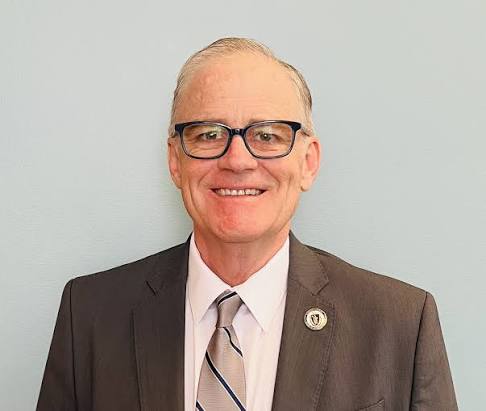
In recent years, Massachusetts has taken significant steps to improve care for seniors, most notably the Act to Improve Quality and Oversight of Long-Term Care. In a recent Risking Old Age in America podcast, Rep. Thomas M. Stanley, Co-chair of the Elder Affairs Committee, describes this initiative as well as further steps in the works. These include creating a family caregiver commission, licensing home health agencies, and working towards universal long-term care insurance.
Here are some excerpts from our conversation:
Senior Living Facilities
Risking Old Age in America (ROA): You have been working [to make improvements] across the whole continuum of care from nursing homes [to] assisted living facilities to home healthcare. Please talk about the legislature’s initiatives in these areas.
Rep. Thomas M. Stanley: In 2024, the governor signed the long-term care reform bill into law. This was the first major legislative update of nursing homes and assisted living residences in over 25 years.
It increases transparency and oversight of nursing homes through new suitability standards for owners and operators. It requires a review of the civil and criminal litigation history of owners and operators; and we put in place tools for the Department of Public Health to monitor and take punitive action against facilities, including increased fines and creating the ability to appoint a temporary manager to oversee a struggling facility.
It expands the suitability reviews of management companies including any [firm] with at least a 5-percent stake in a nursing facility. The law also establishes the long-term care workforce and capital fund to help address the workforce crisis in nursing homes. Money from the fund can be used for Certified Nursing Assistant training grants, career ladder grants for Licensed Practical Nurses, and also leadership training.
The law gives assisted living facilities the ability to offer basic health services, like wound care, eye drops, and medication distribution to their residents.
ROA: The Dignity Alliance [a senior advocacy group]…[has said] state supervision and enforcement of nursing facilities is…not tough enough, that there might be fines and other penalties on the books, but nobody’s applying them to nursing homes that don’t meet their obligations. It sounds like the ability to put them into receivership under the new legislation may be the remedy that’s needed.
Stanley: That’s correct. Under the old rules you would end up in the situation of really punishing or fining a nursing home and end up having it going to foreclosure. In that case, where are the residents going to go? The new law allows the Department of Public Health (DPH) to get in earlier and work with them so that they understand what the DPH is looking for in terms of quality of care and so forth. They can take care of the facility and all the residents so they don’t go astray.
ROA: So the DPH might have felt that it was between a rock and a hard place because if they enforced the regulations, they might lose the nursing home.
Stanley: [Yes]…and the nursing homes, by and large, were not letting them know that they were having certain problems. So this allows the DPH to get in earlier, understand what’s going on and help them make adjustments so that they can right the ship.
Long-Term Care Insurance
Stanley: The state of Washington is really in the forefront of looking down the road to provide for some type of revenue stream…for folks to be able to afford their home care or [other] long-term care needs. So we’re modeling our program after theirs and we’re learning from their mistakes and successes.
ROA: That’s the Washington Cares Fund?
Stanley: Yes, exactly. Last session Senator Jehlen and I worked together to get $500,000 in the state budget for the Executive Office of Health and Human Services to hire an independent firm to conduct the actuary study of various public, private and public-private long-term support service financing options. They hired Milliman to conduct the study. [The full study is available here.]
How it would work in a nutshell is that a public…insurance program would be funded via a payroll tax. After individuals pay into the program for a certain number of years, a vesting period, they would become eligible. And as they age and require long-term support services, they can apply for benefits under the program. There are countless ways to design the program, increasing or decreasing the benefit amount or…the vesting period, determining what the benefit can be used for – home care, assisted living or even paying family caregivers. We have filed legislation to establish a commission to discuss the results of the actuary study and the feasibility of a public long-term care financing program in Massachusetts and potentially recommending a model that works.
ROA: It sounds like this would help a lot, but one question I have about it is that if there’s a vesting period where you have to pay in for a number of years before you can become eligible for the benefit, would it only be available for people who are continuing to work during that time?
Stanley: That’s definitely something that has to be discussed by the commission, but everyone has to contribute and the 10-year vesting period is necessary to get enough money into the program to make it sustainable.
Listen to our entire conversation here.
For more from Harry Margolis, check out his Risking Old Age in America blog and podcast. He also answers consumer estate planning questions at AskHarry.info. To stay current on the Squared Away blog, join our free email list.
-

Best Camera Bags for Travel Photography in 2026: What I Actually Use After 15 Years on the Road
This post was originally published on this site.
I slipped on ice at Kirkjufell once, scrambling for a sunset shot, and the only reason my camera survived the fall was the bag I happened to be carrying. The dignity, of course, did not survive. Over fifteen years of professional travel photography I’ve put a lot of bags through a lot worse than that.…