Category: Uncategorized

  • New Tax Break for Seniors

    New Tax Break for Seniors

    Part of the recently passed tax bill includes what the administration is calling “No Tax on Social Security.” The bill does not directly remove taxes on Social Security payments, but it does provide an additional deduction for seniors under certain income limits. This provision may effectively reduce – or, in some cases, even eliminate – federal taxes paid by people ages 65+.

    First of all, it should be noted that this tax break worsens the tenuous fiscal condition of Social Security. Social Security actuaries estimate that the new tax provisions will move up the trust fund depletion date by roughly six months – from the 3rd quarter to the 1st quarter of 2034.

    Nevertheless, current beneficiaries will see the benefits of lower taxes. This blog post looks at how the new deduction works and how it may impact your federal income taxes.

    How Deductions Work

    To understand the mechanics of this new tax break, it helps to know how deductions work. The following is a simplified explanation of the standard deduction (this is not tax advice).

    You start with gross income, which is the total of all sources of taxable income. This amount typically includes work income, most pensions, taxable investment income, and up to 85 percent of your Social Security income. The taxable share of your Social Security is based on what is called “combined income,” which equals half of your Social Security benefit, plus nontaxable interest, plus all other taxable income. Once combined income is greater than $44,000 for married couples filing jointly or greater than $34,000 for single filers, 85 percent of Social Security benefits are taxable. (At lower thresholds, people are taxed on up to 50 percent of their benefit income; below these thresholds, benefits are not taxed at all.)

    After totaling your gross income, including taxable Social Security, you subtract deductions. You have the option of tallying up individual items and itemizing deductions, but most people do better by taking the standard deduction. People ages 65+ also receive an extra standard deduction. The new tax bill adds to this already increased standard deduction, bringing the total to $23,750 for singles and up to $46,700 for married couples filing jointly (see Table). It is worth noting that this new deduction is temporary – it is available from 2025 through 2028. This potentially whopping standard deduction is then subtracted from gross income to arrive at taxable income.

    Impact of the New Provision

    The new provision doesn’t explicitly remove federal taxes on Social Security, but it does have the same effect for many people, reducing taxable income by $6,000 per person for those ages 65+. For lower-income retirees who are reliant on Social Security, this might be enough to all but eliminate their entire federal income tax liability. Note, though, that lower-income households below certain thresholds were already untaxed on Social Security. For these households, the additional deduction will reduce other taxable income.

    Let’s look at how this might impact income taxes. Take a single woman over age 65. Say she receives a taxable pension of $30,000, investment income of $10,000, and Social Security benefits of $24,000 (85 percent of which is taxable). That puts her in the 12-percent federal tax bracket. Incorporating the new $6,000 tax provision will effectively reduce her federal tax bill by $720.

    Pay Attention to Income

    An important caveat to this new provision is that it is phased out for single taxpayers with incomes over $75,000 and married filers with incomes over $150,000. The phaseout is $60 for each $1,000 over the threshold. It is fully phased out at $175,000 for single filers and $250,000 for joint filers.

    Bigger Refunds in 2026

    Although the new tax provision does not explicitly eliminate taxes on Social Security, it will reduce taxes for many filers age 65+. If you’ve paid estimated taxes throughout the year or had taxes withheld on your income, you may end up getting a bigger refund (or owe less) in 2026.

    Luke Delorme, CFP® is Director of Financial Planning at Tableaux Wealth in Great Barrington, MA (www.tableauxwealth.com), reachable at luke@tableauxwealth.com. To stay current on the Squared Away blog, join our free email list.

    This blog post is for informational and educational purposes only and should not be considered financial advice. Consult a qualified professional for advice specific to your situation.

    This post was originally published on this site.

  • Caregiver Tips for Doctor Visits

    Caregiver Tips for Doctor Visits


    Caregiver Tips for Doctor Visits

    Supporting an aging loved one’s health means learning a level of medical advocacy most of us were not trained for. Many individuals find that attending doctor appointments with their elderly parent brings unforeseen needs. The following is our guide for better preparation, advocacy, and making the most of your loved one’s doctor visit.

    Before the Appointment

    To prepare for the appointment, focus on gathering information.

    • Does your loved one’s medical office require completion of paperwork ahead of time? Even if they don’t, completing it at home—in a comfortable, calm environment, with lots of time—works to your advantage. (Ask the office if this is an option.) Completing the paperwork with your parent or loved one gives you the chance to fill out health history and related details you may not even know.
    • Find out if your senior loved one has named a healthcare proxy or filled out a release of information with your name on it. If you can’t find it, call the office and ask. It’s important to have your loved one sign off on your ability to speak for them if needed, as well as receive information about their condition and care.
    • Interview your parent or loved one on the medications they are taking, and how faithfully they are taking them according to prescription. Ask about any side effects and recent changes they have noticed.
    • Likewise, find out about any new lifestyle challenges, such as difficulty walking or getting in or out of bed. Ask whether they are eating regularly and drinking water, if they are socializing, and if they are struggling with any household chores. Be alert for signs of negative mood or anxiety, as this can be helpful for their doctor to keep tabs on their mental health.

    What to bring to a doctor’s appointment:

    • A list of medications and supplements your loved one is taking. Bringing the actual bottles/packaging is even better, as the doctor can review labels.
    • A list of concerns you’d like the doctor to address. Besides known conditions and symptoms, this is a good time to ask about concerns like dementia screening, assistive devices for walking, eyesight changes, and occupational therapy Keep the list to your most pressing concerns.
    • Their glasses, hearing aid, walking device, or similar implements.
    • Insurance cards and information of any other healthcare providers that they see.
    • Something to take notes as you are communicating with medical staff. There is no way to simply remember everything that was said, and these face-to-face opportunities provide vital information.

    Lastly, but very importantly, have a conversation with your loved one regarding speaking up for them during their appointment. Are they alright with you chiming in when needed? Do they prefer you take the lead? Let them know you want to help, but be aware it can be embarrassing for some elderly parents to be contradicted or talked over in front of the doctor. Talking about boundaries ahead of time is effective caregiver communication; emphasize your intent to help to your fullest capability, and empower them to take the lead if they can.

    During and After the Appointment

    During a senior medical visit, remain alert to your loved one’s emotional state, energy level, and attention. Long wait times and shuttling between rooms can cause fatigue, which in turn can discourage your loved one from speaking up and asking their questions. Do what you can to ensure you both dress warmly and comfortably, eat beforehand, and set yourself up to stay resilient.

    If your loved one asks you to leave the room, do so. Try not to talk over them or make them feel invisible, even if you’re trying to help. Listen attentively, take notes, and ask the medical staff for any literature or resources related to your loved one’s health conditions.

    After the appointment, write up any instructions from the doctor in an easy-to-read format, and place it in a highly visible place like the kitchen counter. Give your loved one your notes from the appointment. Follow up on further appointments to be scheduled, prescriptions to be picked up, or tests to be completed. If your loved one is comfortable with it, you may want to get the login for their patient portal to see test results or notes from their clinic. You can usually also send messages to their doctor through the portal (though you should never impersonate your parent/loved one).

    Other Considerations

    Certain healthcare and social services professionals are highly trained in coordinating senior care. These include geriatricians, who specialize in patients over 65 years of age, and geriatric care managers, who are an excellent resource for elderly patients with complex care needs. Social workers are also available at most hospitals to provide medical advocacy for seniors and education to their families.

    If your parent speaks a different language than their doctor, an interpreter may be available to help with communication. This can bridge the gap without putting too much emphasis on the adult child to do all of the communication.

    For some families, agreement on a care plan or its details may be hard to come by. Caregivers with siblings might need to find ways to make joint decisions peacefully, or else get their siblings’ blessing to act more unilaterally (though this comes with the tradeoff of taking on the bulk of caregiving duties).

    If at some point, your elderly loved one needs more assistance than a family caregiver can provide—especially for routine, everyday activities—you may want to review your home care options. Our VetAssist mission is to make home care easily and quickly accessible for those who qualify through the VA Pension with Aid and Attendance benefit. Veterans Home Care can help you determine whether you or your loved one will be eligible to receive the benefit, which can cover some or all of the cost of home care, and we make it easy to apply. Chat with us via our website, or call us at (888) 314-6075.

    The post Caregiver Tips for Doctor Visits appeared first on Veterans Home Care – VA Aid and Attendance Pension Benefit.

    This post was originally published on this site.

  • Málaga in One Day

    Málaga in One Day

    Last Updated on February 25, 2026 by Sarah Wilson Málaga was the final stop on our six-day Andalusian road trip, which took us through Ronda, Cádiz, and Jerez before looping us back to the Mediterranean coast. I’ve always thought of Malaga as the “airport city,” but spending a day here changed my view completely. You […]

    The post Málaga in One Day appeared first on LifePart2andBeyond.com.

    This post was originally published on this site.

  • How the Civil War inspired this iconic poet’s classic Christmas song

    How the Civil War inspired this iconic poet’s classic Christmas song

    This post was originally published on this site.


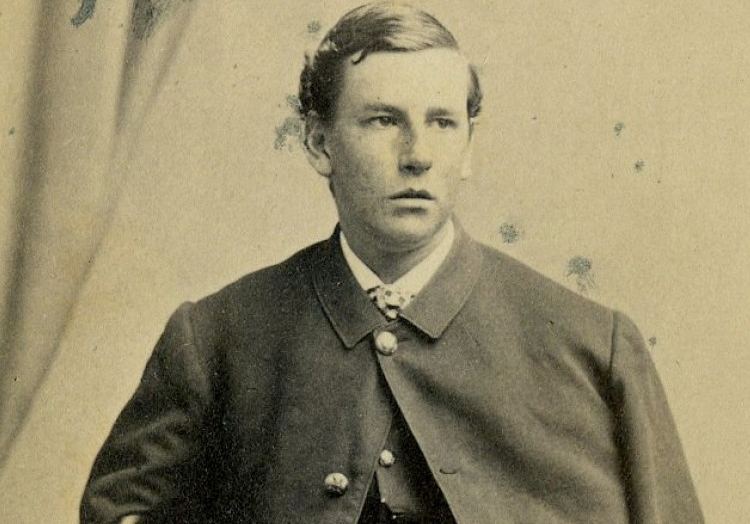
    Charles Appleton Longfellow was the oldest child of American poet and writer Henry Wadsworth Longfellow.

    A dramatized version of Charley’s story was recently made into the movie “I Heard the Bells,” but the true story behind the origins of the Christmastime poem-turned-song is just as, if not more, interesting.

    Henry Wadsworth Longfellow vehemently objected to his son’s desire to enlist in the Union Army. But in 1863, at the age of 18, Charley ran away from home and enlisted in the 1st Massachusetts Artillery.

    He informed his father of his decision in a letter mailed from Portland, Maine.

    “I have tried hard to resist the temptation of going without your leave but I cannot any longer,” he wrote. “I feel it to be my first duty to do what I can for my country and I would willingly lay down my life for it if it would be of any good.”

    Within two weeks of his arrival, likely because of his famous father’s connections, Longfellow was commissioned a 2nd Lieutenant in the 1st Massachusetts Cavalry.

    On Nov. 27, 1863, while involved in a skirmish during a battle of the Mine Run Campaign, Charley was shot through the left shoulder. The bullet exited under his right shoulder blade and skimmed his spine.

    The wound was considered grave, and the army surgeon told the elder Longfellow that “paralysis might ensue” for his son.

    On Christmas day 1863, as his son recovered from his wounds, Henry penned the poem “I Heard the Bells on Christmas Day,” with many references to the Civil War.

    The cannon thundered in the South

    And with the sound    

    The carols drowned

    Of peace on earth, good-will to men!

    It was as if an earthquake rent

    The hearth-stones of a continent,    

    And made forlorn    

    The households born

    Of peace on earth, good-will to men!

    And in despair I bowed my head;

    “There is no peace on earth,” I said;    

    “For hate is strong,    

    And mocks the song 

    Of peace on earth, good-will to men!”

    Then pealed the bells more loud and deep:

    “God is not dead, nor doth He sleep;    

    The Wrong shall fail,    

    The Right prevail,

    With peace on earth, good-will to men

    Henry Wadsworth Longfellow

    Charley would survive his wounds, but did not return to the war.

    He kept in touch with friends made during his brief career as a soldier, receiving letters and photographs from them and creating a scrapbook of newspaper articles relating to his unit’s role in the war.

    He went on to become a world traveler and author.

  • One Day in Cádiz: A Slow Coastal Day in Southern Spain

    One Day in Cádiz: A Slow Coastal Day in Southern Spain

    Last Updated on February 25, 2026 by Sarah Wilson Cádiz was one of our stops on our six-night road trip through southern Spain, and it turned out to be one of my favourites. I visited with a friend, and during the trip we also spent time in Ronda and Málaga. We stayed in Jerez de […]

    The post One Day in Cádiz: A Slow Coastal Day in Southern Spain appeared first on LifePart2andBeyond.com.

    This post was originally published on this site.

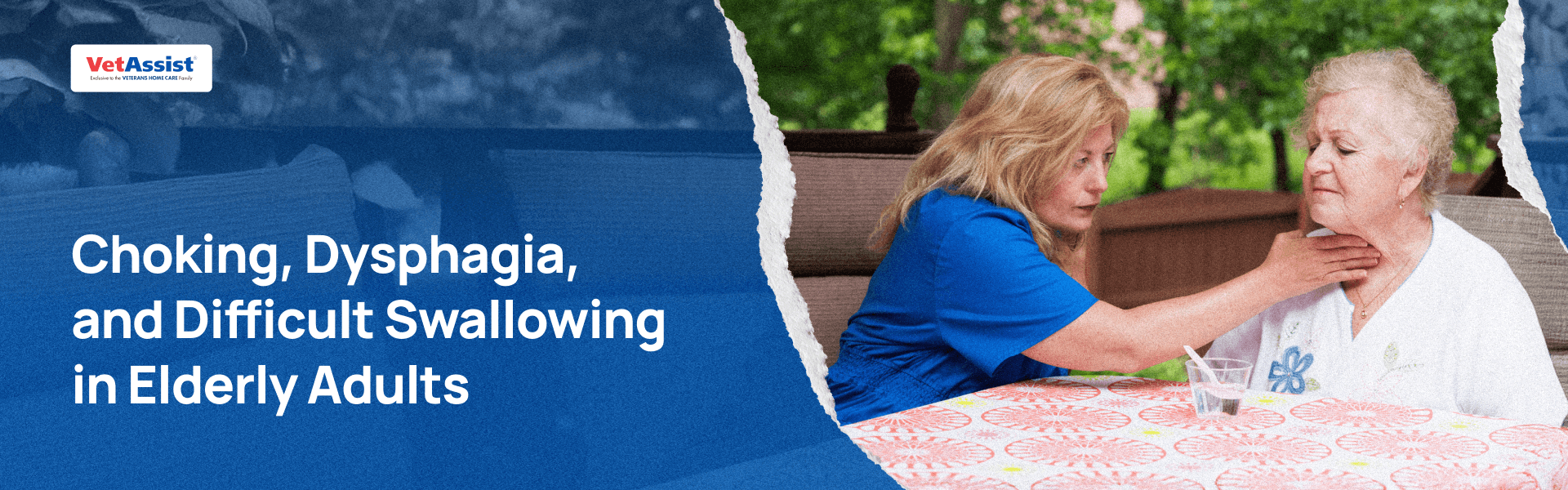
  • Choking, Dysphagia, and Difficult Swallowing in Elderly Adults

    Choking, Dysphagia, and Difficult Swallowing in Elderly Adults


    Choking, Dysphagia, and Difficult Swallowing in Elderly Adults

    Dysphagia in the elderly is a common condition resulting from multiple factors including oral health problems, chronic illness, and medication side effects. Also called geriatric dysphagia, this is characterized by difficulty swallowing and a higher risk of choking. Seniors make up an astounding 75% of the choking deaths each year in the US. That statistic represents over 4,000 senior deaths annually. Risk rises with age, especially after age 71.

    Swallowing issues can be diagnosed and mitigated. Protect your senior loved one by getting educated on dysphagia and choking risks and by speaking to them about struggles they may be experiencing.

    Why Do Older People Choke on Food?

    Swallowing food and water occurs in three phases requiring first the mouth, then the throat, and lastly, the esophagus. When even one of these phases is compromised, choking can occur.

    With age, oral health can decline, and unchewed food can lead to swallowing problems in elderly adults. Missing or damaged teeth, diseased gums, loose dentures, insufficient saliva (dry mouth), and weakened or uncoordinated muscles in the tongue or throat can all contribute.

    Illness can also cause or worsen swallowing challenges. Some examples are:

    • Paralyzing conditions, such as a stroke
    • Neurological or neurodegenerative conditions, such as Parkinson’s disease
    • Dementia, due to reduced cognitive capacities
    • Chronic or untreated acid reflux
    • Diabetes, which can be accompanied by dry mouth
    • Certain cancers or their treatment

    While it is typical for older adults to produce less saliva, some medications have dry mouth as a side effect, exacerbating the issue. These include medications for blood pressure, allergies, and depression. (Read about medication safety here.) Conversely, seniors who cannot clear their own saliva or phlegm by swallowing are also at risk of choking.

    With these barriers to healthy swallowing, choking in elderly people presents an underestimated threat to their safety.

    Risks Associated with Dysphagia and Choking

    Besides the obvious threat to breathing, choking can result in lung infections as foreign objects like food particles enter the lungs, along with bacteria from the mouth. Aspiration occurs when food or drinks enter the lungs without blocking airways, and this can also carry bacteria into the lungs. This is one reason it is imperative to brush, floss, and visit the dentist regularly.

    Furthermore, frequent and violent coughing can lead to tissue damage, and dysphagia is thought to be a risk factor for the development of pneumonia. Elderly people who have choked on food or water might become afraid to eat and drink, which leads to malnutrition and other health issues. Fears around eating and drinking can also cause anxiety and distress, impacting mental health and quality of life.

    Certain food choices or habits increase risks for seniors. These include eating hard candies, meat or fish with bones, popcorn, hot dogs, food in large chunks, and sticky or chewy foods (such as taffy, peanut butter, or even tough meats). Other risks include eating quickly and eating alone, because no one can intervene quickly if they choke. Those who eat while watching TV may be distracted or laugh with food in their mouth, upping their risk.

    Seniors should speak to their doctor if they show any of the following dysphagia warning signs:

    • Choking regularly while eating meals or drinking beverages
    • Choking to the level of coughing violently and turning red in the face
    • Having a dry mouth much of the day
    • Feeling distress around eating and drinking, or avoiding doing so

    Diagnosis and Treatment of Dysphagia

    Your elderly loved one may opt to see their geriatrician or a specialist, such as a speech pathologist, for their swallowing difficulties. Their provider will typically begin assessment of dysphagia with a simple swallow test, where they observe their patient drinking water. They will ask their patient what foods or liquids typically cause problems, as well as cover surrounding risk factors like diagnosed illness or medications that might be impacting their ability to swallow.

    Next, they may order a Video Fluoroscopic Swallowing Exam (VFSE), where x-rays capture the patient swallowing in real time to see where and how issues are occurring. A similar test, an esophagram, can be used to observe the esophagus in action.

    Treatment for dysphagia has many components. First, there are practical changes your elderly loved one can make to their eating by:

    • Cutting food into smaller pieces
    • Eating slowly and chewing food thoroughly (those with dentures should see their dentist about ensuring proper fit)
    • Eating smaller, more frequent meals throughout the day, versus a couple of large meals
    • Adding flavored or flavorless thickeners to drinks (thickened water for elderly dysphagia patients is commonly indicated)
    • Eating more soft, thick, and even-textured foods such as yogurt, pudding, and pureed soups
    • Sitting up straight while eating, and tucking their chin towards their chest while chewing and swallowing
    • Avoiding distractions while eating, including talking
    • Sipping a beverage while eating

    An occupational therapist can bring a wealth of knowledge and resources to compensate for dysphagia and its challenges.

    In some instances, dysphagia is the result of a treatable condition, and a doctor can address the root cause to lessen or eliminate it.

    Some Cautions Around Choking in Elderly People

    It is important to know how you will respond if you are near your elderly loved one when they are choking. If they begin coughing, encourage them to keep coughing until the obstruction is cleared. Do not slap their back to help, as it is usually ineffective, and you risk hurting them in the process. Do not put your fingers in their mouth or throat, but have them bend over slightly or lie on their side while continuing to cough.

    Signs you should escalate include:

    • They stop coughing and don’t make any sound at all
    • They make wheezing or high-pitched sounds
    • Their hands are around their throat
    • They get very pale, or turn red or blue

    In this case, immediately call 911. You may also choose to perform emergency aid in the form of the Heimlich maneuver, or CPR if they lose consciousness.

    Some stores now sell anti-choking implements that supposedly clear obstructed airways by sucking out or extracting the blockage, but these have not been tested enough to be considered safe, are not FDA-approved, and are not recommended.

    Swallowing difficulties should be taken very seriously as soon as they emerge. If your elderly loved one lives alone, speak to them about preventing a crisis. And if they need home care, our VetAssist mission is to make home care easily and quickly accessible for those who qualify through the VA Pension with Aid and Attendance benefit. Veterans Home Care can help you determine whether you or your loved one will be eligible to receive the benefit, which can cover some or all of the cost of home care, and we make it easy to apply. Chat with us via our website, or call us at (888) 314-6075.

    The post Choking, Dysphagia, and Difficult Swallowing in Elderly Adults appeared first on Veterans Home Care – VA Aid and Attendance Pension Benefit.

    This post was originally published on this site.

  • Home Modifications for Seniors Aging in Place

    Home Modifications for Seniors Aging in Place


    Home Modifications for Veterans and Seniors Aging in Place

    With more seniors, including millions of aging Veterans, choosing to age in place, families should have a conversation about home safety modifications. Adaptations can be made to each part of the home to prevent falls and compensate for reduced vision, hearing, and mobility.

    Our population of American seniors is steadily growing, and consequently, aging-in-place solutions and products are becoming easier to find. Your loved one has more options, and your family can address relevant risks while helping your senior maintain their independence. What follows are some ideas for home modifications focused on preventing accidents and increasing comfort.

    Fall Prevention: Stairs, Steps, and Safe Flooring

    In the home, falls pose the greatest risk to your elderly loved one’s safety. Falls are responsible for many hospital readmissions, and seniors’ risk of falling increases steadily with age. For homes that have a few steps up to the front door, or between rooms in an open-plan house, consider installing a ramp with handrails. This is especially helpful for seniors who use an assistive device for walking, and is essential for wheelchair use. Another solution to prevent tripping is to add LED lights and/or brightly colored tape to steps, providing more visibility. (Learn more about common age-related vision loss (Learn more about common age-related vision loss here.)

    For safer stairways, look at handrails and nonslip surface covers. Remove runners that aren’t totally slip-proof, and add plenty of light, including motion-activated light. If there is a landing, add a chair where your loved one can take a rest partway through.

    For some seniors, a stairlift may be necessary; ensure they can operate it themselves and that it is properly maintained.

    One last tip, and this goes for the entire home: clear clutter! Make sure items (including decorative ones) are not cluttering stairs, floors, doorways, or anywhere else around the home.

    Floors and Doors

    Some more hazardous types of flooring include high-pile carpet (over half an inch), porcelain tile, marble tile, and old hardwood that has warped or separated. The key is avoiding slippery or uneven surfaces. Where the option is present to choose flooring, choose vinyl, linoleum, rubber, or low-pile carpet. To work with what you have, add low-profile, well-secured mats and rugs to minimize slip risk. Pay special attention to areas that might get wet, such as near sinks or doors leading outside.

    Consider widening doorways if your loved one uses a walker or wheelchair. The ADA recommends doorways be 32-48” wide. Doors with swing-clear hinges swing further open than standard hinges. Doors with lever-style handles are also easier to open for those with arthritis, versus twist-knobs.

    For doors leading outside, ensure locks work smoothly and that your senior is able to use them comfortably. They may also benefit from a doorbell camera that shows them who is at the door. A side benefit to the door camera is that, for seniors in the early stages of seniors in the early stages of dementia, it can notify loved ones when they have unexpectedly left the house. A front or back door with a keypad can also let you (or a neighbor or caregiver) enter with a code, in the event of an emergency.

    Bathroom Modifications for Senior Safety and Accessibility

    Most bathrooms are designed with features that can prove hazardous to seniors with reduced vision or mobility, including slick floors and shower-bathtubs that require stepping over. Add plenty of washable rugs to bathroom floors, fixed in place with velcro or grippers. Handles and bars should be added along walls, including in the shower and near the toilet.

    Comfort height toilet seats can be purchased that raise seated height so the senior does not have to bend as much. This is a less costly alternative to replacing the toilet.

    In the shower, replace the showerhead with a handheld type, and adjust the height so the senior does not have to reach. If layout allows, add a shower stool so the senior can sit.

    Light-sensing nightlights can be plugged into outlets in the bathroom and other rooms of the house so that it is never completely dark.

    Kitchen Safety Tips to Support Independent Living at Home

    As mentioned elsewhere, it is important to minimize trip hazards. Kitchens can be organized thoughtfully so that the senior does minimal (or no) bending down, reaching up, or climbing stepladders. Where possible, replace low cabinets with drawers for easier access to stored items. Pull-down shelves and Lazy Susans can also help with making kitchen items easier to reach. Similar to the doorknobs tip, D-handle cabinet pulls are easier to grip than a rounded knob. Your loved one may also benefit from a grabber that can reach spaces they cannot, such as the top shelf of a pantry.

    Regularly check and maintain appliances and plumbing. Induction stoves are safer than gas stoves. Make sure there’s a fire extinguisher, a working smoke alarm, and sprinklers in the kitchen. Check under the sink for any leaks and all over the kitchen for signs of water damage.

    If your senior’s refrigerator does not have an alarm, they can be purchased; this helps with preventing the door from being left open, damaging the appliance and its contents. If the fridge has a water dispenser, change the filter regularly. Check in with your loved one on whether they need assistance preparing healthy meals or buying groceries.

    Bedroom Comfort and Safety for Aging Seniors

    Also check on your senior’s comfort and safety getting into and out of bed. If appropriate, add a bed rail to prevent rolling off the bed during the night. Make sure bedding is warm enough during winter months.

    If their bedroom is on the second floor of their home, look at whether it can be moved to the ground floor instead, to lessen their need to climb the stairs.

    The bedroom is a common placement for a carbon monoxide alarm. If the home has more than one floor, ensure there is an alarm on each floor. This also applies to smoke alarms.

    Smart Home Technology That Helps Seniors Age in Place Safely

    Besides doorbell cameras, think about adding a voice assistant that can easily call you to chat—or call emergency services in the event of a household accident. These devices can also help your senior remember to take medications, to drink water, or to go to their appointments.

    Smart devices like locks and thermostats can be activated remotely, and smart lights and shades can be put on schedules so that your elderly loved one has one less task to remember at bedtime. Smart leak sensors can be put near the dishwasher, air conditioner, and other appliances to sound the alarm at the first sign of a leak.

    According to AARP, 91% of Veterans 45 and older say it’s important for them to stay in their homes if they need long-term care. Aging-in-place technology directly supports that goal. Smart home products are in demand, and new ones are coming out all the time to support a safe home for elderly users.

    VA Home Modification Grants That Can Help Veterans Age in Place

    Many Veterans are unaware that the VA offers specific grant programs to fund home modifications. In fact, an AARP survey found that 60% of Veterans 45 and older didn’t know VA provides grant funding for home modifications. Here are the key programs to know:

    HISA Grant (Home Improvements and Structural Alterations)

    The HISA benefit provides financial assistance for medically necessary home modifications — such as installing grab bars, ramps, roll-in showers, or widened doorways. Veterans with service-connected conditions may qualify for up to $6,800, and non-service-connected conditions may qualify for up to $2,000. A VA physician prescription is required. This is one of the most accessible grant options for aging Veterans who need home safety upgrades.

    SAH and SHA Grants

    The Specially Adapted Housing (SAH) grant and Special Housing Adaptation (SHA) grant are available to Veterans with more significant service-connected disabilities. For FY 2025, SAH grants can reach up to $121,812, while SHA grants offer up to $22,036 for adaptations such as ramps, doorway modifications, and accessible bathrooms.

    Aid and Attendance Benefit

    Beyond physical modifications, Veterans who need help with daily activities may qualify for the VA Pension with Aid and Attendance benefit — which can provide monthly, tax-free income to help cover the cost of in-home care. Veterans Home Care’s VetAssist® Program helps Veterans and their families check eligibility and navigate the application process at no cost.

    Talking to Your Senior about Home Safety Modifications

    It can sometimes be difficult to broach the subject of these modifications with an aging parent, as they might not see the need for such measures. Be sure to hear their concerns and let them understand what you see as the benefits of these modifications. Be wary of doing too much too soon, and if they are open to it, bring in an occupational therapist who can not only advise on household adaptations, but also on lifestyle and habits for continued independent living.

    If your loved one needs home care, our VetAssist mission is to make home care easily and quickly accessible for those who qualify through the VA Pension with Aid and Attendance benefit. Veterans Home Care can help you determine whether you or your loved one will be eligible to receive the benefit, which can cover some or all of the cost of home care, and we make it easy to apply. Chat with us via our website, or call us at (888) 314-6075.

    The post Home Modifications for Seniors Aging in Place appeared first on Veterans Home Care – VA Aid and Attendance Pension Benefit.

    This post was originally published on this site.

  • Can Ken Burns revitalize American patriotism?

    Can Ken Burns revitalize American patriotism?

    This post was originally published on this site.


    Ken Burns has had a busy year.

    The famed documentary filmmaker and his co-producers, Sarah Botstein and David Schmidt, have stumped across the United States, speaking, gently of course, about their upcoming docuseries, “American Revolution,” which premieres Sunday on PBS.

    During their six-month promotional tour across 32 cities and 17 states, the trio has consistently delivered a nonpartisan, hopeful message to Americans.

    “We think always in sort of Chicken Little terms,” Burns told an audience during a panel event at Mount Vernon, Virginia, on Oct. 29, “that our time must be the very, very worst.”

    “You can have at least the possible reassurance that things were really divided back then. It was a civil war,” he said of the American Revolution. “Examining the origin story provides you with a kind of renewal and a fresh understanding.”

    Burns has endeavored to provide such reassurances. The director and his team have spoken to a spectrum of media over the course of the year, from podcasters like Theo Von and Joe Rogan to MSNBC and The New York Times.

    Burns spent nearly two hours on Von’s show and three on Rogan’s, with one listener noting in the latter’s YouTube comment section, “We need an annual Ken Burns discussion, if not more. This is cathartic.”

    “We’re trying to reach as many people as we can,” Schmidt told Military Times in a recent interview. “If anybody wants to talk to us, we’re really happy to speak to them.”

    The makings of liberty

    For Burns and his team, the decision to make a documentary on the American Revolution was “spontaneous,” according to the director.

    To put it into context, the year was 2015, President Barack Obama still had 13 months left in his presidency and “nobody was talking 250” — America’s semiquincentennial anniversary in 2026 — Burns told the audience at Mount Vernon.

    “But I was looking at this map that we had of the Ia Drang Valley, in the central highlands [of Vietnam], and I just said, ‘That could be the British moving west on Long Island towards American positions in Brooklyn,” Burns recalled at the Mount Vernon panel. “I just went, ‘We could do it.’”

    With the absence of archival footage for the series, the filmmakers had to get creative — shooting reenactors throughout the documentary. (PBS)

    The filmmakers, however, had to get creative. Without photographs, B-roll or archival footage, the trio resorted to maps, diaries and reenactors to tell the epic tale of Great Britain’s 13 North American colonies’ fight for independence.

    “We went out and filmed with reenactors,” Schmidt said of the filmmaking process, which also included commissioning watercolors from a group called Wood Ronsaville Harlin.

    “Probably the most expensive line item in our budget is re-creating North America as faithfully as we could in a map,” he noted. “That was challenging, but also really fun. Waterways across America have changed since the 18th century. We had to erase the Erie Canal. Stuff like that you just don’t think of.”

    Despite such challenges, according to Schmidt, the lack of visual primary sources presented opportunities to find “new ways to solve these problems.”

    Over the course of several years, the trio shot original footage of nearly 100 locations within the original 13 colonies, as well as in London and the English countryside.

    For 10 years — and to the tune of more than $30 million — Burns and his team built up a vast archive of knowledge.

    “Part of the reason it was so exciting to make [this film] is that we got to spend a decade learning what actually happened and finding out the way to artistically shape that into a 12-hour film to share with the American people,” Schmidt shared.

    “We aren’t trying to dispel myths. We’re not mythbusters out there poking holes in your understanding of the American Revolution. In fact, what we’re doing is taking what you already know and rebooting it,” he said. “It’s going to supplement what you already know and make it make more sense.”

    Heart of the story

    The six-part series follows more than just the well-known characters of the American Revolution.

    While it includes rank-and-file Continental soldiers, militiamen and American Loyalists, the series also delves into the oft-unheard stories of Indigenous soldiers and civilians, enslaved and free African Americans, German soldiers in the British service, French and Spanish allies and an array of civilians living in North America.

    The documentary highlights a war that not only touched the lives of those living within the 13 colonies, but also engaged and inspired millions of people in North America and beyond.

    Over the course of several years, the trio shot original footage of nearly 100 locations — in every season — within the original 13 colonies, as well as in London and the English countryside. (PBS)

    “The war begins in Lexington,” Schmidt said, “but it spreads all throughout — not just the original 13 colonies — but over the mountains to the Ohio River, along the Gulf Coast, even out to the Mississippi River. It’s also in the Caribbean. It’s fought off the coast of England. It’s fought in the Atlantic Ocean. It’s fought along the coast of France, along the coast of Africa, even in the Indian subcontinent — and that’s just the war.

    “The ideas just grow and grow and inspire revolutions — and have inspired revolutions for the past 250 years all throughout the world. Ho Chi Minh, when he declared Vietnamese independence, had two United States OSS officers standing next to him and was quoting Thomas Jefferson in Vietnamese.”

    Despite these ideas that have shaped the world since 1776 (many argue that date is even earlier), Schmidt recalls how surprised he was when learning about the original aims of the conflict.

    The now-lauded notions of civilian rule and non-partisanship that created the republic that we still live under were not, says Schmidt, “on the table at the start.”

    “Those weren’t war objectives,” he continued. “On April 19, 1775, they became necessary to win the war. But they were kind of outcomes of the war, rather than goals. What they were really trying to do at the start was to liberate Boston, to get a redress of grievances and to bring things back to the way they were under the British Empire. But in order to win the war, they had to involve all sorts of American people who otherwise might not get along.

    “Coalition building made it a war about liberty. It made it this fight for a union. Then in order to win the war, they had to involve foreign powers. The French came in. The Spanish came in as the allies of the French. The Dutch declared war on the British,” ultimately creating a coalition war.

    Former Commandant of the Marine Corps Gen. Joseph Dunford, who spoke alongside Burns at the panel at Mount Vernon, echoed Schmidt.

    “I would argue — and I think it’d be tough to argue against it — that our strategic center of gravity as a country comes from allies and partners,” Dunford said. “There’s almost nothing that we have to deal with, certainly in the 21st century, where coherent collective action isn’t required to address a problem.”

    That coalition is what makes up the heart of the documentary. Nearly 150 characters are highlighted in the series, with their stories read by a staggering 61 different voice actors, including: Kenneth Branagh, Josh Brolin, Jeff Daniels, Morgan Freeman, Paul Giamatti, Domhnall Gleeson, Tom Hanks, Ethan Hawke, Samuel L. Jackson, Michael Keaton, Damian Lewis, Laura Linney, Edward Norton, Mandy Patinkin and Meryl Streep, among many others.

    The military story itself features 36 battle sequences that range from the well-known, like Bunker Hill and Yorktown, to the more obscure, while showing that the American Revolution was a test of logistics and strategy as much as it was a war of ideals.

    Washington, according to Schmidt, understood the “arithmetic of this war” — that is, the importance of not losing it all “in one motion.” (PBS)

    George Washington is, naturally, also front and center in the series — a point that Burns noted while speaking at the historic home of America’s first president.

    “He’s our guy, and that’s pretty amazing. Look, we do not soft pedal the flaws. Not only are there really bad tactical mistakes: there’s the rashness of riding out on the battlefield, not just as Princeton but at Monmouth and Kip’s Bay; and he owns hundreds of human beings. You can’t square that circle. But we are so lucky [to have had him], and we’re here because of him.”

    Civilians, not subjects

    One point that Burns and his team spend considerable time exploring is the notion of citizenship.

    “I’m really still overwhelmed by some of the obvious things, that for the first time, we were creating citizens, not subjects under authoritarian rule,” says Burns.

    “Thomas Jefferson says, ‘All experience has shown that mankind are more disposed to suffer while evils are sufferable.’ That just means that for most of human history, people have been under authoritarian rule and they’ve accepted it. They’ve acquiesced that those evils are sufferable. Essentially this [American] ‘project’ was to say no to that.”

    The war, however violent and bloody it was (which Burns succeeds in displaying) was the vehicle for that freedom.

    “I’m really proud to have worked on this film. I’m prouder to be a citizen of a country that invented that idea,” he added.

    Burns ended the panel with a potent mix of patriotism grounded in history, closing with one of his favorite quotes from a Hessian soldier, Johann Ewald, who served under the British during the war.

    “Who would have thought 100 years ago that out of this multitude of rabble would arise a people who could defy kings?” Ewald once quipped.

    “That to me,” says Burns, “is the whole essence of the project. The right to defy kings.”

  • ‘Gunners!’ revives forgotten chapter of air war over Korea

    ‘Gunners!’ revives forgotten chapter of air war over Korea

    This post was originally published on this site.


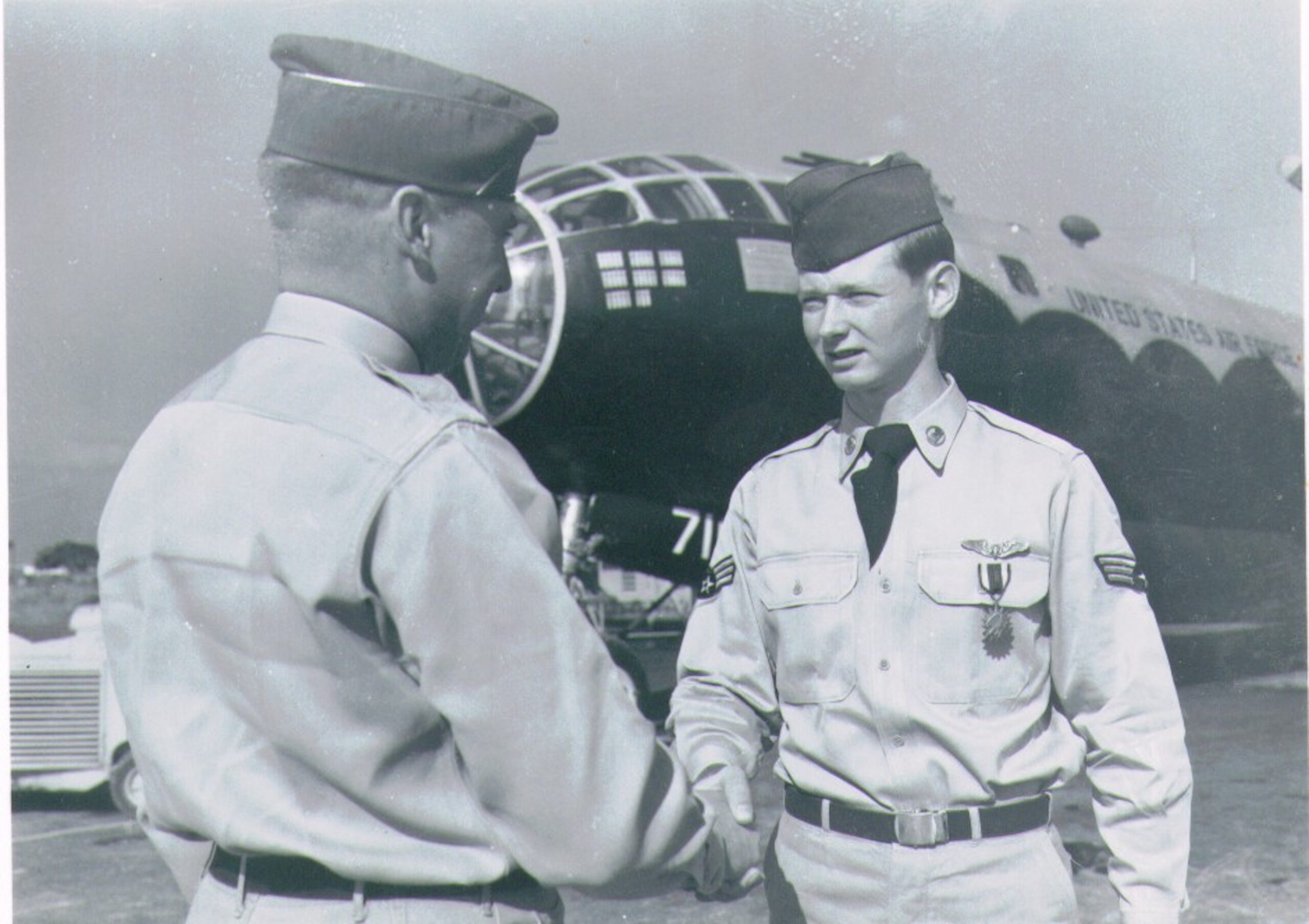
    Thomas Stevens’ first combat mission was memorable — and defied direct orders from the commander in chief. On Nov. 28, 1952, the 19-year-old airman was a tail gunner on a Boeing B-29 Superfortress on a nighttime bombing run over North Korea.

    After dropping its load of 20 500-pound bombs on a target along the Yalu River, the aircraft was caught in a strong wind and blown over the border into Manchuria. President Harry S. Truman had forbidden any U.S. Air Force planes from crossing into Chinese airspace to prevent further escalation of the Korean War.

    However, instead of a reprimand, the crews of the 307th Bombardment Group of the 13th Air Force were treated to breakfast. Running low on gas, the squadron diverted to Japan for refueling and a meal of fresh eggs — a welcome reprieve from the powdered eggs served in the unit’s mess at Kadena Air Base on Okinawa.

    “We were not supposed to be in Manchurian airspace,” Stevens, now 92 and living in Overland Park, Kansas, told Military Times. “It was something the officers laughed about, but we knew we needed to get out of there in a hurry.”

    He added with a chuckle, “We did enjoy the breakfast.”

    Stevens' crew at Randolph Field, San Antonio, Texas, before departing for Okinawa. Stevens is in the back row, first on the left. (Courtesy Thomas Stevens/USAF)

    Stevens is one of five veterans featured in “Gunners! B-29 Machine Gunners in the Korean War” by author and military analyst James Blackwell. The others include the late Philip Aaronson, who was shot down and spent 36 months in a POW camp, Dale Crist, Romaine Gregg and Jack Bernaciak, who flew the last B-29 combat mission in Korea. Blackwell conducted personal interviews and reviewed oral histories and military records of the five men in compiling this account of their service.

    “In many ways, Korea was the ‘Forgotten War,’” the author said. “This was my father’s generation. They were young children during the Dust Bowl and Great Depression. They were the ‘Silent Generation,’ as Time Magazine referred to them. I wanted to write something that reflected who they were and what they went through.”

    The new book examines a nearly forgotten chapter of the air war over Korea. With a limited number of jet bombers in service at the time, the Air Force reactivated the Superfortress to deliver payloads against enemy targets. Technologically superior only a few years earlier, the slow, four-engine heavy bombers were now relics in a supersonic jet war.

    “The B-29 against MiG-15s — it was like David and Goliath,” Stevens said. “It was no contest against those jet fighters.”

    Stevens flew 27 missions over North Korea and accidentally over China. From his position as a tail gunner, he had a bird’s-eye view of the results of his aircraft’s bombing runs. He could also view the fighting on the ground as Marines and soldiers slugged it out with North Korean and Chinese forces.

    “I could look down at what was happening,” he recalled. “I was glad I was not down there.”

    It was no joy ride in the air either. In addition to enemy jets, Superfortresses were susceptible to antiaircraft fire. The last few minutes to the target were always the toughest. Stevens remembered hearing the deafening sound of shrapnel from exploding flak hitting and occasionally piercing the aircraft’s fuselage.

    “It made a loud bang, like a car in a hailstorm,” he said. “There would be little dents and holes all over the aircraft. Flak hits varied. One time it was so close that it bumped me out of my seat. We had flak suits. I couldn’t wear mine because of the tight space in the tail, so I put mine on the floor to help protect me.”

    As a 19-year-old farm boy from Missouri, Stevens stated he was too young to be frightened by the danger he faced at the time. He couldn’t wear a parachute because of the confines of his firing position, so he just assumed he would go down with the plane if anything happened.

    “When I think back now, I say, ‘Did I really do that? Was I that crazy?’” he stated. “We had our orders and we followed them. It was an exciting time.”

    Stevens on the flight line at Kadena Air Base. Gunners shared duties for checking bombs before they were loaded. (Courtesy Thomas Stevens)

    Capable of delivering conventional and nuclear weapons, the B-29 was a modern marvel when it first flew in World War II. The high-altitude strategic bomber featured an analog computerized firing system that enabled one person to direct four remote-controlled machine gun turrets, known as “blisters” because of rounded Plexiglas covers. If a gunner was wounded, the fire-control officer could direct shooting at enemy planes at that position.

    Instead of firing by Kentucky windage, airmen sat in seats with a screen that showed the target and adjusted for speed, distance and other factors. When an enemy aircraft appeared in a circle of dots, the gunner flipped a switch.

    “It was an analog system that was essentially mechanical, so it didn’t have the speed of a modern computer,” Blackwell said. “It was designed for shooting down German and Japanese fighters. It was a little slow against jets, but still did a good job.”

    Blackwell began researching the book believing the slower Superfortress was overmatched by a faster Soviet Union jet flown in the Chinese and North Korean air forces. However, he found that premise to be not quite true.

    “I had heard the stories and came to this with the impression that B-29s were obsolete and outclassed in the Korean War,” he said. “After checking the statistics, I came to a different conclusion and changed my approach to writing the book.”

    While the propeller-driven heavy bombers were outpaced by enemy jets, they managed to hold their own in combat. Blackwell’s analysis of statistics showed the Superfortress was at a definite disadvantage in the early days of the Korean War when the Air Force was flying daytime missions using World War II formations. However, air command changed tactics and had the B-29s fly only at night while making single-file bombing runs. By the end of the war, B-29s had shot down 25 MiG-15s compared to 16 bombers lost to enemy jets.

    “The Air Force flipped the trend by adapting new techniques,” Blackwell said. “Ending daytime missions was critical because MiG-15s weren’t equipped for nighttime attacks. Flying single file on bombing runs also reduced losses. In addition, our gunnery training outpaced that of the enemy, enabling the B-29s to stay ahead of enemy jets in terms of kills.”

    Since Stevens flew only night missions, he rarely saw MiG-15s chasing his Superfortress. In fact, he did not use his two 50-caliber machine guns against a threat.

    “I never fired them in combat,” he said. “Only test-fired them at the start of missions.”

    Stevens and his wife, Barbara, pose with President Barack Obama at the White House on Veterans Day 2017. (Courtesy Thomas Stevens)

    After Korea, Stevens left the Air Force as a staff sergeant in 1955. He married and raised two sons while attending college on the GI Bill. He then joined Southwestern Bell Telephone Company, retiring as a district manager after 33 years.

    However, Stevens’ work was not done. In 2006, he helped build and dedicate the Korean War Veterans Memorial Park in his retirement community of Overland Park, Kansas. In 2010, he was elected to the national board of the Korean War Veterans Association, serving eventually as president. In that role, he championed the cause of Korean War vets in meetings with President Barack Obama and Vice President Mike Pence, as well as other government officials.

    Today, Stevens continues to speak to school groups and others about the “Forgotten War” and the sacrifices made by the men and women who served in the conflict. He is especially proud of his time in the Air Force and all he learned as an airman.

    “It was an invaluable experience that helped shape the rest of my life,” he said.

    Blackwell hopes his book inform readers of the debt they owe to Korean War veterans. On his speaking tour, he gives away free copies of his book to veterans so they “never forget” the people who came before them.

    “Korean War vets have the same needs and hurts as the veterans of Iraq and Afghanistan,” he said. “We need to sit and listen to what they have to say, too.”

  • WWII nurses deserve Congressional Gold Medal, lawmakers say

    WWII nurses deserve Congressional Gold Medal, lawmakers say

    This post was originally published on this site.


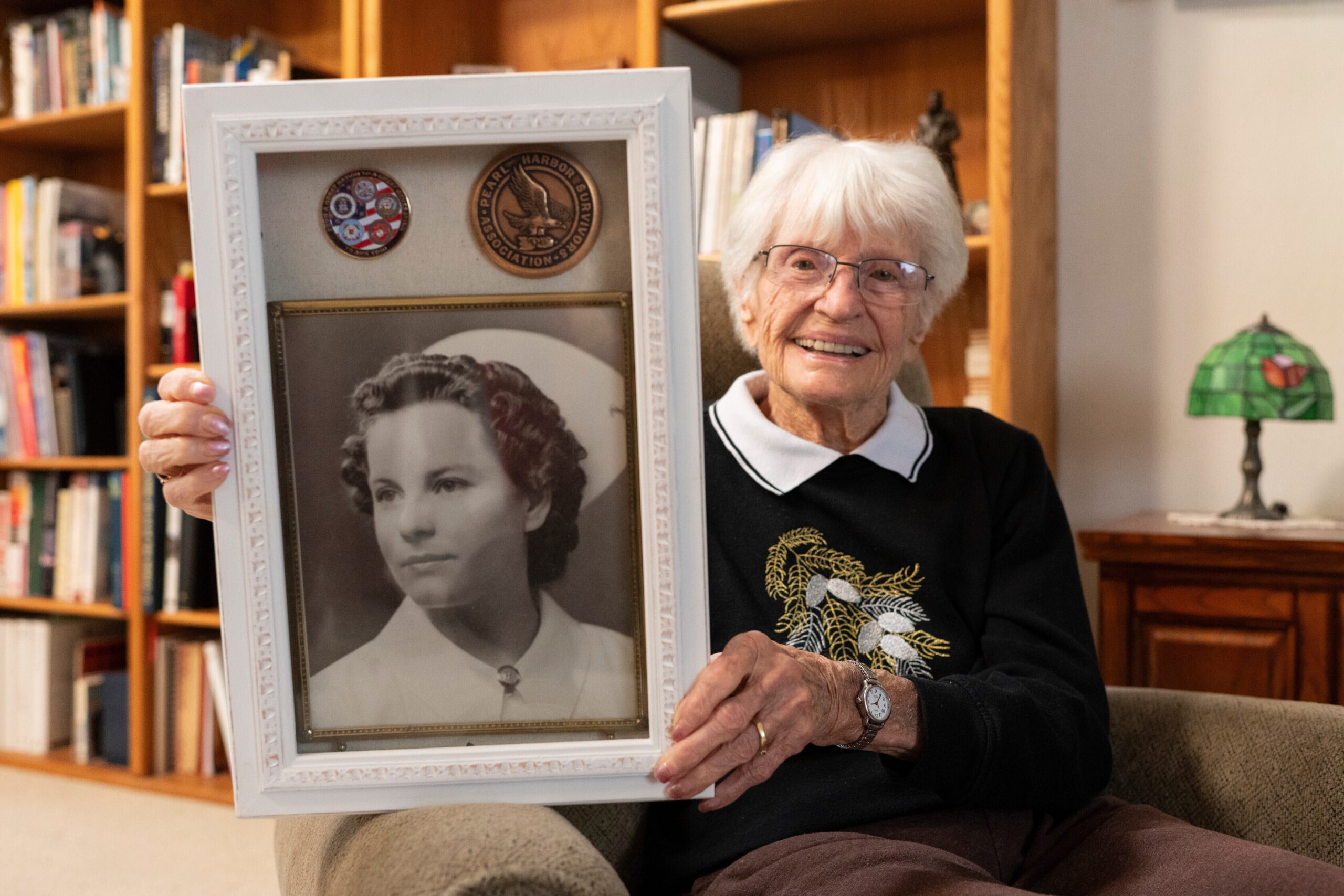
    DANVILLE, Calif. — At age 106, Alice Darrow can clearly recall her days as a nurse during World War II, part of a pioneering group that dodged bullets as they hauled packs full of medical supplies and treated the burns and gunshot wounds of troops.

    Some nurses were killed by enemy fire. Others spent years as prisoners of war. Most returned home to quiet lives, receiving little recognition.

    Darrow sat with patients, even after-hours. One of them had arrived at her hospital on California’s Mare Island with a bullet lodged in his heart. He was not expected to survive surgery, yet he would change her life.

    “To them, you’re everything because you’re taking care of them,” she said, sitting at her home in the San Francisco Bay Area town of Danville.

    A bullet struck his heart at Pearl Harbor. His widow just returned it.

    Eighty years after the war ended, a coalition of retired military nurses and others is campaigning to award one of the nation’s highest civilian honors, the Congressional Gold Medal, to all nurses who served in WWII. Other groups, such as the Women Airforce Service Pilots of WWII and the real-life Rosie the Riveters, have already received the honor.

    “The general public doesn’t often recognize, I think, the contribution that the nurses have made in pretty much every war,” said Patricia Upah, a retired colonel who served as an Army nurse in conflicts abroad, and whose late mother was also a Army nurse in the South Pacific in World War II.

    Only a handful, like Darrow, are still alive. The coalition knows of five World War II nurses who are still living — including Elsie Chin Yuen Seetoo, 107, who became the first Chinese American nurse to join the Army Nurse Corps. They fear time is running out to honor the trailblazers.

    “It’s high time we honor the nurses who stepped up and did their part to defend our freedom,” U.S. Sen. Tammy Baldwin, a Democrat from Wisconsin, said in a statement.

    Baldwin and U.S. Rep. Elise Stefanik, a New York Republican, have sponsored legislation to award the medal, but it faces steep odds. It needs two-thirds of each chamber — 67 cosponsors in the Senate and 290 in the House — and so far, the bills have eight and six cosponsors, respectively.

    This photo provided by Elaine Yuen shows her mother, Elsie Chin Yuen Seetoo, next to a photo of herself at an exhibit at the Army Historical Foundation in Arlington, Virginia, in May 2017. (Elaine Yuen via AP)

    Saving lives in the face of danger

    Before the war, there were fewer than 600 nurses with the U.S. Army and 1,700 with the U.S. Navy. By the end of the war, those numbers had ballooned to 59,000 in the Army and 14,000 in the Navy.

    The Congressional bills cite harrowing examples of bravery. Some nurses served on Navy hospital ships treating patients as the vessels came under fire. Sixty nurses landed off the coast of North Africa on Nov. 8, 1942, to set up shop and care for invading troops.

    “Without weapons, they waded ashore amid enemy sniper fire and ultimately took shelter in an abandoned civilian hospital,” the legislation states.

    The nurses saved lives. Fewer than 4% of U.S. soldiers in WWII who received medical care in the field or underwent evacuation died from wounds or disease, the legislation states.

    “They probably saw more infections. They probably saw more chemical casualties. Remember, they didn’t have disposable products, so they had to sterilize everything,” says Edward Yackel, a retired colonel and president of the Army Nurse Corps Association, of World War II nurses.

    “Without them,” he says, “we would not have the knowledge base we need now to fight the wars of today.”

    Some nurses endured harsh captivity. In 1942, nearly 80 military nurses were captured when the U.S. surrendered the Philippines to Japan. Held as prisoners of war, the women endured starvation rations and disease but continued to work until their liberation three years later.

    Nurses played outsized roles in 600 U.S. Army hospitals worldwide and 700 prisoner-of-war camps at military bases in the U.S., said Phoebe Pollitt, a retired nurse and professor of nursing at the University of North Carolina Greensboro. But their role has largely gone unrecognized.

    “Within even women’s history and health care history, nurses are kind of at the bottom of the barrel,” she said.

    Alice Darrow looks at pictures of her and her late husband, Dean Darrow, taken in July 1942. (Laure Andrillon/AP)

    Breaking color barriers

    The majority of military nurses were white, and those who were not often had to fight for the right to serve.

    In 1941, only 56 Black nurses were allowed into the U.S. Army. Japanese American applicants, whose families were incarcerated during the war, were not accepted into the Army Nurse Corps until 1943.

    Elsie Chin Yuen Seetoo was born in Stockton, California, but spent her teens China. She joined the Chinese Red Cross Medical Relief Corps in unoccupied China after fleeing Japanese forces in Hong Kong.

    She later applied to the U.S. Army Nurse Corps, but they said she had an obligation to serve her country — and that meant China.

    An indignant Chinese American medical officer fired off a letter on Seetoo’s behalf, stating that she was a U.S. citizen. She became the first Chinese American nurse to join the Army Nurse Corps, working in China and India before returning to the U.S.

    She already has a Congressional Gold Medal awarded to Chinese Americans for their service in the war despite the discrimination they faced.

    “We answered the call to duty when our country faced threats to our freedom,” she said in video recorded remarks at the 2020 ceremony.

    A love story

    Among the patients Darrow cared for was a young soldier wounded in Japan’s attack on Pearl Harbor. Before surgery to remove the bullet in his heart, he asked if she would go on a date with him, if he made it through.

    “I said, ‘Well sure, you can count on me,’” she says, and laughs. “I couldn’t say, ‘No, I don’t think you’re going to make it.’”

    Dean Darrow did survive and they did go out. The couple kept the 7.7 mm bullet. They married and raised four children. He died in 1991.

    In September, Alice Darrow took a cruise to Hawaii with her daughter and son-in-law, where she donated the bullet to the Pearl Harbor National Memorial so visitors from around the world could learn of its significance and the love story behind it.

    Darrow said she’s looking forward to seeing the bullet on display. The Congressional Gold Medal would be another treasure to look forward to.

    “It would be an honor,” she said.

    Terry Tang of AP’s race and ethnicity team contributed from Phoenix, Arizona.