Tag: Military

  • Robert Duvall, ‘Apocalypse Now’ actor and Army veteran, dead at 95

    Robert Duvall, ‘Apocalypse Now’ actor and Army veteran, dead at 95

    This post was originally published on this site.


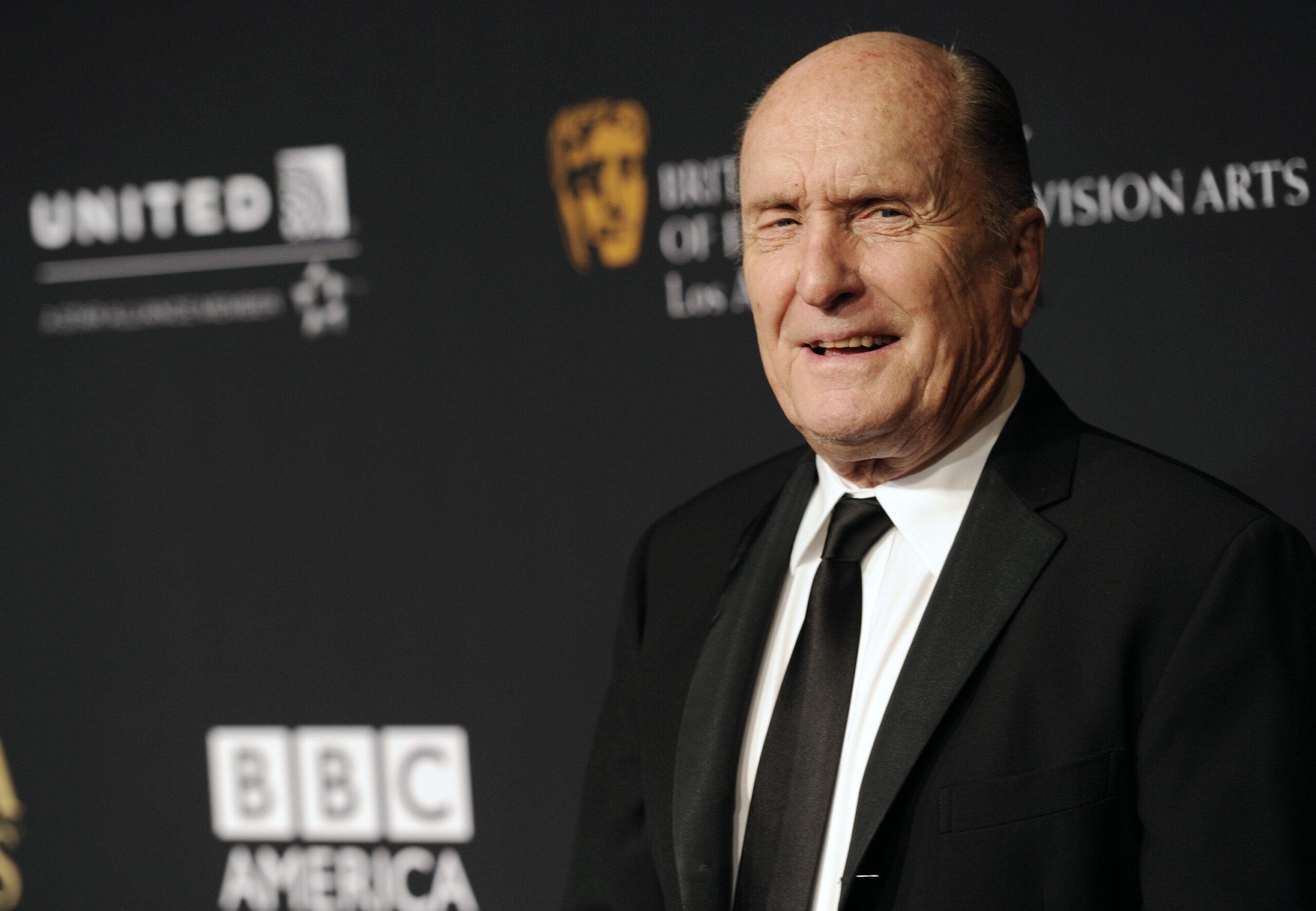
    LOS ANGELES — Robert Duvall, the Oscar-winning actor of matchless versatility and dedication whose classic roles included the intrepid consigliere of the first two “Godfather” movies and the over-the-hill country music singer in “Tender Mercies,” has died at age 95.

    Duvall died “peacefully” at his home Sunday in Middleburg, Virginia, according to an announcement from his publicist and from a statement posted on his Facebook page by his wife, Luciana Duvall.

    “To the world, he was an Academy Award-winning actor, a director, a storyteller. To me, he was simply everything,” Luciana Duvall wrote. “His passion for his craft was matched only by his deep love for characters, a great meal, and holding court. For each of his many roles, Bob gave everything to his characters and to the truth of the human spirit they represented.”

    The bald, wiry Duvall didn’t have leading man looks, but few “character actors” enjoyed such a long, rewarding and unpredictable career, in leading and supporting roles, from an itinerant preacher to Josef Stalin. Beginning with his 1962 film debut as Boo Radley, the reclusive neighbor in “To Kill a Mockingbird,” Duvall created a gallery of unforgettable portrayals. They earned him seven Academy Award nominations and the best actor prize for “Tender Mercies,” which came out in 1983. He also won four Golden Globes, including one for playing the philosophical cattle-drive boss in the 1989 miniseries “Lonesome Dove,” a role he often cited as his favorite.

    In 2005, Duvall was awarded a National Medal of Arts.

    He had been acting for some 20 years when “The Godfather,” released in 1972, established him as one of the most in-demand performers of Hollywood. He had made a previous film, “The Rain People,” with Francis Coppola, and the director chose him to play Tom Hagen in the mafia epic that featured Al Pacino and Marlon Brando among others. Duvall was a master of subtlety as an Irishman among Italians, rarely at the center of a scene, but often listening and advising in the background, an irreplaceable thread through the saga of the Corleone crime family.

    “Stars and Italians alike depend on his efficiency, his tidying up around their grand gestures, his being the perfect shortstop on a team of personality sluggers,” wrote the critic David Thomson. “Was there ever a role better designed for its actor than that of Tom Hagen in both parts of ‘The Godfather?’”

    In another Coppola film, “Apocalypse Now,” Duvall was wildly out front, the embodiment of deranged masculinity as Lieutenant Colonel Bill Kilgore, who with equal vigor enjoyed surfing and bombing raids on the Viet Cong. Duvall required few takes for one of the most famous passages in movie history, barked out on the battlefield by a bare-chested, cavalry-hatted Kilgore: “I love the smell of napalm in the morning. You know, one time we had a hill bombed, for 12 hours. When it was all over, I walked up. We didn’t find one of ‘em, not one stinkin’ dink body.

    “The smell, you know that gasoline smell, the whole hill. Smelled like — victory.”

    Coppola once commented about Duvall: “Actors click into character at different times — the first week, third week. Bobby’s hot after one or two takes.”

    Honored, but still hungry

    He was Oscar-nominated as supporting actor for “The Godfather” and “Apocalypse Now,” but a dispute over money led him to turn down the third Godfather epic, a loss deeply felt by critics, fans and “Godfather” colleagues. Duvall would complain publicly about being offered less than his co-stars.

    Fellow actors marveled at Duvall’s studious research and planning, and his coiled energy. Michael Caine, who co-starred with him in the 2003 “Secondhand Lions,” once told The Associated Press: “Before a big scene, Bobby just sits there, absolutely quiet; you know when not to talk to him.” Anyone who disturbed him would suffer the well-known Duvall temper, famously on display during the filming of the John Wayne Western “True Grit,” when Duvall seethed at director Henry Hathaway’s advice to “tense up” before a scene.

    Duvall was awarded an Oscar in 1984 for his leading role as the troubled singer and songwriter Mac Sledge in “Tender Mercies,” a prize he accepted while clad in a cowboy tuxedo with Western tie. In 1998, he was nominated for best actor in “The Apostle,” a drama about a wayward Southern evangelist which he wrote, directed, starred in, produced and largely financed. With customary thoroughness, he visited dozens of country churches and spent 12 years writing the script and trying to get it made.

    Among other notable roles: the outlaw gang leader who gets ambushed by John Wayne in “True Grit”; Jesse James in “The Great Northfield Minnesota Raid”; the pious and beleaguered Frank Burns in “M-A-S-H”; the TV hatchet man in “Network”; Dr. Watson in “The Seven-Per-Cent Solution”; and the sadistic father in “The Great Santini.”

    “When I was doing ‘Colors’ in 1988 with Sean Penn, someone asked me how I do it all these years, keep it fresh. Well, if you don’t overwork, have some hobbies, you can do it and stay hungry even if you’re not really hungry,” Duvall told The Associated Press in 1990.

    In his mid-80s, he received a supporting Oscar nomination as the title character of the 2014 release “The Judge,” in which he is accused of causing a death in a hit-and-run accident. More recent films included “Widows” and “12 Mighty Orphans.”

    Ungifted in school, gifted on stage

    Robert Selden Duvall grew up in the Navy towns of Annapolis and the San Diego area, where he was born in 1931. He spent time in other cities as his father, who rose to be an admiral, was assigned to various duties.

    The boy’s experience helped in his adult profession as he learned the nuances of regional speech and observed the psyche of military men, which he would portray in several films.

    Duvall reportedly used his Navy officer father as the basis for his portrayal of the explosive militarist in “The Great Santini,” based on the Pat Conroy novel. He commented in 2003: “My dad was a gentleman but a seether, a stern, blustery guy, and away a lot of the time.” Bobby took after his mother, an amateur actress, in playing a guitar and performing. He was a wrestler like his father and enjoyed besting kids older than himself.

    He lacked the concentration for schoolwork and nearly flunked out of Principia College in Elsah, Illinois. His despairing parents decided he needed something to keep him in college so he wouldn’t be drafted for the Korean War. “They recommended acting as an expedient thing to get through,” he recalled. “I’m glad they did.” He flourished in drama classes.

    “Way back when I was in college,” Duvall told the AP in 1990, “there was a wonderful man named Frank Parker, who had been a dancer in World War I. We did a full-length mime play and I played a Harlequin clown. I really liked that.

    “Then, I played an older guy in ‘All My Sons,’ and at one point I had this emotional moment, where this emotion was pouring out. Parker said at that moment he didn’t think acting can be carried any further than that. And this guy was a very critical guy. So I thought, at that moment at least, this is what I wanted to do.”

    After two years in the Army, he used the G.I. Bill to finance his studies at the Neighborhood Playhouse in New York, hanging out with such other young hopefuls as Robert Morse, Gene Hackman and Dustin Hoffman. After a one-night performance in “A View From the Bridge,” Duvall began getting offers for work in TV series, among them “The Naked City” and “The Defenders.”

    Between his high-paying jobs in major productions, Duvall devoted himself to directing personal projects: a documentary about a prairie family, “We’re Not the Jet Set”; a film about gypsies, “Angelo, My Love”; and “Assassination Tango,” in which he also starred.

    Duvall had been a tango dancer since seeing the musical “Tango Argentina” in the 1980s and visited in Argentina dozens of times to study the dance and the culture. The result was the 2003 release about a hit man with a passion for tango.

    His co-star was Luciana Pedraza, 42 years his junior, whom he married in 2005. Duvall’s three previous marriages — to Barbara Benjamin, Gail Youngs and Sharon Brophy — ended in divorce.

    Former Associated Press Hollywood correspondent Bob Thomas, who died in 2014, was the primary writer of this obituary
  • How chocolate became one of the US military’s most important WWII rations

    This post was originally published on this site.


    In the early American military, specifically the Continental Army during the Revolutionary War, food, logistics, medicine and morale were inseparable. Chocolate and cocoa fit that world neatly. They were calorie-dense, easy to transport and more shelf-stable than most comforts soldiers could count on.

    By the middle years of the Revolutionary War, chocolate was part of the ecosystem of soldiering, consumed as a hot beverage and valued for energy when supply lines snapped, or pay fell behind. The Smithsonian Institution notes that Americans have been consuming chocolate since colonial times and points to the Continental Army’s use of it during the Revolution, as detailed in its examination of chocolate as a fighting food.

    Even then, chocolate’s value was not only nutritional. It was psychological, a reminder that life extended beyond cold marches and unappetizing food.

    That psychological dimension became unavoidable once the U.S. military entered World War II and attempted to feed a global force at industrial scale. The Army Quartermaster Corps needed food that could survive every environment, fit inside a pocket and perform predictably under stress, priorities documented by the Smithsonian’s research on wartime ration development. Chocolate was an obvious candidate, but the version soldiers wanted and the version logisticians needed were not the same thing.

    In 1937, the Army approached the Hershey Company with a blunt request: Create a bar that was high in calories, compact, heat resistant and intentionally unpleasant. The goal was to ensure troops did not eat an emergency ration out of boredom. The result was Field Ration D, which the Hershey Community Archives describes as a purpose-built survival food, rather than a morale item.

    The bar’s reputation was earned. It was dense, bitter and designed to be eaten slowly, delivering roughly 600 calories per serving. Army specifications required that it taste only “a little better than a boiled potato.” Soldiers did not need to enjoy it. They needed it to exist when everything else failed.

    Then the Pacific happened.

    Heat and humidity erased margins for error. Even though rations became liabilities, the Army’s needs shifted from merely heat resistant to reliably heat proof. In 1943, Hershey developed the Tropical Chocolate Bar, designed to withstand extreme temperatures while improving flavor to be more palatable.

    World War II forced planners to acknowledge a simple truth: a soldier’s willingness to eat matters. While emergency rations like the D ration were intentionally unpleasant to ensure they were saved for survival, chocolate in other forms served a different role, offering quick energy and a brief sense of normalcy alongside rations designed strictly for endurance.

    The same tension continues to shape modern ration design, driven by weight limits, packaging constraints and feedback from service members.

    Chocolate’s rise from colonial drink to engineered survival ration mirrors the evolution of the U.S. military itself. Early America used it because it was available and useful, while World War II transformed it into a system defined by specifications, testing and mass production. Across centuries and conflicts, the lesson remained consistent: calories keep you moving, and morale helps you keep going.

  • How the Civil War inspired this iconic poet’s classic Christmas song

    How the Civil War inspired this iconic poet’s classic Christmas song

    This post was originally published on this site.


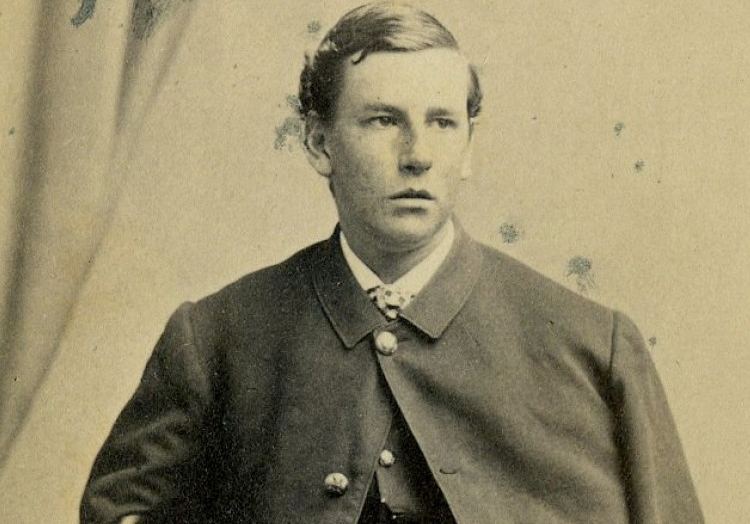
    Charles Appleton Longfellow was the oldest child of American poet and writer Henry Wadsworth Longfellow.

    A dramatized version of Charley’s story was recently made into the movie “I Heard the Bells,” but the true story behind the origins of the Christmastime poem-turned-song is just as, if not more, interesting.

    Henry Wadsworth Longfellow vehemently objected to his son’s desire to enlist in the Union Army. But in 1863, at the age of 18, Charley ran away from home and enlisted in the 1st Massachusetts Artillery.

    He informed his father of his decision in a letter mailed from Portland, Maine.

    “I have tried hard to resist the temptation of going without your leave but I cannot any longer,” he wrote. “I feel it to be my first duty to do what I can for my country and I would willingly lay down my life for it if it would be of any good.”

    Within two weeks of his arrival, likely because of his famous father’s connections, Longfellow was commissioned a 2nd Lieutenant in the 1st Massachusetts Cavalry.

    On Nov. 27, 1863, while involved in a skirmish during a battle of the Mine Run Campaign, Charley was shot through the left shoulder. The bullet exited under his right shoulder blade and skimmed his spine.

    The wound was considered grave, and the army surgeon told the elder Longfellow that “paralysis might ensue” for his son.

    On Christmas day 1863, as his son recovered from his wounds, Henry penned the poem “I Heard the Bells on Christmas Day,” with many references to the Civil War.

    The cannon thundered in the South

    And with the sound    

    The carols drowned

    Of peace on earth, good-will to men!

    It was as if an earthquake rent

    The hearth-stones of a continent,    

    And made forlorn    

    The households born

    Of peace on earth, good-will to men!

    And in despair I bowed my head;

    “There is no peace on earth,” I said;    

    “For hate is strong,    

    And mocks the song 

    Of peace on earth, good-will to men!”

    Then pealed the bells more loud and deep:

    “God is not dead, nor doth He sleep;    

    The Wrong shall fail,    

    The Right prevail,

    With peace on earth, good-will to men

    Henry Wadsworth Longfellow

    Charley would survive his wounds, but did not return to the war.

    He kept in touch with friends made during his brief career as a soldier, receiving letters and photographs from them and creating a scrapbook of newspaper articles relating to his unit’s role in the war.

    He went on to become a world traveler and author.

  • Can Ken Burns revitalize American patriotism?

    Can Ken Burns revitalize American patriotism?

    This post was originally published on this site.


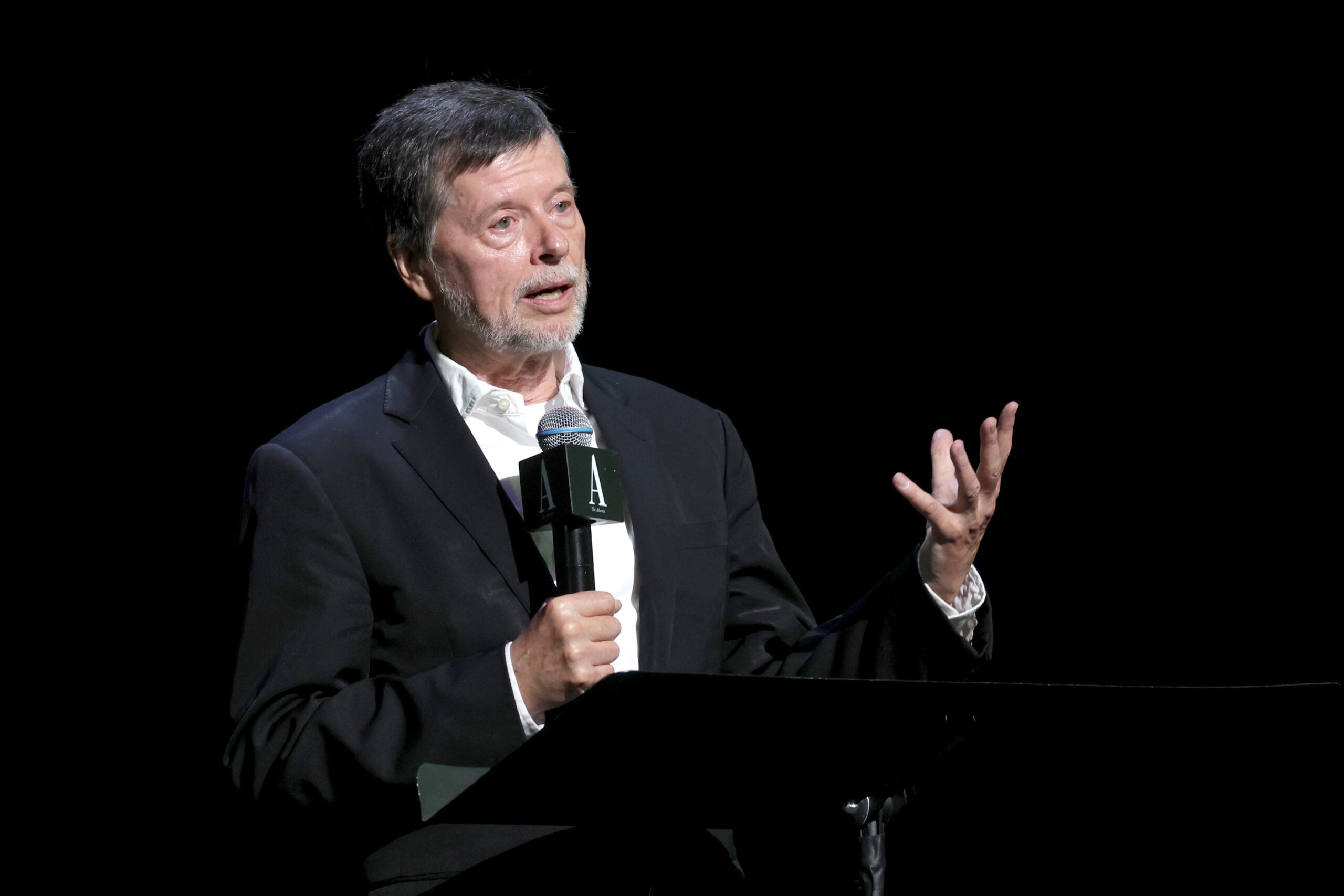
    Ken Burns has had a busy year.

    The famed documentary filmmaker and his co-producers, Sarah Botstein and David Schmidt, have stumped across the United States, speaking, gently of course, about their upcoming docuseries, “American Revolution,” which premieres Sunday on PBS.

    During their six-month promotional tour across 32 cities and 17 states, the trio has consistently delivered a nonpartisan, hopeful message to Americans.

    “We think always in sort of Chicken Little terms,” Burns told an audience during a panel event at Mount Vernon, Virginia, on Oct. 29, “that our time must be the very, very worst.”

    “You can have at least the possible reassurance that things were really divided back then. It was a civil war,” he said of the American Revolution. “Examining the origin story provides you with a kind of renewal and a fresh understanding.”

    Burns has endeavored to provide such reassurances. The director and his team have spoken to a spectrum of media over the course of the year, from podcasters like Theo Von and Joe Rogan to MSNBC and The New York Times.

    Burns spent nearly two hours on Von’s show and three on Rogan’s, with one listener noting in the latter’s YouTube comment section, “We need an annual Ken Burns discussion, if not more. This is cathartic.”

    “We’re trying to reach as many people as we can,” Schmidt told Military Times in a recent interview. “If anybody wants to talk to us, we’re really happy to speak to them.”

    The makings of liberty

    For Burns and his team, the decision to make a documentary on the American Revolution was “spontaneous,” according to the director.

    To put it into context, the year was 2015, President Barack Obama still had 13 months left in his presidency and “nobody was talking 250” — America’s semiquincentennial anniversary in 2026 — Burns told the audience at Mount Vernon.

    “But I was looking at this map that we had of the Ia Drang Valley, in the central highlands [of Vietnam], and I just said, ‘That could be the British moving west on Long Island towards American positions in Brooklyn,” Burns recalled at the Mount Vernon panel. “I just went, ‘We could do it.’”

    With the absence of archival footage for the series, the filmmakers had to get creative — shooting reenactors throughout the documentary. (PBS)

    The filmmakers, however, had to get creative. Without photographs, B-roll or archival footage, the trio resorted to maps, diaries and reenactors to tell the epic tale of Great Britain’s 13 North American colonies’ fight for independence.

    “We went out and filmed with reenactors,” Schmidt said of the filmmaking process, which also included commissioning watercolors from a group called Wood Ronsaville Harlin.

    “Probably the most expensive line item in our budget is re-creating North America as faithfully as we could in a map,” he noted. “That was challenging, but also really fun. Waterways across America have changed since the 18th century. We had to erase the Erie Canal. Stuff like that you just don’t think of.”

    Despite such challenges, according to Schmidt, the lack of visual primary sources presented opportunities to find “new ways to solve these problems.”

    Over the course of several years, the trio shot original footage of nearly 100 locations within the original 13 colonies, as well as in London and the English countryside.

    For 10 years — and to the tune of more than $30 million — Burns and his team built up a vast archive of knowledge.

    “Part of the reason it was so exciting to make [this film] is that we got to spend a decade learning what actually happened and finding out the way to artistically shape that into a 12-hour film to share with the American people,” Schmidt shared.

    “We aren’t trying to dispel myths. We’re not mythbusters out there poking holes in your understanding of the American Revolution. In fact, what we’re doing is taking what you already know and rebooting it,” he said. “It’s going to supplement what you already know and make it make more sense.”

    Heart of the story

    The six-part series follows more than just the well-known characters of the American Revolution.

    While it includes rank-and-file Continental soldiers, militiamen and American Loyalists, the series also delves into the oft-unheard stories of Indigenous soldiers and civilians, enslaved and free African Americans, German soldiers in the British service, French and Spanish allies and an array of civilians living in North America.

    The documentary highlights a war that not only touched the lives of those living within the 13 colonies, but also engaged and inspired millions of people in North America and beyond.

    Over the course of several years, the trio shot original footage of nearly 100 locations — in every season — within the original 13 colonies, as well as in London and the English countryside. (PBS)

    “The war begins in Lexington,” Schmidt said, “but it spreads all throughout — not just the original 13 colonies — but over the mountains to the Ohio River, along the Gulf Coast, even out to the Mississippi River. It’s also in the Caribbean. It’s fought off the coast of England. It’s fought in the Atlantic Ocean. It’s fought along the coast of France, along the coast of Africa, even in the Indian subcontinent — and that’s just the war.

    “The ideas just grow and grow and inspire revolutions — and have inspired revolutions for the past 250 years all throughout the world. Ho Chi Minh, when he declared Vietnamese independence, had two United States OSS officers standing next to him and was quoting Thomas Jefferson in Vietnamese.”

    Despite these ideas that have shaped the world since 1776 (many argue that date is even earlier), Schmidt recalls how surprised he was when learning about the original aims of the conflict.

    The now-lauded notions of civilian rule and non-partisanship that created the republic that we still live under were not, says Schmidt, “on the table at the start.”

    “Those weren’t war objectives,” he continued. “On April 19, 1775, they became necessary to win the war. But they were kind of outcomes of the war, rather than goals. What they were really trying to do at the start was to liberate Boston, to get a redress of grievances and to bring things back to the way they were under the British Empire. But in order to win the war, they had to involve all sorts of American people who otherwise might not get along.

    “Coalition building made it a war about liberty. It made it this fight for a union. Then in order to win the war, they had to involve foreign powers. The French came in. The Spanish came in as the allies of the French. The Dutch declared war on the British,” ultimately creating a coalition war.

    Former Commandant of the Marine Corps Gen. Joseph Dunford, who spoke alongside Burns at the panel at Mount Vernon, echoed Schmidt.

    “I would argue — and I think it’d be tough to argue against it — that our strategic center of gravity as a country comes from allies and partners,” Dunford said. “There’s almost nothing that we have to deal with, certainly in the 21st century, where coherent collective action isn’t required to address a problem.”

    That coalition is what makes up the heart of the documentary. Nearly 150 characters are highlighted in the series, with their stories read by a staggering 61 different voice actors, including: Kenneth Branagh, Josh Brolin, Jeff Daniels, Morgan Freeman, Paul Giamatti, Domhnall Gleeson, Tom Hanks, Ethan Hawke, Samuel L. Jackson, Michael Keaton, Damian Lewis, Laura Linney, Edward Norton, Mandy Patinkin and Meryl Streep, among many others.

    The military story itself features 36 battle sequences that range from the well-known, like Bunker Hill and Yorktown, to the more obscure, while showing that the American Revolution was a test of logistics and strategy as much as it was a war of ideals.

    Washington, according to Schmidt, understood the “arithmetic of this war” — that is, the importance of not losing it all “in one motion.” (PBS)

    George Washington is, naturally, also front and center in the series — a point that Burns noted while speaking at the historic home of America’s first president.

    “He’s our guy, and that’s pretty amazing. Look, we do not soft pedal the flaws. Not only are there really bad tactical mistakes: there’s the rashness of riding out on the battlefield, not just as Princeton but at Monmouth and Kip’s Bay; and he owns hundreds of human beings. You can’t square that circle. But we are so lucky [to have had him], and we’re here because of him.”

    Civilians, not subjects

    One point that Burns and his team spend considerable time exploring is the notion of citizenship.

    “I’m really still overwhelmed by some of the obvious things, that for the first time, we were creating citizens, not subjects under authoritarian rule,” says Burns.

    “Thomas Jefferson says, ‘All experience has shown that mankind are more disposed to suffer while evils are sufferable.’ That just means that for most of human history, people have been under authoritarian rule and they’ve accepted it. They’ve acquiesced that those evils are sufferable. Essentially this [American] ‘project’ was to say no to that.”

    The war, however violent and bloody it was (which Burns succeeds in displaying) was the vehicle for that freedom.

    “I’m really proud to have worked on this film. I’m prouder to be a citizen of a country that invented that idea,” he added.

    Burns ended the panel with a potent mix of patriotism grounded in history, closing with one of his favorite quotes from a Hessian soldier, Johann Ewald, who served under the British during the war.

    “Who would have thought 100 years ago that out of this multitude of rabble would arise a people who could defy kings?” Ewald once quipped.

    “That to me,” says Burns, “is the whole essence of the project. The right to defy kings.”

  • ‘Gunners!’ revives forgotten chapter of air war over Korea

    ‘Gunners!’ revives forgotten chapter of air war over Korea

    This post was originally published on this site.


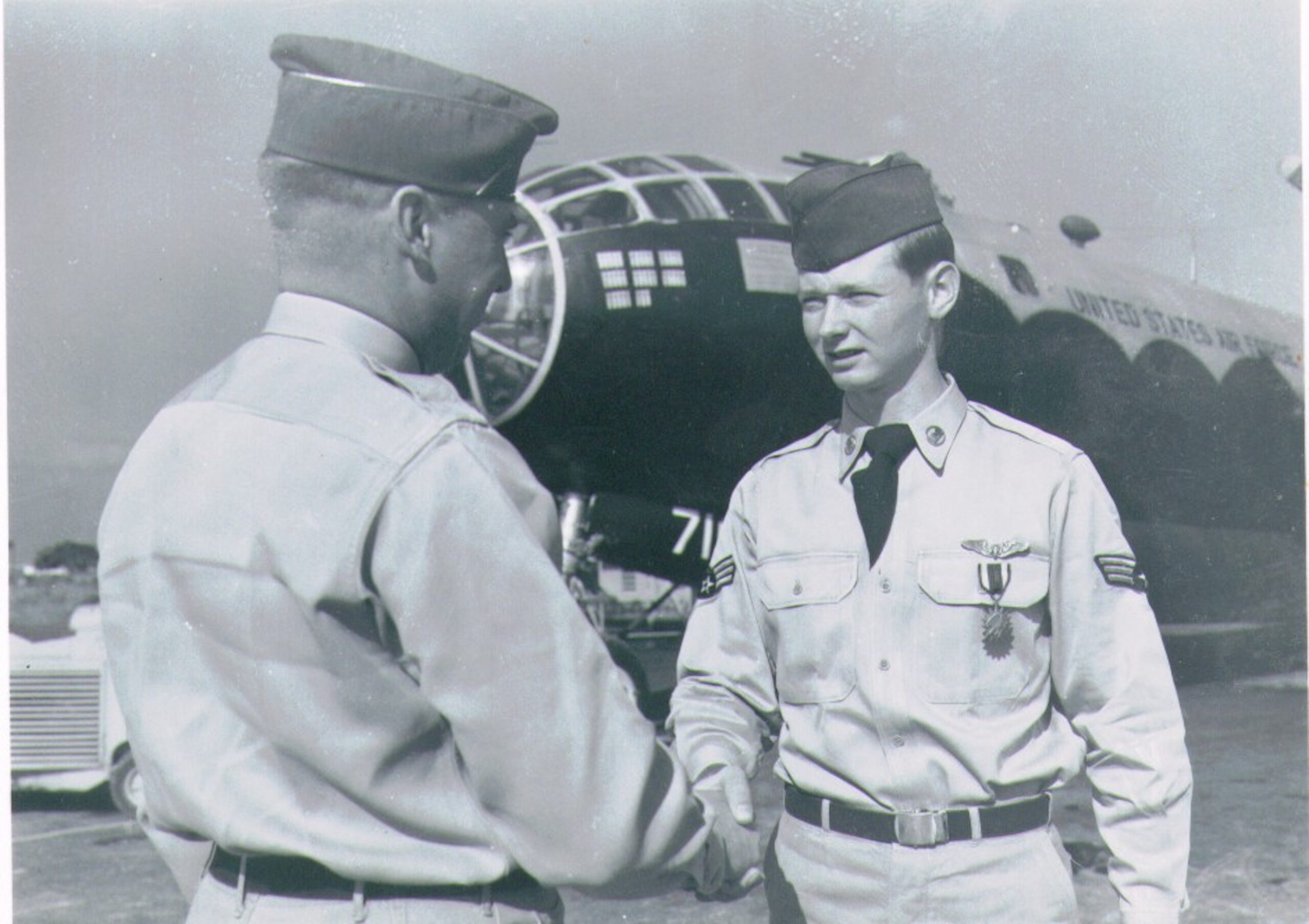
    Thomas Stevens’ first combat mission was memorable — and defied direct orders from the commander in chief. On Nov. 28, 1952, the 19-year-old airman was a tail gunner on a Boeing B-29 Superfortress on a nighttime bombing run over North Korea.

    After dropping its load of 20 500-pound bombs on a target along the Yalu River, the aircraft was caught in a strong wind and blown over the border into Manchuria. President Harry S. Truman had forbidden any U.S. Air Force planes from crossing into Chinese airspace to prevent further escalation of the Korean War.

    However, instead of a reprimand, the crews of the 307th Bombardment Group of the 13th Air Force were treated to breakfast. Running low on gas, the squadron diverted to Japan for refueling and a meal of fresh eggs — a welcome reprieve from the powdered eggs served in the unit’s mess at Kadena Air Base on Okinawa.

    “We were not supposed to be in Manchurian airspace,” Stevens, now 92 and living in Overland Park, Kansas, told Military Times. “It was something the officers laughed about, but we knew we needed to get out of there in a hurry.”

    He added with a chuckle, “We did enjoy the breakfast.”

    Stevens' crew at Randolph Field, San Antonio, Texas, before departing for Okinawa. Stevens is in the back row, first on the left. (Courtesy Thomas Stevens/USAF)

    Stevens is one of five veterans featured in “Gunners! B-29 Machine Gunners in the Korean War” by author and military analyst James Blackwell. The others include the late Philip Aaronson, who was shot down and spent 36 months in a POW camp, Dale Crist, Romaine Gregg and Jack Bernaciak, who flew the last B-29 combat mission in Korea. Blackwell conducted personal interviews and reviewed oral histories and military records of the five men in compiling this account of their service.

    “In many ways, Korea was the ‘Forgotten War,’” the author said. “This was my father’s generation. They were young children during the Dust Bowl and Great Depression. They were the ‘Silent Generation,’ as Time Magazine referred to them. I wanted to write something that reflected who they were and what they went through.”

    The new book examines a nearly forgotten chapter of the air war over Korea. With a limited number of jet bombers in service at the time, the Air Force reactivated the Superfortress to deliver payloads against enemy targets. Technologically superior only a few years earlier, the slow, four-engine heavy bombers were now relics in a supersonic jet war.

    “The B-29 against MiG-15s — it was like David and Goliath,” Stevens said. “It was no contest against those jet fighters.”

    Stevens flew 27 missions over North Korea and accidentally over China. From his position as a tail gunner, he had a bird’s-eye view of the results of his aircraft’s bombing runs. He could also view the fighting on the ground as Marines and soldiers slugged it out with North Korean and Chinese forces.

    “I could look down at what was happening,” he recalled. “I was glad I was not down there.”

    It was no joy ride in the air either. In addition to enemy jets, Superfortresses were susceptible to antiaircraft fire. The last few minutes to the target were always the toughest. Stevens remembered hearing the deafening sound of shrapnel from exploding flak hitting and occasionally piercing the aircraft’s fuselage.

    “It made a loud bang, like a car in a hailstorm,” he said. “There would be little dents and holes all over the aircraft. Flak hits varied. One time it was so close that it bumped me out of my seat. We had flak suits. I couldn’t wear mine because of the tight space in the tail, so I put mine on the floor to help protect me.”

    As a 19-year-old farm boy from Missouri, Stevens stated he was too young to be frightened by the danger he faced at the time. He couldn’t wear a parachute because of the confines of his firing position, so he just assumed he would go down with the plane if anything happened.

    “When I think back now, I say, ‘Did I really do that? Was I that crazy?’” he stated. “We had our orders and we followed them. It was an exciting time.”

    Stevens on the flight line at Kadena Air Base. Gunners shared duties for checking bombs before they were loaded. (Courtesy Thomas Stevens)

    Capable of delivering conventional and nuclear weapons, the B-29 was a modern marvel when it first flew in World War II. The high-altitude strategic bomber featured an analog computerized firing system that enabled one person to direct four remote-controlled machine gun turrets, known as “blisters” because of rounded Plexiglas covers. If a gunner was wounded, the fire-control officer could direct shooting at enemy planes at that position.

    Instead of firing by Kentucky windage, airmen sat in seats with a screen that showed the target and adjusted for speed, distance and other factors. When an enemy aircraft appeared in a circle of dots, the gunner flipped a switch.

    “It was an analog system that was essentially mechanical, so it didn’t have the speed of a modern computer,” Blackwell said. “It was designed for shooting down German and Japanese fighters. It was a little slow against jets, but still did a good job.”

    Blackwell began researching the book believing the slower Superfortress was overmatched by a faster Soviet Union jet flown in the Chinese and North Korean air forces. However, he found that premise to be not quite true.

    “I had heard the stories and came to this with the impression that B-29s were obsolete and outclassed in the Korean War,” he said. “After checking the statistics, I came to a different conclusion and changed my approach to writing the book.”

    While the propeller-driven heavy bombers were outpaced by enemy jets, they managed to hold their own in combat. Blackwell’s analysis of statistics showed the Superfortress was at a definite disadvantage in the early days of the Korean War when the Air Force was flying daytime missions using World War II formations. However, air command changed tactics and had the B-29s fly only at night while making single-file bombing runs. By the end of the war, B-29s had shot down 25 MiG-15s compared to 16 bombers lost to enemy jets.

    “The Air Force flipped the trend by adapting new techniques,” Blackwell said. “Ending daytime missions was critical because MiG-15s weren’t equipped for nighttime attacks. Flying single file on bombing runs also reduced losses. In addition, our gunnery training outpaced that of the enemy, enabling the B-29s to stay ahead of enemy jets in terms of kills.”

    Since Stevens flew only night missions, he rarely saw MiG-15s chasing his Superfortress. In fact, he did not use his two 50-caliber machine guns against a threat.

    “I never fired them in combat,” he said. “Only test-fired them at the start of missions.”

    Stevens and his wife, Barbara, pose with President Barack Obama at the White House on Veterans Day 2017. (Courtesy Thomas Stevens)

    After Korea, Stevens left the Air Force as a staff sergeant in 1955. He married and raised two sons while attending college on the GI Bill. He then joined Southwestern Bell Telephone Company, retiring as a district manager after 33 years.

    However, Stevens’ work was not done. In 2006, he helped build and dedicate the Korean War Veterans Memorial Park in his retirement community of Overland Park, Kansas. In 2010, he was elected to the national board of the Korean War Veterans Association, serving eventually as president. In that role, he championed the cause of Korean War vets in meetings with President Barack Obama and Vice President Mike Pence, as well as other government officials.

    Today, Stevens continues to speak to school groups and others about the “Forgotten War” and the sacrifices made by the men and women who served in the conflict. He is especially proud of his time in the Air Force and all he learned as an airman.

    “It was an invaluable experience that helped shape the rest of my life,” he said.

    Blackwell hopes his book inform readers of the debt they owe to Korean War veterans. On his speaking tour, he gives away free copies of his book to veterans so they “never forget” the people who came before them.

    “Korean War vets have the same needs and hurts as the veterans of Iraq and Afghanistan,” he said. “We need to sit and listen to what they have to say, too.”

  • WWII nurses deserve Congressional Gold Medal, lawmakers say

    WWII nurses deserve Congressional Gold Medal, lawmakers say

    This post was originally published on this site.


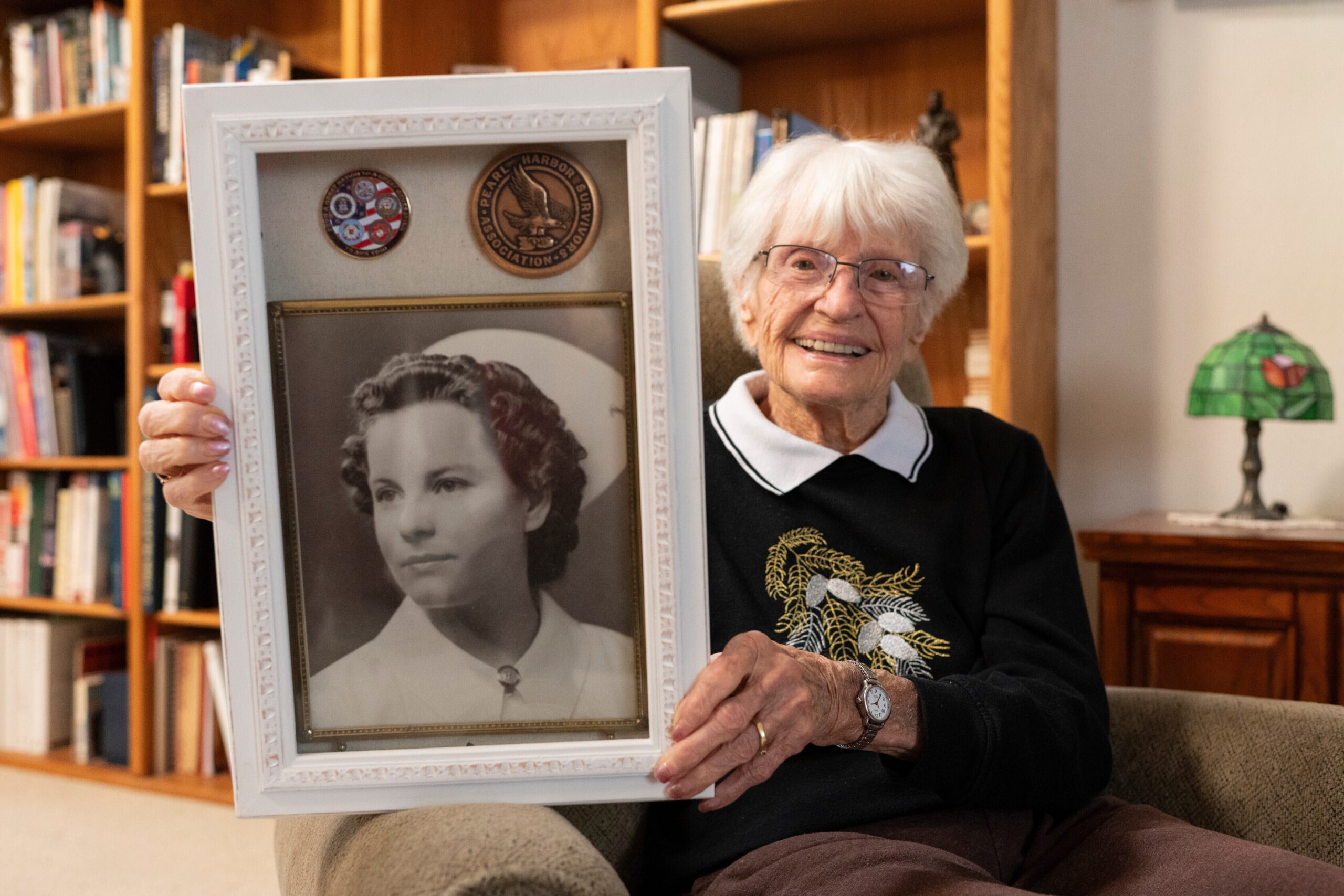
    DANVILLE, Calif. — At age 106, Alice Darrow can clearly recall her days as a nurse during World War II, part of a pioneering group that dodged bullets as they hauled packs full of medical supplies and treated the burns and gunshot wounds of troops.

    Some nurses were killed by enemy fire. Others spent years as prisoners of war. Most returned home to quiet lives, receiving little recognition.

    Darrow sat with patients, even after-hours. One of them had arrived at her hospital on California’s Mare Island with a bullet lodged in his heart. He was not expected to survive surgery, yet he would change her life.

    “To them, you’re everything because you’re taking care of them,” she said, sitting at her home in the San Francisco Bay Area town of Danville.

    A bullet struck his heart at Pearl Harbor. His widow just returned it.

    Eighty years after the war ended, a coalition of retired military nurses and others is campaigning to award one of the nation’s highest civilian honors, the Congressional Gold Medal, to all nurses who served in WWII. Other groups, such as the Women Airforce Service Pilots of WWII and the real-life Rosie the Riveters, have already received the honor.

    “The general public doesn’t often recognize, I think, the contribution that the nurses have made in pretty much every war,” said Patricia Upah, a retired colonel who served as an Army nurse in conflicts abroad, and whose late mother was also a Army nurse in the South Pacific in World War II.

    Only a handful, like Darrow, are still alive. The coalition knows of five World War II nurses who are still living — including Elsie Chin Yuen Seetoo, 107, who became the first Chinese American nurse to join the Army Nurse Corps. They fear time is running out to honor the trailblazers.

    “It’s high time we honor the nurses who stepped up and did their part to defend our freedom,” U.S. Sen. Tammy Baldwin, a Democrat from Wisconsin, said in a statement.

    Baldwin and U.S. Rep. Elise Stefanik, a New York Republican, have sponsored legislation to award the medal, but it faces steep odds. It needs two-thirds of each chamber — 67 cosponsors in the Senate and 290 in the House — and so far, the bills have eight and six cosponsors, respectively.

    This photo provided by Elaine Yuen shows her mother, Elsie Chin Yuen Seetoo, next to a photo of herself at an exhibit at the Army Historical Foundation in Arlington, Virginia, in May 2017. (Elaine Yuen via AP)

    Saving lives in the face of danger

    Before the war, there were fewer than 600 nurses with the U.S. Army and 1,700 with the U.S. Navy. By the end of the war, those numbers had ballooned to 59,000 in the Army and 14,000 in the Navy.

    The Congressional bills cite harrowing examples of bravery. Some nurses served on Navy hospital ships treating patients as the vessels came under fire. Sixty nurses landed off the coast of North Africa on Nov. 8, 1942, to set up shop and care for invading troops.

    “Without weapons, they waded ashore amid enemy sniper fire and ultimately took shelter in an abandoned civilian hospital,” the legislation states.

    The nurses saved lives. Fewer than 4% of U.S. soldiers in WWII who received medical care in the field or underwent evacuation died from wounds or disease, the legislation states.

    “They probably saw more infections. They probably saw more chemical casualties. Remember, they didn’t have disposable products, so they had to sterilize everything,” says Edward Yackel, a retired colonel and president of the Army Nurse Corps Association, of World War II nurses.

    “Without them,” he says, “we would not have the knowledge base we need now to fight the wars of today.”

    Some nurses endured harsh captivity. In 1942, nearly 80 military nurses were captured when the U.S. surrendered the Philippines to Japan. Held as prisoners of war, the women endured starvation rations and disease but continued to work until their liberation three years later.

    Nurses played outsized roles in 600 U.S. Army hospitals worldwide and 700 prisoner-of-war camps at military bases in the U.S., said Phoebe Pollitt, a retired nurse and professor of nursing at the University of North Carolina Greensboro. But their role has largely gone unrecognized.

    “Within even women’s history and health care history, nurses are kind of at the bottom of the barrel,” she said.

    Alice Darrow looks at pictures of her and her late husband, Dean Darrow, taken in July 1942. (Laure Andrillon/AP)

    Breaking color barriers

    The majority of military nurses were white, and those who were not often had to fight for the right to serve.

    In 1941, only 56 Black nurses were allowed into the U.S. Army. Japanese American applicants, whose families were incarcerated during the war, were not accepted into the Army Nurse Corps until 1943.

    Elsie Chin Yuen Seetoo was born in Stockton, California, but spent her teens China. She joined the Chinese Red Cross Medical Relief Corps in unoccupied China after fleeing Japanese forces in Hong Kong.

    She later applied to the U.S. Army Nurse Corps, but they said she had an obligation to serve her country — and that meant China.

    An indignant Chinese American medical officer fired off a letter on Seetoo’s behalf, stating that she was a U.S. citizen. She became the first Chinese American nurse to join the Army Nurse Corps, working in China and India before returning to the U.S.

    She already has a Congressional Gold Medal awarded to Chinese Americans for their service in the war despite the discrimination they faced.

    “We answered the call to duty when our country faced threats to our freedom,” she said in video recorded remarks at the 2020 ceremony.

    A love story

    Among the patients Darrow cared for was a young soldier wounded in Japan’s attack on Pearl Harbor. Before surgery to remove the bullet in his heart, he asked if she would go on a date with him, if he made it through.

    “I said, ‘Well sure, you can count on me,’” she says, and laughs. “I couldn’t say, ‘No, I don’t think you’re going to make it.’”

    Dean Darrow did survive and they did go out. The couple kept the 7.7 mm bullet. They married and raised four children. He died in 1991.

    In September, Alice Darrow took a cruise to Hawaii with her daughter and son-in-law, where she donated the bullet to the Pearl Harbor National Memorial so visitors from around the world could learn of its significance and the love story behind it.

    Darrow said she’s looking forward to seeing the bullet on display. The Congressional Gold Medal would be another treasure to look forward to.

    “It would be an honor,” she said.

    Terry Tang of AP’s race and ethnicity team contributed from Phoenix, Arizona.

  • Remembering the battles of Najaf and Fallujah in ‘The Last 600 Meters’

    Remembering the battles of Najaf and Fallujah in ‘The Last 600 Meters’

    This post was originally published on this site.


    Jan Bender remembers the moment as if it were yesterday.

    Taking cover from insurgents, his fireteam had just assembled in the dark in front of a house in Fallujah, Iraq, when the Marines were overwhelmed by the percussive blast of an explosion. About 40 yards in front of them was a mass of flames — the fiery remains of an Iraqi vehicle. Just behind them was the smoking barrel of the 120mm cannon from an M1A2 Abrams Main Battle Tank.

    In the wee hours of Nov. 8, 2004, the Iraq War became very real for Bender, who was embedded with India Company, 3rd Battalion, 1st Marine Division. With a camera in one hand and a 9mm M9 Beretta pistol in the other, the then-20-year-old combat correspondent was momentarily deafened and disoriented by the roar of the near-simultaneous explosions.

    “I had never been on the business end of an Abrams before that close,” he recalled in an interview with Military Times. “We worked with tanks for weeks and weeks after that and came to be kind of numb to it. Just being a few feet behind the barrel is much different than being a few feet in front of it as far as the overpressure and blast go.”

    20 years later, the Marine Corps can still learn from Fallujah

    That’s the kind of gritty realism on display in the documentary “The Last 600 Meters: The Battles of Najaf and Fallujah,” airing on PBS on Monday, the day before Veterans Day and the 250th anniversary of the U.S. Marine Corps. The film by Michael Pack tells the story of these deadly engagements through the words and emotions of the U.S. troops who survived them.

    The film gets its name from a comment made by Master Sgt. Karl R. Erickson, a U.S. Army Special Forces sniper who equates his mission with looking through his scope at a target: “Foreign policy? I don’t make it. I just deliver the last 600 meters of it.”

    The rest of the documentary details what that means for the troops on the ground and in the air over these deadly battlefields, chronicling their courage, commitment and camaraderie through a bloody ordeal.

    “We conducted the interviews three years after the battles when memories were fresh,” Pack said in an interview. “But it was hard time to get it on the air then. Everyone had their opinions about the war and it was clouded in politics. We strove to tell these stories without politics from the point of view of the people who were there. Maybe now is a good time to look back and remember what happened.”

    Marines fight in Najaf in 2004. (Courtesy Manifold Productions, Inc.)

    What happened was some of the heaviest urban combat by the U.S. military since the 1968 Battle of Hue in Vietnam. Engaging scores of insurgent groups in an uprising similar to the Tet Offensive, U.S. forces fought from house-to-house, alley-to-alley and even face-to-face to retake the Iraqi cities of Fallujah and Najaf.

    In the film, Jeff Stevenson, then a Marine major, refers to the deadly close-quarters combat as a “three-block war.” Marines and soldiers had to clear each area in succession so enemy fighters would not be able to get behind them.

    During the 2003 invasion of Iraq, the U.S. military quickly defeated the armies of Iraqi leader Saddam Hussein. However, the fighting was not over. Insurgents flooded into the country to resist the U.S. takeover. In “The Last 600 Meters,” journalist Thomas E. Ricks described how surprised he was by the situation on the ground:

    “Iraq was a much more troubled place than we realized. I remember thinking, ‘I thought this was bad. I hadn’t thought it was going to be this bad.’”

    By 2004, insurgents had taken over the two cities. American troops were given the mission of recapturing them. In early August, Army and Marine units pushed into Najaf amid heavy combat. The fiercest fighting took place at the massive Wadi al-Salam cemetery, which features a series of underground tunnels and aboveground monuments — ideal hiding places for ambushes. American forces often resorted to close-quarter combat to clear the seven-square-mile graveyard.

    The battle for Najaf ground on throughout the month with heavy losses on both sides. At the center of the city was the Imam Ali Shrine, where enemy fighters had taken refuge. While U.S. Air Force gunships and jets attacked the area around the holy site, Marines and soldiers participated in hand-to-hand fighting to close the gauntlet.

    One of the Marines interviewed in the documentary, Lt. Seth Moulton, now a U.S. representative from Massachusetts, was leading a platoon of Marines in the basement of a building when the patrol next to him encountered insurgents. It happened so fast that the Marine on point only had time to react.

    “It was so dark and the Marine was clearing this room,” Moulton said in an interview with Military Times. “This guy tried to tackle him and the Marine couldn’t get his gun on him. They got into a ground fight, so the Marine pulled out his bayonet and killed the guy.”

    As commandos of the Iraqi security forces prepared to storm the shrine, a negotiated settlement brought an end to the fighting in Najaf. A few months later, U.S. forces moved into Fallujah. In April, a ceasefire was declared, though tensions remained high. On Nov. 7, the attack began anew with American troops pushing the insurgents south through the built-up city to more open terrain.

    Bender accompanied India Company into what he called “a sea of violence.” Fallujah was the scene of intense house-to-house fighting against a well-armed and determined enemy.

    “There were a number of firefights in open streets, engagements where the asphalt is popcorning around you,” he recalled. “You have absolutely no cover and you are running wide open, trying to return fire. It’s a humbling experience. If you don’t have a relationship with your maker before you get into a situation like that, you will during it.”

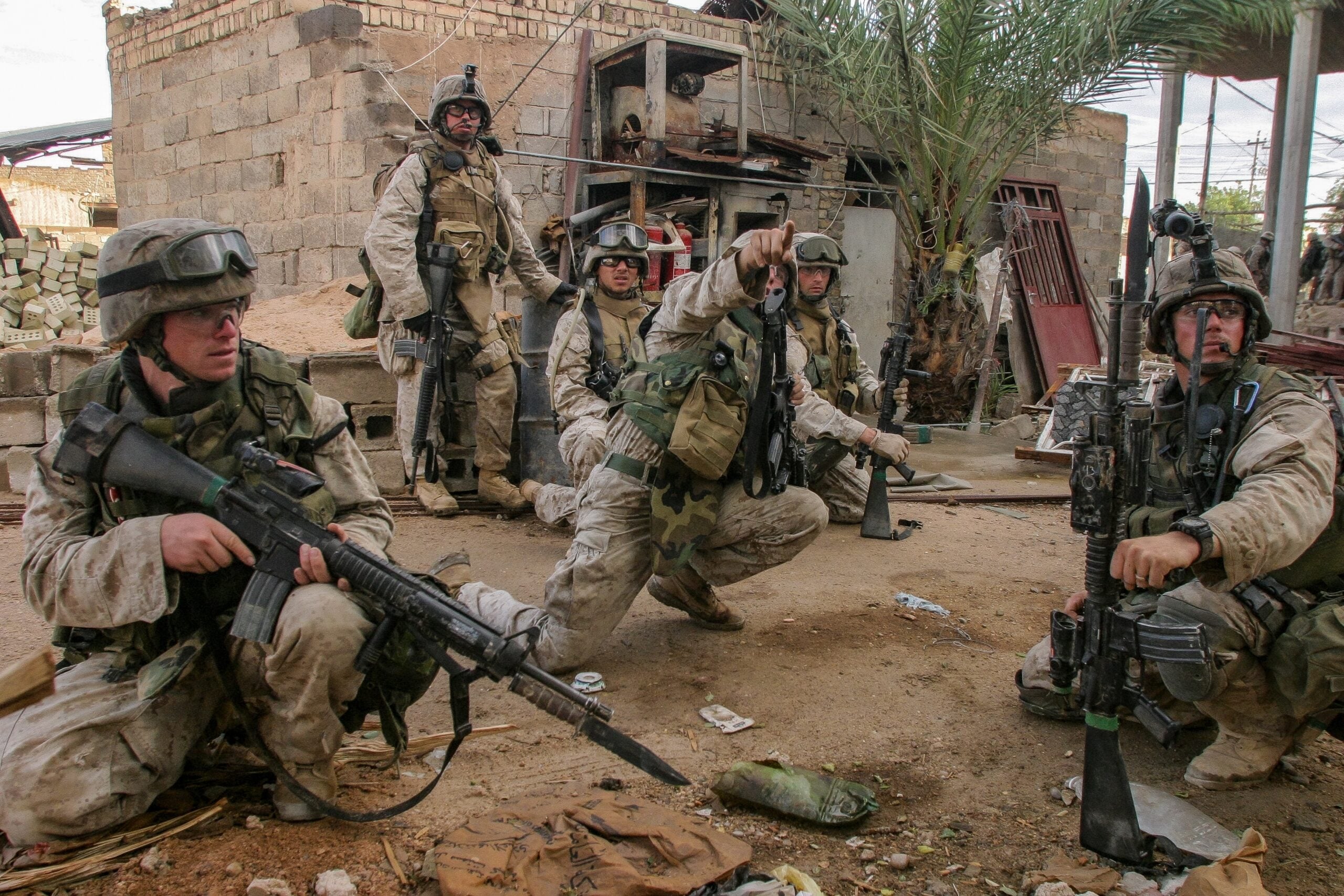
    Marines take cover from an explosion during the second battle of Fallujah in 2004. (Courtesy Manifold Productions, Inc.)

    One of the most intense moments in “The Last 600 Meters” takes place at “Hell House” in Fallujah. Marines had entered the structure and were shot by insurgents from the second floor. Teams attempted to rescue the men, each in turn being pinned down by machine gun fire and grenades. Trapped, there seemed to be no way to get the wounded Marines out of the kill zone.

    Finally, two Marines, 1st Lt. Jesse Grapes and Pfc. Justin Boswood, broke through a barred window of the house into another part of the room. They trained their rifles on the second floor and began blasting away.

    “We start unloading on these guys upstairs and these two selfless Marines run across this kill zone — not once, not twice, but four times to pull Marines out,” Grapes said in the film. “We had some Marines who were in pretty bad shape.”

    Though 11 seriously wounded were rescued and a dead Marine recovered, the two insurgents remained on the second floor. A satchel charge was used to destroy the building. As Marines inspected the rubble, they found half buried what they thought was a dead insurgent. He was still alive and threw a grenade. The team scrambled for cover, then finished off the resolute enemy fighter.

    “In Fallujah, I can honestly say, wow, we certainly don’t agree with their political ideology or their religious ideology,” Grapes says on camera. “We respected the fact that they stood there and faced us and fought us.”

    Fighting in Fallujah lasted until Dec. 23 in what became the bloodiest battle for U.S. forces since the Vietnam War. Though traumatic, their experiences served to link them emotionally with their brothers in arms in a way few civilians understand.

    “Nothing bonds like shared suffering and sacrifice for a common cause or a higher purpose,” Bender said. “Fallujah was that for us, for those of us in the fight. Those bonds definitely endure.”

    He added, “That fireteam, that squad, that battalion — they are my family from the Corps.”

    “The Last 600 Meters: The Battles of Najaf and Fallujah” airs Nov. 10 on many PBS stations. It can also be viewed on the PBS app and will later be shown on Prime Video and other streaming services.

  • From hot dogs to haircuts, your Veterans Day deals await

    From hot dogs to haircuts, your Veterans Day deals await

    This post was originally published on this site.


    Editor’s note: This list was updated Nov. 10 at 4:55 p.m. Eastern Standard Time.

    Service members, veterans and their families know that Veterans Day means much more than a discount or deal at their local eatery or store.

    Still, a number of businesses want to show their appreciation for those who serve or have served, so check out the deals below that honor your service.

    Our annual list of verified Veterans Day deals is here to help you navigate offers from restaurants, retail establishments and other businesses. If you plan wisely, you could fortify yourself with free breakfast, lunch and dinner while you head to stores with a trove of in-person and online markdowns.

    We’ll update the list throughout the day. Contact Karen Jowers at kjowers@militarytimes.com with suggestions.

    Food and drink

    • Another Broken Egg Cafe: Offering active duty and veterans a free Patriot French Toast and coffee on Nov. 11. Dine-in only. Show proof of service.
    • Applebee’s: Offering active duty and veterans free full-size entree from a select menu, Nov. 11. Dine-in only. Also offering a $5 card for a future visit within a three-week redemption window. Show proof of service.
    • Aroma Joe’s: Offering active duty and veterans a free beverage, any size up to 24 ounces, on Nov. 11, at its locations across Maine, New Hampshire, Massachusetts, Pennsylvania, Florida, Rhode Island, New York and Connecticut. Show proof of service.
    • Bad Daddy’s Burger Bar: Offering active duty and veterans a free All American Burger with cheese and a classic side, from 11 a.m. to 3 p.m. on Nov. 11 at participating restaurants. Dine-in only. Show proof of service.
    • Bob Evans: Offering active duty and veterans a free meal from a select menu of 10 options on Nov. 11. Dine-in only. Show proof of service.
    • Bombshells: Offering veterans a free entree, and active duty get a 20% discount on all menu items. Dine-in only at all locations in Texas and Colorado. Show proof of service.
    • Bubbakoo’s Burritos: Offering active duty and veterans a free Taco Trio on Nov. 11. Dine-in only. Show proof of service.
    • Chicken Salad Chick: Offering active duty and veterans a free meal with drink on Nov. 11. Available to those in uniform and those who show proof of service.
    • Chipotle: Offering active duty and veterans a buy-one-get-one-free deal from 4 p.m. to 8 p.m. local time. Offer applies to Chipotle bowls, burritos, salads and taco entrees. Show proof of service.
    • Cody’s Original Roadhouse: Offering active duty and veterans a free entree, either a half rack of ribs or grilled BBQ chicken breast, on Nov. 11. Dine-in only at its eight Florida locations. Show proof of service.
    • Denny’s: Offering active duty and veterans a free Original Grand Slam from store opening until noon local time on Nov. 11 at participating locations. Show military ID or DD-214.
    • Dog Haus: Offering active duty and veterans free Haus Dog on Nov. 11. Dine-in only at participating locations. Show proof of service.
    • Eddie Merlot’s: Offering active duty and veterans a free Eddie’s Prime Cheeseburger with fries on Nov. 11. Dine-in only. Show proof of service.
    • Fogo de Chao: Offering active duty and veterans a 50% discount off Full Churrasco or Indulgent Churrasco meals for themselves, and their guests will receive a 10% discount, through Nov. 11. Dine-in only. These Brazilian steak houses are located in a number of states. Show proof of service.
    • Friendly’s: Offering active duty and veterans a free All American Burger with cheese and a beverage on Nov. 11. Dine-in only. Show military ID or honorable discharge document.
    • Golden Corral: Offering active duty and veterans a free dinner buffet meal and drink from 4 p.m. to closing on Nov. 11 as part of its annual Military Appreciation Night. Dine-in only.
    • Hard Rock Cafe: Offering active and retired military a free Legendary Burger on Nov. 11 at participating locations. Accompanying friends and family members can receive the always-available 15% military discount.
    • Hooters: Offering active duty and veterans one free meal from a menu of four select entrees on Nov. 11, with purchase of a beverage, at participating restaurants. Dine-in only. Show proof of service.
    • IHOP: Offering active duty and veterans a free Red, White and Blueberry Pancake Combo on Nov. 11, 7 a.m. to 7 p.m. Dine-in only at participating restaurants. Show proof of service.
    • Kolache Factory: Offering active duty and veterans a free kolache and a cup of coffee on Nov. 11. Check for hours at participating locations. Show proof of service.
    • Logan’s Roadhouse: Offering active duty and veterans a free meal from a select menu on Nov. 11, 11 a.m. to 3 p.m. Dine-in only, at participating restaurants. Proof of service required.
    • Outback Steakhouse: Offering active duty and veterans a free Aussie Three-Course Meal, including starter, choice of entree and dessert Nov. 10 and Nov. 11 at participating locations. Dine-in only. Show proof of service.
    • Perry’s Steakhouse: Active duty and veterans receive a 50% discount on a dinner-cut pork chop on Nov. 11 from 4 p.m. to closing; if dining with a guest purchasing a full dinner entree, the veteran’s pork chop is free. Military ID or proof of service required.
    • Pilot: Offering active duty and veterans and their families a choice of a free breakfast sandwich and coffee, or a lunch item and fountain drink, on Nov. 11, through Pilot’s myRewards Plus app at participating Pilot, Flying J and One9 Fuel Network travel centers. Get verification of status through ID.me in the myRewards Plus app.
    • Playa Bowls: Offering active duty and veterans a free bowl on Nov. 11, in shop only at select locations. Show proof of service.
    • Polly’s Pies: Offering active duty and veterans a free slice of pie at their California locations Nov. 10-11. No purchase necessary. Show proof of service in the store.
    • QDOBA: Offering active duty and veterans free chips and dip on Nov. 11 at participating restaurants. Dine-in only. Show proof of service.
    • Red Lobster: Offering active duty and veterans a free Veteran’s Shrimp and Chips on Nov. 11. Dine-in only at participating locations. Show proof of service.
    • Santa Fe Cattle Co.: Offering active duty and veterans a free entree from their Lunch Express Menu on Nov. 11. Dine-in only. Show proof of service.
    • Shake Shack: Offering active duty and veterans free Big Shack burger on Nov. 11 ordered in store at participating locations. Show proof of service.
    • Sizzler: Offering active duty and veterans free lunch from a select menu on Nov. 11 from opening until 4 p.m. All locations except for those in Utah, Idaho and Puerto Rico will participate.
    • Starbucks: Offering veterans, active duty and their spouses a free tall (12-ounce) hot or iced brewed coffee on Nov. 11 at cafe and drive-through locations.
    • Sullivan’s Steakhouse: Offering active duty and veterans a free Sullivan’s Signature Angus Burger with fries on Nov. 11. Dine-in only. Show proof of service.
    • Taffer’s Tavern: Offering active duty and veterans a 50% discount on one plate, handheld or salad with valid ID through Nov. 16. Dine-in only. Show proof of service. Locations in Georgia and Florida.
    • Teriyaki Madness: Offering active duty and veterans a free bowl of their choice on Nov. 11 at participating shops. In-shop only. Show proof of service.
    • The Greene Turtle: Offering active duty and veterans a free meal up to $15 on Nov. 11. Dine-in only; available at select locations. Show valid ID.
    • Twin Peaks: Offering active duty and retired military a free lunch from a select menu on Nov. 11, 11 a.m. to 3 p.m., at participating locations. Show proof of service.
    • Tuscan Brands restaurants: Offering veterans and their guest a free traditional Italian family-style meal on Nov. 11, 11 a.m. to 3 p.m., at the company’s Tuscan Kitchen locations, Tuscan Sea Grill and Bar and Tuscana Italian Chop House and Wine Bar. These are located in Massachusetts and New Hampshire. Veterans must call their local restaurant to make a reservation, or reserve online at www.tuscanbrands.com/veterans-eat-free/.
    • Wendy’s: Offering active duty and veterans a free breakfast combo at participating locations during breakfast hours on Nov. 11. No purchase required. Notify the crew member at the register.
    • White Castle: Offering active duty and veterans a free individual combo meal or a breakfast combo meal on Nov. 11. No purchase necessary, but proof of service needed.
    • Wienerschnitzel: Offering active duty and veterans a free Original Chili Dog, small fries and small soda at participating locations nationwide on Nov. 11. Show proof of service.
    • Yogurtland: Offering active duty a 15% in-store discount on Nov. 11. Show military ID.

    Active duty and retired service members can take a free spin on the Capital Wheel at National Harbor, Md., on Veterans Day. (Courtesy The Capital Wheel)

    Recreation

    • Regal: Offering active duty and veterans free admission to showtimes of “Brothers on Three” and “Saving Private Ryan” on Nov. 11 at participating locations. Show proof of service.
    • The Capital Wheel at National Harbor, Maryland: Offering active duty and retired service members a free ride on Nov. 11, noon to 10 p.m. Accompanying family members are eligible for military discount. Show military ID.

    Retail

    • Army and Air Force Exchange Service: In store and online at shopmyexchange.com, authorized customers can get a variety of deals through Nov. 13, such as: up to $250 off Samsung smart TVs; $300 off MacBook Air laptops; 10% off Ray-Ban, Oakley and Costa sunglasses; 20% off Yeti coolers, drinkware and gear; 30% off tactical brands including United States Tactical, Toaks, Red Rock Outdoor Gear and more; up to 50% off bedding items; and 40% off haircare and personal hygiene. Weekly deals are available through Nov. 28.
    • 4Patriots: Offering active duty and veterans a free 72-Hour Survival Food Kit for emergency preparedness on Nov. 11. Contains 20 individual breakfast, lunch and dinner servings and is designed to last 25 years. To receive the free food kit, customers register online on the 4Patriots Veterans Day Celebration Event page on Nov. 11 only.
    • Academy Sport + Outdoors: Offering active duty and veterans a 10% discount on purchases in stores and online through Nov. 11. Visit the website for information on the process for receiving the discount in stores and online.
    • Navy Exchange and Marine Corps Exchange online: Offering a variety of discounts for authorized shoppers such as an $800 discount on select Sony TVs; extra 15% discount on select grills from Traeger and Weber; extra 20% off 5.11 shoes; 40% discount on Gap and Old Navy apparel; and extra discounts on select gaming accessories from Turtle Beach and SteelSeries.
    • Office Depot: Offering active duty and veterans a year-round 20% military discount on qualifying regularly priced purchase. Show proof of service.
    • Samsung: Through its Military Offers Program, active duty and veterans and their families can receive discounts of up to 30% on phones, tablets, smart watches and other items at samsung.com year-round.
    • Sheetz: Offering active duty and veterans a free half turkey sub and regular size fountain drink and a free car wash at Sheetz locations with a car wash on Nov. 11. Show proof of service.
    • Walgreens: Offering active duty and veterans and their families a 20% discount on regularly priced eligible items through Nov. 11. Available at any Walgreens or Duane Reade drugstore. Show proof of service.

    Services

    • AutoNation: Offering active duty, veterans and their spouses a 20% discount on all services in-store at AutoNation locations nationwide through Nov. 16 (maximum discount $200). Also applies to the AutoNation Mobile Service at the customer’s preferred location (maximum discount $150). Show proof of service.
    • Great Clips: Offering active duty and veterans a free haircut on Nov. 11, or a free haircut card to use later.
    • Take 5 Oil Change: Offering active duty and veterans a year-round 25% discount on oil changes at participating locations. Show proof of service.

    What to know before you go

    • Check the fine print and call the participating organization to be sure the offer is available at the time you plan to arrive.
    • Most eateries require you to dine in to receive the deal.
    • Let the host, cashier, attendant, reservation agent or other relevant employee know up front that you want the discount or deal.
    • “Free” isn’t always completely free. A free meal doesn’t always come with a drink, for instance. Be prepared to pay for extras such as taxes (and tip).
    • Call ahead to local establishments to be sure they are aware of, and are participating in, national chain programs. Confirm availability and what type of ID is required.
    • Not all offers apply to veterans of all stripes. Most offers will apply to Guard and Reserve members, but check ahead. Be sure you are eligible and you have the appropriate ID/paperwork.
    • Most discounts don’t apply to the entire party. Be sure you’re clear whether family members or guests are covered in the discount.
    • This is by no means an all-inclusive list. Check with your favorite eatery or store to see if they offer a military discount. It doesn’t hurt to ask a company whether they offer a military discount before you book a reservation or order from your server. But don’t act like you expect it.

  • Government shutdown prompts cancellation of some Veterans Day events

    This post was originally published on this site.


    Normally on Veterans Day, volunteers gather at the Riverside National Cemetery in California to place flags alongside more than 300,000 gravesites. But not this year.

    The longest federal government shutdown on record is curtailing and outright canceling parades, ceremonies and other events across the U.S. that are normally held to mark Veterans Day. It’s another fallout of the shutdown that has disrupted flights and food assistance, and was already being squarely felt by military families who are worried about their paychecks.

    In California, organizers of “A Flag for Every Hero” said they couldn’t move forward with the event on Tuesday without access to restrooms, traffic control and other needs for the thousands of participants. Elsewhere, a lack of federal employees and access to military facilities has scrubbed other Veterans Day events.

    “We have a responsibility to provide them the resources they need, and unfortunately with the shutdown we’re unable to do that,” Laura Herzog, founder and CEO of Honoring Our Fallen, which organizes the Riverside National Cemetery event.

    In reversal, DOD says troops can wear uniforms at Veterans Day events

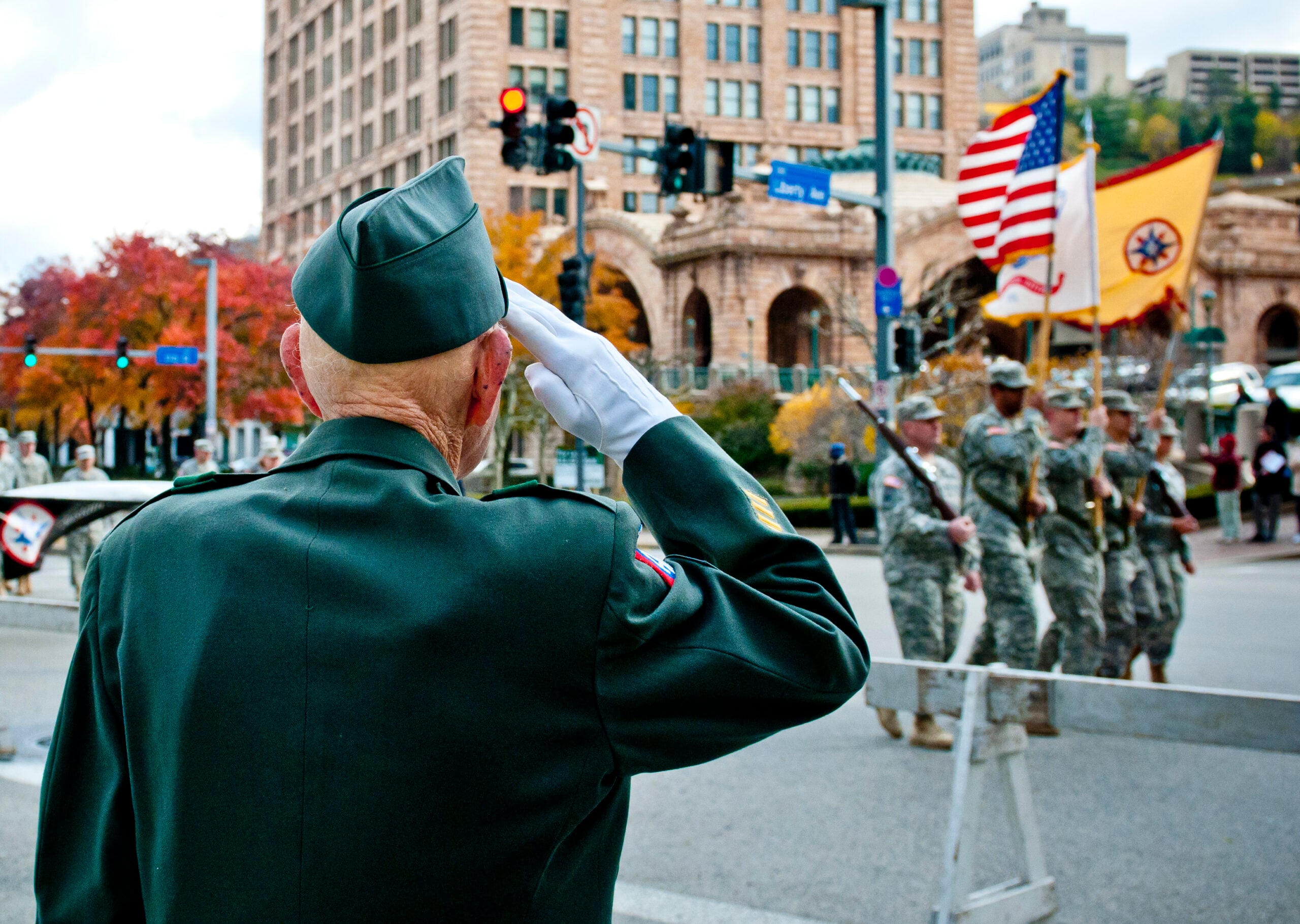
    Many communities will still hold Veterans Day gatherings, including some of the nation’s largest and well-known events such as the annual observance at Arlington National Cemetery in Virginia and the New York Veterans Day Parade.

    The disruption to a federal holiday that is intended to honor those who have served in the armed forces comes as military families face uncertainty week to week about their pay. The Trump administration has found ways to pay troops twice since the shutdown began Oct. 1.

    The Texas National Cemetery Foundation canceled an annual Veterans Day event at the cemetery in Dallas-Fort Worth, saying organizers wouldn’t have time to stage the ceremony even if the shutdown ended soon. In Virginia, city leaders in Hampton cited concerns about a lack of service members to participate in its annual parade because of the shutdown.

    “Our veterans deserve to be recognized with great pomp and circumstance,” Hampton City Manager Mary Bunting said in a news release. “Without the presence of our active-duty military, we are concerned that the parade would appear sparse and that the recognition might fall short of the honor our veterans so richly deserve.”

    Organizers of Detroit’s annual Veterans Day parade say they’re moving forward with the Sunday event, but it won’t include an appearance by a U.S. Army band or a helicopter flyover. Others are relying on even more help from volunteers than usual to make up for the lack of federal resources.

    The Wyoming Valley Veterans Day Parade, which has been a tradition in Wilkes-Barre, Pennsylvania, every year since 1945, will still take place Sunday. But organizers have had to scramble because of the shutdown, asking veterans to participate. And instead of military vehicles, the parade will feature motorcycle groups and car clubs.

    “We’re going to have a parade, one way or another,” said Susan Allen, a retired Navy lieutenant commander who chairs the parade committee. “We have no choice but to make lemonade out of these lemons.”

    Despite the upheaval, some communities are still trying to find ways to honor veterans even as events are canceled.

    In Mississippi, the Gulf Coast Veterans Association canceled its annual parade in Pass Christian. But the group said it would use funds for the event to instead provide Thanksgiving dinners for veterans and active-duty members.

    “While we share in the disappointment, we are choosing to turn this setback into a blessing,” the group said in a Facebook post.

    When U.S. Rep. Tony Gonzales learned that the Veterans Day ceremony at Fort Sam Houston Cemetery in San Antonio wouldn’t take place, the Republican congressman’s office took up organizing the annual event.

    Gonzales, a Navy veteran whose grandfather is buried at the cemetery, said that meant working with nonprofits to find someone to sing the national anthem and to provide chairs for attendees.

    “We honor our veterans no matter what, and that’s exactly what we did,” Gonzales said.

  • This American soldier saved Charlemagne’s cathedral in World War II

    This American soldier saved Charlemagne’s cathedral in World War II

    This post was originally published on this site.


    As the city of Aachen, once the seat of power of the emperor Charlemagne, lay in ruins in World War II’s bitterest winter, an American soldier worked feverishly alongside German civilians to make sure its ancient cathedral remained standing. Capt. Walter Johan Huchthausen of Perry, Oklahoma, strove tirelessly to stop the building from collapsing and ensured it would be preserved as it is today.

    The son of a German immigrant father, Huchthausen was a rising star in the field of architecture. His strong grasp of design principles and enthusiasm for history brought him accolades for his work and professional success. After receiving a Master’s degree from Harvard, he worked in New York and Boston and eventually became an assistant professor of architecture at the University of Minnesota.

    Becoming a Monuments Man

    Huchthausen’s German heritage was important to him. He studied abroad in Germany on a fellowship for Harvard prior to the war and mastered the language with native proficiency as he worked alongside German museum professionals. His connection with the German language and culture would later become vital to his success as a U.S. Army Monuments Man tasked with preserving valuable historical artifacts.

    After World War II broke out, Huchthausen, then age 38, volunteered for military service in 1942, joining the U.S. Army Air Forces. His service in the USAAF would be short-lived, however. Wounded badly by a V-1 “flying bomb” in London in June 1944, he joined the U.S. Army’s European Civil Affairs Division and was selected as a talented candidate for the Monuments, Fine Arts and Archives program, whose officers were popularly known as “the Monuments Men.” As the Battle of the Bulge raged in December 1944, Huchthausen joined the Ninth Army as its Monuments officer.

    Attaining the rank of captain, he was nicknamed “Hutch” by his comrades, who likely struggled to pronounce his German last name.

    Huchthausen communicated well with German POWs and local civilians and thus, within a relatively short timeframe, he was able to locate 30 hidden caches of art stashed away by Nazi officials — salvaging both historical German artifacts and looted objects from occupied countries. He was known for being especially hardworking and was admired by his colleagues for his organizational talents and attention to detail.

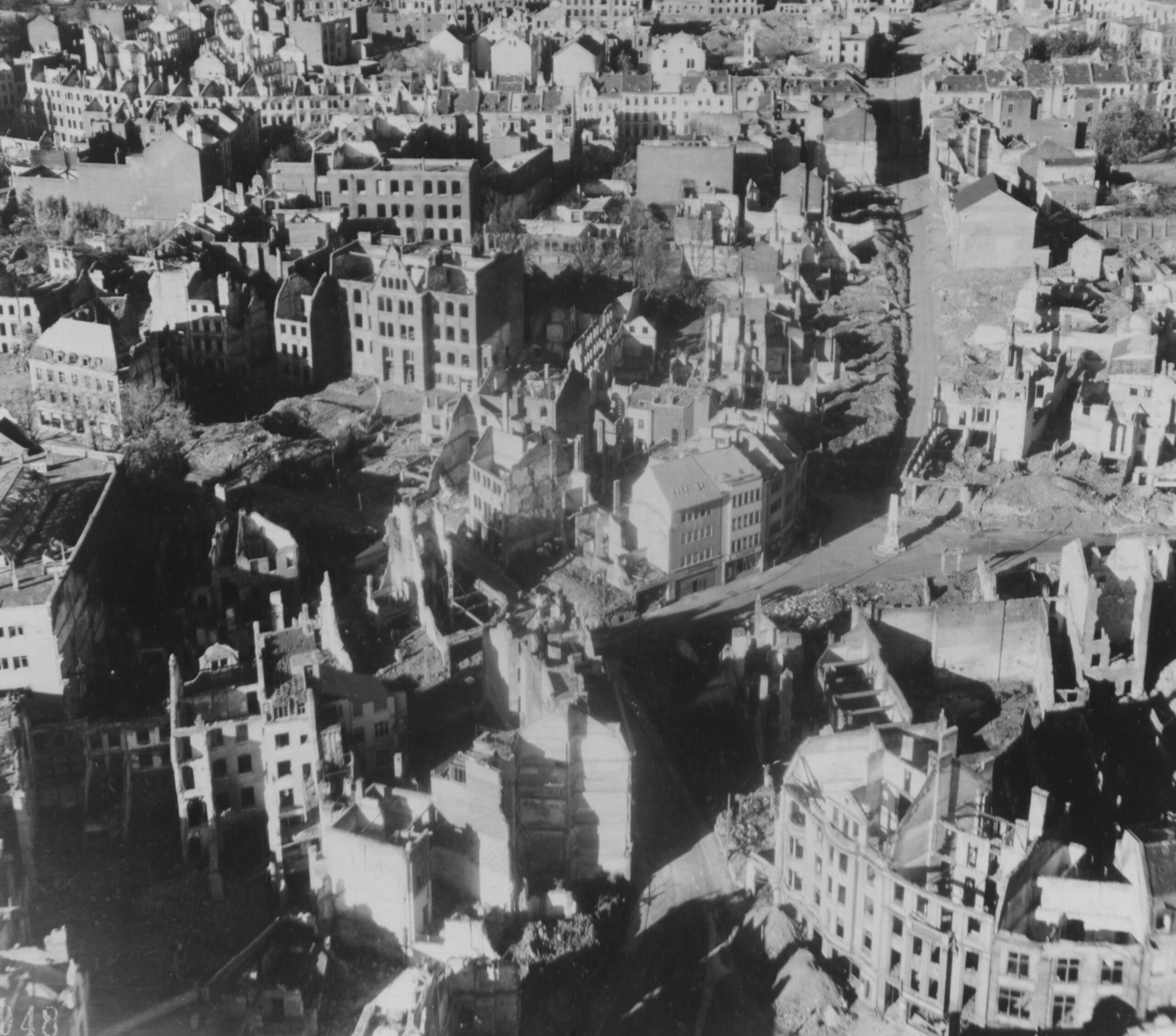
    A siege photo taken by the U.S. Army, Aachen 1944. (National Archives)

    In the ruins of a royal city

    After working briefly in France, he distinguished himself after arriving in the shattered ruins of Aachen, a city ripped apart both by external and internal strife. Its history as the citadel of Emperor Charlemagne, the first ruler of what would become the Holy Roman Empire, gave it special status — not only to locals but to Adolf Hitler, who saw it as a propaganda symbol.

    As the U.S. Army approached, Hitler ordered the city to be defended to the last man and destroyed totally rather than surrendered. Local civilians were at first prevented from evacuating by the Schutzstaffel, better known as the SS, and subsequently forced from their homes as Nazi officials prepared for a deadly siege that began in early September and became one of the war’s bloodiest urban battles.

    A U.S. soldier helps German civilians evacuate who had been shot at by Nazis earlier for trying to leave. (National Archives)

    Treated brutally by the SS, many civilians hid in various locations inside the city and tried to break out to safety later. Photos taken by the U.S. Army during the battle of Aachen note that elderly German residents were fired upon by Nazis with automatic weapons as they tried to flee. American soldiers later rescued several infirm elderly women who were nearly gunned down while trying to escape through the ruins.

    Once a magnificent structure with its own treasure chamber, Aachen’s cathedral had already suffered bombing damage throughout the war. In the early war years it had been protected by local German youths who formed a volunteer fire brigade to preserve the church.

    However, the cathedral was on its last legs. The ferocious battle that ended on Oct. 21 had seen tanks tear through the city and buildings ripped apart by shellfire. The cathedral was in danger of collapse.

    Saving the cathedral

    Arriving in January 1945, Huchthausen came to the rescue. Creating his own headquarters in the city’s Suermondt-Ludwig-Museum, he set about identifying and collecting the cathedral’s numerous altarpieces and artifacts to preserve them. Huchthausen successfully organized and led local German civilians to locate missing objects and start repairing the site.

    He used his architectural expertise to rescue what he could. Under his leadership, civilians repaired the roof, preserved paintings and covered bomb-damaged windows. He successfully reinforced the cathedral’s buttresses to stop them from caving in and strengthened the interior structure — saving it from collapse.

    Challenged by a reporter about why he cared about preserving a site in the Third Reich, Huchthausen replied that its history was world heritage. “Aachen Cathedral belongs to the world and if we can prevent it from falling in ruins…we are doing a service to the world,” he said.

    Aachen cathedral earlier during the war years. (Polish State Archive)

    Killed in action

    Tragically, that statement defining his approach to his work was published two days after Huchthausen was killed in action on April 2, 1945. Working closely behind the Ninth Army’s frontlines, Huchthausen and his assistant Lt. Sheldon Keck, formerly a conservator of the Brooklyn Museum of Art, were driving in search of a stolen artifact when they came under fire from a machine gun. Huchthausen was killed instantly, falling on top of his comrade as the vehicle overturned. Keck survived.

    Fellow Monuments Man Maj. Walker Hancock wrote a touching tribute to Huchthausen after his death. “The buildings that Hutch hoped, as a young architect, to build will never exist,” he wrote, “but the few people who saw him at his job — friend and enemy — must think more of the human race because of him.”

    Huchthausen is buried in the Netherlands American Cemetery in Holland, and was posthumously awarded the Bronze Star and Purple Heart with oak leaf cluster.