Author: Cristina Stassis

  • Following an outbreak, lawmakers push to require flu vaccine for all service members in budget bill provision

    Following an outbreak, lawmakers push to require flu vaccine for all service members in budget bill provision

    U.S. representatives announced an amendment to fiscal year 2027’s National Defense Authorization Act that would require all military service members to have an influenza vaccine, following a training base outbreak that sickened nearly 300 trainees and killed one.

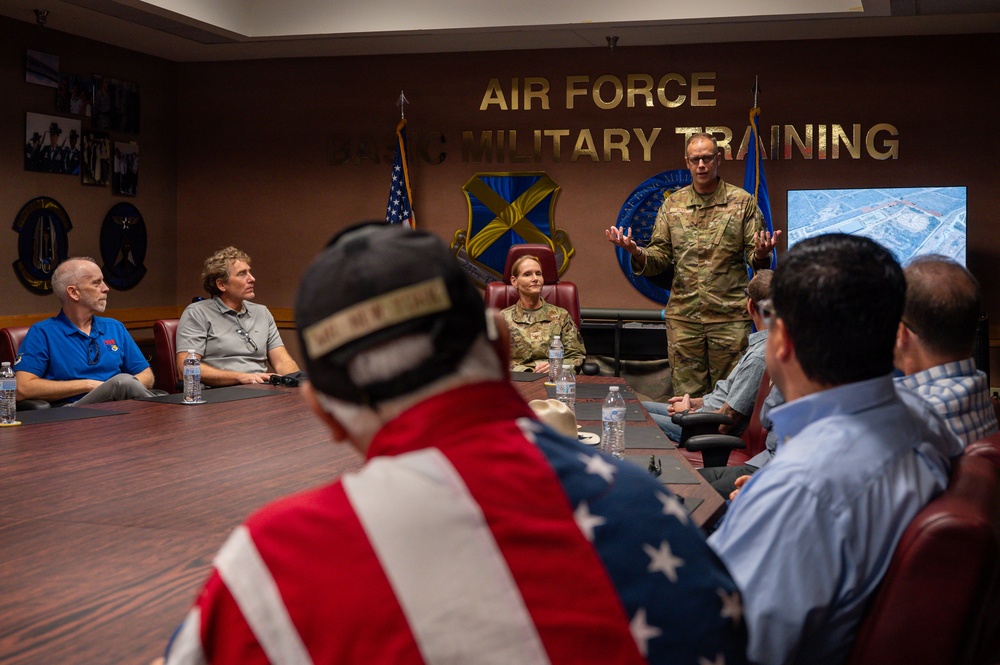
    In a Tuesday press conference, Reps. Joaquin Castro, D-Texas, Chrissy Houlahan, D-Pa., and Gil Cisneros, D-Calif., announced their joint amendment’s introduction, calling it pertinent to military readiness and the well-being of American troops.

    “That is almost 300 future airmen and women who would not be finishing their training at their expected date,” Cisneros, a former under secretary of defense for personnel readiness, said in the briefing. “This has completely set back the Air Force’s expected recruitment class from entering the future squadrons on time.”

    This move comes after a flu outbreak sickened hundreds of trainees at Lackland Air Force Base, Texas, and killed one. Castro, whose district houses Lackland, confirmed that 284 trainees contracted the flu, four have been hospitalized and one has died.

    Over a week ago, the Air Force announced that the training wing at Lackland suffered a localized outbreak over the three weeks prior but did not mention how many trainees contracted the flu.

    Keon McDaniel, a basic military trainee from the 737th Training Support Squadron at Lackland, died on June 16 at Brooke Army Medical Center due to a medical emergency. Lackland officials said an investigation into the cause of his death is currently underway. Air Force officials declined at the time to comment on if his passing was related to the flu outbreak.

    But Castro, who requested an investigation into McDaniel’s death in relation to the flu, revealed Tuesday that the Air Force confirmed that the trainee did die from the outbreak on base, according to a release.

    “This is a tragedy that could have been prevented were it not for the reckless actions of Secretary [of Defense Pete] Hegseth,” Castro said in the statement.

    The outbreak caused lawmakers to express concern over the current optional flu vaccine policy for service members and Pentagon civilian personnel that went into effect in April, two months before the outbreak.

    Hegseth announced that service members would no longer be required to get the annual flu vaccine, citing the prior policy as “overly broad and not rational.”

    Last week, the Pentagon granted exceptions to policy requests, or ETPs, to military services and some federal agencies, allowing for the slight reversal to be included into Hegseth’s guidance.

    The services with ETPs granted by Under Secretary of Personnel and Readiness Anthony Tata include the Department of the Army, Department of the Navy and Department of the Air Force.

    Given that the Marine Corps and Space Force are under the Department of the Navy and Department of the Air Force, respectively, the services are also included in the exceptions.

    The Pentagon declined to comment on if all trainees would be required to get the flu vaccine or when the exceptions were requested and granted. The Associated Press reported that all trainees for basic military training would now be required to receive the vaccine, citing a Pentagon official.

    Castro confirmed in the Tuesday briefing that the Air Force’s exception to vaccinate all trainees was not approved until after the outbreak occurred even though it was requested about a month prior.

    Houlahan said that there has been no indication of flu outbreaks at bases other than Lackland, but it is considered an “ongoing concern.”

    “Now, nothing’s ever perfect. You could get the vaccine, and you still may get the flu or any other disease that may come forth, but it does make a difference,” Cisneros, a member of the House Armed Services Committee, said in the press conference.

    The representatives that brought forth the amendment last week criticized their Republican counterparts for previously rejecting the measure’s inclusion in the final NDAA rules package, prompting another push to revert the policy to again require all service members to receive a flu vaccine.

    The NDAA is currently moving through both chambers of Congress, with the House and Senate versions awaiting full consideration on their respective floors.

    This post was originally published on this site

  • Following an outbreak, lawmakers push to require flu vaccine for all service members in budget bill provision

    Following an outbreak, lawmakers push to require flu vaccine for all service members in budget bill provision

    U.S. representatives announced an amendment to fiscal year 2027’s National Defense Authorization Act that would require all military service members to have an influenza vaccine, following a training base outbreak that sickened nearly 300 trainees and killed one.

    In a Tuesday press conference, Reps. Joaquin Castro, D-Texas, Chrissy Houlahan, D-Pa., and Gil Cisneros, D-Calif., announced their joint amendment’s introduction, calling it pertinent to military readiness and the well-being of American troops.

    “That is almost 300 future airmen and women who would not be finishing their training at their expected date,” Cisneros, a former under secretary of defense for personnel readiness, said in the briefing. “This has completely set back the Air Force’s expected recruitment class from entering the future squadrons on time.”

    This move comes after a flu outbreak sickened hundreds of trainees at Lackland Air Force Base, Texas, and killed one. Castro, whose district houses Lackland, confirmed that 284 trainees contracted the flu, four have been hospitalized and one has died.

    Over a week ago, the Air Force announced that the training wing at Lackland suffered a localized outbreak over the three weeks prior but did not mention how many trainees contracted the flu.

    Keon McDaniel, a basic military trainee from the 737th Training Support Squadron at Lackland, died on June 16 at Brooke Army Medical Center due to a medical emergency. Lackland officials said an investigation into the cause of his death is currently underway. Air Force officials declined at the time to comment on if his passing was related to the flu outbreak.

    But Castro, who requested an investigation into McDaniel’s death in relation to the flu, revealed Tuesday that the Air Force confirmed that the trainee did die from the outbreak on base, according to a release.

    “This is a tragedy that could have been prevented were it not for the reckless actions of Secretary [of Defense Pete] Hegseth,” Castro said in the statement.

    The outbreak caused lawmakers to express concern over the current optional flu vaccine policy for service members and Pentagon civilian personnel that went into effect in April, two months before the outbreak.

    Hegseth announced that service members would no longer be required to get the annual flu vaccine, citing the prior policy as “overly broad and not rational.”

    Last week, the Pentagon granted exceptions to policy requests, or ETPs, to military services and some federal agencies, allowing for the slight reversal to be included into Hegseth’s guidance.

    The services with ETPs granted by Under Secretary of Personnel and Readiness Anthony Tata include the Department of the Army, Department of the Navy and Department of the Air Force.

    Given that the Marine Corps and Space Force are under the Department of the Navy and Department of the Air Force, respectively, the services are also included in the exceptions.

    The Pentagon declined to comment on if all trainees would be required to get the flu vaccine or when the exceptions were requested and granted. The Associated Press reported that all trainees for basic military training would now be required to receive the vaccine, citing a Pentagon official.

    Castro confirmed in the Tuesday briefing that the Air Force’s exception to vaccinate all trainees was not approved until after the outbreak occurred even though it was requested about a month prior.

    Houlahan said that there has been no indication of flu outbreaks at bases other than Lackland, but it is considered an “ongoing concern.”

    “Now, nothing’s ever perfect. You could get the vaccine, and you still may get the flu or any other disease that may come forth, but it does make a difference,” Cisneros, a member of the House Armed Services Committee, said in the press conference.

    The representatives that brought forth the amendment last week criticized their Republican counterparts for previously rejecting the measure’s inclusion in the final NDAA rules package, prompting another push to revert the policy to again require all service members to receive a flu vaccine.

    The NDAA is currently moving through both chambers of Congress, with the House and Senate versions awaiting full consideration on their respective floors.

    This post was originally published on this site.

  • Following an outbreak, lawmakers push to require flu vaccine for all service members in budget bill provision

    Following an outbreak, lawmakers push to require flu vaccine for all service members in budget bill provision

    U.S. representatives announced an amendment to fiscal year 2027’s National Defense Authorization Act that would require all military service members to have an influenza vaccine, following a training base outbreak that sickened nearly 300 trainees and killed one.

    In a Tuesday press conference, Reps. Joaquin Castro, D-Texas, Chrissy Houlahan, D-Pa., and Gil Cisneros, D-Calif., announced their joint amendment’s introduction, calling it pertinent to military readiness and the well-being of American troops.

    “That is almost 300 future airmen and women who would not be finishing their training at their expected date,” Cisneros, a former under secretary of defense for personnel readiness, said in the briefing. “This has completely set back the Air Force’s expected recruitment class from entering the future squadrons on time.”

    This move comes after a flu outbreak sickened hundreds of trainees at Lackland Air Force Base, Texas, and killed one. Castro, whose district houses Lackland, confirmed that 284 trainees contracted the flu, four have been hospitalized and one has died.

    Over a week ago, the Air Force announced that the training wing at Lackland suffered a localized outbreak over the three weeks prior but did not mention how many trainees contracted the flu.

    Keon McDaniel, a basic military trainee from the 737th Training Support Squadron at Lackland, died on June 16 at Brooke Army Medical Center due to a medical emergency. Lackland officials said an investigation into the cause of his death is currently underway. Air Force officials declined at the time to comment on if his passing was related to the flu outbreak.

    But Castro, who requested an investigation into McDaniel’s death in relation to the flu, revealed Tuesday that the Air Force confirmed that the trainee did die from the outbreak on base, according to a release.

    “This is a tragedy that could have been prevented were it not for the reckless actions of Secretary [of Defense Pete] Hegseth,” Castro said in the statement.

    The outbreak caused lawmakers to express concern over the current optional flu vaccine policy for service members and Pentagon civilian personnel that went into effect in April, two months before the outbreak.

    Hegseth announced that service members would no longer be required to get the annual flu vaccine, citing the prior policy as “overly broad and not rational.”

    Last week, the Pentagon granted exceptions to policy requests, or ETPs, to military services and some federal agencies, allowing for the slight reversal to be included into Hegseth’s guidance.

    The services with ETPs granted by Under Secretary of Personnel and Readiness Anthony Tata include the Department of the Army, Department of the Navy and Department of the Air Force.

    Given that the Marine Corps and Space Force are under the Department of the Navy and Department of the Air Force, respectively, the services are also included in the exceptions.

    The Pentagon declined to comment on if all trainees would be required to get the flu vaccine or when the exceptions were requested and granted. The Associated Press reported that all trainees for basic military training would now be required to receive the vaccine, citing a Pentagon official.

    Castro confirmed in the Tuesday briefing that the Air Force’s exception to vaccinate all trainees was not approved until after the outbreak occurred even though it was requested about a month prior.

    Houlahan said that there has been no indication of flu outbreaks at bases other than Lackland, but it is considered an “ongoing concern.”

    “Now, nothing’s ever perfect. You could get the vaccine, and you still may get the flu or any other disease that may come forth, but it does make a difference,” Cisneros, a member of the House Armed Services Committee, said in the press conference.

    The representatives that brought forth the amendment last week criticized their Republican counterparts for previously rejecting the measure’s inclusion in the final NDAA rules package, prompting another push to revert the policy to again require all service members to receive a flu vaccine.

    The NDAA is currently moving through both chambers of Congress, with the House and Senate versions awaiting full consideration on their respective floors.

    This post was originally published on this site.

  • Former soldier convicted of stealing $1 million worth of MREs

    Former soldier convicted of stealing $1 million worth of MREs

    This post was originally published on this site.

    A former soldier was found guilty of stealing more than $1 million of Meals-Ready-to-Eat, or MREs, from Fort Bliss, Texas.

    Joseph Lavar Davis, 47, was convicted by a Texas jury for a heist that included tens of thousands of MREs worth more than $1.1 million, Department of Justice officials announced Tuesday. 

    The MRE theft took place between February and August 2020 and included 200 pallets of the field rations. Each pallet contains roughly 576 MREs, according to federal court documents. In all, this means that the grand MRE theft included about 115,200 meals — some of which are good, some of which are not.

    MREs are the military’s go-to meals for troops in the field. They are designed to last in brutal conditions and be eaten in the roughest environments, without access to a microwave or stove. They are enjoyed by some but ridiculed by most. Food options have historically included fan favorites like beef stew or maple-flavored sausage patties, but in 2025, the Pentagon announced they were testing new flavors and snacks like Thai curry chicken and chocolate peanut butter bites.

    As a soldier, Davis worked in food service supply, where he learned how the military buys and obtains MRE supplies, according to the Department of Justice. After his retirement, Davis was hired for a similar role, albeit as a civilian contractor. Officials said he used his position “to exploit the process and steal MREs,” and that as part of the grift, Davis coordinated the delivery, sales price and payments for the stolen MREs.

    Top Stories This Week

    Davis was named with three other defendants in a February 2025 federal indictment. 

    “Each of the indicted individuals played a role in the scheme, which involved a civilian contractor who knew how to request and pick up the MREs, a soldier to assist in picking up and transporting the MREs, an intermediary between the buyer of the MREs and these two individuals, and the civilian who sold the MREs online,” Justice officials said.

    Davis and two defendants created and submitted memos “as though they were legitimate military requests for MREs,” according to the indictment. 

    The second defendant was assigned to the 1st Armored Division and worked at Fort Bliss, and the third, like Davis, was former military. Justice Department officials did not give details on the other defendants in their press release, but court documents show that the other former service member pleaded guilty to conspiracy to commit government property theft and signed a plea deal in February 2026. Details of the plea deal were not available online.

    The team of conspirators rented trucks to transport the MREs to a fourth defendant, according to court documents, who operated a company that ran an El Paso, Texas, warehouse where the stolen MREs were then sold. Court records indicate that the defendant from the warehouse paid the three other defendants nearly $44,350 in separate payments in March and August 2020.

    In a statement, U.S. Attorney Justin R. Simmons wrote that “Joseph Davis betrayed the very country he once swore to protect in an effort to satisfy his own selfish ambition and a jury of his peers held him accountable for it.”

    The post Former soldier convicted of stealing $1 million worth of MREs appeared first on Task & Purpose.

  • Air Force brings World War II tail insignia out of retirement for ‘Doomsday Plane’

    Air Force brings World War II tail insignia out of retirement for ‘Doomsday Plane’

    This post was originally published on this site.

    The tail insignia for the Air Force’s E-4B Nightwatch airborne command post — unofficially nicknamed the “Doomsday Plane” — pays tribute to a legendary World War II bomber unit that was awarded three presidential citations.

    On June 26, the first E-4B featuring the Square B tail flash — a black box with a white letter “B” — was unveiled at Offutt Air Force Base, Nebraska, as part of the 95th Wing’s heritage week, according to a news release from Eighth Air Force, which oversees the wing.

    The Square B aircraft tail insignia was first introduced during World War II to identify B-17 Flying Fortresses with the wing’s predecessor, the 95th Bombardment Group (H). At the time, Eighth Air Force used shapes and letters to distinguish aircraft from various units “due to the immense size of bomber and fighter formations during the air war in Europe,” according to the 95th Wing’s website.

    A B-17 Flying Fortress
    A B-17 Flying Fortress with the Square B insignia from World War II displayed at Offutt Air Force Base, Nebraska, onJune 26, 2026. Air Force photo by Master Sgt. Ethan Bell.

    The group was the only Eighth Air Force Unit to receive Distinguished Unit Citations for its wartime service — the award was later renamed the Presidential Unit Citation. It also took part in the first daytime bombing raid on the German capital of Berlin in March 1944.

    The 95th Bombardment Group was awarded its first Distinguished Unit Citation after 24 of its bombers flew as part of a harrowing two-pronged attack against the German cities of Regensburg and Schweinfurt.

    It was the Eighth Air Force’s deepest strike into Germany at the time, and the American bomber force suffered extremely heavy losses, with 60 out of a total of 376 B-17s shot down and more than 600 airmen killed, captured, or listed as missing. 

    At the time, Allied fighters did not have the range to escort the B-17s all the way to their targets and back, so the bombers had to try to fend off constant attacks from German aircraft by themselves for most of the mission. Weather also delayed the second wave of bombers, giving German fighters time to land, rearm, refuel, and take off again before the second prong of the attack.

    The raid marked the highest losses that Eighth Air Force had suffered up to that point in the war, said historian and author Donald Miller. 

    “It’s one of those raids where you can say that both sides lost the air battle,” Miller told Task & Purpose.

    Reichsmarschall Hermann Göring, who led the Luftwaffe, was furious at his pilots for letting the American bombers strike so far into Germany, Miller said.

    “At the same time, the Air Force just took staggering, demoralizing losses,” Miller said. “It was a prelude to even greater losses in October.”

    Top Stories This Week

    Four B-17s from the 95th Bombardment Group were shot down during the raid, and other bombers that were damaged or ran out of fuel were ditched while heading to a temporary base in North Africa after the mission, said Master Sgt. Rachel Waller, a spokesperson for the Eighth Air Force. More than a week later, only eight flyable bombers returned to the unit’s home base in England.

    The group went on to receive two more presidential citations in October 1943 and March 1944, Waller told Task & Purpose. By the war’s end, the unit had flown 8,265 sorties over 321 combat missions, dropped 19,769 tons of munitions, and delivered more than 456 tons of food to Dutch citizens.

    The Square B insignia was retired when the 95th Bombardment Group was inactivated in August 1945, the Air Force news release says.

    Now, the tail flash adorns the E-4B, which serves as the National Airborne Operations Center used by the president, the defense secretary, and the Joint Chiefs of Staff. The modified version of the Boeing 747-200 is designed to survive the effects of a nuclear war and an electromagnetic pulse.

    “The Square B is more than a symbol,” Col. Brian Hassler, commander of the 95th Maintenance Group, said in the Air Force news release. “It represents one of the most decorated Eighth Air Force bomb groups of WWII, a formation of airmen who flew into the heart of danger over Europe and helped shape the outcome of the war through courage, discipline, sacrifice and an unshakable commitment to one another.”

    The post Air Force brings World War II tail insignia out of retirement for ‘Doomsday Plane’ appeared first on Task & Purpose.

  • Marines convert uniform manual into simple phone app

    Marines convert uniform manual into simple phone app

    The Marine Corps launched a new mobile app that gives Marines a simplified guide for uniform and grooming standards, according to Tuesday’s administrative message.

    Brig. Gen. Matthew Tracy, commanding general of the service’s education command, described the Marine Corps Uniform App as giving “immediate access to the guidance they use most often.”

    “It is designed to make existing standards more accessible while reinforcing the professionalism and attention to detail that define our Corps,” he said.

    Grooming standards, there's an app for that. (Marine Corps Uniform App)

    Although the service’s uniform regulations are available online, the 263-page document written in Courier typeface isn’t exactly easy to navigate. The new app simplifies that guidance into a much more accessible format.

    In a press release, the service said the application is intended to supplement, not replace, MCO 1020.34.

    “While it answers many of the most common questions regarding uniforms and grooming, Marines should continue to consult the order for comprehensive policy and detailed guidance,” the service said.

    The app’s home screen features six categories: male officer, female officer, male enlisted, female enlisted, male grooming and female grooming.

    Selecting a category opens a list of approved and required uniforms for physical training, utilities, service and dress. Each entry includes a description explaining when the uniform is worn.

    For example, the app describes the Male Officer Evening Dress uniform as intended for “Field Grade and General Officer white/black tie events and social functions.” It also notes that “It is not a leave and liberty uniform.”

    (Marine Corps Uniform App)

    Each uniform page includes a full image of the uniform with every component highlighted. Users can tap individual items or accessories to view additional details. And each component page includes reference images, wear instructions and the applicable regulation.

    The grooming guides are more concise. They use dropdown menus to display only the standards relevant to each grooming category.

    The service said the uniform app is currently available through the Apple App Store, while an Android version is expected sometime in fiscal year 2027.

    This post was originally published on this site.

  • US Army’s Ranger School alters men’s physiology more than women’s, study shows

    US Army’s Ranger School alters men’s physiology more than women’s, study shows

    For weeks, Army Ranger School students put their bodies through a physical ringer, carrying heavy loads and marching far distances with little to eat and sparing sleep. But when Army researchers measured the course’s grueling toll, they found that female soldiers experienced fewer physiological changes than their male counterparts.

    Researchers tracked hormone levels, blood markers and body composition over the weeks-long school and the findings, published this month in the Journal of Applied Physiology, are among the first to compare how male and female soldiers respond to the Army’s premier leadership course.

    The new information comes over a decade after the Pentagon lifted its former ban on women in combat arms roles. In 2015, Ranger School opened to all qualified applicants and since then, over 150 female soldiers have graduated. Thousands more have served — and are serving — in frontline roles, in a change researchers say that underscores the need to better understand how prolonged military training affects women’s health.

    The study, first reported by Task & Purpose, found that while both men and women lost weight and body fat during the course, men experienced more widespread changes across hormone systems and blood markers. Women also experienced hormonal changes, but they were less extensive and largely concentrated during the mountain phase of training.

    The findings, researchers said, “indicate that multi-stressor environments may disproportionately affect male physiological markers, whereas females exhibited fewer, phase-specific changes.”

    The study used data from 36 Ranger students — 10 women and 26 men — between 18 and 36 years old. Sixteen completed the school in the standard 61 days and the rest recycled at least one of the course’s three phases, taking an average of 94 days to graduate.

    The data comes months after the Pentagon launched a formal review of the “effectiveness” of including women in front line roles, a move critics say forces women to continue proving they belong in combat arms positions long after meeting the Army’s standards.

    The review followed criticism of women in front line jobs by Defense Secretary Pete Hegseth, who before taking office said that women should not serve in ground combat roles. Hegseth later softened his position, saying at his confirmation hearing that “if we have the right standard and women meet that standard, roger, let’s go.”

    This post was originally published on this site

  • Marine Corps adds new scout MOS to infantry units

    Marine Corps adds new scout MOS to infantry units

    The Marine Corps will roll out a new infantry specialty later this year to provide infantry and light armored reconnaissance battalions with dedicated reconnaissance and surveillance support.

    On Tuesday, the service announced in an administrative message the creation of the new primary military occupational specialty 0315 Scout.

    Lt. Gen. Jay Bargeron, deputy commandant for Plans, Policies, and Operations, called the new MOS “a critical step in the modernization of our infantry battalions.”

    “These Scouts will be our eyes and ears, extending our sensing capabilities and enabling commanders to make faster, more effective decisions to win our nation’s battles,” he said in a press release.

    The service said the specialized MOS was born out of “extensive live-force experimentation” — or combat simulations — that highlighted the need for a dedicated battalion-level formation to collect timely and accurate information on the enemy and operating environment.

    According to the announcement, scouts will operate as a 26-Marine platoon within a battalion. They will be trained in field craft and advanced communications to conduct ground reconnaissance, surveillance and battlespace shaping through assured long-range communications.

    Scouts will carry advanced optics, communications suites, sensors and unmanned systems for reconnaissance missions. They will also be armed with the M4 Service Rifle, M320 Grenade Launcher and M27 Infantry Automatic Rifle, or IAR.

    Each scout team will also include a Joint Fires Observer, or JFO, to coordinate and control surface-to-surface and air-delivered fires.

    To become a 0315 Scout, Marines must complete either the Infantry Common Core Course or the Infantry Rifleman Course, followed by the Ground Reconnaissance Course.

    Marines seeking to convert to the new MOS must complete the required training. However, 0317 Scout Snipers will be immediately eligible for a lateral transfer without additional training.

    The new MOS takes effect Oct. 1, 2026.

    This post was originally published on this site.

  • Annual ‘religious liberty training’ for troops could be on the way

    Annual ‘religious liberty training’ for troops could be on the way

    This post was originally published on this site.

    Annual “religious liberty training” may soon be required for troops and commanders if the Pentagon adopts recommendations from a White House-directed commission of faith leaders and military advocates. 

    The recommendations, which Pentagon leaders said Tuesday they “welcome,” come from the Religious Liberty Commission, a 12-person committee established by President Donald Trump in May 2025 to develop policies across the federal government to “secure domestic religious liberty.”

    Some of the witnesses who testified at commission meetings in 2025 and 2026 included former military chaplains and veterans. The commission’s primary members include a mix of activists, faith leaders and politicians. Chaired by Texas Lt. Gov. Dan Patrick and former Trump cabinet member Ben Carson, the committee includes four Christian clergy, a Rabbi, several prominent figures in Christian activist and legal circles, and talk show host Dr. Phil McGraw.

    The commission’s review of Pentagon policies emphasized expanding the presence of religion across the Defense Department.

    “The more authority the military exercises over the lives of service members, the greater its obligation to ensure that those individuals can live in accordance with their sincerely held beliefs,” the commission wrote in its final report released last week. 

    The commission said the Pentagon should “standardize” so-called “religious liberty training” for “all levels” of the military, including commanders, judge advocate generals and recruiters.

    The commission also suggested the military increase enforcement of existing federal religious freedom laws, endorsed legislation that would allow chaplains to advise on policy and command decisions, and called for military logos and emblems to be allowed for use on religious texts like the Bible.

    The report also said the Pentagon should take another crack at producing a so-called spiritual fitness guide. A 2025 Army effort was scrapped by Defense Secretary Pete Hegseth just five months after it was launched. Hegseth noted the guide “mentions ‘God’ one time,” but “mentions ‘feelings’ 11 times.”

    Recommendations but no immediate training changes

    Left unclear was what annual religious freedom training regime would entail, but the report noted recent Supreme Court cases on religious expression and the Religious Freedom Restoration Act. Passed in 1993, that law prohibits government rules that “substantially burden” the exercise of religion. Critics of the law have argued that it has sometimes been used to “discriminate or to impose” religious beliefs onto others. 

    Mikey Weinstein, a former Air Force lawyer who heads the Military Religious Freedom Foundation, said that the commission’s recommendations violate laws separating church and state. He cited a clause in the Constitution which prohibits the enforcement of religion tests for holding public office.

    “Whenever you get into the business of trying to have a guide or a test, once again, you’re going back to clause three, article six,” Weinstein said. Military leaders, he said, have “no business in any way, shape, or form guiding anyone to figure out how they should view the metaphysical. Where do we come from? What are we doing here? Where do we go when we die? That is not anything that we should be doing.”

    Top Stories This Week

    Another commission recommendation calls for the Pentagon to “restore the use of military emblems on religious texts and materials,” like Bibles and dog tags — an issue that has long sparked debates over trademark laws and church and state separations. Pentagon policy restricts the use of trademarked logos to promote “ideological movements” or “specific interpretations of morality.”

    At one point, base exchanges sold Holman Bibles featuring logos from the services, Weinstein said. In 2012, the foundation took credit for the Pentagon pulling the Bible publishing company’s trademark authorization. Then-Defense Secretary Leon Panetta said the plan “[conveyed] a message of endorsement of religion.”

    “The whole idea is that it’s simply trying to make [religion] such a fundamental aspect, so inextricably intertwined into the mind of our military,” Weinstein said. 

    Pentagon officials did not immediately say what changes, if any, troops can expect from the report, but they signaled that Secretary of Defense Pete Hegseth supports the commission’s recommendations.

    “From day one, Secretary Hegseth has been a continuous and fervent protector of religious freedom and a vocal advocate for First Amendment rights,” Acting Pentagon Press Secretary Joel Valdez told Task & Purpose in a statement. “We welcome the recommendations and insights that the [commission] has provided to us.”

    The post Annual ‘religious liberty training’ for troops could be on the way appeared first on Task & Purpose.

  • 10 Tips for September Is Healthy Aging® Month 2026

    Simple ideas to spark curiosity and lifelong learning

    The post 10 Tips for September Is Healthy Aging® Month 2026 appeared first on Healthy Aging®.

    This post was originally published on this site.