Author: Eric Webb

  • The Average Veteran Has 7.34 VA-Rated Disabilities: Are You Under-Claimed?

    The Average Veteran Has 7.34 VA-Rated Disabilities: Are You Under-Claimed?

    This post was originally published on this site.

    If you think you’ve already filed for everything you’re entitled to and just have to accept the VA rating you have, recent VBA data says otherwise for most veterans.

    Across the 6,338,253 veterans currently receiving VA disability compensation, the average combined claim file holds 7.34 separate service-connected VA disabilities — a number built from 46,496,235 total rated conditions on the VA’s books. 

    That’s not a typo, and it’s not an outlier driven by a handful of severely injured veterans. 

    It’s the system-wide average.

    This article breaks down what the average number of VA disabilities per veteran means, including why so many veterans end up under-claimed, which categories of conditions are seeing the fastest growth in new claims, and how to check your own file against it.

    Summary of Key Points

    • The average veteran receiving VA compensation has 7.34 service-connected disabilities, based on 46,496,235 total rated conditions across 6,338,253 veterans. 
    • Post-9/11 (GWOT) veterans average 9.61 disabilities — the highest of any era — compared to 9.07 for Gulf War era and 4.67 for Vietnam era veterans. 
    • New recipients in FY2025 filed with an average of 6.15 disabilities per veteran, lower than the system-wide average — meaning most veterans keep adding conditions over the life of their claim. 
    • Total service-connected disabilities on file grew 11.6% year-over-year, nearly double the 5.8% growth rate of the veteran population itself. 
    • Digestive conditions were the fastest-growing new-claim category in FY2025, up 21.8% — a sign that secondary conditions veterans previously overlooked are increasingly being recognized and claimed. 

    According to VBA data, the average veteran receiving VA disability compensation has 7.34 service-connected disabilities on file — not one or two, but more than seven. Post-9/11 (GWOT) veterans average even higher, at 9.61. If your claim file lists fewer conditions than that, the data suggests you may have legitimate, ratable conditions you haven’t filed for yet.

    -VA Claims Insider

    What This Number Actually Means

    Many veterans treat their VA claim as a one-time event: file for the conditions you know about, get a rating, move on. 

    The data shows that’s not how most successful claims actually work. 

    The system-wide average of 7.34 disabilities per veteran reflects claim files built over years, often through multiple rounds of filing — an initial claim, followed later by secondary conditions, increases, and newly diagnosed issues. 

    The gap between new claimants and the overall average makes this pattern visible in the data itself. Veterans filing as new recipients in FY2025 averaged 6.15 disabilities per claim — meaningfully lower than the 7.34 system-wide average.

    That gap exists because the average keeps climbing as veterans revisit their claim file over time, adding secondary conditions and increases they didn’t know to file for initially. 


    • PRO TIP: Easily see how much your other condition(s) could increase your monthly compensation with our Free VA Disability Calculator.

    Disabilities Per Veteran, By Era

    The average isn’t uniform across all veteran populations. More recently separated veterans — particularly those from the Gulf War and post-9/11 eras — carry meaningfully higher disability counts than older cohorts, reflecting both broader presumptive-condition coverage (like the PACT Act) and more aggressive, better-informed claims filing in recent years. 

    Cohort  Average SC Disabilities 
    Post-9/11 / GWOT veterans  9.61 
    Gulf War era (broader)  9.07 
    All veterans, system-wide average  7.34 
    New recipients, FY2025 filings only  6.15 
    Vietnam era  4.67 

    Source: FY2025 VBA Compensation Report. The Vietnam-era figure is lower in large part because that population filed most of its claims decades ago, before secondary-condition claiming and presumptive toxic-exposure conditions were as well understood or as widely available as they are today. 

    Where the Growth is Coming From: Fastest-Growing Claim Categories

    One reason the system-wide average keeps climbing is that veterans are increasingly successful at claiming secondary conditions — conditions caused or worsened by an already-rated disability, not directly tied to a specific in-service event. The FY2025 data shows which categories of new disability claims grew fastest year-over-year: 

    Body System  FY2024 New Claims  FY2025 New Claims  YoY Change 
    Digestive  97,542  118,805  +21.8% 
    Mental Health  163,644  178,379  +9.0% 
    Musculoskeletal  1,176,817  1,287,268  +9.4% 
    Dental / Oral  19,983  21,720  +8.7% 
    The Eye  29,462  31,369  +6.5% 
    Neurological  291,292  308,494  +5.9% 
    Auditory  398,163  408,245  +2.5% 

    Digestive conditions grew faster than any other body system in FY2025 — a category that includes IBS, GERD, and hiatal hernia, all of which are well-documented secondary conditions to PTSD, chronic pain, and burn pit exposure.

    That growth is a sign the gap is closing, not evidence it’s closed: with 1,791,192 total digestive-system disabilities currently on the VA’s books against a veteran population where digestive secondary conditions are common, there’s still real room for veterans to check whether their own PTSD, back condition, or toxic-exposure claim has an unclaimed digestive condition attached to it. 

    Common Cascades Veterans Miss

    Secondary conditions tend to follow predictable patterns. If you’re already rated for one of the conditions below, the data and VA case history both suggest it’s worth checking whether a related condition belongs in your file too: 

    • Lower back conditions → radiculopathy (nerve damage), gait-related joint problems, and depression from chronic pain are frequently claimed secondary to a service-connected back condition. See secondary conditions to lower back pain for the most common examples. 
    • Sleep apnea, tinnitus, and chronic pain → each has its own well-documented list of secondary conditions, from cardiovascular issues to mental health impacts. The full list of VA secondary conditions is a useful starting point for checking your own file against known patterns. 

    >> For the complete list of recognized secondary conditions and how they’re evaluated, see Top 100+ VA Disability List of Secondary Conditions

    What This Means for Your Rating

    Every approved secondary condition is rated independently, then folded into your combined rating using the VA’s combined ratings formula — a calculation that doesn’t simply add percentages together. A single well-documented secondary condition can move your combined rating meaningfully, especially if it’s rated 30% or higher.

    For a full explanation of how that math works, see how VA secondary conditions are calculated into your combined rating. And if your combined rating is already close to a meaningful threshold — 70%, 90%, or 100% — an unclaimed secondary condition is often the most direct route to closing that gap; see 8 Ways to Increase Your VA Disability Rating for the broader strategy. 

    Conclusion

    An average of 7.34 service-connected disabilities per veteran isn’t a statistic to memorize — it’s a benchmark to check your own claim file against. If your file lists one or two conditions and you haven’t revisited it since your initial rating, the data says you’re likely in the minority, not the norm.

    The fastest-growing claim categories are exactly the kind of secondary conditions that get missed the first time around and successfully claimed the second. 

    YOU SERVED. YOU DESERVE.

    You served. You earned the right to file. You earned the right to be heard. And you earned the right to pursue every VA benefit you legally qualify for.

    So here is the real question:

    Do you have the VA rating you were given, or the VA rating you truly deserve?

    VA CLAIM DISCOVERY CALL
    • VA Claims Insider helps educate and empower veterans to get the VA rating they deserve.
    • Work directly with a VA Claims Insider Coach who can help lead you to VA claim victory.
    • 50,000+ disabled veterans served in our membership programs since 2016.
    • 33% average rating increase for veterans who complete our Elite program.
    • 92% of all VA Claims Insider customer reviews are 4 or 5 stars.

    FAQs | Frequently Asked Questions 

    What is the average number of VA disabilities per veteran?

    According to FY2025 VBA data, the average veteran receiving VA disability compensation has 7.34 service-connected disabilities, based on 46,496,235 total rated conditions across 6,338,253 veterans. 

    Why do post-9/11 veterans have more disabilities on average than older veterans?

    Post-9/11 (GWOT) veterans average 9.61 disabilities, the highest of any era, reflecting both broader presumptive-condition coverage under laws like the PACT Act and more complete, better-informed claims filing in recent years. 

    How do I know if I have more conditions to claim?

    Start by reviewing your existing service-connected conditions and asking what they may have caused or worsened. Common cascades include PTSD leading to sleep apnea, GERD, or hypertension, and back conditions leading to radiculopathy. VACI’s full list of secondary conditions is a useful starting point. 

    Does the VA automatically identify secondary conditions for me?

    No. The VA does not automatically add secondary conditions to your claim. Each one must be filed separately, with medical evidence connecting it to an already-rated disability. 

    Can filing additional claims lower my existing rating?

    No. Filing a new claim for an additional condition does not put your existing rating at risk. Each condition is evaluated independently, and an approved claim can only add to or leave unchanged your combined rating. 

    Is there a limit to how many disabilities I can claim?

    No. There is no limit on the number of service-connected disabilities a veteran can claim, as long as each is supported by a current diagnosis and medical evidence connecting it to service or to an already-rated condition. 


    If you haven’t reviewed your claim file for unclaimed secondary conditions in the last year or two, the data suggests that’s the single highest-leverage place to look next. 


    About the Author

    ETW

    Eric Webb

    Eric has written and worked in the field of Veterans Disability since 2020 and enjoys writing educational content for the veteran population. His prior work has been published in the Official Journal of the American College of Sports Medicine (ACSM). He holds a Degree in Health and Exercise Science. 

  • The Average Veteran Has 7.34 VA-Rated Disabilities: Are You Under-Claimed?

    The Average Veteran Has 7.34 VA-Rated Disabilities: Are You Under-Claimed?

    This post was originally published on this site.

    If you think you’ve already filed for everything you’re entitled to and just have to accept the VA rating you have, recent VBA data says otherwise for most veterans.

    Across the 6,338,253 veterans currently receiving VA disability compensation, the average combined claim file holds 7.34 separate service-connected VA disabilities — a number built from 46,496,235 total rated conditions on the VA’s books. 

    That’s not a typo, and it’s not an outlier driven by a handful of severely injured veterans. 

    It’s the system-wide average.

    This article breaks down what the average number of VA disabilities per veteran means, including why so many veterans end up under-claimed, which categories of conditions are seeing the fastest growth in new claims, and how to check your own file against it.

    Summary of Key Points

    • The average veteran receiving VA compensation has 7.34 service-connected disabilities, based on 46,496,235 total rated conditions across 6,338,253 veterans. 
    • Post-9/11 (GWOT) veterans average 9.61 disabilities — the highest of any era — compared to 9.07 for Gulf War era and 4.67 for Vietnam era veterans. 
    • New recipients in FY2025 filed with an average of 6.15 disabilities per veteran, lower than the system-wide average — meaning most veterans keep adding conditions over the life of their claim. 
    • Total service-connected disabilities on file grew 11.6% year-over-year, nearly double the 5.8% growth rate of the veteran population itself. 
    • Digestive conditions were the fastest-growing new-claim category in FY2025, up 21.8% — a sign that secondary conditions veterans previously overlooked are increasingly being recognized and claimed. 

    According to VBA data, the average veteran receiving VA disability compensation has 7.34 service-connected disabilities on file — not one or two, but more than seven. Post-9/11 (GWOT) veterans average even higher, at 9.61. If your claim file lists fewer conditions than that, the data suggests you may have legitimate, ratable conditions you haven’t filed for yet.

    -VA Claims Insider

    What This Number Actually Means

    Many veterans treat their VA claim as a one-time event: file for the conditions you know about, get a rating, move on. 

    The data shows that’s not how most successful claims actually work. 

    The system-wide average of 7.34 disabilities per veteran reflects claim files built over years, often through multiple rounds of filing — an initial claim, followed later by secondary conditions, increases, and newly diagnosed issues. 

    The gap between new claimants and the overall average makes this pattern visible in the data itself. Veterans filing as new recipients in FY2025 averaged 6.15 disabilities per claim — meaningfully lower than the 7.34 system-wide average.

    That gap exists because the average keeps climbing as veterans revisit their claim file over time, adding secondary conditions and increases they didn’t know to file for initially. 


    • PRO TIP: Easily see how much your other condition(s) could increase your monthly compensation with our Free VA Disability Calculator.

    Disabilities Per Veteran, By Era

    The average isn’t uniform across all veteran populations. More recently separated veterans — particularly those from the Gulf War and post-9/11 eras — carry meaningfully higher disability counts than older cohorts, reflecting both broader presumptive-condition coverage (like the PACT Act) and more aggressive, better-informed claims filing in recent years. 

    Cohort  Average SC Disabilities 
    Post-9/11 / GWOT veterans  9.61 
    Gulf War era (broader)  9.07 
    All veterans, system-wide average  7.34 
    New recipients, FY2025 filings only  6.15 
    Vietnam era  4.67 

    Source: FY2025 VBA Compensation Report. The Vietnam-era figure is lower in large part because that population filed most of its claims decades ago, before secondary-condition claiming and presumptive toxic-exposure conditions were as well understood or as widely available as they are today. 

    Where the Growth is Coming From: Fastest-Growing Claim Categories

    One reason the system-wide average keeps climbing is that veterans are increasingly successful at claiming secondary conditions — conditions caused or worsened by an already-rated disability, not directly tied to a specific in-service event. The FY2025 data shows which categories of new disability claims grew fastest year-over-year: 

    Body System  FY2024 New Claims  FY2025 New Claims  YoY Change 
    Digestive  97,542  118,805  +21.8% 
    Mental Health  163,644  178,379  +9.0% 
    Musculoskeletal  1,176,817  1,287,268  +9.4% 
    Dental / Oral  19,983  21,720  +8.7% 
    The Eye  29,462  31,369  +6.5% 
    Neurological  291,292  308,494  +5.9% 
    Auditory  398,163  408,245  +2.5% 

    Digestive conditions grew faster than any other body system in FY2025 — a category that includes IBS, GERD, and hiatal hernia, all of which are well-documented secondary conditions to PTSD, chronic pain, and burn pit exposure.

    That growth is a sign the gap is closing, not evidence it’s closed: with 1,791,192 total digestive-system disabilities currently on the VA’s books against a veteran population where digestive secondary conditions are common, there’s still real room for veterans to check whether their own PTSD, back condition, or toxic-exposure claim has an unclaimed digestive condition attached to it. 

    Common Cascades Veterans Miss

    Secondary conditions tend to follow predictable patterns. If you’re already rated for one of the conditions below, the data and VA case history both suggest it’s worth checking whether a related condition belongs in your file too: 

    • Lower back conditions → radiculopathy (nerve damage), gait-related joint problems, and depression from chronic pain are frequently claimed secondary to a service-connected back condition. See secondary conditions to lower back pain for the most common examples. 
    • Sleep apnea, tinnitus, and chronic pain → each has its own well-documented list of secondary conditions, from cardiovascular issues to mental health impacts. The full list of VA secondary conditions is a useful starting point for checking your own file against known patterns. 

    >> For the complete list of recognized secondary conditions and how they’re evaluated, see Top 100+ VA Disability List of Secondary Conditions

    What This Means for Your Rating

    Every approved secondary condition is rated independently, then folded into your combined rating using the VA’s combined ratings formula — a calculation that doesn’t simply add percentages together. A single well-documented secondary condition can move your combined rating meaningfully, especially if it’s rated 30% or higher.

    For a full explanation of how that math works, see how VA secondary conditions are calculated into your combined rating. And if your combined rating is already close to a meaningful threshold — 70%, 90%, or 100% — an unclaimed secondary condition is often the most direct route to closing that gap; see 8 Ways to Increase Your VA Disability Rating for the broader strategy. 

    Conclusion

    An average of 7.34 service-connected disabilities per veteran isn’t a statistic to memorize — it’s a benchmark to check your own claim file against. If your file lists one or two conditions and you haven’t revisited it since your initial rating, the data says you’re likely in the minority, not the norm.

    The fastest-growing claim categories are exactly the kind of secondary conditions that get missed the first time around and successfully claimed the second. 

    YOU SERVED. YOU DESERVE.

    You served. You earned the right to file. You earned the right to be heard. And you earned the right to pursue every VA benefit you legally qualify for.

    So here is the real question:

    Do you have the VA rating you were given, or the VA rating you truly deserve?

    VA CLAIM DISCOVERY CALL
    • VA Claims Insider helps educate and empower veterans to get the VA rating they deserve.
    • Work directly with a VA Claims Insider Coach who can help lead you to VA claim victory.
    • 50,000+ disabled veterans served in our membership programs since 2016.
    • 33% average rating increase for veterans who complete our Elite program.
    • 92% of all VA Claims Insider customer reviews are 4 or 5 stars.

    FAQs | Frequently Asked Questions 

    What is the average number of VA disabilities per veteran?

    According to FY2025 VBA data, the average veteran receiving VA disability compensation has 7.34 service-connected disabilities, based on 46,496,235 total rated conditions across 6,338,253 veterans. 

    Why do post-9/11 veterans have more disabilities on average than older veterans?

    Post-9/11 (GWOT) veterans average 9.61 disabilities, the highest of any era, reflecting both broader presumptive-condition coverage under laws like the PACT Act and more complete, better-informed claims filing in recent years. 

    How do I know if I have more conditions to claim?

    Start by reviewing your existing service-connected conditions and asking what they may have caused or worsened. Common cascades include PTSD leading to sleep apnea, GERD, or hypertension, and back conditions leading to radiculopathy. VACI’s full list of secondary conditions is a useful starting point. 

    Does the VA automatically identify secondary conditions for me?

    No. The VA does not automatically add secondary conditions to your claim. Each one must be filed separately, with medical evidence connecting it to an already-rated disability. 

    Can filing additional claims lower my existing rating?

    No. Filing a new claim for an additional condition does not put your existing rating at risk. Each condition is evaluated independently, and an approved claim can only add to or leave unchanged your combined rating. 

    Is there a limit to how many disabilities I can claim?

    No. There is no limit on the number of service-connected disabilities a veteran can claim, as long as each is supported by a current diagnosis and medical evidence connecting it to service or to an already-rated condition. 


    If you haven’t reviewed your claim file for unclaimed secondary conditions in the last year or two, the data suggests that’s the single highest-leverage place to look next. 


    About the Author

    ETW

    Eric Webb

    Eric has written and worked in the field of Veterans Disability since 2020 and enjoys writing educational content for the veteran population. His prior work has been published in the Official Journal of the American College of Sports Medicine (ACSM). He holds a Degree in Health and Exercise Science. 

  • Helping Kids Adjust After Deployment

    Helping Kids Adjust After Deployment

    What to Expect During Reintegration

    While reunions often bring joy and relief, helping military kids adjust after deployment can also come with moments of confusion, stress, and behavioral changes as family routines shift and relationships are re-established. These reactions are common and often temporary, but by understanding what to expect and how to respond, parents and caregivers can better support their children through this transition.

    How Children May React by Age

    Military children may show a range of emotional and behavioral responses during reintegration, and these reactions can look different depending on their age and developmental stage. Children’s behaviors during reintegration are often their way of communicating feelings they may not yet have the words to express. Understanding these behaviors can help parents respond with patience and confidence.


    Infants & Toddlers

    • Increased clinginess or separation anxiety
    • Changes in sleep, eating, or soothing patterns
    • Fussiness or difficulty settling with the returning parent

    How to help:
    Keep routines consistent, allow time for bonding, and offer reassurance through calm, predictable caregiving.


    Preschool-Age Children

    • Regression (bedwetting, thumb-sucking, baby talk)
    • Increased tantrums or emotional outbursts
    • Testing limits or seeking extra attention

    How to help:
    Use simple language to explain changes, provide choices when possible, and validate feelings even when setting limits.


    School-Age Children

    • Mood changes (irritability, sadness, worry)
    • Difficulty with concentration or school performance
    • Conflicted feelings—happy about reunion but worried about future separations

    How to help:
    Encourage open conversation, check in regularly, and support school routines and structure.


    Adolescents

    • Withdrawal or desire for more independence
    • Emotional distance or reluctance to talk
    • Frustration with changes in family roles or rules

    How to help:
    Respect their need for space while staying emotionally available. Invite conversation without pressure and involve them in family decisions when appropriate.


    Important Reminders for Parents During Reintegration

    • These reactions are normal responses to change, not signs of failure or misbehavior.
    • Reintegration takes time for everyone — children and adults alike.
    • Progress is often uneven. Good days and harder days can exist together.
    • Support works best when families address concerns early and openly.

    When to Seek Extra Support

    Consider reaching out for professional support if behaviors:

    • Persist or worsen over time
    • Interfere with daily functioning, school, or relationships
    • Include significant emotional distress, sleep disruption, or withdrawal

    If you’re concerned about your child’s adjustment or would like additional support, learn more about available services and how Cohen Veterans Network can help.

    Additional Support for Military Families

    Reintegration takes time and helping kids adjust after deployment is a gradual process that looks different for every family. Explore resources like the American Academy of Child & Adolescent Psychiatry’s Military Family Resource Center and Cohen Veterans Network’s Military Kids and Teens page to learn more about being there for your child throughout these transitions.


    Tanetta Hassell, LCSW
    Clinic Director | Steven A. Cohen Military Family Clinic at The Up Center

    Tanetta Hassell is the Clinic Director at the Steven A. Cohen Military Family Clinic at The Up Center and a Licensed Clinical Social Worker (LCSW) with extensive experience serving individuals, families, and communities impacted by trauma and life challenges. Throughout her career, she has worked across a variety of clinical settings, developing expertise in trauma-informed care, behavioral health services, and leadership within multidisciplinary teams.

    As a clinician and leader, Tanetta is passionate about ensuring military-connected individuals and families have access to high-quality, evidence-based mental health care. She is dedicated to fostering a collaborative, compassionate environment that supports both clients and staff while advancing positive outcomes for the communities served.

    What motivates Tanetta most is witnessing the growth, resilience, and transformation of the individuals and families who seek support. Outside of work, she enjoys quiet time and embraces her introverted nature despite working in a people-centered profession.

    The post Helping Kids Adjust After Deployment appeared first on Cohen Veterans Network.

    This post was originally published on this site.

  • How the Coast Guard trains for catastrophic incidents

    How the Coast Guard trains for catastrophic incidents

    Across the service, members train year-round to prepare for hurricanes, floods, and large-scale disaster rescues.

    Through the Coast Guard’s Catastrophic Incident Search and Rescue training, crews strengthen mission-critical skills like rooftop and attic rescues, land navigation, wide-area search movements, waterborne vehicle extractions, and domestic animal recovery. They also train using national standards integrating with #FEMA, state partners, and the National Incident Management System to ensure seamless coordination when disasters strike.

    Thanks for watching!

    Interested in joining the U.S. Coast Guard?
    Visit: http://www.gocoastguard.com

    Connect with the U.S. Coast Guard online:
    Web: https://www.uscg.mil
    MyCG: https://www.mycg.uscg.mil/
    Facebook:  https://www.facebook.com/UScoastguard
    Twitter: https://twitter.com/uscg
    Instagram:  https://www.instagram.com/uscg

    this site

  • 35 Summer Produce Recipes For Your Farmer’s Market Haul

    35 Summer Produce Recipes For Your Farmer’s Market Haul

    There’s nothing quite like a nice little morning at the farmer’s market. Arms full of summer goodies, maybe an iced coffee in tow, sunshine at your back, and then the question of… what am I supposed to do with all this? It’s my favorite problem to have!

    These recipes are built around the best of peak summer produce – corn, cucumbers, bell peppers, tomatoes, zucchini, peaches, green beans, and strawberries – whether tossed into a salad, baked into a snack or dessert, piled onto a bowl, or turned into dinner in 30 minutes on a Tuesday. Consider this your go-to guide for using up every last bit of that sweet summer produce. 💛


    Summer Produce Recipes

    Peach cobbler in a bowl.

    The Best Peach Cobbler

    Best summer dessert ever! Made with fresh peaches, sugar, and a topping that bakes like slightly underbaked cookie dough, with crunchy sugar broiled on top.

    248 reviews / 4.7 average

    Summer cobb salad.

    Summer Chipotle Chicken Cobb Salad with Cilantro Vinaigrette

    This juicy salad tastes like summer! With chipotle chicken, sweet corn, avocado, cilantro vinaigrette, bacon crumbles, and fresh strawberries for a pop of sweetness.

    83 reviews / 5 average

    Green beans with avocado caesar dressing.

    Avocado Caesar Green Beans

    Grab a bag of green beans, blitz up a quick avocado caesar, toast some panko, and let’s go! This is some type of magic.

    21 reviews / 4.8 average

    Corn, avocado, and quinoa salad.

    Corn, Avocado, and Quinoa Salad with Marinated Tomatoes

    The perfect summery quinoa salad – fresh corn, buttery avocado, nutty quinoa, juicy marinated tomatoes, and tons of fresh herbs.

    43 reviews / 4.9 average

    Zucchini muffins.

    Feel-Good Zucchini Muffins

    The BEST healthy zucchini muffins – made with all the yummy feel-good ingredients: oats, zucchini, dates, maple syrup, and olive oil. Just blitz up in a blender and pour!

    118 reviews / 4.7 average

    Marinated tomatoes

    5-Ingredient Marinated Tomatoes

    5-Ingredient Marinated Tomatoes! The best summer staple. Fresh tomatoes, punchy lemon juice, grated garlic, a little bit of olive oil, and herbs and salt to make it sing. YES.

    13 reviews / 5 average

    Creamy shrimp pasta.

    Creamy Shrimp Pasta with Corn and Tomatoes

    Creamy Shrimp Pasta with Corn and Tomatoes! A seriously delicious fresh summer pasta. Creamy, silky noodles, garlicky shrimp, and a punch of fresh corn, cherry tomatoes, and basil.

    57 reviews / 4.9 average

    Salmon with basil sauce.

    Salmon with Basil Sauce and Tomato Salad

    We’re making a summery salmon with a beautiful, big-flavored basil sauce that is so good, you’re going to want to just drink it. Perfectly-spiced, fresh, and a dinner for everyone!

    68 reviews / 4.9 average

    Strawberry pie.

    Easy Strawberry Pie

    The easiest homemade strawberry pie with a graham cracker crust, and dolloped with cream cheese whipped cream! Perfect summer dessert!

    11 reviews / 4.8 average

    Sheet pan meatballs.

    Sheet Pan Meatballs with Tomato Salad and Green Sauce

    Juicy little sheet pan meatballs that are salty, zesty, briney, and so so delicious. Pile them on tzatziki, spoon some punchy green sauce over top, and serve with a simple salad and crusty bread.

    50 reviews / 5 average

    Greens and beans tacos.

    Smoky Beans & Greens Tacos with Aji Verde

    Three cheers for summertime eating! Smoky black beans sautéed with kale and garlic and spices, tucked into charred corn tortillas, and topped with the best feisty, punchy green sauce – Aji Verde!

    71 reviews / 4.9 average

    Puttanesca pasta.

    Roasted Tomato Puttanesca

    The easiest Roasted Tomato Puttanesca with all the silky, all the briney, and all the zippy summer freshness.

    45 reviews / 4.8 average

    Red pepper pasta with tomatoes.

    Creamy Vegan Red Pepper Pasta with Blistered Tomatoes

    This Creamy Vegan Red Pepper Pasta is seriously delicious and seriously vegan! Perfectly chewy rigatoni, blistered juicy tomatoes, a creamy-but-cream-less roasted red pepper sauce, all sprinkled with fresh chives and basil.

    59 reviews / 4.9 average

    Couscous summer salad.

    Couscous Summer Salad

    Couscous Summer Salad! Spiced couscous, juicy nectarines, crunchy cucumber, avocado, chickpeas, cherries, sweet corn, and mint. It’s sunshine in a bowl!

    39 reviews / 4.7 average

    One pan farro.

    One-Pan Farro with Tomatoes and Kale

    This One-Pan Farro with Tomatoes and Kale is a straight-up DREAM! Rustic farro cozied up to cherry tomatoes, onions, garlic, and kale. So good and so wholesome!

    40 reviews / 4.9 average

    Tomato butter sauce.

    Basic Garlic Butter Tomato Sauce

    Basic Garlic Butter Tomato sauce made with cherry tomatoes, garlic, balsamic, and butter. SO simple, good on everything.

    39 reviews / 4.8 average

    Peach salad with cucumbers.

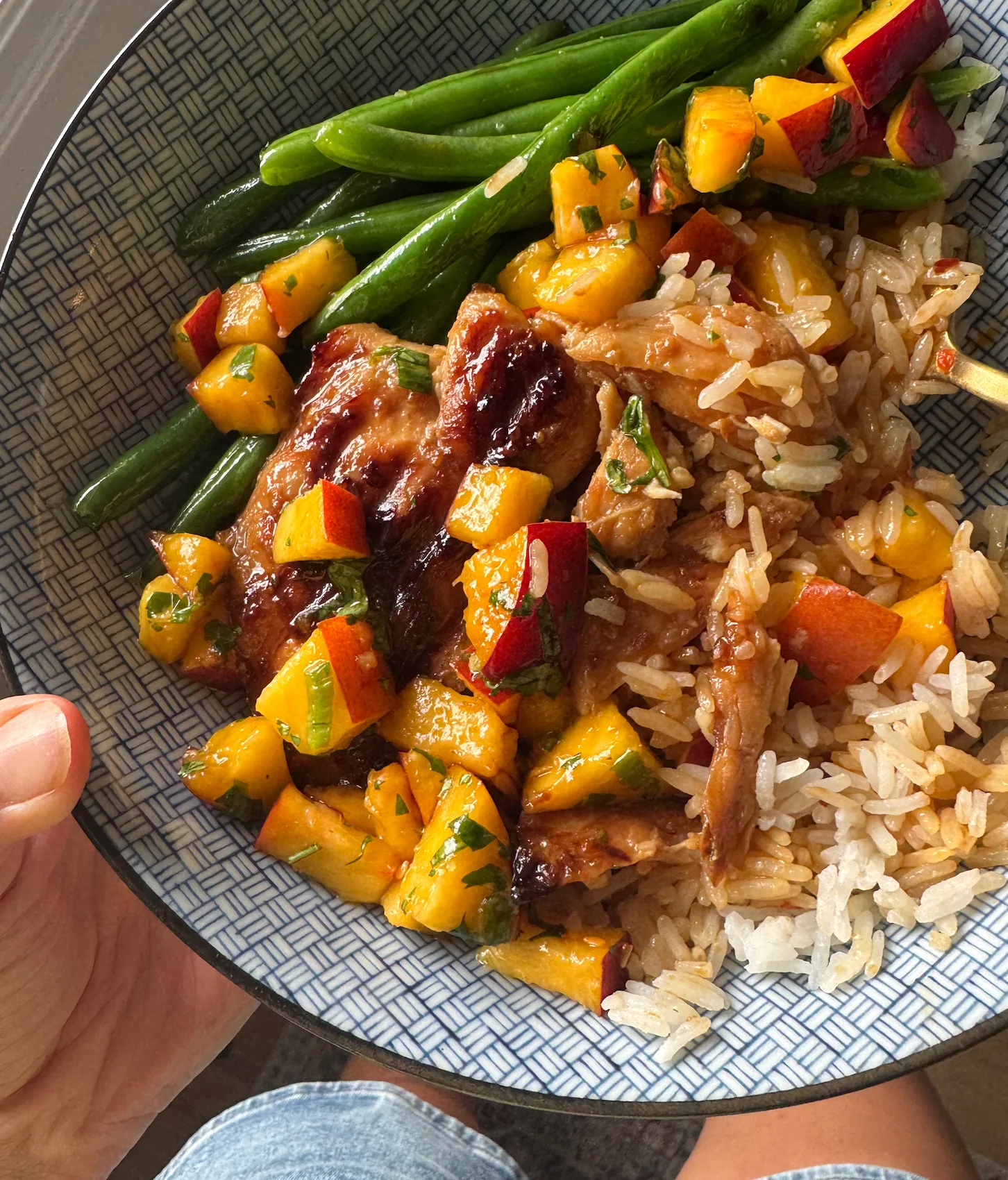
    Gorgeous Peach Salad

    Fresh cucumber, bitey shallots, cooling mint, and sweet fleshy peaches coming together in serious flavor harmony! I love this peach salad.

    16 reviews / 4.9 average

    Soba noodle salad.

    Spicy Peanut Soba Noodle Salad

    This Spicy Peanut Soba Noodle Salad features red peppers, cabbage, chicken, soba noodles, and a quick homemade spicy peanut sauce. Salads don’t get much yummier than this.

    91 reviews / 4.8 average

    Elote quinoa salad.

    Elote Style Quinoa Salad

    Elote Quinoa Salad made with velvety peppers confit, juicy sweet corn, homemade dressing, cotija cheese, lime, and spices. Perfect for summer and so, so good!

    23 reviews / 4.9 average

    Crispy rice salad.

    Crispy Rice Salad with Cucumbers and Herbs

    Paper-thin veggies, a shower of herbs, a pile of fried crispy red curry rice, and a limey garlicky vinaigrette all over top. This crispy rice salad is all I want to eat right now!

    50 reviews / 4.8 average

    Grilled chicken with hummus.

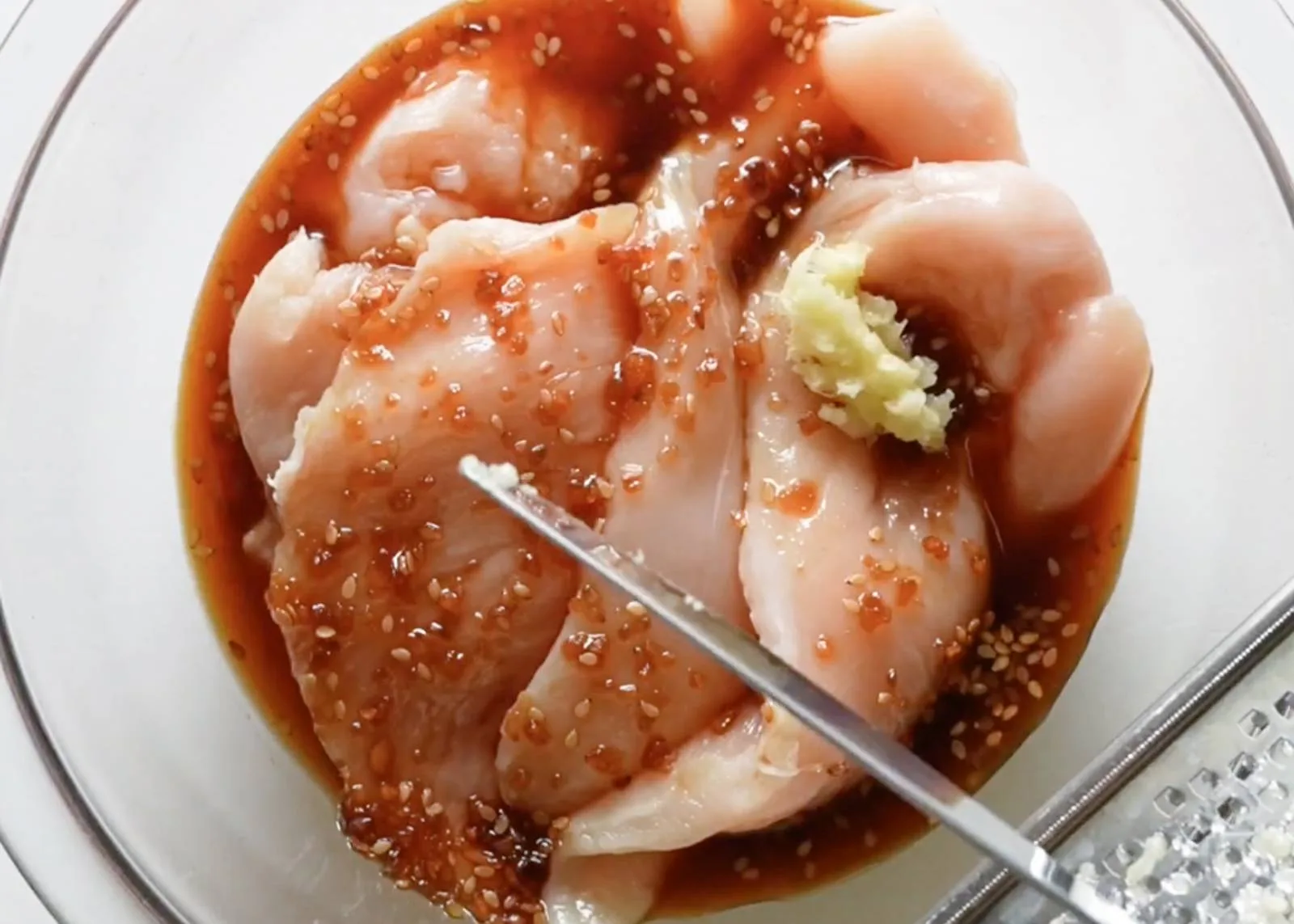
    Grilled Chicken with Pepperoncini Garlic Butter

    This is such a fun one! Grilled marinated chicken, a quick tomato cucumber salad, tangy bits of feta, and a zippy pepperoncini garlic butter sauce poured over the whole thing.

    69 reviews / 5 average

    Magic green sauce.

    5 Minute Magic Green Sauce

    5 Minute Magic Green Sauce – SO AWESOME. Made with easy ingredients like avocado, olive oil, cilantro, lime, garlic, and parsley! Vegan.

    217 reviews / 4.8 average

    Pickled strawberries on toast.

    Pickled Strawberries

    Unexpectedly delightful little pops of sweet vinegar-soaked strawberries on grilled sourdough with goat cheese, thyme, and honey!

    16 reviews / 4.9 average

    Banza chicken bowls.

    Banza Chicken Bowls with Calabrian Chili Sauce

    This bowl has it all! The crunch of the tomato cucumber salad, the thin slips of bitey red onion, the golden crisped air fryer chicken cut into tender little strips, a big pile of perfectly chewy Banza, and a dollop of tangy calabrian chile sauce on top.

    22 reviews / 5 average

    Salmon tacos.

    Salmon Tacos with Mango Corn Salsa

    Super easy salmon tacos loaded with a mango, sweet corn, and cucumber salsa!

    32 reviews / 5 average

    Zucchini spaghetti with burst tomato.

    Burst Tomato and Zucchini Spaghetti with Avocado Sauce

    Burst Tomato and Zucchini Spaghetti tossed with a simple, creamy, vegan avocado sauce. This healthy recipe is ready in 30 minutes!

    43 reviews / 4.9 average

    Almond butter chocolate chip zucchini bars.

    Almond Butter Chocolate Chip Zucchini Bars

    These Almond Butter Chocolate Chip Zucchini Bars are wholesome and perfect and just everything your summer needs! Made with oats, almond butter, zucchini, dates, and maple syrup. So many feel-good ingredients packed into one bar!

    32 reviews / 4.9 average

    Salmon on greens with dressing.

    The Oliver’s Salad

    We’re bringing you the most beautiful salad inspired by the restaurant Oliver’s in Minnesota. Tender salmon, savory peppers and garlic confit, buttery chunks of avocado, fire-roasted corn, bacon bits, and a river of homemade smoky ranch dressing.

    27 reviews / 4.9 average

    Lemongrass chicken with rice and zucchini.

    Lemongrass Chicken with Rice and Zucchini

    This Lemongrass Chicken with Rice and Zucchini is OMG-level good! Tender chicken thighs, sautéed and then simmered in a creamy coconut and lemongrass sauce, sits next to a steamy pile of jasmine rice, fresh herbs, and your choice of veg.

    73 reviews / 4.9 average

    Chicken wraps with tomatoes and kale.

    Ang’s Chicken Wraps

    Hellllooo quick summer lunch! These chicken wraps have me hooked. Shredded chicken, crispy cheddar cheese, fresh veg like tomato, corn, and lettuce, some pickled red onion, and not one, but TWO sauces.

    18 reviews / 4.9 average

    Harissa meatballs with hummus, feta, and zucchini.

    Harissa Meatballs with Whipped Feta

    These Harissa Meatballs with Whipped Feta are perfect for an easy SOS dinner! Store-bought meatballs, bell peppers, zucchini, harissa, and whipped feta all in one bowl. YUMMY!

    39 reviews / 5 average

    Basil sauce in a jar.

    Very Incredible Basil Sauce

    Punchy, salty, bright green sauce packed with fresh basil, chives, garlic, and a bit of oregano. This sauce can be poured out just about anything!

    20 reviews / 5 average

    Burst tomatoes with polenta and greens.

    Roasted Tomatoes with Goat Cheese Polenta

    Roasted Tomatoes with Goat Cheese Polenta! Fresh, juicy tomatoes, vibrant green spinach, and a creamy goat cheese polenta!

    47 reviews / 4.9 average

    Tomatoes and shrimp on orzo.

    Garlic Shrimp and Tomatoes with Parmesan Orzo

    Shrimp laced with buttery garlic and thyme and a burst tomato sauce served on a creamy Parmesan orzo.

    19 reviews / 4.8 average

    The post 35 Summer Produce Recipes For Your Farmer’s Market Haul appeared first on Pinch of Yum.

    This post was originally published on this site.

  • Galapagos Cruise Tips: What We Wish We Knew Before Our First Sailing

    Galapagos Cruise Tips: What We Wish We Knew Before Our First Sailing

    We’ve sailed big ships and small ships from oceans to rivers, itineraries built around beaches and others around glaciers, fjords, and ancient ruins. Though, the Galapagos doesn’t fit neatly into any of these categories. It’s part cruise, part expedition, part wildlife encounter. You won’t fully believe it until you’re standing in the middle of it. The Galapagos Islands operate by their own rules, and much of what we’ve learned about cruising over the years simply doesn’t apply here. Whether you’re just starting to research or already have a sailing booked, these are the Galapagos cruise tips we wish we knew before our trip.

    1. The Galapagos Is Unlike Any Cruise You’ve Taken Before

    If you’re coming to the Galapagos expecting anything resembling a traditional cruise vacation, toss those expectations out the window. There are no port towns, no beach clubs, and no onboard frills. The islands are a protected national park — one of the most ecologically significant places on the planet — and this impacts every aspect of your visit. The wildlife is the destination, and the ship is simply your transportation between islands.

    2. Choosing the Right Ship and Cruise Line Still Matters

    With that said, you should still give some consideration to the cruise line and ship you choose for your Galapagos cruise. There are over 70 ships offering expeditions.

    In most cruise regions, the choice comes down to amenities, entertainment, and onboard vibe. However, in the Galapagos, your decision should be based on your preference of ship size, expedition and educational level, and to a somewhat lesser degree, the onboard comforts. It’s important to know that all ships are small, as they are the only ones allowed to access this protected ecosystem. Still, they vary in capacity from 16 to 100 passengers. The caliber of your naturalist guides, the depth of your wildlife encounters, and the onboard enrichment component also vary by operator. And then there’s travel style, which ranges from luxury brands like Silversea and Celebrity Flora, to premium adventure products like HX Expeditions and Lindblad Expeditions, to the budget-friendly G Adventures.

    3. Itinerary Is Everything — Eastern, Western, and Northern Routes Are Different

    Along with choosing the right cruise line, you’ll want to carefully consider the itinerary options. Not all Galapagos itineraries are created equal. The archipelago is typically divided into route zones: eastern, western, and northern, each offering a distinct landscape and wildlife profile. It really surprised us how vastly different each island actually was!

    The western route, which includes Fernandina and Isabela, is where you’ll find flightless cormorants, Galapagos penguins, and dramatic volcanic landscapes. The eastern and central routes around Santa Cruz, San Cristobal, Espanola, and Floreana offer giant tortoises, sea lion colonies, and albatrosses. The northern route, reaching Genovesa, is famous for bird life including red-footed boobies and frigatebirds. Most itineraries don’t cover every zone, so decide what wildlife matters most to you and choose accordingly. Or, you could combine itineraries for a longer and more comprehensive visit!

    4. A Pre- or Post-Cruise Extension Is Worth Every Penny

    The Galapagos sits off the coast of Ecuador, which means you’re already in one of the most spectacular regions in South America. It would be a shame to fly all that way and not extend your trip. Machu Picchu in Peru is a natural pairing and is one of those bucket-list experiences that fits perfectly. On the Ecuador side, Quito’s historic old city is a UNESCO World Heritage Site and an impressive destination in its own right. The Amazon basin is also accessible from Quito for those who want a full immersion in South American wildlife. Regardless of what you choose to do, building in some extra days around your sailing is worth every penny.

    Just be prepared for lots of long days and lots of travel. The closest comparison we could draw was the land portion of our Alaska cruisetour. During our Machu Picchu extension, we stayed in four different hotels over the span of a week, transiting from Lima to the Sacred Valley to Cusco to Quito and finally to Baltra to board our ship.

    5. The Time of Year You Go Shapes What You’ll See

    The Galapagos is a year-round destination, but the season you choose does have an impact on your experience. The warm, but rainy, season generally runs from December through May, bringing calmer seas, warmer water, lush green landscapes, breeding season for land reptiles, and excellent snorkeling conditions. The cool, dry season roughly from June through November brings colder water, potentially rougher seas between islands, and an influx of marine life including sharks, dolphins, and active sea lion pups. Neither season is “better” — it depends entirely on what you most want to see. Research the wildlife calendar and plan around that.

    With that said, Mother Nature isn’t always predictable. Given recent shifts in weather patterns, our late June/early July sailing wasn’t 100% typical. The weather was actually still quite warm and humid, as were the water temperatures due to El Niño impacts.

    6. Budget Carefully — This Trip Is More Expensive Than You May Expect

    Galapagos cruises are not cheap, and the total cost goes well beyond the price of the cruise itself. The cruise fare is just the starting point. Add flights, a pre- and/or post-cruise hotel stay, tips for your guides and onboard crew members, onboard extras (if applicable), and any add-on excursions or land extensions, and you’re looking at a minimum of a few thousand dollars extra per person in addition to the cruise fare. Mid-range cruise fares typically start at $5,000 to $10,000 per person, with higher end expeditions costing even more. Factor all of this in early so the final cost doesn’t catch you off guard.

    In addition, every visitor must pay a $200 USD National Park entrance fee and a $20 Transit Control Card fee upon arrival. Some cruise lines, like HX Expeditions, take care of these fees for you by bundling them into the cruise fare.

    7. Book Early — This Isn’t a Last-Minute Destination

    The Galapagos National Park strictly limits the number of visitors allowed on the islands, which means total capacity across all ships is capped. Popular itineraries and in-demand vessels book up early, especially for peak wildlife seasons. The best cabins go first as well, and prices tend to rise as departure dates approach. If you have a specific route, season, or cruise line in mind, start the booking process as early as possible. Locking in early also gives you more time to handle logistics like flights and extensions, save money, and read up on the Big 15 (wildlife species endemic to the Galapagos Islands).

    8. Use a Travel Advisor Who Specializes in This Region

    In addition to being completely different than ocean or river cruises, the Galapagos has more variables than most cruise destinations — so navigating it on your own takes significant research. A travel advisor who specializes in expedition cruising or South American travel can match you to the right itinerary for your interests and handle all the logistics for you. This is exactly the kind of trip where the right advisor earns their value many times over. Our travel partner MEI-Travel can help you through this process at no additional cost to you.

    9. Fly In at Least a Day Early (We Recommend More!)

    There are no international flights into the Galapagos. All visitors fly first to mainland Ecuador — either Quito or Guayaquil — and then take a domestic flight usually to Baltra Island to complete embarkation. While most major cruise lines include this domestic flight, the plane won’t wait for you if you have any issues with your international flight into Ecuador.

    Flying in at least one day early gives you a buffer against delays and gives you time to experience Quito before heading to the islands. It also gives your body a chance to rest before the expedition schedule begins, which matters more than you might think.

    10. Understand the Entry Requirements Before You Arrive

    Getting into the Galapagos involves a few steps that are easy to miss if you’re not prepared. As mentioned previously, you’ll need to obtain a Transit Control Card (TCT) and pay the National Park entrance fee. If not taken care of by your cruise line, you’ll need to pay both of these fees in cash in US dollars.

    Before boarding the domestic flight to Baltra, all bags must undergo a biosecurity screening as well. Your checked bags will then be zip-tied shut until you arrive in the Galapagos (not your carry-on luggage, though).

    11. Don’t Expect a Traditional Embarkation Process

    One thing that surprised us, but I guess we should have expected, was that the embarkation process was anything but ordinary. Upon arrival at the Baltra airport, we dropped off our checked luggage with HX staff and boarded a bus with our carry-on bags. We were then transported to a small pier where we climbed into zodiac boats with our gear (laptops included) for a 10-minute or so ride to the ship that was anchored nearby. No security screening. No traditional check-in process. No walk up the gangway.

    With that said, come prepared with the essentials like sunscreen, sunglasses, a rain jacket, and non-slip shoes. You need to take the zodiac ride to the ship whether it’s rain or sunshine.

    12. Come Prepared for Seasickness

    The Galapagos Islands lie at a convergence of multiple ocean currents, and cruising between islands can be surprisingly rough — particularly during the cool season when the Humboldt Current sweeps up from Antarctica. Even seasoned cruisers who’ve never had an issue with motion sickness have found the Galapagos waters to be a different story. Don’t wait until you’re already feeling ill to address it. Pack some seasickness remedies like Dramamine or Bonine, ginger candies, or Sea-Bands just in case. Many crossings happen overnight while you’re sleeping, which sounds convenient until you can’t sleep because you’re sick.

    13. Know the Difference Between Wet and Dry Landings

    Similar to other expeditions like Antarctica, shore excursions are a bit different in the Galapagos. Every shore excursion involves a zodiac boat (or panga) and can either be a wet landing or a dry landing. Knowing which one is coming changes how you dress for the tour. A dry landing means the zodiac pulls directly up to a small dock and you step off without getting wet. A wet landing means you hop off the zodiac into usually ankle-deep water and wade to shore.

    Your expedition team will tell you what to expect before each excursion, but being prepared makes the transition smoother. For wet landings, you’ll want to wear water shoes and keep good footwear stowed in a dry bag or wear hybrid water/hiking sandals like Keen’s Newport H2 closed toe sandals.

    14. Know What Wildlife to Expect — and When

    The Galapagos is home to an extraordinary array of wildlife, many found nowhere else on earth — think giant tortoises, marine iguanas, blue-footed and red-footed boobies, Galapagos penguins, flightless cormorants, frigatebirds, waved albatross, sea lions, sharks, and more. But not all wildlife is visible year-round or on every island.

    For example, blue-footed boobies typically do their courtship dance between June and August. Waved albatross are only found on Española, while flightless cormorants are only found on Isabela and Fernandina islands. And whales and sharks are most commonly spotted from July through November. So before you sail, spend some time understanding the seasonal patterns for the species you most want to see and plan accordingly.

    15. It’s Not a Cruise — It’s an Expedition

    If you’re used to sea days spent lounging at the pool, port days relaxing on the beach with a drink in hand, and evenings full of entertainment options, the Galapagos cruise experience will feel entirely different. Days are highly structured and packed from early morning to dinner. National Park rules dictate when landings happen, which often means early mornings and back-to-back activities. And then sometimes, Mother Nature has other plans, so flexibility is crucial.

    Think of it less like a cruise and more like a nature expedition that happens to have a comfortable ship as your base. If you’ve cruised Antarctica or the Arctic, the rhythm will feel familiar. Come energized and ready for a one-of-a-kind trip.

    16. If You’re Spending Time in Quito (or Cusco), Prepare for Altitude Sickness

    Quito, Ecuador’s capital and the most common gateway city for Galapagos cruisers, sits at nearly 9,400 feet above sea level — significantly higher than Denver, and high enough that many visitors feel the effects. Cusco, the gateway for Machu Picchu, is even higher! Symptoms of altitude sickness can include headaches, fatigue, shortness of breath, dizziness, and disrupted sleep, and they often hit within the first several hours of arrival. The good news is that the Galapagos Islands sit at sea level, so any altitude effects are purely a mainland concern.

    Coming from a homebase of roughly sea level, we definitely felt the effects in Cusco but had thankfully adjusted by the time we arrived in Quito. Just existing felt like exercise, we had to take ibuprofen to combat headaches, and our sleep was impacted.

    To manage altitude sickness: drink plenty of water, avoid alcohol, take it easy on arrival day, and consider talking to your doctor about altitude medication if you’re particularly sensitive.

    17. Pack Specifically for This Environment

    The Galapagos requires a more intentional packing list than the Caribbean. The ecosystem is fragile and the activities are active, which means your gear choices matter. You’ll need reef-safe sunscreen and bug spray. Water shoes are essential for wet landings and rocky shorelines. Sturdy hiking shoes or sneakers with good traction will serve you best on lava fields and inland walks. A hat, sunglasses, UV-protective clothing, and a lightweight rain jacket or poncho are also essential. Binoculars are one of the most-recommended items by experienced Galapagos visitors.

    And given how much time you’ll spend in zodiacs and near water, a dry bag, a waterproof phone case, and a phone lanyard or wrist strap are worth adding before you leave home. You might want to consider a waterproof camera, like a GoPro, as well for snorkeling and water activities.

    Of note: most cruise lines provide reusable water bottles and refill stations on the ship. This water is filtered and completely safe to drink (unlike tap water in Peru or Ecuador).

    18. These Cabin Hacks Go a Long Way

    In addition to the above-mentioned essentials, you’ll want to pack some items to keep your cabin organized. The number one item we always recommend are magnetic hooks. These can be used to hang hats, bags, and jackets. You might also want to pack some travel hangers or a travel clothesline and clips to help with drying wet bathing suits and laundry. Yes, regardless of how well you pack, you will have to do laundry during the cruise.

    We always pack a plastic shoe organizer as well that we hang on the wall with magnets. We use this to store small items like toiletries, glasses and sunglasses, medications, sunscreen, binoculars, charging cords, and the like. With compact cruise cabins, these space-saving hacks go a long way in helping to free up closet and counter space.

    19. The Currency and Power Outlets Work for U.S. Travelers

    Ecuador uses the US dollar as its official currency, which is convenient for American travelers. However, many small vendors accept cash only and you’re not likely to find ATMs, so be sure to have enough cash on hand. Beyond the mandatory National Park fee and Transit Control Card (if not included in your cruise fare), you’ll want cash for crew and guide tips, any local purchases, and incidentals.

    Another convenience is that power outlets in Ecuador are 110V so you won’t need any converters during your pre-cruise hotel stay. Though, you should check what outlet types are available on your cruise ship before packing.

    20. There Are No Restrooms During Shore Landings

    This is one of those practical realities that you might not think of right away, but it’s worth knowing upfront: once you’re ashore on a Galapagos landing, there are no bathrooms. You won’t find public facilities at visitor sites — the islands are protected wilderness, and the infrastructure simply doesn’t exist. Excursions typically run two to three hours per landing, so the timing is manageable for most people. The key is to make use of facilities on the ship right before boarding the zodiac. It’s also worth being mindful of water or coffee intake in the hour or so before each outing.

    21. The No-Trace Rules Are Strict

    The Galapagos National Park operates under rigorous conservation rules. You must stay on marked trails at all times. You must maintain a minimum distance from wildlife — though the animals themselves often ignore this boundary entirely and approach you on their own terms. Further, you cannot touch, feed, or disturb any wildlife. No food or drink goes ashore except water and nothing comes back. All visits take place with a licensed naturalist guide, and going off on your own is not permitted.

    In fact, HX takes conservation so seriously that they don’t even risk guests losing their ship key cards while ashore. The cruise line does not use key cards at all (which does mean that your rooms do not lock when going ashore — they can still be locked from the inside).

    22. Life Onboard Is Casual and Expedition-Focused

    Don’t pack your formal outfits or worry about dress codes. Galapagos ships, particularly expedition-style vessels, are casual. The focus is entirely on the journey during the day, so you should dress comfortably for these activities. Evenings onboard are relaxed too — an expedition briefing for the next day, dinner in the main restaurant, and early bedtime. There is a bar onboard, but you’ll likely be too tired most nights to even grab an after-dinner drink.

    Quick-dry clothing, layers for cool evenings, and comfortable outdoor gear cover virtually everything you’ll need. Of course, you’ll still want to shower and change up for dinner, but there’s no need for anything fancy. During our sailing, evening outfits ranged from shorts and t-shirts to jeans and collared shirts for men and casual dresses for women.

    23. There’s Little Down Time

    While we knew expedition cruising was active, even our previous Antarctica sailing didn’t fully prepare us for just how packed our itinerary would be. It started on embarkation day with a 6 AM hotel departure, flight from Quito to Baltra, mandatory briefings and safey drill once onboard, and an afternoon hike before dinner.

    During our sailing, each day thereafter typically had three or four outings which could include hikes, deep water snorkeling, kayaking or paddleboarding, panga rides, beach landings for free time or snorkeling, and glass bottom boat tours for non-snorkelers. The schedule usually featured two activities before lunch and two activities after lunch with some starting as early as 6 AM and wrapping up as late as 6 PM.

    The evening activities started between 6:30 and 7 PM, consisting of a “tiny talk” (or mini-lecture), an expedition briefing for the next day, and then dinner. Other rare moments of free time were filled with educational talks, documentaries, and the like.

    Of course, guests aren’t required to do it all. If you’d prefer some time to relax, you can do that too. Specifically on HX Santa Cruz II, there’s a bar with televisions to catch a game, a sundeck, two hot tubs, and the Science Center to grab a coffee and relax with a good book.

    24. The Destination is Family-Friendly

    Another thing that surprised us about our Galapagos cruise was the number of kids onboard. While this will vary by the specific cruise line you choose, the Galapagos in general is a very family-friendly destination. It’s also a great multi-generational trip. Most cruise lines sailing in the region allow kids around 6 years and older to sail.

    Kids love animials, the outdoors, and active adventures, so parents will never have to worry about them being bored. Many lines even provide onboard activities and educational opportunities specifically for younger travelers.

    Of note: while there are alternate options for those who want a less intense hike or don’t want to snorkel, a Galapagos cruise isn’t accessible for all guests. You must be able to climb in and out of a zodiac boat at the very least.

    25. You’re Not as Disconnected as You Might Think

    It’s true that the Galapagos Islands are remote, and you may want to truly disconnect during your trip. But you don’t have to! Starlink has revolutionized internet access in the Galapagos. While your international cell phone coverage probably won’t work while ashore in the National Park, the WiFi on your cruise ship is adequate for most needs. You likely won’t be able to stream Netflix or YouTube, but we had no issues checking emails, posting on social media, sending iMessages, and even completing a few Teams calls during the trip.

    Bonus: Why Choose HX Expeditions

    While inclusions will vary from cruise line to cruise line, we recently sailed with HX Expeditions and can tell you that quite a bit is included in the fare. An HX Galapagos cruise includes flights from Quito to Baltra and back, two nights in a hotel in Quito, airport transfers, an excursion in Quito pre-cruise, National Park admission fee, expedition gear (backpack and water bottle), all onboard activities, shore excursions along with use of snorkel equipment and walking sticks, all meals, all drinks (except premium offerings), gratuities, and WiFi.

    There are many options in the region, but HX has 130 years of expertise! The line places an emphasis on conservation and sustainability, and it appeals to a wide range of travelers from couples and families to adventurers and even solo travelers by offering a low single supplement.

    While Santa Cruz II is a bit different than other ships in the fleet (think smallest and oldest), we can confidently say we wouldn’t hesitate to step aboard another HX ship in a different region of the world.

    Comments

    Are you planning a Galapagos cruise? If you’ve traveled here before, what other Galapagos cruise tips would you add to this list? Drop us an anchor below to share your expedition cruise experiences.

    The post Galapagos Cruise Tips: What We Wish We Knew Before Our First Sailing appeared first on EatSleepCruise.com.

    This post was originally published on this site.

  • How to Deal with Caregiver Guilt

    How to Deal with Caregiver Guilt

    How to Deal with Caregiver Guilt

    What is caregiver guilt? If you care for an elderly or disabled family member, you probably already know the anxiety of not doing enough and chronically ignoring fatigue or resentment. Many family caregivers feel it is a failure to ask for outside help from friends, family, or professionals. What will people assume? How will they judge us and our family?

    Caregivers often fear judgment not only from others, but from themselves. In truth, we want to be superhuman, with a bottomless well of patience and endless supply of energy. However, it is not realistic to turn off our own needs. Part of the long-term caregiver experience is being honest about how very hard it is to do what is essentially a part- or even full-time job—without the training.

    The Emotional Toll of Caregiving

    When considering a loved one’s care needs, we might first think about the practical: doctor’s appointments, medication routines, and ADLs (activities of daily living) like bathing and eating meals. There are financial and legal considerations and many decisions to make about changes to your loved one’s lifestyle. (Read our full list of tips for new family caregivers here, and check out our list of caregiver book and podcast recommendations.)

    What we may not consider is the emotional side of caregiving. For those caring for aging parents, the role reversal can be difficult on both sides; children grieve as they watch their parents lose independence, strength, and health, and parents struggle to allow their children to be the caregiver now. There can be a power struggle or a dip in the senior parent’s mental health as they lose autonomy and a sense of purpose.

    Adult children take on a lot as caregivers to aging parents, but many of us were raised to expect it to be a natural part of our lives. As a result, when we are overstimulated and under-rested, we ignore it. We tell ourselves we owe it to our parents, and we must take on the entire responsibility ourselves. We fear we are not doing our duty to them if we delegate certain care responsibilities or take a break.

    We also fear loss of control—what if we can’t trust someone else to do as good of a job as we would? If our parent gets worse, is it our fault?

    This over-extending quickly leads to compassion fatigue and burnout, affecting our entire lives.

    Managing Caregiver Guilt with Basic Prioritization

    While letting go of caregiver guilt is easier said than done, this is a muscle that can be trained. The first hurdle is giving yourself permission to accept the guilt and then let it go. Accept that you will experience frustration and mixed emotions as a normal part of this difficult process. You do not have to pretend those feelings are not there.

    It may help to journal or talk to your spouse or close friend—or even a therapist or support group—about these complicated feelings. Accept emotional support from those who are “in it” with you, like siblings, or from friends who have no connection to your family and will bear no emotional impact besides supporting you.

    Beyond acceptance and emotional care, you can focus on some basic priorities and decisions to reduce your caregiving guilt and better balance the different areas of your life:

    ● Stop comparing. Do not compare your situation with those of others around you. You don’t know the details of their lives, and they do not know yours. Do what is best with what you have, in the moment. That is all anyone can do.
    ● Ask for help. This is one of the most important actions you can take to be an effective caregiver for your loved one. If you burn out, you are no use to anyone—not yourself, and not them. Prevent burnout by seeking professional services like respite care or home care, or by asking trusted friends or family members for some of their time and support.
    ● Know your limits. Related to asking for help, be honest with yourself about what you can and cannot do in light of your physical capacity, your schedule, and how close or far you live from your loved one. Be realistic about what is possible in a day and what you need to stay healthy and fully functioning.
    ● Focus on the big picture. Is your loved one safe and comfortable? Were their basic needs met today? Don’t get lost in “shoulds” and details. Think good over perfect.
    ● Schedule self-care. Self-care can mean daily walks, an hour to watch your favorite show uninterrupted, or brunch with friends. At minimum, it means adequate sleep, regular meals, and staying hydrated.

    More American adults than ever before are caring for an elderly loved one an average of 14-21 hours per week. Trying to do this alone out of a sense of duty is a short road to burnout, which puts you and your loved one at risk. Don’t let feeling guilty as a caregiver keep you from drawing on outside resources for help; you and your loved one will both be better off for it.

    If your loved one needs home care, our VetAssist mission is to make home care easily and quickly accessible for those who qualify through the VA Pension with Aid and Attendance benefit. Veterans Home Care can help you determine whether you or your loved one will be eligible to receive the benefit, which can cover some or all of the cost of home care, and we make it easy to apply. Chat with us via our website, or call us at (888) 314-6075.

    The post How to Deal with Caregiver Guilt appeared first on Veterans Home Care – VA Aid and Attendance Pension Benefit.

    This post was originally published on this site.

  • How to Deal with Caregiver Guilt

    How to Deal with Caregiver Guilt

    How to Deal with Caregiver Guilt

    What is caregiver guilt? If you care for an elderly or disabled family member, you probably already know the anxiety of not doing enough and chronically ignoring fatigue or resentment. Many family caregivers feel it is a failure to ask for outside help from friends, family, or professionals. What will people assume? How will they judge us and our family?

    Caregivers often fear judgment not only from others, but from themselves. In truth, we want to be superhuman, with a bottomless well of patience and endless supply of energy. However, it is not realistic to turn off our own needs. Part of the long-term caregiver experience is being honest about how very hard it is to do what is essentially a part- or even full-time job—without the training.

    The Emotional Toll of Caregiving

    When considering a loved one’s care needs, we might first think about the practical: doctor’s appointments, medication routines, and ADLs (activities of daily living) like bathing and eating meals. There are financial and legal considerations and many decisions to make about changes to your loved one’s lifestyle. (Read our full list of tips for new family caregivers here, and check out our list of caregiver book and podcast recommendations.)

    What we may not consider is the emotional side of caregiving. For those caring for aging parents, the role reversal can be difficult on both sides; children grieve as they watch their parents lose independence, strength, and health, and parents struggle to allow their children to be the caregiver now. There can be a power struggle or a dip in the senior parent’s mental health as they lose autonomy and a sense of purpose.

    Adult children take on a lot as caregivers to aging parents, but many of us were raised to expect it to be a natural part of our lives. As a result, when we are overstimulated and under-rested, we ignore it. We tell ourselves we owe it to our parents, and we must take on the entire responsibility ourselves. We fear we are not doing our duty to them if we delegate certain care responsibilities or take a break.

    We also fear loss of control—what if we can’t trust someone else to do as good of a job as we would? If our parent gets worse, is it our fault?

    This over-extending quickly leads to compassion fatigue and burnout, affecting our entire lives.

    Managing Caregiver Guilt with Basic Prioritization

    While letting go of caregiver guilt is easier said than done, this is a muscle that can be trained. The first hurdle is giving yourself permission to accept the guilt and then let it go. Accept that you will experience frustration and mixed emotions as a normal part of this difficult process. You do not have to pretend those feelings are not there.

    It may help to journal or talk to your spouse or close friend—or even a therapist or support group—about these complicated feelings. Accept emotional support from those who are “in it” with you, like siblings, or from friends who have no connection to your family and will bear no emotional impact besides supporting you.

    Beyond acceptance and emotional care, you can focus on some basic priorities and decisions to reduce your caregiving guilt and better balance the different areas of your life:

    ● Stop comparing. Do not compare your situation with those of others around you. You don’t know the details of their lives, and they do not know yours. Do what is best with what you have, in the moment. That is all anyone can do.
    ● Ask for help. This is one of the most important actions you can take to be an effective caregiver for your loved one. If you burn out, you are no use to anyone—not yourself, and not them. Prevent burnout by seeking professional services like respite care or home care, or by asking trusted friends or family members for some of their time and support.
    ● Know your limits. Related to asking for help, be honest with yourself about what you can and cannot do in light of your physical capacity, your schedule, and how close or far you live from your loved one. Be realistic about what is possible in a day and what you need to stay healthy and fully functioning.
    ● Focus on the big picture. Is your loved one safe and comfortable? Were their basic needs met today? Don’t get lost in “shoulds” and details. Think good over perfect.
    ● Schedule self-care. Self-care can mean daily walks, an hour to watch your favorite show uninterrupted, or brunch with friends. At minimum, it means adequate sleep, regular meals, and staying hydrated.

    More American adults than ever before are caring for an elderly loved one an average of 14-21 hours per week. Trying to do this alone out of a sense of duty is a short road to burnout, which puts you and your loved one at risk. Don’t let feeling guilty as a caregiver keep you from drawing on outside resources for help; you and your loved one will both be better off for it.

    If your loved one needs home care, our VetAssist mission is to make home care easily and quickly accessible for those who qualify through the VA Pension with Aid and Attendance benefit. Veterans Home Care can help you determine whether you or your loved one will be eligible to receive the benefit, which can cover some or all of the cost of home care, and we make it easy to apply. Chat with us via our website, or call us at (888) 314-6075.

    The post How to Deal with Caregiver Guilt appeared first on Veterans Home Care – VA Aid and Attendance Pension Benefit.

    This post was originally published on this site.

  • How to Deal with Caregiver Guilt

    How to Deal with Caregiver Guilt

    How to Deal with Caregiver Guilt

    What is caregiver guilt? If you care for an elderly or disabled family member, you probably already know the anxiety of not doing enough and chronically ignoring fatigue or resentment. Many family caregivers feel it is a failure to ask for outside help from friends, family, or professionals. What will people assume? How will they judge us and our family?

    Caregivers often fear judgment not only from others, but from themselves. In truth, we want to be superhuman, with a bottomless well of patience and endless supply of energy. However, it is not realistic to turn off our own needs. Part of the long-term caregiver experience is being honest about how very hard it is to do what is essentially a part- or even full-time job—without the training.

    The Emotional Toll of Caregiving

    When considering a loved one’s care needs, we might first think about the practical: doctor’s appointments, medication routines, and ADLs (activities of daily living) like bathing and eating meals. There are financial and legal considerations and many decisions to make about changes to your loved one’s lifestyle. (Read our full list of tips for new family caregivers here, and check out our list of caregiver book and podcast recommendations.)

    What we may not consider is the emotional side of caregiving. For those caring for aging parents, the role reversal can be difficult on both sides; children grieve as they watch their parents lose independence, strength, and health, and parents struggle to allow their children to be the caregiver now. There can be a power struggle or a dip in the senior parent’s mental health as they lose autonomy and a sense of purpose.

    Adult children take on a lot as caregivers to aging parents, but many of us were raised to expect it to be a natural part of our lives. As a result, when we are overstimulated and under-rested, we ignore it. We tell ourselves we owe it to our parents, and we must take on the entire responsibility ourselves. We fear we are not doing our duty to them if we delegate certain care responsibilities or take a break.

    We also fear loss of control—what if we can’t trust someone else to do as good of a job as we would? If our parent gets worse, is it our fault?

    This over-extending quickly leads to compassion fatigue and burnout, affecting our entire lives.

    Managing Caregiver Guilt with Basic Prioritization

    While letting go of caregiver guilt is easier said than done, this is a muscle that can be trained. The first hurdle is giving yourself permission to accept the guilt and then let it go. Accept that you will experience frustration and mixed emotions as a normal part of this difficult process. You do not have to pretend those feelings are not there.

    It may help to journal or talk to your spouse or close friend—or even a therapist or support group—about these complicated feelings. Accept emotional support from those who are “in it” with you, like siblings, or from friends who have no connection to your family and will bear no emotional impact besides supporting you.

    Beyond acceptance and emotional care, you can focus on some basic priorities and decisions to reduce your caregiving guilt and better balance the different areas of your life:

    ● Stop comparing. Do not compare your situation with those of others around you. You don’t know the details of their lives, and they do not know yours. Do what is best with what you have, in the moment. That is all anyone can do.
    ● Ask for help. This is one of the most important actions you can take to be an effective caregiver for your loved one. If you burn out, you are no use to anyone—not yourself, and not them. Prevent burnout by seeking professional services like respite care or home care, or by asking trusted friends or family members for some of their time and support.
    ● Know your limits. Related to asking for help, be honest with yourself about what you can and cannot do in light of your physical capacity, your schedule, and how close or far you live from your loved one. Be realistic about what is possible in a day and what you need to stay healthy and fully functioning.
    ● Focus on the big picture. Is your loved one safe and comfortable? Were their basic needs met today? Don’t get lost in “shoulds” and details. Think good over perfect.
    ● Schedule self-care. Self-care can mean daily walks, an hour to watch your favorite show uninterrupted, or brunch with friends. At minimum, it means adequate sleep, regular meals, and staying hydrated.

    More American adults than ever before are caring for an elderly loved one an average of 14-21 hours per week. Trying to do this alone out of a sense of duty is a short road to burnout, which puts you and your loved one at risk. Don’t let feeling guilty as a caregiver keep you from drawing on outside resources for help; you and your loved one will both be better off for it.

    If your loved one needs home care, our VetAssist mission is to make home care easily and quickly accessible for those who qualify through the VA Pension with Aid and Attendance benefit. Veterans Home Care can help you determine whether you or your loved one will be eligible to receive the benefit, which can cover some or all of the cost of home care, and we make it easy to apply. Chat with us via our website, or call us at (888) 314-6075.

    The post How to Deal with Caregiver Guilt appeared first on Veterans Home Care – VA Aid and Attendance Pension Benefit.

    This post was originally published on this site.

  • VA Survivor Claims Are Surging: What the DIC Data Means for Military Families in 2026

    VA Survivor Claims Are Surging: What the DIC Data Means for Military Families in 2026

    This post was originally published on this site.

    Most veterans spend years focused on their own disability rating and never plan for what happens to their family if a service-connected condition eventually takes their life. 

    That’s understandable. It’s not a comfortable thing to think about.  

    But the VBA data shows a sharp, specific surge in survivor claims that makes this worth a second look, particularly for veterans with a 100% VA rating or Permanent & Total, and for spouses who may not know DIC exists until they need it. 

    This article walks through what Dependency and Indemnity Compensation (DIC) is, what the numbers actually show about survivor benefits, why the surge is likely happening now, and what it means for military families planning ahead. 

    Summary of Key Points

    • New VA DIC statistics show DIC recipients rose 20.7% year-over-year in FY2025 — from 46,153 to 55,700 
    • New surviving-child DIC recipients rose 45% — the sharpest increase of any survivor category 
    • New surviving-spouse DIC recipients rose 19.8%, from 44,255 to 53,019 
    • Total DIC payments reached $11.51 billion in FY2025, reaching 549,324 surviving family members nationwide 
    • The surge likely reflects delayed deaths from service-connected conditions among veterans of the PACT Act era, though the VBA data does not break out cause of death by category 

    What is DIC?

    Dependency and Indemnity Compensation (DIC) is a tax-free monthly benefit paid to eligible surviving spouses, children, and in some cases dependent parents of a veteran who died from a service-connected condition, or who was rated Permanent & Total for a qualifying period before death. It is separate from — and in addition to — any life insurance or Social Security survivor benefits a family may receive.  

    This article focuses on what’s new: the trend data behind the recent surge, not the eligibility mechanics themselves. 

    >> For a full breakdown of eligibility rules and current payment rates, see VA Dependency and Indemnity Compensation (DIC) Explained and the current VA DIC rates.  

    The 2025 Surge, By the Numbers

    According the VBA, new DIC (Dependency and Indemnity Compensation) claims rose 20.7% in 2025, from 46,153 to 55,700 new recipients. New surviving-child claims jumped even more sharply (up 45%), from 1,750 to 2,537. New surviving-spouse claims rose 19.8%. Altogether, DIC paid out $11.51 billion to 549,324 surviving family members nationwide in FY2025. 

    -VA Claims Insider

    The VBA data shows survivor claims growing meaningfully faster than veteran compensation claims overall. Here’s the year-over-year comparison across the three new-recipient categories the report tracks: 

    Category  FY2024 New Recipients  FY2025 New Recipients  YoY Change 
    Surviving spouses  44,255  53,019  +19.8% 
    Surviving children  1,750  2,537  +45.0% 
    Total new DIC recipients  46,153  55,700  +20.7% 

    Total DIC payments across all recipients — new and existing — reached $11.51 billion in FY2025, covering 549,324 people nationwide. That total sits alongside, but separate from, the $174.05 billion the VA paid in veteran disability compensation the same year. 

    Why the Surge is Likely Happening Now

    The VBA report doesn’t break down DIC claims by cause of death, so any explanation of why the numbers moved this much has to be stated as informed interpretation rather than proven fact. That said, the timing lines up with a plausible explanation: the PACT Act, signed in August 2022, dramatically expanded the list of presumptive conditions connected to burn pit and other toxic exposures.  

    Veterans who developed cancersrespiratory disease, and other serious conditions tied to those exposures are now several years into that presumptive-connection window — long enough for some of the most severe cases to result in death from a service-connected condition. If that dynamic is a meaningful driver, DIC claims tied to toxic-exposure conditions would be expected to keep climbing for at least the next several years as the PACT Act cohort ages. 

    The sharper jump in surviving-child claims (45%, versus 19.8% for spouses) is worth noting on its own. It suggests a meaningful share of the veterans behind this surge died relatively young, while their children were still dependents — consistent with service-connected conditions cutting lives short well before typical retirement age, rather than age-related decline among an older veteran population. 

    What This Means for Veterans and Their Families

    • If you’re rated 100% or Permanent & Total: your survivors are likely already eligible for DIC in the event of your death, but eligibility rules are specific about cause of death and duration of rating. Confirm your P&T status is documented and that your dependents are correctly listed on your VA award — this is the paperwork that determines how quickly a claim can be processed. 
    • If you’re a spouse or dependent: DIC is not automatic. It requires a claim to be filed, generally with a death certificate, the veteran’s service and medical records, and evidence connecting the cause of death to a service-connected condition if the veteran wasn’t already rated 100% or P&T for the required period. 
    • If your loved one’s death may be connected to toxic exposure: conditions added under the PACT Act may qualify even if the veteran never filed a disability claim during their lifetime. This is one of the more commonly missed DIC eligibility paths. 

    For the full eligibility framework, current payment rates, and other benefits available to surviving families, see the best VA survivor benefits and the complete guide to Permanent & Total VA disability, which explains how P&T status connects directly to survivor eligibility. 

    >> View the Full Guide to VA Survivor Benefits: DIC, Pension, Eligibility, and How to Apply 

    Conclusion

    DIC claims grew faster than almost any other category in 2025 — a 20.7% jump in new recipients, driven even more sharply by a 45% increase in surviving children. Whatever the exact cause, the trend points toward more military families needing to navigate this benefit, often for the first time, without much warning.  

    Understanding DIC eligibility and getting your own P&T status and dependent records in order now is one of the more overlooked but consequential pieces of planning a veteran and their family can do. 

    FAQs | Frequently Asked Questions

    What is DIC and who qualifies?

    Dependency and Indemnity Compensation is a tax-free monthly benefit for eligible surviving spouses, children, and dependent parents of a veteran who died from a service-connected condition, or who was rated Permanent & Total for a qualifying period before death. 

    How much have DIC claims grown recently?

    New DIC recipients rose 20.7% in 2025 compared to 2024 — from 46,153 to 55,700 — according to the VA’s FY2025 Compensation Report. 

    Why are new surviving-child DIC claims growing faster than spousal claims?

    2025 data shows new child DIC recipients up 45%, more than double the 19.8% growth rate for new surviving spouses. This likely reflects a meaningful share of the underlying veteran deaths occurring at a younger age, while children were still dependents. 

    Is DIC compensation taxable?

    No. Like VA disability compensation, DIC payments are not subject to federal income tax. 

    Can a family receive DIC if the veteran never filed a disability claim?

    Yes, in some cases. If the cause of death can be connected to a service-connected condition — including conditions presumptively connected under the PACT Act — a family may be eligible for DIC even if the veteran never received a VA disability rating during their lifetime. 

    How do I file a DIC claim?

    DIC claims are filed with VA Form 21P-534EZ, along with the veteran’s death certificate, service records, and medical evidence connecting the cause of death to military service where the veteran wasn’t already rated 100% or P&T for the required period. A Veterans Service Organization can help prepare and file the claim at no cost. 


    If you’re a veteran rated 100% or approaching it, making sure your Permanent & Total status is properly documented is one of the most direct ways to protect your family’s future eligibility for these benefits.


    What We Believe

    What We Believe

    Our WHY

    We believe millions of veterans feel overlooked, lowballed, denied, or lost in the VA claims process.

    Our purpose is to help underrated disabled veterans rated 0% to 90% create real life change by pursuing the VA disability benefits they legally, morally, ethically, and medically deserve.

    We are INSIDERS.

    Our HOW

    We make the VA disability process easier through expert-level education, proven resources, and veteran-to-veteran support.

    You are never alone in this fight.

    Our flagship program, VA Claims Insider Elite, connects each veteran with an expert-level Veteran Coach who guides them through our proprietary 8-step process.

    That process is built around our SEM Method:

    Strategy + Education + Medical Evidence = VA Rating You Deserve!

    Our WHAT

    We help underrated disabled veterans rated 0% to 90% win, service connect, and increase their VA rating through a smarter strategy, better education, and stronger medical evidence.

    YOU SERVED. YOU DESERVE.

    You Served You Deserve Image

    Do you have the VA rating you were given…or the VA rating you actually deserve?

    Because getting a decision from the VA does not always mean you got the right decision from the VA.

    If you are rated anywhere from 0% to 90% and feel stuck, frustrated, underrated, denied, or overlooked, I am speaking directly to you.

    And if you have never filed because you thought other veterans deserved it more, because you got denied before, or because you assumed it was too late, do not let those myths make your decision for you.

    At VA Claims Insider, we help underrated disabled veterans create real life change by getting the VA rating and compensation they deserve!

    Here’s a sliver of what you get when you join us:

    • A Veteran Coach by your side, so you never have to fight the VA alone.
    • A smarter, personalized strategy for your claim.
    • Better VA disability education, so you know what to do next.
    • Stronger private medical evidence (DBQs, Nexus Letters, Mental Health Evaluations, and more) at members-only rates to support the rating you deserve.
    • And a proven battle plan toward VA claim victory.

    But maybe you’re wondering: Will this actually work for me?

    That is a fair question.

    • At VA Claims Insider, we have helped 50,000+ veterans fight for the VA disability benefits they earned.
    • Our internal data shows an average *33% VA rating increase for veterans who complete our Elite program.
    • Our internal data also shows veterans in our programs get their claims approved *25% faster on average than the VA’s published average claim-processing timelines.
    • Veterans in our community have left 7,000+ total reviews, with a 4.6 out of 5 average rating.
    • More than 5,500 reviews are 5 stars ⭐⭐⭐⭐⭐, and 92% of all veteran customer reviews are either 4 or 5 stars.

    *Based on VA Claims Insider internal data for veterans who completed the Elite program. Average results shown; individual results vary. No guaranteed outcome or faster claim processing.

    If you are ready for a better battle plan, a smarter strategy, and the right path to the VA rating and compensation you deserve, we’ve got your six.

    📅 Schedule a Call or click the red button below to get started:


    About the Author

    ETW

    Eric Webb

    Eric has written and worked in the field of Veterans Disability since 2020 and enjoys writing educational content for the veteran population. His prior work has been published in the Official Journal of the American College of Sports Medicine (ACSM). He holds a Degree in Health and Exercise Science.