Author: Texas VLB

  • Letter From the Chairwoman — Remembering a Hero from a “Forgotten War”

    Letter From the Chairwoman — Remembering a Hero from a “Forgotten War”

    Dear Veteran,

    In July, we celebrated a major milestone for our country: America’s 250th Anniversary of Independence. A critical part of this celebration was giving thanks to the men and women who have defended our nation and the freedom we cherish. While every American is familiar with the fireworks and BBQs of the 4th of July, many people are unaware of the day in July dedicated to recognizing the service and sacrifices of Korean War Veterans: National Korean War Veterans Armistice Day on July 27th. This remembrance marks the anniversary of the 1953 armistice agreement signed by the United States, North Korea, and the People’s Republic of China, which ended the short but violent conflict.

    Often called the “Forgotten War,” the Korean War was fought between World War II and the Vietnam War and ended with the Korean Peninsula divided at the 38th parallel, where a demilitarized zone remains to this day. Here in Texas, we strive to ensure that no Veteran is ever left behind or forgotten. It is an honor to uplift the Veterans of the Korean War and to honor their bravery and the sacrifices they made to uphold democracy and aid a people they had never met in an unfamiliar land thousands of miles from home.

    More than 289,000 Texans served during the Korean War, and of them, 1,723 were either killed in action or missing in action. One of these brave souls was Staff Sergeant Ambrosio Guillen. Born in La Junta, Colorado, Guillen was raised in El Paso, Texas, and attended Bowie High School. He enlisted in the U.S. Marine Corps at 18, rose to the rank of Staff Sergeant, and served with Company F, Second Battalion, Seventh Marines, First Marine Division.

    In the dark of night on July 25, 1953, near Songuch, Korea, Guillen and his platoon were defending an outpost forward of the resistance’s main line. Despite the impenetrable darkness, lit only by hostile fire, and the unfamiliar terrain, he managed to organize the platoon into fighting positions. An enemy force of two battalions pinned them down, but this did not deter Guillen. He endured heavy mortar and artillery fire to continue directing his men and ensuring the wounded were evacuated. When he was critically wounded, he refused medical treatment and continued directing his men until the enemy was defeated.

    He would die of his wounds hours after the battle, but his legacy of selfless sacrifice lives on in his Medal of Honor, awarded by Dwight D. Eisenhower for his heroic leadership. The Texas Veterans Land Board’s (VLB) Ambrosio Guillen Texas State Veterans Home in El Paso, Texas, where he grew up, is named in honor of his life, given in the name of freedom as the ultimate sacrifice.

    Whether through our long-term care homes, land and home loans, or by helping Veterans access the benefits they have earned, the VLB works every day to ensure no Veteran is left behind or forgotten. Texas Veterans who served in any conflict, from WWII to the War on Terror, can find support and information at the Texas Veterans Call Center by calling 1–800–252–8387 or emailing VLBinfo@glo.texas.gov.

    I encourage all Texans to learn more about our courageous Veterans of the Korean War and how their service helped shape democracy across the globe.

    For Texas,

    Chairwoman Dawn Buckingham, M.D.


    Letter From the Chairwoman — Remembering a Hero from a “Forgotten War” was originally published in Texas Veterans Blog on Medium, where people are continuing the conversation by highlighting and responding to this story.

  • PACE: A Better Model for Elder Care?

    PACE: A Better Model for Elder Care?

    In a recent podcast, I talked with Dr. Anthony Zizza, medical director of Element Care, about the Program for All-Inclusive Care for the Elderly (PACE) that provides comprehensive care to low-income older adults. Unlike the piecemeal approach of most healthcare in the United States, participants in PACE receive one-stop-shopping for all their health needs.

    PACE is available to patients who have both Medicare and Medicaid (MassHealth in Massachusetts, where Element Care is located) and agree to receive all their care through the PACE program. Medicare and Medicaid pay a fixed amount per participant, which gives the program a financial incentive to keep them healthy and living in the community. As a result, many PACE programs offer nonmedical as well as medical care.

    While PACE has existed since 1971, it only expanded from a couple of dozen programs nationwide after 1997 when it became a permanently recognized provider type under Medicare and Medicaid. By 2023, there were 151 programs serving 68,000 participants in 32 states and the District of Columbia.

    Here are some excerpts from our conversation:

    Risking Old Age in America (ROA): What is PACE?

    Dr. Anthony Zizza: PACE is a Medicare and Medicaid model for adults 55 and older who need a nursing home level of care, but can still live safely in the community with the right support.

    We call the people receiving care “participants” as opposed to “patients” because they really do participate in their care. With PACE, it’s not just a clinic visit and you go home. It’s a full care model. We have 14 different [services that] deliver high quality, coordinated person-centered care so these older adults can remain in their homes and communities as long as possible.

    ROA: How do you make that happen?

    Zizza: The system really should wrap around the older adult and not force the older adult and family to chase the system. That’s what traditionally you see for a lot of geriatric patients. We have transportation, therapy, social work, physicians, nurse practitioners, medication support, dieticians, an adult day health center and also home-based services that we coordinate through our whole team. And we also do palliative care as well as urgent care.

    We’re also able to take outside-the-box steps. I’ll give you an example: We had a…participant who had a disease called COPD. It’s a disease that usually longtime smokers get. They have trouble oxygenating their blood and clearing carbon dioxide. So, they are prone to a lot of what we call exacerbations or infections, and they need hospitalization. Many times they go on a ventilator. It’s a very serious disease, especially as it progresses.

    For our patient, we noticed that every summer he would have four or five exacerbations. In the winter, it calmed down. So we bought the patient an air conditioner, and that did the trick.

    Once they’re enrolled in our program, we are committed to doing the right thing for them from the moment they enroll until the last breath that they take. We will do everything we can to keep them in the home, including sometimes having 24-hour services in the home.

    ROA: How can you afford that level of service?

    Zizza: Yes, it’s a lot of money. But these patients would cost the system a lot more if we weren’t involved. We’re preventing emergency room visits, preventing inpatient hospitalizations, and delaying long-term care. All of those things saves the system quite a bit of money.

    ROA: Is PACE available nationwide?

    Zizza: It could be, but it’s not. Some states do not have PACE programs. Even the states that have them, it’s not as if it’s available in the whole state. It’s quite a convoluted process to establish a PACE program. The organization has to make applications both through CMS as well as through the state Medicaid agency.

    The state will grant you certain ZIP codes, which would be your service area, and that has to be approved by CMS. One thing about PACE that I would love to see changed or at least improved, is to reduce the tremendous amount of regulation and red tape that is involved right now [for] programs.

    ROA: One of the earlier points you made was that to qualify you have to be clinically eligible as well as financially eligible. What do you mean by clinically eligible?

    Zizza: The idea of PACE is to think about it as a nursing home without walls, which means that the participants need to be nursing home eligible. Now, what qualifies you to be nursing home eligible? You need to have a dependence on an ADL or on assistance for an activity of daily living. You may need help with bathing; you may need help with dressing or with feeding. If you need assistance and can’t live alone without it, then you very likely clinically would be eligible for PACE.

    horizontal line

    You can learn more about PACE by listening to our whole conversation here.

    For more from Harry Margolis, check out his Risking Old Age in America blog and podcast.  He also answers consumer estate planning questions at AskHarry.info.  To stay current on the Squared Away blog, join our free email list.

    This post was originally published on this site.

  • FAQ: Why Fewer Passengers and Yacht-Style Cruising Means a Better Experience

    FAQ: Why Fewer Passengers and Yacht-Style Cruising Means a Better Experience

    Windstar isn’t one size — it’s several small ones. Depending on which ship you choose, you’ll sail with anywhere from 148 to 346 fellow guests. And you’ll never be lost in the crowd. In fact, one of the line’s biggest strengths, whichever size ship you choose, is how personal and intimate the experience will be. 

    Windstar offers two classes of ships. Its Wind Class vessels, such as Wind Surf, Wind Spirit and Wind Star, can operate under sails. Its Star Class ships, with a yacht-style emphasis on the cruise experience, feature Star Breeze, Star Pride, Star Legend, Star Seeker and, in December 2026, Star Explorer. 

    Curious which ship is the right fit for your vacation? Here’s what to expect. 

    The Wind Class

    Wind Surf

     The ship is currently undergoing a $7.5 million “Setting Sails” refurbishment in two phases. The first took place in November 2024. Redecorating in the first phase included transforming the ship’s top three suites, in the Broadmoor and Sea Island design that’s onboard the Star-class ships, plus one that was redone in a yacht-like style. Other projects included refurbishments of Amphora, Compass Rose, the pool deck and bar. As well, the lobby, Yacht Club coffee bar, and the boutique were refreshed. 

    Phase two of “Setting Sails” for Wind Surf will be complete in December 2026. During phase two of Wind Surf’s refurbishment, all remaining accommodations will be remodeled with new furniture, bedding, carpets, interactive televisions and art and décor.

    With this ship’s six decks and capacity to accommodate 342 guests, you can stretch out comfortably or find a quiet nook whenever you need some solitude. Wind Surf features:

    • 150 staterooms with ocean views and 188 square feet
    • 18 spacious suites with ocean views and 376 square feet with French verandahs. 
    • Two expansive suites, one inspired by Colorado’s legendary Broadmoor Hotel, the other by Georgia’s tropical Sea Island Resort with ocean views and 495 square feet; these have wrap-around balconies. 
    • One nautically influenced officer’s suite located in the officers’ quarters with ocean views and 242 square feet

    While aboard, you can order room service whenever you feel like staying in, or, if you want to stretch your legs and explore, there are plenty of spaces to enjoy. You might savor an after-dinner cocktail in the Lounge, for example, or indulge in a decadent dessert in Stella Bistro Restaurant. Feel free to unwind in one of two whirlpools, or let your tension melt away in the World Spa by Windstar. No matter how you choose to spend your time on Wind Surf, you’ll have plenty of room to relish every moment.

    Wind Star and Wind Spirit

    Windstar’s Wind Class series of ship includes Wind Star (pictured), Wind Spirit and Wind Surf./


    Carrying 148 guests, Wind Star and Wind Spirit, are the smallest sailing ships in the fleet. They’re very similar if not identical, featuring: 

    • 73 staterooms with ocean views and cozy queen-sized beds
    • One owner’s suite with ocean views and 220 square feet, including a dining space and sitting area
    • Multiple restaurants, including the Veranda for breakfast and lunch which transforms into the alfresco Candles for dinner, and Amphora, an elegant evening venue. 
    • Fitness center, spa and pool deck.
    • Water sports marina with water toys and lounging areas
    • In its part of a major reburbishment, Wind Star has completed its part in the cruise line’s $7.5 million “Setting Sails” refurbishment. Enhancements include expanded seating and retail space in the ship’s reception area and a lounge that was spruced up with new furniture and lighting. The World Spa by Windstar and its gym were revitalized with new fitness equipment . The pool deck, one of Wind Star’s most social places, has a new pool and Jacuzzi, an extended pool bar, and fresh pops of color via new outdoor seating and lounging. The Owner’s Suite was completely redesigned.
    • Wind Star’s technology has also gotten a major upgrade, with new, larger flatscreen televisions in all staterooms and suites and upgraded technology (Starlink connectivity and new TVs with on-demand content).
    • On Wind Star, all guest staterooms have been remodeled. upholstered headboards, integrated lighting and convenient bedside charging.
    • Amphora, its primary restaurant, and Veranda, it’s ship-top café for lunch and breakfast, have also been completely redecorated.

    Wind Spirit has all the features of Wind Star and has received the first phase of two in its . It will complete the full refresh in March 2027 (when all accommodations, and restaurants Amphora and Veranda, will be refreshed). Among the transformations it’s already received? 

    Phase one focused on refurbishments of its reception area, retail space, and the lounge that’s adjacent to the Yacht Club Café. The World Spa by Windstar and the gym received fresh overhauls and new equipment. On the outside decks, there’s a new pool and whirlpool; the pool bar was enhanced. And the ship’s Owner’s Suite was completely revamped.

    Onboard technology has also been upgraded, with new, larger flatscreen televisions in all staterooms and suites and Starlink Wi-Fi. 

    Windstar’s Star Class 

    Star Breeze, Star Legend and Star Pride

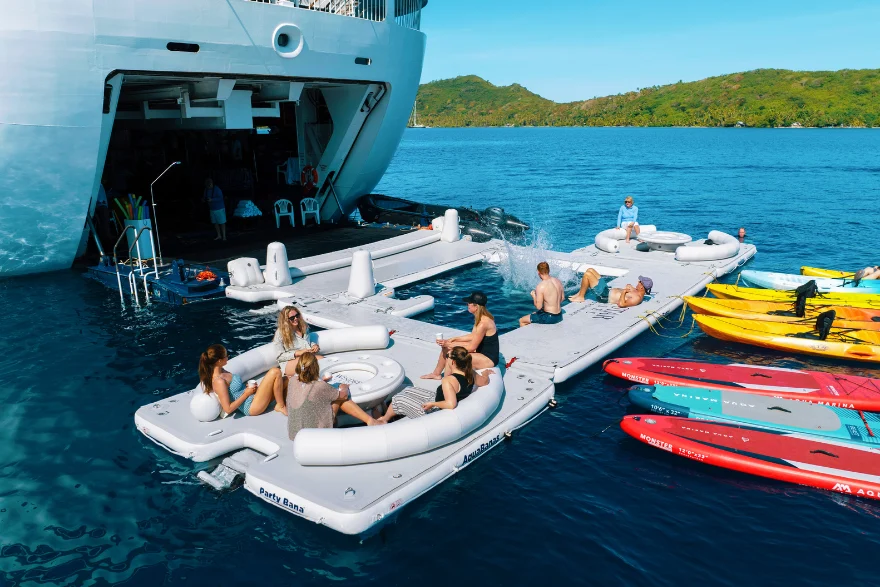
    A new addition to Windstar’s marina on Star Breeze is the Aquabana, a floating lounge area./

    • Special themed suites such as the Broadmoor and Sea Island, plus owners’ suites; all have private verandahs.
    • The new MediterrAsian fusion-themed Basil + Bamboo, plus other dining venues like Amphora, The Grill, Candles and The Yacht Club. 
    • A fully equipped fitness center, a spa with complimentary sauna, two full-service bars, on-deck hot tubs, and a water-access marina

    Star Seeker and Star Explorer

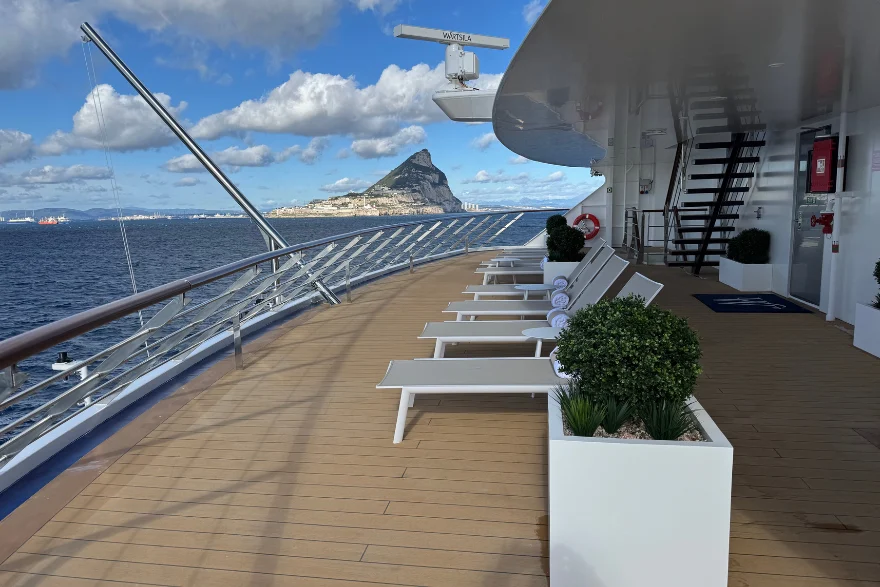
    Star Seeker debuted with expansive outdoor decks./Carolyn Spencer Brown

    Capturing the same ambience of Windstar’s other Star Class ships, the 224-guest Star Seeker, and, soon to debut Star Explorer, offer many similar hallmarks of Star Breeze, Star Legend and Star Pride, such as a watersports marina, outdoor pool, two whirlpools (including one on the bow) and a range of accommodations. There’s Amphora for three meals-a-day dining, Basil + Bamboo, and The Grill for alfresco dining. Both ships also have a dedicated spa and fitness facility, roomy outdoor deck space for strolling and relaxing, and the top-of-the-ship Yacht Club. There are some differences, too: 

    Numerous staterooms feature private verandas. 

    New cabin categories include a new-to-Windstar Vista Infinity Suite. Instead of a balcony, these staterooms feature a massive infinity window that lowers at the touch of a button, merging the outdoors with the indoors — and creating more internal space. 

    As on other ships, the Yacht Club is an all-day dining observation lounge. What’s new is that on these vessels, the Yacht Club is open from 6 p.m. as a dancing and cocktail lounge. 

    The 548 square ft. Horizons Suite is the largest onboard, and each of a pair feature wrap around balconies.

    Frequently Asked Questions About Small Ship Cruising

    All sailaways on Windstar are magical./

    Will a Windstar cruise feel crowded?
    No. With a passenger capacity between 148 travelers (and never more than 346), Windstar never feels crowded.

    How does that compare to a typical cruise ship?
    The average cruise ship carries around 3,000 passengers, and some carry more than 6,000.

    What’s the crew-to-guest ratio like?
    Small ships mean more attention per guest. On Windstar, staff learn your name, your drink order, and your preferences early in the cruise.

    Can small ships visit places big ships can’t?
    Yes. Windstar’s size allows it to dock in harbors and reach ports too small or shallow for larger vessels.

    Is small ship cruising more expensive?
    Generally, yes, per-day rates run higher than mass-market lines. In exchange, you get more space per guest, more personalized service, and fewer up-sells and add-on fees nickel-and-diming the experience.

    Is Windstar a good fit for families, or is it more geared toward couples?
    While Windstar tends to skew toward couples and experienced travelers looking for a quieter, more immersive trip rather than kids’ clubs and water slides, kids over the age of seven are welcome. Especially during school vacation seasons, like summer and the winter holidays, multigenerational trips are particularly popular on Windstar.


    The post FAQ: Why Fewer Passengers and Yacht-Style Cruising Means a Better Experience appeared first on Windstar Cruises Travel Blog.

    This post was originally published on this site.

  • J.R. Martinez on Community, Purpose and Life Beyond the Uniform

    The Medal of Honor is our nation’s highest military decoration, awarded to service members whose actions go above and beyond the call of duty. While the award is synonymous with extraordinary courage, the stories of Medal of Honor recipients offer powerful lessons on resilience, purpose and community.

    Those themes are explored in Medal of Honor: Stories of Courage, a podcast hosted by Army veteran, actor, author and motivational speaker J.R. Martinez. In conversation with Cohen Veterans Network (CVN) , J.R. reflects on how these stories can help foster understanding of the military experience, and why community plays such an important role in mental health and well-being.

    Bridging the Military-Civilian Divide Through Storytelling

    According to J.R., it’s easy to focus on the differences between military and civilian life. But when people share their experiences, they often discover they have more in common than they realize.

    “Through those experiences, we sort of close the gap that exists between both worlds because we realize we have so much more in common.”

    He also emphasizes that meaningful connection requires both sharing and listening.

    “There’s great value in sharing, again in the right time and in the right space, but ultimately more importantly, sharing and listening.”

    Life After Service: Lessons in Purpose and Community

    For veterans and military families facing transitions or mental health challenges, J.R.’s message is simple: you don’t have to do it alone.

    “Whatever struggles you’re navigating, first off, they’re valid. But you aren’t meant to navigate them by yourself. It takes a team.”

    J.R. also acknowledges that leaving military service can bring a sense of loss and uncertainty.

    “When the military uniform is taken away from us for whatever reason, we lose part of our identity.”

    At the same time, he reminds veterans that the values many people cherish about military service don’t disappear after it.

    “Service continues. The brother and sisterhood continues. Purpose and being a part of something bigger than ourselves. We have to seek that out, but it doesn’t necessarily end.”

    Supporting Veteran Mental Health Through Community

    For J.R., community is more than a collection of people. It’s the support system that helps individuals navigate difficult moments and reminds them they are not alone.

    “Community is ultimately the system that supports us when we need to feel encouraged, loved and is always on the front lines with us.”

    He believes everyone has a role to play.

    “The more our society listens to our stories, the more they learn that they are an important piece to serving our service members and their families.”

    Listen to  Medal of Honor: Stories of Courage to explore stories of service, purpose and community.

    The post J.R. Martinez on Community, Purpose and Life Beyond the Uniform appeared first on Cohen Veterans Network.

  • ‘This Fellowship Changed My Life’

    For the last eight-and-a-half months, Giancarlo Gonzalez, along with his other VFW-SVA Fellows, has been honing his advocating skills in preparation for a life-changing event.

    The 2026 VFW Washington Conference offered the fellows an opportunity to meet with each of their state representatives face-to-face.

    Impassioned with a desire to support veterans, the Fellows were ready to conclude their nine-month journey advocating in any way they could.

    For Gonzalez, this would be his first time working directly with lawmakers.

    Although he initially wasn’t sure what to expect while on Capitol Hill, he soon found it to be familiar.

    “In the Army, you learn to communicate quickly, stay focused on the mission and operate within a structured chain of command,” Gonzalez said. “Sitting down with congressional members felt similar, just in a different environment.”

    Gonzalez focused primarily on advocating for improving the Post-9/11 GI Bill during his time with the fellowship. He described his conversations with lawmakers about this particular bill as “meaningful” because he himself could benefit directly from it as a student veteran.

    From 2007-2012, Gonzalez served with the Army’s 325th Infantry Regiment, 82nd Airborne Division.

    “My experience in the Army shaped how I approach everything I do today,” Gonzalez said. “The mindset of taking care of your people and staying mission-focused carries over directly into my work now, whether it’s in business, advocacy or helping fellow veterans find stable housing.”

    Today, Gonzalez focuses on the Housing and Urban Development Veterans Aff airs Supportive Housing (HUD-VASH) program, where he made it his personal goal to see as many veterans housed as possible.

    “Helping homeless veterans find housing is something I take personally,” Gonzalez said. “It’s not just about placing someone in a unit. It’s about helping them regain stability and rebuild their lives.”

    In pursuit of his goal, Gonzalez is currently finishing a degree in building design and construction management at St. Petersburg College in St. Petersburg, Florida. He also holds a degree in business
    management and currently works in real estate.

    A member of VFW Post 2550 in Dunedin, Florida, Gonzalez plans to continue his advocacy for veterans, focusing particularly on education-related policy and transition support.

    “I’ve come to respect the role [VFW] plays in both supporting and advocating for veterans,” Gonzalez said. “Being a part of this fellowship has strengthened that connection.”

    ‘OUR MEETINGS WERE EYE-OPENING’
    For another VFW-SVA fellow, the 2026 Washington Conference would be her first time experiencing face-to-face advocacy with lawmakers.

    Navy veteran Kimmie Kim envisions a world in which leadership at the highest levels can create a more welcoming environment so that the health and happiness of workers are a top priority.

    Currently, she is pursuing a graduate degree in industrial-organizational psychology at Vanguard University in Costa Mesa, California.

    While on Capitol Hill, Kim realized just how important consistency is to advocacy.

    “Our meetings with lawmakers were very eye-opening,” Kim said. “[The VFW Washington Conference] helped me better understand how federal advocacy works and how important it is to stay involved over time.”

    To continue supporting veterans, Kim is ready to commit long-term to the process.

    “Change may not happen right away, but showing up, talking and making connections are all important parts of the process,” Kim said. “I will continue to fight for veterans by getting involved in my community, taking on leadership roles and staying involved in conversations that shape policy.”

    Kim served in the Navy from 2007-2012 and was on board the USS Green Bay (LPD-20) from 2010-2011. She is a life member of VFW Post 3173 in Anaheim, California.

    “The VFW-SVA Fellowship changed my life as a leader,” Kim said. “It has helped me become more powerful and has reminded me of the values that made me want to help my community, fellow citizens and veterans after I left the Navy.”

    ‘IT WAS PHENOMENAL’
    The 2026 Washington Conference would mark Marine veteran and VFW-SVA fellow Shadic Anderson’s third time advocating on Capitol Hill but the first time with VFW.

    A journalism major, Anderson’s longterm plan includes going to law school, which he hopes will catapult him into a career in politics. After the Maj. Richard Star Act was ultimately blocked by Congress on March 3, Anderson’s desire to get involved with veterans’ policy grew significantly.

    “I’m super passionate about advocating for our veterans,” Anderson said. “I’m a firm believer in ‘service after service.’”

    Although currently at tending California State University, Long Beach, in Long Beach, California, Anderson is originally from New Jersey and hopes to return home one day to get involved in local politics. But his main goal is to pursue a role in federal politics.

    “I want to take care of [veterans] as a whole,” Anderson said when asked about his passion for politics at the federal level.

    From 2012-2020, Anderson served in three Marine units. These included Bravo Co., 1st Bn., 6th Marines; Fox Co., 2nd Bn., 9th Marines; and Lima Co., 3rd Bn., 1st Marines. Anderson earned his VFW eligibility when he was deployed to Iraq in support of Operation Inherent Resolve in 2014.

    While on Capitol Hill, Anderson met with Rep. Dave Min (D-Calif.), Rep. Derek Tran (D-Calif.) and Rep. Hakeem Jefferies (D-N.Y.). It was in meetings like these that Anderson, along with the other Fellows, had an opportunity to showcase all their hard work over the course of the fellowship.

    “It was phenomenal,” Anderson said. “The networking impacted me the most. You never know who you may run into or who you may speak with.”

    Anderson is currently the junior vice commander of District 4 for VFW’s Department of California. He also serves as senior vice commander of Post 7243 in Hawaiian Gardens, California.

    ‘THERE WAS A CLEAR FOCUS ON WHAT MATTERS MOST’
    VFW-SVA Fellow and Post 10018 Commander Juanita Garcia made it her mission to assist degree-seeking veterans in navigating educational benefits.

    A graduate student at Northeastern University in Boston, Garcia is currently pursuing a doctorate in education.

    “My goal is to continue bridging the gap between policy and practice,” Garcia said. “In my current role in higher education, I see first-hand how policies play out for student veterans, and I want to continue using that perspective to inform advocacy efforts.”

    Being able to work alongside other student veterans during the Washington Conference, Garcia felt the experience closer to heart.

    “Seeing familiar faces and friends made the experience more personal, because the legislation we’re advocating for directly impacts them,” Garcia said. “It’s not abstract. It represents something real for my students and the veteran community I serve.”

    Although Garcia previously advocated directly with lawmakers on Capitol Hill alongside the Iraq and Afghanistan Veterans of America (IAVA), this was her first time advocating alongside the VFW Department of Washington delegation.

    “There was a clear focus on what matters most to veterans back home, and you could see the level of preparation and commitment that went into those conversations,” Garcia said. “This year felt different in a meaningful way.”

    Garcia served in the Army from 2003 until 2011. She earned her VFW eligibility serving with the 51st Expeditionary Signal Battalion at a forward operating base near Tal Afar Air Base in Iraq and the 29th Signal Battalion at the Logistics Support Area near Balad, Iraq.

    “VFW has been a key part of my continued service,” Garcia said. “I joined because I was looking for a community of like-minded individuals. I value being around veterans who have stories to share and experiences that shape how we continue to serve.”

    Since 2022, Garcia has served VFW at both the Post and District level. She is the adjutant for District 3 in the Department of Washington and serves as the commander and junior vice commander for Post 10018 in Tacoma, Washington.

    For more than a decade, the VFW-SVA Fellowship has developed student veterans into what VFW believes are active, policy-aware advocates who are willing to continue serving their communities and other veterans. Their influence has and will continue to shape veteran legislation for decades to come.

    This article is featured in the 2026 July/August issue of VFW magazine, and was written by Danny Cook, senior writer for VFW magazine.
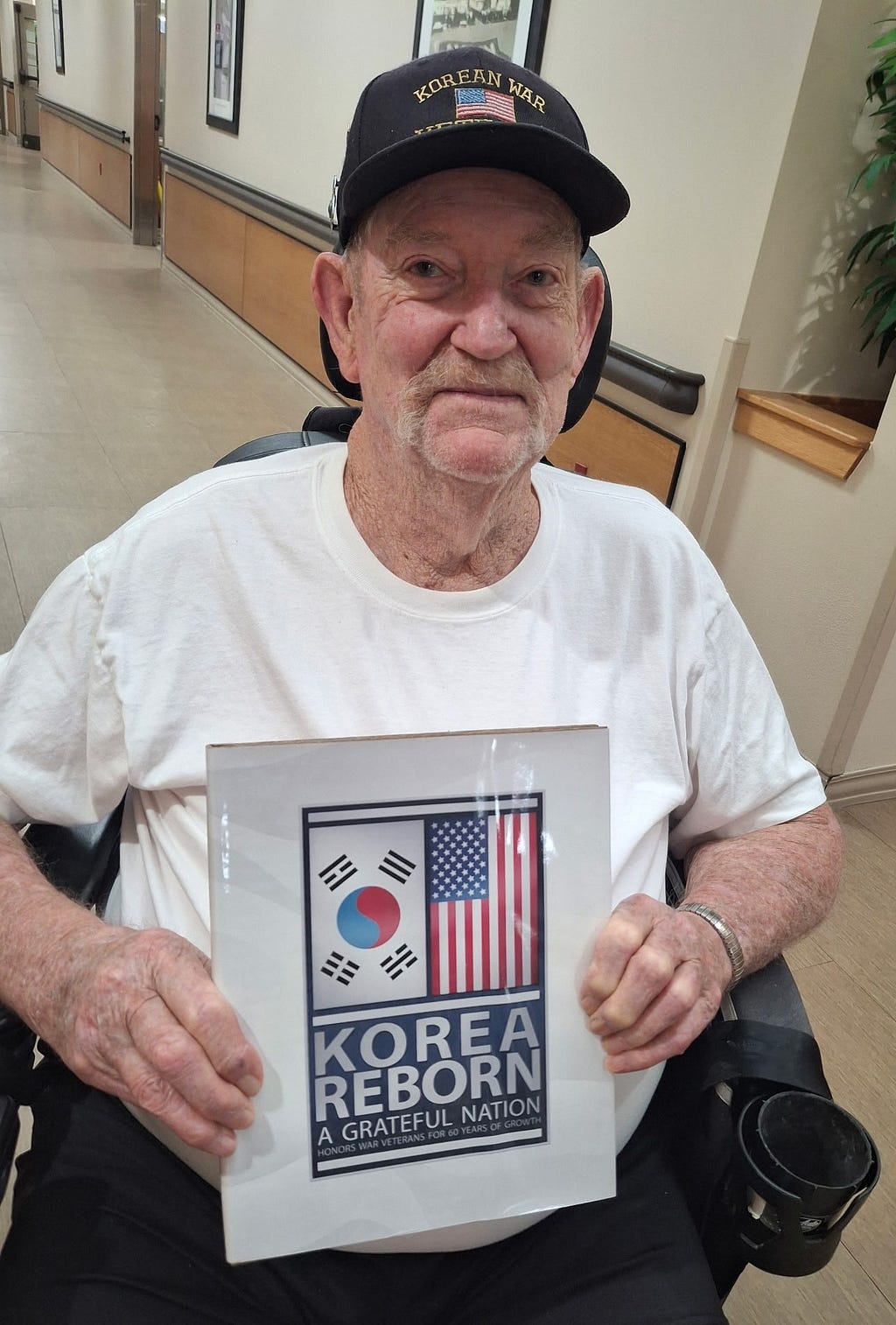
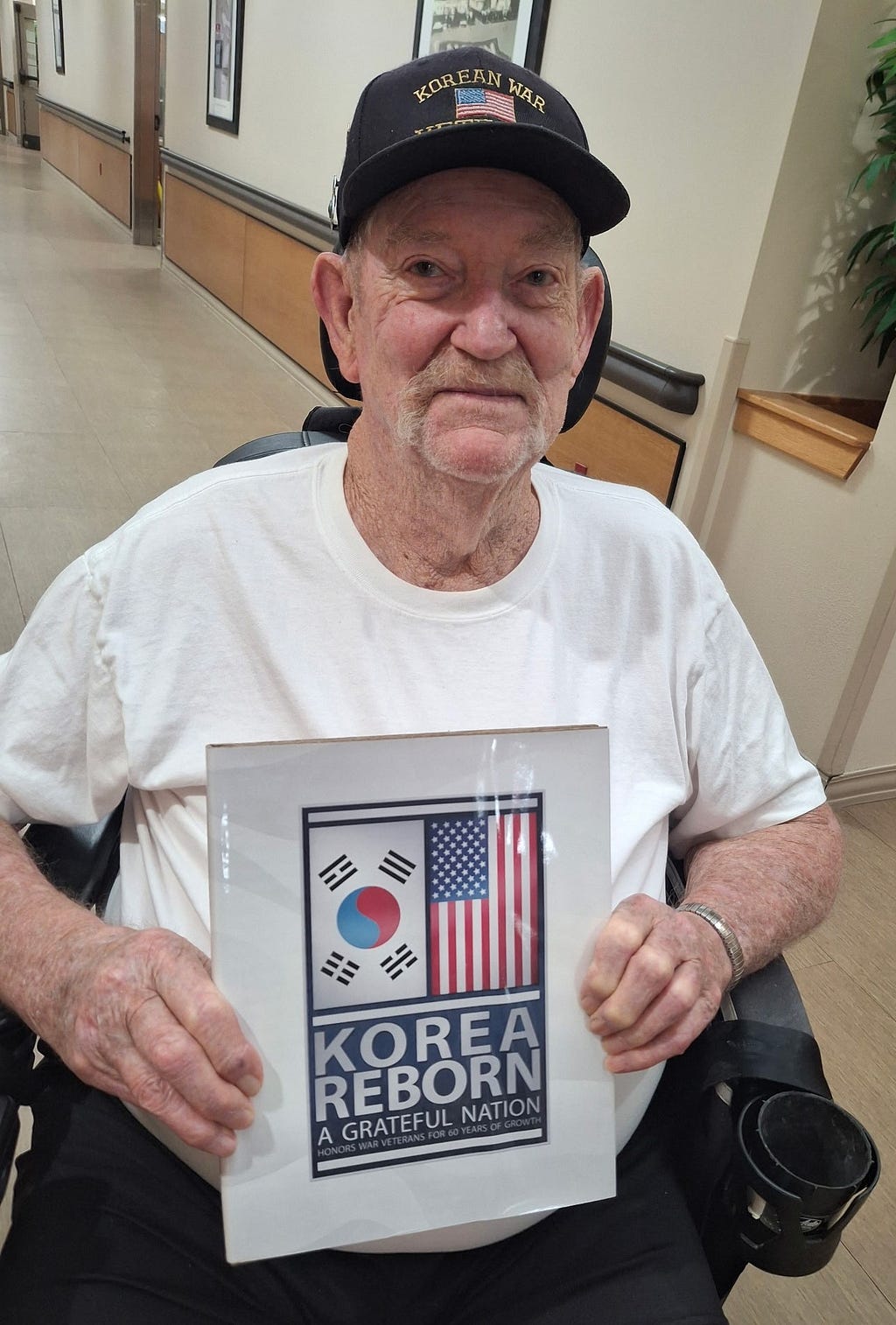
  • Best Area To Stay In Santorini Guide

    Best Area To Stay In Santorini Guide

    Wondering where to stay in Santorini? Discover the best areas for first-time visitors, couples, families, beach lovers, and luxury travellers, plus hotel recommendations and practical tips to help you choose the perfect base.

    The post Best Area To Stay In Santorini Guide appeared first on Going Awesome Places by William Tang.

    This post was originally published on this site.

  • VFW Mourns the Loss of Past Commander-in-Chief R.D. ‘Bulldog’ Smith Jr.

    KANSAS CITY, Mo. – The Veterans of Foreign Wars (VFW) is saddened by the passing of its oldest living past Commander-in-Chief, R.D. “Bulldog” Smith Jr., whose tenacity and continued advocacy for service members, veterans and their families helped solidify the organization’s now renowned grassroots legislative efforts.

    Smith was elected as VFW commander-in-chief at the 77th national convention in New York City on Aug. 20, 1976, and dedicated his life to ensuring veterans had strong support in Washington.

    At the age of 17, he enlisted in the United States Army Air Corps, earning his VFW eligibility by serving in the Southwest Pacific during World War II. He was assigned to the 356th Air Engineers Service Group, a unit that maintained B-29 heavy bombers in the 20th Air Force.

    Smith joined the VFW in 1947, at Post 4346 in Toccoa, Georgia, where he maintained his Bronze Legacy Life membership. Following a move to Washington, D.C., where he worked on the staff of the House Un-American Activities Committee, Smith returned to Georgia and resumed his VFW activities. He served as VFW Department of Georgia commander, going on to serve as a member of the National Council of Administration, Southern Conference chairman and as a member of several national committees.

    Smith’s greatest legacy rests on his diligent advocacy efforts on Capitol Hill. During his term as national commander, he worked to preserve the Senate Committee on Veterans’ Affairs at a pivotal moment in history. The VFW had labored for years for the creation of a dedicated committee to ensure the voice and needs of veterans would be heard, and when threatened with its elimination, Smith’s leadership ensured VFW leadership from each state was present on Capitol Hill to lobby their senators directly, a first in the organization’s history. The VFW’s efforts successfully doubled the number of senators supporting the committee, and it is that same legislative advocacy and dedication that fuels the VFW’s National Legislative Service today. Smith retired from the U.S. Department of Labor, Veterans Employment and Training Service where he served as the assistant director from the State of Georgia.

    Chief Smith understood that caring for veterans meant more than honoring their service and dedicated his life to the legislative influence the VFW is known for today, ensuring generations of veterans have had a powerful advocate in Washington. His service, vision and unwavering commitment to veterans have left an indelible mark on the organization for generations to come.

    Read his obituary here.

  • TSA stops Alabama traveler for Civil War-era cannonballs in luggage

    TSA stops Alabama traveler for Civil War-era cannonballs in luggage

    A bag belonging to a traveler tripped TSA alarms on July 18 after officers discovered Civil War-era cannonballs in the individual’s luggage, the first cannon-related mishap since JPMorgan’s polarizing legal proceedings.

    Roll Tide.

    The inert cannonballs, which were — naturally — wrapped in paper towels, were discovered during the baggage screening process at Alabama’s Gulf Shores International Airport and later determined by police to have been stolen from the nearby coastal stronghold Fort Morgan.

    “My first thought was, ‘I couldn’t see a fuse and need to get some help quick,’” TSA officer Justin Dupree recalled in a release. “I couldn’t see the entire item but was scared I might have been holding a live explosive.”

    Dupree noted the antique artillery projectiles ranged in size, with the largest comparable to a grapefruit.

    “I had never seen anything quite this unique,” Dupree said. “I’ve seen inert grenades and training munitions but never an Indiana Jones-esque stolen artifact-type situation.”

    A TSA explosives specialist and the Baldwin County Sheriff’s Office were subsequently notified and determined that the cannonballs posed no threat.

    Law enforcement investigating the incident stated the passenger claimed to be unaware of how the projectiles were acquired. The cannonballs were later returned to Fort Morgan, the release added.

    Passenger attempts to transport illegal items, including outlandish weaponry, through the screening process are, of course, nothing new.

    In a more glaring example from 2019, a Florida man traveling through Pennsylvania’s Lehigh Valley International Airport set off alarms after his bag was found to contain a disassembled rocket-propelled grenade.

    The individual was subsequently taken into an inspection area, where he told airport security he was under the impression he could bring the checked RPG on the plane, CBS Philadelphia reported.

    Inspection of the weapon itself revealed that the launcher was not in working order, and the grenade was a realistic replica.

    The items were confiscated by security, and, miraculously, the individual boarded his flight on time.

  • The Rescue at Camp Mystic

    The Rescue at Camp Mystic

    More than a year ago, historic flooding impacted communities across Texas, prompting a large-scale emergency response.
     
    Coast Guard aviators, boat crews, and support personnel worked around the clock alongside federal, state, and local partners to conduct rescues and assist those affected.
     
    As we mark the anniversary of the 2025 Texas floods, we remember the lives impacted, honor the resilience of the communities that endured the disaster, and recognize the dedication and professionalism of the Coast Guard members who answered the call.
     
    Thank you to all responders and community members who came together during a time of extraordinary need.
     
    #USCG #TexasFloods #SearchAndRescue #SemperParatus