Author: Dana @ Minimalist Baker

  • Easy Fattoush Salad (1 Bowl!)

    Easy Fattoush Salad (1 Bowl!)

    Introducing weeknight-friendly fattoush salad! This EASY, 1-bowl, 20-minute version is our inspired take on the classic Levantine dish. Think fresh, crunchy veggies tossed in a bright pomegranate dressing with herby mint leaves, crispy pita chips, and pomegranate arils (major YUM)!

    It’s a refreshing side to pair with other Mediterranean- and Middle Eastern-inspired recipes, or toss in some chickpeas to make it a light meal on its own.

    Easy Fattoush Salad (1 Bowl!) from Minimalist Baker →

    This post was originally published on this site.

  • The Coast Guard Video Production Team

    The Coast Guard Video Production Team

    Meet the U.S. Coast Guard Video Production Team.
    From search and rescue cases and maritime law enforcement operations to the people behind the uniform, this elite team captures the full scope of Coast Guard service, giving the public a closer look at the missions and individuals serving across the maritime domain every day.
    The Video Production Team are the ones behind the lens capturing the mission. This time, we’re turning the cameras around.

    Thanks for watching!

    Interested in joining the U.S. Coast Guard?
    Visit: http://www.gocoastguard.com

    Connect with the U.S. Coast Guard online:
    Web: https://www.uscg.mil
    MyCG: https://www.mycg.uscg.mil/
    Facebook:  https://www.facebook.com/UScoastguard
    Twitter: https://twitter.com/uscg
    Instagram:  https://www.instagram.com/uscg

  • The Best Things to Do in Varese, Italy

    The Best Things to Do in Varese, Italy

    Last Updated on May 8, 2026 by Sarah Wilson I spent two days exploring Varese while I was house sitting nearby and taking care of two adorable rabbits. Getting to Varese from Milan is simple. I took the Trenord regional train on the Milano Cadorna to Varese line, which runs often throughout the day. Trains […]

    The post The Best Things to Do in Varese, Italy appeared first on LifePart2andBeyond.com.

    This post was originally published on this site.

  • Can Technology Make Home Care Services More Affordable?

    Can Technology Make Home Care Services More Affordable?

    Neal K. Shah, the founder of CareYaya, a company that links students in the healthcare field with seniors needing assistance, has some strong opinions about elder care in the United States. The word Yaya means ‘grandmother’ in Greek and ‘caregiver’ in Swahili and Thai. As an acronym, it also means ‘You Are Your Advocate.’

    In a recent podcast, Mr. Shah told me about how CareYaya works and how we should transform elder care in the United States. Here are some extracts from our conversation:

    Risking Old Age in America: Why don’t we start [with] what CareYaya is and how you got into this business?

    Neal K. Shah: We are actively working hard to solve the elder care crisis by connecting people with very affordable care, probably the most affordable home-based care in America – approximately $20 an hour as compared to typical agencies charging $35 to $40 an hour.

    We connect everyone digitally through an online platform. Many…call it the “Uber of caregiving.” We have mobilized a workforce of over 50,000 college students across the country to care for the older adult population.

    ROA: I recently had a guest on who runs a home health agency. She would argue that they provide value added in terms of supervision and coverage if someone can’t make it. They also handle all the employer obligations, including FICA stuff and workers’ comp. How does that correspond with what you’re offering?

    Shah: We don’t directly compete with the home care agency industry just because the market is so large. Depending on which stats you look at, home health care is approximately a $500 billion per year market. The Rand Corporation put a study out that it’s one of the biggest markets in the country that…[often] operates in the gray market. So [a large share] of the market books informally.

    Of the $40 an hour that you’re paying [to an agency], something like $5 is going to franchise royalties, something like $5 is going to the local agency’s profit margin. Another $5 is going to extremely manual booking and scheduling and a massive team of people doing work that can be done better with technology. And then another $5 to $8 is going into advertising – a lot of Facebook and Google ads – and to local salespeople schmoozing with doctors and nurses.

    You just have this insanely inefficient infrastructure where more than $20 per hour of what you’re paying is wasted on frivolous stuff. And the person doing 99% of the work is capturing less than half.

    . . .

    ROA: You have commented that the United States is good at healthcare, but not good at “social” care. What do you mean by that?

    Shah: Health care plus social care…spending [is] around…18 to 20% of GDP per year. That’s also true of parts of Europe and parts of Asia. But in that distribution in the US the majority of that money is spent on medical care and a minimal amount on social care. We have great MRIs, PET scans, and all these pharmaceuticals. But [outside of Medicaid] there’s virtually zero spending from a governmental perspective on helping that person stay at home, helping that person stay safe, getting caregivers, that’s all out of pocket.

    So that’s what I mean, that these social services are grossly underfunded.

    . . .

    ROA: And you say that the longevity grift isn’t about living longer, it’s about the wealthy trying to buy their way out of being human. There are a lot of wealthy people investing in in anti-aging stuff. There are some doctors who argue we ought to be researching aging, not specific diseases or one organ at a time. You’re a critic of that approach.

    Shah: Yes. The spoiler: it won’t work for a couple of reasons. One, from a social impact perspective, aging and caring for the currently aging population is a now thing. We can’t wait.

    Second, these science experiments and fantasies of people I think have a low probability of success in my opinion. So there’s an insane overallocation of funding to something that, in my opinion, is frivolous and unlikely to happen.

    Listen to our entire conversation here.

    Topics

    00:00 Why Getting Care Help Is So Frustrating (Caregiver Reality Check)

    00:26 Meet Neal Shah & the Mission Behind CareYaya

    01:01 How CareYaya Works: Healthcare Students, Digital Booking, Lower Cost

    02:19 What Kind of Care They Provide (Home Care vs. Home Health)

    03:29 Why Home Care Is So Expensive: Middlemen, Markups, and Bad Experiences

    06:02 CareYaya’s “Costco Model”: Tech Efficiency, Reliability, and Better Pay

    08:03 Employer Paperwork & the Gray Market: Taxes, Workers’ Comp, and DIY Tradeoffs

    09:56 Neal’s Origin Story: From Hedge Funds to Family Caregiving

    12:48 Funding & Business Model: For-Profit, No Fees (Yet)

    13:54 What Are Impact Funds? Patient Capital for Long-Term Social Change

    16:23 Switching Gears: The U.S. Is Great at Healthcare, Bad at Social Care

    16:45 Why the U.S. Underspends on Social Care (Dementia & Cancer at Home)

    18:02 The Hidden Army of Family Caregivers—and the Trillion-Dollar Burden

    18:36 Boomers Turning 80: The Coming Care Crunch & Workforce Dropout Risk

    19:34 Who Should Pay? Private Sector, Tax Breaks, and Employer Elder-Care Benefits

    21:42 Preventing Hospitalizations: Loneliness, Home Support, and Medicare’s Incentives

    23:17 Medicare Advantage Critique and the Fragmented Payer Problem

    24:21 The “Longevity Grift”: Why Anti-Aging Hype Misses the Real Crisis

    28:37 Policy Advice: Invest in Home-Based Care and Build the Care Workforce

    30:29 Advice for Boomers: Plan Early, Save More, and Rethink HSAs

    33:05 Closing Thoughts and Farewell

    For more from Harry Margolis, check out his Risking Old Age in America blog and podcast.  He also answers consumer estate planning questions at AskHarry.info.  To stay current on the Squared Away blog, join our free email list.

    This post was originally published on this site.

  • Air Force units earn honors for rescues during US evacuation from Afghanistan

    Air Force units earn honors for rescues during US evacuation from Afghanistan


    Three U.S. Air Force units recently received the Presidential Unit Citation for actions during a 2021 deployment, including efforts during the final withdrawal of U.S. troops from Afghanistan.

    The 55th and 48th Rescue Squadrons, as well as airmen from the 355th Aircraft Maintenance Squadron, all located at the Davis-Monthan Air Force Base, Arizona, received the awards April 17 and Jan. 17, respectively, according to a service release.

    The two rescue squadrons and airmen in the maintenance group were included in the Personnel Recovery Task Force, a 176-member joint team specifically formed to carry out the noncombatant evacuation operation in Afghanistan.

    The release stated that the team, which encompassed airmen from 20 different career fields, included pilots, maintainers, intelligence personnel and Special Warfare Airmen who created their own “unconventional recovery network” by initiating their own operations, security and communications in a “rapidly deteriorating deployed environment.”

    The team saved thousands of Americans and at-risk Afghans, according to the release, and established a safe evacuation station for over 12,000 refugees between July 16 and Aug. 31, 2021.

    Every unit in the task force prepared through exercises, such as the Red Flag-Rescue, to learn how to perform outside usual duties, per the release.

    “But during this mission in 2021, our team also led security teams to fortify aircraft and key command and control positions and manned defensive fighting positions along unsecured airfield areas, providing front-line defense that prevented the NATO compound from being overrun,” Air Force 1st Lt. Sebastian Marano, the 355th Aircraft Maintenance Squadron’s interim director of operations, said in the statement.

    In total, the task force operated through 864 hours of continuous alert over 53 days, assisting the safe evaluation of 124,000 people, according to the release. The force maintained its alert status until the last U.S. aircraft left Afghanistan.

    Another unit said to be crucial to the evacuation was the Combat Search and Rescue forces in the 66th Rescue Squadron, which executed air-to-ground operations, the release says. The 66th officially deactivated before April’s ceremony, so the 55th accepted the award on the unit’s behalf.

    The 58th Rescue Squadron was also included in the task force, but it too was deactivated before the ceremony. The 48th accepted the citation on its behalf.

    By the end of the operation, individual task force members accounted for one Bronze Star with Valor, 18 Bronze Stars and 151 Air Force Commendation Medals with Combat Devices for bravery and resolve under “extreme hazard.”

    “Every couple of years, there’s something that happens that defines the next generation of rescue Airmen,” U.S. Air Force Col. Jose Cabrera, 355th Wing commander, said in the statement.

    “Every generation has their time and I think we’re seeing that today — your defining moment,” Cabrera added. “This will go down in Air Force history as one of the greatest accomplishments of the Air Force rescue community.”

  • A 2.5-Week Colombia Itinerary

    A 2.5-Week Colombia Itinerary

    Last Updated on April 20, 2026 by Sarah Wilson My 2.5-Week Colombia Itinerary: Visiting Medellín, Salento, Bogotá, Villa de Leyva & Cartagena Colombia is full of contrasts: buzzing cities, colourful towns, lush coffee landscapes, colonial streets, Caribbean heat, and incredible food.  In 2.5 weeks, I visited Medellín, Salento, Bogotá, Villa de Leyva, and Cartagena. The […]

    The post A 2.5-Week Colombia Itinerary appeared first on LifePart2andBeyond.com.

    This post was originally published on this site.

  • Strawberries & Cream Chia Pudding

    Strawberries & Cream Chia Pudding

    Friends, welcome to a land where you can float on strawberry dream clouds all day long. This chia pudding is next-level but still ultra simple (5 ingredients!). Just blend strawberries into your favorite milk, sweeten to taste, add chia seeds, and chilllllll.

    The result is a heavenly, fiber-rich snack or breakfast that tastes just like strawberries and cream but more sophisticated — mmmmmm. Let us show you how it’s done!

    Strawberries & Cream Chia Pudding from Minimalist Baker →

    This post was originally published on this site.

  • 2.5 Days in Cartagena

    2.5 Days in Cartagena

    Last Updated on April 20, 2026 by Sarah Wilson 2.5 Days in Cartagena: A Hot, Colourful End to My Colombia Trip Cartagena was the final stop on my two-and-a-half-week trip around Colombia. I arrived just after 2 pm, and the heat and humidity hit me immediately. It felt nothing like Bogotá. I stayed at Casa […]

    The post 2.5 Days in Cartagena appeared first on LifePart2andBeyond.com.

    This post was originally published on this site.

  • 15 Fairchild airmen awarded for refueling roles in combat operations

    15 Fairchild airmen awarded for refueling roles in combat operations


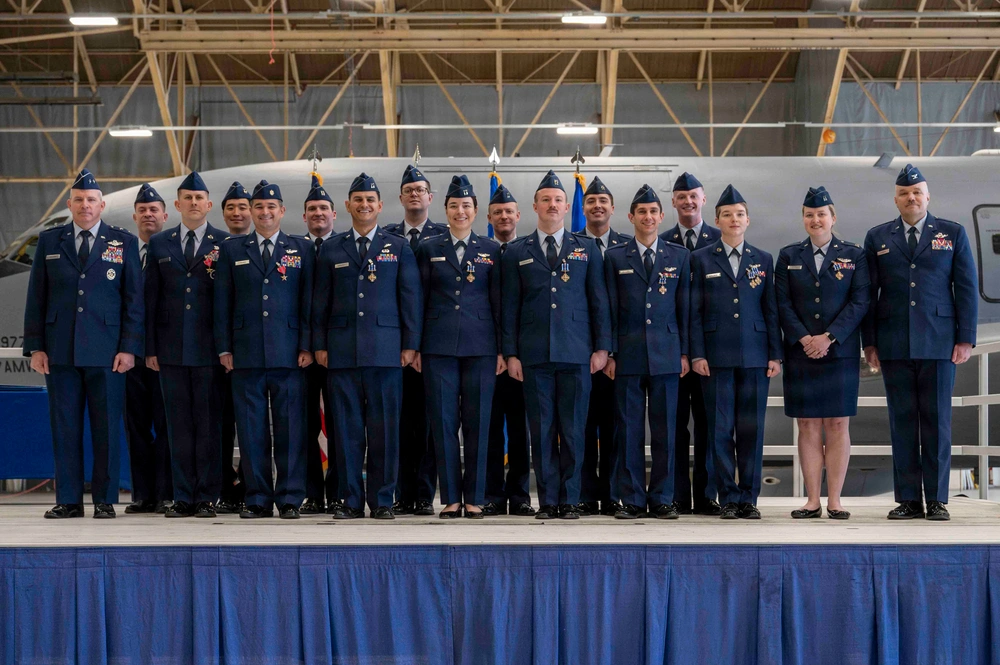
    Fifteen U.S. airmen were awarded the Distinguished Flying Cross and the Bronze Star Medal in a Tuesday ceremony for their work in flying missions in contested airspace during recent combat operations.

    Maj. Gen. Charles Bolton, the 18th Air Force Commander, presided over the ceremony and bestowed the medals upon the Fairchild Air Force Base airmen, assigned to the 92nd Air Refueling Wing, according to a Wednesday release.

    “These historic missions were fraught with peril and required decisive reactions to dynamic operational environments,” Bolton said during the ceremony. “The way they choose to respond, the way they adapt and work together – that’s what we’re highlighting today.”

    During missions in contested airspace, the airmen provided crucial refueling that allowed for other Air Force “assets to continue the fight and return home,” the release reads.

    The release says the airmen were involved in Operation Midnight Hammer — the Jan. 22, 2025 U.S. attack on three main Iranian nuclear facilities — but did not detail the extent of their involvement.

    Bolton said during the ceremony that the members’ skills and perseverance led to the success of the overall mission, and he acknowledged the efforts of all Fairchild’s personnel in the mission, as well.

    “From maintainers ensuring aircraft readiness, to mission planners and support crews, none of this could happen without the collective efforts of our Air Force family,” Bolton said.

    The ceremony drew a crowd of around 300 people, the release says, with Fairchild personnel, local community heads and family members in attendance.

    Fairchild Air Force Base, located in Spokane County, Washington, houses the force’s premier tanker base and survival training school, according to the base’s website.

    The Distinguished Flying Cross recognizes heroism or extraordinary achievement in aerial flight, and the Bronze Star Medal is awarded for heroism in combat.

  • Why You Might Want to Hire Home Health Aides Through an Agency – Despite the Cost

    Why You Might Want to Hire Home Health Aides Through an Agency – Despite the Cost

    One of the challenges of obtaining home health care for seniors is its cost, which is often beyond the means of people and their families. The cost barrier is especially true of aides hired through private home health agencies, which is often considerably more expensive than hiring an aide directly.

    On my Risking Old Age in America podcast, I recently talked with Wendy Adlerstein, co-owner of First Light Home Care in west suburban Boston, about the benefits of hiring assistance through an agency and what goes into the extra cost. She also calls for statewide licensure of home health agencies to make sure they all provide what they promise.

    Here are some extracts from our discussion:

    Risking Old Age in America (ROA): How difficult or easy is it to recruit home health workers?

    Wendy Adlerstein: It’s definitely a laborious process. We have a team specifically dedicated just for recruiting and hiring. They screen hundreds of candidates. And we really only hire about 3 percent of the people we talk to.

    ROA: How has the recent immigration crackdown affected your recruiting or your current employees?

    Adlerstein: Unfortunately, we definitely see that there has been a shift. Certainly the pool of caregivers that are available is shrinking. One of the big things that we also see is the renewal process for employee authorization documentation is extremely slow, if not completely stopped.

    ROA: How much do you pay your employees?

    Adlerstein: In this region, agencies pay caregivers between $19 and $24 an hour.

    ROA: And you pay FICA and other benefits?

    Adlerstein: Yes. They’re all W-2 employees.

    ROA: I understand that Massachusetts is one of the few states that doesn’t regulate home health agencies and that people in your field actually would prefer to have regulation. Why is that?

    Adlerstein: Yes, that is a very big topic right now because there’s a bill in the legislature that is getting some traction this time around. It would create standards that replicate what we are already doing. Unfortunately, there are agencies out there that do not follow the same guidelines. This can create some safety issues and concerns for anyone opening their home and letting someone come in without all the proper oversight and background checks. Licensure would standardize and professionalize home care in Massachusetts.

    Listen to the entire conversation here.

    Topics

    00:29 Overview of the Home Healthcare Agency

    01:13 Benefits of Being Part of a Franchise

    01:52 Wendy’s Background and Journey

    02:54 Differences Between Private and Nonprofit Home Care

    03:38 Typical Clients and Home Health Aides

    04:59 Recruitment and Vetting Process

    06:15 Impact of Immigration Policies

    08:46 Employee Compensation and Client Costs

    14:09 Regulation and Licensing in Home Care

    20:12 Challenges and Recommendations 24:50 Conclusion and Final Thoughts

    For more from Harry Margolis, check out his Risking Old Age in America blog and podcast.  He also answers consumer estate planning questions at AskHarry.info.  To stay current on the Squared Away blog, join our free email list.

    This post was originally published on this site.