Category: Uncategorized

  • Anthony Tata assumes oversight of Defense POW/MIA Accounting Agency

    Anthony Tata assumes oversight of Defense POW/MIA Accounting Agency

    Families of missing-in-action service members from the Vietnam war were issued a promise on June 25 from the new overseer of the Defense POW/MIA Accounting Agency to look into budget cuts that have canceled MIA searches in Vietnam and Laos.

    Former Army Brig. Gen. Anthony Tata, now undersecretary of defense for Personnel and Readiness, was initially met with skepticism on the budget cuts at the annual DPAA briefings for the families of those lost during the Vietnam era. Tata sought to mend fences, however, by pledging to work for restoration of about $40 million in DPAA cuts as proposed in a bill currently before Congress.

    Tata first had to convince a skeptical audience member who questioned whether he would follow through on his promises.

    “I’m up here telling you — please let me go look at the legislation. That’s my commitment,” he said. “I absolutely support increasing the budget for DPAA. The more money, the more questions we can answer for you.”

    Tata, who previously commanded the 82nd and 101st Airborne Divisions, and was deputy commanding general of the 10th Mountain Division in Afghanistan, was referring to a bill introduced by Sen. Deb Fisher (R-Neb.) to restore $40 million in funding to the DPAA. The bill was attached to the must-pass National Defense Authorization Act.

    Budget cuts and fuel shortages caused by the war in Iran already resulted in the cancellation in April of searches for the missing in Laos.

    “Due to significant impacts resulting from fuel shortages in Laos, DPAA was forced to cancel four recovery teams that were planned for April 27 through June 10,” a DPAA release at the time stated.

    Tata sought to assure the audience of family members that he had the “full unmitigated support” of President Donald Trump and Defense Secretary Pete Hegseth in his new mission, one in which former Army Maj. Gen. Kelly McKeague, director of the DPAA, will report directly to him.

    “I will do anything possible to help Kelly and his team,” said Tata, whose past inflammatory remarks, including calling former President Barack Obama a “terrorist leader,” led to the withdrawal of his nomination to the post of under secretary of Defense for Policy during the first Trump administration.

    McKeague said the main thing Tata could do would be to lobby for increased funding for the DPAA budget, which has gone from $185 million in Fiscal Year 2025 to $167 million in FY2026, and is projected to be capped at $160 million in FY2027, according too DPAA.

    The lack of funding has forced DPAA to cut the number of recovery and investigative teams operating in Vietnam from 27 to seven; from 13 to five in Laos; and from three to one in Cambodia, a DPAA release said.

    The $40 million DPAA was seeking from the Fisher bill was a pittance compared to the size of the overall defense budget, which was expected to come in at upwards of $1 trillion, McKeague said.

    “It’s chump change, it’s peanuts,” McKeague said. The added funding, meanwhile, would allow him to boost the number of recovery teams.

    Tata also touched on another issue that has stymied and infuriated families of the missing for decades — the red tape blocking the declassification of records that could hold information on their loved ones.

    Tata said there was “very little reason” why the military “should be withholding any records. I’m super committed” to getting answers, he told the audience.

    Bipartisan legislation has been introduced in the House and Senate — the “Bring Home Our Heroes Act” — to overcome the bureaucratic hurdles that often make access to information difficult for families.

    According to language in the bill, the legislation would “establish an independent Missing Armed Forces and Civilian Personnel Records Review Board to identify missing personnel records, facilitate the transmission and disclosure of these records, and review any decisions by federal agencies to postpone declassification for purposes of protecting sensitive classified material.”

    Sen. Jeanne Shaheen (D-N.H.) in a statement noted that the “bipartisan Bring Our Heroes Home Act takes meaningful steps to ensure that vital records are preserved, responsibly declassified and made accessible so that families can finally gain the clarity they deserve.”


    This post was originally published on this site.

  • 250 Years of Freedom: Made Possible by America’s Veterans

    This post was originally published on this site.

    KANSAS CITY, Mo. — The Veterans of Foreign Wars (VFW) is proud to announce it has joined America250 as a programming partner in celebration of our nation’s 250th birthday, amplifying our shared focus on educating, engaging and uniting Americans for this historic moment in history.

    For 250 years, America has stood free not by chance or accident, but because generations of veterans answered the call of duty when their country needed them. From the earliest days of the Revolutionary War to the challenges faced in the modern era, these men and women have stepped forward to protect the very ideals upon which our nation was founded.

    Our nation’s freedom has never been guaranteed. It has been defended and protected only through the courage, sacrifice and unwavering commitment of all those who have worn the uniform. Veterans have stood on the front lines of history, ensuring that each generation can live in a country where freedom is not just a word, but a way of life. They have faced danger abroad, served their communities at home and stood as living examples of dedication, honor and commitment.

    As America marks 250 years, it is impossible to separate our story from theirs. Veterans are not simply part of our history – they are the living embodiment of the values and principles that have carried this nation through triumph and trial. Their service, dedication and sacrifice have shaped every chapter of America’s story and made this milestone possible.

    For more than a century, the VFW has stood beside America’s veterans, providing support, advocating for their benefits and access to health care, honoring their service and ensuring our nation keeps its promises to them. The VFW is not just a veterans service organization. It is part of the American story.

    Across every corner of the country, veterans have been pillars of support, centers of community, and examples of civic responsibility. Their contributions extend beyond the battlefield – they have inspired education, fostered leadership and strengthened the bonds that unite us as a nation. In celebrating 250 years of freedom, we recognize that this achievement is ours to share in.

    VFW Departments, Districts, Posts and members around the world are encouraged to visit America250 and get involved in the celebrations, volunteerism or storytelling surrounding this historic occasion.

    This anniversary is more than a commemoration of dates and events, it is a tribute to the spirit of service that defines America. As we honor our history, we also look forward to the next chapters, confident that the dedication of our veterans will continue to guide and protect the freedoms we hold dear. Today, and every day, we celebrate the American veterans whose courage and sacrifice have made 250 years of freedom possible, and whose legacy will inspire the generations to come.

    Happy 250th, America!

  • Military Sealift Command ships makes history with rare combat award

    Military Sealift Command ships makes history with rare combat award

    Since its creation during the World War II, the Presidential Unit Citation has only been bestowed roughly 100 times — the through line being some of the most elite units and daring operations in U.S. military history. Now, an oil replenishment ship will join the ranks alongside storied units such as the Blackhorse Regiment and receive the nation’s highest military honor for unit-level combat valor.

    Next month the USNS Kanawha, a Henry J. Kaiser-class fleet replenishment oiler, and the USNS William McLean, a dry cargo and ammunition ship, under Military Sealift Command, will receive the PUC for their support of the Ford Carrier Strike Group during Operation Epic Fury.

    During its 204-day deployment, the ship, named after the Kanawha River in West Virginia, operated in the U.S. 4th, 5th and 6th Fleets, delivering more than 17 million gallons of fuel, 3,000 pallets of supplies and performing 113 replenishments to 29 U.S. and coalition vessels, according to the Defense Department.

    Described by the department as a “strategic enabler,” the floating warehouse sustained Operations Southern Spear and Epic Fury before returning to Naval Station Norfolk, Virginia, on May 16.

    The ceremony, set for mid-July, will make Kanawha and the William McClean the first auxiliary ships to receive the award, and the first in Military Sealift Command’s 77-year history.

    The MSC operates approximately 125 civilian-crewed vessels that help sustain the U.S. Navy and DoD. While owned by the Navy, according to the MSC, its vessels are non-commissioned auxiliary ships crewed primarily by Civil Service Mariners or commercial contractors rather than active-duty sailors.

    Kanawha and William McLean’s sailors stand alongside the Ford Carrier Strike Group, which collectively received the PUC last month for its actions during Operation Epic Fury.

    “The Kanawha was underway for seven long months supporting [the USS] Iwo Jima Amphibious Ready Group and the USS Gerald R. Ford Carrier Strike Group,” said Navy Capt. Elizabeth A. Nelson, Military Sealift Command Atlantic commodore, upon the vessel’s return to port. “Kanawha’s performance exemplifies how MSC’s combat logistics force powers modern naval operations, directly fueling U.S. Navy readiness at sea.”

    Oilers like Kanawha are part of the MSC’s combat logistics force and are the “backbone of sustained operations at sea,” according to the Defense Department.

    With this award, the two auxiliary ships will join the ranks of elite Army Rangers on D-Day; multiple Army units during the Battle of the Bulge; the 1st Cavalry Division for its performance in Pleiku Province/Ia Drang Valley campaigns; and the Navy SEALs who killed Osama Bin Laden during Operation Neptune Spear in 2011.

    This post was originally published on this site.

  • 20-year trove of shipboard assault cases now public after data request

    20-year trove of shipboard assault cases now public after data request

    Of 116 Naval Criminal Investigative Service case files opened into allegations of sexual assault and misconduct onboard Military Sealift Command ships over a 20-year period, just five show that the case concluded at court-martial or in civilian court.

    That information is now public and searchable as a database due to a records request from the Maritime Legal Aid Foundation, which represents those who report being victims of shipboard harassment and abuse. Launched earlier this month, the archive, which covers all relevant cases between 2000 and 2022, shows a broad range of alleged misconduct — most of which has never before been made public. Most of the cases, as far as records show, ended with administrative discipline, or none at all.

    Among the cases unearthed in the records trove are a 2018 incident in which a government-contractor engineer onboard the hospital ship USNS Mercy exposed his genitals to the crew of a passing Navy helicopter, later acknowledging to investigators he had “just whipped it out.” Documents show that NCIS found no criminal statute applied and the engineer received a 30-day suspension.

    Another case, from 2019, involved a Merchant Marine midshipman — a college student — onboard the dry cargo ship USNS Richard E. Byrd. The midshipman alleged that a navigator repeatedly subjected him to unwanted touching, including around the buttocks and groin. Though the midshipman reported the incidents, the alleged offender denied any wrongdoing, and prosecutors declined to pursue the case, prompting NCIS to close it. It’s not clear from the file if Military Sealift Command ever took administrative action to address the navigator’s behavior.

    Some cases in the archive appear borderline, such as the crew member who claimed another crew member’s help with pull-ups led to grazing contact that made her uncomfortable. The command declined to prosecute in that case.

    Many clearly emphasize the limited power and recourse accusers have in a domain — Military Sealift Command — that tends to occupy a gap between military and civilian legal authority.

    In one 2016 file, a civilian mariner assigned to the amphibious command ship USS Mt. Whitney reported that another civilian had grabbed her, groped her breast and bitten her ear in an attack from behind. The U.S. Department of Justice declined to prosecute, and while the file said ship command was considering taking action, it’s not clear that any was ever taken.

    Ryan Melogy, the founder of Maritime Legal Aid Foundation and creator of the database, said in an interview that the archive confirmed what individual cases he’d worked on had shown: that the path to justice for victims isn’t clear, and they’re often on their own, without a victims’ advocate or counsel to guide them and champion them.

    Even NCIS, he said, maintains an adversarial relationship with the alleged victim, investigating the accuser’s story as aggressively as the accused.

    “You’re trapped. You get assaulted in not only where you live, but where you’re working, not only where you’re working, but where your whole career is,” Melogy said. “You don’t read it in any of these files, ‘we talked to the victim’s lawyer, or we talked to the victim’s advocate.’ It’s just none of that. It’s like there’s nobody.”

    Melogy is one of the attorneys representing Elsie Dominguez, an engineer who alleges she was violently raped in 2021 by the civilian captain of the expeditionary fast transport USNS Carson City while the ship was in port. The civilian captain surrendered his license last year, but does not face active criminal charges. In seeking justice in the assault, Dominguez was told her only recourse was to file a worker’s compensation claim with the U.S. Department of Labor as the harm she had suffered was in the performance of her duties onboard the ship.

    While Melogy acknowledges sexual assault and misconduct cases are inherently difficult to prosecute, he hopes additional public attention will drive accountability and make it harder for cases to disappear without appropriate action. He also notes that a number of cases involve cadets — students who are on ships as part of their education and are particularly vulnerable.

    One 2013 case that did enter the public eye via a short local newspaper story involved a Navy reservist charged with filming female cadets through vent openings in their cabin doors. The offender was finally sentenced to probation in 2016.

    “Who knows who’s going to see it,” Melogy said of the new casefile database. “People who are involved in these cases might see it and they might have some insight … or have some additional information. You never know what could happen when you take these kinds of files and bring them out, and let people look at them.”

    This post was originally published on this site.

  • Where Fine Dining Meets the Open Sea: A James Beard Foundation Culinary Cruise

    Where Fine Dining Meets the Open Sea: A James Beard Foundation Culinary Cruise

    One of the most popular aspects of Windstar’s partnership with the James Beard Foundation is its chef-led culinary cruises.

    Onboard, these chefs, all part of the James Beard Foundation, lead chef demonstrations, host a culinary evening in all the ships’ restaurants, and work with the ships’ culinary team to craft distinctive new recipes. And guest chef-led market visits in port are among the most popular off-the-ship activities. Later that day, the ingredients that guests and the chefs have chosen find their way into a festive galley buffet where all aboard can taste and sample.

    Curious to hear what it’s like for the guest chefs who participate, we reached out to Jennifer Hill Booker, who traveled to Northern Europe on Star Legend. She shared some insights and experiences about what it’s like to host these voyages that go way beyond the actual activities’ menu.

    The owner of Bauhaus Biergarten in Springdale, Arkansas, she headed to northern Europe’s Baltic. Her restaurant is a German- style biergarten that specializes in imported German and European beers and authentic German cuisine, so she was particularly excited about making new discoveries on the 11-day voyage from Stockholm to Copenhagen, with calls at Helsinki, Estonia’s Tallinn, Latvia’s Riga, Sweden’s Visby, Lithuania’s Klaipeda, Poland’s Gdansk and Germany’s Warnemunde.

    The assignment:

    I hosted two full-on cooking demonstrations, led guests on a tour of the local market in Tallinn and prepared a tasting menu from the food we bought there. I also created a chef’s dinner that we served in all three restaurants and loved meeting and greeting everyone throughout the night. Best dish? I absolutely loved the braised short ribs with pimento cheese grits and tobacco onion. Also on the menu was snapper papillote poofed up with the steam before presenting it. It was a dramatic reveal and fun to see how guests responded to the spectacle.

    Chef Jennifer Hill Booker demonstrates how to plate a beautiful dish./Jennifer Hill Booker 

    Favorite moments:

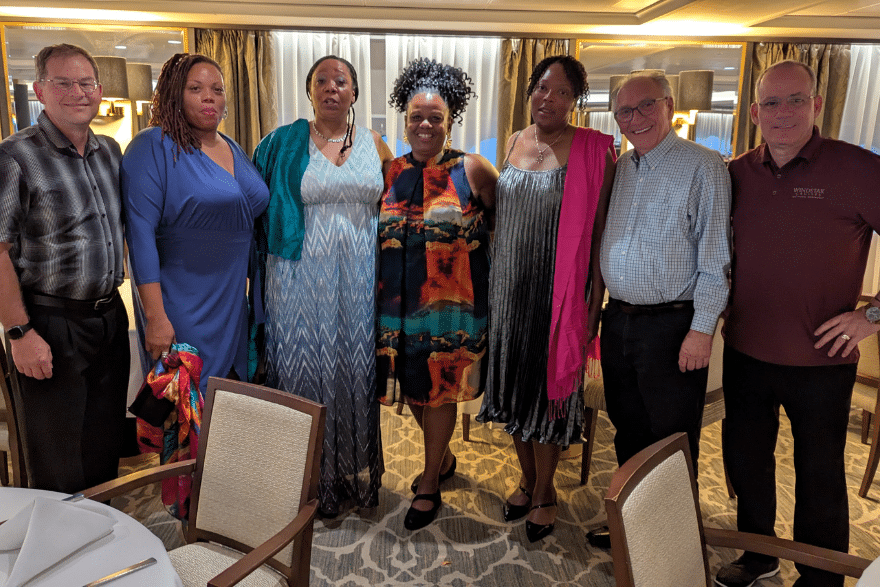
    Chef Jennifer Hill Booker gathers with friends onboard Windstar’s Star Legend on her James Beard Foundation culinary cruise

    II really enjoyed simply meeting and chatting with our guests and the ship’s chefs. Windstar Cruises will spoil you for any other kind of cruise experience. The staff, always happy, was so engaging helpful and gracious, I felt like part of the crew and also part of the guests.

    One of my favorite parts of each day was heading to the lounge every day at 5 p.m. for trivia. Then we’d change for dinner and have a pre-dinner cocktail, connecting with other guests along the way. That was really the best down time every evening.

    Tell us about the market where you led your chef’s tour:

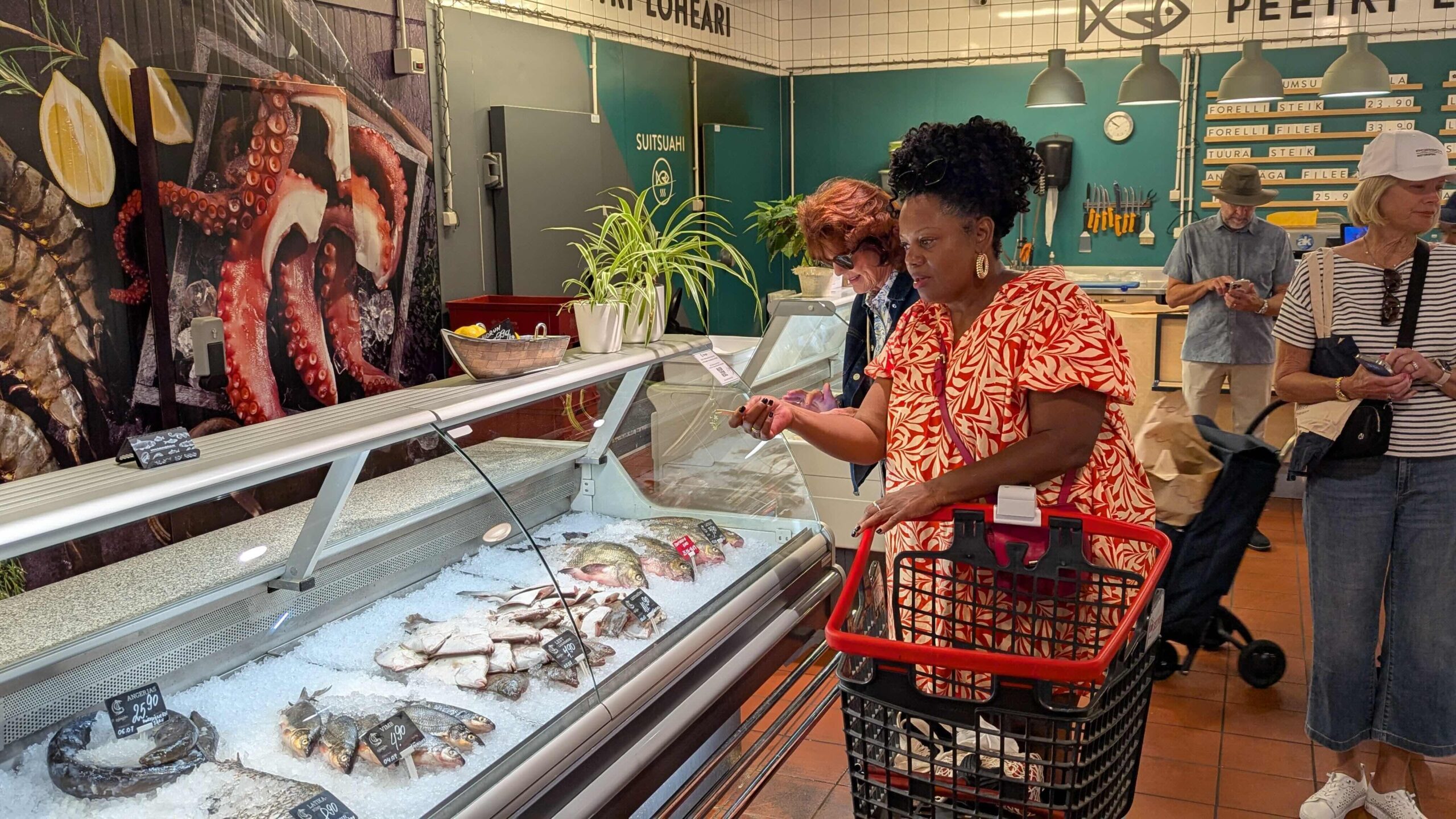
    Tallinn’s Central Market really surprised me. From the outside, it looked rustic and outdoorsy and yet inside, it was gleaming and contemporary. We bought so much! Cheese, produce, seafood, chocolate, sausage, and patisserie. We also brought back pesto, pickled herring, and fresh cherries….

    Chef Jennifer Hill Booker hosted a tour of the Central Market, in Estonia’s Tallinn./Jennifer Hill booker


    Was there a teachable moment in any of your cooking demos (either for you or for travelers?):

    Onboard, Chef Jennifer Hill Booker shares there were teachable moments for guests — and for herself./Jennifer Hill Booker

    During my cooking demonstrations, my style is informal and interactive, and in both cases I asked for a volunteer to assist. For guests, one teachable moment was, when demonstrating a recipe for citrus brined shrimp with sun dried tomatoes, Rob, my helper-guest and I had an impromptu competition – on plating.  The visual appeal – after all you eat with your eyes first so plating, or arranging the presentation – is an important part of the meal. In the end, mine had height and color and garnish; his was just three pieces of food flat on the plate. We all had fun with it.

    For me: Corporate Executive Chef Georg is an exacting German, especially when it comes to measuring ingredients for a dish. And all of Windstar’s recipes were in metric, not imperial measurement. “Freedom measurements,” as he called out the way many American chefs cook by eyeballing ingredients, “are not exact.”

    Which ports did you like best?

    My first favorite was Finland’s Helsinki, a cute city right at the wharf. A lot of locals were on vacation catching the ferry to the island where Korkeasaari Zoo is located. Bordering Helsinki’s South Harbour are two markets: The historic Old Market Hall (Vanha Kauppahalli), features locally prepared dishes and has cute little cafes inside. Just around the corner is the Hakaniemi Market Square, outdoors, and it also sells freshly prepared Finnish traditional dishes but as well has some really interesting souvenirs made of reindeer bones and wood, like handcrafted wooden buttons.

    In Germany’s Warnemunde, an idyllic seaside town, we hit all the grocery stores. I love to look at butcher shops and bought a chunk of smoked bacon with a rind. It was very different from the bacon we buy in America; it was lean and the fat was creamy. The running joke was I was going to try to sneak it home, but we stayed in Copenhagen a few extra days after the cruise and I cooked it there.

    We tasted beer in every port of call, sampled bratwurst, and checked out all the chocolate and coffee we could. The countries that make up both the Baltic region and Scandinavia have become very focused on farm to table ingredients and the produce was so fresh and vibrant it was even better than the best farmer’s market at home.

    The trip has inspired me to import a couple of new beer discoveries, and I adored the Danish “Smørrebrød,” open-faced sandwiches on sturdy grain bread with a shrimp or fish topping. We may well introduce a pop-up at our biergarten in Arkansas and serve them there.

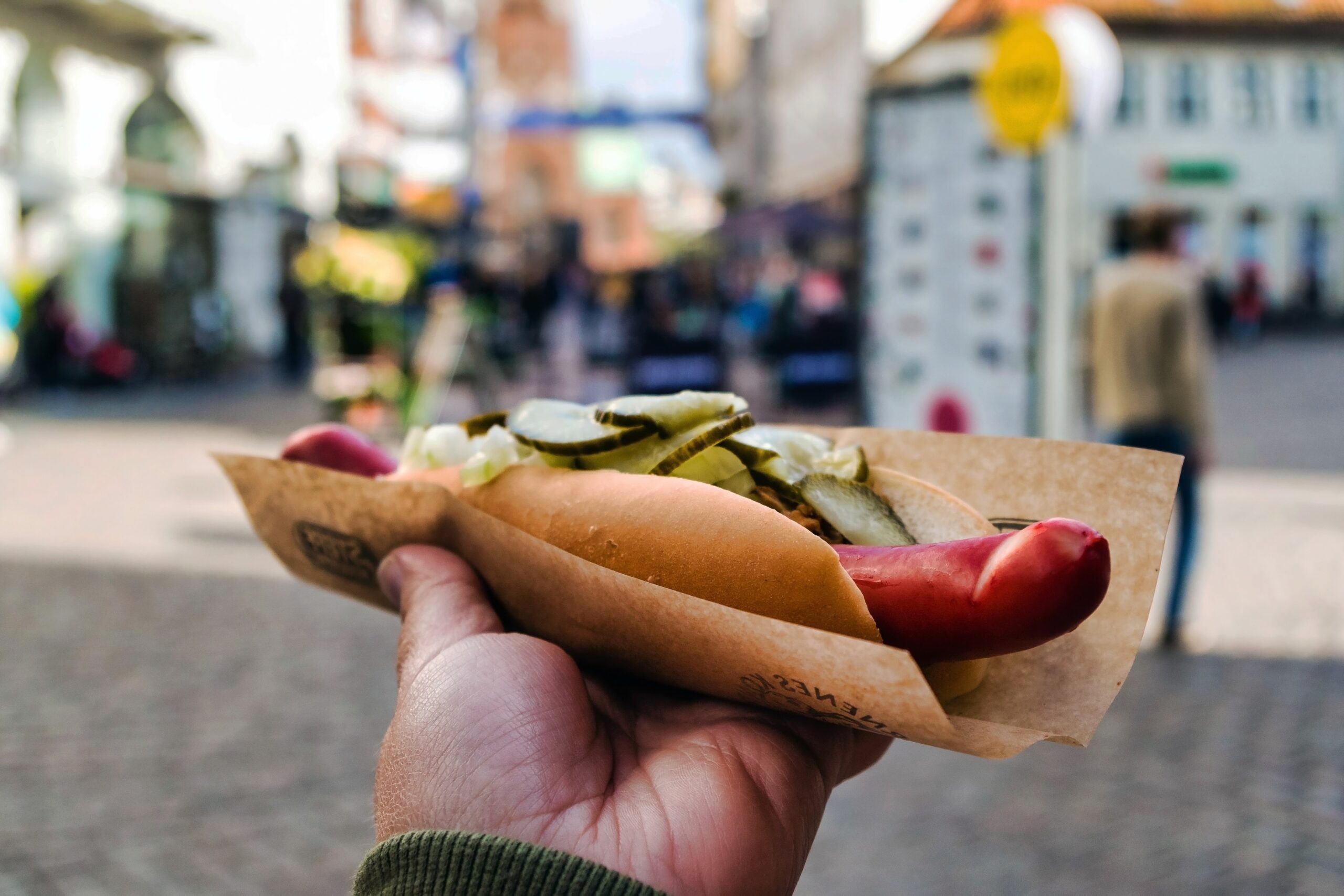
    Chef Jennifer Hill Booker recently led a James Beard Foundation culinary cruise and highly recommends street food hot dogs in Copenhagen./Adobe

    And if you visit Copenhagen, you’ve got to try the incredible Danish hotdogs. I also recommend a visit to Magasin, the city’s historic department store. For culinary enthusiasts, we loved Mad&Vin, its vibrant food market in the basement, and the Danish cafes on the top floor.

    One last question: Any Windstar advice you want to share?

    You’ve got to incorporate Windstar’s fabulous laundry service into your travel budget. I felt so pampered, and loved how it was delivered, neatly tucked into boxes and packages (or in hanging bags). It’s the ultimate luxury, a real game changer.


    The post Where Fine Dining Meets the Open Sea: A James Beard Foundation Culinary Cruise appeared first on Windstar Cruises Travel Blog.

    This post was originally published on this site.

  • This Ultimate Canadian Book Six-Pack Might Just Inspire a Coast to Coast Trek of Canada

    This Ultimate Canadian Book Six-Pack Might Just Inspire a Coast to Coast Trek of Canada

    Featured image: Check out these all-Canadian books for the summer to add to your reading list | Photo by Wavebreakmedia on Envato

    Six books by Canadian authors

    by Jules Torti

    Celebrate summer and Canadian authors with this patriotic six-pack of books! The line-up includes a maritime pilgrimage, an ode to French fry stands across the country, Jane Christmas’s foray into British real estate (and a daunting Victorian reno), a marvellous guide to Montreal’s avant-garde buildings, a novella of lingering short stories and a love letter to North American trees. Plant yourself under the shade of one and absorb this “sunshine list.” You may be inspired to cook up your own cross-Canada chip stand taste-test, long walk or meaningful meander through Montreal.

    Summer is the ideal time to begin seriously plotting a late fall or spring Camino. The temps are favourable and inspiring for training. Start by walking to your local library or nearest independent bookstore and pick up one of these titles! May I also suggest my latest memoir? Camino Chaos: Taking it All in Stride Across Croatia and Portugal revisits the experience my wife and I had walking Camino Krk (Krk Island, Croatia) and the Camino Portuguese coastal route from Porto to Santiago.

    All of these books pair exceedingly well with a deck, dock or desk (if the boss is away)!

    Please note: We always try to support independent bookstores, however, bookshop.org is only available in the US and UK and not all books are offered, so we have included Amazon links as well. Please support our writers by using our links when you purchase books online. 

    Show your support for JourneyWoman’s all-female writers. Join our mailing list here.

    Six books for the summer

    1. There’s Always More to Say by Natalie Southworth

    Aside from a serious Marg Atwood phase in the 90s, it’s rare that I read short fiction collections. However, There’s Always More to Say made me a believer. From her home in Montreal, Natalie Southworth deftly evokes empathy in her myriad of broken characters. With the unwavering eye of a classical realism artist, she has coloured a narrative of several women as they navigate dissolving relationships, failure, anxiety and generational depression. Her consistent play between the light and shadows is constant, like the deliberate nature of chiaroscuro.

    Southworth’s stories are immediately transportive and as raw as a skinned knee. It’s impossible not to identify with the frayed threads of friendship and family, either first-hand or as a bystander. To become fully entrenched in the mood and heart of the loneliest, misunderstood, heartbroken and struggling women she portrays with grace and resilience is inevitable. “Inheritance” is one that is guaranteed to linger like a bruise. This book is a gift of voices both heard and silenced.

    2. Exploring Montreal: 151 Best Buildings by Robin Ward

    For residents, first-time visitors or frequent fliers, Robin Ward’s architectural foray into Montreal is an enormous resource to plot your own experience. All the staples are accounted for: Schwartz’s Deli, Marché Atwater, the famed Jardin botanique de Montreal, Fairmont Queen Elizabeth and Habitat 67.

    From the sawtooth design of the Insectarium greenhouse to the iconic Farine Five Roses silos, Montreal is an open history book with its foundries, shipyards, textile mills, bell towers, rail lines, fur trade heritage, fires and typhoid outbreaks.

    “The most sustainable buildings are those you already have” is a sentiment that Montreal takes pride in. The concrete silos from the Redpath sugar refinery have been repurposed as a rock-climbing gym while the ‘76 Olympic Games Velodrome pivoted to become the Biodôme, showcasing the earth’s five dramatic ecosystems of the Americas from tropical rainforest to the Arctic.

    Adaptive reuse has transformed fire halls, churches and refineries into bougie hotels, coffee shops, puppet studios, museums, housing co-ops, libraries and even a trapeze school. Public space restoration is witnessed in linear parks and commerce arteries that are an innovative blend of skyscraper deco, fieldstone, Greek revival, Beaux-Arts and Brutalism. There’s quirk and curio galore: a 6-ton Guaranteed Pure Milk bottle created in the 1930s, a CIA brainwashing site, a Gorgosaurus, 350-year-old bonsais, nun crypts, the largest classical Chinese garden outside of China and Le Cimetière Notre-Dame-des-Neiges (the largest cemetery in Canada).

    Exploring Montreal is the penultimate guide to the DNA of this marvellous metropolis. J’adore!

    3. No Thanks, I Want to Walk: Two months on foot around New Brunswick and the Gaspe by Emily Taylor Smith

    Emily Taylor Smith’s memoir is an easy one to slip into. The visuals are an immediate marinade in the Maritimes—you can almost taste the briny spray of the Atlantic on your face. From the viridescent sea to brackish estuaries, fields of swaying timothy, butter yellow hollyhocks and purple fireweed, you’ll quickly fall in step with Smith and billboards that suggest: “Get High on Milk—Our Cows Are on Grass!” It’s the kind of humour that can be missed at too many miles per hour.

    On foot, Smith’s observations on her daunting 2,400km journey (in just two months) from St. Stephen, New Brunswick to Quebec City are peppered with reality, anxiousness, introspection, gratitude, epiphanies and the hot salvation of Tim Hortons coffee. Despite her summer timeline, the eastern provinces deliver with their typical blasts of sideways rain and wind—but Smith is seasoned and resilient after hiking the coastlines of both Nova Scotia and PEI. She stops checking the current forecast online. “Walking forty-five kilometres each day had me outwalking forecasted weather systems before they arrived.”

    The bone-deep East Coast nature is to share a yarn and invite a reciprocal smiling face in for blueberry pie and a pot of tea in the spirit of bonheur (happiness). There are lovely vignettes of the colourful cast she meets along the way—right down to the arrival of Monsieur the cat. We also meet her steadfast beau, Darren and doting family who scoop her up at points along the way for proper sit-down meals and a real bed to collapse into. Relying on Google Maps, Mr. Noodles, Nutella and the kindness of strangers, Smith documents a lesson learned for each day—I’m going to adopt that.

    new bookshop banner use this one

    4. Open House: A Life in Thirty-Two Moves by Jane Christmas

    Jane Christmas candidly admits that her affection for property shows is a “gateway drug to a full-on renovation.” She is energized when her home looks like sacs of flour have been detonated.

    Naturally, this memoir goes many wallpaper layers deep in true Jane Christmas-style. The veneer is removed early on and there’s admission that the chronic restoration she seeks in houses is also an essential tool in the redesign of her emotional scaffolding. The throwbacks to her childhood are difficult to read and they’ll sit sideways in your throat.

    Quasi Under the Tuscan Sun but more like, Under the Bristol Brelly, Christmas looked at 60 homes in England’s “stonking-hot” 2017 market. The undercurrent is subtle but undeniable. Open House is about belonging and how that fluid concept really has no fixed address.

    Christmas expertly blends Dynasty references, gritty relationship dynamics, not-so-fuzzy childhood memories, Meg Ryan’s brownstone in You’ve Got Mail and bitchings about space-hog radiators in one smooth-as-Yorkshire-pudding go. Her turns of phrase will bring several smiles, like the shower that “has all the pressure of a royal handshake.”
    You’ll either be inspired to consider packing up and living in another country—or completely daunted and forever terrified by Open House.

    5. The Healing Wisdom of North American Trees: From Root to Remedy by Brenda Gallagher

    This enormously rich resource is a dynamic tribute to our forests. Brenda Gallagher, a vegetation specialist with the Upper Thames River Conservation Authority in Southern Ontario, believes trees are our oldest teachers. Quickly and quietly, she illustrates the impossibility of our lives without trees through folklore, herbal alchemy, botanical science, Indigenous teachings, wildlife relationships, and personal insights into over a dozen species.

    She shares fascinating bits of history, taboos, mating rituals, and quirky trivia throughout and
    reminds us of how trees are so deeply rooted in our lives. From Aspirin to gin, insect repellent, teas, ink, broomsticks, maple syrup, artificial limbs, canoes, ox yokes, paper, flooring, perfume, bobsleds, guitars, cricket bats, polo balls, trim, moulding, treehouses, and shade to the paintings of the Group of Seven, trees are instrumental. Really, scan the room you’re in. From beehives to lobster pots, trees are a part of our survival and well-being.

    Gallagher’s compendium is a gorgeous celebration of species that have been planted as trees of peace (white pine), superstitious safeguards (elderberry), food sources to fatten pigs (oak), natural protection from lightning (beech), and to ward off snakes (white ash). The Healing Wisdom of Trees serves as a surreptitious reminder to appreciate the traditional ties, magic, and mystery of our forests. This book will definitely compel you to hug a tree. And plant one.

    6. THE CHIP STAND: 130 of Canada’s Iconic Food Landmarks by Chantal Bennett and Joel Kimmel

    There are certain books that swallow you whole and vice versa. They distract and tempt at every turn, daring you to read them in one indulgent sitting. The only thing missing from this grand French fry compendium is a bamboo wooden fork and scratch-and-sniff feature reminiscent of sharp vinegar and hot grease.

    Authors and illustrators Chantal Bennett and Joel Kimmel, dedicated the last 10 years to creating this edible ode to Canada’s landmark chip stands from Nunavut to Gananoque (and a few notables from Amsterdam and the fry motherland, Belgium).

    The cash-only simplicity, unmistakable waft and repurposed whimsy of the vehicles (a retired Canada Post delivery truck even) is captured in over 150 pages of jazzy chip stand drawings (one on a grease-spotted fry bag). From the anatomy of a perfect poutine to the history of the POGO, the drawings, owner interviews and salt-sprinkled blurbs are as playful as some of the classic stand names like Fry Me to the Moon and the Hippie Chippie.

    If you’re a devout, this endearing homage is loaded with horse-drawn chip wagon history, treasure maps for DIY fry-inspired road trips and trivia (like the name of the chip stand that Alanis Morrisette’s mother frequents). It’s a passionate tribute to the small town legends who continue to peel their way through a thousand potatoes a week.

    Enjoy this patriotic pile and let us know what books for the summer you have on your reading list in the comments section below!

    Trafalgar Tours

    More Books We Love

    [/et_pb_column]

    The post This Ultimate Canadian Book Six-Pack Might Just Inspire a Coast to Coast Trek of Canada appeared first on JourneyWoman.

    This post was originally published on this site.

  • Bipartisan bill would let service members sue US military for sexual assault

    Bipartisan bill would let service members sue US military for sexual assault

    A bill introduced last week in the Senate would allow U.S. troops to file claims against the Defense Department for incidents of sexual assault or harassment that happen while serving on active duty.

    Modeled after similar legislation the permits service members to sue DoD for damages caused by military medical malpractice, the proposed Military Sexual Trauma Accountability Act would let service members and veterans file civil claims for negligence over service-related sexual trauma.

    Service members are barred from suing the federal government for injury or harm that occurs as a result of military duties under the Feres doctrine, a legal precedent based on a 1950 Supreme Court ruling on several service-related cases of injury.

    But in late 2019, Congress passed a law that gave service members and surviving families the right to file medical malpractice claims against the Defense Department for harm or negligence caused by a military physician or civilian contractor in a military health facility.

    Bill sponsors Sens. Jeanne Shaheen, D-N.H., and John Kennedy, R-La., would carve out another exception to Feres and allow service members to hold the DoD accountable when it fails to prevent, investigate or was otherwise negligent in sexual misconduct cases.

    “It makes no sense that civilians can seek justice from the government when the warriors who have sacrificed everything to protect our nation cannot. Our landmark legislation would right this wrong by tearing down the barriers that prevent members of the military and veterans from engaging the justice system to demand accountability and finally begin to heal,” Shaheen said in a statement.

    “Service members give up a lot to defend this country, but they should not have to give up their right to hold the government accountable when its negligence contributes to sexual assault or harassment,” Kennedy said.

    The legislation is supported by several veterans advocacy groups, including the Veterans of Foreign Wars, the American Legion, the Service Women’s Action Network and Protect Our Defenders.

    Service members filed 6,973 reports of sexual assault that occurred during military service in fiscal 2024.

    Protect Our Defenders, which is representing at least 82 plaintiffs in a case that involves Army gynecologist Maj. Blaine McGraw, who faces 273 charges, including secretly photographing and taping his patients, noted in a media release that the Ninth Circuit Court of Appeals ruled that sexual assault cannot be treated as “incidental” to military service, but that decision only applies to the Ninth Circuit.

    “The Military Sexual Trauma Accountability Act would extend that principle to every service member in every court in the country,” Protect Our Defenders advocates said.

    According to the group, the Congressional Budget Office estimates 120,000 service members would file successful claims under the proposed bill in its first decade.

    Under the provision of the 2020 National Defense Authorization Act that allowed service members to file medical malpractice claims against military health facilities, some patients have prevailed, although not the legislation’s namesake, Master Sgt. Richard Stayskal, whose claim was denied by the U.S. Army.

    According to the Army, since 2020, 351 claims have been filed, with 45 settled or pending settlement and 160 denied. Roughly 146 claims remain open or pending determination.

    The service did not provide an amount for the total payout of the 45 claims.

    “We recognize that behind every medical claim is a soldier or family member deserving our utmost respect. Consequently, the Army treats the medical claims process not merely as a legal mechanism for addressing grievances, but as a vital catalyst for systemic improvement, utilizing thorough reviews to enforce rigorous safety protocols and uphold our duty to our personnel with the highest level of integrity,” spokeswoman Heather Hagan wrote in an email Monday to Military Times.

    Between January 2020 to February 2026, 184 medical malpractice claims were filed against the Air Force, and of those, 25 were approved, including 11 that were related to another claim, for a total reward amount of $2,159,895.93.

    The Navy has received 250 medical malpractice claims since 2021 and approved 14, with a total payout of $5,364,882.86.

    A Navy spokesman added that the service rejected 138 claims for reasons that included failing to provide required information or filing a claim outside the statue of limitations.

    The time frame for filing is two years.

    From Jan. 1, 2020, to October 2022, the Navy had received 146 claims from sailors, Marines or their families who sought more than $1.1 billion in compensation. The service denied 58 claims and settled one for $250,000.

    Under Feres, service members may not file a claim under the Federal Tort Claims Act for injuries or mishaps that are incidental to service including, training accidents and other on-duty harms.

    This immunity has previously been extended to military contractors providing services in combat zones as well, but in April, the U.S. Supreme Court upended earlier rulings by affirming an Army soldier’s right to sue a military contractor whose employee detonated a suicide bomb on Bagram Air Base in Afghanistan in 2016.

    In the decision, Justice Clarence Thomas said that the contractor’s argument — that it had immunity in wartime under federal law that shields the military from being sued for combat-related decisions — swept “too broadly.”
    Thomas has argued for years that the Feres decision should be reconsidered. In 2025, he penned a strongly-worded 14-page dissent after the court rejected a case that would challenge the doctrine, calling the law “indefensible” and “senseless as matter of policy.”
    Editor’s Note: This story was updated June 30 to include information on malpractice claims filed to the U.S. Navy.

    This post was originally published on this site.

  • Chicken Sliders

    Chicken Sliders

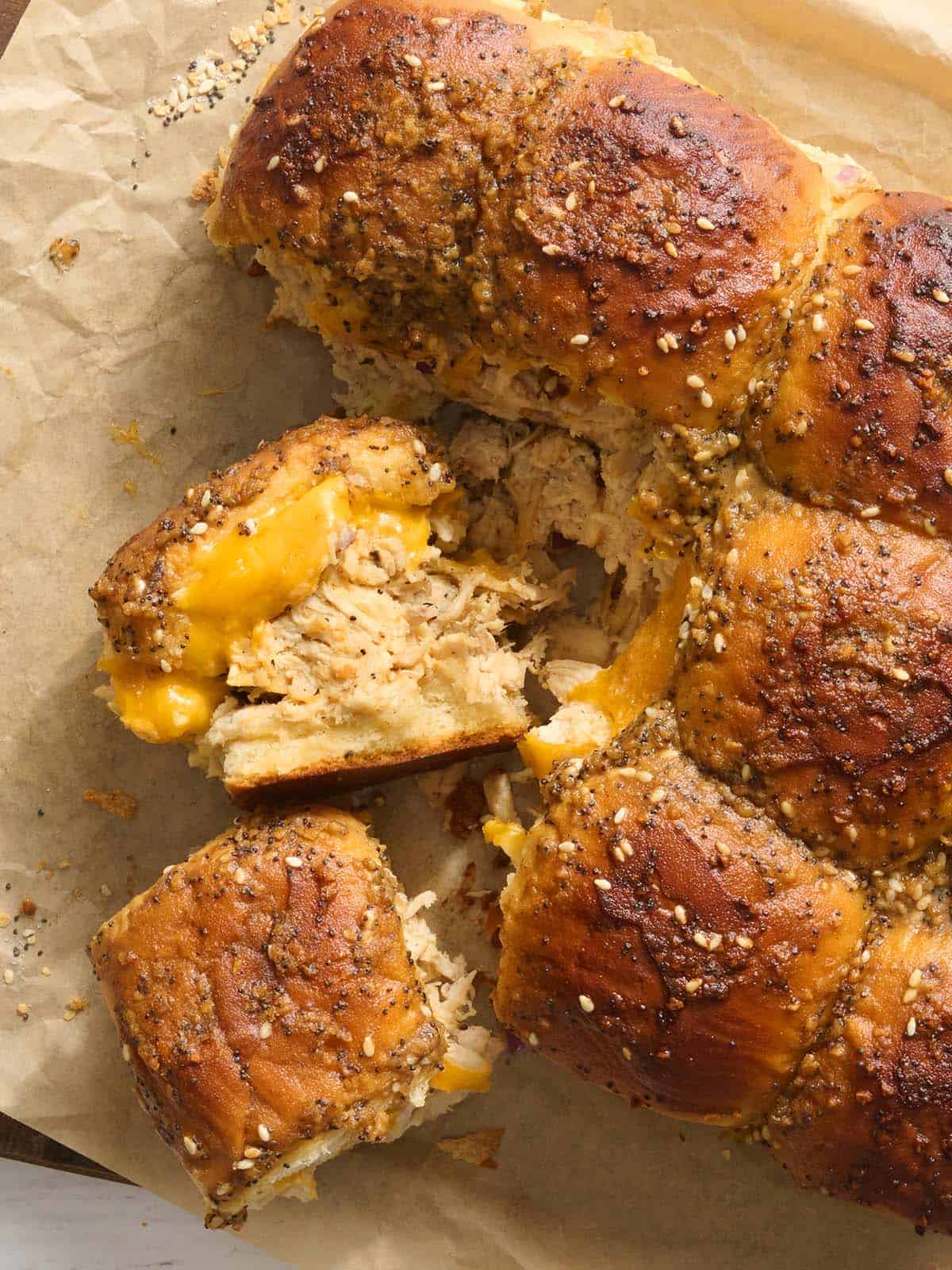
    If there’s a tray of warm Chicken Sliders at a party, potluck, or game day spread, you can pretty much guarantee I’m heading straight for it. These easy chicken sliders are made with sweet Hawaiian rolls stuffed with a creamy rotisserie chicken filling, plenty of cheddar cheese, and a savory seasoned butter topping. They bake in about 30 minutes until warm, melty, and golden. The cream cheese keeps the filling rich and creamy, while the buttery topping and soft rolls make every slider irresistible for feeding a group.

    My Favorite Easy Dinner for a Crowd

    I start this recipe with the same sweet Hawaiian rolls I use in my classic sliders, but this time I swap the ground beef filling for pulled chicken mixed with red onion, cream cheese, mayo, and seasonings. Then I cover the chicken filling with cheddar cheese, sandwich it between the rolls, brush on a melted Dijon-Worcestershire butter topping, and warm everything in the oven to golden, melty perfection.

    These chicken sliders are so worth making when you need something actually easy and crowd-friendly for dinner, 4th of July, or a casual potluck. They’re quick to make and sturdy enough for people to grab straight from the tray. For the simplest prep, I start with chilled rotisserie chicken and shred it before mixing the filling. The one I found in the refrigerated prepared meats section at my local Walmart was cheaper than the hot rotisserie chicken AND SNAP-approved at my store (making this shortcut extra budget-friendly!)

    Recipe Success Tips

    1. Keep the rolls attached when slicing. Use a serrated knife to slice the Hawaiian rolls in half horizontally, almost like one big sandwich. Keeping them connected makes the rolls easier to fill, bake, and cut into neat little pull-apart sandwiches.
    2. Shred the chicken into smaller pieces. I like the chicken pulled or chopped small enough to mix evenly with the mayo, cream cheese, red onion, and seasonings. Smaller pieces make the filling easier to spread and help every slider get some of the creamy chicken filling.
    3. Customize the filling if you want. I kept this filling simple and creamy, but you can add celery, pickles, relish, bacon, bell peppers, mustard, hot sauce, or your favorite herbs and spices. Just avoid adding too many wet ingredients at once, since a looser filling can make the rolls soften faster.
    4. Cover first, then uncover. The foil is important because it helps the chicken filling heat through and the cheddar melt before the tops of the rolls get too dark. Removing the foil for the last 10 minutes gives the butter mixture time to toast the tops until they’re golden, savory, and lightly crisp around the edges.

    Overhead view of chicken sliders.

    Print
    Add to Collection Go to Collections

    Chicken Sliders

    These easy Chicken Sliders are made with Hawaiian rolls, creamy rotisserie chicken filling, cheddar cheese, and a savory butter topping. Ready in 45 minutes!
    Course Appetizer, Main Course
    Cuisine American
    Total Cost $9.42 recipe / $1.57 serving
    Prep Time 15 minutes
    Cook Time 30 minutes
    Total Time 45 minutes
    Servings 6 servings (2 each)
    Calories 594kcal

    Equipment

    • 9×11” Oven Safe Dish
    • Medium Bowl
    • Small Bowl

    Ingredients

    Chicken Sliders

    • nonstick cooking spray $0.01
    • 12 Hawaiian sweet rolls $2.68
    • 1 lb. rotisserie chicken shredded, (about 4 cups) $3.97*
    • ¼ red onion small dice (about ¼ cup, 60g) $0.26
    • ½ cup mayonnaise 135g, $0.57**
    • 2 oz. cream cheese softened, $0.49**
    • ½ tsp salt $0.02
    • ¼ tsp black pepper freshly cracked, $0.04
    • ½ tsp garlic powder $0.02
    • 1 cup cheddar cheese grated, (100g) $0.79***

    Butter Topping

    • 2 Tbsp butter melted, $0.22
    • 1 Tbsp Dijon mustard $0.07
    • 1 Tbsp Worcestershire sauce $0.05
    • 1 Tbsp everything bagel seasoning $0.23****

    Instructions

    • Gather and prepare all ingredients. Preheat your oven to 350°F and grease a 9×11” baking dish.
    • Slice the rolls in half lengthwise and place the bottom half in the baking dish.
    • In a medium bowl, combine the shredded chicken, diced red onions, mayonnaise, cream cheese, salt, pepper, and garlic powder.
    • Layer the chicken mix evenly on the bottom of the Hawaiian rolls.
    • Top the chicken evenly with the cheddar cheese.
    • In a small bowl, stir together the melted butter, Dijon mustard, Worcestershire sauce, and everything bagel seasoning.
    • Place the top of half of the Hawaiian rolls on the chicken and cheese. Using a brush, evenly cover the top rolls with the melted butter mixture.
    • Cover the dish with aluminum foil.
    • Place the dish on the center rack in the oven and bake for 20 minutes, then remove the aluminum foil and continue cooking for an additional 10 minutes.

    See how we calculate recipe costs here.

    Notes

    *I used a whole chilled rotisserie chicken found in the refrigerated prepared meats section of my local Walmart. It’s cheaper than the hot rotisserie chicken and SNAP approved. You can also use 1lb. of our crockpot shredded chicken, leftover baked chicken breasts, or even grilled chicken.

    **You can substitute the mayo or cream cheese with sour cream or plain yogurt for a tangier flavor. You can also omit either and make it a drier, less-creamy tasting chicken filling.

    ***I love cheddar and think it goes well with these easy chicken sliders. You can also use provolone, mozzarella, or your favorite melty cheese.

    ****Everything bagel seasoning is a mix of sesame seeds, poppy seeds, dried garlic, dried onion, and salt. If you don’t have it, swap in your favorite herb or spice blend, or keep it simple with just sesame seeds or poppy seeds.

    The meat from one rotisserie chicken can weigh over one pound, so make sure to utilize any extra in another recipe! I’ve shared some ideas for using leftover rotisserie chicken under the step-by step photos below.

    Nutrition

    Serving: 1serving (2 sliders) | Calories: 594kcal | Carbohydrates: 32g | Protein: 32g | Fat: 38g | Sodium: 1122mg | Fiber: 0.2g

    how to make Chicken Sliders Step-by-Step Photos

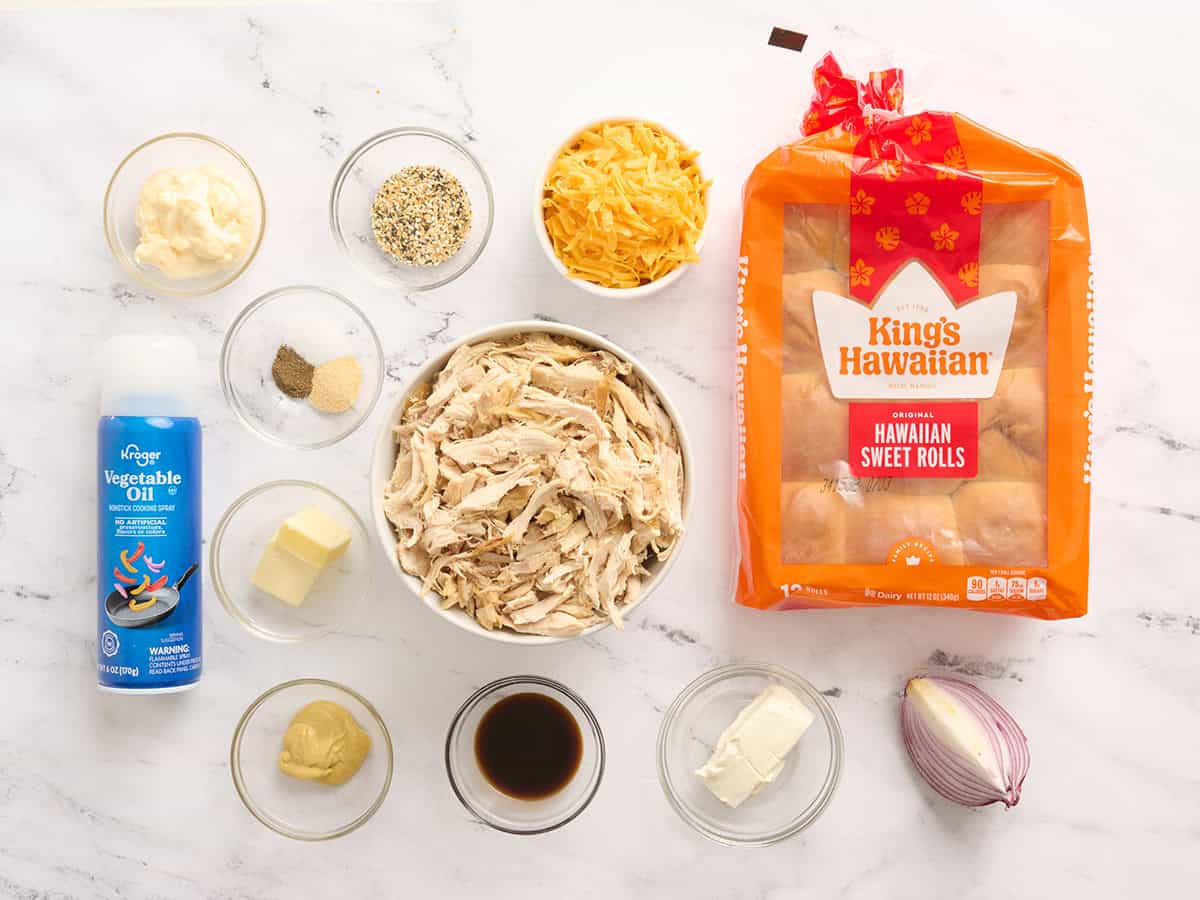
    The ingredients to make chicken sliders.

    Gather and prepare all ingredients. Preheat the oven to 350°F and lightly grease a 9×11-inch baking dish with nonstick cooking spray.

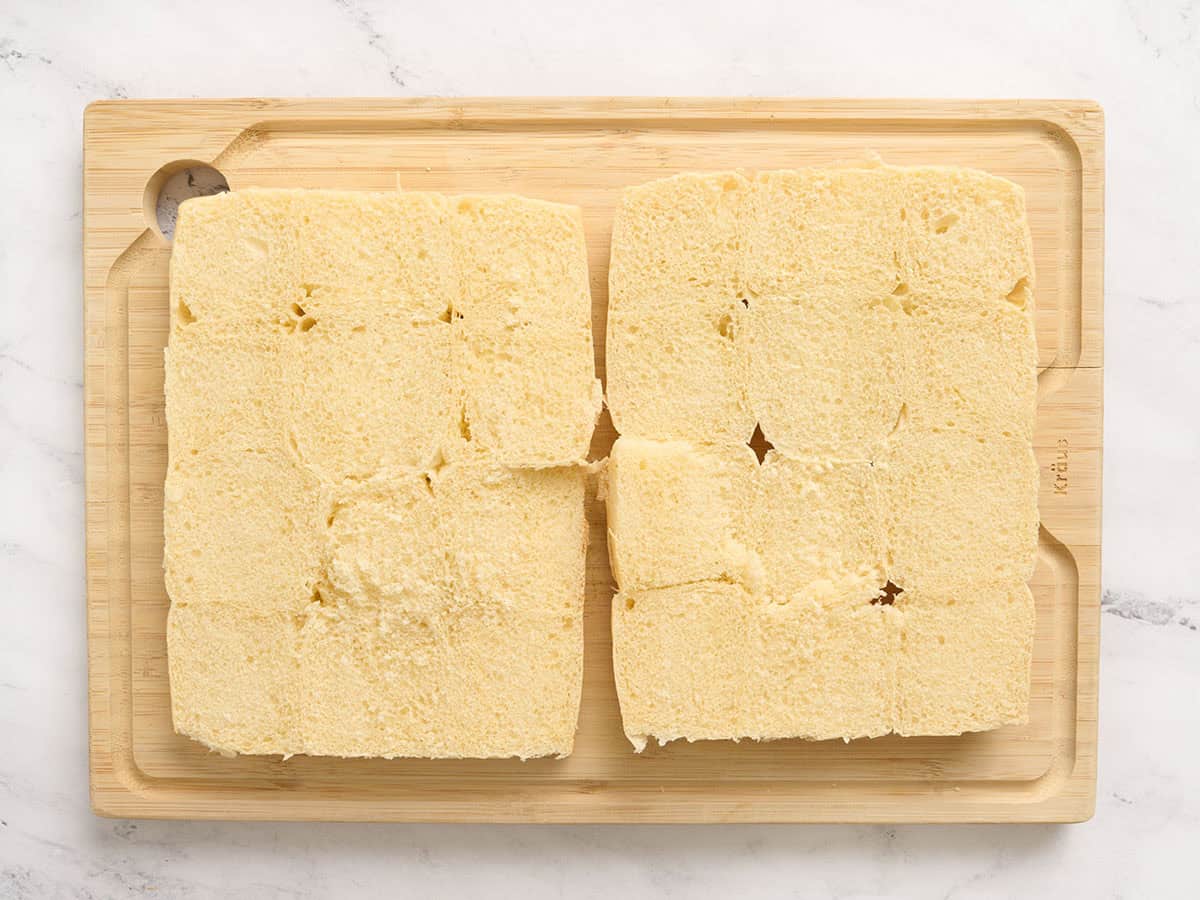
    Hawaiian rolls sliced in half on a wooden cutting board.

    Prep the rolls: Keep the 12 Hawaiian sweet rolls connected, then slice them in half horizontally with a serrated knife. Place the bottom half of the rolls into the prepared baking dish, cut side up. If any of the rolls do disconnect, don’t worry! Just try to keep them snug together in the baking dish so the filling stays tucked inside.

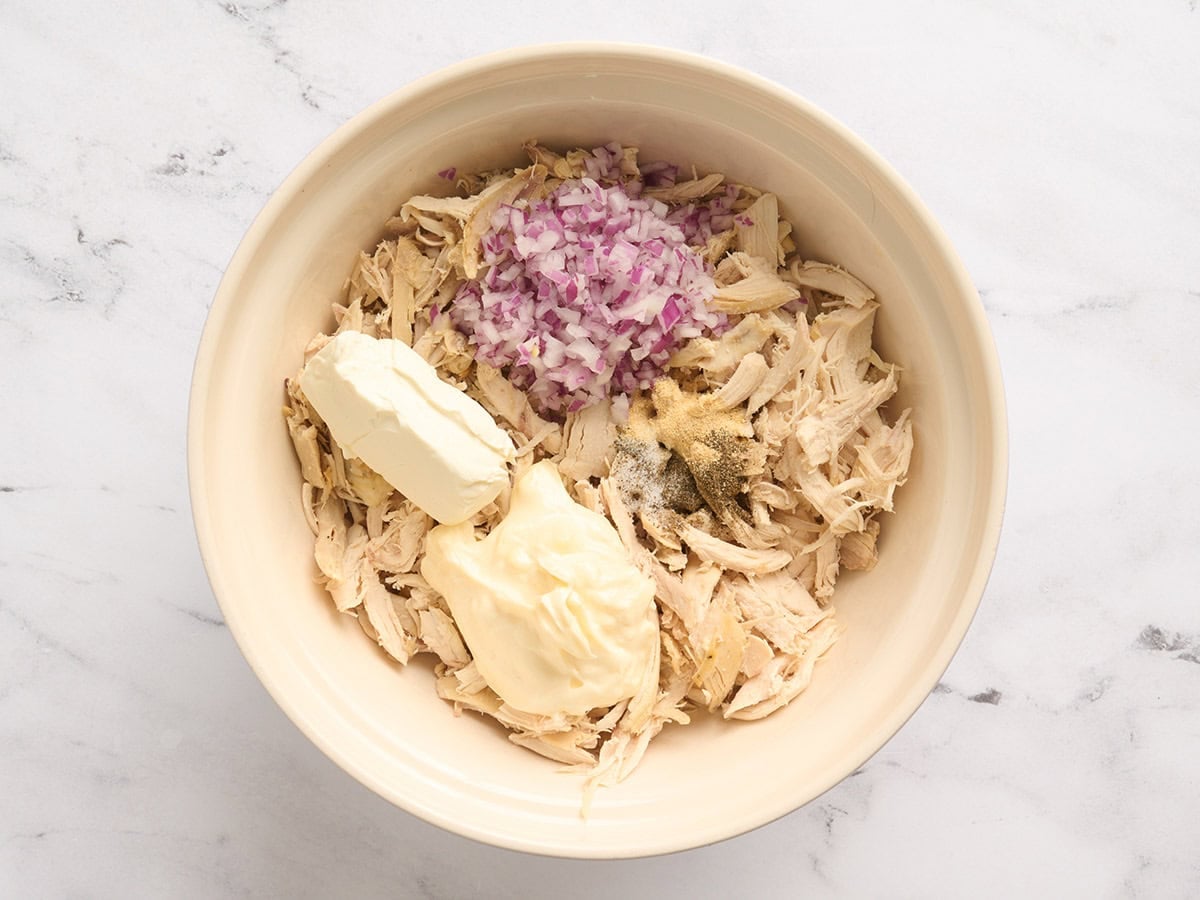
    Shredded chicken, diced red onion, mayo, cream cheese and seasonings in a mixing bowl.

    Make the chicken filling: Add 1 lb. rotisserie chicken (shredded) to a medium bowl with ¼ red onion, finely diced, ½ cup mayonnaise, 2 oz. softened cream cheese, ½ tsp salt, ¼ tsp pepper, and ½ tsp garlic powder. Stir until the chicken is evenly coated and the mixture looks creamy. The softened cream cheese should blend into the mayo without leaving big lumps.

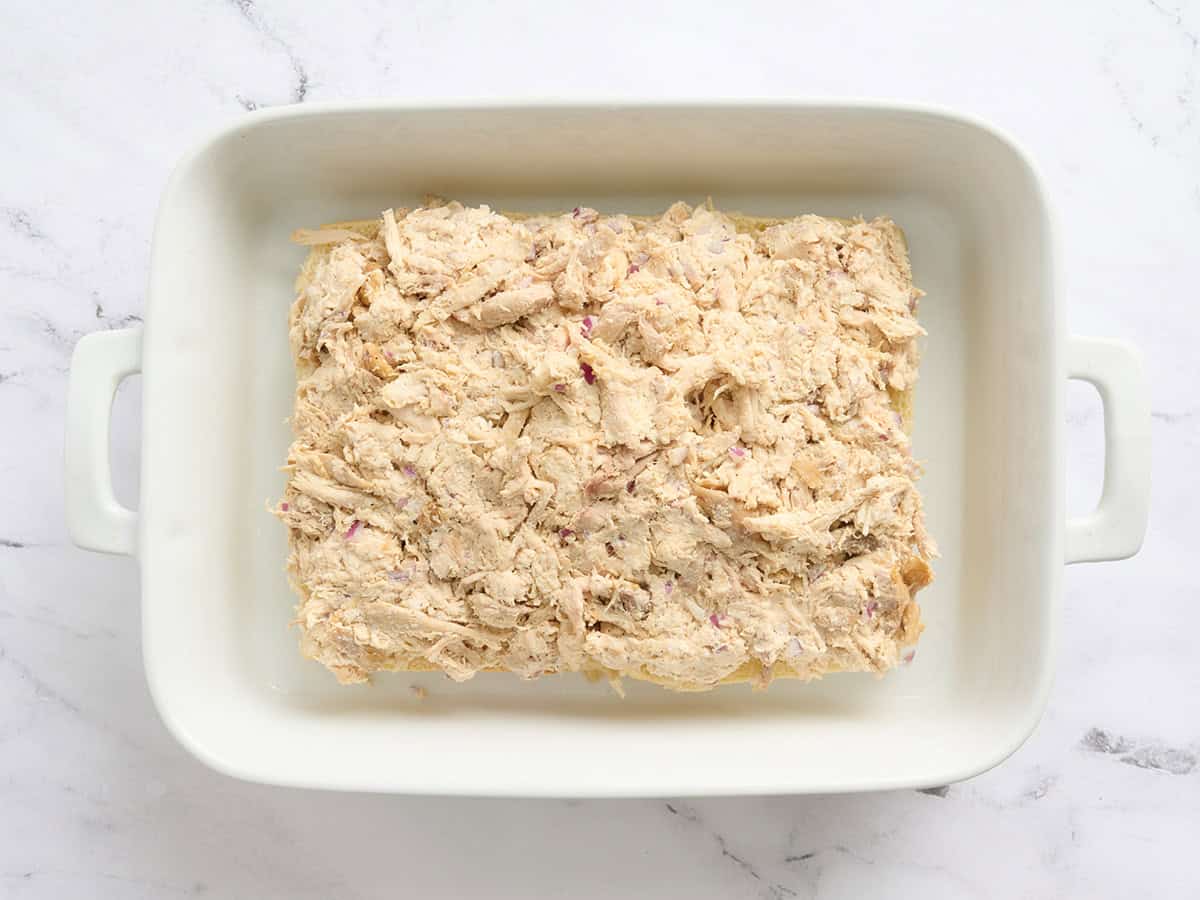
    Chicken filling placed on top of hawaiian sliders in a baking dish.

    Layer the chicken filling: Spread the chicken mixture evenly over the bottom half of the rolls, pushing it to the edges so every slider gets plenty of filling. Try to keep the layer even rather than mounded in the center so the tops sit flat and the sliders are easier to slice.

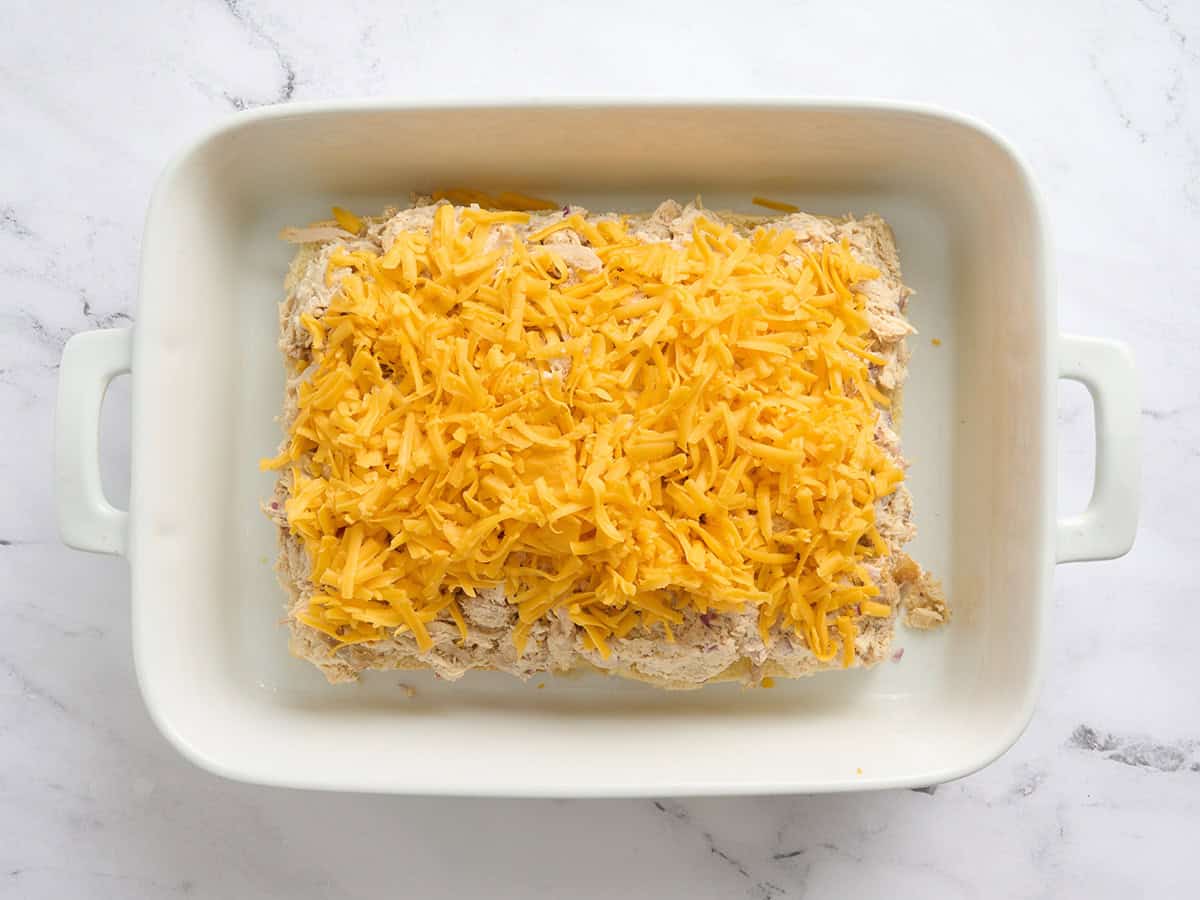
    Shredded cheddar added to chicken sliders in a baking dish.

    Make it cheesy: Sprinkle 1 cup shredded cheddar cheese evenly over the chicken mixture. The cheese should cover most of the surface. This helps the rolls and filling stick together once baked.

    Butter topping in a mixing bowl.

    Make the buttery topping: In a small bowl, stir together 2 Tbsp melted butter, 1 Tbsp Dijon mustard, 1 Tbsp Worcestershire sauce, and 1 Tbsp everything bagel seasoning until combined. The mixture will look glossy and speckled with seasoning.

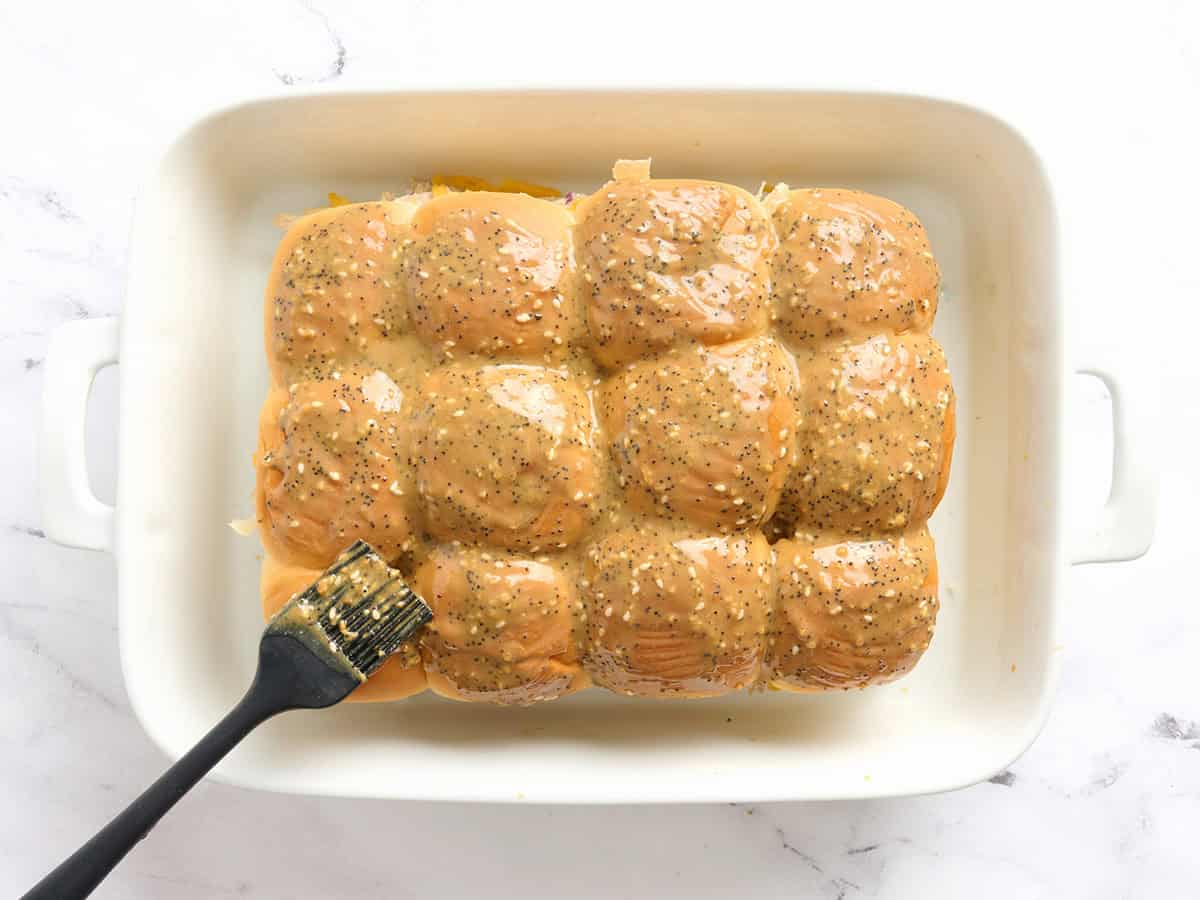
    A pastry brush brushing chicken sliders with a butter topping.

    Add the topping: Place the top half of the Hawaiian rolls over the chicken and cheese. Brush the butter mixture evenly over the tops of the rolls, letting some of the seasoning settle into the creases between each slider.

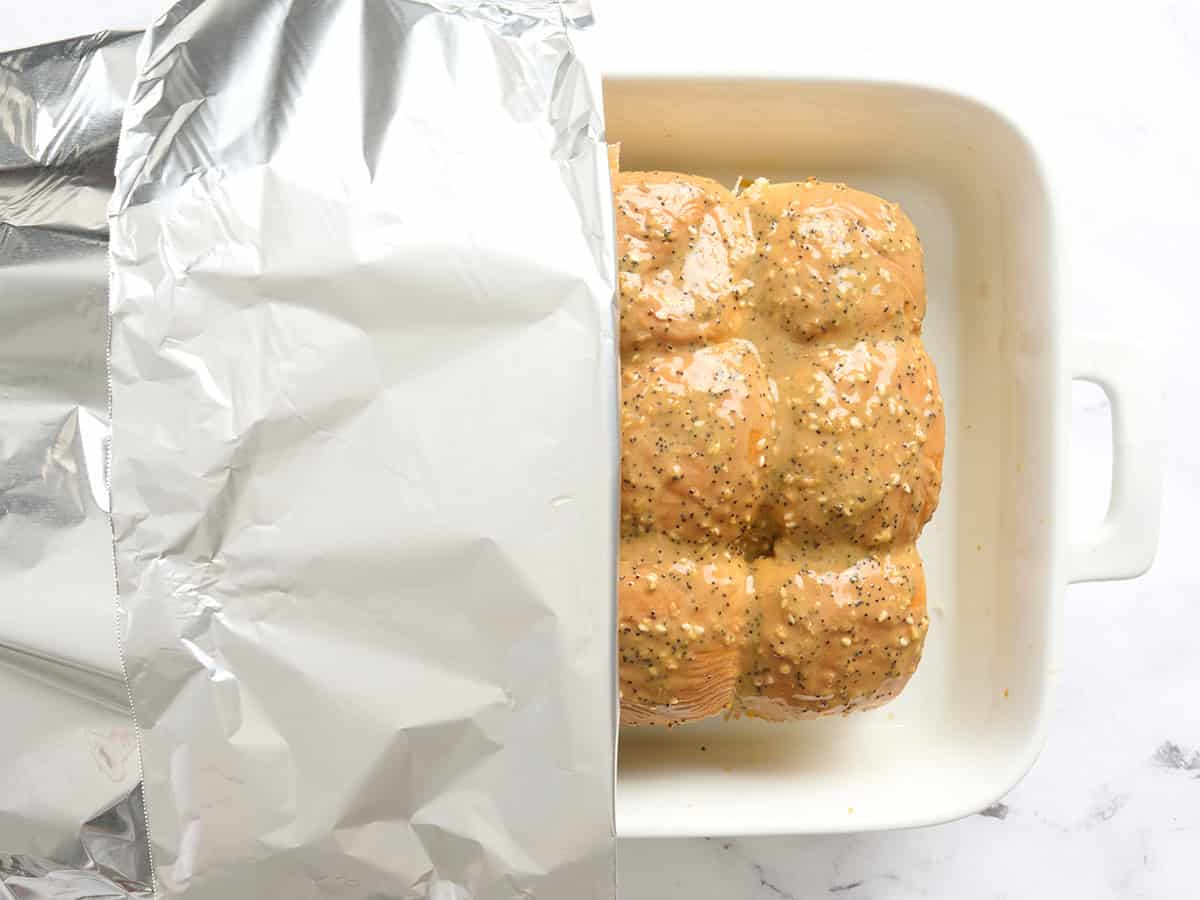
    A baking dish of chicken sliders being covered with foil.

    Cover the dish: Cover the baking dish with aluminum foil. This helps the cheese melt and the centers warm through without over-browning the tops too quickly.

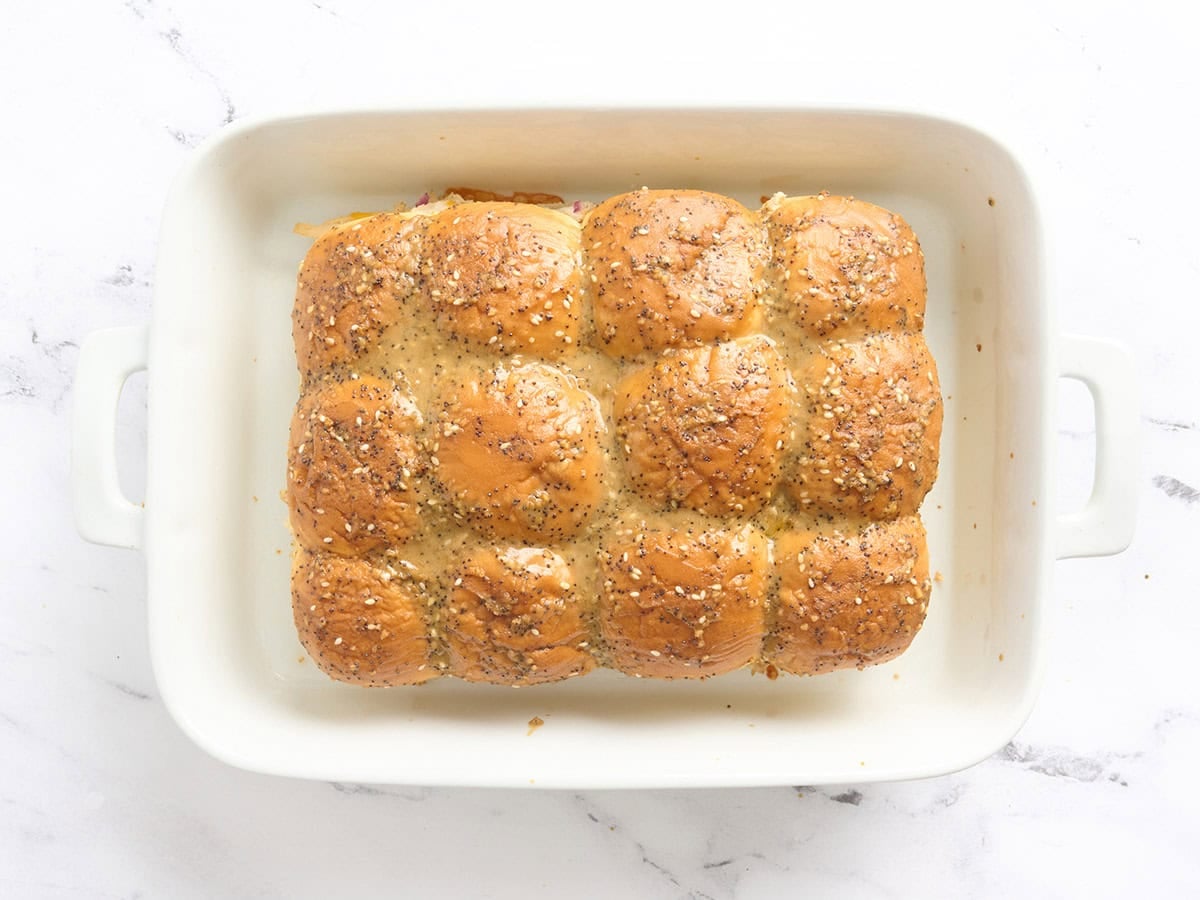
    Chicken sliders in a baking dish fresh out of the oven.

    Bake: Bake on the center rack for 20 minutes, or until the sliders are hot in the middle and the cheese is melted. Remove the foil and bake for another 10 minutes, until the tops are golden, glossy, and lightly crisp around the edges.

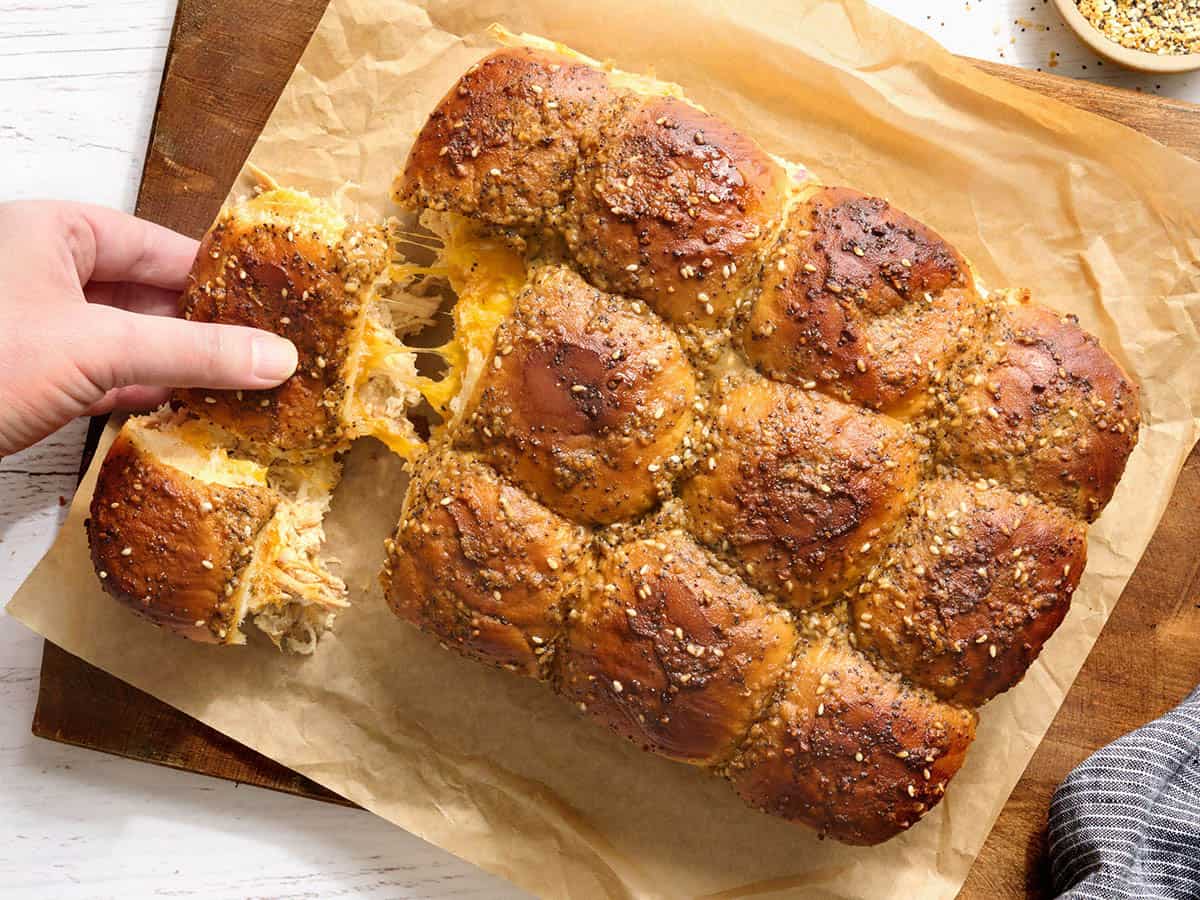
    Let them rest for a few minutes before slicing. This gives the creamy chicken filling a chance to settle slightly, so the sliders are easier to pull apart and serve. Enjoy!

    Overhead view of chicken sliders with a hand taking one.

    Prep it Ahead!

    I think these shredded chicken sliders are best served fresh because the rolls start to soften the longer they sit with the creamy filling. If you want to get ahead, mix the chicken filling, shred the cheese, and stir together the butter topping. Store everything separately in the fridge for a day or two, then assemble and bake right before serving. Just remelt the butter topping before brushing it over the rolls.

    If you don’t need all 12 sandwiches, cut the recipe in half and bake 6 rolls in a smaller baking dish. Use half the filling ingredients and half the buttery topping. The bake time should stay close to the same, but check a few minutes early since smaller pans can heat a little faster.

    Serving Suggestions

    I count two chicken sliders as a serving when I’m pairing these with a few sides, especially if I’m making them for dinner or bringing them to a gathering. They’re best served fresh while the cheese is melty and the tops are still buttery. I like pairing them with a cold, make-ahead side to keep the rest of the meal easy!

    These sliders are great with a pasta salad for a classic potluck combo, or you can serve them with spinach orzo salad if you want something a little lighter, tangier, and more herby alongside the cheesy chicken. The lemony tahini dressing in our roasted cauliflower salad works especially well with the savory chicken sliders, and it can also be served warm or cold, depending on how you want to make the meal work. Chips, pickles, raw veggies, or a simple slaw would also be great if you’re keeping things extra low-effort.

    Got Leftover Chicken? Here’s How to Use it

    One rotisserie chicken can easily give you more than the 1 lb. of shredded chicken needed for these sandwiches, so don’t let the extra go to waste! Pull the meat from the bones, then refrigerate the extra in an airtight container for another meal.

    I’ll be using my extra rotisserie chicken to make our traditional chicken salad⁠ for an easy meal-prep lunch. If you don’t have the full amount of chicken called for in the recipe, just reduce the dressing and add-ins. These chicken kale Caesar wraps⁠ are another great option because a little chicken goes a long way once it’s wrapped up with kale, Caesar dressing, and a tortilla. Or tuck the leftovers into our spinach artichoke quesadillas⁠. You don’t need loads of chicken for those because the spinach, artichokes, and cheese already make them filling and delicious! See all our recipes for leftover chicken for even more ideas.

    Storage & rEHEATING

    While these chicken sliders are best the day they’re baked, I’d still enjoy any leftovers as a quick lunch or snack! Store them, once cooled, in an airtight container in the refrigerator for 3-4 days. Just know the rolls will soften the longer they sit.

    Reheating

    For the best texture, reheat leftovers in the oven at 350°F until warmed through. Cover them loosely with foil first so the tops don’t over-brown before the filling is hot, then uncover for the last few minutes. You can also microwave individual sliders in short bursts, but the rolls will turn out much softer.

    Freezing

    I don’t recommend freezing baked chicken sliders. The creamy chicken filling and soft Hawaiian rolls don’t thaw with the best texture, and the sliders can turn soggy once reheated. If you want to plan ahead, freeze plain shredded cooked chicken instead, then thaw it and mix the filling fresh before baking.

    Try These Slider Recipes Next!

    • These ground beef Sliders use simple pantry seasonings like Worcestershire, garlic powder, and paprika for classic burger flavor.
    • These Ham and Cheese Sliders only need 10 minutes of prep, which is exactly what I want for a party tray!
    • I’d make these BBQ Bean Sliders when I want smoky BBQ flavor without slow cooking a big piece of meat.
    • Turkey Sliders turn leftover turkey, cranberry sauce, Swiss cheese, and Hawaiian rolls into a cozy pull-apart meal.

    The post Chicken Sliders appeared first on Budget Bytes.

    This post was originally published on this site.

  • Aging Isn’t a Straight Line Anymore — and That’s Good News

    Healthy Aging® Magazine Excerpt: Why today’s adults are redefining life’s next chapters

    The post Aging Isn’t a Straight Line Anymore — and That’s Good News appeared first on Healthy Aging®.

    This post was originally published on this site.

  • Zucchini Roll-Ups

    Zucchini Roll-Ups

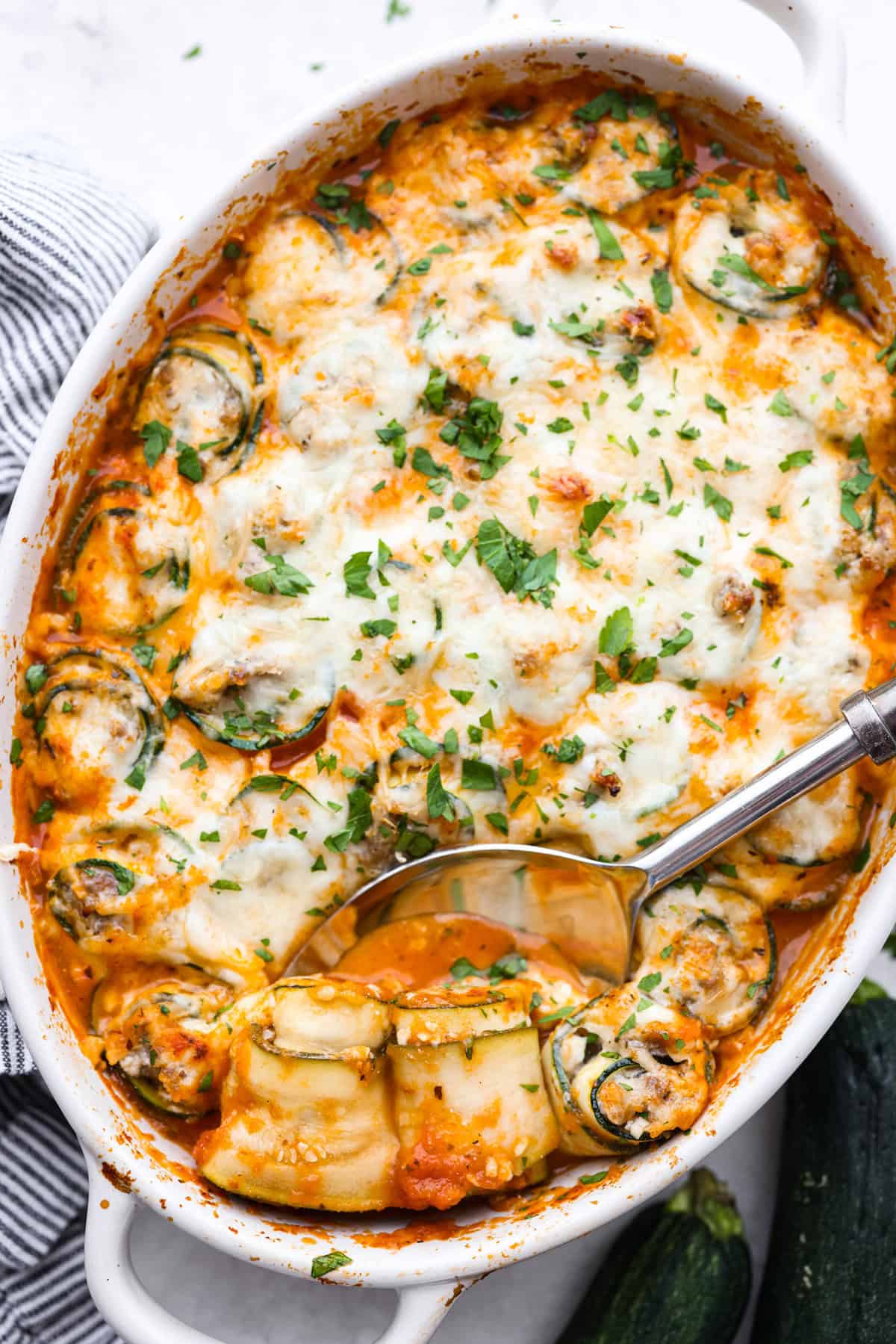
    These zucchini roll-ups have all the cozy lasagna flavor, but use tender zucchini instead of noodles. Thin zucchini slices are filled with sausage and ricotta, covered with sauce and cheese, then baked until hot and bubbly.

    Reasons You Will Love This Recipe

    • Light and Low Carb: These zucchini rolls are a lighter take on lasagna roll-ups, but they are still filling and so good.
    • So Delicious: Sausage, ricotta, sauce, and zucchini make each bite cheesy, saucy, and full of flavor.
    • Uses Up Zucchini: This recipe uses four whole zucchini, so it is great when your garden is full or you want more veggies.

    Zucchini Roll Ups Ingredients

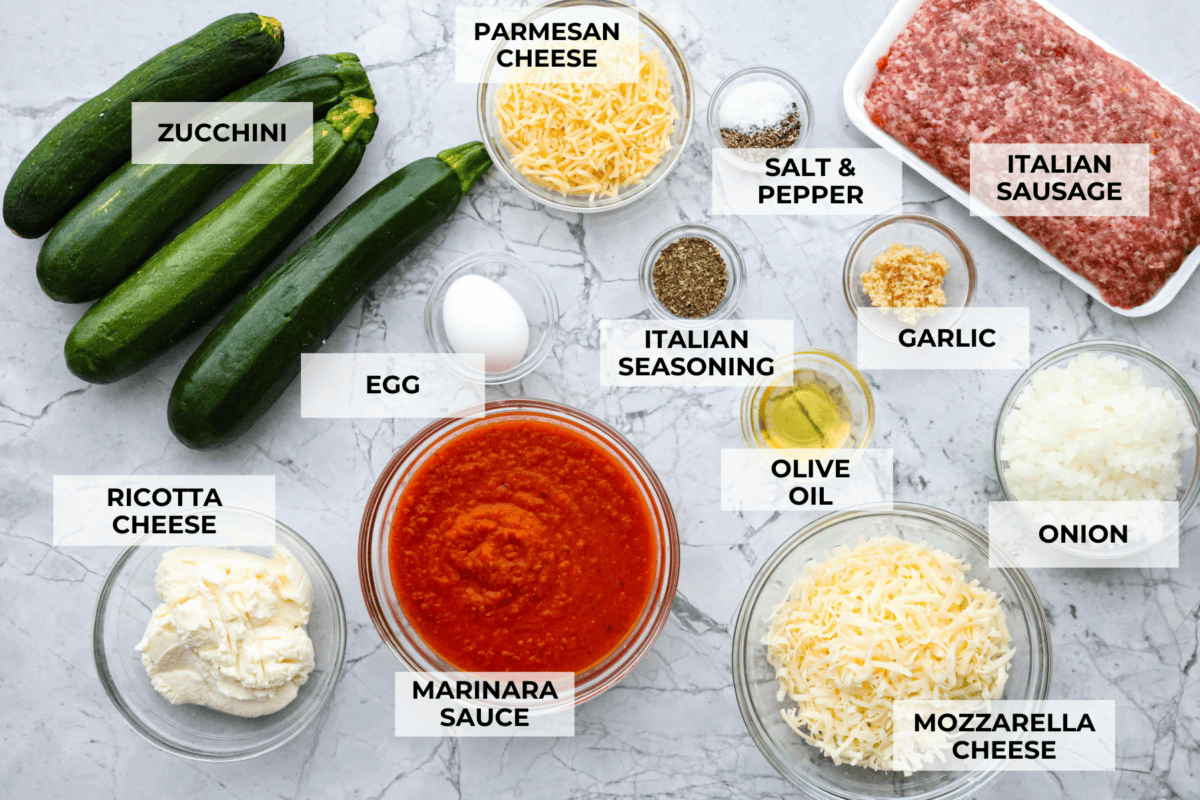
    Overhead shot of labeled ingredients.
    • Italian Sausage: I like Italian sausage because it adds a lot of flavor. Ground beef works too.
    • Marinara Sauce: Use store-bought sauce or try my homemade marinara sauce.
    • Try a Different Sauce: You can use pesto or Alfredo sauce instead of marinara.
    • Add Spice: Use hot Italian sausage if you want a little heat.
    • Mozzarella Cheese: Freshly grated cheese melts best and gives the best flavor.
    • Garnish Ideas: Top your dish with fresh basil or parsley.

    How to Make Zucchini Lasagna Roll-Ups

    There are a few steps, but they are simple. I will walk you through each one. The photos help a ton, too. While these bake, make some air fryer garlic bread for a complete meal!

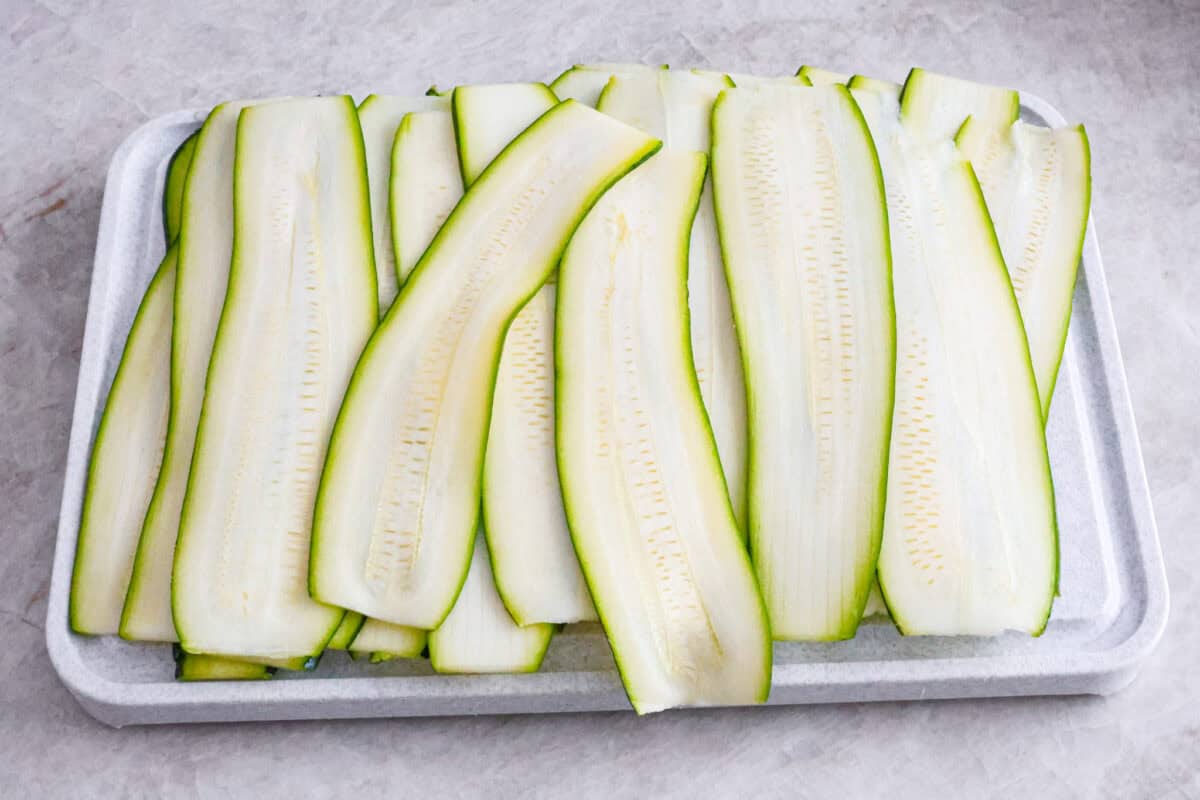
    1. Prep: Preheat the oven to 400°F and spray a 9×13 baking dish with cooking spray. Trim the zucchini and slice it into ⅛-inch ribbons. A mandoline makes this easy. Place the ribbons in a bowl of water while you make the filling.
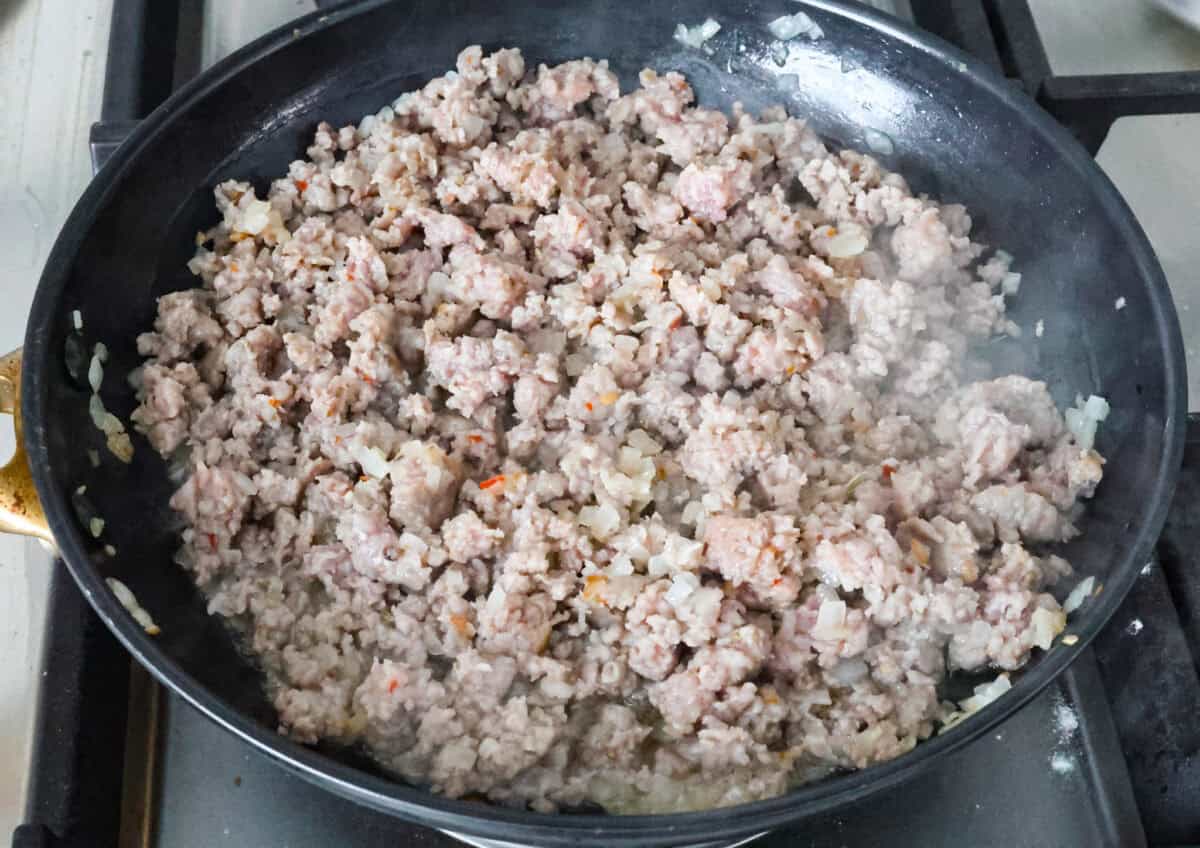
    2. Cook Sausage: Heat the olive oil in a skillet over medium-high heat. Cook the onion until soft. Add the sausage and cook until browned. Stir in the garlic and cook for 1 minute. Remove from heat.
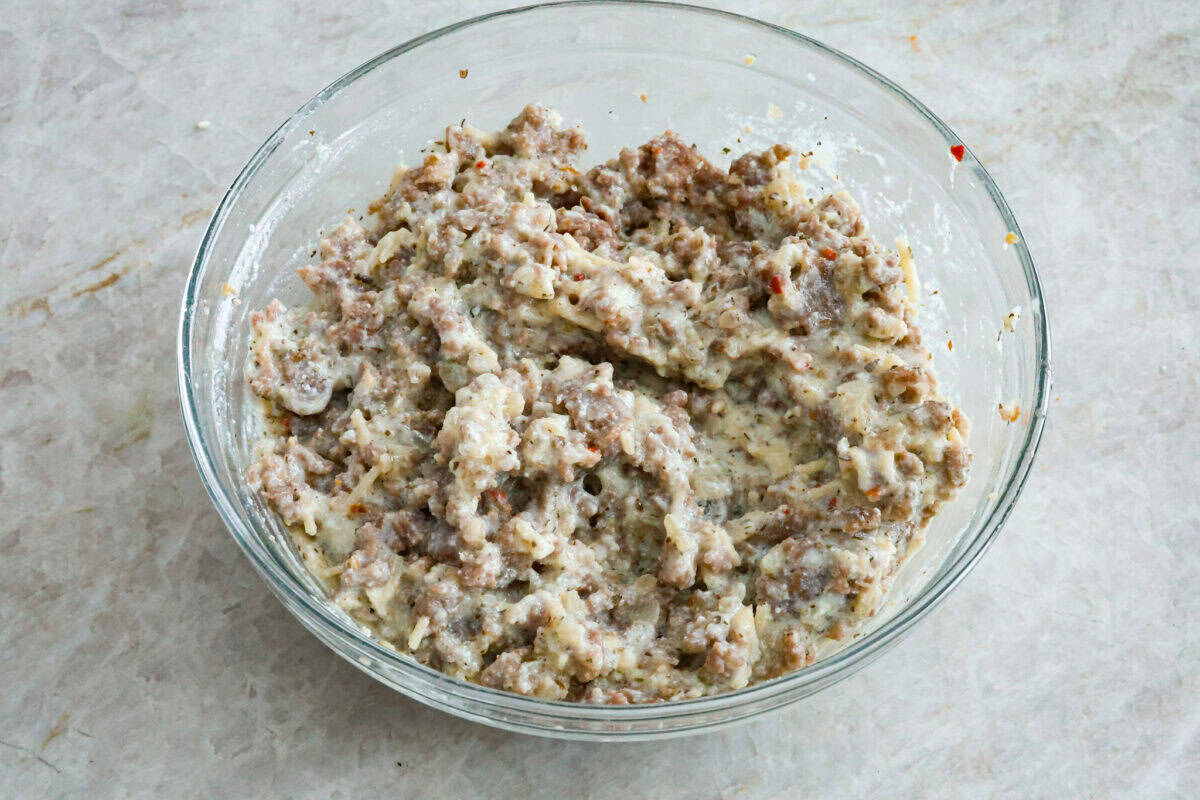
    3. Make Filling: In a large bowl, mix the ricotta, egg, ½ cup Parmesan, Italian seasoning, salt, and pepper. Let the sausage cool a bit, then stir it into the ricotta mix. In another bowl, mix the rest of the Parmesan with the mozzarella.
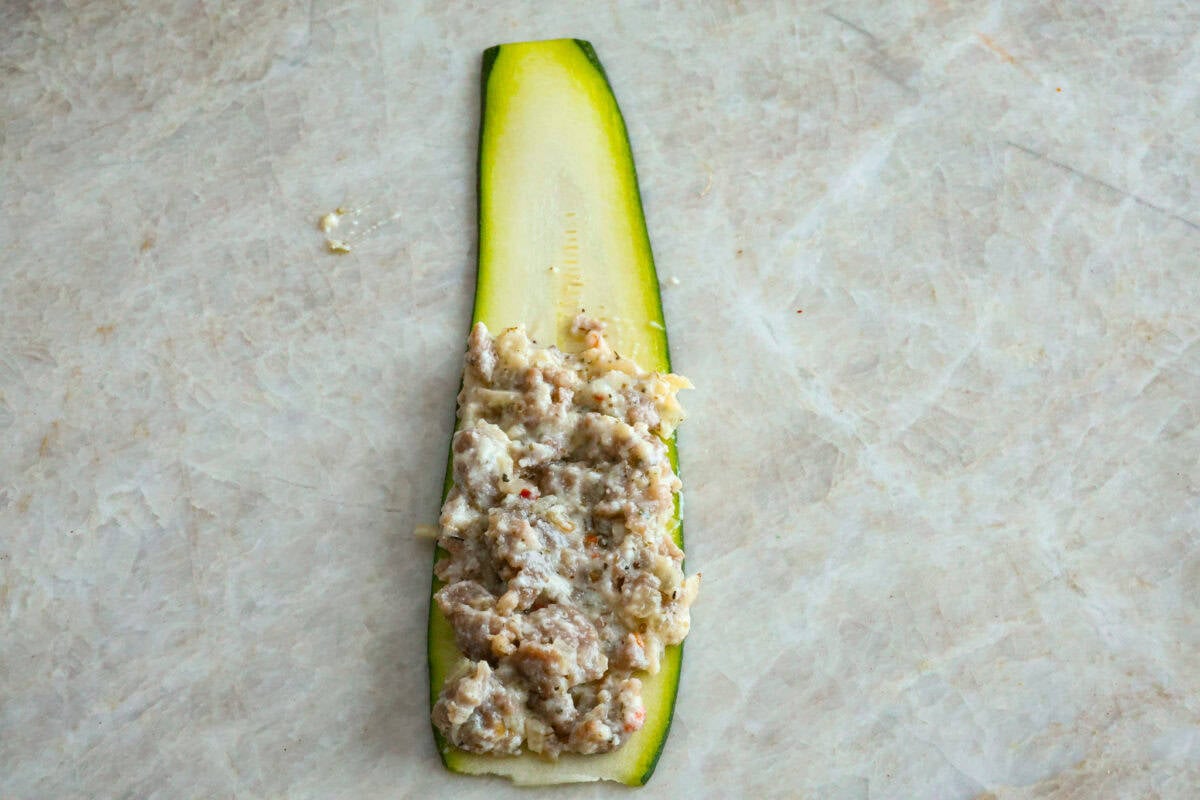
    4. Fill Zucchini: Pour the marinara into the baking dish. Pat the zucchini dry with paper towels. Spread about 1 tablespoon of filling halfway up each ribbon.
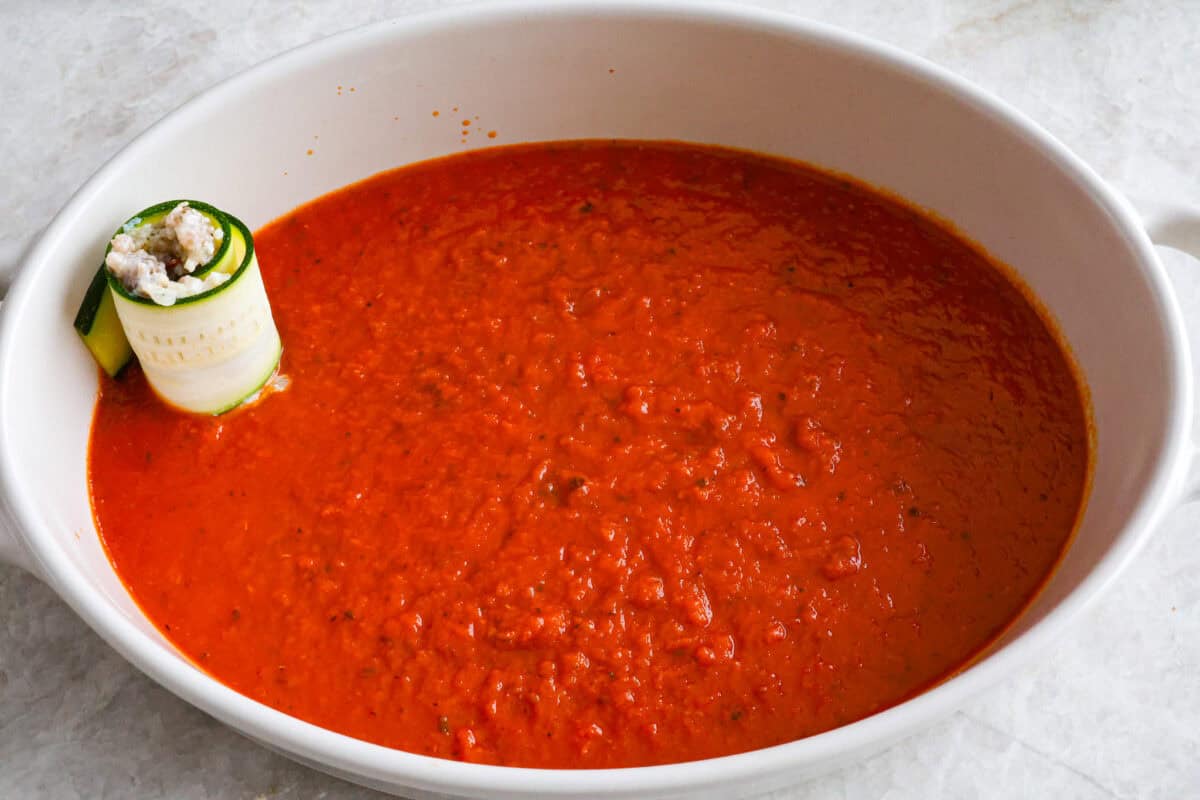
    5. Roll: Roll each zucchini ribbon from the filled side to the empty side. Place it seam-side down in the sauce. Repeat with the rest of the zucchini and filling.
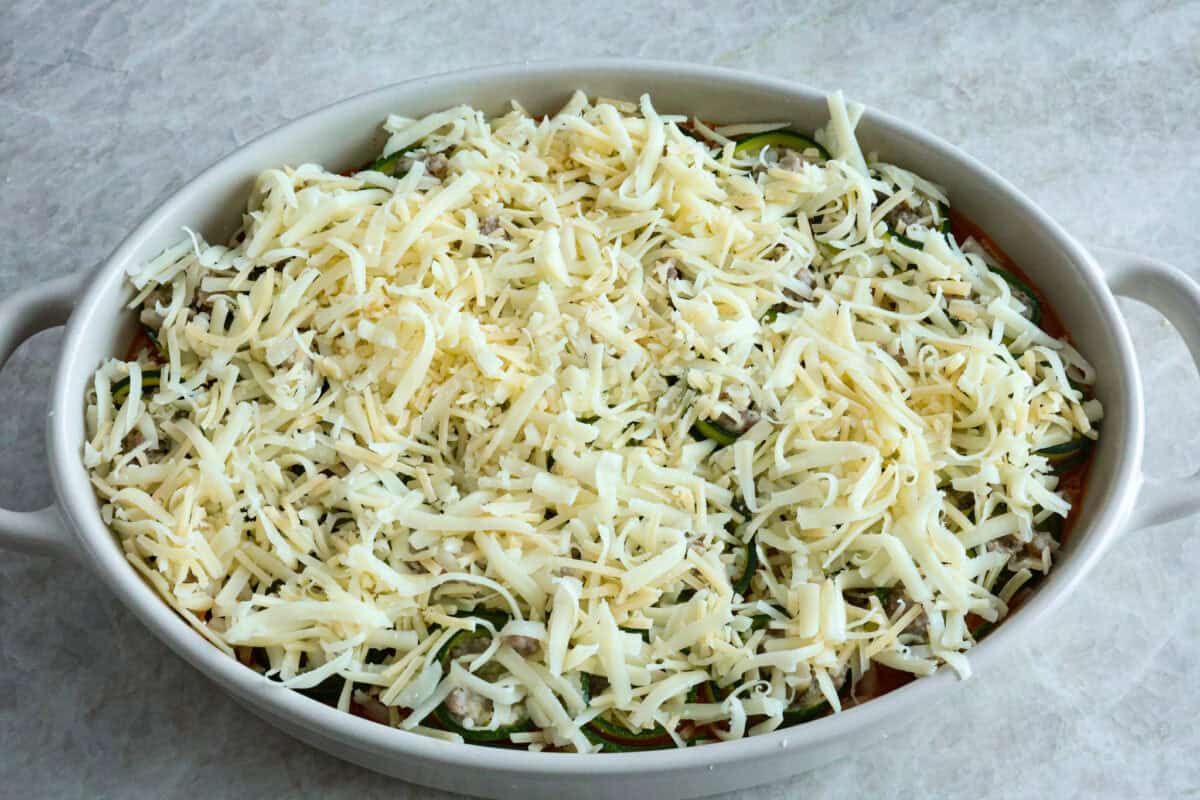
    6. Bake: Sprinkle the top with the cheese mix. Cover with foil and bake for 20 minutes. Uncover and bake 5 more minutes, or until the cheese is browned. Let the zucchini roll-ups cool for 5 minutes before serving.

    Alyssa’s Pro Tip

    Zucchini Slices: Slice the zucchini into very thin slices, about ⅛ inch thick. A mandoline slicer makes this fast and easy.

    Must Have Tools For This Recipe

    • Skillet: Cooks the sausage, onion, and garlic.
    • Mandoline Slicer: Makes thin, even zucchini ribbons.
    • Mixing Bowls: Help combine the ricotta filling and cheese topping separately.
    • Baking Dish: Holds the marinara and zucchini roll-ups while they bake until bubbly.

    Print

    Zucchini Roll-Ups

    These zucchini roll ups are filled with a savory sausage ricotta mixture, baked in marinara, and topped with melty cheese for a lighter, cozy dinner everyone will love.
    Course Dinner
    Keyword low carb, zucchini roll ups
    Prep Time 30 minutes
    Cook Time 25 minutes
    Total Time 55 minutes
    Servings 6 people
    Calories 534kcal
    Author Alyssa Rivers

    Ingredients

    • 4 large zucchini
    • 1 tablespoon olive oil
    • ½ yellow onion, minced
    • 1 pound Italian sausage
    • 1 clove garlic, minced
    • 1 cup ricotta cheese
    • 1 large egg
    • 1 cup parmesan cheese, divided
    • 1 tablespoon Italian Seasoning
    • salt and pepper to taste
    • 2 cups marinara Sauce
    • 1 cup mozzarella cheese, shredded

    Instructions

    • Preheat the oven to 400 degrees Fahrenheit and spray a 9×13-inch baking dish with cooking spray.
    • Clean 4 large zucchini, cut the ends off, and slice them lengthwise into ⅛ inch thick ribbons. Using a mandoline is easiest if you have one. Place the ribbons in a bowl of water while you prepare the rest of the ingredients.
    • Heat 1 tablespoon olive oil in a skillet over medium-high heat. Saute ½ yellow onion, minced, until it’s translucent. Add 1 pound Italian sausage to the skillet and cook until browned. Add 1 clove garlic, minced, and saute for another minute. Remove from heat.
    • Whisk 1 cup ricotta cheese, 1 large egg, ½ cup of the 1 cup parmesan cheese, and 1 tablespoon Italian Seasoning in a large bowl. Add salt and pepper to taste.
    • Once the sausage mix has cooled, add it to the ricotta mixture and mix well to combine. In a separate bowl, mix together the remaining Parmesan cheese and 1 cup mozzarella cheese,.
    • Pour 2 cups marinara Sauce into the 9×13-inch baking dish. Dry the zucchini and lay one out in front of you. Spread about a tablespoon of the sausage ricotta filling halfway up the zucchini ribbon.
    • Roll the ribbon from the filled side to the empty side and place it in the sauce. Continue with the remaining zucchini and filling.
    • Once the pan is filled, top all the zucchini rolls with the mozzarella cheese mixture. Cover with foil and bake for 20 minutes. Uncover and bake for another 5 minutes or until the cheese browns on top.
    • Remove from the oven, let it cool at room temperature for at least 5 minutes, and serve!

    Notes

    Leftover Instructions

    • Refrigerator: Store leftovers in an airtight container in the fridge for up to 3 days. 
    • Do Not Freeze: I don’t recommend freezing this dish; the zucchini will become mushy after freezing and reheating.

    Nutrition

    Calories: 534kcal | Carbohydrates: 13g | Protein: 29g | Fat: 41g | Saturated Fat: 18g | Polyunsaturated Fat: 4g | Monounsaturated Fat: 17g | Trans Fat: 0.003g | Cholesterol: 132mg | Sodium: 1.38mg | Potassium: 884mg | Fiber: 3g | Sugar: 7g | Vitamin A: 1.109IU | Vitamin C: 31mg | Calcium: 444mg | Iron: 3mg
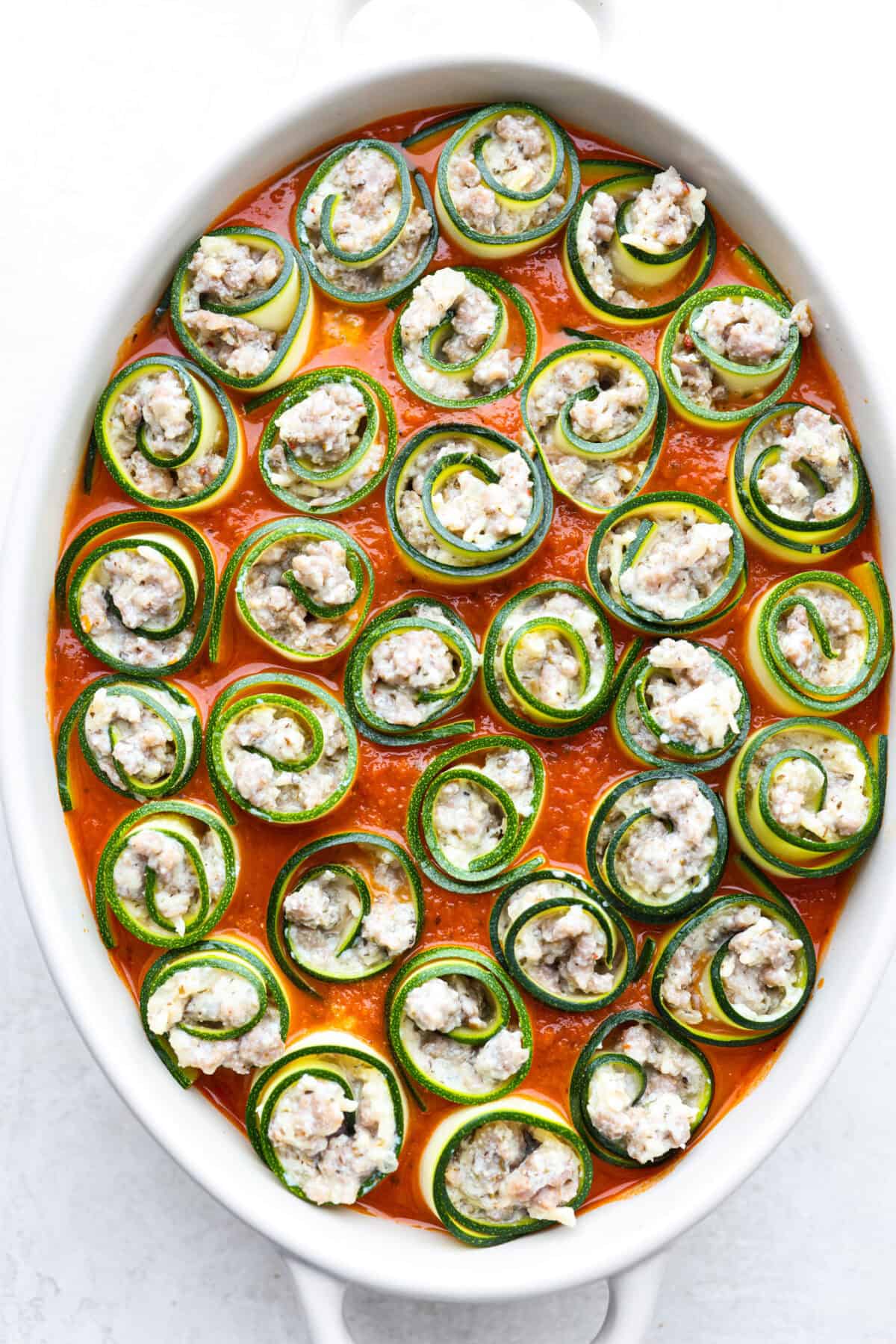
    Overhead shot of zucchini rolls in marinara sauce in pan.

    More Delicious Zucchini Recipes

    I love how versatile zucchini is! Not only is it a great side dish, like this cheesy zucchini gratin, but it’s also great for baking into desserts and bread. Try these other favorite recipes next, and be sure to check out all of our zucchini recipes!

    This post was originally published on this site.