Category: Uncategorized

  • The Top 10 Places to Visit in Kimberley, Australia

    The Top 10 Places to Visit in Kimberley, Australia

    Original content owned & copyrighted by Green Global Travel.

    The region of Kimberley, Australia showcases a splendid array of wild, untamed natural beauty that feels far removed from the busy capital cities (see: Sydney, Melbourne, and Brisbane).

    Located in far northwestern Australia, the Kimberley was one of the first areas on the continent to be settled by its indigenous inhabitants. 

    Habitation of native peoples here dates back over 40,000 years, and numerous aboriginal groups and languages still exist in the region to this day.

    In fact, roughly 70% of the Kimberley Region is considered native title land, which was a huge success story for Australia’s original landowners.  

    The Kimberley is a land of contrasts, offering visitors beautiful beaches and offshore islands as well as gorges, waterfalls, rivers, caves, and abundant wildlife.

    It’s a great place to escape the hustle and bustle of the outside world, as it remains one of the most sparsely populated regions on Earth.

    Here’s our detailed look at the very best tourist attractions that Kimberley, Australia has to offer, many of which you can explore on small ship Kimberley cruises

    READ MORE: 10 Important Things to Know About International Travel to Australia

    Photo via Canva Pro

    1. Broome

    Broome makes either a great start to your journey or a perfect ending to your Kimberley visit. This is the Kimberley’s largest town, and is considered the gateway to exploring the region. 

    Broome is home to the world-famous Cable Beach, where you can enjoy camel rides along the sand or simply relax in the warm, gentle waves. The west-facing beach makes for perfect sunset viewing. 

    You can also visit Willie Creek Pearls to learn about pearl farming, or enjoy the many alfresco local restaurants that offer up local cuisine such as barramundi and mango beer. 

    Wildlife enthusiasts may want to check out Roebuck Bay, where tours can be booked with the Broome Bird Observatory to view its rich shorebird populations.

    READ MORE: 10 Bucket List Australian Wildlife Adventures

    Photo via Canva Pro

    2. Mitchell Falls

    Mitchell Falls lies within Mitchell River National Park, providing visitors with a chance to see one of Australia’s most scenic and impressive waterfalls. 

    The National Park also offers an abundance of wildlife, including crocodiles, monitor lizards, and snakes such as the taipan. 

    The park makes up a portion of the Prince Regent and Mitchell River Important Bird Area, where over 200 different species have been recorded. 

    You can also explore the area’s Aboriginal heritage sites and rock art, as well as Aunauyu, or the Surveyor’s Pool.

    READ MORE: 5 Awesome Australian Wildlife Adventures

    Photo via Canva Pro

    3. Bungle Bungle Range

    Within the UNESCO World Heritage Site of Purnululu National Park, you’ll find the unique, beehive-shaped sandstone towers that have become a must-see attraction for any Western Australian holiday.

    The 925-square mile park is vast and extremely remote. For this reason, the Bungle Bungle Range long remained unknown to the outside world. 

    Only the local Karjaganujaru Aboriginal people knew of the area’s magic and beauty. 

    Although the range can be accessed via a ground-based journey, getting there isn’t easy. It’s far more practical to experience the Bungle Bungle Range via a scenic flight, getting a bird’s eye view.

    READ MORE: Exploring Peaceful Countryside Towns Across Australia 

    Photo via Canva Pro

    4. Lacepede Islands

    Made up of four islands off the northwest coast of the Kimberley region, the Lacepedes are rich with endemic wildlife. 

    As in the Galapagos Islands, visitors can witness several species of boobies along with frigate birds and other seabirds. 

    BirdLife International lists the islands as an “Important Bird Area” for its nearly 20,000 breeding pairs of Brown Boobies.

    The islands are also a favorite breeding ground for green sea turtles, and rare whale species like the dwarf fin whale have also been spotted in the area’s waters. 

    READ MORE: 7 Great Places to go Birdwatching in Australia

    Photo via Canva Pro

    5. King George Falls

    The King George River offers not one, but twin waterfalls, which rank as Western Australia’s largest. 

    The falls’ remote location makes it inaccessible to ground vehicles, but a scenic flight or relaxing cruise will get you up close and personal with this beautiful natural wonder. 

    While there, you’ll also have a chance to gaze at ancient sandstone cliffs, and do keep an eye out for wildlife as you cruise the river. 

    Few visitors have ever experienced these magnificent falls for themselves. Most have only seen them in the 2008 film Australia, starring Nicole Kidman and Hugh Jackman.

    READ MORE: Australia Ecotourism: The 5 Best Things to Do For Nature Lovers

    6. Horizontal Falls 

    Located in Talbot Bay (just a short distance from Broome), you’ll find the awe-inspiring Horizontal Falls. 

    Unlike traditional vertical cascading waterfalls, these fall sideways due to intense tidal currents passing through narrow gorges along the coast.

    The tidal variation here is almost unbelievable: It can rise more than 32 feet between the low and high tide times, which are just seven hours apart. 

    It’s equally astonishing that skilled boat drivers can navigate these turbulent waters, making this a great way to experience your Horizontal Falls adventure.

    READ MORE: 25 of the World’s Biggest Waterfalls (By Continent)

    Photo via Canva Pro

    7. El Questro Wilderness Park

    El Questro Wilderness Park encompasses some 700,000 acres, offering an abundance of outdoor recreation options. To minimize negative impact on this beautiful, yet fragile environment, visitation to its wilderness areas is closely regulated.

    Visitors have a chance to explore the real Australian outback via horseback rides, hikes, 4WD, helicopter, or plane rides. 

    The park is a hiker’s dream, especially the popular Emma Gorge Trail (with its towering cliffs and refreshing waterhole), the El Questro Gorge Trail, and the Amalia Gorge Trail. If you’re not up for a hike, simply relax in Zebedee Thermal Springs.

    If you aren’t into all-day hikes, you can also opt to explore the rich wildlife of the Pentecost River via a short walk from the station. A park ranger at the visitor center can give you a map of all the local hikes and discuss other available activities.

    READ MORE: The Top 10 Australian National Parks to Visit

    Photo via Canva Pro

    8. Buccaneer Archipelago

    This extraordinary archipelago is made up of around 800-1,000 rocky islands, many of them filled with rich and diverse wildlife. 

    You’ll find a wide range of reptiles (including snakes, monitor lizards, and crocodiles) as well as numerous birds and mammals. The waters surrounding the islands are also great for snorkeling and Scuba diving: They’re home to sharks, sea snakes, and an array of other marine life.

    The islands are made up of rocks dating back some 2 billion years. They’re rather remote and difficult to access, which explains their relatively unspoiled state. 

    Zodiac-style boat tours have become a popular way to explore these beautiful islands, and the area has also become a highly rated fishing destination.

    READ MORE: 20 Weird & Cute Australian Animals

    Photo via Canva Pro

    9. Gibb River Road

    Driving the Gibb River Road allows adventurous visitors to explore the heart of the Kimberley, as the 440-mile route cuts right through the middle of the region. 

    The road follows the former cattle route, linking the town of Derby on the West Coast with the towns of Kununurra and Wyndham in the east.

    This is one of Australia’s iconic 4WD routes, taking in many of the most iconic Kimberley landmarks. 

    Along the way you’ll have an opportunity to visit Windjana Gorge National Park, where you stand a good chance of seeing freshwater crocodiles in the wild. 

    READ MORE: 10 Awesome Australian Road Trips Worth Taking

    Photo via Canva Pro

    10. Jar Island 

    Jar Island was named for its pot shards, which were originally brought to the island by the Macassan peoples of Indonesia.

    Nearby Woku-Woku Island houses the remnants of ancient sea cucumber stoves, which cooked the cucumbers (or trepan) that were collected by the Macassan.

    Jar Island also offers many prime examples of Gwion Gwion or Bradshaw-style Aboriginal rock art. The well-preserved, highly detailed artwork is thought to be around 15,000 to 20,000 years old. 

    The area is also home to several WWII airplane wrecks that history buffs can visit. –by Meg Jerrard of Mapping Megan; lead image via Canva Pro

    The post The Top 10 Places to Visit in Kimberley, Australia appeared first on Green Global Travel.

    This post was originally published on this site.

  • ‘We Are Not Going to Stop This Fight’

    This post was originally published on this site.

    At 9:30 a.m. on March 3, 30 minutes before VFW Commander-in-Chief Carol Whitmore was set to give her testimony to members of Congress, office staffers began to dig through nearby storage rooms for additional chairs. The G50 room of the Dirksen Senate Office Building in Washington, D.C., was filled with members of VFW, ready to amplify Whitmore’s message: “Honor the Contract. Pass the Major Richard Star Act now.”

    The Major Richard Star Act, designed to ensure all veterans who sustained injuries from combat receive full, earned benefits from the Departments of Defense (DoD) and VA, would be blocked later that day by Sen. Ron Johnson (R-Wis.), after the bill was brought to the Senate floor. His reasoning: “We simply cannot afford it.”

    It is this outcome that drives VFW to continue its decades-long legacy of advocating for veterans on Capitol Hill at the VFW Washington Conference.

    VFW members around the country come together to share their personal stories with lawmakers about bureaucratic roadblocks they have encountered as veterans, in hopes that a solution can be found so that others will not have to encounter them.

    This year, VFW consolidated its message to lawmakers into the following talking points:

    • Community Care Reform (Veterans’ Access Act of 2025 and Foreign Medical Program Modernization Act of 2025)
    • Concurrent Receipt Reform (Maj. Richard Star Act)
    • Suicide Prevention (Written Informed Consent Act and Veteran Suicide Prevention Act)
    • Brain Health Care (Innovative Therapies Centers of Excellence Act of 2025, Blast Overpressure Research and Mitigation Task Force Act, Precision Brain Health Research Act of 2025 and Veterans National Traumatic Brain Injury Treatment Act)
    • Other areas of concern include cracking down on predatory claims companies, transition from service, Post-9/11 G.I. Bill book stipends and emerging toxic exposures.

    ‘I CAME HOME WITH INJURIES YOU CAN’T SEE’
    In 2003, VFW National Legislative Committee member and past VFW Department of Louisiana Commander Matt West was involved in an ammunition dump explosion that resulted in traumatic brain injury. In 2005, while serving in Iraq, West’s vehicle was hit with an IED that resulted in further brain injury.

    “Like a lot of veterans from those wars, I came home with injuries you can’t see,” West said during the general session, before VFW members began their visits to Capitol Hill.

    West, along with other VFW Department of Louisiana officers, met with Louisiana legislative assistants and policy staff in a joint meeting inside the U.S. Capitol. There, they shared stories relating to each of VFW’s talking points and to communicate their frustration with the Major Richard Star Act being blocked.

    “We need the Major Richard Star Act passed,” West said. “What happened today is an injustice for all veterans. We are not going to stop this fight.”

    West also shared his story of sustaining brain trauma from his experiences while serving, calling on a need for coordinated brain health care and continued investment into brain trauma research.

    “Modernizing VA brain health care is not about bypassing modern scientific standards,” West said. “It is about ensuring the VA has the research infrastructure and clinical capacity to successfully evaluate veterans.”

    ‘WE’RE ALL OVERMEDICATED’
    VFW National Legislative Committee member Staci Boyer of Illinois has long been an advocate for women who served. Boyer, along with VFW Department of Illinois Commander Eugene Blackwell and VFW National Council of Administration member Matt Clausen, visited the offices of Rep. Delia Ramirez (D-Ill.), Rep. Lauren Underwood (D-Ill.), Rep. Bill Foster (D-Ill.) and Rep. Mike Bost (R-Ill.) Boyer, Blackwell and Clausen were all greeted by Ramirez in her office, where they had a chance to share their stories and VFW’s objectives one on one.

    The group also met one of Underwood’s staffers, Danielle Floyd.

    Boyer praised Underwood’s dedication to veterans by being a co-sponsor of the Major Richard Star Act, as well as being very familiar with one of VFW’s objectives: written informed consent.

    “We’re all overmedicated,” Clausen expressed to Floyd. “Before you know it, you’re taking 20 pills a day that are all interacting with each other. We’re asking that veterans are notified, by written consent, to know what the benefits and risks of the drugs are.”

    Air Force veteran and VFW National Legislative Committee member Eric Dudash of Alabama represents one case of a veteran who could have benefited greatly from written informed consent.

    “For 30 years on active duty, I lived by a simple principle: trust the experts,” Dudash said during a group meeting. “I trusted the men and women beside me to do their jobs, just as they trusted me to do mine. So when I began seeking medical care, I carried that same mindset with me.”

    Dudash was continually prescribed medication from doctors, evolving from 10 pills a day into 20 pills and, eventually, into 32 different medications.

    “One night, and I hadn’t even realized it, I was so sedated my wife had to wipe drool off my face,” Dudash explained to Alabama legislative aide Stone Griffin. “Written informed consent will make it clear how each pill might affect you, and how each pill might affect each other.”

    COVERAGE FOR ALTERNATIVE TREATMENTS
    In her meetings with Illinois legislative staff, Boyer stressed the importance of alternative treatments for veterans being covered by the VA.

    “We need the VA to cover the benefits of having alternative treatments, not just pills,” she said.

    VFW Department of Alabama Senior Vice Commander Colt Drouillard explained how he benefited greatly from Stellate Ganglion Block (SGB) shots, which are minimally-invasive treatments that help reduce the “fight-or-flight” response, one alternative treatment to PTSD.

    “It was a game-changer for me,” Drouillard explained to Grif f in. “I wouldn’t be here talking to you today if I hadn’t taken that shot. It’s FDA approved, very simple to have done and should be covered under VA.”

    The VFW Washington Conference gives veterans the platform to have their voices heard. Each day during the conference, VFW legislative members from each of the 50 states met with their respective House and Senate members, sharing stories similar to that of West, Dudash and Drouillard. According to VFW Auxiliary member and Gold Star wife Gabriella Kubinyi, it is the stories that have the power to move lawmakers the most.

    This article is featured in the 2026 May/June issue of VFW magazine, and was written by Danny Cook, senior writer for VFW magazine.

  • 6 Steps to Take When Aging Parents Need Help – Even if They’re Resisting

    6 Steps to Take When Aging Parents Need Help – Even if They’re Resisting

    Have you noticed worrisome changes in your aging parent?

    Maybe they’ve been mostly okay but now you’re seeing problems with memory, such as forgetfulness or asking the same questions repeatedly. Or maybe you’ve noticed trouble with driving, keeping up the house, managing stairs, or paying bills. 

    Some aging parents simply begin to seem more withdrawn. Others start leveling accusations at others, claiming someone took or moved something, or acting paranoid.

    For many adult children, these changes lead to mounting questions. What’s wrong? What’s happening? Is it safe for Mom to keep driving? Should Dad live alone much longer?

    I think of this as the “uh-oh” stage. It’s a transition no one looks forward to, and most haven’t prepared for: the time when you might have to start helping your aging parent.

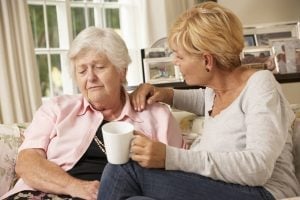
    And for many, it comes with an added challenge:  Most aging parents don’t welcome much help from their adult children. They may see it as interference, or an invasion of privacy.

    Some parents might even refuse to accept that they’re having difficulties, despite issues that feel glaringly obvious—and concerning—to you.

    By the time you’re noticing changes and have safety concerns, it’s quite possible that you’re right: that your parent does need help of some kind. So how should you best get involved, especially if your attempts to do so have gone poorly in the past?

    Well, it’s certainly not easy. These situations are complicated from a medical and eldercare perspective, plus they tend to bring up difficult emotions for older parents and adult children alike.

    But I do believe that it’s crucial for families to get involved. It’s not likely to be easy. But it can be easier, if you’re able to learn the better ways to do so—and also what to stop doing.

    The very best way to learn this is to work closely with professionals trained to assist aging adults, such as geriatricians and geriatric care managers (who are also known as aging life care experts). 

    That said, geriatricians are in short supply and can be hard to find, and geriatric care managers must be paid out of pocket (although it’s often a worthwhile investment). And although local Area on Aging Agencies do exist and can be great resources, they’re also often short-staffed and underfunded. 

    That’s why I’ve created this article for you, explaining a step-by-step process that anyone in this situation can follow. It’s based on what I help families do, when I advise them on how to step in and assist an aging parent.

    Here’s an overview of the steps:

    1. Collect the facts on the situation, by checking for specific signs an aging parent needs help or is unsafe, and by respectfully gathering information from others.
    2. Get your parent’s perspective, so you can understand how they see the situation and what’s important to them, before you make any more attempts to get them to make changes. (Don’t even think about getting them to understand, agree, or accept what’s going on during these initial conversations.)
    3. Find out what an ideal medical and eldercare intervention looks like, to guide plans if there really are signs of memory problems, safety issues, or declines in independence.
    4. Learn some legal fundamentals about signs that mental “incompetence” or “incapacity” might be an issue, and  about legal documents, such as powers of attorney, that can better enable you to assist your aging parent.
    5. Create an actionable plan that addresses what’s most important, based on what you’ve learned about your parent’s situation and priorities so far. Every family is different, but usually what’s most important might involve:
      1. Working on getting a medical evaluation, and hopefully a diagnosis
      2. Addressing the most important safety and care issues
      3. Connecting with your parent and persuading them to accept at least some changes
    6. Implement your plan. Be prepared to make several attempts, because that’s usually what it takes.

    (Want a much more detailed version with checklists, sample dialogue to say, workarounds for common obstacles, and “what this looks like” examples? That’s all in my book When Your Aging Parent Needs Help, and you can learn more about it here.)

    Let me now explain these six steps in a little more detail:

    1. Get the facts: Checking for signs your aging parent needs help

    You might think you know what’s going on but surprisingly, our starting assumptions can be wrong or incomplete. That’s why it’s important, before  you do anything else, to try to gather information that will help you confirm that your worries are justified. I recommend checking  on these particular things:

    • Signs of problems with memory and thinking
    • Signs of problems with life tasks and safety
    • What other family members and key people in your parent’s life are noticing
    • Any  “bright red flags” that indicate you probably should step in sooner, rather than later

    To help people check for worrisome signs, I created a free downloadable guide a few years ago, with easy-to-use checklists. You can get it here: Quick Start Guide to Checking for Health & Safety Problems.

    Making a systematic effort to gather this information will help your family have a clearer picture of the problems and concerns. Doctors and eldercare experts will also need details about what’s going on, whether to help them make a diagnosis or just figure out what kind of support and safety measures will be needed.

    2. Get your parent’s perspective: How to learn what matters to them and how they’re seeing things

    Even if you’ve already tried talking to your parent(s)—and if you’re like many of the families who write to me, you have—chances are good that you haven’t yet used the most effective approaches. 

    Families often talk to a declining older person with the intention of getting them to understand, or accept, that problems have arisen and that certain steps should be taken to keep them safe and well.

    This is well-intentioned and understandable. Unfortunately, it tends to be counter-productive and often leads to frustration and conflict.

    So you’ll want to take a different approach to these talks. Which is to “talk” with the intention of listening, and helping your parent feel heard.

    This is the way a geriatrician approaches a patient, especially one who is reluctant or resistant. You want to listen intently, to learn more about what they’re thinking, feeling, and preferring.

    At the same time, you’ll want to avoid arguing, correcting, or attempting any convincing. (Now is not the time.)

    When you learn more about how your parent sees a certain situation, and what matters the most to him or her, you’ll end up in a stronger position to invite them to try a change you think will help them.

    Taking this important step can help soften resistance and improve the odds of practical success. Many families are relieved to find it also  builds “relationship capital”—goodwill you’ll need for the challenging future.

    For more on how to talk about a tricky concern, try this video (it’s about memory loss, but you can use the same technique to ask about something else you’re concerned about):

    3. Get informed: What an ideal medical and eldercare assessment and intervention looks like

    Let’s face it, what’s “ideal” doesn’t always happen. Still, it’s super useful to know what experts advise should happen, in a perfect world where you could control everything, because this gives you a guide for where to aim your best efforts. That can save you time and trouble later. 

    Key is getting a medical evaluation. This is because most worrisome “life” problems families notice in an aging parent are actually being caused or worsened by an underlying medical issue. You want to get answers to questions like: What might be causing the symptoms we’re concerned about? Could medications be an issue? (They often are.) What’s the plan for follow-up and what happens next? 

    If you’ve been worried about memory or other thinking skills, the doctor (and starting with your parent’s primary-care provider is fine) should look for underlying causes of cognitive impairment. For more on what should be checked, see Cognitive Impairment in Aging: 10 Common Causes & 10 Things the Doctor Should Check. If your main concern is paranoia or false accusations, also see 6 Causes of Paranoia in Aging & What to Do.

    The ideal approach also involves taking steps to address immediate safety concerns and assist your parent with any daily life tasks they’re currently struggling with.

    Working with specially trained social workers or geriatric care managers can be very helpful to assess housing and care needs, and to come up with a plan to meet them. These professionals also usually have ideas on how to manage common safety concerns, such as driving difficulties , or trouble managing finances.  Or you can begin to look for resources in the area to help you. I suggest some excellent starting places in this article. The Quick Start Guide also includes ideas on how to get help with any problems you notice.

    Last but not least, setting up certain lifestyle changes can help an aging parent maintain the best possible physical health, and can also slow cognitive decline, if any is present. For my top suggestions on maintaining a healthier brain, see here, and for my suggestions on maintaining physical health, see here.

    4. Learn about the potential legal angles: Signs of mental “incompetence” or “incapacity” and legal documents to check for

    If you’ve noticed any problems with memory, judgment, or other thinking skills, then it’s a good idea to learn more about mental capacity and when an older person might be considered incapacitated or “incompetent.”

    This matters for several reasons. One is that if your parent has ever completed a power of attorney for healthcare, or for legal affairs, it may only give you (or someone else) the ability to act if they are “incapacitated.” (This is sometimes called a “springing” power of attorney.)

    It also matters because if there are signs that an older person has lost the capacity to mentally understand the risks of a given situation, then it becomes more ethically – and sometimes legally – permissible for you to intervene.

    Now, just because your aging parent rebuffs your concerns, ignores safety issues, or refuses to accept help, that doesn’t mean he or she has lost mental capacity.  Still, it can be a good idea to learn more about capacity so you’re clearer about whether to look into it more now, and in case the situation changes.

    Your understanding of your parent’s mental capacities can and should affect how you approach them when the time does come to take next steps, or try to convince them to make a change. 

    You can learn more about capacity here: Incompetence & Losing Capacity: Answers to 7 FAQs. For more on powers of attorney, see here.

    5. Put it all together: Create a next-steps action plan customized for your family’s situation and parent’s preferences

    Now that you’ve laid the important foundation of observing, listening, and learning, it’s time to put it all together and take action.

    Obviously, there’s no single “right” way to go about helping an aging parent; what you do will depend on what’s going on with your parent, what matters to them, what’s feasible, and more. 

    Here’s an A-B-C formula can help you create a plan that works for you:

    1. ASSESS: First, you want to review your assessment of the situation right now: your parent’s thinking skills, observed safety issues, life tasks they’re struggling with, and other key issues, as well as your parent’s/family’s priorities. You’ll also want to review how much of the ideal next steps have taken place so far.

    2. BRAINSTORM: You’ll then weigh your options for taking next steps. You’ll need to consider things like:

    • What seems most urgent/important to address?
    • What seems most feasible?

    3. CHOOSE AND PLAN: Based on what you’ve brainstormed, pick one to three issues you’re going to focus on. (If you have siblings or other involved family members, it’s best to do this together and coordinate.)  For each issue, plan some specific next action steps. These might include:

    • Something to research (a health problem, a legal point, a service, an agency, experts, and so on).
    • Something to do (make a call or appointment, tour a facility, review medication, hire someone, and so on).
    • A conversation to have (with your parent or sometimes someone else, like a consultant, the doctor, a neutral third party, a sibling, your other parent, and so on).

    6. Implement your action plan: Be prepared to persist 

    NOW you’re ready to effectively step in and try to “do something” to help your aging parent. Give it your best go, taking the next steps you’ve planned out.

    Be sure to use your best communication skills and consider capacity issues, if appropriate. (They often are.) Failing to focus on good communication and the importance of capacity trip up many families.

    Based on how things go, you’ll reassess, adjust your approach, and likely try again. I like to tell people they should plan on “experimenting,” because families almost never get the progress they’re hoping for right away.

    In fact, it’s normal for this part to involve a lot of back-and-forth as you try to move past certain roadblocks or figure out the best tack to take with your parent (or with someone else who’s involved, such as another family member or your parent’s doctors).

    There’s an art to learning to persist and try a few different approaches as you try to help your aging parent. To get past the most common roadblocks, such as your parent refusing to go to the doctor, I recommend crowdsourcing ideas and advice from others in a support group; there are some good free ones online. 

    I also have a whole chapter on getting past common roadblocks in my book, When Your Aging Parent Needs Help: A geriatrician’s step-by-step guide to memory loss, resistance, safety worries, and more.”

    No matter what happens next, consider it progress

    If you follow the steps outlined above and persist, the odds are very good that you’ll get your parent more of what they need for their care and safety—and you’ll likely get them to come to better acceptance of the changes.

    Now, it’s definitely possible to do all the “right things” but still end up feeling stuck. That’s not unusual. There are, in fact, additional options to consider, if you’ve made multiple well-thought-out attempts to help yet feel your efforts are going nowhere.

    For instance, it may be appropriate to consider “watchful waiting,” or even looking into last-resort measures such as petitioning for guardianship. (These are beyond the scope of this article; my new book includes a separate chapter on these scenarios.) 

    Even if things stabilize, you’ll probably have a sense that something has changed since your initial “uh-oh” moments. And it has. Your family has shifted to a new stage of life.

    The “new normal” might wind up feeling familiar (if seldom exactly the same as before), allowing you to step back awhile. Or you may be in active “help mode” for a long time. That’s pretty common. 

    Whatever this ongoing journey through this stage of life is like for you and your parent, simply by approaching your aging parent using this thoughtful and caring process, you will be making a needed difference. 

    That’s because what your parent needs most of all, during this time of change for them, is your presence and your connecting with them. You won’t be able to control everything and you probably won’t be able to get all the safer outcomes you want for them.

    But that’s ok. You’re showing up to help, you’re learning to do it in better ways, and you’ll be doing the best you can to accompany them on their aging journey. And that will make a huge difference for your aging parent.

    I hope this article and my step-by-step process will be helpful to you. If you have questions or comments, please post them below.

    You might also find my free online training for families helpful (see below), in which I teach families how to help reluctant older loved ones.


    This post was originally published on this site.

  • Medal of Honor recipient Bruce Crandall, whose heroism was chronicled in ‘We Were Soldiers Once,’ dies at 93

    Medal of Honor recipient Bruce Crandall, whose heroism was chronicled in ‘We Were Soldiers Once,’ dies at 93

    This post was originally published on this site.

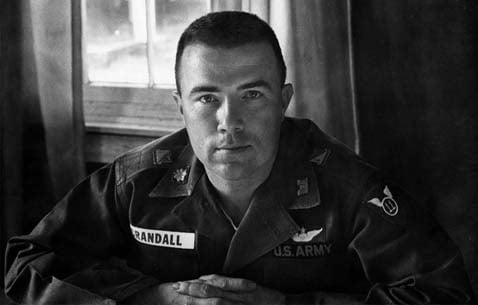
    Ret. Col. Bruce Crandall, who led more than 900 combat missions during two tours in Vietnam and received the Medal of Honor for repeatedly flying his helicopter into intense enemy fire to evacuate dozens of wounded troops, died on May 31. He was 93.

    Crandall, while recognized for his heroism, will be best remembered for the “warmth of his wit, the depth of his humility and the fierce loyalty he gave to the people and communities he loved,” according to a Congressional Medal of Honor Society release.

    Born in February 1933, Olympia, Washington, the All-American athlete had dreams of being drafted by the New York Yankees and earned a scholarship to the University of Washington. That dream was deferred, however, when Crandall was drafted by the U.S. Army in 1953.

    Crandall would subsequently receive the nation’s highest honor for valor during the Nov. 14, 1965, Battle of Ia Drang — the first major clash of the Vietnam War, made famous by the book We Were Soldiers Once … and Young: Ia Drang–The Battle That Changed the War in Vietnam and the subsequent movie of the same name.

    Crandall's UH-1D Iroquois helicopter climbs skyward after discharging a load of infantrymen on a search-and-destroy mission in Vietnam. (U.S. Army)

    On that day, Crandall led 16 helicopters carrying soldiers into Landing Zone X-Ray in the Ia Drang Valley, but as the fighting intensified, orders came down for follow-on aircraft to abort their mission, meaning all medevac assistance had been cut off to the men of the 1/7 Cav.

    “The medevac pilots were all great pilots, but they weren’t allowed to land on a landing zone until it was ‘green’ for a period of five minutes,” meaning it wasn’t being relentlessly attacked, Crandall later recalled.

    Crandall recognized that the men he had shuttled into Ia Drang were trapped, in desperate need of ammunition and, for some, medical evacuation.

    Contacted on the radio by Col. Ramon Antonio “Tony” Nadal, Crandall recalled that Nadal was yelling, “I got to have — get my wounded out of here. I’ve got 12 guys that are — and they’re collected, and I have a hole where a helicopter can get in, but they won’t come.”

    In response, Crandall refueled, kicked off his door gunner and weaponry to lighten his load.

    “If you have infantry on the ground, you can’t shoot up their backside,” Crandall said, calling the M60 guns “worthless.”

    Ignoring the heavy enemy fire, Crandall, alongside his friend Maj. Ed Freeman, voluntarily flew 22 missions into the valley to deliver ammunition and evacuate some 70 wounded soldiers.

    “While medical evacuation was not his mission,” reads his Medal of Honor citation, “he immediately sought volunteers and with complete disregard for his own personal safety, led the two aircraft to Landing Zone X-Ray. Despite the fact that the landing zone was still under relentless enemy fire, Major Crandall landed and proceeded to supervise the loading of seriously wounded soldiers aboard the aircraft.

    “Major Crandall’s voluntary decision to land under the most extreme fire instilled in the other pilots the will and spirit to continue to land their own aircraft, and in the ground forces the realization that they would be resupplied and that friendly wounded would be promptly evacuated,” the citation continues. “This greatly enhanced morale and the will to fight at a critical time.”

    Crandall would ultimately fly nearly 1,000 combat missions and was further commended for rescuing 12 wounded soldiers during a dense jungle operation in January 1966, according to the Department of Defense.

    Ret. Col. Bruce Crandall poses with a UH-60 Black Hawk helicopter from Task Force Lobos, 1st Air Cavalry Brigade, in Afghanistan on March 28, 2012. (U.S. Army)

    In 1968, four months into his second tour in Vietnam flying Huey gunships in support of the 1st Cavalry Division, Crandall’s helicopter crashed, breaking the pilot’s back among other severe injuries that left him hospitalized for five months.

    The broken back didn’t deter Crandall from flying, but a subsequent stroke in the early 1970s ended his flying career. He retired from the Army in 1977.

    Crandall, who initially received the Distinguished Service Cross for his actions at Ia Drang, was awarded the Medal of Honor on Feb. 26, 2007, by President George W. Bush.

    With Crandall’s passing there are now only 63 living Medal of Honor recipients.

  • I Took a Virgin Voyages Transatlantic Cruise – Here’s What It Was Really Like

    I Took a Virgin Voyages Transatlantic Cruise – Here’s What It Was Really Like

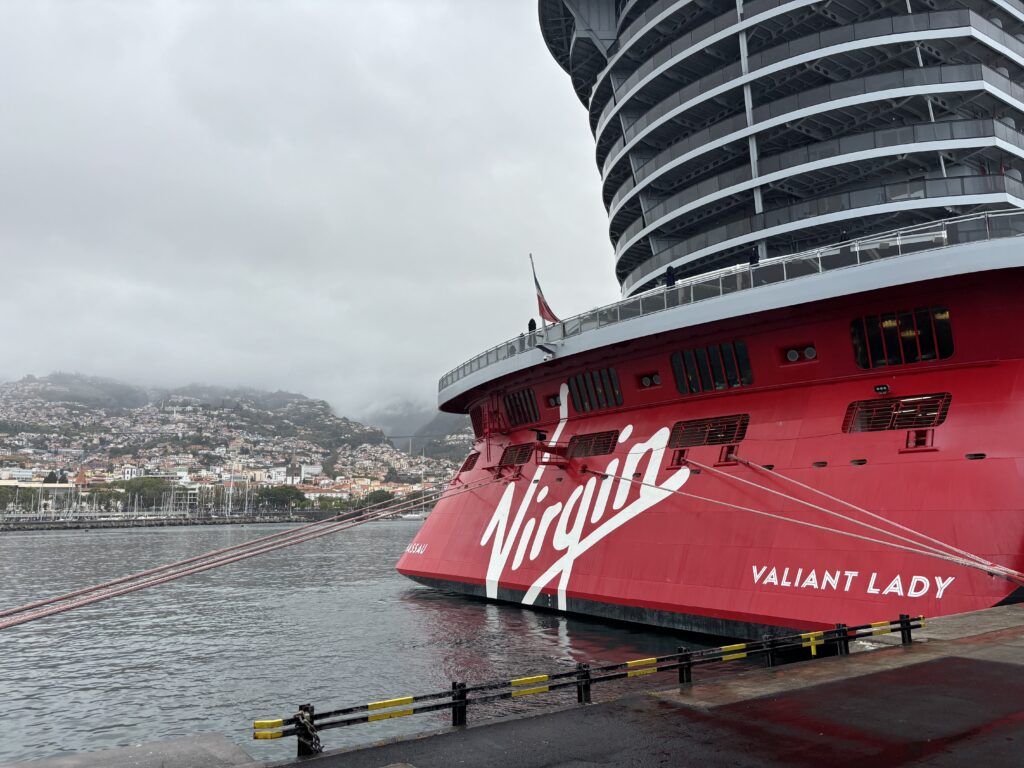
    This past April, I set sail on my very first transatlantic cruise which took place aboard Virgin Voyages’ ship Valiant Lady. I’ve taken many cruises over the years (in fact, this voyage marked my 20th!), but none were across an entire ocean or as remote as this one.

    While I was excited about the brand-new adventure, I was a bit apprehensive as well. What would so many sea days in a row be like? Would I feel safe out in the middle of the ocean with no land or other people anywhere nearby? I’m happy to report that those concerns, while valid, didn’t wind up affecting my experience, and I had a wonderful cruise.

    Here’s a full Virgin Voyages transatlantic cruise review of my eastbound crossing, from the dining and lounges to entertainment, activities, sea day experiences, and more.

    Table of Contents

    virgin voyages valiant lady in funchal madeira

    The Ship & Itinerary

    My transatlantic cruise aboard Valiant Lady departed Saturday, April 25th. Virgin Voyages’ ships — especially its first three — are largely identical. Valiant Lady is the second of the group; debuting in 2022 following the official launch of the line’s first ship, Scarlet Lady, in 2021. All four ships in the Virgin fleet are strictly adults-only.

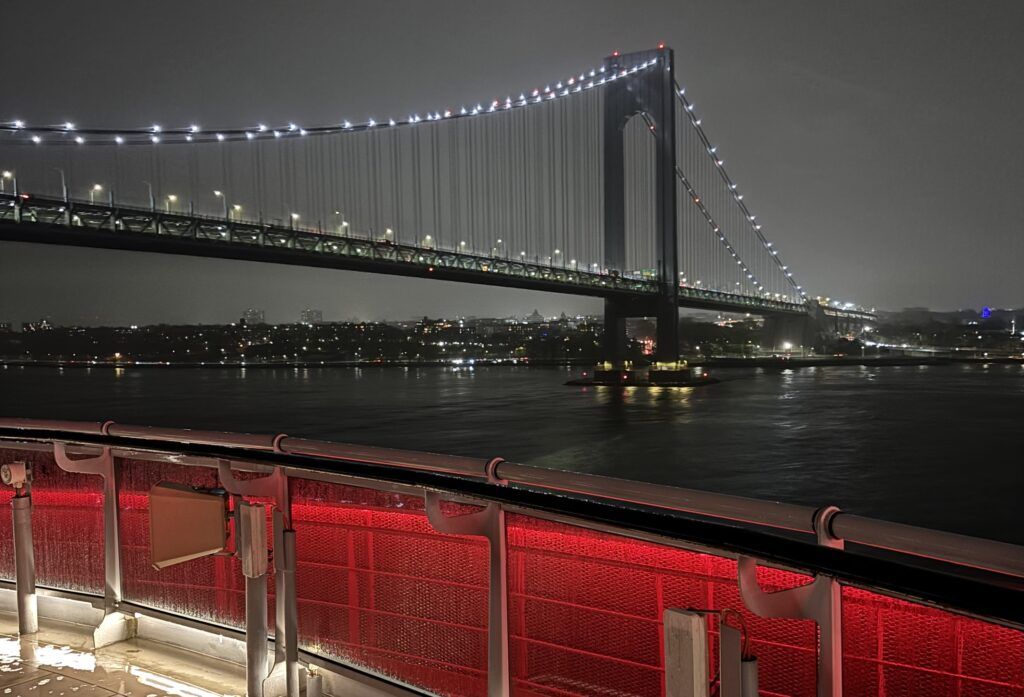
    Originally scheduled to depart from Manhattan, New York, the departure point for my cruise ended up being at the Brooklyn Cruise Terminal instead. It is my understanding that this change was due to Manhattan’s Pier 90 being taken out of cruise service earlier this year. It was a rainy evening as we sailed under the Verrazzano-Narrows Bridge, making for a memorable start to the voyage.

    Verrazzano-Narrows Bridge New York City

    Our cruise would include five full days at sea making our way across the ocean before arriving in our first port: Ponta Delgada, Azores. The Azores are a Portuguese archipelago out in the Atlantic Ocean, located about 900 miles west of Lisbon. Our second port, Funchal, was also on a Portuguese island (Madeira) which we arrived in after another day at sea.

    After yet another sea day, it was time to visit Tangier, Morocco, marking my very first time in Africa. That evening, our ship sailed through the Strait of Gibraltar, and it was so cool being able to see both Europe (Spain) and Africa (Morocco) at the same time.

    As our ship made its way into the Mediterranean, our itinerary continued with visits to Malaga and Palma de Mallorca, Spain. The voyage concluded in Barcelona on Saturday, May 9th. All in all, it was a two-week sailing with eight sea days and five ports of call.

    Stateroom

    I took this cruise with my boyfriend, who celebrated a milestone birthday while we were onboard. We booked a Central Sea Terrace stateroom, which is a balcony cabin located towards the middle of the ship. The central location is ideal for us as it provides quick access to many amenities.

    stateroom hallway valiant lady

    Our stateroom was a standard Virgin Voyages cabin, featuring a queen-sized bed (made of two twin beds pushed together), a chair, a curved desk and mirror, built-in rack and shelves for storage, a safe, and a mini-fridge. For a standard length cruise, the space and storage in the cabin is ample. For a two-week voyage, storage space did seem a bit lacking. That being said, we made it work.

    Also in the stateroom is a tablet to control things like the curtains and mood lighting (there are different lighting presets for things like relaxing (zen mode) or taking OOTD photos (photoshoot)), making housekeeping requests, or ordering room service.

    If you’ve taken a cruise, chances are you know that cabin bathrooms are tight. Well, Virgin Voyages’ are even smaller. You can basically stand in one singular spot and wash your hands, sit down on the toilet, and take one step into the shower. I’ve taken multiple Virgin cruises so I’ve become accustomed to their tiny bathrooms, but it can still be a bit challenging at times. One pro is that the shower does have a glass door, so at least you don’t have to worry about a shower curtain sticking to your body.

    The balcony is one of the best parts of a stateroom on Virgin Voyages. Why? The line’s signature red hammock, of course. While not EVERY balcony cabin features a hammock, the vast majority do, and it’s a memorable perk. We spent many an afternoon hanging around in the hammock, swaying with the ship as it cut through the water across the Atlantic. Also on the balcony were two metal chairs and a small table. The chairs are so-so. They’re metal with zero cushions, and they aren’t the most comfortable.

    Overall, our stateroom on this transatlantic cruise was exactly as I was expecting and was a great home base during the two-week voyage.

    Virgin Voyages Worth It

    Dining

    All dining is included on Virgin Voyages, which made it extra easy to enjoy all the restaurants the ship has to offer multiple times throughout the sailing. Instead of having large main dining rooms, Virgin Voyages has smaller themed restaurants — most of which would be considered specialty restaurants on mainstream cruise lines.

    While I’ve sailed Virgin Voyages multiple times before, I never took a cruise long enough to try all the restaurants in one sailing, and never took full advantage of the casual venues at dinnertime. During this transatlantic cruise, it was nice having more time to truly enjoy the various dining options on board without feeling rushed.

    Sit-Down Restaurants

    Gunbae

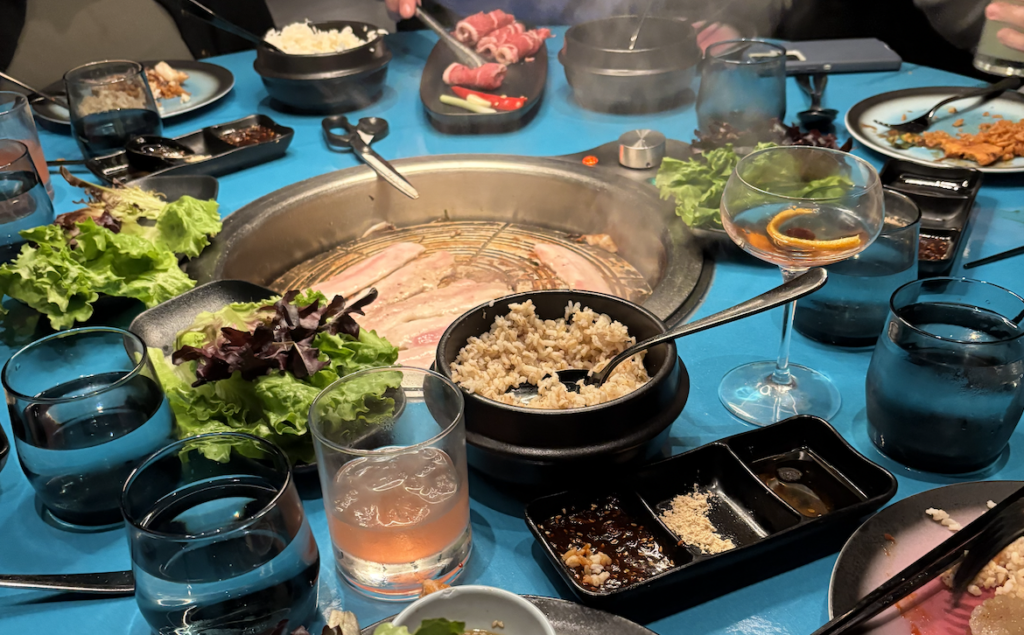
    We had one meal at Gunbae, which is the ship’s Korean barbecue venue, and it was actually my first time dining there. You share a circular table with other cruisers around a flameless grill at the center of the table. The experience starts off with a fun drinking game, then you make your menu selections. You choose the appetizers and desserts you want, and they cook all of the entrées for the table, family-style. A chef prepares each entrée one at a time, with selections including mixed veggies, beef bulgogi, and a seafood course.

    Overall we had a great experience at Gunbae, from the food and staff to the conversation around the table. If you’re okay with meeting new people and enjoying a lively “experience”-style dinner, I’d recommend Gunbae and would do it again on a future cruise.

    gunbae korean barbecue valiant lady

    Razzle Dazzle

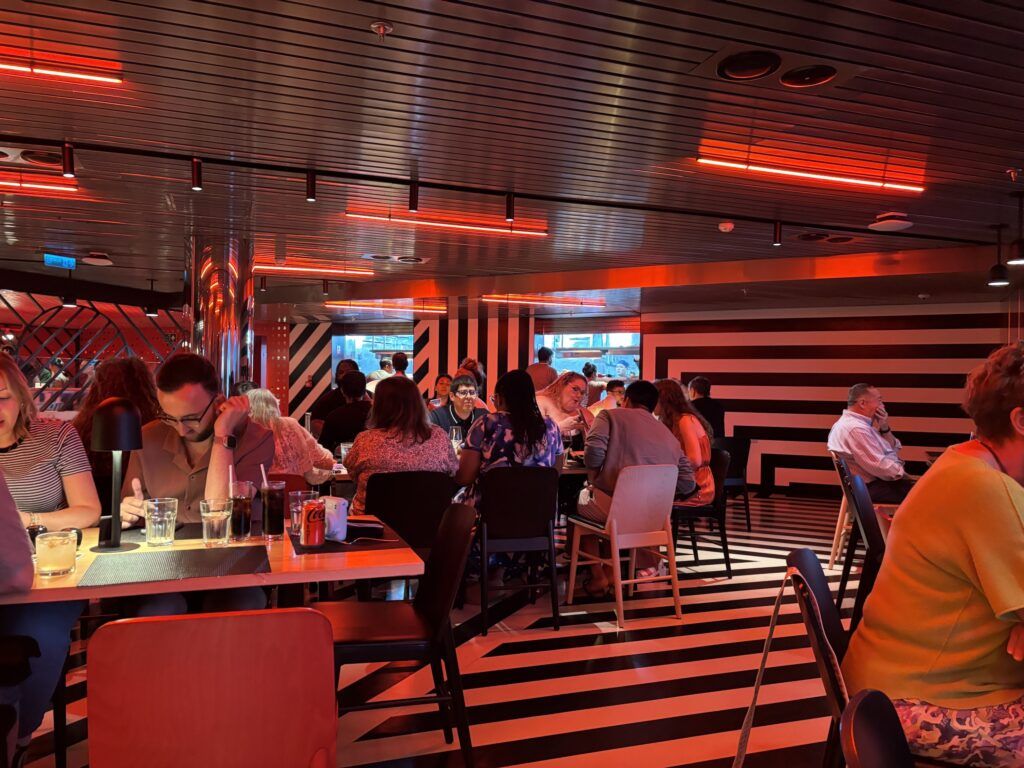
    Razzle Dazzle is one of my favorite restaurants on Virgin Voyages. As an important note, though, our cruise was the last sailing on this ship offering a traditional Razzle Dazzle experience in the evenings. Following our voyage, the ship underwent a dry dock to transform Razzle Dazzle into an Indian restaurant called Ariya. By day, the venue will still serve the Razzle Dazzle brunch menu. But by night, it now has a brand-new Indian menu.

    Resilient Lady is now the last ship in the fleet still serving the Razzle Dazzle menu at dinner. Since dinner aboard Valiant Lady is no longer what I experienced, I won’t say much aside from the fact that we had dinner here a few times and enjoyed it, as always.

    We had brunch at Razzle Dazzle several times throughout the sailing as well. My go-to menu items are the fried chicken sandwich and the açai bowl. Yum! My boyfriend enjoyed the avo toast, nutty gazpacho, and sunny side hash — all of which had a kick to them and all of which were delicious. We recommend the watermelon sesame “cream” as well — just be sure to ask for a half size if you’re not sharing it with 2+ other people! Don’t miss the smoked bacon either — it’s almost candied and one of the best things on the entire menu.

    razzle dazzle valiant lady before renovation

    The Wake

    Though the name evokes the sea you’re sailing, The Wake is all about steak. Located (of course) at the ship’s aft, we had both dinner and brunch at this elegant venue. The space is beautiful, the service is very good, and the food was excellent.

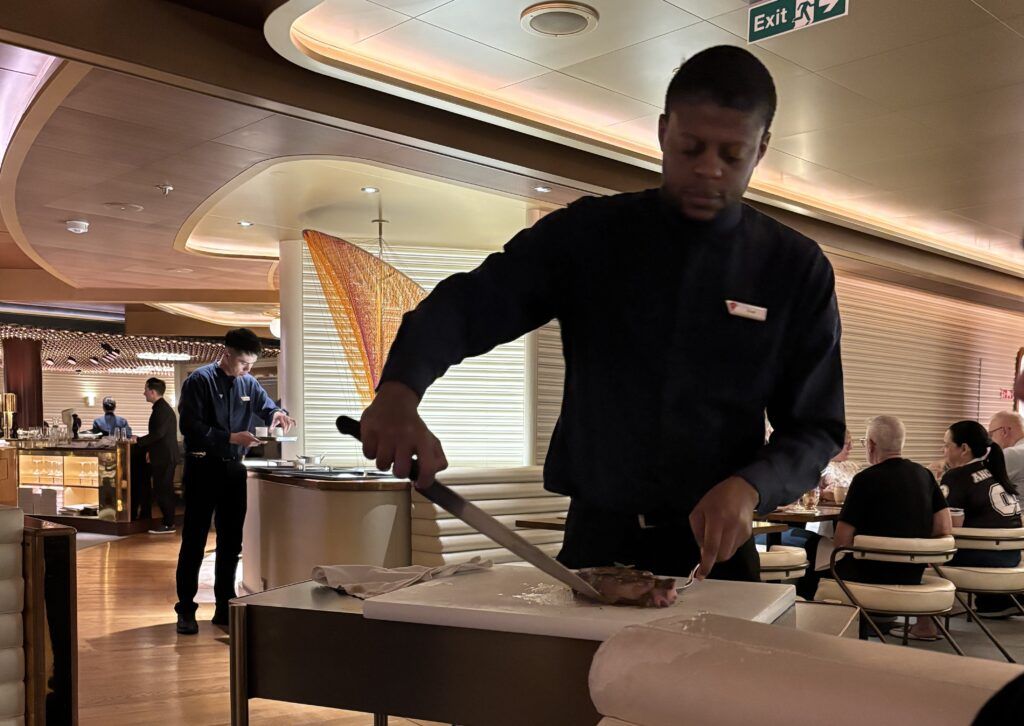
    I know it’s an unpopular opinion, but I’m not a huge steak person. However, my boyfriend did have some steaks, and he gave me his thoughts about them. During our dinner, he indulged in the “Treat Yourself” steak option on the menu, which was a 32 oz. aged tomahawk that comes with a $75 upcharge. Our waiter prepared and served it tableside and it was cooked perfectly, from the temperature to the seasoning and overall flavor. He said he’s had a lot of pricier cuts on land and at sea, but this was the best steak he’s ever had across 60+ cruises.

    If you have brunch at The Wake and want a steak, try to make your visit at noon or later. It’s at that time that a supplementary menu is available, which includes a New York strip and a filet mignon. My boyfriend had the filet mignon during our brunch, and said that of the included steaks at The Wake, that’s his favorite. His only minor complaint was that he likes his steaks a bit more seasoned. Don’t miss out on the sauces, either, as the bone marrow béarnaise is the perfect pairing for all of the different cuts.

    Two of our favorite things at The Wake, aside from steaks, are the clam chowder and the parker house dinner rolls. To me, they’re must-haves, to the point that one evening we were having dinner somewhere else, but we stopped by The Wake ahead of time just to have cocktails, rolls, and an appetizer.

    the wake tomahawk steak valiant lady

    Test Kitchen

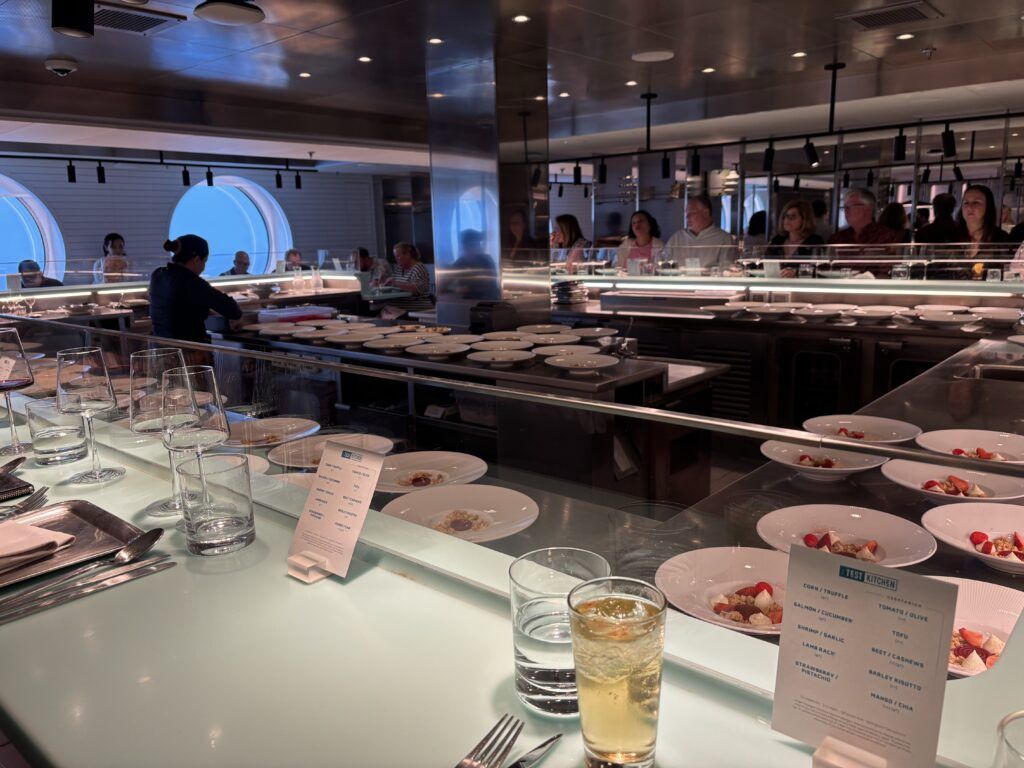
    The laboratory-themed Test Kitchen is not a “go-to” kind of place to enjoy over and over throughout a sailing — at least for me. Instead, it’s a unique experience that’s fun to try once or twice over the course of a cruise. A five-course affair, you choose from just two options per course, with mysterious menu items like “corn/truffle,” “tofu,” “beet/cashews,” “lamb rack,” and “strawberry/pistachio.” Unless you have food allergies or ask what each menu item actually entails ahead of time, you won’t truly know what you’re getting until it’s placed in front of you.

    I would not consider myself a foodie. Therefore, Test Kitchen is a bit hit-or-miss for me. Some courses were delicious, some weren’t my speed at all. But each time I’ve gone was a fun experience trying interesting textures, food combinations, and presentations, so even I have — and would continue to — go back again. If you or someone you’re traveling with is an adventurous eater, or you want to step a bit out of your comfort zone (after all, it’s free!), I’d recommend giving Test Kitchen a try.

    test kitchen valiant lady

    Pink Agave

    Pink Agave is Virgin Voyages’ Mexican restaurant, with a moody Latin vibe and traditional, flavorful recipes. Admittedly, my favorite versions of Mexican food are the big, cheesy plates of enchiladas, burritos, or quesadillas. Pink Agave is a bit more elevated than my taste, but my boyfriend loves this style of Mexican and it’s his favorite restaurant on Virgin Voyages. The guacamole is one of the best both on land and at sea, and the esquites street corn and papas con chorizo are our go-to appetizers that are consistently delicious.

    For entrées, my usual is the salsa verde enchiladas, which are good but not saucy/cheesy enough for my taste. His go-to is the Bistec Marinero en Escabeche, a ribeye steak covered in melted Oaxaca cheese and topped with chile ancho. Not counting the tomahawk steak at The Wake, this is his favorite steak on Virgin Voyages. The cheese and chiles perfectly pack a punch, creating a complex and exciting flavor.

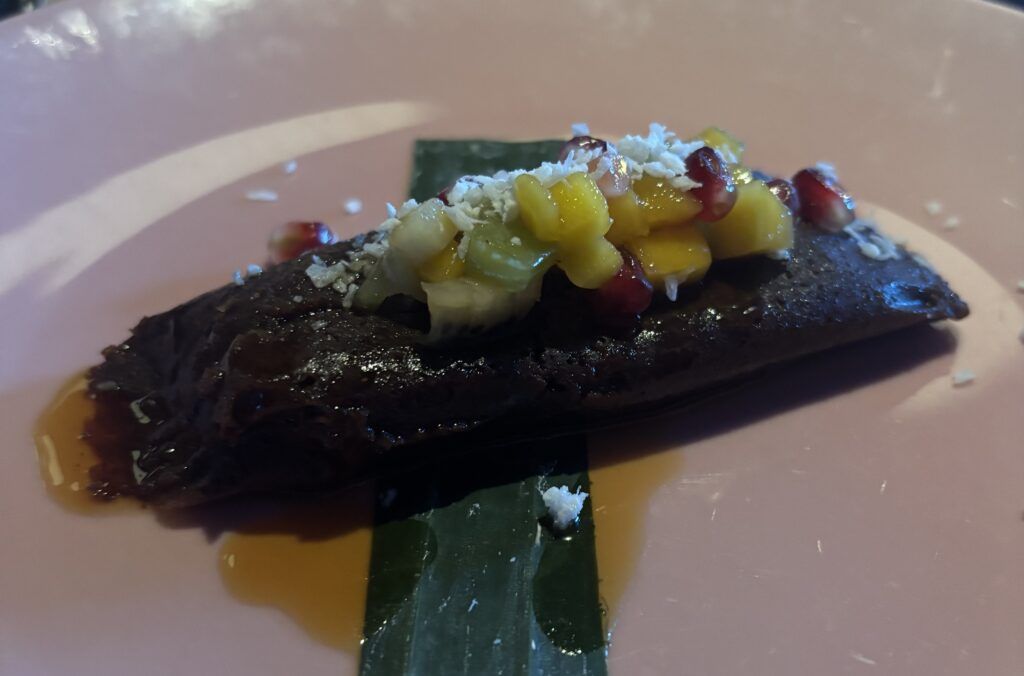
    When it comes to dessert, don’t skip it at Pink Agave. Two of the best desserts on the ship can be found here: the tamale de chocolate which is like a chocolate cake-like tamale, and the tacos de chocolate, which are mini tacos with flavors of chocolate, dulce de leche, and cinnamon.

    pink agave chocolate tamale

    Extra Virgin

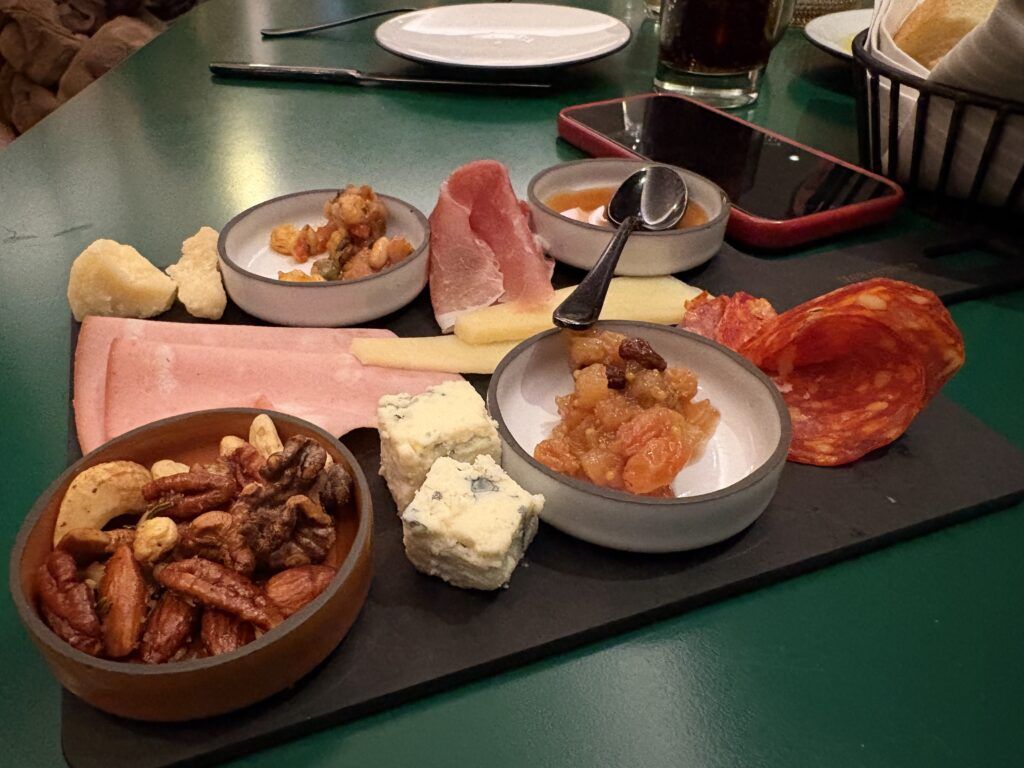
    The Italian restaurant aboard Valiant Lady is Extra Virgin, and it’s my second-favorite sit-down restaurant after Razzle Dazzle. On this voyage, we had the affettati misti cheese/meat board, the crispy artichoke, braised mini meatballs, potato gnocchi, and the pappardelle al ragu, among other things. While the gnocchi is extra soft and may feel overcooked to some, it was still delicious and we were happy with our meals here. The charcuterie board is small but has a great selection, and we ordered it more than once over the course of our sailing.

    Arguably the highlight of a meal at Extra Virgin is dessert — specifically the affogato cart. Exactly as it sounds, if you order affogato your server comes over with a cart loaded with gelato, espresso, and a variety of toppings. Tell them exactly what you want and they prepare your affogato right in front of you. It’s a scrumptious treat and the perfect way to end a rich, satisfying meal at Extra Virgin.

    extra virgin charcuterie board valiant lady

    Casual Dining

    The Galley

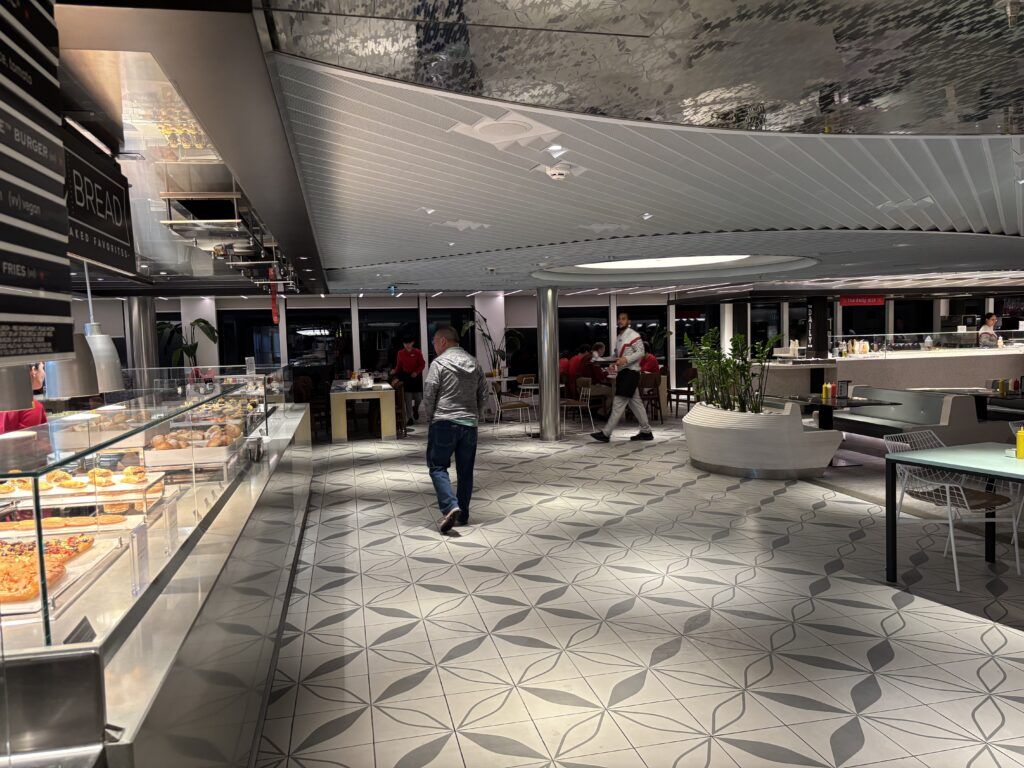
    The Galley is Virgin’s food hall venue. Taking the place of a traditional buffet, The Galley’s various food stations allow passengers to walk up, place an order or request something that’s already prepared, and seat themselves. If you place an order for something that has a wait, you’re usually given a buzzer which is very handy. Other things, like sushi, breads, pizza, desserts, fruit, and the special hot meal of the day are either grab-and-go or are already ready.

    Tables also have small menus with flags, which you can raise if you need service. You can place a food order with these crew members if you don’t want to get up, or you can order things like specialty coffees and teas and alcoholic beverages.

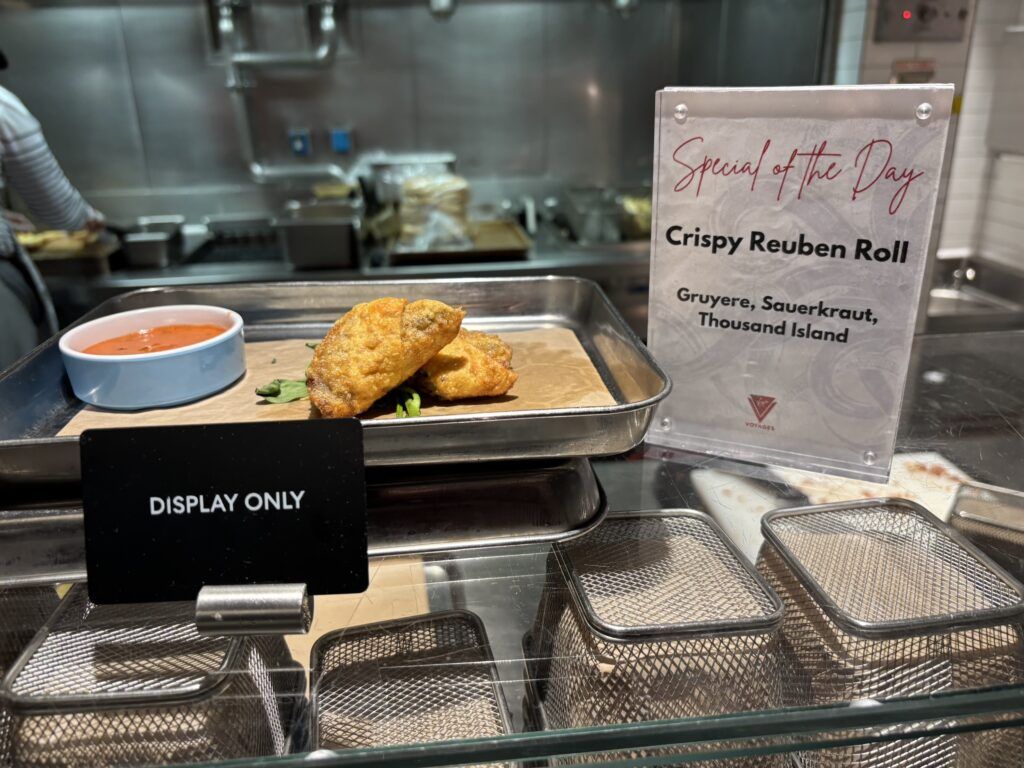
    I found The Galley on this transatlantic cruise to be the best iteration of this venue that I’ve experienced. Crew members were efficient, the food was fresh and well-prepared, and the daily specials were thoughtful and delicious. Some of our favorite specials throughout the sailing included crispy reuben spring rolls, butter chicken, shepherd’s pie, and the Spanish-inspired La Catalana burger.

    The only true complaint I have is that the full selection of breakfast stations in the morning don’t open as early as I wish they did on port days. While the classic American breakfast station Diner & Dash is open 24 hours a day, other stations don’t start opening until a bit later. On some port days, the other stations didn’t open until 8 am — just one hour before we had to meet for our excursion.

    the galley valiant lady virgin voyages

    The Social Club

    The Social Club is a diner-inspired counter-service venue located amidst the arcade, the Loose Cannon bar, and a variety of tables for doing puzzles and playing games. The venue also plays host to a variety of activities throughout the sailing like trivia and karaoke. It serves a simple menu of four different hot dogs, soft pretzels, chicken wings, and popcorn. You can also get floats and dirty sodas there, as well as sweet treats like fudge, saltwater taffy, and gummies.

    The Social Club is a great place to grab a bite to eat if you’re feeling peckish between meals. We’d stop by for a pretzel, a hot dog, or a piece of fudge and continue on our way. The food is quick and simple, but tastes great and hits the spot when you start to get a bit hungry.

    The Pizza Place

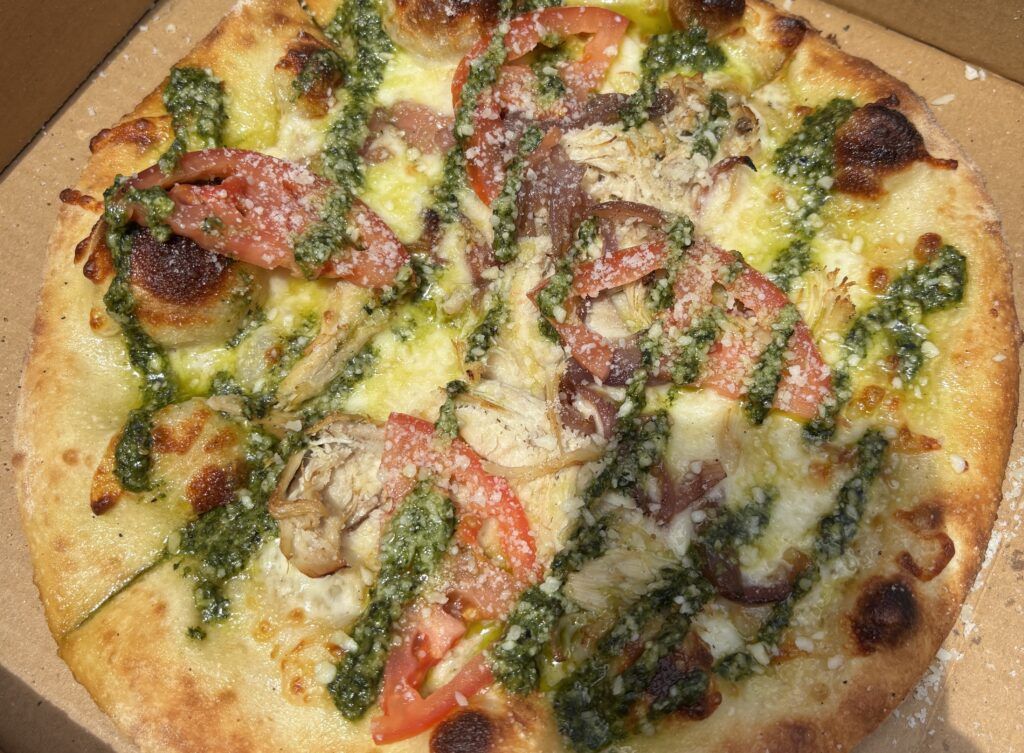
    Open from midday until late into the night, The Pizza Place is Virgin’s classic quick-casual pizza joint. Instead of just grabbing a slice or two, though, pizzas are served as whole personal-sized pies. With a few varieties to choose from, pizzas are made to order with fresh ingredients and delicious, chewy crusts. I’ve had many pizzas from this venue, and I’ve never had a bad experience.

    pizza place valiant lady

    Grounds Club

    Grounds Club (and Grounds Club Too located in The Galley) is the ship’s coffee shop. A case of bakery items such as muffins, sweet breads, and cookies are complimentary, and they were awesome. We often walked away with a couple cookies, even when we weren’t planning to get any, and they always tasted fresh.

    Specialty coffee and tea costs extra on Virgin Voyages. However, if you have status in the Sailing Club loyalty program, you’ll get one or two free specialty coffees/teas per day. We went to the Grounds Club just about every day, and were overall happy with our drinks.

    Virgin Voyages uses Intelligentsia coffee, which we really like. I will say that my mileage did vary with the iced lattes I got. I’d always get some kind of flavored syrup, like mocha or caramel. The strength of those flavors seemed to vary a bit day by day, probably depending on who was working. I’d say I consistently had better mochas during my cruises on Scarlet Lady.

    Bars and Lounges

    There is a bar to suit just about anyone’s taste and style on Valiant Lady. You have the large, plush On the Rocks bar located at the bottom of The Roundabout atrium which plays host to a variety of live music sets. There’s also the nautical-themed pub The Loose Cannon, the glamorous Sip champagne lounge, The Dock House lounge, and The Dock outdoor deck space with bar at the aft, among others.

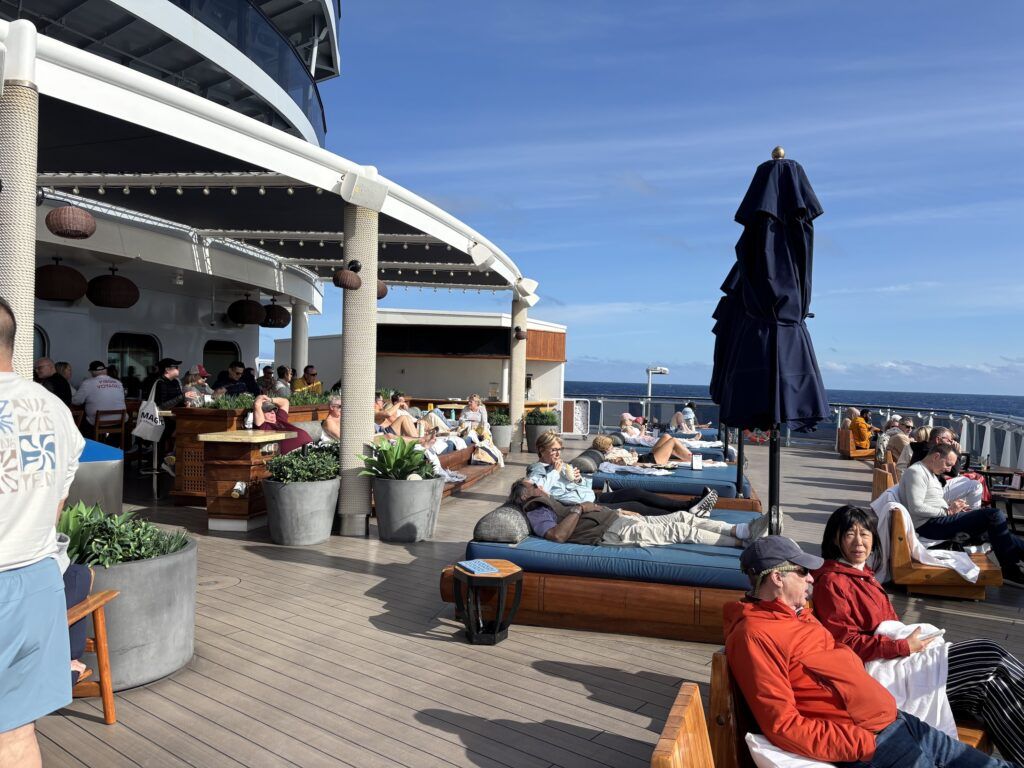
    On every Virgin cruise I’ve taken, including this one, our usual spot to grab a drink was The Dock (if it’s daytime/nice outside) or The Dock House (if it’s evening or chilly/rainy outside). Located adjacent to each other, these spaces exude a laid-back coastal style, with lots of cushy seating and conversation areas. Throughout the afternoon, they serve a Mediterranean-inspired light bites menu with things like grilled shrimp, goat cheese polenta, and hangar steak.

    For a few set hours, the menu switches to “Opa Hour,” with things like a mezza platter, lamb sausage skewer, and a selection of Greek sweets available. Opa Hour happened to include my favorite cocktail at The Dock House, the “Kleo Patra” made of kleos mastiha, lemon, and basil. Late-morning through early evening it can be difficult to find a good spot to sit at both The Dock and The Dock House, but it’s well worth it if you do. This is a great spot to hang out on board.

    the dock valiant lady virgin voyages

    Other bars that I particularly enjoyed on board include The Loose Cannon (so many good cocktails here and I love the theming!) and On the Rocks (settle in here to enjoy some live music). Just note that Virgin Voyages does not have traditional drink packages like most other cruise lines.

    Sea Day Activities

    As with any cruise, you can do as little or as much as you want during sea days. However, if you want to do a lot, there was always something happening on our transatlantic cruise. Examples of common activities include trivia, live music, cruiser meet-ups, fitness classes, bridge classes and tournaments, karaoke, challenges and quizzes, and dance classes. We spent most of our time at sea doing our own thing, hanging out on deck or in various lounges.

    We did participate in what the line calls “Summer Camp Arts & Crafts,” which was making bracelets or keychains with embroidery thread. It’s a nice activity to pass some time, and I got a cool handmade keychain out of it. But I wish the line was a bit more inventive with their summer camp-themed crafts, and had a wider rotation of the actual crafts that are done. They also had designated times during the sailing where they’d put up a big paper mural that guests could color in together. That looked fun, but the mural wasn’t very long so people were a bit on top of each other trying to color it.

    Something that’s special about a transatlantic crossing on Virgin Voyages is that there are guest speakers that come onboard to talk about their area of expertise. We attended a show put on by a former submariner, Eric, who was in the British Royal Navy. His show was very educational about what it was like to be train for, live, and work on a submarine, but also lighthearted — full of jokes and quips about his experiences at sea. Another guest speaker was one of the co-founders of Virgin Atlantic, David Tait, talking about what it was like to help build an airline.

    Entertainment

    There are lots of ways to stay entertained during a transatlantic crossing aboard Valiant Lady. Live music is easy to find around the ship, with guitarists and vocalists playing in venues such as On the Rocks (the bar in The Roundabout atrium), The Dock House, and Sip champagne bar. We caught musicians here and there, and all were good at engaging with the crowd and very talented.

    There were several shows and parties in the theater, including the dinner variety show It’s a Ship Show, UNTITLED DANCESHOWPARTYTHING which is part show, part dance party, the Around the World with the Diva travel-themed drag show, and The Magnets a capella group, among other events. I’m not generally a huge theater show person, so I didn’t attend much during this sailing. However, we did see Around the World with the Diva which was funny, a bit raunchy, and overall a great time.

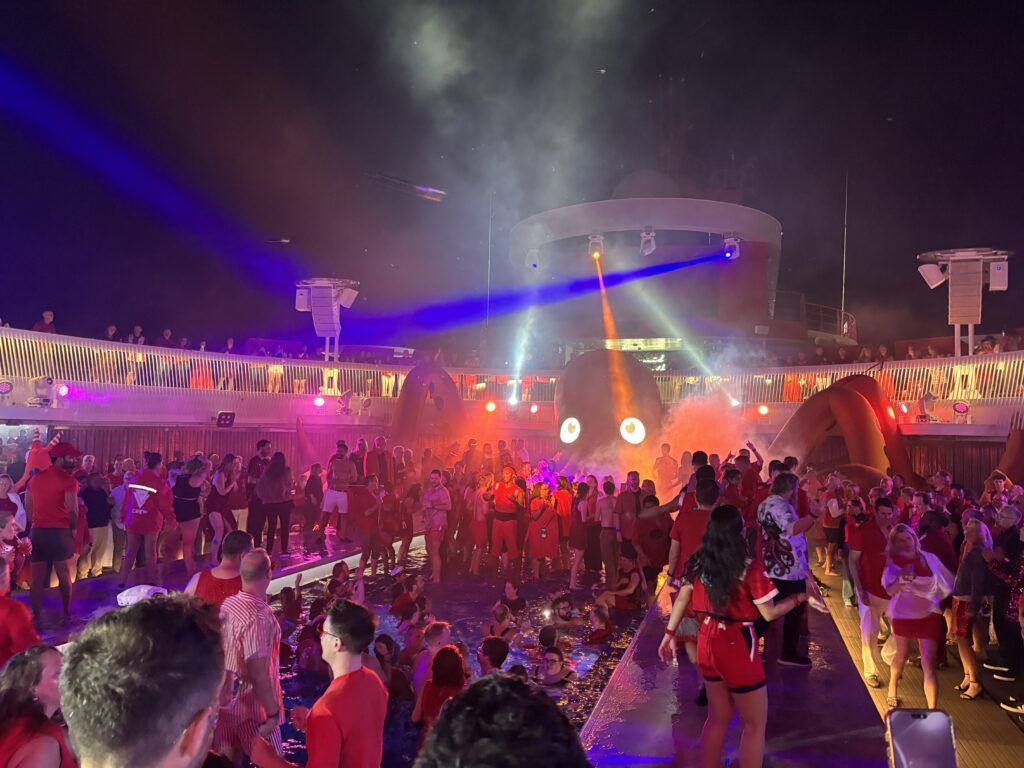
    Of course, it wouldn’t be a Virgin Voyages cruise review without talking about Scarlet Night. On our transatlantic voyage, Scarlet Night happened on day 9, the evening following our day in Funchal, Madeira. Scarlet Night is really more like Scarlet evening AND night. Activations happen all around the ship, as various public venues transform into red hues and octopus tentacles start appearing in different places. There’s a photo station, a glam station, live music, a signature red cocktail, and more. The party truly kicks off with an event in the Roundabout atrium that includes music, dancing, and competitions. Then, everyone gathers on the main pool deck for the Scarlet Night party. It’s the best cruise ship party I’ve ever experienced and you can’t miss it if you take a Virgin cruise.

    scarlet night valiant lady virgin voyages

    Spa Thermal Suite

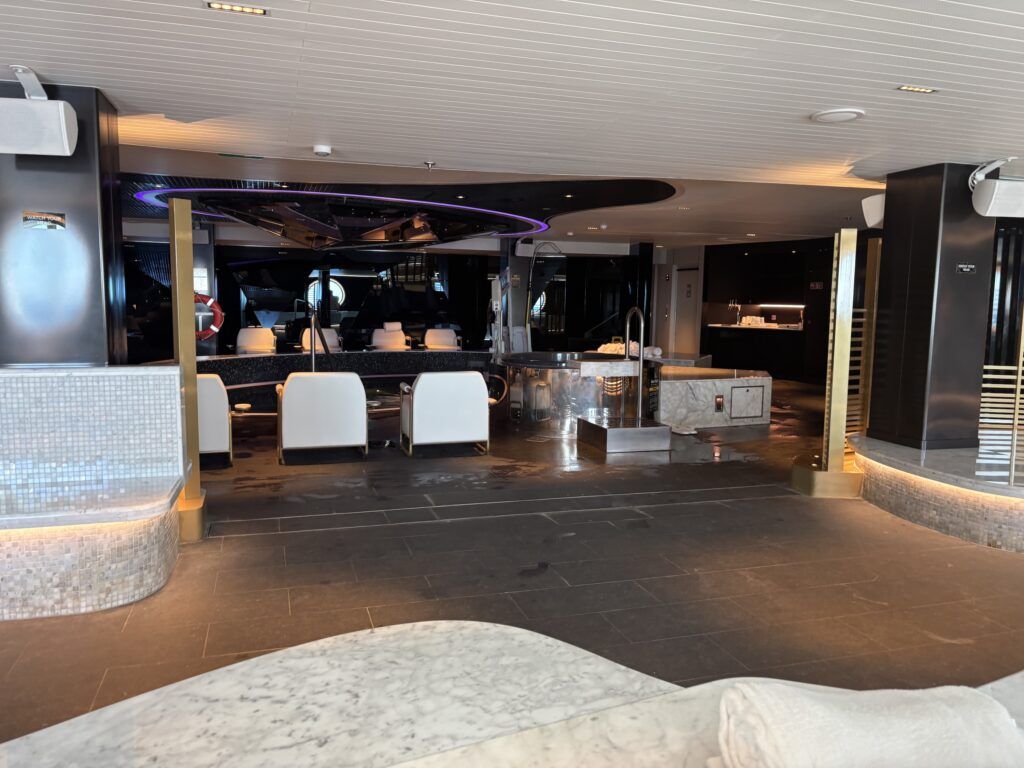
    Though I’ve sailed Virgin Voyages before, I’d actually never experienced the line’s thermal suite in the spa — until this sailing. In fact, we spent not one, but two afternoons enjoying the various amenities that included a salt room, steam room, sauna, mud room, hot and cold plunge pools, and a room temperature pool.

    Overall, the thermal suite was great. I’m a big fan of spa thermal suites, and have tried them on multiple cruise lines over the years. On Valiant Lady, my favorite experiences were the salt room, sauna, mud room, and hot tub. The room temperature pool was a great size and made for a nice area to talk with fellow passengers, but I wish it was just a bit warmer. It was cold enough that it was uncomfortable to get into, and I really was wishing the spa had a large hot tub-style pool instead. The hot tub that WAS there was tiny and could only comfortably fit 1-2 people.

    Surrounding the room temperature pool were chairs with foot rests. They are small, upright chairs that don’t have very high backs, which to me didn’t make for a very good place to relax. So really, the only place to truly lay back is on the heated marble hammam benches, which are located off to the side with porthole ocean views. More like layered platforms than benches, this area is where you can put down a towel and fully lay down to relax. Of course, you are literally laying on marble, which means this isn’t the comfiest option either.

    spa thermal suite valiant lady virgin voyages

    How do transatlantic cruises differ from Caribbean sailings on Virgin?

    It probably goes without saying that things are even more laid back than usual on a transatlantic cruise vs. a Caribbean cruise with Virgin. There’s more time to spread major events out, so you won’t have Scarlet Night just two nights after the pajama party. Guests tend to spend more time indoors on transatlantic cruises than in the Caribbean too, particularly during the crossing. This is largely due to weather, which on my crossing varied widely between cold, drizzly and windy to warm and sunny. It’s also because there’s just more time. Sun-seekers who might want to soak up every ray of sunshine possible in the Caribbean will have more time to alternate between being outside and enjoying indoor amenities/activities.

    The average passenger age skews a bit older on longer sailings, which goes for transatlantic voyages as well. In line with that, The Manor nightclub is less attended than on shorter cruises, except on themed nights like Scarlet Night where you’ll find a bigger crowd.

    Progressive trivia can be found on longer sailings such as a transatlantic cruise, where the same teams play and accumulate their points throughout the voyage (the prizes are bigger, too!). You’ll also find more specials in the restaurants, both sit-down and at The Galley. And as mentioned, The Galley had some really outstanding specials that we were able to enjoy.

    crispy reuben rolls special at the galley valiant lady

    In the pre-cruise realm, guests are able to have more bookings per restaurant ahead of time than they would on a shorter cruise.

    Of course, many of these differences are not exclusive to a transatlantic cruise; they would apply to any voyage that’s longer than average. However, they are things we noticed on this sailing that aren’t typical of the Virgin Voyages experience.

    Why take a transatlantic cruise on Virgin Voyages?

    One of the biggest selling points of Virgin Voyages that may be an even BIGGER pro during a transatlantic crossing is the fact that the line is adults-only. The elevated, adult-focused atmosphere is perfect for kicking back and relaxing during sea days without worrying about kids being underfoot or doing cannonballs into the pool.

    Virgin’s balcony hammocks are also a huge plus. What better time than on an ocean crossing to sway in your hammock as you read a book, hang out with your travel mates, or close your eyes and listen to the waves? If you’re considering a transatlantic cruise with Virgin, we highly recommend you book a balcony cabin and make sure it’s one with a hammock.

    I also love the more inclusive nature of Virgin. While it’s not considered an “all-inclusive” line, it IS “more” inclusive than mainstream lines and offers great value. Things that many other lines charge for like wifi, soda, fitness classes, and all dining is included in the fare. If you pre-purchase a Bar Tab for drinks, it’s pretty easy to walk off a Virgin Voyages cruise having spent little to nothing while onboard if you so choose.

    ice cream virgin voyages valiant lady

    Who should take a transatlantic cruise with Virgin Voyages?

    In my opinion, a transatlantic cruise aboard Virgin Voyages is great for young adults (and those who are young at heart!) who don’t mind longer voyages with lots of time at sea. Our sailing had a wide variety of ages represented onboard, with people from all sorts of backgrounds and walks of life. Virgin Voyages does create a bit more of a trendy and party-like atmosphere than most cruise lines so if you’re looking for a quieter, more refined cruise, another line might be a better option.

    While the age demographic of transatlantic cruises tend to skew much older on other cruise lines, the difference isn’t as pronounced on Virgin Voyages. On mainstream cruise lines, you’ll find that the demographic difference between a standard Caribbean cruise and a transatlantic cruise is quite noticeable. While I did notice more older passengers on the transatlantic than I did on my previous Bahamas and Caribbean sailings with Virgin, there was still a large number of younger/middle-aged guests.

    If you’re looking for a longer vacation without a higher price tag, transatlantic cruises, or any repositioning cruise, should be on your radar. These cruises (more sea days, less ports of call) usually offer significantly lower per-day fares.

    Virgin Voyages Transatlantic Cruise Review: My Overall Thoughts

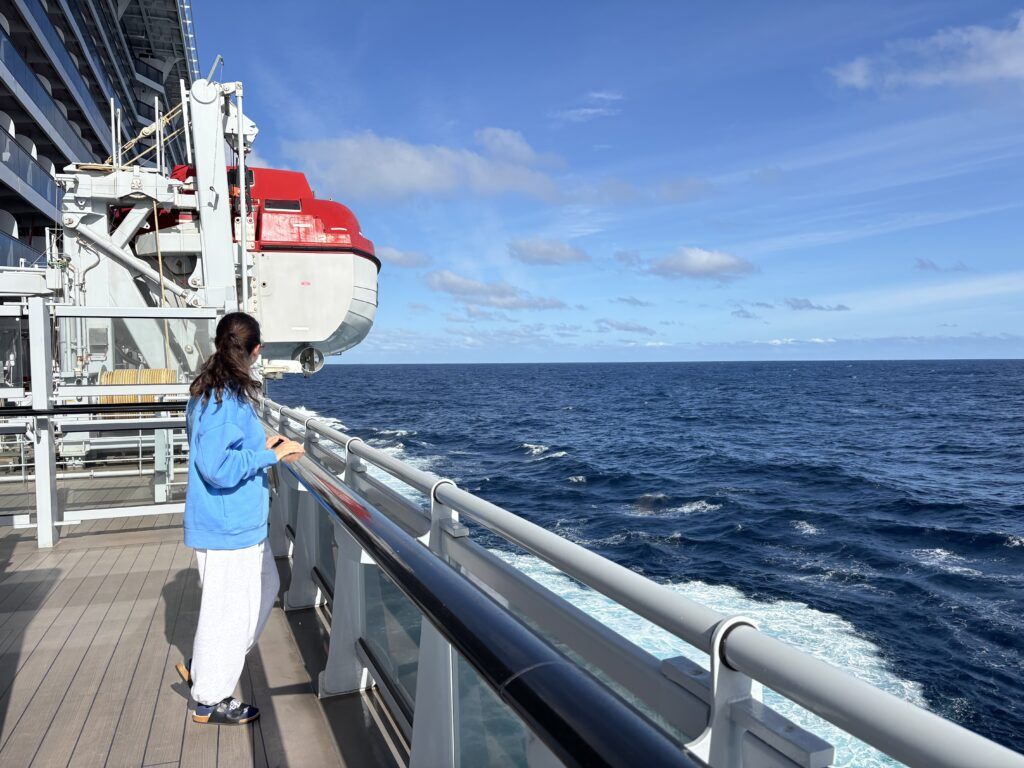
    I had a fantastic time on my Valiant Lady transatlantic cruise. While I was a bit disappointed that it started off so chilly and we couldn’t spend much time outside, we stayed cozy inside, enjoying the ship and our fellow passengers. During the times when it was warm, it was fun to head outside and see everyone gathered, eager to soak up the sun and enjoy the endless ocean views.

    valiant lady virgin voyages transatlantic cruise review
    (Photo courtesy of Sarah Bretz)

    I know I didn’t mention our ports much in this review, but they were fantastic. We did hiking excursions in both the Azores and Madeira, and they were two of the most beautiful hikes I’ve ever done. We visited a blue-drenched ancient city called Chefchaouen during our call in Tangier, Morocco, and explored on our own during our port calls in Spain. I hadn’t been to Europe in years, so being back again — and in all new places — was a real treat for me and a huge highlight of the cruise. And of course, my first time visiting Africa was a highlight as well.

    I was a bit apprehensive about taking a ship all the way across the ocean, but I’m so glad I did. Lots of people on our sailing had done transatlantic crossings before, and now that I’ve done one I can see why they came back. It was relaxing, beautiful, and so much fun. I would do it again in a heartbeat. I’m excited at the thought of potentially doing crossings on different cruise lines and ship sizes in the future. If you’re considering a transatlantic cruise, I say jump in and do it. You won’t truly know for yourself until you try, and chances are if you love being on the ocean, you’ll love crossing one. I know I do.

    Comments

    Have you taken a transatlantic cruise before? What are some of your highlights of these crossings? Drop us an anchor below to share your experiences sailing with Virgin Voyages.

    The post I Took a Virgin Voyages Transatlantic Cruise – Here’s What It Was Really Like appeared first on EatSleepCruise.com.

    This post was originally published on this site.

  • Trump Admin Illegally Banned Transgender Troops From Military: Court Ruling

    Trump Admin Illegally Banned Transgender Troops From Military: Court Ruling

    A three-panel court blocked the Trump administration from banning transgender troops from the United States military, though it did not alter precedent for new troops wanting to enlist.

    this site

  • How Sleep Affects Health, & Changes With Aging

    How Sleep Affects Health, & Changes With Aging

    Sleep. Everybody needs it. Many of us don’t get enough of it.

    These are common truths that almost everyone knows. But a few years ago, I had the opportunity to learn quite a bit more about sleep, and how it affects health.

    I came away convinced that sleep is a core pillar of health. It deserves more attention from us as doctors, and as individuals concerned about our own health or that of an aging relative.

    I also know that sleep problems are very common among family caregivers, and among aging adults. So I was glad to learn more about sleep health, as this has the potential to really help people get through caregiving and aging challenges.

    In this article, I’ll share some of the interesting facts I learned about sleep, including how it affects the health of the body and mind, and how it changes with aging.

    You may also want to read my related articles:

    4 Things To Know About Sleep & Health

    1. You may need more sleep than you’re currently getting. 

    This is a no-brainer if you’re struggling with insomnia, or walking around haggard because you’re caring for an older person with sleep problems.

    But even people who don’t feel chronically sleep-deprived are often getting less sleep than they need. This can have important health effects both short-term and long-term.

    So how much sleep does a person need? Here’s how to answer this question. First, you can reference this table from the National Sleep Foundation. It shows the range of nightly sleep time that people need, depending on age group. For adults, most people need 7-9 hours every night, with older adults needing a little less.

    That range is just a starting point, however. To determine how much sleep you or another person needs, you really need to figure out how much sleep is required for the person to feel refreshed upon awakening, and alert throughout most of the day.

    According to experts, a lull in alertness after lunch is common, but it’s not normal to feel very sleepy during boring activities such as meetings or highway driving. If you are getting a healthy amount of sleep, you should feel fairly alert throughout most of the day and evening, without having to resort to frequent cups of coffee or use of other stimulants.

    Note that the sleep needs to be of “good quality.” Factors such as sleep apnea (which causes frequent micro-awakenings), restless leg syndrome, or even certain medications can diminish sleep quality, which means a person can sleep for the “right” number of hours but still feel tired during the day.

    Alcohol is another common cause of poor sleep quality. Although it does often make people feel sleepy, it interferes with getting enough restorative sleep throughout the whole night, and sometimes causes people to wake up during the night.

    2. Being sleep-deprived is common…and you may not realize it’s affecting you.

    Sleep deprivation comes in two flavors. Acute sleep deprivation means getting less sleep than usual over a night or two. This leads to people feeling noticeably worse than usual during the day. They also perform worse on cognitive tasks.

    Chronic sleep deprivation, on the other hand, means not getting quite enough sleep for weeks, months, or even years. A large survey done in 2010 found that 30% of adults aged 45+ reported sleeping six hours or less on most nights.

    Studies suggest that most people develop a certain tolerance to chronic sleep deprivation, so they don’t feel nearly as bad as after an episode of acute sleep deprivation. However, a landmark study published in 2003, in which young-ish adults (aged 21-38) were randomized to get 4, 6, or 8 hours of sleep for 14 days in a row, found that chronic sleep deprivation did affect performance much more than participants seemed to realize. (The study overall found that cognitive abilities got progressively worse for those getting 4 or 6 hours per night.)

    In other words, when people experience acute sleep deprivation, their sense of feeling crummy and tired is aligned with the actual impact of not sleeping enough. But when people are chronically sleep deprived, they tend to underestimate how much it’s affecting them.

    3. Acute sleep deprivation affects people in many ways.

    Acute sleep deprivation is when you pull an all-nighter, or otherwise sleep a lot less than you usually do. Here’s what research reveals about the effect of a low-sleep night:

    • Decreased cognitive performance. This includes having a harder time paying attention, multi-tasking, completing logical thinking tasks, or problem-solving.
    •  Worsening of mood. People tend to be more irritable, more anxious, and sometimes more depressed. The symptoms can mimic depression or anxiety.
    • Daytime sleepiness. Not only do people feel sleepy, but this can also cause people to actually fall asleep for a few seconds if they are driving, sitting in a meeting, or otherwise doing something monotonous or not physically active. Obviously, this can be quite dangerous and is a major contributor to car accidents.
    • Fatigue. Fatigue means feeling a certain lack of physical or mental energy. This differs from sleepiness, which is the actual feeling of wanting to fall asleep, or having difficulty staying awake. (Many insomniacs feel fatigued but not sleepy, to their great dismay.)

    Interestingly, how badly you are affected the day after not sleeping enough seems to depend not only on how little you slept, but also on how chronically sleep-deprived or well-slept you were before your bad night.

    As you might guess, if you are chronically sleep-deprived then you’ll be even worse off after a particularly low-sleep night.

    4. Chronic sleep deprivation is associated with long-term health effects.

    Chronic sleep deprivation reduces your alertness and mental performance. It’s also been linked to a number of health and life problems, including:

    • Anxiety and/or depression. A study found that frequent insufficient sleep was linked to a much higher likelihood of having anxiety, depression, or both.
    • Developing cardiovascular disease. A study that followed 495 healthy people and measured their sleep with a wrist device found that those who slept more were much less likely to develop significant calcification of their coronary arteries. Another study of 20,000 adults found that those who slept less than 7 hours per night — and often woke feeling unrested — had a higher risk of cardiovascular disease.
    • Increased inflammatory markers in the body. Studies have found that reduced sleep leads to elevated blood markers related to inflammation. Experts believe this could explain the relationship between chronic sleep deprivation and cardiovascular disease.
    • Weaker function of the immune system. Sleep deprivation has been linked to decreased production of antibodies. One especially interesting study found that people who slept less were almost three times more likely to develop a cold. (Study participants were inoculated with rhinovirus after their sleep was tracked; overall 43% developed a symptomatic cold, which is interesting in terms of understanding how likely you are to get sick after being exposed to this type of cold virus.)
    • Increased risk of obesity. A 2008 meta-analysis (a study of research studies) found that being a short-sleeper is associated with obesity. A study of acute sleep deprivation in young men found that not sleeping enough changed hormones associated with appetite.

    3 Ways Sleep Changes With Aging

    It’s not uncommon for older adults to develop a physical health problem that affects sleep; common  ones include sleep apnea, gastroesophageal reflux disease, heart failure, untreated pain, and frequent urination. (I will cover a comprehensive list of such problems in a future post.)

    But even in the absence of a health problem, aging changes sleep. Here’s what experts have found out so far:

    • Total sleep time decreases as we age. One study concluded that it decreases by 30 minutes per decade, starting in mid-life.
    • Sleep becomes lighter and more fragmented. The amount of time spent in REM sleep declines, and “sleep architecture” otherwise changes a bit as people age.
    • The body’s inner circadian rhythm changes.  The circadian rhythm is basically a daily pattern that affects most processes within the body. It’s regulated by certain parts of the brain, by certain hormones (including melatonin), and by exposure to daylight. As people age, many seem to advance the “phase” of their circadian rhythm, meaning they get sleepy earlier in the day and wake up earlier. Experts also believe the rhythm signal tends to weaken with age, so there’s less of a clear signal organizing the body’s processes to be in synch with each other and with the day.

    In short, it’s normal for one to sleep a little less, and less deeply, as one ages.

    It’s also normal to shift to an earlier schedule, and become more of lark than a night-owl.

    That said, experts believe that most sleep problems reported by older adults are related to a physical health problem, a mental health problem (which can include chronic insomnia, as well as other problems related to mood or the brain), or a medication effect.

    So if an older adult complains of poor sleep, never assume it’s just “getting old.” Instead, it’s important to investigate further, as it’s often possible to improve an older person’s sleep once we identify the underlying problems.

    What To Do If You’re Worried About Sleep

    As I explain above, it’s pretty common to not get enough sleep, and it can really affect a person’s health and quality of life.

    If you’re worried about sleep, be sure to read my related article: 5 Top Causes of Sleep Problems in Aging, & Proven Ways to Treat Insomnia.

    In the meantime, if you often feel tired, sleepy, or irritable, I’d encourage you to assess your own sleep habits, and check to see if you might be chronically sleep-deprived.

    Today, smartwatches or a wearable tracker can make it easy for you to log your sleep for a few weeks. Try combining those with a journal of how rested you feel in the mornings, and how often you feel sleepy during the day.

    That should help you determine whether you’re chronically sleep deprived.

    Questions or comments? I’d love to know how you feel about sleep in later life.

    This post was originally published on this site.

  • The Ultimate Guide for Exploring the Jerash Roman Ruins in Jordan

    The Ultimate Guide for Exploring the Jerash Roman Ruins in Jordan

    Jerash surprised me because I expected a few scattered ruins and a quick stop from Amman, but it ended up being one of my favorite places in Jordan outside Petra. What makes Jerash different is how much of the ancient city is still standing. You are not just looking at broken stones in a field. …

    The post The Ultimate Guide for Exploring the Jerash Roman Ruins in Jordan appeared first on Travel Notes & Beyond.

    This post was originally published on this site.

  • Best New Travel Gear for 2026: 50+ Product Reviews

    Best New Travel Gear for 2026: 50+ Product Reviews

    Original content owned & copyrighted by Green Global Travel.

    I’ve been a professional travel writer for nearly 30 years now, and have focused on writing about travel exclusively for over 16 years. 

    Mary and I have visited more than 50 countries and hundreds of cities and small mountain towns since launching Green Global Travel in 2010. 

    Over the course of those many adventures, we’ve learned first-hand how having the right piece of gear can make the difference between a great trip and a miserable trip. 

    Whether it was having hiking boots fall apart in the middle of a desert in Jordan, not having a fan during the worst Summer heat ever recorded in the Czech Republic, or getting heat stroke in the Peruvian Amazon (I drank plenty of water, but not enough electrolytes), we figured out how much it matters to be well-prepared. 

    With that in mind, read on for our guide to the Best New Travel Gear for 2026, including 50+ products ranging from luggage and backpacks to shoes, clothing, and tech gear.


    LUGGAGE
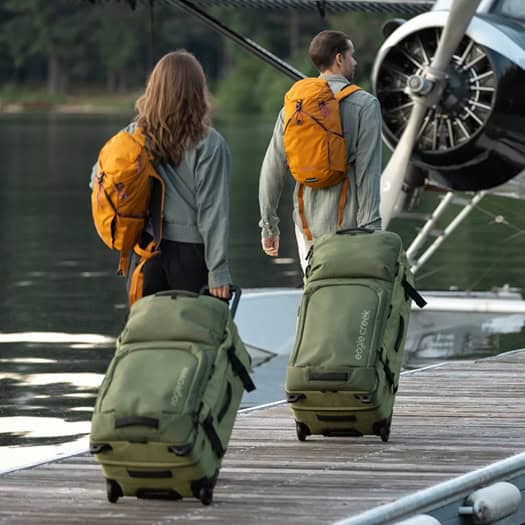
    Eagle Creek ORV Trunk

    Eagle Creek ORV Trunk & Pack-it Gear Cubes

    Founded in California’s San Jacinto Mountains in 1975 by Steve & Nona Barker, Eagle Creek invented the first convertible backpack on wheels and pioneered packing organizers.

    Bought by the VF Corporation (The North Face, Jansport) in 2007, the brand was nearly retired in 2021. Thankfully, former VF President Travis Campbell acquired the company to revive it.

    I say thankfully because Eagle Creek makes some of the world’s best travel gear, and we’ve been fans for 15+ years now. Made with 100% recycled materials, the ORV Trunk is yet another gem, with tons of organization and technical features. 

    Noteworthy elements include easy stow compartment dividers, internal & external compression straps, integrated luggage tracker pocket, lockable zippers, and heavy duty wheels & handle. 

    Pair it with their Pack-It Gear Cubes (which come in an array of sizes) and you have one of the most perfectly designed luggage systems we’ve ever tested. 
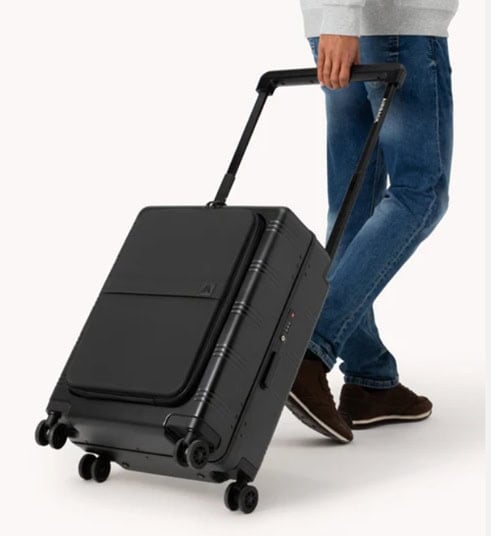
    Airback NEXT Carry-On Bundle

    Airback NEXT Carry-On Bundle

    Based in Amsterdam, Airback is a new-to-us brand best known for creating the world’s first backpack with built-in vacuum compression technology. 

    Their NEXT Carry-On Bundle is a zipperless, aluminum frame suitcase that incorporates that same technology, allowing you to pack 5–7 days of clothing in a carryon-size 4-wheel roller.

    Other features include a wide ergonomic handle, silent Hinomoto wheels, loads of interior organization options, and a zip-free aluminum closure system that allows quick access.

    Safety-minded travelers will also appreciate the dual integrated TSA-approved locks, which keep your trolley safe while allowing hassle-free inspections. 

    Tesport Cloud Flex Carry-On

    Co-founded in 2026 by multi-Red Dot Award winner Nobuo Maeda (former head of design at a major luggage brand), Tesport focuses on functional, but aesthetically pleasing luggage. 

    Maeda’s unique designs combine the durability of hardshell luggage with the cushy luxury of soft bags, all made with lightweight polycarbonate and a 100% recycled interior lining.

    The Tesport Cloud Flex Carry-On offers a lot of cool features to love. It expands up to 2 inches/5 liters, with 360º spinner wheels, telescoping handle, a built-in cup holder for layovers, and a TSA-approved combination lock for security. 

    We also love the well-organized interior’s removable compression divider, zippered pockets for damp and dry items, built-in hanging hook, and the 2 packing cubes included in the set. 
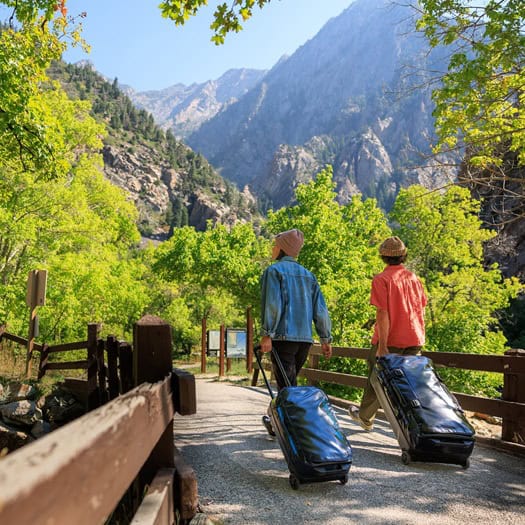
    Gregory Alpaca Wheeled Duffel 40L

    Gregory Alpaca Wheeled Duffel 40L

    We’ve been huge fans of the Gregory Alpaca Gear Wagon since we bought our houseboat in 2024, using it to haul everything from heavy propane talks and water jugs to furniture. 

    So it’s no surprise that the Gregory Alpaca Wheeled Duffel is similarly durable, well-constructed (using TPU coated 900 denier fabric), lightweight, and weatherproof. 

    The hybrid design features a polycarbonate bottom for impact protection, a telescoping aluminum handle, and rugged 85mm wheels with TPU protection. 

    Inside, you’ll find a compression panel for separating outdoor gear from clothes, and a zippered mesh pocket on the underside of the top lid for extra organization.
     

    TRAVEL TECH
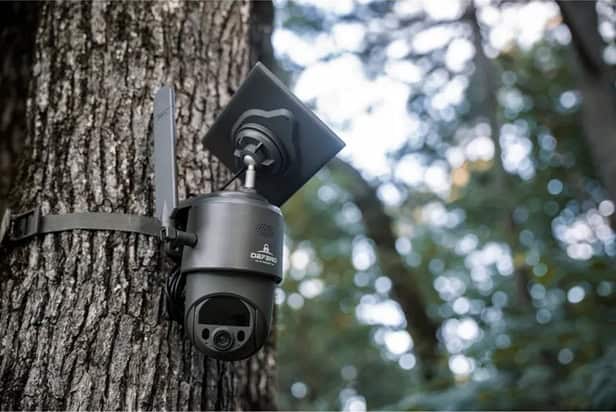
    Tactacam Defend 360 Security Camera

    Tactacam Defend 360 Security Camera

    When we talk about travel gear, we often focus on the things we take rather than the things we leave behind. But home security is especially important for peace of mind when you’re away. 

    The Tactacam Defend 360 Security Camera gives you full 360º visual control over the live view from anywhere, allowing you to pan, tilt or zoom in for 4K photos and/or 1080p video. 

    It sets up in minutes and offers 100% cellular connectivity for coverage anywhere with 4G signal, with rechargeable battery and solar panel power options included. 

    Other cool features include built-in night vision, motion detection (with notifications sent to your phone), weather-resistant housing, and 3 different data plans to choose from. 
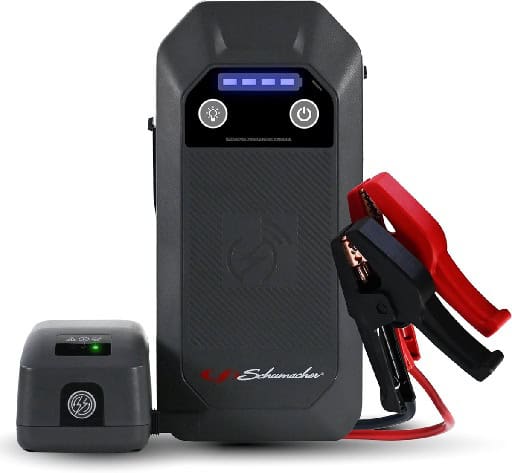
    Schumacher Electric 12V Lithium Jump Starter & Power Pack - Portable 1500A Battery Jumper with 10W Wireless Charging,

    Schumacher 1500A Lithium Portable Jump Starter + Power Pack

    Although Mary and I are both veteran world travelers with 50+ countries and hundreds of cities under our belts, most of our post-pandemic travel has been in the domestic US. 

    We love taking road trips, especially in our beloved Blue Ridge Mountains, but this type of travel requires different types of gear than international travel. 

    The Schumacher Electric 12V Lithium Jump Starter & Power Pack is a handy little device to have on hand, offering 1500 amps of power to jump start your gas or diesel-powered vehicle. 

    It also features a wireless charging pad, USB fast charger, and LED light to keep all your electronic devices powered when you’re on the road… or off the grid!

    Manta SOUND Sleep Mask

    Manta SOUND Sleep Mask

    Mary will tell you that I am a man of many, many talents. But sadly, regularly getting a good night’s sleep is not one of them: I’ve been an insomniac since I was 15 years old. 

    Founded by lifelong light sleeper Mark Zhang and launched with a $700,000 crowdfunding campaign, Manta Sleep was designed to help you get the best possible rest.

    Named one of TIME’s “Best Inventions of 2025,” their Manta SOUND Sleep Mask is the latest iteration of their customizable, science-backed mask.

    The zero-pressure design of this Bluetooth sleep mask makes it especially comfortable for side sleepers (like me), combining their signature blackout feature with immersive audio capabilities.


    BACKPACKS
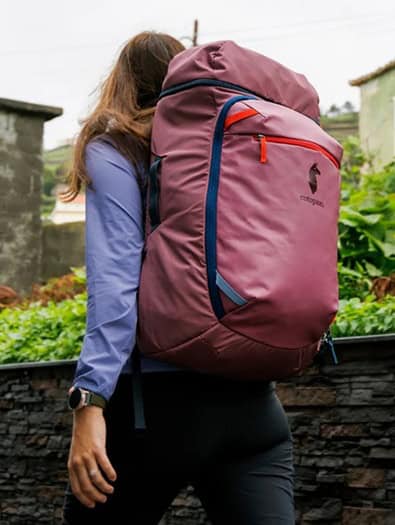
    Cotopaxi Allpa 50L Adventure Travel Pack
    Near Zero The Dean 50 Overnight Backpack

    Cotopaxi Allpa 50L Adventure Travel Pack & Near Zero The Dean TR 50 Overnight Hiking Backpack

    If you’re traveling on an extended trip carryon-only, as we always do, it’s important to have a versatile bag that can carry all of the things you’ll need for a week or more (2 to 3 weeks, in our case). 

    The Allpa 50L Adventure Travel Pack from the Salt Lake City-based Cotopaxi offers excellent storage capacity in a 27 x 14 x 10″ bag, including a zip-off 13 x 8.5 x 5.5″ sling you can use as a separate day pack. 

    It’s eco-friendly (100% recycled nylon & polyester), stylish, and comfortable (contoured back panel, adjustable torso, padded hip belt), with exterior and interior organization options. 

    Near Zero’s The Dean TR 50 Overnight Hiking Backpack is another big bag loaded with features, including ultralight reinforced aluminum frame, removable dividers, pack-away raincover, and adjustable torso (14–22″).

    This pack also offers so many exterior pockets, pouches, and secure compression strap attachment points that its expanded usable capacity can give you closer to 55 or 60L of storage space.
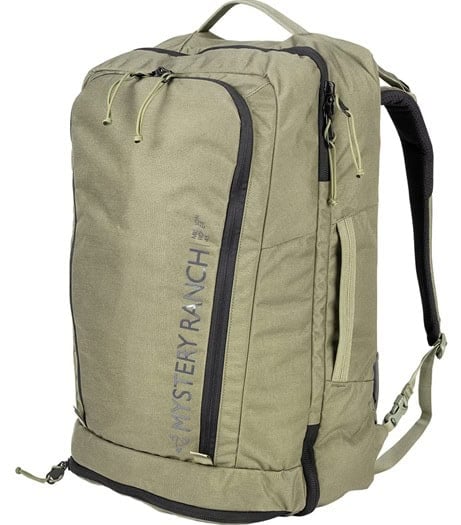
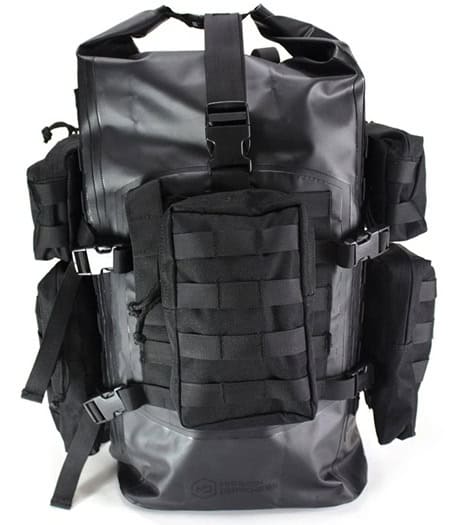
     

    Mystery Ranch Mission Rover 45 Backpack
    Mos Equipment Mission Darkness Dry Shield Faraday Backpack 40L

    Mystery Ranch Mission Rover 45 Backpack & MOS Equipment Mission Darkness Dry Shield Faraday Backpack 40L

    Moving down in the range of backpacks that are large enough for multi-day trips, but small enough to carry on, we have the Mission Rover 45 and the Mission Darkness Dry Shield Faraday 40L backpacks. 

    Mystery Ranch’s Mission Rover combines elements of a backpack, duffel, and suitcase, with a clamshell opening, divided compartments for organization, a pass-through sleeve for luggage handles, and stowable straps. 

    Other cool features include a padded laptop sleeve, large main compartment (with two zippered mesh pockets, two stash pockets, and a key clip), and a bottom zippered compartment for shoes or dirty clothes. 

    The Mission Darkness pack from MOS Equipment is safety-minded, with two layers of TitanRF Faraday Fabric to block all wireless signals and keep all your large electronic devices shielded to enhance digital privacy. 

    It’s a military-grade tactical backpack, made with waterproof 500D PVC. Features include adjustable waist and chest straps, breathable padded shoulder straps, and breathable padding for the upper and lower back.


    Matador GlobeRider 35 Travel Backpack
    Nemo Vantage 30L Endless Promis Overnight Backpack

    Matador GlobeRider 35 Travel Backpack & Nemo Vantage 30L Endless Promise Overnight Backpack

    These two backpacks, both in the 30-35L range, are better suited for overnight jaunts than multi-day adventures. But they also make suitable day packs to pair with a larger rolling bag for longer trips. 

    Matador’s GlobeRider 35 is loaded with comfort features, including cushioned breathable back panel and shoulder straps, padded (and removable) hip belt, adjustable load lifters, and V-Compression straps. 

    In terms of organization, there’s a large external stash pocket, top access pocket, water bottle pocket, external access admin pocket, dual-access padded laptop pocket, and a Smuggler’s Pocket hidden behind the back panel.

    Nemo’s Vantage 30L Endless Promise Backpack is sustainably made (every component is recyclable) and built to last, with abrasion- and water-resistant fabric that offers up to 2× the tear strength of standard packs.

    It also has moisture-wicking CCubed cushioning to keep your back dry, cool and comfortable, a large exterior pocket, a dedicated laptop sleeve, and a zippered shoe compartment. 
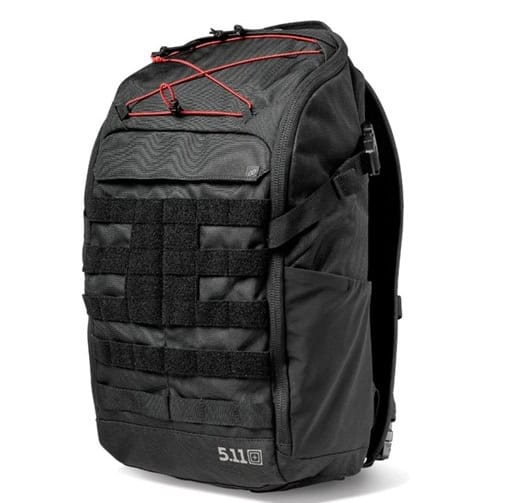
     

    5.11 MVR 25L Backpack

    5.11 MVR 25L Backpack

    5.11 Tactical was founded in 2003 by Navy SEAL-turned-rock climber Dan Costa, who purchased part of the clothing line from his former partner, climbing legend Royal Robbins.

    Named for the toughest difficulty rating on the rock-climbing scale, 5.11’s rugged gear has since become increasingly popular with people in law enforcement, military, and public safety. 

    Their new MVR 25L Backpack is built with a modular load out system and a well-balanced carry, using a Center Line design that offers natural weight distribution and stable movement. 

    Made with durable, abrasion-resistant 900D fabric with weather protection built in, its features include a 270º zipper-access main compartment, a padded/ventilated support panel, and lots of dedicated sleeves and pockets.
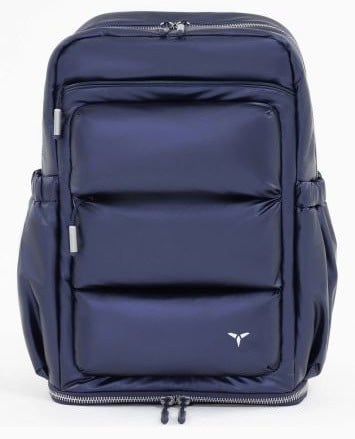
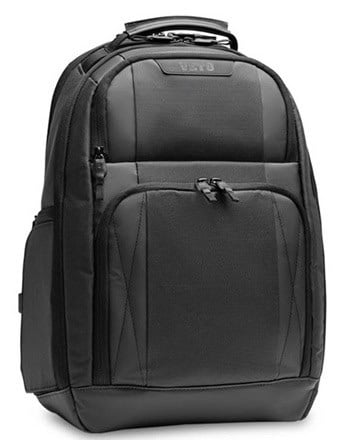
     

    Tesport Cloud Large Backpack 21L Navy Blue
    Veto Pro Pac Norwalk 20L Backpack Black

    Tesport Cloud Large Backpack 21L & Veto Pro Pac Norwalk 20L Backpack 

    The last two backpacks on our list are a little too small for my personal taste. And, at around $200 retail, these stylish bags seem designed for those who care about fashion just as much as they do about function.

    Tesport’s Cloud is a lightweight, quilted backpack with 100% recycled polyester lining, puffy pads, and an eye-catching glossy finish. But at just 12.4″ x 6.25″ x 18″, calling the 21L bag “Large” feels like a stretch.

    But big things come in the small package, including built-in RFID blocking technology, a padded 16″ laptop pocket, hidden zipper pocket, two internal slip pockets, and a separate bottom shoe compartment.

    Veto Pro Pac’s Norwalk 20L Backpack offers similar measurements and slightly less volume, with a sleek design made from recycled, water-resistant 600D waxed polyester and a water-resistant tarpaulin base.

    Its features include a padded top compartment (with a magnetic divider and an anti-scratch pocket for glasses), padded laptop compartment, zippered magnetic side pockets for bottles up to 40oz, and anti-scratch protection.


    TRAVEL SHOES
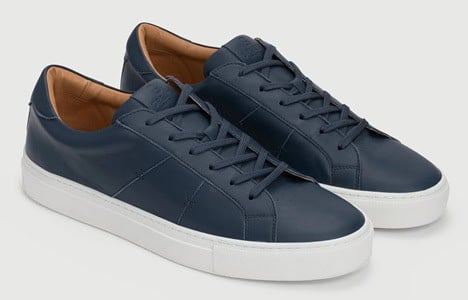
    Greats The Royal 2.0 Mens shoes
    Great Charlie Mens Shoes

    Greats The Royale 2.0  & The Charlie

    The first Brooklyn-based sneaker brand, GREATS was founded in 2013 by Ryan Babenzien and Jon Buscemi with a mission to offer luxury, Italian-made designer shoes at a fraction of the cost by selling direct to consumers.

    Manufactured ethically in family-owned factories in Italy and Portugal, their classic, timeless sneakers incorporate upscale elements such as premium full-grain leather and natural rubber Margom outsoles.

    The stylish Royale 2.0 is their flagship model, made with Candiani Italian denim and Italian suede. It features a soft and removable cushioned footbed, improved flexibility, reduced weight, and their signature tack stitched outsole (which prevents peeling over time). 

    Their men’s Charlie is inspired by the slick, sporty style of soccer players, pairing buttery soft Italian leather and natural rubber. It features premium leather upper/lining, a footbed with extra cushioning and antimicrobial properties, waxed cotton laces, and more. 
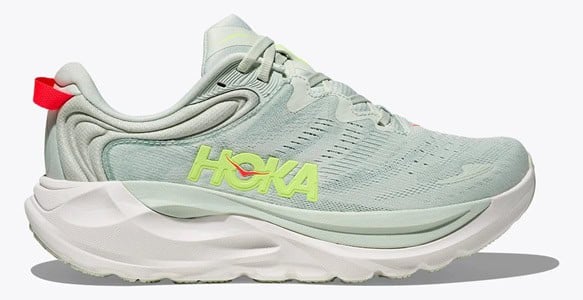
    HOKE ONE ONE Gaviota 6
    Merrell Women's SpeedArc Matis

    HOKE ONE ONE Gaviota 6Merrell Women’s SpeedArc Matis

    Because of our pack light/carryon-only philosophy, we always travel with shoes that are stylish enough for the city, but rugged enough to stand up to the elements on any hiking trails we care to tackle. 

    So naturally HOKA is one of our favorite shoe brands, and their women’s Gaviota 6 offers a slick, lightweight mix of fashion and function for runners, hikers, and casual walkers alike. 

    Built with HOKA’s sturdy H-Frame technology, Gaviota 6 features an elevated (and breathable) mesh upper, a more plush collar, heel pull webbing, and internal grille lacing for a supremely comfortable ride. 

    Merrell’s new women’s SpeedArc Matis is another gorgeous shoe (technically a fast hiking sneaker) that’s designed for rugged trails, but attractive for the streets. 

    It boasts a removable EVA foam footbed, FlexPlate technology for flexibility and stability, FloatPro Foam midsole for lightweight comfort, and a Vibram MegaGrip rubber outsole for exceptional traction on wet surfaces. 
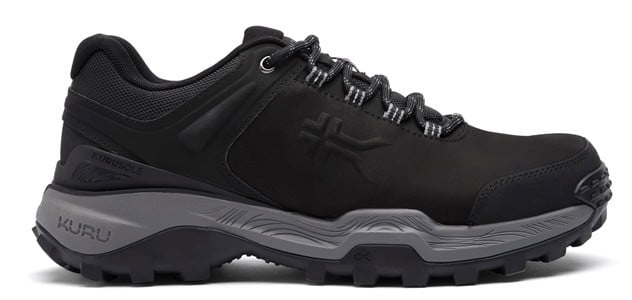
    KURU RIDGE Motion
    Kuru Roam 2

    KURU RIDGE Motion & ROAM 2

    KURU is especially popular among people with foot issues such as Plantar Fasciitis, and boasts design elements that help wearers improve posture and provide next-level cushioning for your feet.

    Their RIDGE Motion is a durable men’s hiking shoe, with the same responsive heel cushioning and fatigue-fighting shock absorption of their ever-popular ATOM Trail shoe.

    But it also adds their advanced tread yet, with multi-directional lugs that offer superior stability and traction on rough, uneven hiking trails. 

    The unisex ROAM 2 is a new and improved (more cushion, better fit) streetwise take on the classic tennis shoe, with a sleek, but eco-friendly leather exterior that can be dressed up or down.

    The combination of KURUSOLE and KURUCLOUD EVA offers exceptional heel-hugging support with every step you take, making them great shoes for travelers who plan to do lots of walking.
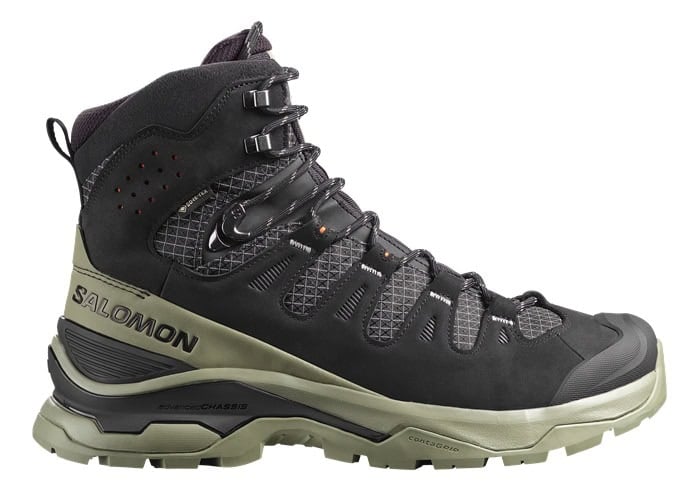
    Salomon Quest 5 GTX

    Salomon Quest Echo GTX Womens

    Salomon was founded in the French Alps back in 1947. So it’s safe to say that this OG outdoor brand knows a thing our two about making durable gear for tough climate conditions. 

    Their Quest Echo Gore Tex is a lightweight (1 lb, 2 oz per shoe), waterproof women’s hiking boot designed to stay comfortable for multi-day backpacking trips.

    It’s built with Salomon’s Advanced Chassis 4D technology for the ultimate in stability, agility, and flexibility, even on the roughest and most slippery terrain.  

    The Quest Echo is also made to withstand even the worst climate conditions, with a mix of leather and synthetic materials and GORE-TEX Protection to keep your feet dry when the weather is anything but. 
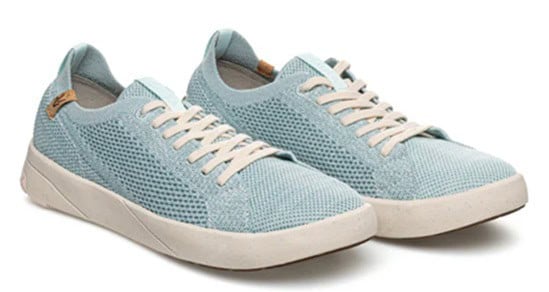
    Saola Cannon Knit 2.0

    Saola Cannon Knit 2.0

    Did you know that 60-70% of the environmental footprint of a pair of shoes comes from the product’s materials, or that the textile industry is the world’s second largest polluter behind oil and gas? 
     
    One of our favorite sustainable shoe brands, the Colorado-based Saola Shoes have made eco-friendly manufacturing a central pillar of their business. 
     
    The brand, which is named after the endangered Asian Unicorn, is also devoted to funding wildlife conservation, giving portions of proceeds to 1% For The Planet and Kenya’s Mwalua Wildlife Trust. 
     
    So it’s no surprise that their Cannon Knit 2.0 shoes are 100% vegan. The upper is made from recycled PET, the cushioned midsole from 35% recycled EVA, and the removable insole from recycled PU and cork, making for an impressively light and cushy footbed. 

    Stoke PWR Eqp FO-MO
    Stroke Versa Mens Shoes

    Stoke PWR Eqp FO-MO & The Versa

    Yet another new-to-us brand, STOKE PWR Eqp was built to address the fact that 75% of men have wide feet, but only 25% are wearing wide shoes. This inequity can lead to squished toes, collapsed arches, and bad posture. 

    So they only offer shoes in WIDE (E/2E) and WIDER (3E/4E), in order to match your foot’s natural anatomy. 

    Their FO-MO is an athletic sneaker designed for everyday wear, while The Versa is a court-inspired sneaker that offers exceptional cushioning and a roomy toe box.

    Both models offer hands-free slip-on designs, 4-way Elastech stretch fabric for an adaptable fit, a roomy “Mansplay Midsole,” and dense Powerstack cushioning for instant recovery. 
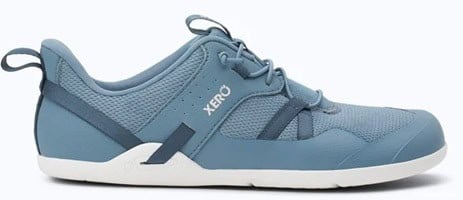
    Xero Shoes Prio Coast Hands-Free Barefoot Shoe
    Xero Shoes Prio Suede

    Xero Shoes Prio Coast Hands-Free Barefoot Shoe & Prio Suede

    Xero Shoes are definitely not for everyone, nor are they appropriate for all kinds of hiking trails.

    But for those who want a minimalist, lightweight shoe that feels like you’re practically barefoot, they’re easily the best brand in the business.

    Available in men’s and women’s styles, their lightweight Prio Coast shoes are designed for hands-free slip-on entry, with bungee laces that can be adjusted easily for a customized, comfortable fit.  

    The men’s Prio Suede is an even more stylish version of Xero’s #1 best-selling shoe. It’s got a breathable upper, gum rubber sole, and huarache sandal-inspired heel, instep, and midfoot straps, and looks as good as it feels. 


    DUFFELS & TOTES

    Nautilus Duffle 45L
    Veto Pro Pac Norwalk +40L Duffle

    Finisterre Nautilus Duffle 45L & Veto Pro Pac Norwalk + 40L Duffle

    I’ve never been a huge fan of duffel bags for travel, instead opting for carryon rollers and backpacks. But for those who do love duffels, these are two super stylish high-end options. 

    UK-based brand Finisterre is best known for sustainable fashion for outdoor enthusiasts. Their Nautilus 45L duffle is equally eco-conscious, made with 100% recycled ripstop fabric and a PFAS-free DWR C0 finish. 

    We love the EVA foam shoulder straps, padded laptop sleeve (with zip entry), internal stretch straps, zipped pockets for storage, and the fact that it can easily convert into a backpack with the included straps. 

    The Norwalk + 40L Duffel from Veto Pro Pac is equally cool and loaded with features, including rear zipper access, RFID-blocking front pockets, and a magnetic trolley band to attach it to suitcases. 

    It’s made from recycled, water-resistant 600D waxed polyester, with a water-resistant thermoformed base and a padded, adjustable shoulder strap with premium Duraflex clips.
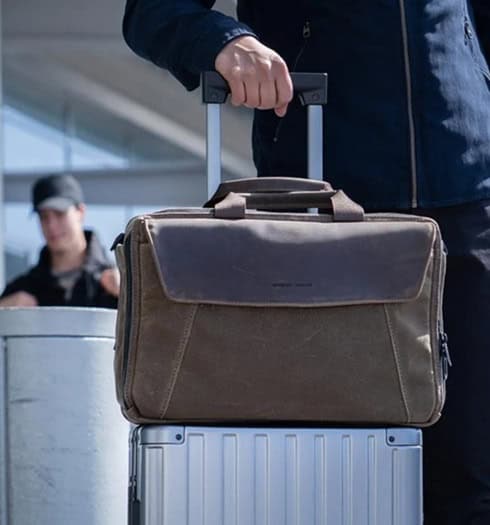
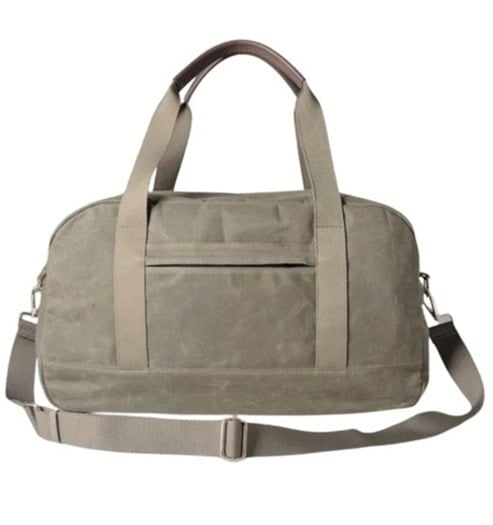
    SF Bags Waterfield Designs Air Porter Carry-On
    R. Riveter Nellie Fatigue Waxed Canvas + Brown

    SF Bags Waterfield Designs Air Porter Carry-OnR. Riveter Nellie | Fatigue Waxed Canvas + Brown Duffel

    Named a Top Pick for 2026 by The New York Times‘ Wirecutter, the newly updated Air Porter Carry-On Bag from SF Bags’ Waterfield line now comes in two sizes, with lighter ECOPAK material and an RFID blocker. 

    Our favorite features include dual main compartments with Monolite mesh pockets, a padded tech compartment with pockets for accessories, loads of other pockets, water-resistant lining, and a removable shoulder strap.

    The Nellie from R. Riveter is a chic 19″ x 11″ x 8″ duffel with a waxed canvas exterior, genuine leather handles, a cotton-lined interior, and an adjustable and detachable cross-body strap. 

    Though relatively small compared to other bags featured on this list, it offers lots of storage, including exterior slip pockets and zipper pocket, 3 interior pockets (1 zipped), and a built-in leather ID card holder. 
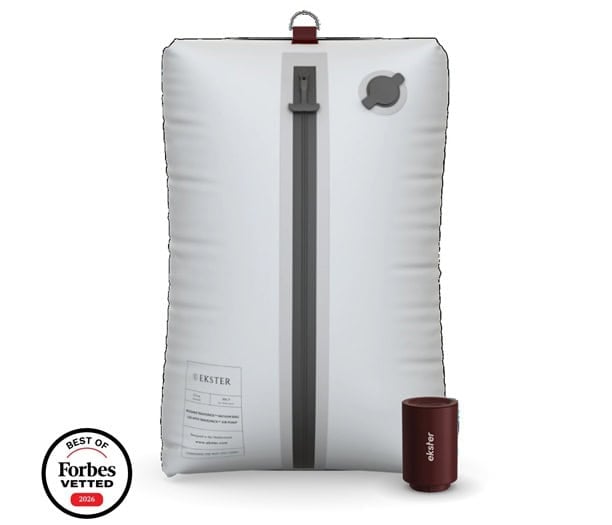
    Ekster TravelPacks + Air Pump

    Ekster TravelPack Vacuum Kit + Air Pump

    Packing cubes and compression have been all the rage in the “carryon-only” travel community in recent years, and Ekster’s TravelPack Vacuum Kit combines both into 1-, 2-, and 4-pack sets. 

    The concept (which was named Best of Forbes 2026) is simple: Simply pack your belongings in the anti-rip nylon bags, close the airtight zipper, then use the enclosed air pump to compress it down tightly. 

    This combination allows you to pack up to 60% more stuff in any travel bag, so you could realistically fit 10+ days of clothing into a single bag. 

    We love that these 12 x 19 x 4″ bags are odor-proof, waterproof, and leak-proof, and that the tiny air pump (2 x 2.5″) can be used 15-20 times on a single charge. 


    TRAVEL CLOTHING
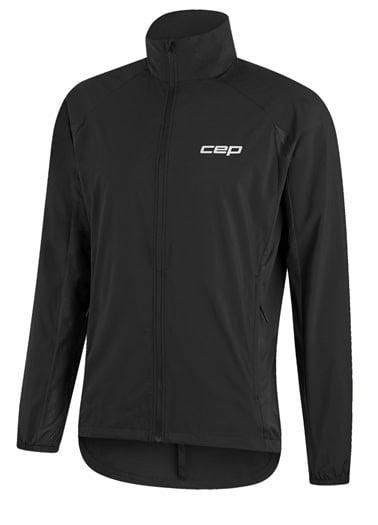
    CEP Running

    CEP Run Windbreaker
    CEP Pro Run Ultralight tech shirt short sleeve
    CEP Core Run shirt

    We are not runners, but you really don’t have to be in order to appreciate the medically-backed technology and engineered athletic equipment CEP produces. 

    Founded in 2007 in Bayreuth, Germany, the company’s compression clothing and shoes are developed by an ace team of scientific researchers, biomedical engineers, athletes, and sportswear designers. 

    We tested their Pro Run Ultralight Tech Shirt and their Core Run Shirt, both of which are ultralight, breathable, stretchy, supremely comfortable, and built to last.

    I also loved their lightweight, wind-resistant Core Run Windbreaker, which layers perfectly with their shirts when temperatures dip below 70º, with mesh panels for ventilation, high collar protection, a relaxed design for flexible fit, and adjustable cuffs at the wrist. 

    Free Country Womens x20 Freecycle Waterproof Rain Jacket
    Free Country Men's Textured SunFree UPF Hoodie

    Free Country Women’s x20 Freecycle Waterproof Rain Jacket & Men’s Textured SunFree UPF Hoodie

    Started in the Rocky Mountains of Colorado 35+ years ago, and now based in New York, Free Country is considered one of the pioneers of fashionable outdoor clothing.

    Their Women’s X20 Freecycle Waterproof Rain Jacket is an excellent example of how the brand balances fashion with function, with an added dose of eco-friendliness thrown in for good measure. 

    Made with 20 recycled plastic bottles, the waterproof jacket boasts features such as UPF 50+ sun protection, wind resistance, breathability, 4-way stretch, adjustable hood, and it packs down into its zipper lower pockets.

    I’m a big fan of their Men’s Textured SunFree UPF Hoodie, which is similarly stylish made with 5 recycled bottles, and includes features like moisture-wicking, anti-odor, heat resistance, 4-way stretch, and more!
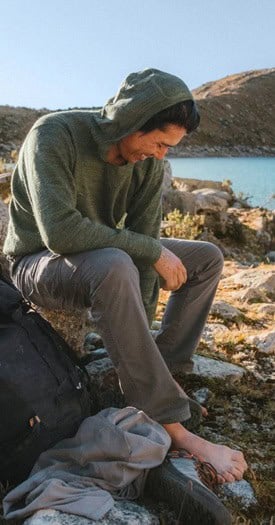

    Paka The Hoodie
    Paka Women's Aire Long Sleeve

    Paka The Hoodie & Women’s Aire Long Sleeve

    Paka was founded in Peru, employing over 150 local women artisans, with a mission to create all-purpose clothing for people who love the great outdoors. 

    We love the fact that they use alpaca fiber and other organic materials that are better for people and the planet. They also created PAKAFILL, which they call “the warmest ethical insulation on the market.”

    I’m a huge fan of “The Hoodie,” their ever-popular (and remarkably soft) alpaca hoodie, which is breathable, naturally stretchy, and made with a lightweight blend of 65% Royal Alpaca Fiber and 35% Recycled Nylon.

    Mary was equally enamored with their women’s Aire Long Sleeve, which is naturally thermoregulating, moisture wicking, odor resistant, and comes in 5 colors.  

    Rab Mens Force Hoody
    RAB Phantom Mountain Jacket

    Rab Force Hoody & Phantom Mountain Jacket

    Another new-to-us brand for 2026, Rab was launched in 1981 in Sheffield, England, where mountaineer Rob Carrington designed and hand-stitched the first sleeping bag to bear his name. 

    Now, 45 years later, the brand is beloved by climbers around the world for their durable, high-performance clothing and equipment, which use premium-quality materials.

    After reviewing one of their sleeping bags in a previous feature, we were equally impressed by their clothing. The men’s Force Hoody offers moisture-wicking, Dryflo Solar UV protection, odor control, and numerous cool sustainable features (including 75%+ recycled materials).

    Their men’s Phantom Mountain Jacket is ultralight (under 8 oz), ultra-packable, and waterproof. It uses a rugged, abrasion-resistant, 2.5-layer Pertex Shield Diamond Fuse fabric, so it can keep you dry and protected from the elements during your toughest outdoor adventures. 
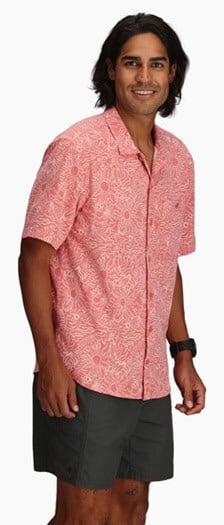
     

    Royal Robbins Men's Salathe Sun Shirt
    Royal Robbins Men's Hemp Adventure Pant

    Royal Robbins Salathe Sun Shirt & Hemp Adventure Pant

    Royal Robbins has long been one of my favorite outdoor clothing brands. It was named after its founder, who pioneered “clean climbing” in the 1960s, and follows sustainable manufacturing and Fair Trade principles. 

    Their new Hemp Adventure Pant is incredibly lightweight and comfortable, made from soft, durable hemp fibers, which are naturally breathable, moisture-wicking, and odor resistant.

    They combine hemp with recycled poly and elastane to provide a 4-way stretch, with articulated knees and a gusseted inseam for full range of motion. I also love the extra deep front pockets!

    It pairs beautifully with their Salathe Sun Shirt, which offers UPF 40+ protection, is extremely light and breathable, and is both quick drying and wrinkle-resistant. 

    WoolX Women's Nicole Ankle Pants
    WoolX Piper Pocket Leggings

    Woolx Nicole Ankle Pants & Piper Pocket Leggings

    Merino sheep are primarily bred in New Zealand and Australia, and the wool fibers they produce are considered the world’s finest. They insulate beautifully, resist odors naturally, and wick moisture away from the body. 

    Based in New York, Woolx was created by a father and daughter whose family has owned an outdoor clothing store for more than 75 years. Their goal? To make the best Merino wool clothing at the best value.

    Mary is a huge fan of the brand, and their Nicole Ankle Pants are her new favorite. She loves the comfy waistband (which has a flat front, ribbed back, and draw cord), tapered-leg fit, and the pockets (two side, one hidden). 

    Their Piper Pocket Leggings are similarly cozy, with the warmth of a Merino wool baselayer, but with pockets, a supportive high-waisted design, and zero transparency to ensure you’re covered when wearing them alone. 


    MISC GEAR
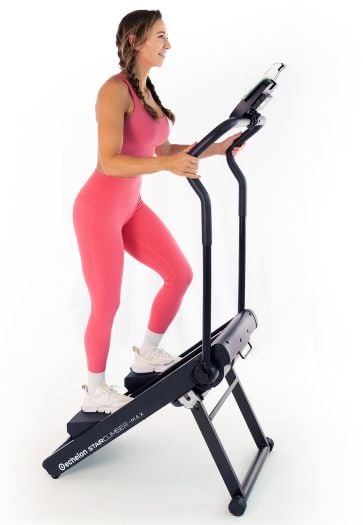
    Echelon Stair Climber Max

    Echelon Stair Climber Max

    Although technically not considered “travel gear” in the purest sense of the word, the Echelon Stair Climber Max is a great portable exercise machine that solved a problem we’ve had in the past. 

    In 2015, while preparing to visit the Mountain Gorillas in Rwanda, we started hiking more often to get our legs in shape. But with no steep hills in our area, we didn’t have the inclines to prep for mountain treks.

    The Echelon Stair Climber provides an intense, low-impact workout with 32 levels of resistance, an RPM output display, and adjustable handlebars for targeting different muscles. It also connects to their Echelon Fit app.

    As people who live in a small townhome, what we love most is the fact that the compact machine (38.38″ × 22″ × 55″) folds up quickly to just 11″ wide, making it easy to stow away when you’re not using it!
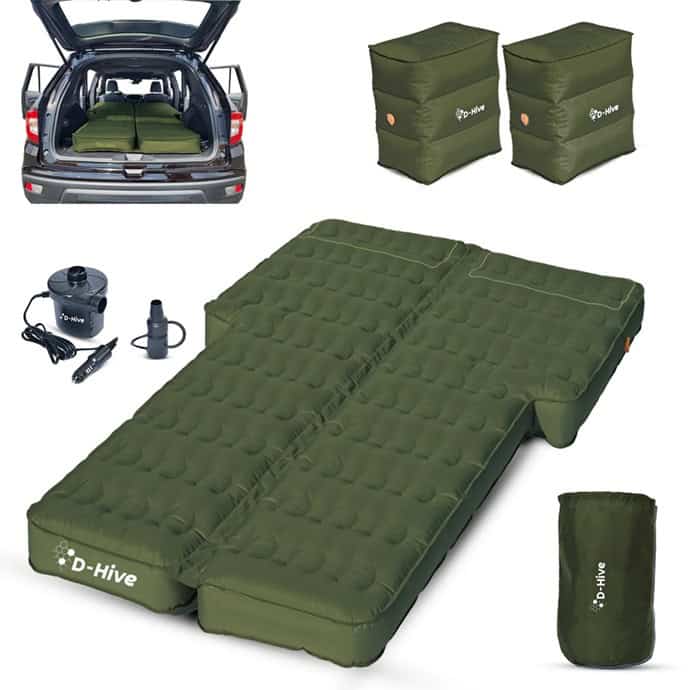
     

    D-Hive SUV Air Mattress

    D-Hive SUV Air Mattress

    “Car camping” used to mean campsites where you’d park your car next to a prime spot, unload your gear without having to carry it, and be surrounded by nature without much effort. 

    But these days there are myriad ways to camp IN your car, removing the need for tents entirely! Case in point: The D-Hive SUV Air Mattress, which is specifically designed for car camping. 

    Made from thick, durable 300-denier Oxford fabric and compatible with 1800+ different vehicles, the air mattress inflates in 2 minutes with the included air pump. 

    We love that it has two chambers (so you can move without disturbing your partner), a 3-layer inflation valve (for 30% less air leakage), and is large enough for campers up to 6’2″ tall. 
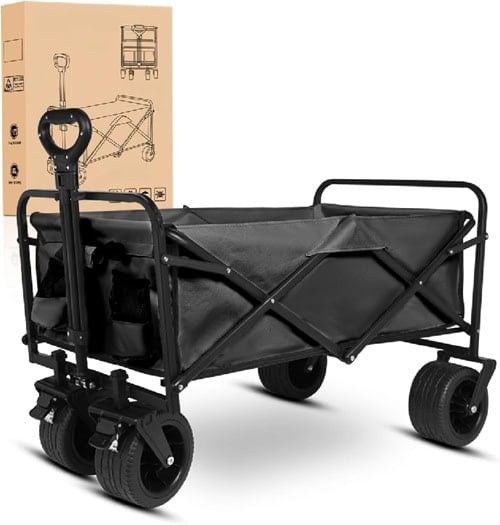
    Yesker Foldable Wagon

    Yesker Foldable Wagon

    As I mentioned before, having a foldable wagon for schlepping stuff back and forth to our houseboat (which is 100+ yards from the parking lot) has been a godsend. 

    This heavy duty portable utility trolley from Yesker can hold up to 300 pounds, and it’s built with a robust iron frame and 600D Oxford fabric to ensure long-lasting performance.

    It measures 35″D x 22″W x 18″H, so it’s large enough to haul camping gear, garden mulch, and more, with durable all-terrain wheels that glide smoothly over grass, sand, or gravel.

    We also like how easy it is set up or fold down into a compact size when you travel. 
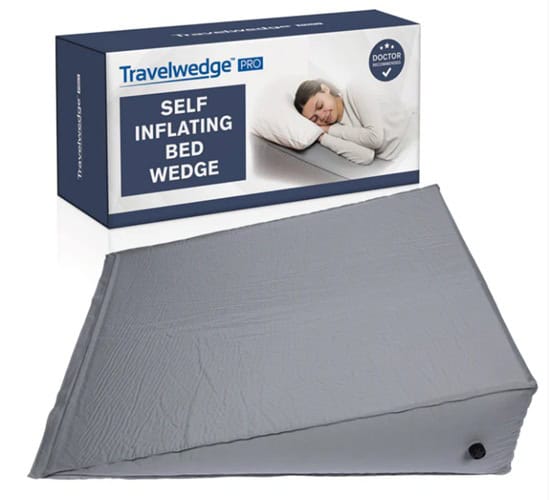
    Travelwedge PRO Self Inflating Bed Wedge Pillow

    Travelwedge PRO Self Inflating Bed Wedge Pillow

    Anyone who’s followed us over the years knows we’re big on packing light. We even went carryon-only for 3-week trips to Patagonia/Antarctica, Scotland/Ireland, and Kenya. 

    But there are some creature comforts we simply prefer not to have to live without when we travel, and good pillows are one of them! 

    Measuring 18 x 7.5″ when compressed, the Travelwedge PRO Self Inflating Bed Wedge Pillow is a perfect travel pillow for people with acid reflux, sleep apnea, snoring issues, or back pain. 

    It’s lightweight (3.9 pounds), made with soft TPU stretch outside and high rebound foam inside, and quickly self-inflates to 30″ x 33″ x 8″, making it easy to elevate your head while sleeping.
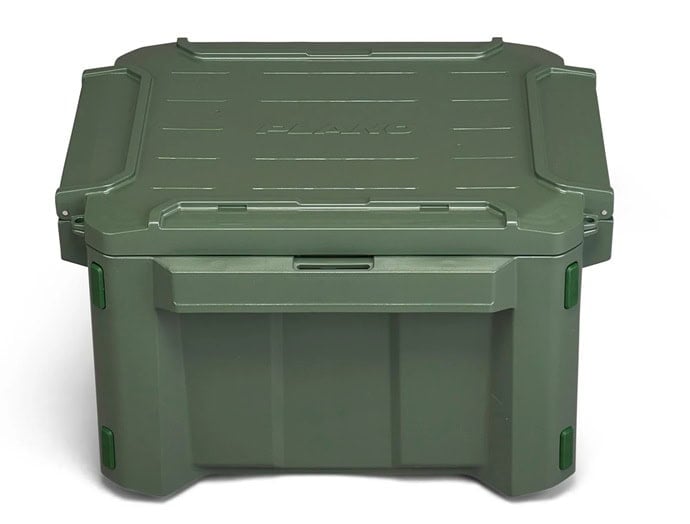
    Plano GoNow Box

    Plano GoNow Box

    Storage and organization can be an issue for outdoor adventurers, particularly those interested in fishing, boating, hunting, etc. 

    Plano’s GoNow Boxes (which come in Small 30L and Large 72L sizes) combine modular versatility with purpose-built kits and accessories for anglers, hunters, and campers.

    Both boxes come with a Storage Tray with 4 Removable Dividers, an Internal Divider, and 4 EZ-Labels. 

    Noteworthy features include DUALHINGE latches that allow you to remove the lid entirely, QUICKLINK attachment points compatible with GoNow Accessories, and secure tie-down slots and locking tabs for easy transport. –by Bret Love & Mary Gabbett


    The post Best New Travel Gear for 2026: 50+ Product Reviews appeared first on Green Global Travel.


    This post was originally published on this site.

  • 10 Things to Know About HIPAA & Access to a Relative’s Health Information

    10 Things to Know About HIPAA & Access to a Relative’s Health Information

    Have you ever had questions about what might be going on with an older loved one’s health? But then you find that your older relative is unable — or unwilling — to let you in on the health details?

    Or maybe you’ve wanted to talk to your parent’s doctor, but worried that doing so might be a HIPAA violation?

    Such issues come up often for the family caregivers of aging adults. Common situations include:

    • An older parent who starts to act in ways that are strange or worrisome, such as becoming paranoid or delusional.
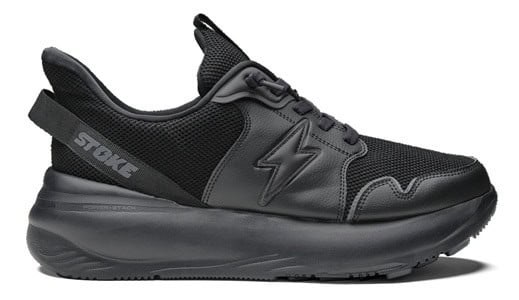
    • An older adult who seems to be physically or mentally declining, but seems reluctant to discuss the situation
    • A hospitalization or emergency room visit
    • A hospitalized older person becoming confused (this would be delirium) and becoming no longer able to explain to family what the doctors have said

    In these situations, family caregivers often find themselves grappling with issues related to the HIPAA (Health Insurance Portability and Accountability Act) Privacy Rule.
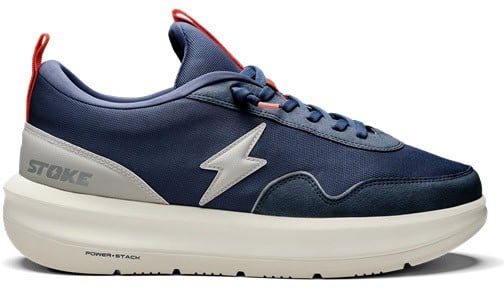
    Why all the grappling?

    Well, although most people — and all clinicians — have heard of HIPAA, its rules and requirements are often misunderstood. So for instance, families may assume that it’s a HIPAA violation to report a relative’s worrisome behavior to the doctor, because their relative hasn’t given them permission to do so.

    Even worse:  doctors and other clinicians sometimes refuse to disclose any information to families, and will incorrectly claim that it’s a HIPAA violation to do so. This can create extra confusion and stress for families, or can even sometimes put an older person at risk for harm.

    If you’ve been concerned about an aging parent’s health, or are otherwise helping someone with their health concerns, then it can be very helpful to understand HIPAA better. HIPAA regulations will also govern your access to medical records and other important health information.

    In fact, the American Bar Association includes “Know your rights of access to health information” among its Ten Legal Tips for Caregivers.

    The detailed ins and outs of HIPAA can indeed be hard to fully understand. But, it’s not too hard to learn some practical basics, especially since the US Department of Health and Human Services (HHS) provides a Summary of the Privacy Rule here, and maintains a truly useful set of online FAQs about HIPAA here.

    In this article, I’ll explain five useful key basics to help you understand HIPAA better, especially when it comes to getting information and medical records as a family caregiver.

    I’ll also address five questions I’ve often heard family caregivers ask about HIPAA.

    At the end, I’ll share some of my favorite online HIPAA resources, as well as some final tips to keep in mind.

    5 Key Basics About HIPAA

    1. What is HIPAA?

    The Health Insurance Portability and Accountability Act (HIPAA) is a federal law passed in 1996. Among other things, HIPAA required the Department of Health and Human Services (HHS) to create a federal “Privacy Rule” for health providers and health plans, governing how these entities must protect the privacy of an individual’s medical information.

    Usually, when people refer to HIPAA, they are actually referring to the HIPAA Privacy Rule created by HHS.

    The HIPAA Privacy Rule basically says that “covered entities” must take certain steps to keep a person’s health information confidential and secure.

    “Covered entities” means health providers, health insurers, and many other professionals whose daily work involves the handling of individuals’ medical information.

    Private citizens and family caregivers are not “covered” by the Privacy Rule. This means that you do not have to maintain your — or your older parent’s — health information confidential in the same way that health providers do.

    Exactly how “covered entities” should comply with the Privacy Rule can get pretty complicated to explain. What is most important for you to know is that this often — but not always — means taking steps to make sure that patients are in agreement, before their health information is shared with other people.

    Overall, HIPAA is intended to balance a person’s right to privacy with the need for health providers to share medical records and otherwise communicate with others, in order to properly care for a patient and act in the patient’s best interest.

    To read about the rule in more technical detail, see here: Summary of the HIPAA Privacy Rule.

    To read a good plain-English summary of your rights (as an individual) under HIPAA, see here: Your Rights Under HIPAA.

    2. What information is protected by HIPAA?

    HIPAA’s Privacy Rule protects all “individually identifiable health information” held or transmitted by a covered entity, no matter what form it is in. So HIPAA applies whether a person’s health information is held or disclosed electronically, orally, or in written form.

    A person’s health information is often referred to as “protected health information” (PHI). This covers information that relates to:

    • a person’s past, present or future physical or mental health or conditions
    • any health care provided to a person (e.g. clinical notes or lab results related to a person’s medical care)
    • past, present, or future payments related to a person’s health care (e.g. billing records)

    In other words, this is information created by, or stored by, healthcare providers and insurers, such as medical records.

    HIPAA also covers demographic data and any information that can be used to identify a person, such as names and addresses.

    If you are a family caregiver, remember that you are not a “covered entity.” Hence you aren’t responsible for protecting health information in the same way that your relative’s doctor is.

    3. What to know about HIPAA’s rules on the disclosing of protected health information without committing a HIPAA violation

    You’ll be able to sort out what is and isn’t a HIPAA violation more easily if you understand a few fundamentals about HIPAA’s rules on these issues.

    According to the HHS Summary of the HIPAA Privacy Rule: “A covered entity may not use or disclose protected health information, except either:

    (1) as the Privacy Rule permits or requires; or
    (2) as the individual who is the subject of the information (or the individual’s personal representative) authorizes in writing.”

    In other words, doctors are allowed to disclose health information if a person authorizes it in writing, or if the Privacy rule otherwise permits or requires such disclosure.

    Now, let’s address the difference between being required and being permitted to disclose, because that is really at the heart of a lot of HIPAA confusion.

    The difference is that when doctors are required to disclose, then they have to do it, whether or not they want to.

    Whereas when they are permitted to disclose, they are allowed to do it, but they don’t have to. (Which means, they might refuse to do it, and they are legally allowed to do so, unless other federal, state, or local laws apply.)

    You now probably will want to know: under what circumstances are health providers required or permitted to disclose health information?

    Required disclosures of health information. Health providers must disclose protected health information in these two situations:

    • When individuals — or their personal representatives — request access to their protected health information. Individuals can also request an accounting of disclosures, which means the covered entity has to tell a person with whom the information was shared.
    • When the Department of Health and Human Services requests information, as part of a compliance audit or enforcement investigation.

    In short: if you request it, your doctors must give you copies of your medical records. This is known as the “Right of Access.” You can learn more about your rights to view or obtain copies of your health information here: Individuals’ Right under HIPAA to Access their Health Information.

    And if you are the durable power of attorney for healthcare for your relative, and if you are currently authorized to act, you have the right to request and obtain your relative’s health information.

    Permitted disclosures of health information. Under certain circumstances, health providers are allowed — but not required — to disclose information, without obtaining the patient’s written permission.

    Now here’s where things start getting trickier, because the list of permitted circumstances is much longer and more complicated than the list of required disclosures.

    If you want to learn about all the permitted disclosures and uses, you can do so by reading the HHS Summary of the Privacy Rule.

    But I think it’s more useful to learn from the FAQs that HHS has published online, especially the ones created to guide doctors and other healthcare professionals. I will share some of the more useful ones in the next section, when I address FAQs based on the questions I’ve had people ask me.

    For now, the main thing you should know is this: in many cases, health providers are allowed, but not required, to disclose health information to others, even if a patient doesn’t give written or verbal permission for this.

    As you will see below, when we go through some FAQs, doctors are allowed to use their clinical judgment and disclose information when a patient lacks capacity to give consent, if the clinician decides that the disclosure is in the best interest of the patient.

    4. What to know about HIPAA’s “minimum necessary” requirement

    The HIPAA Privacy Rule describes a principle of “minimum necessary” use and disclosure:

    “A covered entity must make reasonable efforts to use, disclose, and request only the minimum amount of protected health information needed to accomplish the intended purpose of the use, disclosure, or request.”

    Basically, this means that when health providers disclose health information to someone other than the patient, they can’t just disclose anything and everything about their patient’s health. Instead, they should only share on a “need to know” basis, and focus on what’s relevant and necessary.

    Note that the minimum necessary requirement does not apply to all disclosures. The Privacy Rule summary lists six situations as exempt, including “disclosure to or a request by a health care provider for treatment.”

    In short, if your doctor refers you to another doctor, she can send your whole medical chart along. But, if a doctor is speaking to your family while you are sick in the hospital, the doctor is only allowed to disclose what is necessary and relevant to your current hospitalization and care needs.

    5. What is a “HIPAA release”?

    Many health providers and other covered entities will require a person to sign a written authorization, before they disclose protected health information. This is sometimes called a HIPAA release, a HIPAA waiver, or a release of information authorization.

    Interestingly, the HIPAA Privacy rule itself does not require health providers to do this. Instead, per the Summary:

    “Obtaining ‘consent’ (written permission from individuals to use and disclose their protected health information for treatment, payment, and health care operations) is optional under the Privacy Rule for all covered entities. The content of a consent form, and the process for obtaining consent, are at the discretion of the covered entity electing to seek consent.”

    In other words, although it’s extremely common for health providers to ask patients to sign written authorizations before disclosing health information, such written consent is not actually required by HIPAA.

    Instead, a requirement for written consent usually reflects a clinic’s policies, or perhaps the preference of an individual clinician. Understandably, clinicians want to avoid HIPAA violations or otherwise being accused of failing to protect a patient’s confidentiality.

    5 Caregiver FAQs about HIPAA and avoiding HIPAA violations

    1. Is written permission always required by HIPAA, for a doctor to be able to talk to me about my older parent’s health?

    Nope! As noted above, for permitted disclosures of health information, HIPAA does not require that a patient give written permission.

    Instead, clinicians are allowed to use a patient’s verbal consent.

    HIPAA also says it’s ok for clinicians to give patients an opportunity to object and to proceed if they don’t object, or even to “reasonably infer, based on professional judgment, that the patient does not object.”

    Personally, I have often spoken to a patient’s adult children on the phone, because the patient told me it was okay to do so. However, I usually document in my clinical note that the patient said it was fine to talk to his or her children.

    Last but not least, if a patient is not present or if it’s “impracticable because of emergency circumstances or the patient’s incapacity for the covered entity to ask the patient about discussing her care or payment with a family member or other person,” HIPAA says that clinicians can disclose information if they determine that doing so is in the best interest of the patient.

    In short, HIPAA allows health providers to have a lot of leeway, when it comes to disclosing medical information to family and others. However, those disclosures will usually have to comply with the “minimum necessary” rule.

    Most state laws are similar to HIPAA, but in some states, requirements may be more stringent.

    You can find more details through these FAQs:

    If I do not object, can my health care provider share or discuss my health information with my family, friends, or others involved in my care or payment for my care?

    If I am unconscious or not around, can my health care provider still share or discuss my health information with my family, friends, or others involved in my care or payment for my care?

    Does the HIPAA Privacy Rule permit a doctor to discuss a patient’s health status, treatment, or payment arrangements with the patient’s family and friends?

    Do I have to give my health care provider written permission to share or discuss my health information with my family members, friends, or others involved in my care or payment for my care?

    If the patient is present and has the capacity to make health care decisions, when does HIPAA allow a health care provider to discuss the patient’s health information with the patient’s family, friends, or others involved in the patient’s care or payment for care?

    2. Can doctors talk to me about my older parent’s health during an emergency?

    Yes, HIPAA allows this type of disclosure. So doctors are permitted to update you about your parent’s health during an emergency.

    Furthermore, HIPAA does not require providers to ask family caregivers for proof of identity, before disclosing information.

    That said, just because doctors are permitted to disclose information to you doesn’t mean they have to do it. As this FAQ notes, “a health care provider is not required by HIPAA to share a patient’s information when the patient is not present or is incapacitated, and can choose to wait until the patient has an opportunity to agree to the disclosure.”

    For more information:

    Does the HIPAA Privacy Rule permit a doctor to discuss a patient’s health status, treatment, or payment arrangements with the patient’s family and friends?

    If the patient is not present or is incapacitated, may a health care provider still share the patient’s health information with family, friends, or others involved in the patient’s care or payment for care?

    If my family or friends call my health care provider to ask about my condition, will they have to give my provider proof of who they are?

    3. My older parent doesn’t want his doctor to talk to me. What can I do?

    This question tends to come up when a family has become concerned about an older person’s mental and/or physical decline. Some older adults will resist their family’s desire to communicate with the doctor. So what can be done?

    First of all, as a family member, remember that you are not a “covered entity.” So whether or not a doctor is permitted to disclose information to you, HIPAA does not prevent you from contacting your parent’s doctor and relaying any concerns or information you have.

    You can even ask questions; the doctor probably won’t answer them, but it’s good for your parent’s doctor to know what kind of questions your family has.

    Otherwise, if your parent has specifically told his doctor to not talk to you, then there are a couple of angles you can consider:

    • Consider the possibility of incapacity. HIPAA does permit doctors to disclose information to family when a patient is incapacitated or otherwise unable to consent to the disclosure.
      • If you think your parent might be incapacitated by cognitive decline, delirium, or another medical problem, ask the doctor to consider this.
      • You can start by voicing concerns in a phone call, but it’s best to eventually put them in writing, because your letter will normally end up scanned into your parent’s medical chart. Be sure to include information on concerning behaviors of incidents that you have observed (such as any of these: 8 Behaviors to Take Note of if You Think Someone Might Have Alzheimer’s).
      • You can learn more about incapacity here: Incompetence & Losing Capacity: Answers to 7 FAQs
    • Has anyone been designated as durable power of attorney for healthcare? HIPAA allows a patient’s representative to request medical records and health information.
      • Check any durable power of attorney documentation to see under what circumstances the agent has authority to act. Most documents require the older person to be incapacitated, but some allow the agent to act right away.

    Of course, even if you are legally permitted to seek information about your parent’s health, your parent is likely to be angry about your doing so. The decision to override an older person’s decision or preferences is a serious one, and should only be considered under special circumstances.

    If you have good reason to believe your parent’s insight and judgment are impaired, then it may be ethically reasonable to override their preference for privacy and take actions that will help them achieve their health and safety goals. Just be sure to think through the benefits and risks of your available options carefully, before you proceed.

    Of course, what is better is that older adults plan ahead and tell their children what they should do if their older parent ever seems to be ill or mentally impaired, and refuses assistance. But as most older adults don’t get around to doing this, family caregivers do sometimes have to consider some difficult trade-offs when it comes to privacy versus health, safety, or other goals.

    Relevant HIPAA FAQs and other information:

    If the patient is not present or is incapacitated, may a health care provider still share the patient’s health information with family, friends, or others involved in the patient’s care or payment for care?

    Under HIPAA, when can a family member of an individual access the individual’s PHI from a health care provider or health plan?

    Incompetence & Losing Capacity: Answers to 7 FAQs

    4. Does a power of attorney for healthcare give me the right to access my parent’s health information?

    HIPAA gives a patient’s  authorized “personal representative” the right to access information and medical records. A personal representative is defined as a person authorized, under State or other applicable law, to act on behalf of the individual in making health care related decisions.

    So yes, if you are the durable power of attorney for healthcare, then you will have a right to access your parent’s health information, provided you are currently authorized to act.

    A power of attorney document should specify under what conditions the agent can act. Some are “springing,” which means the agent can only act if the “principal” (the person signing the document) is incapacitated.

    But other durable power of attorney documents may allow the agent to have authority to act right away. In this case, you can act unless there is a conflict with what the principal says (assuming the principal has not been deemed incapacitated).

    For more information:

    Guidance: Personal Representatives

    Individuals’ Right under HIPAA to Access their Health Information

    Addressing Medical, Legal, & Financial Advance Care Planning

    5. My parents want their doctors to share health information with me. How can we make sure the doctors do this?

    The best approach is for your parents to bring this up with their doctors and ask what should be documented, to ensure this.

    Even though HIPAA itself does not require patients to provide written authorization in order to disclose information to family, clinicians usually feel more comfortable disclosing information if the patient has put something in writing. Many clinics have forms available for this purpose.

    Another thing to consider is having your parents designate you as durable power of attorney for health. Consider having your parent indicate that your authority is effective immediately, rather than upon incapacity. (This is an option on health POA forms in California.) This will confirm your status as their “personal representive,” when it comes to requesting access to their medical information.

    For more information:

    How can I help make sure my health care providers share my health information with my family, friends, or others involved in my care or payment for my care when I want them to?

    More Useful HIPAA Resources

    I’ve tried to cover the practical basics for caregivers in this article, but of course, there’s a lot more to HIPAA and medical privacy. 

    Here are some of my favorite resources.

    HIPAA Resource List

    Your Rights Under HIPAA

    A Patient’s Guide to the HIPAA Privacy Rule: When Health Care Providers May Communicate About You with Your Family, Friends, or Others Involved In Your Care

    HIPAA FAQs for Individuals

    HIPAA FAQs for Professionals: Disclosures to Family and Friends

    California Civil Code (regarding disclosures to family): CHAPTER 2. Disclosure of Medical Information by Providers

    Individuals’ Right under HIPAA to Access their Health Information (Includes FAQs)

    Next Step in Care Guide: HIPAA: Questions and Answers for Family Caregivers

    Final Tips

    Here are a few final tips for you to keep in mind, if you ever want to talk to a doctor about a relative’s healthcare.

    • Plan ahead if possible.
      • Older people should consider how their family might be able to communicate with doctors in the event of an emergency, or even in the event of developing memory or thinking problems.
      • Find out how your family’s usual doctors and health providers will be most comfortable disclosing health information. Complete release of information forms ahead of time if possible.
      • Every older person should complete a durable power of attorney form for healthcare. Consider giving the agent authority to act immediately; this will enable the agent to request medical records even if the older person has not been proven to be incapacitated.
    • Consider researching your state’s laws governing disclosure of health information to family and friends.
      • Many states have laws similar to HIPAA, but some may impose additional restrictions.
    • Be prepared to politely help inform clinicians of what HIPAA permits. Some clinicians may not realize that HIPAA does allow them to talk to you about your relative’s health, depending on the circumstances.

    This article was last reviewed and updated in May 2026.

    This post was originally published on this site.