Category: Uncategorized

  • Pizza Burgers

    Pizza Burgers

    My Grandma Knew.

    Lindsay Ostrom headshot.

    A crisped English muffin brushed with garlic butter, topped with a savory meat sauce and melty cheese? Oh MAN these are good.

    I’m currently very obsessed with these, which is kind of making me chuckle, because it feels like a peak 90s Midwestern mom moment. HERE FOR IT!

    “Pizza burgers” are a staple of my childhood. My grandma made these all the time, and whenever she would come visit our family, she’d re-up our freezer stash.

    This recipe is like a collab between my grandma and me: she always did them on English muffins, and I prefer ground Italian sausage (or turkey, or chicken), and brushing all of it with garlic butter.

    They’re just my favorite for the end-of-school-year madness right now:

    • They’re MINDLESSLY EASY.
    • My kids love them.
    • Fun toppings can be mixed in (my fave = pepperoncini).
    • And, importantly: they can be pulled out of the freezer and reheated one at a time – ideal for the times we are trying to get out the door to soccer or find something to eat quickly between work meetings and just questioning every life decision that led us to this moment.
    Pizza burger on a plate with potatoes, cucumber, and salad.

    While in the process of writing this post, I literally just ate two of them for lunch. Oh man, so good.

    Pulled out of the freezer. Air-fried for 8 minutes. Drizzled them with good olive oil (DELICIOUS) and topped with some kosher salt and served alongside a pile of supremely crunchy cucumbers. It was a moment!

    Hope you love these! From my Midwestern grandma, to me, to all of us. 🙂

    Lindsay signature.

    How To Make Pizza Burgers

    1

    Make Your Filling

    You have options. My grandma always did ground beef, but I prefer Italian sausage or well-seasoned ground turkey!

    Adding marinara sauce to cooked sausage in a pan.

    2

    Brush with Garlic Butter

    This is obviously a very good flavor move.

    Brushing english muffins with garlic butter.

    3

    Top the English Muffins

    A spoonful of sauce, pepperoncini slices if you’re me, and a little sprinkling of cheese.

    Pizza burgers with cheese on top before baking.

    4

    Air Fry

    You can air fry these guys from fresh OR frozen! Deliciously crisped and golden brown.

    Pizza burgers in an air fryer.

    5

    You’re Done! Yum!

    Suggestion: sprinkle with more Italian seasoning, or a dollop of pesto, maybe a drizzle of good olive oil. I mean. I MEAN.

    Finished pizza burgers.

    How To Make Pizza Burgers (Video)

    Print

    Pizza burger with melted cheese.

    Pizza Burgers


    5 Stars 4 Stars 3 Stars 2 Stars 1 Star

    5 from 11 reviews


    • Author:
      Lindsay


    • Total Time:
      20 minutes


    • Yield:
      4 servings 1x

    Description

    These pizza burgers are a family favorite! Mindlessly easy, loved by my kids, and just fun to make. Great for meal prep, too!


    Ingredients


    Units

    Meat Filling

    • 1 tablespoon olive oil or avocado oil
    • 1 lb. ground turkey, chicken, or Italian sausage
    • 1 teaspoon kosher salt (reduce if using Italian sausage)
    • 1/2 teaspoon onion powder
    • 1/2 teaspoon garlic powder
    • 1/2 teaspoon Italian seasoning
    • 1 1/2 cups marinara sauce (I use Rao’s)
    • 1/2 cup shredded mozzarella cheese
    • 1/2 cup chopped pepperoncini (optional)

    English Muffins and Toppings

    • 68 English muffin halves
    • 1/2 cup salted butter, melted
    • 1 clove garlic, grated (or a few shakes of garlic powder)
    • 1 1/2 cups shredded Mozzarella cheese
    • 1/2 cup finely grated Parmesan

    Instructions

    1. Prepare the filling: Heat oil in a large skillet. Brown the meat. Add garlic powder, onion powder, Italian seasoning, and salt. Add the tomato sauce; stir to combine. Remove from heat and stir in the cheese.
    2. Prepare the English Muffins: Mix the melted butter and garlic. Place English muffins face-up on a sheet pan. Brush with the garlic butter mixture.
    3. Arrange the Pizza Burgers: Put a few spoonfuls of the meat mixture on top of the English muffins. Cover each one with shredded Mozzarella, then a pinch of grated Parmesan.
    4. For cooking immediately: Place on a baking sheet and bake at 350 for 5-7 minutes, and then broil as needed to get the cheese melted and browned. You can also air fry at 350 for 4-5 minutes, until golden brown and slightly crisped.
    5. For freezing: Place individual pizza burgers on a plate or small baking sheet lined with parchment and tuck it into the freezer. When they are solid, you can put them into a bag or container together. To reheat, I prefer to air fry at 350 for 6-8 minutes to get them warmed and crispy.

    Notes

    If you’re using Italian sausage, it’s already going to have a lot of a great flavor so you don’t need to season the meat as much as what is directed here. But if you’re using ground turkey or chicken, I would use the amounts of seasoning listed in the recipe (and/or taste and adjust so the meat takes on lots of flavor). 

    • Prep Time: 5 minutes
    • Cook Time: 15 minutes
    • Category: Dinner
    • Method: Air Fryer
    • Cuisine: Italian American

    Keywords: pizza burgers, easy dinner, air fryer dinner

    More Family-Favorite Dinners

    The post Pizza Burgers appeared first on Pinch of Yum.

    This post was originally published on this site.

  • 10 Things to Know About Delirium

    10 Things to Know About Delirium

    Pop quiz: What aging health problem is extremely common, has serious implications for an older person’s health and wellbeing, and can often – but not always – be prevented?

    It’s delirium. In my opinion, this is one of the most important aging health problems for older adults to be aware of. It’s also vital for family caregivers to know about this condition, since families can be integral to preventing and detecting delirium.

    In this article, I’ll explain just what delirium is, and how it compares to dementia. Then I’ll share 10 things you should know, and what you can do.

    What is Delirium

    Delirium is a state of worse-than-usual mental confusion, brought on by some type of unusual stress on the body or mind. It’s sometimes referred to as an “acute confusional state,” because it develops fairly quickly (e.g., over hours to days), whereas mental confusion due to Alzheimer’s or another dementia usually develops over a long time.

    The key symptom of delirium is that the person develops difficulty focusing or paying attention. Delirium also often causes a variety of other cognitive symptoms, such as memory problems, language problems, disorientation, or even vivid hallucinations. In most cases, the symptoms “fluctuate,” with the person appearing better at certain times and worse at other times, especially later in the day.

    Delirium is usually triggered by a medical illness, or by the stress of hospitalization, especially if the hospitalization includes surgery and anesthesia. However, in people who have especially vulnerable brains (such as those with Alzheimer’s or another dementia), delirium can be provoked by medication side-effects or less severe illnesses.

    It’s much more common than many people realize: about 30% of older adults experience delirium at some point during a hospitalization.

    That confusion after surgery that older adults often experience? That’s delirium.

    The way your elderly mother with dementia gets twice as confused when she has a urinary tract infection? That’s delirium too.

    Or the common phenomenon of “ICU psychosis”? That too is delirium.

    What Causes Delirium?

    In older adults, delirium often has multiple causes and contributors. These can include:

    • Infection (including UTI, pneumonia, the flu, COVID)
    • Other serious medical illness (e.g. heart attack, kidney failure, stroke, and more)
    • Metabolic imbalances (e.g. abnormal blood levels of sodium, calcium, or other electrolytes)
    • Dehydration
    • Medication side-effects (especially those that affect brain function)
    • Sleep deprivation
    • Uncontrolled pain
    • Sensory impairment (e.g. poor vision and hearing, which can worsen if the person is lacking their usual glasses or hearing aids)
    • Alcohol withdrawal

    Delirium vs. Dementia

    People often confuse delirium and dementia (such as Alzheimer’s disease), because both conditions cause confusion and appear superficially similar. Furthermore, people with dementia are actually quite prone to develop delirium. That’s because delirium is basically a reflection of the brain going haywire when it gets overloaded by the stress of illness or toxins, and brains with dementia get overloaded more easily.

    In fact, the more vulnerable a person’s brain is, the less it takes to tip them into delirium. So a younger person generally has to be very very sick to become delirious. But a frail older person with Alzheimer’s might become delirious just from being stressed and sleep-deprived while in the hospital.

    Why Delirium is Such an Important Problem

    There are three major reasons why delirium is an important problem for us all to prevent, detect, and manage.

    First, delirium is a sign of illness or stress on the body and mind. So if a person becomes delirious, it’s important to identify the underlying problems – such as an infection or untreated pain – and correct them, so that the person can heal and improve.

    The second reason delirium is important is that a confused person is at higher risk for falls and injuries during the period of delirium.

    The third reason is that delirium often causes serious consequences related to health and well-being.

    In the short term, delirium increases the length of hospital stays, and has been linked to a higher chance of dying during hospitalization. In the longer term, delirium has been linked to worse health outcomes, such as declines in independence, and even acceleration of cognitive decline.

    Now let’s cover 10 more important facts you should know about delirium, especially if you’re concerned about an aging parent or other older relative.

    10 Things to Know About Delirium, and What You Can Do

    1.Delirium is extremely common in aging adults.

    Almost a third of adults aged 65 and older experience delirium at some point during a hospitalization, with delirium being even more common in the intensive care unit, where it’s been found to affect 70% of patients. Delirium is also common in rehabilitation units, with one study finding that 16% of patients were experiencing delirium.

    Delirium is less common in the outpatient setting (e.g. home, assisted-living, or primary care office). But it still can occur when an older adults gets sick or is affected by medications, especially if the person has a dementia such as Alzheimer’s.

    What to do: Learn about delirium, so that you can help your older loved ones reduce the risk, get help quickly if needed, and better understand what to expect if someone does develop delirium. You should be especially be prepared to spot delirium if your parent or loved one is hospitalized, or has a dementia diagnosis. Don’t assume this is a rare problem that probably won’t affect your family. For more on hospital delirium, see Hospital Delirium: What to know & do.

    2. Delirium can make a person quieter.

    Although people often think of delirium meaning as a state of agitation and or restlessness, many older delirious people get quieter instead. This is called hypoactive delirium. It’s still linked with difficulty focusing attention, fluctuating symptoms, and worse than usual thinking. It’s also linked with poor outcomes. But it’s of course harder for people to notice, since there’s little “raving” or restlessness to catch people’s attention.

    What to do: Be alert to those signs of difficulty focusing and worse-than-usual confusion, even if your older person seems quiet and isn’t agitated. Tell the hospital staff if you think your relative may be having hypoactive delirium. In the hospital, it’s normal for older patients to be tired. It’s not normal for them to have a lot more difficulty than usual making sense of what you say to them.

    3. Delirium is often missed by hospital staff.

    Despite the fact that delirium is extremely common, it is often missed in hospitalized older adults, with some reports estimating it’s being missed 70% of the time. That’s because busy hospital staff will have trouble realizing that an older person’s confusion is new or worse-than-usual. This is especially true for people who either look quite old – in which case hospital staff may assume the person has Alzheimer’s – or have a diagnosis of dementia in their chart.

    What to do: You must be prepared to speak up if you notice that your family member isn’t in his or her usual state of mind. Hypoactive delirium is especially easy for hospital staff to miss. Hospitals are trying to improve delirium prevention and detection, but we all benefit when families help out. Remember, no hospital person knows your older person the way that you do.

    4. Delirium can be the only outward sign of a potentially life-threatening problem.

    Although delirium can be brought on or worsened by “little things” such as sleep deprivation or untreated constipation, it can also be a sign of a very serious medical problem. For instance, older adults have been known to become delirious in response to urinary tract infections, pneumonia, and heart attacks.

    In general, it tends to be older persons with dementia who are most likely to show delirium as the only outward symptom of a very serious medical illness. But whether or not your older relative has dementia, if you notice delirium, you’ll want to get a medical evaluation as soon as possible.

    What to do: Again, if you notice new or worse-than-usual mental functioning, you must bring it up and get your older loved one medically evaluated without delay. For older adults who are at home or in assisted -living, you should call the primary care doctor’s office, so that a nurse or doctor can help you determine whether you need an urgent care visit versus an emergency room evaluation.

    5. Delirium often has multiple underlying causes.

    In older adults with delirium, we often end up identifying several problems that collectively might be overwhelming an older person’s mental resilience. Along with infections and other serious medical illnesses, common contributors/causes for delirium include medication side effects (especially medications that are sedating or affect brain function), anesthesia, blood electrolyte imbalances, sleep deprivation, lack of hearing aids and glasses, and uncontrolled pain or constipation. Substance abuse or withdrawal can also provoke delirium.

    What to do: To prevent delirium, learn about common contributors and try to avoid them or manage them proactively. For instance, if you have a choice regarding where to hospitalize an older person, some hospitals have “acute care for elders” units that try to minimize sleep deprivation and other hospital-related stressors. If your older relative does develop delirium, realize that there is often not a single “smoking gun” when it comes to delirium. A good delirium evaluation will attempt to identify and correct as many factors as possible.

    6. Delirium is diagnosed by clinical evaluation.

    To diagnose delirium, a doctor first has to notice – or be alerted to – the fact that a person may not be in his or her usual state of mind. Experts recommend that doctors then use the Confusion Assessment Method (CAM), which describes four features that doctors must assess. Delirium can be diagnosed if a patient’s symptoms include “acute onset and fluctuating course,” “difficulty paying attention,” and then either “disorganized thinking” or “altered level of consciousness.”

    Delirium cannot be diagnosed by lab tests or scans. However, if an older adult is diagnosed with delirium, doctors generally should order tests and review medications, in order to identify factors that have caused or worsened the delirium.

    What to do: Again, the most important thing for you to do is to get help for your loved one if you notice worse-than-usual confusion or difficulty focusing. Although families have historically not had a major role in delirium diagnosis, delirium experts have developed a family version of the CAM (FAM-CAM), which is designed for non-clinicians and has been shown to help detect delirium.

    7. Delirium is treated by identifying and reversing triggers, and providing supportive care.

    Delirium treatment requires a care team to take a three-pronged approach.

    1. Health providers must identify and reverse the illness or problems provoking the delirium.
    2. They have to manage any agitation or restless behavior, which can be tricky since a fair number of sedating medications can worsen delirium.
      1. The safest approach is a reassuring presence (family is best, but hospitals sometimes also provide a “sitter”) to be with the person, plus improve the environment if possible (e.g. a room with a window and natural light).
      2. The once-popular practice of physically restraining agitated older adults has been shown to sometimes worsen delirium, and should be avoided if possible.
    3. The care team needs to provide general supportive care to help the brain and body recover.

    What to do: The reassuring presence of family is often key to providing a supportive environment that promotes delirium recovery. You can also help by making sure your loved one has glasses and hearing aids, and by alerting the doctors if you notice pain or constipation. Ask the clinical team how you can assist, if restlessness or agitation are an issue. Bear in mind that physical restraints should be avoided, as there are generally safer ways to manage agitation in delirium.

    8. It can take older adults a long time to fully recover from delirium.

    Most people are noticeably better within a few days, once the delirium triggers have been addressed. But it can take weeks, or even months, for some aging adults to fully recover.

    For instance, a study of older heart surgery patients found that delirium occurred in 46% of the patients. After 6 months, 40% of those who had developed delirium still hadn’t recovered to their pre-hospital cognitive abilities.

    I even once had an older patient slowly recover from delirium over a whole year.

    What to do: If your parent or someone you love is diagnosed with delirium, don’t be surprised if it takes quite a while for him or her to fully recover. It’s good to be prepared to offer extra help during this period of time. You can facilitate recovery by creating a restful recuperation environment that minimizes mental stress and promotes physical well-being.

    9. Delirium has been associated with accelerated cognitive decline and with developing dementia.

    This is unfortunate, but true, especially in people who already have Alzheimer’s or another type of dementia. A 2009 study found that in such persons, delirium during hospitalization is linked to a much faster cognitive decline in the following year. A 2012 study reached similar conclusions, estimating that cognition declined about twice as quickly after delirium in the hospital.

    In older adults who don’t have dementia, studies have found that delirium increases the risk of later developing dementia.

    What to do: Experts aren’t sure what can be done to counter this unfortunate consequence of delirium, other than to try to optimize brain well-being in general. (For this, I suggest avoiding risky medications, getting enough exercise and sleep, being socially and intellectually active, and avoiding future delirium if possible; learn more here.)

    The main thing to know is that delirium has serious consequences, so it’s often worth it for a family to be careful about surgery in an older person, and it’s good to learn about delirium prevention (see below).

    10. Delirium is preventable, although not all cases can be prevented.

    Experts estimate that delirium is preventable in about 40% of cases. Preventive strategies are meant to reduce stress and strain on an older person, and also try to minimize delirium triggers, such as uncontrolled pain or risky medications.

    In the hospital setting, programs such as the Hospital Elder Life Program (HELP) for Prevention of Delirium have been shown to work. For ideas on how families can help, see this family tip sheet from the Hospital Elder Life Program. For instance, families can help reorient a relative in the hospital, ensure that glasses and hearing aids are available, and provide a reassuring presence to counter the stress of the hospital setting.

    Less is known about preventing delirium in the home setting. However, since taking anticholinergic medications (such as sedating antihistamines) has been linked with hospitalizations for confusion, you can probably prevent delirium by learning to spot risky medications your parent might be taking.

    What to do: To prevent hospital delirium, carefully weigh the risks and benefits before proceeding with elective surgery. If your older loved one must be hospitalized, choose a facility using the HELP program or with an Acute Care for Elders unit if possible. Be sure to read HELP’s tips for families on preventing hospital delirium.

    Remember, delirium is common and can be the only outward sign of a serious medical problem.

    By educating yourself and helping your older loved ones be proactive about prevention, you can reduce the chance of harm from this condition.

    And if you do notice symptoms of delirium, make sure to tell the doctors! This will help your parent get the evaluation and treatment that he or she needs.

    Useful Online Resources Related to Delirium

    Here are links to some of the resources I reference in this article:


    This post was originally published on this site.

  • Two Simple 401(k) Lessons for New College Grads

    Two Simple 401(k) Lessons for New College Grads

    One of the most fortunate events of my life was my first job after college at the Center for Retirement Research at Boston College (CRR). Not because of the salary — I think I earned less than $40K. What was fortuitous were the early lessons I learned about building toward a secure retirement.

    Those lessons boil down to two simple but critically important points I urge you to share with any new graduate:

    1. Contribute to a retirement plan    
    2. Invest aggressively

    Simple, yes — but in a world of financial complexity, these two things do most of the heavy lifting toward long-term retirement planning.

    My first project at the CRR was building a game where a fictional character named Sally makes financial decisions at different ages — how to invest, how long to work, and when to take Social Security. One key decision at each stage was how much to allocate between stocks and bonds. We modeled projected outcomes using decades of historical data.

    Playing this game with volunteers revealed two consistent findings. First, Sally fared better the more she allocated to stocks early in the game. Over long periods, stocks have outperformed bonds, albeit with tons of variability. The game only allowed decisions every 10 years, which meant Sally couldn’t panic during downturns, and staying invested paid off.

    Second, consistent contributions mattered enormously. As we wrote in our findings 20 years ago, because Sally hadn’t accumulated much wealth yet, her annual contributions overshadowed investment returns in driving 401(k) growth early in her career.

    Those lessons have stuck with me. I contribute regularly to my 401(k) and keep an all-stock portfolio, even at age 43.

    Here’s my message to new grads: I know finances are hard early in your career. You may not be earning much, you likely have student loans, you want to save for a home, and you still want to go out and have fun. These are all competing claims on a small paycheck.

    But please contribute to whatever retirement plan your employer offers. If your employer matches your contribution, like most companies do, try to contribute the highest amount that’s matched. The employer match is free money you can’t afford to leave on the table.

    And invest aggressively. Worried about geopolitical turmoil, oil prices, or whatever the current fear du jour is? Let it go. Even though it might be terrible for workers and the economy more broadly, one of the best things that could happen to a 20-something investor is a market downturn. Even after the seemingly catastrophic 50-percent drop that occurred during the financial crisis in 2008, the stock market recovered within a handful of years.

    The long-term average return on the U.S. stock market is about 10 percent (nominal) per year. Some years will be plus 30 percent and some will be minus 30. But that long-term average includes the Great Depression, the onset of World War II, the stagflation of the 70s, Black Monday 1987, the dot-com bubble, and the 2008 financial crisis.

    That’s why I suggest you put as much as you comfortably can into your 401(k) and invest heavily in U.S. and international stock markets. The precise mix – large vs. small cap, value vs. growth, U.S. vs. international – matters less than simply being invested. If you’d rather simplify the decision further, a target-date fund works well. For example, a target 2070 fund currently holds less than 10 percent in bonds with the rest in global stocks. Shield your eyes, plug your nose, cover your ears, and stay the course.

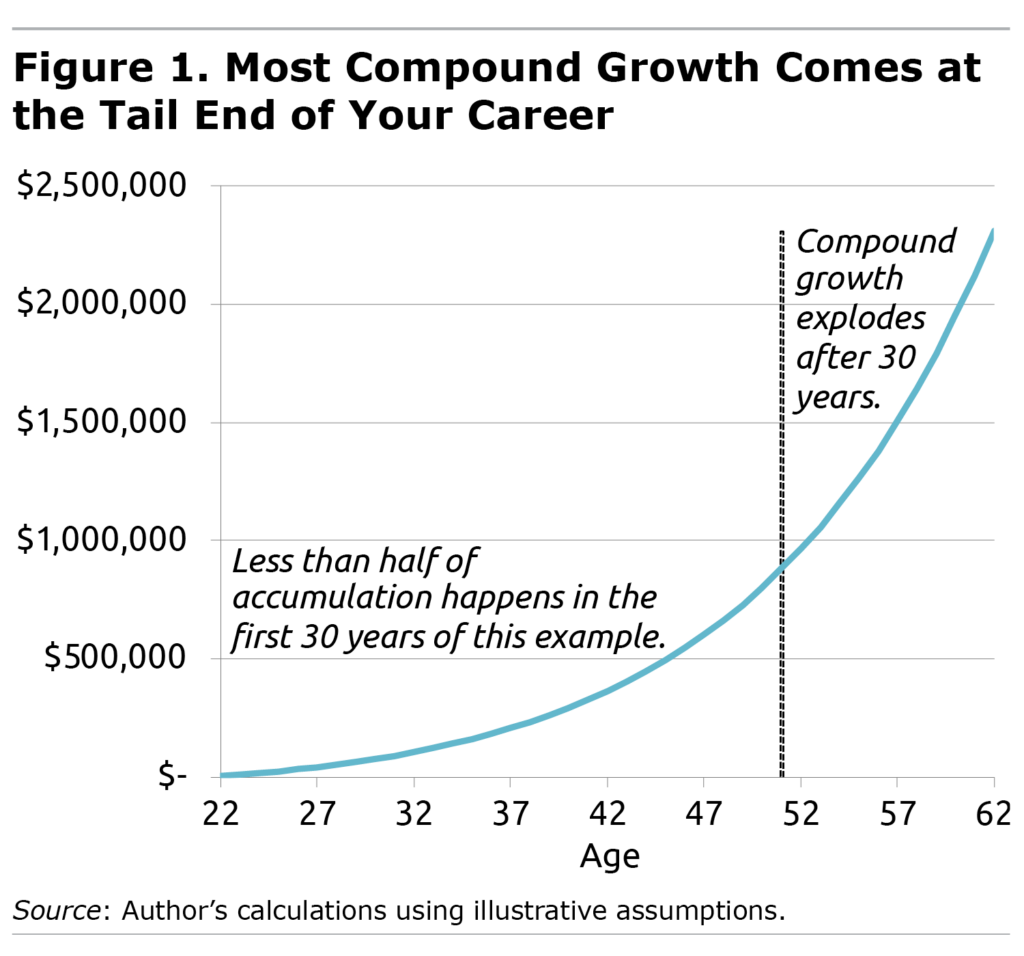
    Growth will feel painfully slow at first (we named our game Get Rich Slow for this reason). But compounding accelerates dramatically as balances build, and it’s hard to catch up if you skip the early years.

    Say you’re 22 and contribute $5K per year, increasing your contribution by 5 percent annually, with a 7-percent nominal rate of growth (simple assumptions for the sake of illustration). At 31, your savings are still under $100K. At 45, they’re under $500K. Then compounding takes over: you have $1 million by 53 and $2 million by 61 (see Figure 1). None of that is possible without those early contributions.

    The simple math is this. When you have $5K in your retirement account and it earns 7 percent, the growth is $350. Not exactly life changing. But when you have $2 million in your account and you earn 7 percent, the growth is $140,000.

    The lesson from the CRR has never left me. If you are early in your career, or even if you are mid-career with 20-plus years until retirement, history says be aggressive and contribute early and often. It feels slow, but I’ve seen it work time and again, both in our research and in real life.

    Luke Delorme, CFP® is Director of Financial Planning at Tableaux Wealth in Great Barrington, MA (www.tableauxwealth.com), reachable at luke@tableauxwealth.com. To stay current on the Squared Away blog, join our free email list.

    This blog post is for informational and educational purposes only and should not be considered financial advice. Consult a qualified professional for advice specific to your situation.

    This post was originally published on this site.

  • Michael Bay slated to direct film on rescue of F-15 crew in Iran

    Michael Bay slated to direct film on rescue of F-15 crew in Iran

    This post was originally published on this site.


    Less than two months after U.S. forces rescued two crew members behind enemy lines after their aircraft was shot down over Iran, filmmaker Michael Bay has confirmed he will be helming a movie based on the mission.

    Backed by Universal Pictures, the “Transformers” director is slated to shepherd the speed-of-light-turnaround project based on the April 3 shoot down of a U.S. Air Force F-15E Strike Eagle and subsequent rescue of its crew during U.S.-led operations against the Islamic Republic, Deadline reported.

    The untitled movie is expected to be based on a book by author Mitchell Zuckoff, which will be released in 2027, according to Deadline. Bay previously worked with Zuckoff on the film adaptation of 13 Hours, which chronicled the 2012 attack on a U.S. compound in Benghazi, Libya.

    On April 3, the F-15, call sign Dude 44, was downed by Iranian air defenses at approximately 4:40 a.m. local time, becoming the first manned aircraft to be lost to hostile anti-aircraft fire since Operation Epic Fury began on Feb. 28.

    Both crew members ejected and landed miles apart. Though the pilot was located within hours and rescued — after an intense fight — the aircraft’s weapons systems officer remained on the move, evading Iranian forces in the Zagros Mountains, treating his own wounds and taking cover in a mountain crevice, according to U.S. President Donald Trump, who called the rescue mission “one of the largest, most complex, most harrowing combat search-and-rescue missions ever attempted by the military.”

    U.S. special forces eventually rescued the second downed airman following a complex operation, Trump announced on April 5.

    The identities of the crew members have not yet been released.

    In a statement provided to Deadline, Bay praised his “amazing partnership over [a] 30-year career working with the Department of War and amazing U.S. military members.”

    Bay added that the upcoming film adaptation will celebrate “the true heroism and unwavering dedication of our service members.”

  • 4 Things to Try When Your Aging Parent Seems Irrational

    4 Things to Try When Your Aging Parent Seems Irrational

    Dear Dr. K,

    Any ideas on how I can relieve my mother’s anxiety about her thinking an animal got in the house? I can’t find anything and have moved the couches but she is convinced and scared.

    She’s always been a worrier, plus her thinking has been deteriorating and her vision is impaired a bit. I take care of her and my Dad both 94. She gets upset if I tell her I think she just thought she was seeing something and says I think she is crazy. Last night she woke me up shaking and practically in tears because she thought she saw it again -I offered for her to come sleep with me but she wouldn’t. Any suggestions? — C.S.

    Thanks so much for sending in this question. This is a very common complaint I hear from family caregivers, so I am happy to share some thoughts about what might be going on and what you can do.

    Now, I can’t say for sure what is going on with your mother. That’s because she’s not my patient, and I’m not in a position to interview her and examine her.

    What I can say, however, is that it’s very common for older adults to develop persisting fears, worries, and complaints that often strike their family members as irrational, paranoid, absurd, or ridiculous.

    Why is this?

    Among my own patients, I’ve found this is often related to underlying cognitive impairment. Meaning, a problem with memory or thinking that hasn’t yet been fully diagnosed by doctors.  In some cases, this kind of complaint ends up being one of the very earliest signs of clinical dementia.

    Lewy-Body dementia, in particular, is associated with visual hallucinations. But any process causing brain deterioration (Alzheimer’s, vascular dementia, etc.) can result in anxieties spiraling out of control, or persisting strange beliefs.

    That said, it’s quite possible for an aging person to express such fears and not have it be dementia. Maybe there really is an animal in the house, or a person stealing your parent’s things. It’s also possible for people to develop confusion or false beliefs due a problem other than dementia, such as mental illness or delirium.

    (For more in-depth information on the most common causes of paranoia and strange beliefs in older adults, see this article: 6 Causes of Paranoia in Aging & What to Do.)

    Still, given your mom’s age and the fact you’ve noticed other signs of “thinking deterioration,” there’s a good chance that her persisting fear could be related to some chronic underlying cognitive impairment.

    4 Things to try to help your mother

    I can’t tell you what you should do, but here are some ideas that are generally helpful for this type of situation:

    1. Evaluate her underlying cognitive condition. In other words, get her evaluated for possible underlying dementia. Alzheimer’s and other dementias are not curable, but if that’s what’s going on, getting a diagnosis sooner rather than later can help you. For instance, if she gets this diagnosis, then you’ll know to look for relevant caregiver resources, including resources on communication in dementia.

    For more on what can cause cognitive problems in older adults, see “Cognitive Impairment in Aging: 10 Common Causes & 10 Things the Doctor Should Check.”

    There are also a number of things you can do to help her thinking be the best it can be, such as avoiding certain medications, minimizing stress, and promptly recognizing delirium.

    Last but not least, if she is diagnosed with dementia, your family should address advance care planning, and prepare for further cognitive decline. (This is sad to think about, but important!)

    2. Reason why, rather than reasoning with. Instead of trying to convince her that nothing is there, see if you can figure out what might be triggering her perception that an animal is in the house. Is there a flapping curtain or other object that she’s misinterpreting, given her vision problems? Would better lighting in the house at night help?

    3. Prioritize reassurance, validation, and emotional connection over rational explanations. No matter what their age or mental condition, people respond to feeling heard and loved.

    And once the brain starts changing, it’s even less likely that a logical explanation will relieve a person’s anxiety. So, try focusing on acknowledging her concern and helping her feel better. It does sound like you’re already trying to do this, but since it’s such an important point, I’m saying it anyway!

    Interestingly, research indicates that even people with poor memories maintain a lasting impression of an emotional experience. So keep fostering those positive emotions however you can. You might find that a hug and song work better than moving all the couches, and having your mother worry that you think she’s crazy.

    4. Consider getting ideas from others caring for elderly relatives. Other family caregivers are often an excellent source of advice for trouble-shooting common problems such as anxiety, or even delusions.

    You can start getting ideas — and support — from other caregivers right away through an online forum. I would recommend doing this while her cognitive evaluation is pending, as you and she need practical behavior solutions sooner rather than later.

    (Need more guidance on how to implement the suggestions above? I do offer a course to help families with all of this: Helping Older Parents with Early Memory Loss.)

    Whom to ask for help

    Of course, I always recommend families bring up their concerns with their relative’s doctors. Most concerns families have about an aging parent do track back to underlying medical problems that should be identified and addressed.

    That said, many primary care doctors don’t have the time or experience to provide the optimal evaluation and support. If her doctor doesn’t seem very helpful, consider a specialty consultation with a neurologist, memory center, or geriatrician. (See this post for ideas on how to find a geriatrics consultation.) This should enable you to get a better understanding of what brain and body problems might be affecting your mother’s behavior.

    For managing day-to-day challenges, you can get excellent practical advice from geriatric care managers, but this usually requires paying out of pocket.

    I hope some of this advice helps. This is a tough situation to deal with, but if you’re persistent about investigating and looking into other ways to respond, you’ll hopefully hit upon an approach that brings your family some relief.

    If nothing else, finding out that other people are dealing with similar problems is often a big relief to people.

    You might also find my free online training for families helpful (see below), in which I teach families how to better communicate with an aging parent who may have memory loss.

    This post was originally published on this site.

  • Best eSIM For Japan Travel

    Best eSIM For Japan Travel

    Compare the best Japan eSIMs for speed, coverage, unlimited data, and price. We break down top providers like Saily, Ubigi, Airalo, and more so you can find the right eSIM for your Japan trip before you land.

    The post Best eSIM For Japan Travel appeared first on Going Awesome Places by William Tang.

    This post was originally published on this site.

  • Heart Failure in Aging: Symptoms, Types, Causes & Treatments

    Heart Failure in Aging: Symptoms, Types, Causes & Treatments

    Have you been told that you — or someone important to you — has heart failure?

    This wouldn’t surprise me, as this is one of the most common heart conditions affecting older adults. People are sometimes alarmed by the term “heart failure”; does it mean the heart is about to stop working?  Luckily, that’s not usually the case.

    Heart failure actually means that the heart is not pumping or filling as well as it should. This can affect how well blood moves through the body, and it can lead to symptoms such as shortness of breath, fatigue, swelling, and reduced ability to exercise.

    Heart failure can be serious, and it is important to take it seriously. But it is also a condition that many older adults live with for years, especially when it is properly diagnosed and treated.

    In this article, I’ll explain:

    • What heart failure means
    • The main types of heart failure
    • Common causes in older adults
    • Symptoms to watch for
    • How heart failure is diagnosed
    • How it is treated and managed
    • What to know if an older person is frail
    • Questions to ask the doctor

    This information is based on a Better Health While Aging video podcast conversation with cardiologist Cara Pellegrini, MD,  who is a professor at UCSF.

    What Is Heart Failure?

    Heart failure means that the heart is experiencing some level of dysfunction in its ability to pump blood to meet the needs of the body. 

    How the heart works

    The heart’s job is to move blood through the body. Veins bring the blood back to the heart, into the right side, from which blood is sent to the lungs to release carbon dioxide and pick up oxygen. From the lungs, the blood returns to the left side of the heart and from there, the left ventricle — the heart’s main pumping chamber — pushes oxygen-rich blood out to the rest of the body.

    With each heartbeat, the heart alternates between two states:

    • Systole is when the heart squeezes to empty the ventricles and pump blood
    • Diastole is when the heart relaxes to fill the ventricles with blood

    When the heart is not pumping as efficiently as it should, the body may not get enough blood flow. In some people, fluid can also build up in the lungs, legs, or abdomen.

    This is why heart failure used to often be called “congestive heart failure.” The word “congestive” refers to the extra fluid that can accumulate when the heart and kidneys are trying to compensate for reduced blood flow. However, not everyone with heart failure has obvious congestion, so many clinicians now simply use the term “heart failure.”

    The Two Main Types of Heart Failure

    Most heart failure affects the left side of the heart. There are two main types:

    • Systolic heart failure: the heart has trouble generating a good squeeze to pump the blood forward.
      • This can be associated with a dilated or weakened ventricle (the lower heart chamber)
    • Diastolic heart failure: the heart has difficulty relaxing and filling with enough blood between beats.
      • This often involves a thickened ventricle wall

    Two newer terms for heart failure:

    In recent years, cardiologists have encouraged health providers to categorize heart failure into these two types:

    • Heart failure with reduced ejection fraction, often called HFrEF (pronounced “hef-ref”)
    • Heart failure with preserved ejection fraction, often called HFpEF (pronounced “hef-pef”)

    Ejection fraction refers to the percentage of blood in the left ventricle that gets pumped out with each beat. It’s usually assessed through an echocardiogram (an ultrasound of the heart).

    A normal ejection fraction is usually about 55% or higher. It is not expected to be 100%, because the heart never pumps out all the blood in the ventricle with each beat.

    Heart Failure With Reduced Ejection Fraction: HFrEF

    This type is often related to systolic dysfunction.

    Remember, “systole” refers to the squeezing phase of the heartbeat. In HFrEF, the left ventricle has become weaker and is not squeezing as forcefully as it should.

    When the ejection fraction is reduced — for instance 40%, 30%, or lower — this suggests the heart’s squeeze function is impaired.

    Heart Failure With Preserved Ejection Fraction: HFpEF

    This type is often related to diastolic dysfunction.

    “Diastole” refers to the relaxation phase of the heartbeat. During this phase, the heart relaxes and fills with blood.

    In HFpEF, the heart may still squeeze well enough for the ejection fraction to look normal. But the heart muscle may be stiff or thickened, making it harder for the ventricle to relax and fill properly.

    This is especially common in older adults. Aging itself can be associated with stiffening of the heart and blood vessels, and conditions such as high blood pressure can make this worse over time.

    Left-Sided and Right-Sided Heart Failure

    Most heart failure involves the left side of the heart, especially the left ventricle. This makes sense because the left ventricle has the demanding job of pumping blood to the entire body.

    But some people also have right-sided heart failure, either alone or along with left-sided heart failure. The right side of the heart pumps blood to the lungs. Problems affecting the lungs, heart valves, or right ventricle can contribute to right-sided heart failure.

    For most older adults, however, heart failure affects mainly the left ventricle, and the question is whether the person has reduced or preserved ejection fraction.

    How Common Is Heart Failure in Older Adults?

    Heart failure becomes much more common with age.

    It is relatively uncommon in younger adults, but it becomes much more frequent in people over 60 and especially in people in their 70s, 80s, and beyond. The CDC estimates that nearly 6.7 million U.S. adults have heart failure, and population studies show that prevalence rises substantially in later life.

    Part of the reason is that, over a lifetime, the heart may be affected by:

    Even when no single dramatic event has occurred, these cumulative effects can eventually contribute to heart dysfunction.

    Common Causes of Heart Failure in Older Adults

    Here are the most common causes of heart failure in older adults. Bear in mind that an older person’s heart failure might have several underlying causes.

    High Blood Pressure

    Longstanding high blood pressure is one of the most common contributors to heart failure in older adults.

    When blood pressure is high, the heart has to pump against more resistance. Over time, this can lead to thickening and stiffness of the heart muscle, which is a common pathway to HFpEF. High blood pressure can also contribute to reduced squeeze function in some people.

    Coronary Artery Disease and Heart Attacks

    The heart muscle needs its own blood supply, delivered through the coronary arteries.

    If those arteries become narrowed or blocked, parts of the heart muscle may not get enough oxygen. A complete blockage can cause a heart attack, which may damage the heart muscle and weaken its pumping ability.

    Even without a major heart attack, coronary artery disease can contribute to heart dysfunction over time.

    Heart Valve Problems

    The heart has four main valves that help blood move in the right direction.

    Valve problems can contribute to heart failure in two major ways:

    • Stenosis, meaning the valve has become narrowed or stiff and does not open well
    • Regurgitation, meaning the valve leaks and allows blood to flow backward

    In older adults, aortic stenosis is a particularly important valve problem. The aortic valve sits between the left ventricle and the aorta. When it becomes calcified and narrowed, the left ventricle has to work much harder to pump blood out to the body.

    Another issue is mitral regurgitation, in which the mitral valve leaks. Sometimes this happens because the left ventricle has become enlarged and stretched, pulling the valve leaflets apart so they no longer close properly.

    The good news is that some valve problems now have less invasive treatment options than traditional open-heart surgery, depending on the person’s situation.

    Cardiomyopathies

    A cardiomyopathy is a problem affecting the heart muscle itself.

    Some cardiomyopathies are related to toxins, such as heavy alcohol use over many years. This is important because alcohol-related heart dysfunction can sometimes improve significantly if alcohol is reduced or stopped.

    Another condition that is increasingly recognized in older adults is amyloidosis, in which abnormal proteins build up in tissues, including the heart. This can interfere with how the heart muscle works. Newer treatments have made it more important to recognize this condition when it is present.

    Arrhythmias

    Abnormal heart rhythms can also contribute to heart failure.

    Atrial fibrillation, for example, is common in older adults and can worsen heart function, especially if the heart rate is too fast or poorly controlled. Other rhythm problems, such as frequent premature ventricular contractions, can also weaken the heart in some cases.

    This is another reason it is important to look for underlying causes. Some rhythm-related causes of heart failure can improve when the rhythm problem is treated.

    Diabetes

    Diabetes often travels together with other heart failure risk factors.

    People with diabetes are more likely to have high blood pressure and coronary artery disease. Diabetes also affects blood vessels and metabolism in ways that can stress the heart.

    Good diabetes management can be an important part of protecting heart health.

    Symptoms of Heart Failure in Aging

    The most common symptoms of heart failure are:

    • Shortness of breath
    • Fatigue
    • Reduced ability to exercise or do usual activities
    • Swelling in the legs, ankles, feet, or abdomen
    • Rapid weight gain from fluid retention

    Shortness of breath may first show up with exertion, such as walking uphill, climbing stairs, or carrying groceries. As heart failure worsens, a person may become short of breath with less activity.

    Some people also notice they feel worse when lying flat. They may need extra pillows or feel more comfortable sleeping propped up. This can happen because fluid backs up into the lungs when lying down.

    Other possible symptoms include:

    • Chest discomfort
    • Lightheadedness
    • Feeling unusually weak
    • Loss of appetite
    • Unexplained weight loss in more advanced heart failure
    • Lower blood pressure in some cases
    • Higher blood pressure in others, depending on the type and stage

    A key point: fatigue and shortness of breath should not automatically be dismissed as “just aging.”

    Many older adults assume they are slowing down only because they are older. But sometimes the reason is a treatable medical condition such as heart failure, anemia, lung disease, thyroid disease, or another issue.

    Other Conditions That Can Mimic Heart Failure

    Heart failure symptoms are important to recognize, but they are not specific enough to diagnose the condition by symptoms alone.

    For example, shortness of breath and fatigue can also be caused by:

    Leg swelling is also common in older adults and is often due to venous insufficiency, sometimes called venous stasis. This means the leg veins are not moving blood back up toward the heart as efficiently as they used to. It can cause swelling, but it does not necessarily mean heart failure. You can learn more about it here: Leg Swelling in Aging: What to Know & What to Do.

    So if an older person develops swelling, shortness of breath, or fatigue, the right step is not to panic or self-diagnose. The right step is to get a medical evaluation.

    How Heart Failure Is Diagnosed

    A heart failure evaluation usually starts with a careful history and physical exam.

    A health provider should ask about:

    • Symptoms, including when they started and what makes them better or worse
    • Exercise tolerance
    • Weight changes
    • Swelling
    • Chest pain
    • Past heart problems
    • Blood pressure
    • Diabetes
    • Smoking history
    • Alcohol use
    • Current medications

    During the physical exam, the clinician should listen to the heart and lungs, check the legs for swelling, and look at the veins in the neck. The neck veins can sometimes provide clues about whether the body is retaining extra fluid.

    Common tests to evaluate heart failure

    Electrocardiogram, or ECG/EKG

    An ECG checks the electrical activity of the heart. It can show rhythm problems such as atrial fibrillation and may provide clues about prior heart attacks or other heart strain.

    Echocardiogram

    An echocardiogram is an ultrasound of the heart. This is one of the most important tests when heart failure is suspected.

    It will show:

    • The ejection fraction
    • How well the heart squeezes
    • Whether the heart is stiff or thickened
    • Whether chambers are enlarged
    • How the heart valves are working
    • Whether there is fluid around the heart

    Chest X-Ray

    A chest x-ray can help assess the lungs and may show signs of fluid buildup or other lung problems.

    Blood Tests

    Blood tests usually include:

    • Kidney function
    • Electrolytes
    • Blood count, to check for anemia
    • Thyroid testing, when appropriate
    • BNP or NT-proBNP, which can rise when the heart is under stress

    Stress Testing or Heart Catheterization

    If coronary artery disease is suspected, the clinician may recommend a stress test or, in some situations, a heart catheterization to look directly at the coronary arteries.

    Not every person needs every test. The workup should be tailored to the person’s symptoms, health history, and goals.

    Does Heart Failure Require Emergency Treatment?

    Often no, but sometimes yes; it depends on how severe the symptoms are.

    If a person’s symptoms are mild, they can be evaluated and start treatment in an outpatient setting. 

    Other times, the first presentation of heart failure is more urgent. A person may come to the emergency room very short of breath, with severe fluid overload, low oxygen levels, or other serious symptoms.

    Heart failure can also have exacerbations, meaning flare-ups where symptoms suddenly worsen. These may require urgent treatment or hospitalization.

    Seek prompt medical help if an older person has:

    • New or worsening shortness of breath
    • Shortness of breath at rest
    • Chest pain
    • Fainting
    • New confusion with breathing problems
    • Rapid weight gain with swelling
    • Severe weakness or inability to do usual activities
    • Bluish or grayish skin color, depending on skin tone
    • Oxygen levels that are low, if being monitored at home

    How Severe Is the Heart Failure?

    Heart failure severity is often described by how much activity causes symptoms.

    A common system for stages of heart failure is the New York Heart Association functional classification:

    • Class I: No symptoms with ordinary activity
    • Class II: Symptoms with more significant activity, such as hills or stairs
    • Class III: Symptoms with mild activity, such as walking short distances or showering
    • Class IV: Symptoms even at rest

    Clinicians also increasingly think in terms of prevention, and are starting to think of people at high risk of heart failure as “Stage 0 heart failure.”  A person with high blood pressure, diabetes, or coronary artery disease may not yet have heart failure, but they are at higher risk and should have those risk factors managed carefully.

    This is an important concept: preventing heart failure, or catching it early, is often much easier than treating advanced disease.

    How Heart Failure Is Treated and Managed

    Heart failure treatment depends on the type, cause, severity, symptoms, and the older person’s overall health and goals.

    The main pillars are:

    1. Treat reversible causes when possible
    2. Manage contributing conditions
    3. Use appropriate heart failure medications
    4. Support healthy lifestyle habits
    5. Monitor symptoms and fluid status
    6. Consider procedures or devices when appropriate
    7. Match treatment to the person’s goals of care

    Treating the Underlying Cause

    Treatment should begin with understanding what caused or contributed to the heart failure.

    Depending on the situation, this may mean:

    • Treating high blood pressure
    • Reducing or stopping alcohol
    • Managing diabetes
    • Treating coronary artery disease
    • Treating atrial fibrillation or other arrhythmias
    • Evaluating and treating valve disease
    • Reviewing medications that may worsen heart failure
    • Considering less common causes, such as amyloidosis

    This is why it is so important to ask: “What do you think caused this, and can any part of it be reversed?”

    Lifestyle and Cardiac Rehabilitation

    For most people with heart failure, lifestyle changes can help support the heart and improve quality of life.  

    Reducing or avoiding alcohol, in particular

    These often include:

    • Avoiding excessive alcohol
    • Staying physically active within safe limits
    • Quitting smoking
    • Managing weight
    • Eating in a heart-healthy way
    • Following individualized advice about salt and fluid intake

    Some people benefit from cardiac rehabilitation, a supervised exercise and education program. This can be especially helpful after a hospitalization or when a person needs support safely rebuilding endurance.

    Salt and Fluid Intake

    For people who retain fluid, reducing sodium can help prevent congestion and swelling.

    Some people may also be advised to limit fluid intake, but this is not appropriate for everyone. Older adults can be vulnerable to dehydration, kidney problems, and medication side effects, so fluid advice should be individualized.

    It’s best to ask the clinician:

    “Should I be limiting salt or fluids, and if so, what specific limits do you recommend for me?”

    Medications to Treat Heart Failure

    Medications are often extremely helpful in heart failure. In some areas of medicine, we worry about too many medications, especially in older adults. But for heart failure, several medication classes have strong evidence showing they can improve symptoms, reduce hospitalizations, and help people live longer. 

    Medications for HFrEF (systolic heart failure)

    Current American Heart Association guidance recommends four core medication classes for heart failure with reduced ejection fraction:

    • Beta Blockers
      • Examples include carvedilol and metoprolol
      • Beta blockers slow the heart rate and reduce the heart’s workload. They can help the heart function more efficiently over time.
    • ACE Inhibitors, ARBs, or ARNI
      • Examples include lisinopril and valsartan
      • These medications help relax blood vessels and influence hormone systems related to blood pressure, salt, and fluid balance.
      • An ARNI is a newer combination medication that includes sacubitril and valsartan. It is often used in people with HFrEF when appropriate.
    • Mineralocorticoid Receptor Antagonists, or MRAs
      • Examples include spironolactone and eplerenone
      • MRAs are gentle diuretics that also affect hormone pathways involved in heart failure. They can help with fluid balance and potassium regulation, but kidney function and potassium levels must be monitored.
    • SGLT2 Inhibitors
      • Examples include empagliflozin and canagliflozin
      • SGLT2 inhibitors were originally developed for diabetes, but they have also been shown to help many people with heart failure, even those without diabetes.

    Diuretics

    Many people with heart failure also need a diuretic, sometimes called a water pill. These medications help the body get rid of extra fluid and can quickly improve symptoms such as swelling and shortness of breath. Furosemide (brand name Lasix) is a common diuretic used for heart failure.

    Medications for HFpEF (diastolic dysfunction)

    For heart failure with preserved ejection fraction, treatment has historically been more challenging. However, newer evidence has shown benefits from some of the same medication classes, especially in certain patients.

    Treatment may include:

    • SGLT2 inhibitors
    • MRAs
    • ARNI or related blood-pressure medications in selected cases
    • Diuretics for fluid overload
    • Careful blood pressure control
    • Management of atrial fibrillation, diabetes, kidney disease, and obesity when present

    Because HFpEF is common in older adults and often coexists with several other conditions, treatment needs to be individualized.

    Self-Monitoring at Home

    For many people with heart failure, self-monitoring can help prevent hospitalizations.

    A common recommendation is to weigh yourself every day, ideally at the same time each morning. A rapid increase in weight can mean fluid is building up.

    Ask the doctor what specific change should trigger a call. Many clinicians use a threshold such as several pounds over a day or two, but the exact recommendation may vary.

    It can also be helpful to monitor:

    • Shortness of breath
    • Swelling
    • Ability to do usual activities
    • Blood pressure, if recommended
    • Heart rate, if recommended
    • Dizziness or falls
    • Medication side effects

    The key is to notice early worsening before it becomes severe.

    Useful questions include:

    • “Should I weigh myself every day?”
    • “How much weight gain should prompt me to call?”
    • “Should I monitor my blood pressure?”
    • “What symptoms mean I should seek urgent care?”
    • “Do I have a plan for adjusting my diuretic if my weight goes up?”

    Heart Failure Treatment in Frail Older Adults

    Older adults, especially those who are frail, often need extra care when treating heart failure.

    They may be more sensitive to:

    • Blood pressure drops
    • Dizziness
    • Falls
    • Kidney function changes
    • Electrolyte problems
    • Medication side effects
    • Dehydration

    This does not mean they should not receive treatment. It means treatment should be thoughtful, monitored, and aligned with what matters most to the person.

    For instance, a frail older adult may still benefit greatly from medications that improve breathing and energy. But doses may need to be started low and adjusted carefully.

    It’s also important not to dismiss symptoms as “just aging.” Shortness of breath, fatigue, reduced activity, and swelling deserve evaluation, even in very old adults.

    At the same time, goals of care matter. Some people want all reasonable treatments that might extend life. Others want to focus more on comfort, function, and avoiding burdensome procedures. Many people want both: to live longer if possible, but not at the cost of unacceptable side effects or loss of quality of life.

    Good care requires talking through these tradeoffs.

    Procedures and Devices Used in Heart Failure

    Some people with heart failure may benefit from procedures or implanted devices.

    Treating Valve Disease

    If a valve problem is a major contributor, treating the valve may improve symptoms and heart function.

    For example, severe aortic stenosis can sometimes be treated with a catheter-based procedure rather than open-heart surgery, depending on the person’s situation.

    Mitral regurgitation may also have catheter-based treatment options in selected cases.

    Biventricular Pacemaker

    A biventricular pacemaker, also called cardiac resynchronization therapy, can help certain people who have systolic dysfunction with an ejection fraction less than 35%.

    This device helps coordinate the heart’s contractions. In the right person, it can really improve symptoms, as well as help people live longer.

    Implantable Cardioverter-Defibrillator, or ICD

    An ICD watches the heart rhythm and can deliver a shock if a life-threatening rhythm occurs.

    This device is mainly focused on preventing sudden cardiac death in people at higher risk, such as those with a very low ejection fraction or a history of dangerous arrhythmias.

    For older adults, especially those with serious frailty or advanced illness, it is important to discuss whether an ICD fits their goals. Some people want this protection. Others may decide that if their heart develops a sudden fatal rhythm, they would not want to be shocked back.

    For people who already have an ICD, it is also possible to discuss turning off the shock function later in life if goals change.

    Heart Failure, Atrial Fibrillation, and Arrhythmias

    Atrial fibrillation is a common heart rhythm problem in older adults. It can coexist with heart failure and sometimes worsen it.

    When atrial fibrillation causes the heart to beat too fast or irregularly for long periods, it can contribute to worsening heart function. Treating atrial fibrillation may improve symptoms and, in some cases, heart function.

    Other rhythm issues, such as frequent premature ventricular contractions, can also contribute to heart dysfunction in selected patients.

    This is one reason an ECG and sometimes longer rhythm monitoring may be recommended.

    For more on atrial fibrillation: Atrial Fibrillation in Aging: What to Know & How to Treat.

    Can People Die of Heart Failure?

    Yes, heart failure can be life-limiting, especially when it becomes advanced.

    However, many people with heart failure live for years, and many die of something else. Prognosis depends on the cause, severity, response to treatment, age, other medical conditions, and overall resilience.

    When heart failure does contribute to death, it may happen in different ways:

    • Sudden cardiac death from a dangerous rhythm
    • Heart attack
    • Gradual worsening of pump function
    • Progressive weakness, weight loss, and reduced function
    • Repeated hospitalizations and complications

    For advanced heart failure, palliative care can be very helpful. Palliative care focuses on symptom relief, decision-making support, and quality of life. Hospice may also be appropriate when heart failure is advanced enough and the focus has shifted to comfort.

    These services do not mean “giving up.” They can help people live as well as possible with serious illness.

    Questions to Ask the Doctor About Heart Failure

    If you or an older loved one has been diagnosed with heart failure, consider asking:

    1. What type of heart failure do I have?
      Is it heart failure with reduced ejection fraction, preserved ejection fraction, or something else? Is it only on the left side, or is the right side of the heart affected as well?
    2. What is my ejection fraction?
      What did the echocardiogram show?
    3. What do you think caused my heart failure?
      Could it be related to blood pressure, coronary artery disease, valve disease, atrial fibrillation, alcohol, amyloidosis, or something else?
    4. Are any causes reversible or treatable?
    5. How severe is my heart failure?
      What level of activity should I be able to do?
    6. What medications do you recommend, and why?
    7. What side effects should I watch for?
    8. Do I need to monitor my weight, blood pressure, or heart rate at home?
    9. How much weight gain should prompt a call?
    10. Should I limit salt or fluids? If so, how much?
    11. Would cardiac rehabilitation help me?
    12. Do I need to see a cardiologist or heart failure specialist?
    13. Are there any procedures or devices I should consider?
    14. How do these treatment options fit with my goals of care?

    The Bottom Line

    Heart failure is common in older adults, but it does not mean the heart has completely failed or that death is imminent.

    It usually means the heart is not pumping or filling as well as it should. The most common symptoms are shortness of breath, fatigue, reduced exercise tolerance, swelling, and rapid weight gain from fluid.

    Because these symptoms can also be caused by other conditions, it is important to get a medical evaluation rather than self-diagnosing.

    The good news is that heart failure is often very treatable. Many people feel better with the right medications, lifestyle support, monitoring, and treatment of underlying causes. Some people even have improvement in heart function, especially when a reversible contributor is found.

    For older adults and families, the most important steps are to understand the type of heart failure, ask what may have caused it, learn how to monitor symptoms, and make sure treatment decisions are aligned with the older person’s health priorities and goals.


    This post was originally published on this site.

  • 35 Easy Summer Dinners To Make on Repeat

    35 Easy Summer Dinners To Make on Repeat

    Summer is my favorite time to cook – not because I want to spend hours in a hot kitchen, but because I genuinely don’t have to. That summer produce does all the work. Juicy tomatoes, sweet crunchy corn, crisp cucumbers, and fresh herbs that make everything taste like it came straight from the garden when really it came together in 30 minutes on a Tuesday night.

    These 35 recipes are my tried-and-true summer go-tos – the ones I come back to year after year when I want dinner to feel bright, fresh, and flavorful without a ton of effort. They’re the recipes I genuinely make for my own family that never disappoint. Hope you love them, too!


    The Best Summer Dinner Recipes

    Salmon with rice, tomatoes, and green sauce.

    Salmon with Basil Sauce and Tomato Salad

    We’re making a summery salmon with a beautiful, big-flavored basil sauce that is so good, you’re going to want to just drink it. Perfectly-spiced, fresh, and a dinner for everyone!

    66 reviews / 4.9 average

    Spicy shrimp tacos with slaw.

    Spicy Shrimp Tacos with Garlic Cilantro Lime Slaw

    THE BEST shrimp tacos loaded with avocado, spicy shrimp, and a homemade creamy lime slaw? HELLO YUMMY!

    309 reviews / 4.8 average

    Pepperoncini chicken with hummus.

    Grilled Chicken with Pepperoncini Garlic Butter

    This is such a fun one! Grilled marinated chicken, a quick tomato cucumber salad, tangy bits of feta, and a zippy pepperoncini garlic butter sauce poured over the whole thing.

    68 reviews / 5 average

    Smash burger with house sauce.

    Smash Burgers with House Sauce

    The famous Smash Burger! Deeply crisped, craggy, juicy, squashed patties covered with melty cheese, piled on a buttery bun, and topped with a dreamy zip of secret sauce.

    53 reviews / 4.9 average

    Pasta salad in a bowl.

    The Best Pasta Salad

    Super easy Pasta Salad – with pasta, tomatoes, fresh mozzarella, spicy salami, pepperoncini, olives, and easy Italian dressing. DANGEROUSLY GOOD.

    130 reviews / 4.5 average

    Shrimp curry with rice.

    Thai Shrimp Curry with Yummy Shallot Crispies

    This shrimp curry is the curry of my dreams! Incredible flavor, just a few simple ingredients, and easy enough for a weeknight!

    24 reviews / 4.8 average

    Burger bowl with house sauce on top.

    Burger Bowls with House Sauce and Ranch Fries

    A burger in a bowl! Ranch-seasoned fries topped with a burger patty and all the fixings, with a drizzle of house sauce to take it over the top!

    42 reviews / 5 average

    Roasted red pepper pasta.

    Roasted Red Pepper Pasta

    Restaurant-level pasta, easy enough to be SOS! Caramelized shallots folded into a silky red pepper sauce, and tossed with noodles. Heaven!

    36 reviews / 4.8 average

    Salmon in a bowl with rice and mango salsa.

    BBQ Salmon Bowls with Mango Avocado Salsa

    BBQ Salmon Bowls with Mango Avocado Salsa! An easy and impressive dinner with yummy smoky-sweet flavor and a zip of zesty homemade salsa to take it over the top. The BEST weeknight dinner.

    191 reviews / 4.9 average

    Fried chicken sandwich with slaw.

    Summertime Fried Chicken Sandwiches with Tangy Slaw

    All my friends raved about these fried chicken sandwiches! This recipe for fried chicken is surprisingly easy and SO GOOD. Just soak, dredge, and fry!

    33 reviews / 4.8 average

    Miso crunch salad.

    Miso Crunch Salad

    Shredded cabbage and kale, shrimp, avocado, cilantro and chili-flavored peanuts, and the perfect sweet miso dressing.

    36 reviews / 4.9 average

    Chipotle salmon with rice and aji verde.

    Chipotle Salmon with Orange Salsa and Aji Verde

    Sweet-and-smoky chipotle salmon topped with fresh orange salsa and creamy aji verde! An easy, delicious, restaurant-level salmon dinner.

    70 reviews / 5 average

    Chicken shawarma with lemon rice, slaw, and tzatziki.

    Trader Joe’s Chicken Shawarma with Lemon Rice

    Easy Trader Joe’s chicken shawarma bowls with fluffy lemon rice, crunchy cabbage, and creamy feta sauce. Fast, flavorful, and perfect for weeknights!

    12 reviews / 4.8 average

    Thai peanut chicken noodle bowl.

    Thai Peanut Chicken Bowls

    I love a shortcut dinner hack! These bowls feature caramelized peanut chicken, a tangle of vermicelli noodles, fresh herbs and cucumber salad, and peanut sauce all over top.

    30 reviews / 4.9 average

    Bang bang salmon in a bowl with rice and cucumber.

    Bang Bang Salmon with Avocado Cucumber Salsa

    Bang Bang Salmon! Creamy, sweet, savory, and punchy. Served with some steamy rice and an avocado cucumber salsa. Weeknight perfection!

    59 reviews / 4.9 average

    Spaghetti topped with crispy cheesy zucchini.

    Spaghetti with Crispy Zucchini

    This Spaghetti with Crispy Zucchini is the perfect end-of-summer song! It doesn’t get much better than fresh summer zucchini coated in a crispy, cheesy breading piled high on top of spaghetti with fresh herbs. YUM!

    48 reviews / 4.9 average

    Cashew crunch salad in a serving bowl.

    Cashew Crunch Salad with Sesame Dressing

    This Cashew Crunch Salad is loaded up with crunchy veg, chow mein noodles, edamame, and roasted cashews and it’ll make you ACTUALLY WANT TO EAT A SALAD. And the sesame dressing – OMG!

    124 reviews / 4.9 average

    Roasted tomato puttanesca.

    Roasted Tomato Puttanesca

    The easiest Roasted Tomato Puttanesca with all the silky, all the briney, and all the zippy summer freshness.

    45 reviews / 4.8 average

    Coconut grilled chicken with rice.

    Coconut Lime Grilled Chicken and Rice

    Grilled marinated chicken, fluffy rice, and excessive handfuls of mint and cilantro, finished off with a generous drizzling of big and flavorful creamy coconut lime sauce.

    28 reviews / 4.8 average

    Creamy vegan roasted red pepper pasta.

    Creamy Vegan Red Pepper Pasta with Blistered Tomatoes

    This Creamy Vegan Red Pepper Pasta is seriously delicious and seriously vegan! Perfectly chewy rigatoni, blistered juicy tomatoes, a creamy-but-cream-less roasted red pepper sauce, all sprinkled with fresh chives and basil.

    59 reviews / 4.9 average

    Grilled chicken skewers.

    Honey Chipotle Chicken Skewers

    These chicken skewers are a family favorite! Very easy, deliciously smoky, nice and sweet, with a good amount of spice and bite. Air fryer, grill, and oven-friendly!

    31 reviews / 4.9 average

    Spicy shrimp with peach salad and rice.

    Spicy Shrimp with Peach Salad

    This is summertime in a bowl! Spicy shrimp with all the delicious heat, smoke, and sweetness we want, alongside a fresh peach and cucumber salad.

    13 reviews / 4.9 average

    Salmon tacos with salsa on top.

    Salmon Tacos with Mango Corn Salsa

    Super easy salmon tacos loaded with a mango, sweet corn, and cucumber salsa!

    32 reviews / 5 average

    Summer chipotle chicken cobb salad with cilantro vinaigrette.

    Summer Chipotle Chicken Cobb Salad with Cilantro Vinaigrette

    This juicy salad tastes like summer! With chipotle chicken, sweet corn, avocado, cilantro vinaigrette, bacon crumbles, and fresh strawberries for a pop of sweetness.

    83 reviews / 5 average

    Chicken in a bowl with banza arice nd tomato salad.

    Banza Chicken Bowls with Calabrian Chili Sauce

    This bowl has it all! The crunch of the tomato cucumber salad, the thin slips of bitey red onion, the golden crisped air fryer chicken cut into tender little strips, a big pile of perfectly chewy Banza, and a dollop of tangy calabrian chile sauce on top.

    22 reviews / 5 average

    Shrimp veracruz in a bowl with rice.

    Spicy Shrimp Veracruz

    Shrimp Veracruz – my new favorite recipe!! Juicy shrimp in a pepper / tomato spicy, briny sauce served over rice. Oh my gosh, THIS IS SO GOOD.

    31 reviews / 4.9 average

    Chicken lettuce wraps with lime sauce poured on top.

    Chicken Lettuce Wraps with Lime Drench

    These lettuce wraps are a SUMMER DREAM. Mountains of crumbled-crisp ground chicken, fluffy quinoa, and/or rice for added satisfaction, and garlicky gingery sautéed veggies in crisp butter lettuce leaves.

    32 reviews / 4.8 average

    Creamy tomato pasta with shrimp.

    Creamy Shrimp Pasta with Corn and Tomatoes

    Creamy Shrimp Pasta with Corn and Tomatoes! A seriously delicious fresh summer pasta. Creamy, silky noodles, garlicky shrimp, and a punch of fresh corn, cherry tomatoes, and basil.

    57 reviews / 4.9 average

    Crunchy roll bowl with spicy mayo on top.

    Crunchy Roll Bowls

    A block of tofu, nicely browned in teriyaki sauce, served on a bed of sticky rice with edamame, cucumber, avocado, jalapeño, and a handful of crushed-up crunchy onions, buried under a thick drizzle of extra teriyaki and spicy mayo. 

    475 reviews / 4.9 average

    One-pan farro with tomatoes and kale.

    One-Pan Farro with Tomatoes and Kale

    This One-Pan Farro with Tomatoes and Kale is a straight-up DREAM! Rustic farro cozied up to cherry tomatoes, onions, garlic, and kale. So good and so wholesome!

    39 reviews / 4.9 average

    Ginger chicken meatballs in a sandwich.

    Ginger Chicken Meatball Sandos

    Golden brown chicken meatballs cozied up next to fixings like cucumbers, shallots, kewpie mayo, mint, a bit of chili crisp, and some fresh cilantro to make the ultimate chicken sando!

    47 reviews / 4.8 average

    Peanut kale crunch salad.

    Roasted Peanut Kale Crunch Salad

    OOOH BABY, this salad is so good! Crunchy kale and cabbage, fresh herbs and fresno peppers, chopped peanuts, and a perfect roasted peanut vinaigrette that tucks into all the salad nooks and crannies.

    34 reviews / 4.9 average

    Gochujang burger.

    Gochujang Chicken Burgers with Kimchi Bacon Jam

    Wow wow wow! These Gochujang Chicken Burgers are next-level good. And a perfectly sweet-spicy kimchi bacon jam piled high on top? Yes, please!

    100 reviews / 5 average

    Shrimp and tomatoes on parmesan risotto.

    Garlic Shrimp and Tomatoes with Parmesan Orzo

    Shrimp laced with buttery garlic and thyme and a burst tomato sauce served on a creamy Parmesan orzo.

    19 reviews / 4.8 average

    Creamy pappardelle in a skillet.

    Burst Tomato Pappardelle with Zucchini, Sweet Corn, and Pan-Fried Chicken

    Meet your next fave summertime pasta! Egg pappardelle tossed in a luscious cream sauce with fresh, bursty summer veg and the best crispy pan-fried chicken. Here we goooo!

    19 reviews / 4.8 average


    Bonus: Summer Desserts, Apps, and More!

    Summer Desserts

    Summer Appetizers

    Summer Drinks

    The post 35 Easy Summer Dinners To Make on Repeat appeared first on Pinch of Yum.

    This post was originally published on this site.

  • Arcade games satirizing Iran war appear at DC War Memorial

    Arcade games satirizing Iran war appear at DC War Memorial

    This post was originally published on this site.

    A waterway sign that reads “Open. Closed. Open.” A helicopter bearing the name “Kid Rock Force One.” Oil barrels that collectively spell out “LUBE.”

    Such are the art features wrapping three recently installed arcade games — also available to play online — at the District of Columbia War Memorial in the nation’s capital, the latest protest by the anonymous group Secret Handshake, which previously made headlines in September after installing a statue on the National Mall depicting President Donald Trump holding hands and skipping with convicted sex offender Jeffrey Epstein.

    The new installation’s game, officially called “Operation Epic Furious: Strait To Hell,” was developed as a response to the administration’s repeated use of video game footage to highlight military successes in Iran, the group told WUSA9.

    One such post featured video from strikes in Iran interspersed with game footage from Grand Theft Auto: San Andreas.

    The post, shared on March 6 by the White House’s official account, came just five days after six U.S. soldiers were killed by an Iranian drone strike at Kuwait’s Port of Shuaiba.

    Similar posts include one featuring airstrikes alongside footage from Nintendo Wii, and another depicting a bowling alley-style “STRIKE” animation alongside war footage.

    “The game features furious tweet battles against Iranian schoolgirls, low-flow shower heads, and other threats to American freedom like DEI and The Pope,” the group said in a statement to the local CBS affiliate. “And just to save you time, the only way you can lose is by trying to hold Melania’s hand. But it’s The Middle East, so you also can’t win either.”


    Photos were shared across social media Tuesday of National Guard members deployed to Washington, D.C., checking out the games at the memorial, which is adjacent to the National Mall.

    Next to the arcade-style games installed at the memorial is a plaque that states, “The Trump administration knows that the best way to sell combat is by making it a video game, that’s why they’ve been pumping out the ‘sickest’ Iran War video game hype reels,” according to WUSA9.

    “But why stop at clips when you could go full throttle Introducing Operation Epic Furious: Strait to Hell, a high-octane, flag-waving, boots-on-the-ground simulator where freedom isn’t debated, it’s deployed. No briefings, no hesitation; just pure pixelated patriotism. Strap in and play hard, because this game may never end.”

  • How to Help Doctors Notice What’s Wrong: The story of the missed pelvic fracture

    How to Help Doctors Notice What’s Wrong: The story of the missed pelvic fracture

    Once upon a time, the ER missed a pelvic fracture in one of my older patients.

    Actually, this kind of thing has happened more than once, and perhaps it’s happened to your family too.

    As much as we’d like to believe that our older loved ones will get the right care when they are sick or injured, the truth is that our healthcare system is imperfect, and it’s fairly common for serious problems to be missed.

    Unless, of course, a proactive family caregiver knows to help the doctor focus on what’s newly wrong.

    Here is a true story about why geriatricians pay attention to “changes in function” and why it’s essential that you help doctors spot any changes in function or ability.

    The case: unable to walk after a fall

    My patient with Alzheimer’s dementia, 85-year-old Mr. C.,  sat down short of his easy chair at home and fell. Within minutes, his daughter found him on the floor. She helped him to the chair, and they watched some TV. But half an hour later, he was unable to get up again and walk. She took him to the emergency room for evaluation.

    “I’m fine. Nothing hurts,” Mr. C. told the busy ER staff more than once. “I just want to go home.” X-rays of his hips and pelvis revealed nothing, and so — after an exam that probably lasted only a minute or two — he was discharged.

    Back home, however, he still couldn’t walk. He still insisted nothing hurt. “I’m a tough old bird,” he told his daughter. Later that night, though, she noticed that he grimaced every time he rolled over in bed. She knew something was wrong. But what?

    The challenge: ageism and busy health providers

    There are few things more frustrating than bringing your loved one to see doctors when you know something’s wrong, only to be told, “Everything’s fine.”

    Often everything is fine, thank goodness. But sometimes, an important problem gets overlooked. Unfortunately, one group — frail older people with Alzheimer’s or another dementia — is especially likely to be dismissed as “okay” when they’re not.

    Why? Because people with dementia aren’t accurate self-reporters, and their caregivers often inadvertently neglect to report information about their status in a way that most healthcare providers understand.

    There’s also, to be honest, an issue of ageism here. Many health providers will inappropriately assume it’s “normal” or an 85-year-old person’s baseline, not to be able to walk. This means new problems and changes in functional status can easily be overlooked.

    The solution: Know what to look for — and what to say

    The good news is that by understanding a key concept in geriatric care, a proactive caregiver can dramatically improve the odds of getting the right answers when bringing someone with dementia to urgent care or the emergency room.

    The key concept is this: Changes in mental or physical function are critically important. Be sure to mention them — because they almost always deserve further evaluation.

    Example 1: Let’s say your aging mother with dementia is usually forgetful and confused about the month but consistently recognizes familiar people. If one day she’s much more confused than usual — not even recognizing the faces she sees every day — that’s a change in mental function. It could represent delirium (a sudden state of mental confusion and changes in brain function that can have many different causes). It should definitely be brought to the attention of a medical professional. Urinary tract infections, for instance, can cause delirium in older people.

    Example 2: You’re caring for an elderly father with Parkinson’s who’s often a bit confused and unsteady. If he’s normally able to walk but, after a fall, he can’t, even unsteadily, that’s an important change in physical function.

    So it was with Mr. C. Although his daughter had dutifully reported to the ER doctors that her father had fallen, she hadn’t emphasized that he was able to walk just fine until he fell. And because Mr. C. has moderate dementia, he was unable to articulate the pain that rendered him unable to take a step. Fortunately, after they returned home, the daughter was worried enough to call our Geriatrics Clinic, where Mr. C. was a patient. (He also has a heart condition.)

    When we realized there had been a change in his function, we had him brought in for a CT scan of his pelvis, and we found several hairline pelvic fractures.

    Diagnosing these hairline fractures allowed us to make a better plan to manage Mr. C.’s pain, so that he could keep walking a bit while his pelvis slowly healed. By doing this, we kept him from becoming bed-bound, which would’ve seriously decreased his quality of life and increased his daughter’s work in caring for him.

    Changes in function seem like such a commonsense symptom that many family caregivers assume doctors will note these changes and take them seriously.

    Unfortunately, it’s very easy for changes in function to slip under the radar of busy doctors, especially if they aren’t trained in geriatrics (the specialty of medicine that focuses on aging adults), and especially when patients and families don’t explicitly point out the changes.

    You should also alert the doctors if your older loved one develops any new or increased difficulties with ADLs or IADLs. (You can learn more about those here: What are Activities of Daily Living (ADLs) & Instrumental Activities of Daily Living (IADLs)?)

    Tips for Family Caregivers

    Always report any notable change in someone’s physical or mental functioning to a doctor, no matter how obvious it seems to you. Be sure to specify when you noticed the change, and how quickly it seemed to come on.

    And then insist on getting an answer to what could be causing that change.


    This post was originally published on this site.