
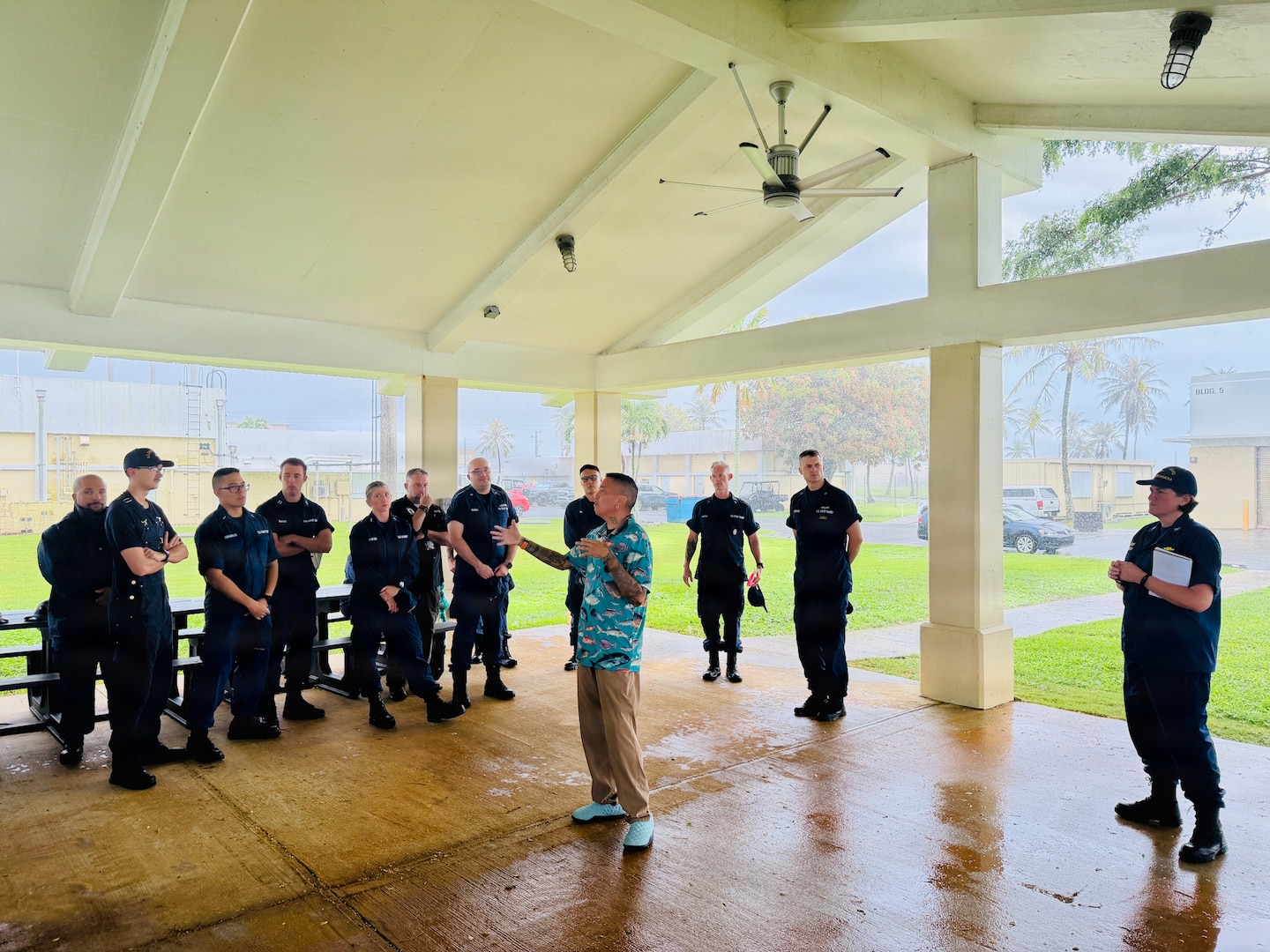
NEW YORK — The U.S. Coast Guard Cutter Eagle, is scheduled to arrive in New York City to participate in the Sail4th 250 celebrations. During its port call, the Eagle will moor in Manhattan at Pier 17
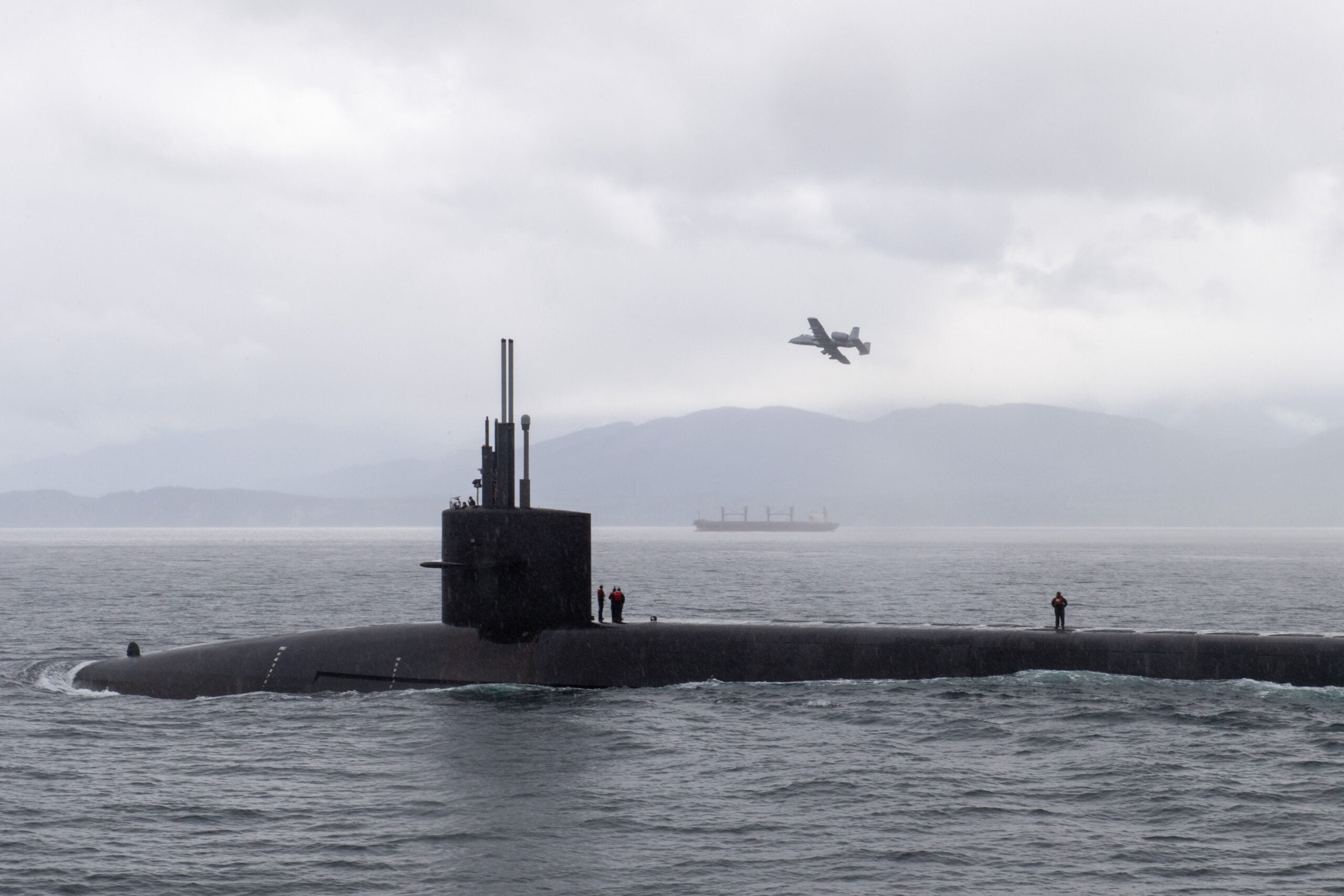
Dozens of U.S. Navy service members became ill after being exposed to diesel exhaust fumes from the Ohio-class ballistic missile submarine USS Nebraska on June 22, the Navy confirmed.
Sixty-four sailors experienced coughing, headaches, lightheadedness, dizziness and nausea while working a routine pier shift at Naval Base Kitsap-Bangor in Silverdale, Washington.
The service members were near a functioning backup diesel generator when the poisoning occurred. They also experienced irritation of the eyes, nose and throat.
“The Navy is working to identify the precise cause of the event and will take corrective action as appropriate,” the service said.
Six sailors were admitted for further medical attention, but all have since been released.
The diesel generator onboard does not affect the submarine’s nuclear reactor when running, the Navy said, and the reactor was undisturbed.
The 560-foot-long Ohio-class ballistic missile submarine is designed to carry ballistic missiles and nuclear warheads and can descend to depths of 800 feet.
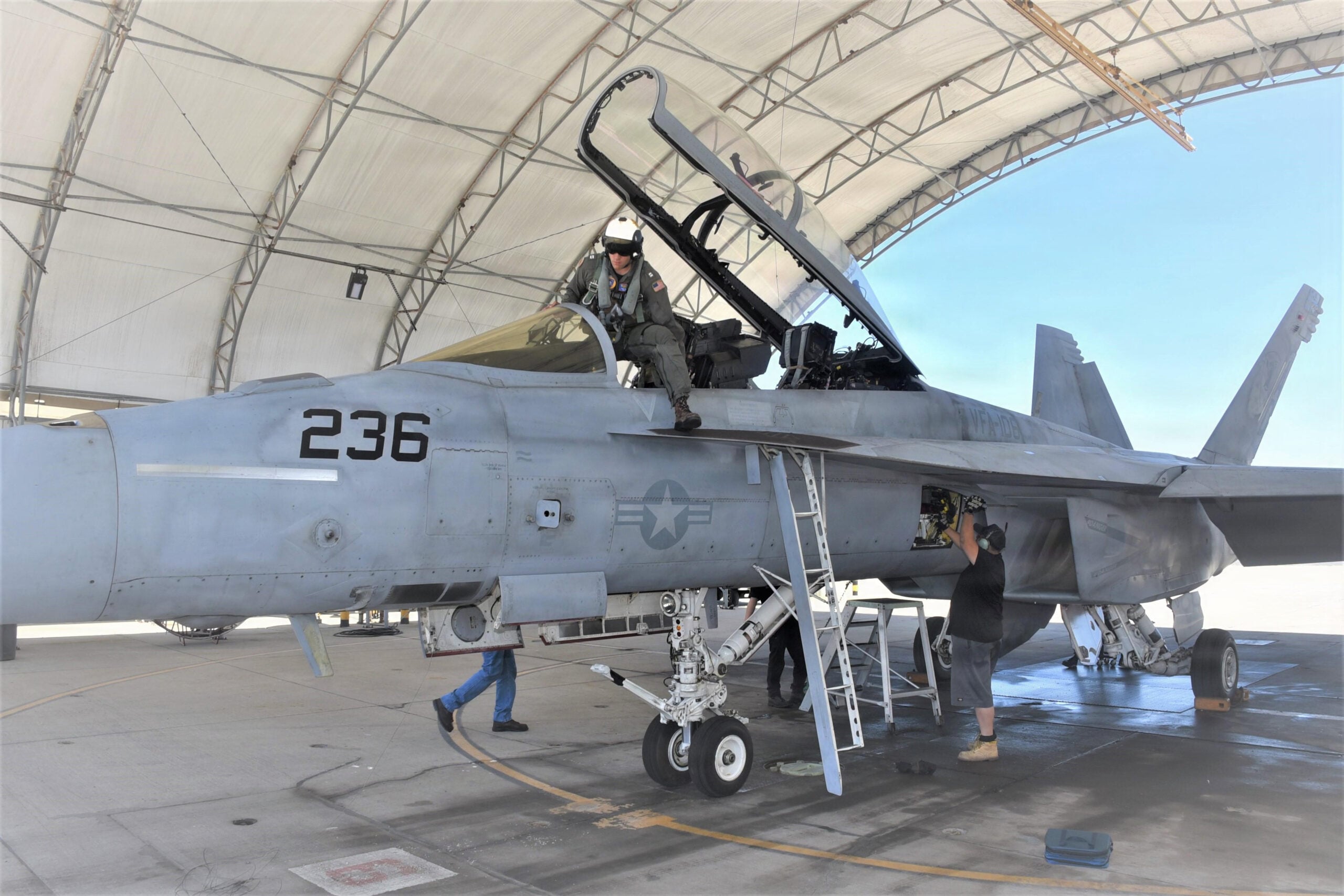
Composite repair time for F/A-18 Super Hornets could be slashed in half with a groundbreaking 3D-printing repair method, according to the Naval Air Warfare Center Aircraft Division.
By utilizing a “high-performance, 3D-printed composite patches that can be applied directly onto the aircraft,” the 3D-printing method has the possibility of enabling sailors to perform complex composite fixes directly at forward operating bases, abandoning the need for “highly specialized maintenance artisans” and lengthy turnaround times that can cause severe delays, a Wednesday release notes.
“Our goal is to put capability directly into the hands of the Fleet,” NAWCAD Commander Rear Adm. Todd Evans said in the release. “By simplifying a complex repair so it can be done forward, our engineers would get aircraft back in the fight faster — it’s a smart solution that makes our squadrons more self-sufficient and directly improves operational readiness.”
Typically, the repair of the grounded F/A-18 can cause significant delays as naval crews wait for parts to be shipped back to repair depots in the U.S. and then shipped back to the fleet. In the interim, the Navy loses critical combat capability as it stretches to repair its fighter jet.
To contend with this, a joint team of engineers from NAWCAD and Fleet Readiness Center Southwest developed the 3D-printed composite patches, allowing crews to rapidly assess and repair the damaged plane in 50% less time.
After successful lab and ground tests, flight-tests are slated to begin on operational aircraft this summer.
The patch job comes as the U.S. Marine Corps moves to deactivate all remaining Hornet squadrons by 2030 and eliminate the maintenance specialties associated with the aging fighter jet as it transitions to an all-F-35 tactical aircraft fleet, according to previous Military Times reporting.
According to the release, 22 Navy maintenances sites across the globe already possess 3D printers, potentially allowing for swift repairs where the aircraft actively operate.

Izumi Master Chef Travis Kamiyama offers advice on how to get started with sushi and other important etiquette advice.
Share with me your thoughts, questions and comments via…
You can subscribe to the Royal Caribbean Blog Podcast via iTunes, Google Play, Stitcher or RSS.

Whether you’re cooking homemade burgers outside on a grill or inside on the stove, the first step to making a knock-it-out-of-the-park burger is to season it properly. This super simple Homemade Burger Seasoning takes seconds to make, uses budget-friendly spices you probably already have, and gives your patties a smoky, savory, slightly peppery flavor without needing a store-bought mix. I like to sprinkle it over the outside of the patties right before cooking so the seasoning hits the heat first, helps build a flavorful crust, and keeps the burger tender and juicy!
“This is hands down the best burger seasoning I’ve ever had! Amazing and the hubby loved it. Said he felt like he was eating at a restaurant.”
GINGER
I always use this burger seasoning on our homemade hamburgers, but it’s just as useful for chicken burgers, veggie burgers, or any simple patty that needs a little more savory, smoky flavor! The sweet paprika, smoked paprika, garlic powder, onion powder, black pepper, cayenne, and salt all do their own jobs, but the two paprikas make the blend taste more layered by adding an earthy sweetness and a deeper, cookout-style smokiness.
The cooking method brings out different sides of the seasoning, too. On the grill, the smoked paprika plays up that smoky BBQ flavor, cast iron helps the seasoning toast against the hot surface for a deeper savory crust, and a regular skillet still gives the seasoning enough heat to bloom and flavor the patty.
A good burger still starts with the meat, though, and the seasoning should work with it. Fat adds richness and moisture, while salt enhances the savory flavor in the patty, which is why 80/20 ground beef is such a great choice for juicy, flavorful burgers. Leaner patties, like chicken burgers or extra-lean beef burgers, usually need a little more seasoning help because they don’t have as much fat to carry the flavor. I like to sprinkle this blend over the outside of the patties right before cooking instead of mixing it into the raw meat, since too much salt worked directly into the meat can draw out moisture and create a firm, bouncy texture instead of a tender burger.


Print
Add to Collection Go to Collections
See how we calculate recipe costs here.
Keep it savory for better browning. I skipped adding any sugar because it can burn quickly on a hot grill or in a very hot pan, leaving the burger bitter or browned on the outside before it’s cooked through. If you want a sweeter BBQ-style burger, add a small pinch of brown sugar only to the amount of seasoning you’re using that day.
If you want to add some herbs, choose dried herbs over fresh. Dried herbs like oregano, thyme, or parsley distribute more evenly in a seasoning blend and hold up better to high heat. Fresh herbs add moisture, may scorch on the grill, and don’t store well if you’re making a bigger batch, so I prefer using them sparingly as a fresh garnish after cooking.
A hot surface makes the seasoning work harder. Grilling burger patties over open flames gives them a naturally smoky, charred flavor. Because of that, the simple seasonings in this blend work well without overpowering the meat. Cast irons create deep browning and a flavorful crust through direct contact with the pan, which helps savory spices taste richer and more developed. Standard skillets work similarly, though they can create a softer crust since they don’t hold heat as well as cast iron. No matter how you cook them, seasoning the patties evenly and starting with a properly preheated grill/cast iron/skillet will help create the best flavor and crust.
I suggest using ¾ tsp of this seasoning per ¼ lb. burger patty, but you can add more or less to taste. The recipe makes about 1 Tbsp of burger seasoning, so that should be enough for about four burger patties.

Gather all of your ingredients.

Combine: Add 1 tsp sweet paprika, ½ tsp smoked paprika, ½ tsp onion powder, ½ tsp garlic powder, ¼ tsp black pepper, ⅛ tsp cayenne, and ½ tsp salt to a small bowl. If any of the spices are clumpy, break them up with a fork so the seasoning mixes evenly.

Stir using a fork until the blend looks evenly combined, and you don’t see streaks of one spice sitting in the bowl unmixed.
To season burgers, sprinkle about ¾ teaspoon of burger seasoning over each patty, dividing it between both sides. Gently press the seasoning onto the surface so it sticks without compacting the meat. This gives the patty an even layer of flavor and helps the seasoning stay put when it hits the hot pan or grill, without making the outside taste overly salty or gritty.

This simple burger seasoning is great on more than just classic beef burgers. I use it anywhere I want a savory, cookout-style flavor without pulling out a bunch of separate spices, especially when the rest of the meal is already simple and just needs a little flavor boost. For burgers, try it on my black bean burgers for a vegetarian patty with extra smoky flavor, or sprinkle it over these turkey burgers since leaner patties can benefit from a little more seasoning help. It’s also delicious on smash burger tacos because the seasoning hits the hot pan directly and helps create those browned edges.
For easy sides, I’ll swap the seasonings in these oven baked steak fries for 1 tablespoon of this burger seasoning, or toss it with grilled vegetables for a delicious (and EASY!) summer side. You can also think outside the burger bun and use this blend in sloppy joes, shredded beef, meatballs, or pulled pork for a super quick seasoning shortcut.

This recipe makes around 1 tablespoon of seasoning, but I love making a large batch to make my life easier and save time. Store leftover hamburger seasoning in an airtight container and place it in a cool, dry spot like a pantry or cupboard. It should be good for about 6 months. After 6 months, it starts to lose its potency and become less flavorful. Make sure to give leftovers a small shake or stir, as some heavier seasonings may have settled at the bottom.
Our Homemade Burger Seasoning recipe was originally published 5/22/23. It was retested, reworked, and republished to be better than ever 7/1/26.
The post Homemade Burger Seasoning appeared first on Budget Bytes.
Editor’s note: This story originally appeared on Laser Wars, a newsletter about military laser weapons and other futuristic defense technology. Subscribe here.
The U.S. military is closing in on its high-energy laser weapon of choice for counter-drone missions. Now it needs the vehicles to support it.
With the demise of its Stryker-based Directed Energy-Maneuver Short Range Air Defense (DE-MSHORAD) program, the U.S. Army has focused its ground-based laser weapon efforts on light tactical vehicles.
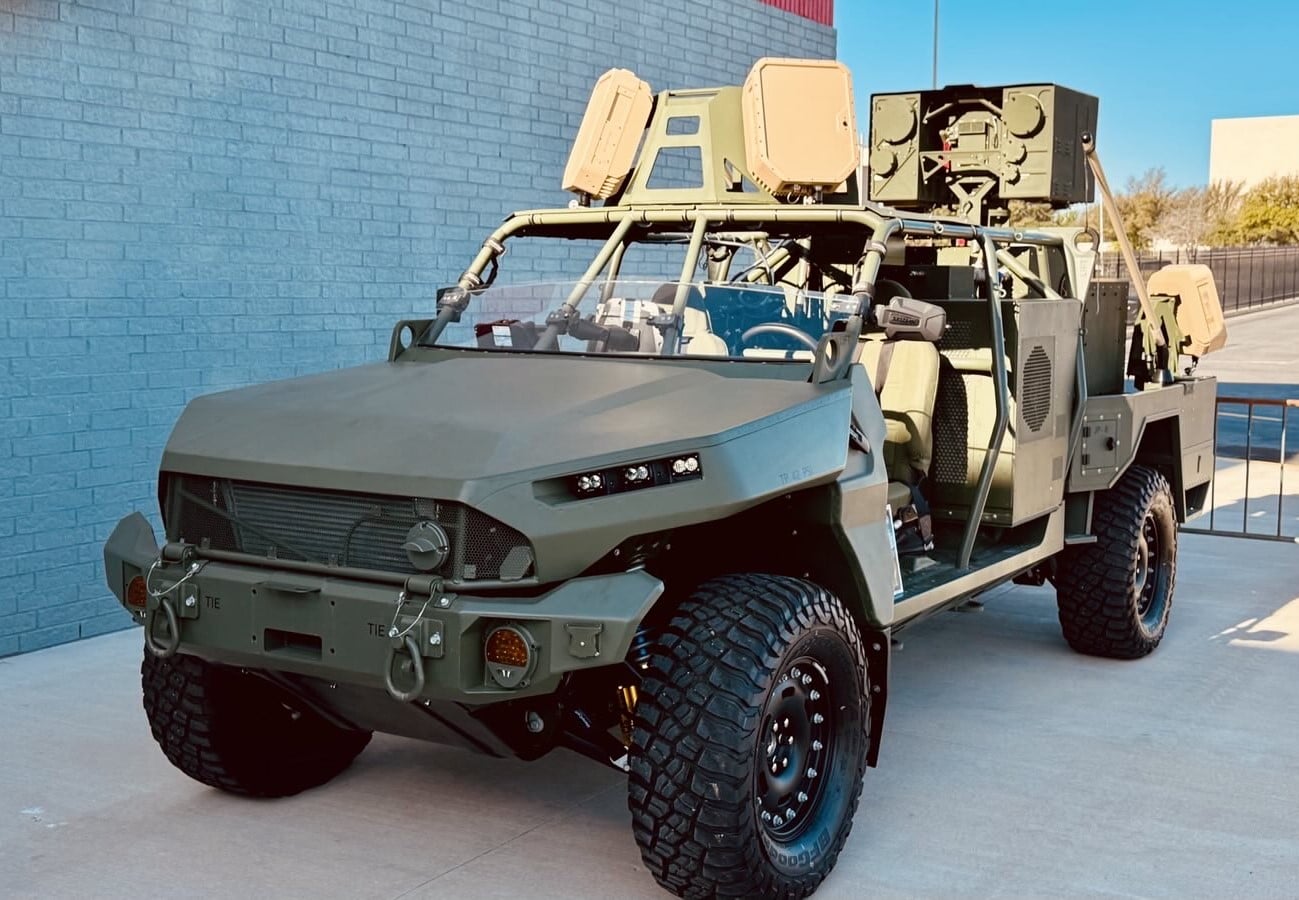
AeroVironment’s 20 kW LOCUST Laser Weapon System has already been operationally tested aboard both the Infantry Squad Vehicle and the Joint Light Tactical Vehicle through the Army Multi-Purpose High Energy Laser (AMP-HEL) effort, establishing that the U.S. military’s preferred mobile platforms can carry and employ directed energy weapons in the field.
The Army has reinforced this preference with its Enduring High Energy Laser (E-HEL) push, which is explicitly targeting light tactical vehicles like the JLTV for what might become the U.S. military’s first directed energy program of record.
Both the ISV and JLTV are at the center of the U.S. military’s emerging approach to future distributed operations. For the Army, the speedy and versatile ISV is seen as providing an essential maneuver capability for Mobile Brigade Combat Teams on a battlefield increasingly dominated by low-cost weaponized drones.
And while the ultimate fate of the JLTV remains uncertain, the vehicle is currently the chosen platform for the Marine Corps air defense system that’s the backbone of the service’s new Marine Littoral Regiments.
Both platforms, however, face the same big problem: power. The two services’ potential solutions offer a look at what the U.S. military’s future fleet of laser trucks might actually look like.

As the modern battlefield is increasingly defined by unmanned systems and the electronics needed to counter them, consistent and reliable power at the tactical edge has become as important as ammunition.
During the height of the Global War on Terrorism, a 30-soldier infantry platoon carried 400 pounds of batteries during a 72-hour mission to power equipment, a load that Army researchers have sought to lighten in the intervening years.
The U.S. military’s new crop of tactical vehicles don’t currently offer a robust solution: the JLTV can only generate up to 15 kW of exportable power, while the ISV’s output beyond baseline vehicle operations is not public (and likely negligible).
The challenge for building a laser truck is bigger than just raw power. The core problem for directed energy weapons, as Chariot Defense founder and CEO Adam Warmoth told Laser Wars earlier this month, is that while they don’t consume enormous amounts of energy in absolute terms, each engagement demands a significant spike in power sustained for several seconds.
Conventional generators are optimized for steady output but not for these spikes, and running one at the ready around the clock is not just inefficient and expensive, but actively dangerous on a battlefield where heat signatures and engine noise turn are prime targets for drone-based reconnaissance and precision strikes.
“That targetable signature is always on because you have to be ready to provide power to that laser system at any moment,” Warmoth said. “So, you have efficiency challenges, signature management challenges and then mobility problems, where you have to bring the generator sized to your peak demand, which is three to five times larger than the equivalent battery system.”
The proposed solution to this problem is a hybrid architecture: a generator sized for average load paired with a high-voltage battery system capable of delivering instantaneous surges on demand. The battery handles the spike, the generator recharges the battery between shots and the overall system is smaller, quieter and more tactically versatile than alternatives.
A vehicle with the right hybrid architecture becomes more than just a maneuver capability, but a node in a distributed battlefield power grid capable of charging drone batteries, running C2 and sensor networks and powering electronic warfare equipment — and, when the moment requires it, feeding a laser weapon the juice it needs to fry a target.
The Army and Marine Corps have understood the benefits of vehicle electrification for some time. In January 2024, GM Defense demonstrated its Next Generation Tactical Vehicle-Hybrid — built on a Chevrolet Silverado HD 3500 with the same Duramax engine used in the ISV and paired with a battery producing roughly 300 kW hours — with soldiers from the 3rd Brigade, 10th Mountain Division in Hohenfels, Germany.

The following February, the service’s Rapid Capabilities and Critical Technologies Office demonstrated a Humvee-based Tactical Hybrid Electric Vehicle at Aberdeen Proving Ground in Maryland, highlighting silent watch, silent mobility and increased power generation and export as the core operational advantages.
And later that month, the Army’s JLTV program office released a market survey for a “projected new production effort of a light tactical wheeled hybrid-electric vehicle.”
The U.S. military has validated this technology despite ongoing concerns that the Trump administration might put the kibosh on such efforts. Now the Pentagon has to actually field it in the right package.
The Army’s answer to the power gap is the ISV-Heavy. The name is slightly misleading: what makes the vehicle “heavy” is its chassis and, more importantly, its proposed power generation capabilities.
According to a commercial solutions opening (CSO) document published in late March, the system must produce and export a minimum 60 kW of continuous high-voltage DC power to support modular mission-specific payloads, from C2 communication equipment and radar to, explicitly, future directed energy weapons.
If the original ISV, based on GM Defense’s Chevrolet Colorado ZR2, was intended as a high-speed troop transport, the ISV-H is envisioned as a mobile power plant that happens to carry soldiers.
The ISV-H is designed to fill a “niche requirement there between an ISV and then, say, a JLTV, and it’s really going to be focused on the power generation part,” Jess Tolleson, principal deputy assistant secretary of the Army for Acquisition, Logistics, and Technology, told the Senate Armed Services Committee during a June 16 hearing.
“One of the things that we do have a critical capability gap on right now is power generation at that mobile brigade combat team level,” she added.
The ISV-H, meanwhile, is moving faster than the earlier CSO document might have indicated. According to the Army’s fiscal year 2027 budget request released in April, the service plans on procuring an initial tranche of 34 ISV-H vehicles at a unit cost of roughly $463,000 each, with a total procurement objective set at 606 vehicles.
The service plans to release proposal requests by the end of this year, Tolleson said, describing the platform’s development as “a top priority” that the service wants to accelerate. The Army wants to award a contract by September 2027 and accept its first deliveries by January 2028, per the budget documents.
GM Defense had previously announced it will offer the same Chevrolet Silverado model showcased as the Next Generation Tactical Vehicle-Hybrid for the effort.
The ISV-H’s power specifications track with the hybrid architecture necessary for a mobile directed energy weapon employment, while the silent operations mode addresses the generator signature problem. The vehicle is purpose-built for the demands of the electronically-defined battlefield — a laser truck designed from the outset to fight, and win, the laser wars of the future.
For the Marine Corps, there is no equivalent clean-sheet solution available. The JLTV is firmly entrenched in the Corps’ redesigned force structure: the Marine Air Defense Integrated System (MADIS) counter-drone and air defense system, which carries a 30mm cannon and Stinger missiles, operates across a fighting pair of the vehicles, while the Navy-Marine Corps Expeditionary Ship Interdiction System (NMESIS), which mounts the Naval Strike Missile on a JLTV, forms the centerpiece of the service’s Indo-Pacific sea denial strategy.

The main problem is that the Army’s relationship with the JLTV has deteriorated sharply over the past year. In May 2025, Secretary of the Army Dan Driscoll published a directive stating that the service would cancel procurement of “excess ground vehicles like the [Humvee] and JLTV” and redirect funds toward modernizing light formations around the ISV. According to the Congressional Research Service, the service planned to procure no additional JLTVs beyond the 250 delivered in January of that year.
AM General’s JLTV A2 variant, the next-generation successor that was supposed to carry the program forward, is now running more than 20 months behind schedule with roughly 2,000 vehicles in arrears, and House appropriators have proposed cutting $133 million from the program’s $245 million budget.
The Army’s JLTV ongoing issues jeopardize the Corps’ plans for the platform. As Marine Corps Commandant Gen. Eric Smith stated during a June 2025 posture hearing, the service would have to buy fewer JLTVs in the future due to the Army stoppage. The Corps has already fielded roughly half its 12,500-vehicle requirement, but with Army volume gone, per-unit costs will rise.
This past February, the service reaffirmed its commitment to fielding the vehicle as part of its new force structure, as its Marine Littoral Regiments are built around JLTV-mounted capabilities in a way that makes a clean break from the platform effectively impossible.
In May, the service released a request for information seeking “mature, production-ready, rapidly fieldable” alternatives from vendors capable of supplementing or replacing AM General’s supply, a tacit acknowledgment of the A2’s production troubles.
This is where original JLTV manufacturer Oshkosh Defense comes in.
Displaced by AM General in 2023, Oshkosh arrived at Eurosatory 2026 in Paris with a potential answer to the power problem: an upgraded version of the hybrid-electric eJLTV demonstrator the company first unveiled in 2022, capable of generating 115 kW of exportable power and operating in silent drive and watch modes that allow for full electronic functionality without the tactical liability of a engine signature.
With the purported ability to generate bursts of power up to 250 kW, the system was explicitly designed with future directed energy weapons in mind.
“[Working out where to] aim the power available for export is a consideration and the top end is kind of where we’re focused,” Logan Jones, chief growth officer of Oshkosh’s transport division, told Shephard Media. “One that we’ve been tracking is the Australian-based Electro Optic Systems Apollo high energy laser weapon. At the other end, another type of integration is the Cilas HELMA-P [counter-drone] system.”
Oshkosh is already pushing to reclaim its role as primary JLTV supplier for the Marine Corps, but its broader institutional argument for eJLTV adoption is relatively straightforward: a service that already operates JLTVs can easily integrate the electric version into existing maintenance infrastructure, draw on established spare parts supply chains and train crews already familiar with the base vehicle.
With the Army walking away from the JLTV and the Marines actively shopping for alternatives, Oshkosh’s power-capable variant may prove the most realistic near-term path for the latter service to get directed energy into the fight.
Together, the ISV-H and eJLTV offer the U.S. military a two-track approach to fielding laser weapons on light tactical vehicles at scale. The Army gets a purpose-built platform with the power architecture, silent operations capability and modular payload bays to support directed energy weapons like the E-HEL from the ground up. Meanwhile, the Marine Corps gets an evolutionary upgrade to a platform it is already committed to.
Neither track, however, is without risk. The Army has yet to select an ISV-H manufacturer, and 606 vehicles is a modest procurement objective for a capability the service describes as a critical gap.
The eJLTV remains a demonstrator, and the Marine Corps’ JLTV procurement future depends heavily on whether AM General can close its production gap and Congress will continue to fund a program it has already threatened to cut.
But if AV’s LOCUST proved the feasibility of a real-world laser truck, the ISV-H and the eJLTV are the U.S. military’s first serious attempts to build enough of the right vehicles to make laser weapons a standard battlefield capability.
The major challenge ahead, as senior defense officials have repeatedly emphasized, is whether directed energy weapons can be produced, procured, fielded and sustained at the scale required to prove effective. Without the right platforms to support them, these weapons will remain niche capabilities — impressive in demonstrations, but absent when it matters most.
This post was originally published on this site.
Editor’s note: This story originally appeared on Laser Wars, a newsletter about military laser weapons and other futuristic defense technology. Subscribe here.
The U.S. military is closing in on its high-energy laser weapon of choice for counter-drone missions. Now it needs the vehicles to support it.
With the demise of its Stryker-based Directed Energy-Maneuver Short Range Air Defense (DE-MSHORAD) program, the U.S. Army has focused its ground-based laser weapon efforts on light tactical vehicles.
AeroVironment’s 20 kW LOCUST Laser Weapon System has already been operationally tested aboard both the Infantry Squad Vehicle and the Joint Light Tactical Vehicle through the Army Multi-Purpose High Energy Laser (AMP-HEL) effort, establishing that the U.S. military’s preferred mobile platforms can carry and employ directed energy weapons in the field.
The Army has reinforced this preference with its Enduring High Energy Laser (E-HEL) push, which is explicitly targeting light tactical vehicles like the JLTV for what might become the U.S. military’s first directed energy program of record.
Both the ISV and JLTV are at the center of the U.S. military’s emerging approach to future distributed operations. For the Army, the speedy and versatile ISV is seen as providing an essential maneuver capability for Mobile Brigade Combat Teams on a battlefield increasingly dominated by low-cost weaponized drones.
And while the ultimate fate of the JLTV remains uncertain, the vehicle is currently the chosen platform for the Marine Corps air defense system that’s the backbone of the service’s new Marine Littoral Regiments.
Both platforms, however, face the same big problem: power. The two services’ potential solutions offer a look at what the U.S. military’s future fleet of laser trucks might actually look like.
As the modern battlefield is increasingly defined by unmanned systems and the electronics needed to counter them, consistent and reliable power at the tactical edge has become as important as ammunition.
During the height of the Global War on Terrorism, a 30-soldier infantry platoon carried 400 pounds of batteries during a 72-hour mission to power equipment, a load that Army researchers have sought to lighten in the intervening years.
The U.S. military’s new crop of tactical vehicles don’t currently offer a robust solution: the JLTV can only generate up to 15 kW of exportable power, while the ISV’s output beyond baseline vehicle operations is not public (and likely negligible).
The challenge for building a laser truck is bigger than just raw power. The core problem for directed energy weapons, as Chariot Defense founder and CEO Adam Warmoth told Laser Wars earlier this month, is that while they don’t consume enormous amounts of energy in absolute terms, each engagement demands a significant spike in power sustained for several seconds.
Conventional generators are optimized for steady output but not for these spikes, and running one at the ready around the clock is not just inefficient and expensive, but actively dangerous on a battlefield where heat signatures and engine noise turn are prime targets for drone-based reconnaissance and precision strikes.
“That targetable signature is always on because you have to be ready to provide power to that laser system at any moment,” Warmoth said. “So, you have efficiency challenges, signature management challenges and then mobility problems, where you have to bring the generator sized to your peak demand, which is three to five times larger than the equivalent battery system.”
The proposed solution to this problem is a hybrid architecture: a generator sized for average load paired with a high-voltage battery system capable of delivering instantaneous surges on demand. The battery handles the spike, the generator recharges the battery between shots and the overall system is smaller, quieter and more tactically versatile than alternatives.
A vehicle with the right hybrid architecture becomes more than just a maneuver capability, but a node in a distributed battlefield power grid capable of charging drone batteries, running C2 and sensor networks and powering electronic warfare equipment — and, when the moment requires it, feeding a laser weapon the juice it needs to fry a target.
The Army and Marine Corps have understood the benefits of vehicle electrification for some time. In January 2024, GM Defense demonstrated its Next Generation Tactical Vehicle-Hybrid — built on a Chevrolet Silverado HD 3500 with the same Duramax engine used in the ISV and paired with a battery producing roughly 300 kW hours — with soldiers from the 3rd Brigade, 10th Mountain Division in Hohenfels, Germany.
The following February, the service’s Rapid Capabilities and Critical Technologies Office demonstrated a Humvee-based Tactical Hybrid Electric Vehicle at Aberdeen Proving Ground in Maryland, highlighting silent watch, silent mobility and increased power generation and export as the core operational advantages.
And later that month, the Army’s JLTV program office released a market survey for a “projected new production effort of a light tactical wheeled hybrid-electric vehicle.”
The U.S. military has validated this technology despite ongoing concerns that the Trump administration might put the kibosh on such efforts. Now the Pentagon has to actually field it in the right package.
The Army’s answer to the power gap is the ISV-Heavy. The name is slightly misleading: what makes the vehicle “heavy” is its chassis and, more importantly, its proposed power generation capabilities.
According to a commercial solutions opening (CSO) document published in late March, the system must produce and export a minimum 60 kW of continuous high-voltage DC power to support modular mission-specific payloads, from C2 communication equipment and radar to, explicitly, future directed energy weapons.
If the original ISV, based on GM Defense’s Chevrolet Colorado ZR2, was intended as a high-speed troop transport, the ISV-H is envisioned as a mobile power plant that happens to carry soldiers.
The ISV-H is designed to fill a “niche requirement there between an ISV and then, say, a JLTV, and it’s really going to be focused on the power generation part,” Jess Tolleson, principal deputy assistant secretary of the Army for Acquisition, Logistics, and Technology, told the Senate Armed Services Committee during a June 16 hearing.
“One of the things that we do have a critical capability gap on right now is power generation at that mobile brigade combat team level,” she added.
The ISV-H, meanwhile, is moving faster than the earlier CSO document might have indicated. According to the Army’s fiscal year 2027 budget request released in April, the service plans on procuring an initial tranche of 34 ISV-H vehicles at a unit cost of roughly $463,000 each, with a total procurement objective set at 606 vehicles.
The service plans to release proposal requests by the end of this year, Tolleson said, describing the platform’s development as “a top priority” that the service wants to accelerate. The Army wants to award a contract by September 2027 and accept its first deliveries by January 2028, per the budget documents.
GM Defense had previously announced it will offer the same Chevrolet Silverado model showcased as the Next Generation Tactical Vehicle-Hybrid for the effort.
The ISV-H’s power specifications track with the hybrid architecture necessary for a mobile directed energy weapon employment, while the silent operations mode addresses the generator signature problem. The vehicle is purpose-built for the demands of the electronically-defined battlefield — a laser truck designed from the outset to fight, and win, the laser wars of the future.
For the Marine Corps, there is no equivalent clean-sheet solution available. The JLTV is firmly entrenched in the Corps’ redesigned force structure: the Marine Air Defense Integrated System (MADIS) counter-drone and air defense system, which carries a 30mm cannon and Stinger missiles, operates across a fighting pair of the vehicles, while the Navy-Marine Corps Expeditionary Ship Interdiction System (NMESIS), which mounts the Naval Strike Missile on a JLTV, forms the centerpiece of the service’s Indo-Pacific sea denial strategy.
The main problem is that the Army’s relationship with the JLTV has deteriorated sharply over the past year. In May 2025, Secretary of the Army Dan Driscoll published a directive stating that the service would cancel procurement of “excess ground vehicles like the [Humvee] and JLTV” and redirect funds toward modernizing light formations around the ISV. According to the Congressional Research Service, the service planned to procure no additional JLTVs beyond the 250 delivered in January of that year.
AM General’s JLTV A2 variant, the next-generation successor that was supposed to carry the program forward, is now running more than 20 months behind schedule with roughly 2,000 vehicles in arrears, and House appropriators have proposed cutting $133 million from the program’s $245 million budget.
The Army’s JLTV ongoing issues jeopardize the Corps’ plans for the platform. As Marine Corps Commandant Gen. Eric Smith stated during a June 2025 posture hearing, the service would have to buy fewer JLTVs in the future due to the Army stoppage. The Corps has already fielded roughly half its 12,500-vehicle requirement, but with Army volume gone, per-unit costs will rise.
This past February, the service reaffirmed its commitment to fielding the vehicle as part of its new force structure, as its Marine Littoral Regiments are built around JLTV-mounted capabilities in a way that makes a clean break from the platform effectively impossible.
In May, the service released a request for information seeking “mature, production-ready, rapidly fieldable” alternatives from vendors capable of supplementing or replacing AM General’s supply, a tacit acknowledgment of the A2’s production troubles.
This is where original JLTV manufacturer Oshkosh Defense comes in.
Displaced by AM General in 2023, Oshkosh arrived at Eurosatory 2026 in Paris with a potential answer to the power problem: an upgraded version of the hybrid-electric eJLTV demonstrator the company first unveiled in 2022, capable of generating 115 kW of exportable power and operating in silent drive and watch modes that allow for full electronic functionality without the tactical liability of a engine signature.
With the purported ability to generate bursts of power up to 250 kW, the system was explicitly designed with future directed energy weapons in mind.
“[Working out where to] aim the power available for export is a consideration and the top end is kind of where we’re focused,” Logan Jones, chief growth officer of Oshkosh’s transport division, told Shephard Media. “One that we’ve been tracking is the Australian-based Electro Optic Systems Apollo high energy laser weapon. At the other end, another type of integration is the Cilas HELMA-P [counter-drone] system.”
Oshkosh is already pushing to reclaim its role as primary JLTV supplier for the Marine Corps, but its broader institutional argument for eJLTV adoption is relatively straightforward: a service that already operates JLTVs can easily integrate the electric version into existing maintenance infrastructure, draw on established spare parts supply chains and train crews already familiar with the base vehicle.
With the Army walking away from the JLTV and the Marines actively shopping for alternatives, Oshkosh’s power-capable variant may prove the most realistic near-term path for the latter service to get directed energy into the fight.
Together, the ISV-H and eJLTV offer the U.S. military a two-track approach to fielding laser weapons on light tactical vehicles at scale. The Army gets a purpose-built platform with the power architecture, silent operations capability and modular payload bays to support directed energy weapons like the E-HEL from the ground up. Meanwhile, the Marine Corps gets an evolutionary upgrade to a platform it is already committed to.
Neither track, however, is without risk. The Army has yet to select an ISV-H manufacturer, and 606 vehicles is a modest procurement objective for a capability the service describes as a critical gap.
The eJLTV remains a demonstrator, and the Marine Corps’ JLTV procurement future depends heavily on whether AM General can close its production gap and Congress will continue to fund a program it has already threatened to cut.
But if AV’s LOCUST proved the feasibility of a real-world laser truck, the ISV-H and the eJLTV are the U.S. military’s first serious attempts to build enough of the right vehicles to make laser weapons a standard battlefield capability.
The major challenge ahead, as senior defense officials have repeatedly emphasized, is whether directed energy weapons can be produced, procured, fielded and sustained at the scale required to prove effective. Without the right platforms to support them, these weapons will remain niche capabilities — impressive in demonstrations, but absent when it matters most.
This post was originally published on this site
Editor’s note: This story originally appeared on Laser Wars, a newsletter about military laser weapons and other futuristic defense technology. Subscribe here.
The U.S. military is closing in on its high-energy laser weapon of choice for counter-drone missions. Now it needs the vehicles to support it.
With the demise of its Stryker-based Directed Energy-Maneuver Short Range Air Defense (DE-MSHORAD) program, the U.S. Army has focused its ground-based laser weapon efforts on light tactical vehicles.
AeroVironment’s 20 kW LOCUST Laser Weapon System has already been operationally tested aboard both the Infantry Squad Vehicle and the Joint Light Tactical Vehicle through the Army Multi-Purpose High Energy Laser (AMP-HEL) effort, establishing that the U.S. military’s preferred mobile platforms can carry and employ directed energy weapons in the field.
The Army has reinforced this preference with its Enduring High Energy Laser (E-HEL) push, which is explicitly targeting light tactical vehicles like the JLTV for what might become the U.S. military’s first directed energy program of record.
Both the ISV and JLTV are at the center of the U.S. military’s emerging approach to future distributed operations. For the Army, the speedy and versatile ISV is seen as providing an essential maneuver capability for Mobile Brigade Combat Teams on a battlefield increasingly dominated by low-cost weaponized drones.
And while the ultimate fate of the JLTV remains uncertain, the vehicle is currently the chosen platform for the Marine Corps air defense system that’s the backbone of the service’s new Marine Littoral Regiments.
Both platforms, however, face the same big problem: power. The two services’ potential solutions offer a look at what the U.S. military’s future fleet of laser trucks might actually look like.
As the modern battlefield is increasingly defined by unmanned systems and the electronics needed to counter them, consistent and reliable power at the tactical edge has become as important as ammunition.
During the height of the Global War on Terrorism, a 30-soldier infantry platoon carried 400 pounds of batteries during a 72-hour mission to power equipment, a load that Army researchers have sought to lighten in the intervening years.
The U.S. military’s new crop of tactical vehicles don’t currently offer a robust solution: the JLTV can only generate up to 15 kW of exportable power, while the ISV’s output beyond baseline vehicle operations is not public (and likely negligible).
The challenge for building a laser truck is bigger than just raw power. The core problem for directed energy weapons, as Chariot Defense founder and CEO Adam Warmoth told Laser Wars earlier this month, is that while they don’t consume enormous amounts of energy in absolute terms, each engagement demands a significant spike in power sustained for several seconds.
Conventional generators are optimized for steady output but not for these spikes, and running one at the ready around the clock is not just inefficient and expensive, but actively dangerous on a battlefield where heat signatures and engine noise turn are prime targets for drone-based reconnaissance and precision strikes.
“That targetable signature is always on because you have to be ready to provide power to that laser system at any moment,” Warmoth said. “So, you have efficiency challenges, signature management challenges and then mobility problems, where you have to bring the generator sized to your peak demand, which is three to five times larger than the equivalent battery system.”
The proposed solution to this problem is a hybrid architecture: a generator sized for average load paired with a high-voltage battery system capable of delivering instantaneous surges on demand. The battery handles the spike, the generator recharges the battery between shots and the overall system is smaller, quieter and more tactically versatile than alternatives.
A vehicle with the right hybrid architecture becomes more than just a maneuver capability, but a node in a distributed battlefield power grid capable of charging drone batteries, running C2 and sensor networks and powering electronic warfare equipment — and, when the moment requires it, feeding a laser weapon the juice it needs to fry a target.
The Army and Marine Corps have understood the benefits of vehicle electrification for some time. In January 2024, GM Defense demonstrated its Next Generation Tactical Vehicle-Hybrid — built on a Chevrolet Silverado HD 3500 with the same Duramax engine used in the ISV and paired with a battery producing roughly 300 kW hours — with soldiers from the 3rd Brigade, 10th Mountain Division in Hohenfels, Germany.
The following February, the service’s Rapid Capabilities and Critical Technologies Office demonstrated a Humvee-based Tactical Hybrid Electric Vehicle at Aberdeen Proving Ground in Maryland, highlighting silent watch, silent mobility and increased power generation and export as the core operational advantages.
And later that month, the Army’s JLTV program office released a market survey for a “projected new production effort of a light tactical wheeled hybrid-electric vehicle.”
The U.S. military has validated this technology despite ongoing concerns that the Trump administration might put the kibosh on such efforts. Now the Pentagon has to actually field it in the right package.
The Army’s answer to the power gap is the ISV-Heavy. The name is slightly misleading: what makes the vehicle “heavy” is its chassis and, more importantly, its proposed power generation capabilities.
According to a commercial solutions opening (CSO) document published in late March, the system must produce and export a minimum 60 kW of continuous high-voltage DC power to support modular mission-specific payloads, from C2 communication equipment and radar to, explicitly, future directed energy weapons.
If the original ISV, based on GM Defense’s Chevrolet Colorado ZR2, was intended as a high-speed troop transport, the ISV-H is envisioned as a mobile power plant that happens to carry soldiers.
The ISV-H is designed to fill a “niche requirement there between an ISV and then, say, a JLTV, and it’s really going to be focused on the power generation part,” Jess Tolleson, principal deputy assistant secretary of the Army for Acquisition, Logistics, and Technology, told the Senate Armed Services Committee during a June 16 hearing.
“One of the things that we do have a critical capability gap on right now is power generation at that mobile brigade combat team level,” she added.
The ISV-H, meanwhile, is moving faster than the earlier CSO document might have indicated. According to the Army’s fiscal year 2027 budget request released in April, the service plans on procuring an initial tranche of 34 ISV-H vehicles at a unit cost of roughly $463,000 each, with a total procurement objective set at 606 vehicles.
The service plans to release proposal requests by the end of this year, Tolleson said, describing the platform’s development as “a top priority” that the service wants to accelerate. The Army wants to award a contract by September 2027 and accept its first deliveries by January 2028, per the budget documents.
GM Defense had previously announced it will offer the same Chevrolet Silverado model showcased as the Next Generation Tactical Vehicle-Hybrid for the effort.
The ISV-H’s power specifications track with the hybrid architecture necessary for a mobile directed energy weapon employment, while the silent operations mode addresses the generator signature problem. The vehicle is purpose-built for the demands of the electronically-defined battlefield — a laser truck designed from the outset to fight, and win, the laser wars of the future.
For the Marine Corps, there is no equivalent clean-sheet solution available. The JLTV is firmly entrenched in the Corps’ redesigned force structure: the Marine Air Defense Integrated System (MADIS) counter-drone and air defense system, which carries a 30mm cannon and Stinger missiles, operates across a fighting pair of the vehicles, while the Navy-Marine Corps Expeditionary Ship Interdiction System (NMESIS), which mounts the Naval Strike Missile on a JLTV, forms the centerpiece of the service’s Indo-Pacific sea denial strategy.
The main problem is that the Army’s relationship with the JLTV has deteriorated sharply over the past year. In May 2025, Secretary of the Army Dan Driscoll published a directive stating that the service would cancel procurement of “excess ground vehicles like the [Humvee] and JLTV” and redirect funds toward modernizing light formations around the ISV. According to the Congressional Research Service, the service planned to procure no additional JLTVs beyond the 250 delivered in January of that year.
AM General’s JLTV A2 variant, the next-generation successor that was supposed to carry the program forward, is now running more than 20 months behind schedule with roughly 2,000 vehicles in arrears, and House appropriators have proposed cutting $133 million from the program’s $245 million budget.
The Army’s JLTV ongoing issues jeopardize the Corps’ plans for the platform. As Marine Corps Commandant Gen. Eric Smith stated during a June 2025 posture hearing, the service would have to buy fewer JLTVs in the future due to the Army stoppage. The Corps has already fielded roughly half its 12,500-vehicle requirement, but with Army volume gone, per-unit costs will rise.
This past February, the service reaffirmed its commitment to fielding the vehicle as part of its new force structure, as its Marine Littoral Regiments are built around JLTV-mounted capabilities in a way that makes a clean break from the platform effectively impossible.
In May, the service released a request for information seeking “mature, production-ready, rapidly fieldable” alternatives from vendors capable of supplementing or replacing AM General’s supply, a tacit acknowledgment of the A2’s production troubles.
This is where original JLTV manufacturer Oshkosh Defense comes in.
Displaced by AM General in 2023, Oshkosh arrived at Eurosatory 2026 in Paris with a potential answer to the power problem: an upgraded version of the hybrid-electric eJLTV demonstrator the company first unveiled in 2022, capable of generating 115 kW of exportable power and operating in silent drive and watch modes that allow for full electronic functionality without the tactical liability of a engine signature.
With the purported ability to generate bursts of power up to 250 kW, the system was explicitly designed with future directed energy weapons in mind.
“[Working out where to] aim the power available for export is a consideration and the top end is kind of where we’re focused,” Logan Jones, chief growth officer of Oshkosh’s transport division, told Shephard Media. “One that we’ve been tracking is the Australian-based Electro Optic Systems Apollo high energy laser weapon. At the other end, another type of integration is the Cilas HELMA-P [counter-drone] system.”
Oshkosh is already pushing to reclaim its role as primary JLTV supplier for the Marine Corps, but its broader institutional argument for eJLTV adoption is relatively straightforward: a service that already operates JLTVs can easily integrate the electric version into existing maintenance infrastructure, draw on established spare parts supply chains and train crews already familiar with the base vehicle.
With the Army walking away from the JLTV and the Marines actively shopping for alternatives, Oshkosh’s power-capable variant may prove the most realistic near-term path for the latter service to get directed energy into the fight.
Together, the ISV-H and eJLTV offer the U.S. military a two-track approach to fielding laser weapons on light tactical vehicles at scale. The Army gets a purpose-built platform with the power architecture, silent operations capability and modular payload bays to support directed energy weapons like the E-HEL from the ground up. Meanwhile, the Marine Corps gets an evolutionary upgrade to a platform it is already committed to.
Neither track, however, is without risk. The Army has yet to select an ISV-H manufacturer, and 606 vehicles is a modest procurement objective for a capability the service describes as a critical gap.
The eJLTV remains a demonstrator, and the Marine Corps’ JLTV procurement future depends heavily on whether AM General can close its production gap and Congress will continue to fund a program it has already threatened to cut.
But if AV’s LOCUST proved the feasibility of a real-world laser truck, the ISV-H and the eJLTV are the U.S. military’s first serious attempts to build enough of the right vehicles to make laser weapons a standard battlefield capability.
The major challenge ahead, as senior defense officials have repeatedly emphasized, is whether directed energy weapons can be produced, procured, fielded and sustained at the scale required to prove effective. Without the right platforms to support them, these weapons will remain niche capabilities — impressive in demonstrations, but absent when it matters most.
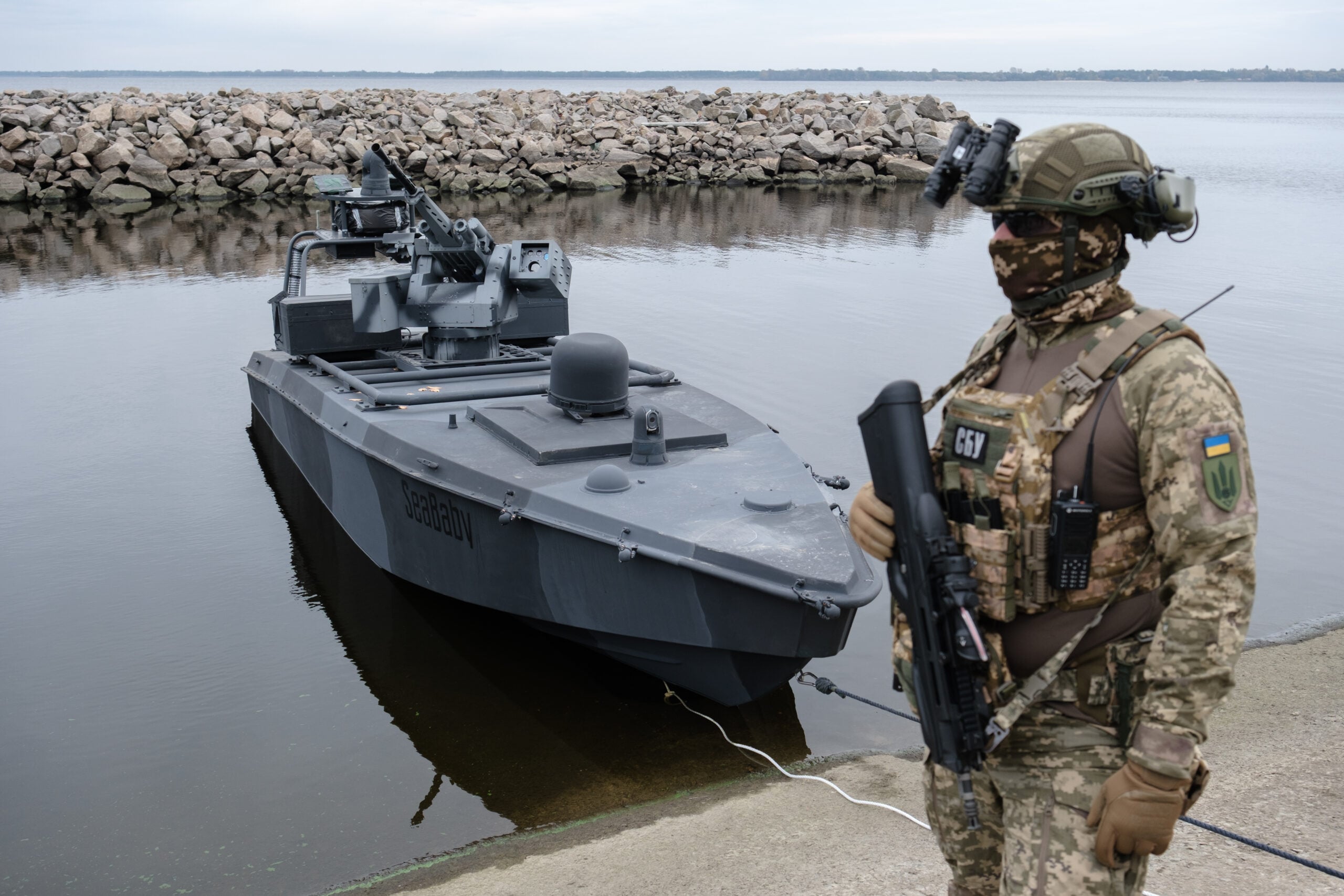
KYIV, Ukraine — Ukraine has turned its signature naval drone – the little boat that drove Russia’s fleet out of the western Black Sea – into a launch platform for first-person-view attack drones, putting Kyiv’s strike reach beyond the coast.
The Sea Baby, a strike boat built and operated by Ukraine’s Security Service, or SBU, can now carry six to eight FPV drones in side compartments that open during an attack, alongside thermobaric Shmel rockets, according to Russian accounts of the boats operating around the Kinburn Spit, roughly 40 miles east of Odesa, shared by Forbes.
Ukrainian officials count on the autonomous vessels’ ability to move closer toward Russian military positions than land-based launchers could, with the SBU assuming a range of 930 miles (1,500 kilometers) on a 4,400-pound (2,000-kilogram) payload. Some of the drones in the cargo hold are guided by fiber-optic cable, leaving them immune to the radio jamming that downs ordinary FPVs, according to Forbes.
Ukraine has turned nearly everything it fields into an FPV launcher. Sea drones carrying fiber-optic FPVs struck the Russian ports of Tuapse and Novorossiysk in September. Several companies have rigged ground robots to fire the same drones, and both sides have flown balloons carrying them.
“The SBU became the first in the world to pioneer this new kind of naval warfare,” Brig. Gen. Ivan Lukashevych said at an unveiling of the Sea Baby’s latest generation in October 2025, “and we continue to advance it.”
Ukraine fields two distinct naval drone families.
The Sea Baby is developed and operated by the SBU, Ukraine’s domestic security service. The Magura – built by Uforce for the GUR, Ukraine’s military intelligence directorate – is a separate system with its own lineage and export path.
The Sea Baby is primarily remote-piloted from a mobile ground station but carries AI-assisted targeting and navigation systems that allow it to operate autonomously when communications are jammed or degraded – a design imperative born from Russia’s intense electronic warfare environment over the Black Sea.
American forces have begun using the boats themselves.
U.S. special forces sank a target ship with a Ukrainian Magura at the Balikatan 2026 exercise off the Philippines on June 24, the first use of the technology in the Indo-Pacific.
The interest is not one-off. A cheap, expendable boat that can carry a cluster of attack drones to within striking range is exactly the kind of weapon the United States is looking for as it prepares for a possible war with China across the Pacific’s vast distances.
“Magura’s successes on the Ukrainian-Russian front confirm their value for use in the Indo-Pacific region,” Oleg Roginsky, chief executive of Uforce, the London-based startup that makes the Magura, told Bloomberg last week.
Uforce is in talks with Indo-Pacific buyers and weighing at least two production sites in the region, Roginsky said. Ukraine barred weapons exports in 2022 to keep its arms at the front, and only began opening that market in 2025.
Ukrainian naval drones have sunk or damaged roughly a dozen Russian warships since 2022 and forced the Black Sea Fleet to pull its main operations back to Novorossiysk, the U.S. Naval Institute reported in September.
Each boat costs a few hundred thousand dollars, below the price of a single modern torpedo.
The Pentagon is studying the lesson as it shifts focus toward a possible conflict with China.
The U.S. Navy expects to field thousands of small uncrewed surface vessels across the Indo-Pacific by 2030, Capt. Garrett Miller, who leads its Surface Development Group One, said at a Navy symposium on April 20, as reported by USNI News.
In a report last July, the Center for Strategic and International Studies urged the U.S. military to copy Kyiv’s acquisition methods, arguing that “unlike theoretical models or peacetime pilots, Ukraine’s innovations in defense acquisition are battlefield tested.”
And Ukraine has continued to innovate. Its Sub Sea Baby underwater drone struck an Improved Kilo-class submarine at its pier in Novorossiysk on Dec. 15, the first time an unmanned underwater vehicle has hit a submarine in port, the SBU said.
Russia denied any damage, but satellite imagery taken the following day showed a 9-meter crater in the pier, the submarine visibly lower in the water, and the vessel, later identified as the B-271 Kolpino, unmoved at its berth more than a month later. Ukrainian and independent analysts assessed it as a mission kill.
NATO is already training with Kyiv’s tactics, too.
Ukraine’s navy led a NATO red team and beat the alliance’s blue force in all five scenarios at the REPMUS naval-drone exercise in Portugal in September, the first time it had run the opposing force.