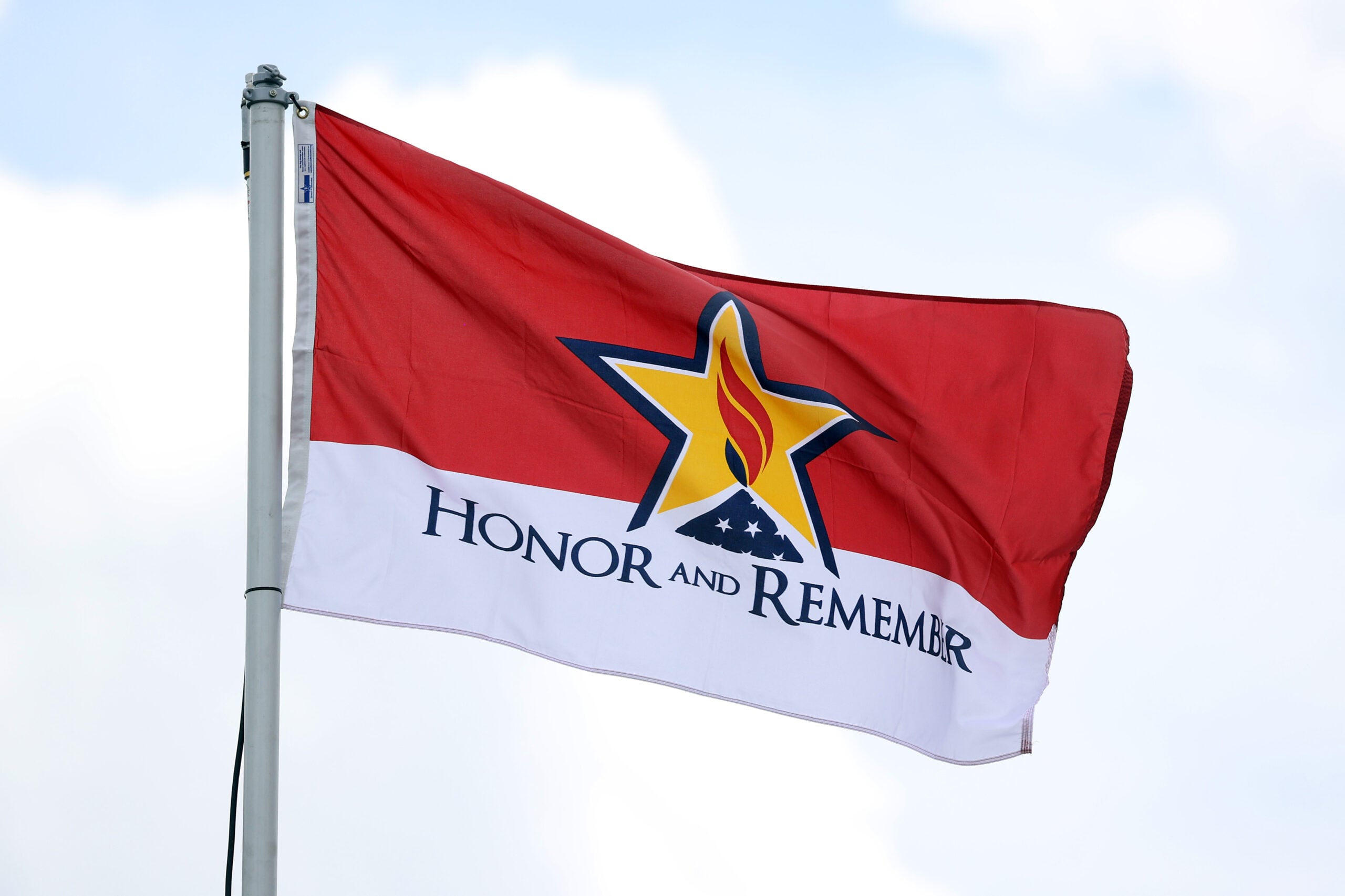
Vietnam War veterans are pushing back against the use of an “Honor and Remember” flag because of its resemblance to the Bolshevik Communist flag and the flag flown by the Democratic Republic of Vietnam.
Vietnam Veterans of America, a national veterans service organization, argued Thursday that the flag “cannot serve as a positive symbol” for veterans who fought against communism. The flag shows a gold star on a red background — imagery reminiscent of multiple communist movements, VVA said in a public statement.
“For Vietnam veterans especially, the striking resemblance to the flag flown by the Democratic Republic of Vietnam during the Vietnam War, and seen in all the images of North Vietnamese tanks invading Saigon on April 30, 1975, is impossible to ignore,” the group wrote.
A congressional effort is underway to designate the Honor and Remember flag as a national symbol of remembrance for service members and veterans who died as a result of their military service. VVA said the proposal was recently attached to the fiscal 2027 National Defense Authorization Act, an annual, must-pass defense policy and budget bill.
The proposal was originally introduced by Reps. Don Davis, D-N.C., Jen Kiggans, R-Va., and Glenn Thompson, R-Pa. The bipartisan Problem Solvers Caucus endorsed the measure in February.
The amendment mandates that the flag be displayed at federal sites, including the U.S. Capitol, White House and national cemeteries on Memorial Day, Veterans Day, Independence Day and other holidays.
“The brave men and women who laid down their lives in service to our nation deserve our deepest gratitude and lasting remembrance,” Kiggans said in a February statement. “While we can never fully repay the debt we owe them, we must always ensure their legacy is honored.”
The flag was created by George Lutz after the death of his son, Army Cpl. George “Tony” Lutz, who was killed by an enemy sniper in Fallujah, Iraq, in 2005. Since its creation, 29 states have adopted the Honor and Remember flag as an official symbol.
VVA National President Tom Burke argued the idea was not adequately discussed before being proposed for a national designation. The American flag already represents the sacrifices of Americans who have died in defense of the nation, he contended.
“Rather than creating confusion and strife regarding official national symbols by introducing new federally recognized commemorative flags, VVA encourages Congress to direct its efforts towards policies that directly benefit Gold Star families, survivors, wounded veterans, and those currently serving,” Burke said.
Vietnam War veterans are pushing back against the use of an “Honor and Remember” flag because of its resemblance to the Bolshevik Communist flag and the flag flown by the Democratic Republic of Vietnam.
Vietnam Veterans of America, a national veterans service organization, argued Thursday that the flag “cannot serve as a positive symbol” for veterans who fought against communism. The flag shows a gold star on a red background — imagery reminiscent of multiple communist movements, VVA said in a public statement.
“For Vietnam veterans especially, the striking resemblance to the flag flown by the Democratic Republic of Vietnam during the Vietnam War, and seen in all the images of North Vietnamese tanks invading Saigon on April 30, 1975, is impossible to ignore,” the group wrote.
A congressional effort is underway to designate the Honor and Remember flag as a national symbol of remembrance for service members and veterans who died as a result of their military service. VVA said the proposal was recently attached to the fiscal 2027 National Defense Authorization Act, an annual, must-pass defense policy and budget bill.
The proposal was originally introduced by Reps. Don Davis, D-N.C., Jen Kiggans, R-Va., and Glenn Thompson, R-Pa. The bipartisan Problem Solvers Caucus endorsed the measure in February.
The amendment mandates that the flag be displayed at federal sites, including the U.S. Capitol, White House and national cemeteries on Memorial Day, Veterans Day, Independence Day and other holidays.
“The brave men and women who laid down their lives in service to our nation deserve our deepest gratitude and lasting remembrance,” Kiggans said in a February statement. “While we can never fully repay the debt we owe them, we must always ensure their legacy is honored.”
The flag was created by George Lutz after the death of his son, Army Cpl. George “Tony” Lutz, who was killed by an enemy sniper in Fallujah, Iraq, in 2005. Since its creation, 29 states have adopted the Honor and Remember flag as an official symbol.
VVA National President Tom Burke argued the idea was not adequately discussed before being proposed for a national designation. The American flag already represents the sacrifices of Americans who have died in defense of the nation, he contended.
“Rather than creating confusion and strife regarding official national symbols by introducing new federally recognized commemorative flags, VVA encourages Congress to direct its efforts towards policies that directly benefit Gold Star families, survivors, wounded veterans, and those currently serving,” Burke said.
Vietnam War veterans are pushing back against the use of an “Honor and Remember” flag because of its resemblance to the Bolshevik Communist flag and the flag flown by the Democratic Republic of Vietnam.
Vietnam Veterans of America, a national veterans service organization, argued Thursday that the flag “cannot serve as a positive symbol” for veterans who fought against communism. The flag shows a gold star on a red background — imagery reminiscent of multiple communist movements, VVA said in a public statement.
“For Vietnam veterans especially, the striking resemblance to the flag flown by the Democratic Republic of Vietnam during the Vietnam War, and seen in all the images of North Vietnamese tanks invading Saigon on April 30, 1975, is impossible to ignore,” the group wrote.
A congressional effort is underway to designate the Honor and Remember flag as a national symbol of remembrance for service members and veterans who died as a result of their military service. VVA said the proposal was recently attached to the fiscal 2027 National Defense Authorization Act, an annual, must-pass defense policy and budget bill.
The proposal was originally introduced by Reps. Don Davis, D-N.C., Jen Kiggans, R-Va., and Glenn Thompson, R-Pa. The bipartisan Problem Solvers Caucus endorsed the measure in February.
The amendment mandates that the flag be displayed at federal sites, including the U.S. Capitol, White House and national cemeteries on Memorial Day, Veterans Day, Independence Day and other holidays.
“The brave men and women who laid down their lives in service to our nation deserve our deepest gratitude and lasting remembrance,” Kiggans said in a February statement. “While we can never fully repay the debt we owe them, we must always ensure their legacy is honored.”
The flag was created by George Lutz after the death of his son, Army Cpl. George “Tony” Lutz, who was killed by an enemy sniper in Fallujah, Iraq, in 2005. Since its creation, 29 states have adopted the Honor and Remember flag as an official symbol.
VVA National President Tom Burke argued the idea was not adequately discussed before being proposed for a national designation. The American flag already represents the sacrifices of Americans who have died in defense of the nation, he contended.
“Rather than creating confusion and strife regarding official national symbols by introducing new federally recognized commemorative flags, VVA encourages Congress to direct its efforts towards policies that directly benefit Gold Star families, survivors, wounded veterans, and those currently serving,” Burke said.
For one U.S. Army soldier-turned-contractor, the lure of a processed lemon poppy seed poundcake seemingly proved too tempting to resist.
Joseph Lavar Davis, 47, was convicted of stealing over $1.1 million worth of the military’s pre-packaged Meals-Ready-to-Eat, or MREs, in El Paso, Texas, the U.S. Attorney’s Office, Western District of Texas, said Tuesday, in a scheme involving three other co-defendants and more than 200 pallets of the shelf-stable rations.
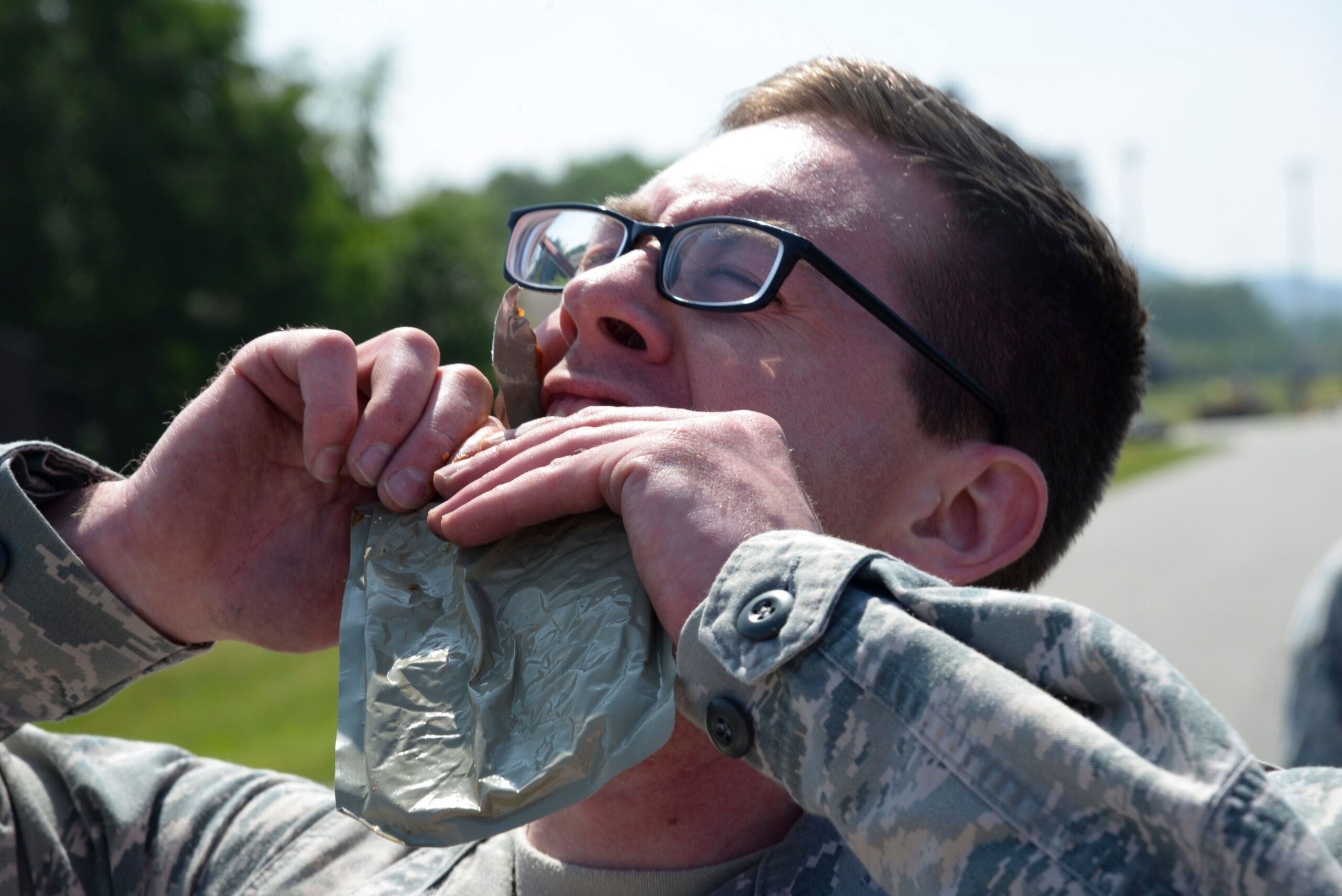
MREs, typically sealed in distinctive brown branding, are used to feed troops basic nutrients in austere situations and training exercises.
Known for their energy content as opposed to their taste, the emergency rations can be eaten hot or cold and are notorious for producing foul flatulence and blocked bowels — oftentimes contributing to the MRE’s other moniker of Meal, Refusing to Exit.
According to a statement from the office, the group used false paperwork to acquire MREs from Fort Bliss and Davis created false requests, rented vehicles to move the calorically dense provisions, fixed prices and collected compensation in the operation.
The FBI and Army Criminal Investigation Division agents executed a search warrant on a civilian warehouse in August 2020 and found scores of pallets of MREs that an investigation showed was a holding facility for a company that purchased the rations from people who had pillaged them from Fort Bliss, the statement said.
Davis was named in the February 2025 indictment — along with the three others — for conspiracy to commit theft of government property and a substantive count of theft of government property between Feb. 4, 2020, and Aug. 12, 2020.
The office said that Davis learned the Army’s food procurement process while working in food service supply in the service. When he retired, the statements said, he got a job as a civilian contractor in a similar position.
“Joseph Davis betrayed the very country he once swore to protect in an effort to satisfy his own selfish ambition and a jury of his peers held him accountable for it,” said U.S. Attorney Justin R. Simmons.
Military Times contacted the Army for details regarding Davis’ time in service, but had not received a response as of publication.
For one U.S. Army soldier-turned-contractor, the lure of a processed lemon poppy seed poundcake seemingly proved too tempting to resist.
Joseph Lavar Davis, 47, was convicted of stealing over $1.1 million worth of the military’s pre-packaged Meals-Ready-to-Eat, or MREs, in El Paso, Texas, the U.S. Attorney’s Office, Western District of Texas, said Tuesday, in a scheme involving three other co-defendants and more than 200 pallets of the shelf-stable rations.
MREs, typically sealed in distinctive brown branding, are used to feed troops basic nutrients in austere situations and training exercises.
Known for their energy content as opposed to their taste, the emergency rations can be eaten hot or cold and are notorious for producing foul flatulence and blocked bowels — oftentimes contributing to the MRE’s other moniker of Meal, Refusing to Exit.
According to a statement from the office, the group used false paperwork to acquire MREs from Fort Bliss and Davis created false requests, rented vehicles to move the calorically dense provisions, fixed prices and collected compensation in the operation.
The FBI and Army Criminal Investigation Division agents executed a search warrant on a civilian warehouse in August 2020 and found scores of pallets of MREs that an investigation showed was a holding facility for a company that purchased the rations from people who had pillaged them from Fort Bliss, the statement said.
Davis was named in the February 2025 indictment — along with the three others — for conspiracy to commit theft of government property and a substantive count of theft of government property between Feb. 4, 2020, and Aug. 12, 2020.
The office said that Davis learned the Army’s food procurement process while working in food service supply in the service. When he retired, the statements said, he got a job as a civilian contractor in a similar position.
“Joseph Davis betrayed the very country he once swore to protect in an effort to satisfy his own selfish ambition and a jury of his peers held him accountable for it,” said U.S. Attorney Justin R. Simmons.
Military Times contacted the Army for details regarding Davis’ time in service, but had not received a response as of publication.
For one U.S. Army soldier-turned-contractor, the lure of a processed lemon poppy seed poundcake seemingly proved too tempting to resist.
Joseph Lavar Davis, 47, was convicted of stealing over $1.1 million worth of the military’s pre-packaged Meals-Ready-to-Eat, or MREs, in El Paso, Texas, the U.S. Attorney’s Office, Western District of Texas, said Tuesday, in a scheme involving three other co-defendants and more than 200 pallets of the shelf-stable rations.
MREs, typically sealed in distinctive brown branding, are used to feed troops basic nutrients in austere situations and training exercises.
Known for their energy content as opposed to their taste, the emergency rations can be eaten hot or cold and are notorious for producing foul flatulence and blocked bowels — oftentimes contributing to the MRE’s other moniker of Meal, Refusing to Exit.
According to a statement from the office, the group used false paperwork to acquire MREs from Fort Bliss and Davis created false requests, rented vehicles to move the calorically dense provisions, fixed prices and collected compensation in the operation.
The FBI and Army Criminal Investigation Division agents executed a search warrant on a civilian warehouse in August 2020 and found scores of pallets of MREs that an investigation showed was a holding facility for a company that purchased the rations from people who had pillaged them from Fort Bliss, the statement said.
Davis was named in the February 2025 indictment — along with the three others — for conspiracy to commit theft of government property and a substantive count of theft of government property between Feb. 4, 2020, and Aug. 12, 2020.
The office said that Davis learned the Army’s food procurement process while working in food service supply in the service. When he retired, the statements said, he got a job as a civilian contractor in a similar position.
“Joseph Davis betrayed the very country he once swore to protect in an effort to satisfy his own selfish ambition and a jury of his peers held him accountable for it,” said U.S. Attorney Justin R. Simmons.
Military Times contacted the Army for details regarding Davis’ time in service, but had not received a response as of publication.
July is my birthday month, and it also marks seven years since I was invited to take over JourneyWoman in July 2019. At the time, I knew nothing about the travel industry. I had never written a travel article. I had never managed a website. I had never gone on an expedition ship or a group tour. All I had then — and now — was a passion for travel, a desire to empower women and a love of writing. Those things are still what guide me today, as I work through the process of reinventing my life.
Here’s what I’ve learned: when it comes to reinvention, you have to follow your heart, and you have to make your own rules. As women, we are often told that ‘this is how it’s done’. I’ve never followed the crowd or worried about what others are doing. With more than 35 years of career experience, I try to do what feels right for you and for us — our readers and community. I know that my values are what guide JourneyWoman. I know that Evelyn felt the same way, and I’m forever grateful to her daughter, Erica Ehm, for inviting me to carry on her mother’s legacy.
I’ve just returned from our JourneyWoman trip to Iceland with an adventurous group of women, including Diana Eden, 86, our 2026 JourneyWoman Evelyn Hannon Award recipient. Diana and I spent a week together exploring the less-travelled Westfjords with Aurora Expeditions.
Diana is a wonderful example of reinvention, this month’s theme. A three-time Emmy nominee for her costume design work in Hollywood, Diana has designed numerous prime-time television series, movies, pilots, as well as stage productions in Los Angeles and New York. Her ‘so-called’ retirement and move in 2008 to Las Vegas brought her more costume design for films and stage shows and a professorship at UNLV (University of Nevada, Las Vegas) teaching tomorrow’s filmmakers about costume for film. She’s also written two memoirs. She’s an inspiration to me, and I hope to you too!
In this issue of JourneyWoman Magazine, we seek to challenge conventional thinking on reinvention as a lifelong journey, celebrate women’s stories and gather inspiration from other women who have been there, done that – their own way, on their own terms.
Diana Eden and Carolyn Ray in Iceland
We also invite you to share your story with us so that we can share it in Smitten, our bi-monthly newsletter that curates all the things we love and recommend. Smitten is issued twice a month on Monday mornings and features “Meet a JourneyWoman” and curated, first-hand travel tips and exclusive travel deals. Everyone published in Smitten receives a complimentary annual subscription. Click here to join.
The Air Force is hitting refresh on electromagnetic warfare with its first new electronic attack aircraft in forty years. The EA-37B Compass Call is a modified business jet that some experts are already calling a “game changer” thanks to its speed, range, high service ceiling, and ability to upgrade quickly to keep pace with new technology.
But at the same time, other experts warn that the service will need more Compass Calls than the Air Force plans on buying to meet the challenges of the invisible battlefield.
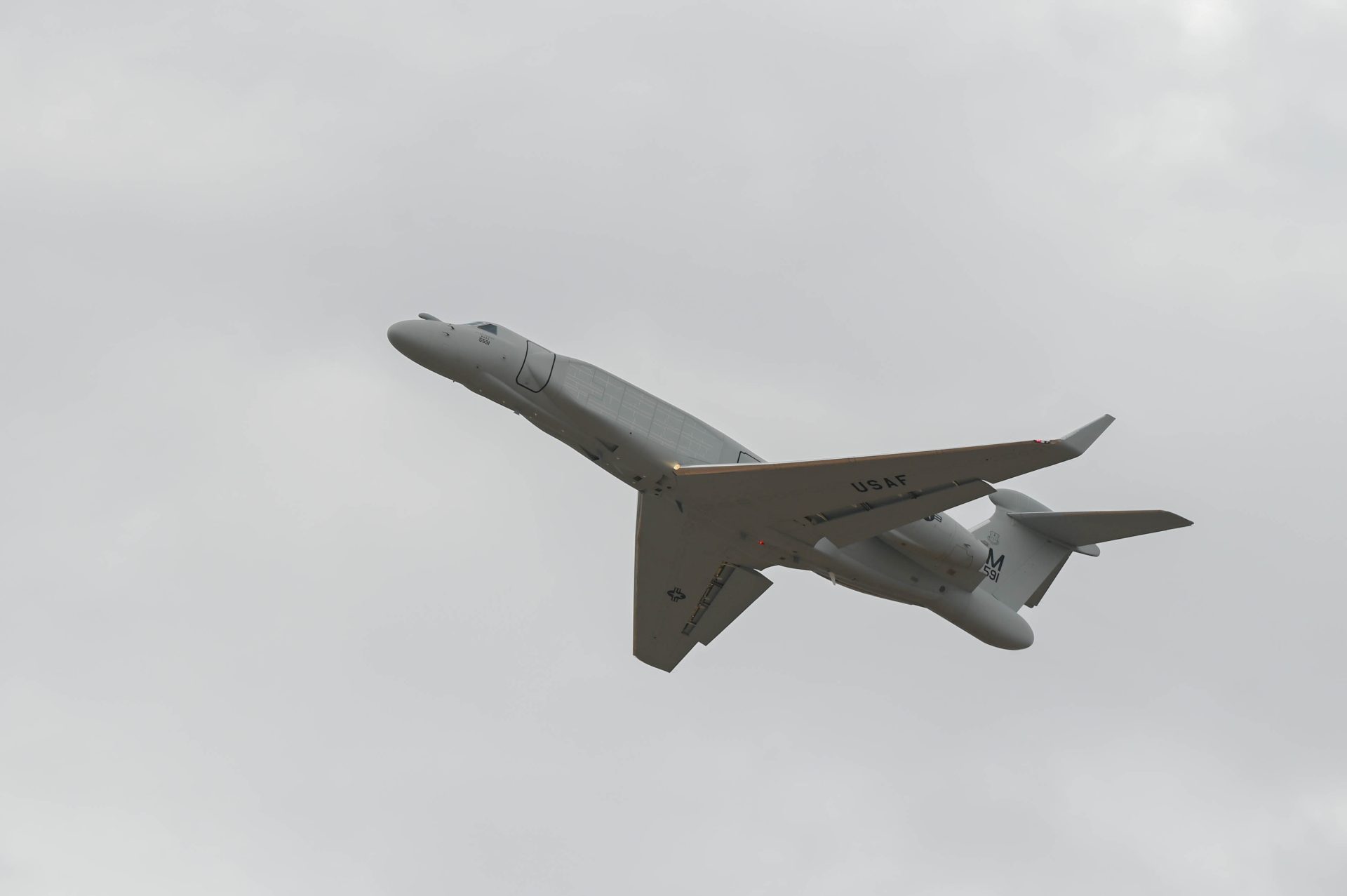
An EA-37B Compass Call prepares to raise its door before flight at Davis-Monthan Air Force Base, Arizona, Aug. 28, 2024. Air Force photo by Senior Airman Andrew Garavito
Cat-and-mouse
One of the earliest examples of electromagnetic warfare emerged in 1904, when Russia jammed Japanese radio signals coordinating the shelling of Port Arthur. It’s been a cat-and-mouse game ever since: as new technologies for radar, communication and navigation crop up, so do new ways of jamming, spoofing, or otherwise messing with them.
During Desert Storm, Air Force EF-111A Ravens and Navy and Marine Corps EA-6B Prowlers jammed enemy air defenses to clear the way for strike aircraft. Though often overshadowed by fighters and bombers, the Navy wrote that electromagnetic jamming, also called defense suppression, was “critical to the success of all aviation missions” during the Gulf War, and “If Navy defense suppression wasn’t available, the missions didn’t fly.”
Today, the cat-and-mouse game is faster than ever. As described in a 2023 report by the RAND Corporation, advanced radar systems can adjust their waveforms, power, and sensitivity to become much more difficult to spot, or shift rapidly between “never-before-seen waveforms.”
This is playing out in Ukraine. Bryan Clark, an electronic warfare expert and senior fellow at the Hudson Institute, told Task & Purpose that Ukrainian troops are using software-defined radios to maneuver through the electromagnetic spectrum.
“They’re very versatile when it comes to changing the waveforms and frequencies, which allows you to be more capable of circumventing jamming,” he said. “And if you’re jamming, you can hunt for the signals you’re trying to jam more effectively.”
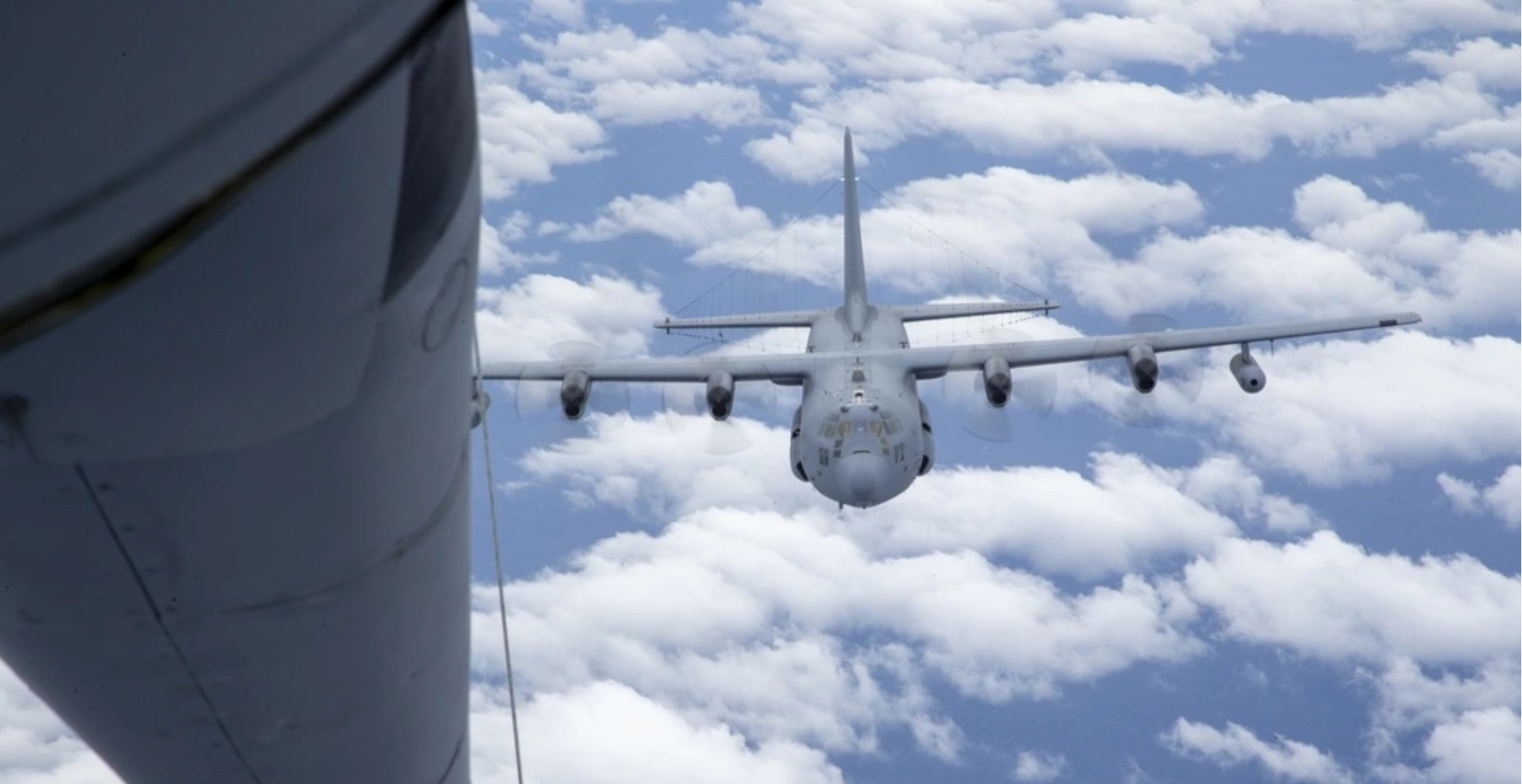
An Air Force EC-130H Compass Call prepares for in-flight refueling over the Gulf of Mexico, Dec. 3, 2020. A U.S. Air Force EC-130H Compass Call from the 55th Wing prepares for in-flight refueling from a 155th Air Refueling Wing KC-135 Stratotanker during exercise Emerald Flag over the Gulf of Mexico, Dec. 3, 2020. (Staff Sgt. Joshua Hoskins/U.S. Air Force)
Compass calling
The EA-37B is replacing the EC-130H, which flew over the Middle East practically non-stop through the Global War on Terror. EC-130H crews used radio signals to track down insurgents and disable remote-controlled improvised explosives.
But the Pentagon is preparing for a possible fight with China across the vast Pacific Ocean. The EC-130H may not have the speed or range to help, and its low ceiling of 25,000 feet means it can’t throw signals very far to touch enemy systems.
The EA-37B can fly about twice as far, fast and high as its predecessor. The bulges on the side of the fuselage house transmit antennas and amplifiers that boost its power, letting the jet hit targets farther away than smaller platforms such as the Navy’s EA-18G Growler.
The Air Force is also developing a software system that will let Compass Call crews quickly update their electronic warfare programs in response to new threats.
The first EA-37B arrived in August, 2024, and the fleet grew to five by May 2025. It’s already a combat veteran, having taken part in Operation Epic Fury earlier this year.
An EA-37B Compass Call takes its first official flight at Davis-Monthan Air Force Base, Arizona, Aug. 28, 2024. Air Force photo by Senior Airman Andrew Garavito
But is it enough?
In its 2027 budget request, the Air Force bumped its request for 12 EA-37Bs up to 22 aircraft through 2031, nearly double the original ask. But given the size of the Pacific and the worldwide demand for electronic attack, some say that may not be enough. Heather Penney, an airpower expert at the Mitchell Institute for Aerospace Studies, said on a recent podcast that the Air Force probably needs upwards of 30 aircraft to meet demand.
On the other hand, Clark warned that as air defenses become more formidable, EA-37Bs may soon become obsolete.
There is plenty of grey between peace and war, and the electromagnetic spectrum allows superpowers to poke each other without turning buildings into rubble. This was a big part of the Cold War, wherein U.S. aircrews gathered electronic intelligence on the Soviet Union for decades. The EA-37B may play a similar role.
“If anything, the electromagnetic spectrum has become more challenged over time,” Col. Scott Mills, then-commander of the 355th Wing at Davis-Monthan Air Force Base, Arizona, said when the EA-37B first arrived there in 2024. “We need an asset that can meet that challenge today. We have that with the arrival of the EA-37B.”
We have even more about the EA-37B and why it’s so important for modern warfare over on our YouTube channel, which you can check out here.
Exclusive: Sen. Jerry Moran tells Military.com why he believes the Taking Care of America’s Veterans Act has been widely misunderstood, and why he says current veterans would not lose benefits under the proposal.