Author: Jess Rice

  • 12 Eggplant Recipes You Need to Try

    12 Eggplant Recipes You Need to Try

    Late summer belongs to the eggplant! This warm-weather vegetable is at its seasonal best from midsummer into early fall, and is usually easier to find at a good price around this time, too! I know eggplant can feel a little tricky if you don’t cook with it often, but I’m a veggie gal through and through, and I never run out of ways to put it to work. Roast it until tender, mash it into a smoky curry, bread it until crisp, cover it with sauce and cheese, or arrange it in colorful layers. Not sure where to begin? These 12 eggplant recipes will help you make the most of every one you bring home!

    Easy Ratatouille Recipes

    Ratatouille might sound fancy, but at heart, it’s a practical way to turn a pile of summer vegetables into something delicious. This rustic dish comes from Provence in southern France and traditionally brings eggplant, zucchini, tomatoes, peppers, and other seasonal produce together until tender. These two recipes take that familiar vegetable medley in less traditional but very practical directions for everyday cooking!

    1. Homemade Ratatouille

    Ratatouille Recipe

    Overhead view of a baking dish filled with layers of oven roasted ratatouille.

    This Homemade Ratatouille is packed with layers of fresh veggies, marinara sauce, and melty cheese. A simple, cozy side dish that tastes like comfort!

    4.78 from 68 votes

    $7.02 recipe / $0.88 serving
    Get the Recipe

    Our homemade ratatouille takes a different route from the traditional chunky vegetable stew. Thin slices of eggplant, zucchini, yellow squash, and tomatoes are layered over marinara, similar to a vegetable tian, then baked until tender and topped with melted cheese. It looks impressive, but all you really need to do is slice, layer, and bake before serving it with bread, polenta, rice, or whatever else you fancy for dinner.

    2. Ratatouille Frittata

    Ratatouille Frittata

    Ratatouille Frittata combines the rich and complex flavors of ratatouille with the ease of an egg frittata. Great for low carb dieters or using up that summer bumper crop! BudgetBytes.com

    Ratatouille Frittata combines the rich and complex flavors of ratatouille with the ease of an egg frittata. Great for low carb dieters or using up that summer bumper crop! 

    4.78 from 9 votes

    $7.32 recipe / $0.92 serving
    Get the Recipe

    Ratatouille already brings together some of summer’s best vegetables, and this ratatouille frittata bundles eggplant, zucchini, onion, and tomatoes into one filling dish. Eggs are also one of the more affordable protein options again (thankfully!), and this recipe stretches six eggs into eight generous slices. I’ll happily serve this one for breakfast, brunch, lunch, OR dinner!

    Budget-Friendly Mains Featuring Eggplant

    This is where eggplant really earns its place in my grocery cart. Its hearty texture makes it easy to build a filling dinner around inexpensive staples like rice, pasta sauce, cheese, and pantry spices. One recipe even pairs two whole eggplants with only ½ lb. ground beef to make four servings! Here are some of our favorite dinners using eggplant.

    3. Eggplant Parmesan

    Eggplant Parmesan

    Side view of a slice of eggplant parmesan on a plate.

    This tasty Eggplant Parmesan is baked, not fried, but full of flavor and texture! It’s a veggie-packed dish perfect for the whole family.

    5 from 14 votes

    $9.98 recipe / $1.11 serving
    Get the Recipe

    This eggplant Parmesan is comfort in a casserole dish for me! This recipe skips frying the eggplant, and bakes it instead…which means less oil, mess, and hands-on work! Once the breaded slices are golden and crisp, layer them with marinara and plenty of cheese, then bake again until everything is bubbly and gooey. YUM.

    4. Eggplant Curry

    Eggplant Curry

    Overhead view of eggplant curry in a skillet with a wooden spoon.

    This Eggplant Curry recipe is inspired by baingan bharta with roasted eggplant and tomatoes, warm spices, and a quick curry-paste shortcut. Cozy and easy!

    4.63 from 8 votes

    $7.32 recipe / $1.83 serving
    Get the Recipe

    My eggplant curry is a budget-friendly take on the baingan bharta I order from my favorite Indian restaurant. Roasted eggplant and tomatoes are mashed into onion, garlic, ginger, red curry paste, and aromatic pantry spices for a thick, smoky curry that tastes even better the next day. You can roast the vegetables ahead, and the finished curry freezes beautifully! Top tip: If you need this dish to stay vegetarian or vegan, check that your curry paste doesn’t contain shrimp paste!

    5. Soy Glazed Eggplant Stir Fry

    Soy Glazed Eggplant

    Close up side view of Soy Glazed Eggplant in the skillet, topped with peanuts and green onion

    This Soy Glazed Eggplant stir fry is a super fast and easy vegetarian weeknight dinner, which also meal preps well for the week.

    4.89 from 51 votes

    $3.86 recipe / $0.97 serving
    Get the Recipe

    Our soy glazed eggplant turns one eggplant and a few pantry staples into a sweet, salty, garlicky stir-fry in only 20 minutes. We use fresh ginger because it gives the glaze a much brighter flavor than dried ginger (I recommend storing the remaining ginger in the freezer so none goes to waste!) Serve it over rice with peanuts and green onions, then add broccoli or snow peas if you want to make the meal go even further!

    6. Roasted Eggplant with Meat Sauce

    Roasted Eggplant with Meat Sauce

    Roasted Eggplant with Meat Sauce is an elegant low carb main dish that will leave you satisfied. Pair with a simple green salad for a complete meal. BudgetBytes.com

    Roasted Eggplant with Meat Sauce is an elegant low carb main dish that will leave you satisfied. Pair with a simple green salad for a complete meal.

    4.90 from 28 votes

    $8.23 recipe $2.06 serving
    Get the Recipe

    Two eggplants help a modest ½ lb. of ground beef go much further in our roasted eggplant with meat sauce. The eggplant halves roast cut-side down, which traps the steam and leaves the centers soft and creamy beneath all that rich tomato sauce. For a vegetarian version, finely chopped mushrooms make a great replacement (I’d cook them until the liquid evaporates and they begin to brown for the best flavor!).

    7. Summer Vegetables in Red Sauce

    Summer Vegetables in Red Sauce

    Close up overhead view of cornmeal and vegetables in red sauce in a bowl with a fork on the side.

    Colorful summer vegetables simmered in a red sauce and spooned over warm polenta make a hearty and inexpensive summer meal.

    4.88 from 8 votes

    $8.15 recipe / $1.36 serving
    Get the Recipe

    Got a crowded crisper drawer? I’d call that the perfect excuse to make our summer vegetables in red sauce! We add the eggplant, bell pepper, and zucchini in stages so each one becomes tender without anything turning mushy. Spoon it over budget-friendly Parmesan polenta, pasta, mashed potatoes, or sturdy toast for an easy dinner starring eggplant!

    Pasta Night, Two Ways

    Eggplant pastas can be rich and cozy or fresh and summery, and I’ve got one of each here. Choose between a savory tomato-based pasta for dinner and a pesto pasta salad that’s perfect for cookouts and meal prep!

    8. Pasta with Eggplant Sauce

    Pasta with Eggplant Sauce

    A skillet of pasta topped with eggplant sauce.

    This Pasta with Eggplant sauce gets an extra savory boost from a secret ingredient – anchovies!

    4.37 from 11 votes

    $6.27 recipe / $1.05 serving
    Get the Recipe

    I’m all for getting every last bit of flavor out of what I’ve got, and smart flavor boosters are a great way to do it. In our pasta with eggplant sauce, that means adding a little anchovy paste. You only need 1 teaspoon to give the tomato sauce loads of savory depth, and don’t worry, it won’t make the pasta taste fishy! Cut the eggplant into small ½-inch cubes so it softens evenly and becomes silky in the sauce.

    9. Ditalini Pasta Salad

    Ditalini Pasta Salad

    Overhead view of a bowl of homemade ditalini pasta salad.

    This easy Ditalini Pasta Salad is packed with roasted summer veggies, tossed in pesto, and finished with a sprinkle of feta. Delicious & meal prep friendly!

    4.75 from 4 votes

    $8.67 recipe / $1.08 serving
    Get the Recipe

    Those tiny pasta tubes make this ditalini pasta salad especially easy to scoop at cookouts! Roasted eggplant is tossed with zucchini, bell pepper, pesto, and salty feta for a colorful and incredibly delicious summer side. I always make this one ahead because the flavors only get better after a brief chill. Use store-bought pesto for convenience or homemade pesto to keep the cost down!

    Easy Eggplant Appetizers and Lunch Ideas

    Eggplant isn’t only for casseroles, curries, and pasta sauce. I’ll blend it into a creamy dip, pile it onto a cheesy toasted roll, or roast it with lemon and garlic for filling pita pockets. These easy eggplant recipes cover everything from party snacks to simple lunches and dinners.

    10. Baba Ganoush

    Baba Ganoush

    Baba ganoush on a bowl served with pita bread.

    Make your own fresh and flavorful Baba Ganoush to dip pita or fresh vegetables.

    4.50 from 2 votes

    $3.07 recipe / $0.77 serving
    Get the Recipe

    I’m usually the first to reach for hummus at the snack table, but when baba ganoush is in the mix, I can’t resist its creamy, garlicky, lemony flavor! Whole eggplants and garlic roast together before being blended with tahini, lemon, paprika, and salt. Let the eggplant roast until its skin is wrinkled and the center is completely soft as that’s how you know it’s ready to scoop!

    11. Eggplant Mozzarella Sandwiches

    Eggplant Mozzarella Sandwiches

    front view of one eggplant mozzarella sandwich

    These Eggplant Mozzarella Sandwiches are an easy vegetarian dish with plenty of options for customizing to fit your tastes and budget.

    5 from 13 votes

    $6.41 recipe / $2.14 serving
    Get the Recipe

    When a cold veggie sandwich won’t do, these eggplant mozzarella sandwiches pile saucy sautéed eggplant and melty mozzarella onto garlic-butter toasted rolls. Fresh mozzarella gives you the dreamiest melt, but shredded full-fat mozzarella works when it’s the better buy. I’d only assemble what you plan to eat and refrigerate the remaining filling separately to avoid soggy sandwiches.

    12. Oven Roasted Greek Stuffed Pitas

    Oven Roasted Greek Stuffed Pitas

    Greek Stuffed Pitas

    These Oven Roasted Greek Stuffed Pitas are an easy make ahead lunch with big flavor and little effort. 

    4.58 from 19 votes

    $10.95 recipe / $1.37 serving
    Get the Recipe

    Most of the work for these oven roasted Greek stuffed pitas happens in the oven, where chicken, eggplant, tomatoes, peppers, and red onion roast in a lemon-garlic marinade. Finish the roasted filling with salty feta and fresh parsley, then stuff it into warm pita pockets. It also stores well for easy make-ahead lunches!

    The post 12 Eggplant Recipes You Need to Try appeared first on Budget Bytes.

    This post was originally published on this site.

  • Crockpot Italian Grinder Chicken

    Crockpot Italian Grinder Chicken

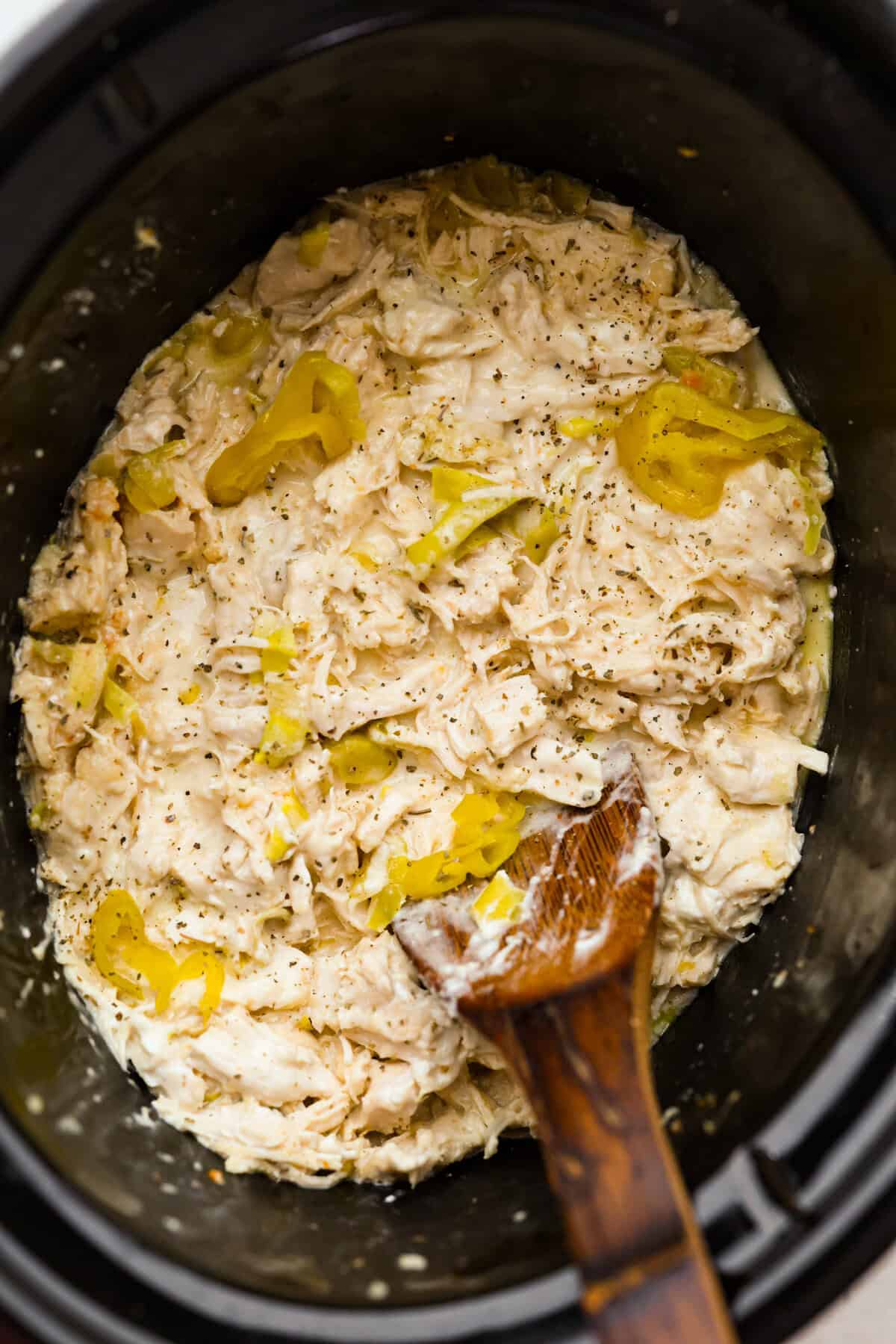
    Crockpot Italian grinder chicken is creamy, tangy, and full of flavor. It’s an easy slow cooker dinner that tastes great on a toasted hoagie rolls or over pasta.

    Grinder Flavor Made Crockpot Easy

    • Big Italian Flavor: Every bite is creamy, tangy, and full of savory Italian seasoning flavor.
    • Great for Leftovers: The shredded chicken heats up well, so lunch the next day is already done.
    • Make It Your Own: Use chicken thighs, banana peppers, or Greek yogurt to switch things up.

    Crockpot Italian Grinder Chicken Ingredients

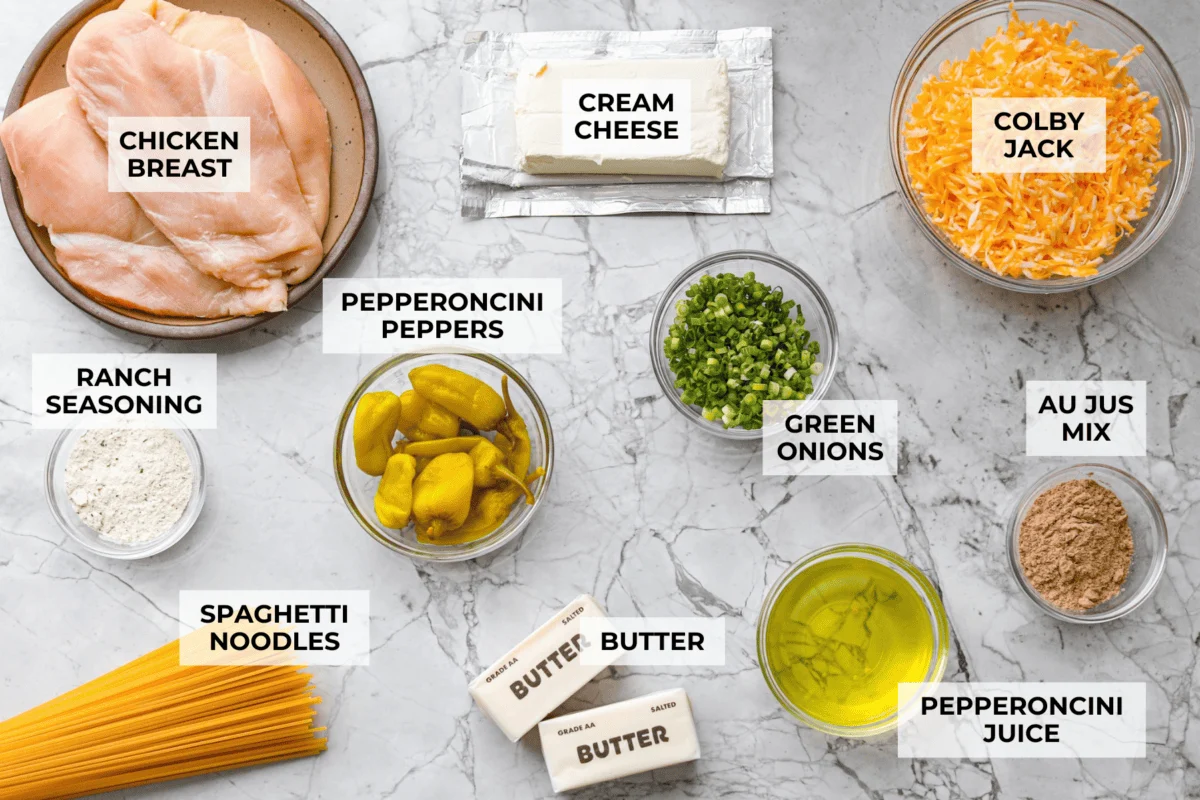
    Overhead shot of labeled ingredients.
    • Chicken: I use boneless, skinless chicken breasts. Chicken thighs work great too and stay nice and juicy.
    • Pepperoncini: Use mild peppers if you don’t like much heat. You can also use banana peppers.
    • Cream Cheese: This makes the chicken rich and creamy. You can use plain Greek yogurt instead for more protein.
    • Italian Dressing Mix: This adds lots of flavor with very little prep.
    • Parmesan Cheese: Freshly grated Parmesan melts best, but pre-grated works too.

    How To Make Crockpot Italian Grinder Chicken

    This is one of those dinners that makes the crock pot worth pulling out. If you love easy slow cooker meals, you should also try my Crockpot Tuscan Chicken, Crockpot Crack Chicken, or Crockpot Parmesan Garlic Chicken Pasta.

    1. Add Everything to the Crockpot: Add the chicken, pepperoncini, chicken broth, dressing mix, and garlic to a 4-6 quart crockpot. Cover and cook on LOW for 5-6 hours or HIGH for 2-3 hours.
    2. Shred and Make It Creamy: Shred the chicken with two forks. Add the cream cheese and Parmesan. Stir until melted and creamy. Give it a good stir, then make Italian chicken sandwiches or serve over pasta.

    Alyssa’s Pro Tips

    • Don’t Drain the Peppers: That pepperoncini juice adds tons of tangy flavor to the chicken.
    • Soften the Cream Cheese: Softened cream cheese melts into the sauce much more easily.
    • Toast the Rolls: If you’re making sandwiches, toast the hoagie buns first so they don’t get soggy.
    • Make It Even More Grinder-Like: Top the sandwiches with shredded lettuce, sliced tomato, red onion, or provolone.

    Kitchen Tools Used

    • Slow Cooker: A 4-6 quart slow cooker is the perfect size for this recipe.

    Print

    Crockpot Italian Grinder Chicken

    Crockpot Italian grinder chicken is tender, creamy, and packed with pepperoncini, garlic, Parmesan, and Italian flavor.
    Course Dinner, Main Course
    Cuisine Italian American
    Keyword crockpot italian grinder chicken recipe, italian grinder chicken, slow cooker italian grinder chicken
    Prep Time 10 minutes
    Cook Time 6 hours
    Total Time 6 hours 10 minutes
    Servings 6 servings
    Calories 277kcal

    Equipment

    • 1 4-6 quart slow cooker

    Ingredients

    • 2 pounds boneless skinless chicken breast
    • 1 (8-ounce) jar sliced pepperoncini peppers with juice
    • cup chicken broth
    • 1 packet Italian dressing mix
    • 3 cloves minced garlic
    • 4 ounces cream cheese cubed and softened
    • ½ cup grated Parmesan cheese

    Instructions

    • To a 4-6 quart crockpot, add 2 pounds boneless skinless chicken breast, 1 (8-ounce) jar sliced pepperoncini peppers, ⅓ cup chicken broth, 1 packet Italian dressing mix, and 3 cloves minced garlic. Cover and cook on LOW for 5-6 hours or HIGH for 2-3 hours.
    • Once the chicken is tender, shred with a fork, then add 4 ounces cream cheese and ½ cup grated Parmesan cheeseStir until the cream cheese is melted and evenly combined.

    Notes

    Leftover Instructions

    • Fridge- Store in an airtight container in the fridge for up to 5 days. Reheat in the microwave in 30-second intervals until heated through.
    • Freezer- Store in an airtight container in the freezer for up to 3 months. Thaw in the fridge overnight before reheating.

    Nutrition

    Calories: 277kcal | Carbohydrates: 3g | Protein: 36g | Fat: 13g | Saturated Fat: 6g | Polyunsaturated Fat: 1g | Monounsaturated Fat: 3g | Trans Fat: 0.02g | Cholesterol: 123mg | Sodium: 447mg | Potassium: 609mg | Fiber: 0.04g | Sugar: 1g | Vitamin A: 372IU | Vitamin C: 2mg | Calcium: 103mg | Iron: 1mg

    More Grinder-Inspired Recipes

    Crockpot Italian grinder chicken added to a hoagie bun.

    This post was originally published on this site.

  • Slow Heart Rate in Older Adults: Bradycardia, Pacemakers & What to Know

    Slow Heart Rate in Older Adults: Bradycardia, Pacemakers & What to Know

    Have you ever been told that your heart rate is slow, or maybe too slow?

    This is called bradycardia, and it’s fairly common in older adults. Whereas in younger adults, a slow heart rate is often due to being in good cardiovascular shape, with aging, a slower heart rate often reflects changes in the heart’s electrical system. (Medications are another common cause.)

    This can be an issue because a slower heart rate can cause symptoms such as fatigue, dizziness, falls, or trouble keeping up with usual activities.

    Fortunately, in certain situations, a pacemaker can be an effective treatment that helps older adults feel substantially better.

    To help older adults learn more about bradycardia and when to consider a pacemaker, I interviewed cardiologist Cara Pellegrini, MD, who specializes in cardiac electrophysiology. Here’s what’s most important to know, based on our conversation.

    What Is a Pacemaker and How Does It Help a Slow Heart Rate?

    A pacemaker is a small electronic device that monitors the heart’s electrical activity and can stimulate the heart to produce a heartbeat when needed.

    Pacemakers are generally used when the heart is beating too slowly.

    A pacemaker has three basic components:

    1. A battery, which powers the device
    2. A computer, which monitors the heart and determines when pacing is needed
    3. A connection to the heart, either through traditional wires called leads or through electrodes built into a leadless pacemaker

    The pacemaker continually monitors what the heart is doing.

    If enough time passes without an appropriate heartbeat, the device delivers a small electrical stimulus that causes the heart to beat.

    People generally do not feel the electrical stimulation from an ordinary pacemaker.

    For many older adults with symptomatic bradycardia, a pacemaker is used primarily to improve symptoms and quality of life. With certain types of heart block, however, a pacemaker can also be life-saving.

    To understand when a pacemaker is needed, it helps to first understand what doctors mean by a slow heart rate.

    What Is Bradycardia, or a Slow Heart Rate?

    Bradycardia is the medical term for a slow heart rate.

    It is usually defined as a heart rate below 60 beats per minute.

    But a heart rate below 60 does not automatically mean something is wrong.

    For example, younger athletic adults commonly have resting heart rates in the 40s or 50s without having a medical problem. Some older adults may also have a relatively slow resting heart rate and feel perfectly well.

    So the heart-rate number by itself does not determine whether treatment is needed.

    What matters more is whether the heart is beating fast enough for the body’s needs, and whether the heart is able to increase the heart rate enough with physical activity.

    How the heart’s electrical system works

    The heart is a pump, but it also has its own electrical system.

    Normally, each heartbeat begins in the sinus node, also called the sinoatrial or SA node. You can think of the sinus node as the heart’s natural pacemaker.

    The sinus node generates an electrical signal. That signal travels through the upper chambers of the heart, called the atria, and then reaches the atrioventricular, or AV, node.

    From there, the signal travels into the heart’s lower pumping chambers, the ventricles.

    This allows the different parts of the heart to contract in a coordinated way.

    Problems with either generating this electrical signal or transmitting it through the heart can cause the heart rate to become too slow.

    What Heart Rate Is Too Low for an Older Adult?

    There is no single heart-rate number that is too low for every older adult.

    A very low heart rate, such as one in the 20s or 30s, is clearly concerning.

    In an older person, a resting heart rate in the 40s may also warrant further evaluation, especially if the person is having symptoms such as dizziness, fatigue, fainting, or difficulty with exertion.

    But doctors also need to consider what happens to the heart rate during physical activity.

    Some people have a resting heart rate in the 50s or 60s and feel fine while sitting. But when they walk, climb stairs, or otherwise exert themselves, their heart rate cannot increase enough to meet their body’s increased demand for blood flow.

    This is called chronotropic incompetence.

    Chronotropic incompetence can be one of the earliest signs of sinus node dysfunction, a common cause of bradycardia in older adults.

    So when deciding whether a heart rate is “too low,” doctors consider both:

    • How low the heart rate is at rest
    • Whether the heart rate increases appropriately with activity
    • Whether the slow heart rate is causing symptoms

    What Are the Symptoms of Bradycardia in Older Adults?

    When the heart is beating too slowly to provide the blood flow the body needs, symptoms of bradycardia can include:

    • Fatigue or low energy
    • Dizziness or lightheadedness
    • Shortness of breath
    • Becoming unusually short-winded with activity
    • Reduced ability to exercise or perform usual activities
    • Mental clouding or confusion
    • Feeling as though you might pass out, known as presyncope
    • Fainting, known medically as syncope

    Can a slow heart rate cause fatigue?

    Yes. Fatigue and reduced exercise tolerance are common symptoms when the heart rate is too slow for the body’s needs.

    Some people notice that activities they previously managed easily become much more tiring.

    Can bradycardia cause dizziness or falls?

    Bradycardia can cause dizziness, near-fainting, and fainting.

    In geriatrics, falls can sometimes be part of the picture as well.

    For instance, if an older person suddenly falls and cannot clearly explain what happened, it can be worth considering whether they briefly became lightheaded or lost consciousness.

    That said, fatigue, dizziness, shortness of breath, confusion, and falls can all have many possible causes in older adults.

    So simply finding a slow heart rate does not prove that bradycardia is causing the symptoms.

    The important detective work is determining whether the symptoms and the slow heart rate are actually occurring together.

    Why Do Slow Heart Rates Become More Common With Aging?

    One of the most common reasons older adults develop an abnormally slow heart rate is age-related changes in the heart’s electrical system.

    Over time, scar-like tissue can develop in areas involved in generating and transmitting electrical signals.

    Eventually, these changes can interfere with the heart’s ability to maintain an appropriate heart rate.

    Cardiovascular risk factors such as high blood pressure may contribute to this process.

    But aging is not the only possible cause of bradycardia.

    Other contributors can include:

    • Certain medications, including
      • Cardiovascular medications such as beta-blockers and calcium channel blockers
      • Medications for irregular heartbeats (e.g. atrial fibrillation) such as amiodarone
      • Alzheimer’s medications such as donepezil
    • Thyroid problems
    • Electrolyte abnormalities
    • Certain infections
    • Inflammatory illnesses
    • Heart surgery or valve procedures that affect electrical conduction

    This is important because some causes of a slow heart rate can be reversed without placing a pacemaker.

    Sinus Node Dysfunction vs. AV Block: Two Important Causes of Bradycardia

    When evaluating bradycardia, doctors try to determine where the problem is occurring in the heart’s electrical system.

    Two particularly important causes are sinus node dysfunction and AV block, sometimes called heart block.

    What is sinus node dysfunction?

    The sinus node is the heart’s natural pacemaker.

    When it begins generating electrical signals too slowly, or is unable to increase the heart rate enough when the body needs it, this is called sinus node dysfunction.

    You may also hear the older term “sick sinus syndrome.”

    Sinus node dysfunction often develops gradually with aging.

    Possible symptoms include:

    • Low energy
    • Fatigue
    • Reduced exercise tolerance
    • Dizziness
    • Falls
    • Mental clouding

    It is one of the common reasons older adults eventually receive pacemakers.

    What is AV block or heart block?

    AV block is different.

    With AV block, the sinus node may be generating electrical signals normally, but those signals have difficulty reaching the heart’s lower chambers.

    In other words, the problem is not necessarily that the electrical signal isn’t being created. Instead, the signal is being blocked as it travels through the heart.

    Certain types of AV block can develop more suddenly and can be much more serious than typical sinus node dysfunction.

    They may cause:

    • Very slow heart rates
    • Fainting
    • Falls
    • Sudden loss of consciousness

    Some forms of AV block can be life-threatening and generally require a pacemaker.

    How Is Bradycardia Diagnosed?

    The tests used to diagnose bradycardia depend on what symptoms are happening and when they occur.

    Checking the resting heart rate

    A slow heart rate is often first noticed during a routine medical visit.

    A pulse oximeter, blood pressure monitor, smartwatch, or other device may also reveal an unusually low heart rate.

    If a person’s heart rate used to be higher and has recently become persistently slower, that can be useful information for the healthcare team.

    Electrocardiogram or ECG

    A standard 12-lead electrocardiogram, also called an ECG or EKG, records the electrical activity of the heart.

    An ECG can help doctors determine both how fast the heart is beating and whether the electrical signals are moving through the heart normally.

    The limitation is that an ECG only provides a brief snapshot.

    If bradycardia or pauses happen intermittently, they might not occur during the few seconds being recorded.

    Wearable heart monitors

    If symptoms come and go, doctors may recommend wearing a heart rhythm monitor or patch.

    These devices can record heart rhythm over several days or weeks.

    One of the main goals is to determine what the heart was doing at the time symptoms occurred.

    For example, if someone becomes dizzy while walking, doctors can review the recording to determine whether the heart rate became unusually slow at that time.

    Exercise or treadmill testing

    When symptoms mainly occur with physical activity, exercise testing can be particularly useful.

    The person may walk on a treadmill while the heart rate and rhythm are monitored.

    This allows doctors to see whether the heart rate rises appropriately during exertion.

    If it does not, this may help identify chronotropic incompetence.

    Can Medications Cause a Slow Heart Rate?

    Yes. Medications are an important and potentially reversible cause of bradycardia, especially in older adults.

    Several commonly used heart medications can slow the heart rate.

    These include:

    • Beta-blockers, such as metoprolol
    • Calcium-channel blockers, such as diltiazem
    • Digoxin
    • Amiodarone and certain other anti-arrhythmic medications

    These medications may be prescribed for important reasons, such as atrial fibrillation, heart failure, high blood pressure, or another heart condition.

    There are also non-cardiac medications that can cause a slower heart rate in some people, such as donepezil, which is often prescribed for Alzheimer’s and other forms of dementia.

    So the answer is not necessarily to stop them.

    Instead, the healthcare team should determine whether a medication could be contributing to the slow heart rate and whether the dose or treatment plan can safely be changed.

    It is also important to review all medications, not just pills.

    For example, beta-blockers are sometimes used as eye drops for glaucoma. Enough of the medication can occasionally be absorbed into the body to slow the heart rate.

    So when investigating bradycardia, make sure the healthcare team knows about:

    • Prescription medications
    • Over-the-counter medications
    • Eye drops
    • Herbs
    • Supplements

    What Other Reversible Causes of Bradycardia Should Be Checked?

    Before recommending a pacemaker for chronic bradycardia, doctors should consider whether there is a reversible cause.

    Depending on the situation, this may include:

    • Reviewing and adjusting medications
    • Checking thyroid function
    • Checking electrolytes
    • Looking for certain infections
    • Considering inflammatory illnesses
    • Considering whether a recent heart procedure temporarily affected the electrical system

    If one of these underlying problems can be corrected, the heart rate may improve without requiring a pacemaker.

    For chronic sinus node dysfunction, however, there generally isn’t a long-term oral medication that reliably fixes the underlying problem.

    When Is a Pacemaker Needed for Bradycardia?

    For sinus node dysfunction, pacemaker placement is usually not an emergency.

    The key question is:

    How likely is the slow heart rate to be causing this person’s symptoms, and how likely is a pacemaker to help?

    Doctors may consider questions such as:

    • Is fatigue being caused by the low heart rate?
    • Is dizziness occurring during episodes of bradycardia?
    • Is poor exercise tolerance related to chronotropic incompetence?
    • Is the person fainting or nearly fainting because the heart rate is too low?
    • Would increasing the heart rate likely improve function or quality of life?

    Sometimes the connection between symptoms and bradycardia is clear.

    Other times, longer-term monitoring or exercise testing can provide more confidence before a pacemaker is recommended.

    When symptomatic bradycardia is due to chronic sinus node dysfunction and reversible causes have been addressed, a pacemaker is generally the main treatment.

    Certain forms of AV block are different.

    Because serious AV block can be dangerous or life-threatening, a pacemaker may be recommended primarily for safety rather than symptom relief.

    Standard vs. Leadless Pacemakers in Older Adults

    There are now several ways to provide cardiac pacing.

    The right pacemaker depends on the type of electrical problem, the heart’s overall function, and the person’s individual circumstances.

    Standard pacemakers

    A traditional or transvenous pacemaker generally consists of a small device placed under the skin near the shoulder.

    One or more wires, called leads, travel through blood vessels from the device into the heart.

    Depending on a person’s needs, the pacemaker may have one or more leads.

    A single-chamber pacemaker uses one lead.

    A dual-chamber pacemaker generally uses two.

    Doctors usually try to choose the simplest device that will adequately meet the person’s needs.

    What is a leadless pacemaker?

    A leadless pacemaker is a small, self-contained pacemaker placed directly inside the heart.

    Rather than making an incision near the shoulder, the device is inserted through a catheter placed into a large vein, usually through the groin.

    There is no traditional wire connecting a pacemaker near the shoulder to the heart.

    One of the major advantages is a faster and simpler recovery because there are no shoulder-related lead restrictions.

    This may be especially useful for older adults who rely heavily on their arms to:

    • Push themselves up from a chair
    • Use a walker
    • Transfer in and out of bed
    • Perform other everyday activities

    Is a leadless pacemaker better for older adults?

    A leadless pacemaker can be a very good option for some older adults, particularly when basic pacing is all that is needed and avoiding shoulder restrictions would make recovery easier.

    But it is not automatically better for everyone.

    Leadless pacemakers do not provide all the monitoring or pacing capabilities of standard systems, and they cannot always be upgraded in the same way if other heart problems develop later.

    The choice should therefore be based on the person’s particular pacing needs and overall health.

    What Are Biventricular Pacemakers?

    Another type of device is a biventricular pacemaker, also called cardiac resynchronization therapy, or CRT.

    This device is generally used for certain people with heart failure.

    Rather than simply preventing a slow heart rate, it helps different areas of the heart contract in a more coordinated way.

    This can improve the heart’s pumping efficiency in appropriately selected people.

    A biventricular pacemaker is therefore different from the standard pacemaker commonly used to treat age-related sinus node dysfunction.

    What Is an Implantable Cardioverter Defibrillator?

    An implantable cardioverter defibrillator, or ICD, is another implanted heart device that people sometimes confuse with a pacemaker.

    An ICD can generally perform pacemaker functions, but it also monitors for certain dangerous fast heart rhythms.

    If it detects a life-threatening rhythm, the ICD may first try to stop it using rapid pacing.

    If that doesn’t work, it can deliver a much stronger electrical shock to reset the heart’s rhythm.

    Unlike ordinary pacemaker stimulation, an ICD shock can be felt.

    ICDs may be recommended for people with conditions such as:

    • Certain forms of severe heart failure
    • Previous ventricular tachycardia
    • Previous sudden cardiac arrest requiring resuscitation

    Someone who simply has age-related sinus node dysfunction generally does not need an ICD.

    What Is Pacemaker Implantation Like?

    Pacemaker implantation is generally a relatively short procedure.

    Many people can go home the same day, although some spend one night in the hospital.

    The procedure itself often takes approximately one to two hours.

    A standard pacemaker generally involves a small incision near the shoulder.

    A leadless pacemaker is placed through a large vein using a catheter.

    Does pacemaker surgery require general anesthesia?

    Usually not.

    The amount of sedation is individualized, but many people receive conscious sedation or monitored anesthesia care.

    This means they continue breathing on their own but receive medication to reduce anxiety, discomfort, and awareness of the procedure.

    Is pacemaker implantation painful?

    Experiences vary, but most people require relatively little pain medication afterward.

    Some need none.

    Others may take a few doses of acetaminophen.

    It is unusual to need narcotic pain medication after a routine pacemaker procedure, and discomfort usually improves within several days to about a week.

    How Long Does It Take to Recover From a Pacemaker?

    Recovery depends partly on whether someone receives a standard or leadless pacemaker.

    Recovery after a standard pacemaker

    After a traditional pacemaker is placed near the shoulder, people are often advised for about six weeks to avoid:

    • Raising the arm on the pacemaker side high above the head
    • Lifting more than about 10–15 pounds with that arm

    The goal is to reduce the risk of pulling one of the newly placed leads out of position.

    But this does not mean keeping the arm completely still.

    Gentle use is important, especially in older adults, because prolonged lack of shoulder movement can contribute to stiffness or frozen shoulder.

    After the initial healing period, most people can return to their usual physical activities.

    Recovery after a leadless pacemaker

    Recovery after a leadless pacemaker is generally faster.

    There are no prolonged arm restrictions because there are no leads running from the shoulder into the heart.

    Heavy lifting may still be restricted for about five to seven days while the catheter insertion site heals.

    For some older adults, this easier recovery is an important advantage.

    What Is It Like to Live With a Pacemaker?

    For most people, the goal of a pacemaker is to allow them to return to ordinary life with relatively few restrictions.

    How pacemakers are monitored

    Most modern pacemakers can be monitored remotely.

    People may receive a small device that communicates with the pacemaker and sends information to their healthcare team.

    Some systems can also use a smartphone app.

    Remote monitoring can provide information about:

    • Heart-rate patterns
    • How often the pacemaker is pacing
    • Certain abnormal rhythms
    • Battery status
    • How well the device is functioning

    Changing the pacemaker’s settings generally requires an in-person visit.

    How long does a pacemaker battery last?

    Pacemaker batteries often last roughly 7–10 years, although this varies depending on the device and how much pacing is required.

    The battery is monitored over time, so replacement can generally be planned well before it runs out.

    For a standard pacemaker, replacement often involves reopening the small area near the shoulder, disconnecting the old generator from the existing leads, and connecting a new device.

    If the leads do not need to be changed, recovery is usually easier than after the original implantation.

    For leadless pacemakers, the options may include removing and replacing the device or placing a new device alongside it, depending on the particular system.

    Can You Travel, Have an MRI, and Use Household Devices With a Pacemaker?

    After the initial recovery period, most people with pacemakers can return to ordinary activities.

    People are usually given an identification card listing the pacemaker model and other important information.

    It is useful to keep this card available when traveling or receiving medical care.

    Ordinary household appliances generally do not pose a problem.

    Many newer pacemakers also allow MRI scanning under specified conditions.

    However, anyone with a pacemaker should always tell the healthcare team about the device before having an MRI or another medical procedure so that the specific model and precautions can be checked.

    Can Someone in Their 90s Get a Pacemaker?

    Yes. Advanced age by itself does not automatically rule out a pacemaker.

    A more useful question is whether the pacemaker is likely to provide meaningful benefit for that particular person.

    For an older adult with symptomatic sinus node dysfunction, improving the heart rate may help with:

    • Fatigue
    • Dizziness
    • Falls
    • Reduced mobility
    • Poor exercise tolerance
    • Mental clouding

    In some very old adults, correcting significant bradycardia can noticeably improve function and quality of life.

    The decision should be based on overall health, expected benefit, procedural burden, and the person’s preferences — not simply chronological age.

    Should Someone With Dementia Get a Pacemaker?

    Having Alzheimer’s disease or another form of dementia does not automatically mean a pacemaker is inappropriate.

    The important question remains:

    What benefit are we hoping the pacemaker will provide, and how likely is it to provide that benefit?

    In someone with memory problems, it can be harder to determine whether symptoms such as fatigue, reduced activity, or mental clouding are actually being caused by bradycardia.

    That can make the decision less certain.

    Still, if there is good reason to believe the slow heart rate is causing significant symptoms, a pacemaker may improve function or quality of life.

    The decision should consider:

    • How likely bradycardia is to be causing symptoms
    • What improvement can realistically be expected
    • The risks and burdens of the procedure
    • The person’s frailty and other health conditions
    • How difficult recovery would be
    • The person’s goals and preferences

    For some frail older adults or people with memory problems, the shorter recovery associated with a leadless pacemaker may also be worth discussing.

    Does a Pacemaker Extend Life?

    The answer depends on why the pacemaker is needed.

    For typical sinus node dysfunction, the main benefit is often improved symptoms, function, and quality of life.

    Sinus node dysfunction is generally not immediately life-threatening.

    Certain forms of AV block are different.

    If electrical signals can no longer reliably reach the ventricles, a pacemaker can potentially be life-saving.

    Some people are also pacemaker-dependent, meaning they rely heavily on the device to maintain an adequate heartbeat.

    But most people with pacemakers are not completely pacemaker-dependent.

    What Happens to a Pacemaker at the End of Life?

    Pacemakers can be turned off, but this is not routinely necessary for most people approaching the end of life.

    One reason is that most people are not fully pacemaker-dependent.

    Another is that a pacemaker can continue to support comfort and function without necessarily preventing the natural dying process.

    A pacemaker does not mean that a person cannot die naturally when the rest of the body is shutting down.

    The situation is somewhat different with an ICD.

    Because an ICD can deliver a strong electrical shock in response to certain dangerous fast heart rhythms, people approaching the end of life sometimes choose to have the shock function turned off.

    If the ICD is also providing necessary pacing, the pacing function can remain active while the shock function is deactivated.

    These decisions should reflect the person’s goals, values, and overall plan of care.

    Questions to Ask Your Healthcare Provider About Bradycardia and Pacemakers

    If you or an older person you care about has been diagnosed with bradycardia or has been advised to consider a pacemaker, here are some useful questions to ask:

    1. Could there be a reversible cause of the slow heart rate?
    2. Could any medications be contributing?
      Be sure to review prescription medications, over-the-counter drugs, eye drops, herbs, and supplements.
    3. How sure are we that my symptoms are being caused by bradycardia?
    4. Would additional heart monitoring or exercise testing help?
    5. Is this sinus node dysfunction, AV block, or another electrical problem?
    6. What benefit do you expect a pacemaker to provide in my situation?
    7. What type of pacemaker would be most appropriate?
    8. Would a leadless pacemaker be an option?
    9. Do I need an echocardiogram to assess my heart function before choosing a device?
    10. What will recovery involve given my mobility, frailty, and other health conditions?

    The Bottom Line on Slow Heart Rates and Pacemakers in Older Adults

    A slow heart rate becomes increasingly common with aging, but not every heart rate below 60 requires treatment.

    What matters most is whether the heart is beating fast enough to meet the body’s needs.

    Bradycardia can cause fatigue, dizziness, shortness of breath, reduced exercise tolerance, confusion, near-fainting, fainting, and sometimes falls.

    Doctors may use an ECG, longer-term heart monitoring, or exercise testing to determine whether the slow heart rate is actually responsible for a person’s symptoms. They should also look for potentially reversible causes, especially medications, thyroid problems, electrolyte abnormalities, and certain illnesses.

    When persistent bradycardia is due to sinus node dysfunction and is causing symptoms, a pacemaker can be a very effective treatment.

    Pacemaker implantation is generally a relatively straightforward procedure, and newer leadless pacemakers may offer an easier recovery for some older adults.

    For someone who is very old, frail, or living with dementia, the decision should ultimately come back to one of the most important principles in geriatrics:

    Is this treatment likely to help this person feel better, function better, and receive care that is consistent with what matters most to them?

    This post was originally published on this site.

  • Chicken Broccoli Casserole

    Chicken Broccoli Casserole

    Chicken Broccoli Casserole is the ultimate easy comfort food, and this version keeps things extra simple by cooking everything (yes, even the orzo) in just one pot. Tender chicken, nutritious broccoli florets, and perfectly creamy orzo come together with cheddar cheese to create a cozy, flavorful casserole without the fuss. With minimal prep and simple ingredients, this budget-friendly casserole is ready in 30 minutes and leaves you with hardly any cleanup. My daughter gobbled it up, and my husband didn’t complain about all the leftovers either!

    A Quick and Cheesy One-Pot Dinner

    Our chicken and rice casserole is a reader favorite, so I wanted to create another easy option, this time swapping the rice for one of my favorite small, quick-cooking pasta shapes, orzo! I season the chicken with garlic powder, onion powder, and smoked paprika and brown it in butter and olive oil, then give the orzo a two-minute toast before adding broth and milk. The seasonings add warm, smoky flavor, and the milk and butter make the sauce creamy and rich. The orzo also thickens the casserole as it simmers, so I don’t need to make a roux or add any canned condensed soup.

    You can never have enough cheese in a casserole like this, either! I give this cheesy chicken broccoli casserole a double hit of cheddar by stirring half into the sauce and sprinkling the rest on top. I also use one of my favorite budget veggie shortcuts, frozen broccoli, for a pop of green and some extra nutrition, making this casserole a complete meal on its own.

    Recipes Success Tips

    1. Cut the chicken into evenly sized pieces. I aim for roughly 1-inch pieces, which are easy to eat and spread evenly throughout the casserole. I’ve found that anything much smaller can become dry because the chicken continues cooking as the orzo simmers. The pieces don’t need to be perfect, but keeping them close in size helps them finish cooking at the same time.
    2. Keep the heat medium-low and watch for sticking. Once everything is in the pan, I keep the heat at a gentle simmer so only a few lazy bubbles break the surface. Give everything a good stir every minute or two, running your spoon across the base and right into the corners. Those tiny pieces of orzo naturally sink and love to hide in those spots! The milk can also scorch or split if the pan gets too hot, so if the bubbling becomes fast or noisy, turn down the heat and stir again.
    3. Shred the cheddar from a block. I prefer freshly shredded cheddar because it melts more smoothly into the sauce and over the top. Pre-shredded cheese contains anti-caking ingredients that can keep it from melting quite as evenly. A block is also often cheaper per ounce, and you can grate the four ounces needed here and save the rest for another meal!
    4. Use the broiler for the best cheesy top. Yes, you can cover the pan with a lid to melt the cheese, but I MUCH prefer the broiled version! The lid works if your pan isn’t broiler-safe, but the broiler gives the cheddar a bubbling, golden finish with deliciously browned spots and crisp orzo edges. It recreates the cheesy top of a classic oven-baked casserole without a full oven bake. Broilers work quickly, so watch the casserole closely and remove it after 3-5 minutes, or as soon as the cheese reaches your preferred doneness.

    Short on Time? Use Ready Cooked Chicken

    Skip cooking the raw chicken and use about 3 cups of chopped or shredded cooked chicken instead. It’s a great way to use chicken you’ve already prepped for another meal, or you can grab a rotisserie chicken when you need dinner on the table fast. Stir it in when you add the cheese, then continue with the recipe as written. The cold rotisserie chickens are cheaper than the hot ones at my store (and they may be SNAP eligible!), so check the refrigerated deli case first.

    Want to leave out the chicken? Skip it completely for an easy vegetarian version, similar to our broccoli cheddar orzo. This will make about 2-3 generous main-dish servings or 4 smaller side servings. To bulk it up, stir in a drained can of white beans or chickpeas near the end, or add frozen peas with the broccoli.

    Overhead close up view of a chicken broccoli casserole with a wooden spoon.

    Print
    Add to Collection Go to Collections

    Chicken Broccoli Casserole

    This Chicken Broccoli Casserole recipe is a complete 30-minute meal with seasoned chicken, creamy cheddar orzo, broccoli, and a golden cheesy top.
    Course Main Course
    Cuisine American
    Total Cost $8.75 recipe / $2.18 serving
    Prep Time 7 minutes
    Cook Time 23 minutes
    Total Time 30 minutes
    Servings 4 servings (1½ cups each)
    Calories 610kcal
    Author Jess Rice

    Equipment

    • Mixing bowl
    • Large Broiler Pan or Oven-Safe Sauté Pan

    Ingredients

    • 1 lb. chicken breast tenderloins $5.12*
    • tsp salt divided, $0.01
    • ½ tsp black pepper freshly cracked, $0.02
    • 1 tsp garlic powder $0.05
    • 1 tsp onion powder $0.05
    • 1 tsp smoked paprika $0.08
    • 2 Tbsp salted butter $0.34
    • 1 Tbsp olive oil $0.17
    • cups orzo uncooked, $0.54
    • cups chicken broth $0.30**
    • 1 cup whole milk room temperature, $0.24
    • 3 cups frozen broccoli florets roughly chopped, $0.86***
    • 4 oz. cheddar cheese shredded, (1 cup) $0.97****

    Instructions

    • Gather ingredients. Roughly chop the broccoli florets.
    • Cut the chicken breast tenderloins into bite-size pieces. (You can totally use chicken thighs or whole breasts for this recipe. I just saw these tenderloins at the grocery store and the price was right!).
    • Transfer the chicken to a medium mixing bowl with 1 tsp salt, black pepper, garlic powder, onion powder, and smoked paprika. Toss until evenly coated.
    • Melt butter and olive oil in a large broiler pan or an oven-safe sauté pan over medium heat. Add seasoned chicken.
    • Cook until the chicken is cooked through, about 6 minutes per side, 12-15 minutes total.
    • Next, add the orzo to the pan and toss it with the chicken to lightly toast it, about 2 minutes.
    • Deglaze the pan with the chicken broth. Stir everything together and turn the heat down to medium-low.
    • Shred cheddar cheese and set aside. Set oven to broil on high.
    • Add room temperature whole milk to the skillet and stir to combine.
    • Add chopped broccoli florets. Simmer everything for about 8 minutes or until the orzo is done to your liking, and most of the liquid has been absorbed.
    • Stir in half of the cheddar cheese.
    • Add the rest of the cheddar cheese on top and sprinkle with the remaining salt and any extra pepper you might like.
    • Transfer to oven and broil for 3-5 minutes until the cheese has melted, or just put the lid on your pan and melt the cheese on the stovetop.

    See how we calculate recipe costs here.

    Notes

    *I used chicken breast tenderloins because I found them for a great price, but boneless, skinless chicken breasts or thighs also work. Cut them into bite-sized pieces (about 1 inch) and cook until the thickest pieces reach 165°F. Or to save time, use about 3 cups of chopped or shredded cooked chicken and add it when you stir in the cheese.

    **We use Better Than Bouillon to keep our broth costs low.

    ***I use frozen broccoli because it’s inexpensive and easy to keep on hand. Run it under cold water to thaw slightly, then chop any large florets. Fresh broccoli also works, but it’ll have a little more bite. I like frozen broccoli here because it’s blanched before freezing so it becomes perfectly tender in the casserole.

    ****Mild cheddar gives a gentler flavor, while sharp cheddar adds a stronger cheesy punch (which I love). Use whichever cheddar you prefer. Shred it from a block for the smoothest melt.

    Nutrition

    Serving: 1serving | Calories: 610kcal | Carbohydrates: 52g | Protein: 43g | Fat: 25g | Sodium: 1829mg | Fiber: 4g

    how to make Chicken Broccoli Casserole Step-by-Step Photos

    The ingredients to make a chicken broccoli casserole with labels.

    Gather all of your ingredients. Run 3 cups frozen broccoli florets under cold water until slightly thawed and easier to cut. Drain well, then roughly chop any large florets into bite-sized pieces.

    Chicken tenders cut into bitesized pieces on a cutting board.

    Cut the chicken: Slice 1 lb. chicken breast tenderloins into roughly 1-inch bite-sized pieces. Try to keep them close in size so they cook evenly. Chicken breasts or boneless, skinless thighs also work.

    Chopped chicken tenders in a mixing bowl with seasonings.

    Season the chicken: Add the chicken to a medium bowl with 1 tsp salt, ½ tsp black pepper, 1 tsp garlic powder, 1 tsp onion powder, and 1 tsp smoked paprika. Toss until every piece has an even reddish coating with no bare spots.

    Chicken chunks in a skillet.

    Cook the chicken: Melt 2 Tbsp salted butter with 1 Tbsp olive oil in a large, deep broiler-safe skillet or oven-safe sauté pan over medium heat. Once the butter is melted and foaming, add the seasoned chicken in an even layer. Avoid overcrowding the pan so the chicken can brown. Let the chicken cook for about 6 minutes before turning the pieces.

    A spatula flipping chicken chunks in a skillet.

    Continue cooking for another 6 minutes, or until lightly browned, opaque through the center, and the thickest pieces reach 165°F (about 12-15 minutes total). Lower the heat slightly if the chicken begins darkening too quickly.

    Uncooked orzo added to a skillet with cooked chicken.

    Toast the orzo: Add 1½ cups dry orzo to the chicken. Stir continuously for about 2 minutes, until the pasta looks glossy from the butter and oil and a few pieces become lightly golden. It should begin to smell slightly nutty.

    Broth being poured into a skillet with cooked chicken and toasted orzo.

    Deglaze with the broth: Pour in 2½ cups chicken broth. It may steam and bubble quickly at first. Scrape your spoon across the base and into the corners of the pan to loosen all the browned, seasoned bits, then reduce the heat to medium-low.

    A hand using a box grater to shred cheese.

    Shred the cheese: While the broth heats, shred 4 oz. cheddar cheese to make about 1 cup. Divide it into two equal portions and set the broiler to high.

    Milk being poured into a skillet with orzo, chicken and broth.

    Add the milk: Once the broth reaches a gentle simmer, slowly pour in 1 cup room temperature whole milk, stirring as you pour. The mixture will look thin and pale at this stage. I use room temperature milk here is it’s less likely to split once it hits the hot skillet.

    Frozen chopped broccoli added to a skillet.

    Simmer the orzo and broccoli: Stir in the 3 cups chopped broccoli and let everything return to a gentle simmer. Simmer for about 8 minutes, stirring every few minutes and running your spoon across the entire base and into the corners. The orzo is ready when it is tender and most of the liquid has been absorbed, but the sauce still looks slightly loose and glossy. If the orzo is firm but the pan looks dry, add another 2-4 Tbsp broth. If the mixture is too loose, simmer for another minute or two.

    Shredded cheddar being stirred into a pot of chicken broccoli casserole.

    Make it cheesy: Stir in ½ cup shredded cheddar. Continue stirring until the cheese has completely melted and the sauce looks smooth and creamy.

    Cheddar cheese sprinkled over a skillet of chicken broccoli casserole.

    Add the cheesy topping: Sprinkle the remaining ½ cup shredded cheddar evenly over the casserole. Add the remaining ½ tsp salt and any extra black pepper you may like over top.

    Overhead view of a finished pot of chicken broccoli casserole.

    Broil until golden: Carefully transfer the pan to the oven and broil for 3-5 minutes, watching closely. Remove it when the cheddar is fully melted and bubbling with golden-brown spots. If your pan isn’t broiler-safe, cover it with a lid and let the cheese melt on the stovetop instead. Let the casserole rest for about 5 minutes so the bubbling settles and the sauce thickens slightly before serving. Enjoy!

    Side close up of chicken broccoli casserole on a plate.

    Variations to Try

    One thing I love about this chicken and broccoli casserole is how easy it is to make your own. This is your excuse to raid the freezer, reach for the hot sauce, or add a little crunch on top!

    • Add more vegetables: Stir in up to 1 cup of frozen peas or mixed vegetables with the broccoli if your pan is big enough!
    • Give it a crunchy topping: Sprinkle ½ cup crushed butter crackers (like Ritz) or ¼ cup breadcrumbs over the cheese during the final minute under the broiler. Watch closely so they don’t burn.
    • Add a little tang: Stir 1-2 teaspoons of hot sauce into the casserole with the cheddar, then taste before adding more.

    Serving Suggestions

    I usually serve this chicken broccoli casserole for my family in bowls as-is because it already has chicken, pasta, and broccoli. If I do add a side, I’ll go with something fresh or add a quick vegetable. Half a batch of our green bean salad makes enough for 4 people (the full recipe serves 8, so make it all if you want leftovers!). Its crisp green beans, juicy tomatoes, and lemon dressing add a nice contrast to the creamy, cheesy orzo!

    My family also loves it with these inexpensive air fryer carrots. I put the carrots in the air fryer when I add the broccoli to the skillet, and everything finishes at about the same time. My sautéed asparagus is another easy option that serves four and takes just 7 minutes to cook. Start it in a second skillet before you stir in the cheese, and it should be ready by the time the casserole is broiled.

    Storage & Reheating

    Let the leftovers cool, then transfer them to an airtight container and refrigerate for 3-4 days. Don’t be surprised if the casserole looks different the next day! The cheese and orzo firm up as they chill, so everything will look more compact and less creamy than it did straight from the skillet.

    Reheating

    I usually reheat individual servings in the microwave because it’s the easiest way to soften the orzo and heat everything through. Add a splash of broth, cover loosely, and microwave in 60-second intervals, stirring between each, until hot. If you’re reheating several servings, add them to a skillet with a little broth and warm over medium-low heat, stirring occasionally. This loosens everything nicely, but you’ll lose that broiled cheesy top.

    Freezing

    Transfer leftover broccoli chicken casserole to an airtight, freezer-safe container and freeze for up to 2 months. I don’t usually recommend freezing pasta because it can become soft or mushy after thawing, BUT casseroles like this make great freezer meals, so I’m willing to overlook a possible texture change for an easy dinner later! Thaw it overnight in the refrigerator before reheating (or use the defrost setting on your microwave in a pinch). The sauce won’t be quite as creamy, but the flavor is still delicious!

    Love Chicken Casseroles? Try These Recipes Next:

    • Our Million Dollar Chicken Casserole tastes indulgent but costs under $10, with browned mushrooms, a cheesy homemade sauce, and buttery cracker crumbs.
    • My family is always happy when our Chicken and Rice Casserole is on the menu. It stretches one chicken breast into six servings with rice, carrots, broccoli, and cheddar.
    • Poppy Seed Chicken brings old-fashioned casserole comfort with tender chicken, tangy sour cream sauce, and a poppy-speckled cracker topping.

    The post Chicken Broccoli Casserole appeared first on Budget Bytes.

    This post was originally published on this site.

  • Weekly Meal Plan #102

    Weekly Meal Plan #102

    This week’s meal plan is full of easy dinners that make busy nights feel a little easier. I picked five family-friendly recipes with plenty of variety, so you can spend less time figuring out what to make and more time enjoying dinner together.

    What’s on the Menu?

    This week’s menu has a little bit of everything! You’ve got cozy comfort food, an easy salmon dinner, and even something for the grill. Add these 1-Hour Dinner Rolls or Parmesan Roasted Vegetables to any of the meals when you need an easy side.

    Cowboy Meatballs

    5 from 3 votes
    Cowboy meatballs are loaded with cheddar, bacon, and bold seasonings, then simmered in a smoky BBQ tomato sauce.

    View Recipe

    Crockpot Chicken Spaghetti

    4.67 from 3 votes
    Crockpot chicken spaghetti is creamy, cheesy, and packed with tender chicken and pasta. It’s an easy comfort food dinner made for busy weeknights.

    View Recipe

    Grilled Tuscan Pork Skewers

    5 from 5 votes
    Grilled Tuscan Pork Skewers are made with tender pork tenderloin cubes that are loaded with flavor, paired with fresh, summertime vegetables that enhance texture and flavor that will leave your tastebuds wanting more

    View Recipe

    Maple Glazed Salmon

    5 from 1 vote
    Maple glazed salmon is an easy weeknight dinner with tender, flaky salmon coated in a sweet and savory glaze that caramelizes as it cooks.

    View Recipe

    Chicken and Stuffing Casserole

    No ratings yet
    A delicious, hearty casserole made with stuffing mix, shredded chicken, vegetables, and all the tasty seasonings. Chicken and stuffing casserole is a fun twist on a classic dish and the perfect addition to your Thanksgiving lineup!

    View Recipe

    How Many Does it Feed?

    This includes five easy dinners that serve 4–6 people, depending on whether you’re feeding adults or kids. Plus, you’ll get a shopping list to make planning and grocery shopping even easier.

    Why Meal Planning Works for Me

    Meal planning makes my week so much easier. I don’t have to figure out dinner at 5 p.m., and I’m way less likely to grab takeout because I already have a plan.

    • Less Dinner Stress: I already know what I’m making, so there’s no last-minute scramble.
    • More Variety: A plan helps me mix things up instead of making the same few dinners every week.
    • More Time Together: When dinner is handled, we can actually sit down, eat, and enjoy being together.

    Even planning just a few meals ahead can make a big difference!

    My weekly meal plans always include a printable shopping list, measured out and ready to go. It makes things so easy!

    Image of the free shopping list used in this weekly meal plans.

    Side Dishes for Dinner

    Storing Leftovers for Meal Planning

    I only meal plan Monday-Friday because we sometimes have plans over the weekend, or I have leftovers that we can have to finish off the week! If you do have leftovers, make sure to store them properly in an airtight container in your fridge.

    This post was originally published on this site.
  • Where To Stay In Shanghai – A Guide To The Best Hotels And Neighborhoods

    Where To Stay In Shanghai – A Guide To The Best Hotels And Neighborhoods

    Wondering where to stay in Shanghai? Discover the best neighbourhoods for first-time visitors, families, food lovers, luxury travellers, and business trips, along with hotel recommendations and practical tips to help you choose the perfect base.

    The post Where To Stay In Shanghai – A Guide To The Best Hotels And Neighborhoods appeared first on Going Awesome Places by William Tang.

    This post was originally published on this site.

  • VA 7-Day Private DBQ Rule Explained: How Private DBQs Can Strengthen Your VA Disability Claim and Get You Rated Faster

    VA 7-Day Private DBQ Rule Explained: How Private DBQs Can Strengthen Your VA Disability Claim and Get You Rated Faster

    This post was originally published on this site.

    One of the smartest VA disability claim strategies is simple: Build your claim with the right medical evidence BEFORE you file the claim.

    Regardless of what anyone else tells you, medical evidence wins VA claims. Full stop. 

    A private Disability Benefits Questionnaire (DBQ) with high probative value can help establish your current diagnosis and ICD code, document the severity of your symptoms, show functional impairment, and—in some cases—help the VA decide your claim without ordering another Compensation & Pension (C&P) exam.

    But there’s an even bigger strategy most Veterans don’t know about: what I call the VA 7-Day Private DBQ Rule.

    Let’s begin!

    Summary of Key Points

    • A strong private DBQ can help document your diagnosis, symptoms, severity, and functional impairment using the same standardized medical information VA relies on to rate disabilities.
    • Submit a complete private DBQ with your claim whenever possible. VBA automation materials show that a relevant private DBQ found within seven days of claim creation can be part of the logic used to route a claim toward Ready for Decision.
    • The “7-Day Private DBQ Rule” is a strategy—not a VA guarantee. The VA can still order a C&P exam if additional evidence or clarification is needed.
    • Know what evidence your claim actually needs. A DBQ generally supports diagnosis and severity, while a Nexus Letter or IMO may be needed to establish the medical connection to military service.

    What is a Private Disability Benefits Questionnaire (DBQ)?

    A Disability Benefits Questionnaire is the VA’s standardized medical form for collecting the information needed to evaluate a disability.

    The VA expressly tells Veterans they can have their own healthcare provider complete publicly available DBQs and submit them as medical evidence. The VA currently publishes DBQs for dozens of conditions, including Sleep Apnea and PTSD Review.

    This isn’t some loophole.

    Under 38 C.F.R. § 3.326(b) and (c), an otherwise adequate private examination report or physician statement may be accepted for rating purposes without further examination.

    M21-1 goes even further. It instructs VA claims processors reviewing privately completed DBQs to evaluate their authenticity and evidentiary value and says they should generally be accepted at face value unless there is reason to doubt or question them. If something material is missing, the VA can seek clarification or obtain only the missing examination component.

    That is important.

    A private DBQ should not be discounted simply because it came from a non-VA provider.

    Why Private DBQs Can Tip the Scales in Your Favor

    Think of a strong VA claim as one that answers three major medical questions:

    1. What do you have? Current diagnosis.

    2. Why is it connected to service? Medical nexus to service, a service-connected disability, or aggravation. Sometimes a separate nexus letter is needed (in addition to your DBQ). 

    3. How bad is it? Current symptoms, severity, and functional impairment.

    A DBQ is particularly powerful for Questions #1 and #3.

    A Nexus Letter or Independent Medical Opinion (IMO) is usually designed to answer Question #2.

    That distinction matters. VA Claims Insider has long taught this same evidence framework: DBQs generally document diagnosis and severity, while Nexus Letters and IMOs provide medical reasoning connecting the disability to service.

    The VA 7-Day Private DBQ Rule Explained

    VA 7 DAY PRIVATE DBQ RULE

    Here is where this strategy gets really interesting.

    The VA uses Automated Decision Support (ADS) technology to review eligible disability contentions and medical evidence.

    According to VBA’s own automation presentation, if sufficient relevant evidence is found within the defined review period, the claim can be marked Ready for Decision (RFD) and routed to a Rating Specialist. If the evidence does not meet the threshold, automation can instead order a medical examination.

    The VA then gives an actual RFD example where the stated reason was:

    “Private DBQ Found within 7 Days of Claim Creation.”

    That is the basis for what I call the 7-Day Private DBQ Rule.

    Important distinction: this is not a regulation guaranteeing an RFD outcome simply because you upload a DBQ by Day 7. It is documented VBA automation logic.

    The strategy is this:

    Whenever appropriate, submit a complete private DBQ WITH your claim—or within seven days of claim creation—so the VA has strong rating evidence before automation starts sending the claim down the examination and evidence-development path.

    If the evidence is sufficient, the claim could potentially move toward a Rating Specialist without unnecessary additional development or a separate C&P exam.

    That’s how a private DBQ can potentially help turn a claim that takes months into one that gets decided much faster.

    Example #1: Sleep Apnea — Why DBQ + Nexus Letter Can Be the Winning Combination

    Suppose a Veteran has Obstructive Sleep Apnea (OSA) and is seeking secondary service connection.

    This is where Veterans often misunderstand DBQs.

    The Sleep Apnea DBQ can document the diagnosis, sleep-study findings, symptoms, CPAP requirement, and occupational impact. In fact, the VA’s own Sleep Apnea DBQ states that a sleep apnea diagnosis must be confirmed by a sleep study.

    Under the current 38 C.F.R. § 4.97, Diagnostic Code 6847, sleep apnea requiring a CPAP or similar breathing-assistance device warrants a 50% evaluation once service connection is established.

    But here’s the problem:

    The DBQ doesn’t necessarily establish WHY the sleep apnea is service connected.

    That’s the job of the Nexus Letter or IMO.

    In a secondary claim, a qualified medical professional needs to explain—with supporting medical rationale—why the Veteran’s sleep apnea is at least as likely as not caused or aggravated by the service-connected condition.

    In this example, both pieces matter:

    • DBQ = Diagnosis + Severity
    • Nexus Letter = Medical Connection

    Without the DBQ, the VA may lack complete rating evidence.

    Without the nexus, the VA may agree you have severe sleep apnea and still deny service connection.

    At VA Claims Insider, we call this the DBQ/Nexus Combo for Sleep Apnea

    The DBQ/Nexus Combo can work like magic for other high-value VA claims, too. 

    Example #2: PTSD Increase From 30%

    Now imagine a Veteran who has been service connected for PTSD at 30% for five years.

    Since the original VA exam, things have gotten worse.

    The Veteran now has worsening anxiety, panic attacks, anger and irritability, concentration problems, social isolation, relationship difficulties, and significant problems functioning at work.

    They don’t need to prove the original military stressor or service connection again.

    The fight is over current severity.

    A qualified psychologist or psychiatrist performs a comprehensive private psychological evaluation and completes the PTSD Review DBQ.

    That’s the correct publicly available form for this situation. The VA makes the PTSD Review DBQ public while specifically listing the Initial PTSD DBQ as not available for public use.

    Even better, the current PTSD Review DBQ specifically asks about the Veteran’s recent history since the prior exam, current symptoms, and current occupational and social impairment.

    Under 38 C.F.R. § 4.130, 30% generally corresponds to occasional decreases in work efficiency; 50% reflects reduced reliability and productivity; and 70% reflects occupational and social impairment with deficiencies in most areas.

    A thorough private evaluation can therefore give the VA rater a current, evidence-based picture of how much the Veteran’s PTSD has actually worsened.

    Private DBQ Pro Tips

    1. Identify the evidence gap first. Don’t buy a Nexus Letter when the real issue is severity—and don’t buy only a DBQ when nexus with evidence-based rationale is the missing element.
    2. Use the most current VA DBQ for the condition.
    3. Use a properly qualified provider and make sure every required provider-information field is completed.
    4. Front-load the evidence. If a private DBQ is appropriate, get it completed before filing and submit it with the claim whenever possible.
    5. Make the evidence consistent. Diagnosis, medical history, testing, symptoms, functional impact, and treatment records should tell the same truthful story.
    6. If the VA schedules a C&P exam, attend it. A private DBQ can potentially eliminate the need for another examination, but the VA still has authority to request one.

    Frequently Asked Questions 

    Is the VA 7-Day Private DBQ Rule actually a law?

    No. There is no regulation saying, “Submit a private DBQ within seven days and the VA must immediately rate your claim.”

    The seven-day concept comes from documented VBA automation logic showing an eligible contention receiving an RFD outcome because a private DBQ was found within seven days of claim creation.

    What happens if I submit my DBQ on Day 8?

    Your DBQ does not become invalid. It is still medical evidence the VA must consider. The seven-day issue relates to the timing of VA’s automated review process—not the legal validity of the DBQ.

    Can a private DBQ eliminate a C&P exam?

    Potentially, yes. 38 C.F.R. § 3.326 permits adequate private examination reports to be accepted without further examination, and M21-1 says an exam or opinion isn’t necessary when the evidence already on record is sufficient to decide the contention. The VA can still order another examination if additional information is required.

    Can the VA simply ignore my private DBQ?

    No private DBQ automatically controls the outcome, but the VA shouldn’t simply throw it out because it is private. M21-1 instructs claims processors to evaluate it and generally accept privately completed DBQs at face value unless there is a reason to question authenticity or sufficiency.

    Do I need both a DBQ and a Nexus Letter?

    Sometimes. For an already service-connected disability increase—such as PTSD from 30%—a DBQ may be the primary missing evidence because the nexus is already established. For a new or secondary condition such as sleep apnea, you may need both: the DBQ to establish diagnosis and severity and a Nexus Letter to establish the medical connection.

    Are private telehealth DBQs acceptable?

    Yes, when appropriate for the disability being evaluated. Current M21-1 guidance says private telehealth and telemental-health reports are assessed for adequacy using the same general standards applied to in-person examinations, while considering the provider’s knowledge of the Veteran’s history, records reviewed, and whether the condition is suitable for telehealth evaluation.

    Conclusion & Wrap-Up

    Fellow veterans: don’t just file a VA disability claim and hope the evidence eventually comes together.

    Hope is not a strategy. 

    Know the gap. Build the right medical evidence. Then file your claim.

    A strong private DBQ—submitted at the right time and for the right reason—can document your disability in VA’s own language, potentially reduce unnecessary development, and put stronger medical evidence in front of the VA rater.

    Source List

    • VA Claims Insider — The POWER of Private Medical Evidence for Disability: Discussion of DBQs, Nexus Letters/IMOs, private psychological evaluations, and how the different forms of medical evidence solve different claim problems. Read the VA Claims Insider Article
    • VA — Public Disability Benefits Questionnaires: VA’s official list of DBQs available for completion by private healthcare providers, including Sleep Apnea and PTSD Review. List of Public Facing VA DBQ Forms
    • VBA M21-1 Adjudication Procedures Manual: See especially IV.i.2.A.3, use and acceptance of DBQs; IV.i.3.A.1.d-f, review and sufficiency of privately completed DBQs; and V.ii.1.A, principles for reviewing and weighing evidence. Official VA M21-1 Live Manual
    • 38 C.F.R. § 3.326: Authority to accept adequate private examination reports and physician statements for rating without further examination. 38 CFR § 3.326 — Examinations

    YOU SERVED. YOU DESERVE.

    You served. You earned the right to file. You earned the right to be heard. And you earned the right to pursue every VA benefit you legally qualify for.

    So here is the real question:

    Do you have the VA rating you were given, or the VA rating you truly deserve?

    • VA Claims Insider helps educate and empower veterans to get the VA rating they deserve.
    • Work directly with a VA Claims Insider Coach who can help lead you to VA claim victory.
    • 50,000+ disabled veterans served in our membership programs since 2016.
    • 33% average rating increase for veterans who complete our Elite program.
    • 92% of all VA Claims Insider customer reviews are 4 or 5 stars.

    Content Reviewed By

    Content Reviewed by: VA Claims Insider Quality Control Team


    Quality Assurance Team

    The Quality Assurance (QA) team at VA Claims Insider has extensive experience researching, fact-checking, and ensuring accuracy in all produced content. The QA team consists of individuals with specialized knowledge in the VA disability claims adjudication processes, laws and regulations, and they understand the needs of our target audience. Any changes or suggestions the QA team makes are thoroughly reviewed and incorporated into the content by our writers and creators.

    About the Author

    Brian Reese
    Brian Reese

    Brian Reese

    Brian Reese is a world-renowned VA disability benefits expert and the #1 bestselling author of VA Claim Secrets and You Deserve It. Motivated by his own frustration with the VA claim process, Brian founded VA Claims Insider to help disabled veterans secure their VA disability compensation faster, regardless of their past struggles with the VA. Since 2013, he has positively impacted the lives of over 10 million military, veterans, and their families.

    A former active-duty Air Force officer, Brian has extensive experience leading diverse teams in challenging international environments, including a combat tour in Afghanistan in 2011 supporting Operation ENDURING FREEDOM.

    Brian is a Distinguished Graduate of Management from the United States Air Force Academy and earned his MBA from Oklahoma State University’s Spears School of Business, where he was a National Honor Scholar, ranking in the top 1% of his class.

  • The Best Castles in Scotland to Visit: My 15 Picks

    The Best Castles in Scotland to Visit: My 15 Picks

    Jess and I lived in Edinburgh for four years, and I’ve stood at and photographed every castle on this list myself. Scotland doesn’t make shortlisting easy. There are castles on sea cliffs, castles on islands in lochs, castles that are still family homes and castles that are three crumbling walls and a view. This guide…

    This post was originally published on this site.

  • One Pan Creamy Pepperoncini Chicken

    One Pan Creamy Pepperoncini Chicken

    Creamy pepperoncini chicken is an easy one-skillet dinner packed with flavor! Tender chicken is smothered in a rich Parmesan cream sauce with bell peppers and tangy pepperoncini. It’s the perfect balance of creamy, savory, and zesty flavor.

    What’s Not to Love?

    • Easy Cleanup: It all cooks in one skillet. That means fewer dishes at the end of the night.
    • Made for Busy Nights: This chicken is quick, easy, and perfect when time is short.
    • Save That Sauce: Spoon the creamy sauce over rice, mashed potatoes, or noodles. You’ll want every drop!

    Pepperoncini Chicken Ingredients

    Overhead shot of labeled ingredients.
    • Chicken: Lightly pound the chicken for even cooking! You can also use chicken thighs or chicken tenders.
    Overhead shot of labeled sauce ingredients.
    • Pepperoncini Peppers: Pre-sliced make prep easy, but whole pepperoncini work too. Just slice them first. Mild banana peppers also work well if that’s what you have on hand.
    • Bell Peppers: Any color works, or use jarred roasted red peppers for extra flavor.

    Creamy Pepperoncini Chicken Recipe

    My family loves this one-pan chicken! The chicken stays juicy, while the sauce turns rich and creamy. Plus, the pepperoncini add the perfect tang for the best flavor. If you love creamy chicken dinners, try my Marry Me Chicken or Poppy Seed Chicken next!

    1. Season the Chicken: First, season the chicken breasts with Italian seasoning, salt, and pepper.
    2. Cook the Chicken: Next, heat olive oil in a large skillet over medium-high heat. Add the chicken and cook for 7–8 minutes on each side. Then, remove it from the skillet and set aside.
    3. Cook the Veggies: Add more olive oil to the skillet. Then, add the bell pepper and onion. Cook for 3–5 minutes, until soft.
    4. Add Broth and Peppers: Next, stir in the chicken broth and pepperoncini. Cook for 2 minutes, or until the broth reduces by half.
    5. Make the Sauce: Then, stir in the heavy cream and Parmesan cheese. Bring the sauce to a gentle simmer. If needed, add salt and pepper. Cook for 2 minutes, until the sauce starts to thicken.
    6. Finish and Serve: Finally, add the chicken back to the skillet. Spoon the sauce over the top, then warm everything through. Serve over rice, mashed potatoes, or noodles.

    Must Have Tools For This Recipe

    • Chef’s Knife: For slicing the peppers, onion, and chicken.
    • Cutting Board: For safely prepping the chicken and vegetables.
    • Large Skillet: For cooking the chicken and making the creamy pepperoncini sauce.

    Print

    Creamy Pepperoncini Chicken

    Creamy pepperoncini chicken is an easy one-skillet dinner with tender chicken, peppers, and a rich Parmesan cream sauce with the perfect tangy kick.
    Course Dinner
    Cuisine American
    Keyword creamy pepperoncini chicken recipe, one pan pepperoncini chicken, skillet pepperoncini chicken
    Prep Time 10 minutes
    Cook Time 25 minutes
    Total Time 35 minutes
    Servings 4 Servings
    Calories 568kcal

    Ingredients

    Chicken

    • pounds boneless skinless chicken breasts
    • 2 tablespoons olive oil
    • 1 teaspoon Italian seasoning
    • ½ teaspoon salt
    • ¼ teaspoon black pepper

    Sauce

    • 1 tablespoon olive oil
    • 1 medium sliced red bell pepper
    • cup diced yellow onion
    • ½ cup sliced pepperoncini peppers drained
    • ¾ cup low-sodium chicken broth
    • 1 cup heavy cream
    • ½ cup grated Parmesan cheese
    • salt and pepper to taste

    Instructions

    • Season 1½ pounds boneless skinless chicken breasts with 1 teaspoon Italian seasoning, ½ teaspoon salt,and ¼ teaspoon black pepper.
    • In a large skillet, add 2 tablespoons olive oil and heat over medium-high heat. Add the seasoned chicken and cook for 7-8 minutes per side until cooked through and no longer pink. Remove the chicken from the pan and set it aside on a plate.
    • Returning to the skillet, add 1 tablespoon olive oil, 1 medium sliced red bell pepper, and ⅓ cup diced yellow onion. Cook for 3-5 minutes until tender.
    • Whisk in ¾ cup low-sodium chicken broth and ½ cup sliced pepperoncini peppers. Cook until the broth is reduced by half, about 2 minutes.
    • Stir in 1 cup heavy cream and ½ cup grated Parmesan cheese and bring to a simmer. Season with salt and pepper to taste, if needed. Cook until the sauce starts to slightly thicken, about 2 minutes.
    • Return the chicken to the pan. Add the pepperoncini and toss to coat in the sauce. Serve over rice, mashed potatoes, or cooked noodles.

    Notes

    Storing and Reheating Leftovers

    • In the Refrigerator: Store cooled leftovers in an airtight container for 3-4 days.
    • To Reheat: Reheat in the microwave for 1-2 minutes, or until warmed through.

    Nutrition

    Calories: 568kcal | Carbohydrates: 8g | Protein: 43g | Fat: 40g | Saturated Fat: 18g | Polyunsaturated Fat: 3g | Monounsaturated Fat: 15g | Trans Fat: 0.02g | Cholesterol: 187mg | Sodium: 1322mg | Potassium: 877mg | Fiber: 2g | Sugar: 4g | Vitamin A: 2027IU | Vitamin C: 54mg | Calcium: 177mg | Iron: 1mg

    More Easy One-Pan Chicken Recipes

    This post was originally published on this site.

  • Remembering Dolly Parton: She Always Dreamed More

    Remembering Dolly Parton: She Always Dreamed More

    The world is remembering Dolly Parton — singer, songwriter, actress, entrepreneur, philanthropist and one of the most recognizable and beloved entertainers of all time.

    At Healthy Aging®, we are remembering her for something else as well: her seemingly endless belief in dreaming, learning, giving back and continuing to pursue what comes next.

    More than a decade ago, Dolly Parton graced the cover of the Winter 2013 print edition of Healthy Aging® Magazine. Inside, our feature, “Dolly Parton … Dream More.,” written by Mark Zalewski, and designed by award-winning creative director, Barbara Chapman, explored a philosophy that seemed to define both her remarkable career and her approach to life.

    Today, in remembrance of Dolly Parton, we are sharing that original magazine feature online for everyone to read.

    Dream More

    By the time our article appeared, Parton had already accomplished more than most people could imagine.

    She had become a country music superstar and successful songwriter, made the leap to Hollywood in movies including 9 to 5 and Steel Magnolias, built successful businesses and turned Dollywood into a major destination near the Tennessee community where she grew up.

    She could easily have considered that enough.

    She didn’t.

    Our 2013 story was inspired in part by Parton’s book, Dream More: Celebrate the Dreamer in You, which grew out of a commencement address she gave at the University of Tennessee.

    Her philosophy centered on four simple ideas: dream more, learn more, care more and be more.

    The article traced those ideas back to Parton’s childhood in the foothills of the Great Smoky Mountains, where she was the fourth of 12 children and dreamed of performing on the stage of the Grand Ole Opry.

    Those childhood dreams became a career that ultimately stretched far beyond music.

    As our story noted, Parton understood an important distinction between simply wishing for something and dreaming about it:

    “Dreams are where you visualize yourself being successful at what’s important to you to accomplish… Wishes are hoping that good things happen to you.”

    She also trusted herself. When advisers questioned her decision to invest in the struggling Tennessee theme park that would become Dollywood, Parton followed her own instincts.

    “I know there is no greater expert on me than me,” she said.

    Dolly Parton reading a book to children for her Imagination Library

    Dolly Parton, accompanied by former Governor Phil Bredesen, reads a book produced by her non-profit Imagination Library, which gives children from birth through school-age a free book every month. Photo: Courtesy of Dollywood Foundation

    Caring More — and a Legacy of Books

    Perhaps nowhere was Parton’s philosophy more evident than in her commitment to giving back.

    Our 2013 feature highlighted her work in her native Sevier County, Tennessee, including her support for a new hospital and, especially, her passion for children’s literacy.

    Dolly Parton’s Imagination Library began in 1995 in Sevier County as a way to give young children books of their own and encourage a love of reading. Children enrolled in the program receive a free, age-appropriate book in the mail every month from birth to age five.

    Dolly Parton with young children at an Imagination Library event

    One of Dolly’s passions was providing young children with the opportunity to read, something she believed was crucial in child development. Photo: Shaun Flannery/Rotherham Metropolitan Borough Council UK Launch of Imagination Library, with permission for Healthy Aging Magazine 2013 article.

    Even in 2013, its reach was remarkable. When Healthy Aging® published our original feature, more than 660,000 children were receiving a book each month, and nearly 46 million books had been distributed through the program. Today, over 304, 535,000 books have been distributed across the United States, Canada, the United Kingdom, Australia and the Republic of Ireland.

    What began in Dolly’s hometown continued to grow far beyond the Great Smoky Mountains. Today, the Imagination Library continues her commitment to putting books into the hands of young readers and helping families discover the pleasure of reading together.

    It is a legacy measured not simply in millions of books, but in millions of individual moments: a package arriving in the mail with a child’s name on it, a new story to discover and, perhaps, the beginning of a lifelong love of reading.

    Underlying Parton’s philanthropy was a philosophy she described simply: a commitment to being “fair, generous and compassionate to everybody.”

    Dolly Parton smiling from the window of car

    Dolly Parton.  Photo: Courtesy of the Dollywood Foundation

    A Message That Still Resonates

    We ended our 2013 article by observing that Dolly Parton had already had countless opportunities to rest on her laurels — from her artistic awards and business successes to her philanthropic achievements.

    Instead, she continued to strive for more.

    We wrote then that her words offered something valuable to anyone wondering what to make of the next stage of life, “whether it be upon college graduation or the first day of retirement.”

    Thirteen years later, those words seem especially fitting.

    Dolly Parton spent a lifetime showing that there doesn’t have to be an age limit on dreaming, creating, learning, giving — or deciding there is still something more to do.

    Today, we remember her by returning to the story we told in 2013 and the philosophy behind it.

    Read the original Healthy Aging® Magazine feature: “Dolly Parton … Dream More.

    This post was originally published on this site.