For more than 20 years, Army Veteran Rob Muncy talked himself out of pursuing VA disability benefits. Rob’s brother, a Navy Veteran, repeatedly encouraged him to go to the VA.
Rob said no every time.
“I thought if I could walk and I could talk, I didn’t need a rating.”
It would be more than two decades before Rob finally filed a VA disability claim and received a 10% rating for tinnitus.
That first rating opened the door to pursuing additional claims. But when Rob tried navigating the process on his own, he spent another five years making what he calls “zero progress.”
In 2023, Rob joined the VA Claims InsiderElite Program. With guidance from his Veteran Coach, his combined VA rating increased from 10% to 60%, and then to 80%.
But Rob’s success story is about more than his rating. It’s about the decades he spent convincing himself that VA disability benefits were for other Veterans, and what happened when he finally got the guidance he needed to move forward.
Table of Contents
An Army Career That Started With a Teletypewriter
Rob joined the US Army out of Ohio in 1982. When he met with his recruiter, he told him he was interested in computer repair.
“Yeah, we got the next best thing right here,” the recruiter told him.
That “next best thing” was becoming a teletypewriter repairman.
Rob spent the next six months learning how to repair more than a dozen different kinds of teletypewriters, an early communications technology he describes as a precursor to fax machines and computers.
When he arrived at his first unit, he discovered they didn’t even use them.
His Army experience quickly expanded beyond the job he had originally trained for. While stationed at Fort Lewis, Washington, Rob trained with Army Rangers in land navigation, rope bridges, rappelling, snowshoeing, and cross-country skiing.
When he was later stationed in Germany, Rob ran into the same problem: that unit didn’t use teletypewriters either. So the Army found him a different role.
Rob became an electronic shop foreman, managing schedules, personnel, rosters, and workflows for other Soldiers.
In 1986, Rob took an early separation from the Army and began the transition back to civilian life.
Rob had a plan for life after the Army.
He and his best friend had enlisted together through the buddy system. After Rob got out, they planned to drive across the country to California, see the country, and start the next chapter of their lives.
But two weeks before Rob separated from the Army, his friend died.
With his plans suddenly changed, Rob spent the months after leaving the Army trying to find his footing in civilian life, moving between California and South Carolina and taking whatever work he could find.
VA disability benefits weren’t really on Rob’s radar at the time. He left the Army largely uninformed about them and didn’t believe they were something he needed to pursue.
So he didn’t.
“I Told Him No for 20 Years”
Rob’s brother, a Navy Veteran who had received a 100% P&T rating, repeatedly encouraged him to go to the VA.
For years, Rob wasn’t interested.
But Veterans remained an important part of Rob’s life. He eventually became a pastor in Kentucky, where many of the people in his church are fellow Veterans. Wanting to connect with and minister to that community, Rob joined the American Legion.
At the American Legion, Rob found the Veteran community he was looking for.
“That’s where my vets are,” he says.
One day, while talking with another Veteran there, the conversation turned to ringing in the ears. As the Veteran described what he was experiencing, Rob realized he was dealing with the same thing.
A VSO at the Legion helped Rob get a hearing evaluation and file his first claim. The VA ultimately awarded him a 10% rating for tinnitus, his first VA rating more than 20 years after leaving the Army.
That first rating also introduced Rob to VA health care. Rob says he began receiving his health care through the VA and decided to stop paying roughly $150 a month for private health insurance.
Trying on His Own
After receiving his 10% rating for tinnitus, Rob learned he could pursue additional claims. He took what he describes as “the shotgun approach,” writing letters, filing claims, and trying to navigate the process himself.
For the next five years, he kept at it without getting the results he was hoping for.
Eventually, Rob saw an ad for VA Claims Insider and decided it was worth a try.
In 2023, he joined the VA Claims Insider Elite Program and was paired with a Veteran Coach.
Finally Having a Clear Path Forward
One of the biggest differences for Rob after joining Elite was having a Veteran Coach help him navigate the parts of the claims process he hadn’t understood on his own.
His coach helped him understand the terminology, the options in front of him, and what applied to the claims he was pursuing.
For Rob, the claims process finally began to make sense.
“All the stuff that would have stopped me, that did stop me in the past, didn’t stop me anymore.”
From 10% to 80%
Rob says his first major increase took his combined VA disability rating from 10% to 60%.
When that decision came through, Rob says he was doing “mental back flips.” His Veteran Coach congratulated him, then calmly turned the conversation toward what came next.
Rob joked with his coach, “Aren’t you going to yell or anything?”
Then he kept going. Additional claims later brought Rob’s combined VA disability rating to 80%.
It was a long way from the 10% rating Rob once thought was enough.
“If I hadn’t joined, I’d still be at 10%. Thinking I was doing great.”
After spending decades talking himself out of pursuing VA disability benefits, Rob is grateful he finally did.
“I’m amazed. I mean, I’m just so thankful. So grateful.”
What He Wants Other Veterans to Know
Today, Rob encourages other Veterans, including those in his own church, to pursue the benefits they deserve.
“Don’t talk yourself out of it like I did for 20, 30 years.”
Rob knows exactly what that kind of self-talk sounds like because he spent years doing it himself.
“I’m not taking any money from a guy that needs it worse than me,” he remembers thinking.
But that belief was based on a common misconception. One Veteran receiving VA disability compensation does not take benefits away from another Veteran. The VA evaluates each Veteran’s claim based on their own disabilities, military service, and supporting evidence.
For Rob, that mindset was similar to something deeply ingrained during military service: if something was wrong, you pushed through it instead of asking for help.
After spending decades convincing himself not to pursue VA benefits, Rob hopes sharing his experience can help another Veteran avoid doing the same.
His reason for telling his story is simple:
“I hope this helps somebody.”
YOU SERVED. YOU DESERVE.
If you’ve been denied, discouraged, or told your case isn’t worth filing, you don’t have to figure it out alone. Schedule a Discovery Call with our team and get a clear plan for your next steps.
About the Author
Eric Webb
Eric has written and worked in the field of Veterans Disability since 2020 and enjoys writing educational content for the veteran population. His prior work has been published in the Official Journal of the American College of Sports Medicine (ACSM). He holds a Degree in Health and Exercise Science.
In a recent podcast, I talk with Robert Espinoza, the founder of The CareWorks Project, about his mission to improve the quality and delivery of long-term care. He points out that our current system was designed at a different time when care was seen as an extension of hospital care. Now, most people are receiving care in their homes and the system needs to be revamped.
Here are some extracts from our conversation:
Risking Old Age: Could you start by explaining your journey to what you’re doing now, which I understand is launching a new project.
Robert Espinoza: I have spent the last 16 years working in the long-term care sector. I began working for a national organization that ran a senior center in New York City. I was interested specifically in how governments should support some of our most marginalized older adults. And then I spent about 10 years leading the think tank side of an organization that focused on improving jobs for direct care workers, the home care workers and nursing assistants who support millions of older people and people with disabilities in various settings.
As part of that work, I learned that the long-term care crisis is affecting millions of people. Whether you’re a family caregiver, a person receiving care, a direct care worker, or an employer, you’re seeing a growing need for long-term care in various settings, and a society that isn’t able to deliver it with quality.
So I developed a civic enterprise called The CareWorks Project that’s aimed at reimagining solutions in long-term care and answering some of these questions:
How do we work with leaders in the public and private sectors to reimagine how we talk about caregiving?
How do we develop initiatives and programs that better support workers and care recipients and employers?
How do we work with foundations and impact investors and the business community to make sure that our care economy is as strong as possible, and that whatever they’re contributing to this broad set of issues resonates with what society is dealing with today.
One of our core premises is that the [current] system isn’t working. We see this any time we need care for ourselves or our loved ones. But it was also designed in a very different time. When you look back at the early 20th century, it was seen as an extension of hospitals. People designing that system couldn’t imagine the demographic growth of older adults, much less the diversity of issues we’re seeing in today’s economy.
Nursing homes in many cases still retain that aesthetic of a hospital. And it’s not what people want…For people who still need 24-hour skilled care, for whom the best option might still be a nursing home, they certainly don’t want to live in a setting that looks like a hospital and treats them like a patient.
Our goal is to move…toward a more person-centered, humane reality so that people feel like they’re living at home regardless of where they’re living, and that the care they receive, whether it’s from a direct care worker or a family caregiver, is the highest of quality and that it really respects the independence, the dignity, and the quirks and personal traits that we all have.
ROA: So how do you balance the ideal and the cost? I’m not sure if “irony” is the right word but, on one hand, direct care workers are not paid very well and don’t have great benefits. On the other hand, they’re really expensive for families to pay for and most families can’t afford to do so for very long. How do you deal with the cost and the ideal?
Espinoza: The cost is probably the biggest issue facing the long-term care system…many people in this country cannot afford more than one or two years on any end of the spectrum [home care to institutional], what you’re dealing with is really a disaster.
The most commonly cited estimate [from the Congressional Research Service] is that the U.S. spent about $564 billion on long-term services and supports in 2023. That’s an incredible amount of money. It’s also an incredible part of our economy. And we don’t think about long-term care as being both a contributor to the economy and…an expense.
And what that figure doesn’t account for are all the unpaid costs. It is emotionally and financially expensive for a family member to provide unpaid care to a loved one. You often see, for example, women leave their jobs or cut their hours in order to care for a [family member].
ROA: The need for care is going to double over the next couple decades as baby boomers age. What can we do to prepare?
Espinoza: Absolutely. We’re going from a crisis to a catastrophe unless states and our federal government invest strongly in the long-term care system.
I want to be hopeful. I also want people to feel like there’s a way in which we can all play a part in making sure that the long-term care system is properly resourced and designed.
In addition to seeing a rapidly growing demographic of older adults, we’re also seeing care become more complex and acute. We’re seeing, for example, a rise in the rates of Alzheimer’s. We’re seeing a rise in long COVID cases. We’re seeing more cardiovascular disease and diabetes. If our care system isn’t properly resourced or our workforce isn’t properly trained to support people with such needs, then those of us who develop them — and many of us will — are not going to get the support we need.
There’s also a crisis in the number of job openings in direct care, jobs like home care workers and nursing assistants and residential care aides. These jobs are super critical for people who rely on that support, yet they are often poverty level jobs, and turnover rates hover between 60% and 100%, often within the first 90 days. They leave for modestly better paying jobs in retail or fast food. The public and the private sector need to create jobs that are salaried with training and advancement opportunities widely available, so they are something that workers want, not just paychecks and ways onto other jobs.
For more from Harry Margolis, check out his Risking Old Age in America blog and podcast. He also answers consumer estate planning questions at AskHarry.info. To stay current on the Squared Away blog, join our free email list.
Considering setting sail with Oceania Cruises but aren’t quite sure what the cruise fare actually covers? While Oceania isn’t a fully inclusive line like other luxury brands, it does include most things in the base price. Here, we’re breaking down exactly what’s included on Oceania Cruises and what you’ll need to pay extra for. That way, you’ll know exactly what you’re getting for your money on this newly adults-only line before you even book a sailing.
Quick Summary
Accommodations: Stateroom accommodations are included with twice-daily housekeeping, most of which are exterior cabins with balconies
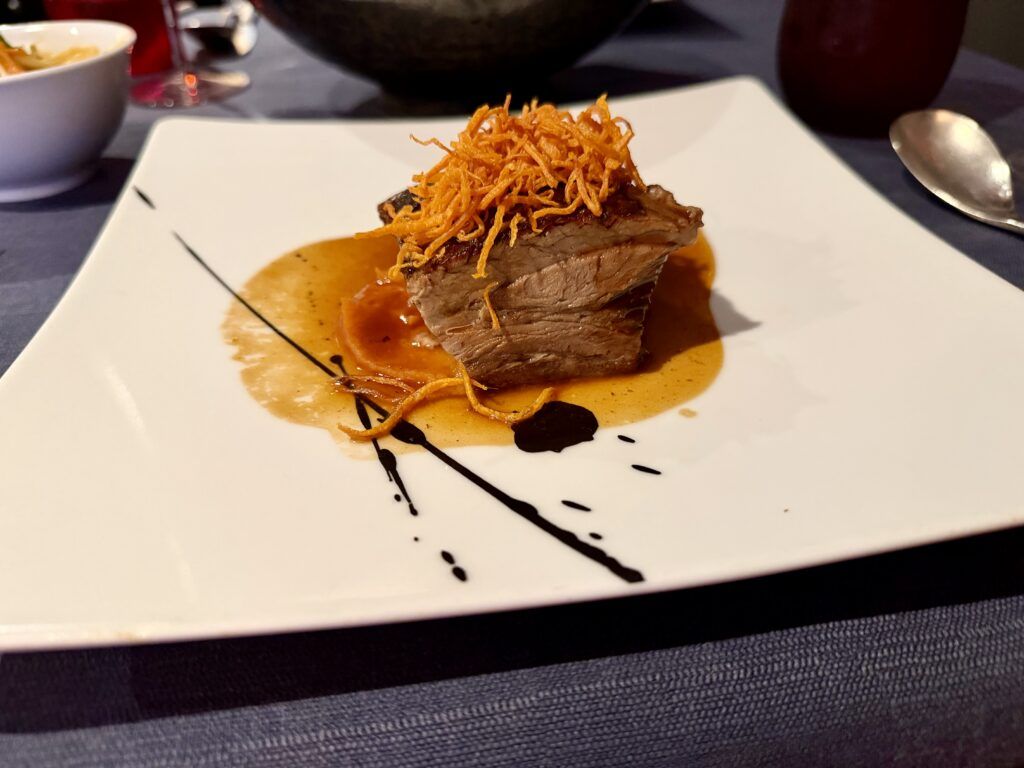
Dining: Ships feature a main dining room and buffet, as well as included specialty restaurants, casual poolside dining, a coffee café with pastries and baked goods, and afternoon tea. Room service is also included in the cruise fare.
Complimentary Beverages: Basic and specialty non-alcoholic beverages are included in the cruise fare, such as iced tea, soda, specialty coffees and teas, fresh juices, smoothies, and still and sparkling Vero water.
Activities & Entertainment: Swimming pool, hot tubs, jogging track, sports deck, fitness center, trivia, afternoon tea, enrichment lectures, demonstrations and workshops, theater shows, and live music are all included.
WiFi: Two wifi logins per stateroom are included in the cruise fare. Additional logins and access to streaming services costs extra.
Gratuities: All gratuities are included in the cruise fare.
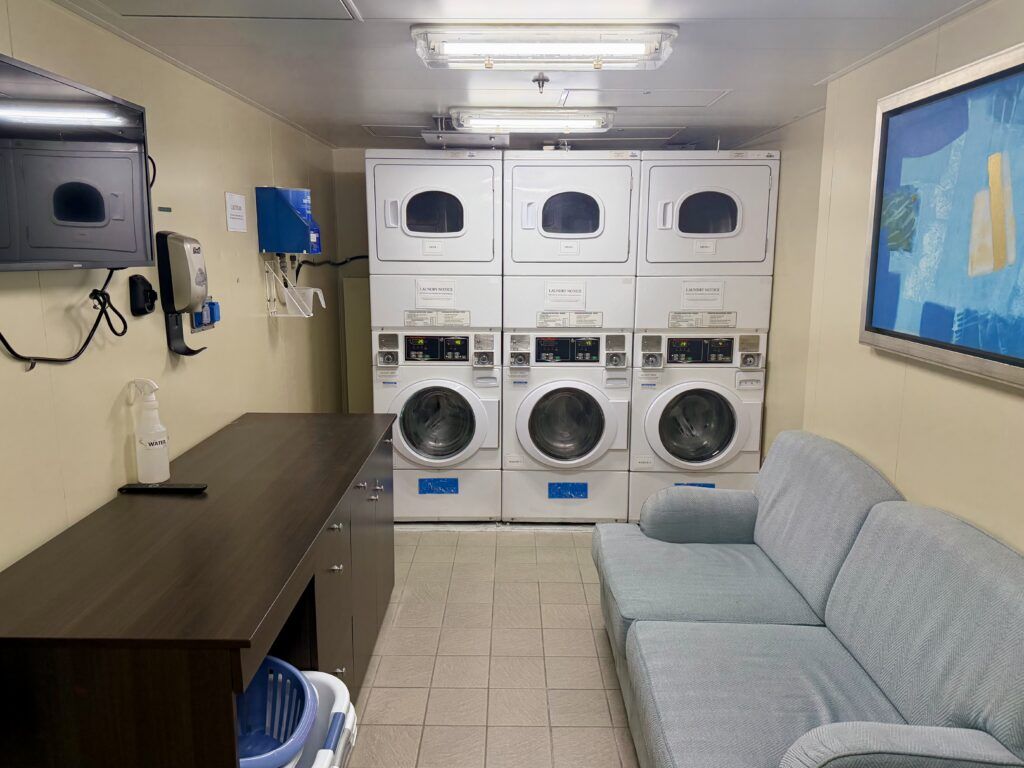
Self-Service Laundry: Self-service laundry is completely free to guests, complete with detergent, irons, and ironing boards.
Wine/Beer or Excursion Credit: Guests can choose between free wine and beer with lunch and dinner OR a shore excursion credit included with their fare.
Not Included: Alcoholic beverages, shore excursions, cooking classes, spa treatments, laundry service, and upgraded wifi are not included.
What’s Included on Oceania Cruises
Accommodations
Your cruise fare covers the cost of your stateroom for the duration of the trip, as well as the services of a cabin attendant who will make up your room twice per day. On select ships, you can choose from the more budget-friendly interior or oceanview staterooms. All ships feature a huge number of balcony accommodations and suites to choose from, as well.
The newest ship class — the Allura class — features only balcony and suite accommodations, with balcony options including traditional walk-out terraces as well as French verandas with a sliding glass door but no step-out space.
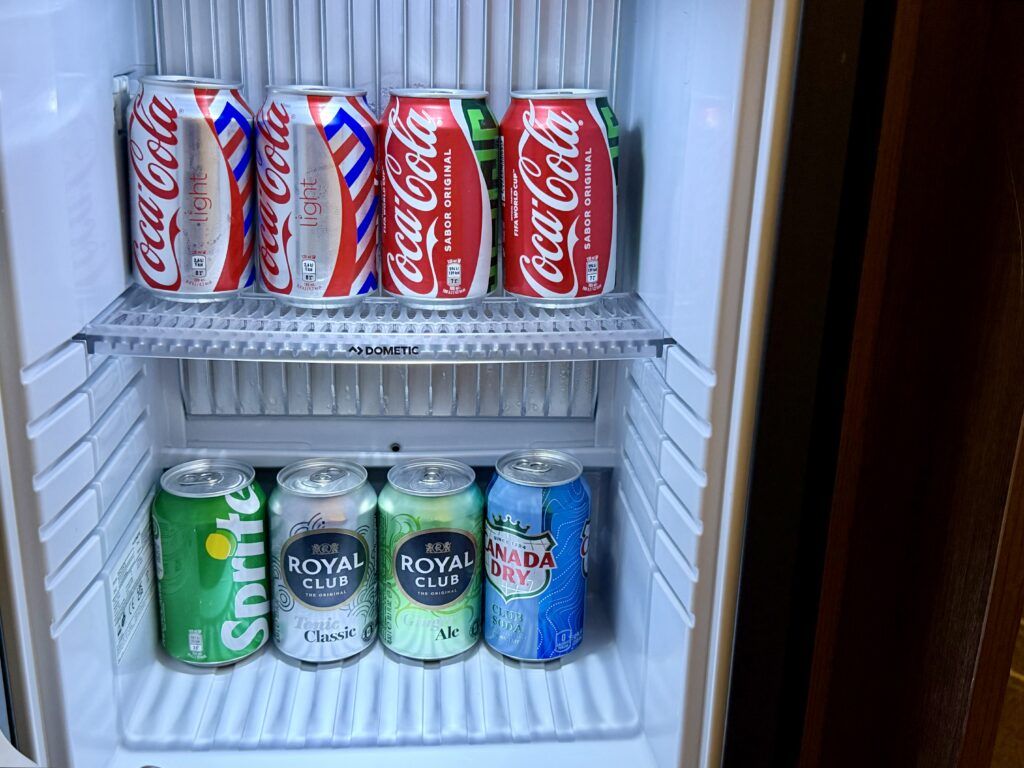
Staterooms include the Oceania-exclusive Tranquility Bed, an interactive flat-screen TV system with on-demand movies, a writing desk with stationery, a hairdryer, a safe, and robes and slippers for guests’ use during the cruise. Additional perks include free sodas replenished daily in the mini-fridge, free still and sparkling Vero Water, turndown chocolates, and luxury bath amenities from Oceania’s in-house brand, Aquamar.
Food & Dining
Oceania Cruises touts itself as having “the finest cuisine at sea,” and it’s all included in the cruise fare. The Grand Dining Room is the main restaurant, serving a rotating menu of familiar dishes along with global flavors for three meals a day. On each menu, guests can expect at least 10 appetizers, soups, and salads, as well as around 10 dinner entrées. There are also healthier Aquamar Vitality Cuisine options and vegetarian selections.
Of course, there are a number of specialty restaurants you can also find aboard Oceania’s ships, which are also included in the fare. You won’t find every restaurant on every ship, but rather each vessel will have some combination of these venues. They include the authentic Italian venue Toscana, Polo Grill steakhouse, the Parisian bistro-inspired French restaurant Jacques, bold Asian restaurant Red Ginger, and the wellness-focused Aquamar Kitchen.
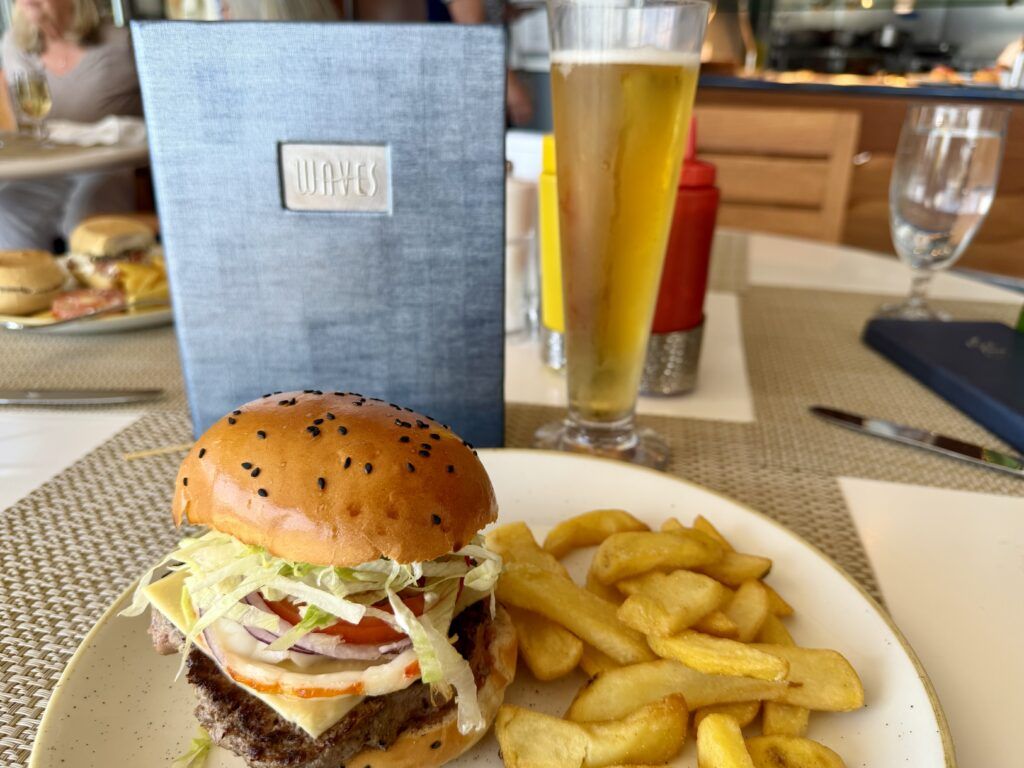
More casual options include the al fresco Waves Grill, a raw juice and smoothie bar, the Terrace Café buffet, and Baristas coffee café complete with fresh baked goods. Afternoon tea is also served daily, complete with pastry carts and live music from a classical string quartet. Room service is also included in the cruise fare.
Specialty Non-Alcoholic Beverages
While alcoholic beverages cost extra (except for wine/beer with lunch/dinner if you choose that option, more on that below), non-alcoholic standard and specialty drinks are included on Oceania Cruises. These include iced tea, sodas (even from the in-room mini-fridge), specialty coffees and teas, juices, smoothies, and still and sparkling Vero water (with in-room carafes and refill stations around the ship).
Even though alcohol isn’t included, Oceania has a generous policy when it comes to what the line allows to be brought on board. On standard cruises, guests can bring up to six 750 ml bottles of wine and/or champagne per stateroom, as well as one 1-liter bottle of liquor and up to 12 cans or bottles (330-355 ml each) of beer.
Onboard Amenities & Activities
When it comes to ocean ships, Oceania Cruises vessels are on the smaller side, with the largest vessels in the fleet holding fewer than 1,300 guests. Because of this — and because of the fact that Oceania is an adults-only line — you won’t find as many bells and whistles on board as you would on mainstream cruise ships, like sister brand Norwegian Cruise Line. Amenities include a top-deck swimming pool and hot tubs, an outdoor walking/jogging track, a fitness center complete with included fitness classes, and a sports deck with things like mini golf, shuffleboard, and pickleball.
On select ships, guests can attend art classes and workshops hosted by Artists-in-Residence at the Artist Loft. Tucked away on board, passengers will also find cozy English-inspired libraries with lots of books to enjoy. Other activities around the ship include trivia, quizzes, and games like bocce, baggo, table tennis, or bridge.
Those seeking a midday cocktail or after-dinner spirit can find one in one of the several bars spread across the ship. Popular bars and lounges include the gentleman’s club-style Martinis, the observation lounge bar that’s aptly called Horizons, and the casual poolside watering hole called Waves Bar. On newer ships, there’s also the Founder’s Bar, an upscale mixology lounge with craft cocktails. Of course, you have to pay for alcoholic beverages a la carte unless you have the drink package.
Enrichment & Entertainment
Destinations are a focal point for Oceania Cruises, and much of the onboard programming reflects that. On many sailings, guest speakers share unique insights into the cultures and people of the regions the ship is visiting, telling stories and sharing historical facts related to the destinations.
If you’re not attending a destination-focused lecture or learning through a more hands-on workshop, there’s plenty of other entertainment to enjoy on an Oceania ship. Theater shows are available, ranging from intimate and nostalgic to thrilling and upbeat productions, along with occasional guest entertainers like comedians. Around the ship, guests can enjoy live music from entertainers such as classical string quartets, vocalists, pianists, and beyond. There’s also a live band and dancing in the evenings.
WiFi Internet Access
Complimentary high-speed Starlink wifi throughout the ship is one of the things that’s included on Oceania Cruises. Each stateroom receives two free logins, each of which can be used on one device at a time.
The included internet does not, however, include audio and video streaming. Those who want streaming access can upgrade with a set price-per-day wifi package (more info on that towards the bottom of this article).
Gratuities
The base cruise fare on Oceania includes gratuities. This means that there is no per-day gratuity or “service charge” added to your bill at the end of the sailing. However, if you’d like to provide additional gratuities to crew members, you can tip them in cash directly.
Of note, a 20% service charge is added to onboard purchases for things like drinks and spa treatments.
Self-Service Laundry
Included on Oceania Cruises are self-service laundry rooms accessible to all passengers. They include multiple washers and dryers, irons and ironing boards, and laundry detergent — all of which is free to use.
Choice: Wine and Beer at Lunch/Dinner or a Shore Excursion Credit
This is a bit of a unique one. Guests get to choose between two more inclusions when they book their Oceania cruise: wine and beer by the glass at lunch and dinner, OR a shore excursion credit.
Wine and Beer
Those who choose the wine and beer option will be able to select from a curated list of wines by the glass and beers from the general bar menu. These include champagne, sparkling wine, wine (red, white, and rose) and beer in dining venues during lunch and dinner restaurant hours. They’re also available in bars and lounges from noon to 1:30 pm and from 6:30 pm to 8:30 pm.
Shore Excursion Credit
Those who choose the shore excursion credit will receive up to $600 per person in credit, depending on the length of the cruise. This credit can be applied towards any of Oceania’s shore excursions.
What’s Not Included on Oceania Cruises
Shore Excursions
While you can choose to receive what Oceania calls a “generous shore excursion credit” in your cruise fare, excursions are not inherently included on Oceania Cruises. Excursions are priced individually, and you can either use your excursion credit (or regular onboard credit) or pay out-of-pocket to take them.
Outside of the optional wine and beer at lunch and dinner inclusion, you’ll need to pay extra for alcoholic beverages aboard Oceania cruise ships. This includes cocktails, spirits, wine, champagne, and beer.
Oceania does offer a drink package, called the Prestige Select Beverage Package. It includes unlimited champagne and wine by the glass, beer, spirits, and cocktails, available at any onboard venue and through room service during bar operating hours. It costs $79.95 per person, per day (gratuity included), and excludes premier spirits and sake.
Those who choose the free wine and beer with lunch and dinner option — but want to upgrade to the full beverage package — can do so for 50 percent off, making it $39.98 per person, per day.
Oceania Cruises also runs generous happy hour specials. In the evenings during select hours, guests can enjoy 2-for-1 cocktails from the Bar Menu and Martinis Menu.
Spa Treatments & Thermal Area
If you choose to enjoy a spa treatment or salon service, you’ll pay out of pocket for it. A basic sauna and steam room are included for all passengers; however, access to specialized features like the outdoor Aquamar Spa Terrace (which includes a thalassotherapy pool, hot tubs, and heated loungers) are not.
If you have a treatment booked, you can enjoy these amenities included as part of your spa experience. If you want to enjoy them without a treatment, day passes are usually available for purchase. Free unlimited access is included automatically if you stay in a Concierge Level stateroom or higher.
Culinary Classes
Oceania Cruises prides itself on its culinary programming, with the state-of-the-art Culinary Center as one of the focal points. The space offers a variety of extra-fee cooking classes for those who want to brush up on their culinary skills and knowledge, with some classes based on the destinations where the ship is visiting. Learn how to make Italian specialties on a voyage to Italy, or delicious and healthy Greek dishes on a trip among the Greek Isles.
The culinary experience extends ashore, too, where passengers can book Culinary Discovery Tour excursions in select ports, shopping for fresh ingredients with chef instructors and enjoying regional fare in private homes or chef-selected restaurants.
If a glass of vino sounds more like your cup of tea than cooking, you’ll be happy to know that wine tastings and cocktail tastings are also available on Oceania Cruises, though they do come with an additional fee as well. Prices start at around $45 +20% gratuity.
Laundry Services
Laundry services including dry cleaning and regular wash/dry/fold are available for an additional fee. If you’re staying in a Concierge or Suite level stateroom, you will receive up to three free bags of laundry and free pressing services.
Upgraded WiFi
While standard wifi with two logins per stateroom are included in the fare, it’ll cost you extra if you want to access the internet on more devices or enjoy streaming services. The standard streaming upgrade costs $20 per day for sailings up to 29 days long, or $15 per day for 30+ days.
Miscellaneous Items
It goes without saying — anything you purchase from the onboard boutique or from shops in port are at your own expense. Of course, casino play comes at your own expense as well.
Comments
Have you sailed with Oceania yet? Do you enjoy the more inclusive nature of this cruise line? Drop us an anchor below to share your thoughts on the Oceania Cruises inclusions.
What does it take to redesign and refurbish a beloved ship? And how do you design spaces that capture Windstar’s travel ethos – capturing a mood that’s sophisticated, joyful and adventurous? Those were the questions on the minds of Windstar’s design and refurbishment team as the ship, completed phase one of its two-part update in December 2024.
Wind Surf’s refurbishment is part of Windstar’s Setting Sails initiative, which redesigns all three of its sailing class of vessels between now and 2027 (pictured above is its newly designed pool deck). From his perspective, Stijn Creupelandt, Windstar’s chief operating officer, notes that highlights of the refurbishment focus on fresh new details that also reflect Windstar’s casually luxurious ethos.
Expect a sophisticated nautical ambience of neutrals and blues, Creupelandt adds, “With our guests in mind, we aimed to add a bit of whimsy with pops of color that will trigger wonderful memories of easygoing trips to the beach in summer, when building sandcastles was a focal point of the day.”
Specifically, this first refurbishment focused on public spaces and the ship’s top suites (note that phase two of the refurbishment takes place in December 2026; more details are below).
New, top-of-the-ship suite
Previously known as the Officer’s Suite, Wind Surf’s new Owner’s Suite, #501, has been reimagined. “The owner’s suite is modern yacht-inspired. We adopted some classic details but we made it more fun, a little more Windstar,” Creupelandt explains. The space is expanded to encompass separate living and sleeping areas. The all-new bathroom features a tiled tub, new shower and double vanity. What doesn’t change? Guests still have unique access to the suite from a private door on an outside deck – and the suite is next to the Bridge.
Broadmoor and Sea Island suites debut on the Wind Class
The Sea Island suite on Wind Surf is named after Georgia’s Sea Island and evokes a breezy atmosphere
If you’ve seen (or experienced) the Broadmoor and Sea Island suites on Windstar’s Star Class vessels (Star Legend, Star Pride and Star Breeze) you’ll love them here. If you haven’t yet? You’ll love them anyway. Inspired by designs at Windstar’s parent company, Xanterra, which operates five-star sister resorts such as Colorado’s Broadmoor and Georgia’s Sea Island, each offers a distinctive ambience. The Broadmoor suite has a clubby, historic feel while Sea Island evokes a summery and beachy look.
Amphora incorporates sea colors into its restaurant space
Amphora’s new ambience on Wind Surf is plush, lush and inspired by the colors of the sea
Amphora, Wind Surf’s main restaurant venue, embraces a new design concept that features blues and ivory with elements of the sea, such as sea glass, pearls and smooth stones. There will be new furnishings that include curved booth, a 10-guest Captain’s Table and larger dining chairs for comfort. Another improvement that your eyes may not see but your ears will appreciate: improved acoustics.
Tweaking Compass Rose
Wind Surf’s cozy Compass Rose is the hub of entertainment onboard
The ship’s Compass Rose, its hallmark space for entertainment and socializing, features more comfortable, modern décor with pops of blue and orange, a chic bar, and a new multi-purpose stage area ideal for live music and local performances.
“While I admit that all my designs are my children, I really love the reimagined Compass Rose,” Creupelandt says. “It’s the hub for nightlife, from pre-dinner cocktails to trivia to evening entertainment. There are booths around the edges, sofa seating outside, and the aft wall that still fully opens so you get the indoor/outdoor feeling.”
Splashy new pool deck and bar
Wind Surf’s pool bar has been completely redesigned
What we love about this space is the way Windstar designers bring the outdoors – through pops of color, including green foliage, onboard. The tiling on the whirlpools is meant to evoke ocean waves. There’s plenty of teak in the deck, the pool’s capping, and tables. Newly added seating includes large daybeds on the aft and chaise lounges.
First Impressions!
Following Wind Surf’s renovation, the reception area is combined with the Yacht Club for a piazza-like, neighborhood feel
On the newly revamped Wind Surf, public spaces that guests access daily, like the ship’s lobby, which houses the shore excursion desk and guest service, and its popular Yacht Club coffee bar, are fresh and modern. “The idea,” Creupelandt tells us, “is to create a hub, a relaxed environment that is a bit like an Italian piazza, with social spaces and solitary, peaceful nooks, as well.”
“It was wonderful to see it come to life on my cruise,” she adds. “It was still the Yacht Club, guests were sitting, reading, sipping coffee There are pops of color and patterns, and yet it’s also a quiet refuge.”
Surprises #1 and #2
A vibrant new crew lounge look was introduced
In our original blog on the changes planned for Wind Surf, we didn’t mention a couple of refurbs that surprised us, in a good way.
We loved that crew spaces, like this engaging lounge (pictured above), were redesigned.
And though standard accommodations will not be overhauled until Wind Surf’s final refurbishment in December 2026, all cabins received new interactive televisions.
And more surprises!
An all-new wine room on Windsurf hosts pre-dinner tastings
Creupelandt’s favorite installation? A new LED wall in Compass Rose that completely changes the atmosphere, depending on where the ship is sailing – and when. “We were all impressed with how it turned out,” she says, noting that on her Christmas cruise there with holiday-related background scenes with music. Port talks and other presentations were also bolstered by the A/V.
And we love the new wine room (photo above), which will host pre-dinner tastings there. The average tasting, says Peter Tobler, Windstar’s director of hotel operations, lasts about 10 – 15 minutes for two to three different pours.
Phase two takes place soon!
Phase 2 of Wind Surf’s refurbishment will take place in December 2026 and re-enters service on December 19, 2026.
In this effort, all accommodations (suites were already completed in phase one) will be outfitted with new furniture, bedding, carpets, interactive televisions and art and décor.
As well, Veranda and Amphora will be redecorated, and Stella Bistro will be replaced by Basil + Bamboo, Windstar’s Mediterranean-Asian fusion restaurant.
In a nod to travelers’ increasing desires to practice wellness while onboard, Wind Surf’s fitness center will be redesigned with a new motion studio. And the ship’s cigar lounge will be replaced by a dry sauna.
“But the VA has all my medical records. How did they still deny my claim?”
You’re not alone.
I hear this from Veterans all the time.
Brian Reese here, Air Force service-disabled Veteran and Founder of VA Claims Insider.
And here’s one of the biggest misunderstandings I see in the VA disability claims process:
Having medical records does NOT automatically mean you have the evidence needed to prove your VA claim.
Your medical records matter a lot.
But the real question is this:
Do those records actually prove the specific thing the VA needs to decide in your favor?
That could mean proving you have a current disability.
It could mean establishing a link (nexus) between your disability and military service.
It could mean proving that a service-connected condition caused or aggravated another disability.
Or, if you’re already service connected, it could mean showing that your condition has worsened enough to qualify for a higher VA rating.
In this guide, I’ll break down the difference between medical records and medical evidence for VA claims, what the VA is actually looking for, and why Veterans can have hundreds of pages of treatment records and still be missing the evidence that matters most.
Let’s get into it.
Summary of Key Points
Medical records are medical evidence, but not every medical record proves the issue the VA needs to decide.
Treatment records generally document things like your diagnoses, symptoms, medications, testing, and treatment history.
For an original VA disability claim, the VA generally needs evidence of a current disability, an in-service event, injury, or disease, and a link between the two.
For a secondary VA claim, the key issue is usually evidence connecting the new condition to an existing service-connected disability through causation or aggravation.
For a VA disability increase, current evidence showing the severity of your symptoms and functional impairment becomes especially important.
A strong medical opinion, Nexus Letter, DBQ, C&P exam, private evaluation, or other relevant evidence can sometimes address questions that routine treatment notes never answered.
More evidence isn’t always better. Relevant, credible, and persuasive evidence is what matters.
Table of Contents
Medical Records vs. Medical Evidence: What’s the Difference?
First, I want to clear up something important.
Technically, your medical records ARE medical evidence.
The VA specifically identifies VA medical records, private medical records, doctor reports, X-rays, medical test results, and other healthcare documentation as evidence that can support a disability claim.
So this isn’t really a legal distinction between two completely separate categories.
The practical difference is this:
Medical records document what happened.
Strong claim evidence helps prove what the VA needs to decide.
That distinction matters.
Your treatment records might show that you’ve been diagnosed with migraines for five years.
Great.
But if you’re trying to service connect those migraines secondary to tinnitus, your records might say absolutely nothing about whether your tinnitus caused or aggravated your migraines.
You can have a legitimate diagnosis.
You can have years of treatment.
You can be taking prescription medication.
And you can STILL be missing the medical link necessary to prove secondary service connection.
That’s the trap.
What Are Medical Records?
Medical records document your healthcare history.
Depending on your situation, they might include:
Service Treatment Records (STRs)
VA medical records
Private medical records
Doctor or specialist notes
Hospital records
Mental health treatment notes
Imaging studies
X-rays
MRIs
CT scans
Laboratory results
Sleep studies
Prescription histories
Physical therapy records
Surgical records
Diagnostic testing
These records can be incredibly valuable.
For example, your Service Treatment Records might show that you injured your back while on active duty.
Your post-service medical records might show that you were later diagnosed with degenerative disc disease.
Your VA treatment records might show years of continuing back pain, medication, physical therapy, and worsening symptoms.
Taken together, that can paint a powerful picture.
But sometimes there’s still a missing piece:
What medically connects your current disability to what happened during military service?
That’s where claim-specific medical evidence can become critical.
What Does the VA Consider Medical Evidence?
Medical evidence can include many of the same records I just listed.
But in the VA disability context, certain types of evidence can answer specific questions a routine treatment record may never address.
Examples include:
A credible Nexus Letter
A Disability Benefits Questionnaire (DBQ)
A Compensation and Pension (C&P) exam
A private medical examination
A medical opinion addressing service connection
Specialist evaluations
Diagnostic testing
Treatment records documenting symptom severity
Medical evidence showing chronicity or continuity
Medical literature when relevant to the provider’s rationale
Evidence demonstrating that one disability caused or aggravated another
Here’s the key:
The strongest evidence speaks directly to the issue the VA must decide.
A 500-page medical file isn’t automatically more persuasive than a well-supported five-page medical opinion.
The VA weighs evidence based on factors such as credibility, competency, reasoning, consistency, and how well the opinion is supported by the facts.
That’s why I tell Veterans all the time:
Your VA claim isn’t about who has the biggest stack of paper.
It’s about whether the evidence proves your claim.
Medical Records vs. Medical Evidence: Quick Comparison
Medical Records
Claim-Focused Medical Evidence
Document your medical history
Addresses an issue the VA must decide
Show diagnoses and treatment
May explain medical causation or aggravation
Document symptoms over time
May establish a medical nexus
Include labs, imaging, medications, and provider notes
May document severity using VA rating criteria
Primarily created for healthcare and treatment
May be prepared specifically to evaluate a disability claim
Can provide essential supporting evidence
Can help fill gaps your treatment records don’t address
Again, the two categories overlap.
Your medical records can absolutely contain everything necessary to prove a claim.
But you shouldn’t ASSUME that they do.
What Does the VA Need to Approve a Disability Claim?
This depends on what type of VA claim you’re filing.
And this is where things get really important.
Original VA Disability Claim
For a direct service-connected disability claim, the VA generally looks for evidence showing three things:
A current physical or mental disability
An event, injury, illness, or disease during military service
A link between your current disability and the in-service event
That third element is the medical nexus.
Sometimes the connection is already clear from the evidence.
Sometimes it isn’t.
And depending on the facts of your claim, that missing link could be the difference between service connection and denial.
Let’s say you’re already service connected for tinnitus and later develop migraines.
The question isn’t necessarily whether your migraines started during military service.
Instead, the issue might be whether your migraines are:
Proximately due to your service-connected tinnitus, or
Aggravated by your service-connected tinnitus.
According to VA guidance, a secondary claim generally requires evidence of a new physical or mental condition and evidence of a link between that condition and an already service-connected disability.
That link often requires medical evidence.
This is exactly why a Veteran can have years of migraine treatment records and STILL lose a secondary claim.
The records prove the migraines exist.
They might not prove why they exist or whether the service-connected condition aggravated them.
More Medical Records Doesn’t Automatically Mean a Stronger VA Claim
This deserves its own section.
Veterans often think:
“I’ll just submit EVERYTHING.”
Not necessarily.
You want the VA to have the relevant evidence necessary to properly decide your claim.
Dumping thousands of pages of duplicate or unrelated medical records into your file isn’t a substitute for identifying the issue that actually needs to be proven.
Think QUALITY.
Think RELEVANCE.
Think CLARITY.
Your evidence should tell a coherent story.
For example:
What happened during service?
What disability do you have now?
How are the two connected?
What evidence proves that connection?
How severe is the disability today?
That is a much better way to think about your claim than:
“I have 800 pages of medical records, so the VA should approve me.”
The Bottom Line
Your medical records are important.
But don’t confuse the existence of medical records with automatically having all the evidence necessary to prove your VA disability claim.
Your records might prove your diagnosis.
They might document years of treatment.
They might show exactly when your symptoms started.
They might even contain the medical nexus you need.
But they also might not.
The right question isn’t:
“Do I have medical records?”
The right question is:
“Does my evidence prove every element the VA needs to decide THIS claim?”
That’s the shift.
Because when you understand what you’re actually trying to prove, the VA disability claims process becomes a whole lot less confusing.
And you can stop throwing evidence at the wall hoping something sticks.
You served. You deserve.
If you’re rated 0%-90% and stuck, frustrated, or underrated, you don’t have to figure out your next move alone.
What is the difference between medical records and medical evidence for a VA claim?
Medical records are actually one form of medical evidence. They document information such as diagnoses, symptoms, treatments, testing, and medical history.
The practical distinction is whether those records prove the specific issue the VA must decide. Additional medical evidence—such as a medical opinion, Nexus Letter, DBQ, C&P examination, or private evaluation—may be useful when routine treatment records don’t address questions such as service connection, secondary causation or aggravation, or current severity.
Can the VA deny my claim even if I have medical records?
Yes. Having medical records does not guarantee service connection or a particular VA rating. For example, your records might clearly establish a current diagnosis but fail to establish a link between that disability and your military service. The exact evidence needed depends on the type of claim you’re filing.
What evidence does the VA need for an original disability claim?
For a direct service-connected VA disability claim, the evidence generally needs to establish:
A current disability,
An in-service event, injury, illness, or disease, and
A link between the current disability and military service.
The VA may use both medical and lay evidence when deciding a claim.
What medical evidence is needed for a secondary VA claim?
For secondary service connection, the evidence generally needs to show that you have a new physical or mental condition and that it is linked to an existing service-connected disability. The link may involve the service-connected disability causing or aggravating the secondary condition. Medical records or medical opinions are commonly used to establish that relationship.
Can private medical records be used in a VA disability claim?
Yes. The VA accepts relevant private medical evidence and encourages Veterans to submit private treatment records that may help support their claims.
These could include physician reports, specialist records, diagnostic testing, imaging, hospital records, and other relevant healthcare documentation.
Can a private doctor provide a medical opinion for my VA claim?
Yes. A qualified private healthcare provider may provide medical evidence or a medical opinion relevant to a VA disability claim. However, the VA does not automatically accept a private opinion simply because a licensed provider wrote it. The credibility, factual accuracy, reasoning, supporting evidence, and overall probative value of the opinion can all matter.
Is a Nexus Letter required for a VA disability claim?
No. There is no rule saying a VA disability claim requires a private Nexus Letter. Some claims already contain sufficient evidence to establish the relationship between the Veteran’s disability and military service. A Nexus Letter may be especially useful when the existing evidence does not clearly establish service connection, when pursuing certain secondary claims, or when addressing an unfavorable medical opinion.
Are buddy statements considered evidence?
Yes. The VA accepts lay evidence, including statements from Veterans and people who have firsthand knowledge of relevant events, symptoms, or functional limitations. Lay witnesses generally cannot provide complex medical diagnoses or opinions requiring specialized medical knowledge, but they can provide important evidence about things they personally observed.
What should I do if the VA denied my claim because of insufficient evidence?
Start with your VA Rating Decision. Identify the exact reason the claim was denied and determine which element the VA found insufficient. Then focus your evidence on fixing that specific problem rather than simply resubmitting the same records. Depending on the circumstances, that could involve obtaining new medical evidence, a medical opinion, updated treatment documentation, relevant lay evidence, or other new and relevant evidence.
About the Author
Brian Reese
Brian Reese
Brian Reese is a world-renowned VA disability benefits expert and the #1 bestselling author of VA Claim Secrets and You Deserve It. Motivated by his own frustration with the VA claim process, Brian founded VA Claims Insider to help disabled veterans secure their VA disability compensation faster, regardless of their past struggles with the VA. Since 2013, he has positively impacted the lives of over 10 million military, veterans, and their families.
A former active-duty Air Force officer, Brian has extensive experience leading diverse teams in challenging international environments, including a combat tour in Afghanistan in 2011 supporting Operation ENDURING FREEDOM.
Brian is a Distinguished Graduate of Management from the United States Air Force Academy and earned his MBA from Oklahoma State University’s Spears School of Business, where he was a National Honor Scholar, ranking in the top 1% of his class.
These Savory Pumpkin Fritters are crisp and golden around the edges, with soft, tender centers packed with pumpkin, Parmesan, onion, and herbs. Yep, we’re taking pumpkin firmly into savory territory here! I use canned pumpkin purée, so you don’t have to peel, roast, grate, or squeeze anything before you start. The batter comes together in minutes, then I shallow-fry the fritters until beautifully golden and serve them with a cool, garlicky herb dipping sauce. They’re ready in 30 minutes, cost just $0.84 per serving, and are an easy fall snack, appetizer, or light meal!
Savory Pumpkin Fritters Made Easy
I make our zucchini fritters all summer long, but once pumpkin season rolls around, you better believe I’m switching gears to this pumpkin version. A lot of savory pumpkin fritter recipes start with fresh grated pumpkin, which means peeling, grating, and then dealing with all that extra moisture. I skip the pumpkin prep completely and use budget-friendly canned purée instead. Because purée is already soft and moist, the flour, egg, Parmesan, and baking powder give the batter enough structure to hold together without making the centers heavy or bready. Then finely diced onion, Dijon, poultry seasoning, and fresh parsley push that pumpkin firmly in the savory direction.
I also don’t think these pumpkin fritters need a whole pot of oil to get properly crisp. This batter is thick enough to hold its shape in the skillet, and a shallow fry gives it those deeply golden edges while the middle stays tender. And that garlic-herb sour cream sauce? Don’t skip it. It adds a cool, tangy finish that works so well with the warm, savory pumpkin. This whole recipe costs just $3.37 (including the dip), and everything in it is simple enough for a beginner to tackle without any fussy prep.
Recipe Success Tips
Dice the onion really finely. These fritters only cook for a few minutes on each side, so larger pieces may still be crunchy by the time the outside is golden.
Don’t overmix the batter. Once the flour goes in, I stir just until everything is combined. Too much mixing develops the gluten in the flour and can make the fritters heavier and a little chewy instead of soft in the middle.
Look for a thick, scoopable batter. This is the consistency I found worked best in testing. The batter should hold its shape on a spoon and drop off rather than pour. Once it hits the skillet, it should only spread when you gently press it with the back of the spoon. If yours looks loose or starts running across the pan, mix in extra flour 1 tablespoon at a time until it thickens up.
Don’t overcrowd the skillet. Four pumpkin fritters were the sweet spot in my skillet. It left me enough room to flip them comfortably and helped keep the oil temperature from dropping too much when the batter goes in.
Keep an eye on the oil temperature. I aim for about 350°F, and a thermometer takes the guesswork out of it. The oil should look shimmery, and the batter should sizzle as soon as it hits the skillet. Keep in mind that the temperature will drop every time you add a fresh batch. Oil that’s too cool can make the fritters greasy. BUT if it gets too hot, the outside can brown before the center has time to cook through. So I recommend you give the oil a minute to come back up to temperature before adding more.
Keep the fritters small and evenly thick. Gently flatten each scoop with the back of a spoon (or spatula) so the middle cooks through at about the same rate as the edges turn golden. Thick fritters can brown beautifully on the outside and still be underdone in the center.
In a medium bowl, whisk together the pumpkin and egg until smooth.
Add the flour, Parmesan, baking powder, garlic powder, onion, parsley, poultry seasoning, salt, pepper, and Dijon. Stir until the mixture forms a thick, spoonable batter. If it feels too loose, add extra flour 1 tablespoon at a time.
Heat the vegetable oil in a medium non-stick skillet over medium heat until oil is shimmering and about 350°F.
Scoop heaping tablespoons of batter into the hot oil and gently flatten each one with the back of a spoon.
Cook for 2-3 minutes per side, or until golden brown and crisp.
Transfer the fritters to a paper towel–lined plate. Sprinkle them with a little parsley and a tiny pinch of salt while they’re still hot.
In a small bowl, stir together all dipping sauce ingredients. Serve the warm fritters with the garlic herb sauce and enjoy!
*Use 100% pure pumpkin purée, not pumpkin pie filling, which already contains added sugar and spices. Canned pumpkin is my first choice here because it keeps the prep easy and gives the batter a more consistent texture. See my note below if you want to use homemade pumpkin purée!
**Poultry seasoning is simply a savory blend of herbs and spices (there’s no poultry in it!). It usually leans into cozy herbs like thyme and rosemary, which work really well with the pumpkin here. Store-bought is totally fine, or you can make our homemade poultry seasoning blend.
***Use a neutral-flavored oil for frying. I use vegetable oil, but canola or another neutral oil suitable for high heat frying will also work.
Can’t find canned pumpkin purée? You can use homemade pumpkin purée, but it may contain more moisture. To make your own, halve and seed a pie or sugar pumpkin, lightly oil the cut sides, then roast cut-side down at 400°F until completely tender. Scoop out the flesh and blend until smooth. If your purée seems especially wet, strain off some of the excess moisture first or add extra flour to the fritter batter 1 Tbsp at a time until it’s thick and scoopable.
how to make Savory Pumpkin Fritters Step-by-Step Photos
Gather and measure out all of your ingredients.
Whisk the pumpkin and egg: Add 1 cup pumpkin purée and 1 large egg to a medium bowl. Whisk until completely smooth and evenly combined.
Mix the fritter batter: Add ¾ cup all-purpose flour, ¼ cup finely grated Parmesan, 1 tsp baking powder, ½ tsp garlic powder, ½ cup finely diced onion, 2 Tbsp chopped parsley, ¼ tsp poultry seasoning, 1 tsp kosher salt, ¼ tsp black pepper, and ½ tsp Dijon mustard. Stir until just combined. The finished batter should look thick and sturdy, with the onion and herbs evenly distributed throughout. If it seems noticeably loose, add a little more flour 1 Tbsp at a time until it reaches the right consistency.
Fry the pumpkin fritters: Add ⅓ cup vegetable oil to a medium non-stick skillet and heat over medium. Let the oil reach about 350°F. It should look shimmery across the surface, and a tiny dab of batter should start sizzling as soon as it touches the oil.
Drop heaping tablespoons of batter into the hot oil, working in batches so there’s plenty of room around each fritter. Gently press each mound with the back of a spoon to flatten it slightly. I try to keep them roughly the same thickness so they cook at the same rate. Cook the fritters for 2-3 minutes on the first side, until the edges look set and the bottoms are crisp and golden brown. Flip carefully, then cook for another 2-3 minutes on the second side. If the first batch is browning much faster than that, lower the heat slightly before continuing.
Make the garlic herb dipping sauce: Add 1 cup sour cream, ½ tsp garlic powder, 2 Tbsp chopped parsley, ¼ tsp salt, and ½ tsp lemon juice to a small bowl. Stir until everything is evenly combined, then set the sauce aside while you finish the fritters.
Drain and season: Transfer the cooked fritters to a paper towel-lined plate to absorb any excess oil. Sprinkle with a little extra chopped parsley and a very small pinch of Kosher salt while they’re still hot. Let the oil come back up to temperature before adding the next batch.
Serve the pumpkin fritters warm with the garlic herb dipping sauce on the side. They’re at their best right from the skillet, when the edges are still crisp and the centers are soft and warm. Enjoy!
How to Serve Savory Pumpkin Fritters
I usually get 12-14 pumpkin fritters from this recipe, which works out to about 3 fritters per person with plenty of garlic herb dipping sauce. They’re best served warm, when the edges are still crisp. I’ll happily serve them as an appetizer or snack as-is! If I’m serving a crowd for game day or a fall get-together, I arrange them on a platter with the dipping sauce in the middle so everyone can grab and dip. You can also keep them warm on a baking sheet in a 250°F oven.
To turn them into more of a meal, I like tucking a few fritters into a wrap with greens and crunchy veggies, then drizzling some of the garlic herb sauce right over the top. A simple side salad works the same way for an easy lunch: I just use whatever vegetables I’ve got and spoon a little of the sauce over everything. For something heartier, add a batch of air fryer French fries on the side. And if I’m fully leaning into the fall vibes, our Autumn kale and apple salad makes the whole plate feel a little more substantial, with crisp apples and balsamic dressing alongside the savory pumpkin.
If you’d rather go with a yogurt-based dip, our tzatziki sauce is another really good option. It’s cool, garlicky, herby, and a little tangier!
Store leftover pumpkin fritters in an airtight container in the refrigerator for up to 3-4 days. Keep the garlic herb dipping sauce in a separate airtight container for the same amount of time, then give it a quick stir before serving.
Reheating
For crisp edges again, I’d skip the microwave and use a skillet, oven, or air fryer instead. Reheat the fritters in a skillet over medium heat until hot and crisp, in a 350°F oven for 5-8 minutes, or in the air fryer at 350°F for 3-5 minutes. The microwave works in a pinch, but the fritters will be much softer.
Freezing
Let the cooked fritters cool completely, then freeze them in a single layer on a baking sheet until firm. Transfer to a freezer bag or airtight container and freeze for up to 2-3 months. I’d freeze the fritters without the dipping sauce and make a fresh batch of sauce when you’re ready to serve them.
If reheating from frozen, there’s no need to thaw them first. Reheat frozen fritters in a 375°F oven or air fryer for 8-12 minutes, or until heated through and crisp around the edges.
Other Crispy Appetizers to Try
I love theseSweet Corn Fritters because they’re crispy around the edges with sweet corn, creamy feta, and a little kick from cayenne!
These Baked Zucchini Fries get their crispy coating from panko and Parmesan, and they’re SO good dipped in warm marinara sauce.
For something spicy and cheesy, try our Jalapeño Poppers. They’re stuffed with cream cheese, cheddar, and bacon, then baked until hot and bubbly.
To honor our nation’s veterans, numerous companies are offering discounted or free products, meals, services and events to active-duty service members, veterans and—in many cases—military spouses and dependents.
Deals are available on or around Veterans Day 2026 and may vary by location.
The list will be updated as we get more companies offering deals and freebies.
Already confirmed for Veterans Day 2026
Chili’s — Free meal for veterans and active-duty military on November 11 at participating locations. The dine-in offer includes a choice of Chicken Crispers, Chicken Bacon Ranch Quesadillas, an Oldtimer Burger with Cheese, or Soup & House Salad. Beverages and gratuity aren’t included.
Golden Corral — Its Military Appreciation Night has been announced for November 11, from 4 p.m. until close, with a complimentary buffet and beverage for veterans, active-duty military, retirees, National Guard and Reserve members.
Museum of the American Revolution — Active-duty military, veterans and Blue Star Families receive free museum admission November 8–11, 2026, courtesy of Comcast NBCUniversal.
U.S. Fish and Wildlife Service— Veterans Day is a fee-free day at all national wildlife refuges and other U.S. Fish & Wildlife Service lands that normally charge an entrance fee. This one is available to everyone, not just veterans.
Below are the 2025 deals that will be updated as we get 2026 confirmations.
Food & Dining
Applebee’s: Free full-size entrée from a special menu
Note: While not all locations require proof of military service, it’s always best to bring a valid military ID, veteran ID card, DD214 or other accepted documentation in case verification is needed. This list will be updated as we get more companies offering deals and freebies.
Be sure to check in with each website for your local deals! Read more articles for the Veteran Community here.
You probably already know that many older adults develop problems managing finances as they age.
Now how would you answer the questions below:
Has your aging parent planned for a decline in financial abilities?
Are you prepared to detect signs of a financial decline?
Do you know what to do if you do notice problems with finances?
Many people, even the ones who are caring and well-informed, will often answer “no” to these questions.
But this post will equip you to start answering yes. And I want you to be able to answer yes, because declines in the ability to manage finances are very common among older adults, and often causes serious health and life problems.
The trouble, of course, is that financial decline is uncomfortable for older adults and their families to think about. Managing money, after all, is one of the ways we maintain autonomy and control over our lives.
So nobody likes to confront the fact that our ability to manage money will — in all likelihood — someday decline. (Research suggests that even aging adults who don’t develop dementia often experience declines in financial ability.) And families are understandably squeamish about monitoring an older relative’s financial abilities.
Fortunately, a little education and guidance can make it much easier to be more proactive about this tough topic.
In this post, I’ll cover
Five warning signs of financial decline
Five important things to know about aging & finances
How to protect aging parents from financial problems
What to do if your aging parent is having trouble managing their finances
I’ll also cover some ways that geriatricians and other healthcare providers can help, both to reduce declines in financial ability and to properly evaluate them when they occur.
5 Warning Signs of Financial Decline
Research funded by the National Endowment for Financial Education (NEFE) identified the following five key warning signs of financial decline in aging adults:
Taking longer to complete everyday financial tasks, such as paying bills or balancing a checkbook
Showing reduced attention to details in financial documents, such as noticing that a bill is overdue
Decline in everyday arithmetic skills related to managing finances, such as calculating the correct change due as part of a cash transaction
Decreased understanding of financial concepts, such as understanding a medical deductible
Difficulty identifying risks in a financial opportunity, such as the key risk in an investment scenario
Now, here are five important things you should know about aging and financial decline.
5 Things To Know About Aging & Financial Decline
1. Declines in financial ability can easily be exploited by family, friends, and strangers.
This point is especially vividly brought to life in the Times story, which starts off by relaying the true story of a man who got remarried late in life to a younger woman. This new wife proceeded to financially deplete her husband’s finances, despite the man’s family attempting to intervene. In other words, declines in financial ability make older adults very vulnerable to financial abuse, which can be perpetrated by family members and friends, as well as by scammers and strangers.
2. Even people who don’t have Alzheimer’s or a neurodegenerative disease often experience increasing difficulties managing their finances as they age.
This is consistent with our improved understanding of “cognitive aging,” which the Institute of Medicine covered in a groundbreaking 2015 report. Basically, even in the absence of disease, the brain’s abilities change as people age. This process proceeds a little differently for every person but it’s analogous to the aging that we see in other parts of the body: things change with age and wear. Not all changes are negative, but the changes can eventually make managing finances harder.
Research suggests that older adults who have to take on new financial responsibilities in later life (e.g. due to bereavement or a change in household situation) are especially likely to have trouble.
3. The ability to handle financial matters is often one of the first skills to decline in Alzheimer’s and other common causes of dementia.
Multiple studies, such as this 2009 study, have found that declining financial abilities are common in mild cognitive impairment, and are linked to progressing to actual dementia.
I can confirm that in my own experience, the ability to manage finances is almost always affected in people with early dementia, because this is a skill that requires a lot of mental coordination plus correct assessment of financial risks. (And people with dementia usually get worse at assessing risks.)
4. If you notice signs of financial impairment, you should start looking for other signs concerning for Alzheimer’s or another dementia.
This is an important issue that I see families sometimes miss. Now, it’s certainly possible to develop some difficulties with finances and not have it be Alzheimer’s. It could be mild cognitive impairment, it could be depression, it could be another medical problem, or it could even be cognitive aging. (See my article on Cognitive Impairment in Aging: 10 Common Causes & 10 Things the Doctor Should Check for more information on common medical problems that can mimic Alzheimer’s.)
That said, it’s obviously quite common for aging adults to develop Alzheimer’s or another dementia, especially if they are older or if it runs in the family. And we know that Alzheimer’s is often diagnosed much later than it should be, in part because families aren’t sure what to do and primary care doctors usually aren’t good at picking up on signs of early dementia.
So if you notice signs of financial impairment or any of the five warning signs listed above, one of the next things you should do is look for other signs concerning for Alzheimer’s.
5. Review medications and take other steps to optimize brain function if you are concerned about financial impairment.
You can pursue this whether or not someone has a dementia diagnosis, or is getting evaluated for possible Alzheimer’s.
The main way to optimize a person’s brain function is to identify and reduce medications that interfere with thinking skills. You should also help the older person get assessed for medical problems that interfere with thinking, such as depression, thyroid problems, vitamin B12 deficiency, and so forth.
Other things that help optimize brain function include getting enough sleep, regular exercise, and avoiding excess stress.
How to Protect an Older Adult From Future Financial Decline
An ounce of prevention is worth a pound of cure, as the saying goes.
Since I’m a doctor, I’m most familiar with health approaches that can delay or prevent future financial decline. Briefly, those are to avoid risky medications and otherwise reduce the risk of Alzheimer’s and cognitive impairment.
But since declining financial ability is so common, it’s a good idea for older adults and families to pursue some preventive financial safety tactics as well. Here are some useful practical strategies to consider:
Encourage aging adults to simplify their financial lives. This should ideally be done around retirement age (e.g. when one is in one’s 60s), before the risk of having trouble with finances goes up.
Address financial planning early on through legal tools such as financial power of attorney and living trusts.
Preauthorize lawyers and financial planners to contact a trusted relative or friend if the professional suspects diminished financial abilities. This can make it easier for professionals to get an older person’s care circle involved sooner rather than waiting for a frank financial disaster to happen.
Encourage older adults to allow a trusted person to monitor their accounts. This could be family, or could be done by a professional such as a fiduciary. Again, I would imagine this is best discussed and arranged early. (In my experience, older adults often become defensive and even a bit paranoid once they start slipping cognitively, so that is usually a hard time to suggest monitoring financial accounts.)
What to do if your aging parent is having trouble managing their finances
If you’ve gotten worried about your parent’s ability to manage finances, or noticed any of the warning signs listed above, then you may be wondering what to do next.
Especially if your parent has been experiencing memory loss or other signs of changes in their thinking abilities, it’s common for them to become defensive when you bring up your concerns. They may even deny the problems you are noticing.
This makes helping out a bit tricky. But it’s not impossible, if you use patience and a better approach.
Generally, what I recommend people do is the technique I describe in my book, When Your Aging Parent Needs Help: take stock, take aim, and only after that, take action.
Taking stock means you start off by observing and listening, before trying to fix things or get your parent to listen to you.
Specifically, if you’re concerned about finances, you’ll want to observe your parent to document the specific financial safety issues that are happening. You’ll also want to try to gently get their perspective on what’s been happening.
Once you have this information, you’ll want to look into ways to get your parent more support, and probably also more supervision, with their finances. What’s appropriate will depend on the specifics of your parent’s financial difficulties, and also on what else seems to be going on with their memory and thinking.
Doing this kind of research and brainstorming means you figure out what to aim for, before you start trying to convince your parent or otherwise “fix” things.
After that, you can make a plan to take action.
I’ll be honest: this is all easier said than done. It IS doable, but it almost always takes patience, time, and some research and thinking to figure out each next step.
The thing is, your aging parent DOES need you, if they are slipping financially. You usually won’t be able to fix things are quickly as you’d like.
But if you persist and are patient, you’ll probably be able to help your parent be financially safer. You’ll also be building up valuable skills in supporting a declining aging parent, along the way.
(And if you need some extra help and guidance in working through this: my Helping Older Parents with Memory Loss course covers stepping in to help with finances, and you’ll be able to ask me your questions as you work through this. Learn more here.)
What’s Been Your Experience with Aging Parents & Finances?
It’s usually not easy to help an aging parent plan ahead for future financial problems. And it can certainly be tough to step in once you notice problems.
If this issue has come up for you and your parents, I’d love to know what you found helpful.
This article was last reviewed and minor updates were made in October 2026.
Most cruise packing advice tells you what to bring. Almost none of it tells you where people actually go wrong, and after more than 100 cruises we can tell you the trouble is usually in the process: the order you pack in, the bag you put things in, and the steps you skip because you’re in a hurry.
These are the cruise packing mistakes we still see people make, including a few we’ve made ourselves over the years, and the easy fixes. From the week before you leave to the morning you walk off the ship, here’s how to pack like a pro.
1. Not checking the prohibited-items list first
Every cruise line has a list of things it will confiscate, and it catches people every sailing. Power strips with surge protection, irons, steamers, alcohol, and drones are the usual casualties. Pack these items and security will pull them from your bag, plus it will delay your luggage arriving to your cabin on embarkation day. Many cruise lines also have restrictions on what food and drinks you can bring onboard, so your bottles of water and gatorade might need to be thrown away in the terminal.
Do this instead: Read your line’s prohibited-items list before you pack. It takes five minutes and saves you a confiscated bag and a visit to the “naughty room”.
2. Not checking the weather for your destination and season
Packing for a Mediterranean cruise in early May is quite different than one in the middle of summer. The Caribbean cruise you picture in your head is sunny, but the actual week might not be especially if you’re cruising during hurricane season. Alaska can have huge temperature swings, so you might not need that parka you purchased for the trip. With limited space in your suitcases, don’t waste it by packing the wrong items.
Do this instead: Instead of packing what you think you’ll need, check the forecast for each port and the season you’re sailing, then pack for conditions that are expected during your trip. Our Alaska and Caribbean packing lists break down what each one actually calls for, from layers to bathing suits and everything in between.
3. Not packing for your actual itinerary and activities
Weather tells you what it’ll be like during your cruise. But your itinerary tells you what you’ll be doing, and those are different. Knowing both are key when packing. A perfect 75-degree day still ruins a shore excursion if you packed only sandals. People pack for “a cruise” in the abstract and forget the specific things they may need for tours and activities.
Do this instead: Go through your itinerary day by day and pack accordingly. Closed-toe shoes for a hiking excursion, a swimsuit for a catamaran day, an outfit you wouldn’t mind getting dirty during your ATV tour, a wrap to enter the European church, and a day bag to go ashore. Throw in some workout clothes if you actually plan to use the gym and a dressy outfit for the steakhouse.
4. Not knowing the cruise line’s dress code and themed events
There are two cruise packing mistakes here. The first is not knowing the dress code and either hauling formal wear you don’t need or getting turned away from the dining room for being underdressed. The second is not knowing if there are any themed nights. These aren’t mandatory but you may want to bring a red outfit for Virgin’s Scarlet Night, white for the white party, or something for Disney’s Pirate Night.
Do this instead: Check your line’s dress code so you pack the right amount of evening attire, mixing and matching items is the perfect way to cut down on the number of outfits. Then look up whether your sailing has themed parties and pack one outfit for each if you want to join in on the fun.
5. Not checking the onboard laundry situation
Whether your ship has a self-service laundromat changes how much you need to pack, especially on longer sailings. People either assume they’ll do a load mid-cruise and pack light, then discover their ship has no facilities. Or, they overpack a full outfit for each day on a ship where they could wash and reuse clothing.
Do this instead: Confirm before you pack whether your ship has self-service laundry. If it does, pack lighter and consider bringing detergent (you can also purchase on the ship). If it doesn’t, plan your outfits for the full length of the cruise or budget for the ship’s send-away service. You can also check your loyalty benefits as laundry is a popular perk for higher statuses.
6. Packing new shoes you haven’t broken in
Cruise ships are bigger than people expect, and port days mean miles on your feet over cobblestones and inclines. A brand-new pair of shoes chosen to match your outfits turns into blisters and limping by day two. Trust me: I’ve been there! Don’t assume just because you have the same pair in a different color that the new ones will be fine.
Do this instead: Only pack shoes you’ve already worn and walked in, unless you plan on packing an endless supply of bandaids. If you bought something new for the trip, break it in at home over the couple of weeks before you sail.
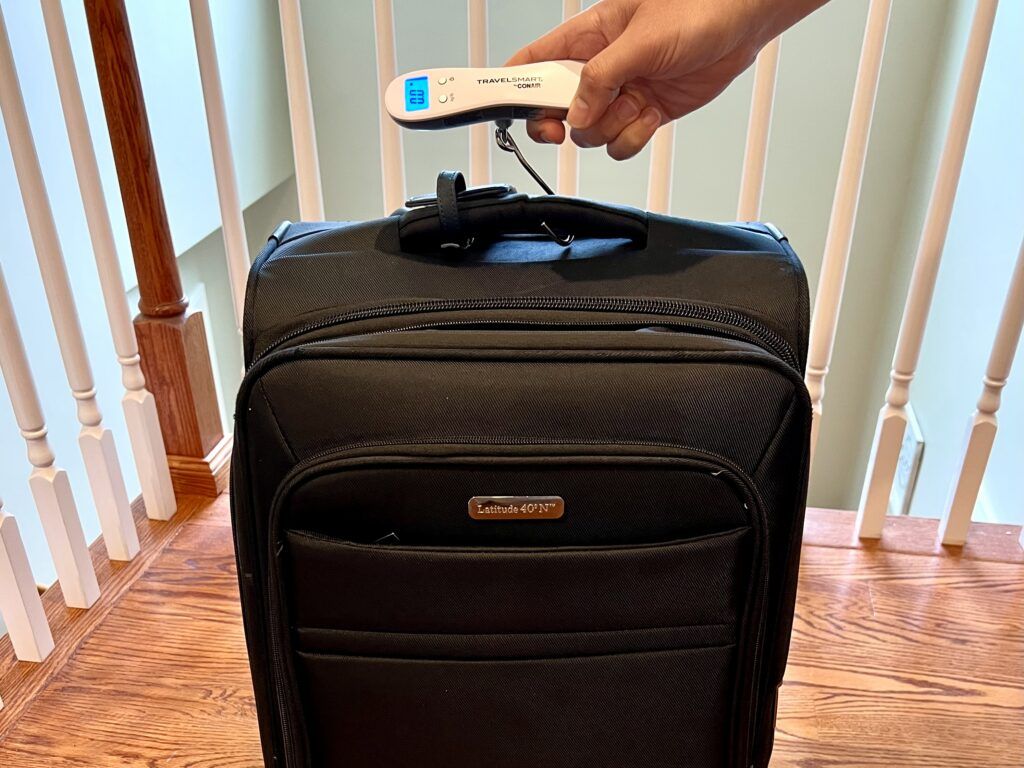
7. Not weighing bags against airline limits
If you’re flying to your homeport, this packing mistake becomes an airport fee. People pack to fill the suitcase, often not considering the airline’s weight limit. We’ve seen too many people find out at the counter that the bag is over and start opening suitcases to remove items. Don’t be that person because it’s stressful and it holds up everyone behind you.
Do this instead: Weigh each bag at home against your airline’s limits before you leave, with a little room to spare for what you’ll add on the way back. We always travel with a luggage scale so we can weigh our bags on the return trip as well.
8. Waiting until the last minute and packing from memory
The night-before scramble, done from memory instead of a list, is a classic packing mistake. It’s how the phone charger and the medications get left on the counter. You’re tired, you’re rushing, and the thing you forget is always the thing you need most. We get it, life is busy, but never wait until the last minute to start packing for your cruise.
Do this instead: Start gathering items at least a week out from your trip, and pack from an already-thought-out checklist rather than off the top of your head. Plan outfits that match your excursion needs and what you’ll wear around the ship. Then add in all the other items you’ll need for the vacation.
9. Overpacking
Too many shoes, too many formal outfits, a different outfit for every day of the trip. Overpacking on autopilot means lugging around heavier bags and then fighting to fit it all in a small cabin. Take it from the experts, there are plenty of things you’ll regret packing.
Do this instead: Plan outfits for each day and night instead of just dumping multiple options in the suitcase, and lean toward pieces you can mix and re-wear easily. Then do the same for shoes. A common rule of thumb: pack about half to two-thirds of the clothes you think you’ll need, and a couple extra of the small things like swimwear and underwear.
10. Forgetting the essentials
In the rush to plan outfits and pack clothes, don’t miss the most important things like medications, chargers, travel documents, money, and your passport. Don’t forget other items that you’ll need too, like sunscreen and sunglasses, a rain coat or umbrella, a refillable water bottle, hand sanitizer, and personal sized toiletries to name a few.
Do this instead: Pack the non-negotiables first, before a single shirt or pair of shoes goes in the bag. Then always recheck these items before leaving home to head to the cruise port. Remember: you won’t get far without your required travel documents, and a passport is the simplest way to sail. Plus, meds can be very difficult to replace while traveling. You can always purchase an over-priced version of everything else.
11. Not leak-proofing toiletries
Cabin pressure changes and rough handling of your luggage can turn an unsecured shampoo bottle into a mess across your clothes. Never toss loose toiletries in your suitcase. It would be a shame to spend all that time packing and end up with empty bottles and stained clothing.
Do this instead: Use travel bottles that seal, and pack all liquids together in ziploc bags. If your suitcase allows, try to pack the toiletries in a separate compartment than your clothes as well.
12. Not leaving room for souvenirs
Pack the suitcases to capacity on the way out and you’re sitting on them trying to zip on the way home. Not to mention, you’re paying overweight fees at the airport. If you’re leaving the house with 49.5 lb suitcases, you’re doing it wrong.
Do this instead: Divide your items between two suitcases so you have some space for the return trip, or pack a foldable bag that stays in your suitcase until you need it for the trip back. This is exactly where the travel luggage scale comes into play!
13. Not tracking checked bags with AirTags
If you’re flying to the port, especially with connecting flights, there’s lots of opportunities for your bags to go missing. Delayed luggage is frustrating, but it’s even worse when you have no idea where it is. Never hand off your suitcases to airline staff or porters at the terminal without knowing that you can track them.
Do this instead: Technology is great. We don’t know how we ever traveled without AirTags. Place one (or a similar tracker) in each checked bag before you fly. If a bag is lost or delayed, you’ll know where it actually is instead of relying on the airline to tell you. If they can locate it quickly, they might be able to deliver it to you at your next port of call.
14. Packing meds, necessities, and documents in your checked bag
At the pier, you hand your suitcases to a porter and may not see them for hours. If your medications or other necessities are inside, you’re stuck without them until they arrive at your cabin later in the afternoon.
Do this instead: Keep medications, documents, valuables, and anything you can’t replace in the bag that stays with you when you board the ship. The checked bag is for the things you can wait a few hours on.
15. Not packing a proper carry-on for the first few hours
Related, and another common embarkation day mistake, is boarding with no day bag. Without a properly packed carry-on, you’re on the ship without sunscreen, sunglasses, a charger for your phone, or a bathing suit until your luggage arrives hours later. While everyone else is already lounging by the pool, you’re trying not to get sunburned on the first day of the trip.
Do this instead: Pack a carry-on with a swimsuit, a change of clothes, sunscreen, and your essentials, so you can start your cruise the minute you board. Pack like the rest of your luggage won’t arrive until dinner time.
16. Packing wine in your checked bag at the port
Most lines let you bring a bottle or two of wine or champagne onboard, but only if you carry it on yourself. Put it in the bag you hand to the porter and it gets confiscated during security screening. Another mistake is trying to sneak on other types of alcohol; bottles of liquor are not allowed on most cruise lines.
Do this instead: Check your cruise line’s specific policy on quantity before you pack it. Then carry your allowed wine or champagne bottles on the ship with you in your day bag.
17. Forgetting to attach luggage tags
The cruise line tags are how your bag finds its way to your cabin after you hand it off to the porters in the terminal. Skip them, or attach them so flimsily they tear off, and your suitcase goes to a holding area while you wait stressing about whether or not you’ll have your belongings in time to change for dinner.
Do this instead: Print and firmly attach your cruise line luggage tags before you head to the cruise terminal (but after you arrive in the ship’s homeport). We also recommend using plastic sleeves for the luggage tags to reduce the chance of them falling off.
18. Not unpacking once you’re onboard
Living out of a suitcase on the sofa all week is another cruise packing mistake we’ve learned the hard way. For years, we dug through our suitcase for what we needed and repeated the routine for the next six days. Eventually it clicked that we were doing it completely wrong. This actually makes a small cruise cabin feel even more cluttered.
Do this instead: Use the closet and drawers to fully unpack your clothing, hang what wrinkles and put packing cubes with everything else into drawers or shelves. Then you can slide the empty suitcases under the bed, where they stay, completely out of the way, until you’re ready to go home. Now, the cabin feels twice as big and you actually find your things.
19. Forgetting to leave clothes out for disembarkation morning
Part of the disembarkation process is setting your checked bags out the night before. The crew collect them, and they’re waiting in the terminal for you the next morning after you leave the ship. But if you pack absolutely everything then you’re left with nothing to wear off the ship the next morning, except your pajamas.
Do this instead: Always make sure to set aside a full outfit, shoes, necessary toiletries, and other essentials like medications for the next morning before you put your larger bags out to be collected. These few items can then go in a smaller bag that you carry off the ship with you the next day.
20. Forgetting to check the safe before you disembark
The in-cabin safe is the obvious place to stow away your passports, extra cash, jewelry, and any other valuables during the cruise. But it’s often the last place you remember to check when you’re in a rush to pack and disembark the ship. Too many times, it’s out of sight, out of mind, and off the ship without it.
Do this instead: Make a final safe-and-room sweep part of your disembarkation routine. Open the safe, check every drawer, the closet, under the bed, and the bathroom before heading for the gangway. Many travelers even recommend putting one of your shoes in the safe the night before, so you’ll never leave without one final check.
Comments
Which of these cruise packing mistakes have you learned the hard way? Are you still guilty of some of these? Drop us an anchor below to tell us the packing mistake you’ll never make twice.