At U.S. Veterans Magazine, we believe that principled leadership and inclusive practices are essential for long-term business success. Companies and institutions that intentionally cultivate supportive environments—where veterans and other talented individuals can grow—are not only doing what’s right, but they’re also setting themselves up to thrive.
According to recent findings from Ethisphere, organizations with strong ethical cultures outperform competitors by 7.1%. A separate study by i-Sight revealed that companies recognized for fostering inclusive, veteran-ready workplaces earned more than twice the profits of their peers.
Each year, our Top Veteran recognition lists spotlight the employers, educational institutions and government agencies that go above and beyond in their commitment to recruiting, retaining and advancing veteran talent. These honorees have demonstrated a sustained focus on values, opportunity and workplace culture as reflected in our independent research, submitted materials and information available during the evaluation period.
Because programs and offerings may evolve, this recognition reflects an organization’s broader demonstrated commitment at the time of evaluation, and readers are encouraged to confirm current details directly with the organization.
As our President & Publisher, Mona Lisa Faris, emphasizes, “When companies recognize and invest in overlooked talent pools, they gain a powerful competitive edge while making a meaningful difference.”
Tony Robbins, the bestselling author, entrepreneur and life and business strategist, has spent decades challenging people to examine what they want, what they believe and what may be keeping them from changing their lives.
Now, more than 30 years after Awaken the Giant Within was first published, Robbins has returned with an updated edition of the book—and some of its questions may be even more interesting in the second half of life.
What Do You Really Want?
It sounds ridiculously simple. What do you really want?
Not what did you want when you were 25. Not what your parents expected. Not what your children need. Not what your résumé says you should be doing.
What do you want now?
One of Robbins’ recurring points is that many people never clearly decide. We spend years responding to what is immediately in front of us—work, family, bills, deadlines, obligations. Suddenly, decades have gone by.
That question becomes especially interesting after 45 because the answer can change. Maybe what mattered tremendously at 35 doesn’t matter nearly as much at 65. Maybe something you put aside years ago suddenly does.
Maybe you don’t want to retire in the traditional sense. Maybe you want another career. Or to start a business. Travel. Paint. Learn Italian. Get stronger. Make new friends. Move. Stay exactly where you are but live differently.
Robbins argues that change starts by deciding what you want and identifying what is stopping you.
That second part may be harder.
Is Your Age a Fact—or a Belief?
This is where Awaken the Giant Within becomes particularly interesting for Healthy Aging® readers.
Robbins writes about two women who reached 70 with very different beliefs about what being 70 meant. One saw it essentially as the beginning of the end. The other kept moving.
That woman was Hulda Crooks.
Crooks took up serious hiking later in life and continued climbing for decades. At 91, she became the oldest woman at the time to climb Japan’s Mount Fuji. Same general age. Very different expectations.
Robbins’ larger point is that events themselves don’t necessarily determine the direction of our lives. Our beliefs about what those events mean can have enormous power.
Turn 70 and believe the interesting part is over? Or turn 70 and wonder what’s next?
The number isn’t necessarily making the decision. You are.
The Stories We Tell Ourselves
Beliefs can be useful. They can also quietly work against us.
Think about the statements that can become part of our personal vocabulary:
“I’d love to travel, but I’m too old to do that kind of trip.”
“I’ve never been athletic.”
“I’m terrible with technology.”
“I’m not creative.”
“It’s too late to start over.”
“I could never run a business.”
Say something often enough and it can stop sounding like an opinion. It starts sounding like a fact.
Robbins challenges readers to examine those beliefs rather than automatically obey them. That’s worth doing at any age, but perhaps particularly in the second half of life, when society supplies us with plenty of beliefs about what we supposedly should—or shouldn’t—be doing.
Ask Better Questions
Robbins also offers a surprisingly simple tool: ask yourself better questions.
What are you happy about in your life now? What are you excited about? What are you proud of? What are you grateful for? What are you enjoying most? What are you committed to?
And if you can’t immediately think of an answer, change the question slightly.
What could you be happy about? What could you be excited about?
That one word opens a door.
At the end of the day, the questions change: What did I give today? What did I learn today? How did today add to the quality of my life—or how can I use what happened today as an investment in my future?
Not every day is going to be wonderful. Some are downright awful. But perhaps even an awful day can teach us something useful for tomorrow.
Keep Learning
Another theme running through Robbins’ book is the importance of continuing to read and learn throughout life.
Keep exposing yourself to ideas. Keep questioning what you think you know. Keep reading people who challenge you—even if you don’t agree with everything they say.
Curiosity, after all, has no age limit.
What do you really want now?
That question—and what happens when we stop telling ourselves “I’m too old to…”—is at the heart of our new Tony Robbins feature in the Fall 2026 issue of Healthy Aging® Magazine.
I’ve been using Black Diamond headlamps since around 2000, and as a professional photographer I’ve spent a good number of winter nights in Iceland and Scotland standing next to a tripod waiting for the northern lights to do something. Jess has two Black Diamonds she bought for her Kilimanjaro climb in 2014. All of them…
This September is a special month for JourneyWoman — it’s actually the start of our 33rd year of publishing solo travel articles for women. Think about that for a moment — what were you doing 33 years ago? I had just started my first job in Toronto in the technology industry. The World Wide Web, as we called it then, was just starting to take off. Three years later, in 1997, Evelyn Hannon launched journeywoman.com, making it one of the first travel websites in the world. She was undeniably the first female editor and writer to talk about women’s solo travel and women’s solo safety. As many of you know, she also wrote the Government of Canada’s first Safety book for women travellers, called “Her Own Way”.
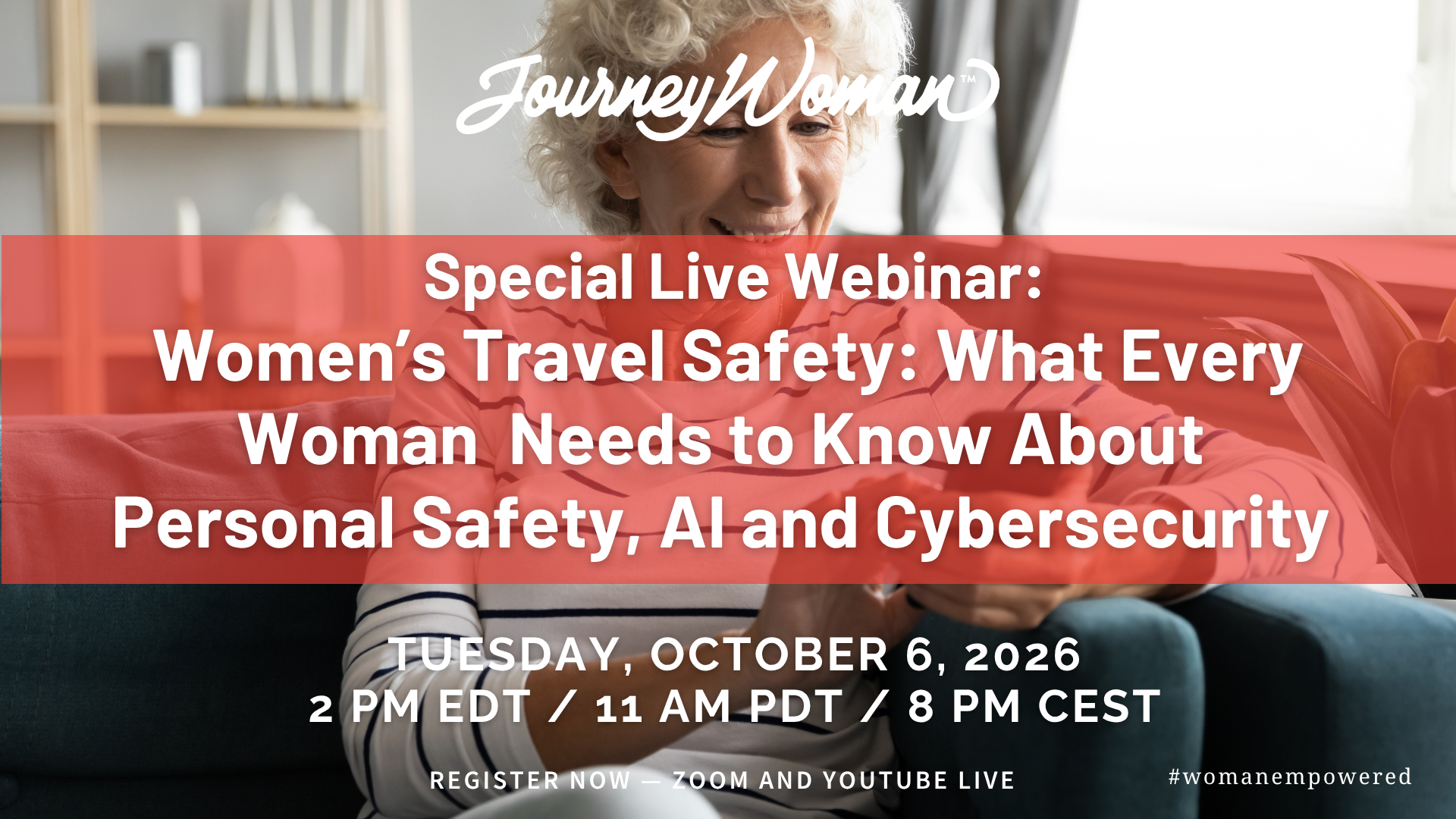
You’ve probably noticed that the topic of solo travel has become a mainstream one. There are thousands of articles and websites providing advice on solo travel, making it even harder to know who to trust. The mass adoption of AI (artificial intelligence) into the travel industry (and our lives) has created even more opportunity for disinformation and risk to personal and online safety. As you saw in last month’s issue on Responsible Travel and our new Executive Editor Norie Quintos, we are investing heavily in providing you with articles written by travel writers who have actually been to the places we write about. I think this is absolutely essential to ensure our safety as women, rather than trusting a search engine or artificial intelligence. We’ll be talking more about the impact of AI on travel in our webinar next week. I hope you can join us!
Last week, I moderated a panel called “The Women’s Travel Revolution: Solo, Savvy and Unstoppable” at the International Women in Travel and Tourism Forum, which is working to improve diversity and inclusion in the travel industry. Most of the discussion was about solo travel — how it is not ‘one size fits all’, the need for improved accessibility and visibility of services, particularly in hotels and airports, and affordable options for solo women, including the single supplement. There is much work to be done here, and I am grateful to have been invited to lead and participate in this discussion.
Carolyn (left) with our Women’s Panel including: Monika Lewicka, Founder, empowered.travel and empowered.climbing; Gerda van ‘t Land, Accessible tourism consultant and ambassador, Paula de Keijzer, founder Buitengewoon Reizen and Freely Travel, Monique White, Editor, An Unstoppable Journey.
Supporting women’s voices is core to everything we do, so I’m thrilled to introduce **JourneyWoman Departures**, a new space within our book club dedicated entirely to books written by women in our own community. For years, the JourneyWoman Book Club has brought women together over stories of travel, reinvention, and adventure — but we’ve never had a place to turn the spotlight on the authors sitting right here among us. So many of you have written memoirs, novels, and travel guides inspired by your own journeys, and it’s time those stories got the stage they deserve. If you’ve published your own novel, please submit your story so that we can amplify your efforts on our website.
Since my trip to Costa Rica in July, I’ve been working on a very big transition in my life. For years, I’ve dreamed of living in Spain, and this year, after walking the Camino, I finally decided to JUST DO IT! With my partner Tom, I bought a small house in the mountains near Malaga, and I hope to spend several months a year there. While I love Canada (and always will), I know that our time on this Earth is precious and that we can’t put off our dreams. I hope this means I’ll be able to meet even more JourneyWoman readers and partners in Europe (please reach out to me!). I also want to bring you even more insight into what it feels like to move to and live in another country — it’s a journey all on its own, believe me!
With more than 30 years of solo travel articles, selecting only seven for this issue of JourneyWoman Magazine was almost impossible! You can access all of our Solo Travel archives here, but for now, I’ve decided to feature some of our most recent features to help both aspiring and experienced solo travellers find inspiration and practical knowledge. I’d suggest you start with Leyla’s “Lessons from 50 Years of Solo Travel”, a reminder that solo travel is not new, nor foreign to those of us at JourneyWoman.
As always, thank you for all you do and for those you inspire through your own actions!
Featured image: Woman can dress for safer travel while still maintaining their personal style | Photo by KostiantynVoitenko on Envato
What you wear sends a message
by Karen Gershowitz
I’m never going to be mistaken for a local wandering through Istanbul’s Grand Bazaar or photographing the Sheikh Zayed Grand Mosque in Abu Dhabi. Nor do I try to be. I’m a traveller, and there’s nothing wrong with looking like one. But when it comes to women’s safety, there’s a difference between looking like a traveller and looking like a target.
Whether we realize it or not, every time we venture out to a new destination, we’re advertising something about ourselves. Our clothes, jewelry, handbag or backpack, camera, and phone all send signals. We may be communicating, “I have money,” or “I don’t understand or respect the customs here.” Most of the time, this isn’t a problem. But sometimes your choices make you a mark for thieves or create a cultural barrier.
That doesn’t mean we should travel fearfully. I certainly don’t. But especially as a solo woman traveller, I want to be aware of what I’m telling the world without saying a word.
Karen in Cameron Highlands, Malaysia, showing comfortable clothing and a theft-proof bag / Photo provided by Karen Gershowitz
Are you advertising wealth?
1. Jewelry
Let’s start with the obvious: jewelry.
I love jewelry. But the earrings, watch, and rings I wear when I travel are all inexpensive. If I lose them, it doesn’t really matter. More importantly, they don’t signal “I have money.” I leave valuable jewelry at home.
The same goes for anything that looks expensive enough to attract attention, whether or not it actually is. Watches, recognizable designer handbags, and prominent luxury logos can all say, “I’m wealthy.”
2. Your phone
Jewelry often isn’t the most valuable thing we display. Consider the phone we all carry: it is our camera, map, guidebook, translator, boarding pass, restaurant finder, and connection to everyone at home. That means we take it out constantly. In some destinations, displaying the latest phone can be the equivalent of wearing an expensive diamond ring or Rolex watch. I’m not suggesting leaving the phone behind; I don’t know how I’d function without one when I travel. But there’s a difference between using it when I need to and walking around for hours casually holding it.
When I was visiting a friend in Medellín, Colombia, he warned me constantly to keep a tight grip on my phone. From the way he described it, phone snatching is almost a competitive sport there.
The point isn’t to leave everything valuable at home. Instead, ask two simple questions. First, before you leave home, decide if you really need that expensive item. And then, when you are travelling, ask: Do I need to display it now?
3. Clothes and accessories
This one is trickier. Of course, I’m a tourist. No one in Tokyo or Cairo is going to mistake me for someone who lives down the block. What matters more is whether I look like a confident or confused tourist.
Certain clothes and accessories can make our visitor status particularly obvious: hometown sports-team shirts, conspicuous travel gear, and anything emblazoned with where we come from. I’ve seen tourists with ID tags attached to their backpacks that have their contact info easily readable. That’s a terrible idea. Put that information where it’s findable, but not obvious.
On the other hand, overdressing because you’ve heard that everyone in Paris or Milan is super chic can make you stand out just as much.
You don’t have to look like a local. You just want to look as though you know what you’re doing. So, what should you wear to be safe and appear confident?
Start with simple, understated clothes that are appropriate for where you are. Neutral colours and basic tops and pants attract less attention than logos or flashy graphics. I’m not suggesting you abandon your personal style or dress entirely in beige. Just don’t overdo it.
Lightweight layers help you adapt to the weather and cultural norms. A scarf, shawl, or lightweight cardigan can make an outfit appropriate for a mosque, cathedral, or conservative neighbourhood.
Dress for the conditions you encounter, not the weather you expected when you packed. Wearing inappropriate clothes for heat or cold is more than uncomfortable; it can contribute to dehydration, heatstroke, or hypothermia.
JourneyWoman Gail M dresses in layers, like in here Banff. She wears a shirt, fleece, and puffer jacket, with a hat and gloves in her pocket / Photo by Gail M via our private Facebook group
On the same day but at a lower elevation, Gail removed her hat and opened her coat, using a cloth bag in her pocket to carry the jacket needed / Photo by Gail M via our private Facebook group
Comfort matters, especially shoes. Wear shoes you can walk comfortably in and clothes that let you move easily. It’s not just about comfort, either. Sandals or heels can be tripping hazards if you ever need to move quickly or cross uneven ground in a hurry.
The goal isn’t camouflage; it’s to look comfortable, appropriate, and purposeful, as though being there is the most natural thing in the world
It’s not just what you carry. It’s how you carry it
Since age 17, I’ve been travelling frequently. I’ve been robbed only once; I was 22, visiting the Golden Temple in Kyoto, Japan. I thought I had New York City street smarts and was certain my belongings were secure, especially in a country known for its safety. I was wrong. To this day, I have no idea how a pickpocket managed to snatch my wallet. That early lesson taught me that no system is foolproof.
These days, I use a crossbody bag with locking compartments and keep it in front of me in crowded places. That makes it harder to grab and much easier to keep an eye on than a purse dangling from my shoulder.
The goal isn’t to make my belongings impossible to steal. It’s to make them harder to steal than someone else’s.
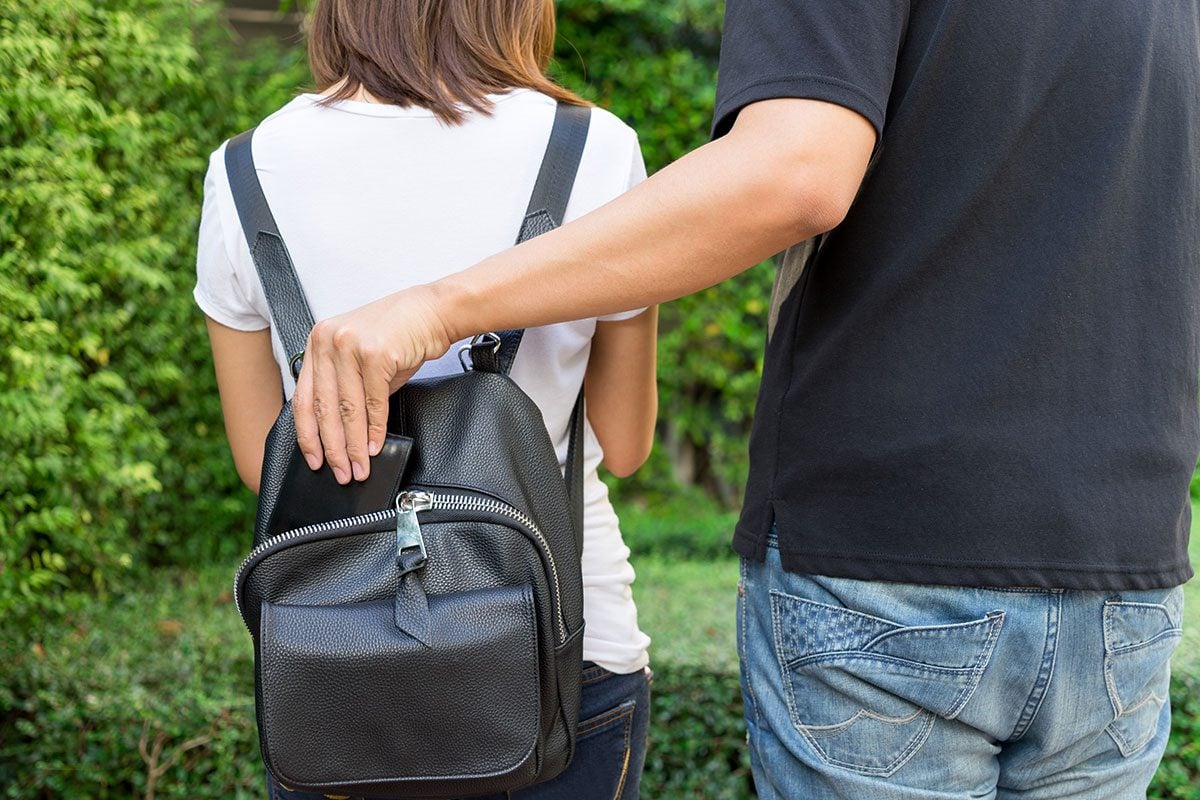
Backpacks may be comfortable and convenient, but in a crowded subway or market, the person behind you may have better access to your belongings than you do.
Fanny packs can announce “tourist” almost as effectively as a guidebook. If you use one, wear it toward the front and choose one with secure closures.
Here are a few more ways to reduce the opportunity for theft.
Zippers matter. So do pockets. A phone sticking out of a pocket is practically an invitation. An open tote may be convenient for you, but it’s also convenient for someone standing behind you.
Don’t put everything important in one place. If your phone, credit cards, cash, and identification are all together and that bag disappears, you’ll have a much bigger problem.
Money belts, worn under your clothing, aren’t glamorous, but they remain useful for things you can’t afford to lose, such as extra cash, credit cards, or a passport. I think of them as a portable safe.
That said, the best bag is the one you can wear comfortably for hours and close securely. A crossbody works well for many travellers. But physical comfort, mobility needs, and destination conditions matter more than any single style.
Backpacks can be easier to pickpocket. Look for theft-proof crossbody bags / Photo via Envato
What else do your clothes say?
There’s another reason to think about what we wear, and it has nothing to do with pickpockets. Clothing that is appropriate at home may be culturally inappropriate in other parts of the world.
Before I travel somewhere new, I read about the culture, including what is considered appropriate dress. This is particularly important in conservative countries and at religious sites. Bare shoulders, cleavage, shorts, or skirts above the knee may attract unwanted attention. Exposed areas can also prevent you from entering a mosque, temple, church, or other site. They can also single you out as culturally insensitive.
Apart from reading about a culture before I leave home, I pay attention once I arrive. How are women my age dressed? What are people wearing in the market, on public transportation, or in restaurants?
In some places, dressing more conservatively reduces unwanted attention or harassment. It is a safety consideration in its own right, apart from cultural etiquette.
I was travelling in Morocco with a small group. The group leader advised us to wear clothing that covered us as completely as possible. Everyone adhered to that advice. But one woman wore beautiful clothing in the sheerest fabric possible. In the bright sun, everything was exposed. She had followed the letter of the dress code while completely missing its spirit, and the attention she attracted embarrassed the rest of us.
I don’t see dressing appropriately as giving up my freedom or personal style. I’m a guest in someone else’s country. Making a modest adjustment to what I wear seems like a small price to pay for showing respect. I’ve found that making an effort to understand and respect local customs makes travel more rewarding.
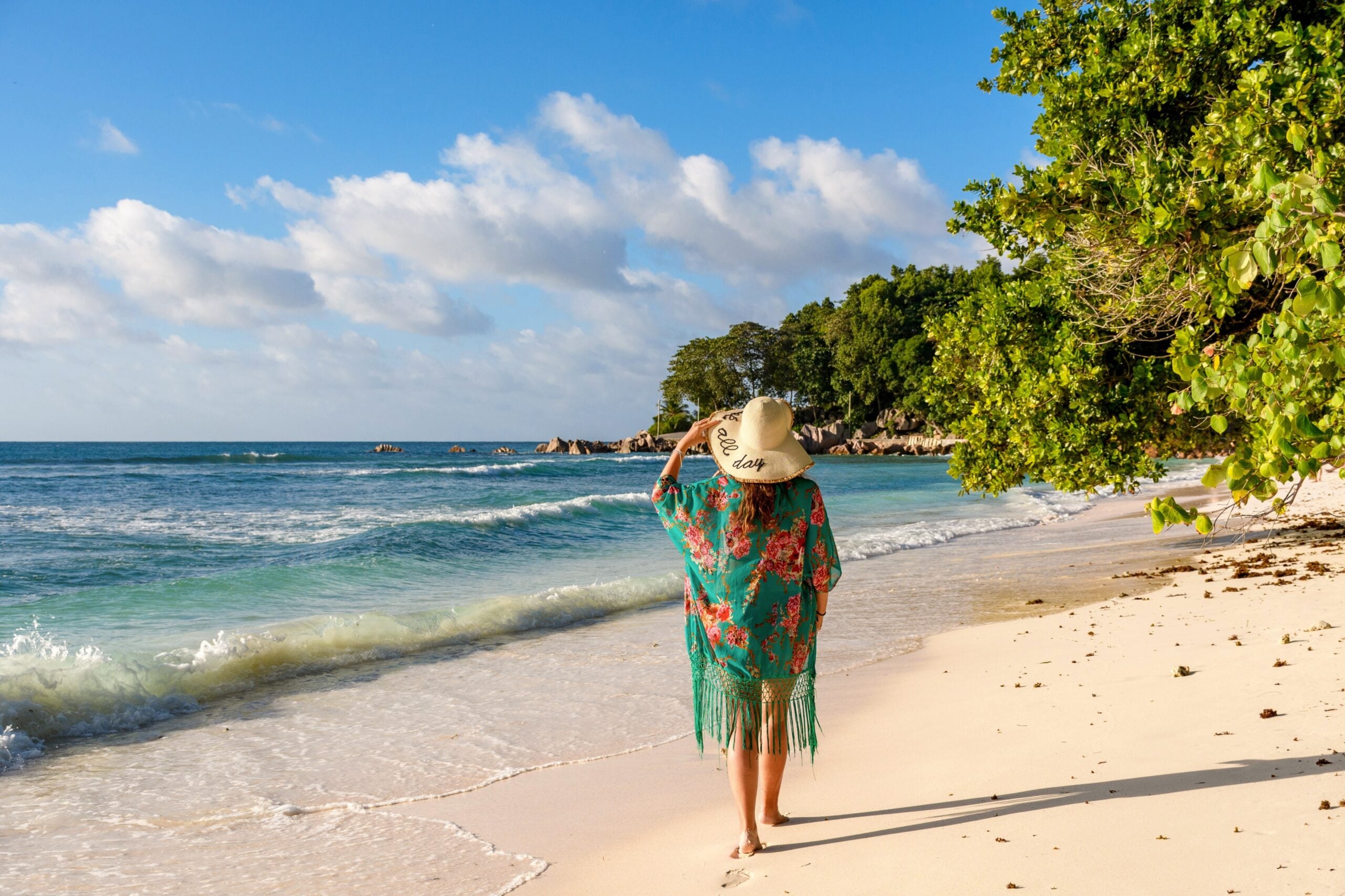
Beachwear is another example of why context matters. A swimsuit or skimpy cover-up may be appropriate on a beach or around a resort pool, but not when you wander into town for lunch. In many destinations, beachwear belongs on the beach. Putting on a substantial cover-up or streetwear is an easy way to avoid attracting the wrong kind of attention.
There can also be regulations about attire. A number of Caribbean nations prohibit camouflage clothing for civilians because it is reserved for the military. A political slogan, flag, religious symbol, or even a sports-team shirt may have implications you know nothing about. Some countries also enforce dress codes in government buildings and other public facilities, where inappropriate clothing can get you turned away or fined, not just stared at.
The question I ask myself is, “What does wearing this say about me here?”
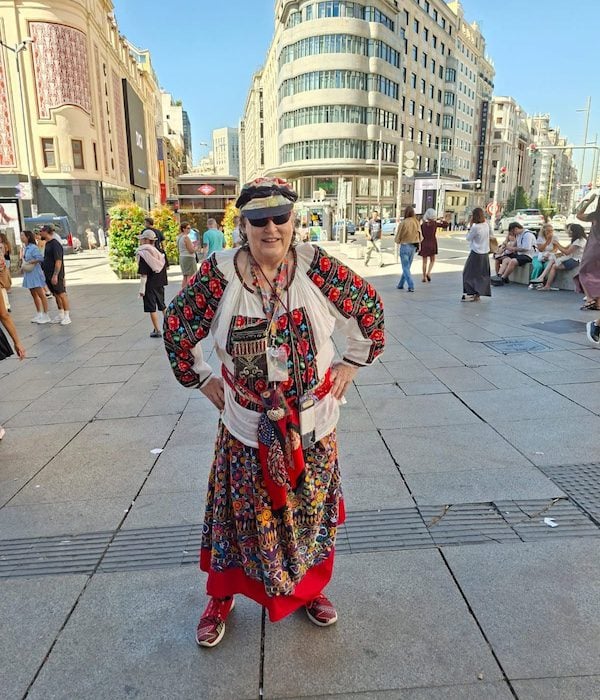
JourneyWoman Gretchen likes to buy wearable souvenirs on her travels to show off her personal style, like these Romanian clothes and a cap from Venice. / Photo by Fetchin Gretchen via our private Facebook group
JourneyWoman Gina C showcases how she dresses to respect sacred sites, like wearing a long dress and a head covering at a temple in Egypt. The headscarf also helps to protect from the desert heat / Photo by Gina C via our private Facebook group
Awareness, not fear
I’ve travelled to over 100 countries, often on my own, and I refuse to spend my time worrying about everything that might go wrong. That drains the joy out of the trip. But there’s no reason to invite trouble. I don’t expect to blend in everywhere I go, nor do I want to. But paying attention to my surroundings and to the people who live there is important.
Awareness is not fear. Leaving valuable jewelry at home, putting my phone away when I’m not using it, carrying my bag securely, and dressing with local customs in mind do not diminish my independence or my personal style. They help me travel with more ease, show respect for the places I visit, and keep the focus where it belongs: on the experience itself.
When we travel, we are always sending signals. It is worth taking a moment to ask: What am I advertising?
Military life is defined by movement. Servicemembers are transferred to new bases every few years, deployment cycles disrupt routines, and spouses often juggle parenting, employment and relocation with little warning.
These shifts can make a traditional campus education all but impossible. Yet the stories of students at American Military University (AMU) show that mobility can be an asset, not a barrier. By harnessing flexible online programs and supportive faculty, military spouses and families are turning life on the move into an opportunity to learn and grow.
Finding a Path That Moves With You
One of the most striking examples comes from Chanda Chann, a Khmer Rouge survivor and military spouse who finished both a bachelor’s and a master’s degree at AMU. She credits her success to the university’s ability to accommodate her family’s frequent moves. As a young adult she completed a Bachelor of Business Administration and later an MBA, becoming the first in her family to earn a college degree.
Chanda notes that she could finish her coursework “anywhere” thanks to AMU’s online format. She not only graduated debt‑free but says that having a diploma “opened a lot of doors and built my confidence” to become a successful entrepreneur and property manager. Her story shows how an education that travels with you can unlock new professional paths.
Liberty Simmons offers another illustration. A full‑time television reporter and U.S. Navy Reserve officer, Liberty chose AMU because the program could handle her demanding career and military commitments, and noted that the University’s focus on “national security, law enforcement, and military” resonated with her service experience. She completed a capstone project on combating misinformation, a topic that now shapes her daily work in journalism and public affairs.
Liberty’s experience demonstrates how a university attuned to military life enables students to deepen their expertise without stepping away from service.
Balancing family obligations and coursework is a recurring theme. Chris Hassett earned his Bachelor of Science in Information Technology Management while serving, working, and raising children. He recalls that online classes allowed him to be “a student, an employee, and a parent” simultaneously, allowing him to become the first college graduate in his family. His story resonates with many military families who must wear multiple hats and still find time for education.
Another inspiring example comes from Annie De La Cruz, a daughter of Mexican immigrants who is married to a Navy servicemember. Annie set her sights on a degree that would allow her to have a meaningful impact in healthcare. Her journey was anything but easy: she relocated cross‑country multiple times, cared for a daughter with complex medical needs, and supported her husband’s military career while pursuing her own goals. To make it all work, she studied late at night or between medical appointments and took each assignment one at a time.
She leaned on her daughters for motivation and credits AMU faculty and staff with providing unwavering support, saying they “always told me whatever I need, they support me.”
Annie’s story illustrates how flexible online programs and a supportive community can empower military spouses to pursue their education dreams without sacrificing family responsibilities.
Strategies for Success
These stories reveal several strategies that help military spouses and families thrive academically:
Choose programs designed for mobility. Look for universities with asynchronous coursework, monthly start dates and the ability to access classes from anywhere. Chanda and Liberty both highlight that being able to log in from wherever life took them was crucial.
Lean on support networks. Advisors and faculty who understand military culture can make the difference when unexpected challenges arise. Students like Chris and Annie found that when life threw curveballs, advisor support and faculty engagement helped them stay on track.
Leverage benefits and transfer credits. Utilizing GI Bill® benefits and transfer credit evaluations can reduce costs and the time it takes to earn a degree. Chris’s Army experience was applied toward his degree through the military transfer credit process, making his education more attainable.
Turn coursework into real‑world impact. Liberty’s capstone on misinformation directly informs her work in public affairs and journalism, showing that academic projects can have practical value for both the student and the community.
A Call to Action for Military Families
Pursuing higher education while supporting a servicemember isn’t easy. However, the experiences of AMU students prove that an online degree can fit into the unique rhythm of military life. Whether you’re stationed overseas or moving across the country, flexible programs and dedicated support can help you build new skills, grow your career, and set an example for your loved ones. For military families, education isn’t just a personal achievement — it’s a portable foundation for resilience and opportunity.
Read more articles for the Veteran Community here.
Like, slurp that savory broth and go back for a third bowl kind of good.
My daughter got sick last week, which means that our whole family got sick last week. And when I get sick, I lose two things: 1) my appetite, and 2) my interest in cooking.
This pastina soup truly SAVED us last week. It is:
Incredibly easy to make.
So, so savory and flavorful.
Light (like, practically drinkable) but nutrient-rich.
Warm, cozy, and healing.
Generous – like, every time I make it, I end up freezing half of the broth for our next sick day, or to share with someone when they might need it.
I can’t say enough about how much I loved this last week. I sat down at the table with a steamy bowl with extra parm on top, and found myself repeatedly going back for “just one more scoop” of the broth over those tiny stars, even though I swore I hadn’t been feeling hungry just a moment earlier.
My girls were pretty excited about eating tiny star pasta with olive oil + Parmesan, while Bjork and I ladled the luscious broth over our bowls and finally tucked into some nurturing food for the first time in several days.
Pastina refers to the tiny star shaped pasta, which I found at Target, and the nickname Italian Penicillin refers to the healing nature of the savory broth – almost like a chicken noodle soup, but simpler. (And if I’m being honest, I prefer this to chicken noodle.)
I hope you are healthy and well, physically and emotionally. But if you’re not, this is comfort meal that has been serving our family so well lately!
How To Make Pastina (In Photos)
1
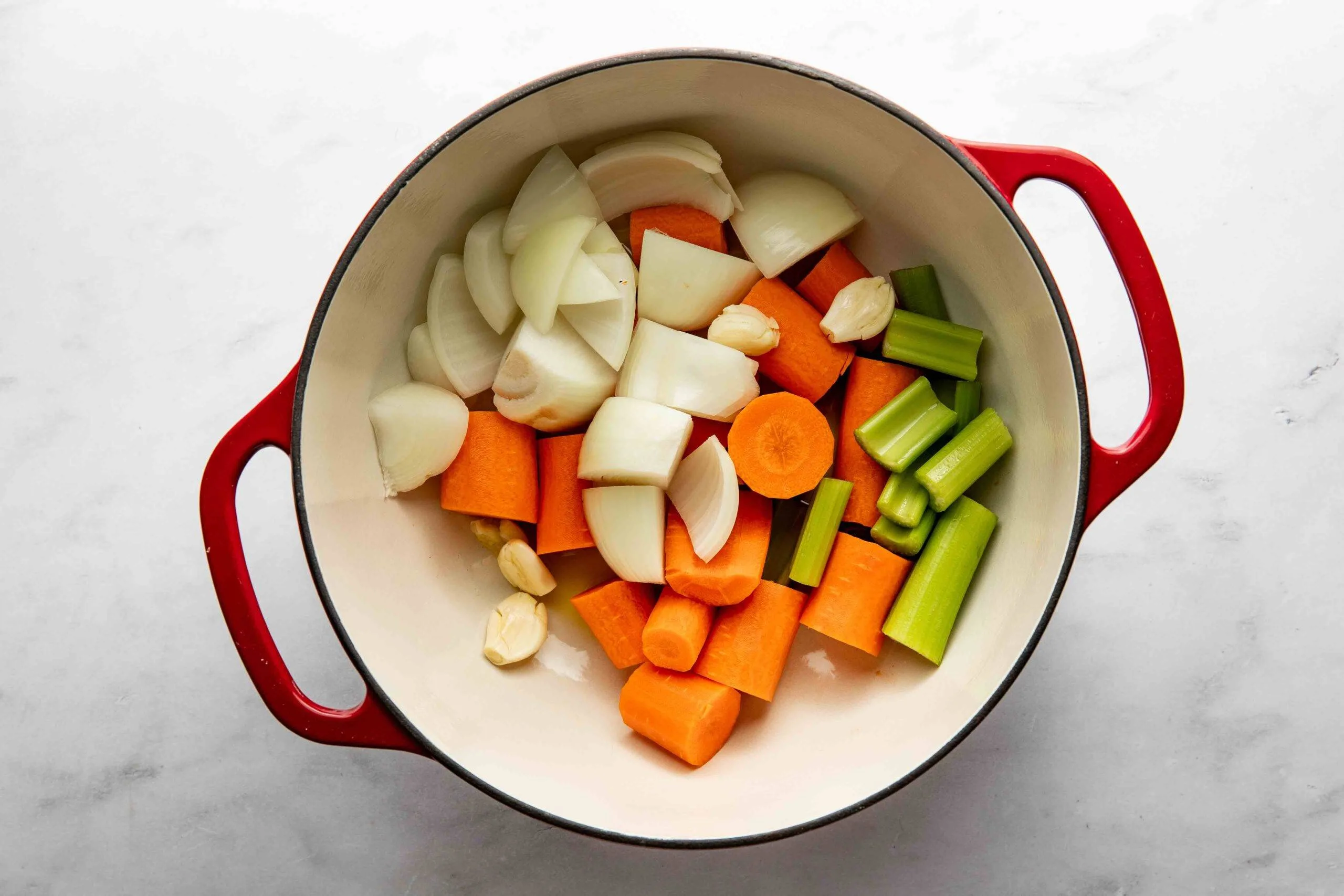
Chop and Sauté the Veggies.
I keep them real chunky, and I give them a quick sauté with olive oil before adding all the liquid just to get things extra fragrant.
2
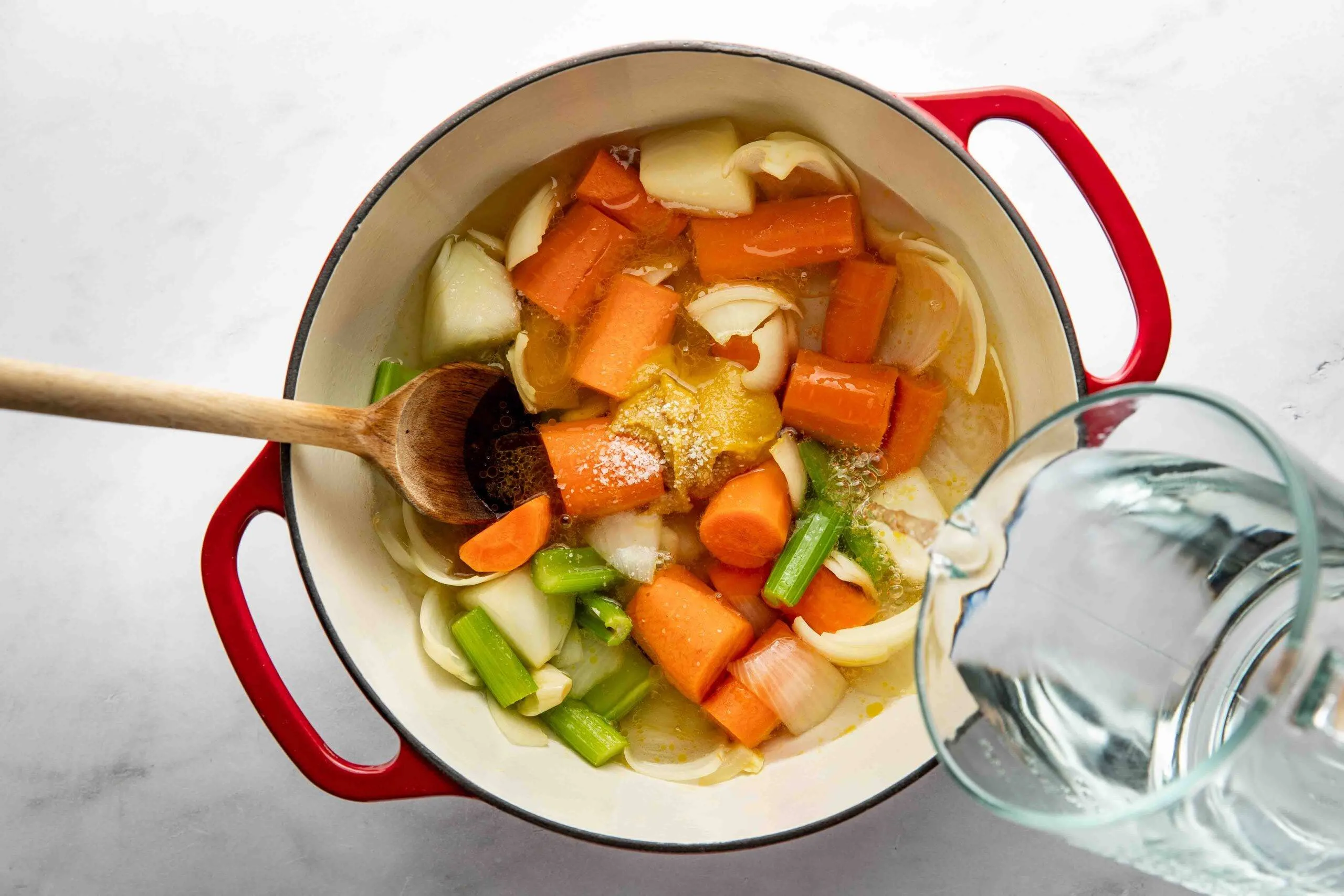
Simmer with the Liquid.
I use water and Better Than Bouillon broth base.
3
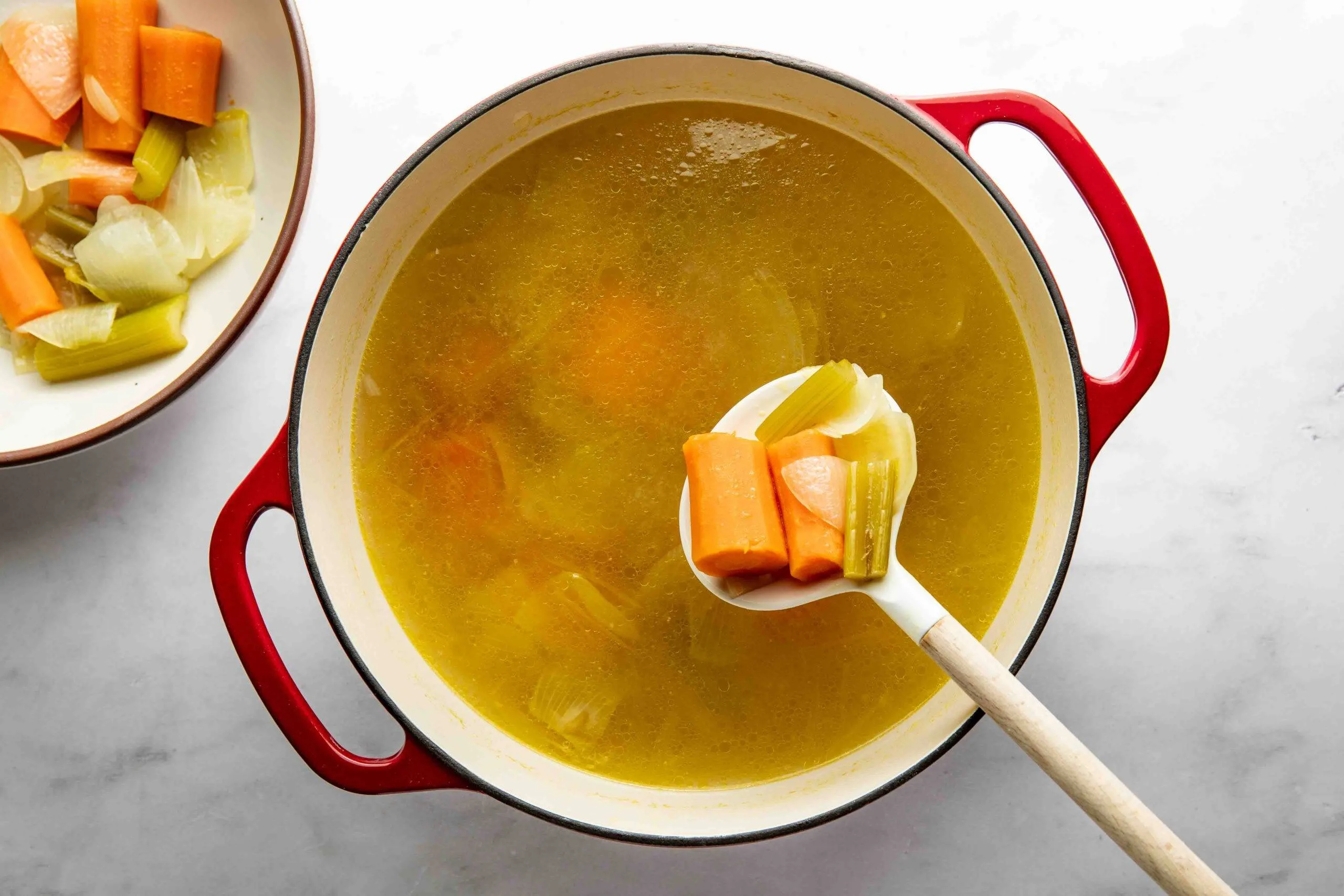
Remove Cooked Veggies.
Transfer to a bowl to cool down for a moment.
4
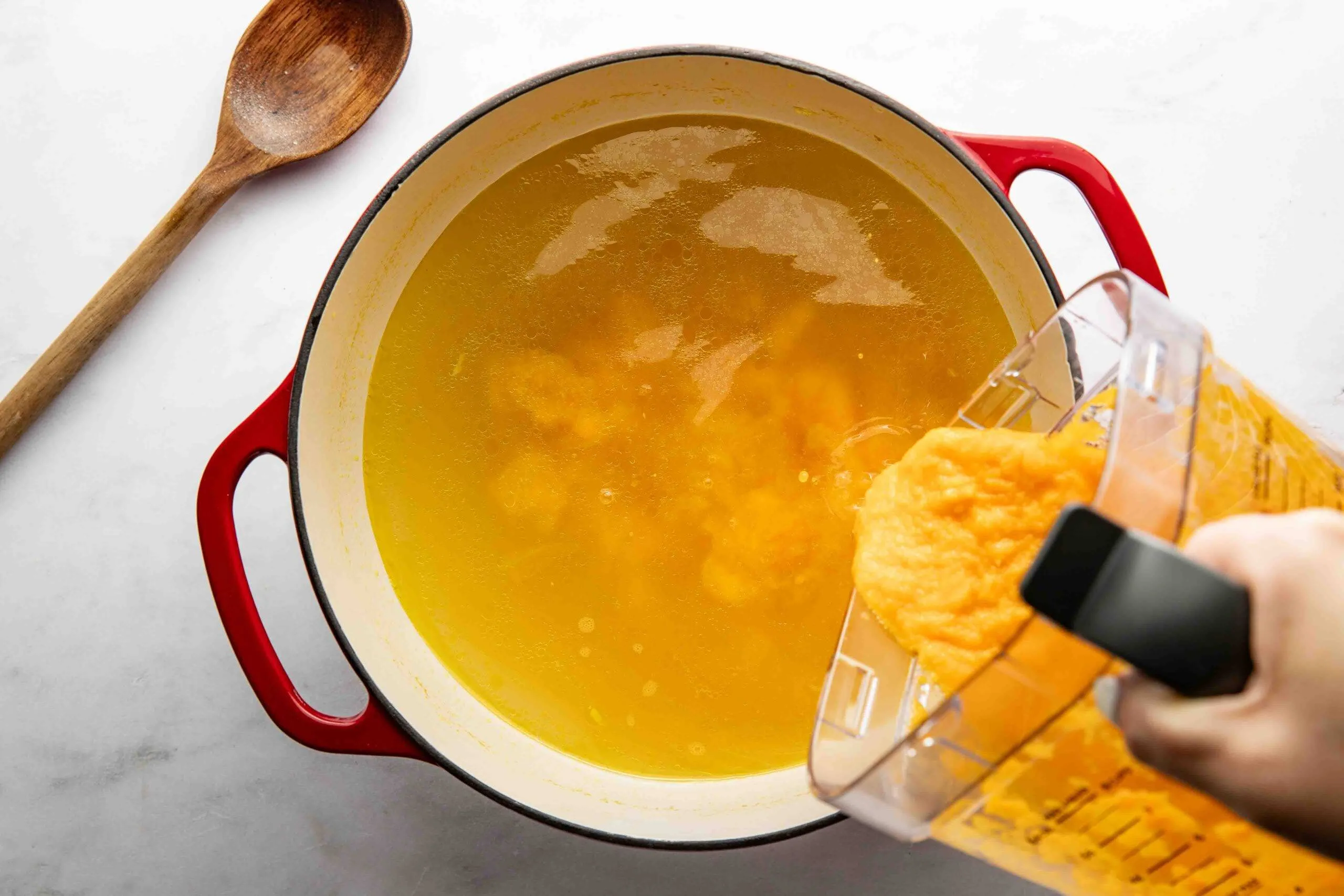
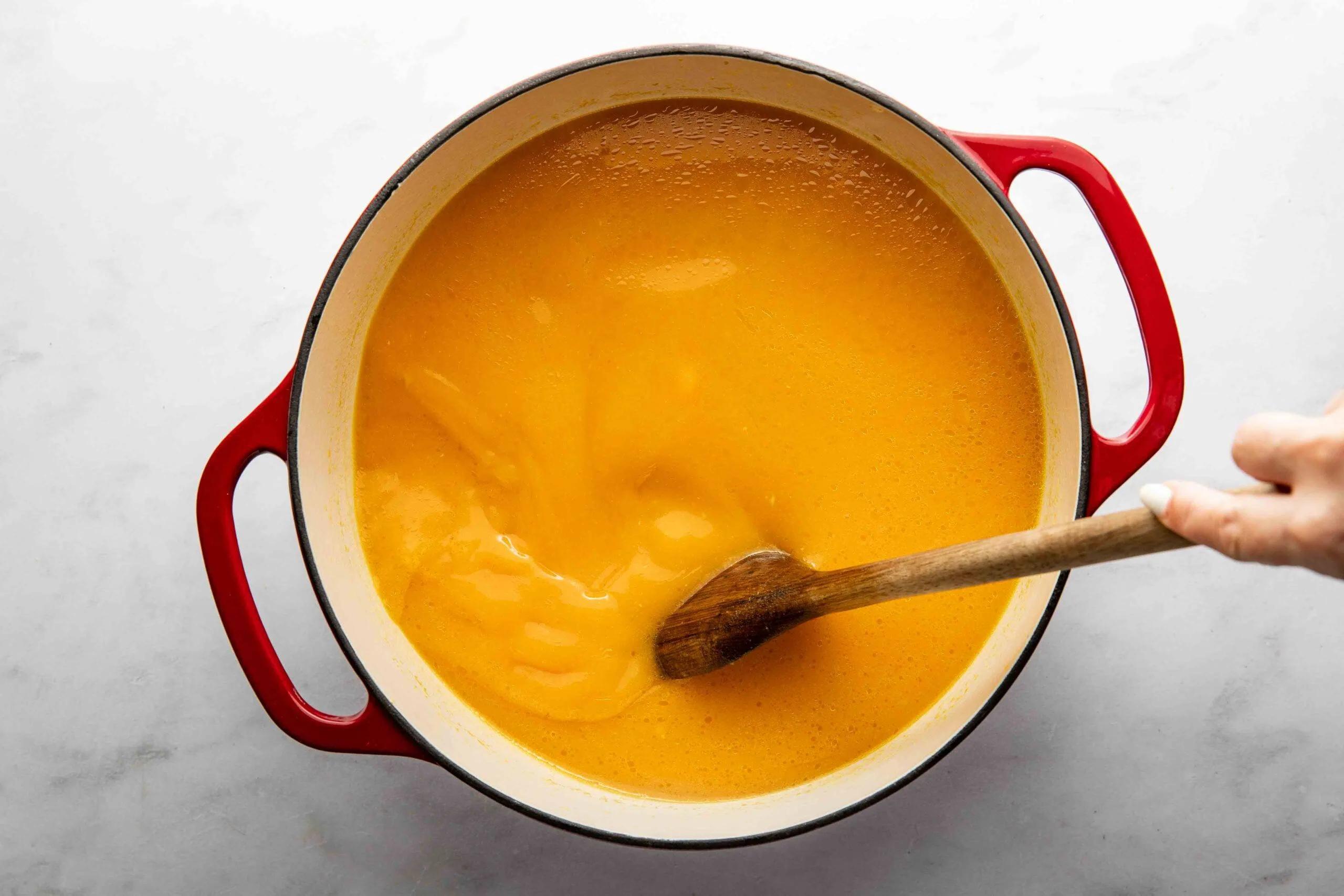
Blend Veggies.
And then add them right back to the broth pot.
5
This Broth!
Look how vibrant and gorgeous.
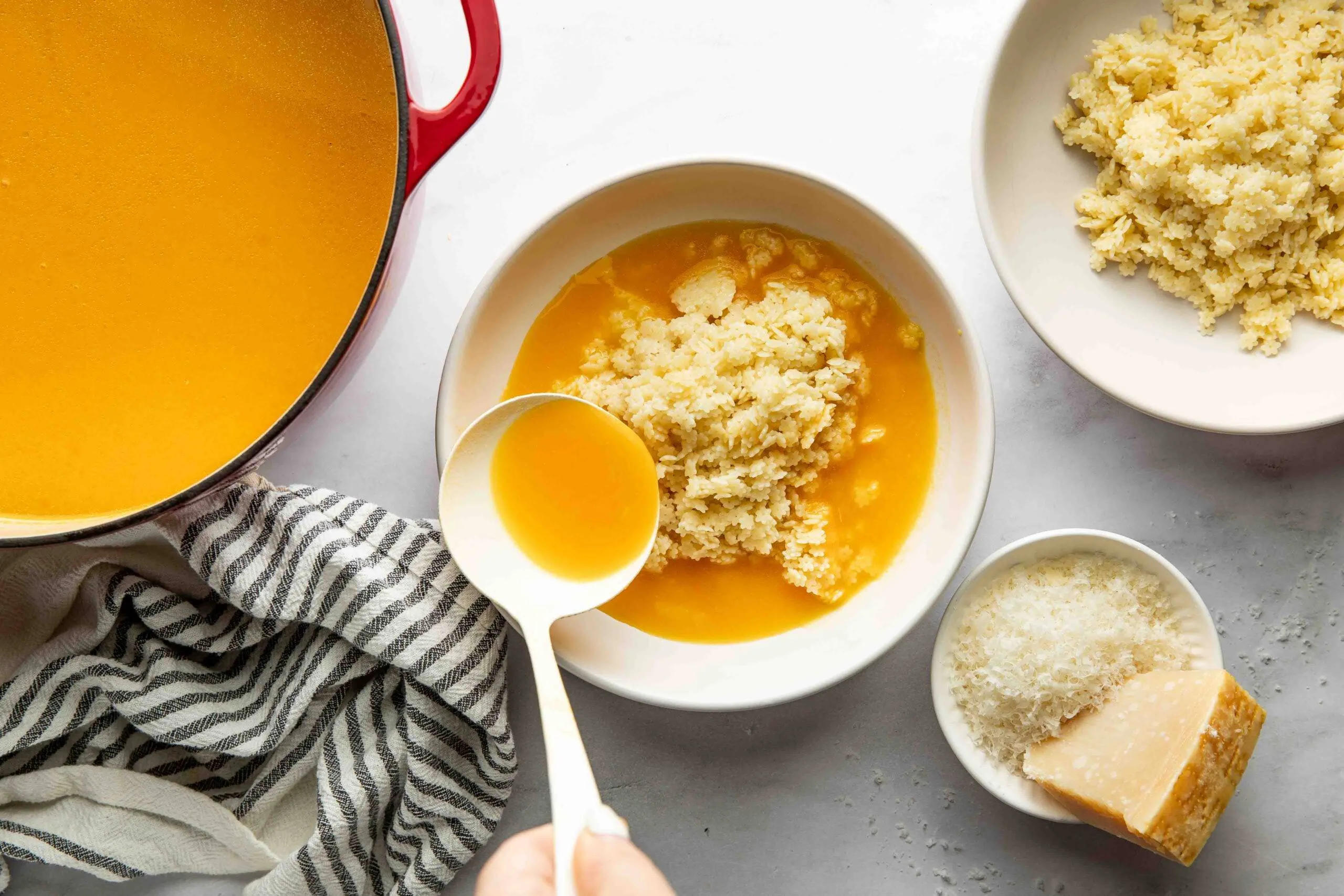
6
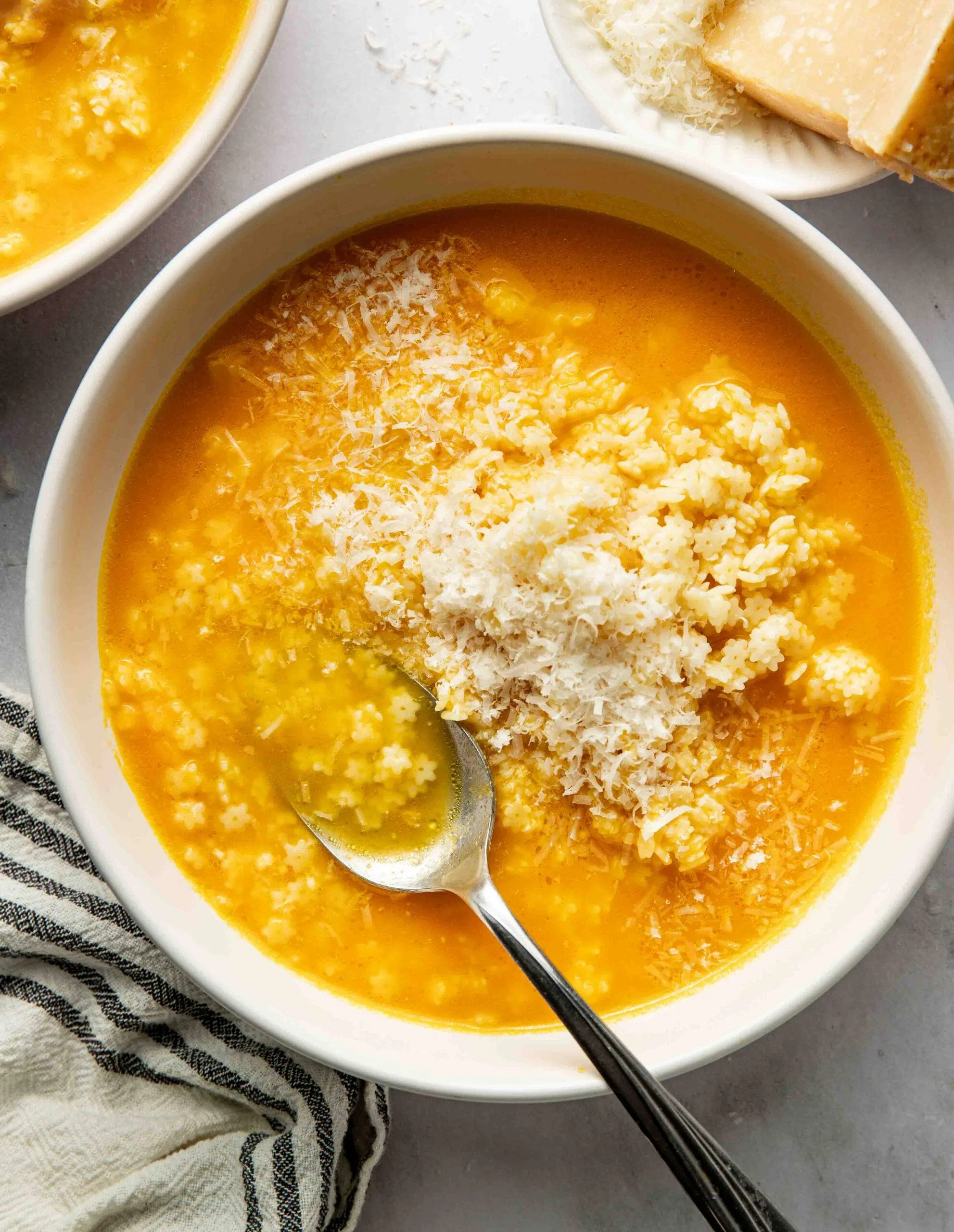
Ladle over Pastina!
And top with parm. YUM.
Source Notes: “Italian penicillin” is a nickname for pastina soup, or pastina (small pasta) in broth. It is playfully compared to medicine because of its healing vibe, being that it is a warm, nostalgic, nourishing comfort food. It originated with generations of Italian grandmothers and it has moved into the spotlight after becoming a popular trend on TikTok over the last few years. 🙂
This soup has become my go-to recipe when my family is sick. The broth is amazing – simple, light, flavorful, and nourishing! It’s absolute comfort food.
Ingredients
Units
For the Broth:
2 tablespoonsolive oil
3 large carrots, peeled and cut into large chunks
2 stalks of celery, cut into large chunks
half of 1yellow onion, peeled and cut into large chunks
4 cloves garlic, peeled and smashed
10cupschicken or vegetable broth(I use 10 cups water plus 2 tablespoons Better Than Bouillon chicken base)
1 teaspoonsalt
For Serving:
1 1/2cupspastina(I use Stelline from the Good and Gather brand at Target)
freshly grated Parmesan cheese for topping
Instructions
Sauté Veggies: Heat oil in a large Dutch oven over medium-high heat. Add the chunky carrots, celery, onion, and garlic to the pot. Sauté for 5 minutes.
Simmer: Add broth and salt. Simmer for 30 minutes, until the vegetables are very tender.
Remove Veggies: Use a slotted spoon to transfer the vegetable chunks to a bowl. Set aside to cool for a few minutes (you don’t want to add scorching hot veggies to your plastic blender).
Blend: When the veggies have cooled a bit, blend them with 1-2 cups of broth until very smooth. Add the blended mixture back to the pot; stir to incorporate.
Pastina: Cook pasta according to package directions. Drain and toss with olive oil and a pinch of salt.
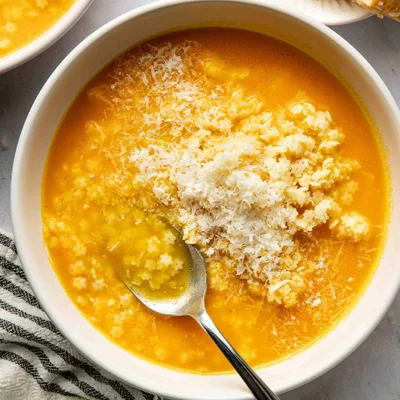
Serve: Put a scoop of pastina in a shallow bowl. Ladle the steaming-hot broth over the top, then top each bowl with freshly grated Parmesan.
Prep Time:5 minutes
Cook Time:40 minutes
Category:Soup
Method:Stovetop
Cuisine:Italian
Keywords: pastina soup, italian penicillin, soup recipe, simple soup recipe
Daydreaming about a Thanksgiving full of family, laughter, and a delicious feast without the prep work, cooking, and cleanup that’s usually involved? If so, we have the answer for you: Thanksgiving on a cruise! Pretty much every cruise ship sailing in and around the U.S. over the Thanksgiving holiday will be celebrating with a traditional Thanksgiving feast complete with all the trimmings. Many ships also offer Thanksgiving-themed activities and — of course — football games on the big screen.
Here, we’re going over what you need to know about Thanksgiving cruises, from when you should book and what you should pack to questions about the onboard experience, some top Thanksgiving cruise picks in 2026, and more.
Why spend Thanksgiving on a cruise?
A full Thanksgiving meal without any of the prep work, cooking, or sink full of dishes to wash once it’s all over. What more could you ask for? Many cruisers see appeal in spending Thanksgiving on a cruise because it’s a chance to have a fun getaway and truly relax for the holiday. Everyone is taken care of, everyone is fed, and the only things on your to-do list are hitting the pool and ordering a cocktail.
Cruises are also excellent for multi-generational families, as they provide an opportunity for everyone to travel together but still do their own thing when they want, too. Maybe you want to have dinner together every night, but split off during the day doing things like hanging out at the pool, participating in game shows, or doing a bar crawl. The kids won’t get bored either, as there are activities and spaces geared towards them on board.
If you live in a climate where mid-late fall and winter are downright cold, it also helps that you get to spend the holiday in a warm place for a change. You get to trade in your sweater and boots for a swimsuit and flip-flops — complete with a beach (or several!) to enjoy along the way.
How do cruise lines spend Thanksgiving onboard?
While Thanksgiving isn’t as big of a deal on cruise ships as holidays like Christmas or Halloween, rest assured that if you’re sailing from/around the U.S. there will still be a celebration on board. Sometimes you can even find Thanksgiving celebrations on ships in Europe or South America if they’re cruise lines that cater heavily to American travelers.
The focal point of Thanksgiving, besides taking time to reflect on what you’re thankful for in your life, is — of course — the traditional Thanksgiving meal! Across pretty much all cruise lines, you can expect roasted turkey along with sides such as sweet potatoes, stuffing, mashed potatoes and gravy, and cranberry sauce. Of course, a variety of appetizers are also available, with squash or pumpkin soup being a favorite for the season.
And since cruise lines know that not all guests may like or be able to eat the traditional meal, there are other entrée options such as roasted chicken breast, salmon, steak or another beef dish, a pasta, and at least one vegetarian option.
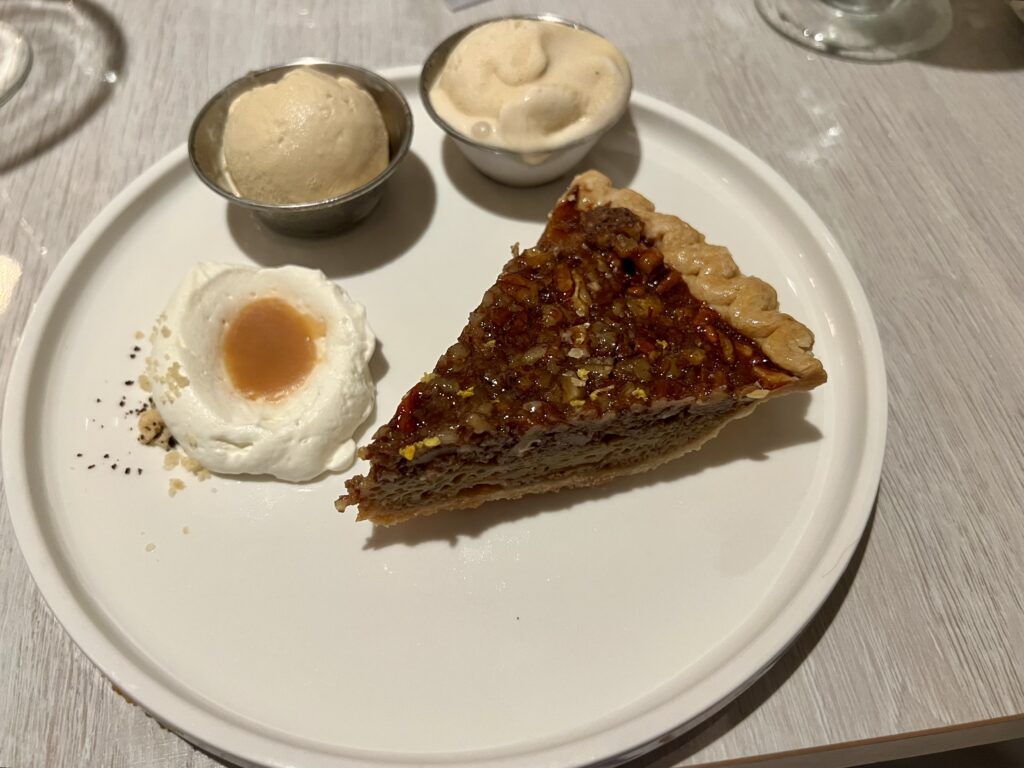
Many of the usual desserts are available, along with festive favorites like pecan or pumpkin pie, apple crisp or cobbler, and pumpkin or fruit cheesecake.
Many cruise lines don’t really do much for Thanksgiving beyond the special Thanksgiving Day feast. However, you may find more family-focused or Thanksgiving themed game shows, scavenger hunts, or trivia during a Thanksgiving cruise. In the kids’ clubs, crafts or other activities may also have a Thanksgiving theme.
Of course, passengers can also catch football games on the big screens outside and in the ship’s sports bar.
What should I pack for a Thanksgiving cruise?
For most guests, packing clothes for Thanksgiving on a cruise won’t look too different from packing for any other cruise. It isn’t even necessarily one of your ship’s official “formal” nights — each cruise line is different when it comes to whether they align formal night with Thanksgiving evening. If you want to be sure, check with your cruise line to see whether Thanksgiving will be a gala-style feast where guests dress to the nines, or whether the “special” in the occasion will revolve strictly around the delicious Thanksgiving meal.
If you want to be extra festive on Thanksgiving, regardless of whether it’s formal night, pack fancy, fun outfits that give you all those autumn and Thanksgiving vibes. Parents might want to pack cute Thanksgiving themed outfits for their little ones to wear throughout the day and evening. If your cruise line allows door decorations, you might want to bring some Thanksgiving-themed magnets or other décor to add some festive spirit to your stateroom corridor.
Otherwise, pack for the region where you’re sailing. From the U.S., nearly all cruises in November will be to warm places like the Caribbean, Bahamas, and Mexican Riviera. If you want a full packing list, head over to our Caribbean cruise packing guide.
When should you book a Thanksgiving cruise?
Thanksgiving cruises are very popular, and often sail near or at full capacity. So, as we recommend with any cruise, try to book as far in advance as you can. Prices often creep up the closer to the sail date you get, especially with something as popular as a Thanksgiving cruise. You’ll find some of the best pricing if you book far out. If you have your heart set on a particular cruise line or ship, book far in advance to secure your spot on board and have the best selection of staterooms to choose from.
Are Thanksgiving cruises expensive?
While “expensive” is a relative term, in short — yes. Due to their popularity, Thanksgiving cruises demand a premium. School is out for the long holiday weekend, so families are looking to take advantage of the school break with a quick cruise getaway. Plus, many cruisers both young and old just love the special atmosphere of spending a holiday at sea.
If you’re looking for a great deal, you might be hard pressed to find one that includes Thanksgiving Day. But if your heart is set on enjoying the holiday feast on the open ocean, start looking far in advance and consider enlisting the help of a travel agent. Our friends at MEI-Travel would love to help you with the planning at no additional cost to you.
When should I plan to arrive to the embarkation city for a Thanksgiving cruise?
Thanksgiving weekend is the busiest travel weekend of the year in the United States. As many Americans hit the road or the skies to spend the holiday with their families, this means there can be major backups and delays — especially if another factor like weather comes into play. If you’re flying, we’d ordinarily say it’s fine to plan to arrive to your cruise embarkation city just one day prior to sailing.
However, if you’re sailing over Thanksgiving and want to play it extra safe — especially if your cruise embarks just a day or two prior to Thanksgiving Day — try to fly to your homeport city at least two days in advance. Or at the very least, take the earliest morning flight you can find one day prior. You don’t have to let that time go to waste — explore the homeport city before setting sail and it’s almost like a second mini vacation!
And while we’re talking about flying, we have a tip concerning air travel around Thanksgiving. If you will have a layover, try to choose flights with longer layovers. Even if you usually play it safe, play it EXTRA safe around Thanksgiving. A longer layover means you have a better chance of catching your next flight if the first one is delayed.
Will the football games be playing on my cruise ship?
If you’re taking a cruise that sails from a U.S. or Caribbean homeport, your ship will most likely be airing the NFL games taking place throughout the week — often on the big screen by the pool, in the sports bar, and on stateroom TVs.
There is a caveat, though. Games are aired across different networks and platforms, including internet streaming services. This year, two of the Thanksgiving week games will be airing exclusively on Netflix and Prime Video. Your ship may not be able to show those two games. If you do want to watch them, be sure you have access to internet on board that supports video streaming — which may be the most expensive internet package your ship offers.
What should I do about Thanksgiving dinner on a cruise if I have food allergies?
If you have food allergies or any sort of dietary restriction, inform your cruise line prior to sailing. You should be able to find an online form to fill out or a phone number to call to let them know, depending on the cruise line. Then, once you’re on the ship, inform the maître d’ in the dining room as well as your server. If you dine in any specialty restaurants, be sure to let servers there know about your restrictions, too.
Cruise ships are known for being very good about handling and accommodating passengers’ food allergies and restrictions. Chances are you’ll be able to have a wonderful Thanksgiving feast alongside everyone else, even if a few tweaks need to be made to make sure it’s safe for you to enjoy.
Our Top Picks For 2026 Thanksgiving Cruises
Star of the Seas – Royal Caribbean: 7-night Western Caribbean & Perfect Day roundtrip from Port Canaveral on November 22, 2026
How does spending Thanksgiving aboard one of Royal Caribbean’s biggest and newest ships sound? No one will be bored on this trip, as there’s more than enough to do for everyone from babies to great-grandparents. Set sail out of Port Canaveral in Florida on a voyage that stops in Costa Maya and Cozumel, Mexico, as well as Roatán, Honduras. Looking for a private island experience? This cruise includes that, too! Hit the beach or live it up in the water park on Royal Caribbean’s island Perfect Day CocoCay.
Disney Wonder – Disney Cruise Line: 7-night Very Merrytime Mexican Riviera Cruise roundtrip from San Diego on November 22, 2026
No one does holidays quite like Disney Cruise Line, and a Thanksgiving voyage with the line is no exception. In fact, you get to celebrate TWO holidays during this sailing, as it’s also one of Disney’s Very Merrytime Christmas cruises. If you’re out on the West Coast and have a Disney-loving family, this voyage might fit the bill perfectly. From San Diego, set sail to Mazatlán, Cabo San Lucas, and Ensenada, Mexico, enjoying a tropical holiday experience amongst oceanside resort towns and beautiful beaches.
Celebrity Ascent – Celebrity Cruises: 11-night Panama Canal & Southern Caribbean roundtrip from Fort Lauderdale on November 23, 2026
Those looking for an extended cruise on a premium line need look no further. This 11-night adventure takes place aboard one of Celebrity’s newest ships, bringing guests to Cartagena, Colombia; Colon, Panama; through the Panama Canal, and to all three of the southern Caribbean’s famous ABC islands. With family-focused games and activities, football games on the big screen, and a Thanksgiving meal you won’t have to clean up after, time spent at sea is the perfect way to spend the holiday.
Valiant Lady – Virgin Voyages – 8-night Southern Caribbean Cruise roundtrip from San Juan on November 20, 2026
Seeking a grown-up getaway for Thanksgiving this year? Look no further than this southern Caribbean sailing aboard Virgin‘s Valiant Lady. You’ll set sail right from the Caribbean, providing the perfect excuse for spending a couple extra days before or after the cruise exploring historic Old San Juan in Puerto Rico. Then, head off on your tropical Thanksgiving getaway with calls to St. Thomas, Curacao, St. Kitts, Aruba, and St. Maarten.
On board, enjoy signature Virgin Voyages experiences including the red-drenched Scarlet Night that’s capped off with an epic deck party, edgy entertainment in the theater and nightclub, the open-air Dock at the ship’s aft, and a variety of restaurants — all of which are included in the cruise fare.
Comments
Have you ever spent Thanksgiving on a cruise? What do you like about spending the holidays at sea? Drop us an anchor below to share your ideal Thanksgiving.
Two weeks in Indonesia sounds like plenty of time until you look at a map. The country stretches across three time zones and more than 17,000 islands. It’s tempting to try for all of it, but that’s impossible. So for our 2 week itinerary we did just the opposite: we picked three of most famous …
More than ever, family members are providing some or all care to their elderly and disabled relatives. These family members tend to be in their 40s and 50s, caring for a parent and sometimes for their own children, as well. (They are known as the “sandwich generation.”)
While many happily provide this care, it can be physically and mentally strenuous, and there is so little preparation and support for the first time caregiver. Here’s our caregiver guide covering some fundamentals of caregiving.
(And while we’re assuming your loved one has already agreed to caregiving help, here are some tips if you’re still broaching this difficult subject with them.)
Preparation Tips for Caregiving Duties
The first step in caring for an elderly parent should be communication with your siblings on who will do what. While it is unfortunately common for one child to take on the bulk of caregiving, you can minimize friction with your siblings and keep responsibilities more manageable by explicitly assigning duties. Depending on your family, you may also need to agree on a care plan with a spouse, aunts and uncles, in-laws, or others.
Next, research your loved one’s medical conditions. Learn about symptoms, treatments, and accommodations needed. Learn from reputable sources, like medical/hospital websites, books by credentialed experts, and your loved one’s healthcare providers (who can give you specific information on their health status and progression).
Know:
what medications are typically prescribed for their conditions, and why
whether there are lifestyle factors to consider, like nutrition that would support their health and everyday wellbeing
Collect and organize their healthcare documentation—doctor and hospital contacts (including their dentist, optometrist, physical therapist, and any others), prescription documents, and a timeline of past surgeries, doctor appointments, and chronic illness flare-ups. This will help you get the most out of medical visits and fill out the paperwork.
Beyond focus on health conditions, caregiver responsibilities for elderly relatives usually include financial care. This can look like paying bills on time, depositing checks, and managing income and expenses. This may also include closing accounts or credit cards and—often—paying for both everyday needs and medical care. Research whether your state offers subsidies or grants for family caregivers (many do this through a Medicaid stipend) or if aid is available for your loved one’s specific health needs.
In this vein, speak to an attorney, especially one well-versed in elder law. (You can search for one at the National Academy of Elder Law Attorneys website or at the one for the National Elder Law Foundation). They can help your family with basics such as power of attorney, estate planning, and long term care funding.
Establishing Routine for New Caregivers
Whether you are choosing to care for your relative in your home or theirs, their environment needs to be assessed for risks that have lain invisible until now. This includes slick floors, dark stairways, high cabinets, and bathtub-showers that require stepping over. Home modifications should be made to prevent falls and make daily life easier. An occupational therapist can offer expertise here, too.
Daily routines help elderly relatives adapt to altered circumstances and feel safer. They also help busy caregivers feel more control over their many responsibilities, and they reduce the chance of mistakes like missed medications.
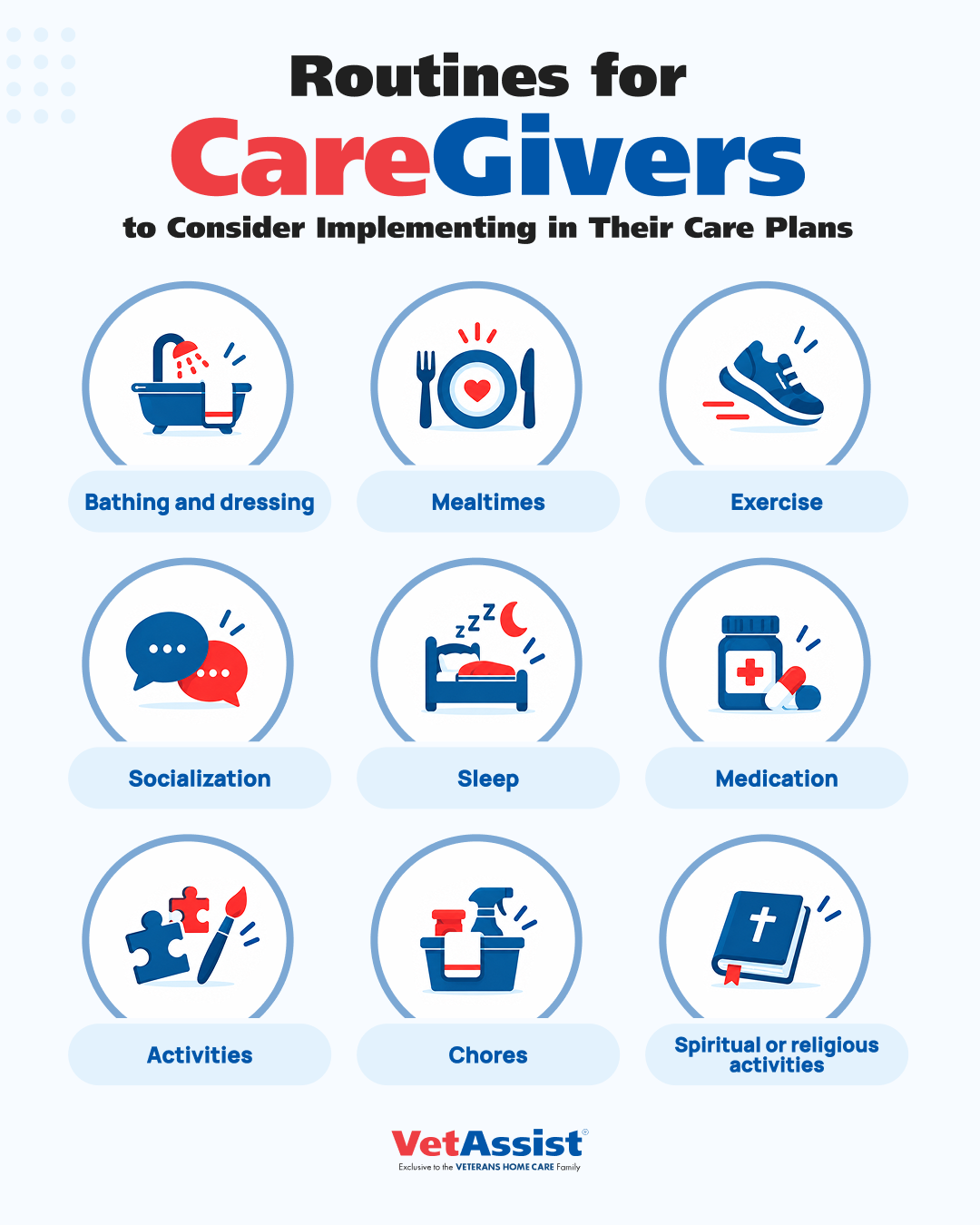
Routines to consider include:
bathing and dressing
regular mealtimes
appropriate exercise
socialization with family, friends, clubs, or religious community
regular sleep times
regular medication times
activities like time in nature, creativity/crafts, listening to or playing music, watching favorite TV shows or movies, listening to podcasts, doing puzzles, playing board or card games, etc. (as long as they are enjoyed and provide mental stimulation)
appropriate chores that feel productive and empowering
spiritual or religious activities, like prayer, meditation, or daily devotions
Seniors who newly need care can feel a reduced sense of autonomy and purpose. Mindfully building their days around routines can help them and you.
Tips for Self Care
Caregivers are vulnerable to burnout and compassion fatigue. This does not mean they don’t love or want to help their parents who need care, but is a natural result of being human and having limited time and energy. Caregivers need rest—physical, mental, and emotional rest—every day, and their needs can easily fall by the wayside as they try to care for others.
Compassion fatigue has warning signs like irritability, apathy, resentment, anxiety, and isolation. It affects your entire life, worsening mood and even physical health. Prevent compassion fatigue by:
prioritizing daily basic needs, like eating meals and sleeping enough hours each day
socializing with friends
exercising regularly (this can be as simple as a daily 15-minute walk around your neighborhood)
taking time for favorite activities and hobbies
Many caregivers find it hugely helpful to plug into a caregiver community, whether in-person or virtual. The Family Caregiver Alliance has a national, message-based online group, while the Caregiver Action Network offers peer-to-peer support matching. Your loved one’s healthcare provider may also have referrals to local groups, as might your senior center, house of worship, or local nonprofits serving families affected by conditions like cancer or Parkinson’s. The federal Administration for Community Living also has a network of Area Agencies on Aging; your local AAA might also be able to refer you to a good-fit community for caregivers.
Caregivers should also consider respite care as part of their care tool belt. This can be provided by adult day cares, in-home professionals, or even by trusted friends and family members. It is vital that caregivers become comfortable asking for help; this is not an endeavor to take on alone!
Caregiver advice is available in the form of books and podcasts, as well. These resources help reduce your isolation and provide helpful experience.
Caring for a family member is a demanding role few people feel prepared for, but help is closer than you think in the form of information, relationships, and professionals.
If your loved one needs home care, our VetAssist mission is to make home care easily and quickly accessible for those who qualify through the VA Pension with Aid and Attendance benefit. Veterans Home Care can help you determine whether you or your loved one will be eligible to receive the benefit, which can cover some or all of the cost of home care, and we make it easy to apply. Chat with us via our website, or call us at (888) 314-6075.

 Each year, our Top Veteran recognition lists spotlight the employers, educational institutions and government agencies that go above and beyond in their commitment to recruiting, retaining and advancing veteran talent. These honorees have demonstrated a sustained focus on values, opportunity and workplace culture as reflected in our independent research, submitted materials and information available during the evaluation period.

















 Category:
 Method:
 Cuisine: