WASHINGTON – The Veterans of Foreign Wars (VFW) proudly presented its 2026 Congressional Award to Rep. August Pfluger, R-Texas, tonight at the conclusion of its annual Washington Conference, recognizing him for his leadership in the 119th Congress and his career-long advocacy on behalf of veterans and service members.
“Representative Pfluger uses his personal experience as a combat fighter pilot to identify and fix gaps and shortcomings in our system, ensuring veterans have a passionate and determined advocate in the halls of Congress,” said VFW National Commander Carol Whitmore. “His commitment and resolve for action over words on many VFW priorities is evident, and we are eager to continue working alongside him to better care for America’s service members, veterans and their families.”
Presented annually since 1964, the VFW Congressional Award is given to one member of the House or Senate for significant legislative contributions on behalf of veterans and military personnel. Past recipients include strong national security and veterans’ advocates, such as Sen. Bob Dole, R-KS, Rep. G.V. “Sonny” Montgomery, D-MS, Sen. John McCain, R-AZ, Sen. Daniel K. Inouye, D-Hawaii, Sen. Bernie Sanders, I-VT, Rep. Joe Wilson, R-SC, and Sen. Jon Tester, D-MT, among many others. Last year’s award went to Rep. Derrick Van Orden, R-WI, who currently serves on the House Committees on Veterans’ Affairs, Armed Services and Agriculture.
Rep. Pfluger’s work in Congress led him to introduce the House version of the Aviation Cancer Examination Study (ACES) Act, a long-standing VFW priority enacted as Public Law 119-32, which directed VA to study cancer rates among military fixed-wing aircrew and advance accountability and life-saving care. He has also cosponsored key VFW priorities, including the Major Richard Star Act, the Veterans’ ACCESS Act of 2025, the Guard and Reserve GI Bill Parity Act of 2025, and the Innovative Therapies Centers of Excellence Act of 2025, safeguarding earned benefits, expanding access to care, and strengthening support for National Guard and Reserve, and medically retired service members.
Before joining Congress, Rep. Pfluger graduated from the United States Air Force Academy in 2000. A former squadron commander, he has logged more than 2,000 flight hours, including 300 in combat over Syria and Northern Iraq. He is currently a colonel in the Air Force Reserve.
“Rep. Pfluger’s military experience and tenacity make him a leading voice in Washington on veterans issues and national security, and the more than 1.3 million VFW and VFW Auxiliary members are proud to bestow upon him this year’s Congressional Award.”
WASHINGTON – Today, Ranking Member Blumenthal asked for unanimous consent for passage of S. 1032, the Major Richard Star Act, on the floor of the U.S. Senate. This is the first time the motion was made since it failed to pass in October, held up then by Sen. Roger Wicker of Mississippi. I regret to announce that it was turned down again, this time by Sen. Ron Johnson of Wisconsin. I am appalled by the resistance by certain members of Congress to care for veterans who have sacrificed so much for this nation.
As I testified earlier today before a special joint hearing of the United States Senate and House Committees on Veterans’ Affairs, the Major Richard Star Act will fix the unjust offset affecting more than 50,000 medically retired combat veterans. This is not double-dipping. This is double sacrifice. Veterans have fulfilled their obligation. Now, the country must Honor the Contract. Not partially, not eventually, not someday, but today, fully and faithfully. Stop the procedural games, have a real hearing, and get this done. Pass the Major Richard Star Act now!
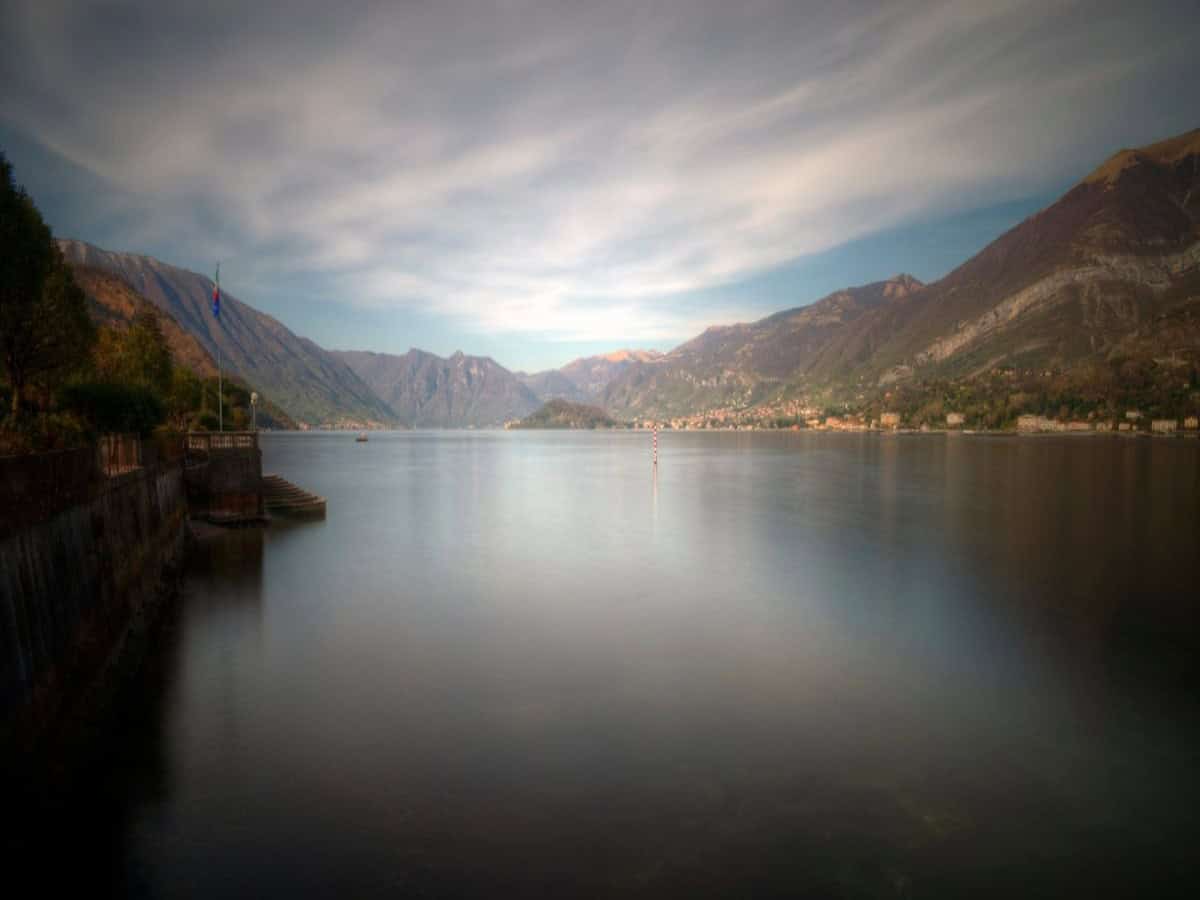
From the elegant villas of Bellagio and Tremezzo to the colourful waterfronts of Varenna and Menaggio, discover the best towns to stay in Lake Como and find the perfect base for your Italian lakes escape.
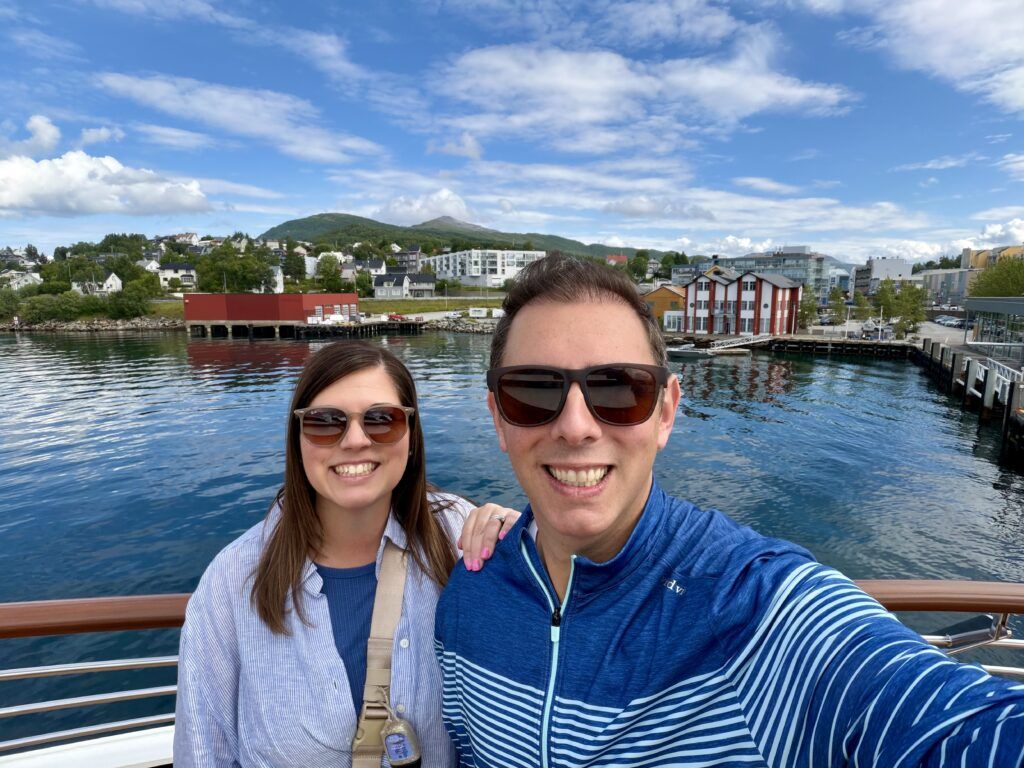
We’ve sailed more than 100 cruises, on everything from small expedition ships at the bottom of the world to the biggest megaships afloat, across six continents. That’s a lot of sea days and a lot of ports in various regions of the world, but a few standout as bucket list cruises we’d book again in a heartbeat.
Say “bucket list cruise” and most people picture the far-flung ones first, like Antarctica, the Galapagos, or French Polynesia. Those absolutely count, and they’re on this list. But after 20 years cruising the high seas, we’ve learned that a bucket list cruise, the kind you’d sail again without question, doesn’t necessarily mean the hardest places to reach.
So, if we could return to any of our favorite cruises, how would we rank them? These are the 13 cruises we think are absolutely worth your time and the splurge, plus the three popular cruises we’d skip and why.
13. Bermuda
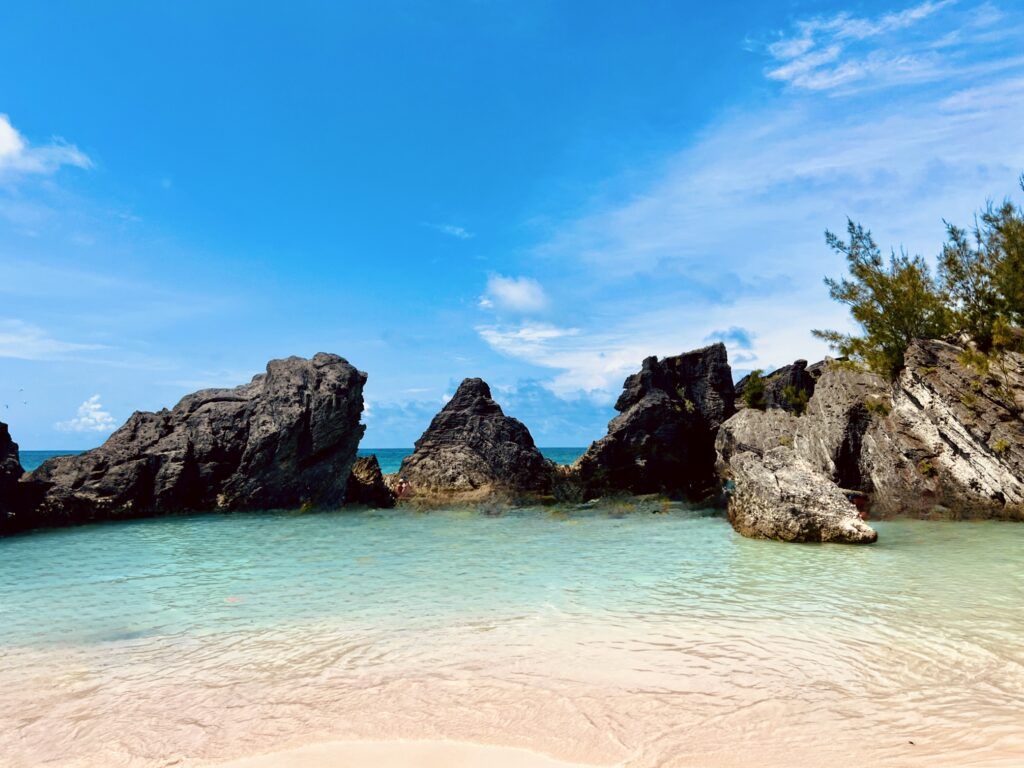
Bermuda is known for its pink sand beaches, turquoise waters, and rum swizzles. Yet, it’s a destination not usually found on most bucket list cruise lists. And we’re not sure why because the locals are extremely friendly, it’s clean and safe, and it’s easily reachable on a sailing from the East Coast homeports of Boston, New York, or Cape Liberty, NJ. You don’t even need a passport to cruise here (though we’d still recommend one).
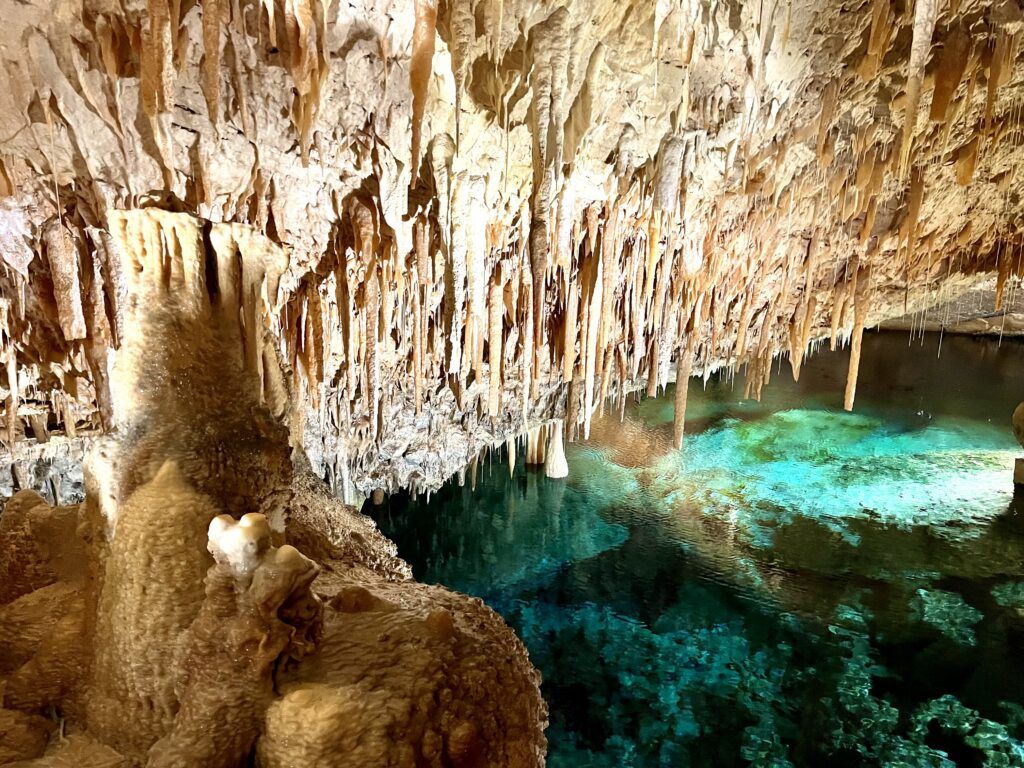
Most cruises dock at King’s Wharf for two or three days, so it acts less like a port stop and more like a floating hotel parked next to some of the best beaches in the Atlantic. This multi-day docking gives you plenty of time to enjoy all that Bermuda has to offer, from Horseshoe Bay Beach and the Crystal & Fantasy Caves to historic St. George’s and Hamilton.
Best for: a bucket-list beach without a big trip, and East Coast cruisers short on time
12. Hawaii
Visit up to four islands in one trip and only unpack once? That’s a win for us. While visiting Hawaii on a land trip is definitely possible, it requires coordination of hotel stays, inter-island flights, meals, and all those other logistics that a cruise eliminates. You cover Oahu, Maui, the Big Island, and sometimes Kauai in a week, which is close to impossible to do that smoothly on land.
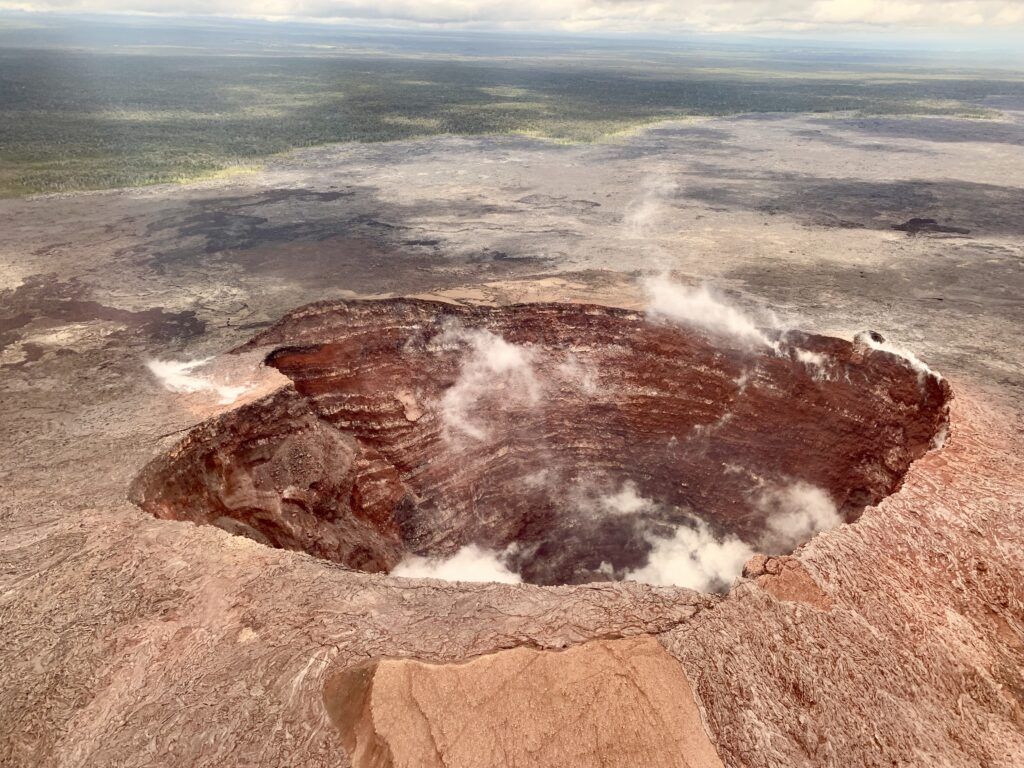
A helicopter ride over the Big Island’s active volcanoes or a visit to Haleakala Crater are the experiences you’ll remember forever and are worth every penny.
Norwegian Cruise Line‘s Pride of America is the sole ship that cruises the Hawaiian islands year-round, but other cruise lines do visit Hawaii usually as part of longer voyages or repositioning sailings.
Best for: those who want to see several islands in one week without the land-trip logistics
11. A European river cruise
A cruise with 24/7 views, visits to quaint small towns, and zero sea days. A sailing on a European river is an easy bucket list cruise for someone who thinks they don’t like cruising, because it feels more like a moving boutique hotel than a cruise ship.
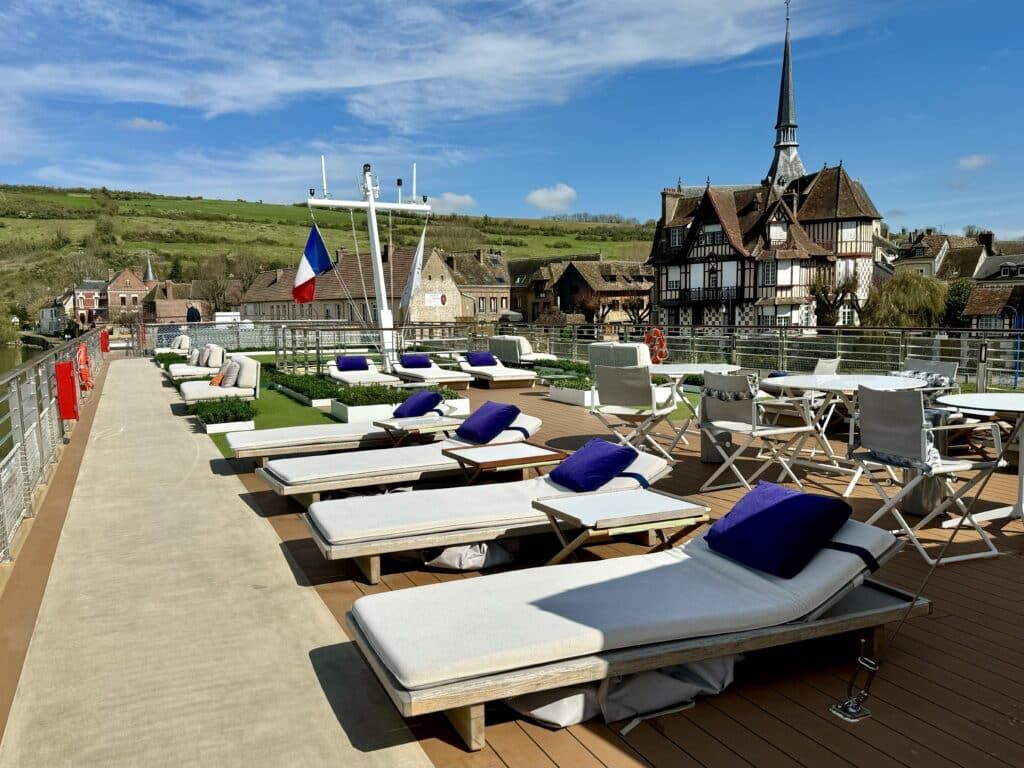
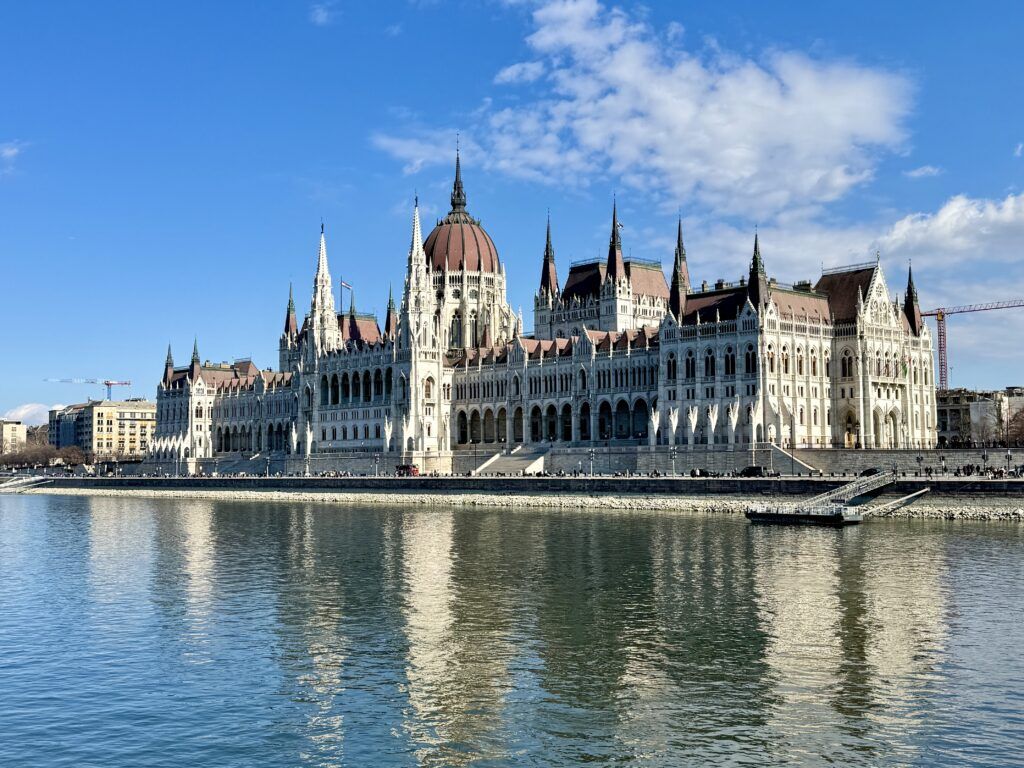
A river cruise is the opposite of the megaship stereotype. It’s intimate, you’re never far from land, and you wake up in the middle of a different town most mornings. The Danube and Rhine deliver storybook Europe, one riverside village and hilltop castle after another. Think picturesque stops in Germany, Switzerland, Hungary, Austria, and beyond. The Douro in Portugal trades all that for terraced wine country and the Seine puts you in reach of Normandy and Paris. Pair visits to places larger ships can’t reach with the all-inclusive nature of river cruises, and what’s not to love?
Best for: history and small towns, and anyone who thinks they don’t like cruising
10. Iceland
Iceland packs a lot of dramatic landscapes into a compact region. Imagine thundering waterfalls, volcanoes, black sand beaches, steaming geothermal fields, and glaciers, often within an hour of each other. Cruising around Iceland means you can sample the highlights without renting a car for the full Ring Road. Plus, many sailings pair it with the British Isles or Greenland for an even bigger trip.
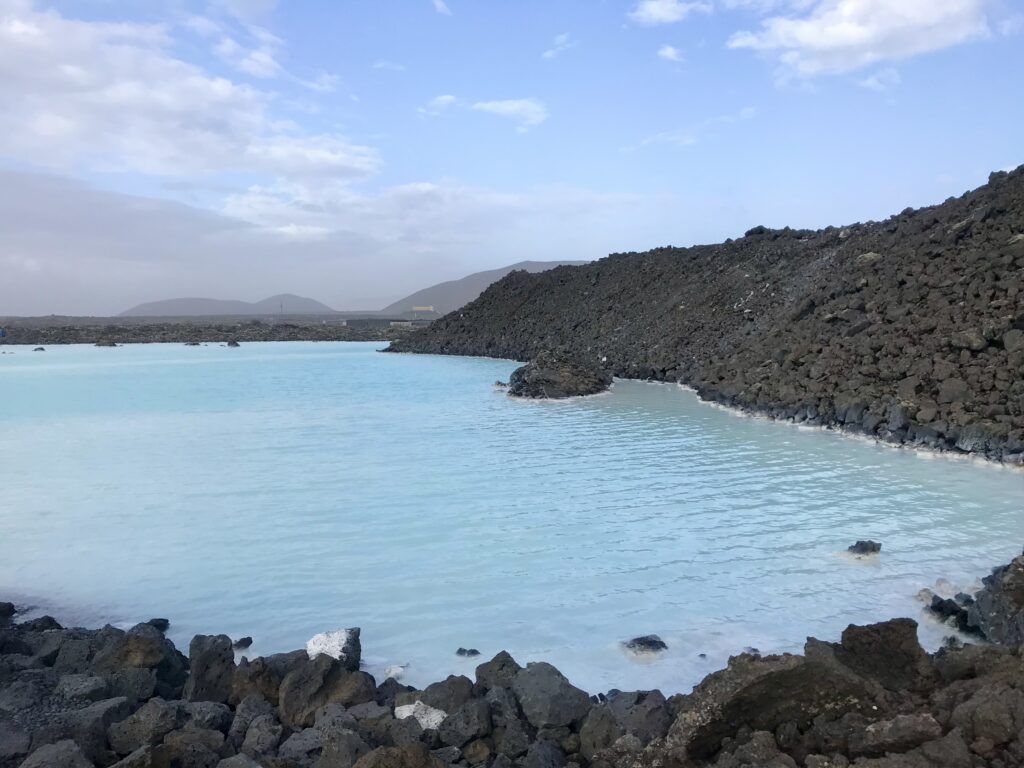
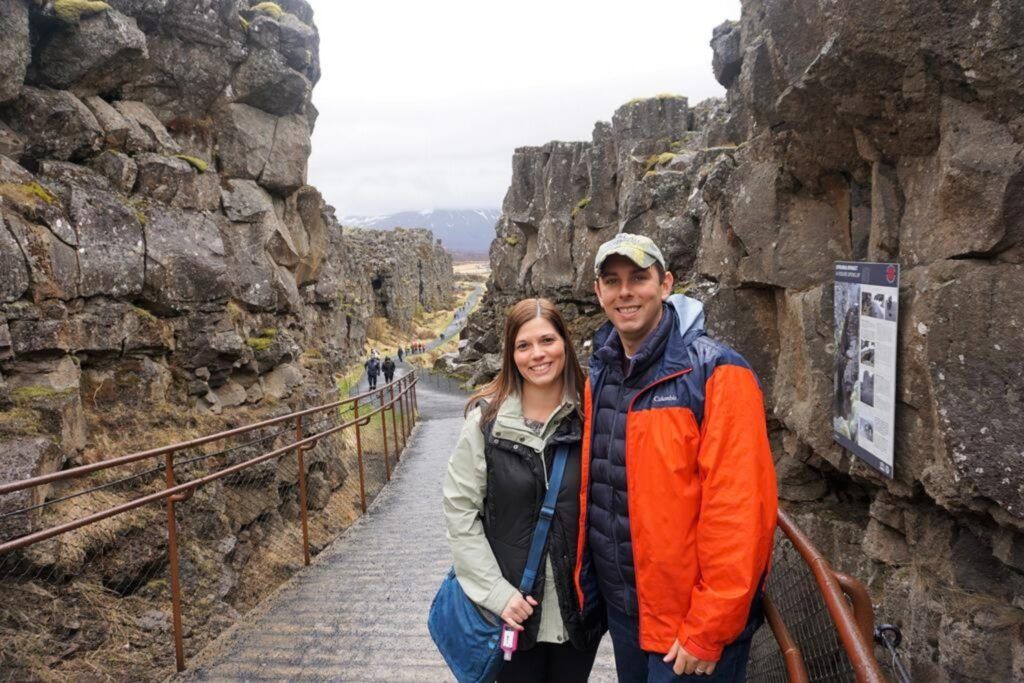
If soaking in a geothermal spa like the famous Blue Lagoon on a cool day, standing between two tectonic plates at Thingvellir National Park, walking a volcanic black sand beach, or photographing puffins sound like your idea of an adventure, add a cruise to Iceland to your bucket list immediately.
Best for: those seeking dramatic landscapes and geothermal adventures in one compact trip
9. The ancient world by sea
What could be more rewarding than actually standing inside the ruins you learned all about in school years ago? If combining some of Europe’s top sites of the ancient world into one trip is your idea of a dream come true, a Mediterranean cruise that pairs Eastern and Western ports should be on the top of your list.
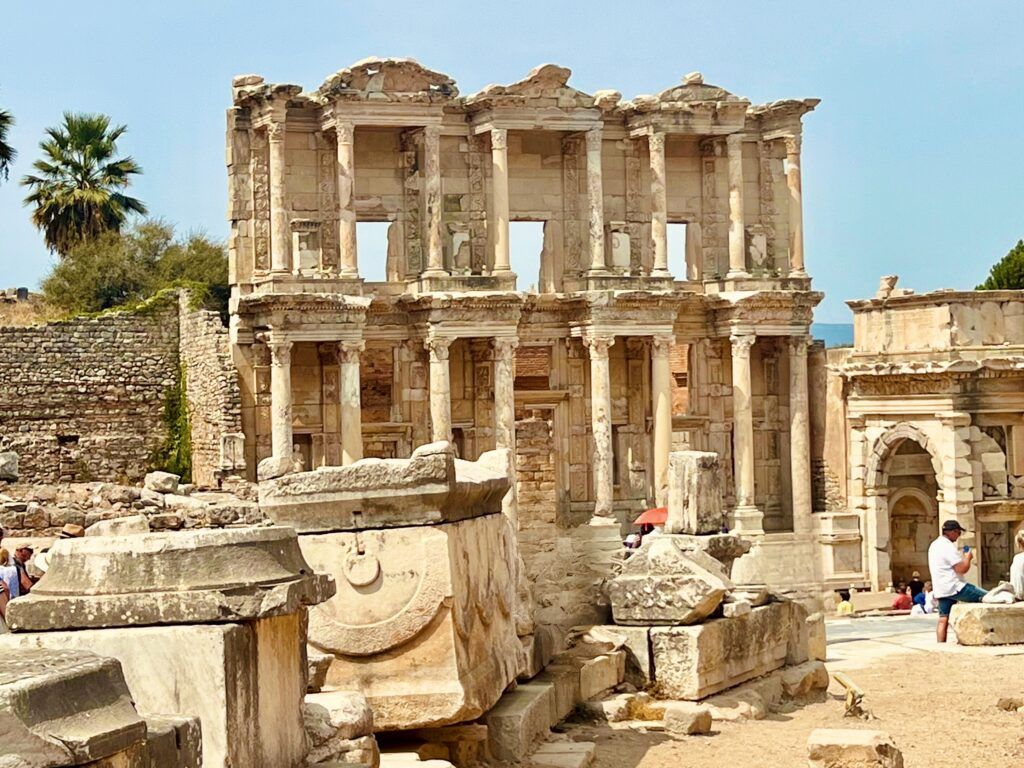
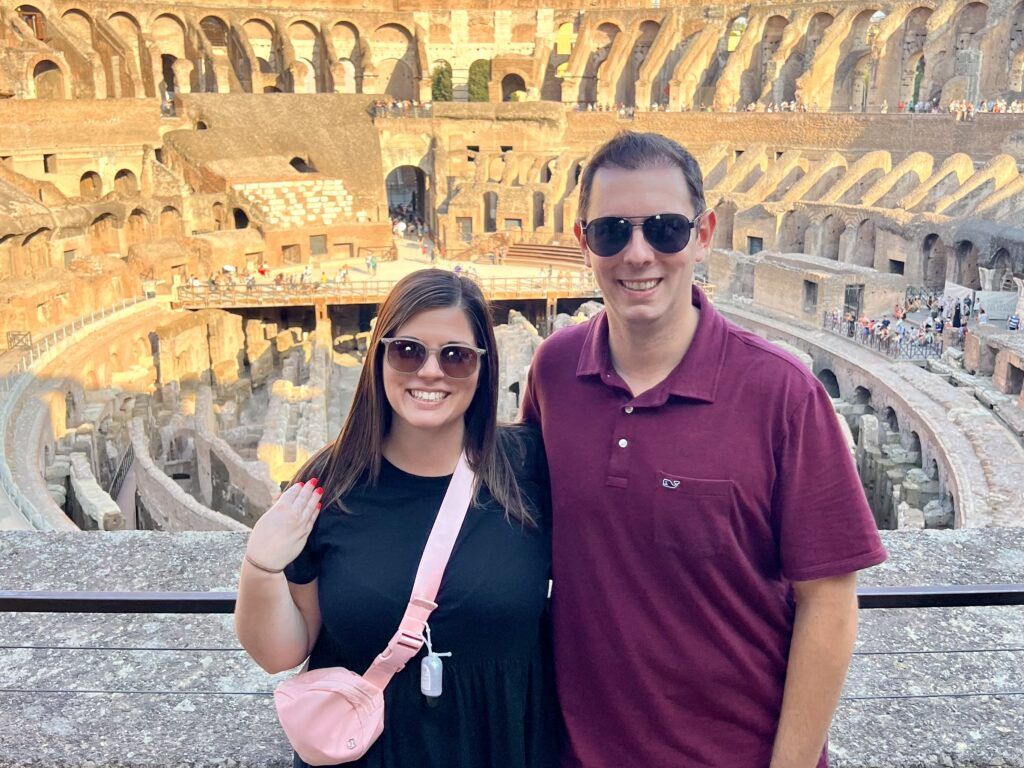
From the Eastern Med you reach Ephesus in Turkey, one of the best-preserved Roman cities anywhere, and the Acropolis above Athens. Swing to the Western Med and you’re walking through Rome‘s famous Colosseum & Roman Forum and stepping into Pompeii, frozen mid-day by Vesuvius.
In fact, we visited all four of these ancient sites on the same cruise, combined with many other culturally significant landmarks like the Vatican, the Hagia Sophia and Blue Mosques, and the blue-domed rooftops of Oia, among others.
Best for: travelers who want the Mediterranean’s greatest ancient sites in a single sailing
8. Medieval Europe by sea
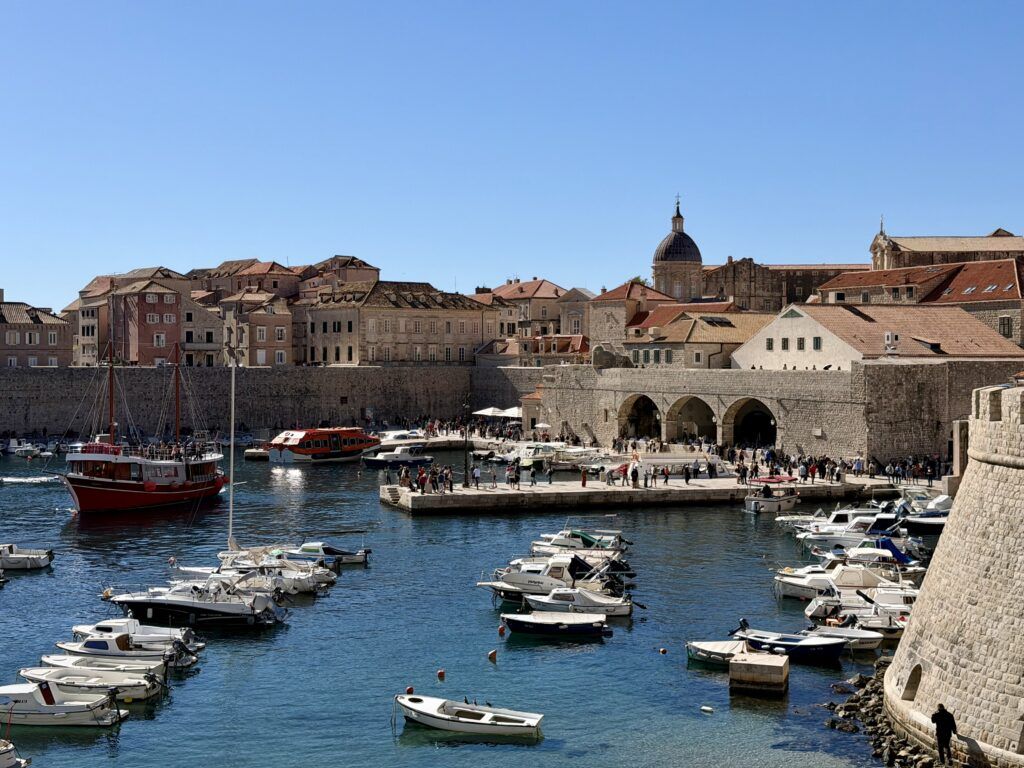
If exploring historical landmarks and ancient ruins in Italy, Turkey, and Greece is your type of vacation, then you’ll probably also love exploring medieval Europe by sea. We did! Dubrovnik’s defensive walls and Kotor’s fortress climbing the mountainside anchor the Adriatic side, with Croatia and Montenegro often paired with other ports in Italy or Greece on cruise itineraries.
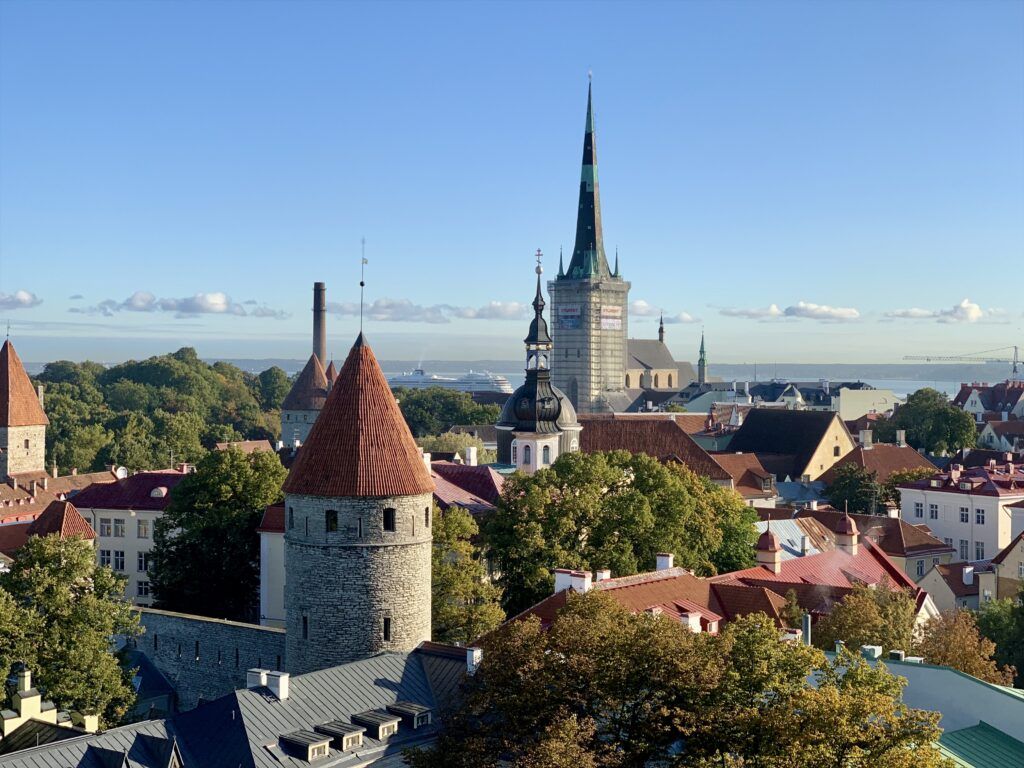
Equally impressive is Tallinn’s fairy-tale old town up in the Baltic, where you can walk the fully intact medieval walls. Estonia is often paired with visits to other ports with medieval architecture like Stockholm, Sweden; Riga, Latvia; Bornholm, Denmark; and Gdansk, Poland to name a few.
Best for: travelers who love walled old towns and living history
7. The Norwegian Fjords
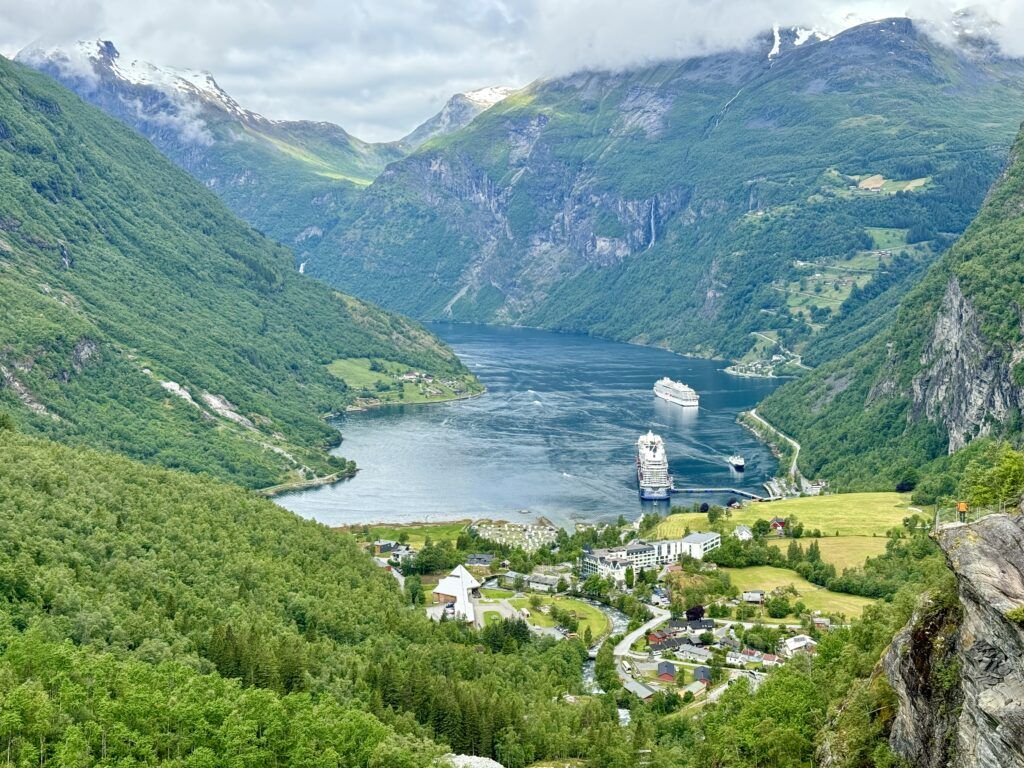
For an entirely different but just as stunning landscape, add a Norwegian fjords cruise to your bucket list. Picture sailing deep into narrow inlets like Geirangerfjord, a UNESCO site walled by cliffs with waterfalls streaming down both sides, where the views from your balcony are just as good as any excursion you could book.
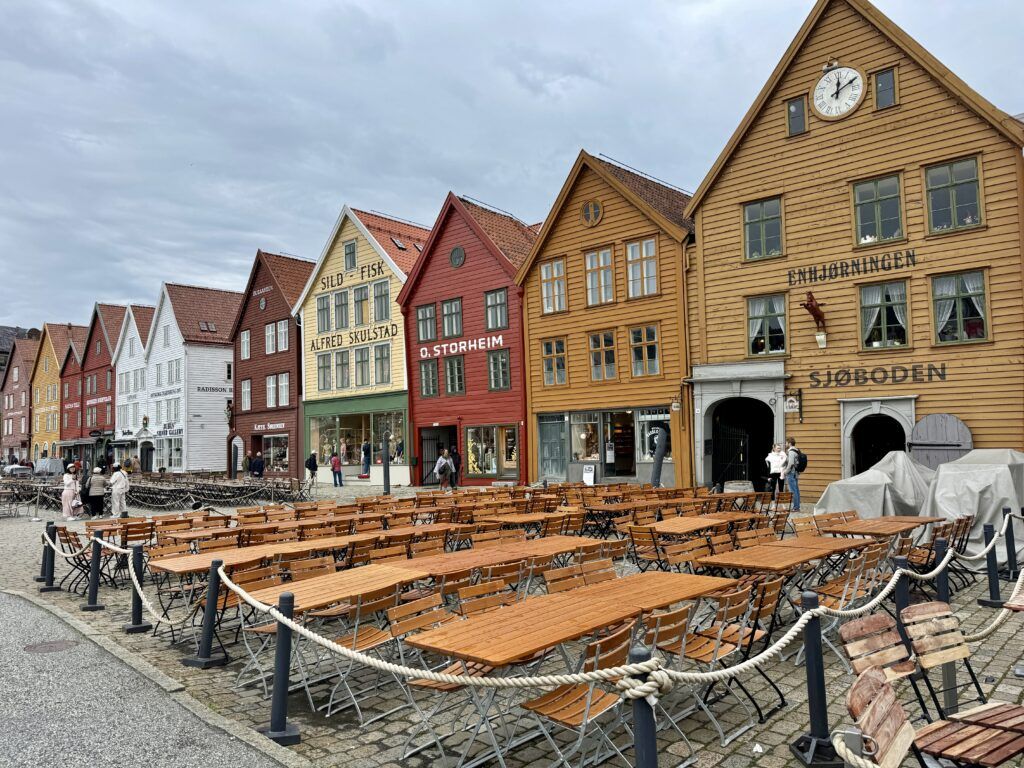
Add the Flam Railway climbing into the mountains, the picturesque red cottages of the Lofoten islands, a visit to the North Cape (the farthest north point in continental Europe accessible by road), and the Bergen harbor coupled with the pastel timber buildings, and it’s one of the most concentrated doses of natural beauty you can reach by ship.
Best for: balcony scenery lovers chasing waterfalls and the midnight sun
6. Tahiti & French Polynesia
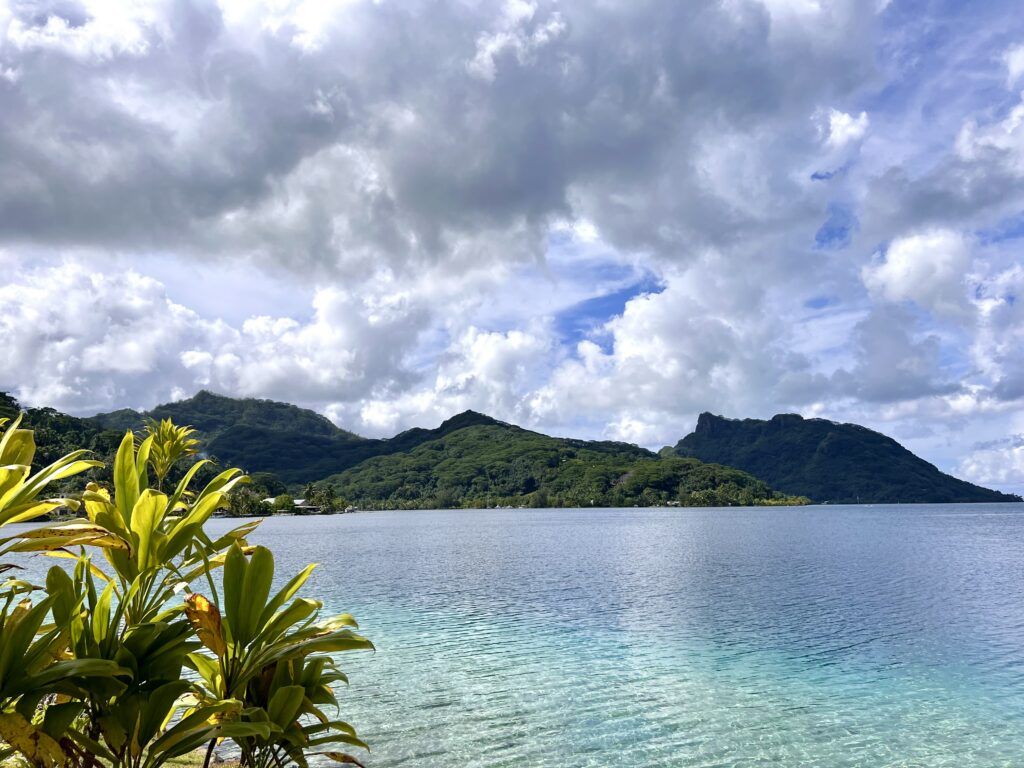
French Polynesia is more than just overwater bungalows; it really is a postcard brought to life with lush landscapes, dramatic peaks, and turquoise lagoons. While we think there’s similarity between Hawaii and French Polynesia, the latter is certainly quieter and less crowded. Every stop along the way is breathtaking from the better known Tahiti and Bora Bora to Moorea, Raiatea, and beyond.
Part of why this region lands on so many peoples’ bucket lists is because of its remoteness and relaxed vibe. Given the size of these islands, large cruise ships can’t reach most of them. The two most popular cruise lines that sail the region are Windstar and Paul Gauguin, both with less than 350 passengers. Both sail intimate vessels with unique features like a watersports platform where you can snorkel or kayak right off the back of the ship.
Best for: travelers seeking a quieter, small-ship South Pacific splurge
5. The Galapagos
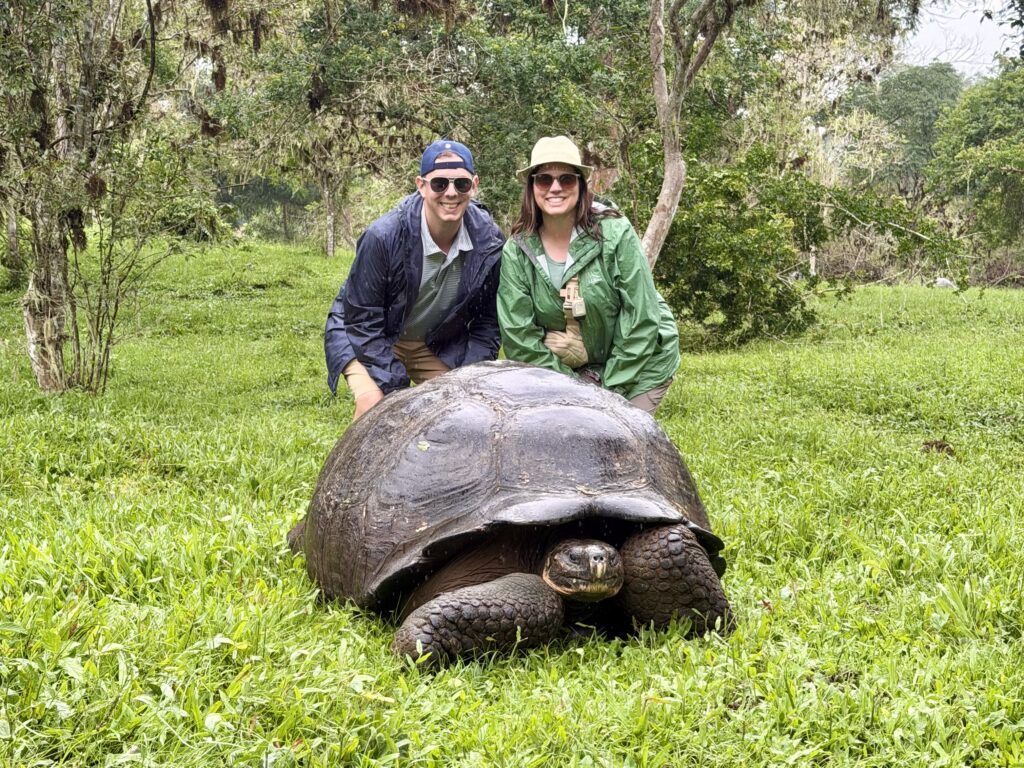
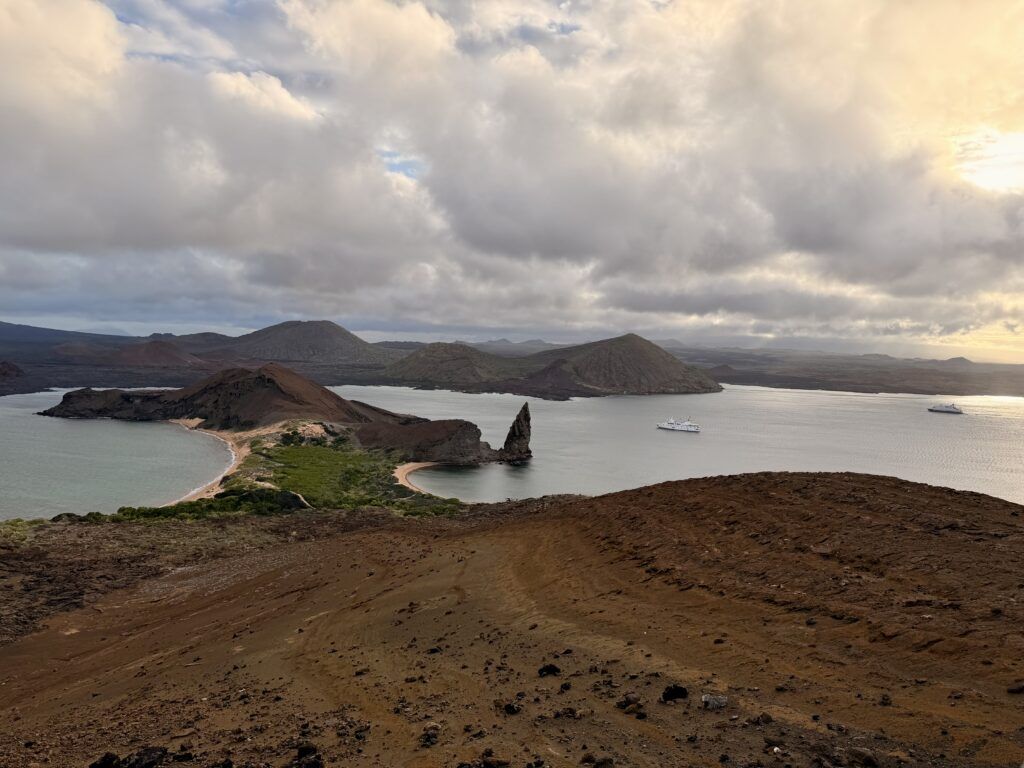
The Galapagos is a place where the usual rules of wildlife don’t apply. The animals evolved without predators, so giant tortoises, marine iguanas, boobies, and sea lions barely register your presence. This means you end up sharing a beach or nature path with amazing creatures you can’t find anywhere else in the world. This is Darwin’s research at its finest, and a visit here changes how you think of the natural world.
The entire experience is unique from beginning to end, and it’s one of the most family-friendly on this list. You sail these untouched islands on small expedition ships (such as HX Expeditions) with naturalist guides, and have multiple active adventures a day. Picture snorkeling alongside a curious sea lion for twenty minutes, now repeat amazing moments like this everyday! This is definitely a trip we won’t forget.
Best for: wildlife lovers who want animals up close and a new adventure every day
4. Antarctica
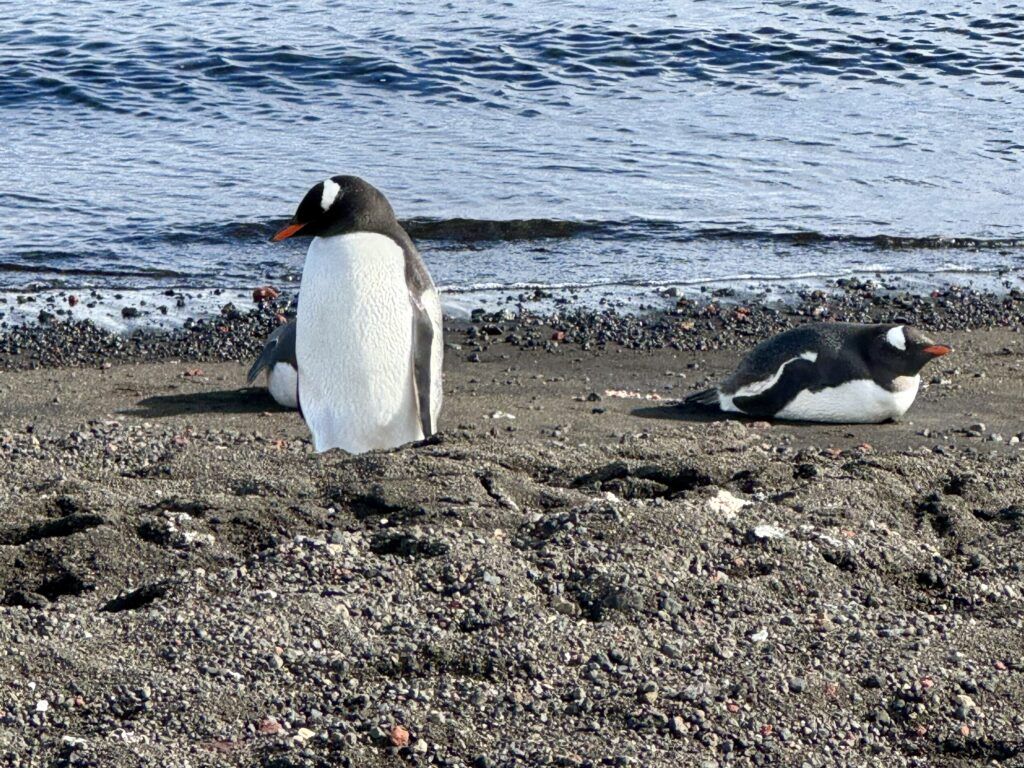
A visit to the seventh continent is the one trip that tops almost everyone’s bucket list. Think traveling to the end of the earth to see massive penguin colonies, towering icebergs, and walking the black sand beaches of Deception Island. There’s truly nothing like it anywhere else in the world.
While some larger cruise ships claim to visit Antarctica, you should definitely experience it on a small expedition ship, like we did on Atlas Ocean Voyages. Crossing the Drake is a rite of passage, and stepping foot on the White Continent is the reward. From ashore landings and hikes up snowy hills, to zodiac cruising through floating sea ice, and even braving the polar plunge, you won’t be disappointed. But you do have to be flexible and play by Mother Nature’s rules when visiting somewhere as remote as Antarctica.
Best for: adventure travelers who want the once-in-a-lifetime, end-of-the-earth trip
3. Alaska (do the cruisetour)
Alaska is one of the more accessible bucket list cruises, but it’s one we keep returning to over and over again. No two trips are the same; the ports, the wildlife, the glaciers, the scenic sailing, all are just as mesmerizing on the eighth cruise to the region as they were on the first cruise.
Visiting Glacier Bay National Park and Hubbard Glacier are a must, as are seeing whales, bears, and bald eagles. Many of the shore excursions are bucket list adventures in themselves like a helicopter ride and dog sledding on Mendenhall Glacier in Juneau or a journey on the White Pass Rail in Skagway.
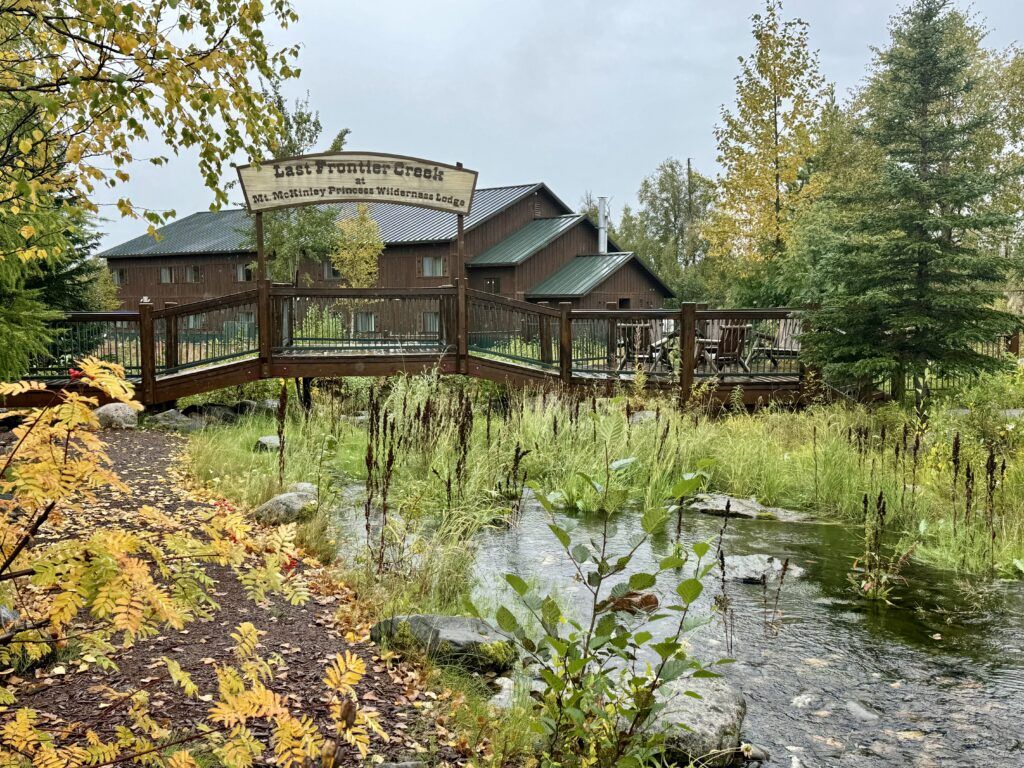
But the reason it ranks this high on our list is the cruisetour, where you can add a land portion onto your sailing and head inland to Denali, to swap coastal views for tundra, more wildlife, and North America’s tallest peak. Princess Cruises and Holland America Line even have their own wilderness lodges.
Best for: a first big bucket-list trip, or repeat cruisers who want to add on a land tour
2. Japan
Yes, Antarctica is impressive but Japan is just one of those destinations that hooks you. There’s so much to see and do that one visit is never enough. The people are extremely hospitable, the cherry blossoms alone are worth the trip, and there’s so much history and culture to explore.
We visited Japan for the first time this year on a circle Japan cruise and got to experience everything from bustling Tokyo and the stylish port city of Yokohama, to the snow-capped Mt. Fuji, ancient temples, shrines, and gardens. We got to try our hand at gold leaf application, take a taiko drum lesson, and even watch a geisha performance.
Many mainstream cruise lines offer a variety of itineraries in Japan, but if you’re looking for something truly unique we suggest a Japanet cruise. What’s better than a Japanese itinerary curated by locals with immersive experiences you won’t find on other lines?
Best for: travelers who want somewhere genuinely unlike home
1. Australia & New Zealand
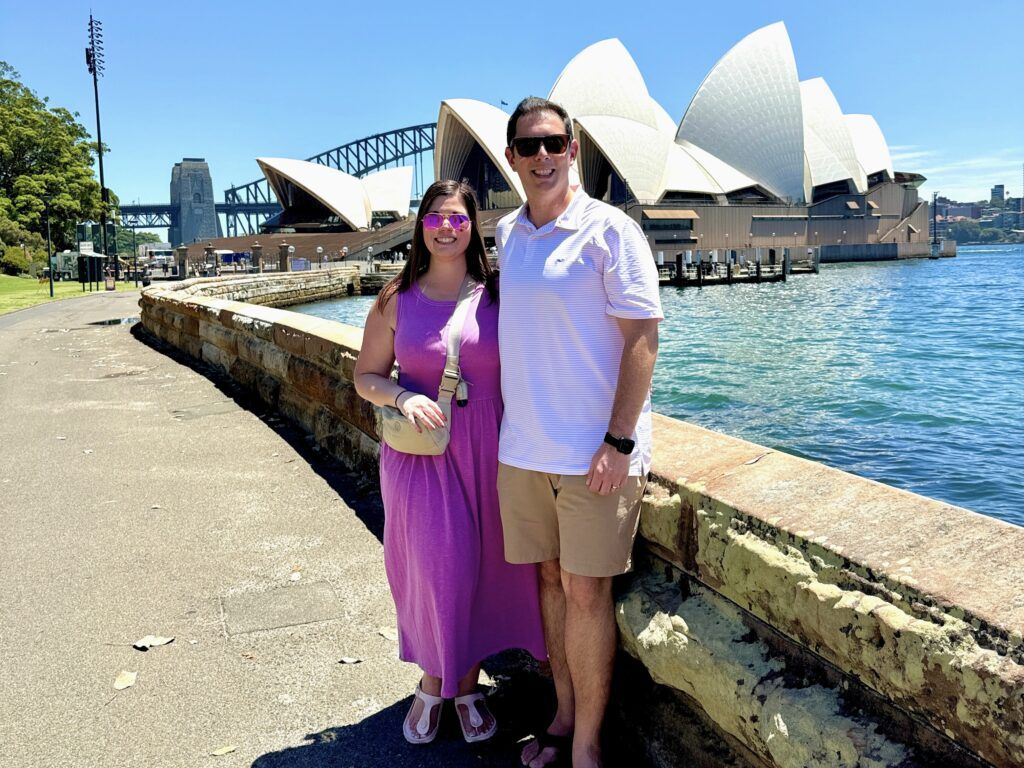
Much like Japan, our cruise to Australia and New Zealand last year left us wanting more. Yes, it’s a long-haul trip, but it delivers two bucket list destinations in one.
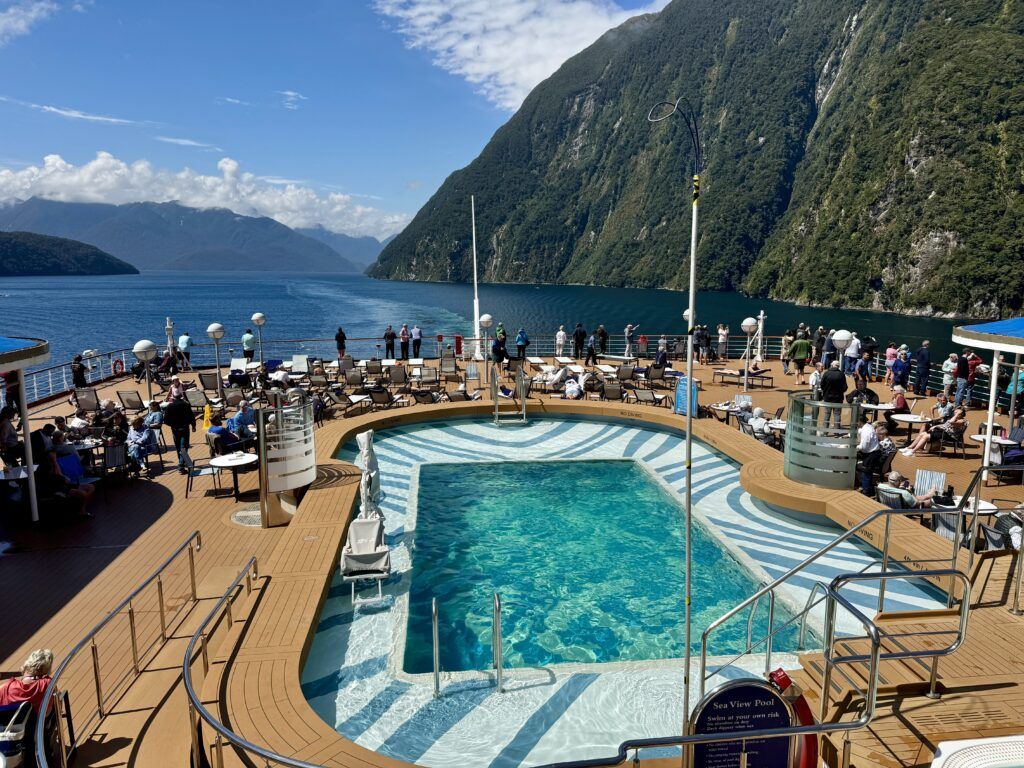
If we could only take one of these bucket list cruises again, it’d be a tough decision but this is the one we’d choose. A single sailing can pair Sydney, Melbourne, and Australia’s wildlife (yes, kangaroos and koalas!) with popular ports in New Zealand like Dunedin, Wellington, and Christchurch, along with scenic cruising through New Zealand’s Milford Sound, where waterfalls abound. Or, you could choose to head north along the Queensland coast to the Great Barrier Reef.
Because the flight is so long, a cruise to this region lets you unpack once and visit several places that would otherwise mean stringing together multiple domestic flights.
Best for: travelers who want to check two bucket list countries in one trip
3 popular cruises we’d skip
While we would return to many destinations across the globe, there are a few cruise itineraries we’d probably skip if given an alternative. It’s not to say that the ports are overrated or that they’re not the perfect cruise for someone else, they’re just not our favorites.
A basic Caribbean cruise
A standard island-hopping loop in the eastern or western Caribbean is easy, affordable, and fun. But we personally don’t think any of the ports are all that memorable. The exception: when the ship itself is the destination. We would absolutely book one of the newest megaships in the Caribbean and possibly never step foot off the vessel. After all, Royal Caribbean’s Icon-class ships feature more than enough to fill seven days.
The Mexican Riviera
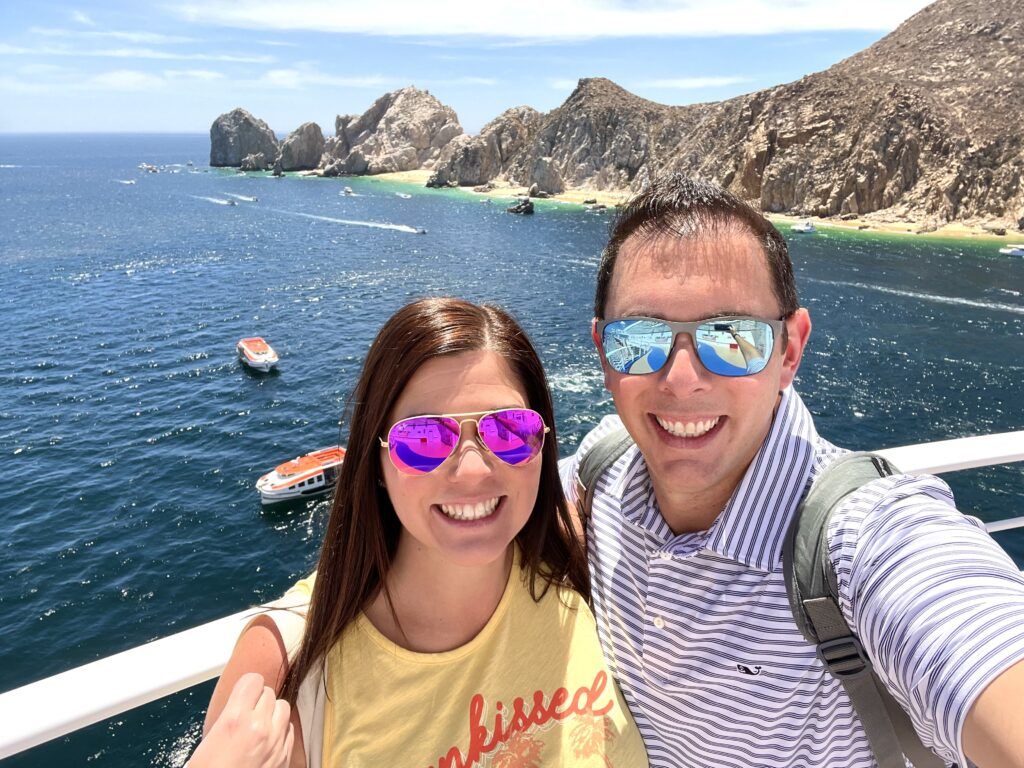
In our opinion, the Mexican Riviera is basically the West Coast’s Caribbean, with sun, beaches, and a familiar lineup of ports. And for us on the East Coast, it also means a cross-country flight just to reach the ship. Of course, if you live out West, the math changes. This isn’t to say that places like Puerto Vallarta and Cabo San Lucas aren’t worth visiting, they just don’t scream bucket list to us.
New England & Canada
This is a beautiful cruise: the fall foliage, the lighthouses, the seafood, Acadia National Park. We’d actually recommend it to plenty of people. It just doesn’t make our bucket list for one simple reason: it’s our backyard. When the scenery on the itinerary is a drive away from home, and we can leaf peep from our windows, it’s hard to justify. For cruisers coming from farther away, this one may rank higher.
Comments
Have you taken any of these bucket list cruises? Do you have any others to add to this list? Drop us an anchor below to share your favorite cruise itineraries across the globe.
This cowboy hamburger soup is packed with ground beef, potatoes, beans, and vegetables in a seasoned tomato broth. It all cooks in one pot and makes enough for dinner with leftovers for lunch!
Oh my goodness, the whole family loves the cowboy soup. It’s similar to our cabbage soup which is like a quick and easy stuffed cabbage. Thank you so much. They’re both so hearty and delicious.
Greg
Reasons You’ll Love This
Feeds the Family: Beef, beans, and potatoes make this a filling dinner, with extra for another meal.
Pantry Friendly: Put those cans of tomatoes, beans, and vegetables to work!
Easy Cleanup: Everything cooks in one pot, so you won’t finish dinner with a sink full of pans.
What is Cowboy Hamburger Soup?
Hamburger soup combines ground beef, vegetables, and potatoes in a tomato-based broth. This cowboy version adds chili beans, green chiles, cumin, and chili powder for a little Southwestern flavor.
It has some of the flavors of chili, but with more broth and plenty of vegetables. For another filling beef and potato dinner, try my Texas Cowboy Stew!
Cowboy Hamburger Soup Ingredient Tips
Check the recipe card below for the full ingredient list and measurements. Here are a few tips before you start!
Ground Beef: Use lean ground beef and spoon off excess grease after browning so it doesn’t collect on top of the soup.
Potatoes: Cut the Yukon gold potatoes into small, even pieces. Larger chunks will need more time to cook.
Carrots and Celery: Slice them thinly so they soften while the soup cooks.
Tomatoes with Green Chiles: Choose mild if you prefer less heat.
Chili Beans: Keep the sauce! It adds seasoning and flavor to the broth.
Canned Vegetables: Drain and rinse the corn and green beans. Keep the juice from the plain diced tomatoes.
Beef Broth: Use lower-sodium broth if you want more control over the salt, then taste before adding more.
How to Make Hamburger Soup
Open your cans and chop the vegetables before you start. Once everything goes into the pot, let it simmer until the potatoes are tender!
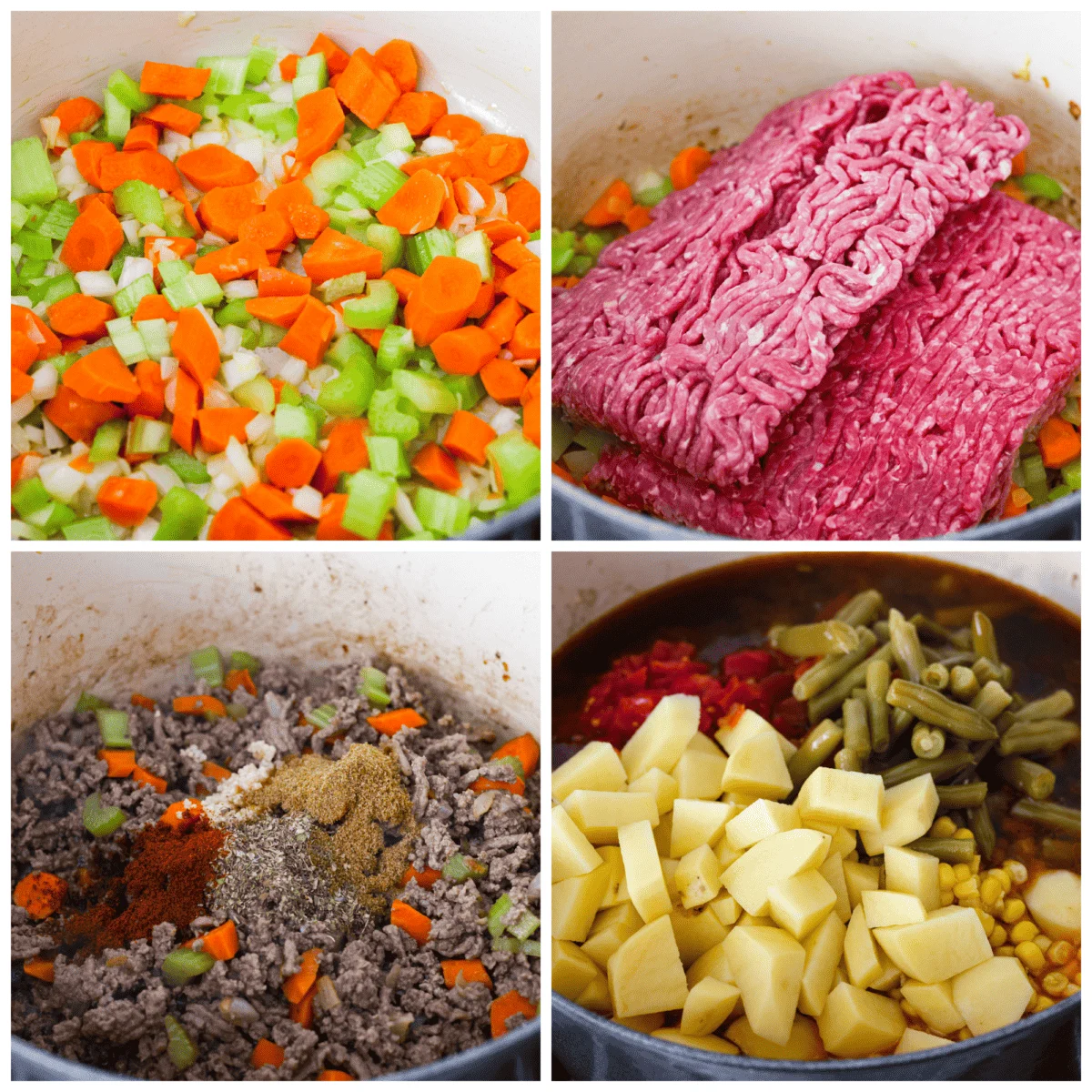
Cook the Vegetables: Heat the olive oil in a large stockpot over medium-high heat. Add the onion, carrots, and celery and cook until softened.
Brown the Beef: Add the ground beef, breaking it into crumbles as it cooks. Once cooked through, spoon off excess grease.
Add Seasonings: Stir in the garlic, cumin, chili powder, oregano, salt, and pepper. Cook for 1–2 minutes, stirring.
Add the Remaining Ingredients: Stir in both cans of tomatoes, the chili beans with their sauce, drained corn, drained green beans, and potatoes. Pour in the beef broth and stir to combine.
Simmer: Bring to a boil, then reduce to a simmer. Cover and then simmer for 15 minutes or until the potatoes are tender.
Finish and Serve: Taste and adjust the seasonings. Garnish with chopped cilantro or parsley and serve!
Can I Make Cowboy Soup in a Slow Cooker?
Yes! Brown the ground beef and sauté the onion in the olive oil first. Spoon off excess grease, then transfer to the slow cooker with the remaining ingredients, except the garnish. Cook on low for 4–5 hours, or until the potatoes and carrots are tender. Taste before serving and garnish with cilantro or parsley.
Quick Tips and Variations
Swap the Beans: Use drained pinto or black beans instead of chili beans. Since you’ll lose the seasoned sauce, taste and adjust the seasonings at the end.
Add Extra Vegetables: Cook diced bell pepper with the onion, or add peas or small pieces of zucchini toward the end of simmering.
Adjust the Broth: Add more beef broth if you prefer more liquid.
Make It Your Own: Set out shredded cheddar, sour cream, and hot sauce so everyone can finish their own bowl.
This cowboy hamburger soup is loaded with ground beef, potatoes, beans, and vegetables in a seasoned tomato broth. Everything cooks in one pot, and there’s plenty left for tomorrow’s lunch!
Add 2 tablespoons olive oil to a large stock pot and heat over medium-high heat. Add 1 small onion,3 carrots, and 2 celery sticks, and cook until tender.
Add 2 pounds ground beef and cook until no longer pink. Spoon off any excess grease.
Next, add 3 cloves garlic,2 teaspoons cumin, 1 teaspoon chili powder, 1 teaspoon oregano, 1 ½ teaspoons Kosher salt,and ½ teaspoon ground black pepper,. Stir and cook for 1-2 minutes.
Stir in the 14 ounces canned diced tomatoes,14 ounces canned diced tomatoes with green chilies, 14 ounces canned chili beans,14 ounces canned corn,14 ounces canned green beans, and 3 Yukon gold potatoes, in the pot, then cover with 4 cups beef broth.
Bring to a boil, then reduce to a simmer. Cover and simmer for 15 minutes or until the potatoes are tender.
Garnish with fresh chopped cilantro or parsley, and enjoy!
Video
Notes
Make Ahead: Prepare a day ahead and refrigerate until ready to reheat.
Refrigerator: Store leftovers in airtight containers in the refrigerator for 3–4 days.
Freezer: Freeze in individual portions for up to 3 months, leaving room for expansion. Potatoes may soften after freezing.
Reheating: Thaw overnight in the refrigerator. Reheat on the stovetop or in the microwave, stirring occasionally, until hot throughout. Add a splash of broth if needed.
Soup is comforting, delicious and filling! I love when the seasons start to change and I can start adding it back into my meal rotations again! Check out a few more of my favorites that are hearty and delicious.
Mummy Oreo Balls are the cutest no-bake Halloween treat! Golden Oreos and cream cheese make the creamy truffle center! Then dip each one in white chocolate and decorate it with candy eyes and mummy “bandages.”
Why You Need These Little Mummies!
Almost Too Cute to Eat: The candy eyes and white chocolate drizzle turn simple Oreo balls into the cutest little mummies!
Only 4 Ingredients: Golden Oreos, cream cheese, white chocolate, and candy eyes. That’s it!
No Baking Required: These are so easy to make ahead for Halloween parties, class treats, or a fun night with the kids.
You only need a handful of ingredients to make these easy Oreo truffles. Scroll down to the recipe card for exact measurements.
Cream Cheese: Let it soften to room temperature so it blends smoothly with the cookie crumbs.
Golden Oreos: Finely crush the entire cookie, filling and all. You can also use regular chocolate Oreos for a darker truffle center.
Baker’s White Chocolate: This creates the sweet outer shell and the mummy bandages.
Candy Eyes: These instantly turn your Oreo balls into little Halloween mummies!
How to Make Mummy Oreo Balls
These mummy Oreo balls only take about 15 minutes of prep. The hardest part is waiting for them to chill! If you love easy bite sized treats like these, try my Pumpkin Cream Cheese Truffles or Grinch Oreo Balls next.
Make the Oreo Filling: Mix the softened cream cheese and finely crushed Golden Oreos until completely combined. Roll the mixture into 1-inch balls.
Freeze: Place the Oreo balls on a lined baking sheet and freeze for 10 minutes.
Dip in White Chocolate: Melt the white chocolate according to the package directions. Dip each Oreo ball into the melted chocolate, then place it back on the lined baking sheet. If the balls become too soft while dipping, return them to the freezer for a few minutes.
Chill: Refrigerate the coated Oreo balls for about 1 hour, or until firm.
Make the Mummy Bandages: Melt the remaining white chocolate and add it to a small resealable plastic bag. Snip a tiny piece from one corner.
Decorate: Pipe a little chocolate where you want the eyes, then add the candy eyes. Drizzle the remaining chocolate back and forth over each ball to look like mummy bandages.
Set: Refrigerate mummy Oreo balls until the chocolate is firm.
Alyssa’s Pro Oreo Truffle Tips
Crush the Oreos Finely: Fine crumbs blend into the cream cheese much more smoothly and make the balls easier to roll.
Chill Before Dipping: Don’t skip the freezer time. Cold Oreo balls are much easier to coat in melted chocolate.
Work in Batches: If your Oreo balls start getting soft, put them back in the freezer while you finish dipping the others.
Add the Eyes While the Chocolate Is Wet: This helps them stick without needing anything extra.
Don’t Overheat the Chocolate: Melt it slowly according to the package directions so it stays smooth for dipping and drizzling.
Make These Oreo Truffles Your Own
Once you know how to make Oreo truffles, you can change them up for almost any holiday!
Switch the Oreos: Use regular chocolate Oreos instead of Golden Oreos for a rich chocolate center.
Change the Coating: Try milk or dark chocolate instead of white chocolate when you aren’t making mummies.
Use Candy Melts: Different colored candy melts make it easy to turn these into treats for Christmas, Valentine’s Day, or birthdays.
Change the Toppings: Add sprinkles, cookie crumbs, shredded coconut, or another fun decoration while the coating is still wet.
Mix cream cheese and cookie crumbs until blended. Shape into 1 inch balls.
Freeze for 10 minutes. Meanwhile, melt the Baker’s chocolate as directed. DIP balls in melted chocolate; place in a single layer on waxed paper-covered rimmed baking sheet. (Re-freeze balls if they become too soft to dip.)
Refrigerate 1 hour or until firm.
MELT remaining chocolate as directed on package; spoon into small resealable plastic bag. Press out excess air from bag; seal bag. Cut 1/8-inch piece from one bottom corner of bag.
Squeeze bag to pipe chocolate onto each ball for the mummy’s eyes; immediately add desired decorations for the eyeballs. Pipe remaining chocolate onto balls to resemble gauze strips.
Refrigerator: Store mummy Oreo balls in an airtight container in the refrigerator for 3-4 days.
Make Ahead: These are a great dessert to make the day before a Halloween party. Keep them refrigerated until you’re ready to serve.
More Halloween Recipes to Try
I love Halloween! The costumes and decorations are fun, but the food is my favorite part! Here are a few more festive recipes that are perfect for your Halloween party!
The war between the United States and Iran has seesawed between open conflict and temporary lulls in hostilities several times since it began on Feb. 28, 2026, but the fighting has never truly ceased.
The massive air and missile strikes that marked the start of U.S. military operations were followed by a ceasefire in name only — one that was punctuated by exchanges of fire and a churn of press releases and statements from U.S. Central Command, or CENTCOM, the Pentagon, the White House and other arms of the government, ticking off strikes and targets destroyed. At the same time, Iran has retaliated, striking targets across the region. To date, at least 21 American service members have died in the conflict, and more than 860 have been wounded in action.
This timeline is compiled from official sources, such as Defense Department news releases and figures provided during press conferences, interviews, and in response to media queries; from internal reporting by the Task & Purpose team; and other news reports. This timeline is an ongoing project and will change as new information comes to light.
Timeline
/* ============================================================
EDIT ME: swap these values to restyle the whole timeline.
============================================================ */
:root{
–paper: #FFFFFF;
–ink: #1A1A1A;
–ink-soft: #5C5C5C;
–accent: #B8922B;
–accent-dim: #E8D6A6;
–hairline: #DADADA;
–max-width: 760px;
}
/* ============================================================
EDIT ME: this is your content. One object per event.
date -> short label shown in mono type
body -> HTML string (links allowed via )
============================================================ */
var DATA = [
{ date: “Oct. 16”, body: ‘The Army publishes a rare first-hand account from soldiers who survived an Iranian missile attack. The audio recordings of the interviews, which were uploaded to the military’s imagery and video database, offer a rare look at the war from the vantage point of air defense units, who traditionally find themselves positioned in rear-echelon roles, but are now among the most active frontline troops of the conflict.’ },
{ date: “Oct. 15”, body: ‘More than 200 U.S. service members have been awarded the Purple Heart since the Iran war began, Task & Purpose first reported. The vast majority of those — 184 — have been presented to soldiers in the Army or Army Reserve.’ },
{ date: “Oct. 9”, body: ‘The Pentagon raises the Iran war death toll to 21, adding a soldier who died in March who had not previously been counted and a sailor who died in September, both in non-hostile incidents.’ },
{ date: “Oct. 7”, body: ‘The crew of the USS Abraham Lincoln, along with the ships in its carrier strike group, are awarded the Presidential Unit Citation, the military’s highest unit-level valor award.’ },
{ date: “Oct. 6”, body: ‘The U.S. has lost or sustained damage to 81 fighter jets, helicopters and drones over the course of the war with Iran, according to a report from the Congressional Research Service.’ },
{ date: “Oct. 4”, body: ‘The USS George H.W. Bush makes a port call in Thailand, after quietly leaving the Middle East.’ },
{ date: “Sept. 28”, body: ‘Task & Purpose reports that 38 sailors and Marines were injured in overseas Iran operations this month. The injuries were added to the Pentagon’s casualty database without a formal announcement. USS Frank E. Petersen Jr. arrives home after a 10-month deployment, which included defending Navy assets against ballistic missiles during the Iran war.’ },
{ date: “Sept. 27”, body: ‘USS Theodore Roosevelt departs for an anticipated extended deployment to the Middle East. The ship will relieve the USS George Washington and will be the fifth Navy aircraft carrier deployed in support of Iran war operations.’ },
{ date: “Sept. 22”, body: ‘Defense officials confirm the non-hostile death of an Army officer in support of ongoing operations in the Iran war. The death was quietly reported on the Defense Department’s casualty database and separately confirmed as being a medical incident that occurred while the officer was en route to Saudi Arabia. In a letter to members of Congress, Acting Navy Secretary Hung Cao admits that eight sailors supporting Iran war operations attempted suicide. The sailors were assigned to the USS Abraham Lincoln and other assets in the strike group.’ },
{ date: “Sept. 15”, body: ‘The Pentagon’s inspector general’s first report on the war notes that the U.S. mission statement for the conflict is “classified.” The Congressional Budget Office’s own report finds that the military “probably used” one-half to two-thirds of the U.S. stockpile of missile defense interceptors.’ },
{ date: “Sept. 10”, body: ‘Acting Navy Secretary Hung Cao says in an interview that Iran “blew the hell” out of a Navy base in Bahrain.’ },
{ date: “Sept. 9”, body: ‘U.S. forces destroy five Iranian tankers in the Gulf of Oman and Strait of Hormuz. Iran retaliates by firing missiles at American bases in Jordan. The attacks damage eight F-15 fighter jets and heavily damage an A-10 Thunderbolt II.’ },
{ date: “Sept. 8”, body: ‘Iran captures an American submarine drone.’ },
{ date: “Sept. 5”, body: ‘U.S. forces fire on three Iranian oil tankers, disabling two and sinking the third, after Iran launched missiles at two Navy ships.’ },
{ date: “Sept. 1–3”, body: ‘CENTCOM says it finished a round of strikes on Iranian air defense, maritime, mine-laying, and communications assets. A U.S. air strike reportedly hit a wedding party, killing five and injuring dozens more. U.S. denies it targeted civilians. USS Abraham Lincoln makes a port call in Thailand.’ },
{ date: “Aug. 30”, body: ‘The U.S. strikes Larak Island in the Strait of Hormuz, the first attack on Iran in a month. Iran fires missiles and drones at American bases in Jordan in retaliation. Meanwhile, the U.S. Army extends the 82nd Airborne’s deployment to the Middle East to a year.’ },
{ date: “Aug. 28”, body: ‘CENTCOM declares that Iranian sea mines have been cleared from international shipping routes in the Strait of Hormuz.’ },
{ date: “Aug. 22”, body: ‘The USS Abraham Lincoln leaves the Middle East after seven months, replaced by the George Washington.’ },
{ date: “Aug. 21”, body: ‘The Pentagon updates the number of troops it says have been wounded in fighting to over 750, of which 341 have been injured since early July. The overwhelming majority of those added to the update are soldiers in the Army.’ },
{ date: “Aug. 19”, body: ‘A Department of the Navy notice advises sailors and Marines to hide their ties to the military on social media, citing threats from the war.’ },
{ date: “Aug. 15”, body: ‘CENTCOM commander Adm. Brad Cooper visits the USS Abraham Lincoln amid reports of poor conditions.’ },
{ date: “Aug. 14”, body: ‘Acting Secretary of the Navy Hung Cao acknowledges that sailors were “treated” for mental health issues on the USS Abraham Lincoln as the Navy says it is sending more counselors to the ship.’ },
{ date: “Aug. 13”, body: ‘The Navy orders the USS George Washington, operating in the South China Sea, to replace the USS Abraham Lincoln.’ },
{ date: “Aug. 5”, body: ‘Families of sailors on the USS Abraham Lincoln report food shortages, moldy showers and poor morale as the carrier’s deployment in the Arabian Sea continues.’ },
{ date: “July 30”, body: ‘CENTCOM says the U.S. carries out dozens of strikes on Islamic Revolutionary Guard Corps targets overnight.’ },
{ date: “July 29”, body: ‘After close to a week of calm, CENTCOM says U.S. and Saudi forces attack Iranian forces in Iraq and Iran fires five ballistic missiles at a Muwaffaq Salti Air Base, Jordan, where U.S. troops are based. CENTCOM says all are intercepted. Iran attacks Saudi Arabian oil facilities, leaving at least one burning.’ },
{ date: “July 27”, body: ‘The Pentagon increases its official count of wounded in the Iran conflict by over 200 in an overnight update, bringing the total number of troops wounded in the war to more than 600. The disclosure comes days after news reports that the Pentagon appeared to lower its casualty count on its online tracking site. Cyber attacks begin targeting water and wastewater infrastructure across the United States. News outlets later report that U.S. officials suspect hackers based in Iran are responsible for the attacks on water systems in at least 12 states.’ },
{ date: “July 25”, body: ‘Defense Department confirms the identity of the third soldier killed in a July 17 Iranian attack on Muwaffaq Salti Air Base in Jordan.’ },
{ date: “July 23–11”, body: ‘CENTCOM carries out 13 consecutive nights of bombings, beginning with 140 targets on July 11; a “dozen” on July 12; an untold number of “military targets” on July 13; another “dozen” on July 14; an unspecified number of command centers, missile and air defense sites, on July 15; a “dozen” more strikes on air defense sites, and logistical infrastructure occur on July 16; underground weapon sites are targeted on July 17; more military logistics centers as well as maritime and coastal sites and Islamic Revolutionary Guard Corps sites are hit on July 18; communication networks and maritime sites are again targeted on July 19; another four rounds of strikes are carried out on July 20, July 21, July 22 and July 23, but details remain limited.’ },
{ date: “July 18–17”, body: ‘Two soldiers die in an Iranian attack on a base in Jordan and a third soldier is reported missing, and eventually found dead. A soldier in Iraq dies during a controlled detonation of a downed drone.’ },
{ date: “July 14”, body: ‘The U.S. restarts a blockade of Iranian ports.’ },
{ date: “July 8”, body: ‘CENTCOM announces it has completed strikes on Iran, and estimates it hit a total of 90 “Iranian military targets.” That same day, President Donald Trump says that the ceasefire, first declared on April 7, is “over.”’ },
{ date: “July 7”, body: ‘CENTCOM says U.S. forces strike more than 80 targets in Iran.’ },
{ date: “July 1”, body: ‘A MH-60S Sea Hawk crashes in the Arabian Sea. Three sailors are recovered, while one, Navy Cmdr. Gabriel Edwards, the commanding officer of Helicopter Sea Combat Squadron 5, dies.’ },
{ date: “June 18”, body: ‘U.S. ends blockade of Iranian ports, which it began on April 13. CENTCOM will eventually claim to have redirected 140 vessels, disabled nine, and allowed over 50 carrying humanitarian aid to pass through the blockade.’ },
{ date: “May 4”, body: ‘U.S. launches “Project Freedom” to guide commercial shipping vessels through the Strait of Hormuz, but the initiative is cancelled the following day by President Trump, citing political progress. In testimony to Congress in July, Hegseth will claim that the operation was actually not cancelled but instead “went underground,” helping 900 ships and between 400 to 500 million barrels of oil transit the strait through June.’ },
{ date: “April 13”, body: ‘CENTCOM says the U.S. begins a blockade of Iranian ports that will extend to June 18.’ },
{ date: “April 7”, body: ‘President Donald Trump announces a ceasefire with Iran.‘ },
{ date: “April 6”, body: ‘Trump threatens to destroy Iran “in one night,” sets April 7 deadline.’ },
{ date: “April 5–3”, body: ‘An F-15E is shot down in Iran, prompting CSAR operations. The pilot is recovered quickly, but the weapons system officer spends nearly two days hiding. U.S. commandos rescue the weapon systems officer and destroy the U.S. aircraft that got stuck on the ground.’ },
{ date: “March 27”, body: ‘An Iranian missile and drone attack on Prince Sultan Air Base, Saudi Arabia, destroys an E-3 AWACS aircraft parked at the base. The attack redefines U.S. basing strategies, which have long assumed AWACS planes and other assets were “unreachable” at Saudi bases.’ },
{ date: “March 23”, body: “The USS Gerald Ford, after a fire on March 12, arrives in Crete, Greece for repairs.” },
{ date: “March 19”, body: ‘Iranian air defense hits an American F-35, wounding the pilot, who makes an emergency landing.’ },
{ date: “March 17”, body: “Head of the Iranian Supreme National Security Council Ali Larijani killed in an Israeli airstrike.” },
{ date: “March 12”, body: ‘Six airmen die in a KC-135 crash in western Iraq. Separately, a fire aboard the USS Gerald R. Ford rages for hours. More than 200 sailors are treated for smoke inhalation, one sailor is medically evacuated, and thousands are reported to be without beds. The carrier leaves the region and sails to Crete, Greece on March 23.’ },
{ date: “March 8”, body: ‘A soldier dies from wounds sustained in an Iranian attack on U.S. troops at Prince Sultan Air Base, Saudi Arabia.’ },
{ date: “March 5”, body: “U.S. embassy in Kuwait closes after being hit by an Iranian drone.” },
{ date: “March 4”, body: ‘The submarine USS Charlotte reportedly sinks the Iranian frigate IRIS Dena, killing 104 crewmembers, near Sri Lankan waters as the ship returned from an international exercise in India. 32 crew are rescued.’ },
{ date: “March 1”, body: ‘Iran targets U.S. bases around the Middle East. Defense officials initially announce that five Army Reserve soldiers are killed in a strike on Port Shuaiba, Kuwait and a sixth is later positively identified. The attacks also target the United Arab Emirates, Bahrain and Saudi Arabia. Three U.S. F-15s are shot down in a friendly fire incident by Kuwait.’ },
{ date: “Feb. 28”, body: ‘The United States launches Operation Epic Fury, targeting command and air defenses, to “destroy their missiles and raze their missile industry to the ground.” Israel’s parallel operation, Roaring Lion, also starts. Iranian Supreme Leader Ayatollah Ali Khamenei is killed. An American strike on the Minab school kills at least 175 people, many of whom are students. U.S. attacks also use the American-made one-way attack drone for the first time.’ }
];
var container = document.getElementById(‘clEntries’);
var frag = document.createDocumentFragment();
var entries = document.querySelectorAll(‘.cl-tl-entry’);
var spineFill = document.getElementById(‘clSpineFill’);
// Reveal each entry as it scrolls into view.
var observer = new IntersectionObserver(function(items){
items.forEach(function(it){
if (it.isIntersecting) it.target.classList.add(‘is-visible’);
});
}, { threshold: 0.05, rootMargin: ‘0px 0px -10% 0px’ });
entries.forEach(function(e){ observer.observe(e); });
// Fill the spine based on scroll progress through the timeline block.
function updateSpine(){
var wrap = document.querySelector(‘.cl-tl-wrap’);
var rect = wrap.getBoundingClientRect();
var vh = window.innerHeight;
var total = rect.height;
var seen = Math.min(Math.max(vh * 0.75 – rect.top, 0), total);
var pct = total > 0 ? (seen / total) * 100 : 0;
spineFill.style.height = pct + ‘%’;
}
window.addEventListener(‘scroll’, updateSpine, { passive: true });
window.addEventListener(‘resize’, updateSpine);
updateSpine();
It’s mid-December and I’m dining al fresco in Star Legend’s Veranda restaurant – enjoying the feel of the sun on my face and the mild 60-degree temperature. My most pressing decision at the moment: Shall I order a second Chardonnay?
At home on Maryland’s Eastern Shore, the “feels like” Fahrenheit number is 21, snow is threatening, and I’m wondering whether to ask my pet-sitter to put the bathroom spigots on drip to avoid frozen pipes.
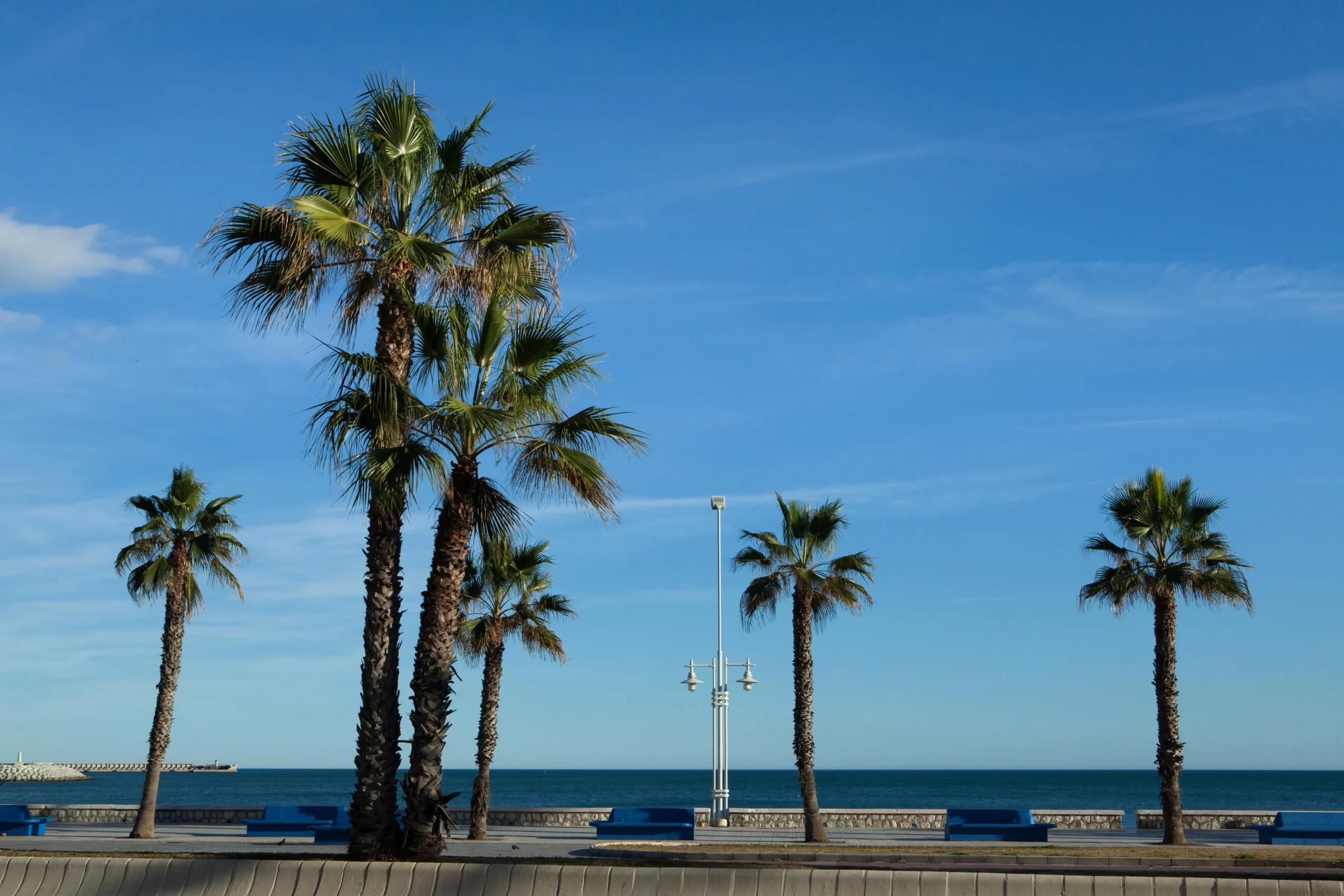
And yet, I’ve just boarded Star Legend in Malaga in southern Spain, the birthplace of Picasso and a place I’ve never been. I’m wild about this Windstar Cruises’ “Winter Escapes” Mediterranean itinerary. I’ve been to Barcelona but all the other ports – Gibraltar, Cartagena, Valencia and Palma de Mallorca – will be new to me.
Work has been crazy-busy for months and I need a recharge, a refresh. Travel does that for me.
My waiter, Dede from Indonesia, stops by my table with a bottle of Robert Mondavi Chardonnay. Oh sure, I tell him, uno mas, por favor.
Loving the Picasso Museum in Spain’s Malaga
Palacio de la Aduana, home to Malaga museum in Malaga, Spain/Adobe
I arrived in Malaga a day early to get my body attuned to the time change – and what better way to do that than to luxuriate in a ritzy hotel? The Gran Hotel Miramar, beautifully decorated for Christmas, is as posh as it gets and it’s just two blocks from the seaside promenade. Me? I barely left my room and slept like a rock. I think I’m going to start every cruise this way going forward. No rush – and adventure-ready.
Our cruise from Malaga to Barcelona spends a week sailing along Spain’s southern coast, visiting ports such as Palma de Mallorca, Cartagena, and Valencia along with the U.K.’s Gibraltar.
After boarding the ship, the thing I wanted to do most while in Malaga on Spain’s storied Costa del Sol: visit the Picasso museum and the house where the artist was born. Star Legend made it easy – pretty much everything I wanted to see was within a 10-15 minute walk of the pier, nicely located right in the heart of town.
Editor’s Note: Beginning in January 2027, Windstar’s new Star Explorer takes over the region, sailing year round in the Mediterranean, from Star Legend.
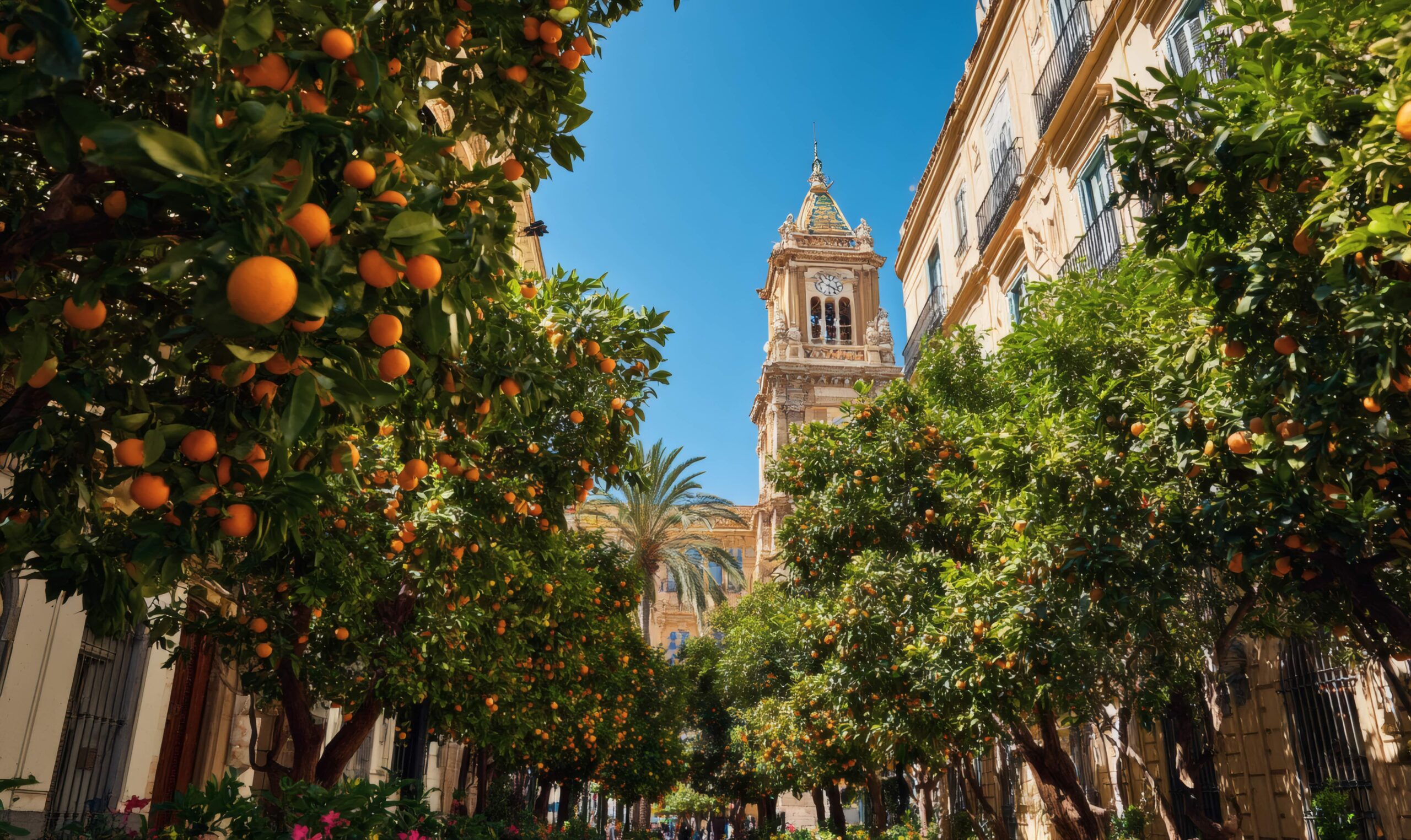
The vibe was not Sunday morning calm. The Malaga Marathon was under way with thousands of runners in motion. Streets were closed, spectators everywhere. Orange trees everywhere, too – and in glorious bloom. An abundance of pedestrian-only streets and great signage made the museum a cinch to find. The museum itself, housing 200-plus pieces, was a revelation. I’m no artist but as a writer, I loved this quote from Picasso: “We all know that art is not truth. Art is a lie that makes us realize the truth.” Talk about a mind-bend.
I had no idea that the scope of Picasso’s work included bronzes and ceramics. And at his birthplace, I learned about his influence on the dove as a symbol of peace – and why he named his daughter Paloma, “dove” in Spanish. Nuggets like these fill me up.
As a journalist, at work I’m writing a column about how older adults often feel invisible, unseen. Not me, at least not on Star Legend. When I returned to the Veranda for a late afternoon lunch, the waiter said: “Welcome Ellen. Chardonnay and water? Cabin 508, right?”
And, oh, incidentally, it’s snowing at home.
Monkey business on Gibraltar
The Barbary macaques of Gibraltar are Europe’s only free-ranging monkeys./Adobe
Gibraltar has been on my bucket list for years. It didn’t disappoint.
Just 2.6 square miles, the Rock, as it is known, is a British Overseas Territory with views of North Africa. Yep, that was Morocco in the distance. Home to one of the world’s busiest shipping channels, this island at the tip of Southern Spain is where the Atlantic meets the Mediterranean Sea. There’s something poetic about that.
Gibraltar has roughly 38,000 inhabitants but it was this population stat that fascinated me more: 300 Barbary monkeys. These large-ish apes run free-range at the top of the Rock and they communicate by grooming one another. How had I not heard of them? They are a marvel to watch. Definitely, a highlight of the itinerary – as was St. Michael’s Cave with its impressive light show.
On our way back to the port, our guide turned on the bus’s “air con,” as the Brits call it. That’s how wonderful the moderate temperatures are in this part of the world in December. There wasn’t enough time to visit the town. Next time, I hope.
During sailaway, a couple lolled in the hot tub while folks soaked up the sun from loungers. Except for doing Wordle every day, I’m pretty much off the grid. On the way to Cartagena, I jump into the novel I’ve brought – called “Snow,” of all things.
Savoring quiet time in Cartagena and Valencia
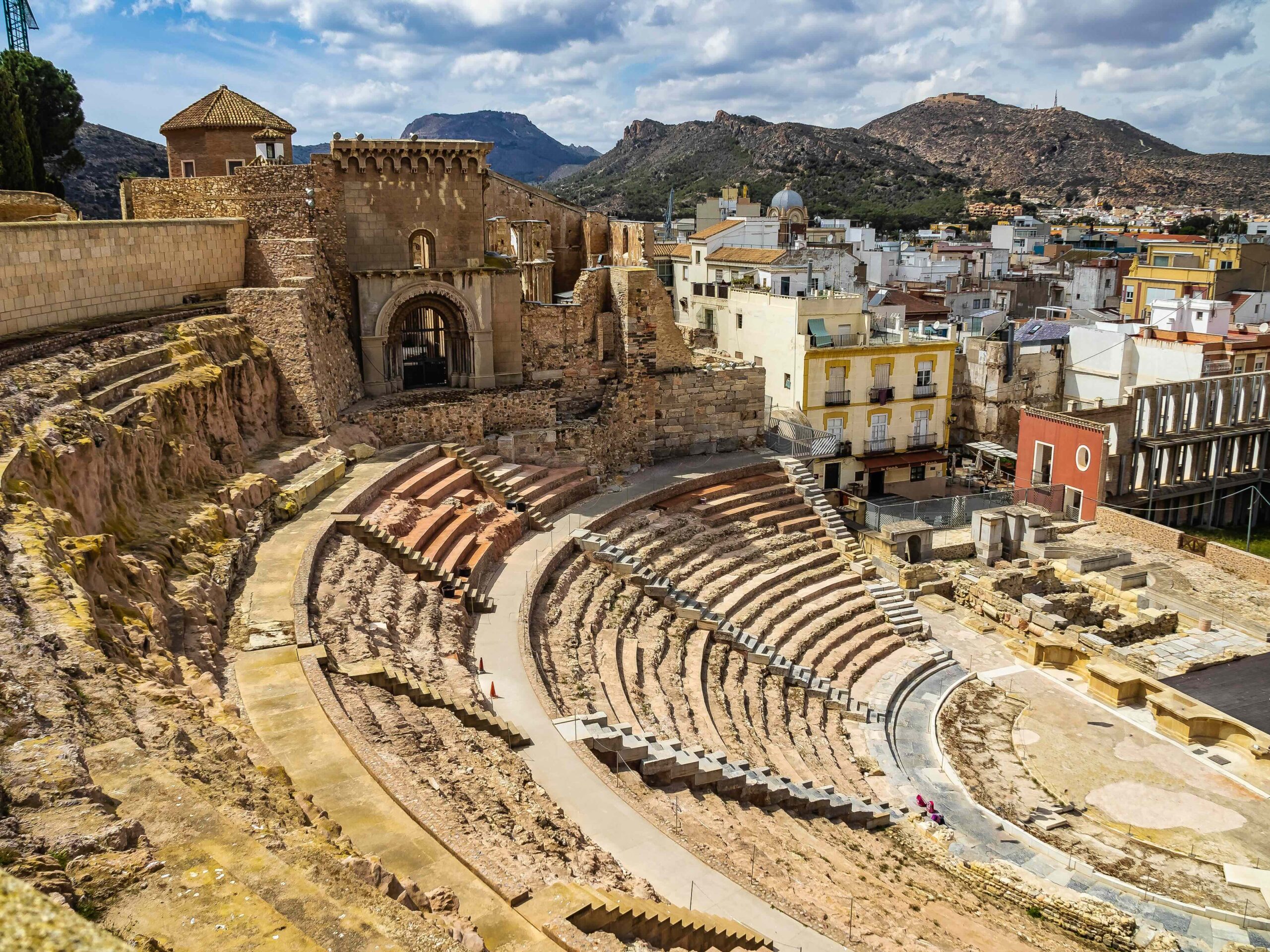
Cartagena’s ancient Roman Theatre is a great outing, walking distance from where Star Legend docked. Wear comfortable shoes./Adobe
I did a walkabout in Cartagena and enjoyed the ancient Roman Theatre and the not-to-miss Calle Mayor, the pedestrian-only main street made of marble. Valencia? Raining out of the Bible. Enough said. Instead of exploring, I made it a point to savor my quiet time, something that’s been all too rare recently. I read, streamed a couple of movies, napped, and ordered smash burgers from room service.
I also took in the special touches that my cabin steward delivered. He cleaned my eyeglasses, a mess always, and left a wipe. And my book, resting open, suddenly had a bookmark in it. That’s over the top – and typical, I’ve learned, of Star Legend’s service.
The ship was in dry dock before we embarked in Malaga and arrived with two big updates: new carpet everywhere and an Asian-Mediterranean fusion restaurant called Basil + Bamboo. The artisan whole burrata salad and the miso black cod with a little taste of the grilled Spanish octopus? Best meal of the trip.
Palma de Mallorca offers a winter wonderland
Valldemossa, a short drive from bustling Palma de Mallorca, is a picturesque village in the Tramuntana mountains./Adobe
I now understand winter’s appeal when it comes to cruising the Mediterranean – but it hit home with an exclamation point in Mallorca. Picture this: Late morning, sunny. Two buses are in the parking lot of Bellver Castle, built in the 1300s and the oldest of five round castles like it in the world. Except for the buses, both ferrying Star Legend passengers, the lot is empty. Not a tourist in sight.
“It’s calm,” our guide tells me. “No people.”
It’s also green. At the moment, olive trees are tinged silver in the sunlight as our bus heads toward the hilltop village of Valldemossa. January and February, the almond trees will erupt with white blossoms. Friends had urged me to visit Valldemossa, a village tucked into the Tramuntana mountains, and I’m glad they did. It’s best known as the spot where writer George Sand and her lover, classical composer Frederic Chopin, took refuge in a monastery during the winter of 1838-1839.
Chopin composed 32 pieces during their sojourn. The view from the rooms where the couple stayed is something to savor. Sand, in her book “A Winter in Majorca,” put it this way: “The view is astounding for it leaves nothing to the imagination and nothing to desire. The reveries of poetry and art are fully realized here.”
Later, nibbling on a potato bun at an outdoor café, I closed my eyes and enjoyed the warmth of the sun. Now this is the kind of winter wonderland I can get behind.
Looking for a Plan B in Barcelona
Already visited Barcelona and seen Gaudi’s Sagrada Familia? Visit Barcelona’s own cathedral instead./Adobe
I was in Barcelona a few years ago and focused then on the work of architect Antoni Gaudi, best known for his masterwork, the still-unfinished Sagrada Familia church. Today, my last day onboard Star Legend, I decided to revisit Las Ramblas, the famous pedestrian walkway that has a colorful farmers market, sidewalk cafes and shops. If Barcelona has a heartbeat, Las Ramblas is it.
Unfortunately, Las Ramblas is currently a massive construction zone and the inescapable sound of jackhammers was almost triggering. I saw plenty of people on the popular pathway with hands pressed over their ears. I needed a new plan for the day. Just a few blocks away, in the Gothic quarter, I found it: the Barcelona cathedral, which dates back centuries. Known as La Seu, the cathedral was comforting and quiet. I took an elevator to the rooftop, which has sweeping views of the city. At noon, chimes, resonant and deep, sounded from the clock tower.
I had been in need of a reset. The quiet embrace of the cathedral and the soulful sound of the chimes delivered that today.
Winter itineraries in the Mediterranean are genuinely special. A few tips:
Valencia’s Old Town captivates with its lush orange trees./Adobe
Visiting Spain and Gibraltar in the low season was a revelation: warm weather, fewer tourists, shorter lines. But prepare to be nimble when it comes to shore excursions. Two that I’d signed up for were canceled due to not enough passengers signing up. In that event, talk to the shore excursion team about what else you might do if one falls through.
Also, be aware that some shops and restaurants do close down, particularly in smaller villages and cities, during winter. In larger cities like Palma de Mallorca, Malaga and Barcelona museums and shops, along with restaurants, abound. And, if you are a solo traveler like me, keep an eye out for single supplement discounts on winter itineraries. I had a rather nice one that shaved a good bit off my cruise fare.
And finally, this: Windstar Cruises offers unique “Local Season” itineraries in the Mediterranean from November through March, focusing on intimate, small-ship experiences without summer crowds. These voyages feature overnights in cities like Rome, Barcelona, and Venice, visit smaller, charming cities from Athens to Dubrovnik, from Genoa to Livorno for Tuscany, and specialize in experiences focusing on holiday markets, historic sites and local culture and art. And just as nice: the weather is typically quite moderate.
Editor’s Note: Read more about Windstar’s “locals’ season” of winter cruises here:
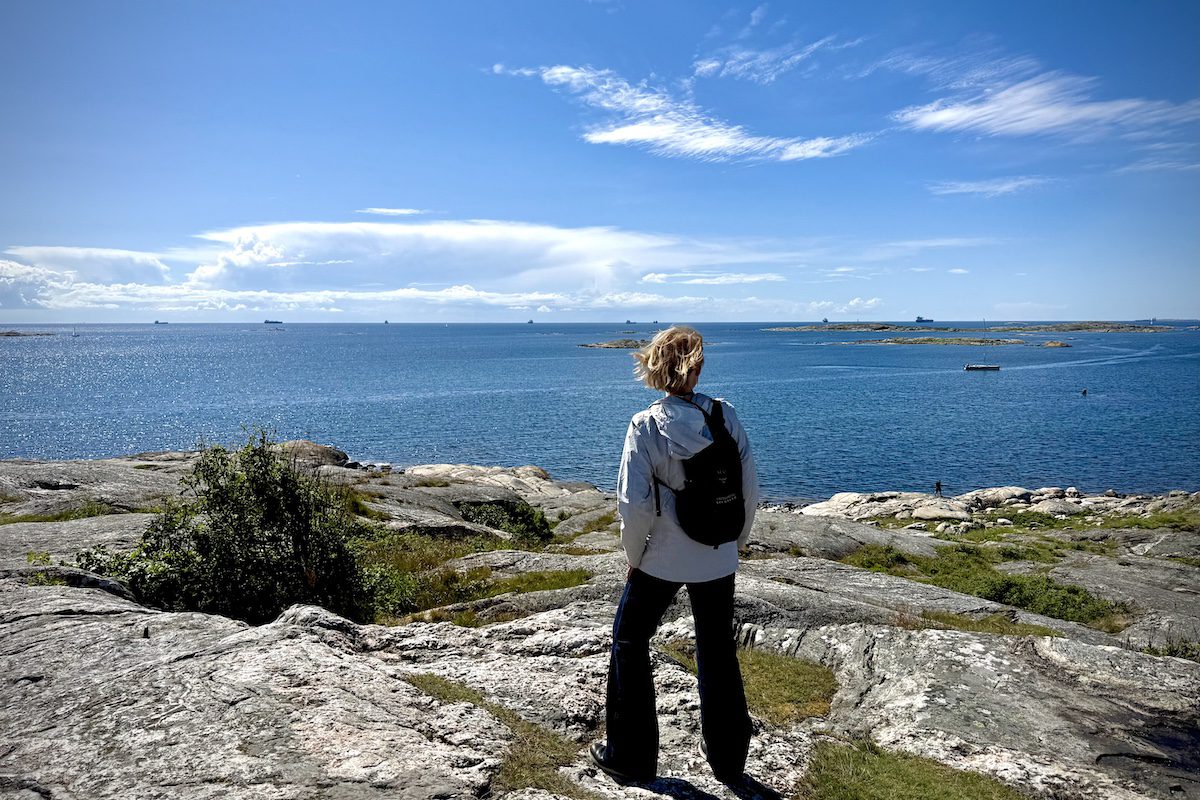
Featured image: Taking in the view from Vrångö’s historic pilot lookout while experiencing solo travel in Sweden | Photo by Sharon Kurtz
Should Stockholm and Gothenburg be your first solo trip?
by Sharon Kurtz
I knew Sweden was working for me as a solo destination when I realized how little energy I was spending figuring things out. Travelling alone let me linger over a conversation or change direction when something looked inviting. Trains, trams and ferries connected easily. Directions were clear. English was widely understood. Solo dining felt normal, and people generally respected personal space while still being willing to help when needed.
I wasn’t trying to prove that I could do it. I was simply doing it — moving through Sweden confidently, following my curiosity and experiencing the country on my own terms. For women considering a first solo journey to Europe, that combination of safety and ease can be as important as the destination itself.
In Stockholm, I walked between waterfront neighbourhoods, hopped on ferries and explored museums on my own. Days later in Gothenburg, on Sweden’s west coast, I boarded trams without hesitation and took a public ferry to the car-free islands of the southern archipelago with little more than a daypack and transit pass. What connected those experiences wasn’t simply that I felt safe. It was the freedom of moving independently without constantly worrying about transportation, language or whether I belonged there alone.
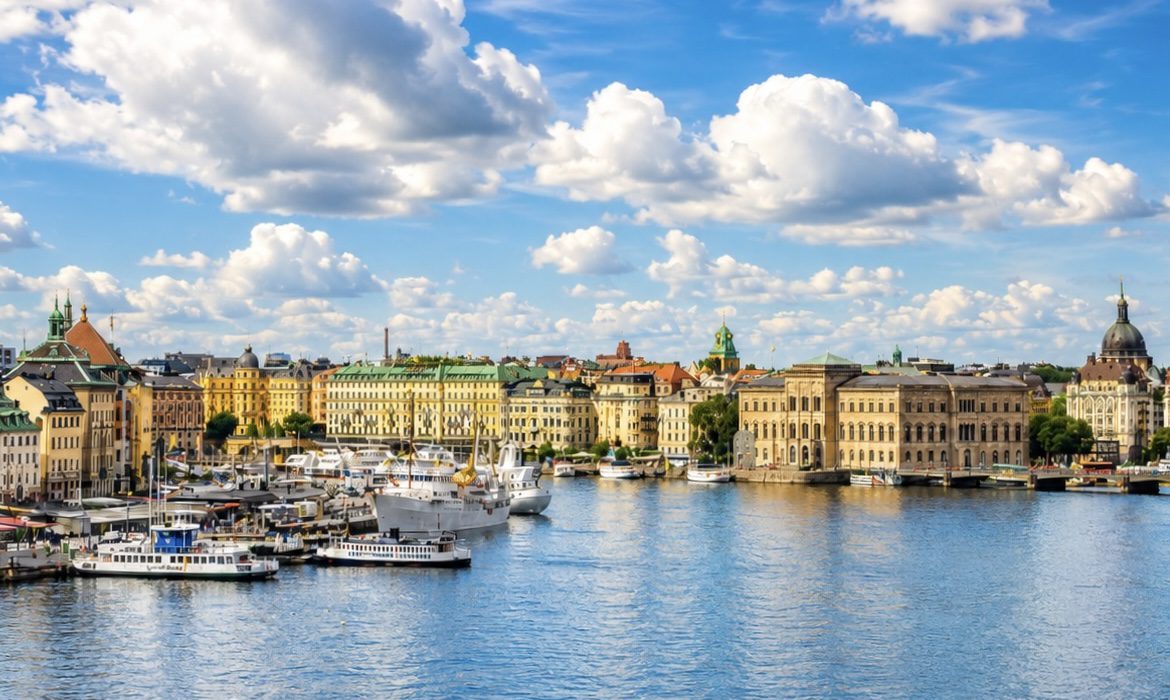
Stockholm’s waterfront and historic buildings / Photo by Sharon Kurtz
Why Sweden works for solo women
Sweden gave me something I increasingly appreciate when travelling alone: ease.
Public transportation was straightforward enough that I rarely had to spend much time figuring out how to get from one place to the next. Walking was part of everyday life, and no one seemed to think twice about a woman dining alone, visiting a museum by herself or boarding a ferry with only a daypack.
I still followed the basic precautions I use anywhere — keeping track of my belongings, knowing how I planned to get back to my hotel and staying aware in busy transit areas. No destination is completely without risk.
But I rarely felt I had to be on high alert. That left more time for what I had come to Sweden to experience: history, food, nature and the pleasure of setting my own pace.
Gothenburg’s public transportation makes exploring the city straightforward / Photo by Sharon Kurtz
What to see in Stockholm: Islands, history and museums
Stockholm is built across 14 islands, which explains why water seems to appear around almost every corner. Ferries crisscross the harbour, bridges connect neighbourhoods, and historic buildings rise along the shoreline.
My home base was Hotel Skeppsholmen, set on the quiet island of Skeppsholmen in the middle of the city. It felt almost like a retreat while still keeping Stockholm’s museums, historic centre and waterfront neighbourhoods within easy reach.
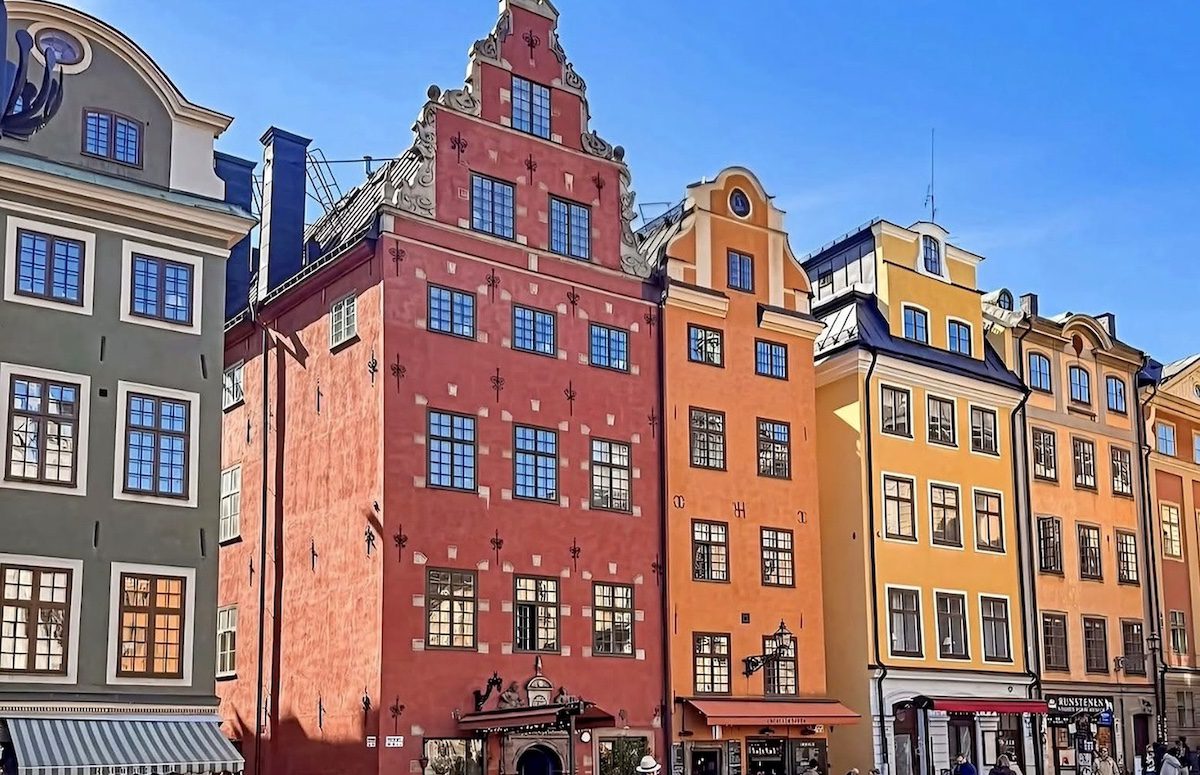
I wandered the cobblestone streets of Gamla Stan, Stockholm’s Old Town, then crossed the water to Djurgården, home to some of the city’s best-known museums and attractions.
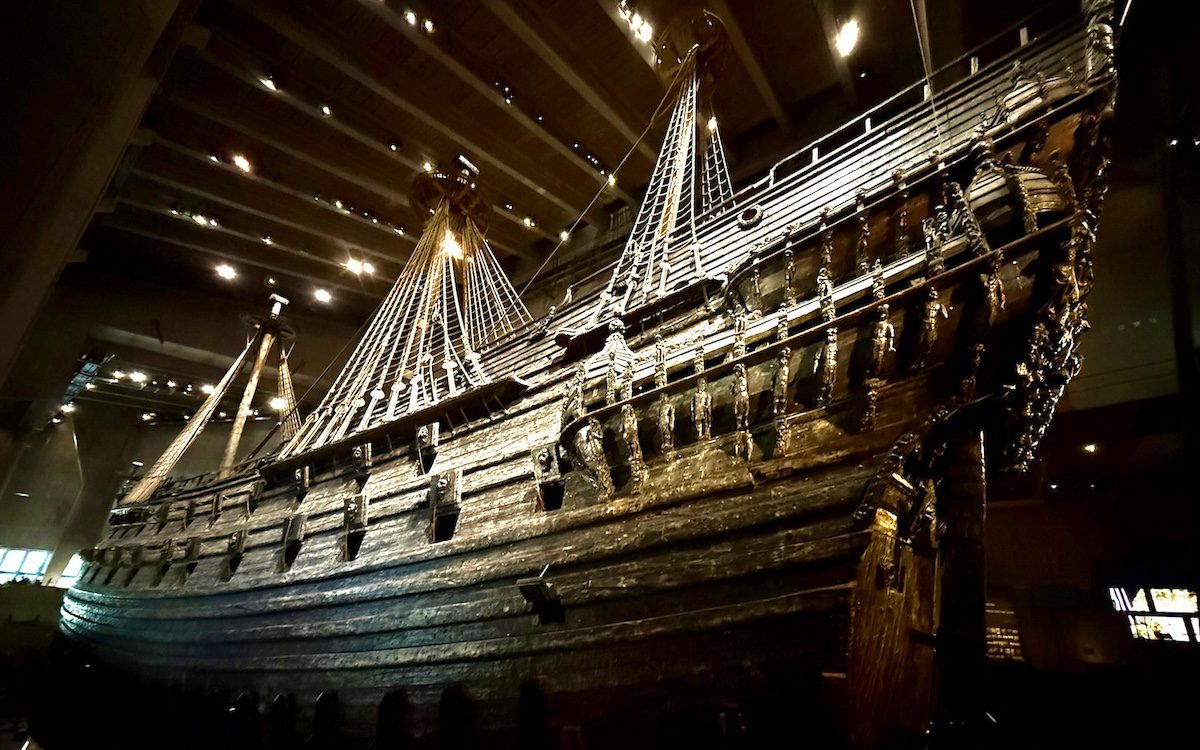
At the Vasa Museum, I stood before the remarkably preserved 17th-century warship that sank on its maiden voyage. Nearby, the Nordic Museum offered a deeper look at Swedish culture and everyday life.
Then there is the ABBA Museum, an entirely different kind of Swedish history. Even women who aren’t devoted fans will recognize the music, costumes and cultural impact of one of Sweden’s most famous exports.
I was also fortunate to be in Stockholm during Midsummer, when Skansen was filled with flowers, music and traditional celebrations. Joining the festivities alone didn’t feel isolating. It felt like being invited into one of Sweden’s most beloved traditions.
Stockholm had the energy of a European capital, but its islands, green spaces and waterfront paths kept it from feeling overwhelming.
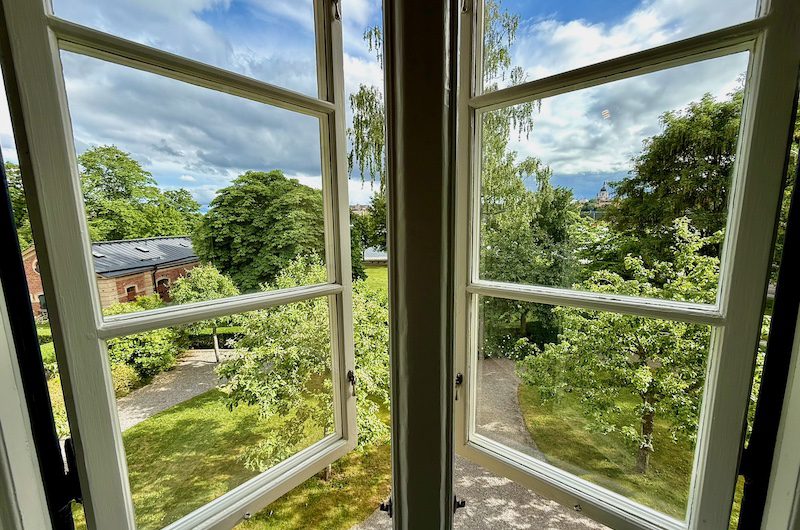
An open window at Hotel Skeppsholmen let in fresh air and birdsong / Photo by Sharon Kurtz
Hotel Skeppsholmen, a quiet island setting in central Stockholm / Photo by Sharon Kurtz
The preserved Vasa warship at Stockholm’s Vasa Museum / Photo by Sharon Kurtz
What to do in Gothenburg: Explore at a slower pace
After Stockholm, Gothenburg felt noticeably more relaxed.
The centrally located Avalon Hotel became my base, putting cafés, museums, shopping streets and tram stops within easy walking distance.
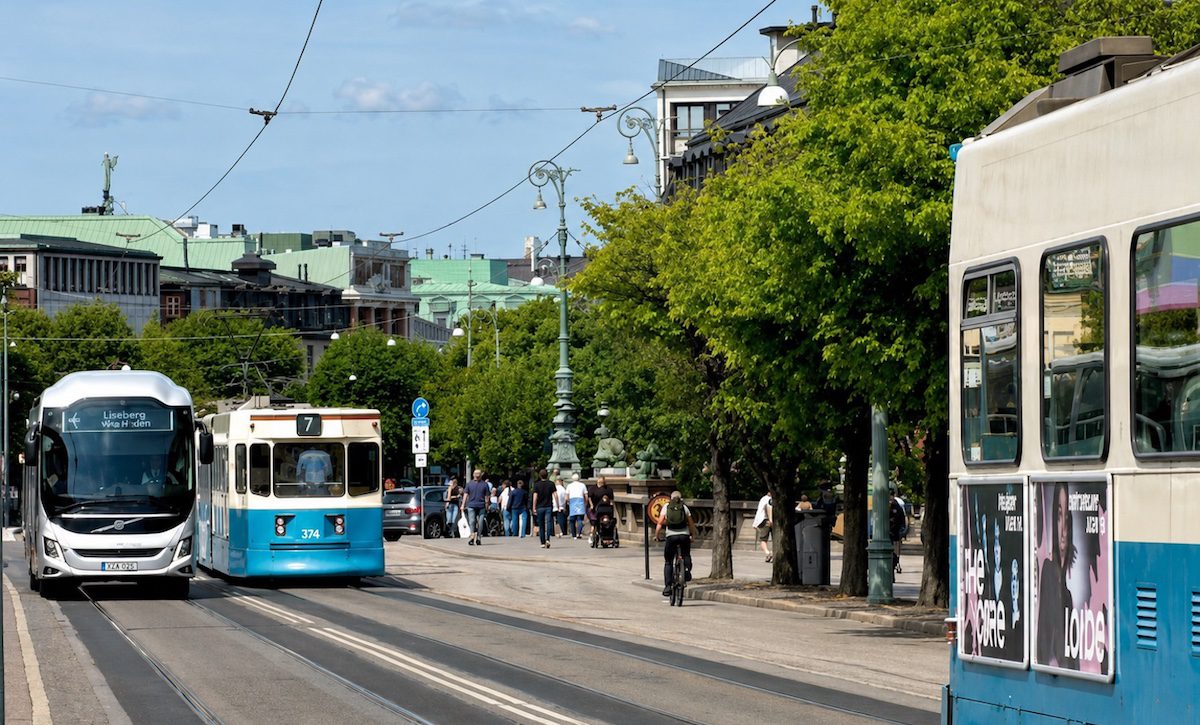
Sweden’s second-largest city invites wandering. I could follow a canal, hop on a tram or stop for fika when something caught my attention.
Fika, Sweden’s ritual of taking time for coffee and something sweet, fits naturally into solo travel. I lingered over coffee and pastries at Da Matteo and later enjoyed dinner at Natur, where dining alone felt simply like part of everyday life.
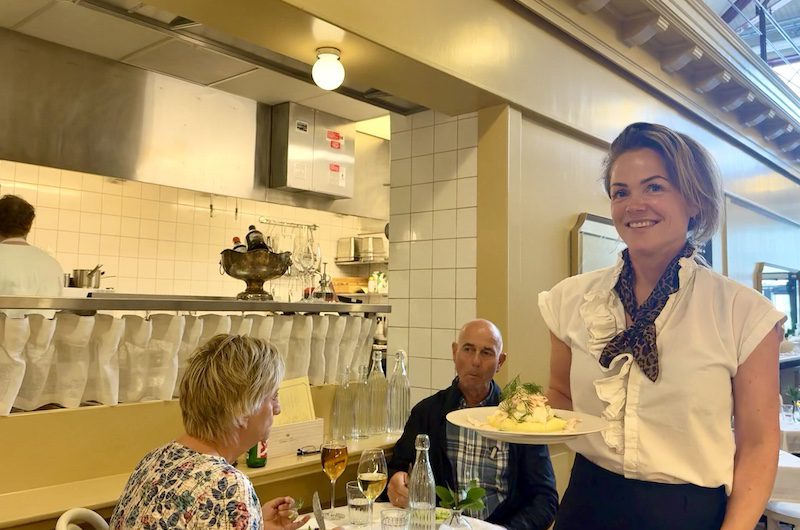
At Stora Saluhallen market hall, I stopped for lunch at women-owned Lilla Brasseriet, then wandered among stalls filled with seafood, cheeses and Swedish specialties.
Those small moments became some of my favourites. Travelling alone let me linger over a conversation or change direction when something looked inviting.
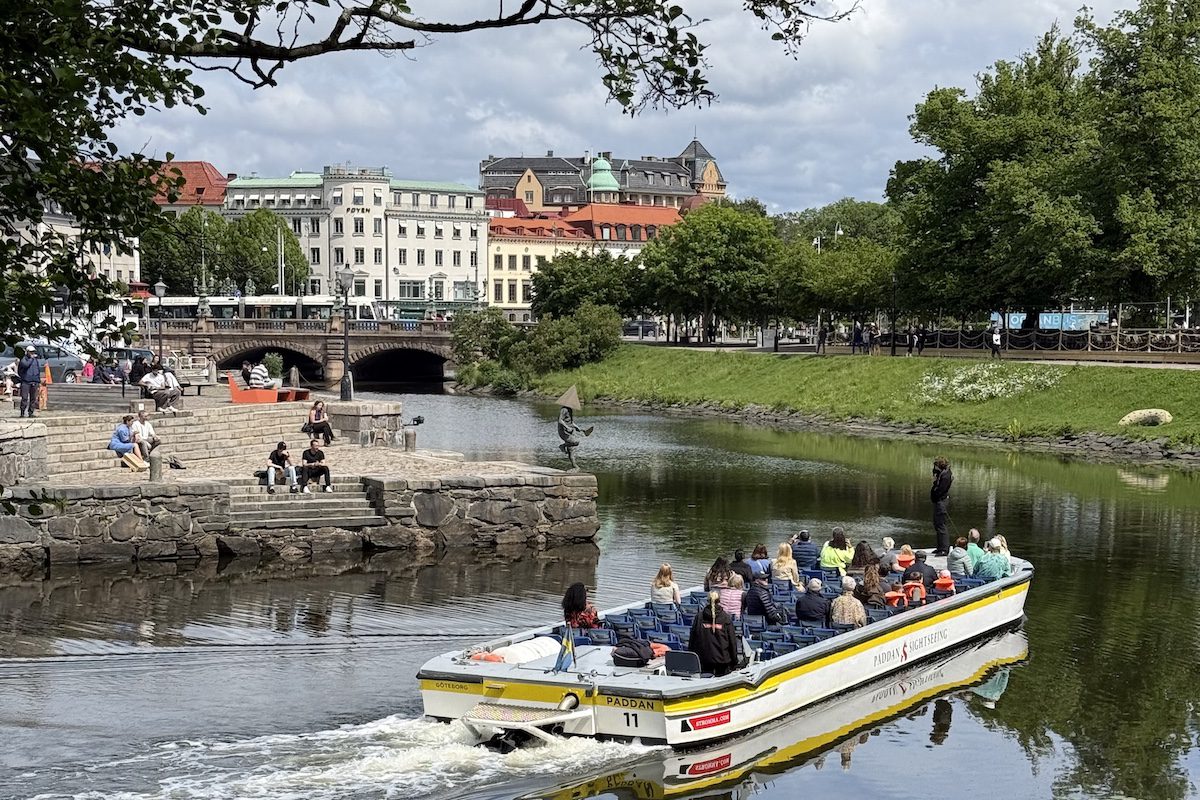
A Paddan boat tour explores Gothenburg’s canals / Photo by Sharon Kurtz
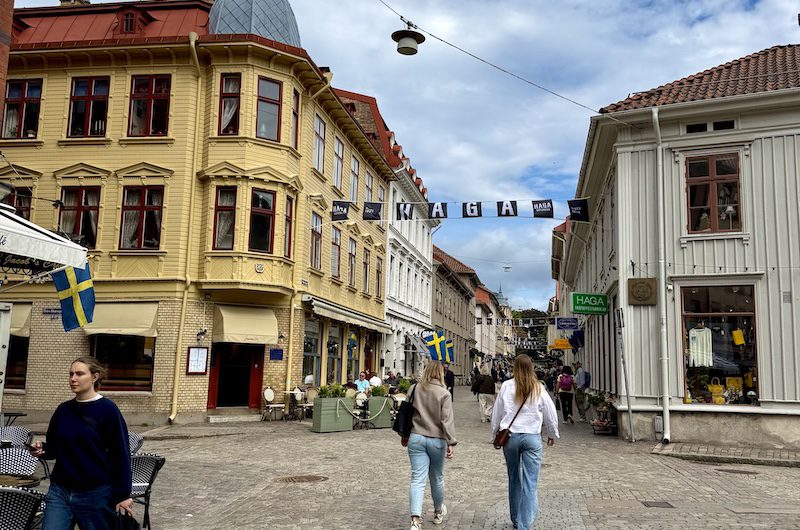
Gothenburg’s historic Haga neighborhood is easy to explore on foot / Photo by Sharon Kurtz
The chef and owner of Lilla Brasseriet at Stora Saluhallen / Photo by Sharon Kurtz
Finding Sweden’s story in Gothenburg
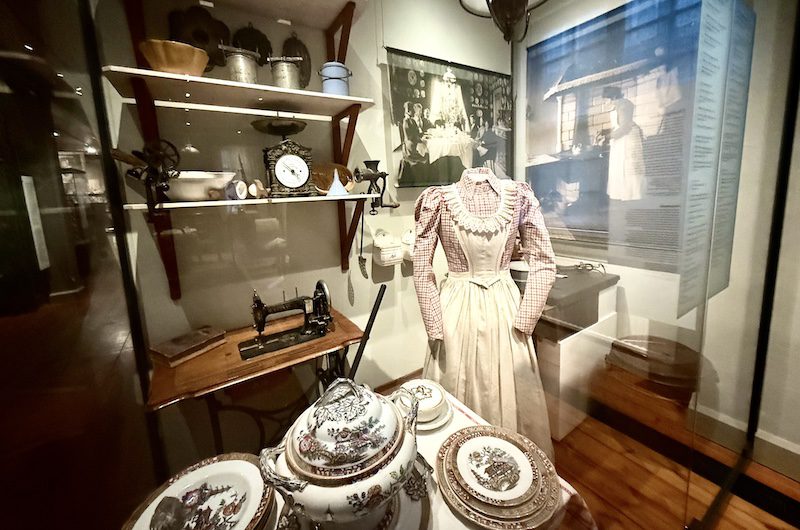
The Museum of Gothenburg added another dimension to the city. Housed in the former East India Company building, it traces thousands of years of western Sweden’s history. I was especially interested in the story of Swedish emigration.
During the 19th and early 20th centuries, Gothenburg served as Sweden’s principal gateway to North America, with more than a million Swedes departing through its harbour.
For North American travellers with Swedish roots, that history can feel surprisingly personal.
From city streets to the archipelago
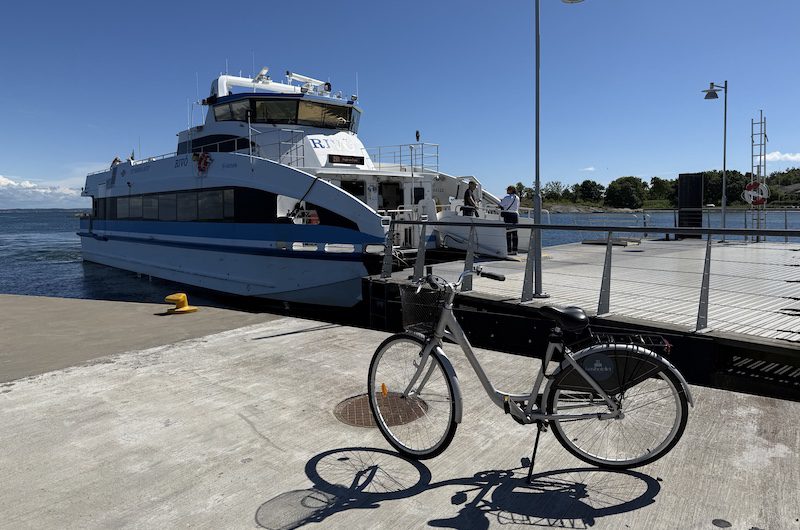
One of my favourite things about Sweden was how quickly city life could give way to nature. My Västtrafik pass covered trams, buses and ferries, making it simple to reach Gothenburg’s southern archipelago.
I boarded a public ferry to Styrsö, and less than an hour later, city streets gave way to rocky shorelines, small harbours and quiet island roads.
I stayed at Kusthotellet Styrsö overlooking the water and explored by bicycle. Private cars are largely absent, so bicycles, ferries and walking set the pace. I rode past cottages, fishing boats and granite outcrops, stopping whenever the view tempted me.
A recreation of women’s domestic life at the Museum of Gothenburg / Photo by Sharon Kurtz
Bikes and ferries make island-hopping easy from Vrångö / Photo by Sharon Kurtz
A Glimpse of island life on Donsö
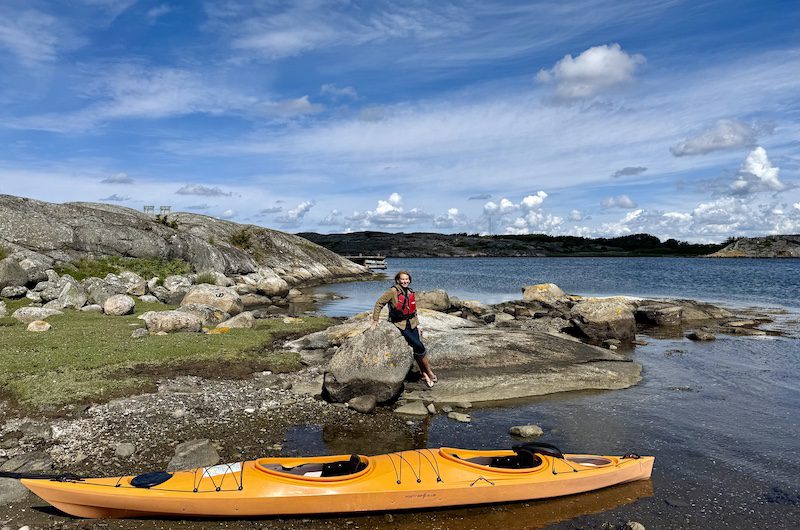
From Styrsö, I cycled across the bridge to neighbouring Donsö for a kayaking excursion with local guide Mathias Dawidsson.
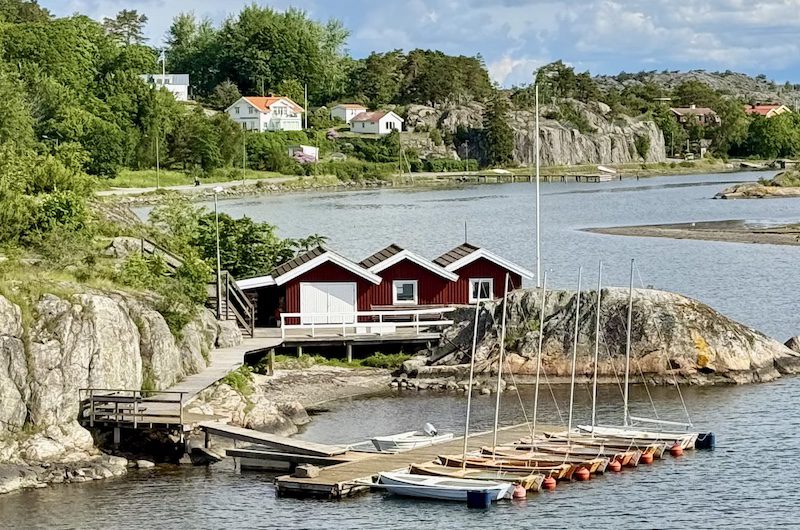
We paddled past red boathouses, seabirds and rocky shoreline while he shared stories of an island community shaped by fishing, shipping and generations connected to the sea.
It was another reminder that travelling alone often opens the door to conversations that might not otherwise happen.
Stay connected here with an Airalo eSIM. Use code JOURNEY15 for 15% off.
Safety matters, but ease builds confidence
Women frequently ask whether I felt safe travelling alone in Sweden.
I did. I felt comfortable walking, using public transportation, dining alone and moving independently between cities and islands.
But what stayed with me most wasn’t simply safety. It was how few obstacles stood between me and what I wanted to do.
Trains, trams and ferries connected easily. Directions were clear. English was widely understood. Solo dining felt normal, and people generally respected personal space while still being willing to help when needed.
For women considering a first solo journey to Europe, that combination of safety and ease can be as important as the destination itself.
The bridge linking Styrsö and Donsö offers classic archipelago views / Photo by Sharon Kurtz
Kayaking from Donsö after cycling across the bridge from Styrsö / Photo by Sharon Kurtz
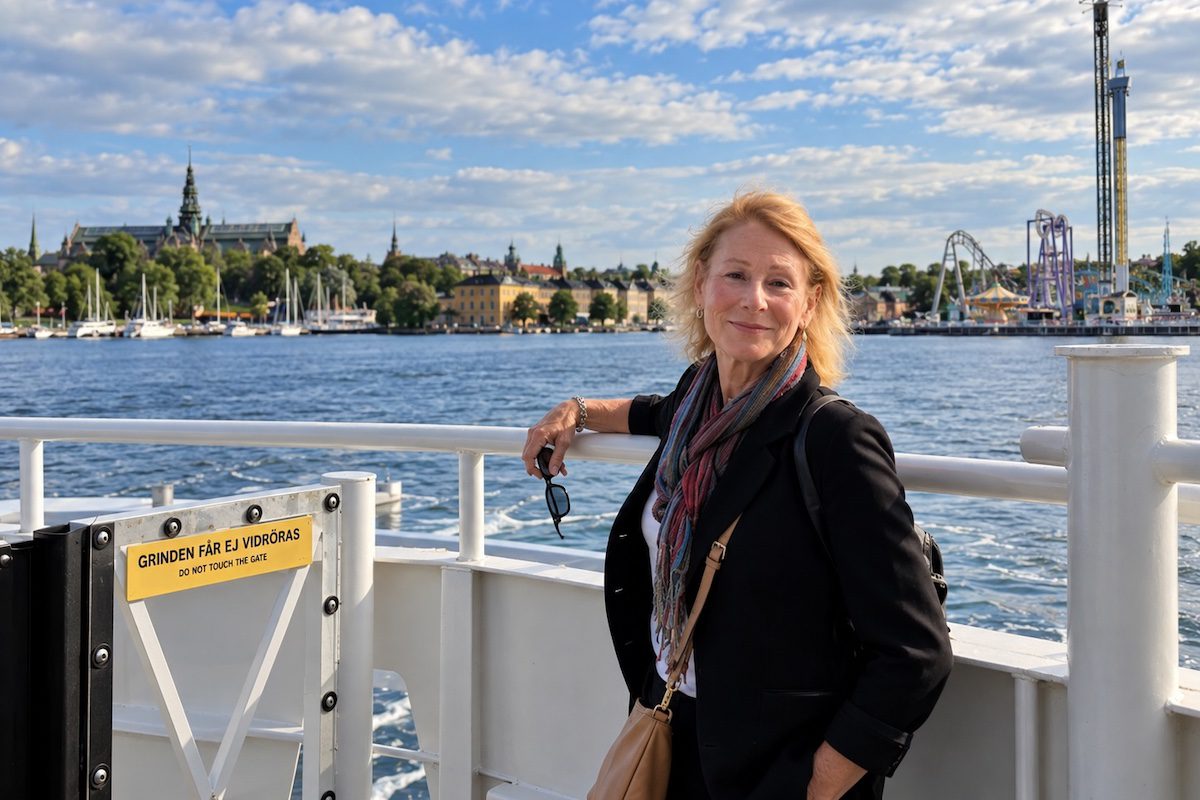
Sharon aboard a Stockholm ferry / Photo by Sharon Kurtz
Let Sweden set the pace
Sweden changed rhythm as I travelled through it.
Stockholm gave me grand architecture, museums, historic neighbourhoods and the energy of a beautiful European capital.
Then the southern archipelago stripped travel back even further: a bicycle, a ferry timetable, a quiet road and the freedom to decide what came next.
That ability to linger may be what I valued most about travelling solo in Sweden.
Stortorget, famous main square in Gamla Stan / Photo by Sharon Kurtz
If You Go: Planning a trip to Sweden
Flights: Travellers from North America can reach Sweden through major European gateways, including London and Frankfurt, with connections to Stockholm and Gothenburg. Check for flights here!
Between Stockholm and Gothenburg: High-speed trains connect the two cities in about three hours, making it easy to combine both destinations without renting a car. Click here for train schedules.
From Stockholm Arlanda Airport: The Arlanda Express reaches central Stockholm in about 18 minutes. A standard adult ticket is approximately SEK 340, with reduced senior fares available.
Stockholm public transportation: Stockholm’s SL system includes buses, metro trains, trams and many ferries. A 24-hour pass costs about SEK 180, and a 72-hour pass about SEK 360, with discounted fares for travellers 65 and older. Download the SL app before your trip.
Gothenburg public transportation: Västtrafik operates Gothenburg’s trams, buses and public ferries. A Zone A ticket covers central Gothenburg, and multi-day passes are useful for travellers spending several days exploring independently. The Västtrafik To Go app makes buying and managing tickets easy.
Getting to the southern archipelago: Gothenburg’s public transportation network extends to ferries serving islands including Styrsö and Donsö. No separate sightseeing cruise is necessary — the ferry is part of the journey.
From Gothenburg Landvetter Airport: Flygbussarna airport coaches connect the airport with central Gothenburg in approximately 20–30 minutes.
Solo travel tips: Sweden is largely cashless, so a credit or debit card is useful for almost everything. Download transportation apps before leaving home, check seasonal ferry schedules, and pack comfortable walking shoes, layers and a lightweight waterproof jacket. I found no need for a rental car in Stockholm, Gothenburg or the southern archipelago.
Planning resources:Visit Sweden for countrywide trip planning and Goteborg.com for Gothenburg and Sweden’s west coast.
Disclaimer: Our talented writers are often invited by tourism boards and travel companies to experience places like this firsthand so that they can share them with you. Goteborg.com hosted Sharon for portions of her Sweden stay in June 2026. Sharon was not compensated for her time spent researching, planning and writing this feature, nor was JourneyWoman for publishing it. In addition, the host organizations did not review this article before it was published, a practice that allows the writer to express her perspective with integrity and candour.
The airman who died in a rappelling demonstration gone wrong on Saturday night was a Tactical Air Control Party instructor with 15 years of service in the Air Force.
The Air Force identified the airman Monday as Tech. Sgt. Ian Patterson, a Tactical Air Control Party instructor assigned to a training detachment of the 6th Combat Training Squadron at Joint Base San Antonio, Texas.
Patterson was part of a four-person demonstration before a football game between the University of Texas at San Antonio and the U.S. Naval Academy at the city’s Alamodome. Patterson’s team planned to drop from the rafters in the 160-foot-high stadium onto the playing field. Videos posted online of the incident appear to show him sliding down the rope far too fast before he hits the ground.
Emergency responders rushed to him on the field and tended to him for several minutes before he was taken away on a stretcher. The San Antonio Fire Department transported him to an area hospital with life-threatening injuries; he died at the hospital. Air Force officials said the incident is under investigation.
“This tragedy is felt deeply across the 57th Wing,” Air Force Brig. Gen. Scott C. Mills, 57th Wing commander, said in a release Monday. “Tech. Sgt. Patterson and his service mattered immensely to our wing, and to the family, friends, and teammates who had the privilege of knowing and serving alongside him. Our team is now focused on standing beside Ian’s family, loved ones, and fellow airmen as we navigate this profound loss together.”
Patterson, from Fort Stewart, Georgia, had served for 15 years. In 2022, he was named the Air Force Special Warfare Enlisted Instructor of the Year at the Headquarters Air Force level, according to the service. His awards include the Air and Space Commendation Medal, the Air and Space Achievement Medal and the Army Achievement Medal, among others.
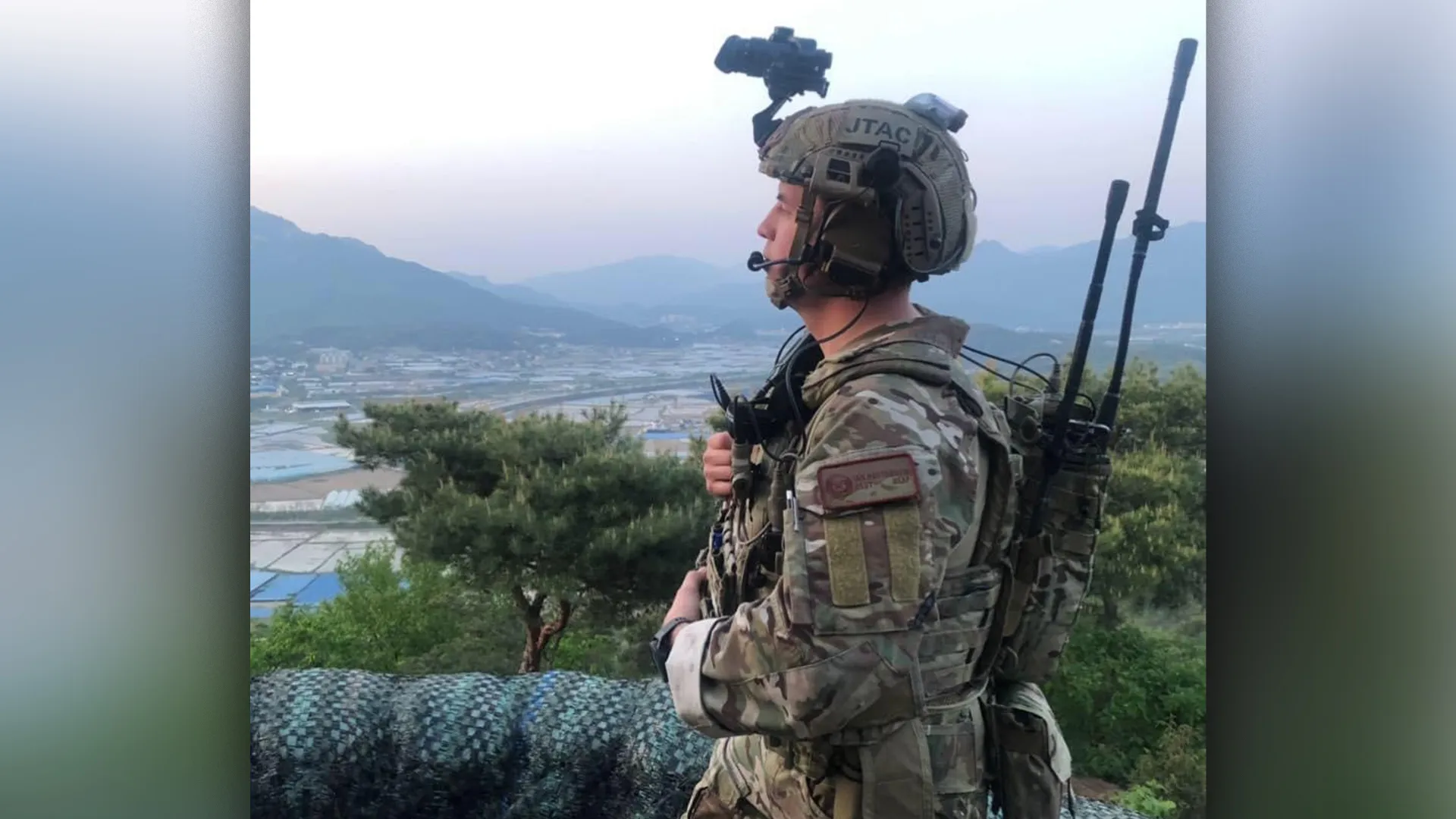
An Air Force TACP is a special operations airman who embeds with ground forces, typically from other service branches, to coordinate close air support to strike enemy targets during operations.
The 6th Combat Training Squadron, headquartered at Nellis Air Force Base, trains troops from different branches to be forward air controllers, which includes TACPs. Detachment 2 operates at Joint Base San Antonio, near the stadium where the incident took place.
The rappelling demonstration was part of pre-game events at the Alamodome, done as part of UTSA’s annual Salute to Armed Forces & Veterans game. Thousands of people were inside the stadium and watched the accident. The football game was delayed for approximately 10 minutes.