Category: Uncategorized

  • Average 401(k) Balance by Age in 2026: How Do You Compare?

    Average 401(k) Balance by Age in 2026: How Do You Compare?

    If you’ve checked your 401(k) recently and wondered how it compares nationally, Vanguard’s How America Saves 2026 report offers a concrete starting point. Based on 4.6 million participant accounts, the average 401(k) balance at year-end 2025 was $167,970. The median was $44,115.

    Both of those figures are new records. But the average has a way of making most readers feel further behind than they really are. The age-by-age benchmarks shift the picture.

    Now in its 25th edition, the report covers data through December 31, 2025 and is the most thorough annual benchmark of 401(k) savings available to the public. What follows is built from it.

    What Is the Average 401(k) Balance by Age in 2026?

    The overall figures matter less than the breakdown by age. That’s where you can find a meaningful comparison. Here’s the full data:

    Age Average Balance Median Balance
    Under 25 $7,259 $2,234
    25–34 $50,261 $18,732
    35–44 $120,742 $46,919
    45–54 $214,991 $78,730
    55–64 $305,006 $107,269
    65 and older $330,186 $103,202
    All participants $167,970 $44,115

    Source: Vanguard, How America Saves 2026. Data as of December 31, 2025.

    Note that these numbers reflect only what’s held inside a 401(k) plan. IRAs, pensions, home equity, and Social Security aren’t included. 

    Vanguard’s scope also skews toward larger employers, so the data doesn’t capture every American 401(k) holder. But it provides a singularly consistent, large-scale snapshot of account balances across employer-sponsored plans. No other source publishes this kind of benchmark annually at this scale.

    Why the Average Balance Doesn’t Represent Most Savers

    The $167,970 average 401(k) balance reflects roughly the 75th percentile, meaning about three-quarters of participants held less than that amount.

    That’s how averages behave when a distribution is skewed. A small number of very large accounts pull the mean well above what a typical account holder carries. Vanguard’s own analysis makes this point: average balances are more representative of participants who are older, longer-tenured, or more affluent.

    The median lands at $44,115.

    Here’s how the full distribution breaks down:

    • 1 in 4 participants had less than $10,000
    • 35% had more than $100,000
    • 18% had $250,000 or more

    For additional context, Fidelity’s Q4 2025 retirement analysis reports an average 401(k) balance of $146,400 and a median of $34,400. Both are well below Vanguard’s figures, but the gap reflects plan composition. Vanguard administers a higher concentration of large-employer plans skewed toward higher-income participants. Fidelity’s broader mix of plan sizes pulls both numbers down. Neither figure is more accurate. They’re snapshots of different cross-sections of the same workforce.

    When you compare your balance to the $167,970 figure, you’re measuring yourself against someone in the top quarter of all savers. The median for your age group is the more useful comparison.

    If your balance falls below the average but above the median for your age, you’re ahead of more than half your peers. Keep that in mind before you conclude you’re behind.

    How Does Income Affect Your 401(k) Balance?

    Income is the single strongest predictor of 401(k) account balance, and the range across earning levels is wide.

    Annual Income Average Balance Median Balance
    Under $15,000 $19,601 $3,489
    $15,000–$29,999 $20,146 $6,896
    $30,000–$49,999 $29,172 $11,659
    $50,000–$74,999 $65,239 $29,033
    $75,000–$99,999 $114,670 $56,115
    $100,000–$149,999 $198,912 $103,396
    $150,000 and above $401,412 $230,536

    Source: Vanguard, How America Saves 2026.

    Higher earners simply have more income to save. They’re more likely to work at larger companies with more generous employer match programs. They also tend to stay in those jobs longer, which compounds the effect on their balance.

    There’s also a structural layer at the contribution limit level. Workers earning under $100,000 who are 50 or older would need to defer more than 20% of their income just to reach the catch-up contribution threshold. The rules exist for everyone on paper. In practice, they’re out of reach for a lot of people in that income range.

    The numbers bear this out. Fewer than 1% of participants earning under $30,000 used catch-up contributions in 2025. Among participants earning $150,000 or more, 52% did.

    What Drove 401(k) Balances Higher in 2025?

    The record-high 401(k) balances in 2025 were a market story. Savings behavior held steady.

    The S&P 500 gained 16% on a price basis over the year. International equities returned roughly 32%. The U.S. bond market returned about 7%. The average one-year participant total return across Vanguard plans was 19.3%.

    Among participants who held accounts throughout the full year, the median balance rose 27%. Ninety-four percent saw their balance increase.

    One thing to keep in mind: a strong market year lifts balances across the board. The balance on any given date reflects where the market happened to be that day. It says nothing about what the account will be worth in 10 or 20 years.

    That’s already playing out in early 2026. According to the Investment Company Institute’s Q1 2026 Quarterly Retirement Market Data, total 401(k) assets fell to $9.9 trillion by March 31, down from $10.1 trillion at year-end 2025.

    Contributing consistently and leaving the money invested is what deserves your attention. Those habits are the part you control.

    Are You Saving Enough? What the Data Says About Contribution Rates

    Vanguard recommends a total contribution rate of 12% to 15% of income, combining what you put in and what your employer adds, as the target for staying on track toward retirement.

    In 2025, 51% of Vanguard participants met that target or hit the statutory maximum, up from 47% in 2021. Roughly half are still below it. Contribution rates stayed flat.

    Here’s how contributions broke down in 2025:

    • The average employee deferral rate was 7.6%; the median was 6.6%
    • Only 14% of participants maxed out: $23,500 for most workers; $31,000 for those 50 and older, and up to $34,750 for workers ages 60 to 63
    • Among workers earning $150,000 or more, 51% maxed out; among those earning under $50,000, fewer than 1% did

    Catch-up contributions, available to workers 50 and older, were used by 17% of eligible participants. Among eligible participants ages 60 to 63, 19% made any catch-up contributions, but only 9% hit the full $11,250 “super catch-up” limit. For most people in that age range, the structural barriers above apply.

    “Clients may ask, ‘What’s my magic number?’ They first need to answer, ‘What am I planning to spend?’ No one knows how long they’re going to live. And then the other complications come in such as inflation and unexpected events during retirement,” notes Bruce Lorenz, CFP® professional and Boldin Advisor. “Balancing all of this with what guaranteed income they will have and where they stand is a worthwhile exercise. Getting a handle on expected spending can go a long way toward answering the question of when you can retire.”

    Not sure whether your savings rate hits your retirement income target? That calculation needs to account for Social Security, expected spending, inflation, and taxes. The Boldin Planner lets you model it with your actual numbers.

    Record Balances, Record Hardship Withdrawals: The Other Side of the Data

    In the same year 401(k) balances hit a record high, the share of Americans tapping their accounts for financial emergencies also reached an all-time high.

    Some 6% of Vanguard participants made a hardship withdrawal in 2025. It was the latest jump, from 5% in 2024, 4% in 2023, 3% in 2022, and 2% in 2021. That’s four straight years of increases.

    Of those who withdrew, 46% took more than one distribution over the year, with 21% taking three or more.

    The median withdrawal amount was $1,900. At that size, a hardship distribution often signals an emergency savings shortfall more than a retirement plan problem. People are using their 401(k) the way a savings account is meant to work.

    Workers cited reasons that tell that story:

    • 36% used hardship funds to avoid home foreclosure or eviction. 
    • 31% covered medical expenses. 
    • 13% paid for tuition.
    • 11% used the money for home repairs.

    Workers earning under $100,000 were 3.5 times more likely to initiate a hardship withdrawal than those above that threshold. Part of what’s driving the trend is administrative. Only 10% of plans now require documentation before approving a hardship withdrawal, down from near-universal requirements in earlier years. Easier access does lead to higher use.

    If your 401(k) is serving double duty as your emergency fund, that’s a planning priority to address. Building even a few months of expenses in a separate account changes how you respond to a financial shock. It keeps your 401(k) compounding toward the purpose it was built for.

    What Your 401(k) Balance Tells You About Retirement Readiness

    A 401(k) balance is a starting point. It becomes useful only when you model it against what you’ll spend.

    The median balance for workers ages 55 to 64 is $107,269. Using a 4% annual withdrawal rate as a rough frame, that balance generates about $4,300 per year in portfolio income. Whether that’s enough depends on when you stop working, when you claim Social Security, and what you plan to spend each year. Healthcare costs over time are part of that picture too.

    Social Security timing, other savings, your tax situation, and sequence-of-returns risk all shape what you can spend each year. No single number captures all of that.

    One finding from Vanguard’s data stands out: 97% of all plan assets available for distribution in 2025 were preserved. Most people who leave a job keep their retirement money invested. That habit, sustained over years, does more for long-term outcomes than any single year’s balance number.

    Running your own numbers, with your actual income, savings, spending estimate, and Social Security projection, is what turns a benchmark into a plan. The Boldin Planner is built for that translation: from “here’s what I’ve saved” to “here’s what my retirement looks like.”


    Frequently Asked Questions

    What is the average 401(k) balance by age?

    According to Vanguard’s 2026 data, average 401(k) balances range from $7,259 for workers under 25 to $330,186 for those 65 and older. Median balances are lower at every age: $2,234 for workers under 25 and $103,202 for those 65 and older. The median reflects the exact midpoint of all account balances and is a more representative figure for most savers than the average.

    What is a good 401(k) balance at 60?

    Vanguard’s 2026 data shows the median 401(k) balance for workers ages 55 to 64 is $107,269, with an average of $305,006. Whether those figures are adequate at 60 depends on planned retirement age, expected annual spending, Social Security income, and other assets. Vanguard’s general target is a combined employee and employer contribution rate of 12% to 15% as a guide for staying on track.

    How much should I have in my 401(k) at 55?

    The median 401(k) balance for workers ages 45 to 54 is $78,730, according to Vanguard’s 2026 data. For workers in the 55 to 64 age range, the median rises to $107,269. These figures are reference points, not requirements. The more meaningful question is whether projected savings, combined with Social Security and any other income sources, covers planned annual spending in retirement.

    Why is the average 401(k) balance so much higher than the median?

    The average 401(k) balance sits well above the median because a small number of very large accounts skew the mean upward. Vanguard’s analysis puts the $167,970 average at around the 75th percentile: roughly three out of four participants held less. The median of $44,115 sits at the exact midpoint of all balances and is a more representative comparison for most workers.

    How did 401(k) balances change in 2025?

    The average 401(k) balance across Vanguard accounts rose 13% in 2025 to $167,970, and the median rose 16% to $44,115. Both gains were driven in large part by strong market performance: the S&P 500 returned 16% on the year based on pricing, and the average one-year participant return was 19.3%. For participants with accounts throughout the year, the median balance climbed 27%.

    The post Average 401(k) Balance by Age in 2026: How Do You Compare? appeared first on Boldin.

    This post was originally published on this site
  • Why Cappadocia is the Perfect Place to Conquer a Fear of Hot Air Ballooning: The Ultimate 59th Birthday Gift to Myself

    Why Cappadocia is the Perfect Place to Conquer a Fear of Hot Air Ballooning: The Ultimate 59th Birthday Gift to Myself

    Last updated on July 4th, 2026

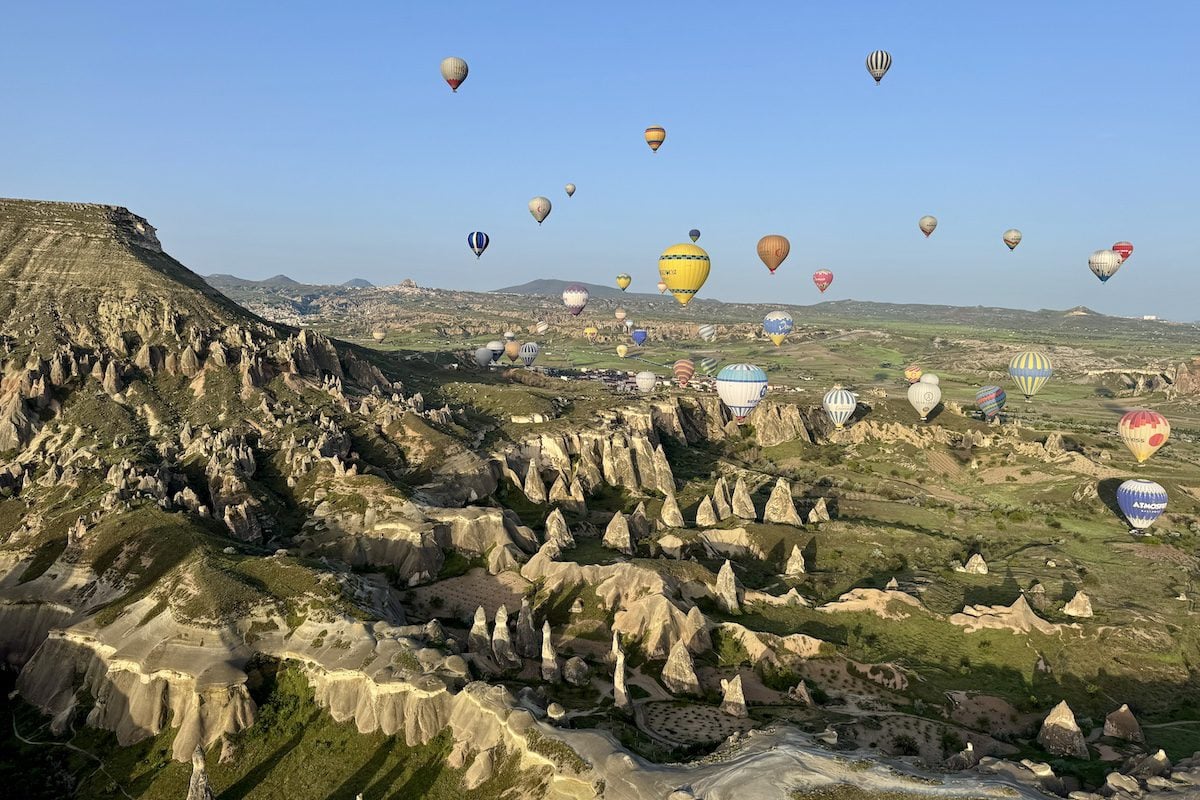
    Featured image: Hot air balloons in Cappadocia, over Göreme | Photo by Jennifer Bain

    Overcoming my imagination to float above fairy chimneys in Türkiye

    by Jennifer Bain

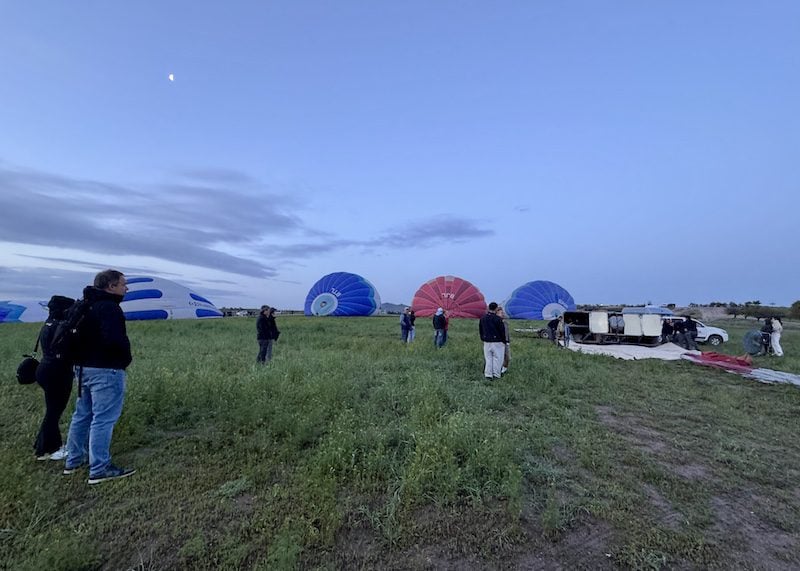
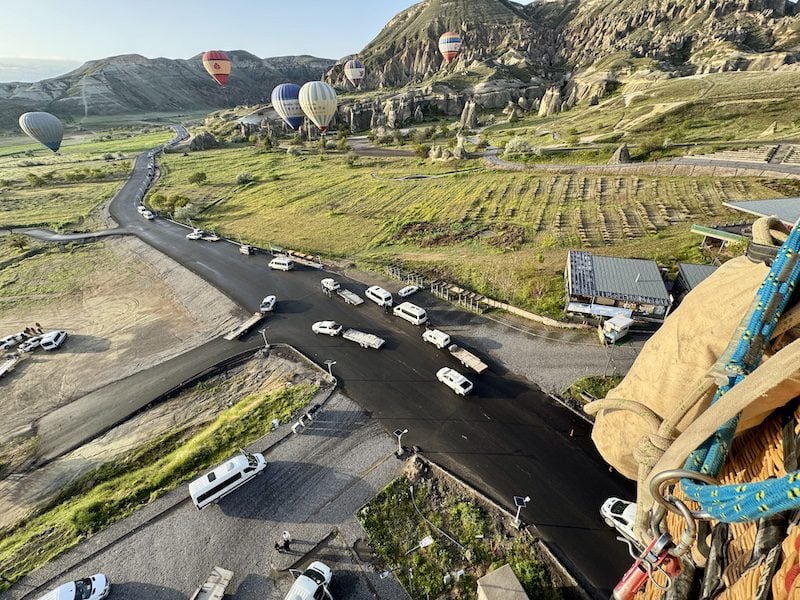
    Sunrise is looming as we fret about whether it is too cloudy for the Turkish government to grant permission for hot air balloons to soar above Cappadocia’s fabled fairy chimney rock formations. When the skies clear and approval finally comes around 5:20 a.m., there is sweet relief and then a flurry of action at the staging area.

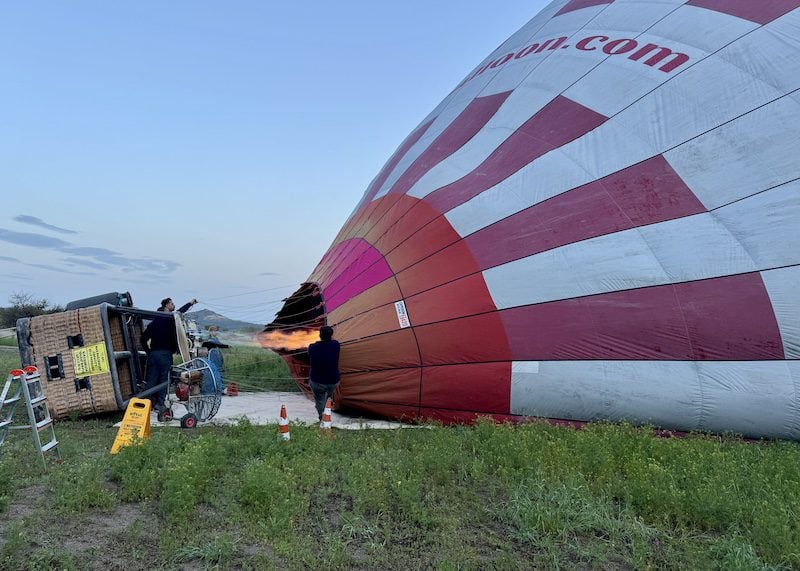
    Pilots and ground crew dash over to multi-coloured balloons attached to wicker baskets lying on their sides. They use engine-driven fans to pump cold air into the deflated “envelopes” and then propane burners to blast in hot air.

    Before you go…

    Get stories just like this one delivered straight to your inbox. Join the newsletter here.

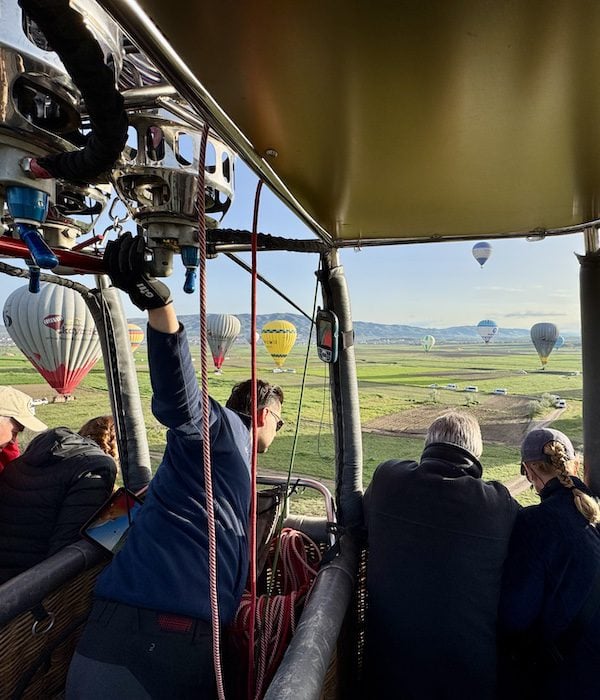
    As our red and grey beauty takes shape and rights itself, we are invited to climb into the wicker baskets. Sixteen of us are divided among four compartments and get briefed on how to land in high winds by crouching, clutching rope handles and leaning against the back of the basket to absorb the impact.

    “Everything is okay?” asks Pilot Ümit Ertosun. “All ready. Let’s go. Enjoy your flight, everybody.” Minutes later, he announces we are already at 900 metres and I exhale.

    The desire to fly is supposedly universal, but while I’m a travel writer who happily took 81 commercial flights (plus one helicopter ride) last year, I have a healthy fear of airborne adventures like skydiving, ziplining and hot air ballooning.

    Heights don’t frighten me. Human error does, and a vivid imagination doesn’t help.

    For my long-awaited first trip to Türkiye, I divide my time between the under-the-radar, mountainous, tea-growing Eastern Black Sea region near the Turkish-Georgian border and the world-famous, semi-arid Cappadocia region.

    Waiting for the hot air balloons to inflate

    Waiting for the hot air balloons to inflate / Photo by Jennifer Bain

    Inflating a hot air balloon

    Inflating a hot air balloon / Photo by Jennifer Bain

    An early birthday gift

    Not ballooning in the place that has become synonymous with hot air ballooning appealed to this contrarian. Perhaps I’d climb to the “Sunset and Sunrise/Balloon Viewpoint” at dawn to enjoy the hoopla. Or I’d watch in my PJs from the comfort of my cave hotel roof in the laidback tourist town of Göreme.

    But then an inexplicable urge to do things that scare me takes hold, so I book a balloon ride as an early 59th birthday gift to myself.

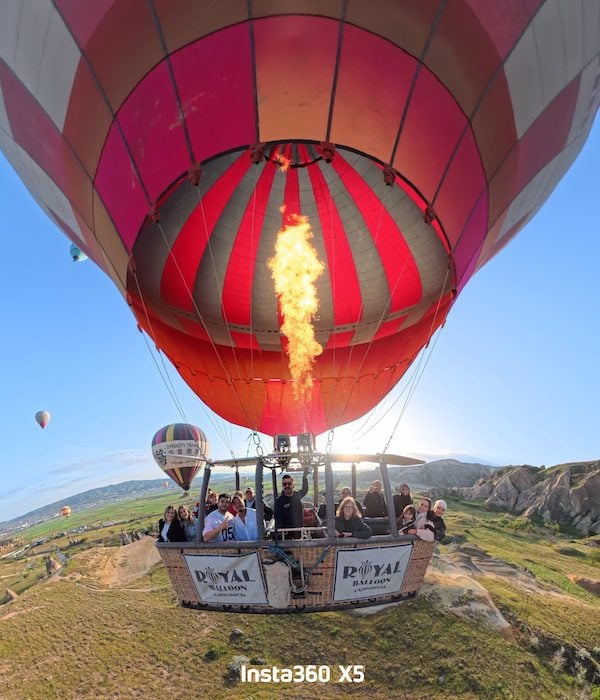
    “One, two, three — smile,” says Ertosun halfway through our hour-long flight as he pulls out an Insta360 X5 and shot panoramic photos and videos.

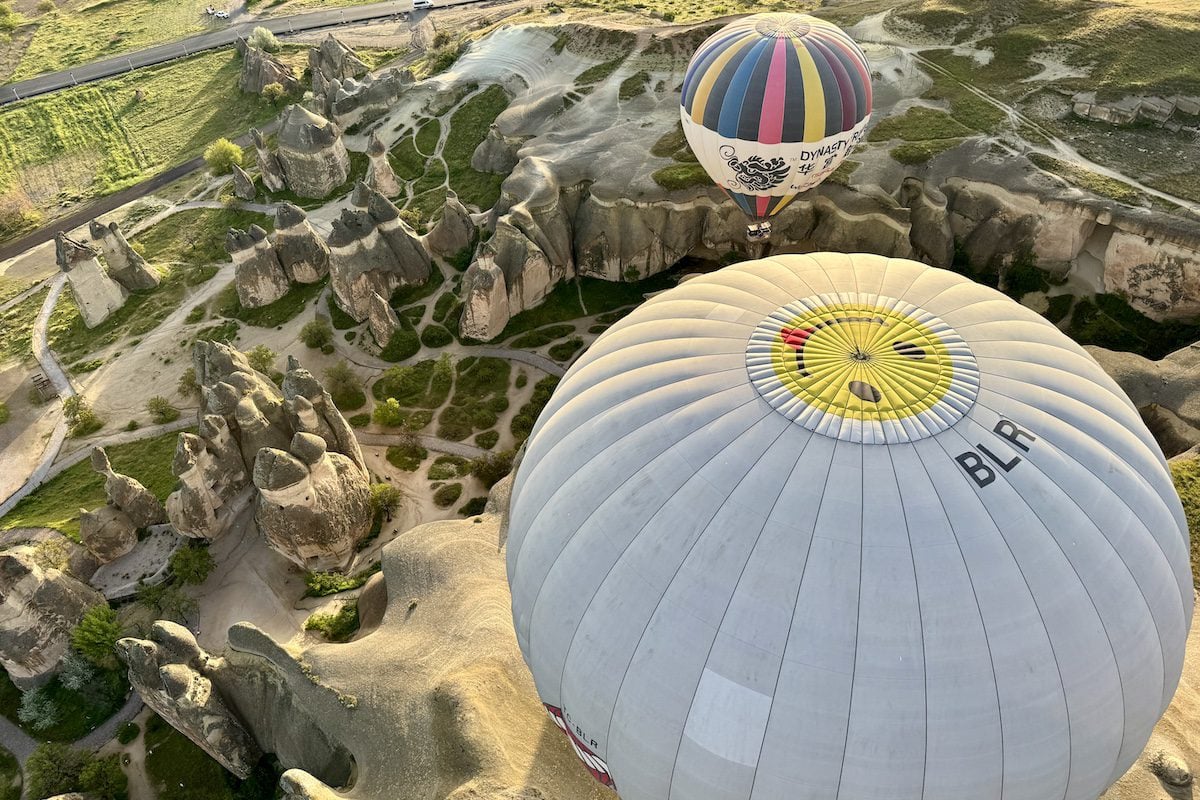
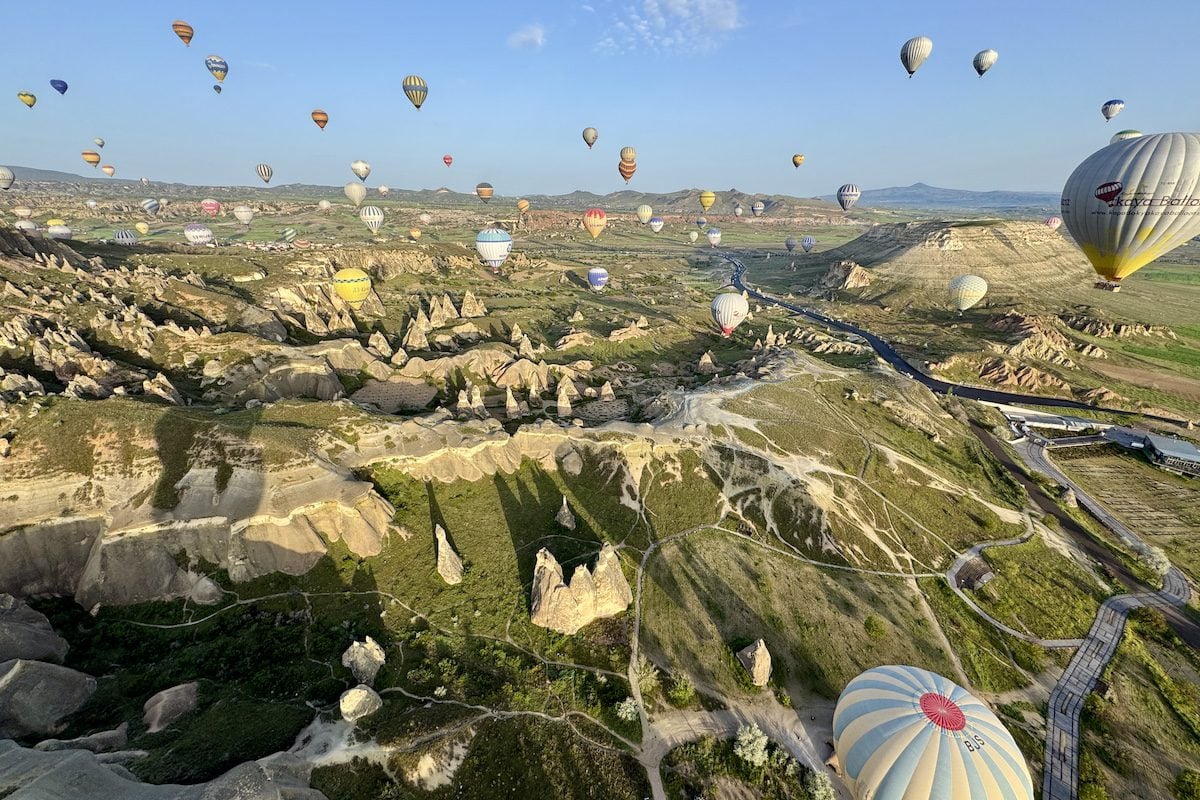
    It’s impossible to describe the cacophonous whooshing sounds that balloons make as burner blasts heat the air that keeps them afloat. It’s far easier to wax poetic about floating over fairy chimneys — the otherworldly, eroded rock spires that we Canadians call hoodoos.

    Watching 90-odd balloons jockey for space in the sky was unnerving, so I was grateful that Ertosun kept us away from the madding crowd, navigating to a hill and then flying low enough over the astounding landscape to scrape the brittle tops of bushes.

    The hour went by in a glorious flash without even a split second of fear.

    Looking down on fairy chimneys and hot air balloons

    Looking down on fairy chimneys and hot air balloons / Photo by Jennifer Bain

    Writer Jennifer Bain and her fellow hot air ballooners in Göreme

    Writer Jennifer Bain and her fellow hot air ballooners in Göreme / Photo by Royal Balloon

    Hot air balloon pilot Ümit Ertosun at work

    Royal Balloon pilot Ümit Ertosun at work / Photo by Jennifer Bain

    How to pick a reputable hot air balloon company

    Plenty has been written about what you’ll see while ballooning, but it’s harder to get intel on how to pick a reputable company.

    First, I cross-referenced Lonely Planet Tükiye’s recommendations with the two companies that tourism officials use for media guests. Then I analyzed websites from this shortlist and picked Royal Balloon because it had pilot bios, detailed its 18-balloon fleet, touted safety and luxury, had a great FAQ section and provided quick and clear responses to information requests.

    This wasn’t the time to cheap out. As a fellow ballooner put it: “You can’t take it with you.”

    I dropped 280 Euros for a Royal Queen Plus Flight with 16 passengers — cheaper than the Royal King option for 12 and pricier than the Royal Queen one for 24. Knowing these bucket list rides only happen at sunrise and are frequently scuttled by weather, I paid an extra 50 Euros for the “Gold add-on” to automatically be scheduled for the next morning’s flight if my first attempt was cancelled.

    My inner control freak admires how tightly Türkiye’s hot air balloon industry is controlled. Unlike countries that let pilots call the shots, the Turkish Civil Aviation Authority assesses daily wind speeds, visibility and pressure systems and decides whether it’s safe enough to launch in each region.

    “Meteorological conditions have been considered unsuitable for flight for the set margin of time,” they report online with red flag icons on “unflightable” days.

    “Meteorological conditions have been considered suitable for flight for the set margin of time,” they report with green flags when the stars align.

    Find activities, things to do and day tours here on GetYourGuide.

    The experience starts before sunrise

    My balloon experience starts at the rather ungodly hour of 4:05 a.m. That’s when I am whisked from my hotel to Royal Balloon headquarters, which holds the quirky distinction of being the Honorary Consulate of Romania, apparently because of the Turkish founder’s ties with this important trade partner.

    Skipping Turkish tea and a continental breakfast so my weak bladder won’t ruin the flight, I take my place at table two with the other 15 people bound for balloon TC-BRZ. Around 5 a.m., we take minibus two to the staging area to await word on whether it is a flightable or unflightable day.

    Roughly 90 balloons get to fill the spring sky that chilly May morning, slightly below the daily limit of 104 on the “first flight” that usually begins before sunrise, and the 52 that can start soon after for a total of 156.

    Hot air balloons fly over Göreme

    Hot air balloons fly over Göreme / Photo by Jennifer Bain

    My assigned spot is in the coveted corner of the outer edge of a basket compartment. But when three friends ask me to move so they can get better selfies, I wind up happily positioned under the burner where I can stay warm and watch the pilot fiddle with his altimeter, variometer, compass and temperature gauge.

    Humming the 1983 hit “99 Luftballons” (an anti-war anthem about 99 red balloons) by German pop singer Nena, I try to stay in the moment instead of fantasizing about splurging on a second ride. It is quiet in Göreme that week — apparently due to airspace closures keeping Asian and Arab tourists away — and balloon rides are going for as low as 115 Euros.

    I learn that balloons fly better in cooler weather and just after dawn when there is less wind. They rise thanks to heated air, and go down when the air cools or is let out. They go where the wind takes them, but pilots can seek higher or lower altitudes to “sail” on wind currents.

    Floating back to earth on a feather

    My trusty pilot deftly manoeuvres us towards a field where chase crews wait to help with the landing. The wind is so low — barely four knots or seven kilometres/hour — that we get to stay standing instead of crouching to brace for impact.

    It sounds corny, but I imagined we were floating back to Earth on a feather.

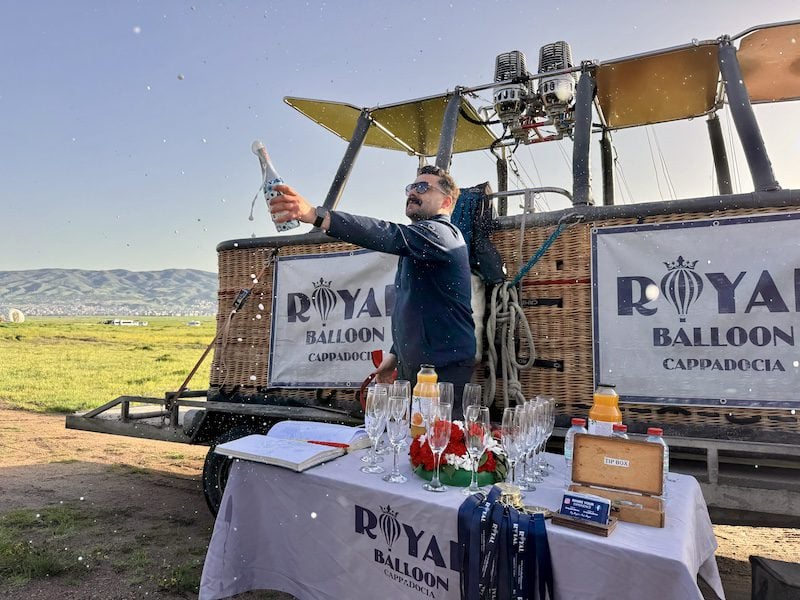
    “Ready?” our pilot asks once we climb out of the basket and are handed Champagne glasses. “One, two, three. Cheers everybody.”

    “Cheers — thank you,” we shout back, sipping Turkish sparkling wine.

    By 7:30 a.m., I am crawling back into bed, sporting a commemorative gold medallion. Six days later, in another part of Türkiye, I soar across a lush valley in a homemade cable car that feels like a giant bird cage. There’s a natural high that comes with stepping outside of your comfort zone, and I just might start chasing it.

    Approaching the landing area

    Approaching the landing area / Photo by Jennifer Bain

    Royal Balloon Pilot Ümit Ertosun celebrates after the flight

    Pilot Ümit Ertosun celebrates after the flight / Photo by Jennifer Bain

    Make a trip to Cappadocia happen

    How to get there: Turkish Airlines flies from Istanbul to two airports in the Cappadocia region. Using Göreme as my base, I flew into tiny Nevşehir Kapadokya Airport (NAV), which is 45 minutes away. I flew out of the larger and busier Kayseri Erkilet Airport (ASR), which is 90 minutes away. I also flew Turkish Airlines from Istanbul to Toronto, and my business class upgrade got me a lie-flat seat but also entry into Istanbul’s astounding international Business Lounge to feast at hot food stations where chefs prepared dishes like manti (tiny Turkish meat dumplings smothered in yogurt sauce and spiced butter) and even handed out recipes. The airline is a Star Alliance partner, but be sure to enroll in its Miles&Smiles loyalty program. Check for flights here!

    How to get around: Your hotel can arrange airport transfers, which currently cost 10 to 15 Euros per seat in a minibus. It’s easy to walk or take taxis around Göreme, and join excursions with hotel pickups, so car rentals aren’t necessary.

    Money: Türkiye uses the Turkish Lira (TRY), but people in Cappadocia embrace the Euro and often list prices in both currencies. Credit cards are widely accepted and ATMs are plentiful, but always carry cash for gratuities, small items and emergencies.

    Best time to visit: Spring and autumn are touted as the best times for hot air balloons, with steady weather and comfortable daytime temperatures that hover below 22C. In summer, temperatures soar over 30C and accommodations fill up. Winter brings lower prices, a dusting of snow and a higher chance of balloon cancellations.

    Where to stay: I adored the family-owned Aydinli Cave Hotel (read my full hotel review here), but you can browse accommodations in Göreme and the Cappadocia region here on Booking.com.

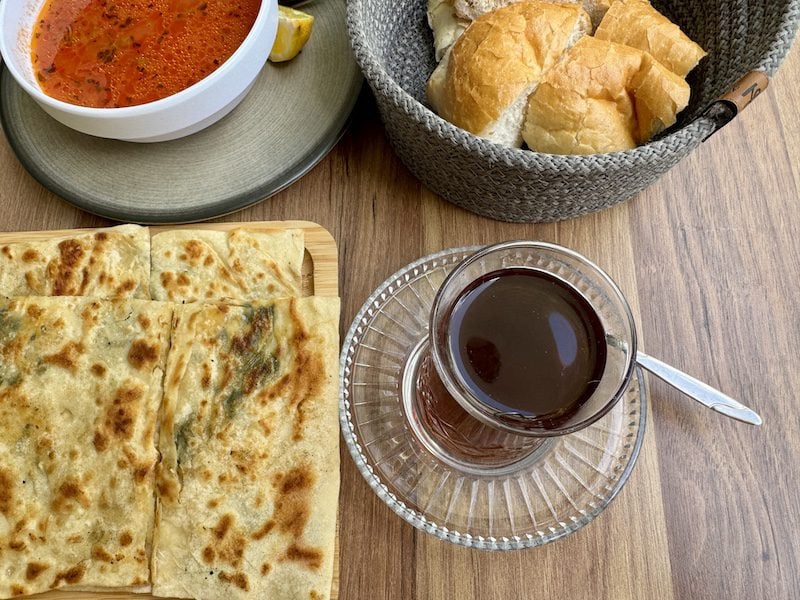
    Where to eat/drink: I loved Cafe Safak and Omurca Art Cafe for meals like manti (Turkish dumplings smothered in yogurt and spices), Taste of Mom’s for gözleme (stuffed flatbreads) and King’s Coffee for dessert and drinks (they have decaf coffee and plant-based milk options).

    Guests find their rooms at Aydinli Cave Hotel in Göreme

    Aydinli Cave Hotel in Göreme / Photo by Jennifer Bain

    Gözleme at Taste of Moms

    Gözleme at Taste of Mom’s / Photo by Jennifer Bain

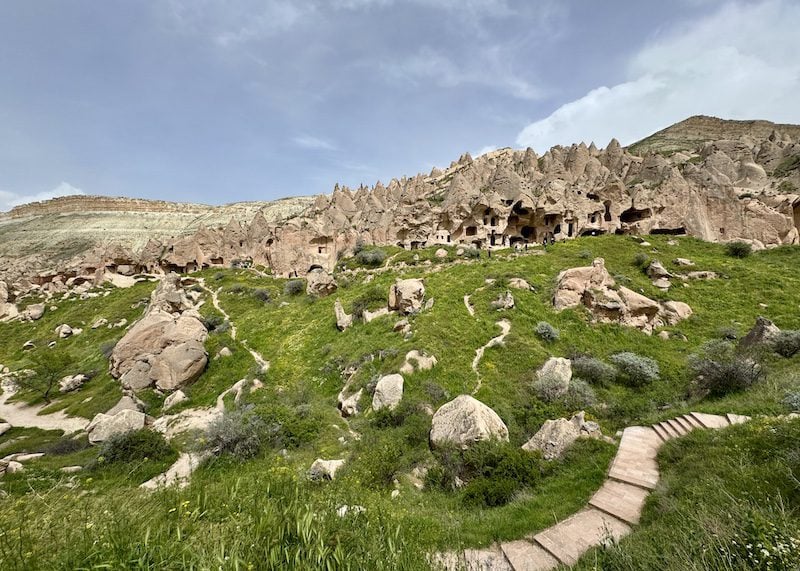
    Exploring the area: Everybody sells full-day guided excursions known as “green” and “red” tours, but pay attention to the itinerary. I paid more for my green tour that heads south of Göreme for an underground city and time in nature, and was glad it turned out to be a “green plus” tour that included a hike and monastery visit. A friend on a discount tour wasn’t so lucky. My red tour stuck closer to town and visited fairy chimneys and the UNESCO-listed, rock-carved Zelve Open Air Museum. Both tours included lunch and time getting the hard sell in jewelry, pottery/ceramics and leather shops. You can walk to the Göreme Open Air Museum on your own. Other popular options (that I didn’t have time for) included cooking classes, horseback riding, mountain biking and ATV/Jeep safaris. Find day trips and activities on GetYourGuide here!

    When to book tours: Depending on the season, you’ll have to decide whether to book hot air balloon rides and tours in advance or when you arrive. I booked my balloon ride in advance for my shoulder season trip, but relied on tour recommendations from my hotel once I arrived.

    Maps: Your hotel should provide maps of Göreme and the Cappadocia region that outline the popular tour routes. I found a rudimentary Cappadocia Walking Map at one of Göreme’s many travel agencies, but I didn’t hike since trails aren’t well marked.

    Fun fact: Turkey officially became the Republic of Türkiye at the UN in 2022. This was to use the Turkish spelling and avoid being associated with an anglicized word linked to foolish people and Thanksgiving poultry.

    Travel Advisories: Before leaving home, you should always peruse government travel advisories, like the Government of Canada’s Türkiye Travel Advice, and the U.S. Department of State’s Turkey Travel Advisory.

    Zelve Open Air Museum

    Zelve Open Air Museum / Photo by Jennifer Bain

    Writer Jennifer Bain at the sunset viewpoint in Göreme

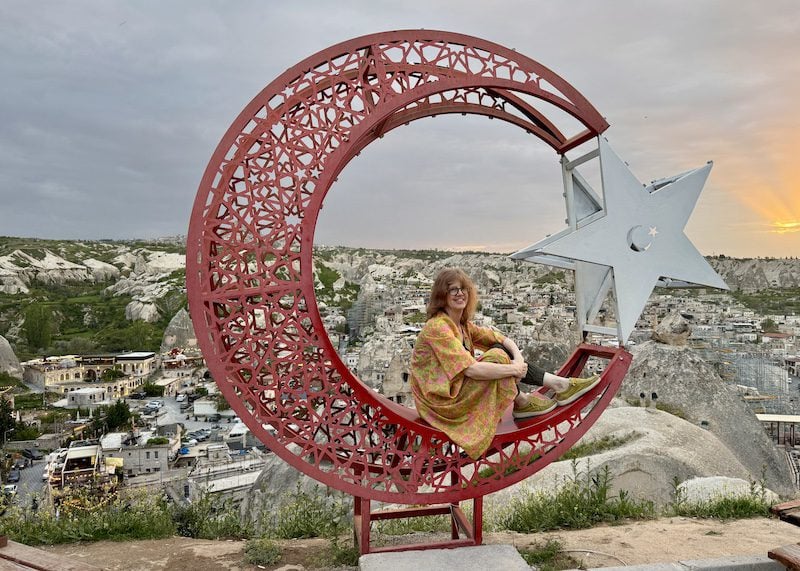
    Writer Jennifer Bain at the sunset viewpoint in Göreme / Photo by Nadine Robinson

    Disclaimer: Jennifer Bain’s flight to Cappadocia was provided by GoTürkiye and Turkish Airlines. She was not compensated for her time spent researching, travelling and writing this feature, nor was JourneyWoman for publishing it. In addition, the host organizations did not review this article before it was published, a practice that allows the writer to express her perspective with integrity and candour.

    The post Why Cappadocia is the Perfect Place to Conquer a Fear of Hot Air Ballooning: The Ultimate 59th Birthday Gift to Myself appeared first on JourneyWoman.

    This post was originally published on this site.

  • Taking the Savage Way: How Women of Any Age Can Hike Peru’s Epic Salkantay Trek to Machu Picchu

    Taking the Savage Way: How Women of Any Age Can Hike Peru’s Epic Salkantay Trek to Machu Picchu

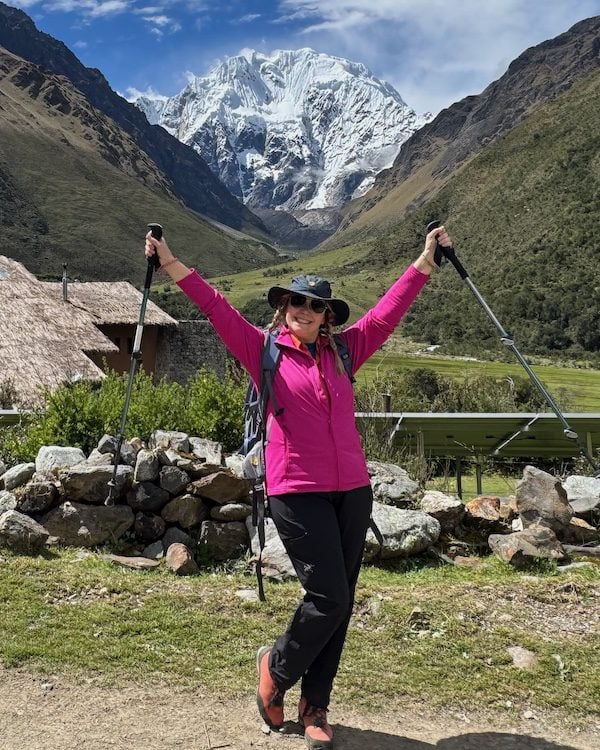
    Featured image: Writer Claudia Laroye shares her experience on the Salkantay Trek for women, a 4-day route to Machu Picchu with Alpaca Expeditions | Photo by Claudia Laroye

    A women-only expedition in Peru’s Sacred Valley 

    by Claudia Laroye

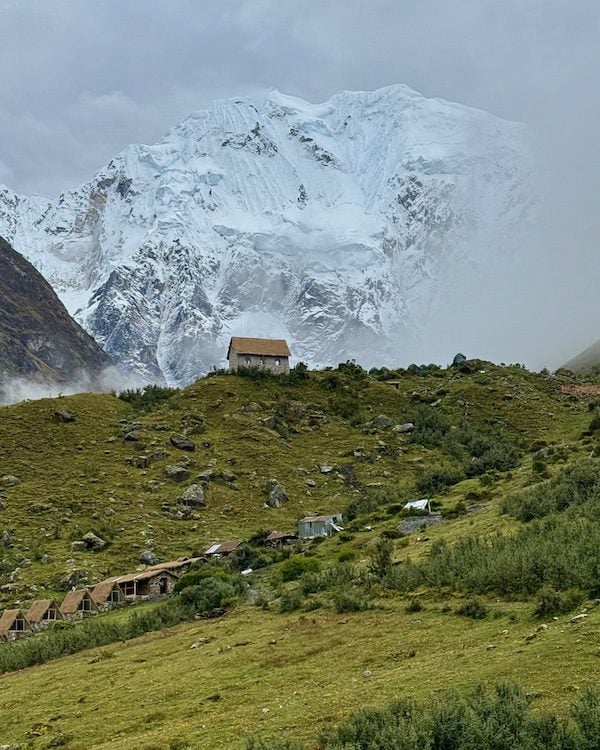
    Carefully placing one muddy booted foot in front of the other on the earthen trail, my mind drifts from admiring the puffy clouds shrouding the snow-capped peak of Salkantay Mountain in Peru’s Sacred Valley, to focus on today’s singular objective – getting to the pass.

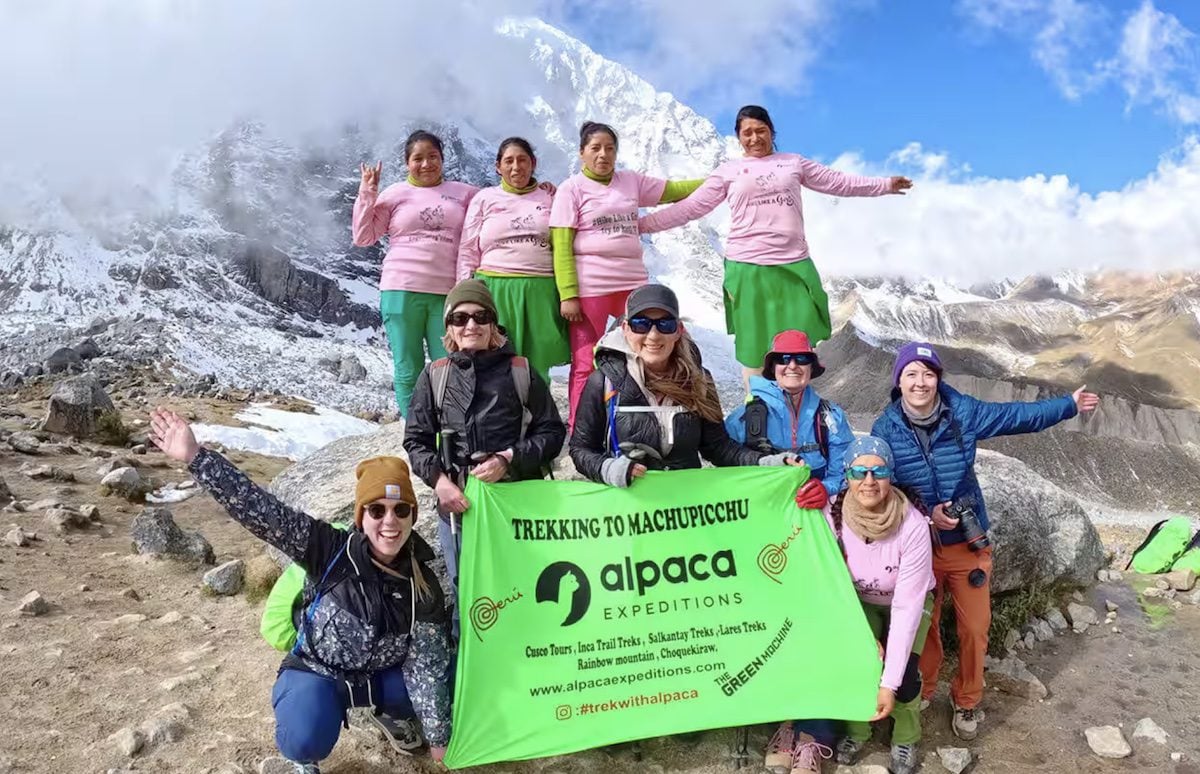
    The air is thin at this altitude, around 4,500 metres or 15,000 feet, as my Alpaca Expeditions hiking group approaches the apex of our trek – Salkantay Pass. My lungs are working overtime on the final approach, and then it’s whoops and high fives all around as our group, who arrived as 13 strangers but are now buddies bonded by 4 am wake-up calls, sweat and endurance, grin and hug each other in congratulations at our accomplishment.

    We pause to reflect and take well-earned photos before forming a circle to give thanks to Pacha Mama for our safe arrival. I offer silent gratitude for getting this far on one of the most epic trekking journeys in South America. Here’s how you can plan to do the same.

    Before you go…

    Get stories just like this one delivered straight to your inbox. Join the newsletter here.

    How to prepare for the Salkantay Trek

    In Quechua, the native language of the Incas and Peruvians who live in the Sacred Valley, Salkantay derives from “sallqa” meaning “savage” or “wild.” The peak is the highest in the Vilcabamba mountain range in the Peruvian Andes.

    Getting to the high-altitude Salkantay Pass starts well before locking the front door and catching flights to Lima and then Cusco for a couple of days of acclimation. Doing strength and cardiovascular training in the months before departure will help you prepare for the hike’s physical demands and the large elevation gains and dips.

    Cusco is the historic capital of the Incan Empire, and a delightful, compact colonial city from which to explore the Sacred Valley and important archaeological sites like Qoricancha, Saqsaywaman, Chinchero, Ollantaytambo, Pisac and of course, Machu Picchu.

    The Salkantay Trek is considered a strenuous hike of around 78 km/48 miles and on this tour, took place over five days and four nights. The final day is spent discovering the wonders of Machu Picchu, so really, you’re hiking for four full days with this itinerary.

    As altitude sickness can impact anyone, it’s a good idea to speak to your health care practitioner about taking medication (usually Acetazolamide, marketed as Diamox) to combat symptoms like headaches, fatigue and nausea that can put a cramp on your hiking style. In-country, chewing coca leaves and drinking coca tea will also help alleviate symptoms.

    The writer enjoying a moment of flat trail, with an eye to the pass in the background

    The writer enjoying a moment of flat trail, with an eye to the pass in the background / Photo by Claudia Laroye

    Salkantay Mountain looks high above the foothills in the Peruvian Andes

    Salkantay Mountain looks high above the foothills in the Peruvian Andes / Photo by Claudia Laroye

    peru hiking banner

    Female guides on the Salkantay Trek for women

    Alpaca Expeditions is a 100% Peruvian, Indigenous-owned expedition company that runs a wide variety of hikes and treks in the Peruvian Andes, including short and classic Inca Trail hikes, Rainbow Mountain tours, and various lengths of the Salkantay Trek.

    In 2024, Alpaca Expeditions was the first Peruvian-based tour company to launch an all-female guided and supported Salkantay Trek. This year, Alpaca introduced a new 7 day/6 night Women’s Only Trek to Machu Picchu led by its knowledgeable and experienced female guides.

    These tours offer the potential for a transformative experience filled with enriching encounters with local communities, insights into Machu Picchu’s fascinating history and moments of camaraderie, empowerment and personal growth.

    Women's Only SalkantayTrek at the Pass with Alpaca Expeditions

    Women’s Only Salkantay Trek at the Pass with Alpaca Expeditions / Photo Credit

    The Trek

    The Trek begins the evening before departure, with a group meeting at the headquarters of Alpaca Expeditions. Over tea, our guides go over the packing lists, daily itineraries and hiking expectations for our five days together.

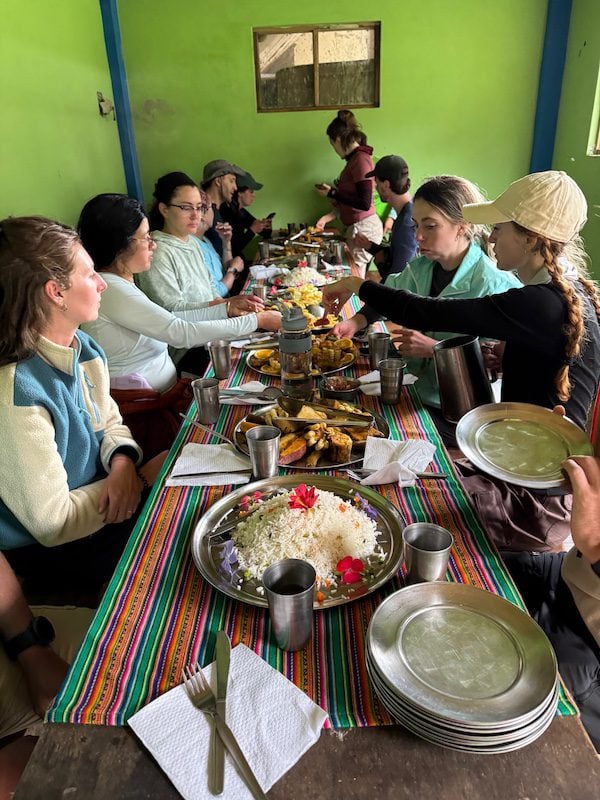
    One learns quickly that most Sacred Valley expeditions begin before sunrise. Wake-up calls arrive around 4 AM with the delivery of a steaming cup of coca tea before sitting down to a massive breakfast of pancakes, eggs, fruit and oatmeal. Sitting down to large, communal meals is a trek thing. The food is plentiful, nutritious and very, very good.

    Post-breakfast, it’s time to adjust backpacks and headlamps, hand duffel bags of extra gear over to porters and start hiking “Inca flat” (elevated) trails to turquoise lakes, past glaciers and pack horses, over the high point of the Salkantay Pass and through the thickening jungle canopy of the Peruvian Amazon before finally reaching the riverside town of Aguas Calientes.

    Stay connected here with a Saily eSIM. Use code JOURNEYWOMAN for 5% off.

    Lunch is served and the portions are as large as the hike is challenging

    Communal meals where portions are as large as the hike is challenging / Photo by Claudia Laroye

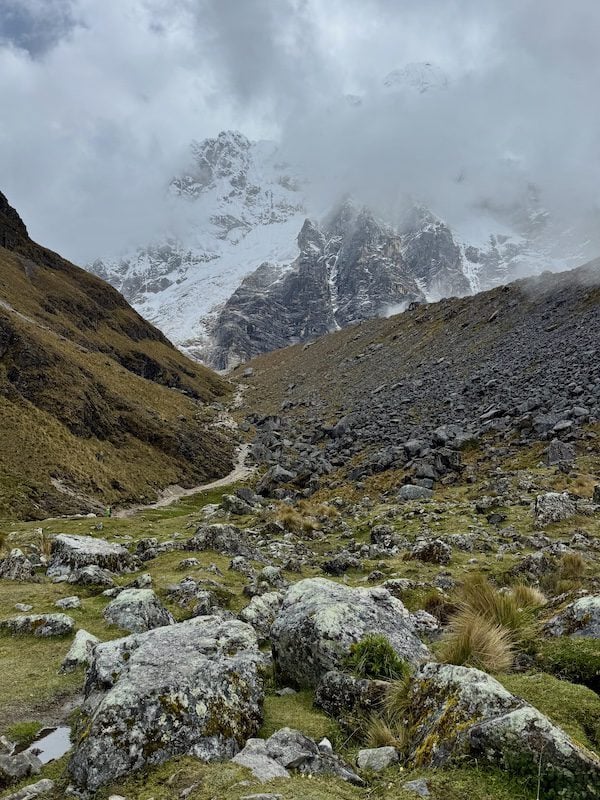
    Upward to the Salkantay Pass

    Looking upward to the Salkantay Pass / Photo by Claudia Laroye

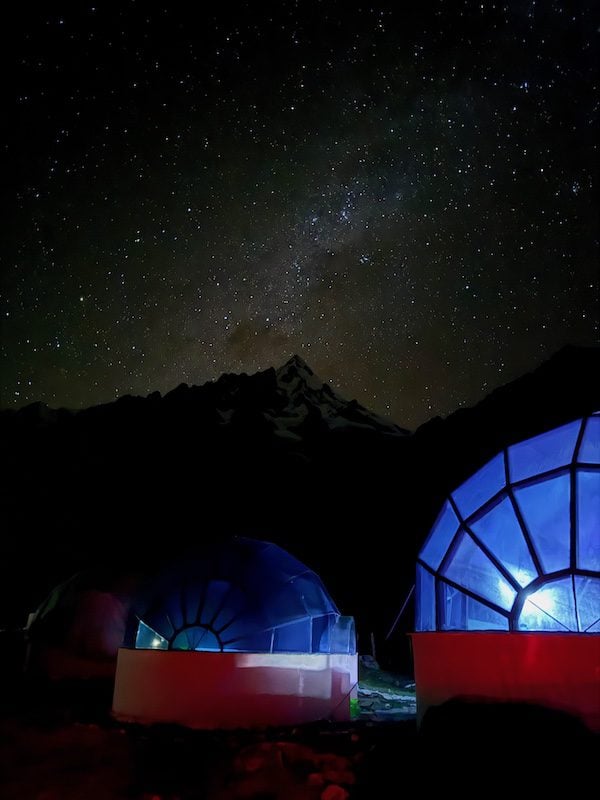
    Trek nights are spent bedded down in sleeping bags spread out on comfortable beds in glass cabins, hobbit houses and glass domes under a magnificent and magical southern sky full of stars, including the mystical Milky Way and constellations like the Southern Cross.

    The last day of the trek culminates in a slightly nerve-wracking 20-minute bus ride up the winding, narrow road to the entrance of Machu Picchu. For many travellers, seeing the mysterious lost city of the Incas, reclaimed from the jungle only one hundred years ago, is a lifetime goal. It is truly a world wonder; the beauty of its terraced hills, temple sites and well-built granite foundations is magnified by the misty clouds that roll in and out with the wind.

    The trip back to Cusco is faster than the one to Machu Picchu, thanks to a scenic two-hour Vistadome train trip on Peru Rail that stops in the historic town of Ollantaytambo, followed by a two-hour drive back to Cusco, where it all began.

    Both for me and the Incas.

    Glass domes and a beautiful night sky along the trail

    Glass domes and a beautiful night sky along the trail / Photo by Claudia Laroye

    Machu Picchu on a clear fall day

    Machu Picchu on a clear fall day / Photo by Claudia Laroye

    Disclaimer: Our talented writers are often invited by tourism boards and travel companies to experience places like this firsthand so that they can share them with you. As a guest of Alpaca Expeditions, Claudia Laroye was not compensated for her time spent researching, planning and writing this feature, nor was JourneyWoman for publishing it. In addition, the host organization did not review this article before it was published, a practice that allows the writer to express her perspective with integrity and candor.

    Make a trip to Cusco, Peru happen

    How to get to Cusco: Cusco is in Peru, in South America. In Canada, fly direct to Lima, Peru, via Air Transat from Montreal or Toronto. American Airlines, Delta Air Lines, and United Airlines all fly from the United States to Jorge Chávez International Airport (LIM) in Lima. Connecting flights to Cusco are every hour via LATAM or JetSmart and take about 1.5 hours. Most hotels are in the historical center of the city, near the Plaza Mayor, about 20 minutes taxi ride from the airport. Check flights here.

    Altitude Sickness: Cusco is located at 3,399 metres/11,152 feet, and people often report getting headaches on arrival. Be sure to hydrate and take medication if prescribed. Sipping natural coca tea works very well on both fronts.

    Where to stay: On the Salkantay Trek, hikers stay in comfortable accommodations provided by Alpaca Expeditions. These include glass cabins, glass domes and hobbit houses. The company has just purchased a new hotel in Aguas Calientes to accommodate clients before visiting Machu Picchu.

    In Cusco, Hotel San Augustin Internacional is a comfortable three-star hotel just 10 minutes from the main square and close to shops, restaurants, laundry facilities and the happening San Blas neighbourhood. Note: Cusco is famous for its stairs and cobblestone streets. Watch where you walk as you get your steps in!

    To look for hotels recommended by women, click here or check Booking.com for other options!.

    The post Taking the Savage Way: How Women of Any Age Can Hike Peru’s Epic Salkantay Trek to Machu Picchu appeared first on JourneyWoman.

    This post was originally published on this site.

  • Chicken Shawarma

    Chicken Shawarma

    Even though it’s been 15 years since I first shared this recipe, I still believe the marinade for this Chicken Shawarma is one of the best marinades I’ve ever made. EVER. It’s so good that I find myself using it on everything. This easy chicken shawarma is made with chicken marinated in yogurt, lemon, garlic, and warm spices, then grilled or cooked in a skillet until tender and juicy. Serve it as a wrap, pile it over rice, tuck it into pita, or turn it into a meal prep bowl with plenty of fresh vegetables and tangy yogurt sauce. It’s pure magic, super versatile, and much easier to make at home than you think.

    “This recipe is in my regular rotation of BB recipes. I always chop up the chicken so it gets more marinade up the garlic in the sauce. This time I didn’t have cucumber so I subbed spinach for both that and the lettuce. So good!”

    Kelsey

    Easy Homemade Chicken Shawarma

    Shawarma is a Middle Eastern dish traditionally made from marinated meat that’s slow-roasted on a rotating spit. Lamb is a popular choice, but for my recipe, I use chicken because it’s a more accessible and budget-friendly option. I don’t have a rotating spit at home (and I’m assuming you don’t either!), so my take on this traditional recipe involves marinating the chicken and then cooking it on a grill or in a hot skillet. So while my recipe isn’t technically authentic, it’s an easy option for home cooks to try!

    I mix warming spices like cinnamon, nutmeg, and cloves with yogurt, lemon, and garlic, then let the chicken marinate for AT LEAST 4 hours so the flavor has time to really work its way in. That big flavor is what makes this chicken so good for meal prep because you can cook a batch once and use it all week to make sandwiches, rice bowls, salads, or whatever you like. I even use the marinade in my roasted potato wedges with shawarma sauce recipe. So good!

    Ways to Serve

    • Chicken shawarma plate: Serve the sliced chicken on a plate with rice or flatbread, yogurt sauce, and a simple mix of cucumber, tomato, and red onion. Add a scoop of cauliflower tabbouleh, couscous, or a few grilled vegetables to make it feel like a full spread!
    • Salad: Pile the chicken over chopped romaine with cucumber, tomato, and red onion, then drizzle with the yogurt sauce.
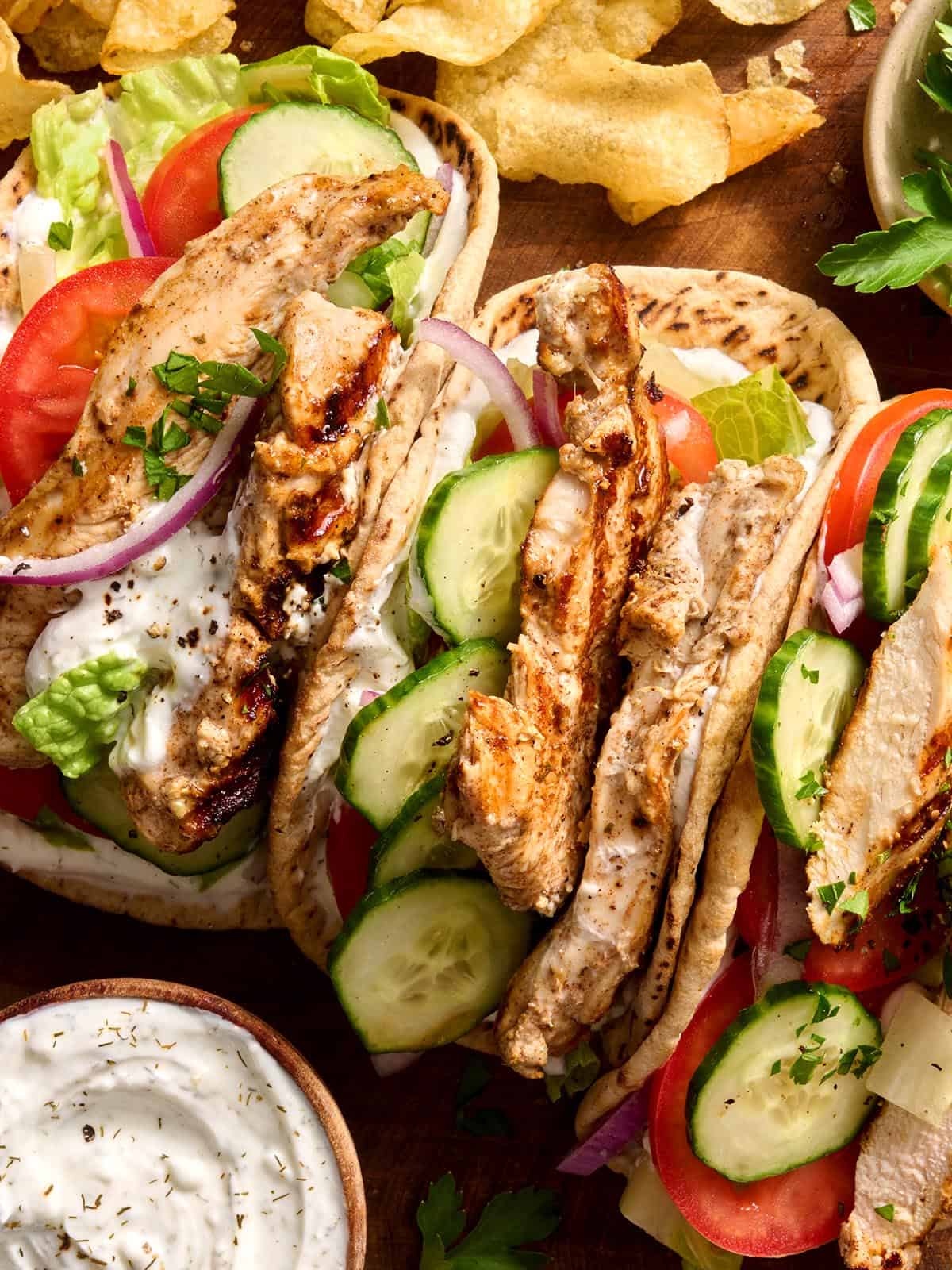
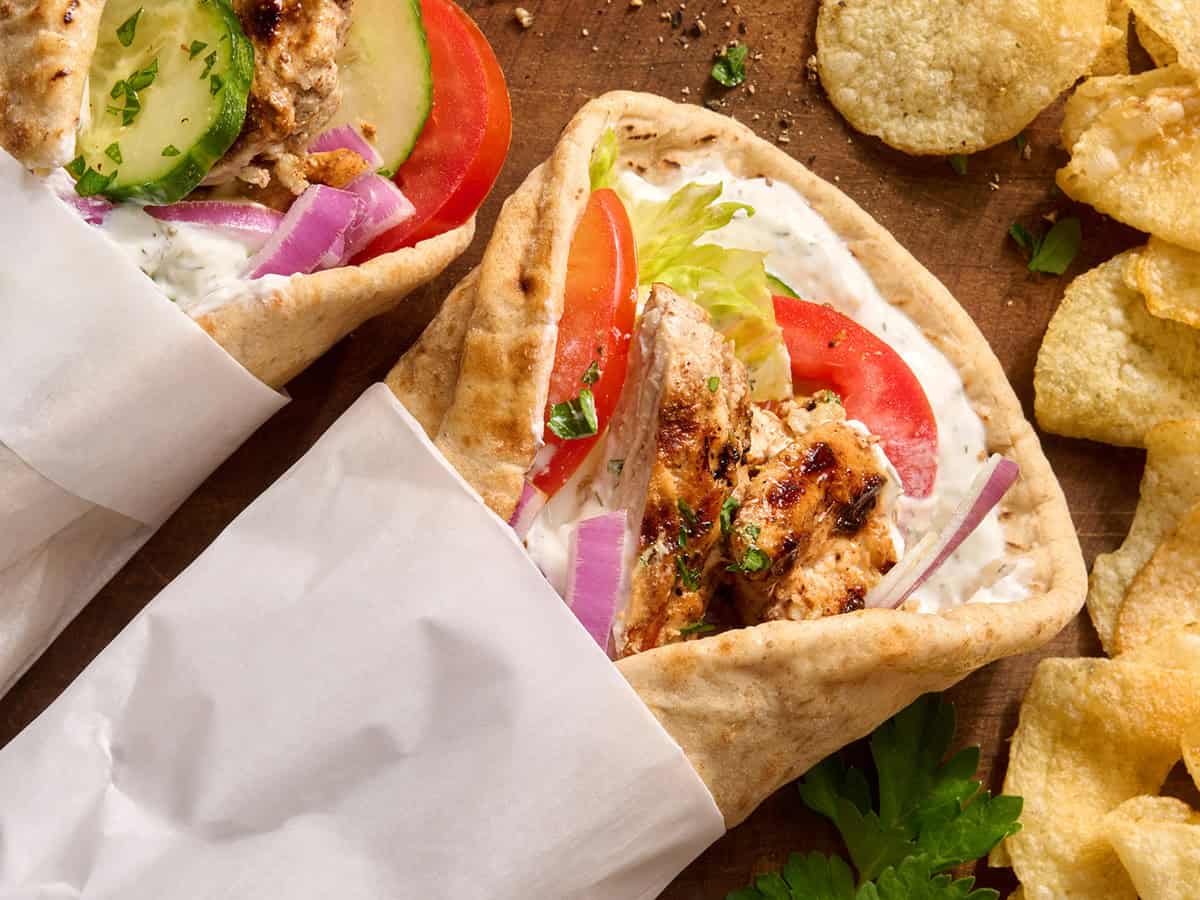
    • Pita: Instead of rolling a full wrap, tuck the chicken into pita pockets with lettuce, cucumber, tomato, red onion, and sauce. It’s a little less fussy than wrapping everything up, and it makes an easy lunch or quick weeknight dinner.
    • Bowl meal: Layer the chicken into a bowl with rice, couscous, or quinoa, plus fresh veggies and a spoonful of the yogurt sauce. I think this is one of the best ways to use it for meal prep because everything can be stored separately and assembled as needed.
    • Takeout-style: If I’m leaning even more into the takeout vibe, I’ll serve the chicken in a wrap with air fryer French fries and a big side of yogurt sauce or tzatziki. It’s simple, fun, and very hard to complain about.
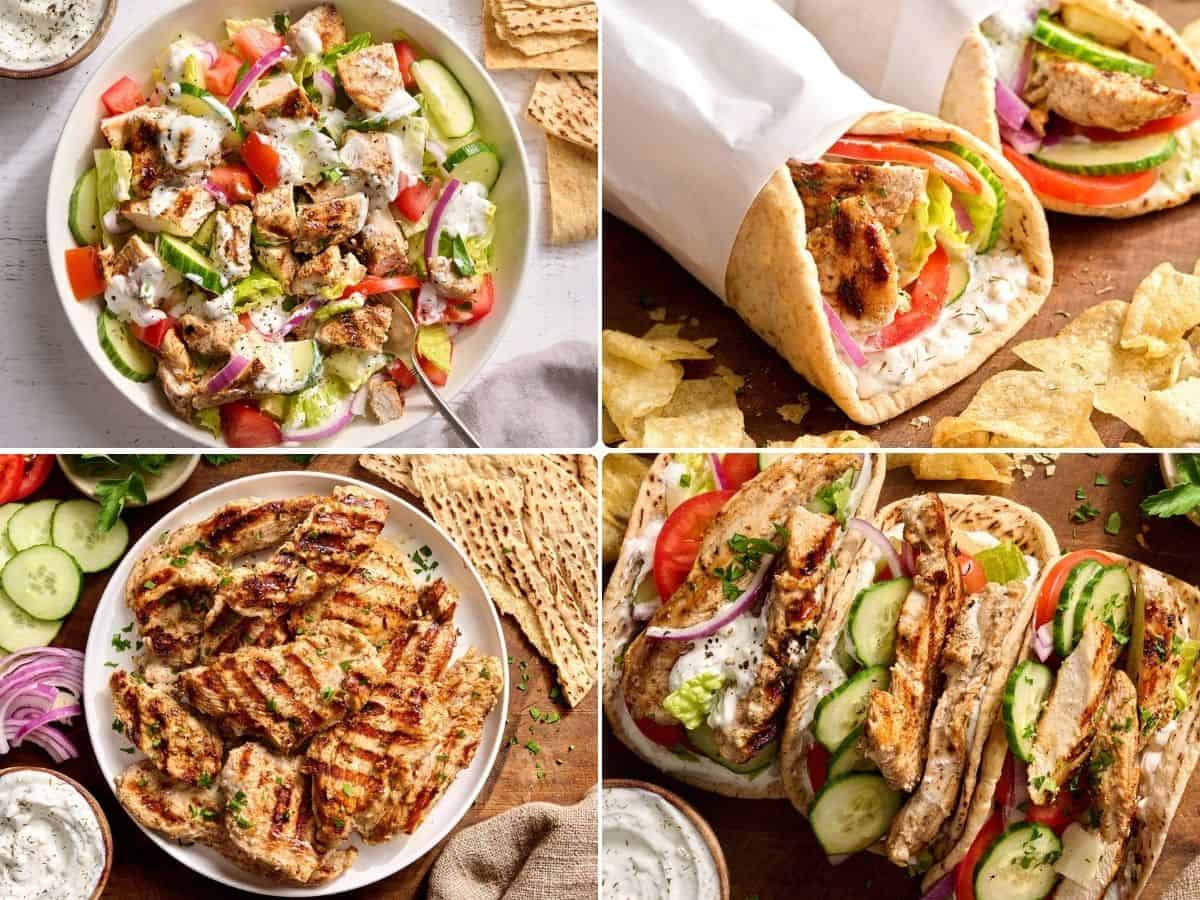
    Chicken shawarma serving suggestions collage.
    Homemade chicken shawarma shown here as a salad, wrap, platter, and an open-faced sandwich with the tangy yogurt sauce.

    Meal Prep it!

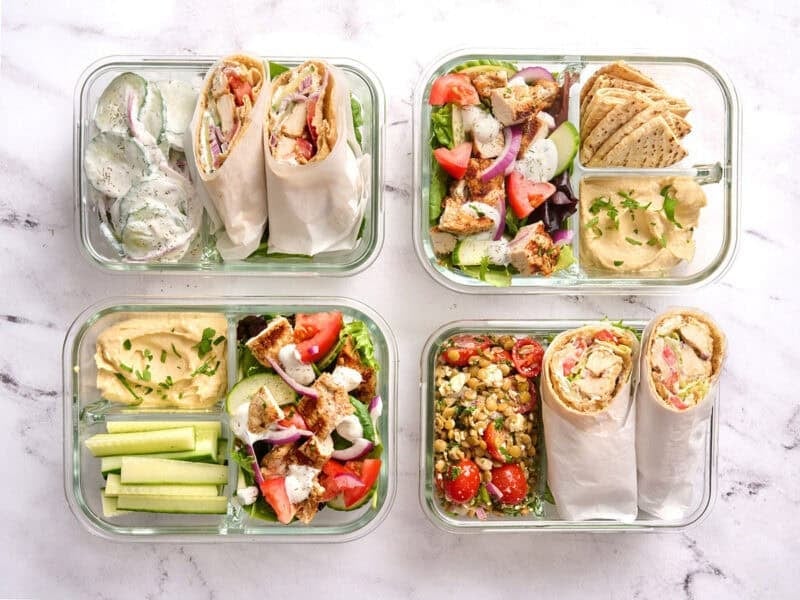
    This chicken shawarma keeps well for 3-4 days, making it perfect for easy meal-prep lunches. You can eat the chicken cold, especially in wraps and salads, or quickly reheat it in the microwave or in a skillet on the stovetop if you’re serving it with rice, pita, or veggies. As you can see in the photo below, the wraps can be fully assembled ahead of time, while salads, dips, and sides can be packed into separate compartments to keep everything fresh and easy to grab.

    Here are some of my favorite meal prep options for this chicken:

    • Meal prep box 1: Make a wrap with naan, pita, or flatbread, and pack it with a side of my creamy cucumber salad. Enjoy cold for an easy grab-and-go lunch over summer!
    • Meal prep box 2: Chop the chicken and serve it over the same veggies used in the wrap variation above, including romaine, cucumber, tomato, and red onion. Pack pita wedges and white bean hummus in separate compartments for a filling lunch with lots of texture.
    • Meal prep box 3: Keep the chopped chicken, salad, and hummus the same as the previous box, but swap the pita for cucumber sticks. This is my go-to when I want something lighter (it also happens to be gluten-free), and the whole box stays fresh and crunchy.
    • Meal prep box 4: Pair an assembled wrap with our summer lentil salad for a hearty lunch with plenty of protein and fresh vegetables. The lentil salad is a GREAT make-ahead side because it holds up really well in the fridge.
    Overhead of chicken shawarma meal prep boxes.

    Recipe Success Tips

    1. Chicken breasts and thighs both work. I used 2 large chicken breasts as that’s what I had to hand, but chicken thighs will also work (and are usually cheaper!). The fattiness of the thighs will make the chicken taste a little more like the traditional rotisserie version, too. The marinade will work for about 4-6 boneless, skinless chicken thighs.
    2. Give the chicken time in the marinade. Four hours is the minimum I’d recommend here, but overnight is even better if you’re planning ahead. The yogurt, lemon, garlic, and spices need time to season the chicken all the way through, but I wouldn’t push it past 24 hours since the lemon can start making the texture of the chicken too soft.
    3. Slice the chicken before marinating for extra flavor. You can marinate the chicken breasts whole, but slicing them into strips first gives the marinade more surface area to cover. It also helps the chicken cook faster and makes it easier to use in wraps, bowls, salads, and meal prep boxes after!
    4. Get the grill or skillet nice and hot. Shawarma is traditionally cooked on a rotating spit, so a hot grill or skillet helps recreate some of those browned, lightly charred edges at home. Let the chicken cook long enough to get color before flipping! If you’re using a skillet, cook the chicken in batches if needed so the pieces have room to brown nicely.
    5. Don’t skip the final rest. Let the chicken rest for a few minutes after cooking so the juices redistribute back into the meat. I also like to spoon any juices from the plate back over the sliced chicken because there’s so much flavor there!
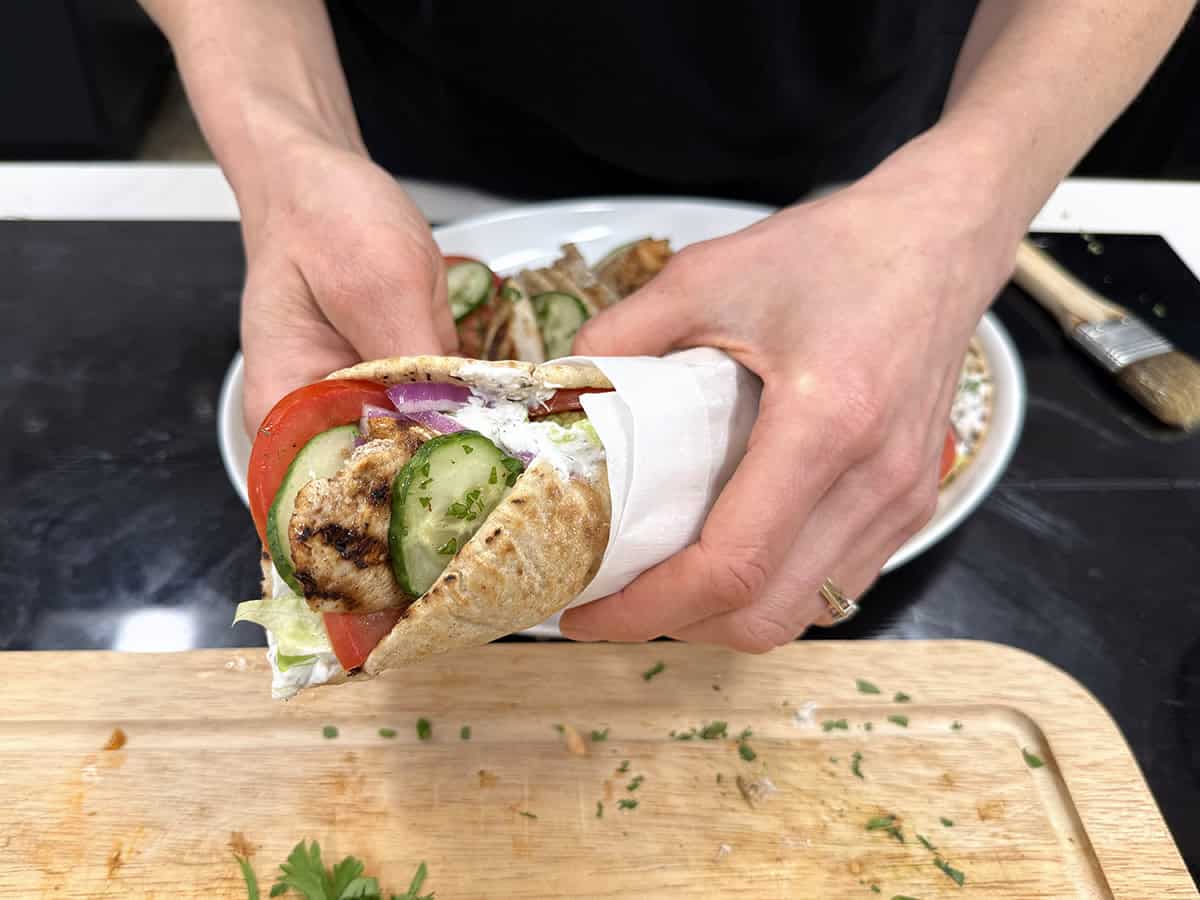
    Hands holding a chicken shawarma wrap.

    Overhead of chicken shawarma in a pita.

    Print
    Add to Collection Go to Collections

    Chicken Shawarma Recipe

    A magical blend of yogurt, lemon, garlic, and warm spices makes this homemade Chicken Shawarma tender, flavorful, and perfect for wraps, bowls, salads, or meal prep.
    Course Lunch
    Cuisine Middle-Eastern
    Total Cost $10.05 recipe / $2.51 serving
    Prep Time 10 minutes
    Cook Time 15 minutes
    Marinate Time 4 hours
    Total Time 25 minutes
    Servings 4
    Calories 156kcal

    Equipment

    • Mixing Bowls
    • Ziptop Bag
    • Grill or Skillet

    Ingredients

    CHICKEN & MARINADE

    • 2 large chicken breasts 1.25 lbs, $3.21*
    • ½ cup plain Greek yogurt $0.52
    • 1 Tbsp lemon juice $0.04
    • 1 Tbsp garlic minced, (3 cloves) $0.18
    • ½ tsp ground cinnamon $0.04
    • ½ tsp dried oregano $0.07
    • ½ tsp salt $0.01
    • ¼ tsp ground nutmeg $0.03
    • ¼ tsp ground cloves $0.03

    YOGURT SAUCE (optional)

    • ¾ cup plain Greek yogurt $0.78
    • ¼ tsp garlic minced, (1 clove) $0.06
    • ¼ tsp dried dill $0.03
    • ¼ tsp salt $0.01

    SANDWICH (optional)

    • ½ head romaine lettuce washed, dried & chopped, $1.07
    • ½ medium cucumber sliced, $0.38
    • 2 medium Roma tomatoes sliced, $0.64
    • ¼ red onion sliced, $0.31
    • 4 naan or pita or flatbread, $2.64**

    Instructions

    • Gather all of your ingredients.
    • In a small bowl, combine the ingredients for the marinade (½ cup plain Greek yogurt, lemon juice, garlic, cinnamon, oregano, salt, nutmeg, and ground cloves). Stir to combine.
    • Slice chicken breasts into 1-inch-thick strips before marinating to maximize the flavor.
    • Add chicken to a gallon ziptop bag or to a medium mixing bowl. Pour in the marinade and toss to cover the chicken. Make sure it’s coated well. Then, cover and refrigerate for 4-24 hours.
    • If you’re making the yogurt sauce (optional), you can prepare it while the chicken marinates. Combine the ¾ cup plain Greek yogurt with the garlic, dill, and salt. Cover and refrigerate until ready to use.
    • Preheat your grill. After marinating the chicken, grill until cooked through (I use an indoor tabletop grill; the total amount of time it’ll take to cook will vary from grill to grill). Flip after 7 minutes.***
    • Check the internal temperature of the chicken before removing it from the grill; it must read at least 160℉. It’ll reach a safe temperature of 165℉ after it’s removed from the grill and rested for a few minutes, covered with foil on a clean plate. Once rested, the chicken is ready to use!
    • If you want to make a wrap sandwich (optional), spread the yogurt sauce on your flat bread, top with the chicken and vegetables. Roll the sandwich closed. You can also wrap the sandwich in foil or parchment paper to help it stay closed as you eat.

    See how we calculate recipe costs here.

    Video

    Notes

    *I got my chicken breasts for $2.57 per lb at my local Walmart. It was a bulk package of 8 breasts. If you can, buy in bulk, split up the breasts, and freeze it for future meal prep. You can also use 4-6 boneless, skinless chicken thighs.

    **If I’m using this chicken to make a sandwich, I love serving it in a homemade naan. Homemade pita or flatbreads are also perfect. But you can, of course, use a store-bought option to save time! Our cottage cheese wraps will also work as a protein-packed alternative. 

    ***Don’t worry if you don’t have a grill; this chicken comes out just as delicious when cooked in a skillet. It won’t have the char marks, but it’ll still taste amazing. Cook the chicken until browned on both sides and cooked through!

    Marinating Time: Marinate the chicken for at least 4 hours, or up to 24 hours for the best flavor. You can also freeze the chicken in the marinade for up to 3 months, then thaw overnight in the fridge (it’ll marinate as it thaws!) and cook as directed.
     
    Nutrition information: The nutritional information below is for the marinated chicken only. Naan, pita, and flatbreads can all vary in shape, size, and nutritional value. This chicken is also delicious served in many ways, not just as a wrap!

    Nutrition

    Serving: 1serving (chicken only) | Calories: 156kcal | Carbohydrates: 2g | Protein: 28g | Fat: 3g | Sodium: 437mg | Fiber: 0.4g

    How to Make Chicken Shawarma Step-by-Step Photos

    The ingredients to make Chicken Shawarma.

    Gather the chicken shawarma ingredients: You’ll need ½ cup plain Greek yogurt, 1 Tbsp lemon juice, 1 Tbsp minced garlic, ½ tsp cinnamon, ½ tsp dried oregano, ½ tsp salt, ¼ tsp ground nutmeg, ¼ tsp ground cloves, and 2 large chicken breasts (1.25 lbs).

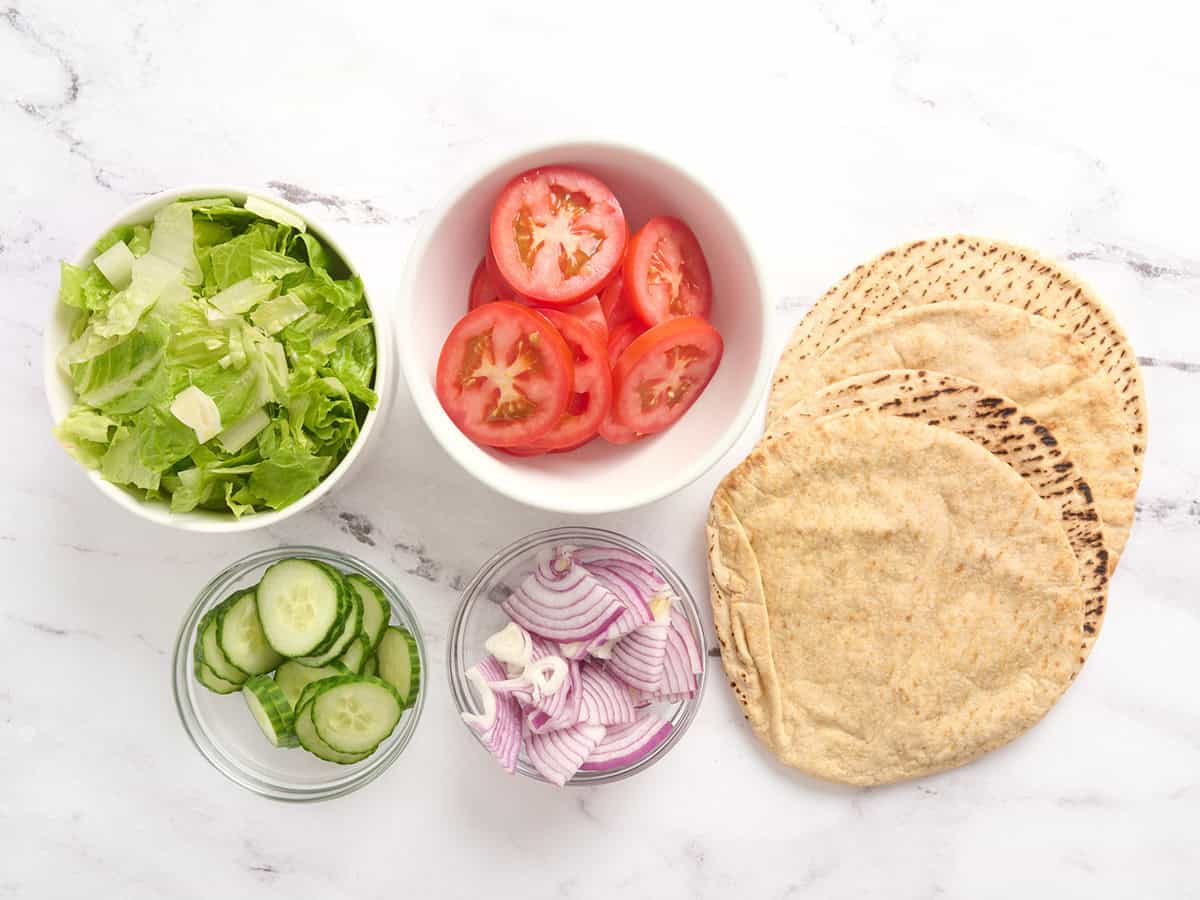
    Chicken Shawarma wrap ingredients.

    Gather the wrap ingredients (optional): If you’re turning this chicken into a wrap, you’ll also need ½ head romaine lettuce, ½ medium cucumber, 2 medium roma tomatoes, ¼ red onion, and 4 naan (or pita or flatbread).

    The ingredients to make a yogurt sauce to serve with chicken shawarma.

    Gather the yogurt sauce ingredients (optional): The yogurt sauce I use in this recipe is for more than just wraps. It elevates this chicken shawarma however you choose to serve it! It’s optional, but if you want to make it, you’ll need ¾ cup plain Greek yogurt, ¼ tsp minced garlic, ¼ tsp dried dill, and ¼ tsp salt.

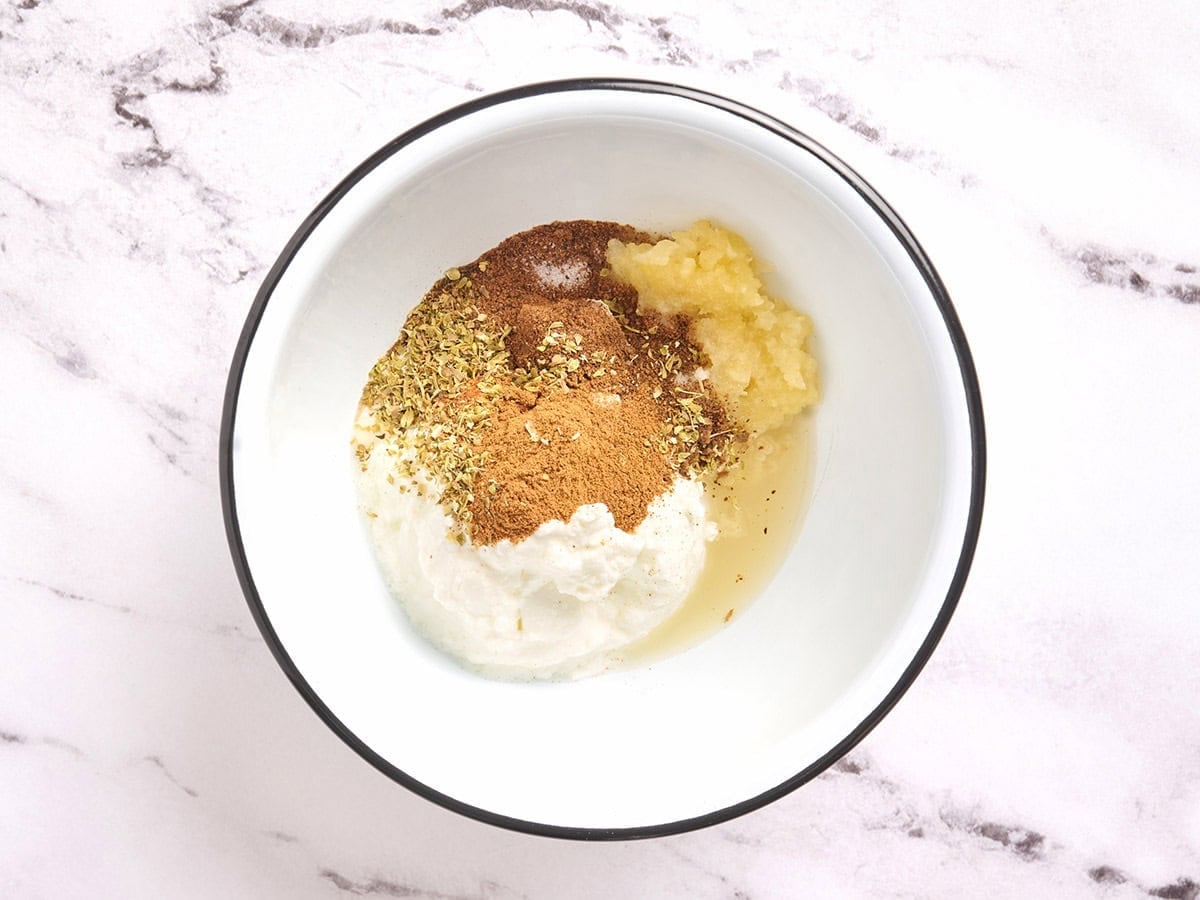
    Chicken Shawarma marinade ingredients in a bowl.

    Make the marinade: Add ½ cup plain Greek yogurt, 1 Tbsp lemon juice, 1 Tbsp minced garlic, ½ tsp cinnamon, ½ tsp dried oregano, ½ tsp salt, ¼ tsp nutmeg, and ¼ tsp ground cloves to a small bowl. Mix until smooth and well combined.

    Two chicken breasts cut into slices.

    Slice the chicken: I like to slice the chicken into 1-inch thick strips before marinating to allow more flavor to permeate the chicken. You can also leave the chicken whole if preferred and slice it after cooking, though it’ll take longer for the chicken to cook through if left whole.

    Chicken breast marinating in a ziptop bag.

    Marinate the chicken: Place the sliced chicken in a gallon-sized ziptop bag or medium mixing bowl, and cover in the marinade. Make sure the chicken is coated well. Close the bag (or cover the bowl) and refrigerate for 4-24 hours.

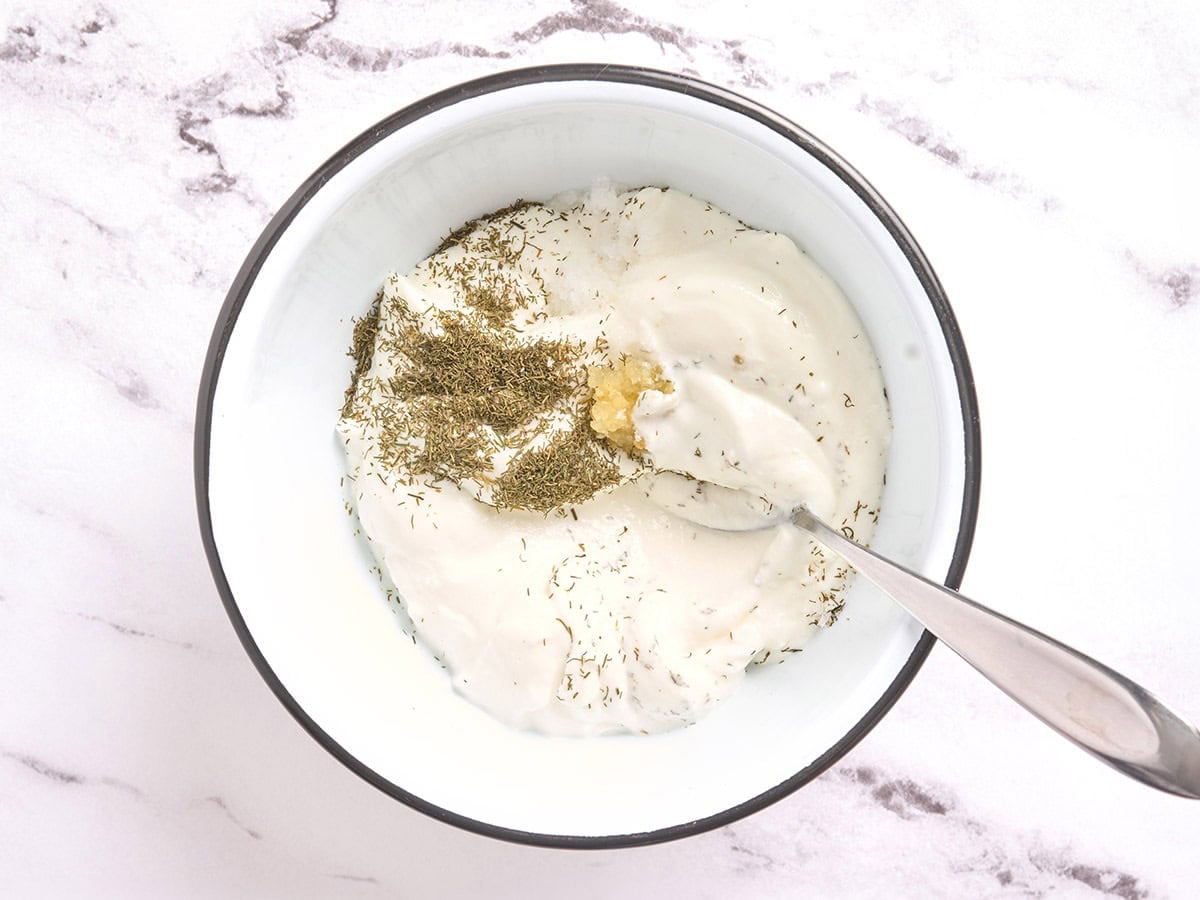
    Chicken Shawarma yogurt sauce ingredients in a bowl.

    Make the yogurt sauce (if using): While you wait for the chicken to marinate, you can make the herby yogurt sauce. Add ¾ cup plain Greek yogurt, ¼ tsp minced garlic, ¼ tsp dried dill, and ¼ tsp salt to a mixing bowl. Mix to combine and then store the sauce in the fridge until you’re ready to use it.

    Chicken Shawarma cooking on a grill.

    Cook the chicken: Once the chicken has marinated for at least 4 hours, grill until the chicken is cooked through. (I’m using the Ninja Sizzle Indoor Smokeless Grill. The total amount of time it’ll take to cook will vary from grill to grill). You can also cook it in a skillet on the stovetop.

    Chicken Shawarma on a grill.

    Flip the chicken after 7 minutes, unless you’re using a grill with a lid that cooks it evenly from both sides, like a George Foreman grill. If using a skillet, let the chicken cook long enough to get some nice browning before flipping.

    Chicken Shawarma on a plate after grilling.

    Rest and slice the chicken: The chicken is done once it has noticeable grill marks or golden browning on the outside, the juices run clear, and it’s no longer pink on the inside. If you’ve got a meat thermometer handy, you’re aiming for 160°F right in the thickest part. After it’s cooked, cover with foil and let the chicken rest for a few minutes so the juices redistribute and the internal temperature can rise to 165°F. I like to spoon any juices from the plate back over the sliced chicken because there’s so much flavor there.

    Now your homemade chicken shawarma is ready to use in wraps, sandwiches, salads, or meal-prep lunches for the week!

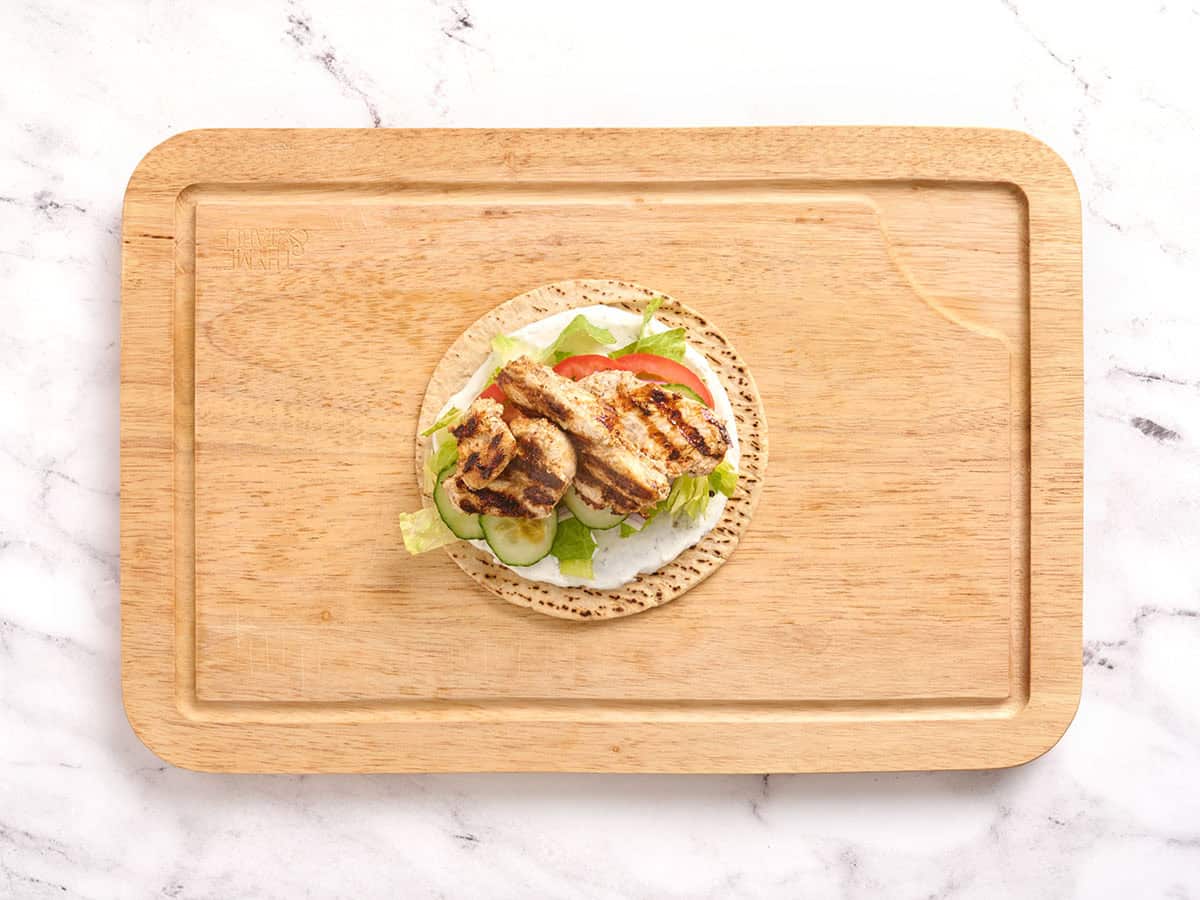
    An assembled Chicken Shawarma wrap.

    Make the wraps, optional: If you’re making the wrap sandwiches, spread the yogurt sauce on your chosen bread, such as naan, pita, or flatbread. Then top it with the chicken, lettuce, cucumber, tomato, and red onion. Roll the wrap closed.

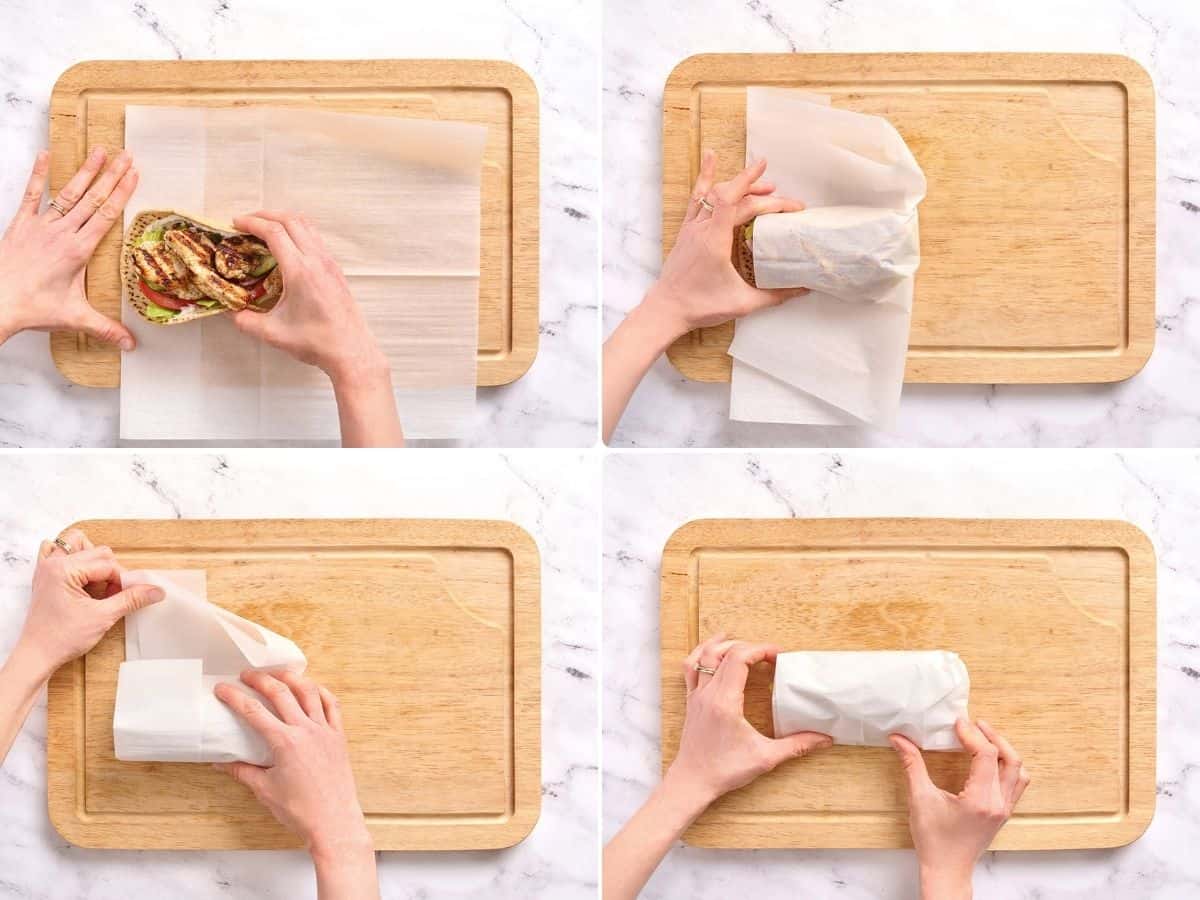
    The process of wrapping a Chicken Shawarma wrap in paper.

    You can also wrap it in foil or parchment paper to help it stay closed as you eat.

    Chicken Shawarma Wrap

    If you want to make the classic wrap version, spread some of the yogurt sauce over 1 naan, pita, or flatbread, then top it with a few slices of chicken, chopped romaine, sliced cucumber, tomato, and a little red onion. Roll it up tightly and, if you want, wrap it in foil or parchment paper to help hold everything together while you eat. It’s fresh, filling, and probably the closest thing to takeout-style shawarma you can make at home for way less.

    Overhead of chicken shawarma wrap.

    Serving Suggestions

    I made this grilled chicken shawarma with the sole intention of making sandwich wraps, but then I started topping salads with it and eventually just snacked on the chicken plain. It’s just that good. I even divided the ingredient list in case you want to use the marinade for something else because even if you don’t want the wrap, you NEED to at least make the chicken.

    Storage Instructions

    Leftover cooked shawarma chicken can be stored in an airtight container in the refrigerator for 3-4 days. If you’ve made the yogurt sauce, keep it stored in the refrigerator for up to 4 days. For the freshest texture, keep the chicken, sauce, salad veggies, pita, naan, or flatbread separate when possible, then assemble when ready to eat.

    Reheating

    You can eat the chicken cold in wraps and salads, or reheat it quickly in the microwave, on the grill, or in a skillet on the stovetop until warmed through (165°F internally). If reheating in a skillet, add a tiny splash of water to keep it from drying out.

    Freezer

    You can freeze the cooked and cooled chicken in an airtight freezer-safe container for up to 3 months. Freeze the chicken on its own without the sauce, veggies, or bread. Thaw overnight in the refrigerator, then reheat in the microwave, on the grill, or on the stovetop until hot.

    You can also freeze the uncooked chicken in the marinade for up to 3 months. Thaw overnight in the refrigerator and cook as directed.

    Try These Other Middle-Eastern Inspired Recipes Next!

    • This easy Homemade Falafel skips deep frying and uses a skillet instead, so you still get golden, crispy edges with less fuss!
    • I love meal prepping these Beef Kofta Meatballs with Roasted Vegetables because the rice, veggies, and meatballs pack up so easily.
    • My Quinoa Tabbouleh swaps bulgur for easy-to-find quinoa while keeping the fresh lemon, parsley, cucumber, and tomato flavor!

    Our Chicken Shawarma recipe was originally published 6/22/11. It was retested, reworked, and republished to be better than ever 6/24/26.

    The post Chicken Shawarma appeared first on Budget Bytes.

    This post was originally published on this site.

  • Shaped by Hand: Four Artisan Places Women Should Visit, Where Clay Defines the Culture

    Shaped by Hand: Four Artisan Places Women Should Visit, Where Clay Defines the Culture

    Last updated on June 30th, 2026

    Featured image: Large ceramic sculptures in Icheon, one of the many ceramic towns around the world | Photo by Karen Gershowitz

    From South Korea to Sicily, ceramics teach us about history and traditions

    by Karen Gershowitz

    My hands are steady as the lump of clay spins beneath my fingers. The shape is already in my mind, and my hands transform that image into form. I studied ceramics, earning both a BFA and MFA in the discipline. I have shaped teapots, bowls, and mugs on a potter’s wheel, mixed glazes, and opened kilns with equal parts anticipation and dread. Would the firing have created beauty or had something blown up?

    Since my college days, I have visited towns where ceramics are not just objects for sale, but expressions of identity, history, and daily life. In four very different places, I watched as earth, water, and fire were transformed into something far beyond household objects.

    Before you go…
    Get stories just like this one delivered straight to your inbox. Join the newsletter here.

    Four ceramic towns where pottery steps into the spotlight

    1. Icheon, South Korea

    I start my journey at the Icheon World Ceramics Center. Set on a hillside, the museum holds one of the finest and largest ceramic collections in the world. On display are pieces from every continent, both historic and contemporary.

    There’s a reason the museum is situated here. Icheon’s ceramics tradition dates back to the fourteenth century. The region’s high-quality clay and abundant firewood made it an ideal center for producing royal porcelain. Over time, it evolved into one of Korea’s most important ceramics hubs. Korean ceramic expertise was so highly prized that during the Japanese invasions of Korea in the 1590s, many potters were forcibly taken to Japan, where they helped establish some of that country’s most celebrated ceramic traditions. Today, master potters continue to refine centuries-old techniques.

    I move slowly through the galleries, past celadon vessels with their soft, almost luminous green glaze, and porcelain forms so refined that light passes through them. Classic shapes are displayed alongside modern riffs on their designs. Life-size sculptures appear to be walking through the museum’s grounds.

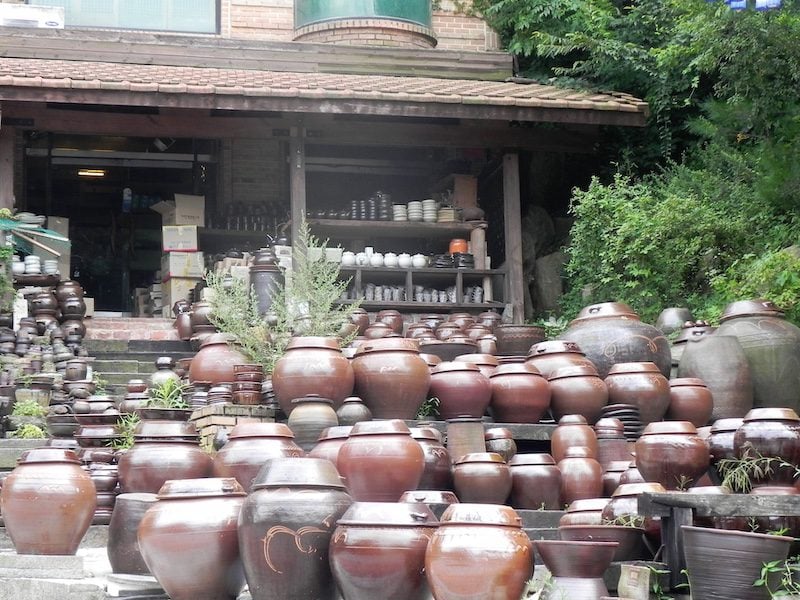
    While I could spend my entire day in the museum, I want to see what is being produced right now. A short drive away, I arrive in the commercial ceramics district. There are over 300 active studios where ceramicists work, teach, and sell their pieces. Workshops sit side by side, some traditional, some more contemporary, all producing high-quality work.

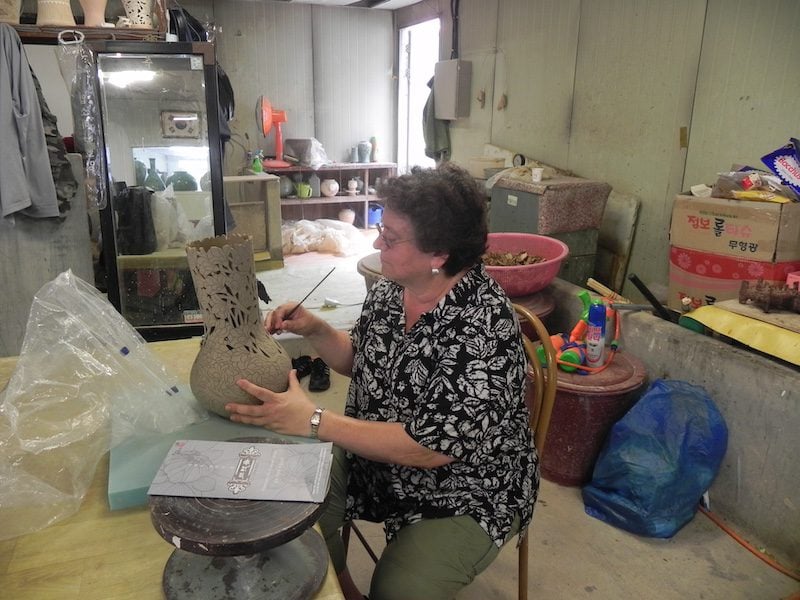
    In one studio, the artist demonstrates how to cut into a partially dried vase to create a lacework pattern. She allows me to try my hand at it. In another studio, a delicately hand-painted bowl in intense reds catches my attention. The proprietor sees my interest and pulls out dozens of other examples, each one slightly different and all of them beautiful. With so many choices, I have a difficult time deciding. I buy two.

    In Icheon, clay has been part of the town’s identity for hundreds of years. It remains so today, a place that should be on every art lover’s wish list.

    Icheon ceramics and pottery Village

    Icheon Village / Photo by Karen Gershowitz

    Icheon trying my hand at carving

    Karen trying her hand at carving in Icheon / Photo by Karen Gershowitz

    2. Metepec, México

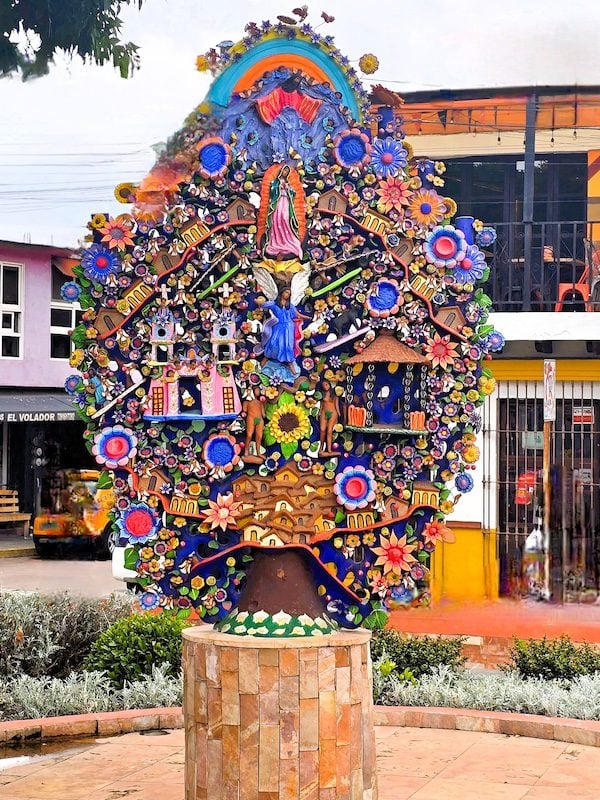
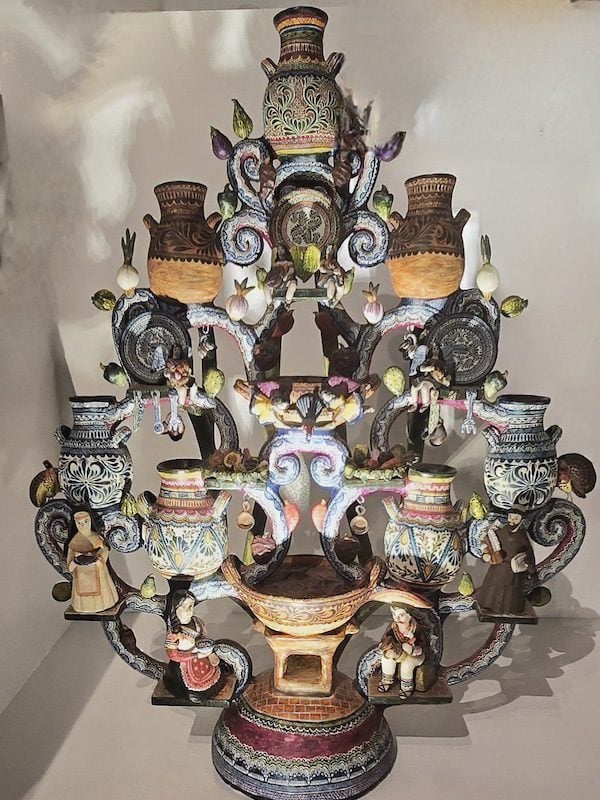
    Icheon is known for exceptionally fine craftsmanship. In Metepec, ceramicists do not aspire to perfection. Instead, clay is a medium for storytelling. Around the town, there are thousands of variations on Mexican Trees of Life.

    Crafted during the Spanish colonial era, Metepec’s Trees of Life visually told Bible stories to those unable to read. Over time, they have grown more elaborate and personal, evolving into intricate sculptures that weave together religion, folklore, and personal stories. Many pieces are tied to the Day of the Dead, to remembrance and continuity.

    You’ll spot Trees of Life all over Metepec, even if you aren’t actively searching for them. In the downtown area, there are several large, strategically placed examples. The largest, over thirty feet tall, holds a Guinness World Record. This monumental clay artwork weighs twelve tons and is a prime example of the town’s traditional, detailed ceramic craftsmanship.

    The main retail street is lined with shops, each presenting a unique version of the tradition. These “Trees of Life” are alive with figures, flowers, animals, and symbols. The more I look, the more details I see. I find myself creating stories for some unusual examples. And asking myself why a tree features African animals, pinwheels, or equally unlikely subjects.

    At a nearby studio, an artist sits painting fine details. I see how much skill and patience are needed to carefully cover every surface with intricate designs. Her hand moves steadily, adding a line, a dot, a flourish. The technical skill is undeniable, but in the final product, what matters more is the storytelling.

    Metepec tree of life

    A colourful Tree of Life in Metepec / Photo by Karen Gershowitz

    Tree of Life

    A different Tree of Life style / Photo by Karen Gershowitz

    3. Caltagirone, Sicily

    In Sicily, ceramics are everywhere. In Caltagirone, they climb the walls, line the streets, and transform the architecture itself. Before I even enter a workshop, I am immersed in clay. Tiles in vivid blues and yellows cover staircases, balconies, and facades, turning the town into a living canvas.

    I walk up the famous staircase, each riser decorated with hand-painted tiles. As I climb, the patterns shift, geometric designs giving way to florals, then to more elaborate scenes. It feels less like decoration and more like a narrative embedded in the landscape.

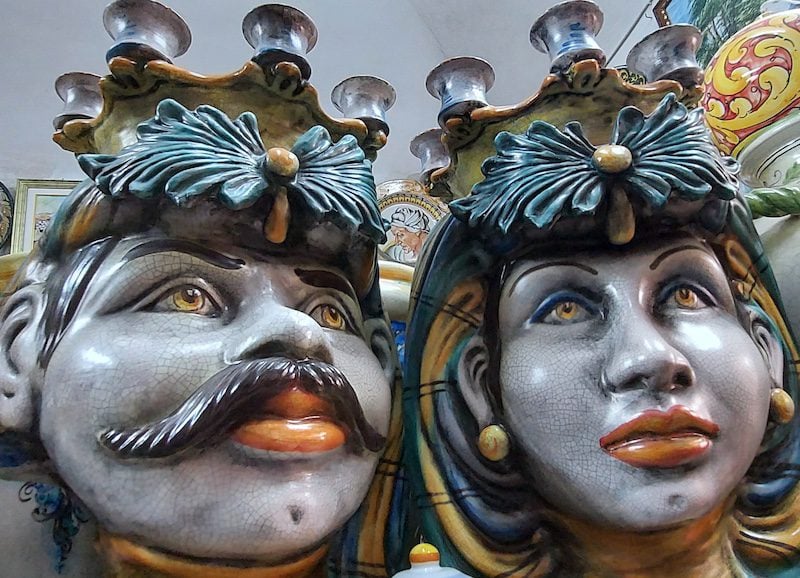
    In the studios, artisans paint and glaze with practiced ease. Iconic ceramic heads, rooted in legend, stare out from shelves. They are expressive and theatrical.

    What fascinates me is how seamlessly ceramics are integrated into daily life. This is not work that sits behind glass. It is walked on, lived with, and encountered at every turn. In Caltagirone, clay does not just reflect the culture. It defines how the culture looks and feels.

    Find tours and museum tickets in ceramic towns here on GetYourGuide.

    Caltagirone famous ceramic staircase

    Caltagirone’s famous ceramic staircase / Photo by Karen Gershowitz

    Caltagirone ceramic faces in Sicily

    Ceramic heads in Caltagirone / Photo by Karen Gershowitz

    4. Yingge, Taiwan

    Often referred to as Taiwan’s ceramics capital, Yingge is a place where traditional techniques coexist with contemporary experimentation. Walking through the town, I move from small family-run workshops to modern studios and galleries. Each offers a different interpretation of what clay can be. However, much of what is for sale is poor quality, clearly intended for tourists looking for an inexpensive souvenir.

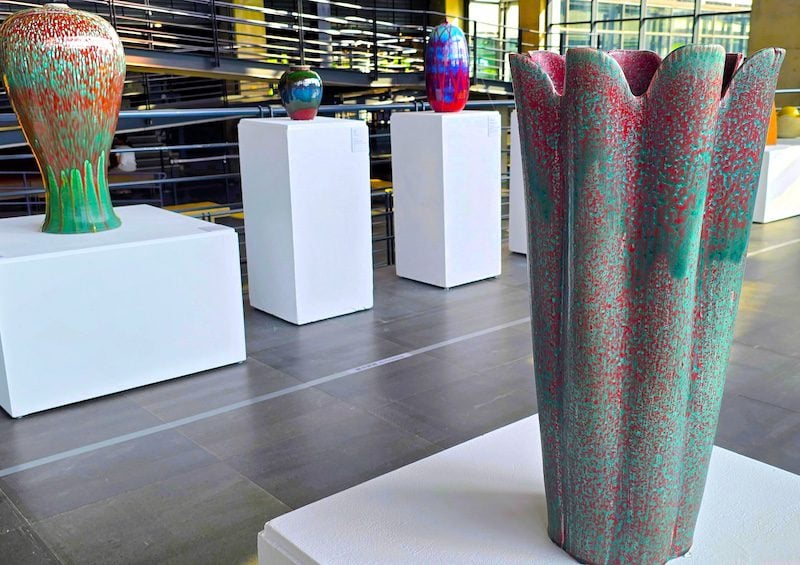
    I first visit the New Taipei City Yingge Ceramics Museum. It’s a spacious, light-filled complex that exhibits both historical forms and contemporary work. It introduces me to contemporary ceramic artists doing work that is innovative and beautiful.

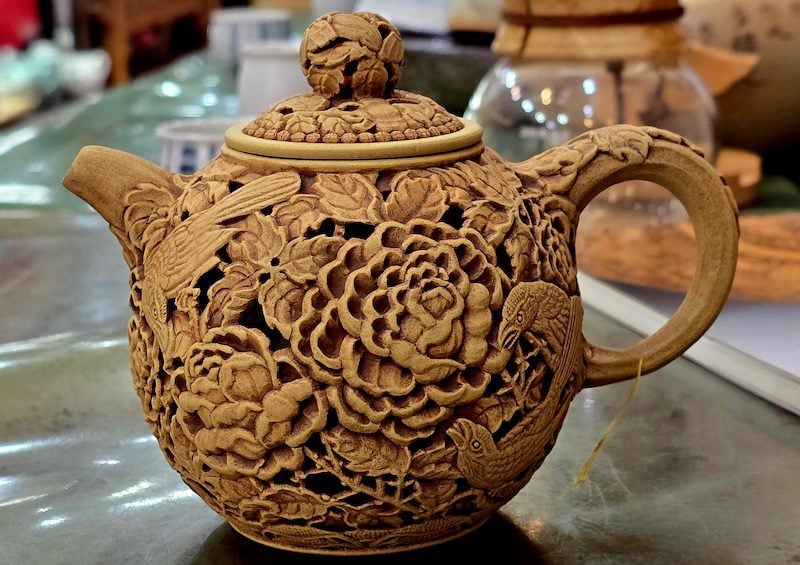
    Then, on the main shopping street, I find a shop devoted entirely to teapots. Inside, shelves are lined with pieces created by master ceramicists, each one distinct in proportion, balance, and surface decoration. At first, I simply look. Then, as I begin to ask questions, to comment on the clay, the weight, the way a handle meets the body, the proprietor studies me more closely.

    Something shifts.

    Without a word, he moves behind the counter and unlocks a glass case. One by one, he brings out teapots that had been hidden from view, pieces of extraordinary refinement. The lids fit so precisely that when closed, they don’t appear to have a seam. The surfaces are subtle and complex. I hold them carefully, fully aware that I am handling objects far beyond my price range.

    The proprietor invites me to sit as he prepares tea. The ceremony is quiet and deliberate; each movement practiced and unhurried.

    Before I leave the shop, I choose a small teapot. I spend more than I should, and far less than most of what surrounds me. It is exquisite, perfectly balanced, and an object that every time I use it will remind me of my time in Yingge.

    Yingge museum modern pieces

    Modern pieces in Yingge’s Ceramics Museum / Photo by Karen Gershowitz

    Yingge carved teapot

    An intricately designed teapot / Photo by Karen Gershowitz

    What the clay reveals

    What I have come to understand, both as a ceramicist and as a traveller, is that the finished object is only part of the story. In each of these places, the materials are the same. Earth, water, hands, fire. And yet what emerges is shaped by culture, history, and intention.

    In Icheon, clay reflects discipline and refinement.

    In Metepec, it carries story and memory.

    In Caltagirone, it shapes the landscape itself.

    In Yingge, it bridges tradition and innovation.

    This is not unique to these four towns.

    Other ceramic towns with strong traditions

    Once I began seeking out ceramics towns, I discovered how many there are; places where clay is not just a material, but a defining part of daily life. Across continents, each reflects its own history, resources, and traditions.

    Ceramic Towns in Europe

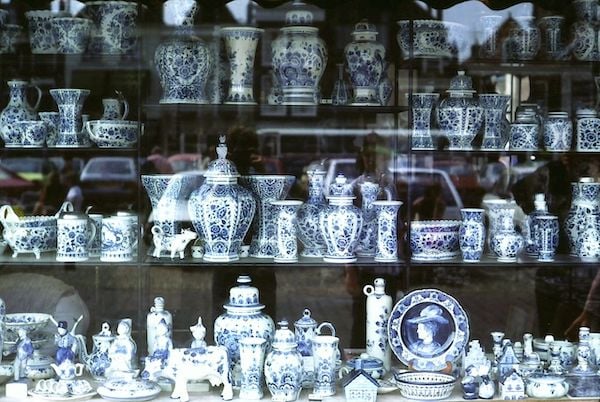
    Delft, Netherlands: Known for its iconic blue-and-white pottery, Delft transformed Chinese porcelain influences into a distinctly Dutch tradition that still defines the city’s visual identity.

    Limoges, France: Synonymous with fine porcelain, Limoges became a global standard for elegance and refinement, prized for its luminous white clay and delicate craftsmanship.

    Meissen, Germany: The secret of making porcelain was first unlocked in Europe here. Closely guarded formulas and royal patronage transformed Meissen’s creations into some of the continent’s most prized luxury goods.

    São Pedro do Corval, Portugal: One of Portugal’s largest pottery centers, this Alentejo village produces rustic, earth-toned wares that remain deeply tied to regional life and tradition.

    Shop window display of Delftware in the market place Delft

    Shop window display of Delftware in the market place Delft / Photo by Kim Traynor via WikiCommons

    Asia

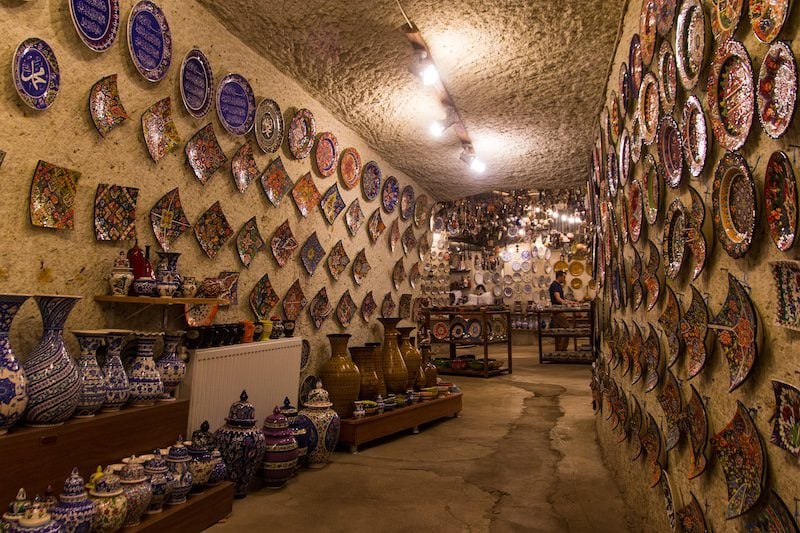
    Avanos, Turkey: Along the banks of the Red River, potters have worked the region’s iron-rich clay since Hittite times (beginning during the 16th century BC), producing both utilitarian wares and finely decorated pieces.

    Jingdezhen, China: Often called the porcelain capital of the world, Jingdezhen has produced imperial-quality ceramics for over a thousand years, its kilns shaping both domestic tradition and global trade.

    Bizen, Japan: One of Japan’s oldest ceramic traditions, Bizen ware is unglazed and wood-fired, its beauty emerging from the unpredictable effects of ash and flame.

    The Americas

    San Juan de Oriente, Nicaragua: Here, pre-Columbian pottery techniques live on in hand-burnished vessels etched with intricate geometric patterns passed down through generations.

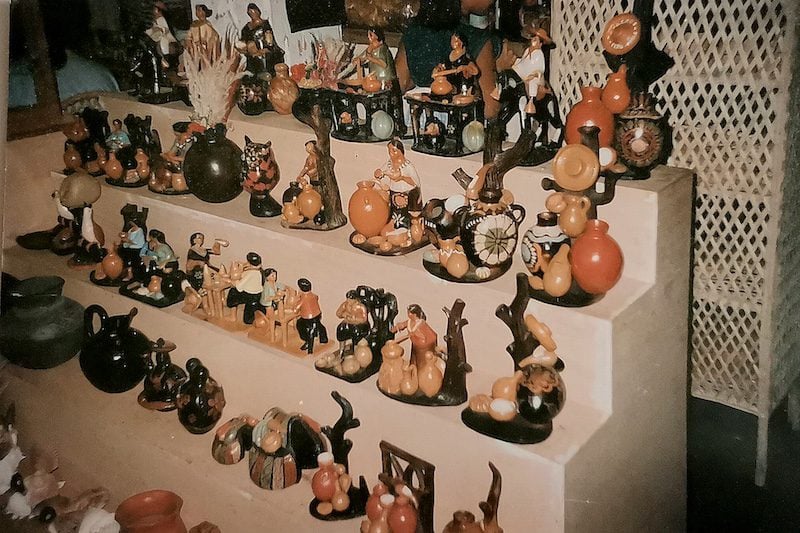
    Chulucanas, Peru: Known for its burnished black-and-white ceramics, Chulucanas blends ancient techniques with modern design, producing pieces that feel both timeless and contemporary.

    Guaitil, Costa Rica: In this small village, Chorotega artisans preserve indigenous pottery traditions, hand-building and firing vessels using methods that predate Spanish arrival.

    Ráquira, Colombia: A vibrant village where clay is shaped into everyday objects and whimsical forms alike, reflecting both practical needs and a strong sense of local identity.

    Pottery workshop in Avanos, one of Turkey's ceramic towns

    Pottery workshop in Avanos, Turkey / Photo by Alexey Komarov, CC BY-SA 4.0, via Wikimedia Commons

    Display of traditional ceramics in Chulucanas, Peru

    Traditional ceramics of Chulucanas, Peru / Photo by Dmnltics Isabel Requena, CC BY-SA 4.0, via Wikimedia Commons

    Before you go

    Demonstrations and workshops: If you hope to watch artists at work or try your hand at pottery, check schedules in advance. Demonstrations, kiln openings, and hands-on classes are often offered only on specific days or by reservation.  Find tours to workshops here.

    Shipping and purchases: Ceramics can be heavy, fragile, and difficult to transport. Ask whether shops pack pieces for international travel or offer shipping services, especially if you are tempted by larger works.

    What’s authentic: In many ceramics towns, inexpensive imported souvenirs are sold alongside locally made work. If craftsmanship matters to you, ask where a piece was made, who made it, and whether it is handmade or factory-produced. The answers can tell you a great deal about what you’re buying.

    Museums: Some towns have outstanding museums but limited working studios, while others are best experienced by wandering shop-lined streets and visiting artisans directly. Ideally, allow time for both.

    Accessibility and mobility: Older ceramic districts may include uneven stone streets, staircases, or large market areas that require significant walking. Museums are usually more accessible than historic artisan quarters.

    Time and pacing: Ceramic towns are best explored slowly. Leave room for serendipity, stepping into an unmarked workshop, talking with an artist, or discovering a piece so beautiful you cannot stop thinking about it.

    The post Shaped by Hand: Four Artisan Places Women Should Visit, Where Clay Defines the Culture appeared first on JourneyWoman.

    This post was originally published on this site.

  • VFW Presents Acclaimed John A. Biedrzycki Award

    This post was originally published on this site.

    COLUMBUS, Ohio – The Veterans of Foreign Wars (VFW) has selected Army Desert Storm Veteran Belinda Boldoe as its 2024-2025 John A. Biedrzycki Accredited Service Representative of the Year. Awarded annually, the Biedrzycki Award is presented to a VFW Accredited Service Officer who has demonstrated exceptional achievements in support of the VFW’s veterans’ service mission and related programs.

    “Service to veterans is as ingrained in the VFW as the word veteran,” said VFW National Commander Al Lipphardt. “Every day, our global cadre of accredited representatives works tirelessly to ensure our government Honors the Contract and this award, which Belinda Boldoe so rightfully deserves, exemplifies and honors the very best of the best.”

    Boldoe, who serves as both the Georgia Department of Veterans Service Appeals Officer and VFW Department of Georgia Service Officer among other roles, assisted more than 2,500 veterans and family members and facilitated the recovery of more than $800,000 in veterans benefits in 2024. A resident of Stone Mountain, Georgia, she is highly regarded by her colleagues, clients and comrades for her professionalism, technical expertise and genuine, honest and teamwork-oriented nature.

    VFW Accredited Service Officers are legally recognized and authorized by the Department of Veterans Affairs (VA) to prepare, present and prosecute VA benefits claims. Importantly, VA-accredited representatives never charge for assistance with VA disability compensation claims. In 2024 alone, the VFW’s Accredited Service Officer network has secured more than $14.6 billion in compensation and pension on behalf of veterans and eligible family members, and every dollar has gone to beneficiaries.

    “It is always an honor to recognize a professionally trained, VFW Accredited Service Officer who exemplifies our values in every action she takes on behalf of the veterans, family members and survivors we represent,” said VFW National Veterans Service Director Mike Figlioli. “Belinda consistently delivers results not only for the Georgia Department of Veterans Service, but for the entire VFW. It is only fitting that we take the time to recognize her achievements and dedication.”

    Originally from Washington, D.C., Boldoe served in the United States Army for more than 11 years as a signal communication officer, earning her VFW eligibility during Operations Desert Shield and Desert Storm. Throughout her Army career, she held several critical positions including company commander, theater communication manager during Desert Shield and Desert Storm, and project manager for testing and procuring new Signal Corps equipment.

    “It is truly an honor to be selected as the John A. Biedrzycki Accredited Service Representative of the Year for 2024-2025,” said Boldoe. “This is not a job for me; this is my heavenly assignment from my Lord and Savior to take care of his people.”

    Boldoe maintains her Bronze Legacy Life membership at Henry County GA VFW Post 12180 in Stockbridge, Georgia, where she serves as the Post quartermaster. She has two children – one of whom she is proud to call a fellow VFW member.

  • VFW Elects Carol Whitmore as New National Commander

    This post was originally published on this site.

    COLUMBUS, Ohio – Carol Whitmore of Des Moines, Iowa, was elected today as the new national commander of the Veterans of Foreign Wars (VFW), a congressionally chartered veterans service organization comprised of approximately 1 million eligible combat veterans and military service members from all six branches of the armed forces.

    “Standing here today, surrounded by such incredible people – fellow veterans, families and friends – I am filled with a deep sense of pride and humility,” said Whitmore during her acceptance speech. “This is not just a recognition of me, but of all the men and women who have served in our armed forces.”

    Whitmore’s election as the VFW’s 117th commander-in-chief occurred at the conclusion of the organization’s 126th National Convention in Columbus, Ohio. More than 10,000 members of the VFW and its Auxiliary converged on the city to conduct the business of the organization, recognize individuals and organizations for excellence and to elect new leadership for the 2025 – 2026 year.

    Whitmore is the first woman elected to lead the more than 125-year-old organization. She delivered remarks to those attending in person at the Greater Columbus Convention Center and watching via livestreaming video.

    “When I think back on my journey, I am sure it was just like many others – my reality is not necessarily the VFW reality,” said Whitmore. “But I was driven by a sense of duty, a desire to serve something greater than myself. And little did I know that decision would shape me in ways I could never have imagined.”

    Enlisting in the Women’s Army Corps in 1977, Carol’s 36-year military career was marked by significant milestones, from integrating with men into the regular Army to becoming an Army nurse and later serving as a first sergeant for her unit while deployed in support of Operation Iraqi Freedom. It was there that she earned her VFW eligibility. In recognition of her service, she received the Legion of Merit Medal, Bronze Star Medal, Army Commendation Medal (six), Army Achievement Medal, Good Conduct Medal, Army Reserve Components Achievement Medal (two), National Defense Service Medal, Iraq Campaign Medal, Non-Commissioned Professional Development Ribbon (three), Army Service Ribbon, Overseas Ribbon (three), Armed Forces Reserve Medal with “M” device and the Combat Action Badge.

    “As we look to the future, I believe that the strength of our veteran community is our greatest asset. We have so much to offer,” said Whitmore. “We have lived through adversity, we have faced challenges that many can’t even imagine and we’ve come out on the other side stronger. It’s because of that strength that we are still serving our communities and our nation.”

    She joined the VFW in 2012 at Post 9127 in Des Moines, Iowa, where she maintains her Gold Legacy Life membership. She has served in elected and appointed positions at the Post, District and Department levels, culminating with her election as the VFW Department of Iowa Commander from 2018 to 2019, in which she achieved All-American status. On the national level, she served on the Legislative Committee, the General Resolutions Committee and on the National Council of Administration from 2019 to 2023. In 2022, she was elected as designee for National VFW Commander-in-Chief for the year 2025, becoming the first woman and first Iowan to hold the position. She is also a life member of the Military Order of the Cootie, the VFW National Home, and the American Legion and its Auxiliary.

    During the speech, Whitmore emphasized legislative advocacy as a priority for her year, with a focus on fighting to get Congress to grant concurrent receipt for select combat-injured veterans through the Major Richard Star Act.

    “Through advocacy, our legislative efforts need to be resolute,” said Whitmore. “The [Major] Richard Star Act must pass this year. This effort was started in 2004, and the bill has repeatedly and shamelessly been voted down. Let’s get this done already. Honor the Contract!”

    Whitmore also spoke passionately about the Defense POW/MIA Accounting Agency (DPAA) mission and the key diplomatic role the VFW played in Southeast Asia during the early 1990s.

    “More than 30 years ago, it was VFW Vietnam War veterans who led the mission back to the country that cost them so much to extend a hand of peace to their former adversaries,” said Whitmore. “This tremendously brave effort opened U.S. relations with Vietnam and access to the country so DPAA could find and bring home our comrades who were missing in action.”

    In addition to Whitmore, other national officers elected were Cory Geisler, an Iraq War veteran from the Department of Wisconsin, as senior vice commander-in-chief, and Glenn Umberger Jr., from the Department of Pennsylvania, who is also a veteran from Operations Desert Shield and Desert Storm, as junior vice commander-in-chief. The final day of the convention also saw Adjutant General Dan West and Quartermaster General Marc Garduno reassume their posts.

    “I may be the first veteran to have been elected VFW commander-in-chief while wearing a dress … the first female veteran, but I will not be the last,” said Whitmore. “And as I have said while campaigning, I am your comrade by mud, by blood, by dust, by dirt, by sand, by land, by sea, by air … I am a veteran first.”

    Carol, a retired nurse, attended the University of Northern Iowa and Hawkeye Community College. She and her husband, Brad, reside in Des Moines, Iowa.

    Watch or read Whitmore’s acceptance speech.

  • VFW Eager to Deliver 2026 Priority Goals to Congress

    This post was originally published on this site.

    WASHINGTON – The Veterans of Foreign Wars’ (VFW) annual Washington Conference begins Sunday, Mar. 1, in Washington, D.C., and will continue through Thursday, Mar. 5. Several hundred VFW and Auxiliary members are anticipated to arrive in the nation’s capital, traveling from around the world to conduct organizational business and participate in the organization’s largest yearly advocacy event.

    “As a VFW member and advocate, I have been in House and Senate offices numerous times communicating with lawmakers on what veterans care about most,” said VFW National Commander Carol Whitmore. “But none of those experiences compare to my task this week. Veterans benefits have come under attack with echoes from the 1930s, with some who have never worn the uniform claiming benefits are wasteful, or that the wear-and-tear of 20 years of war is somehow frivolous. The VFW resolutely fought against cuts then, just as we are today. Real lives are impacted by what we’ve come to advocate for, and real consequences await service members and veterans if Congress and administration leaders do not Honor the Contract.”

    The main event of the Washington Conference is the annual commander-in-chief’s testimony set for Tuesday, Mar. 3 at 10 a.m. EST before a special joint hearing of the House and Senate Committees on Veterans’ Affairs held at the Dirksen Senate Office Building in Room SD-G50.

    “What weighs heaviest on my heart are the combat injured veterans who are accused of wanting to double dip when they have earned everything they are asking for: their full retirement pay and disability compensation without offset,” Whitmore said. “It is unconscionable that Congress continues to stonewall this injustice, and we will not continue to stand by while their families pay the price of their war wounds. They didn’t ask to be retired early; they were forced, and they are due every single dime of their earned benefits.”

    Whitmore is prepared to discuss the VFW’s top priorities for 2026 including:

    • VA Community Care: Passing the Veterans’ ACCESS Act of 2025 and the Foreign Medical Program Modernization Act of 2025.
    • Concurrent Receipt: Passing the Major Richard Star Act.
    • Veteran Suicide: Passing the Written Informed Consent Act and the Veteran Suicide Prevention Act.
    • Brain Health Care: Passing the Innovative Therapies Centers of Excellence Act of 2025, the Blast Overpressure Research and Mitigation Task Force Act, the Precision Brain Health Research Act of 2025, and the Veterans National Traumatic Brain Injury Treatment Act.

    Whitmore also plans to cover legislative efforts that would prohibit the exploitation of veterans by Claim Sharks, codify accredited claims representatives’ access to service members in military Transition Assistance Program classrooms and ensure oversight and transparency of the VA presumption decision process as passed in the Honoring our PACT Act of 2022 (Public Law 117-168).

    The VFW’s annual Washington Conference is also the culmination of the VFW-SVA Legislative Fellowship program, which is currently in its 12th year. Fellows will accompany VFW advocates on Capitol Hill to employ the leadership and advocacy skills they have learned since beginning the program in October 2025. Together with their VFW delegations, each fellow will discuss the importance of increasing the Post-9/11 GI Bill book stipend with lawmakers and staff, leveraging their experiences as student veterans who commonly rely on fixed incomes.

    Finally, the night before Commander Whitmore’s testimony, the VFW and its partners from Grunt Style Foundation and Irreverent Warrior will convene at the Lincoln Memorial at 5pm to tour our nation’s war memorials, reflecting on the sacrifices of the generations before us and recommitting to advocate for our veterans and the benefits they have earned. Dubbed the “Bonus Army Memorial March,” this evening hike around the National Reflecting Pool will serve as a time to reinforce the VFW’s mission for the week, while remembering our history and the fights that paved the way for our nation’s warfighters.

    Read the VFW’s complete list of 2026 Priority Goals here.

    The U.S. Senate Committee on Veterans’ Affairs will livestream this year’s testimony on its hearings page here. It can also be viewed on the VFW’s website here.
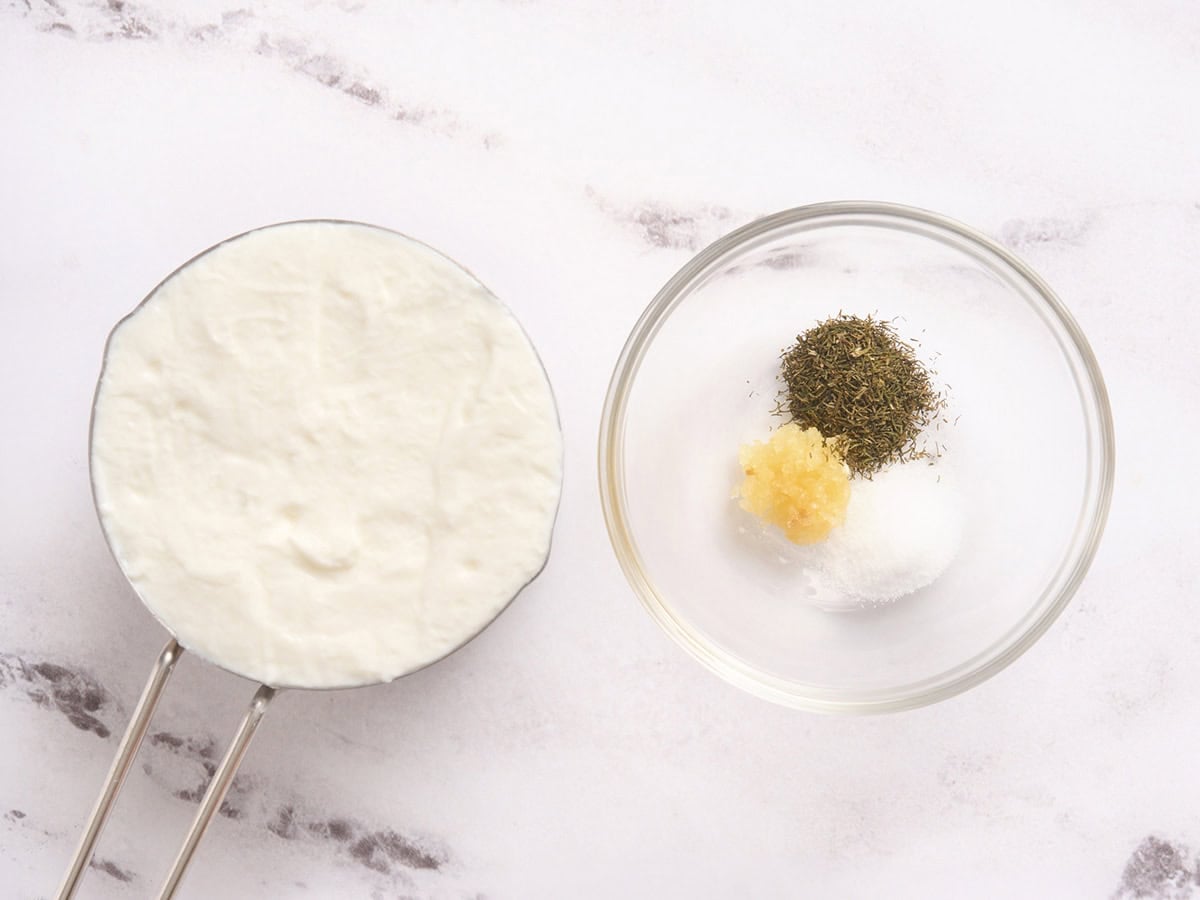
    Get ready for the 2026 Washington Conference by downloading the VFW Events 2026 app from the Apple App Store or Google Play Store today. Visit vfw.org/VFWDC2026 for all Washington Conference updates.

  • VFW Affirms its Promise to US Service Members as Operation Epic Fury Begins

    This post was originally published on this site.

    WASHINGTON – Last night, the United States and its Israeli ally began combat operations against Iran in an operation dubbed Epic Fury.

    As war once again comes to the Middle East, the Veterans of Foreign Wars (VFW) asks all Americans to keep our brave service members overseas in their thoughts and prayers. At this very hour, they are carrying out difficult and dangerous missions in defense of our nation and our allies.

    The VFW understands all too well that freedom is never free and that our world remains a dangerous place. America’s prepared, professional and resolute all-volunteer force continues to stand watch, serving on the front lines far from home so that our families may live in safety.

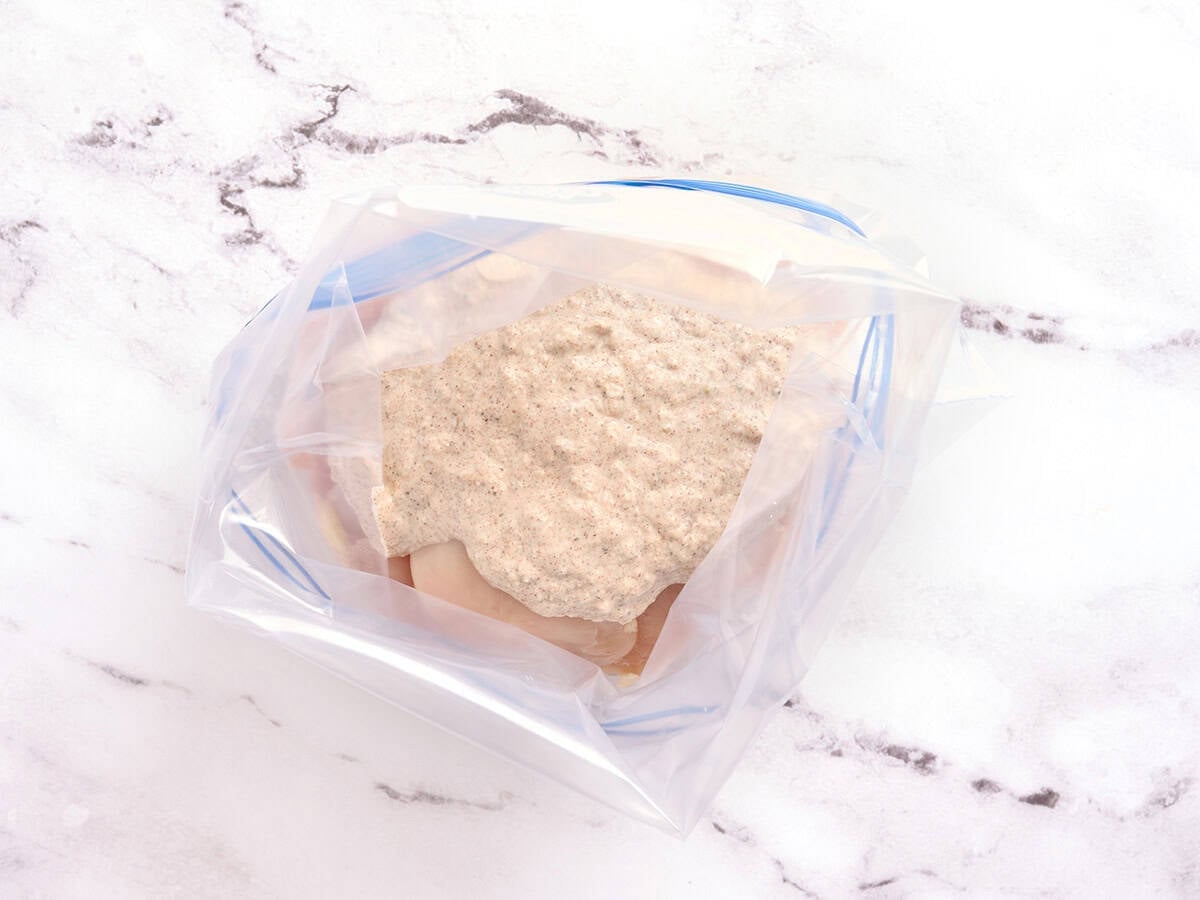
    We will never forget the weight of that responsibility, nor the sacrifices borne by those in uniform and their loved ones. The VFW remains unwavering in our commitment to support you and your families, advocate for you, and ensure the American people fully understand the significance of your service and sacrifice in defense of liberty. Finally, when your mission and service to our country is complete, we will make sure that our elected officials maintain the care and benefits you earned and Honor the Contract you have upheld.

  • VFW Commends VA for Listening to Veterans’ Voices and Rescinding Rule

    This post was originally published on this site.

    WASHINGTON – The Veterans of Foreign Wars (VFW) commends the Department of Veterans Affairs (VA) for officially rescinding its interim final rule that would have changed how disability ratings are evaluated, a policy the VFW warned could unfairly reduce benefits for disabled veterans.

    Since VA opened the rule for public comment, more than 20,000 comments have been submitted to the Federal Register urging the department to withdraw the policy.

    “These last 10 days prove that when our veterans speak, leaders will listen,” said VFW National Commander Carol Whitmore. “We thank Secretary of Veterans Affairs Doug Collins for hearing veterans’ concerns and taking meaningful steps to reverse an abrupt policy change that could have had far-reaching unintended consequences for veterans whose medication and other treatments allow them to live day-to-day with their service-connected health conditions.”

    Last week, the VFW publicly demanded VA rescind the rule change, raising “serious concerns” it threatened the benefits veterans earned through their service.

    “The VFW has long maintained that no veteran should ever think they could be penalized for seeking the medical care they need,” said Whitmore. “We appreciate VA’s willingness to engage with veterans on this critical issue.”

    While this reversal is a significant step forward, the VFW will continue to work with Congress, VA, and other stakeholders to ensure that future policy changes are developed with full transparency, genuine veteran input and a steadfast commitment to protecting the benefits and well-being of all veterans.