Category: Uncategorized

  • VFW First Woman Commander Makes History Delivering Legislative Priorities to Congress

    This post was originally published on this site.

    WASHINGTON – In a standing-room-only chamber at the Dirksen Senate Office Building, Veterans of Foreign Wars (VFW) National Commander Carol Whitmore delivered forceful testimony Tuesday before a special joint hearing of the United States Senate and House Committees on Veterans’ Affairs.

    The chamber was filled wall-to-wall with VFW and VFW Auxiliary members proudly wearing their caps, a visible show of unity behind their commander-in-chief, the first woman veteran to lead the VFW in its 126-year history. An overflow room for watching the hearing was also filled to capacity with VFW and Auxiliary members who traveled from across the country and around the world from all 52 departments of the organization.

    VFW national staff and members who joined Whitmore on the dais were Assistant Adjutant General and Washington Office Executive Director Ryan Gallucci, National Legislative Service Director Kristina Keenan, National Veterans Service Director Michael Figlioli, and National Legislative Committee Chairman Jason Johns.

    During the opening remarks, Ranking Member Richard Blumenthal announced that he was going to the Senate floor at 12 p.m. EST to ask for unanimous consent for passage or a vote on S. 1032, the Major Richard Star Act, which was met with rousing applause.

    Fellow Iowan, VFW member, and close personal friend, U.S. Sen. Joni Ernst introduced Whitmore to the members of the joint committee in attendance.

    Before addressing policy, Whitmore paused to recognize service members currently deployed.

    “Before I begin, I would like to take a moment to acknowledge Operation Epic Fury also and give our thoughts and prayers to those who gave the ultimate sacrifice,” Whitmore said. “And those who are in harm’s way, like the VFW Claims Representative Rosa Valdez currently serving in Kuwait.”

    She thanked Chairmen Jerry Moran and Mike Bost, Ranking Members Richard Blumenthal and Mark Takano, and members of both committees for the opportunity to testify on behalf of nearly 1.3 million VFW and Auxiliary members.

    Whitmore’s message to Congress was clear and unwavering: Honor the Contract. She framed her testimony around a single principle.

    “When Americans raise their right hand and volunteer to serve, this nation makes a solemn promise: if they are wounded, become ill or die in service, America will care for them and their families,” Whitmore said. “That promise is not charity. It is the binding contract between service members and the country they defend.”

    As applause filled the chamber, she addressed concerns about cost directly.

    “When some suggest that veterans’ benefits are too expensive, let us be clear … this is the cost of war,” Whitmore said.

    A former Army nurse, Whitmore emphasized her personal connection.

    “Caring for service members and veterans is not an abstract policy issue for me … it is personal,” Whitmore said.

    Whitmore praised the passage of the PACT Act but warned that implementation must match intent.

    “Passage alone does not fulfill the promise,” Whitmore said.

    She urged Congress to ensure the VA aggressively applies its authorities to address unrecognized toxic exposures, including Vietnam-era burn pits, K2 veterans, submariners and others exposed in hazardous conditions.

    With PACT Act claims surging, Whitmore stressed that VA direct care and community care must function as one system.

    “Veterans experience health care in moments of need,” Whitmore said. “In those moments, what matters most is reliable, timely, high-quality care delivered with dignity and respect.”

    She called for clear benchmarks on wait times and travel standards and urged passage of the Veterans’ ACCESS Act of 2025.

    “Veterans should never have to fight their way through red tape just to receive the care they earned,” Whitmore said.

    Whitmore highlighted systemic shortcomings in the Foreign Medical Program, sharing the story of retired Army veteran Blane Gish in Berlin, who paid more than 5,000 euros up front for hearing aids and waited six months for reimbursement, only to receive a check that failed to account for exchange rates.

    “Veterans overseas deserve equal treatment,” Whitmore said.

    She also called for the modernization of CHAMP-VA, citing slow claims processing and limited access that strain military families.

    In one of the most powerful moments of the hearing, Whitmore asked veterans and families affected by suicide to stand. Dozens rose throughout the chamber.

    “Members of the committee … this is the scope of the challenge before us,” Whitmore said.

    She called for written, informed consent for VA-prescribed psychiatric medications and urged passage of the Veteran Suicide Prevention Act.

    “We cannot improve what we do not examine,” Whitmore said.

    Whitmore emphasized the need for cutting-edge treatment for traumatic brain injury and PTSD, sharing the story of Afghanistan veteran Joshua Starks, who found healing outside the VA only after a devastating personal loss.

    “Veterans should not have to leave the VA to find healing,” Whitmore said.

    She urged Congress to pass the Innovative Therapies Centers of Excellence Act to ensure that treatment is driven by science and urgency.

    With nearly 200,000 service members leaving active duty annually, Whitmore raised concerns about inadequate Transition Assistance Program implementation – particularly for troops separating overseas.

    “When service members separate without proper guidance, they risk delays in receiving the benefits they earned,” Whitmore said.

    She called for the passage of the TAP Promotion Act to ensure seamless continuity of care and compensation.

    Though outside the committees’ primary jurisdiction, Whitmore urged full funding for the Defense POW/MIA Accounting Agency.

    “Service members are taught to leave no one behind. That commitment never ends,” Whitmore said.

    She condemned proposed cuts despite record Pentagon budgets.

    “Fully fund DPAA so that our missing can receive their final salute on American soil,” Whitmore said.

    Whitmore closed with a passionate call to end the unjust offset affecting more than 50,000 medically retired combat veterans.

    “This is not double-dipping. This is double sacrifice,” Whitmore said. “Pass the Major Richard Star Act now!”

    The chamber erupted into sustained applause and a standing ovation from members in their VFW caps.

    Whitmore concluded by reminding lawmakers that the All-Volunteer Force depends on trust.

    “Veterans have fulfilled their obligation. Now the country must Honor the Contract,” Whitmore said. “Not partially, not eventually, not someday, but today, fully and faithfully.”

    She thanked the committee leadership and expressed readiness to answer questions, leaving behind a clear message echoed by the hundreds in attendance: Honor the Contract.

    Video of today’s testimony is available to watch and share here.

    Read Commander Whitmore’s full testimony here.

    The presentation of S. 1032, the Major Richard Star Act, to the Senate for unanimous consent can be viewed live on C-SPAN and at senate.gov.

  • VFW Appalled Major Richard Star Act Vote Blocked for Second Time

    This post was originally published on this site.

    WASHINGTON – Today, Ranking Member Blumenthal asked for unanimous consent for passage of S. 1032, the Major Richard Star Act, on the floor of the U.S. Senate. This is the first time the motion was made since it failed to pass in October, held up then by Sen. Roger Wicker of Mississippi. I regret to announce that it was turned down again, this time by Sen. Ron Johnson of Wisconsin. I am appalled by the resistance by certain members of Congress to care for veterans who have sacrificed so much for this nation.

    As I testified earlier today before a special joint hearing of the United States Senate and House Committees on Veterans’ Affairs, the Major Richard Star Act will fix the unjust offset affecting more than 50,000 medically retired combat veterans. This is not double-dipping. This is double sacrifice. Veterans have fulfilled their obligation. Now, the country must Honor the Contract. Not partially, not eventually, not someday, but today, fully and faithfully. Stop the procedural games, have a real hearing, and get this done. Pass the Major Richard Star Act now!

  • Rep. Pfluger Named 2026 VFW Congressional Award Recipient

    This post was originally published on this site.

    WASHINGTON – The Veterans of Foreign Wars (VFW) proudly presented its 2026 Congressional Award to Rep. August Pfluger, R-Texas, tonight at the conclusion of its annual Washington Conference, recognizing him for his leadership in the 119th Congress and his career-long advocacy on behalf of veterans and service members.

    “Representative Pfluger uses his personal experience as a combat fighter pilot to identify and fix gaps and shortcomings in our system, ensuring veterans have a passionate and determined advocate in the halls of Congress,” said VFW National Commander Carol Whitmore. “His commitment and resolve for action over words on many VFW priorities is evident, and we are eager to continue working alongside him to better care for America’s service members, veterans and their families.”

    Presented annually since 1964, the VFW Congressional Award is given to one member of the House or Senate for significant legislative contributions on behalf of veterans and military personnel. Past recipients include strong national security and veterans’ advocates, such as Sen. Bob Dole, R-KS, Rep. G.V. “Sonny” Montgomery, D-MS, Sen. John McCain, R-AZ, Sen. Daniel K. Inouye, D-Hawaii, Sen. Bernie Sanders, I-VT, Rep. Joe Wilson, R-SC, and Sen. Jon Tester, D-MT, among many others. Last year’s award went to Rep. Derrick Van Orden, R-WI, who currently serves on the House Committees on Veterans’ Affairs, Armed Services and Agriculture.

    Rep. Pfluger’s work in Congress led him to introduce the House version of the Aviation Cancer Examination Study (ACES) Act, a long-standing VFW priority enacted as Public Law 119-32, which directed VA to study cancer rates among military fixed-wing aircrew and advance accountability and life-saving care. He has also cosponsored key VFW priorities, including the Major Richard Star Act, the Veterans’ ACCESS Act of 2025, the Guard and Reserve GI Bill Parity Act of 2025, and the Innovative Therapies Centers of Excellence Act of 2025, safeguarding earned benefits, expanding access to care, and strengthening support for National Guard and Reserve, and medically retired service members.

    Before joining Congress, Rep. Pfluger graduated from the United States Air Force Academy in 2000. A former squadron commander, he has logged more than 2,000 flight hours, including 300 in combat over Syria and Northern Iraq. He is currently a colonel in the Air Force Reserve.

    “Rep. Pfluger’s military experience and tenacity make him a leading voice in Washington on veterans issues and national security, and the more than 1.3 million VFW and VFW Auxiliary members are proud to bestow upon him this year’s Congressional Award.”

  • VFW Expresses Condolences for US Casualties of Operation Epic Fury

    This post was originally published on this site.

    WASHINGTON – On behalf of the Veterans of Foreign Wars (VFW) and its Auxiliary, we are deeply saddened by the news that three American service members were killed in action and five others seriously wounded during the ongoing Operation Epic Fury.

    These brave men and women answered our nation’s call without hesitation, serving in harm’s way to defend the freedoms we too often take for granted. Their courage, commitment and selfless devotion to duty represent the very best of America.

    We extend our heartfelt condolences and prayers to the Gold Star families whose loved ones made the ultimate sacrifice. No words can fully ease the pain of such profound loss, but please know that a grateful nation stands beside you. We also keep those who were wounded in our thoughts and pray for their full and swift recovery.

    The VFW remains steadfast in our support of the men and women currently deployed in Operation Epic Fury and across the globe. We honor the lives and legacy of the fallen and we will never forget their sacrifice in defense of our country and liberty everywhere.

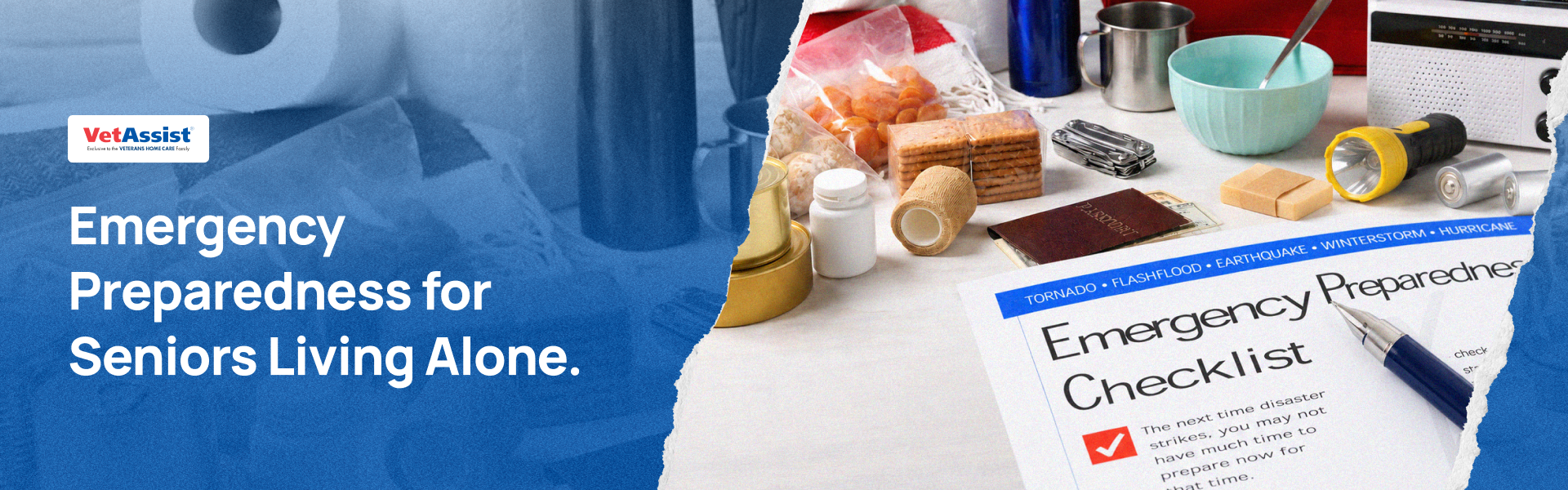
  • Emergency Preparedness for Seniors Living Alone

    Emergency Preparedness for Seniors Living Alone


    Emergency Preparedness for Seniors Living Alone

    As we head into the Atlantic hurricane season, this may be the right time to review emergency preparedness for older adults who live alone. Many households may not know how to prepare for a disaster such as a hurricane, winter storm, tornado, flash flood, or earthquake, though most of the US is at occasional risk of one or more of these. The key is not to panic, but to have an emergency preparedness plan that includes an emergency kit, important contact information, and an idea of what to do (or not to do) in the first few days after a disaster.

    Let’s review the essentials. Be sure to check in on your senior loved ones to make sure they’re prepared!

    Basic Items in an Emergency Kit

    The purpose of an emergency kit is to provide for basic needs when the power or water goes out and travel is not possible. It also plans for safety through communication and evacuation. A reliable emergency kit plans for at least 3-5 days and includes the following:

    • Drinking water. Your kit should include one gallon per person per day for drinking, brushing teeth, and similar uses where it might be ingested.
    • Non-perishable food with a long shelf life. Make sure canned foods have a pop tab to avoid using a can opener (though the latter is fine if your senior can easily use it). Some ideas are cooked beans, canned chicken or tuna, cereal or granola, cooked rice or pasta, peanut butter, boxed milk, nuts, and crackers. Be sure to stick to foods your senior normally eats and which provide needed nutrition.
    • A first aid kit that includes the essentials (bandages, alcohol wipes, antibiotic cream, over-the-counter pain relievers, etc.) and prescription medications (see our notes below).
    • Hygiene wipes for emergency bathing.
    • Garbage bags and disinfecting wipes for surfaces.
    • Several flashlights and extra batteries.
    • A battery-powered radio to keep up with emergency updates.
    • A power bank for cell phones. While cell phone service may or may not be available, a power bank is important for keeping it usable.
    • A wrench and pair of pliers to safely turn off utilities, if needed, and a pair of multipurpose scissors.
    • Cash in small bills, in case electronic payments are down. This and any other paper or easily-damaged items should be placed in waterproof containers.
    • Important personal documents like passports and insurance policies.
    • Maps of your area.
    • A list of important contacts (discussed below).

    A basic kit may also include a whistle for attracting attention and a mask for filtering excessive dust. If there are pets, be sure to plan for them too! And being in a disaster situation can be both stressful and boring, so books, puzzles, and simple crafts are nice to include.

    Special Considerations in an Emergency Kit for Elderly Adults

    Most older adults are managing several chronic conditions with prescription medication, so disaster prep for seniors must take this into account. It is critical that your senior loved one not miss a dose of their prescribed medications. This may mean staying on top of refill schedules to prevent the chance of a gap, where pharmacies might be closed or roads are covered in downed trees. Also consider whether your loved one takes any medication that needs refrigeration; this may require getting a battery-powered cooler or something similar to safely store it.

    If your senior wears a hearing aid or uses a powered assistive device for walking or breathing, think about options for powering these as well. Further, think about their needs for heating or cooling with battery-powered fans (more here about heat safety) and appropriate clothing and blankets.

    As mentioned, their kit needs a list of important contacts, which should include:

    • Local emergency and non-emergency numbers. Beyond 911, this includes non-emergency police and fire, nearby urgent care centers, and management/maintenance (if your loved one lives in a managed community).
    • Phone numbers and addresses for nearby storm shelters.
    • One or more family members or friends who serve as an emergency contact during normal circumstances (for example, on medical office intake).
    • One or more neighbors.
    • One contact who lives outside your area, who is less likely to be affected by the same disaster.
    • Your loved one’s primary care physician and usual pharmacy.
    • Your loved one’s home care or home health provider, if applicable.

    Note that a contact list like this is great to post on the fridge or near a landline phone, as well as in your emergency kit.

    How to Prepare Seniors for Emergency Circumstances

    The best approach for an unpredictable natural disaster is to plan ahead of time. In cases where you are not able to be together, talk to your senior loved one about a communication plan, such as a cadence for staying in touch at set times throughout the day, or even a phone chain. Consider turning on location-sharing on cell phones or other devices that support it.

    For disasters such as hurricanes and winter storms, where there is forewarning, talk about options and preferences for evacuation. If staying put, review the list of preparations on weather.gov or another reliable website.

    A common risk for seniors who live alone is falling. In emergency situations, they may not be able to get help quickly, so preventing falls is crucial. Besides the usual prevention, talk to them about not taking risks outdoors after powerlines or tree limbs have fallen, or ice has covered sidewalks.

    Some of us are prone to panic, while others are unlikely to worry enough about emergencies. Help your senior loved one strike a balance by being well-prepared to secure peace of mind.

    If your loved one needs home care, our VetAssist mission is to make home care easily and quickly accessible for those who qualify through the VA Pension with Aid and Attendance benefit. Veterans Home Care can help you determine whether you or your loved one will be eligible to receive the benefit, which can cover some or all of the cost of home care, and we make it easy to apply. Chat with us via our website, or call us at (888) 314-6075.


    The post Emergency Preparedness for Seniors Living Alone appeared first on Veterans Home Care – VA Aid and Attendance Pension Benefit.

    This post was originally published on this site.

  • What Is Middle Class in America? Beyond the Income Range

    What Is Middle Class in America? Beyond the Income Range

    Nearly everyone identifies as middle class. Households earning $40,000 say it. Households earning $250,000 say it. The label has become something people reach for regardless of where the income data actually puts them.

    Pew Research Center defines the middle class as households earning between two-thirds and double the local median income. With the U.S. median at $83,730 in 2024, that puts the national range at roughly $55,000 to $167,000. But the thresholds shift by city and state, and even for households squarely within the range, income alone says little about how secure they are. Debt, savings, and financial habits do most of that work.

    The Middle Class Is Defined by Income, and the Range Might Surprise You

    The $55,000-to-$167,000 spread is wider than the label makes it sound. A household earning $67,000 and one earning $160,000 are both middle class under Pew’s definition, even though their day-to-day finances look nothing alike. 

    In 2022, the typical middle-class family earned about $106,000, compared to roughly $257,000 for upper-income households and $35,000 for lower-income households, according to Pew. Those benchmarks will update once Pew applies the 2024 Census data to its formula.

    Middle-Class Income Looks Very Different Depending on Where You Live

    Middle-class income thresholds are local, not national. Because living costs and local economies vary wildly, a single national average doesn’t show the full picture. The lower bound in San Jose, California runs nearly $100,000. In Cleveland, Ohio, it’s under $29,000. 

    To see how much geography skews the numbers, an analysis of U.S. Census Bureau American Community Survey (ACS) data highlights the absolute floors and ceilings across the country. By applying Pew’s two-thirds to double methodology to local median incomes, we can map the widest gaps at both the state and major city levels:

    Location Lower Bound Upper Bound
    Mississippi $39,418 $118,254
    Massachusetts $69,885 $209,656
    San Jose, CA $98,817 $296,452
    Cleveland, OH $28,922 $86,766

    Source: U.S. Census Bureau American Community Survey (ACS) data, calculated using Pew Research Center middle-class thresholds.

    These extremes reveal the limitations of using a blanket national label. Consider a household earning $90,000 a year:

    • In San Jose, they fall into the lower-income tier, short of the middle-class entry point.
    • In Massachusetts and Mississippi, they are squarely middle class.
    • In Cleveland, they clear the exit point and cross into the upper-income tier.

    Location shapes your financial reality far more than national data suggests, redefining what a dollar is worth from one county to the next.

    The American Middle Class Has Been Shrinking for 50 Years

    In 2023, 51% of Americans lived in middle-class households, down from 61% in 1971. The lower-income tier now makes up 30% of the population. The upper-income tier accounts for 19%, according to the Pew Charitable Trusts.

    The middle class hasn’t collapsed. It’s carrying fewer people than it once did. Some of that movement has gone upward, toward the upper-income tier, while some has gone in the other direction. The net result is a middle class that’s thinner than at any point in the last five decades.

    That upward movement matters too: the share of Americans in upper-income households has grown from 14% in 1971 to 19% today. Class isn’t fixed.

    Your Income Bracket Doesn’t Tell the Whole Story

    A household earning $100,000 a year with significant debt and no savings buffer can be less financially secure than one earning $70,000 with a funded emergency account and a plan in place. Where you fall in the income range is a starting point. The debt you carry, the savings you’ve built, and the buffer you maintain when something breaks are what determine how secure your position actually is.

    From a financial health standpoint, middle-class status tends to involve balancing a monthly budget, carrying manageable debt, and saving for the future. Income doesn’t generate those habits on its own. Plenty of households in the middle income range live paycheck to paycheck. Others well below the median have built real financial resilience.

    Knowing where you stand requires looking at the full picture. The Boldin Planner’s Financial Wellness Assessment looks beyond income to your debt, savings, and spending habits. Those are the factors that determine financial security.

    Middle-Class Financial Stability Is More Fragile Than the Income Range Suggests

    Middle-class stability means a steady paycheck, employer-sponsored health insurance, and a financial cushion large enough that a car repair or medical bill doesn’t spiral into debt. Those elements are what most households in this income range work to protect, and what economic pressure has put most at risk.

    Building that cushion creates room to save, invest, and plan for the long term. Losing it is what makes financial recovery so difficult.

    The distinction between middle-class and working-class financial life often comes down to those buffers, not the income number itself.

    Education Shapes Class Position in Ways Income Alone Doesn’t Show

    Among Americans 25 and older with a bachelor’s degree, 52% lived in middle-class households in 2022. Another 35% lived in upper-income households, according to Pew Research. Education correlates with class. It doesn’t determine it.

    Student loan debt has pulled some college-educated households toward lower-income territory. A degree raises earning potential and also front-loads a financial burden that can take a decade or more to clear.

    The industries with the largest share of middle-income workers, per Pew:

    • Military: 65%
    • Public administration: 61%
    • Education: 61%
    • Manufacturing: 59%
    • Transportation, warehousing, and utilities: 59%
    • Construction: 59%

    Race and ethnicity also shape where people land. The share of Americans in the middle class ranges from 46% to 55% across racial groups, according to Pew Research. Black, Hispanic, and Indigenous households are concentrated in the lower-income tier at higher rates. Asian American households track toward the upper end of the distribution. The gaps reflect decades of unequal access to credit, housing, and higher-paying fields.

    Class identity can also diverge from income. I grew up in a household that, by income, would have qualified as working poor. I thought of us as middle class. Among peers who had more, I felt a sense of belonging. Now I live in a community of upper-income households where nearly everyone identifies as middle class. The benchmarks tell one story. Identity tells another.

    Where you fall on the income scale and where you feel you belong are often two different places. Both shape how you approach money and planning.

    Homeownership Is Still Central to Middle-Class Life, and Harder to Reach

    The U.S. Census Bureau’s Housing Vacancy Survey puts the national homeownership rate at between 65.3% and 65.7%. Owning a home remains a core feature of middle-class life. The path to it has gotten much harder.

    A 2024 Bipartisan Policy Center analysis found that home prices have surged roughly 50% since 2020. The annual salary required to purchase a median-priced home has risen 78% over the same period. That assumes a traditional 20% down payment. For many middle-class households, getting to a first home now takes longer and costs more than it did for their parents.

    The racial breakdown tells its own story:

    • White households: 75.1%
    • Asian, Native Hawaiian, and Pacific Islander households: 63.1%
    • Hispanic households: 48.7%
    • Black households: 44.2%

    Source: U.S. Census Bureau Housing Vacancy Survey

    Those differences reflect decades of embedded barriers in housing access and financing. For households that got in before prices surged, equity has become a significant asset. Average mortgaged homeowners held $295,000 in equity as of Q4 2025, according to Cotality (formerly CoreLogic).

    For households still working toward a first home, having a plan that accounts for the timeline and the down payment makes the path more tangible.

    Middle-Class Savings Are Smaller Than Most People Think

    The median U.S. transaction account balance, covering checking, savings, and money market accounts, is $8,000, according to the Federal Reserve’s Survey of Consumer Finances. The average is $62,410. The distance between those two numbers reflects how a small number of very high-balance households pulls the mean up. For most American families, $8,000 is closer to reality.

    Among middle-class households, the median emergency savings balance is $10,000, according to Transamerica’s 2025 research. That figure grows with age, from $2,000 for people in their 20s to $20,000 for those in their 60s. More than one in 10 middle-class households has no emergency savings at all.

    The broader picture of savings is rougher. Bankrate’s 2026 Annual Emergency Savings Report found that only 46% of U.S. adults have enough saved to cover three months of expenses. A Federal Reserve SHED survey puts that figure at 55% of all adults. That benchmark is precisely the same even for middle-income households earning $50,000 to $99,000. 

    Those figures describe the current reality for millions of middle-class households. A plan changes what comes next.

    Financial Planning Is the Lever Anyone Can Pull

    Whatever your income, a structured financial plan is the most reliable way to improve your position. Start by tracking every asset and liability. From there, build a savings buffer and run scenarios that show how today’s decisions compound over time.

    The Boldin Planner connects all of those threads: cash accounts, savings, home equity, and spending projections. Set goals and stress-test your assumptions. See what adjustments change your long-term financial outlook.

    Class is a function of income and what you do with it.


    Frequently Asked Questions About the Middle Class

    What is the income range for the middle class in the United States?

    The middle class spans roughly $55,000 to $167,000 in annual household income at the national level, based on Pew Research Center’s formula of two-thirds to double the median. The U.S. Census Bureau’s 2024 national median household income is $83,730, which generates that range through the Pew method. The thresholds vary by location rather than following a single national standard, so the middle-class range in Mississippi sits much lower than the range in Massachusetts or California.

    How does middle-class income change depending on where you live?

    Middle-class income boundaries are local because Pew’s formula works from each area’s own median rather than a single national figure. In Cleveland, Ohio, the lower bound for middle-class status sits at about $28,922. In San Jose, California, it’s $98,817. A household earning $60,000 can be solidly middle class in one state and fall below the entry threshold in another. These baseline boundaries are tracked by applying Pew’s thresholds directly to U.S. Census Bureau local median income data.

    What percentage of Americans are middle class?

    About 51% of Americans lived in middle-class households in 2023, according to the Pew Charitable Trusts. That figure was 61% in 1971. The lower-income tier now accounts for 30% of the population; the upper-income tier accounts for 19%. The middle class has contracted over five decades as income growth has concentrated toward the upper end of the distribution.

    How much savings does a middle-class household typically have?

    Among middle-class households, the median emergency savings balance is $10,000, according to Transamerica’s 2025 research. That figure ranges from $2,000 for households in their 20s to $20,000 for those in their 60s. The Federal Reserve’s Survey of Consumer Finances puts the median transaction account balance, covering checking and savings accounts, at $8,000 for all U.S. households. The average is $62,410, but a small number of very high-balance households skew that figure upward. More than one in ten middle-class households has no emergency savings at all.

    What jobs are considered middle class?

    The industries with the largest share of middle-income workers include the military (65%), public administration (61%), and education (61%), according to Pew Research. Manufacturing, transportation, and construction each come in at 59%. Middle-class jobs tend to offer stable income, employer benefits, and reasonable job security, though those features appear across many fields and income levels, not just the industries Pew tracks.

    What’s the difference between middle class and working class?

    Working-class households generally fall in the lower third of the Pew income range, below two-thirds of the median household income for their area. The distinction is also occupational. Working-class jobs tend to involve manual or service labor and often carry less job security and fewer employer benefits than middle-class positions. Income and identity don’t always align. Many people who earn middle-class wages identify as working class, and the reverse is common too.

    The post What Is Middle Class in America? Beyond the Income Range appeared first on Boldin.

    This post was originally published on this site

  • 30% vs 50% Migraine VA Rating: Key Differences Explained!

    30% vs 50% Migraine VA Rating: Key Differences Explained!

    This post was originally published on this site.

    Understanding the difference between a 30% and 50% VA rating for migraines can affect both your monthly compensation and the strength of your claim. 

    While both VA ratings involve severe migraine attacks, the 50% rating usually requires evidence showing migraines are more frequent, more debilitating, and significantly interfere with your ability to work. 

    This guide breaks down the key differences between a 30% and 50% migraine rating, the evidence the VA looks for, and what may support a VA disability increase

    Summary of Key Points

    • A 50% migraine VA rating usually requires very frequent, completely prostrating attacks that significantly interfere with work. 
    • You can still work and qualify for a 50% migraine rating if migraines cause severe economic impairment. 
    • Strong migraine logs, medical records, and work-related evidence can play a significant role in supporting a higher rating. 

    How the VA Rates Migraines

    The VA rates migraines under diagnostic code (DC) 8100 at 0%, 10%, 30%, or 50%.  

    Ratings depend on the frequency, severity, and duration of prostrating attacks, along with how much the condition affects your ability to work and function in daily life.  

    When it comes to a 30% or 50% rating, the biggest difference is usually how often migraines occur and how severely they interfere with your ability to work. 

    >> View our complete guide to Migraine VA Ratings

    30% vs 50% Migraine VA Rating Comparison

    Here’s a side-by-side breakdown of the key differences between a 30% and 50% migraine VA rating. 

    VA Rating  VA Criteria  What it Often Looks Like 
    30% Migraine VA Rating  Migraines with characteristic prostrating attacks occurring on average once a month over the last several months  You need to lie down in a dark room, miss occasional work, or isolate until symptoms improve 
    50% Migraine VA Rating  Migraines with very frequent, completely prostrating and prolonged attacks, productive of severe economic inadaptability  Frequent absences, leaving work early, difficulty maintaining reliable employment, or ongoing disruption to daily functioning 

    Understanding “Severe Economic Inadaptability”

    The phrase “severe economic inadaptability” is a key factor in the 50% VA rating for migraines and means your symptoms significantly interfere with your ability to work. 

    The VA doesn’t require you to be unemployed to qualify. However, your migraines generally need to cause substantial work-related impairment. 

    Examples may include: 

    • Frequent absences from work 
    • Reduced productivity 
    • Leaving work early because of migraines 
    • Difficulty maintaining reliable employment 
    • Missed promotions or disciplinary issues tied to migraine symptoms 

    What Does “Completely Prostrating” Mean?

    A 50% migraine VA rating requires “completely prostrating” attacks, which are more severe than standard prostrating migraines. 

    Completely prostrating migraines leave you unable to function during an attack. Symptoms may force you to stop all activity, lie down for extended periods, avoid light or noise, and isolate until symptoms improve. 

    This is one of the biggest differences between a 30% and 50% migraine VA rating. 

    How to Get a 50% Migraine VA Rating

    While nothing is guaranteed, the strongest migraine claims usually include evidence clearly documenting the frequency, severity, and duration of attacks. 

    Helpful evidence may include: 

    • Medical treatment records 
    • Neurology evaluations 
    • Prescription history 
    • Lay statements from family members or coworkers 
    • Employer records showing missed work or accommodations 
    • Documentation of time spent lying down during attacks 

    Your migraine C&P exam is also important, as the examiner’s findings often play a significant role in how the VA evaluates the severity of your migraines and assigns a rating. 

    Why Veterans Get Stuck at 30%

    Many veterans experience migraines severe enough to qualify for a 50% VA rating but struggle to prove the level of work impairment required by the VA. 

    Occasionally, medical records confirm migraines but fail to clearly document how often attacks occur, how long they last, or how significantly they interfere with employment and daily functioning. 

    Without detailed evidence showing severe economic impairment, the VA may continue with a 30% migraine rating even when symptoms are much more disabling. 

    Can You Increase a 30% Migraine VA Rating to 50%?

    Yes! A 30% migraine rating doesn’t prevent you from qualifying for a higher evaluation later. 

    If your migraines become more frequent, more severe, longer lasting, or more disruptive to your ability to work, you may qualify for a 50% migraine VA rating. 

    To increase your VA rating for migraines, your evidence should clearly show very frequent completely prostrating attacks and significant work impairment. 

    Think Your Migraine VA Rating Is Too Low?

    Some veterans with severe migraines remain stuck at 30% because the evidence in their file fails to fully show how often attacks occur. 

    The difference between a 30% and 50% migraine rating often comes down to the quality of your evidence and how clearly your records document severe economic impairment. 

    At VA Claims Insider, our team works with veterans to build stronger, more complete claims backed by detailed medical and lay evidence. 


    FAQs | Frequently Asked Questions 

    What’s the difference between a 30% and 50% migraine VA rating?

    The biggest difference is the frequency and severity of attacks, along with how much migraines interfere with your ability to work. A 50% migraine VA rating usually requires very frequent, completely prostrating attacks that cause severe economic impairment. 

    How often do migraines need to occur for a 50% VA rating?

    The VA doesn’t give an exact number of migraines required for a 50% rating. However, attacks usually need to be very frequent and severe enough to significantly interfere with your ability to work. 

    How can you increase a 30% migraine VA rating to 50%?

    You may qualify for a 50% migraine VA rating if your evidence shows migraines are more frequent, more severe, longer lasting, or more disruptive to your ability to work. Helpful evidence may include migraine logs, a current and credible DBQ showing symptoms and impact, medical records, missed work documentation, and lay statements. 

    Can migraines be secondary to another VA disability?

    Yes. Migraines are commonly linked to conditions like PTSD, tinnitus, TBI, anxiety, depression, and sleep apnea. 

    Can you work with a 50% migraine VA rating?

    Yes. You can still work and qualify for a 50% migraine VA rating if your migraines cause severe economic impairment, such as frequent absences or reduced productivity. 

    Do migraine logs help a VA claim?

    Yes. Migraine logs can strengthen a claim by documenting the frequency, duration, severity, and work impact of attacks over time. 


    What We Believe

    What We Believe

    Our WHY

    We believe millions of veterans feel overlooked, lowballed, denied, or lost in the VA claims process.

    Our purpose is to help underrated disabled veterans rated 0% to 90% create real life change by pursuing the VA disability benefits they legally, morally, ethically, and medically deserve.

    We are INSIDERS.

    Our HOW

    We make the VA disability process easier through expert-level education, proven resources, and veteran-to-veteran support.

    You are never alone in this fight.

    Our flagship program, VA Claims Insider Elite, connects each veteran with an expert-level Veteran Coach who guides them through our proprietary 8-step process.

    That process is built around our SEM Method:

    Strategy + Education + Medical Evidence = VA Rating You Deserve!

    Our WHAT

    We help underrated disabled veterans rated 0% to 90% win, service connect, and increase their VA rating through a smarter strategy, better education, and stronger medical evidence.

    YOU SERVED. YOU DESERVE.

    You Served You Deserve Image

    Do you have the VA rating you were given…or the VA rating you actually deserve?

    Because getting a decision from the VA does not always mean you got the right decision from the VA.

    If you are rated anywhere from 0% to 90% and feel stuck, frustrated, underrated, denied, or overlooked, I am speaking directly to you.

    And if you have never filed because you thought other veterans deserved it more, because you got denied before, or because you assumed it was too late, do not let those myths make your decision for you.

    At VA Claims Insider, we help underrated disabled veterans create real life change by getting the VA rating and compensation they deserve!

    Here’s a sliver of what you get when you join us:

    • A Veteran Coach by your side, so you never have to fight the VA alone.
    • A smarter, personalized strategy for your claim.
    • Better VA disability education, so you know what to do next.
    • Stronger private medical evidence (DBQs, Nexus Letters, Mental Health Evaluations, and more) at members-only rates to support the rating you deserve.
    • And a proven battle plan toward VA claim victory.

    But maybe you’re wondering: Will this actually work for me?

    That is a fair question.

    • At VA Claims Insider, we have helped 50,000+ veterans fight for the VA disability benefits they earned.
    • Our internal data shows an average *33% VA rating increase for veterans who complete our Elite program.
    • Our internal data also shows veterans in our programs get their claims approved *25% faster on average than the VA’s published average claim-processing timelines.
    • Veterans in our community have left 7,000+ total reviews, with a 4.6 out of 5 average rating.
    • More than 5,500 reviews are 5 stars ⭐⭐⭐⭐⭐, and 92% of all veteran customer reviews are either 4 or 5 stars.

    *Based on VA Claims Insider internal data for veterans who completed the Elite program. Average results shown; individual results vary. No guaranteed outcome or faster claim processing.

    If you are ready for a better battle plan, a smarter strategy, and the right path to the VA rating and compensation you deserve, we’ve got your six.

    📞 Call us now at 737-295-2226 or click the red button below to get started:


    About the Author

    Kelly Olone

    Kelly Olone

    Kelly Olone is a military spouse who earned her degree in Psychology from Florida International University. After working in the non-profit sector for several years, she turned to her passion for writing. She aims to contribute to a better understanding of the valuable benefits that veterans deserve. As a mom, Kelly navigates the delicate balance between deadlines and bedtime stories with finesse. 

  • Prime Day 2026: The 7 Photography Deals Actually Worth Buying

    Prime Day 2026: The 7 Photography Deals Actually Worth Buying

    I have been a professional travel photographer since 2010, and I buy a lot of my gear, and a frankly silly number of memory cards, in the Amazon sales. Outside of sale season, my budget-by-budget photographer gift guide has the same kind of picks organised by price instead. So every Prime Day I go through…

    This post was originally published on this site.

  • VFW Highlights Importance of Mental Health This National PTSD Awareness Month

    This post was originally published on this site.

    KANSAS CITY, Mo. – June 1 marks the start of National PTSD Awareness Month, and the Veterans of Foreign Wars (VFW) is reminding America’s military and veteran community that you are never alone.

    Post-traumatic stress disorder (PTSD) is a profound and lasting response to a single or multiple highly stressful events, many of which can be found in military service. For some, it is a mental and emotional injury borne from service to one’s country, and while the wounds of war are often invisible, their impacts on veterans, families and communities are deeply felt. When left unaddressed PTSD can lead to severe isolation, but the VFW is working to ensure no veteran navigates the darkness by themselves.

    “Asking for support is not waving a white flag, it is a tactical decision to stay in the fight for your family, your future and your life,” said VFW National Commander Carol Whitmore. “In the VFW, we do not leave our fallen on the battlefield, and we sure as hell don’t leave our brothers- and sisters-in-arms behind at home. Our Posts exist to be safe harbors of genuine camaraderie and trust where you can speak freely, without judgement, and be among those who have walked the same dirt.”

    The VFW continues its advocacy efforts on Capitol Hill, fighting to expand VA’s mental health care tools and programs, including moving beyond standard treatment options, championing written, informed consent, and eliminating the administrative red tape so veterans in rural and underserved areas can access mental health specialists without delay.

    Throughout June, the VFW encourages all veterans, their families and communities to:

    • Educate and Recognize: Learn the signs of PTSD and how to better support the veterans in your life.
    • Break the Silence: Foster open, compassionate conversations about mental wellness so we can break down the outdated stigmas that keep someone from seeking help.
    • Offer Connection: Reach out and check on your battle buddies. A simple call or visit can help bridge the gap of isolation.
    • Share Lifelines: Keep vital resources visible. If you or a veteran you know is in crisis, call or text the Veterans Crisis Line (Dial 988 then Press 1; text 838255 or chat online), learn about VA’s PTSD programs or connect with your local VFW Posts.

    For nearly 127 years, we have championed the rights of those who have fought for our liberty, and this June, the more than 1.3 million members of the VFW and its Auxiliary reaffirm our solemn pledge to Honor the Contract of their service. As part of the less than 1% of Americans willing to serve and sacrifice for something greater than yourselves, those burdens are not something we will let you carry alone.

  • VFW Strongly Opposes Disability Benefit Cuts Included in Proposed Take Care of America’s Veterans Act

    This post was originally published on this site.

    WASHINGTON – The Veterans of Foreign Wars (VFW) stands defiant in its opposition against provisions contained within the proposed Take Care of America’s Veterans Act, H.R. 9237 and S. 4744, which would offset the cost of expanding benefits for combat-injured veterans by cutting disability compensation and health care access for future generations of disabled veterans.

    “The VFW strongly opposes the Take Care of America’s Veterans Act as currently drafted because it asks future disabled veterans to bear the cost of expanding benefits through changing the VA rating schedule for tinnitus and obstructive sleep apnea which are common conditions associated with combat poly trauma,” said VFW National Commander Carol Whitmore. “We have long maintained that veterans’ benefits are an earned obligation of the nation, a promise made through the military service contract, and should not be financed through offsets, fee increases or reductions that place additional burdens on veterans, military families and survivors.”

    According to VA estimates, these changes could reduce disability compensation payments by approximately $57 billion over ten years and affect up to 1.5 million veterans. The VFW vehemently rejects these provisions not only because they would unfairly penalize disabled veterans, but also because they set a dangerous precedent by allowing Congress to alter disability ratings for budgetary purposes rather than relying on medical evidence and the established principles of the VA rating schedule.

    “Congress should Honor the Contract and strengthen veterans’ programs without creating new costs for those who sacrifice in service to our country,” said Whitmore. “A grateful nation pays its debts to veterans; it does not send them the invoice.”

    The VFW is urging Congress to remove the disability compensation offset provisions from the legislation and identify alternative funding mechanisms that do not come at the expense of disabled veterans and their families.

    Veterans, service members, family members and supporters are encouraged to contact their elected officials and urge them to oppose the disability compensation offset provisions contained in the bill.